Custodial Fit-Out & Security Systems
Fitting out the inside of a secure establishment — detention-grade cell furniture and sanitaryware, doors and locks that are security equipment first and joinery second, grilles, CCTV and the control rooms that watch it all.
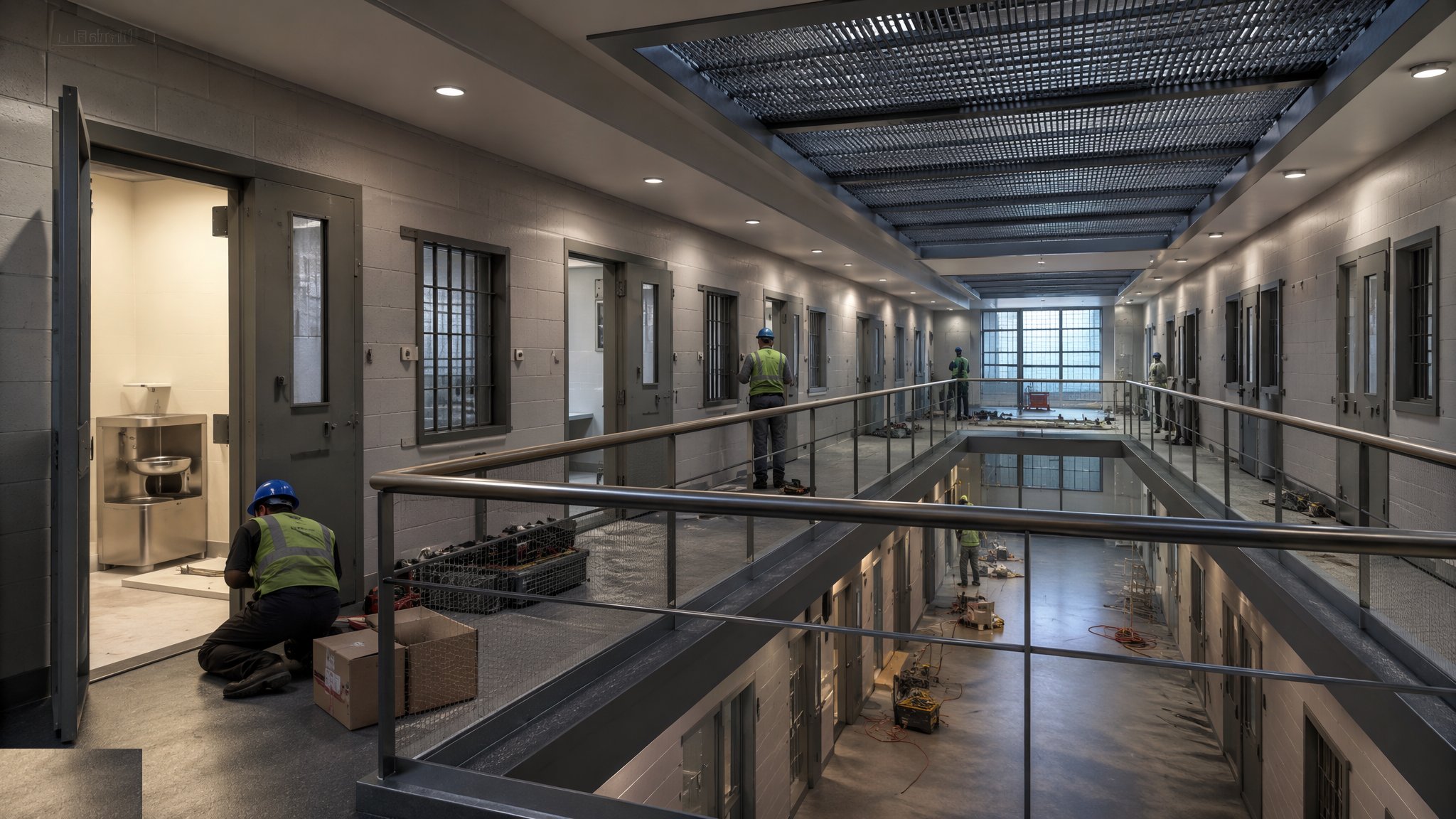
Last updated 2026-07-28 by the BuildPedia Editorial Team.
What is Custodial Fit-Out & Security Systems?
Custodial fit-out starts where ordinary fit-out stops. A cell is fitted with detention-grade equipment: a steel or concrete bunk fixed to the structure, a fixed desk and stool, and a combined stainless steel WC and basin unit — one anti-vandal fitting with concealed services — rather than separate pieces of sanitaryware. Everything is assessed for three failure modes an ordinary building never considers: can it be broken into a weapon, can it be used to conceal contraband, and can it become a ligature point. That last check — anti-ligature design — runs through every handle, hook, hinge, rail, grille and light fitting in the accommodation, and it is checked with the eye of someone who knows what a determined person can do with a bootlace and a door closer.
The doors are the heart of it. A cell door is a tested detention assembly — steel leaf, heavy frame cast or grouted into the structure, observation and service hatches, and a lock case that is security equipment, not ironmongery. Locking systems divide into mechanical detention locks operated by staff keys, and electro-mechanical or motorised systems that release door-by-door or spur-by-spur from a control room — most modern establishments run a hybrid, with central control for normal operation and a mechanical override that always works. Behind the doors run the grilles and meshes that protect every opening the design team could not eliminate: window grilles, ventilation grilles, mesh over service risers and light fittings, and secure screens at serveries and gates — each one a fabricated, fixed and tested barrier, not an afterthought.
Over the top of the fabric sit the electronic systems: CCTV covering every yard, spur, gate and blind corner; perimeter intrusion detection on the fence line; cell call and intercom in every cell; and the control rooms — the eyes of the establishment — where operators watch banks of monitors and run the locking, alarms and communications from a single secure position. Custodial fit-out is therefore a coordinated security installation wearing fit-out clothes: the furniture fixings, the door hanging, the camera positions and the grille fixing details are all specified, and they are all witness-checked, because the establishment's security case is built from exactly these details.
When and why is Custodial Fit-Out & Security Systems used?
Fit-out follows the weathertight structure and first-fix services, and in custodial work it carries unusual weight: it is the phase where the building becomes a prison. Doors and locks go in as early as the structure allows because they protect the following trades' work and start the long witness-testing programme; cell furniture and sanitaryware follow the painters; electronics trail everything and finish at the control room. Getting it right matters in both directions: under-specify and the establishment fails its security acceptance, leaving a new building unusable; over-complicate and you hand the operator a locking system the night shift cannot run and a maintenance bill of proprietary parts forever. The MOJ's technical standards exist precisely because generations of establishments have found both edges of that line the hard way.
Types of Custodial Fit-Out & Security Systems
Mechanical detention locking
Heavy mortice lock cases with unique detention key profiles, operated door by door by staff. Simple, robust and independent of power and controls — and the fallback every establishment keeps, because a mechanical key works during a power cut, a fire and a controls failure.
Electro-mechanical and centralised locking
Motorised or solenoid lock cases released from a control room, grouped by spur or wing, with status indication on a mimic panel and mechanical override at the door. The modern standard on new houseblocks: faster unlocks, full audit and lock-down at a button — at the price of depending on the controls infrastructure forever.
Stainless combination sanitaryware
One-piece stainless WC-and-basin units with concealed cisterns, timed or controlled water delivery and no removable panels inside the cell. Anti-vandal, anti-concealment and anti-ligature in a single fabrication — and heavy enough that fixing them is a structural operation.
Detention-grade cell furniture
Fixed steel or precast concrete bunks, desks and stools anchored to walls and floors with tamper-resistant fixings, radiused and designed without ligature points. Fixed means fixed: nothing in a cell should be liftable, throwable or disassemblable by its occupant.
Internal grilles, mesh and secure screens
Fabricated steel grilles over windows and ventilation openings, welded-mesh guards over risers and fittings, and secure screens at serveries and gates. The last physical barrier wherever the design could not close an opening — specified, fabricated and fixed like the security equipment it is.
Custodial Fit-Out & Security Systems: step by step
Step 1: Hang the detention doors and prove the frames
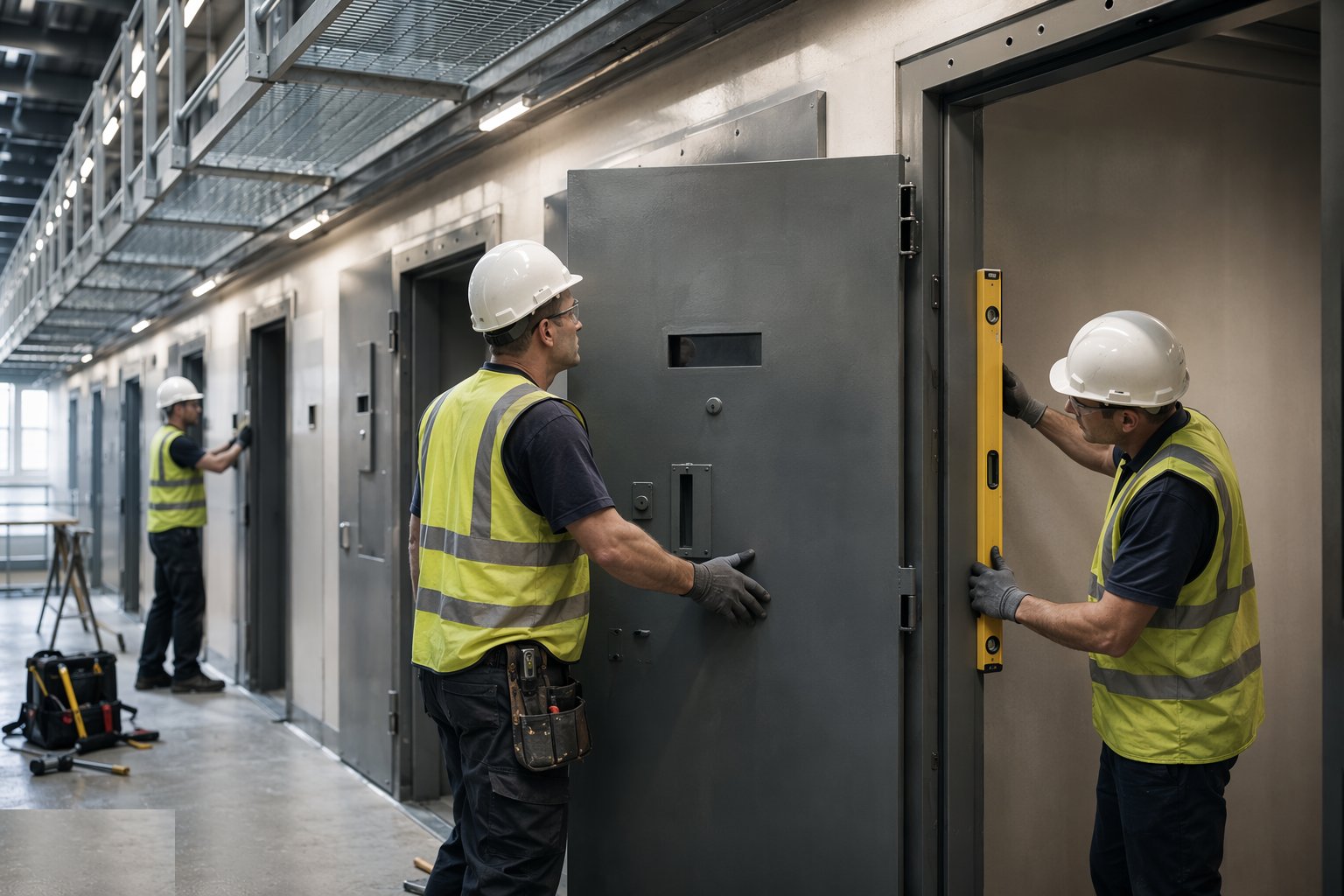
Cell and corridor doors arrive as tested assemblies and are hung to their frames within the manufacturer's tolerances — hinge wear, closer action, hatch operation and, above all, lock engagement, which is checked leaf by leaf. Frames cast into the structure are verified against the as-built survey before hanging starts; anything out of tolerance is corrected at the frame, never by bending doors to fit. Each door is logged onto the lock and door asset register the day it hangs — that register is the backbone of the witness-testing regime that follows.
Step 2: Install cell furniture and combination sanitaryware
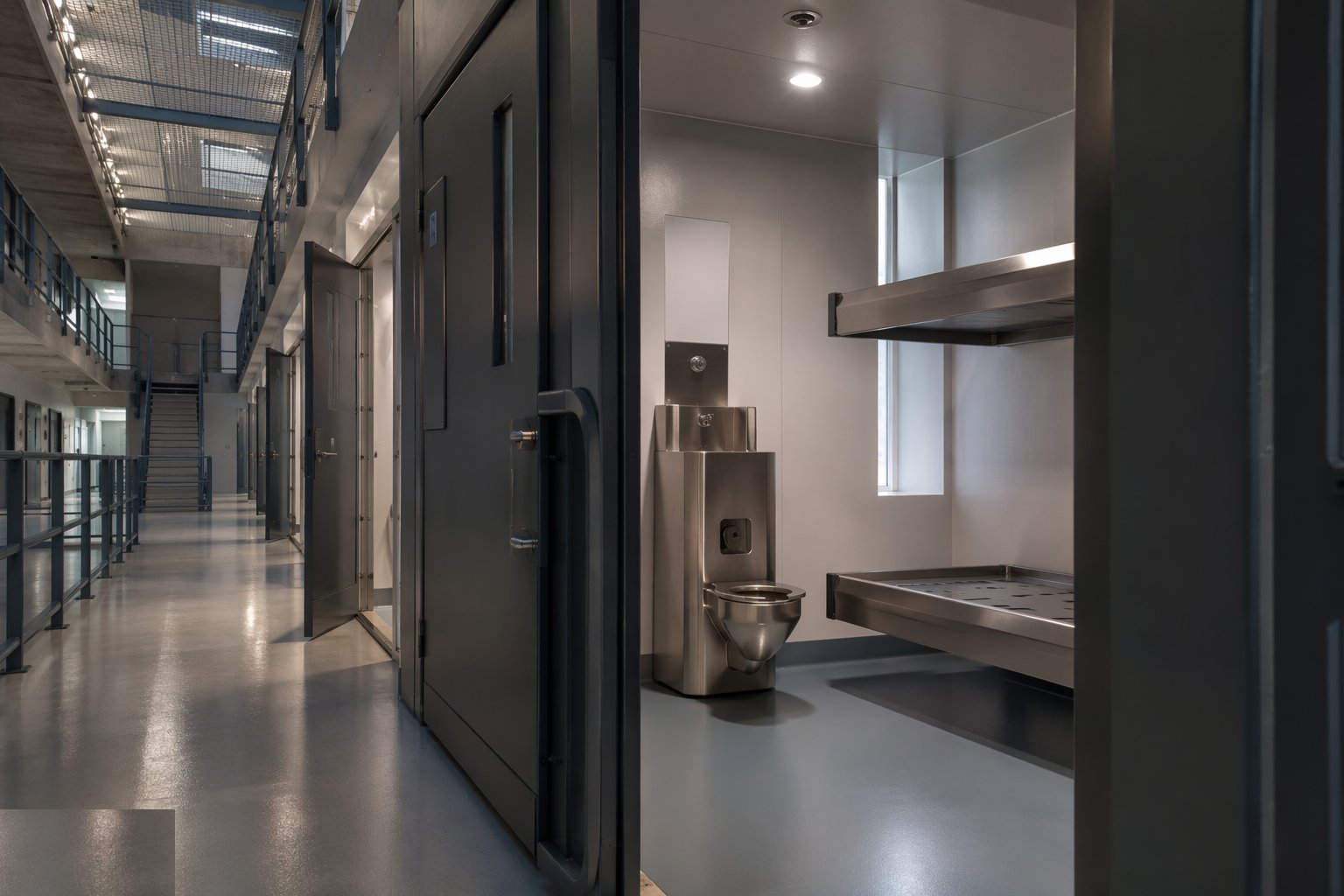
Stainless combination units are set onto their concealed service connections, levelled, anchored with tamper-resistant fixings and sealed to walls and floors so there are no concealment gaps; bunks, desks and stools follow, fixed to structure at the scheduled positions. The water and waste connections behind the combination units are pressure-tested before the unit hides them forever — a leaking concealed cistern inside an occupied cell is a cell out of action and a maintenance operation under escort.
Step 3: Run the anti-ligature and anti-vandal sweep
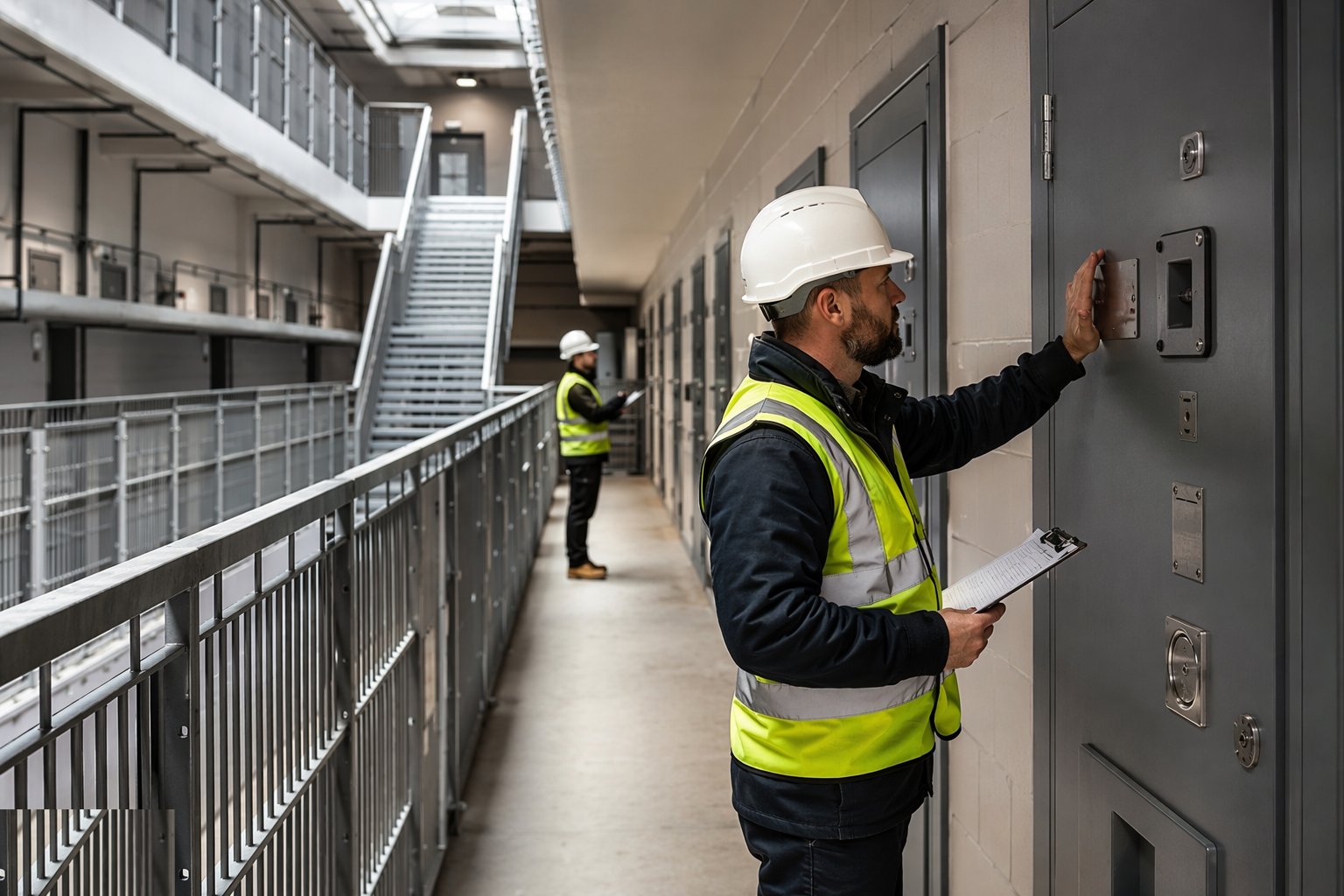
Before finishes close up, every fitted room is inspected against the anti-ligature schedule: hinges, handles, hooks, rails, grilles, light fittings, call points and furniture checked for anchor points; sharp edges and removable components checked for weaponisation; gaps behind and beneath fittings checked for concealment. This is done by people trained to see it — a fresh pair of security eyes on every typical room, then a rolling check as the repetition proceeds. Findings are designed out, not patched: a revised bracket or a different fitting beats a tube of mastic every time.
Step 4: Fix grilles, mesh and secure screens
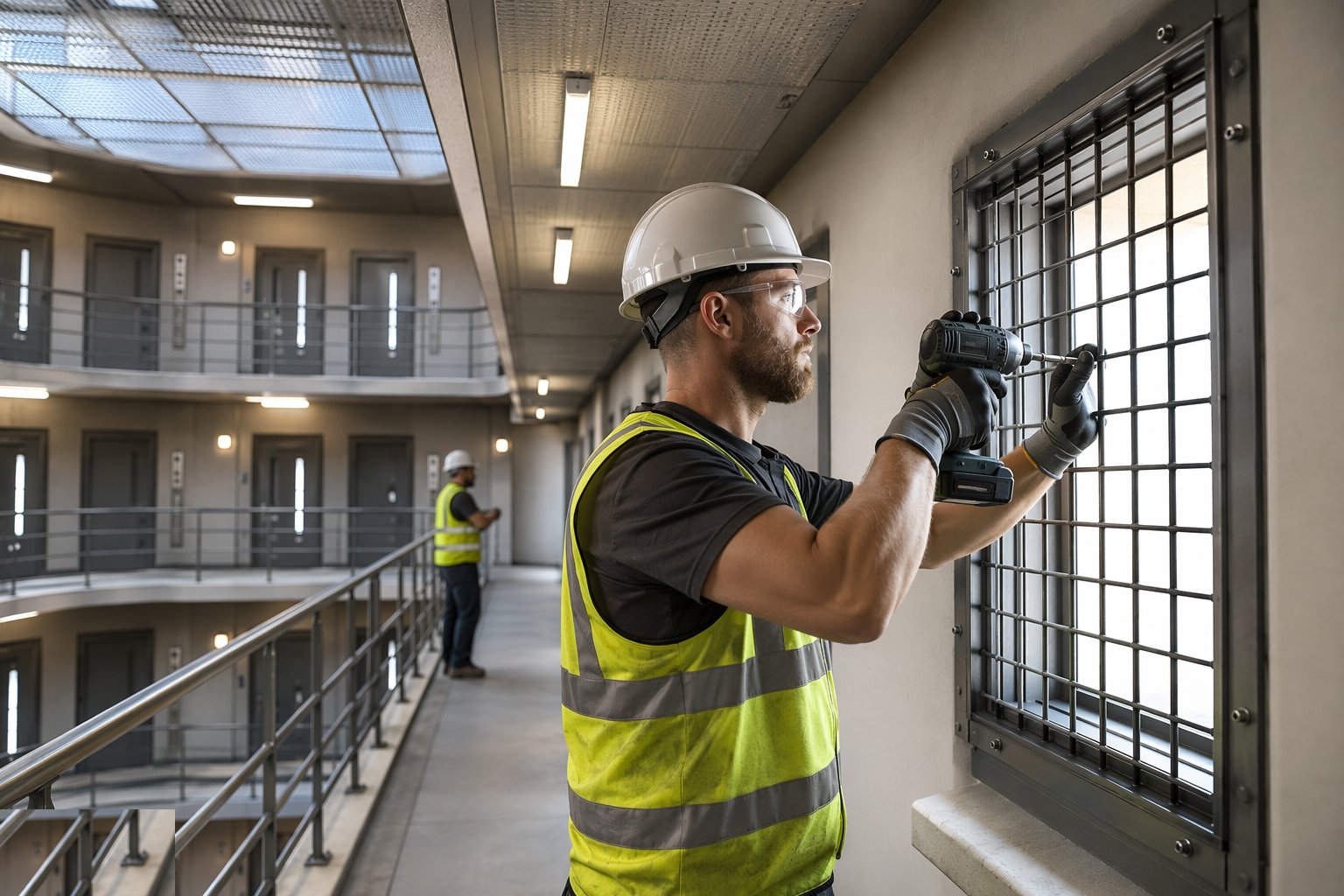
Window grilles, ventilation grilles, riser mesh and servery screens are fixed to structure with the specified tamper-resistant fixings, their frames sealed into the reveals and their welds and fixings inspected against the security schedule. The discipline is in the fixings: every grille is only as good as what it is screwed into and what it is screwed with, and a grille fixed into weak blockwork with the wrong anchors is decoration. Each barrier is logged with its fixing detail onto the security asset register.
Step 5: Install CCTV, detection and cell call
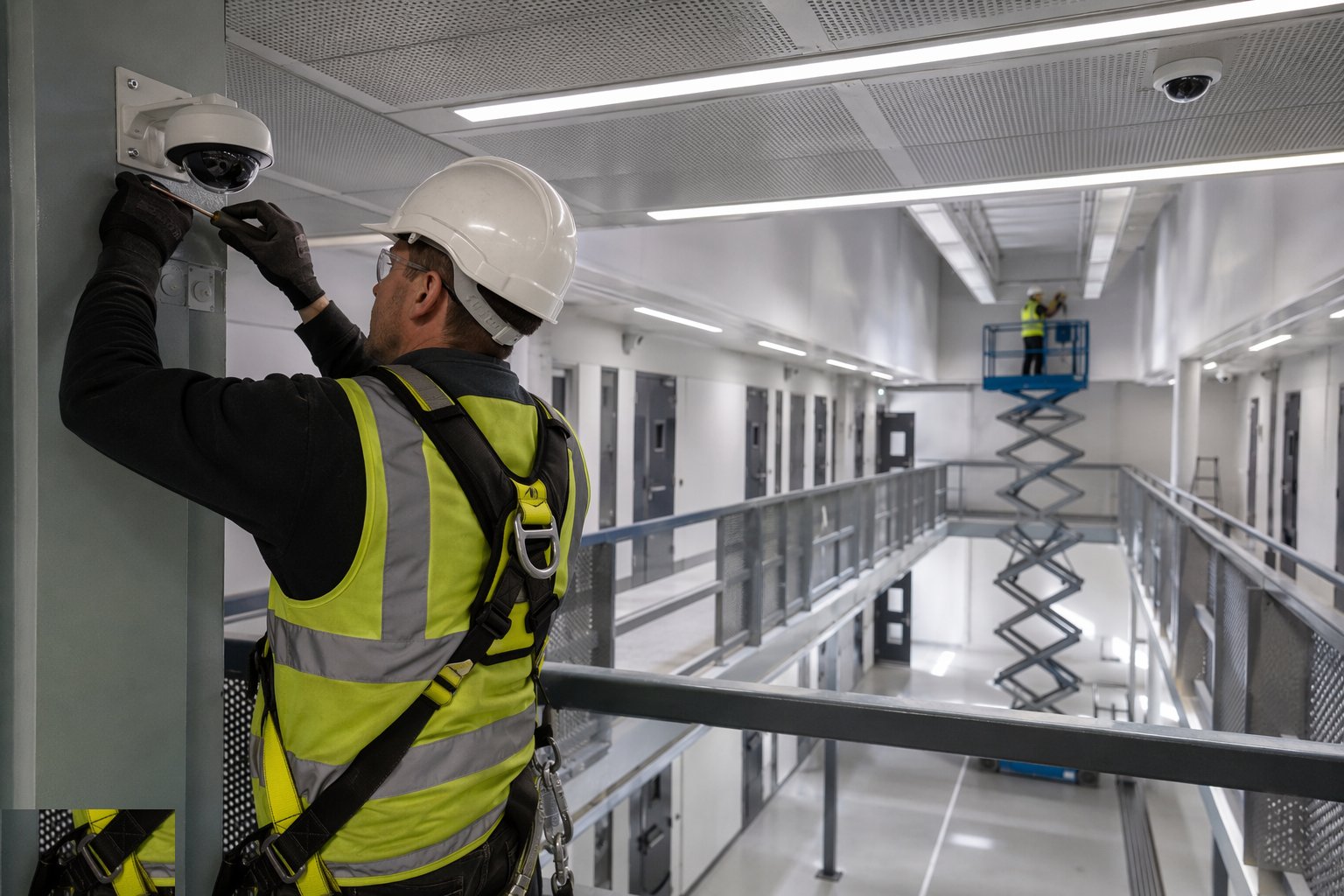
Cameras go up to the coverage schedule agreed with the security team — yards, spurs, gates, the sterile zone and the approaches to every door that matters — on secure mounts with tamper-proof housings and cabling run in concealed or protected routes. Fence-mounted and buried detection connects into the same monitoring backbone; cell call and intercom units are fitted flush and anti-ligature in every cell. Camera positions are verified at height against the actual sightlines — a camera that cannot see the corner it was specified for is found now, not on the night it matters.
Step 6: Build and equip the control rooms
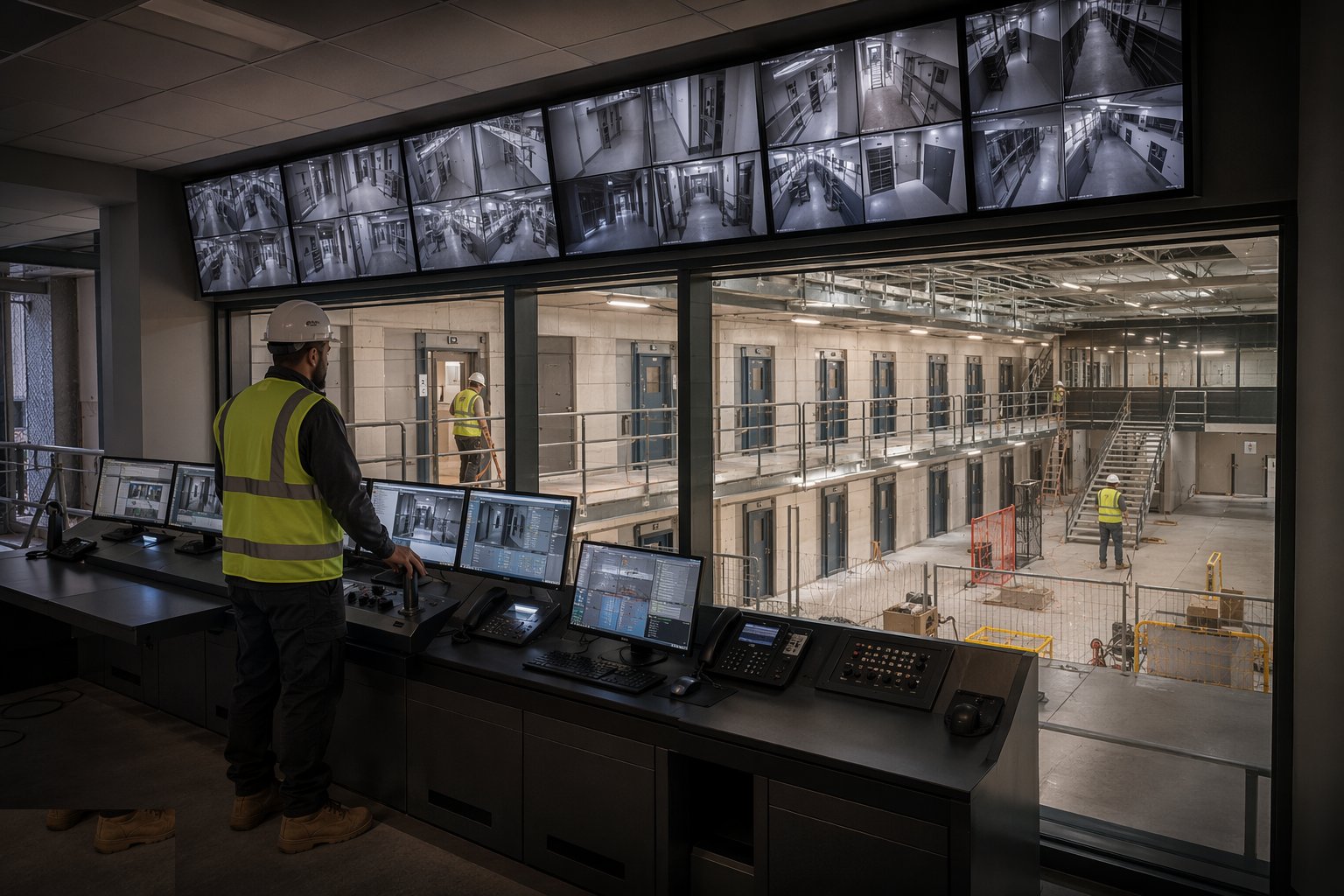
The control room is fitted out as the establishment's nerve centre: monitor walls, mimic panels for locking and alarms, communications consoles, secure record storage, and the UPS-backed power that keeps it alive through any supply failure. The room itself is a secure enclosure — its doors, glazing and construction rated, its approach controlled — because the room that runs the locks is the most valuable target in the building. Cabling terminates here in labelled, documented looms that the commissioning phase will test circuit by circuit.
Step 7: Integrate, label and hand over to commissioning
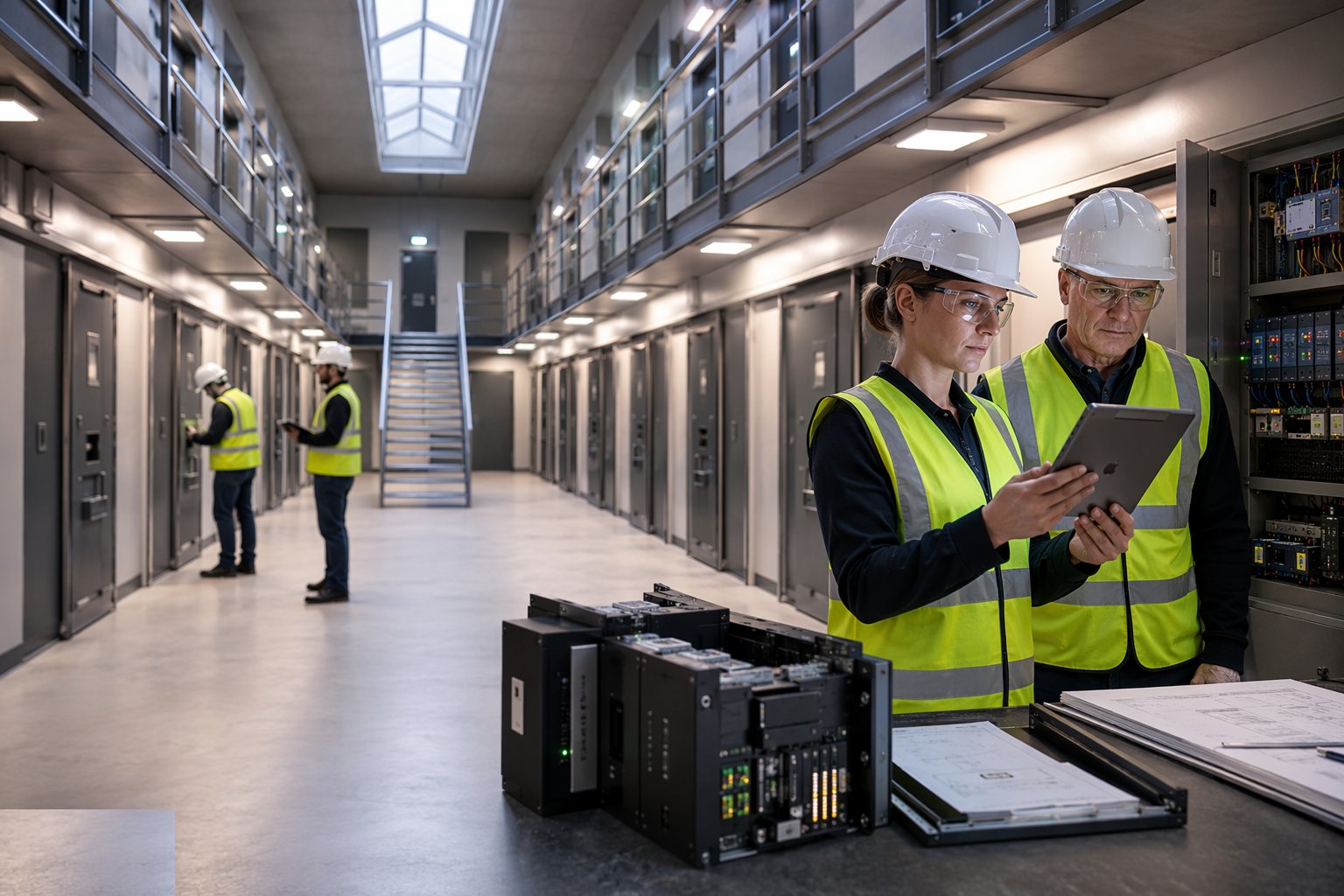
The last fit-out pass ties every physical and electronic asset into one coherent set of records: doors and locks on the asset register with their key schedules, cameras and detectors on their coverage drawings, grilles and screens with their fixing details, and every label matching the control room's mimic. Incomplete integration is the classic custodial fit-out failure — three contractors, three numbering systems and a control room operator who cannot tell which door is alarming. The commissioning phase that follows tests function; this step guarantees it tests the right thing under the right name.
Plant and equipment
- Door installation kit: hinge and lock jigs, torque-controlled drivers for security fixings
- Tamper-resistant fixing tools and the controlled stocks of security fasteners that go with them
- MEWPs and podium steps for grille, camera and detection installation at height
- Test instrumentation: pressure test kit for concealed sanitaryware connections, meters for cabling verification
- Camera alignment and focus tools; CCTV test monitors for on-site coverage verification
- Key and lock management safes — the controlled issue regime starts on site, not at handover
Quality control checks
- Door-by-door hanging and lock-engagement records on the asset register from day one
- Concealed service connections pressure-tested and photographed before sanitaryware hides them
- Anti-ligature inspection sign-offs per room type, with findings closed out by design change
- Grille and screen fixing torque or pull-test records against the specified anchors
- Camera coverage verified against the security schedule with recorded views from each position
- Asset register audits: every door, lock, grille, camera and detector logged, labelled and consistent with the control room mimic
Safety considerations
- Security fixings and sharp steel components: cut injuries and controlled storage — a lost box of security screws is a security incident, not a materials write-off
- Work at height on grilles, cameras and detection in occupied or semi-secure areas: edge protection and escorted access together
- Manual handling of stainless combination units and steel furniture — heavy, awkward and unforgiving in a two-by-three-metre cell
- Live-systems risk where new CCTV and locking tie into an operating establishment: isolation permits, and no dead-testing on live security circuits without approval
- Tool control and end-of-shift counts inside the secure envelope — every bit, blade and driver accounted for
- Working around the population on refurbishments: briefed behaviour, no engagement, and immediate withdrawal on alarm
Common defects
- Doors hung out of square so locks engage partially — passing the casual check, failing the witness test
- Concealment gaps behind sanitaryware and furniture sealed with mastic instead of designed flashings — the gap returns with the first determined occupant
- Ligature points missed at interfaces — a compliant door under a non-compliant closer, a compliant rail on a non-compliant bracket
- Grilles fixed into weak backgrounds or with substitute fasteners — barriers that yield to the first serious attack
- Cameras installed to drawing but blind to the real sightline — the coverage schedule never verified at height
- Asset records diverging from reality — locks renumbered on site, mimics that name doors nobody can find
Best suited for
- Cell fit-out on new houseblocks and refurbishment of existing residential wings
- Detention door, locking and grille installation across secure estates
- CCTV, perimeter detection and control room installation in custodial facilities
- Anti-ligature upgrades on occupied accommodation
How long does Custodial Fit-Out & Security Systems take?
Typical duration: A single houseblock fit-out typically runs 6–12 months behind the weathertight structure; a full estate's doors, locks, grilles and electronics run 12–24 months and dovetail straight into the commissioning regime..