Custodial Services & Secure Commissioning
Making the engineering of a prison provable — tamper-proof MEP inside the secure envelope, water and power an operator can control, interlocked doors and integrated controls, and the witnessed testing and decant that turn a building site into an operating prison.
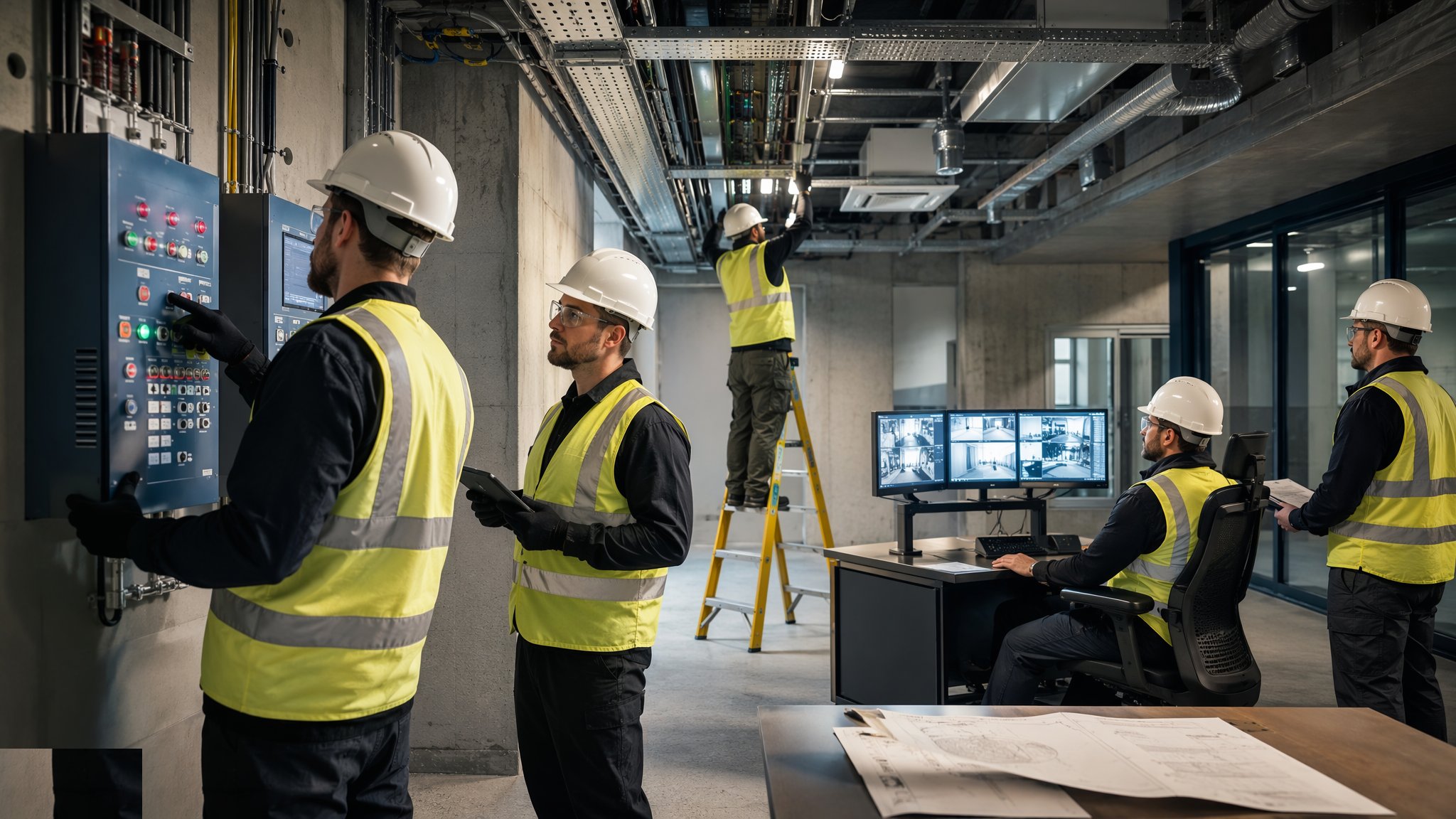
Last updated 2026-07-28 by the BuildPedia Editorial Team.
What is Custodial Services & Secure Commissioning?
Services in a custodial building follow one design rule above all: nothing inside the secure envelope that a prisoner can reach may be reachable, removable or usable against the establishment. Cell luminaires are anti-ligature, tamper-proof fittings; sockets and switches in cells are controlled from outside the room or omitted entirely; pipework and cabling run in concealed routes, secure risers and staff-only corridors, with access panels on the staff side only. Ventilation arrives through fixed secure grilles; heat emitters, where used, are low-surface-temperature, ligature-resistant designs; and every service that enters a cell does so through the minimum number of sealed, tested penetrations. The services are engineered like the doors — as part of the security system.
Water and power get their own custodial logic. Water to cells is managed centrally — spurs and wings can be isolated from a staff position, so a protest involving smashed fittings floods a pipe run, not a landing; hot water is temperature-controlled at source to prevent scalding; drainage is sized and trapped against misuse. Power is segregated so a fault or an attack in one zone cannot darken the whole establishment, and the security systems — locking, CCTV, detection, communications — sit on backed-up supplies: dual feeds, standby generation and UPS bridging, because a prison that loses its locks and cameras has lost rather more than its lighting. Fire strategy in a locked building is its own engineering problem: detection everywhere, smoke control designed around doors that cannot simply be opened, and evacuation procedures the fabric has to support.
Then comes the part that makes custodial commissioning unlike any other: the witnessed security testing. Every lock is operated and witnessed — thousands of operations, key by key and door by door; interlocks are proven so a vehicle lock or an airlock can never have both doors open together; CCTV coverage is witnessed camera by camera; detection is walked and triggered zone by zone; the control room runs lock-down and alarm drills end to end. Alongside sits the conventional MEP commissioning — balancing, flushing, electrical certification — but the security witness regime rules the programme. And at the end of it all waits the decant: on a replacement or extension project, prisoners move from old accommodation to new in planned, phased, heavily managed moves — often hundreds of men in a single morning — which is why handover dates in prison work are measured in decant days, not just certificates.
When and why is Custodial Services & Secure Commissioning used?
Secure commissioning starts while the paint is still drying — lock witness testing begins as soon as doors and power allow, because thousands of witnessed operations take months, not weeks — and it runs in strict sequence: systems proven, then zones, then the whole establishment, then the MOJ acceptance regime signs off the security case before occupation. It matters because this phase tests the client's real requirement: not that the building stands up and the lights come on, but that it contains people safely, decently and demonstrably. And the decant matters most of all: a decant date is fixed with the establishment and the wider prison service months ahead, the receiving regime is staffed and ready, and a project that misses its decant window does not simply re-book — it queues for another slot while a finished, empty prison stands waiting and the old, crowded one carries on.
Types of Custodial Services & Secure Commissioning
Centralised water management
Wing- and spur-level isolation of cell water supplies from staff positions, controlled flush and flow regimes, temperature-limited hot water. The system that turns a smashed fitting from a flooding incident into a maintenance ticket.
Door interlocking and airlocks
Interlocked pairs of doors and gates — vehicle locks, pedestrian airlocks, sterile-zone gates — with control logic that makes both-open impossible except under authorised override. Proven in the wiring, the logic and the witnessed test, not assumed from the drawings.
Integrated security control systems
The PLC- or server-based platform tying locking, CCTV, detection, intercom and alarms into the control room mimic, with audit logging of every event. The establishment's operating brain — specified for reliability, support and spares over decades, not for novelty.
Resilient power for security systems
Segregated distribution, standby generation and UPS bridging sized so locks, cameras, detection and communications never lose supply together. The design question is always the same: what still works at three in the morning in a storm with the grid down?
Fire and smoke strategy for locked buildings
Zoned detection, smoke extraction engineered around secure compartmentation, and progressive-evacuation procedures the fabric and the locking system both support. The hardest services problem in the building type: escape routes that are, by design, locked.
Custodial Services & Secure Commissioning: step by step
Step 1: Complete secure second fix inside the envelope
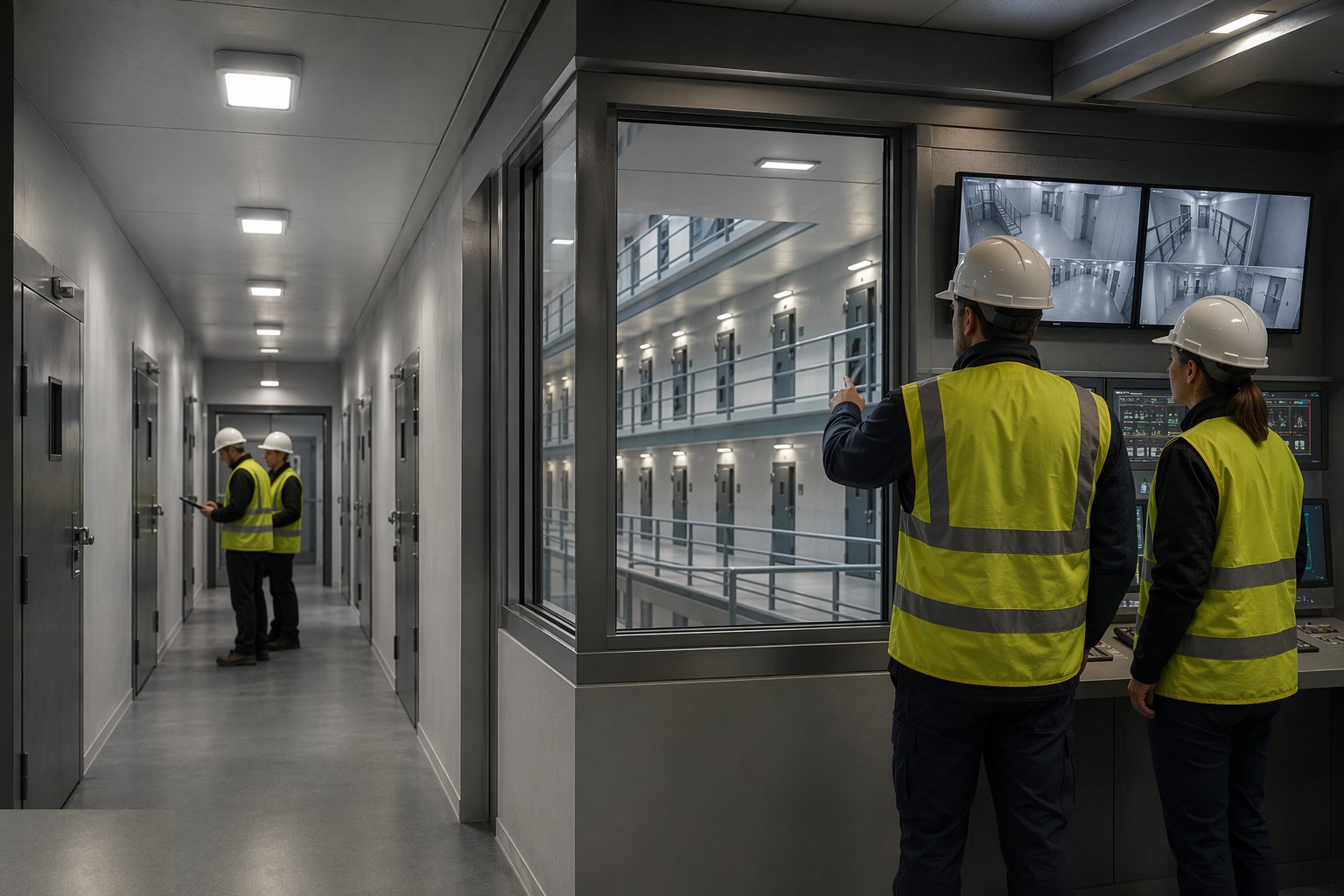
Cell luminaires, call points, controlled sockets and secure grilles are fitted and their fixings verified; riser and corridor services are closed up with staff-side access only; every penetration into the secure envelope is sealed and logged. The second-fix sweep doubles as a security inspection — a missing tamper-proof screw on a cell fitting is logged as a defect with the same weight as a dead circuit.
Step 2: Flush, chlorinate and commission water management
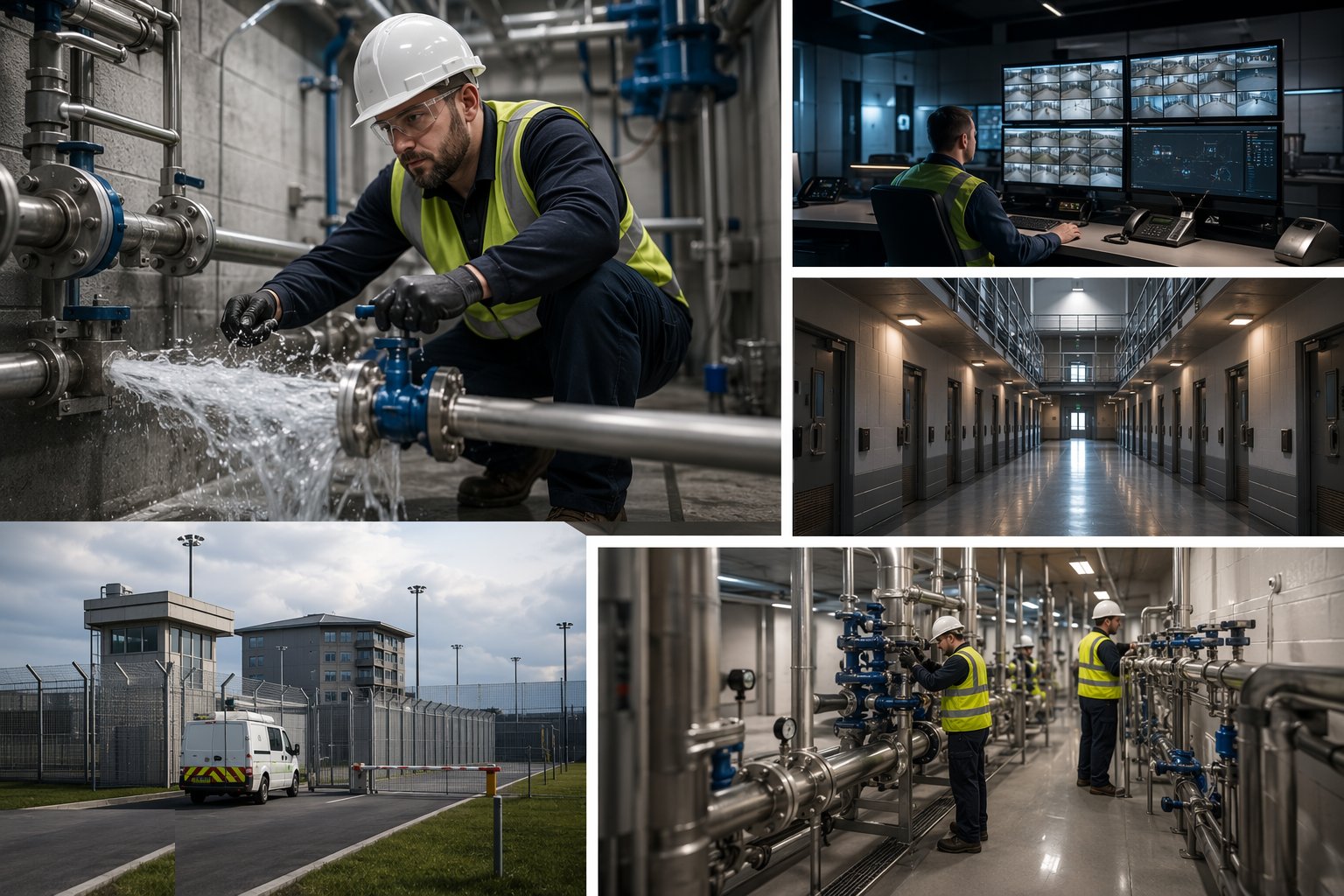
Domestic water systems are flushed, disinfected and certified in the usual way, then the custodial layer is proven: zone-by-zone isolation from the control positions, flow and flush control per spur, hot water temperature verified at the furthest cell. The proving is done against scenarios — isolate this spur, restore that one, lose power and repeat — because the operators will run it by scenario too.
Step 3: Prove the power resilience
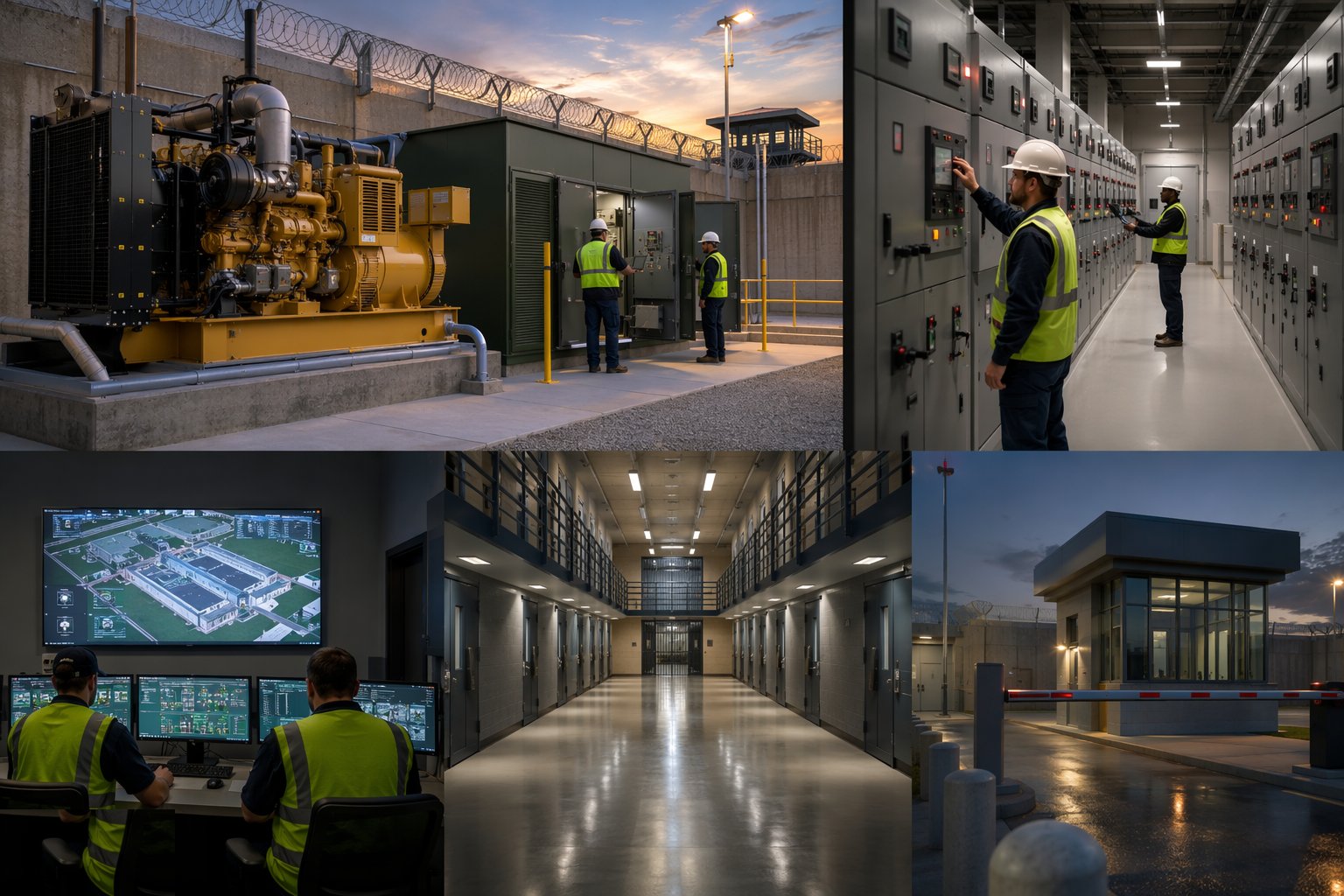
Normal distribution is certified, then the security supplies are exercised end to end: mains failure simulated, generator start and load acceptance timed, UPS bridging demonstrated, and the locks, cameras, detection and communications verified alive through the whole sequence. Segregation is proven by fault — a faulted zone must fail alone — and the results are recorded load by load, because the next mains failure will be for real.
Step 4: Commission the interlocks and door controls
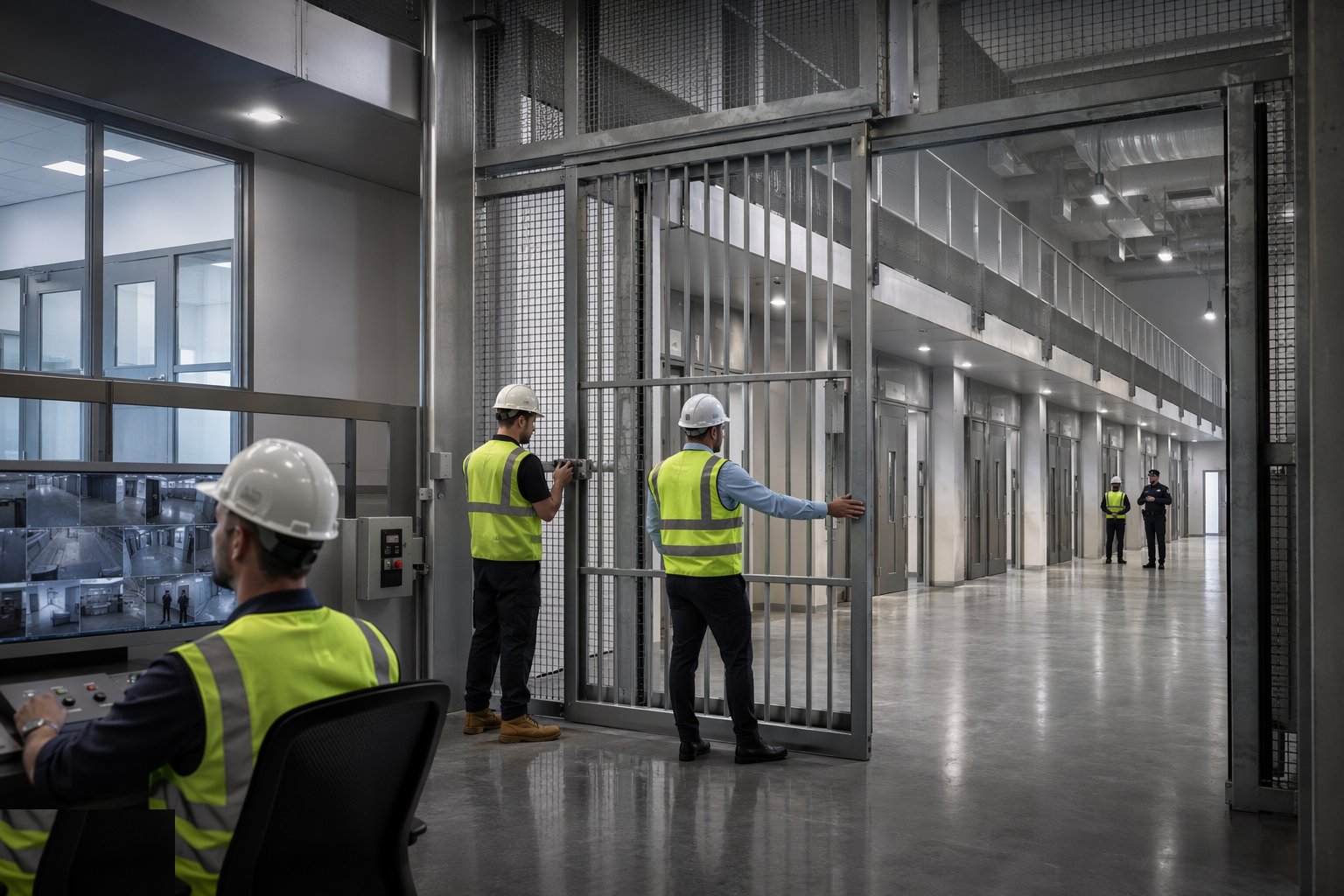
Each airlock, vehicle lock and interlocked gate pair is proven mechanically and electrically: both-open impossible, single-door operation correct, override functions restricted and logged, and failure modes — power loss, controls fault, fire alarm interface — each tested to a safe, secure state. This is slow, door-by-door work with the controls contractor and the client's security team standing at the gates, and it is the step where optimistic programmes go to be revised.
Step 5: Integrate and exercise the control systems
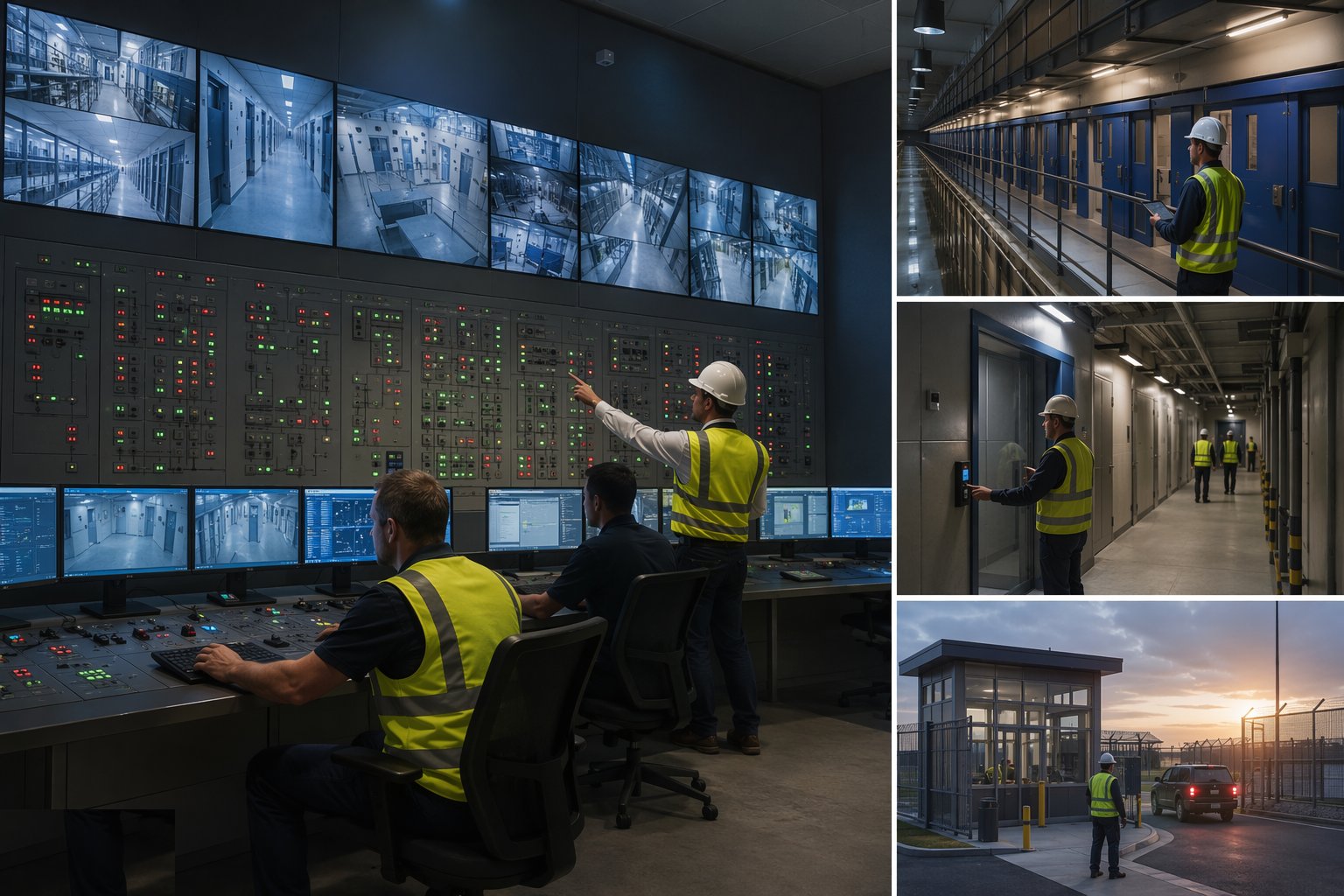
The locking platform, CCTV, detection, intercom and alarms are brought together at the control room: mimic panels verified against the asset register, event logging proven, and cause-and-effect scenarios run — alarm here, cameras there, lock down this spur, unlock that escape route. Integration failures are found by exercise, not inspection: the scenario set is agreed early and run in full, twice, with every discrepancy logged and closed.
Step 6: Run the witnessed security testing
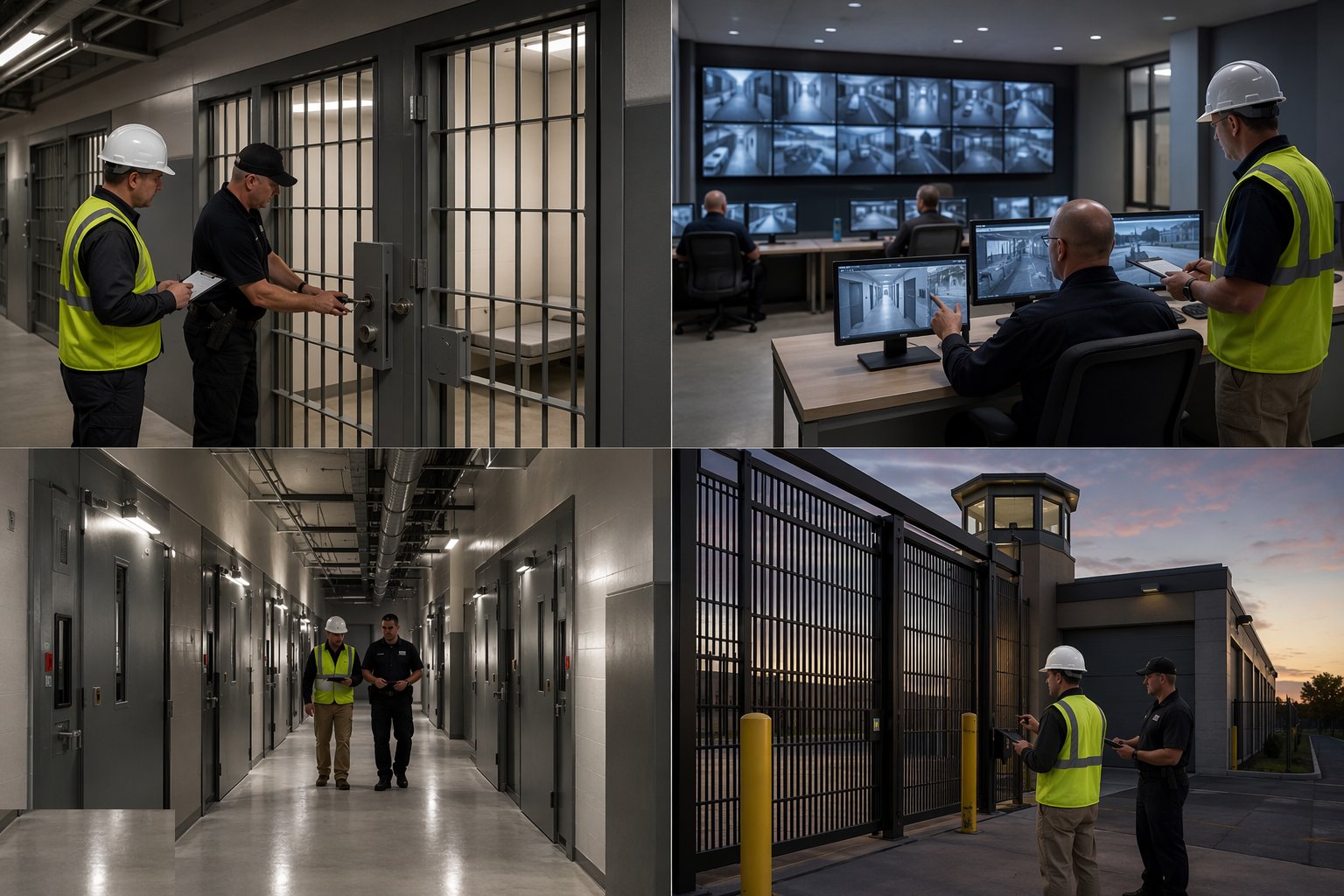
The formal witness regime: every lock operated, witnessed and recorded; CCTV coverage witnessed camera by camera against the schedule; detection walked and triggered zone by zone; grille and barrier fixings inspected; the establishment's lock-down and emergency drills run with the client witnessing. Thousands of individual records accumulate into the security case the MOJ acceptance regime reviews — there is no shortcut, and programmes that assumed otherwise learn it here.
Step 7: Complete MOJ acceptance and handover documentation

Security acceptance follows the witnessed testing: the technical file of test records, asset registers, key schedules, as-builts and O&M information is compiled, audited and submitted, and the client's technical and security reviewers work through their acceptance process. Outstanding items are closed under escort as the establishment prepares for occupation, and the keys — literally and contractually — change hands against signed schedules. Practical completion in prison work is the day the client accepts the security case, not the day the building looks finished.
Step 8: Support the decant
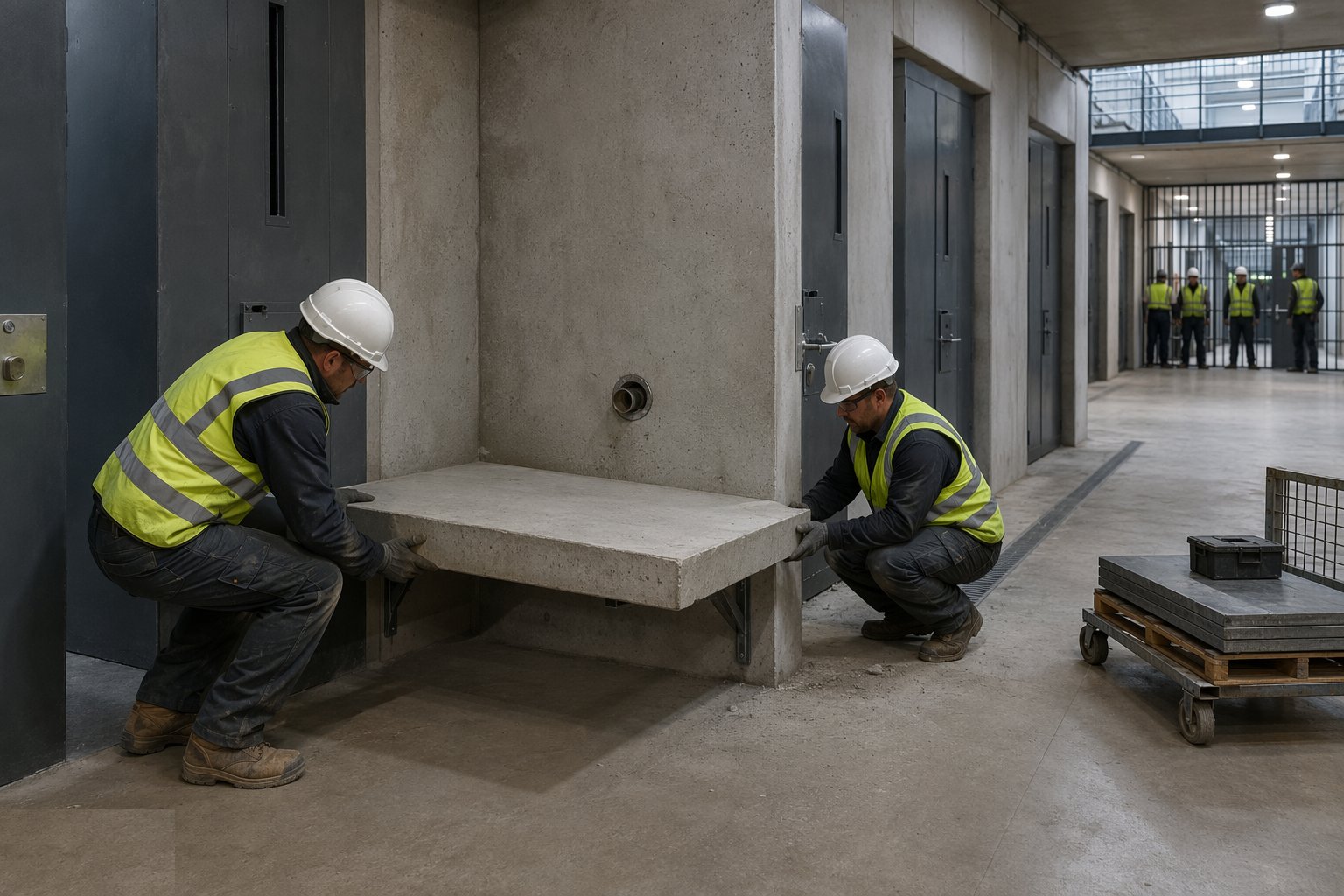
On a live replacement or extension, the project team stands by through the decant: phased moves planned with the establishment, rooms handed over in blocks, move-day defects resolved in hours, and the old accommodation decommissioned, searched and stripped behind the departing population. The decant is the real completion test — the building performs with people in it from the first morning — and the sites that plan for it, with spares, labour and authority to act, get through it quietly; the rest get through it loudly.
Plant and equipment
- Commissioning instrumentation: flow and temperature measurement for water balancing and temperature-control verification
- Electrical test kit for certification, load banks for generator proving and UPS discharge test equipment
- Lock and key management systems — safes, registers and controlled issue for thousands of keys
- Controls simulation and logging laptops for interlock and integration testing
- CCTV test and alignment kit for witnessed coverage verification
- Water chlorination and flushing equipment with test certification
- Witness-recording documentation systems — the test records are the deliverable
Quality control checks
- Witnessed lock test records — every lock, every operation, signed and filed
- Interlock and cause-and-effect test scripts run in full with results logged against scenarios
- Water management proving records: isolation, temperature and flow verified zone by zone
- Power resilience test records: generator start times, UPS bridging, load acceptance and segregation results
- Security asset register audited against the physical estate before acceptance submission
- MOJ acceptance documentation compiled, cross-referenced and verified — the technical file is itself a tested deliverable
Safety considerations
- Simulated mains failures and generator proving: switchgear discipline, permits and authorised persons only
- Testing interlocks and gates: crushing and trapping risk at powered doors — exclusion and supervision during actuation tests
- Escorted working through acceptance and decant phases — the establishment is becoming live while you still hold tools
- Chlorination and water treatment: chemical handling under COSHH with certification
- Decant-day pressure: fatigue and shortcut risk — the regime that protects the tools and the record applies hardest on the busiest day
Common defects
- Locks passing operation but failing the witness paperwork — unrecorded tests are untested locks
- Interlocks with override logic nobody documented — the airlock that can be both-opened by accident
- Mimic panels and asset registers diverging from the as-built estate — alarms the control room cannot locate
- Water isolation zones crossing spur boundaries — a protest in one wing flooding the controls of another
- Security circuits discovered sharing supplies with general load — segregation that existed on the drawing only
- Decant-day defects with no standby plan — a leaking combination unit on move morning with the plumbers an hour away
Best suited for
- New custodial establishments approaching security acceptance and occupation
- Locking, interlock and control-system commissioning on secure facilities
- Resilient power and water management upgrades on operating prisons
- Decant and phased-occupation projects replacing or extending live establishments
How long does Custodial Services & Secure Commissioning take?
Typical duration: Secure commissioning and witnessed testing on a new houseblock typically runs 4–8 months; a full estate's commissioning, MOJ acceptance and decant window spans 6–12 months and sets the real completion date..