Habitat Creation & Environmental Mitigation
The licensed, season-bound work of moving protected species out of harm's way and building them somewhere better — newt fences and receptor ponds, artificial badger setts, bat lofts, translocated turf — delivered under an ecological clerk of works and thirty years of promised management.
Last updated 2026-07-28 by the BuildPedia Editorial Team.
What is Habitat Creation & Environmental Mitigation?
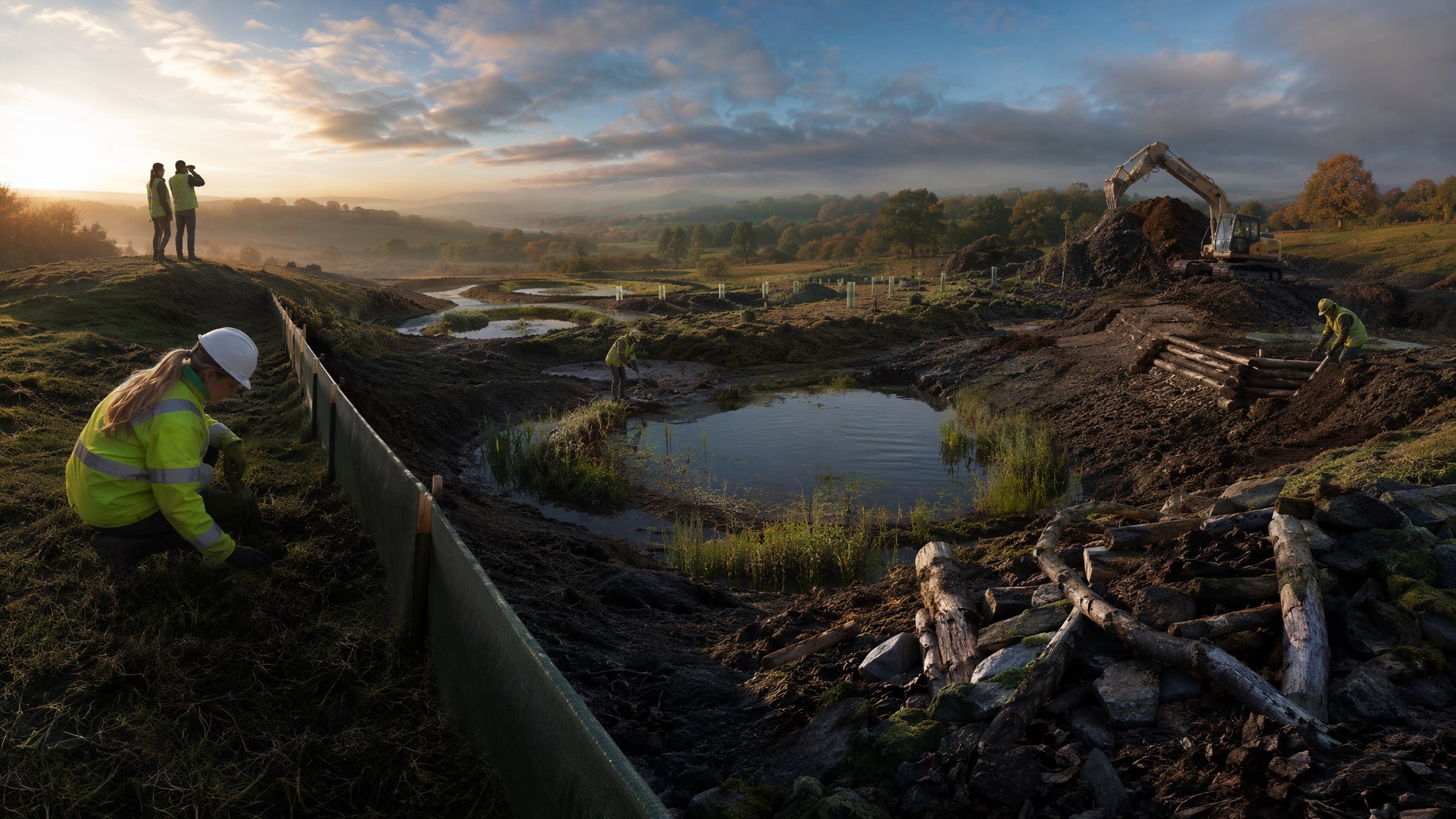
Mitigation construction is building work where the client is a protected species and the specification is a licence. Great crested newts, badgers, bats, water voles, reptiles and nesting birds are all protected by law, and where development affects them the work proceeds under a licence from Natural England (or the devolved equivalent) that spells out, in enforceable detail, what will be built, when, and by whom. The works themselves are construction in miniature and in earnest: kilometres of amphibian fencing with pitfall traps checked every day, receptor ponds dug to shallow shelving profiles, hibernacula built from logs and stone, artificial badger setts chambered and tunnelled to a licensed design, bat lofts and bat boxes integrated into structures, and habitat translocation that lifts turf and soil from a doomed meadow and lays it down somewhere it can continue.
Since February 2024 in England, most developments also carry a statutory duty to deliver at least 10% biodiversity net gain under the Environment Act 2021, measured with the Defra metric and legally secured for thirty years. That has turned habitat creation from a planning nicety into a deliverable with a baseline, a design, a construction phase and a three-decade management obligation: species-rich grassland created on prepared low-fertility soils, ponds with drawdown zones, native woodland and scrub mosaics, hedgerows with standards. Whether on-site, off-site on a habitat bank, or via statutory credits, the habitats have to be real, surveyed and managed — the metric does not accept good intentions, and neither does the planning authority that has to sign them off.
Delivery runs on seasons and supervision. The ecological clerk of works — the ECoW — is on site for the sensitive operations: toolbox talks so every operator knows what a great crested newt looks like and what to do when one turns up in a trench, staged vegetation clearance that encourages animals to move on ahead of the machines, hand-destructive searches of refuges and setts, watching briefs during stripping. Trapping and translocation happen inside licensed windows — newt trapping seasons run through the warmer months, sett exclusions have their own timing, habitat translocation prefers dormancy — and missing a window can cost a project a year. The paper trail is part of the works: trapping logs, translocation records, photographs and licence returns, because the licence is discharged by evidence, not by effort.
When and why is Habitat Creation & Environmental Mitigation used?
Mitigation and habitat creation run at the front of a project — before and during enabling works — because the licences gate everything behind them: you cannot strip the site until the newts are out, cannot close the sett until the badgers have taken to the artificial one, cannot clear the scrub until the nesting season ends. It matters legally, because unlicensed harm to a protected species is a criminal offence with unlimited fines and real prosecutions; it matters commercially, because a programme that misses its trapping window waits months; and it matters increasingly to consent itself, because biodiversity net gain is now a condition of planning that has to be delivered and secured, not drawn and forgotten. Done well it is some of the most satisfying work on a site — you are building the thing that makes the rest of the project permissible.
Types of Habitat Creation & Environmental Mitigation
Great crested newt and amphibian mitigation
Amphibian fencing and pitfall trapping to clear development areas, translocation to prepared receptor sites with ponds, hibernacula and terrestrial habitat. The classic licensed mitigation: hundreds of trapping nights, and a receptor site that must be ready before the first newt moves.
Badger mitigation and artificial setts
Licensed closure of setts in the works area — exclusion gates and monitoring — with replacement artificial setts built from chambers and tunnels to the licensed design, sited where badgers actually want to live. Badgers are creatures of habit; the artificial sett either suits them or it fails.
Bat mitigation structures
Bat boxes and integrated bat bricks, purpose-built bat lofts and hibernation features, and green bridges or underpasses that keep commuting routes intact across new roads. Small structures with exacting details — orientation, temperature, access and darkness all matter to a tenant that can simply leave.
Habitat translocation
Lifting turves, soils and sometimes whole hedge or pond systems from a site to be developed and relaying them on a prepared receptor site. The nearest thing construction has to moving house: success depends on timing, soil handling and aftercare, not on the elegance of the lift.
Biodiversity net gain habitat creation
Species-rich grassland, ponds, wetlands, woodland and hedgerows created to a metric-based design and secured for thirty years of management. The new mainstream: construction as the first act of a three-decade ecological commitment.
Habitat Creation & Environmental Mitigation: step by step
Step 1: Survey, license and plan the works
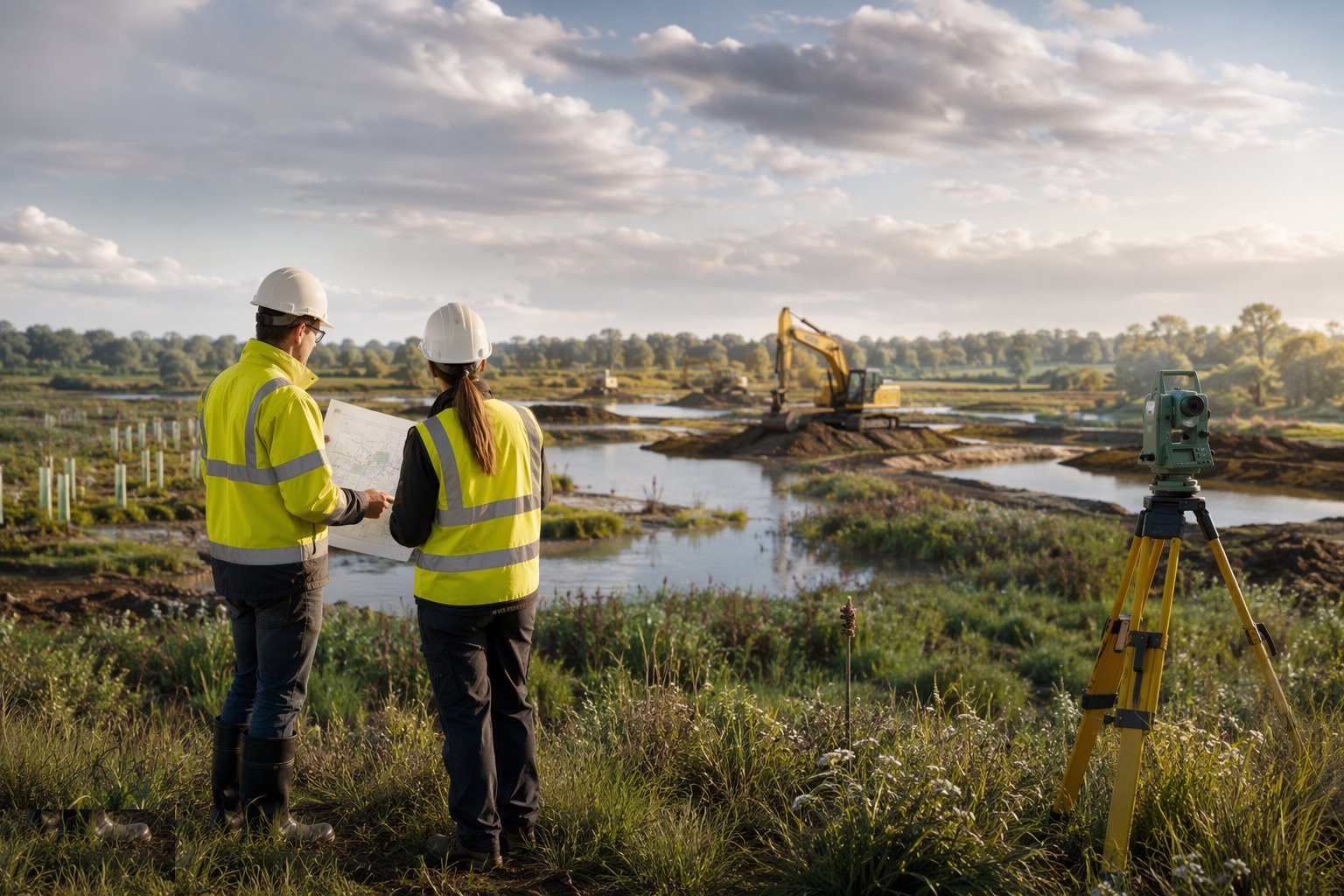
Everything starts with ecology surveys — population assessments for the protected species present, habitat condition surveys feeding the biodiversity metric — and from those, the licence applications and the mitigation method statements that will govern the work. The programme is built around the licensed windows: when trapping can run, when setts may be closed, when vegetation clearance is lawful. The ECoW is appointed, the toolbox talk material is prepared, and the receptor sites are designed and programmed so they are ready first — the golden rule of mitigation is that you build the new home before you demolish the old one.
Step 2: Install exclusion fencing and traps
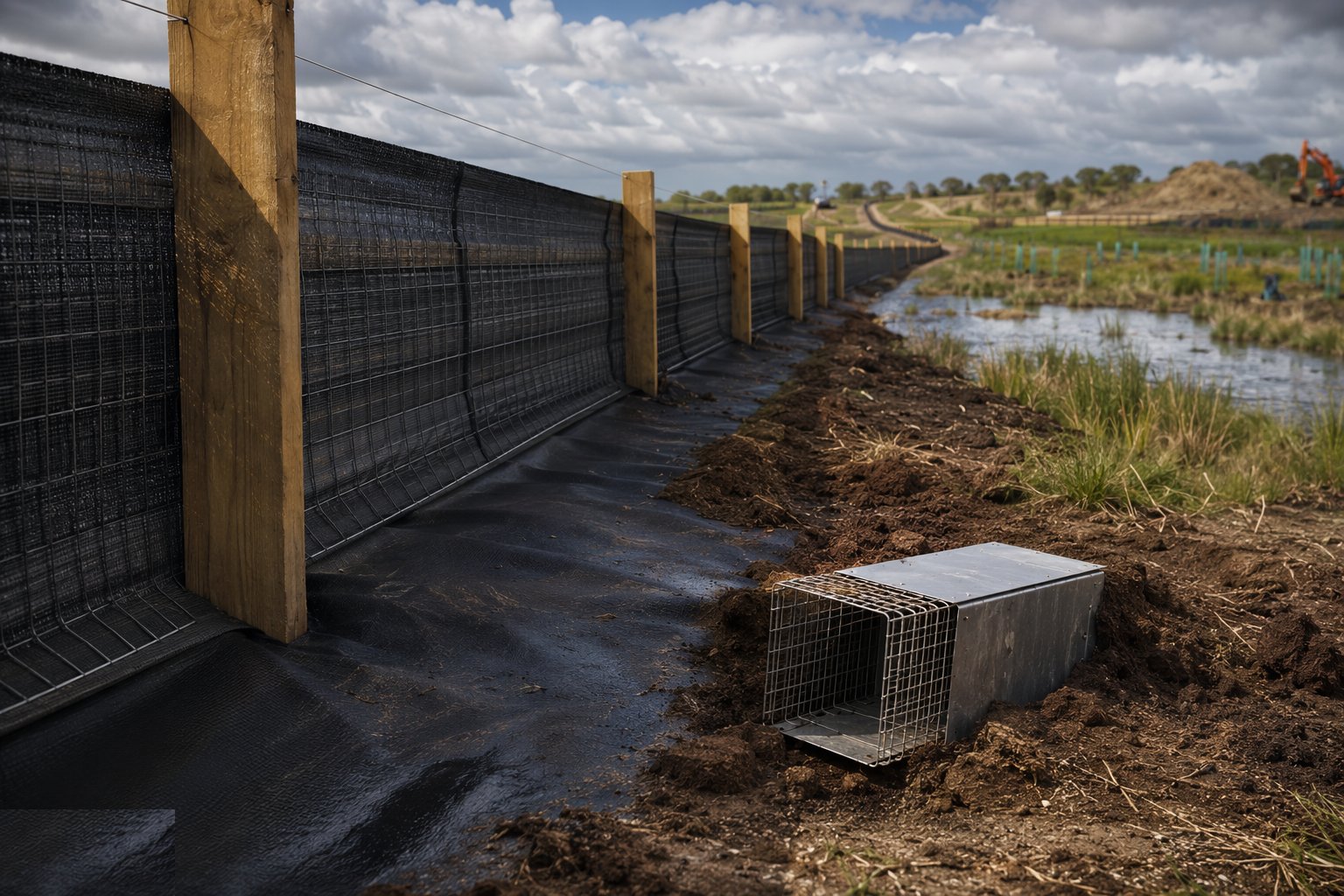
Amphibian fencing goes up around the works area — specialist membrane buried at the base, supported and tensioned so nothing walks, climbs or digs under it — with pitfall traps sunk along its line on the development side. The fence is the licence made physical: it is inspected daily along with the traps, damaged sections repaired before the night shift of newts finds the gap, and its alignment signed off before trapping begins. Exclusion fencing for badgers or water voles follows the same discipline: one-way gates where the licence uses them, burrows and setts monitored, and records kept of every check, because the licence return will be written from those sheets.
Step 3: Capture and translocate the animals
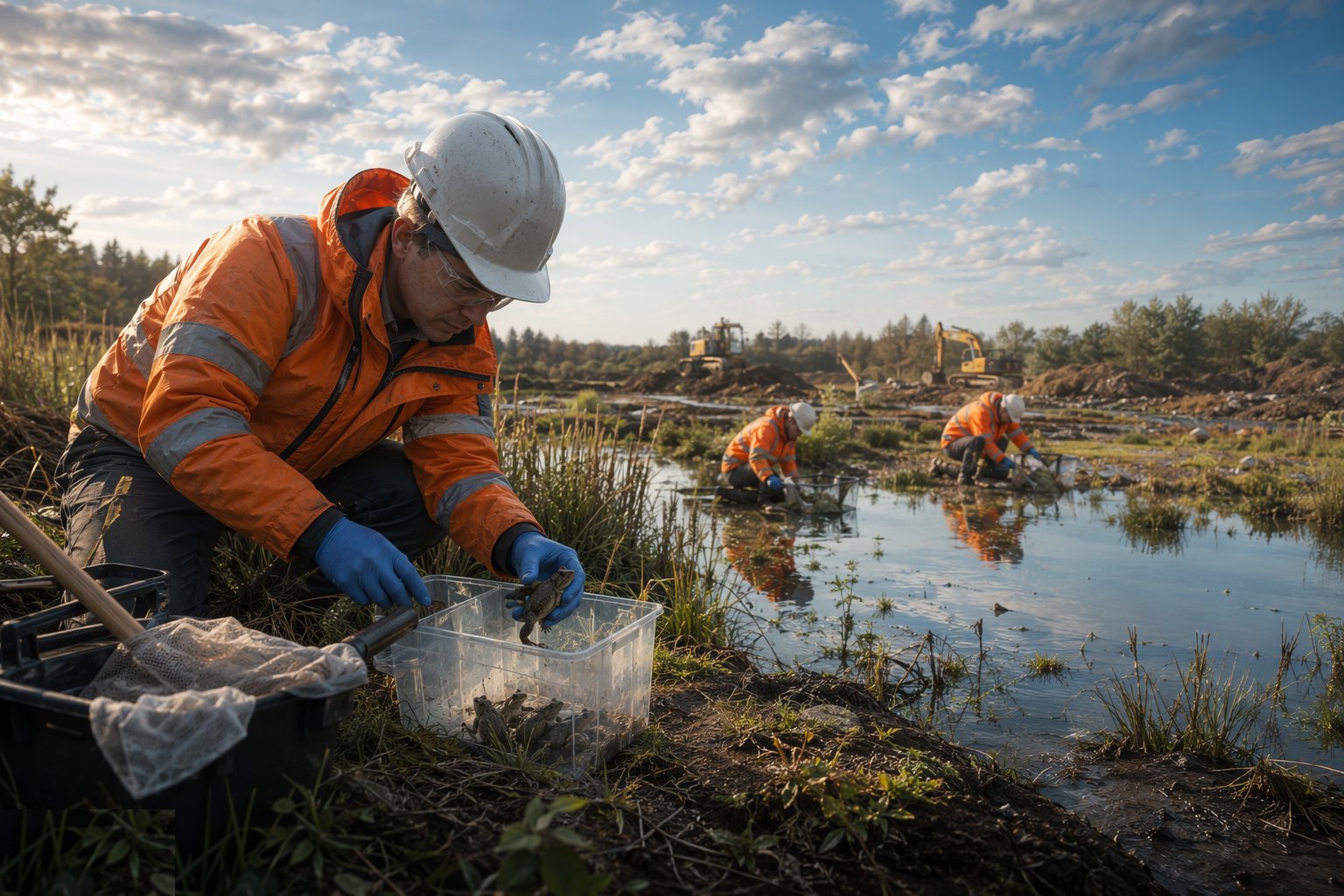
Trapping runs for the licensed duration — often thirty to sixty nights minimum for newts, extended until captures fall to the levels the licence demands — with traps checked at dawn, animals recorded, and every capture moved to the receptor site the same day. The translocation log is a legal document: species, count, condition, destination. Reptiles are encouraged and caught ahead of clearance; badgers are excluded only after monitoring shows the artificial sett is occupied or the main sett is confirmed clear; bats are given their own licensed sequences. The site team's part is patience and access — the ecologists run the trapping, but the machines stay out until the licence says the area is clear, and that date is earned night by night.
Step 4: Build the receptor habitats and structures
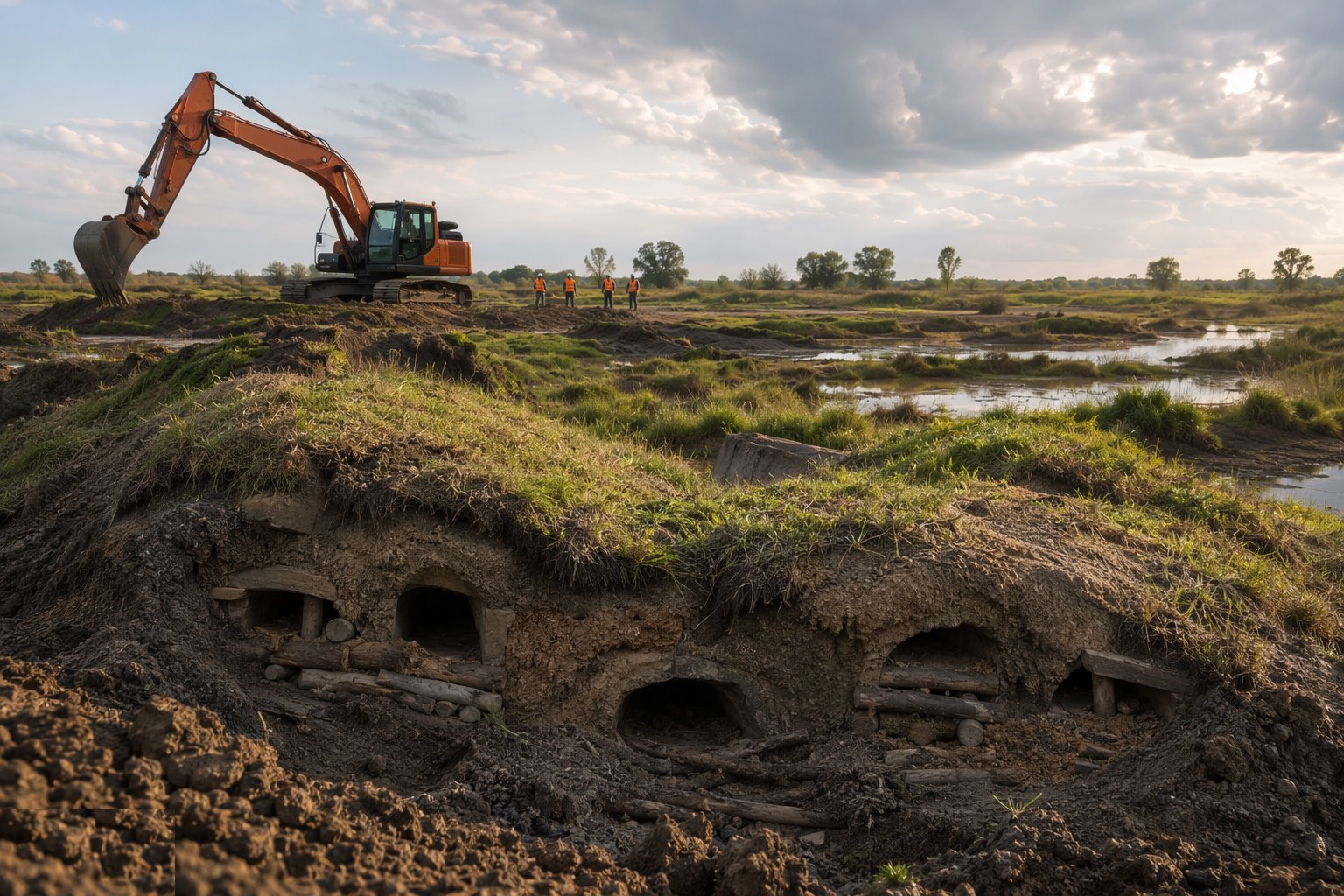
Receptor construction is landscape engineering to an ecological design: ponds dug with gently shelving margins and varied depths, lined where ground will not hold water, planted with native marginals; hibernacula built from logs, rubble and soil into frost-free refuges; artificial setts formed with chambers and tunnels at the licensed dimensions on free-draining ground where badgers already want to be; bat lofts with the right orientation, thermal mass and unlit access. Grassland receptor areas are prepared to low fertility — topsoil off or buried, because rich soil grows docks, not orchids. Every feature is built before translocation needs it, photographed, and surveyed into the mitigation plan.
Step 5: Translocate the habitats
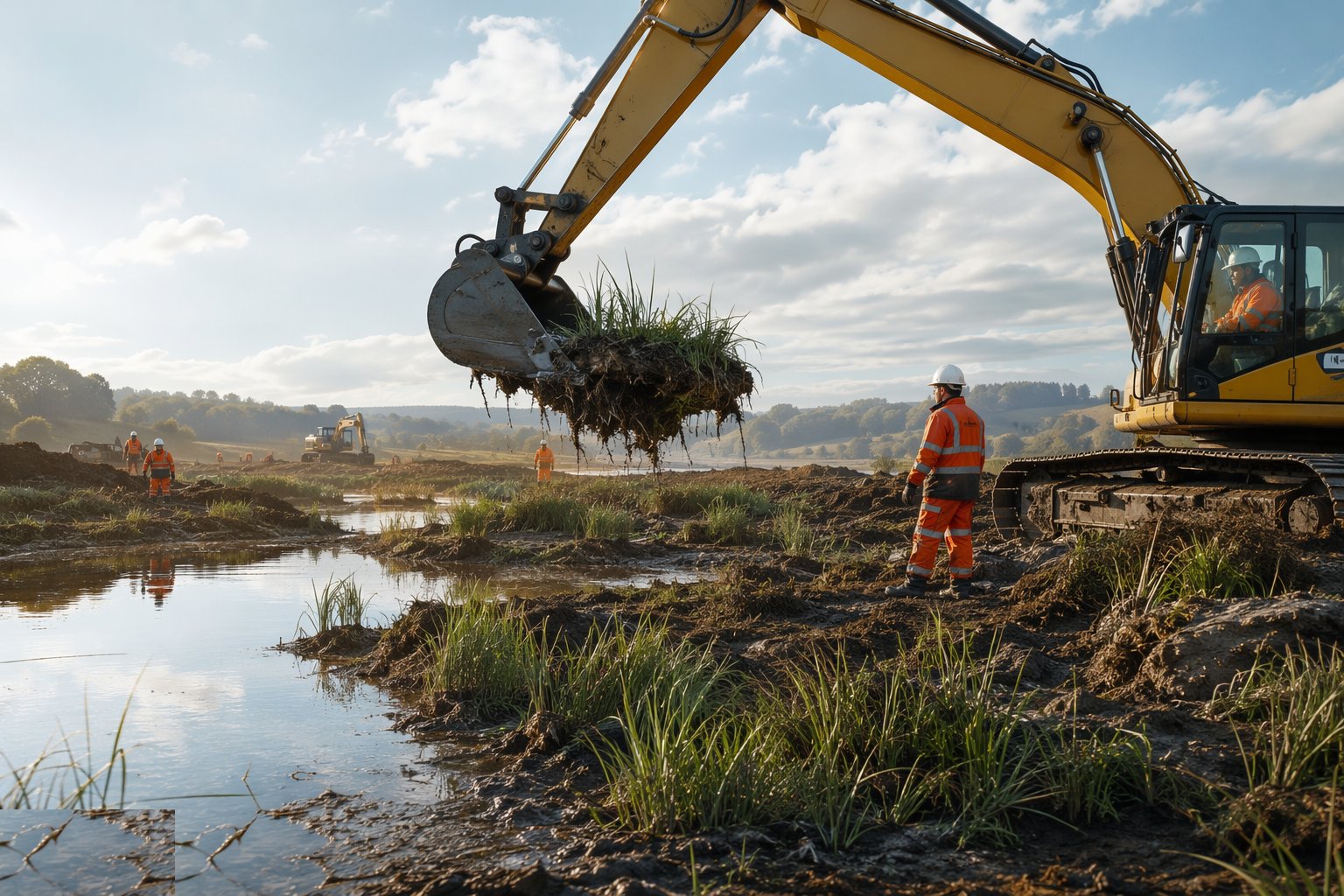
Habitat translocation moves living ground: turves cut to a standard size and depth, lifted by machine, and relaid the same day on a receptor bed prepared to match — same aspect where possible, same drainage, soil profiles kept in order. Timing is dormancy or the agreed window; turves are never stacked, never left to dry, and watered in like the living material they are. Soils translocated for their seed bank go down at the right depth, because a seed bank buried a metre deep is a seed grave. It is blunt-force horticulture with an excavator, and its success is measured in the second and third summers, not on the day of the lift.
Step 6: Clear and construct under ecological supervision
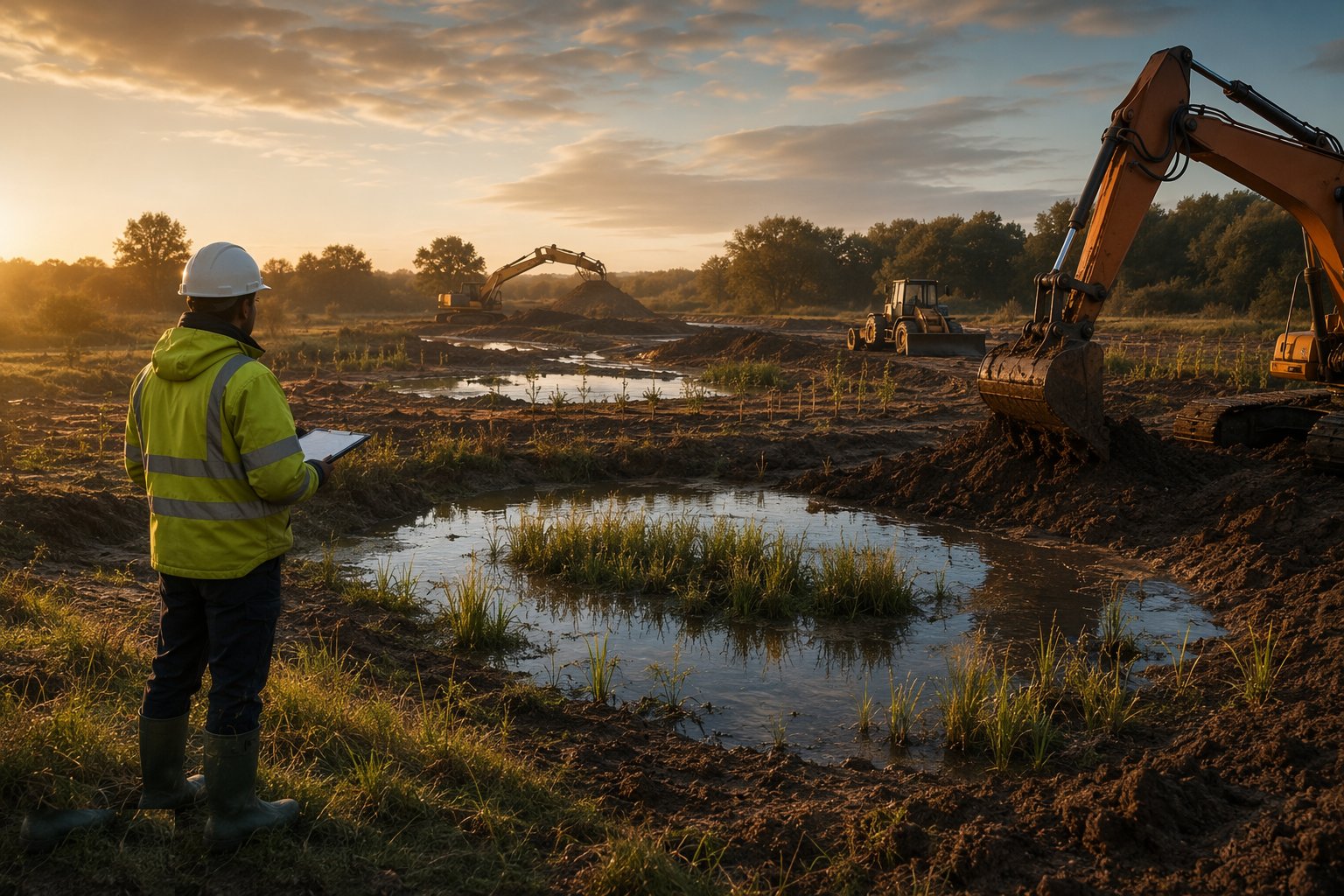
With licences discharged and animals clear, the main works proceed under ECoW watching briefs: vegetation removed in stages and in the right direction so any remaining animals are pushed away from the works, destructive searches by hand of log piles, setts and structures before the excavator follows, and a stop-work rule everyone understands — find a protected species, stop, call the ECoW, and let the licence decide what happens next. Toolbox talks keep the whole workforce species-literate, site rules keep lighting, trenches and materials wildlife-safe (ramps in open excavations, pipes capped), and the ECoW's records close out every licence condition as the construction proceeds.
Step 7: Monitor, manage and report
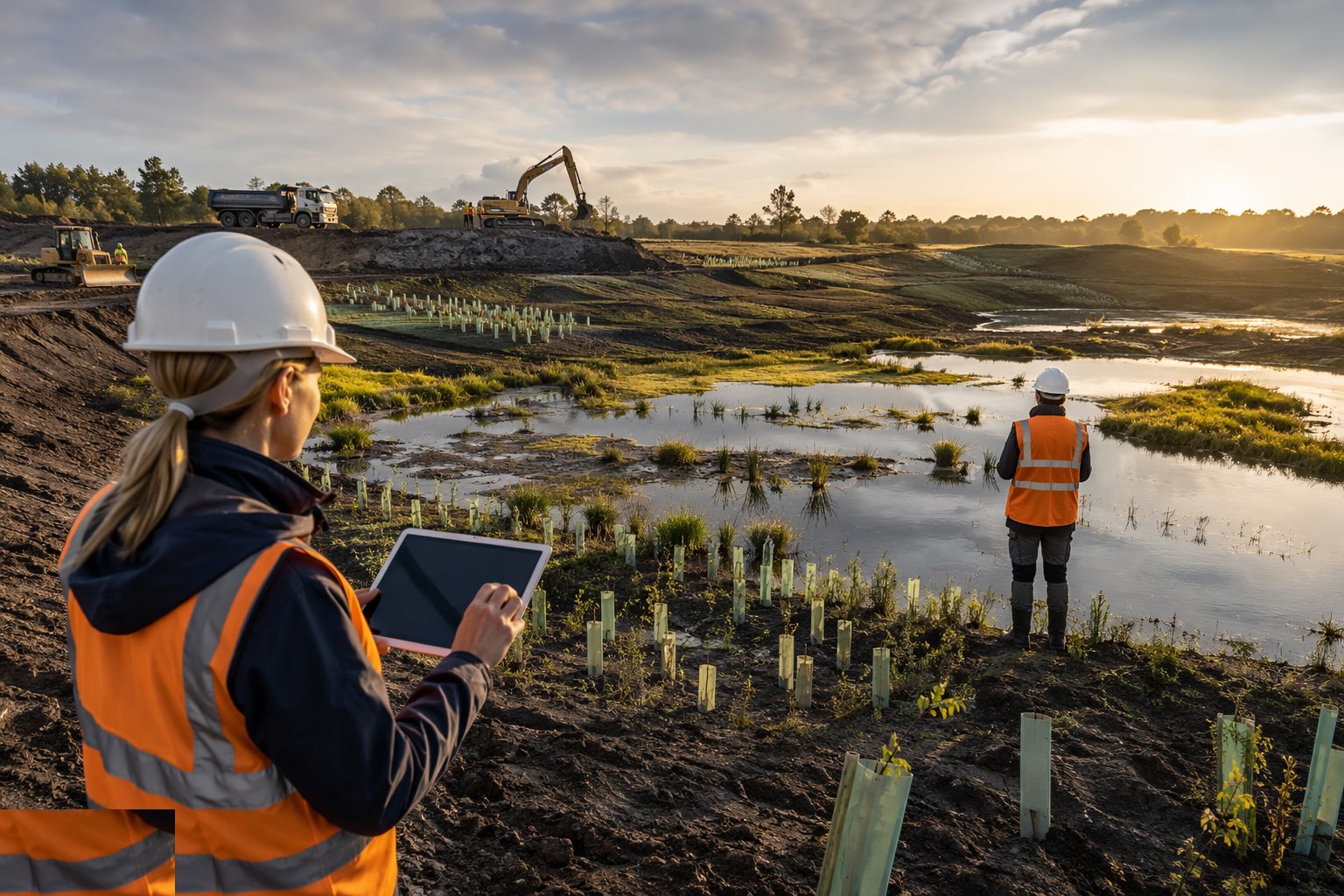
The obligation does not end at practical completion. Licence returns are filed with the evidence — trapping logs, translocation records, photographs of the built receptors — and post-development monitoring begins: population checks on translocated species, condition surveys of created habitats against the biodiversity metric targets, and the thirty-year management plan passing to whoever holds the land, funded and secured as the consent required. Created habitats are maintained like the infrastructure they are — grazing or cutting regimes, pond management, scrub control — because a biodiversity net gain habitat that reverts to rank grass and bramble is a planning breach in slow motion.
Plant and equipment
- Mini-excavators and dumpers for pond and receptor construction in soft, sensitive areas
- Turf-cutting machinery and low-ground-pressure transport for translocation lifts
- Amphibian fencing installation kit: trenching tools, membrane, stakes and tensioning
- Pitfall traps, refugia and ecological monitoring equipment (installed by the ecologists, protected by the site)
- Water bowsers and irrigation for translocated habitats through establishment
- Hand tools for destructive searches and delicate clearance work
Quality control checks
- Licence conditions tracked and closed out with evidence: trapping logs, translocation records, monitoring sheets
- Receptor ponds surveyed for profile and water retention before stocking or planting
- Artificial setts and bat structures built to the licensed drawings and signed off by the ecologist
- Translocated turf and soil handling records: timing, placement and establishment watering
- Biodiversity metric baseline and post-creation surveys filed against the net gain plan
- ECoW photographic and written records maintained as the site's legal memory
Safety considerations
- Open excavations and pitfall traps: fenced, covered or ramped — protecting wildlife and the public alike
- Lone working on dawn trapping rounds: check-in procedures and communications in remote areas
- Work near water on receptor ponds: buoyancy aids and bank discipline during construction
- Legal compliance as a safety rule: the stop-work authority on protected species is absolute, and everyone on site knows it
- Vegetation clearance hazards: chainsaw and strimmer discipline, sharps, and biohazards in setts and burrows
Common defects
- Fencing gaps or poor burial — newts and reptiles walking back into the works area the first wet night
- Receptor ponds that dry out: no liner where one was needed, or dug with steep sides and no shallow margin
- Translocated turf desiccated on the back of a lorry or stacked overnight — dead habitat moved at full cost
- Artificial setts sited where the design wanted them rather than where badgers would live — empty chambers and a licence in trouble
- Works straying outside the licensed window or method, stopped by the regulator with the programme exposed
- Net gain habitats failing from rich soils and no management — rank grass where species-rich meadow was promised
Best suited for
- Developments and infrastructure with protected species on or beside the site
- Linear schemes needing licensed mitigation at landscape scale
- Biodiversity net gain delivery — on-site, habitat banks and offsetting schemes
- Sensitive enabling works where ecology gates the whole programme
How long does Habitat Creation & Environmental Mitigation take?
Typical duration: Great crested newt trapping runs 30–60+ nights inside the seasonal window; receptor habitat construction 4–16 weeks; and monitoring then runs one to five years under the licence — with biodiversity net gain management secured for 30 years..