Soft Landscaping & Planting
The living half of the landscape — topsoil, trees, hedges, shrubs, turf and seed — planted to recognised nursery standards and then watered, weeded and replaced through an establishment period that decides whether it lives.
Last updated 2026-07-28 by the BuildPedia Editorial Team.
What is Soft Landscaping & Planting?
Soft landscaping is deceptively simple to describe and surprisingly easy to get wrong. The sequence runs: strip and respread topsoil to BS 3882, cultivate and ameliorate, plant trees, hedges and shrubs to BS 3936 nursery-stock quality and BS 8545 tree-planting principles, then turf or seed the open areas. Every stage has a season and a specification. Bare-root and rootballed stock goes in during the dormant season — broadly October to March in the UK — while container-grown stock gives year-round flexibility at a price. Topsoil is a material with a certificate, not just "dirt from the heap": imported soil arrives with an analysis sheet, and site-won soil is tested before anyone spreads it over a planting bed.
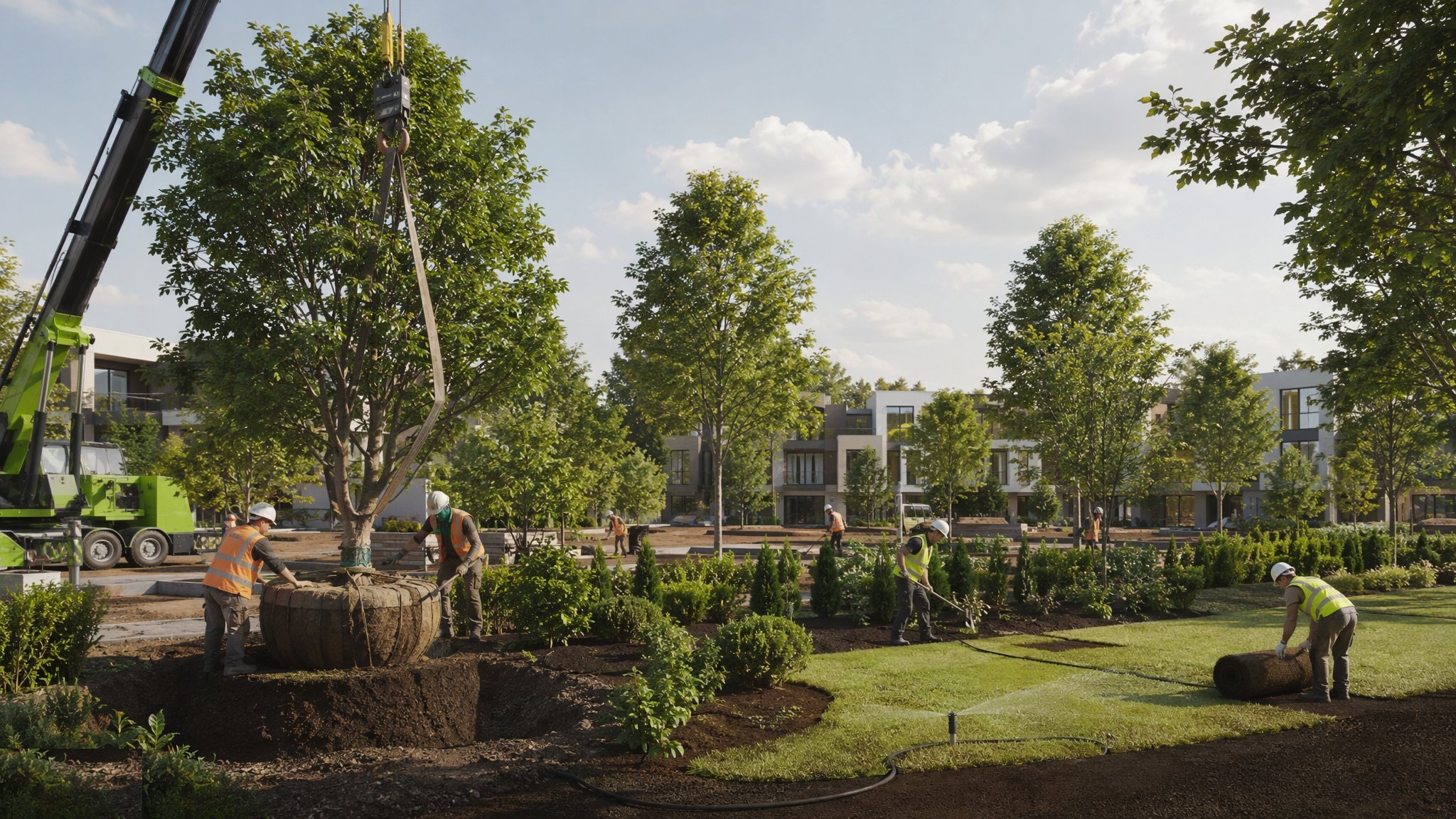
Trees carry the highest risk and the highest value. A semi-mature tree with a rootball weighing a tonne or more arrives by crane, and its survival depends on details fixed in the first hour: planted at exactly the depth it grew at — root flare at finished level, never buried — in a pit two to three times the rootball width, with an anchoring system (underground deadman anchors in soft landscape, guying wires or stakes in open ground), an irrigation pipe to get water to the roots, and a mulch ring to hold moisture and keep strimmers off the stem. Near buildings on shrinkable clay, root barriers and the NHBC foundation-depth rules govern what can be planted where — plant a thirsty willow three metres from a house and you are writing a subsidence claim.
Turfing and seeding finish the open ground: amenity turf laid the day it arrives onto a prepared tilth, joints tight and staggered; or seed drilled, broadcast or hydroseeded where the area or the budget suits, including wildflower mixes that need low-fertility ground and patience. Then the part everyone underestimates — the establishment period, typically twelve months of watering, weeding, firming, formative pruning and like-for-like replacement of failures, usually wrapped into the defects and maintenance obligations. In the Gulf the whole calendar inverts: planting runs in the cool window from about November to March, irrigation is permanent infrastructure (treated sewage effluent for landscape water in many districts), species are salt- and heat-tolerant, and establishment is measured in irrigation-hours per week, not rainfall.
When and why is Soft Landscaping & Planting used?
Soft landscaping is usually the last trade on site and the first thing the client judges — a finished building behind dead trees looks like a failed project. It matters for harder reasons too: landscape proposals are planning conditions, tree planting discharges policies and sometimes biodiversity net gain commitments, and the establishment maintenance period is a contractual obligation with retention or a bond behind it. Getting the season right is not optional in the UK — bare-root stock planted in May is compost with a receipt — and getting the aftercare right is what separates a 5% failure rate from a 40% one. On housing and infrastructure schemes alike, the soft landscape is also the cheapest storm-water, shade and amenity engineering the project will ever buy.
Types of Soft Landscaping & Planting
Semi-mature and standard trees
Nursery-grown trees from feathered whips to semi-mature specimens with rootballs over a tonne, supplied to BS 3936 and planted to BS 8545 with engineered anchoring and irrigation. High value, high risk: each one is a lifting operation, a planting detail and a three-year watering commitment.
Hedges and native whips
Bare-root whips planted in single or double staggered rows for boundary hedges, screens and native structure planting. Cheap per unit and planted by the thousand — success is decided by ground preparation, firming-in and rabbit protection more than by the plants themselves.
Shrub, ground-cover and ornamental beds
Container-grown shrubs, perennials and ground cover planted into prepared beds with compost incorporation and bark mulch. The cosmetic layer of commercial landscaping — dense planting, honest soil preparation and mulch depth are what stop it becoming a weed farm by August.
Amenity turfing
Cultivated turf laid onto a firmed, levelled tilth — same-day laying, tight staggered joints, rolled or firmed into contact and watered in. Instant green for verges, lawns and play margins, and unforgiving of a dry, stale or stony bed.
Seeding, wildflower and hydroseeding
Drilled or broadcast amenity seed, wildflower and meadow mixes on low-fertility ground, and hydroseeding for banks and large open areas. Weeks slower than turf but a fraction of the cost — and the only realistic method on steep or remote ground.
Soft Landscaping & Planting: step by step
Step 1: Strip, stockpile and respread the topsoil
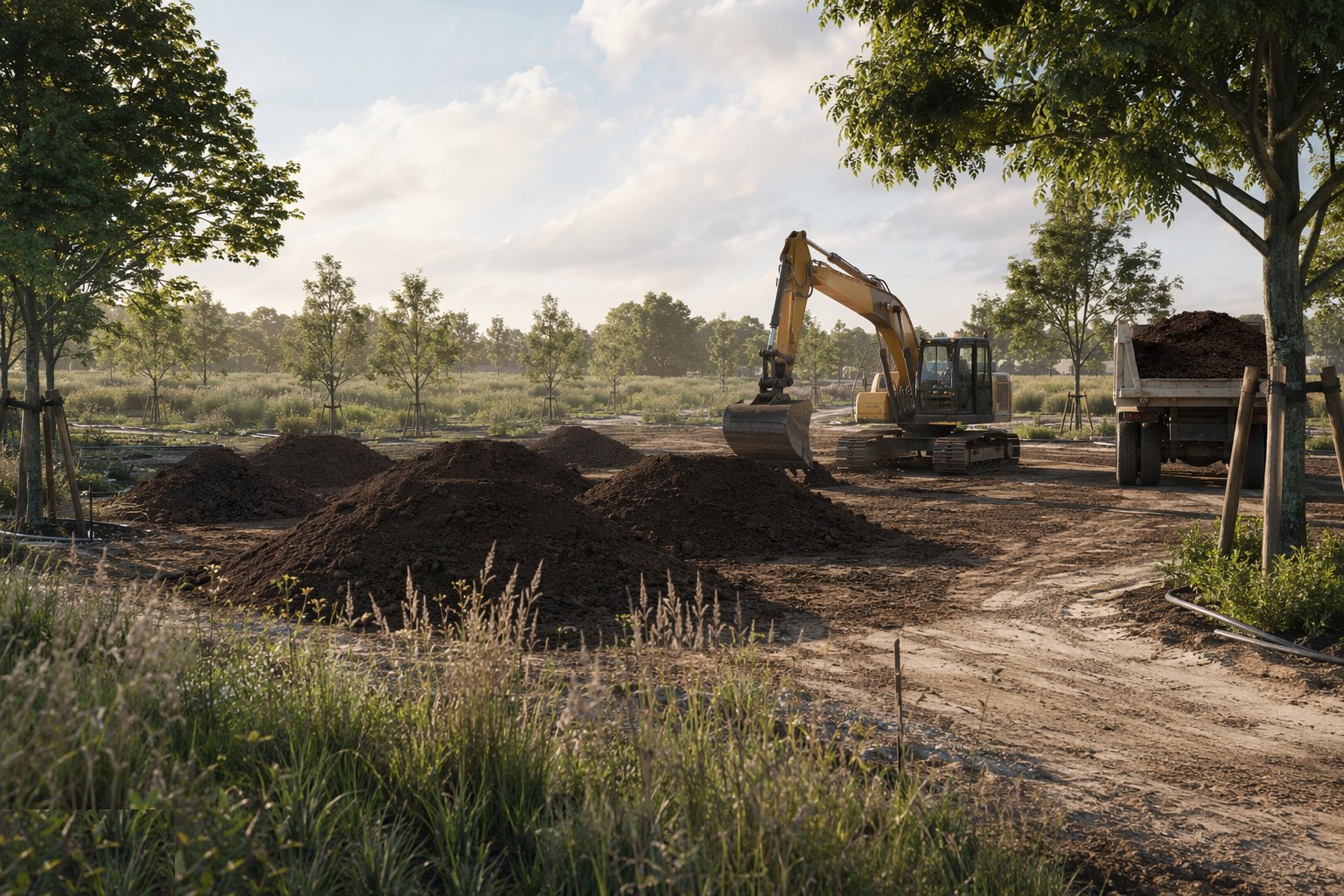
Topsoil is stripped and stockpiled in low heaps — kept under about two metres so it does not anaerobically cook itself — and respread only when the ground is dry enough to work without smearing. Imported topsoil arrives certified to BS 3882 with an analysis sheet for texture, pH, organic matter and contaminants; site-won soil is sampled and tested the same way before it goes anywhere near a planting bed. Spreading depths follow the specification — typically 100–150 mm for grass, 300 mm or more for shrub beds and deeper still for trees in made ground — and the soil is never trafficked wet, because a compacted pan at 150 mm down is a drainage barrier the plants will find long before you do.
Step 2: Cultivate and ameliorate the planting areas
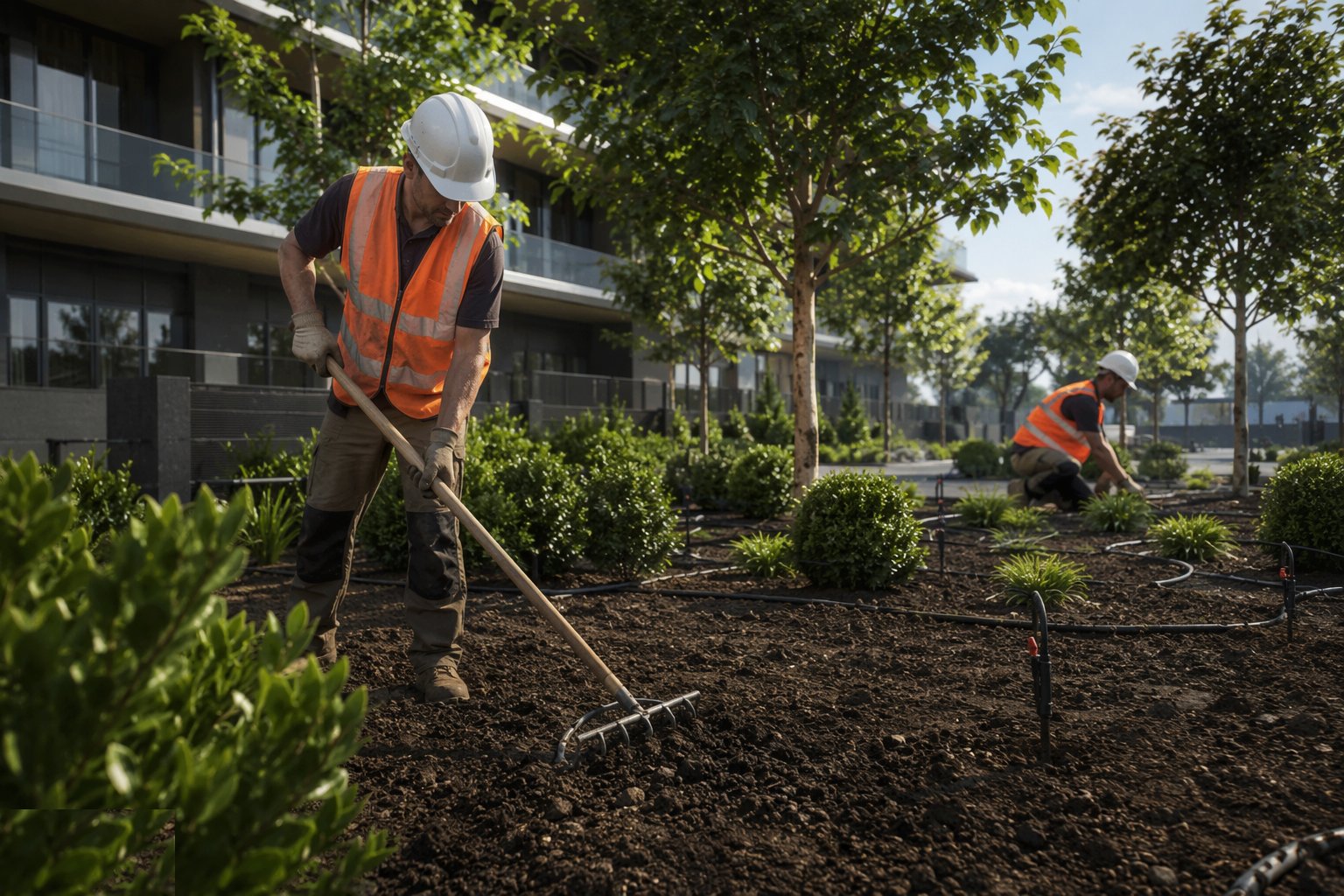
Placing soil is not preparing it. Compacted layers are ripped or subsoiled, beds are rotavated to a fine tilth, stones and builders' debris over 25 mm come out, and organic matter or compost is incorporated where the specification calls for it. Drainage defects are fixed now — a planting bed over compacted subsoil is a sump, and a tree pit in made ground needs its base and sides broken up or the pit becomes a bucket. Levels are finished to falls that shed water without eroding, and the whole area is allowed to settle or is lightly consolidated so the bed does not slump after planting.
Step 3: Set out and plant the trees
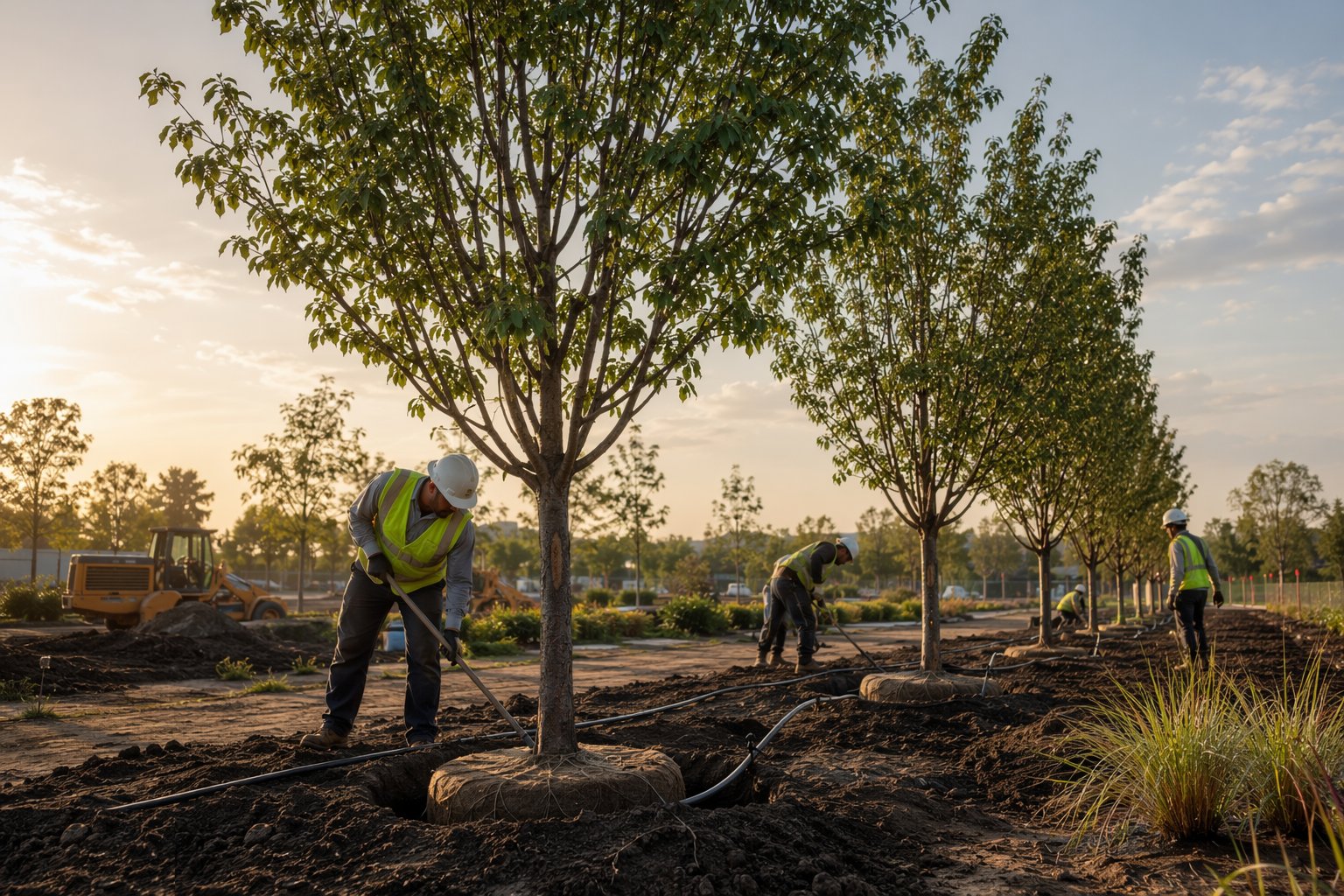
Trees are set out from the planting plan with positions checked against services, sightlines and the root-protection and foundation rules. The pit goes two to three times the rootball width but no deeper than the rootball itself — the tree is planted at the depth it grew at in the nursery, with the root flare visible at finished level, and a tree planted 100 mm too deep is a slow death signed off on day one. Rootballs are lowered in by strop or machine, hessian and wire containers dealt with per the specification, backfill firmed in layers, and the anchoring fitted: underground deadman systems in soft areas, stakes and ties or guying wires in open ground, irrigation pipes to the rootball, and a mulch ring — kept clear of the stem — to finish.
Step 4: Plant hedges, shrubs and beds
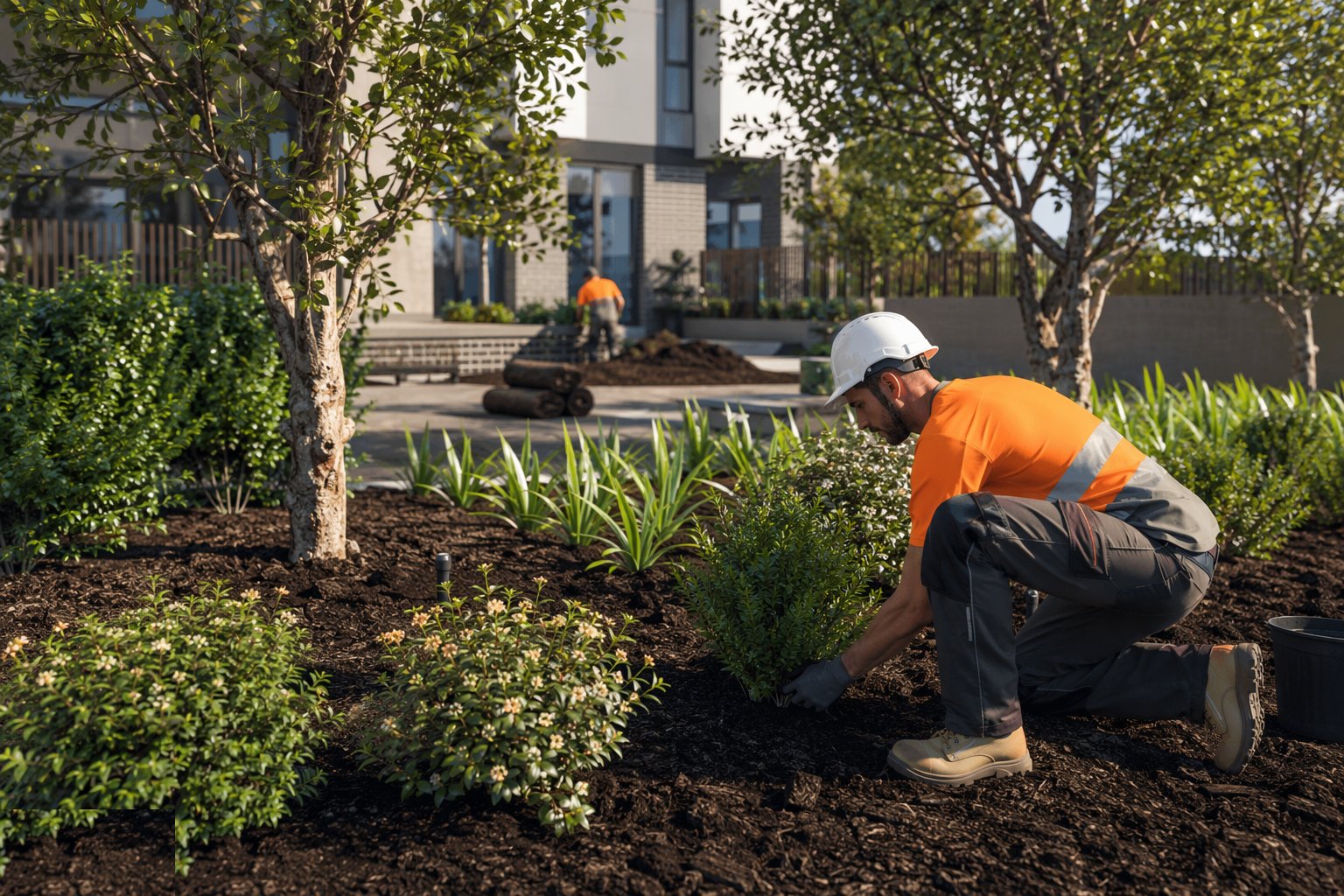
Bare-root hedging and whips go in through the dormant season, notch- or pit-planted at the specified centres in single or double staggered rows, roots spread and firmed so there is no air pocket around the collar. Container shrubs are planted into beds at nursery depth — the compost surface level with the finished soil — with planting compost and slow-release feed where specified, then watered in and mulched to the specified depth. Plants are heeled in if they cannot be planted the day they arrive; roots are never left drying in wind or sun. Spiral guards and shelters go on against rabbits and strimmers, because the fastest way to lose a hedge is to let the maintenance strimmer ring-bark it in June.
Step 5: Turf and seed the open ground
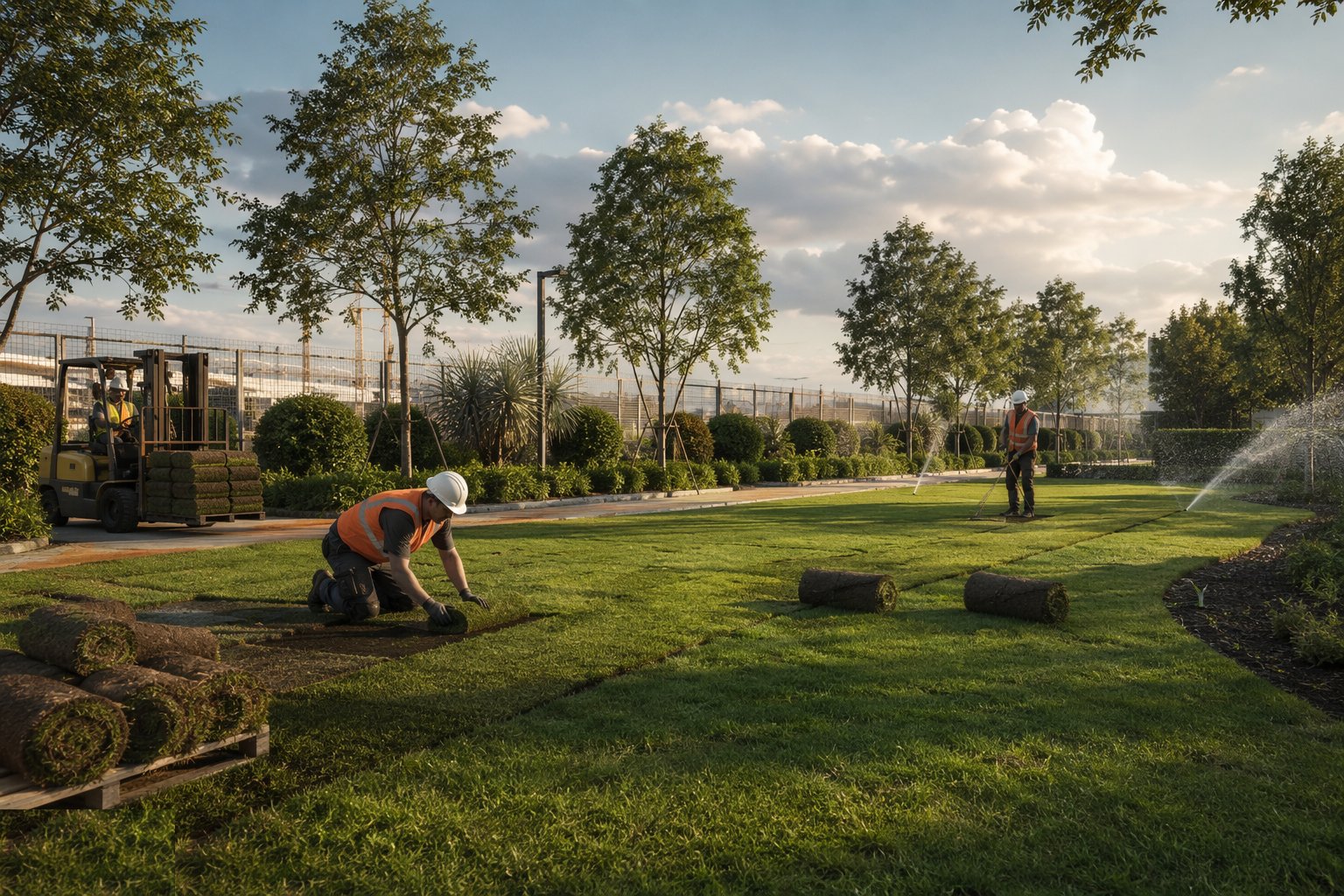
Turf is laid the day it is delivered onto a firmed, raked tilth: joints tight and staggered like brickwork, worked off boards so the bed is not walked hollow, then rolled or firmed into full contact and watered in — shrinkage joints opening across a lawn within the week means the bed was dry or the turf sat on the pallet too long. Seeding goes onto a finer tilth still, drilled or broadcast at the specified rate and lightly raked or rolled, timed to soil temperature and moisture; hydroseeding sprays the seed in a mulch slurry onto banks and large areas where conventional methods cannot travel. Wildflower areas are deliberately hungry — fertile topsoil grows weeds, so the specification often strips it back or uses low-fertility subsoil.
Step 6: Water, weed and establish
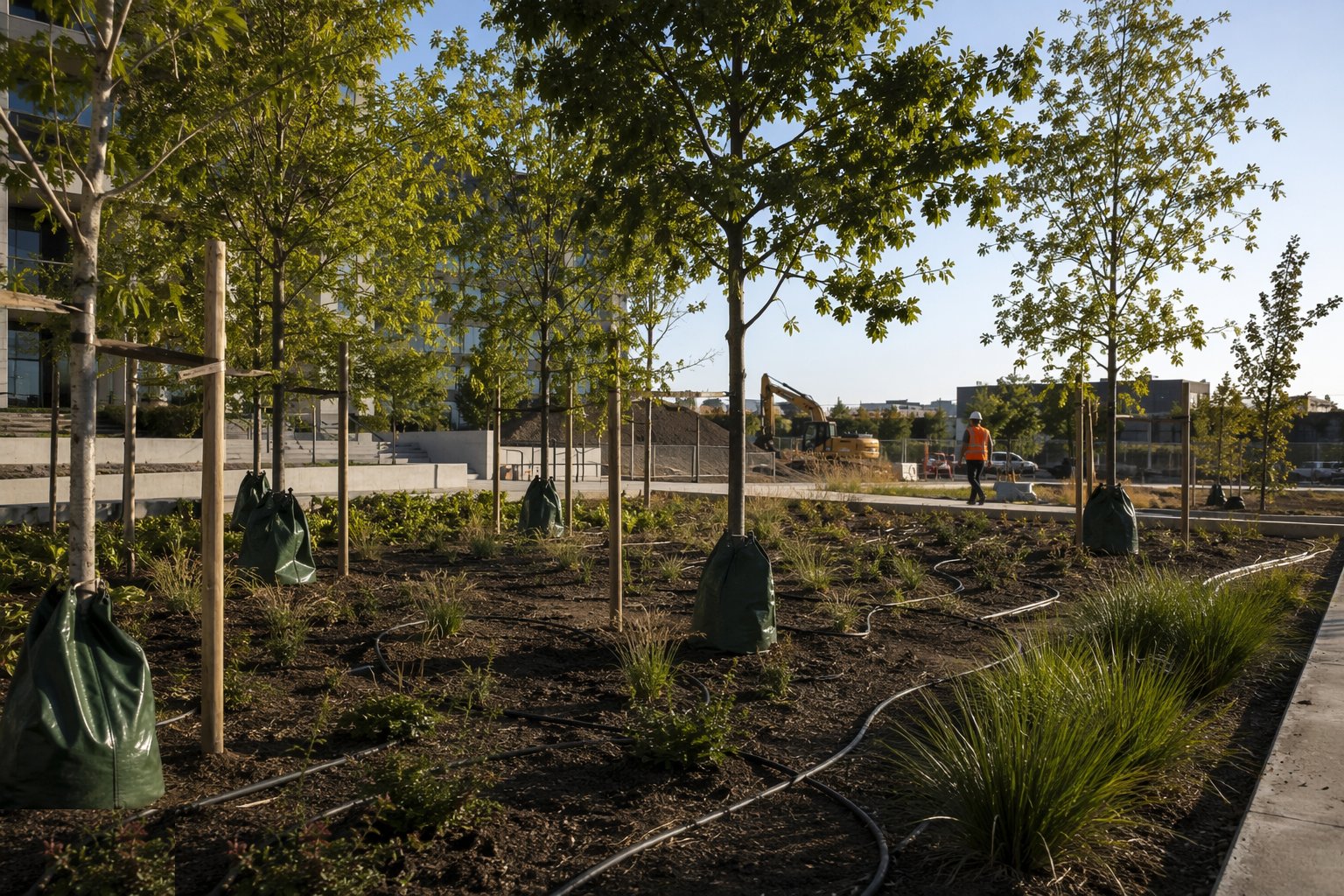
The first three growing seasons decide whether the scheme lives. Watering is planned, not reactive: irrigation systems or watering bags on trees, bowser rounds in dry spells, and records kept because "we watered it" is not an answer at the defects inspection. Weeds are controlled by mulch maintenance, hoeing or approved herbicides by certificated operatives; frost-lifted and wind-rocked plants are firmed back; guying and ties are checked so they anchor without strangling. In the Gulf this stage is the whole game: permanent drip irrigation on treated effluent, establishment irrigation measured in hours per zone, shade and wind protection for young stock, and planting timed so roots are down before the summer.
Step 7: Maintain through the establishment period
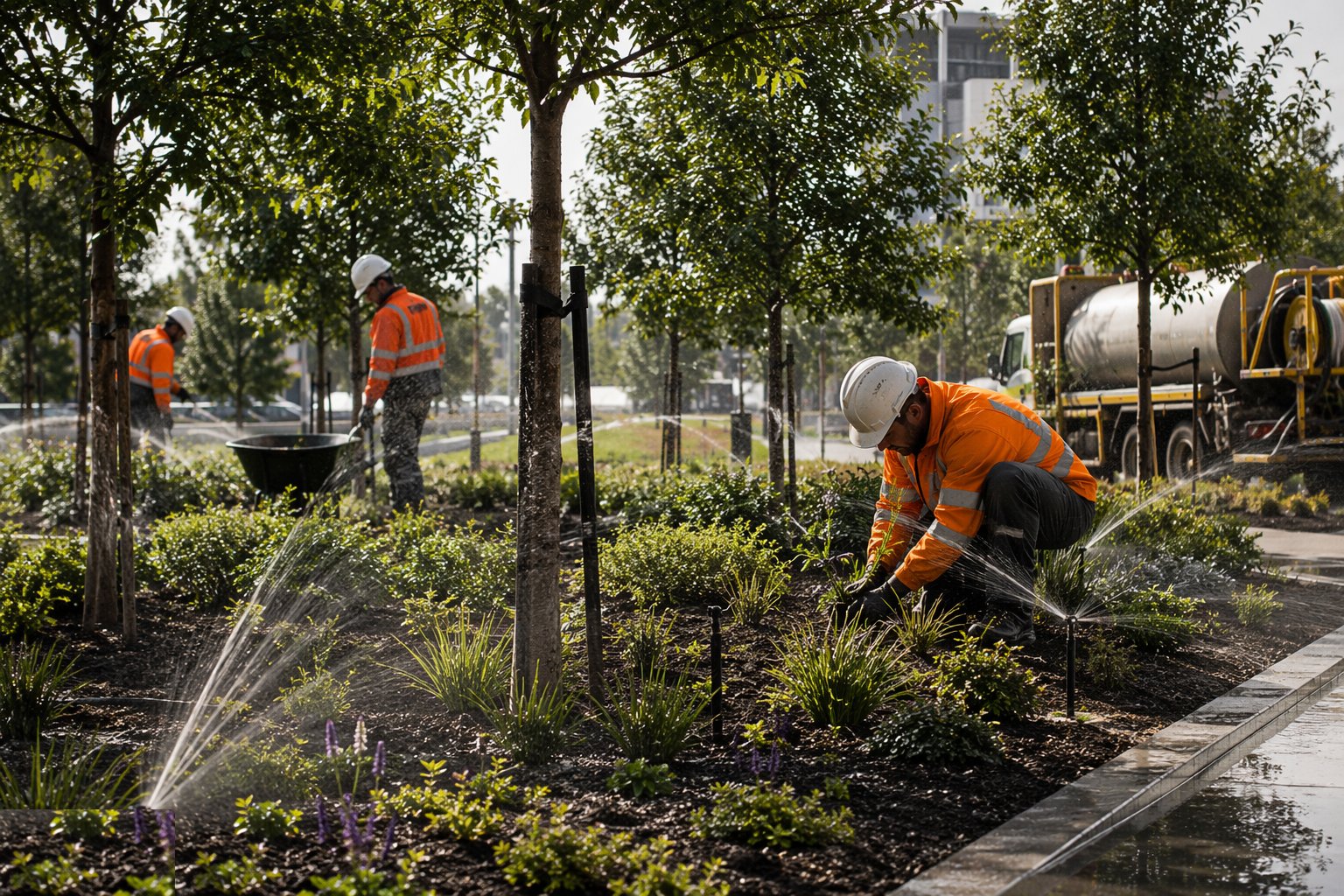
The maintenance period — typically twelve months, often longer on adoption schemes — runs watering, weeding, litter, mowing regimes, formative pruning and the replacement of failures like-for-like in the next planting season. Survival counts are taken at inspection; a scheme that dies back to 80% is replanted at the contractor's cost, which is why the watering records matter. Final handover comes with an inspection, a maintenance schedule for the client's grounds team, and the as-planted drawings — because three years from now someone will be digging a trench through this landscape and will want to know what is where.
Plant and equipment
- Excavators and dumpers for topsoil strip and respread, with low-ground-pressure gear on finished areas
- Rotavators, stone buriers and power harrows for bed preparation
- Cranes, telehandlers and tree spades for semi-mature stock
- Water bowsers, irrigation reels and tree-watering bag systems
- Turf cutters and laying boards; rollers for firming
- Hydroseeding unit for banks and large seeding areas
- Augers and post-hole borers for tree pits and fencing
Quality control checks
- Topsoil analysis certificates to BS 3882 for every source, imported or site-won, before spreading
- Nursery stock inspected against BS 3936 on arrival: true to name, sound root system, undamaged
- Planting depth checked per tree — root flare at finished level, never buried
- Anchoring, guying and irrigation installations inspected before backfilling closes them in
- Watering and maintenance records kept through the establishment period as evidence at inspection
- Survival counts and like-for-like replacement logged against the contract percentage
Safety considerations
- Semi-mature rootballs are suspended loads over a tonne: lifting plans, certified strops and no one under the load
- Buried services in verges and planting areas: CAT scan and permit to dig before pits are opened
- Pesticides and herbicides applied only by certificated operatives (PA1/PA6 in the UK) with drift controls near public areas
- Gulf heat: midday-break rules, hydration and shaded rest through the establishment watering season
- Hand tools, augers and strimmers: guarding, eye protection and manual-handling discipline on repetitive planting
Common defects
- Trees planted too deep — root flare buried, stem girdling and a slow decline that shows in year three
- Rootballs planted dry or desiccated in storage, dead before the first summer whatever the watering says
- Guying and ties strangling stems, or so loose the tree rocks and never roots in
- Turf shrinking open at the joints from a dry or compacted bed and late laying off the pallet
- Pits in made ground acting as sumps — waterlogged roots and anaerobic death in a wet winter
- Establishment watering that never happened: losses discovered at the twelve-month count, replaced at cost
Best suited for
- Housing developments and highways verges with planning-conditioned landscape schemes
- Parks, public realm and civic spaces where establishment quality is publicly visible
- Commercial and campus landscapes with maintenance-period contracts
- Podium and roof landscapes using lightweight substrates and restrained planting
How long does Soft Landscaping & Planting take?
Typical duration: Ground preparation and planting for a typical development package runs 4–12 weeks within the planting season (October–March in the UK for bare-root stock); the establishment maintenance period then runs a minimum of 12 months, with failures replaced in the following season..