Surface Mine Infrastructure
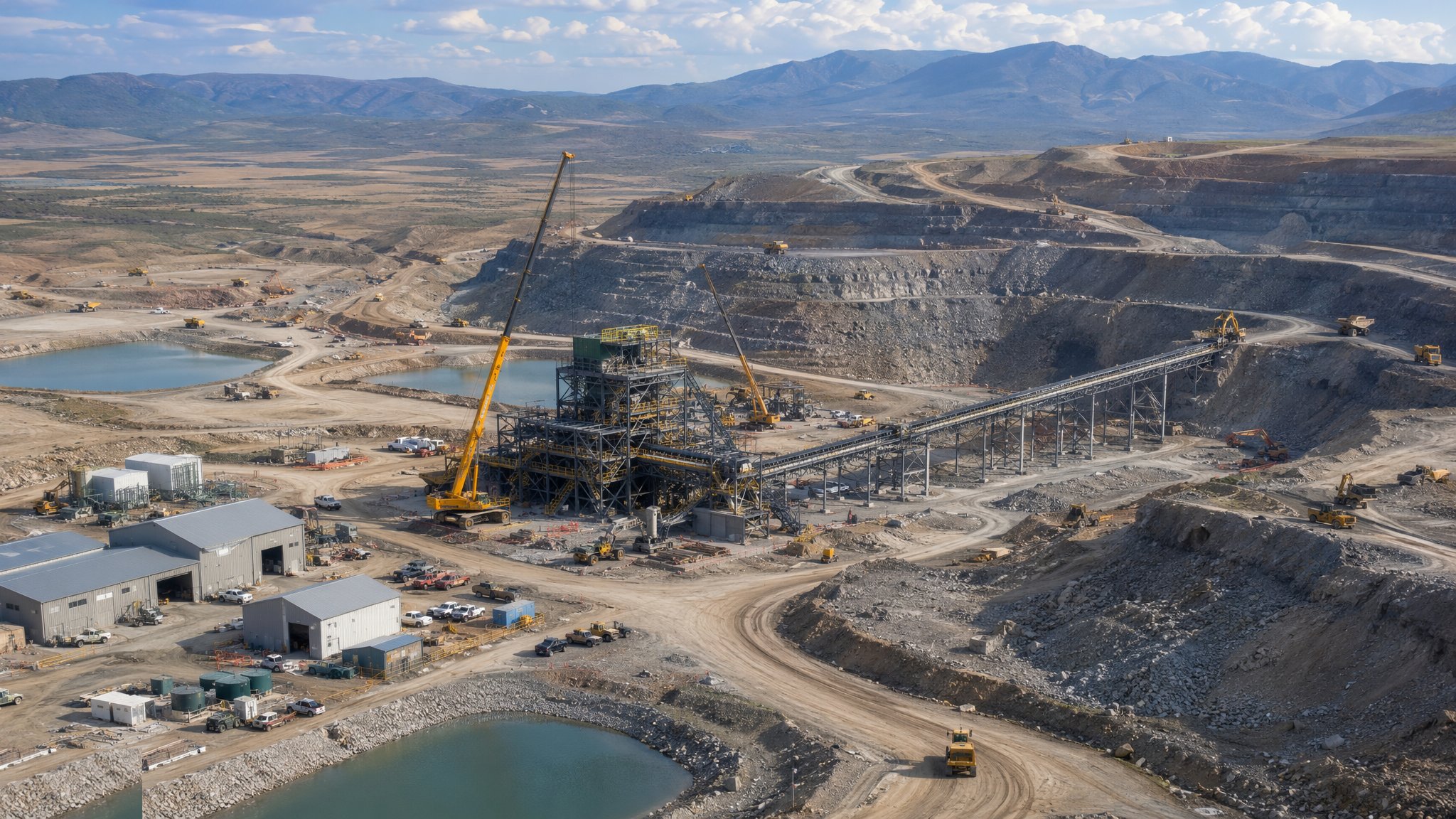
The working surface of an open pit — haul roads engineered like assets, ROM pads and tipping points, workshops and washdowns, explosive stores behind their bunds, and water that is managed or manages you.
Last updated 2026-07-28 by the BuildPedia Editorial Team.
What is Surface Mine Infrastructure?
A surface mine is a construction site that never finishes, and its infrastructure is built like it. The haul roads are the mine's arteries: unbound or lightly bound pavements — but engineered, not graded dirt — running from pit floor to ROM pad, crusher or waste dump, carrying trucks with payloads of 100–400 tonnes on tyre pressures that destroy ordinary roads in weeks. Geometry is safety law: running widths a multiple of the widest truck, grades the fleet can climb loaded without straining, superelevation and drainage that keep water off the running surface, and safety bunds (window berms) along every crest edge built to at least half wheel height of the largest machine — because a haul truck over a crest edge is the accident the industry measures itself by.
Around the roads sits the estate of fixed plant the pit depends on. The ROM pad and tipping point — where run-of-mine ore meets the primary crusher — is a heavy structure of reinforced concrete walls, steel-lined dump pockets and ground engineered for a truck reversing a thousand times a day. Workshops are big-span sheds with heavy-duty slabs, overhead cranes and wash-down bays draining through silt and oil separation, because you cannot maintain a 300-tonne truck in the mud. Explosive stores and mixing facilities sit behind bunds at regulated separation distances, on their own permits, with their own access control. And underneath everything is the water: pit dewatering wells and sumps keeping the working floor dry, surface-water diversion drains keeping the catchment out of the pit, and settlement ponds and treatment systems between the mine and any discharge consent — in mining jurisdictions everywhere, and under DM/RTA drainage approvals in the Gulf, water that leaves the site uncontrolled is a licence problem, not a puddle.
What distinguishes mine infrastructure from a normal earthworks job is that it is never "finished" — it is operated, worn and rebuilt continuously. Roads are re-sheeted with crushed rock as traffic grinds them down; bunds slump and are re-dozed; pads are re-levelled as the floor drops. The construction question is therefore not just "is it built right" but "is it maintainable at production pace": material sources for road sheeting within haul distance, drainage that can be cleaned by a grader, workshop layouts that swallow the biggest machine with the door shut. Build it as an operating asset from day one, and the mine inherits infrastructure; build it as temporary works, and the mine inherits a permanent problem.
When and why is Surface Mine Infrastructure used?
Mine infrastructure runs ahead of and alongside production for the life of the pit — the first roads and the ROM pad are on the critical path to first ore, and every pushback or pit deepening spawns new ramps, pads and dewatering as a rolling programme. The method exists because surface mining economics are haulage economics: the cost per tonne lives in truck cycle times, tyre life and fuel burn, and all three are set by the roads — their grades, rolling resistance and condition — more than by any machine. It matters because the failure modes are catastrophic or chronic with nothing between: a bund that fails kills, a washdown bay without oil separation poisons the discharge consent, an under-engineered tipping point cracks under cyclic loading and stops the crusher, and a crusher that stops stops the mine. Get the geometry right, the drainage honest and the heavy structures properly founded, and the pit runs; get them wrong and you are rebuilding infrastructure around production, at production prices.
Types of Surface Mine Infrastructure
Hard-rock open pits
Metal mines — copper, gold, iron ore — with deep benched pits, long spiral ramps, high truck payloads and permanent dewatering. Infrastructure is engineered to design life and rebuilt as the pit deepens; the haul road network is the largest moving structure on site.
Quarries and aggregate operations
Shallower workings serving construction markets: shorter hauls, smaller fleets, crushers and screens near the face, and heavy interaction with the public road network at the gate. Dust, noise and traffic management are the licence conditions that shape the infrastructure.
Opencast and strip mining
Coal and shallow deposits worked in strips with cast-overburden and progressive restoration: infrastructure that moves with the strip — haul routes, pads and water systems relocated as the void advances and the backfill follows.
Remote and desert sites
Mines where everything is imported: camps, power, fuel farms and water supply built as part of the infrastructure package, haul roads engineered from local won materials, and maintenance self-sufficiency because the nearest dealer is a day away. Gulf quarrying adds heat, dust and authority approvals on every discharge.
Surface Mine Infrastructure: step by step
Step 1: Establish access, drainage diversion and the first haul routes
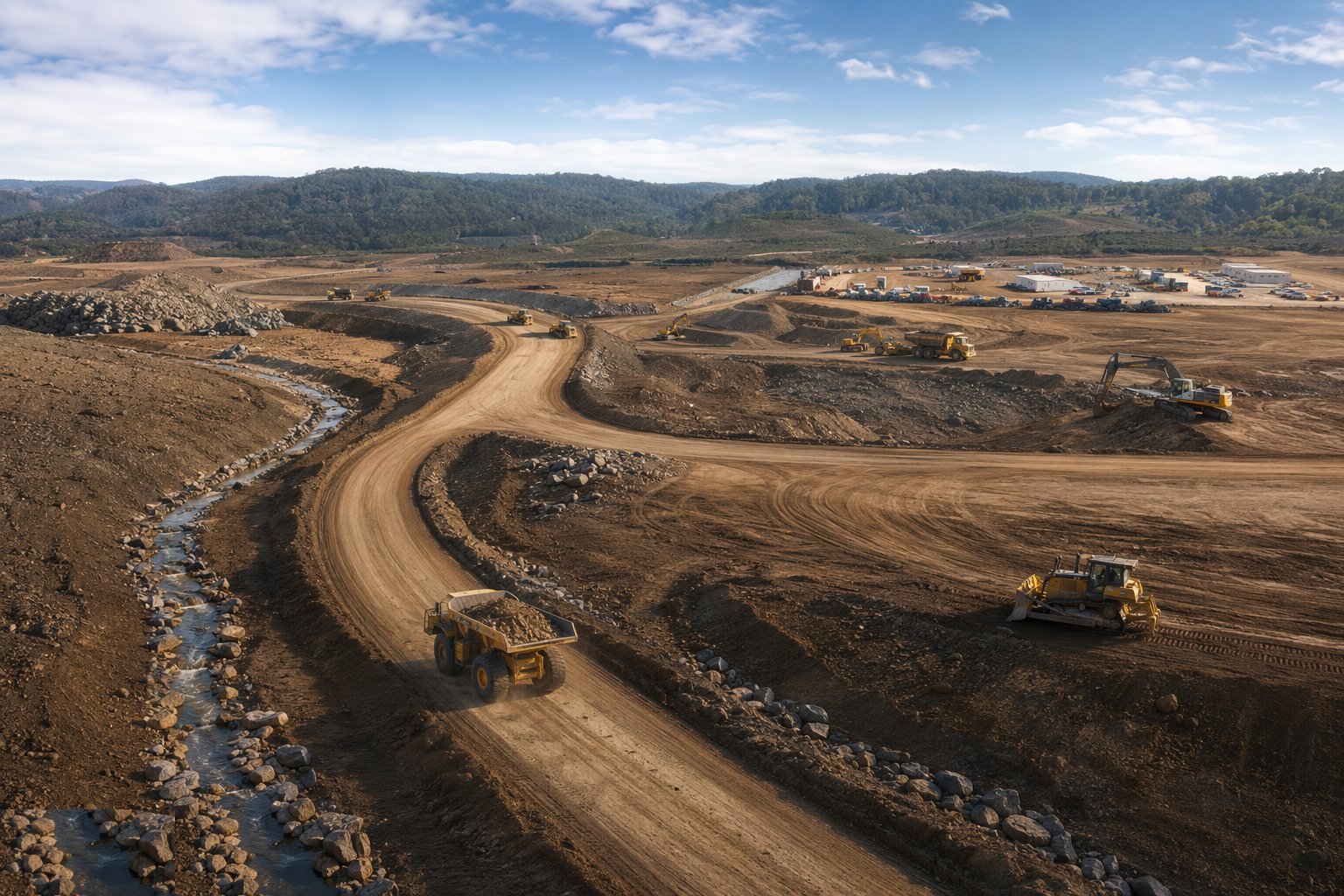
Before the pit produces, the site must work: access from the public road with the junction and visibility the highway authority or RTA approved, perimeter and diversion drains cutting the catchment off above the workings, and the first haul routes cut and sheeted to get construction plant and early production moving. Roads are built in layers like any pavement — formation prepared and proofed, sub-base and running course of selected crushed material placed and compacted — with the drainage cut first, because a road without drains is a dam waiting for rain. Crossfall and grade stakes are set from survey control; the grader's eye is good but the survey is law.
Step 2: Engineer the haul road network and ramps
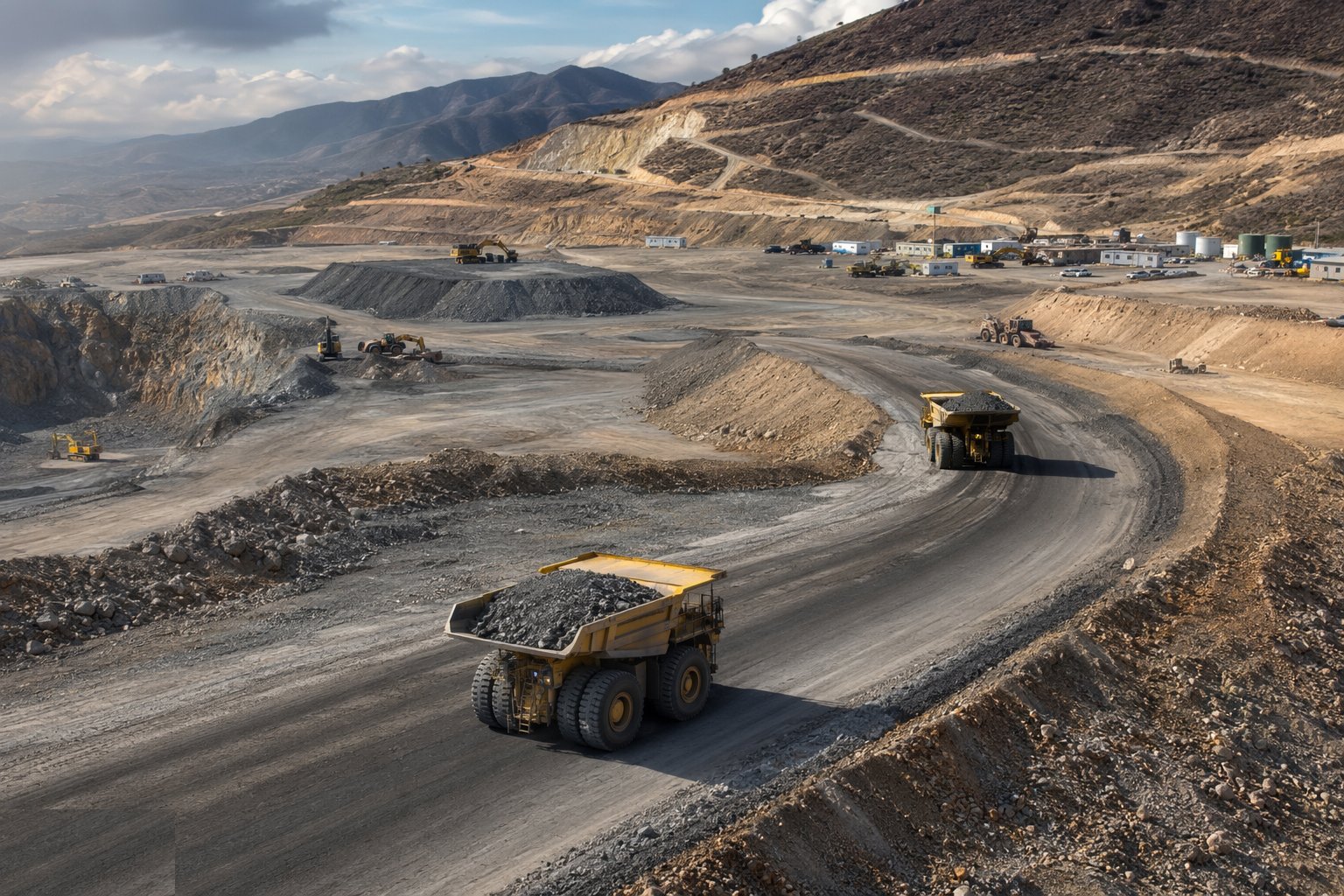
The permanent network is built to the fleet it carries: running widths set as a multiple of the widest truck with passing and drainage allowances, grades held to what the trucks climb loaded at sensible rimpull, curves superelevated, and crest edges bunded to at least half wheel height of the largest machine — dozed from competent material, maintained, and treated as safety structures, not spoil rows. Running surfaces are sheeted with crushed rock that the site can keep winning and re-laying, because road maintenance is a production cost line that never ends. Signage, speed control, lighting on night-running sections and the traffic rules of the pit are part of the build, not the induction video.
Step 3: Build the ROM pad and tipping point
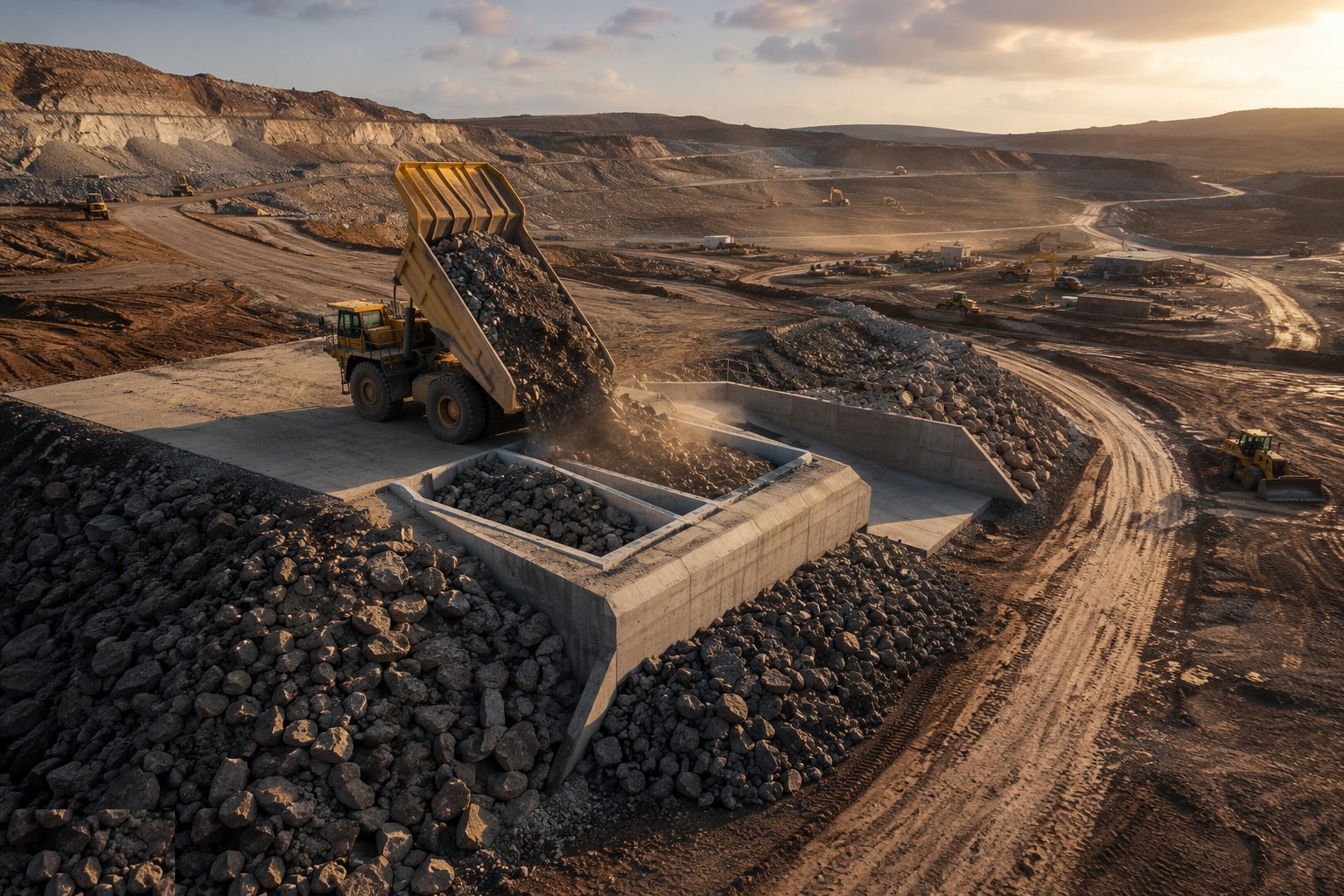
Where ore meets crusher, the ground takes punishment: the ROM pad is levelled, drained and surfaced for articulated traffic dumping at production rates, and the tipping point itself — retaining walls, dump pocket, feeder chamber and crash decks — is cast in heavy reinforced concrete with steel liners where the rock lands. Truck reversing positions, edge protection and the tipping protocol are engineered into the geometry: bunds or windrows at the tip edge, spotter positions, lighting and cameras where the rule demands them. Foundations go to competent ground with the dynamic and impact loads of the crusher plant in the design — this structure is a machine foundation wearing civil engineering's clothes.
Step 4: Construct workshops, fuel and washdown facilities
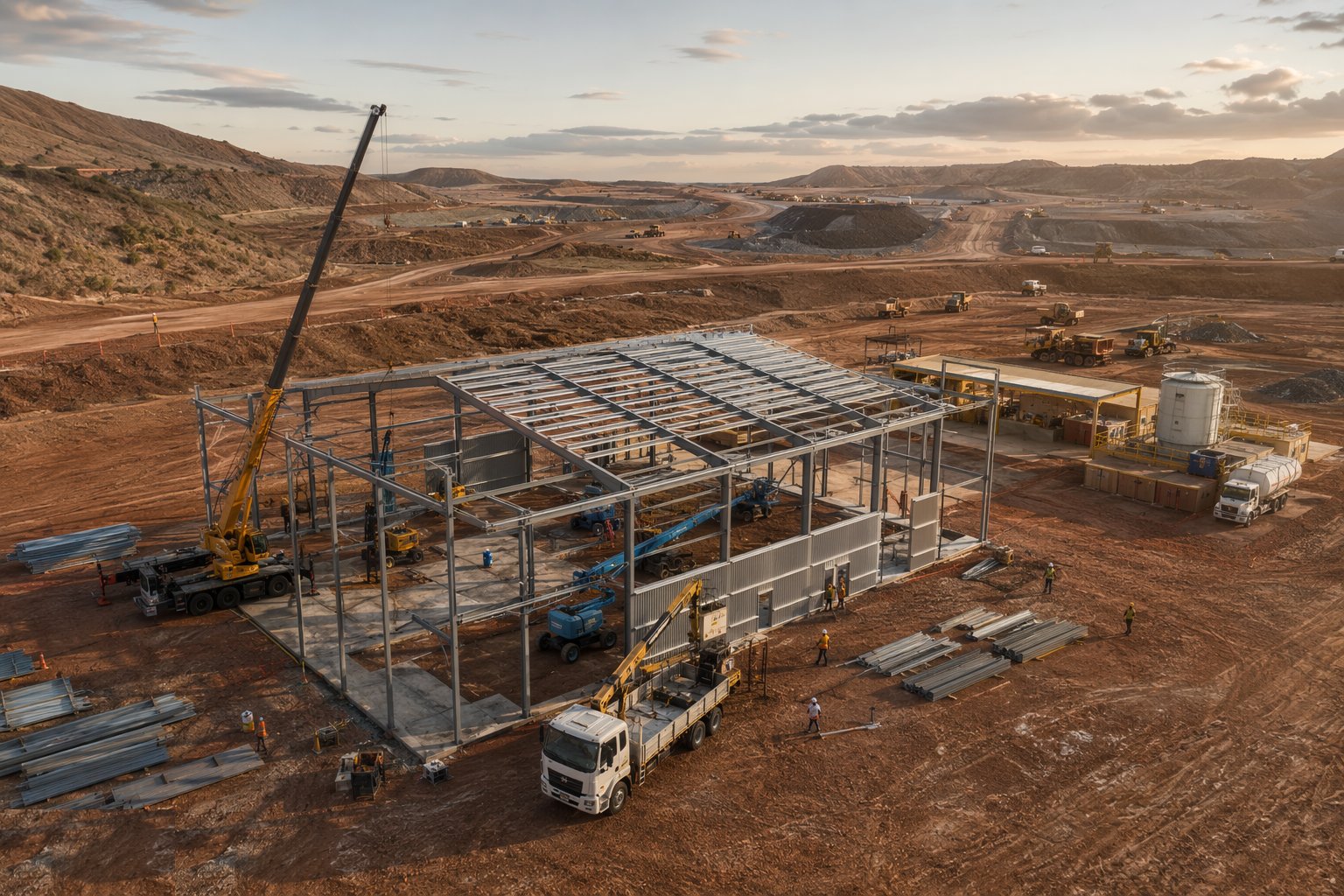
The maintenance estate is sized to the biggest machine with the doors shut: portal-frame workshops on heavy slabs with pits and overhead cranes, lube and fuel farms bunded to the storage regulations, tyre-handling areas with the falling-object discipline of a major hazard, and washdown bays draining through silt traps and oil separators before anything reaches the site water system. Slabs are thick, jointed and drained; the wash water is recycled where the water balance demands it. In the Gulf and other hot jurisdictions, heat management in the shops — ventilation, shaded aprons, midday-break compliance — is part of the design, not a welfare memo.
Step 5: Install the explosives facilities
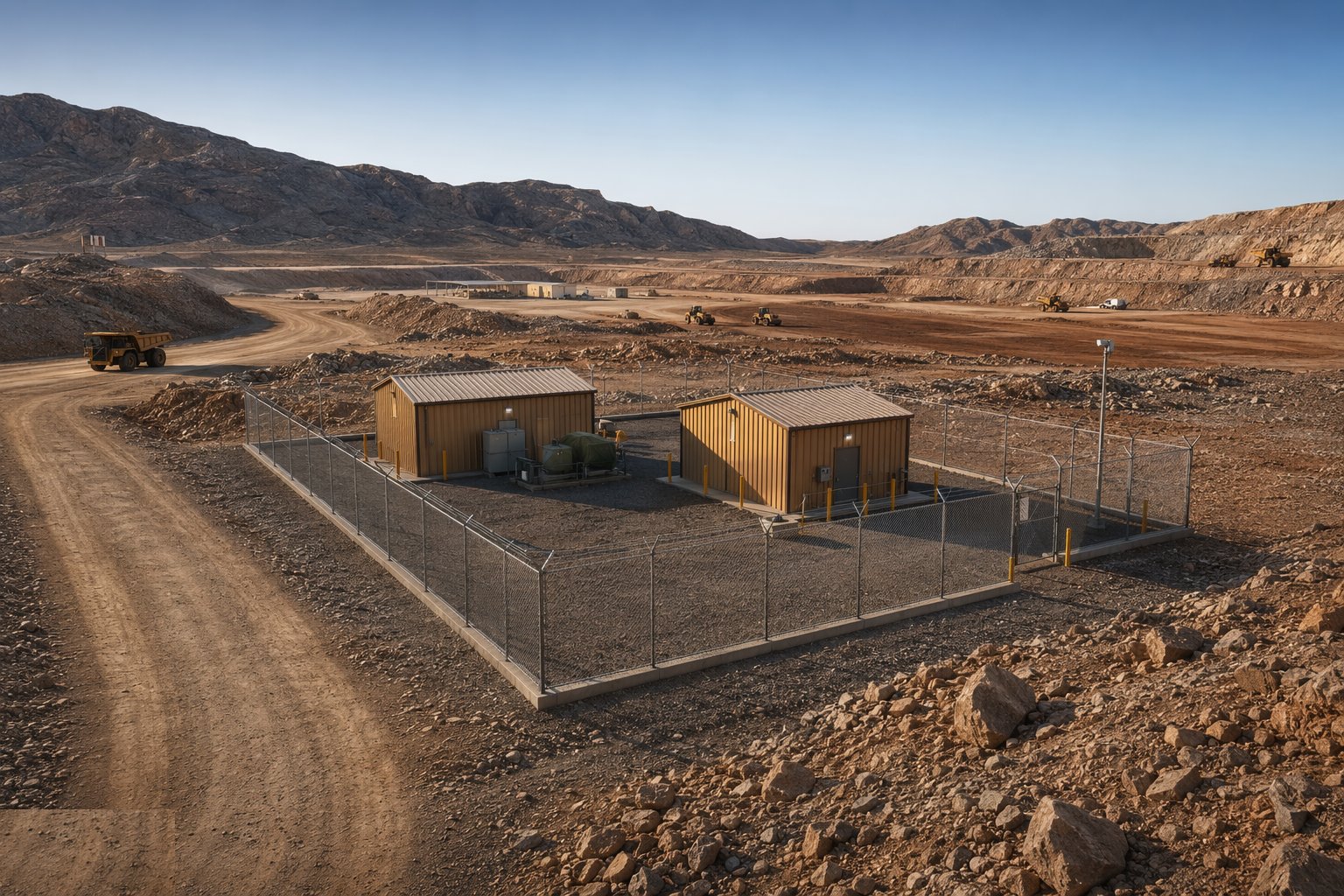
Explosive stores, AN mixing and emulsion facilities sit at regulated separation distances from workings, roads and occupied buildings, on bunded and mounded compounds with their own access control, lightning protection and security fencing, licensed and inspected by the relevant authority. Magazines are sited and oriented per the quantity-distance tables; mixing plants get their own containment, earthing and operating procedures. The construction is ordinary; the discipline is not — these compounds are permitted structures where a change of use, a new road alignment or a production pushback that creeps inside the separation distance is a regulatory event, not a site adjustment.
Step 6: Commission dewatering and mine water management
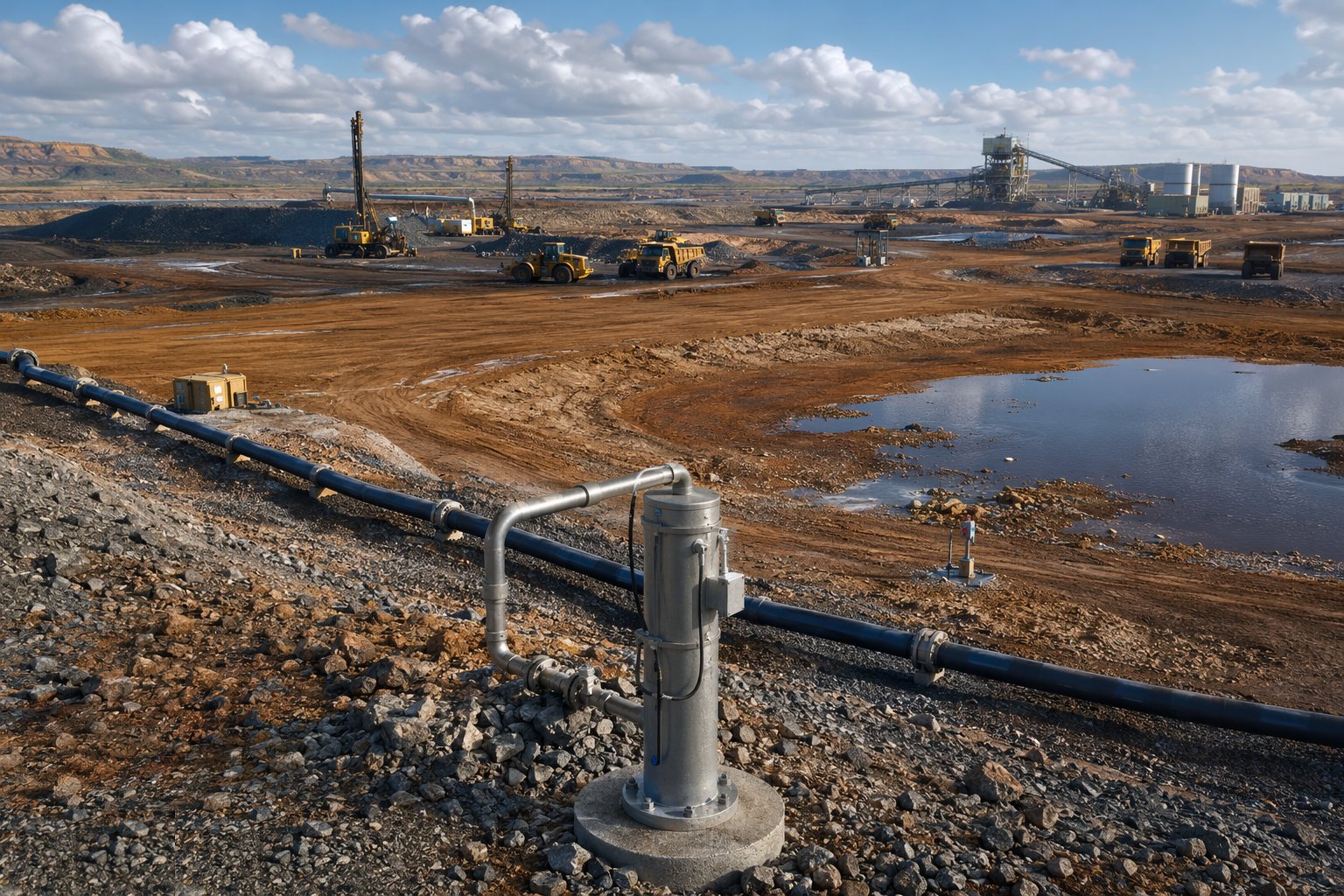
Water control runs as a system, not a sump: dewatering wells or in-pit sumps with rising mains to keep the working floor dry, diversion drains holding the catchment out, settlement lagoons and treatment trains sized to the storm events the climate actually delivers, and monitored discharge points to the consented outfall. Pipelines are routed where trucks cannot find them; pumps are duplicated where production depends on them; pond levels and water quality are instrumented and reported. In the Gulf, discharge to drainage networks or sea carries DM/RTA or environmental authority approval with quality limits — and groundwater drawdown near neighbours gets the same monitoring conversation as any city dewatering job.
Step 7: Hand over to operations with a maintenance plan
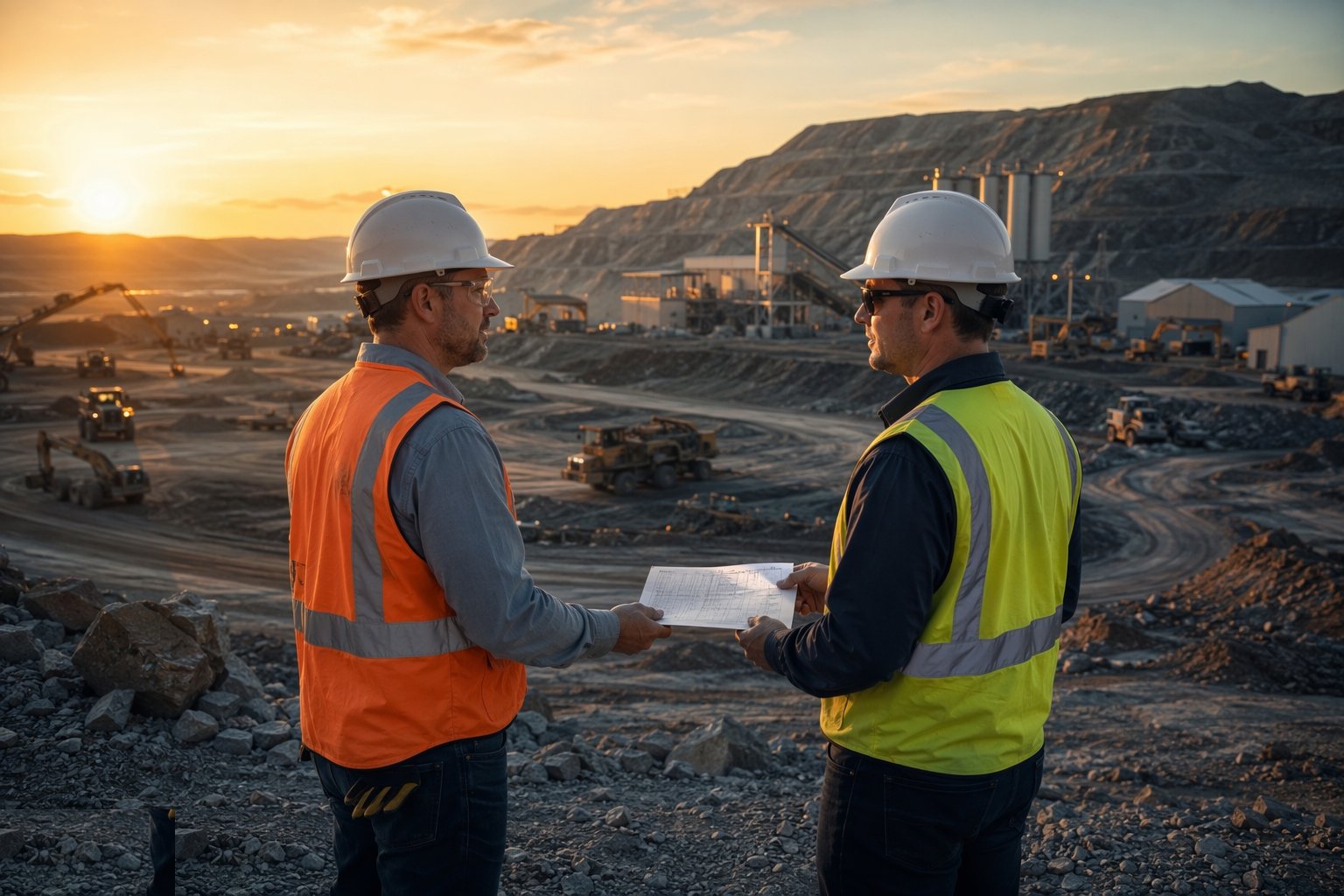
Mine infrastructure is handed over as an operating asset: as-built road geometry and drainage layouts, the bund and windrow standards written into the traffic rules, ROM pad and tipping point operating procedures, water system schematics and consent conditions, and a road maintenance plan with its material sources and grading cycles. The constructor who leaves without transferring this has built a landscape, not an asset — the mine will spend the first year of production discovering it the hard way, at haulage rates.
Plant and equipment
- Heavy earthworks fleet: dozers, graders, articulated and rigid dump trucks, large excavators
- Compaction plant and water bowsers for pavement construction and dust suppression
- Crushing and screening plant for winning road-sheeting material on site
- Concrete plant for the ROM pad, tipping point and workshop structures
- Drilling rigs for dewatering wells and monitoring installations
- Pumps, rising mains and pipeline installation kit for the water system
- Survey control: GNSS rovers and total stations; machine guidance on graders and dozers
- Lighting towers and permanent area lighting for night-running infrastructure
Quality control checks
- Pavement layer verification: formation proof rolling, layer thickness and density testing on road construction
- Haul road geometry audits against the design: widths, grades, superelevation and bund heights
- ROM pad and tipping structure concrete records — cubes, cover, liner and embedment checks
- Workshop and bund integrity inspections: containment volumes verified against the storage inventory
- Explosives facility compliance sign-off against licence conditions and separation distances
- Water system commissioning: pump duty tests, pond freeboard verification, discharge quality baseline
Safety considerations
- Vehicle interaction as the dominant fatal risk: positive segregation of light vehicles and heavy plant, traffic rules enforced from day one
- Crest edges and tipping points: bunds to standard, spotters, and reversing protocols at every tip
- Explosives handling and storage under licensed procedures with controlled access and no improvisation
- Ground instability at faces and tips: geotechnical inspection regimes, stand-off distances, and no working under unsupported faces
- Dust, noise and heat exposure on long earthworks shifts — suppression, monitoring and hydration discipline
- Water bodies and lagoons: edge protection, rescue equipment and controlled access around ponds
Common defects
- Haul roads built without drainage — the first storm cuts them apart and production walks
- Safety bunds dozed from loose spoil at half the required height: edge protection in name only
- Tipping points cracking under cyclic impact because the structure was designed as civils, not as a machine foundation
- Washdown and fuel areas draining past the separator into the water system — consent breaches and remediation
- Dewatering undersized for the wet season: pit floor flooding, lost production, pumps hired in panic
- Roads and pads creeping inside explosive-store separation distances as the pit develops — a licence problem discovered at inspection
Best suited for
- Open-pit metal mines where haulage cost and uptime govern the business
- Quarries needing durable, inspectable infrastructure under public-road scrutiny
- Strip operations requiring relocatable roads and pads that move with the void
- Remote sites where self-sufficient maintenance and water systems are survival, not comfort
How long does Surface Mine Infrastructure take?
Typical duration: Initial pit infrastructure — access, first roads, ROM pad, workshops — typically takes 6–12 months ahead of first ore; thereafter roads, ramps and water systems run as a continuous programme for the life of the mine..