Tailings Storage & Mine Services
The structures a mine is judged by long after it closes — tailings embankments raised in stages, liners and underdrains, decants and reclaim water, pipelines and the instruments that never stop watching.
Last updated 2026-07-28 by the BuildPedia Editorial Team.
What is Tailings Storage & Mine Services?
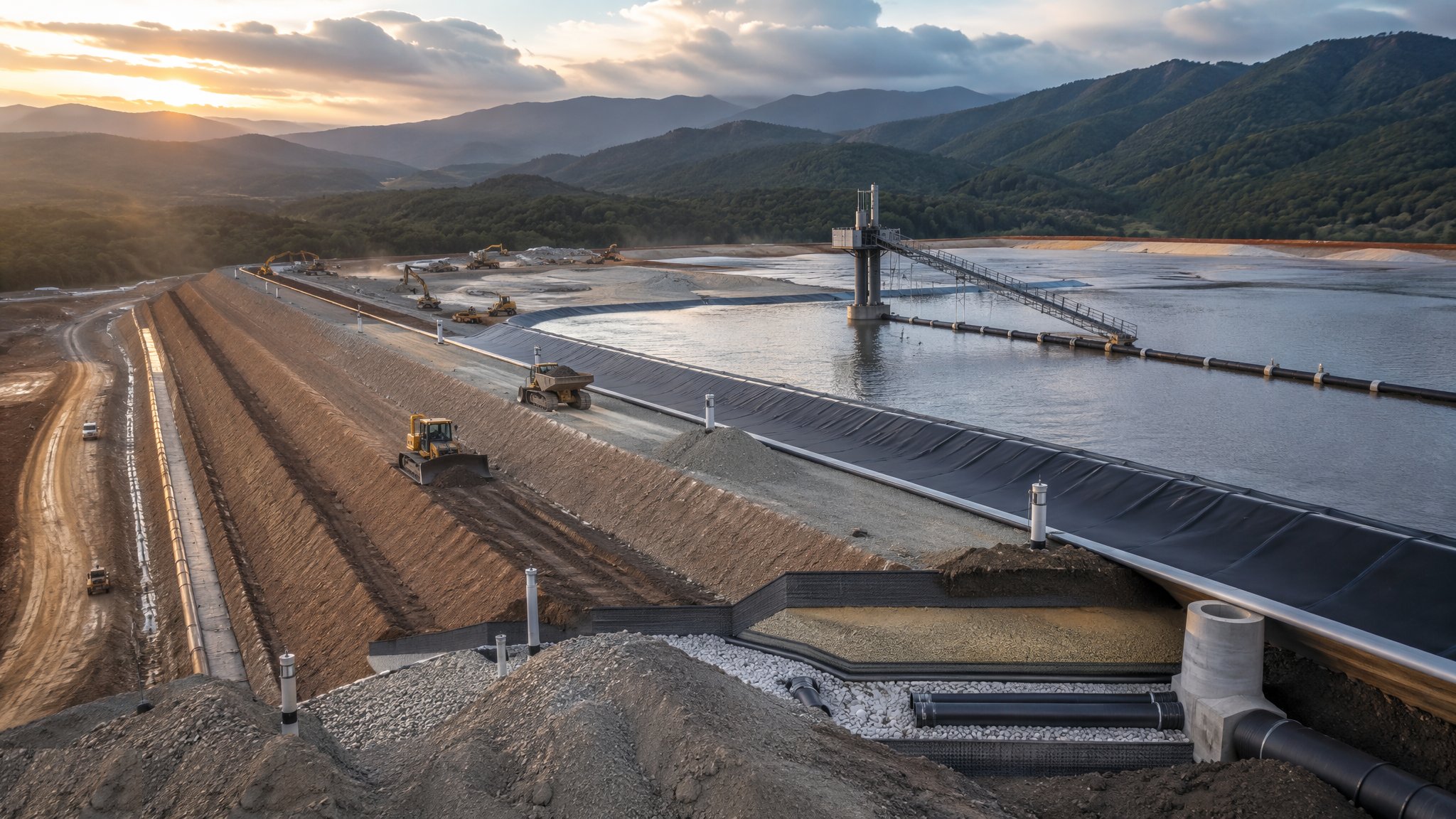
A tailings storage facility is the largest engineered structure most people have never heard of, and the one with the longest memory. Tailings — the ground rock and process water left after the values are extracted — are pumped as slurry to a contained valley or paddock impoundment, where the solids settle, the water is decanted and reclaimed, and the embankment that holds it all is raised in stages as the facility fills, sometimes for decades, sometimes for a century of aftercare. The construction is earthworks with the discipline of dam engineering: starter dams built to full dam standards, then raises built upstream over the beach of consolidated tailings, downstream on the previous raise, or centreline between the two — each method with its own geometry, its own material demands, and its own position on the industry's post-failure risk debate. Upstream raising is material-cheap and now heavily scrutinised; downstream is material-hungry and robust; centreline splits the difference. The choice is a design-board decision with the Engineer of Record's name on it, not a site preference.
Under and inside the embankment runs the quiet engineering that keeps it standing: liners where seepage must be controlled, underdrainage and filter zones that manage the phreatic surface — because a tailings dam fails by its internal water level, and drains are how you keep that level down — and decant systems, towers or floating pumps, that take the clarified water back to the plant or to treatment. Around the facility runs the distribution infrastructure: slurry pipelines from the plant on their racks and sleepers, pump stations and valve chambers, spigot offtakes along the crest distributing tailings to build the beach, and reclaim and seepage-return systems closing the water balance. None of it is glamorous; all of it is in the consequence category the regulators now call "extreme".
What has changed — and changed forever — is the scrutiny. After the industry's catastrophic failures, the Global Industry Standard on Tailings Management sets the governance frame: an Engineer of Record with continuing responsibility, independent reviews, a knowledge base that survives staff turnover, and instrumentation that watches the facility continuously — piezometers reading pore pressure in the embankment, survey monuments and inclinometers reading movement, flow and level instruments on the decant and seepage returns. Construction quality is audited against the design intent at every raise: fill materials tested, compaction verified, filters and drains inspected and photographed before burial, because the evidence of how a raise was built is the evidence the facility will be judged on fifty years from now. Build it as if you will be asked about it — because you will.
When and why is Tailings Storage & Mine Services used?
Tailings construction starts before first ore — the starter facility must exist before the plant can run — and then continues as staged raises for the operating life of the mine and into closure. The method exists because there is nowhere else for the tailings to go: every tonne milled becomes a tonne to store, safely, forever. It matters because the failure mode is unforgiving and public: a tailings dam failure is a life-safety and environmental catastrophe measured in lost valleys, lost licences and lost companies, and the root causes are almost always construction and operation details — drains that were never built, raises placed on unconsolidated beach, instruments read but not believed, water kept too close to the crest. The pipeline and pump systems matter almost as much: a burst slurry line is an environmental incident on the nightly news. Build every raise to the design, drain it, instrument it, and keep the water managed — the facility you hand to closure is the facility your grandchildren's engineers will be monitoring.
Types of Tailings Storage & Mine Services
Downstream-raised embankments
Each raise built on the downstream shoulder of the last, over competent ground: material-hungry but structurally robust, tolerant of seismic loading, and the preferred method where consequence category is high. The embankment grows outward and downward, never over the tailings themselves.
Centreline-raised embankments
Raises stacked vertically over the crest line, partly on tailings and partly on the previous raise: a compromise on material volumes with behaviour between upstream and downstream, demanding disciplined beach control and drainage beneath each raise.
Upstream-raised embankments
Raises built over the dried beach of deposited tailings: the lowest fill volumes and the highest sensitivity to liquefaction, drainage and deposition control. Where used, it is engineered, instrumented and reviewed to the current standard — or it is not used at all.
Filtered and dry-stack tailings
Tailings dewatered by filtration and placed as a compacted, unsaturated stack: no decant pond, no conventional dam, water recovered at the plant. Capital-hungry filters buy a fundamentally safer landform — increasingly the default where water is scarce or consequences extreme.
Paste and thickened tailings
High-density slurries deposited with minimal free water: steeper beaches, smaller ponds, faster consolidation. The thickeners live at the plant; the deposition engineering — pipeline rheology, spigot layout, beach management — lives at the facility.
Tailings Storage & Mine Services: step by step
Step 1: Build the starter dam and foundation preparation
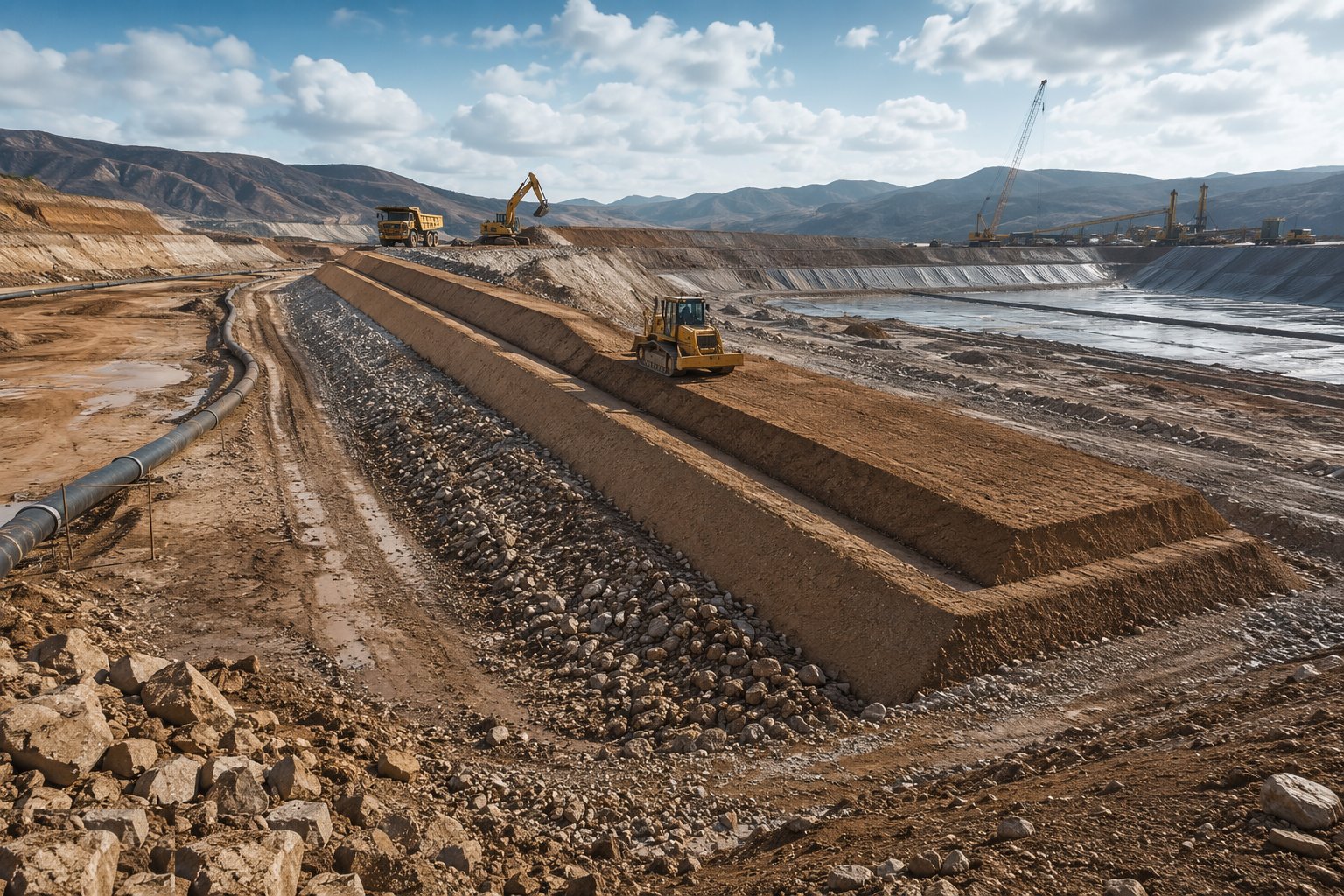
The starter dam is built to full dam standards on stripped, prepared and approved foundations: topsoil and unsuitable material removed, foundation grouting or cut-off works where seepage paths demand them, and the embankment placed in engineered zones — core, filters, drains and shell — each material to its specification, placed in layers, moisture-conditioned and compacted with in-situ density and material testing as the work proceeds. Every layer is documented; every filter zone is photographed before it is buried. This embankment holds the first years of production and forms the toe of every raise that follows — there is no "temporary" in a tailings dam.
Step 2: Install liners, underdrainage and filters
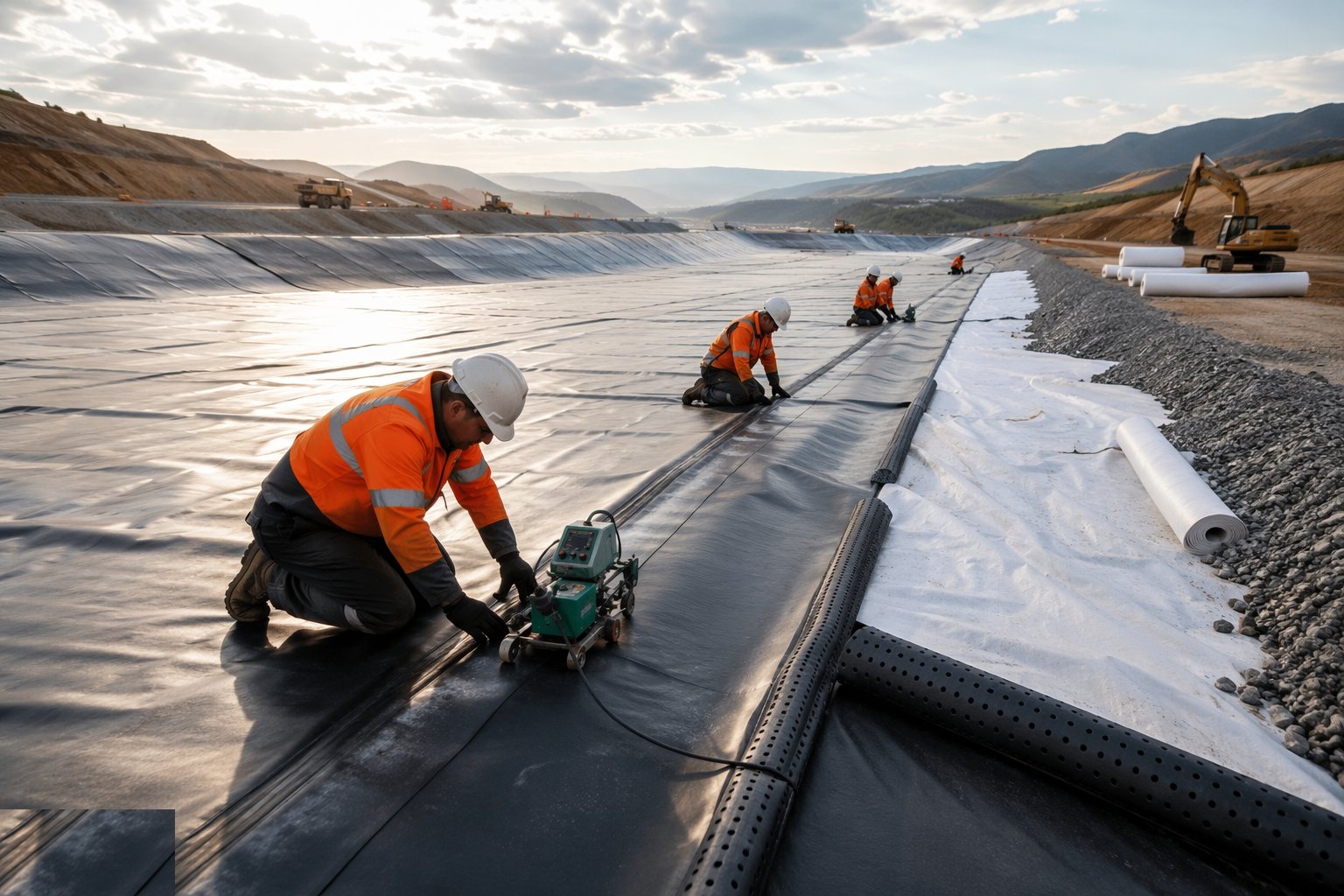
Where the design controls seepage, the liner systems go down on prepared subgrade: compacted clay or geomembrane liners with seam testing and holiday detection on every weld, protected from construction traffic and UV until covered. Underdrains and filter zones — the graded sands and gravels that lower the phreatic surface — are placed to thickness and grading specification, with their collection pipes and outlet works installed and proven to flow. Drains are inspected, tested and surveyed as-built before burial, because an underdrain that does not drain is a defect you cannot see until the piezometers tell you, years later, in the worst way.
Step 3: Commission the slurry distribution and deposition system
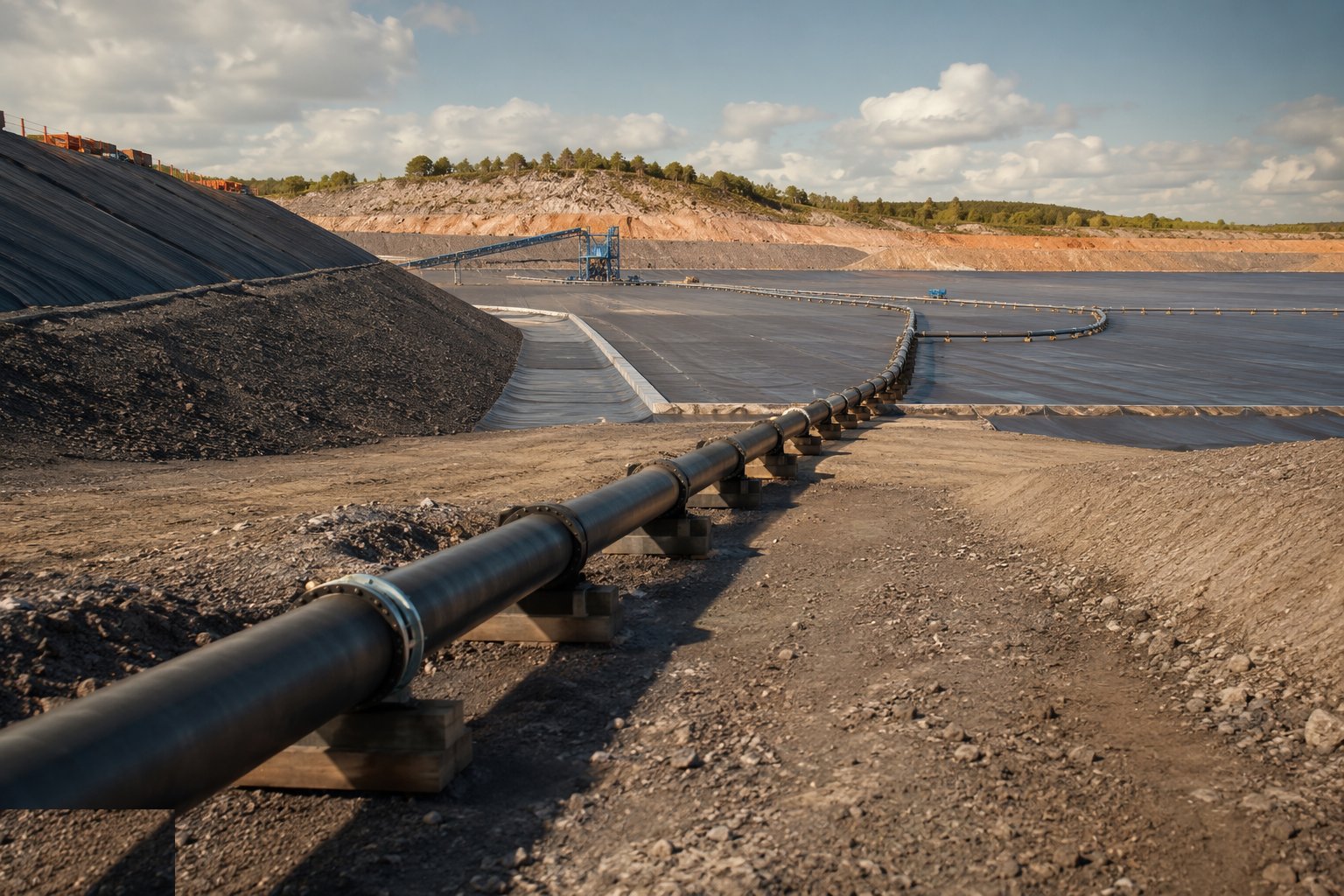
The delivery system connects plant to facility: slurry pipelines routed on sleepers and racks with wear allowances, thrust restraint and drain points; pump stations with their duty-standby arrangements; and the spigot or cyclone offtakes along the crest that distribute deposition to build the beach. Pipelines are pressure-tested, anchored and marked; spill containment at low points and crossings is built with the line, not after it. Deposition is then an operating discipline the constructor hands over properly: the beach must build away from the crest to keep the pond — and its water — back against the decant, not against the dam.
Step 4: Construct the decant and reclaim water systems
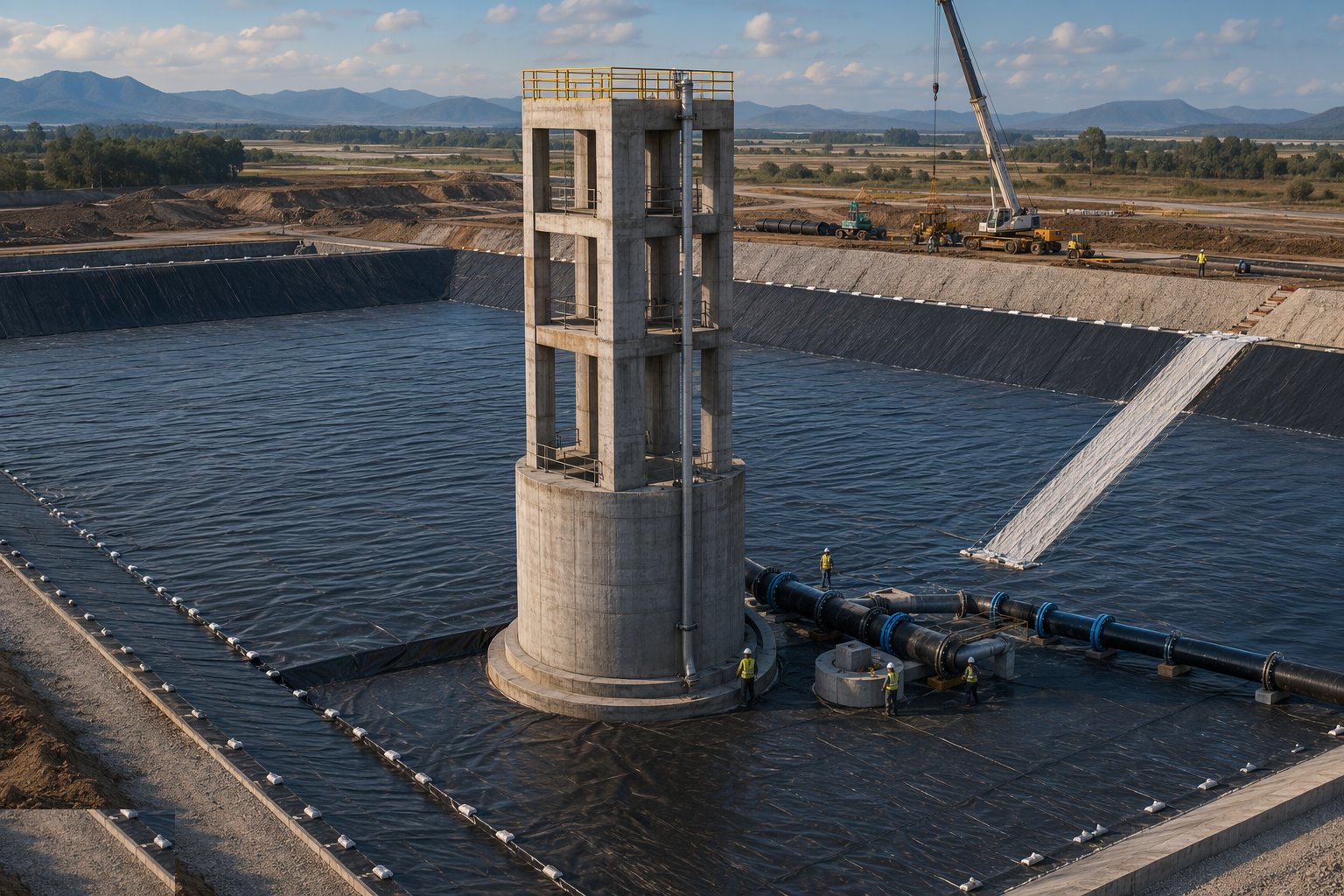
The water system is the facility's metabolism: decant towers or floating pump systems taking clarified water from the pond, reclaim pipelines returning it to the plant, and seepage collection at the toe returning escaped water to the impoundment or to treatment. Structures are cast and surveyed, pumps commissioned against duty, and the emergency spillway — the structure that protects the dam in the design storm — is built and maintained with the reverence it deserves. Pond levels, decant flows and seepage returns are instrumented from day one, because the water balance is the earliest warning system the facility has.
Step 5: Raise the embankment in engineered stages
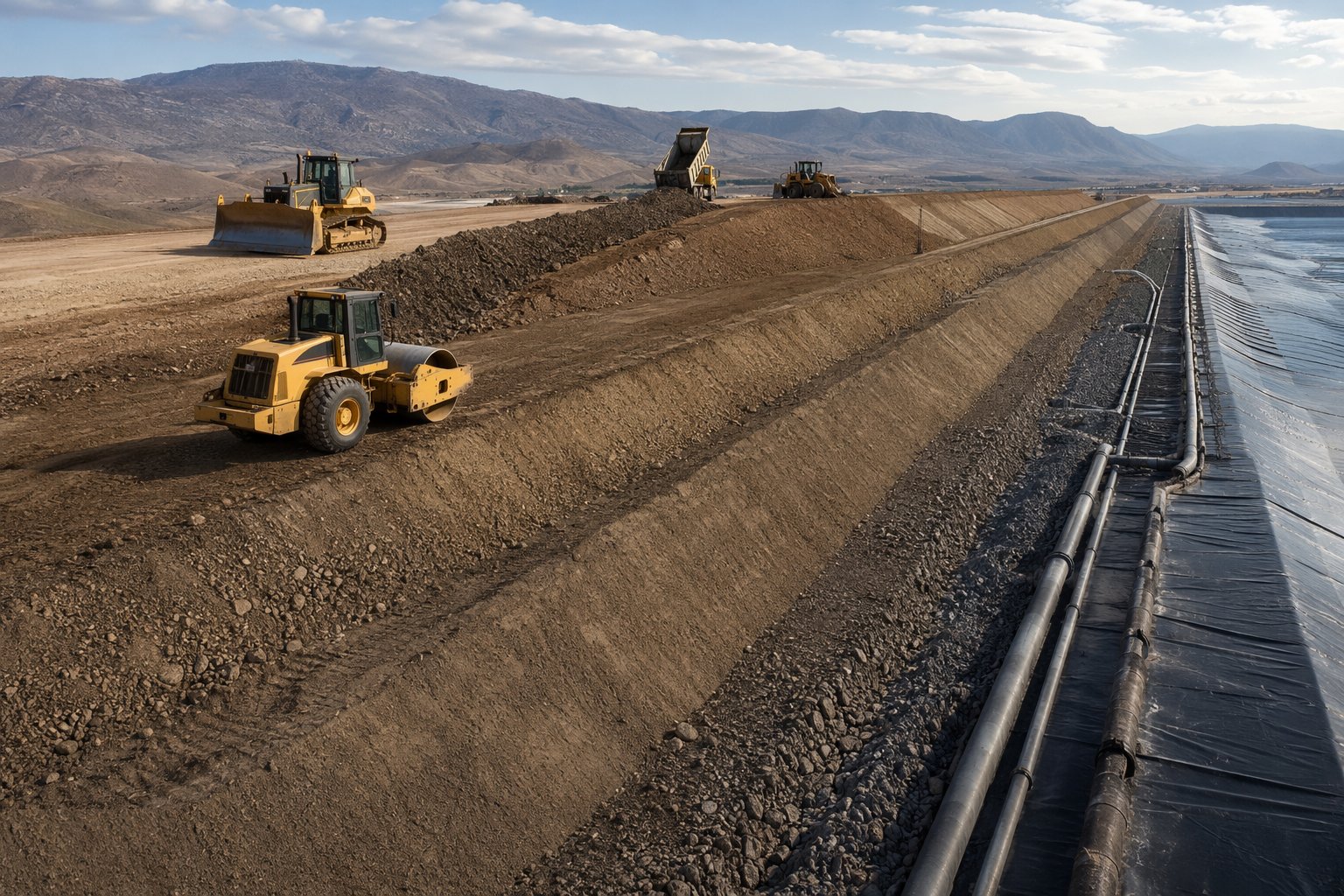
Each raise is a construction project with the same rigour as the starter dam: design for the stage approved by the Engineer of Record, foundation and beach preparation verified, fill zones placed and tested, internal drains extended, and the as-built documented before deposition covers it. Where raises bear on tailings, the beach's condition — dryness, consolidation, standoff of the pond — is verified as a hold point. The crest control, freeboard and beach length are surveyed continuously against the operating manual, because the geometry of the surface is the safety of the structure: water near the crest is the enemy every raise is designed to keep at a distance.
Step 6: Install and commission the monitoring instrumentation
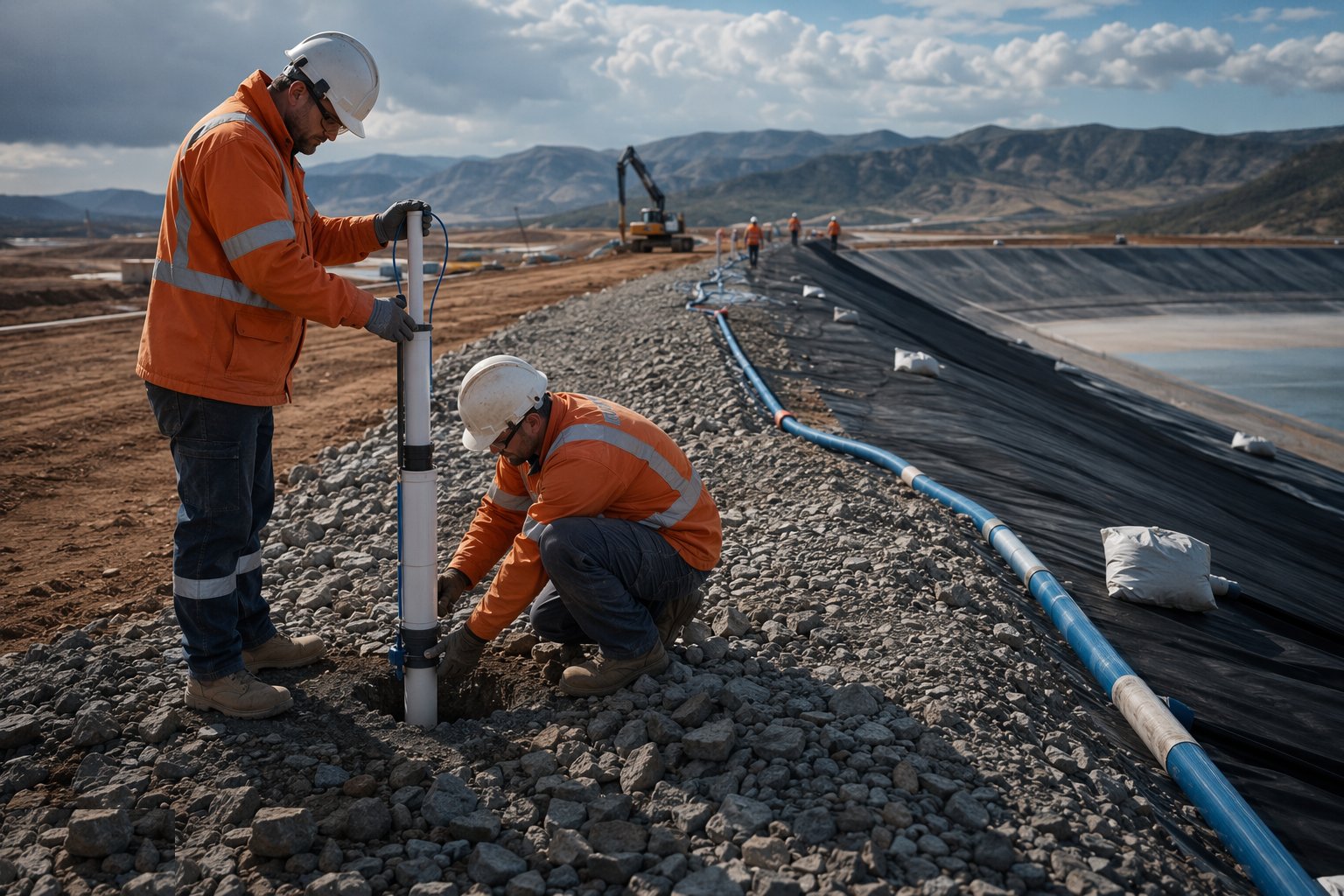
The instruments are the facility's nervous system: piezometers reading pore pressures through the embankment and foundation, inclinometers and survey monuments reading movement, flow and level instruments on decant, seepage and reclaim systems, and increasingly automated data systems reporting to the Engineer of Record in near-real-time. Installation is craft work — piezometers installed and developed properly read truly; badly installed ones read nothing usefully, forever. Thresholds and trigger-action-response plans are set with the design, and the readings are reviewed on their schedule with the same discipline as the deposition: instruments that are read but not believed are how facilities die.
Step 7: Progressively close and document for the long term
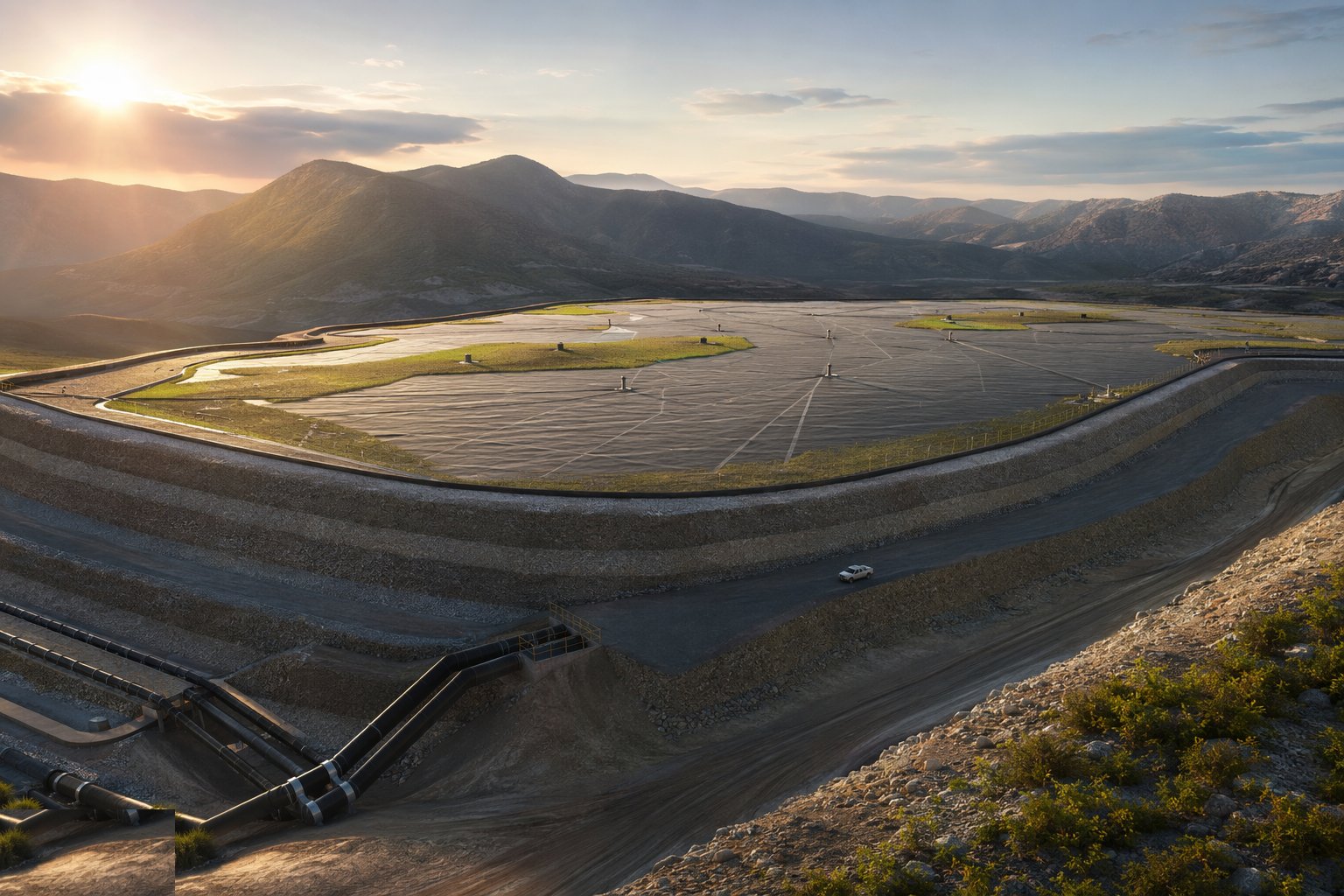
Closure starts during operations: completed surfaces capped and rehabilitated progressively, the final landform engineered for water-shedding stability, spillways and closure works built to their long-term standard, and the knowledge base — designs, as-builts, test records, instrument histories — compiled and preserved for the decades of aftercare. The facility that closes well was operated well; the constructor's contribution is the documentary truth of how it was built, handed over complete, because in tailings the records are the structure's memory and the regulator will ask for them long after everyone who poured the concrete has retired.
Plant and equipment
- Earthworks fleet for embankment construction: dozers, graders, articulated trucks, compactors and water carts
- Slurry and water pumps, HDPE and steel pipeline installation and welding equipment
- Geomembrane installation and testing kit: welding machines, vacuum boxes, air-channel and holiday testing
- Drilling rigs for piezometer and instrumentation installation
- Concrete plant for decant structures, valve chambers and pump station civils
- Survey systems: GNSS, total stations and increasingly remote sensing for beach and crest monitoring
- Cyclone and spigot deposition equipment along the crest
- Dewatering and water-treatment plant for seepage and construction water management
Quality control checks
- Fill placement control per layer: material classification, moisture, lift thickness and in-situ density testing
- Filter and drain zone inspections with photographic records before burial; grading tests on filter materials
- Geomembrane seam testing records — destructive and non-destructive — with panel and weld mapping
- Pipeline pressure-test and anchorage records; thrust restraint and drain-point verification
- Instrumentation installation and baseline reading records, verified against the design intent
- As-built surveys of every raise, drain and structure, lodged with the Engineer of Record before covering
Safety considerations
- Embankment and crest work beside water and soft tailings: edge protection, safe stand-offs and no lone working on the beach
- Soft-ground and vehicle recovery risk on tailings beaches: designated routes, ground assessment and recovery equipment
- Pipeline work under pressure: isolation, lock-out and controlled de-energisation before any break-in
- Confined spaces in decant towers, chambers and culverts: permits, atmosphere testing and rescue provision
- Dust control on dried tailings surfaces: suppression and exposure management on the beach
- Emergency preparedness: breach and flood response plans exercised with the operations team, not filed
Common defects
- Underdrains and filters placed out of spec or damaged during covering — a phreatic surface the instruments reveal years too late
- Raises placed on wet, unconsolidated beach: the pond too close to the crest and the foundation of the raise made of pudding
- Freeboard lost through poor deposition control — the design storm arriving to find the safety margin spent
- Geomembrane seams untested or damaged and never mapped: seepage paths into the embankment's heart
- Slurry pipeline bursts at unrestrained bends and low points: environmental incidents and licence scrutiny
- Instrumentation installed, never developed, never read — the facility flying blind with a dashboard full of artefacts
Best suited for
- Operating mines where staged raises must be built without interrupting deposition
- High-consequence facilities where downstream or dry-stack methods and full instrumentation are the only acceptable answer
- Water-scarce operations where thickened, paste or filtered tailings close the water balance
- Closure and rehabilitation programmes where the documentary record is as valuable as the earthworks
How long does Tailings Storage & Mine Services take?
Typical duration: A starter facility typically takes 9–18 months to construct; raises then run as recurring 2–6 month campaigns through the mine's life, with monitoring and aftercare extending decades beyond closure..