Working in the Intertidal Zone
The discipline behind every coastal job — tide tables, working windows, causeways and soft-ground plant, weather limits, and the retreat plan for when the sea comes back.
Last updated 2026-07-28 by the BuildPedia Editorial Team.
What is Working in the Intertidal Zone?
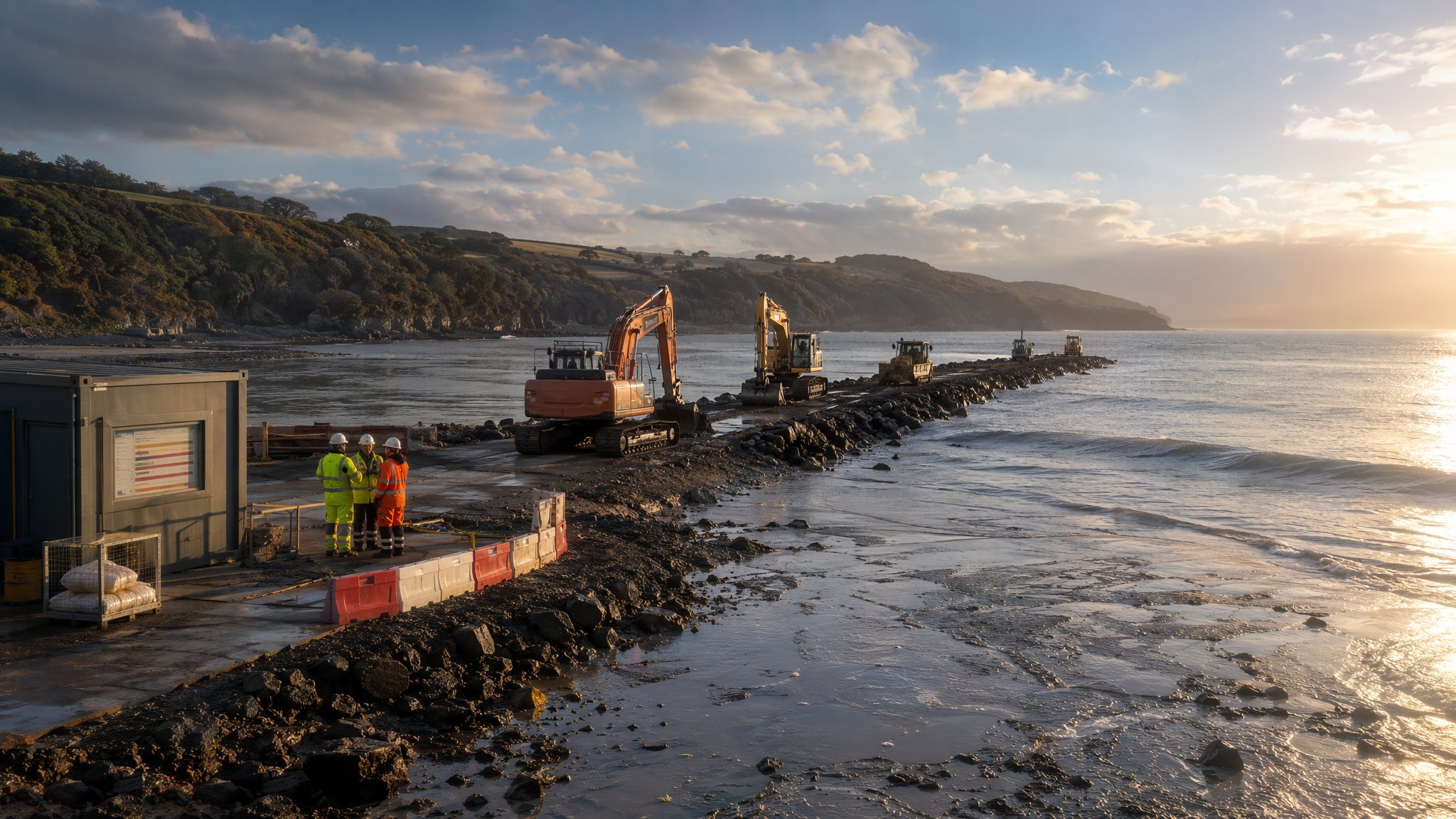
The intertidal zone — the foreshore between high water and low water — is a workplace that floods twice a day. Every sea wall, groyne, outfall and beach scheme is built there, and the difference between a coastal contractor and a land contractor is mostly this: the coastal contractor's site disappears under the sea on a schedule he does not control. Working in the intertidal zone is therefore less a technique than a discipline. It starts with the tide tables: predicted heights and times from the hydrographic record, corrected for the local port, turned into working windows — the hours either side of low water when the foreshore is dry enough, firm enough and far enough from the waves to work. Spring tides, when the range is greatest, expose the most foreshore and give the longest reach seaward; neaps, with the smallest range, often give the calmest working water at the toe.
Access is the first engineering problem. Plant and materials must get onto the foreshore and back off it reliably: site-built ramps down the beach, temporary stone causeways and haul roads built seaward from the shore, or working platforms — including jack-up barges and pontoon systems — where the ground or the water depth defeats land plant. Ground conditions rule the machine list: soft intertidal sands and muds swallow standard plant, so the fleet runs to low-ground-pressure excavators with wide tracks, tracked dumpers, long-reach machines that work from firm ground, and matting where the bearing is marginal. Every machine that works the foreshore is chosen and maintained with submersion in mind — breathers, electrics and cabs that survive a soaking, because sooner or later a machine will not beat the tide.
The sea sets the rules of engagement and the safety case is written in its language. Weather and sea-state limits are defined before work starts — significant wave height, wind speed and direction, swell period — with a named person holding authority to stop the works. The tide is watched by a designated watchkeeper whose only job is the water; escape routes are marked, walked and briefed; and the emergency plan covers the scenarios the coast specialises in: a person cut off by the tide, a machine lost to a soft patch with the water rising, a sudden swell event inside a fair forecast. The UK coastguard and the local RNLI know the good contractors by name, because the good contractors introduce themselves before they need rescuing.
When and why is Working in the Intertidal Zone used?
Intertidal working applies to every coastal and marine process on the foreshore — sea walls and revetments, groynes, outfalls, beach works, cable and pipeline landfalls — anywhere the works sit between the tide marks. It matters for three reasons. Programme: the effective working time on a foreshore can be four to six hours per tide, and a schedule written on land logic overruns by seasons, not weeks. Cost: every pour, placement and delivery has to be sequenced to the windows, and plant stands idle for a large part of every day by design, not by failure. And safety: the intertidal zone is one of the few construction environments where the workplace itself hunts the workforce — rising water, soft ground and incoming swell are a combination that punishes optimism. The contractors who prosper on the coast are the ones whose method statements start with the tide tables and end with the retreat plan.
Types of Working in the Intertidal Zone
Tide-window working from the shore
Land-based plant working the exposed foreshore between tides, retreating above high water at the end of every window. The default for sea walls, groynes and beach works in moderate conditions: simple, cheap, and utterly dependent on window discipline and the watchkeeper's whistle.
Temporary causeways and haul roads
Stone or rockfill causeways built seaward from the shore — raised above the working tide level where the design allows, or tidal causeways that overtop by arrangement — carrying the haul route and the crane positions along the frontage. They change the local hydraulics while they stand, so they are licensed, designed and removed as engineered works in their own right.
Jack-up platforms and pontoon working
Jack-up barges and modular pontoons providing a tide-independent platform standing on the seabed with the deck above the waves — drilling, piling and craneage carried out over the water regardless of the tide. The answer where water depth, exposure or programme pressure defeats window working; mobilisation costs buy back every tide the job would otherwise lose.
Soft-ground and low-ground-pressure methods
Wide-tracked and low-ground-pressure plant, long-reach machines working from firm ground, bog mats and pontoon tracks for mudflat and soft-sand foreshores. The kit list for estuarine and muddy coasts where a standard 20-tonne excavator is a submarine by the second tide.
Working in the Intertidal Zone: step by step
Step 1: Build the tidal model and programme the windows
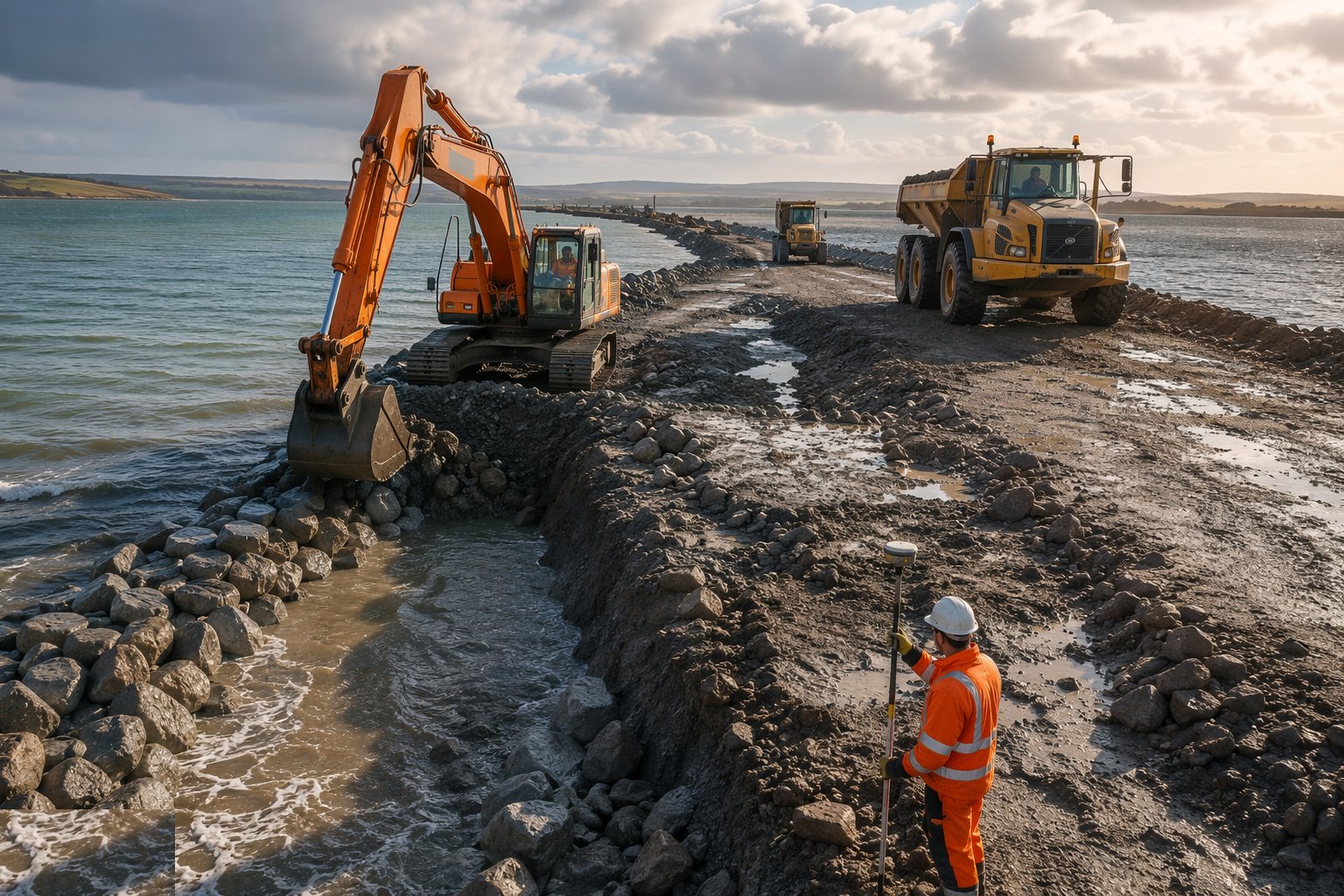
The programme is written from the tide tables, not despite them: predicted times and heights for the site, converted into daily working windows for each activity, with springs and neaps mapped across the job. Tasks are matched to windows — toe excavation and low-level armour on the big springs that expose the most foreshore; crest works and backfill on the neaps — and float is built in for the weather days the forecast will certainly take. The window calculation is honest: travel time down the beach, setup, productive hours, and the retreat, all inside the dry period with margin. A programme that assumes full shifts on the foreshore is a fairy tale with a crane in it.
Step 2: Engineer the access: ramps, causeways and platforms
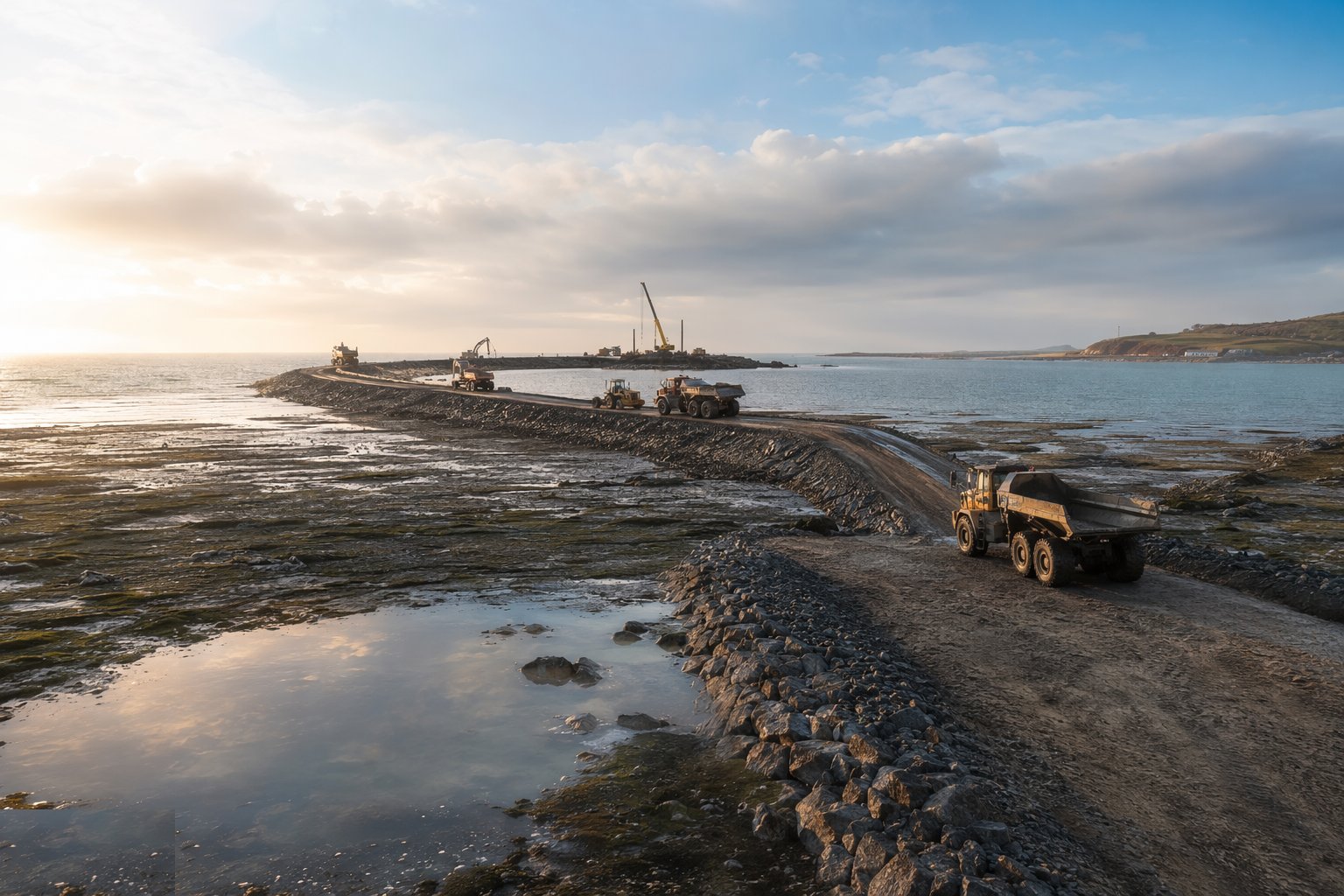
Getting on and off the foreshore is built before the works begin: access ramps cut and armoured into the beach, haul routes laid with rock or matting where the sand is soft, turning and passing places where the route is single-track, and causeways or platforms constructed where the works need them. Every element is designed for its life — the wave overtopping it will take, the scour at its edges, and its removal at the end — and licensed where it changes the foreshore. The access is inspected after every tide and every blow: a ramp that was sound at Monday's low water can be a gully by Thursday's, and the first lorry of the day finds out the hard way.
Step 3: Select and prepare plant for the ground and the sea
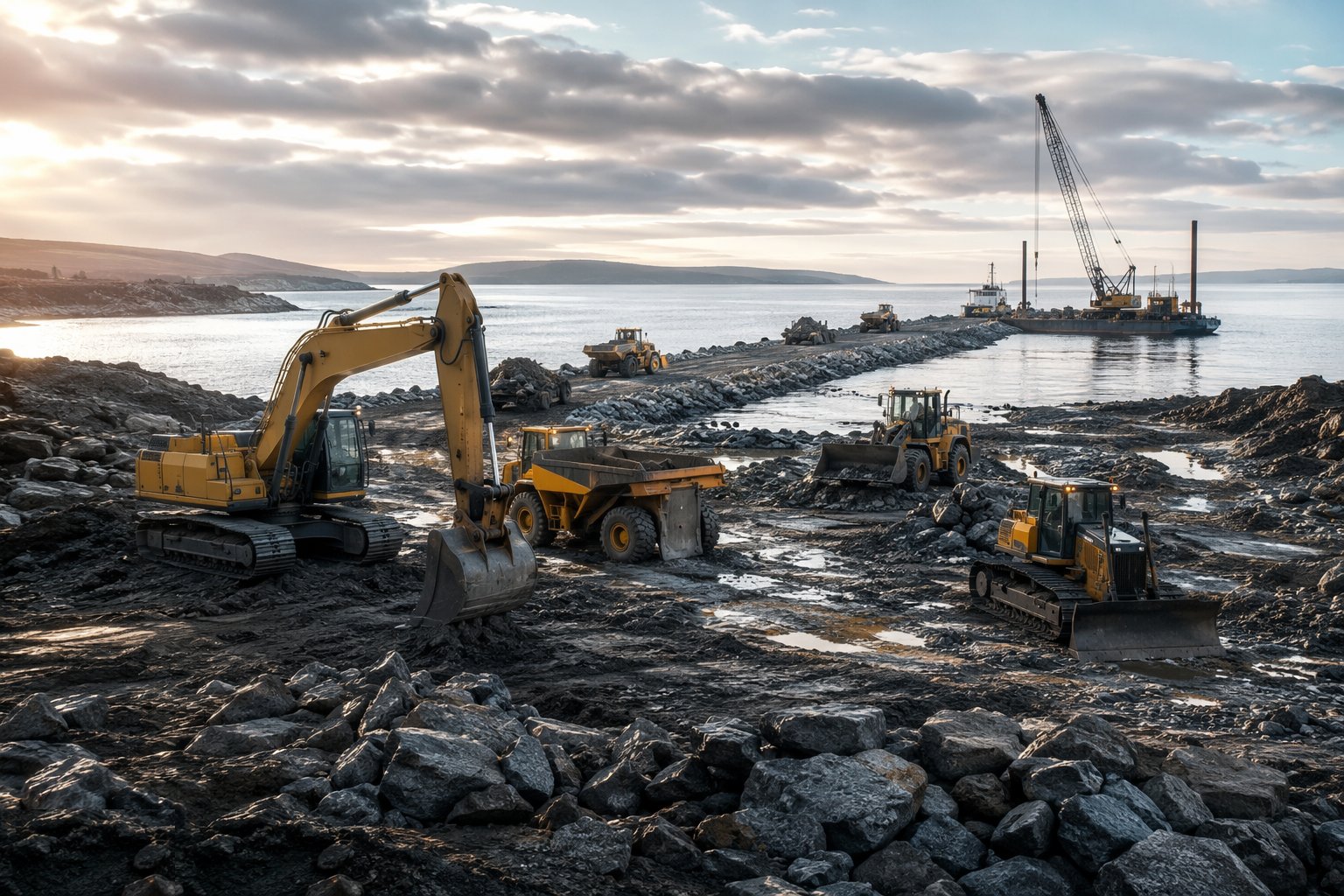
The machine list is written against the ground investigation and the tidal exposure: low-ground-pressure excavators and tracked dumpers for the soft zones, long-reach machines where the work can be done from firm standing, cranes sized for the placement weights at their working radius on the foreshore's actual bearing. Machines are prepared for saltwater — breathers raised, electrics sealed, greasing regimes shortened — and the recovery plan is ready before it is needed: winch points, mats, and a standing arrangement for a machine that dies in the window. Every operator is briefed on the foreshore rules: how far seaward, which ground is forbidden, and who calls the retreat.
Step 4: Set the watch: weather limits, watchkeeper and retreat plan
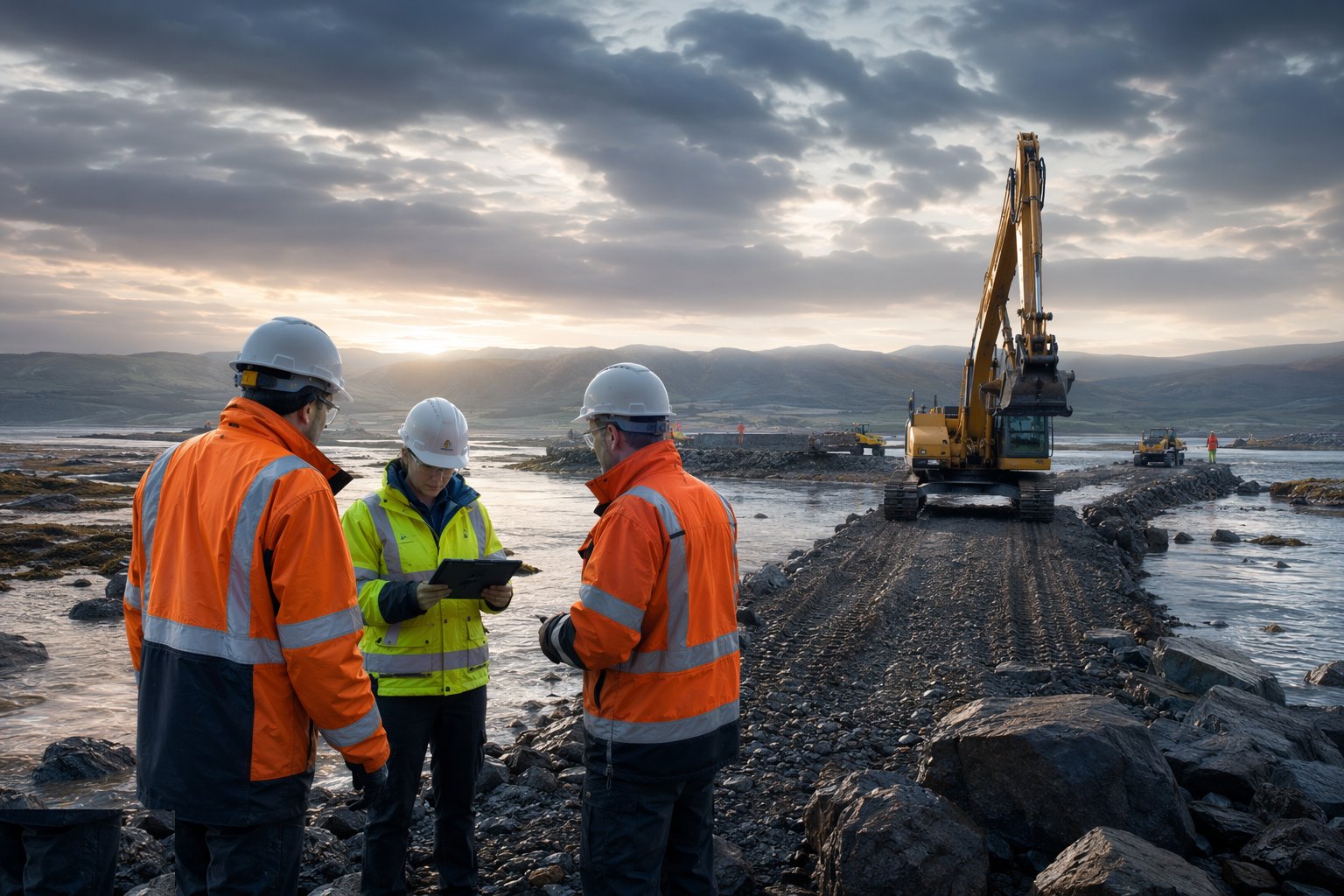
The safety system goes live before the first machine rolls. Weather and sea-state limits are set per activity — the significant wave height and wind at which placement stops, plant retreats, and finally the foreshore is cleared entirely — with forecast services feeding the site daily and telemetry where the exposure justifies it. The watchkeeper is appointed and briefed: eyes on the tide and the sea whenever anyone is on the foreshore, with authority to call the retreat and nobody allowed to overrule them. Escape routes are marked and walked, muster points set above high water, and the daily briefing gives every person on the beach the day's tide times, window and abort levels.
Step 5: Execute the works inside the windows
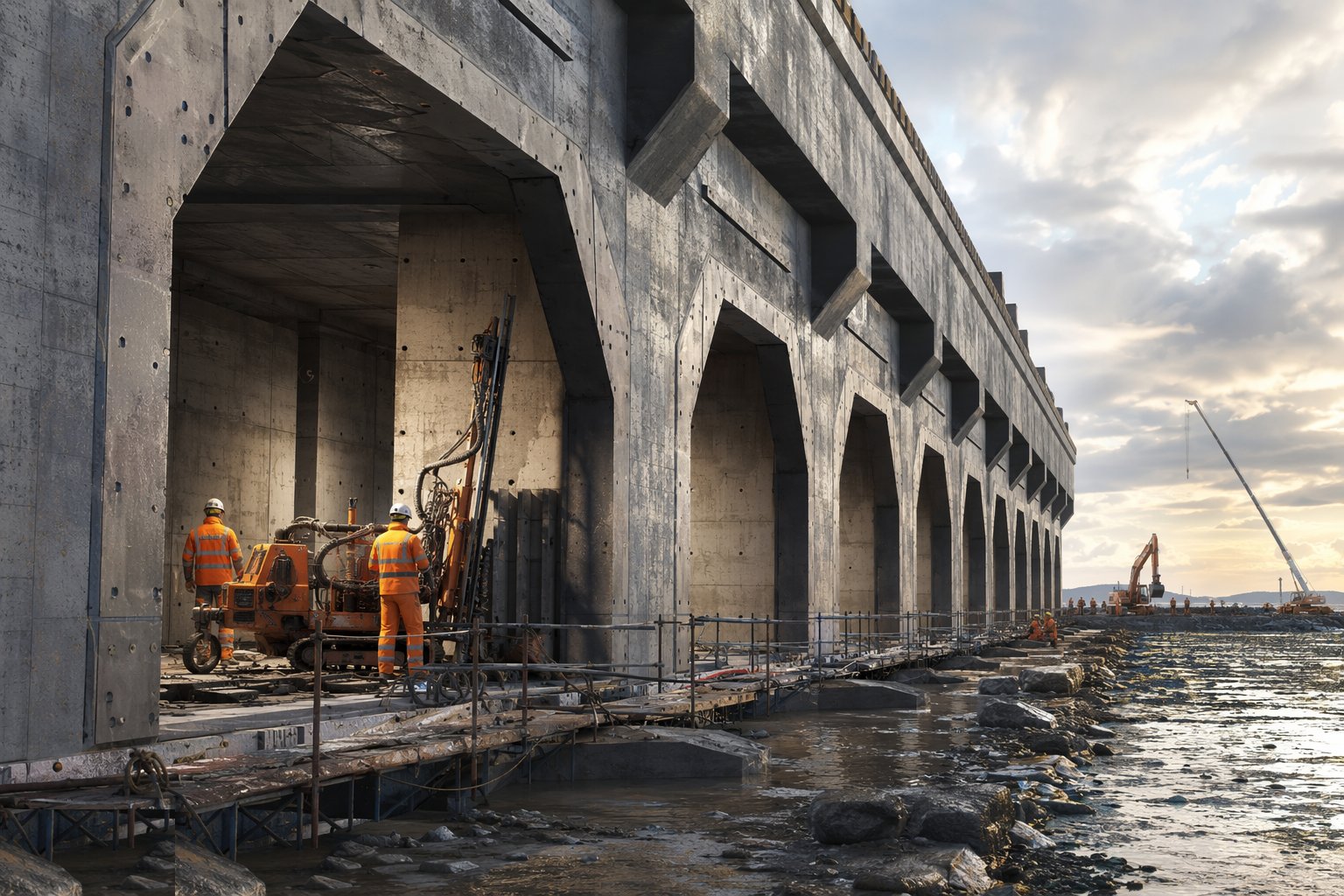
Production on the foreshore is a drill: plant down the ramp at the start of the window, work fronts opened only where they can be closed, materials staged so the window is spent placing, not fetching. Concrete pours are sized to the window and the plant's reach — a pour that cannot finish and protect before the flood is two pours — and every placement is surveyed as it happens because the next tide erases your reference marks. Supervision stays on the beach with the gang, the watchkeeper stays on the water, and the window ends with the drill the whole site knows: secure, withdraw, count.
Step 6: Secure the works against the next tide
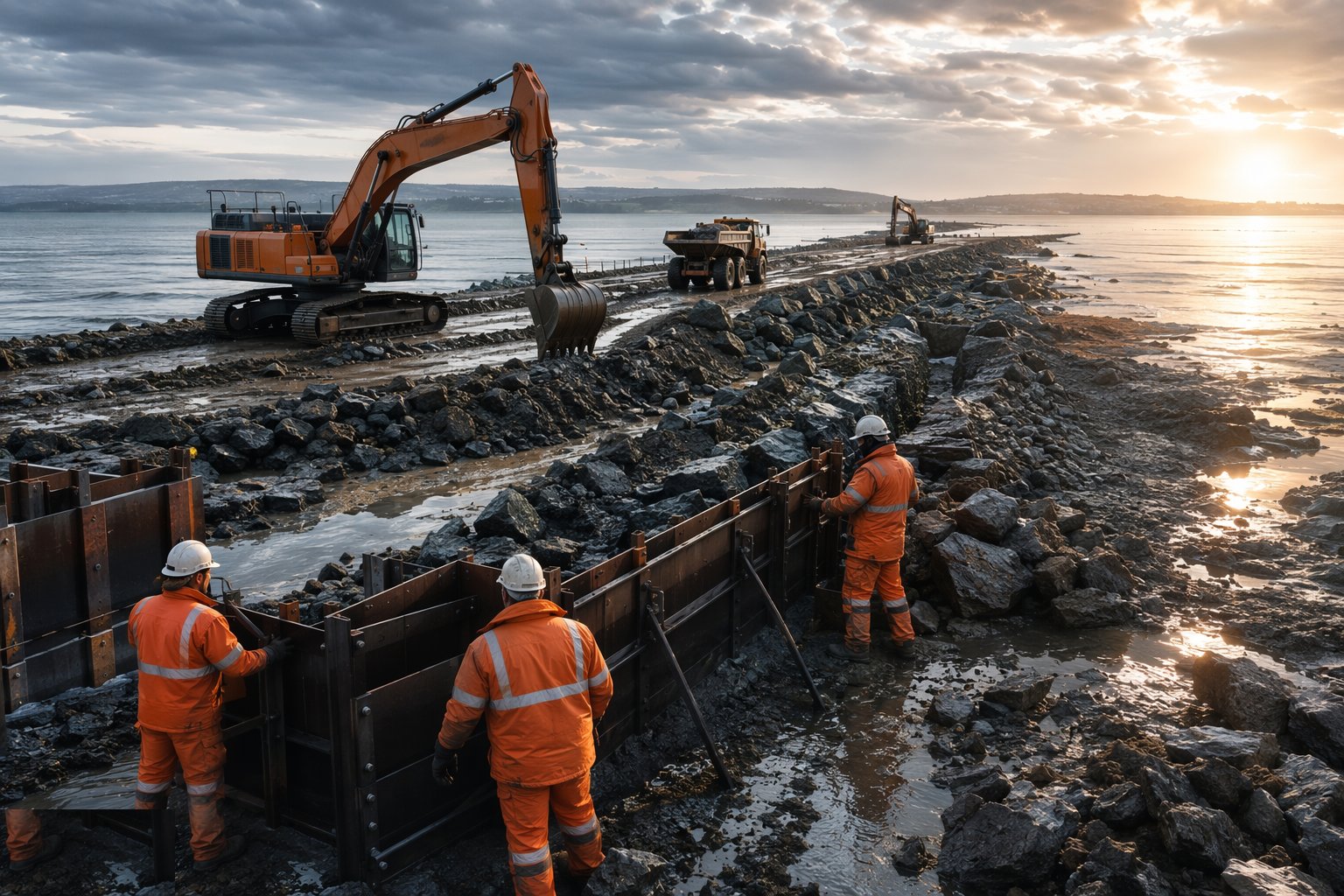
Between tides the sea owns the site, so the works are handed to it in a state it cannot damage. Fresh concrete is protected against wash — shutters left on, covers weighted, surfaces keyed so a flooded tide does not strip the laitance off a green pour. Excavations are backfilled or battered, placed rock is left interlocked and never perched, loose material and small plant are withdrawn above the reach of the waves, and anything the sea could move — mats, timbers, drums — is moved first. The retreat is verified: a sweep of the foreshore, a head count, and the access pulled or barriered so the public does not wander down your ramp at the next low water.
Step 7: Drill the emergency plan and demobilise clean
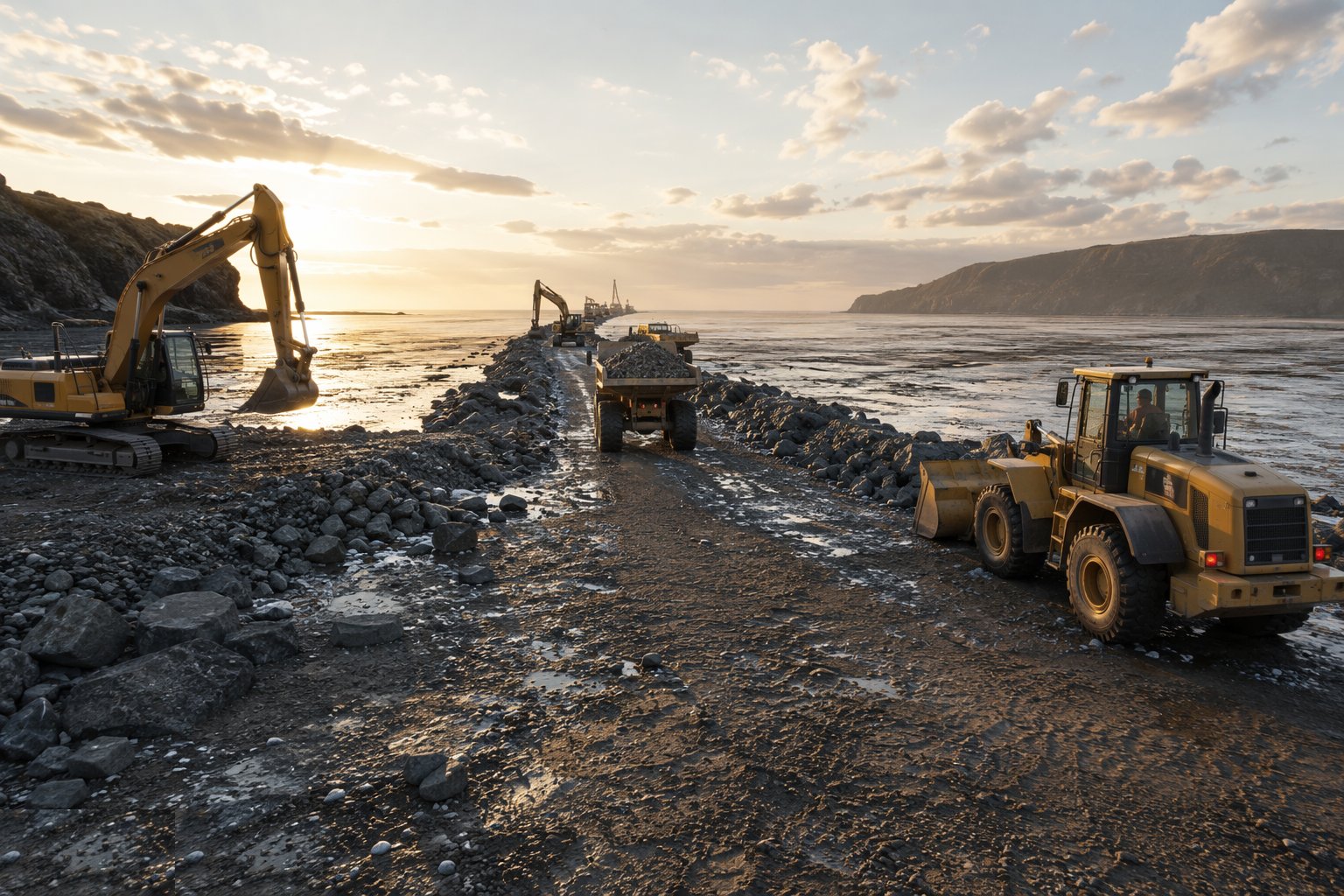
The emergency plan is written for the foreshore's real scenarios — person cut off by the tide, machine lost with the water rising, casualty on the beach with no ambulance access — with rescue equipment staged, the coastguard and RNLI briefed on the site and its working hours, and the plan drilled, not just filed. At the end of the job the foreshore is handed back as found: causeways and ramps removed, borrowed beach material reprofiled, the survey closed out, and the licences discharged. The coast has a long memory for contractors who leave their mess in it, and the next licence application remembers too.
Plant and equipment
- Low-ground-pressure excavators and tracked dumpers for soft foreshores
- Long-reach machines for working from firm ground at the back of the beach
- Crawler cranes sized for placement on foreshore bearing; bog mats and spreading plates
- Stone causeway and haul-road construction plant; matting systems for soft ground
- Jack-up barges, modular pontoons and workboats where platforms are the answer
- Tide gauges, wave telemetry and forecast service subscriptions
- Watchkeeper stations, marked escape routes, signage and beach barriers
- Recovery winches, ground anchors and rescue equipment staged on the foreshore
Quality control checks
- Working-window calculations audited against the tide tables and updated for the actual tides
- Access ramps, causeways and platforms inspected after every tide and storm event
- Plant ground-bearing verified daily — the foreshore changes under your tracks overnight
- Pours and placements sized and sequenced to the windows; records reconciled to tide times
- Securing checks signed off at the end of every window: works protected, foreshore swept, head count done
- Licence conditions for temporary works on the foreshore tracked to discharge
Safety considerations
- A designated watchkeeper on the tide whenever anyone works the foreshore, with unchallengeable authority to call the retreat
- Defined weather and sea-state limits per activity, briefed daily, with a named stop-authority
- Marked and walked escape routes to muster points above high water; head counts at the end of every window
- Plant submersion and recovery plan: raised breathers, winch points, and no machine worked beyond its retreat line
- Public protection on an open coast: barriered accesses, signage, and stewarding where the beach stays open
- Emergency plan drilled with the coastguard/RNLI briefed — person cut off, machine lost, casualty on the beach
Common defects
- Programmes written on land logic — full shifts assumed on the foreshore, and the job a season late by Christmas
- Pours sized beyond the window — green concrete washed by the flood tide and a scarred face to show for it
- Loose material and plant left in the tidal reach — the sea redistributing your mats, timbers and occasionally your dumper
- Access routes inspected at mobilisation and never again — a gullied ramp found by the first loaded lorry
- Watchkeeping treated as a spare-duty job — the retreat called late, or not called at all
- Soft ground trusted on appearance — a machine to the axles in sand that was firm at the last low water
Best suited for
- All foreshore construction: sea walls, groynes, revetments, outfalls and beach works
- Programmes that must be built honestly around tide windows and weather limits
- Soft-ground coasts where plant selection and access engineering decide feasibility
- Sites where the safety case — watch, retreat, rescue — is the first method statement
How long does Working in the Intertidal Zone take?
Typical duration: Not a stage with its own duration but the rhythm of every coastal job: working windows of 4–6 hours per tide, two tides a day, with springs and neaps dictating which tasks run when — plan coastal programmes at 50–65% of equivalent land-based productivity..