Site Security & Cleared Working
The construction regime that comes with defence work: vetted people, controlled materials, escorted movements and no cameras — and how a productive site runs inside those rules.
Last updated 2026-07-28 by the BuildPedia Editorial Team.
What is Site Security & Cleared Working?
Defence and high-security construction carries a second management system alongside the quality and safety ones: the security regime. In the UK it begins with personnel vetting — BPSS baseline screening for anyone on a government site, Security Check (SC) for those needing regular access to sensitive material or sites, and Developed Vetting (DV) for the most sensitive work — administered through UK Security Vetting. Clearances take weeks to months to process, they are personal and non-transferable, and the project's workforce plan has to be built around them: you cannot man a secure job from the agency on Monday morning. Gulf military and critical sites run equivalent national vetting and sponsorship regimes, with their own lead times and national service expectations.
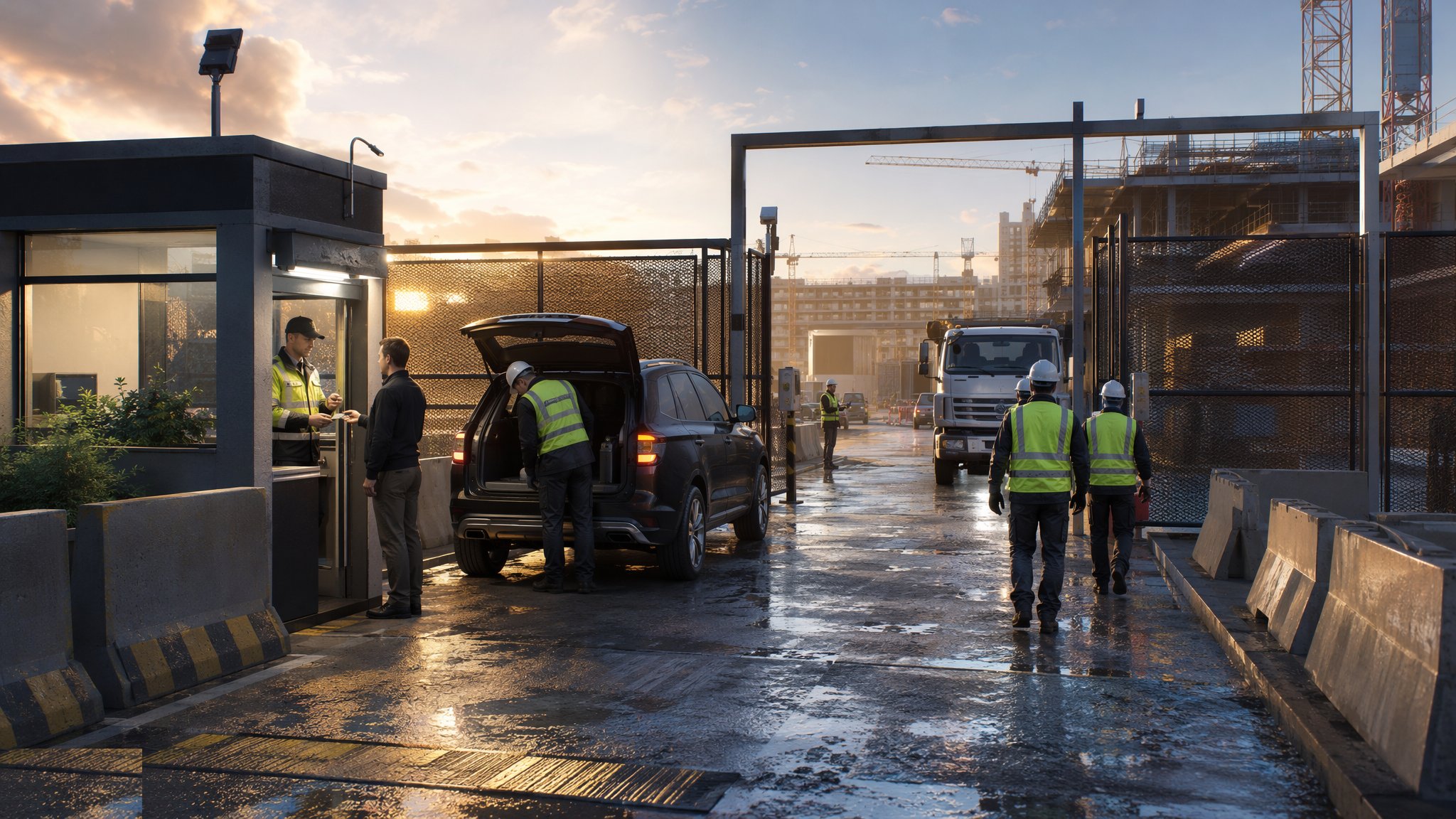
The daily regime reshapes ordinary site life. Non-cleared workers operate under escort — an escorted working ratio set by the site's security orders, with escorts briefed and logged. Materials and tools are controlled: deliveries searched or screened, secure compounds for sensitive items, tool control with counts at shift end in areas where a lost tool is a security incident. Documents and drawings are protectively marked — OFFICIAL-SENSITIVE and above — held in secure storage, issued on registers, worked from under control and never left in cabs or cabins. Photography and personal devices are restricted or banned: phones surrendered or locked out of sensitive areas, cameras only under permit, and every operative briefed that a casual site selfie can be a disciplinary and legal event.
On operational military sites the security regime merges with the operational one. Work is coordinated with station operations: movement permissions for personnel and plant, working around live flying, ranges and exercises, halted-work periods during operations or alerts, emergency procedures (shelter, lockdown, muster) that the site team drills like fire drills. All of this costs time — access routines, escorts, stand-downs, the sheer friction of working under observation — and the honest programme carries it as overhead from day one. The sites that succeed treat security as a production system to be designed and resourced; the sites that fail treat it as an inconvenience and spend the job in breach, stood down, or escorted off.
When and why is Site Security & Cleared Working used?
This regime applies from the first site visit to the final demobilisation on any defence or secure project, and it shapes procurement, programming and daily management throughout. It exists because the sites are sensitive and the information is too: a layout drawing of a protected facility, a photograph of a secure installation, an unvetted pair of hands in the wrong room — each is a real security event, not a technicality. It is specialist because it inverts normal site instincts: openness becomes control, photography becomes a breach, recruitment becomes a months-long vetting pipeline, and the client's security staff have authority to stop work instantly. Contractors who price and plan for the regime — clearance lead times, escort ratios, secure storage, controlled IT, lost hours — deliver these projects profitably and are invited back. Those who discover it on site deliver late, in deficit and often in disgrace.
Types of Site Security & Cleared Working
Cleared-workforce contracts (SC/DV)
Contracts where the workforce holds SC or DV clearances: recruitment through the vetting pipeline, clearance registers maintained, national caveats and role-based access managed. The constraint is the pipeline — clearances take weeks to months — so workforce planning starts at tender, not at mobilisation.
Escorted working regimes
Sites where non-cleared personnel work under escort: ratios set by security orders, escorts trained and logged, movements planned so escorted groups work productively rather than queueing at gates. Specialist trades from outside the cleared pool are sequenced in blocks to make the escort overhead efficient.
Secure material and document control
Protectively marked drawings and documents on register, secure storage and issue, controlled IT and printing, and materials of security significance tracked from delivery to installation. The audit trail is the deliverable: who held what, where, and when it was returned or destroyed.
Working on operational bases
Construction inside live military establishments: movement permissions, coordination with station operations, stand-downs during exercises and alerts, and emergency procedures integrated with the base's own. The site runs at the base's permission — a fact the programme respects daily.
Site Security & Cleared Working: step by step
Step 1: Vet and clear the workforce early
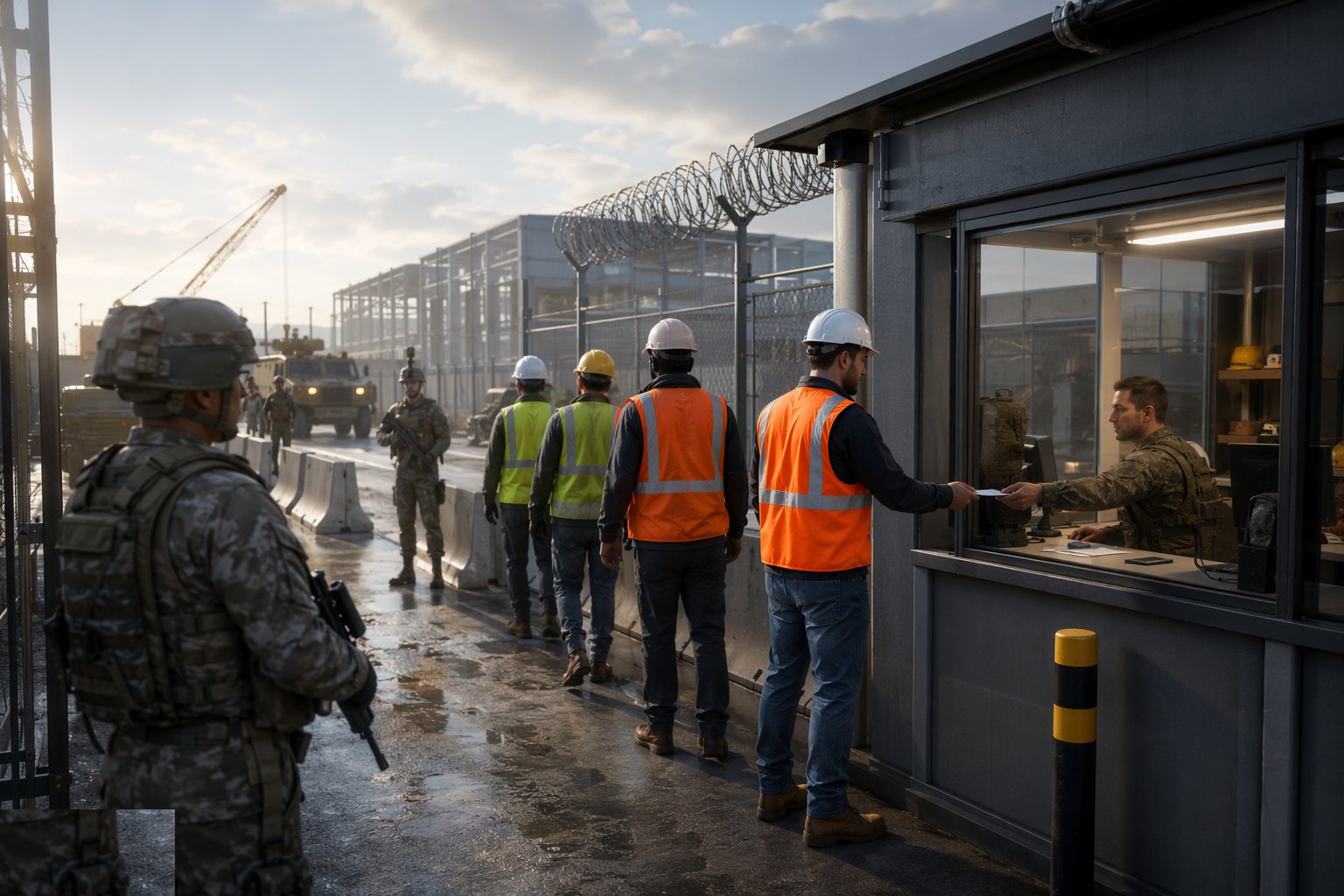
The vetting pipeline starts at tender stage: roles mapped to clearance levels, candidates identified and sponsored through UK Security Vetting (or the national equivalent), with lead times of weeks for SC and months for DV built into the mobilisation plan. A clearance register is maintained — who is cleared, to what level, with what caveats, and when clearances expire — and the site access list is reconciled against it daily. Subcontractors are brought into the same net early, because a specialist trade discovered late is a specialist trade waiting twelve weeks outside the gate while the programme bleeds.
Step 2: Set up the secure site
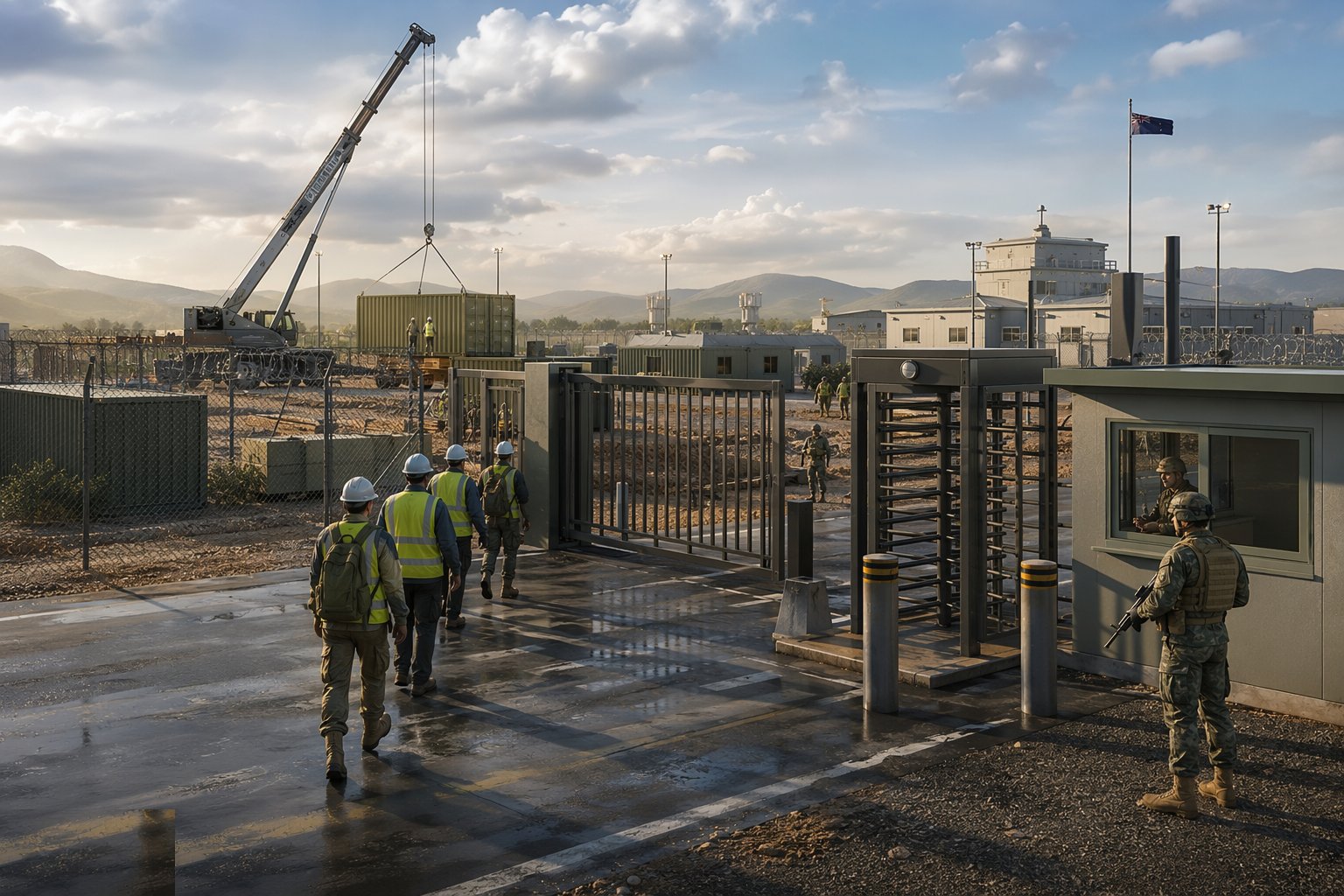
Mobilisation builds the security infrastructure alongside the cabins: pass and access control systems, escort arrangements agreed with the security authority, secure storage for protectively marked documents and sensitive materials, lockable tool stores and shadow boards, controlled IT with the approved devices only, phone and camera management at the gate, and inductions that teach the security rules with the same weight as the safety ones — because on these sites they are the same category of rule. The site's security plan is written, approved and briefed, and everyone signs for it.
Step 3: Run the daily security routine
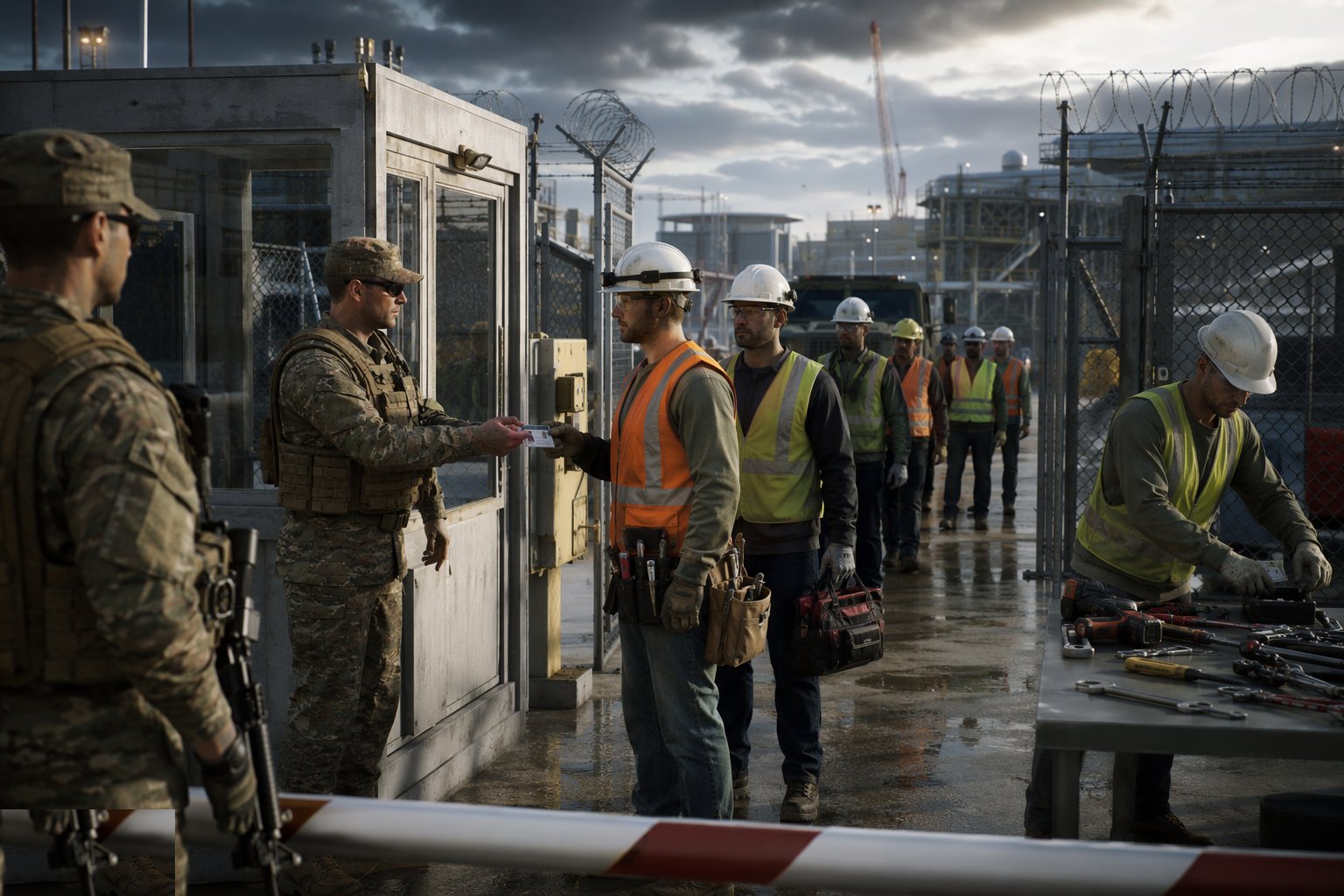
Each day runs to the regime: passes checked and reconciled at the gate, escorted groups marshalled and logged with their escorts, tool counts in controlled areas at start and end of shift, documents issued and returned against the register, devices surrendered and reclaimed. Security incidents — a missing tool, an unescorted person, a phone in a restricted area — are reported through the chain immediately, because the cover-up is the sacking offence, not the lapse. The routine becomes muscle memory, and the sites with the fewest incidents are the ones where the routine is so normal nobody thinks to shortcut it.
Step 4: Control materials, tools and documents
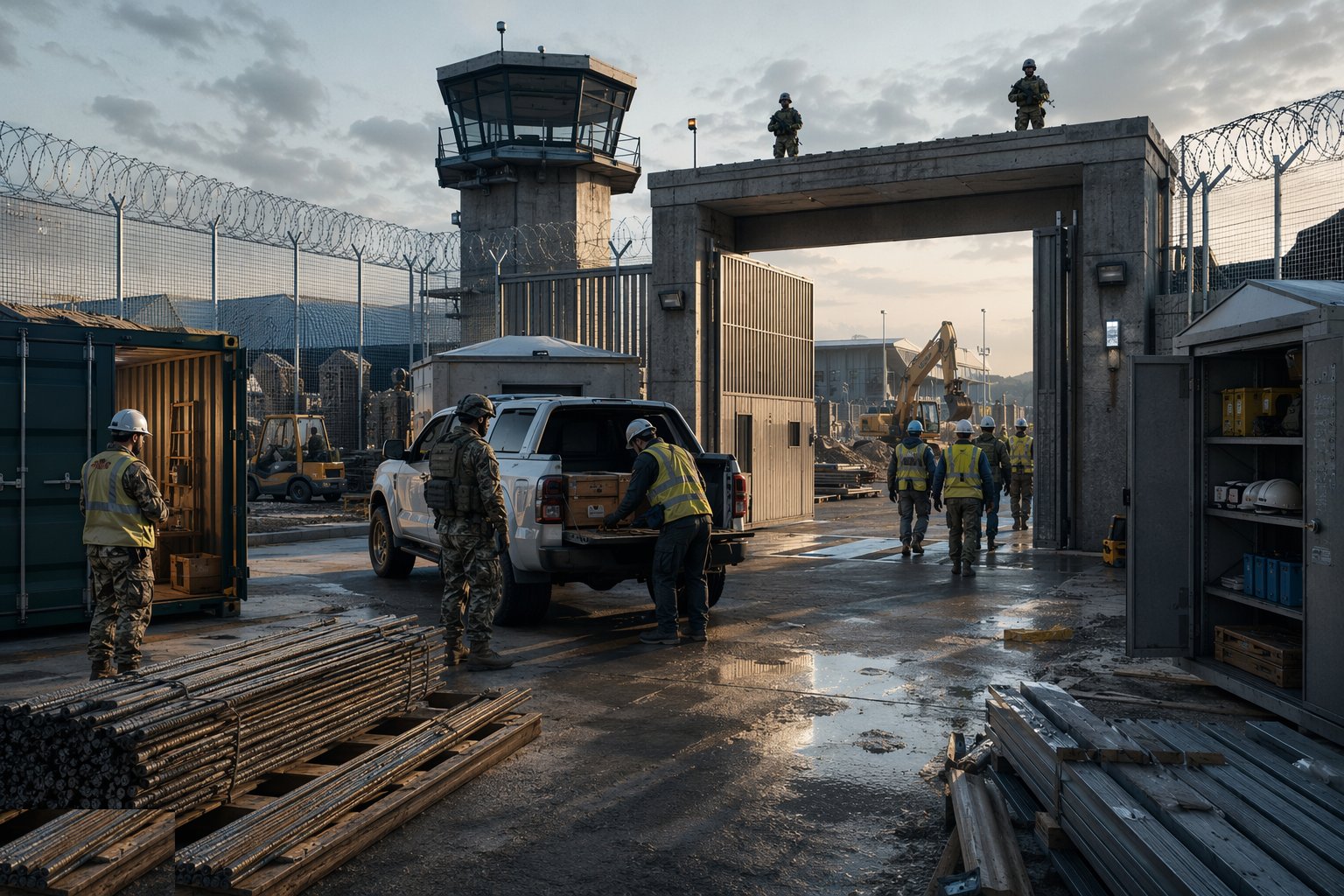
Control continues through the supply chain: deliveries booked, searched or screened as the orders require, with sensitive items — security hardware, communications equipment, protective components — received into secure storage and tracked to installation. Protectively marked drawings live in the document store, issued on register, worked from under control, and returned, with reproduction only through approved channels. Waste and surplus of security significance are destroyed or returned through controlled routes. At demobilisation the registers close the loop: every document accounted for, returned or certified destroyed — the audit trail complete.
Step 5: Coordinate with base operations
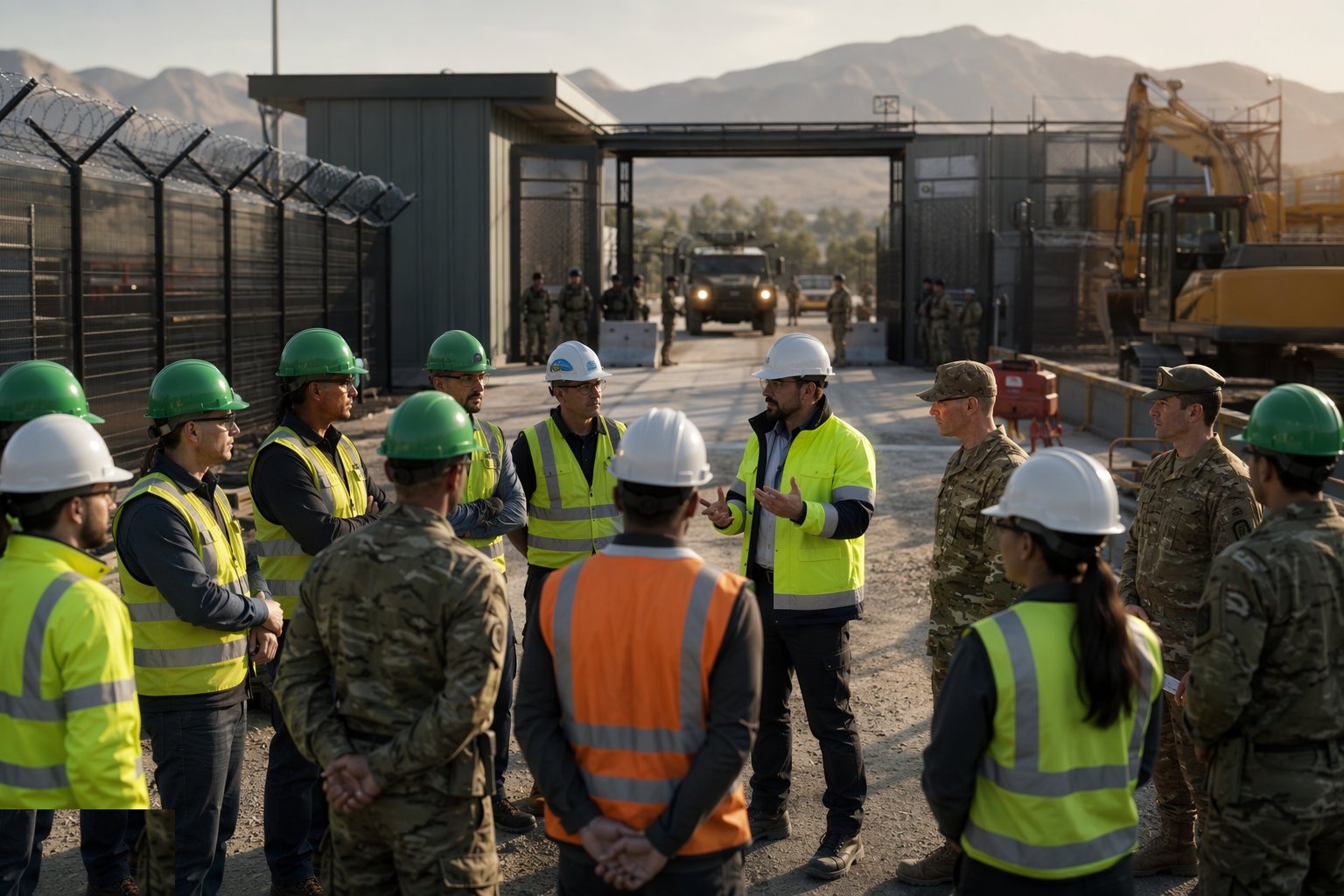
On an operational base the site lives by the station's rhythm: daily coordination with operations and security staff, movement permissions for plant and personnel around live areas, exclusion during flying, range or exercise activity, and immediate compliance with alerts and stand-downs. Emergency procedures — alarm signals, shelter and lockdown drills, muster points — are briefed and exercised with the base. The relationship is managed deliberately: a site team that respects the base's priorities earns cooperation that saves weeks over a programme; one that treats operations as an interruption finds every gate slow and every permission late.
Step 6: Programme around the security overhead
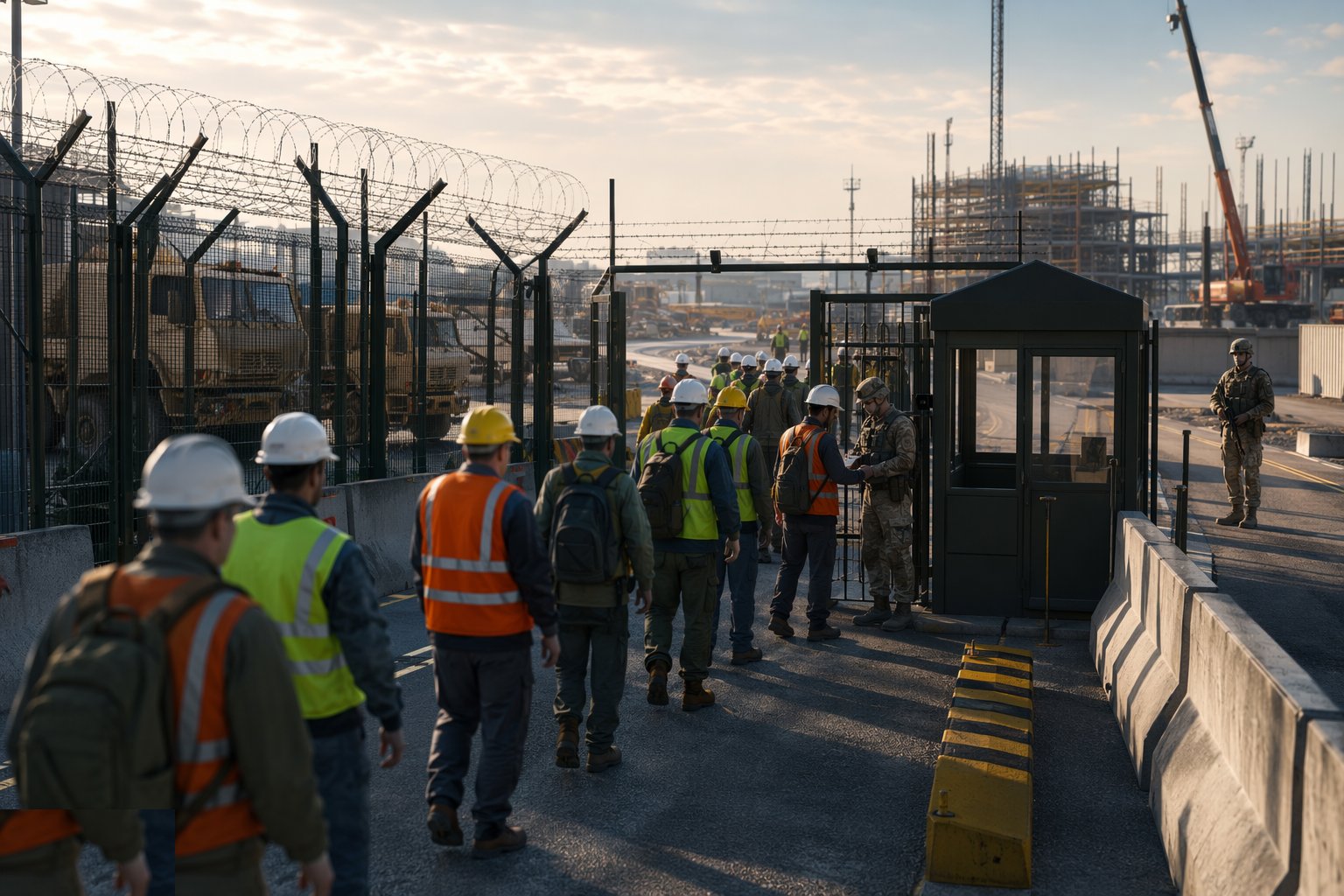
The honest programme carries the regime as planned overhead: access and egress time through the gates, escort-limited working windows, stand-down allowances, vetting lead times in the procurement schedule, and block-working of escorted trades to compress the friction. Progress is measured against a realistic calendar, not a civilian one, and the cost plan holds the escorts, the passes, the secure storage and the lost hours as priced items. This is not pessimism — it is the difference between a secure project that finishes quietly on time and one that finishes late, loudly and under investigation.
Step 7: Close out and demobilise under control
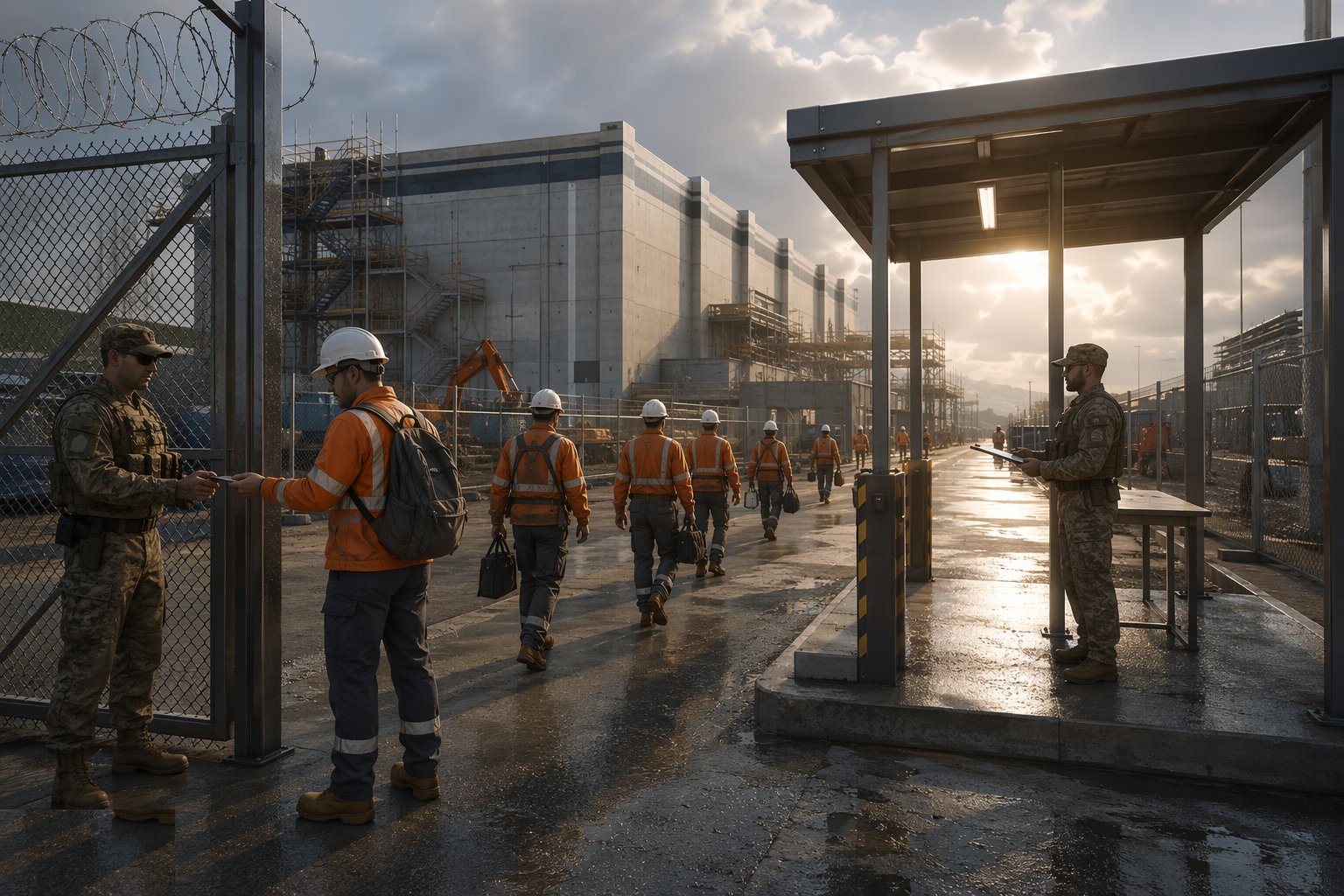
Demobilisation runs the regime in reverse: passes surrendered and access lists closed, protectively marked documents returned or destroyed with certificates, secure stores emptied and inspected, controlled IT wiped or returned, photographic and device records audited where required, and the security file closed with the client's security authority. Personnel leaving the project are debriefed on their continuing obligations — clearance or no clearance, what was seen on a secure site stays protected. The last signature on the security closeout is as formal as the taking-over certificate, and on these projects it matters just as much.
Plant and equipment
- Access control and pass systems; gate and search equipment
- Secure document storage: safes, registered cabinets and controlled-issue systems
- Lockable tool stores, shadow boards and tool control systems
- Secure compounds and screened storage for sensitive materials
- Controlled IT equipment and approved communication devices
- Device lockout and phone management systems at site entry
- Escort coordination kit: radios, logs and marshalling equipment
- Registers and audit systems for documents, keys, passes and sensitive items
Quality control checks
- Clearance register maintained and reconciled against the daily access list
- Escort logs and ratio compliance records
- Document issue and return registers, closed and certified at demobilisation
- Tool control counts and audit records in controlled areas
- Delivery screening and sensitive material tracking records from gate to installation
- Security incident reports and closure actions, reviewed with the security authority
- Security closeout certification at demobilisation
Safety considerations
- Escorted group management: headcounts, controlled movements and no separation in operational areas
- Emergency procedures on operational bases: alarm recognition, shelter, lockdown and muster drills rehearsed with the station
- Operational hazards around the work: live flying, ranges and vehicle movements managed through permissions and exclusion windows
- Fatigue and frustration management where access routines lengthen the working day
- Security-safety conflicts resolved by escalation, not improvisation — a gate propped open "just for a delivery" is both failures at once
- Lone working and isolated areas on large bases: check-in regimes and communications that work where phones are banned
Common defects
- Mobilisation stalled by vetting: key trades uncleared at start date because the pipeline started at contract award instead of tender
- Pass and escort breaches stopping work: unescorted personnel, expired clearances, visitors outside the rules
- Drawings and documents uncontrolled — protectively marked information in cabs, cabins and personal email
- Photography breaches: site photos on personal phones, cloud backups of images that should never have existed
- Lost tools and unaccounted materials in secure areas, triggering searches and stand-downs
- Programme optimism: civilian-calendar planning with no allowance for escorts, gates and stand-downs, recovered never
Best suited for
- MOD, DIO and government secure-estate construction and maintenance
- Military and security-force facilities in the Gulf and elsewhere under national vetting regimes
- Critical national infrastructure with personnel security requirements
- Any project where the security regime is a client requirement from day one to demobilisation
How long does Site Security & Cleared Working take?
Typical duration: The regime runs the whole project; its critical lead item is vetting — allow roughly 4–12 weeks for SC-level and several months for DV-level clearances before those personnel can start..