Working in Live Schools & Safeguarding
Construction on a live school campus — hoardings, segregated routes, vetted crews and holiday possessions — run on the principle that a pupil never meets the works.
Last updated 2026-07-28 by the BuildPedia Editorial Team.
What is Working in Live Schools & Safeguarding?
A school under construction is a building site bolted onto a place full of children, and the two must never touch. That principle drives everything, and it is not optional culture — in England, Keeping Children Safe in Education (KCSIE) is statutory guidance, and the school's designated safeguarding lead (DSL) has both the authority and the duty to stop your job. The workforce question comes first: anyone whose role gives opportunity for contact with children needs the right checks — an enhanced DBS check where the role is regulated activity — but most sensible contractors run a simpler, stricter rule: no unescorted, unsupervised contact, ever. Workers are inducted, badged, scheduled and supervised; the site boundary is the safeguarding boundary; and the headteacher has a single named contact on the contractor's team for everything.
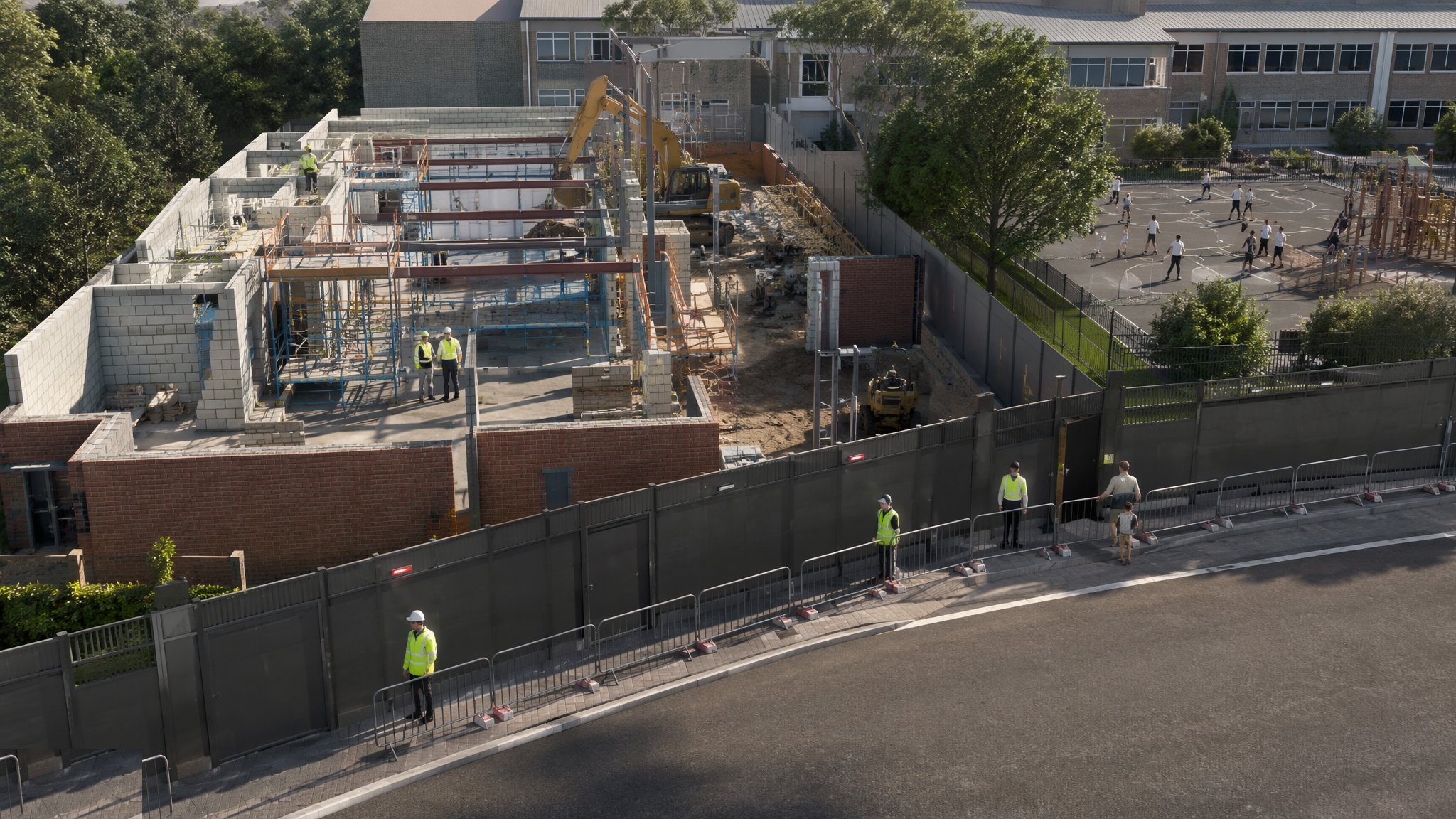
The physical controls are unglamorous and absolute. The site is enclosed in solid hoarding — 2.4 m minimum, unclimbable, no handholds, no gaps at the bottom — with gates that are locked or supervised, never left latched-open for convenience. Vehicles use their own gate with a banksman, and deliveries run to a curfew: nothing moves during the morning and afternoon school runs. Crane jibs do not slew over occupied buildings; welfare cabins sit inside the site, not overlooking a playground; there is no photography of pupils, no radios, no banter over the fence, and the dress and behaviour code is briefed like any other site rule. Inside occupied buildings, interface hoardings seal the works from the school with the same discipline as a hospital containment — dust, noise and access controlled at every door.
The programme is written on the school calendar, not the other way round. Demolition, strip-out, structural connections and anything loud, dusty or risky is packaged into the holidays — the six-week summer possession above all, with Easter, half-terms and inset days used for shutdowns, tie-ins and plant replacements. Examination season is a silence window agreed in writing. Holiday possessions are planned like military operations: materials pre-staged, labour booked for extended shifts, temporary services arranged, and a hand-back checklist with a deep clean so the school reopens on the first day without a trace. In the UAE the same logic applies through the school operators and regulators — KHDA and ADEK expect construction on live campuses to be segregated and scheduled around the school day, and the ministry midday-break and summer working rules shape the programme just as the calendar does in the UK.
When and why is Working in Live Schools & Safeguarding used?
This regime applies to every extension, refurbishment and services upgrade on an occupied school or college campus — which is most education work, because schools rarely get the luxury of closing. It matters first because a breach is not a snag: a pupil inside the fence, a worker alone in a school corridor, a delivery lorry in the playground at home time — any of these stops the job, lands on the DSL's incident log, and can end the contractor's relationship with the client and the framework. It matters second because the safeguarding regime is the programme: the holiday possessions, curfews and exam windows decide what can be built when, and the contractor who prices a live-school job as if it were an empty field will lose the summer before they understand why. Done well, it is also a selling point — a school that trusts its contractor hands over the campus, and the Considerate Constructors score, with confidence.
Types of Working in Live Schools & Safeguarding
Fully segregated compound with independent access
The clean solution: a new block on the edge of the campus with its own gate, haul route and compound, hoarded off from the school entirely. The works never enter the occupied estate; safeguarding becomes boundary maintenance and delivery discipline.
Interface hoardings through occupied buildings
Refurbishment phases inside a live school: sealed solid hoardings with controlled doors, dust and noise containment, fire escape routes maintained through the works, and the school's corridors re-routed phase by phase. The hardest version — the boundary runs through the building, not around it.
Holiday possession working
High-impact works compressed into the breaks: demolition, strip-out, connections and plant changeovers in the summer, Easter and half-term windows, with pre-staged materials and extended shifts. The six-week summer possession is planned a year ahead and executed like a rail blockade.
Term-time quiet works under permit
Low-disruption activities allowed during term — fit-out behind hoarding, second fix, commissioning — each under a permit agreed with the school, with noise and dust limits, agreed hours and an absolute exam-season embargo. The permit wallah is the school, not the contractor.
Decant-first strategies
Where the phasing is impossible, the pupils move first: into modular classrooms on the car park or a swing site, converting a live-school nightmare into an empty-shell job. Costs a village on the playing field; buys a programme you can actually build.
Working in Live Schools & Safeguarding: step by step
Step 1: Agree the safeguarding plan with the school
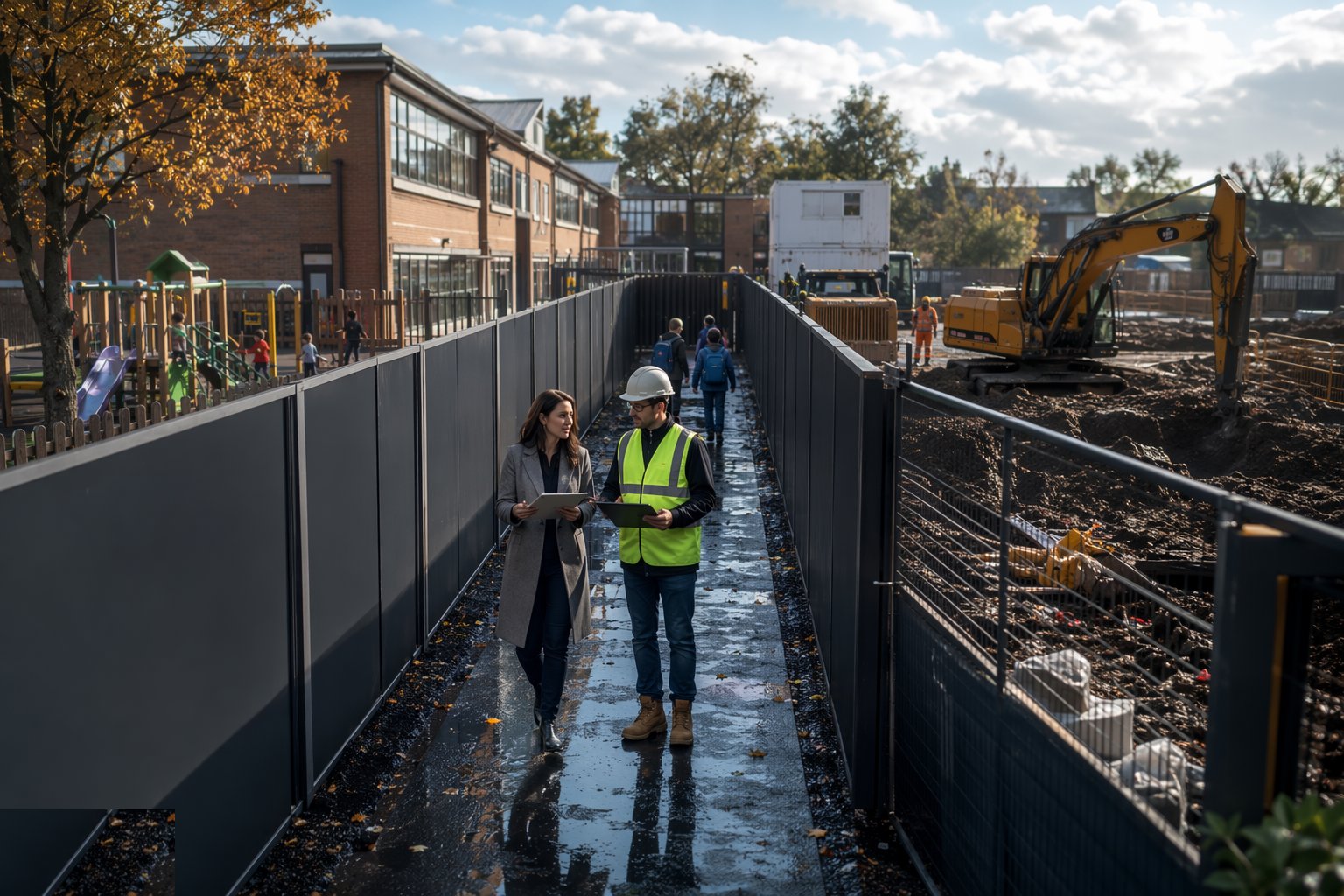
Before mobilisation, sit down with the headteacher and the DSL and write the plan: the named contacts on both sides, the DBS and vetting strategy for every role including subcontract labour, the induction content, the badge and signing-in system, the no-unescorted-contact rule, and the escalation route for incidents. The plan covers behaviour — no photography, no radios, dress code, language — and it is signed by the school and briefed to every operative at induction, with the attendance register kept. This document is a live agreement, reviewed at the weekly liaison meeting, because the school's needs change through the year and the plan changes with them.
Step 2: Establish the boundary and the separate access
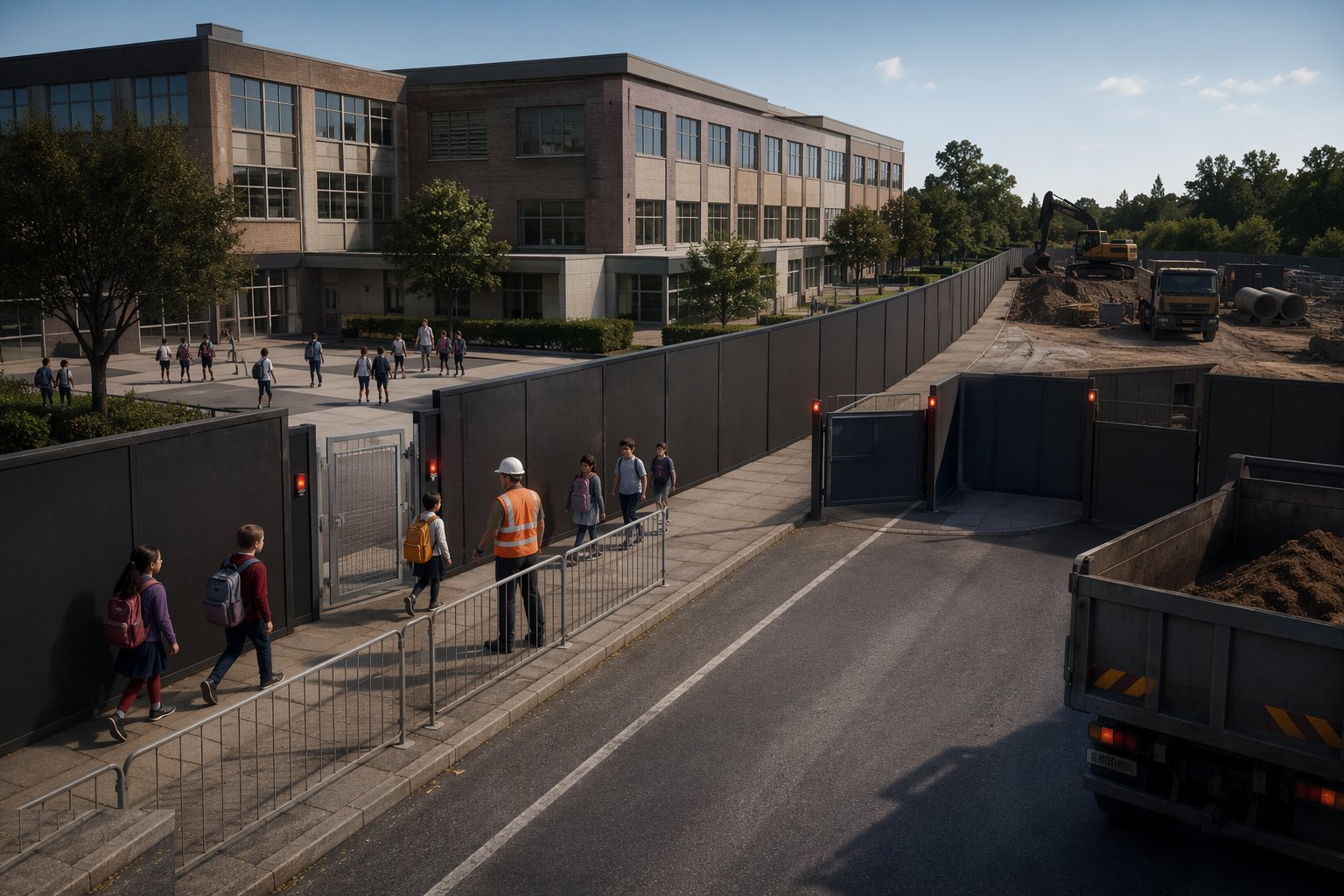
The hoarding goes up first and it is a specified item: solid, unclimbable, 2.4 m or higher, founded against wind and the attentions of pupils, with gates that lock or are staffed. Vehicle access is separate from pupil routes, with banksmen, signage and a gate protocol; pedestrian routes for the school are re-marked and lit; and the fire escape routes from occupied buildings are maintained, agreed with the school's fire risk assessment and never blocked overnight. CCTV, lighting and signage complete the perimeter, and the boundary is inspected daily — a panel down or a gate propped open is a stop-work event, not a maintenance note.
Step 3: Segregate the logistics: curfews, haul routes and welfare
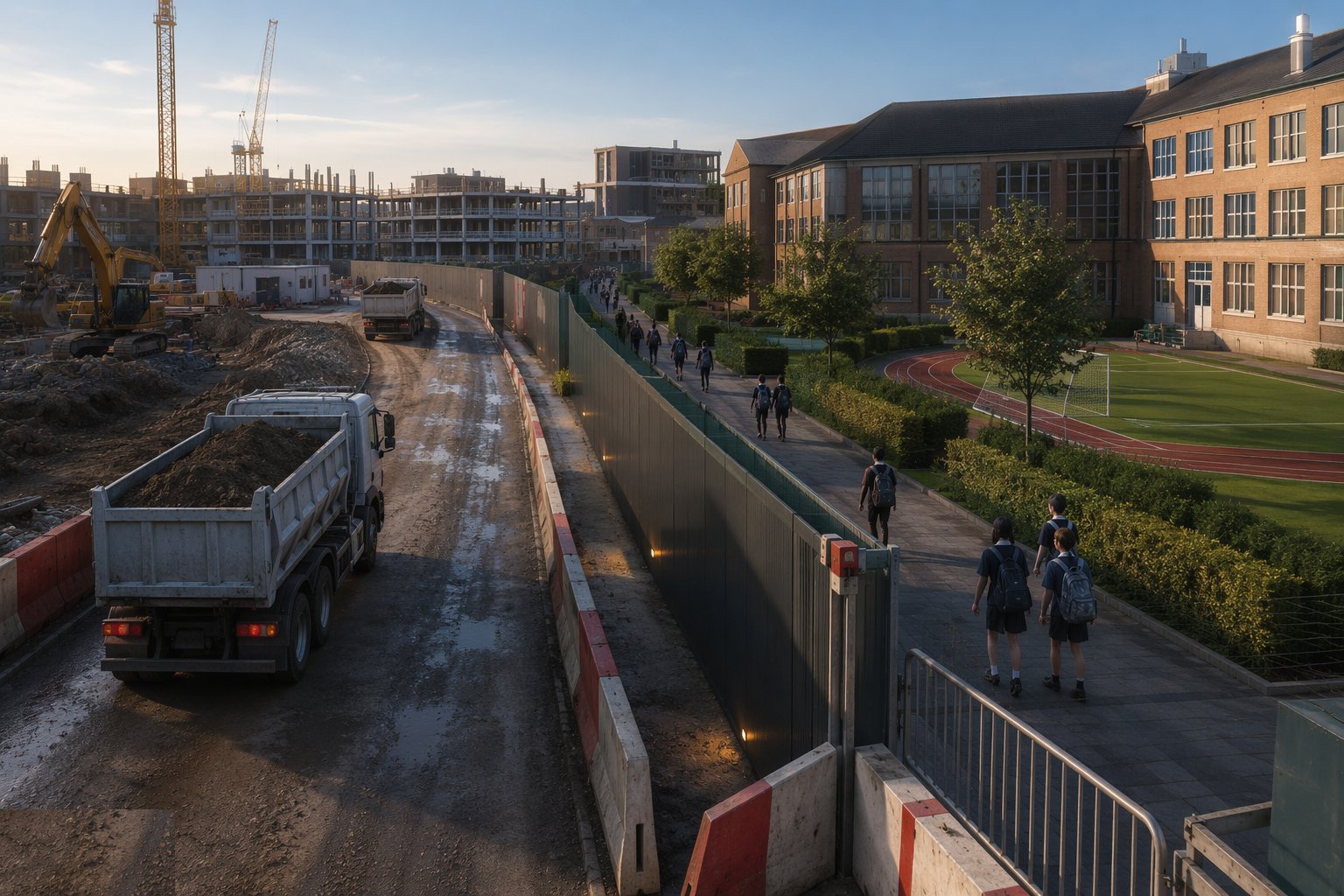
Deliveries run to the curfew agreed with the school — nothing in the windows around the morning and afternoon runs, nothing unbanked, nothing routed past a playground at break time. Haul routes are separated physically, the wheel wash and parking are positioned away from the school gate, and the booking system gives the school visibility of what arrives when. Welfare stays inside the site and out of sight: cabins, drying rooms and smoking areas positioned so the workforce and the pupils do not share a view, because familiarity through a fence is exactly the contact the plan exists to prevent.
Step 4: Manage the workforce: vetting, badges and supervision
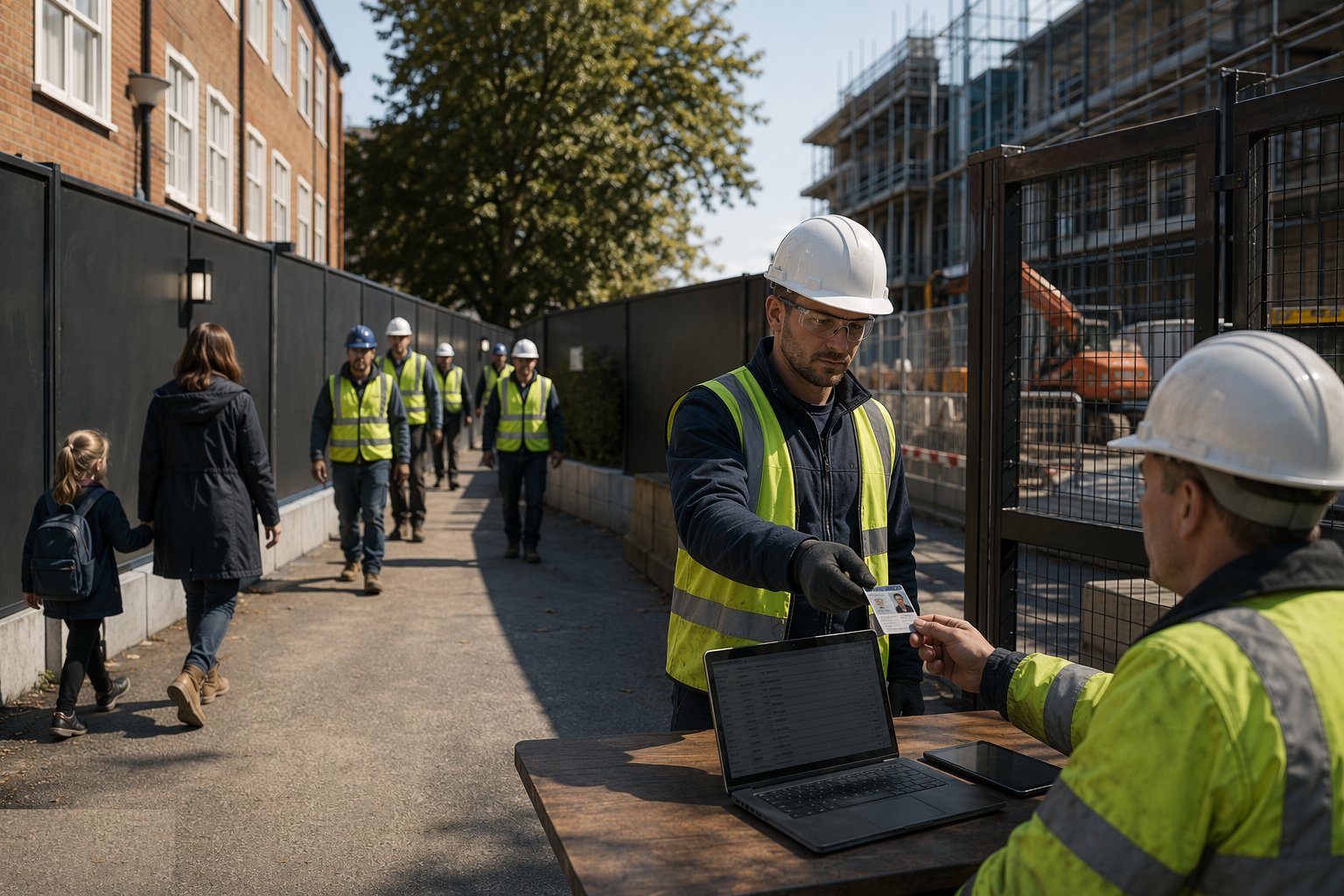
Every operative is inducted against the safeguarding plan, badged, and signed in and out; subcontractors provide their vetting evidence before their first shift, and the register is audited. Supervision ratios reflect the rule — nobody works alone in a position of uncontrolled contact, and any task requiring entry into an occupied area is escorted by arrangement with the school. The behaviour standards are enforced like safety standards: a foul-mouthed conversation over the fence or a phone pointed the wrong way is treated as a breach with the same consequences as a missing harness, because on a school job, it is one.
Step 5: Plan the calendar: exam windows, possessions and weekly liaison
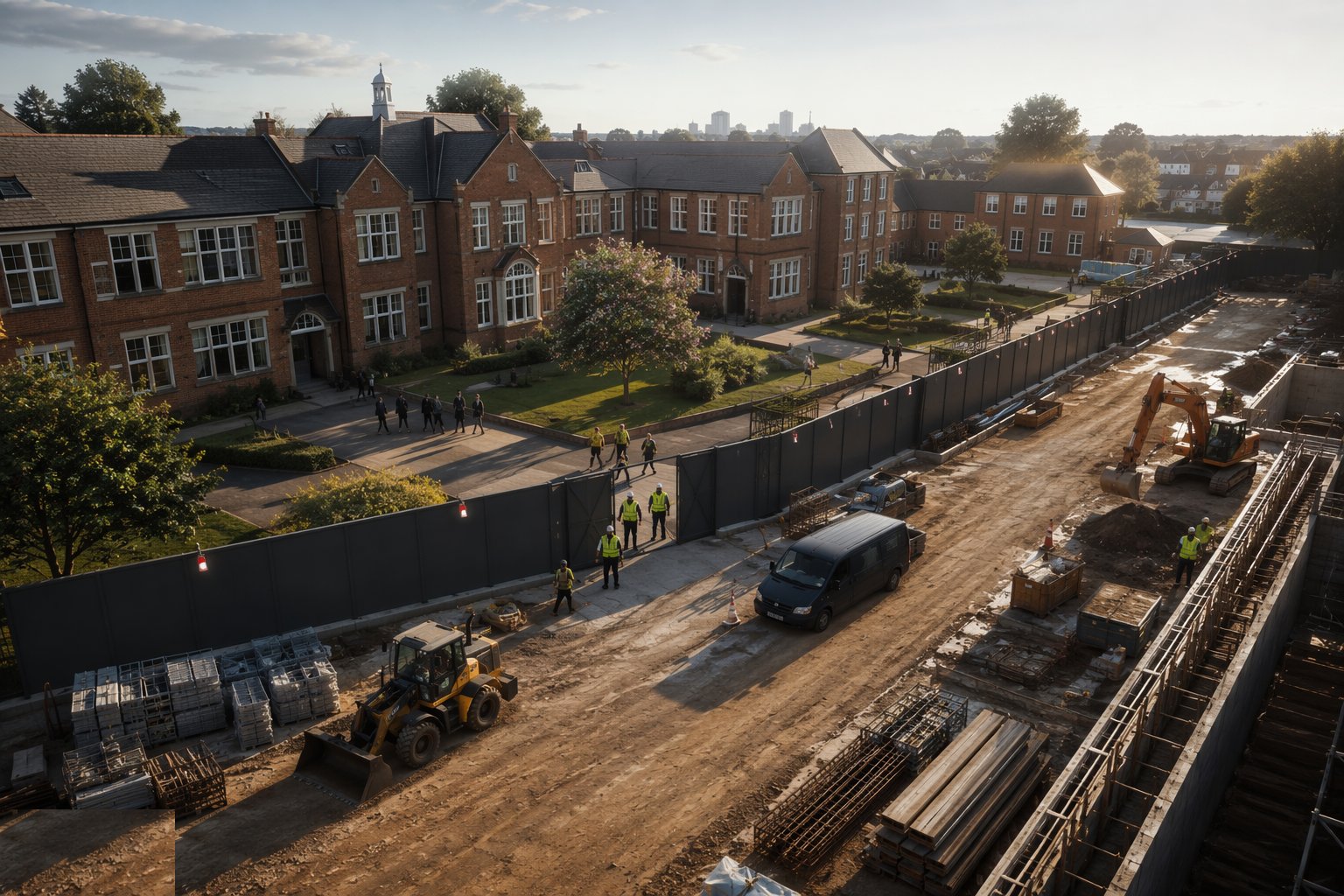
The programme is mapped onto the school year: the summer possession for the heavy works, half-terms for shutdowns and tie-ins, inset days for deliveries and plant movements, and a written embargo around examinations with agreed noise and vibration limits on either side of it. The weekly liaison meeting with the school reviews the lookahead against their calendar — parents' evenings, sports days, productions — and adjusts. This is where trust is built or lost: the school that hears about your crane lift from its own playground duty rota will not extend you the benefit of the doubt again.
Step 6: Execute the holiday possessions
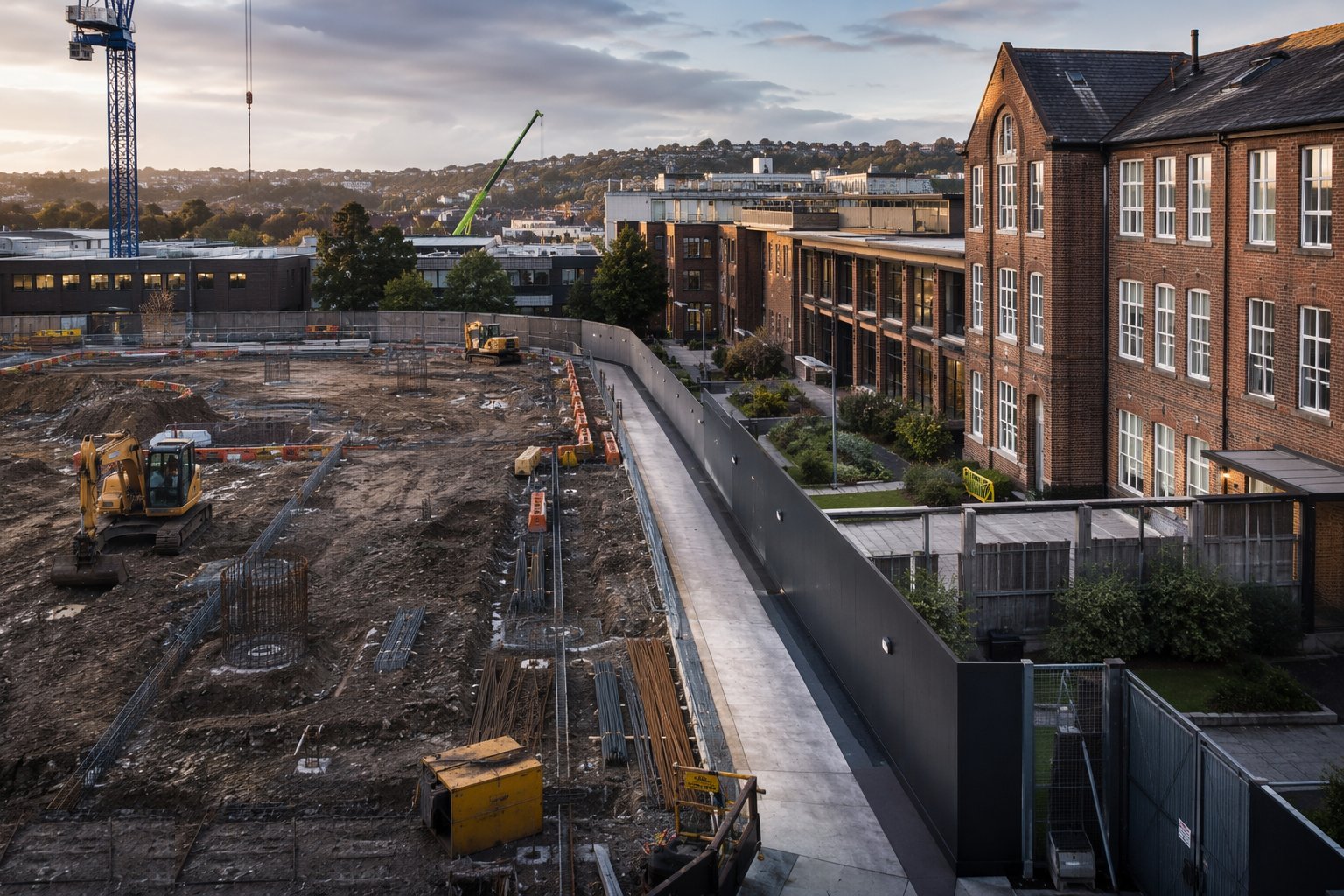
The possession is planned backwards from the first day of term: scope frozen, materials pre-staged on site before the holiday starts, labour and shifts booked, temporary services and protection arranged, and the strip-out, structural and connection works executed on extended hours with the campus empty. The final week is protected for commissioning and hand-back: systems proven, the snag list worked down, and a deep clean that leaves no trace — dust in a returned classroom is remembered for years. Hand-back is a formal event with the school: a walked route, a checklist signed, and the keys returned before the gates reopen.
Step 7: Coordinate emergencies and the daily interface
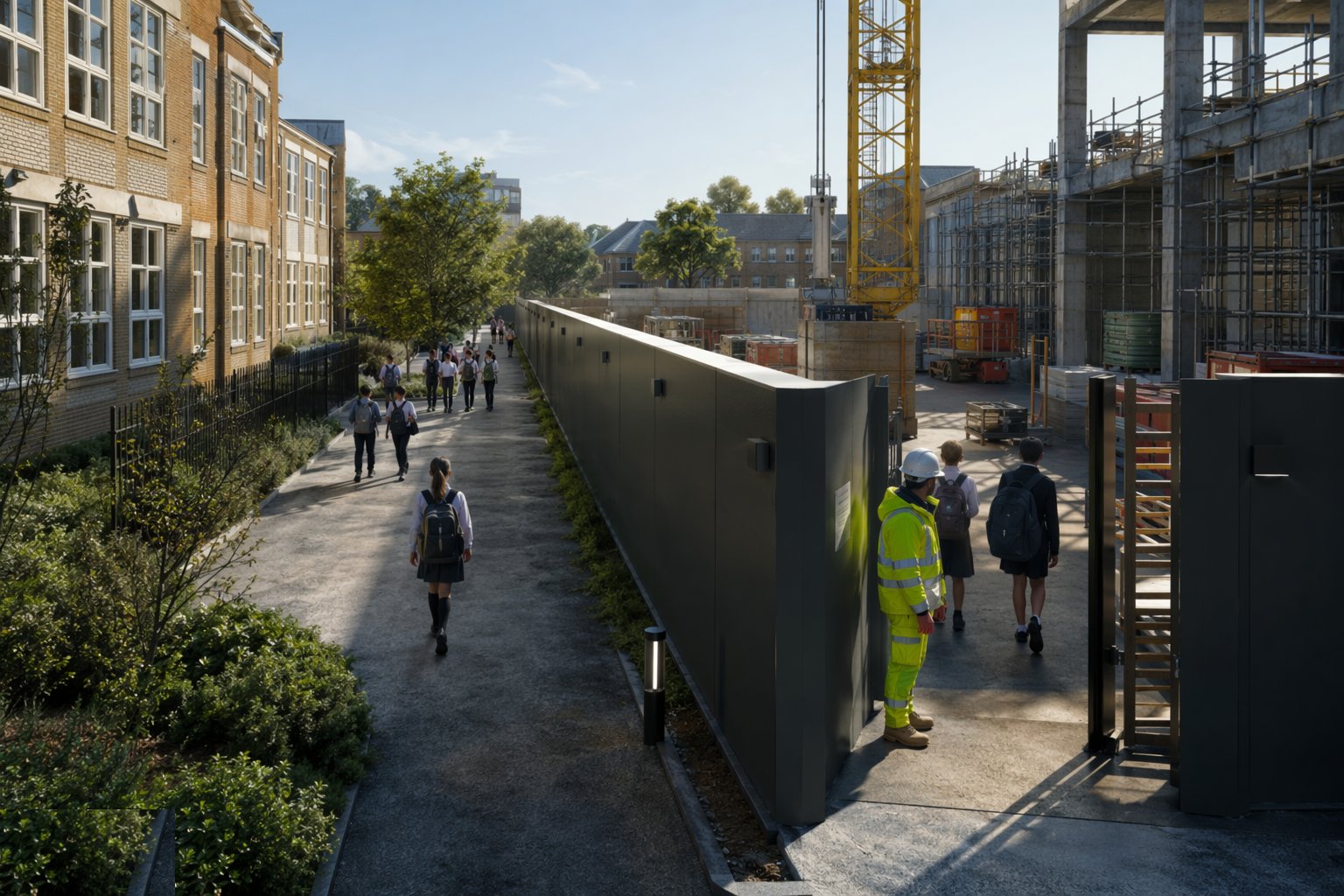
The site's emergency procedures are integrated with the school's: evacuation routes and assembly points that respect both regimes, lockdown procedures understood by both sides, first aid arrangements, and a shared protocol for incidents — a site emergency does not stop at the hoarding, and neither does a school one. Utilities are managed so a site fault cannot black out the school mid-lesson; out-of-hours alarms and call-outs are coordinated with the site manager. The measure of the regime is that the school barely notices you — and can prove, to any governor or inspector who asks, exactly why that is safe.
Plant and equipment
- Solid hoarding systems with lockable gates, anti-climb detailing and wind loading designed in
- Temporary pedestrian management: barriers, signage, lighting and marked routes
- CCTV, access logging and visitor management systems
- Banksman equipment, delivery booking systems and gate supervision
- Dust and noise monitoring at the interface with occupied buildings
- Temporary services and protection materials for possession working
Quality control checks
- Safeguarding plan signed by the school and DSL; induction register complete and audited
- DBS/vetting evidence register for all operatives including subcontractors, checked before first shifts
- Daily boundary inspections logged; gate and hoarding defects closed the same day
- Delivery log reconciled against the curfew — no unlogged movements in embargo windows
- Weekly liaison minutes with the school; calendar embargoes visible on the lookahead
- Possession hand-back checklists signed with the school at every return
Safety considerations
- Children and construction plant never share space: physical segregation, supervised gates, and the site secured overnight — a building site is a magnet, and the fence is the control
- Crane jibs and loads never slew over occupied areas — lift plans drawn around the school footprint, not just the site
- Dust, noise and vibration controlled at the interface: monitoring, suppression and embargo windows
- Asbestos in pre-2000 school stock: management survey before any work, R&D survey before intrusive work, licensed removal in possessions
- Emergency routes maintained at all times — fire escapes and assembly points agreed and never compromised overnight
- Fire safety during the works: hot-work permits, alarm interfaces managed so the school's detection is never silently isolated
Common defects
- The gate left propped open for convenience — the boundary breach that ends the job's goodwill in a single photograph
- Unbadged or unvetted subcontract labour turning up on a Friday — the register that was never audited until the school asked
- Deliveries in the school-run window — a tipper in the queue of parents, and the curfew agreement in the bin
- Holiday possession overrunning into term — classrooms handed back dusty, unfinished or late, and the next summer's programme renegotiated in distrust
- Noise during examinations — the embargo nobody briefed to the subcontractor's saw operator
- Welfare or materials visible over the fence — behaviour complaints from parents, and a repositioning exercise at the contractor's cost
Best suited for
- Extensions and refurbishments on occupied primary, secondary and college campuses
- RAAC and urgent remediation works in live schools
- Phased whole-school rebuilds using decant villages
- Services upgrades, boiler and plant replacements timed to holiday possessions
How long does Working in Live Schools & Safeguarding take?
Typical duration: The regime runs the length of the project. Holiday possessions are planned 12–18 months ahead; a summer possession typically executes 6–10 weeks of high-intensity work, and term-time phases run at the pace the school's calendar permits..