Education
Schools, colleges and universities — repeatable classrooms, immovable term dates.
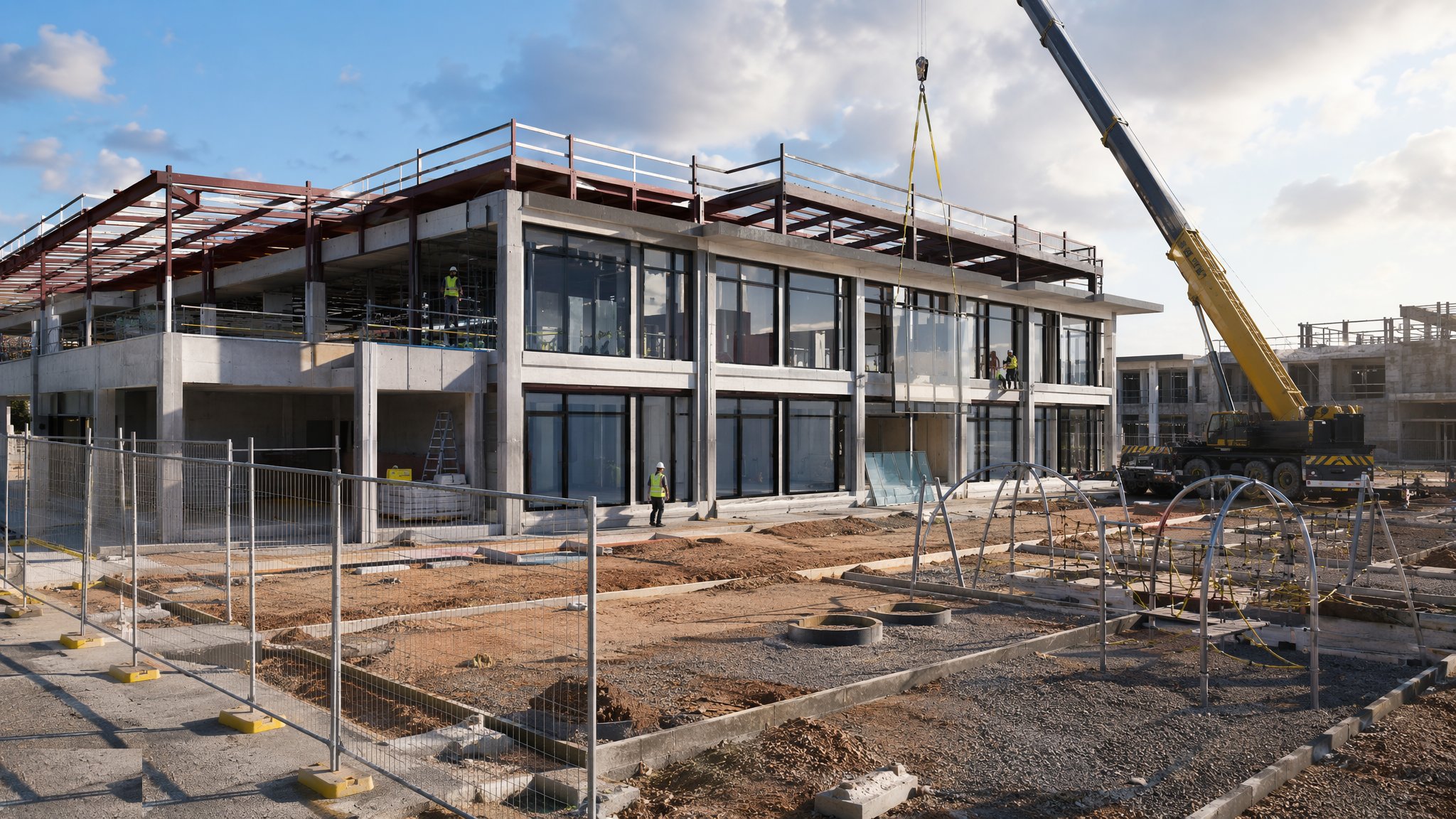
Education work rewards repetition: a standard classroom grid, standard details, and a frame and envelope you have seen a hundred times — the shared building methods linked below. What is not standard is the client's calendar. The programme answers to term dates whether you like it or not, which is why modular and off-site construction has made itself at home in this sector, and why a year of work is so often squeezed into a summer holiday.
The other half of the job is working around children: live-school extensions with safeguarding boundaries, segregated access and a workforce checked and briefed before they get through the gate. The three guides in this sector cover school construction, modular classrooms, and live-site working and safeguarding — the layers that sit on top of the ordinary civils.
What does Education cover?
Process guides in Education
- School Construction — Teaching blocks, halls and play spaces built to the Department for Education's output specification — where classroom acoustics, daylight, robustness and safe external areas matter as much as the frame that carries them.
- Modular Classrooms & Off-Site Solutions — Factory-built classroom modules craned onto prepared bases — the answer to bulge years, RAAC replacements and decant space, where the building leaves the factory ninety per cent finished.
- Working in Live Schools & Safeguarding — Construction on a live school campus — hoardings, segregated routes, vetted crews and holiday possessions — run on the principle that a pupil never meets the works.
Shared methods used in Education
- Site Access & Enabling Works
- Setting Out & Survey Control
- Earthworks & Excavation
- Shallow Foundations
- Steel Frame Construction
- Masonry & Timber Frame
- Roofing
- Façade & Cladding
- MEP First Fix
- Internal Finishes
- External Works & Landscaping
- Testing, Handover & Snagging
Part of the Buildings group.