Process Plant & Production Line Installation
Machines off the low-loader and onto their bases — grouted, levelled and aligned to hundredths of a millimetre, hooked up to every service, then proven cold before anything gets hot.
Last updated 2026-07-28 by the BuildPedia Editorial Team.
What is Process Plant & Production Line Installation?
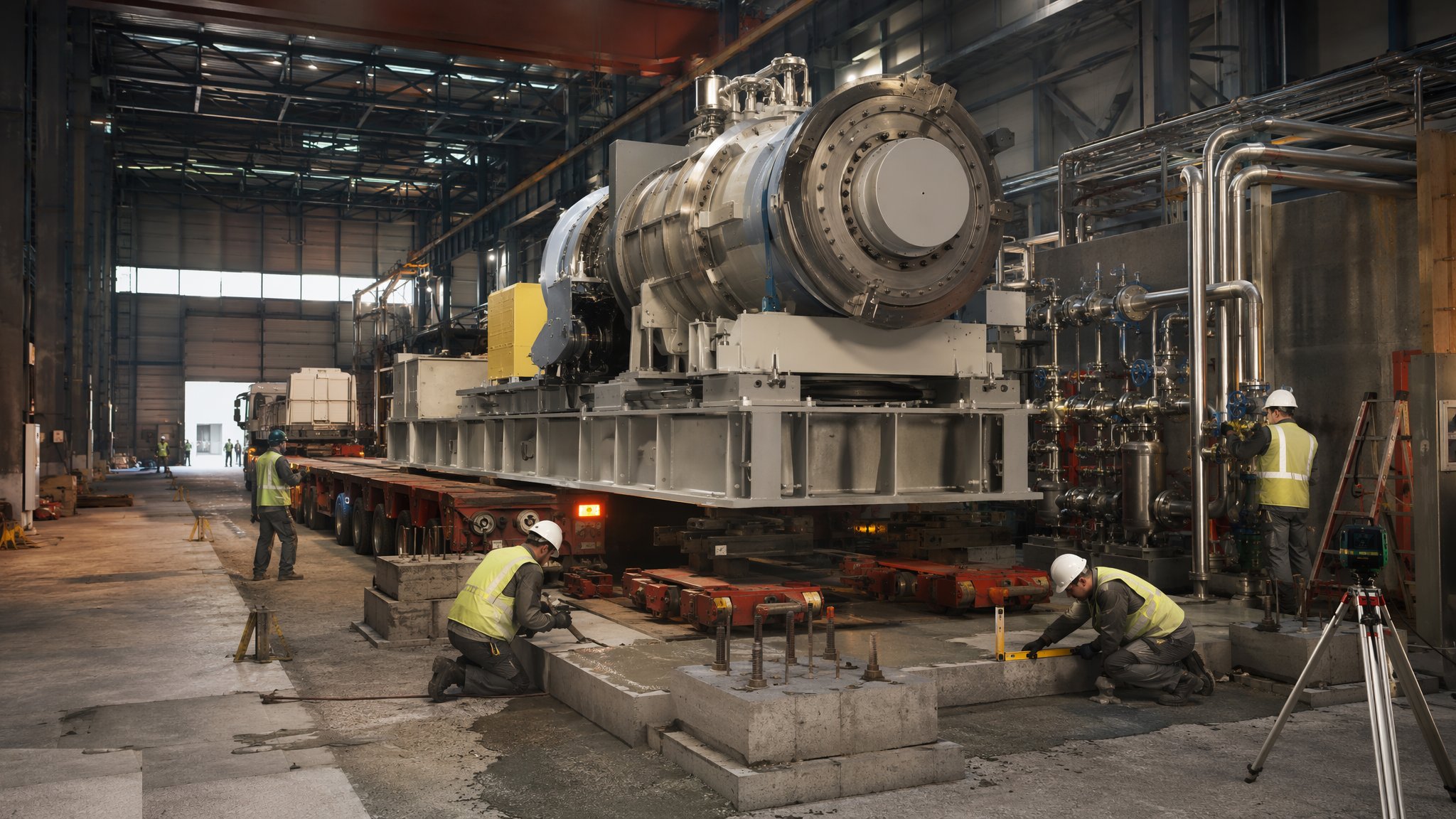
Installing a production line is mechanical engineering conducted inside someone else's new building, on a programme owned by the client's launch date. The machines arrive — presses, CNC cells, conveyors, mixers, packaging lines — each with a foundation drawing, a utility schedule and a vendor commissioning engineer whose availability was booked nine months ago. The installer's craft is the unglamorous precision between delivery and production: getting tonnes of machinery through the door and across the floor without damage, setting it on its base to level and alignment tolerances that run to hundredths of a millimetre on precision plant, grouting it down so it stays there, and connecting the services in the right order so commissioning starts on schedule.
The base and the grout are where line performance is decided. Machines sit on steel baseplates or directly on concrete plinths, levelled on shim packs or levelling screws, with non-shrink cementitious grout for general plant and epoxy grout where dynamic loads, vibration or chemical exposure justify it. Laser trackers, optical levels and dial gauges replace the string line: a machining line's bed must be level along its length and aligned to its neighbours so product transfers true, and rotating plant is aligned to its drives at coupling tolerances the vendor publishes and the warranty enforces. Anchor bolts are torqued after grout cure to the specified sequence — and the survey is recorded, because the day the line vibrates or scrap parts appear, the first document everyone reaches for is the installation record.
Services hook-up follows a strict hierarchy — power, air, water, hydraulics, extraction, data — with every connection made off, tested and labelled before the vendor's commissioning engineer takes the controls. Commissioning itself runs in two temperatures: cold commissioning proves the machine mechanically and electrically — rotation directions, interlocks, e-stops, dry runs, line tracking with no product; hot commissioning introduces material, heat and chemistry, ramping through trial batches to rate. The construction team's job is to hand over a machine that cold-commissions without a single installation defect on the snag list, because every hour of vendor commissioning time burned on your grout void or crossed cable is an hour off the client's production ramp.
When and why is Process Plant & Production Line Installation used?
Installation begins the moment the building offers a weathertight shell, a cured floor and power — and it is invariably the programme's critical tail, because production dates are announced to customers before the concrete is dry. The methods are chosen by machine mass and precision: skates and jacks where the floor and route allow, mobile or crawler cranes through roof openings or door lines for the heavy units, and specialist heavy-lift contractors for the presses and mills that arrive as single lifts of a hundred tonnes or more. Grout and anchor systems are specified from the machine's dynamic behaviour, not habit — a vibrating screen on the wrong grout is a maintenance contract in waiting. The entire discipline exists because production machinery remembers how it was installed: alignment drift, soft foot and resonance all trace back to the first week, and the warranty arguments trace back to the records.
Types of Process Plant & Production Line Installation
Individual machine setting
Standalone machines — presses, CNC centres, ovens, vessels — delivered, positioned, levelled and anchored one at a time. The unit of all installation work; complexity scales with mass, precision and the number of services each machine drinks.
Integrated production lines
Conveyor-linked sequences of machines installed as one geometry: transfers, accumulation, guarding and control zoning across the whole line. The line is levelled and aligned as a system, because a transfer that is out by millimetres jams by the thousand.
Heavy process plant
Mills, mixers, reactors, large presses and vessels requiring heavy-lift planning, temporary openings in the building, and sometimes installation before the envelope closes. The building sequence is designed around these lifts, not vice versa.
Relocation and retrofit installation
Existing lines stripped, moved and reinstalled — within a site, between sites, or into an operating factory. Adds match-marking, condition surveys and recommissioning to the standard disciplines, with production downtime as the ticking meter.
Process Plant & Production Line Installation: step by step
Step 1: Survey the bases and plan the route in
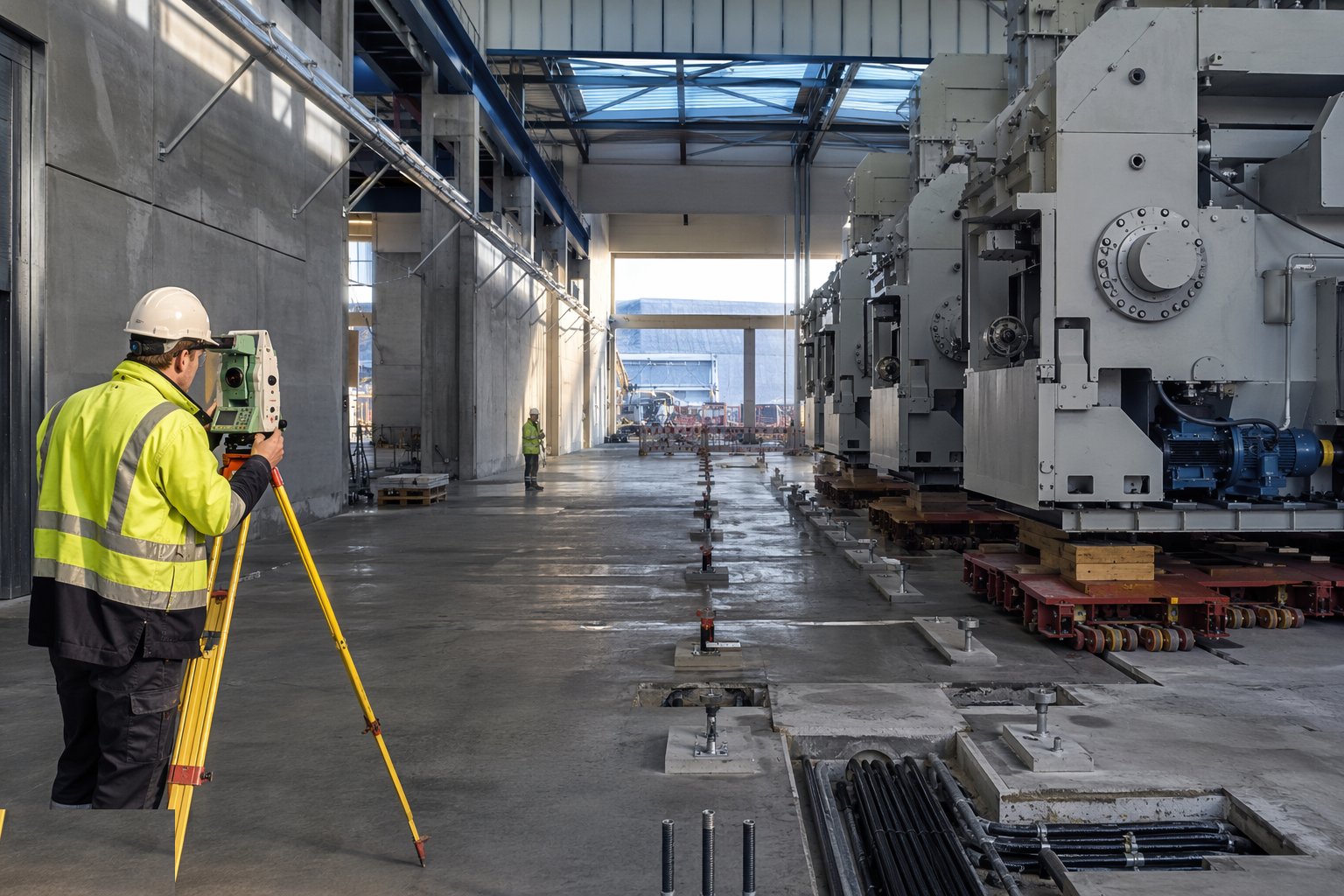
Before the first lorry arrives, the installation team surveys everything the machine will touch: plinths and holding-down bolts checked against the vendor's certified foundation drawing (position, level, projection — bolt thread condition included), floor loadings confirmed along the route from door to final position, and door, opening and turning-circle dimensions proven with tape and total station, not assumed from the GA. Heavy lifts get their engineering: crane standing positions, ground bearing, outrigger loads on the slab edge, and the temporary roof or wall opening agreed with the building contractor. The survey closes with a marked route and a lift plan, because the day a 40-tonne press meets a 50 mm step nobody recorded is a day nobody forgets.
Step 2: Receive, move and rough-position the machines
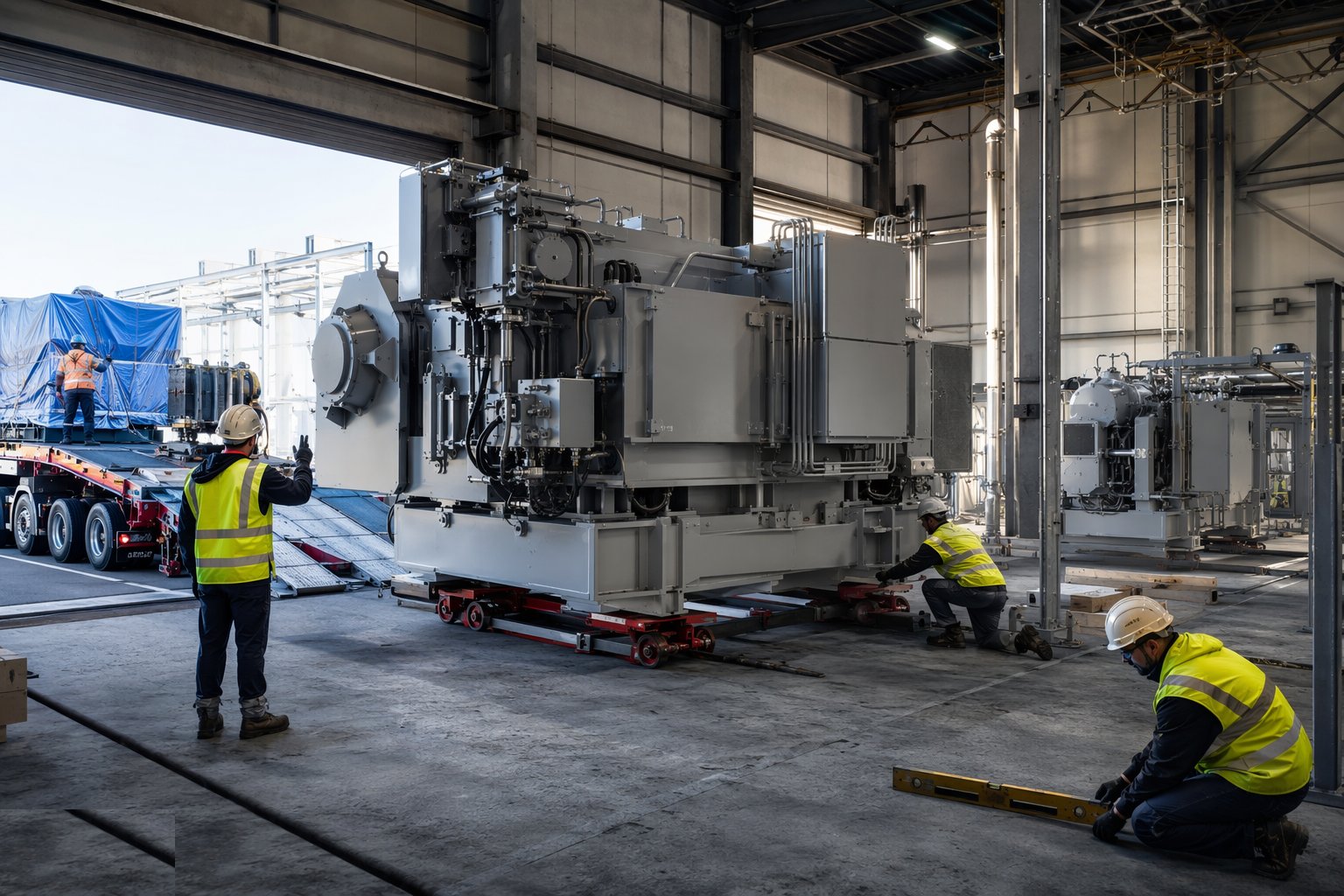
Machines are offloaded, inspected for transit damage (with photographs, before signatures), and moved across the floor on skates, rollers or multi-wheel systems with the floor protected where point loads demand. Rigging is planned per lift — lifting points per the manufacturer's manual, never the convenient casting — and the machine is landed within rough position of its bolts. Sensitive plant stays wrapped and climate-protected until the environment is ready for it; precision metrology does not thank you for a week beside an open door in a Gulf summer. Everything is chocked, earthed against stray welding current elsewhere in the building, and logged into the installation sequence.
Step 3: Level, align and grout to tolerance
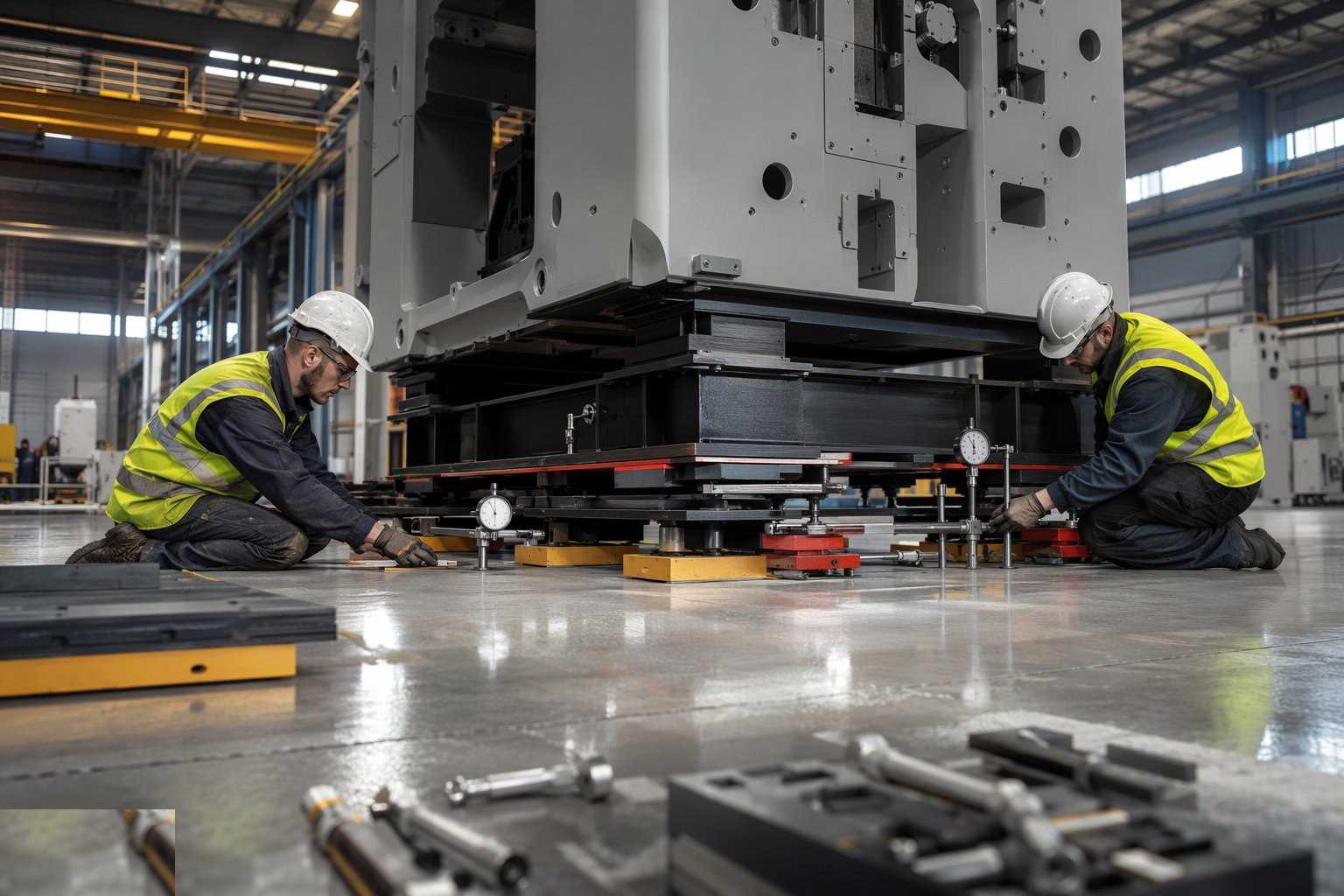
The precision heart of the job: machines are levelled on their shim packs or levelling elements using optical levels, laser trackers or precision spirit levels as the tolerance demands — hundredths of a millimetre per metre on machine beds, checked in both directions and along the full length. Alignment to adjacent machines, conveyor datum lines and drives is set and recorded, soft foot is hunted and eliminated (a rocking machine foot becomes a resonance at running speed), and anchor bolts are nipped to hold position. Grouting follows: forms built tight, the specified grout mixed and placed in one continuous operation from one side so air escapes, cured per the data sheet — and only then are anchors torqued to the final sequence and the survey re-run and signed. Epoxy grouts in summer heat get their temperature discipline: pot life shortens as the Gulf afternoon lengthens.
Step 4: Hook up the services in sequence
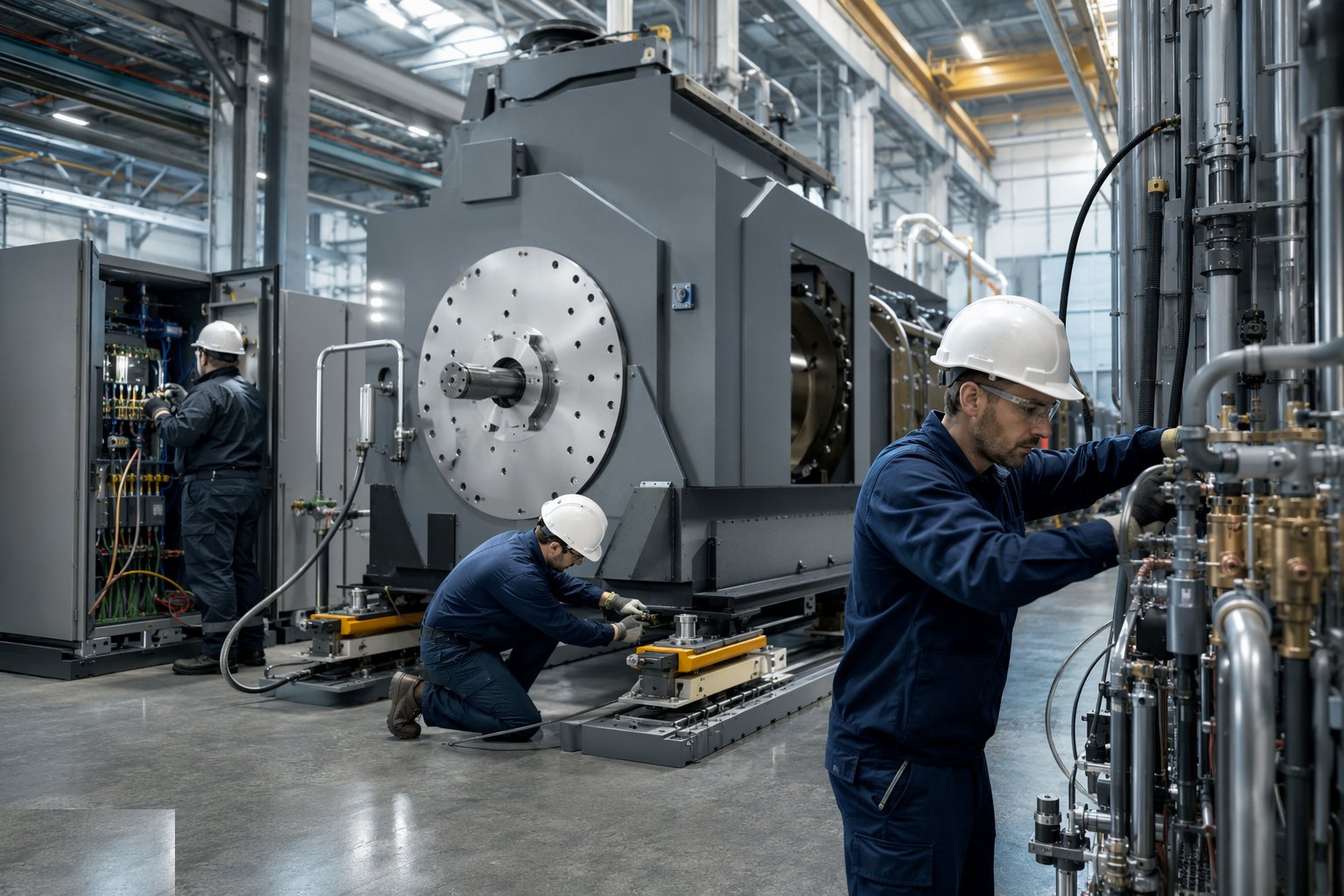
Services land on the machine in the order that lets testing start early: electrical supply and control cabling terminated, meggered and labelled; compressed air with its filtration and the right hose ratings; cooling and process water with flow verification; hydraulics with cleanliness discipline that borders on the surgical — a hydraulic system commissioned dirty eats its pumps and valves within warranty. Extraction ductwork is connected and balanced, data and network links patched and proven, and every connection is recorded against the utility schedule. The golden rule holds: nothing is energised until its tests pass, and the vendor's pre-commissioning checklist is completed and counter-signed before their engineer is invited to the controls.
Step 5: Cold commissioning
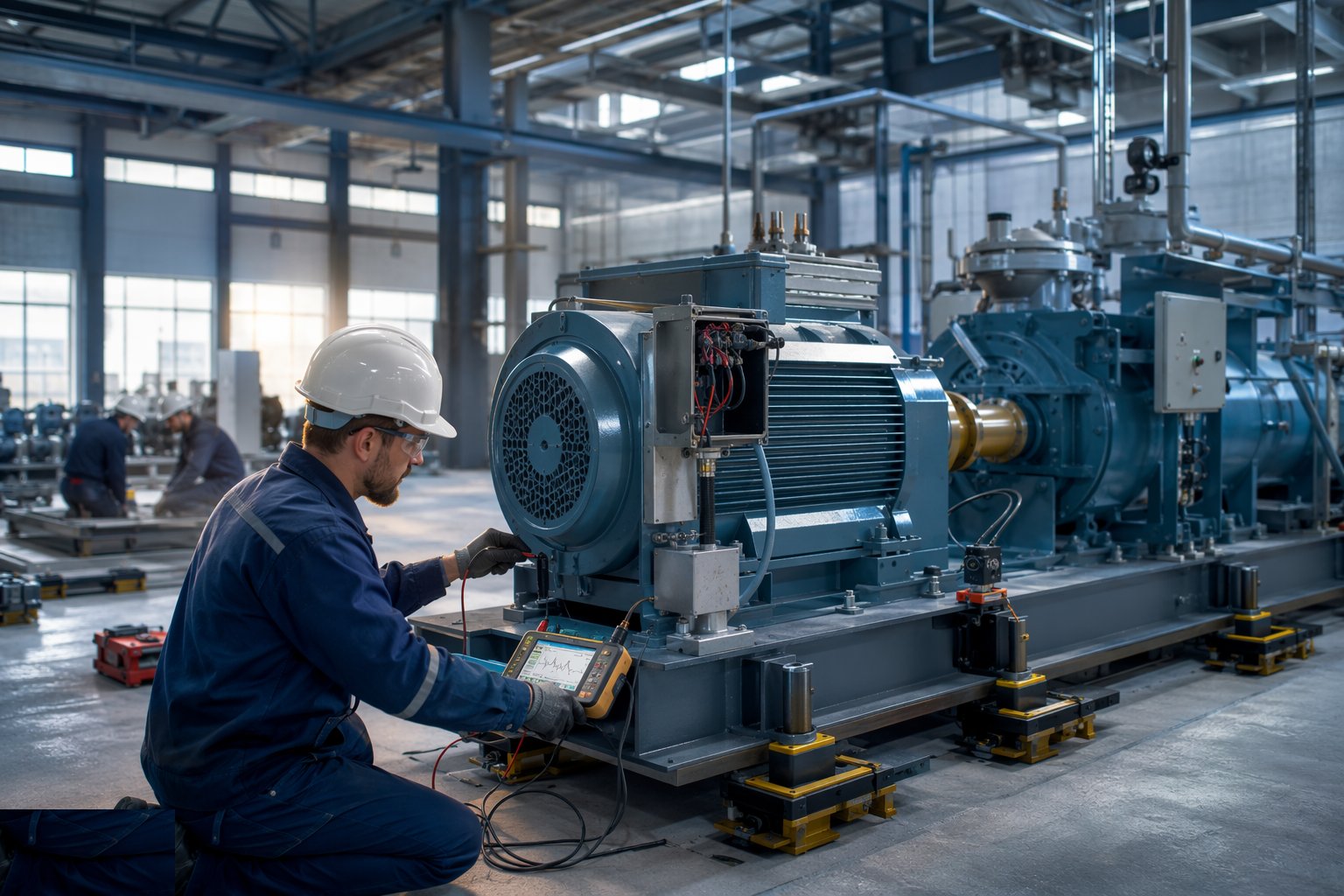
Cold commissioning proves the iron before the product: motor rotation directions checked (a reversed pump or fan is the classic day-one discovery), safety circuits function-tested — every e-stop, guard interlock and light curtain proven to stop what it claims to stop — lubrication systems primed and pressures verified, and the machine run dry through its cycles while temperatures, vibrations and currents are baselined. Line installations track product dummies or empty carriers through every transfer, sensor and diverter until the sequence runs clean. Defects found here are installation defects and are fixed here; the records — rotation checks, interlock tests, baseline readings — are filed against each machine number.
Step 6: Hot commissioning and handover to production
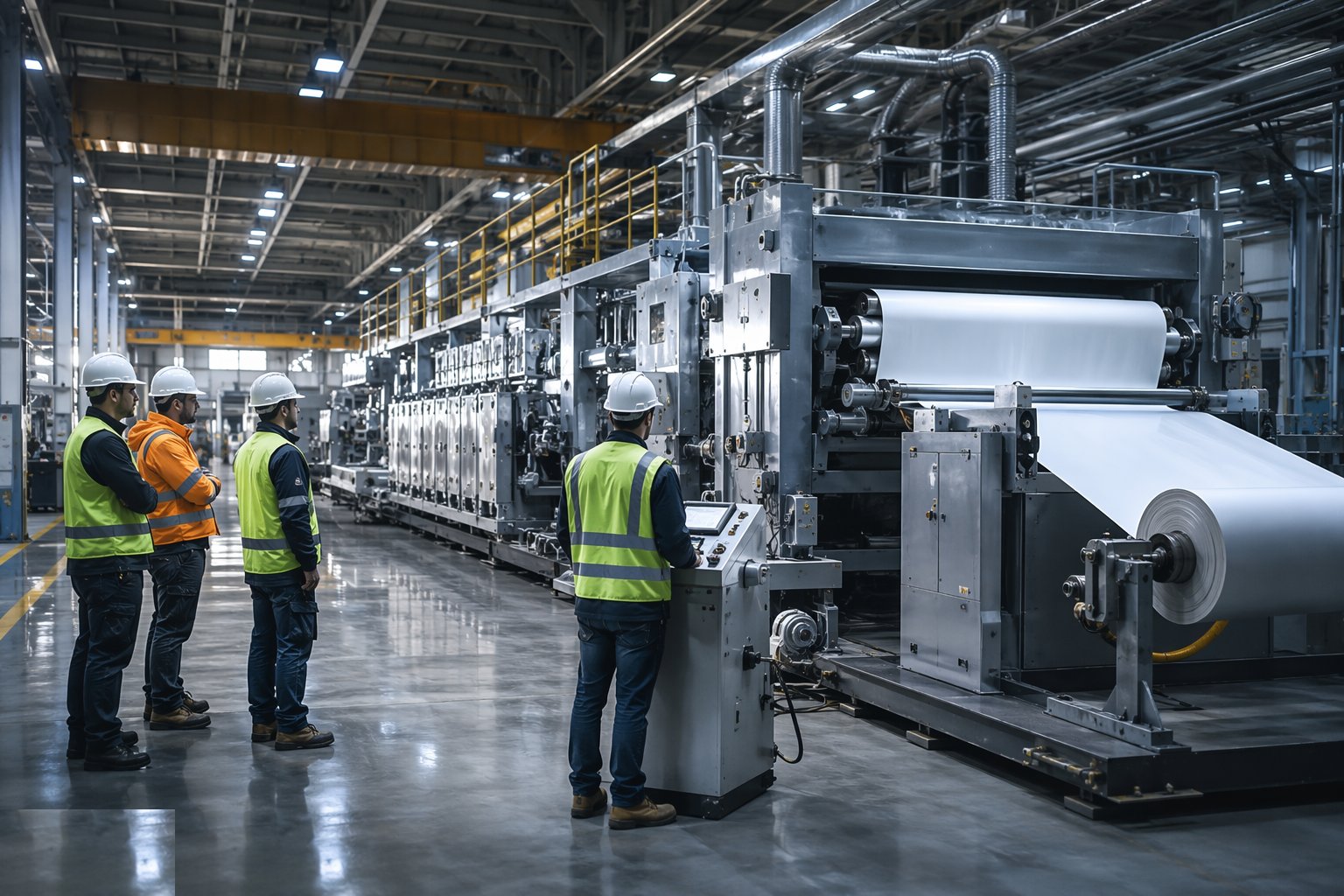
Hot commissioning introduces the real world: material, heat, chemistry and rate. Trial batches run through the machine or line, process parameters are tuned by the vendor's technologists, and the line ramps toward its guaranteed rate in stages with quality checks on the output — scrap curves are expected, measured and argued over against the acceptance criteria. The installation team's residual duties close out: anchor torque verification after thermal cycling, grout and alignment re-checks once the machine has worked, and the final file — foundation surveys, alignment and torque records, service test certificates, cold and hot commissioning reports — handed to the client with the training records. Formal acceptance is signed against the demonstrated rate and quality, and the line belongs to production.
Plant and equipment
- Machine skates, roller sets and hydraulic jacks for internal positioning
- Mobile/crawler cranes and gantries for heavy lifts; rigging and spreader beams
- Laser trackers, optical levels and dial gauges for alignment; soft-foot shims in graded thicknesses
- Non-shrink cementitious and epoxy grouts with mixers, pumps and formwork
- Torque wrenches and hydraulic tensioners for anchor and coupling bolting
- Megger and electrical test sets; flow, pressure and cleanliness test kit for services
- Vibration and temperature baseline instruments for commissioning records
- Floor protection mats, low-loader coordination and transit-damage inspection kit
Quality control checks
- Foundation and bolt surveys reconciled to certified vendor drawings before machines are set
- Level and alignment records per machine to the specified tolerance, signed before and after grouting
- Grout batch records, cube/ specimen results and anchor torque logs after cure
- Service hook-up test certificates: electrical, pneumatic, hydraulic cleanliness and flow verification
- Safety circuit function tests recorded per device before energisation
- Cold and hot commissioning reports with baseline readings filed against machine serial numbers
Safety considerations
- Heavy lifts and skating operations: planned rigging, exclusion zones and competent banksmen throughout
- Stored energy discipline: lockout-tagout on every service until handover, and controlled re-energisation per the test plan
- Grout and epoxy handling: chemical PPE, ventilation and hot-weather pot-life awareness
- Pinch, crush and trapping hazards during positioning — hands and bars never between the machine and its destination
- Interfacing with live production on retrofit work: permits, physical segregation and agreed downtime windows
- Noise, fume and thermal exposure during hot commissioning, with the machine's own hazards now live
Common defects
- Machines set on out-of-tolerance bases or misprojected bolts, forcing re-engineered fixing details under the vendor's nose
- Soft foot left under a machine foot, returning as vibration, bearing failures and alignment drift within months
- Grout voids under baseplates from one-sided-placement failures or short pours, leaving the machine riding on air pockets
- Reversed motor rotations and crossed services at first energisation — the classics that testing exists to catch
- Hydraulic systems commissioned without cleanliness control, eating pumps and valves inside the warranty period
- Alignment records never taken or never filed, leaving every later vibration argument without a datum
Best suited for
- New production lines where precision setting decides line performance
- Heavy presses, mills and process vessels needing engineered lifts
- Conveyor-integrated assembly and packaging lines aligned as one geometry
- Factory relocations and retrofit installations into operating plants
How long does Process Plant & Production Line Installation take?
Typical duration: A single machine sets and grouts in days; a full production line installation typically runs 8–20 weeks from first delivery to cold-commissioning completion, with hot commissioning and ramp-up adding weeks to months depending on the process..