Phased Handover & Live-Site Logistics
Completing and occupying parts of the scheme while construction continues above and alongside — separating an inhabited building from a live site without compromising the safety, or the sanity, of either.

Last updated 2026-07-28 by the BuildPedia Editorial Team.
What is Phased Handover & Live-Site Logistics?
Mixed-use schemes rarely finish all at once. The economics demand the shops trading and the flats occupied while the tower is still climbing, and planning obligations or anchor tenants' lease dates fix the sequence in contract before the first digger arrives. So the scheme is built in phases: sections handed over and inhabited — sectional completion under JCT, partial Taking-Over under FIDIC — while adjacent sections remain a construction site. Between the two lies the phase boundary, and it is built like a piece of permanent work: fire-rated hoardings and screens, sealed service interfaces, protected routes through or around the live site, and a demarcation that a resident, a shopper and a crane driver all understand without being briefed.
The hardest part is life safety across the boundary. The permanent fire alarm may not extend into the incomplete phases, so temporary systems carry the duty: wireless temporary fire alarms, temporary escape routes agreed with the fire service and building control, fire-fighting access and dry or wet riser provisions maintained stage by stage, and compartmentation at the interface kept intact through every penetration the follow-on trades make. Services are no simpler: the completed phase needs live power, water, drainage and data while the incomplete phase needs the same corridors for construction feeds — so diversions, temporary supplies and staged cutovers are planned like small projects of their own, each with switch dates, isolations and fallback plans.
Then there is the daily diplomacy. A live site wrapped around occupied premises runs on coordination: delivery schedules that respect trading hours and school runs, tower cranes oversailing occupied roofs under crane oversailing agreements with slew restrictions and load-shedding protocols, noisy and dusty operations programmed into windows the tenants have agreed, and a tenant liaison who actually answers the phone. Completed areas are protected — floors, façades, lifts — from the construction traffic that must still pass through or past them, and defects access after handover is controlled so a snagging visit to floor four does not become a security incident in somebody's lobby.
When and why is Phased Handover & Live-Site Logistics used?
This regime starts the moment the completion strategy is set — usually at tender, often at planning — and it lasts until the last phase hands over. It exists because cash flow, lease commitments and planning obligations will not wait for the whole scheme to finish, and because a half-finished mixed-use building is simultaneously somebody's home, somebody's shop and somebody's workplace. It is specialist because the risks are asymmetric: a construction fire reaching an occupied phase, a crane load over a trading roof, or an escape route quietly blocked by a pallet of plasterboard are the failures that end careers and companies. The sites that do this well treat the phase boundary and the temporary systems with the same engineering seriousness as the permanent works; the sites that do it badly treat them as site admin and learn otherwise the hard way.
Types of Phased Handover & Live-Site Logistics
Horizontal phasing — block by block
The scheme completes plot by plot or block by block across the site, with each finished block occupied while the next is built alongside. The boundary is a vertical line across the masterplan: party walls completed and protected, shared infrastructure staged, and the construction site physically shrinking as occupation grows.
Vertical phasing — podium first, tower following
The podium opens — retail trading, parking operational — while the tower rises above it. The boundary is horizontal: the podium roof becomes a working platform over occupied space, with its waterproofing, loading limits and falling-object protection doing duty as the separation.
Shell-first with fit-out following occupation
Core and shell complete and partially occupied while tenant fit-outs proceed floor by floor or unit by unit inside the same envelope. The live site moves indoors: lifts shared between construction and occupants, risers commissioned zone by zone, and the boundary redrawn weekly.
Phased Handover & Live-Site Logistics: step by step
Step 1: Define the phase boundary and completion strategy

The phasing plan is drawn as a construction document, not a programme note: exactly where each phase boundary runs, what wall, slab or fire line it follows, which systems serve which side, and what "complete" means contractually at each handover — sectional completion under the building contract or partial Taking-Over under FIDIC, each with its own defects and retention consequences. Building control, the fire service and (in the UAE) Civil Defence are engaged on the strategy early, because an occupied phase needs a fire strategy and completion documentation that stands on its own, not a promise about the rest of the building.
Step 2: Build the interface — separation that performs
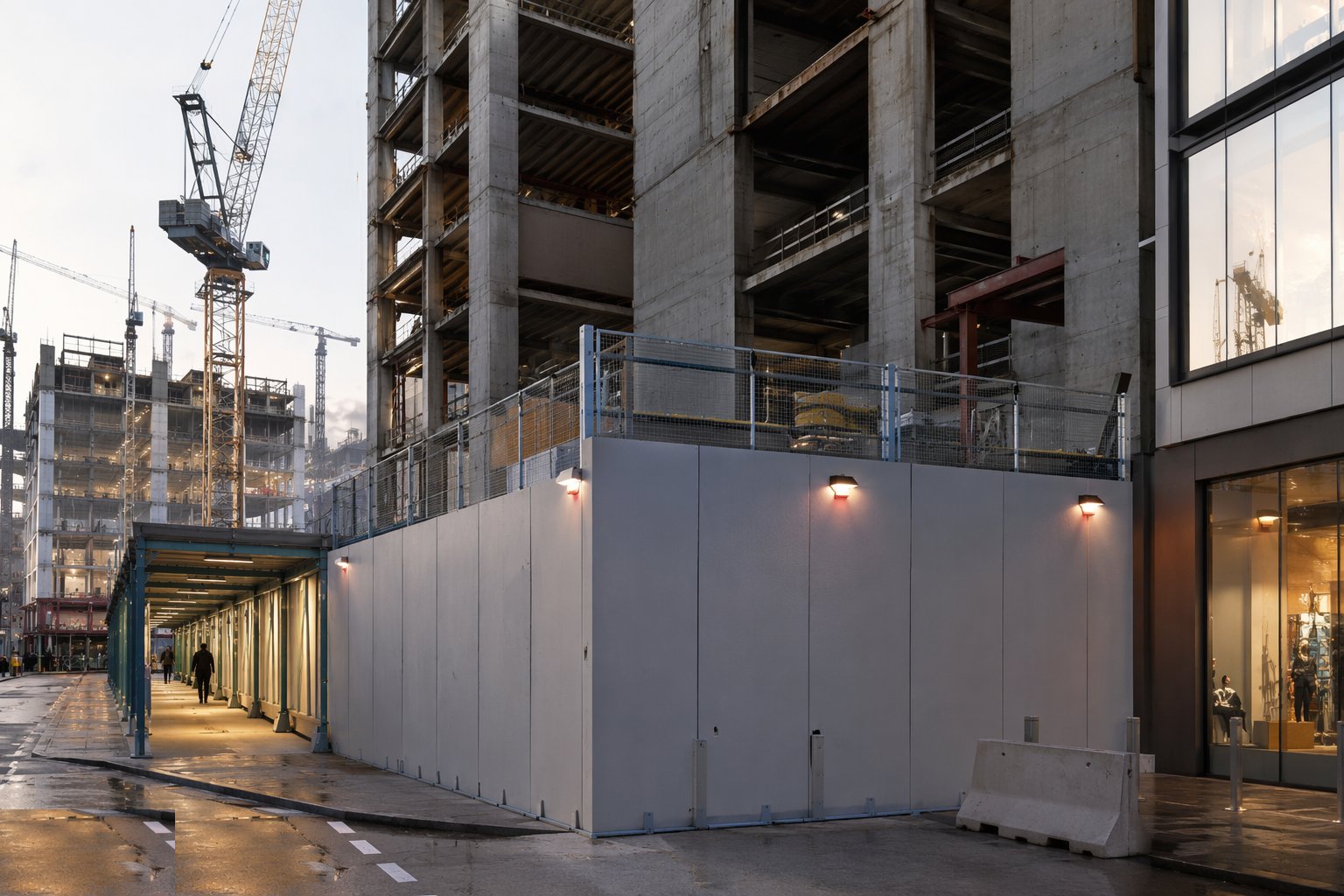
The boundary is constructed to perform its duties: fire-rated hoardings or screens with the resistance the fire strategy demands, weather-tight where exposed, secure against the curious, and sealed at every junction. Service interfaces across the boundary are capped, valved and labelled — a half-live riser is a hazard, not a convenience. Penetrations made through the interface for construction feeds are sleeved, fire-stopped and logged so they can be found and made good later. The interface is inspected like permanent work, because for the people living and trading on one side of it, it is the most important wall on the site.
Step 3: Install and maintain temporary life-safety systems
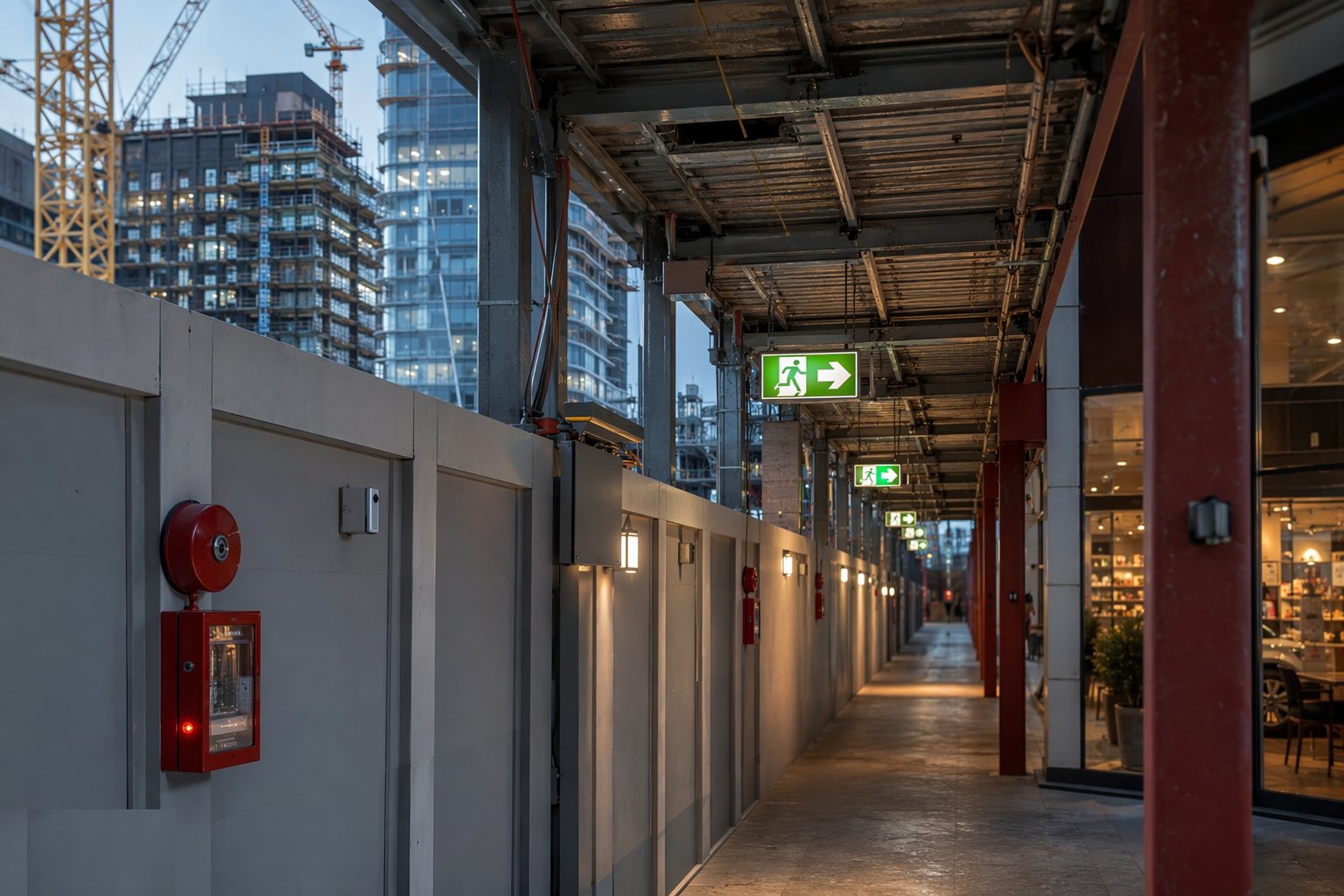
Temporary systems carry statutory duties and are treated accordingly: wireless temporary fire detection and alarm covering the incomplete phases and the interface, zoned and tested weekly with records kept; escape routes through and around the works, signed, lit and policed daily against blockage; fire-fighting provisions — risers, hydrants, access for appliances — maintained stage by stage as the building grows. In the UAE, fire safety during construction sits under the UAE Fire and Life Safety Code and Civil Defence oversight, with hot-work permits and fire watch disciplines enforced. Every temporary system has a named owner, a test regime and a removal date tied to the permanent system that replaces it.
Step 4: Divert, cut over and commission services per phase
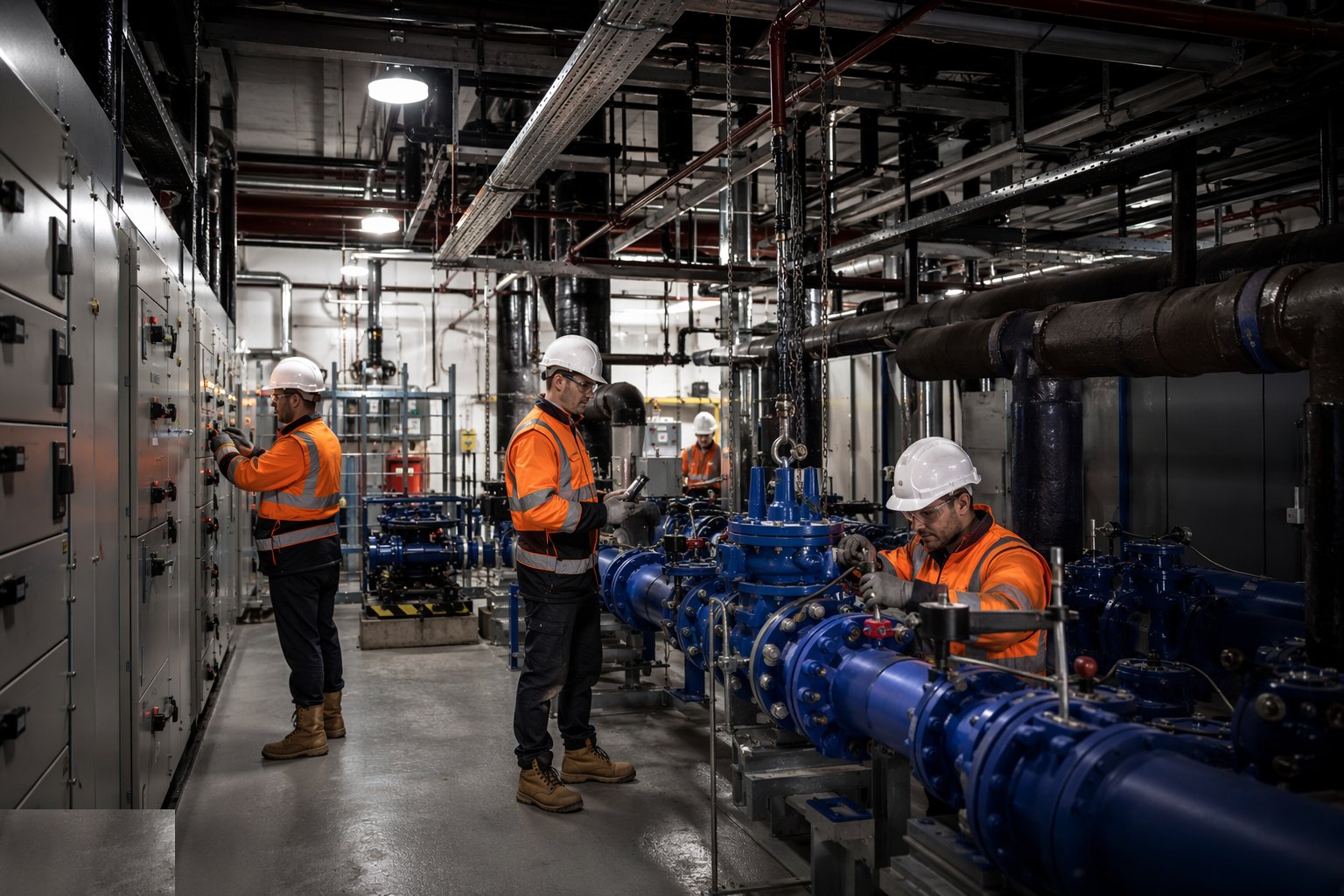
Each phase handover is preceded by a services campaign: temporary supplies rerouted, permanent feeds energised and commissioned for the handing-over phase, and cutovers planned in detail — isolation points, switch dates, standby arrangements and rollback plans if a cutover fails at midnight. Drainage is staged so the occupied phase discharges legally while construction flows continue; in the UAE the authority sequence applies — Civil Defence clearance before DEWA energisation, completion inspections feeding the Building Completion Certificate for the occupied part. Witness testing and commissioning records are produced per phase, because each handover needs its own evidence file, not a share of somebody else's.
Step 5: Hand over, occupy and protect the completed work
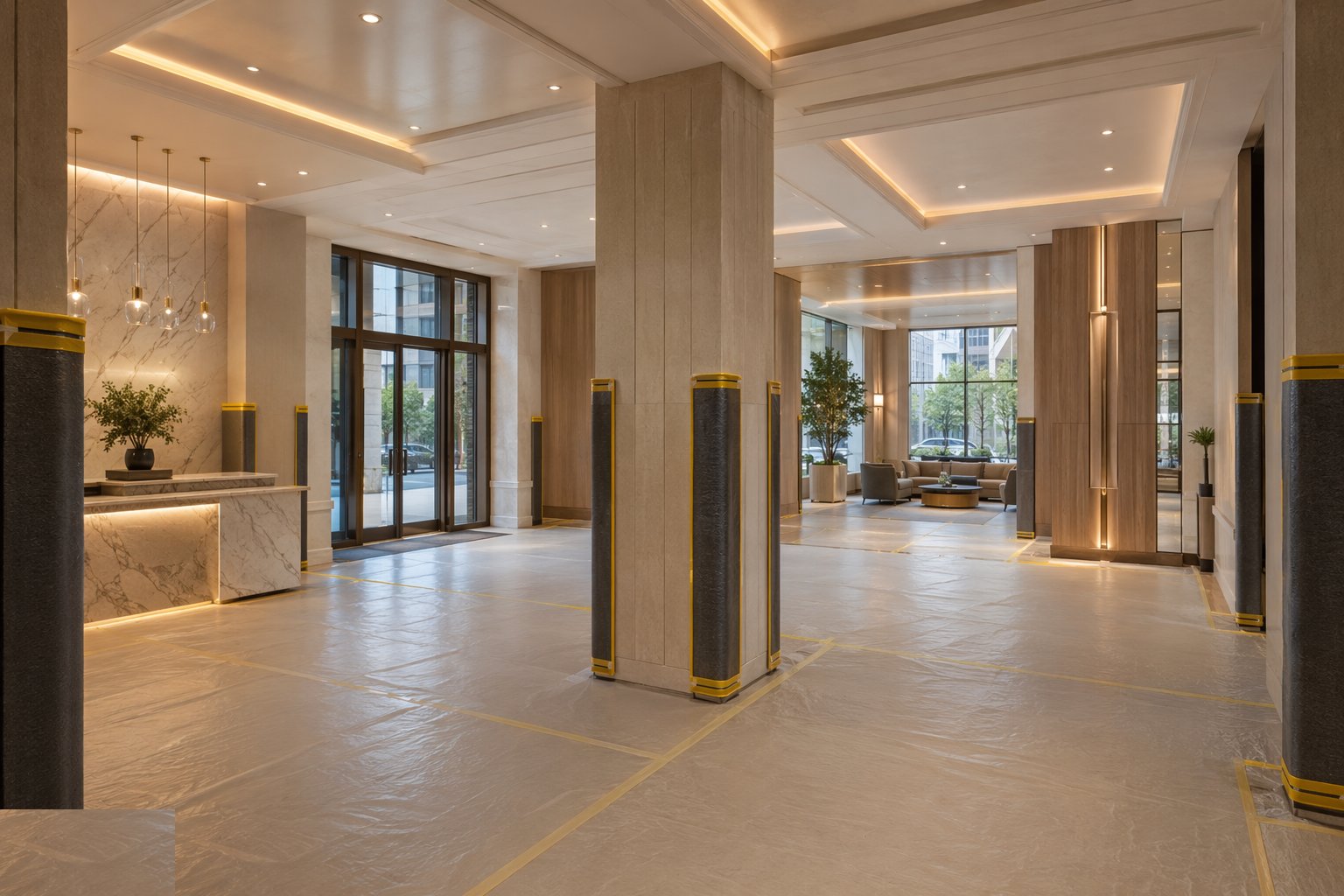
Handover of a phase is a real completion: snagging, documentation, keys and access schedules, with the boundary conditions re-verified on the day. Then the protection regime starts: completed floors, lobbies, lifts and façades protected against the construction traffic that still moves past or through them, condition surveys agreed at handover so damage is attributable, and cleaning and presentation standards maintained at the boundary — the resident's first impression of the scheme should not be a mortar spill. Occupant inductions cover what the site is, where it is, and who to call.
Step 6: Run the live-site logistics regime

Day to day, the site runs to a logistics plan written around the occupants: delivery windows, designated routes, wheel washes and clean public approaches, crane operations with slew restrictions and agreed lifting zones, oversailing only under the oversailing agreements in place, and noise, dust and vibration limits monitored at the boundary with the results shared. Tenant liaison is a job, not a gesture: regular meetings, advance notice of disruptive operations, a published contacts route, and complaints logged and answered. The regime is enforced by the site team with the authority to stop an operation that breaches it — a crane that slews over a trading roof stops that day, not after a meeting.
Step 7: Manage the interface through defects and final completion

After each phase handover the interface keeps working: defects access into occupied areas is booked, escorted where required, and recorded; temporary systems are decommissioned only as their permanent replacements are proven; and interface fire-stopping and making good are verified as the boundary moves and finally dissolves. The last phase handover closes the regime: final removals of temporary works, the completed fire strategy commissioned whole, and the handover documentation assembled phase by phase into the building's complete file — a record of a building that was a home and a site at the same time, and survived it.
Plant and equipment
- Fire-rated hoarding and screen systems for phase boundaries
- Wireless temporary fire alarm and detection systems
- Temporary distribution, standby generators and staged switchgear for phased energisation
- Tower cranes with slew and zoning restriction systems; oversailing protection gantries and fans
- Loading bay and delivery management systems — booking, marshalling, banksmen
- Monitoring kit: noise, dust and vibration instrumentation at the boundary
- Protection materials and systems for completed finishes, lifts and lobbies
- Access control and pass systems separating occupants from construction zones
Quality control checks
- Phase boundary inspection records: fire rating, weather-tightness and security verified before occupation
- Temporary fire alarm test logs and weekly records; escape route inspection checklists
- Service diversion and cutover documentation: isolations, test results and witness sign-offs per phase
- Commissioning and witness-test records assembled per phase handover
- Condition surveys of completed areas at handover, agreed with the occupier
- Boundary monitoring data — noise, dust, vibration — logged against the agreed limits
- Fire-stopping records at the interface, updated as the boundary moves
Safety considerations
- The occupied-construction interface: physical separation, signed routes, access control and zero tolerance for incursions in either direction
- Crane operations near or over occupied premises: oversailing agreements, slew restrictions, load-shedding protocols and lifting exclusion windows
- Temporary escape routes and fire systems: maintained, tested daily-to-weekly, and never quietly decommissioned
- Hot works and fire risk in an incomplete building adjacent to occupied space: permits, fire watch and Civil Defence or fire service liaison as applicable
- Falling-object protection over occupied areas: fans, gantries, netted edges and disciplined material storage at level edges
- Public and tenant exposure to dust, noise and plant movements — monitored, limited and answered for
Common defects
- Weather and water ingress through the phase boundary — the interface hoarding that was never quite a roof
- Fire-stopping gaps at the interface found at the worst moment, because penetrations were logged nowhere
- Temporary systems outliving their welcome: alarms, supplies and routes never formally replaced by the permanent works
- Damage to completed finishes by construction traffic, with no condition survey to settle the argument
- Escape routes degraded by creeping storage and site sprawl between inspections
- Boundary disputes at phase handover — what was "complete", whose defect, whose cost — because the completion criteria were never written down
Best suited for
- Mixed-use schemes where retail, parking or residential phases must open while building continues
- City-centre developments wrapped around existing occupied buildings
- Programmes driven by anchor tenant dates, sales releases or planning obligations
- Any project where occupation and construction must coexist safely for months or years
How long does Phased Handover & Live-Site Logistics take?
Typical duration: Phase separations typically hold for 6–18 months per boundary; on a large scheme the live-site regime runs the length of the programme — often three to five years end to end..