Pre-commissioning & Start-up
Proving the plant without hydrocarbons — testing, flushing, drying and inerting — then the readiness reviews and controlled first introduction of feed that turn a construction site into an operating facility.
Last updated 2026-07-28 by the BuildPedia Editorial Team.
What is Pre-commissioning & Start-up?
Pre-commissioning is the bridge between construction and operations: everything you can prove about the plant before hydrocarbons arrive. It runs system by system, not area by area — the fuel gas line, the instrument air network, each process loop — with a test pack built for every system that defines its boundaries, its isolations and its test procedure. The mechanical proofs come first: hydrostatic testing of piping and vessels with water (typically to 1.5 times design pressure for B31.3 piping, with the exact factor and hold time set by the code and the line class), or pneumatic testing with air or inert gas where water is impractical — a far more hazardous test because compressed gas stores vastly more energy, and treated accordingly with exclusion zones and remote monitoring. Then the cleaning: flushing water systems until they run clear, air-blowing steam and instrument-air lines to target cleanliness, chemical cleaning where the specification demands it, and reinstatement — pulling test spools and blinds, fitting the permanent gaskets, control valves and instruments that were removed to protect them.
Drying and inerting close the gap to start-up. Systems that will carry hydrocarbons or cryogenic fluids must be dry — dewpoint-checked — and oxygen-free, achieved by nitrogen purging, vacuum drying or drying with the process gas itself under controlled conditions, all under written procedures with vent and purge points planned so nobody is asphyxiated by a nitrogen cloud in a poorly ventilated corner. Vessels are box-checked, closed up and leak-tested at their flanges. Instrument loops are commissioned, electrical systems energised in sequence, and rotating machines run-in: motors solo-run, then coupled runs with vibration and bearing temperatures trending against the vendor's acceptance criteria.
Before any feed is introduced, the readiness machinery runs. HAZOP actions from design are closed out; operating procedures, emergency response plans and trained crews are in place; and a pre-start-up safety review (PSSR) — the structured, multi-discipline walk-through and document check against the design intent — verifies that construction is complete, punch items are closed or risk-assessed, safety systems are live, and the permit-to-work regime has transitioned from construction to operational control. In the UK, facilities handling dangerous substances above threshold quantities sit under the COMAH regime with its major-accident prevention duties; in the UAE, operator start-up procedures — ADNOC's among them — add their own readiness gates, and sour-service plants add H2S emergency preparedness: cascade breathing-air systems, escape routes, wind socks and muster arrangements proven before first sour feed. First hydrocarbon introduction itself is slow, staffed and rehearsed: leak checks at every flange as pressure and inventory build, one system at a time.
When and why is Pre-commissioning & Start-up used?
Pre-commissioning follows installation system by system — it cannot start on a system until that system's construction, loop checks and punch clearance are done, which is why system completion, not area completion, drives the end of every oil and gas job. It matters because it is the last chance to find defects with water and air instead of with hydrocarbons at pressure: a leaking flange, a blocked line, a wrongly installed non-return valve or a mis-wired shutdown loop found here costs a test pack; found during start-up it costs an incident. The readiness reviews matter equally — most process-safety disasters involve a start-up, and the PSSR exists precisely because the transition from construction site to live plant is the highest-risk moment in the facility's life. There is no domestic PSSR — but its shape survives in every boiler commissioning: the appliance is proven with instruments, the flue analysed, the safety devices tested and the paperwork signed before the system is left live, which is the same principle of proving a plant with measurements before trusting it with fuel.
Types of Pre-commissioning & Start-up
Hydrostatic testing
Strength and leak testing with water — filtered, often inhibited, and in the Gulf sometimes a logistics exercise in its own right — pressurised to the code factor (commonly 1.5 times design pressure for B31.3 piping) and held for the specified duration with the joints inspected. Temperature limits protect brittle materials, drainage and disposal are consented, and lines are drained, dried and reinstated afterwards.
Pneumatic testing
Testing with air or nitrogen where water is impractical — small-bore systems, cold-service lines or where drying is prohibitive. Because compressed gas stores large amounts of energy, it is a high-hazard operation: exclusion zones, remote pressurisation, stepped pressure holds and leak-search only at reduced pressure, all under a specific procedure and permit.
Flushing, blowing and chemical cleaning
Cleaning the inside of the plant to the cleanliness the downstream equipment needs: high-velocity water flushing until clear, air or steam blowing of lines (steam blows with target plates for boiler systems), and circulation of cleaning chemicals where specified. Temporary strainers, spools and jumpers are fitted, and reinstatement afterwards is a documented, joint-by-joint activity.
Drying, inerting and leak testing
Bringing systems to start-up condition: drying to a specified dewpoint (by nitrogen, vacuum or dry air), purging oxygen out with nitrogen to a specified residual content, and proving flange tightness with pressure-decay or sniff-test methods. Oxygen and dewpoint analysers verify the endpoints — the numbers, not the clock, decide when the system is ready.
Pre-commissioning & Start-up: step by step
Step 1: Define systems and build test packs
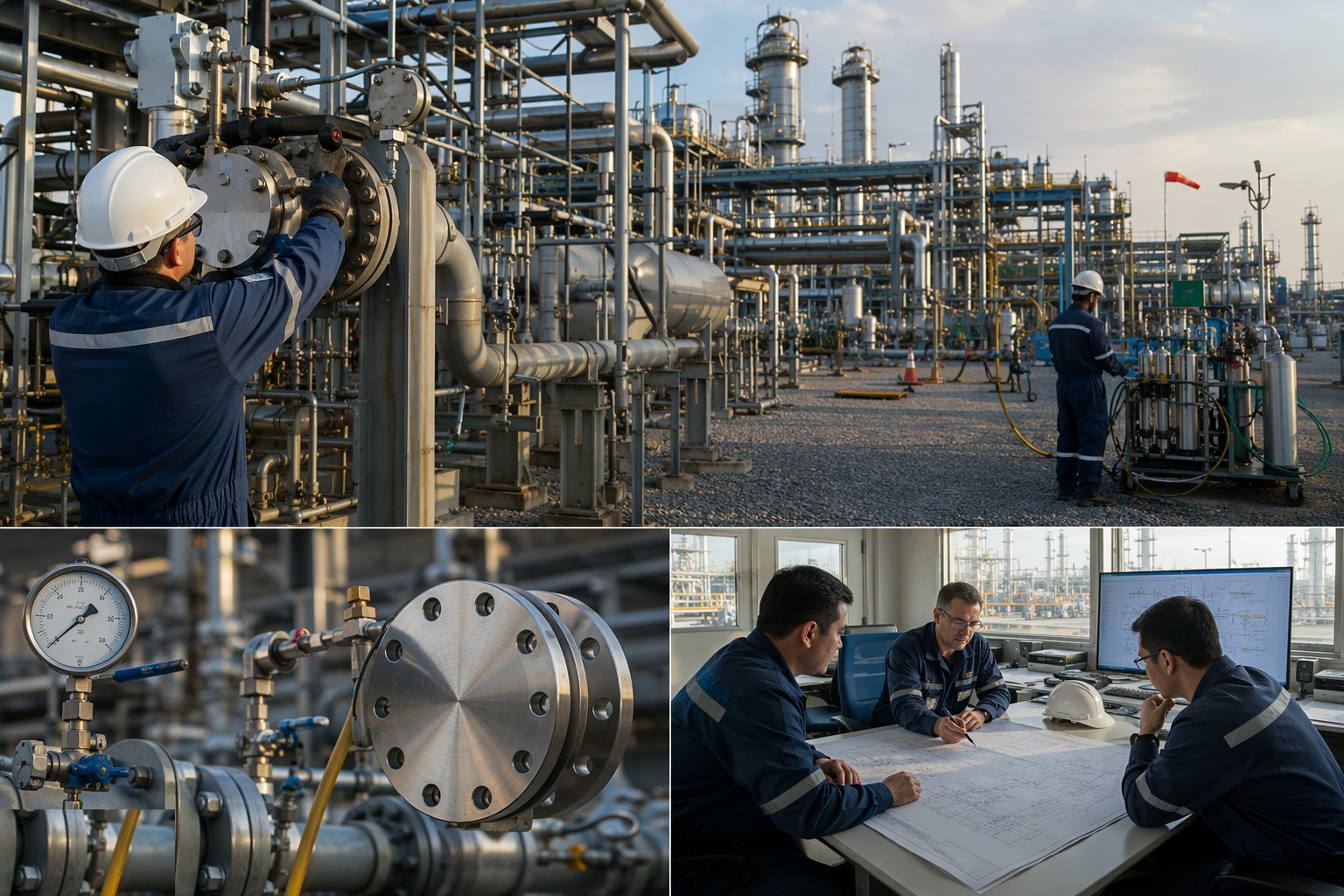
Mark up the P&IDs into commissioning systems with their boundaries, and build a test pack for each: the line list, the test procedure, the blind/spool list, the vent and drain points, the instruments to remove or isolate and the certificates to be signed. Test pack quality decides pre-commissioning speed — a boundary wrongly defined or a blind missed means the test fails or, worse, over-pressurises equipment outside the test envelope. On operator sites the packs go into the permit system, and every test runs under its own permit.
Step 2: Walk down and punch by system

Walk every system with the punch team — construction, commissioning and the client or operator — against the P&IDs: line by line, support by support, checking installed material, orientation of valves and instruments, drainage and venting, and completion of the E&I scope. Categorise the punch: Category A items must close before the system is energised or tested, Category B before hydrocarbons, Category C before handover. The punch list by system is the single most important management tool of the end-game.
Step 3: Test the systems
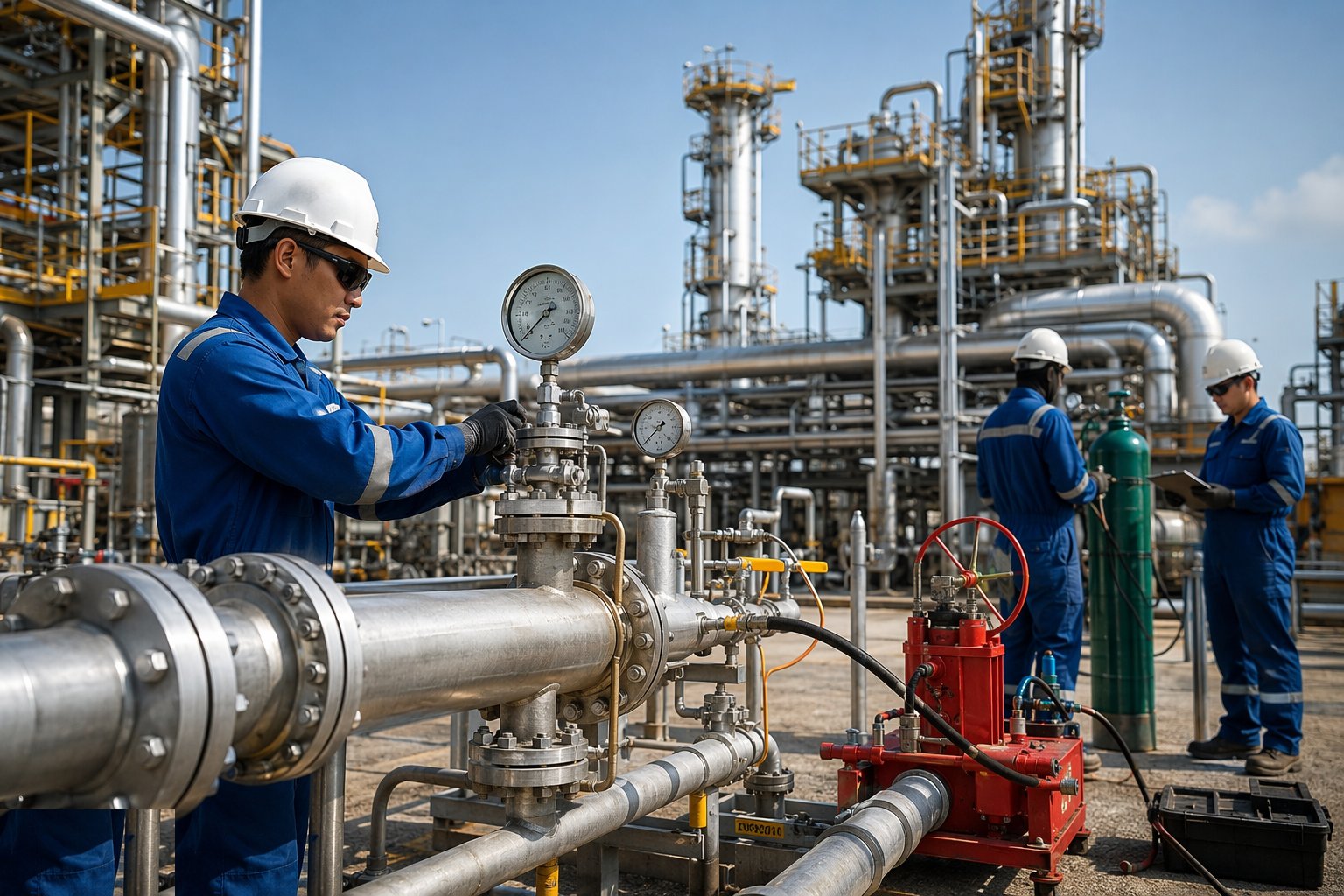
Execute hydrostatic tests to the pack procedure: fill from the low point with vents open, pressurise in stages, hold, and inspect every joint at test pressure — then depressurise in a controlled way, drain and dry. Where pneumatic testing is specified, clear the exclusion zone, pressurise remotely in steps and leak-search at the reduced search pressure only. Sign the test certificates and record pressure charts against the pack; a test done without the chart is a test you will repeat.
Step 4: Flush, blow and reinstate
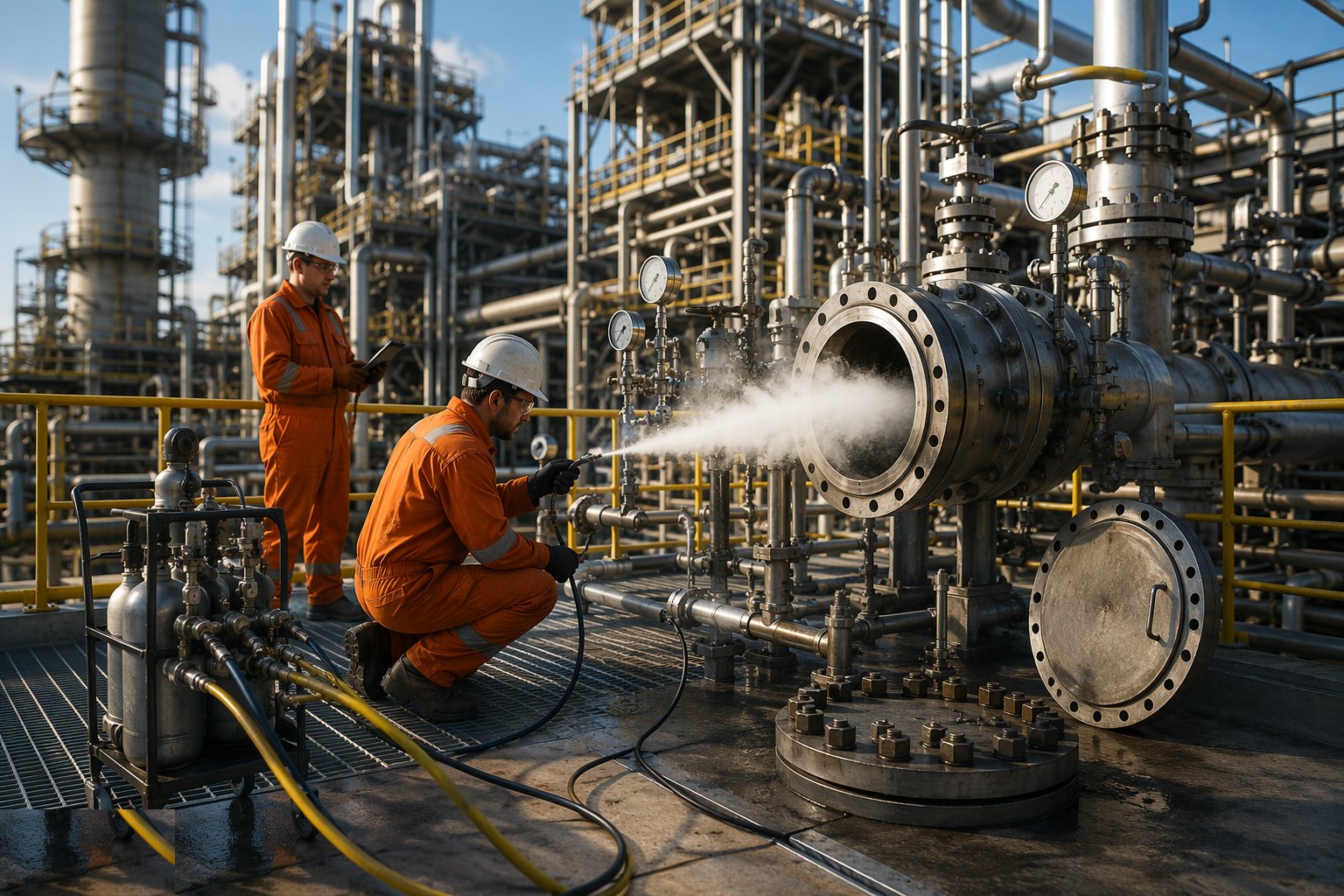
Flush water systems at the specified velocity until the discharge runs clear at the furthest point; air-blow instrument air and utility lines with target checks; steam-blow where the package requires it, with silencers, exclusion zones and target plates. Then reinstate: remove every test blind, spool and strainer against the blind register, fit permanent gaskets, reinstall control valves and instruments, and torque up with flange management records. Reinstatement errors — a blind left in, a gasket missed — are classic start-up defects, so the register gets signed joint by joint.
Step 5: Dry and inert the process systems
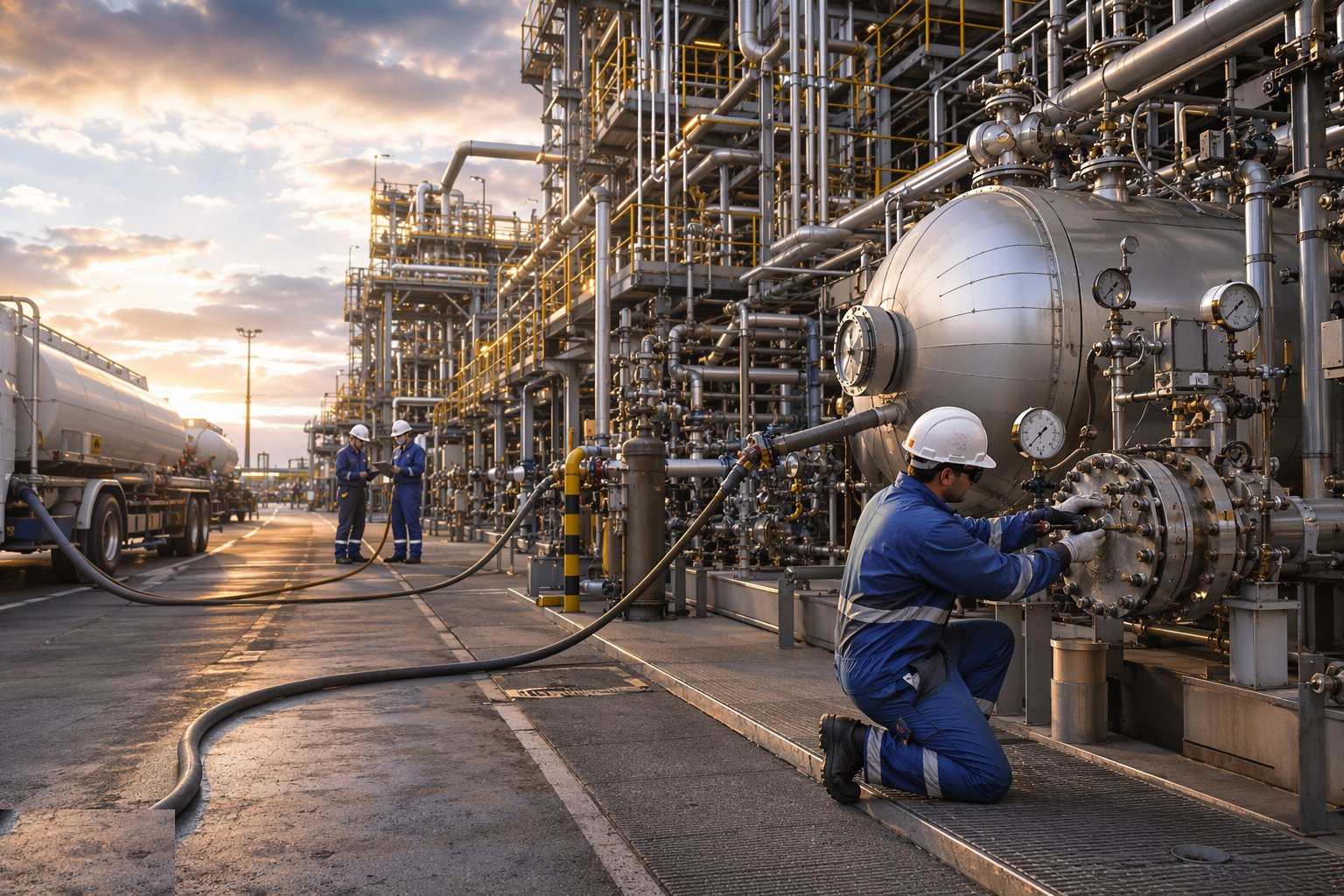
Dry and purge hydrocarbon-bound systems to their specified dewpoint and oxygen content using nitrogen or the approved medium, with purge points planned to avoid dead legs and with asphyxiation controls at every vent — barriers, signage, gas monitoring and permits. Box-inspect vessels before closure, close up with controlled torque, and prove tightness by pressure-decay or leak-search at flange joints. Record the analyser readings: dewpoint and oxygen content are the entry criteria for feed introduction.
Step 6: Energise, run machines and commission systems
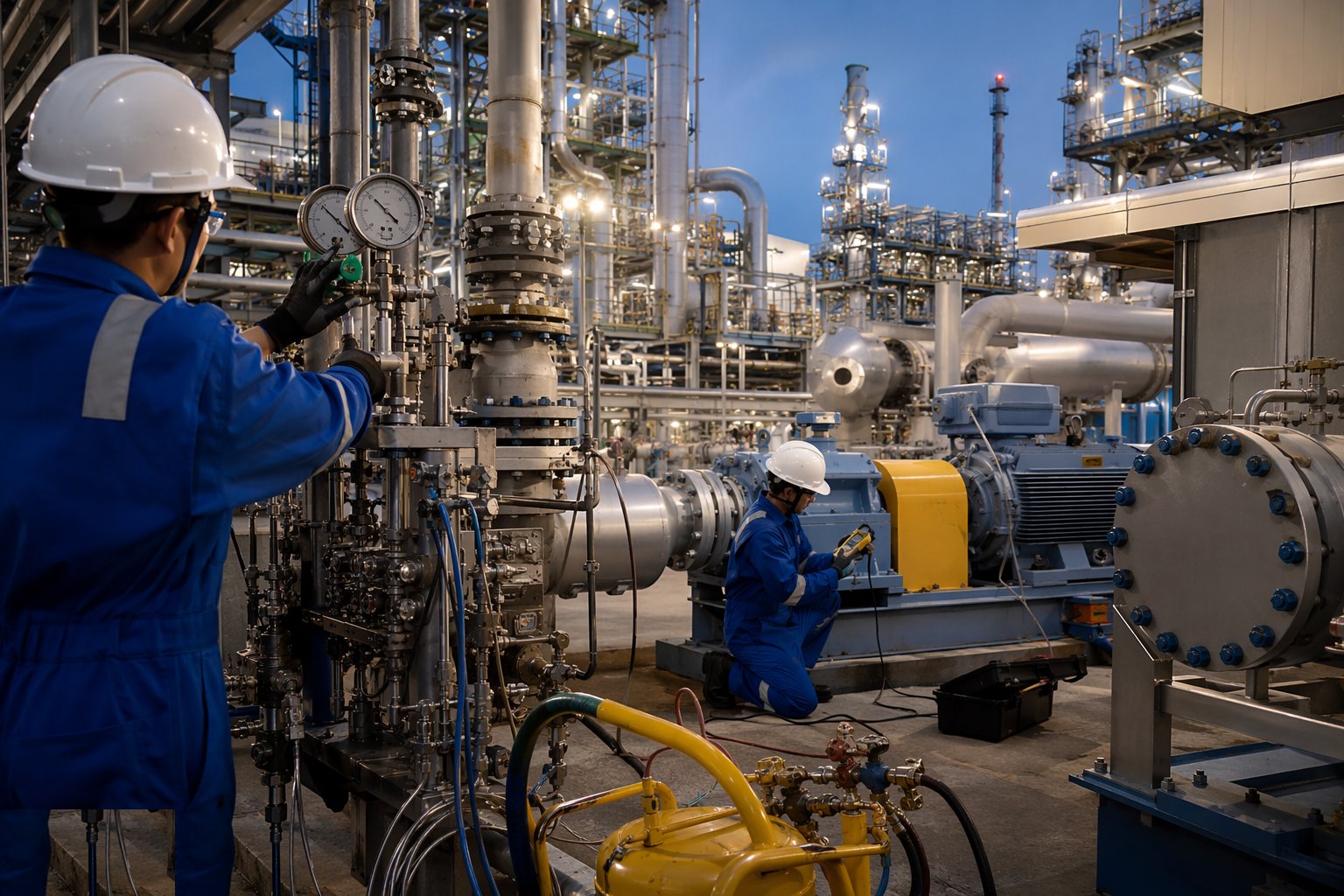
Energise electrical systems in sequence under switching plans — HV first, then MV, then distribution — with protection settings proven by secondary injection before first energisation. Solo-run motors, then run coupled machines against the vendor's run-in procedure with vibration and temperature trends accepted. Commission the fire and gas system, deluge, shutdown and cause-and-effect logic end to end — the safety systems must be live and proven before any hydrocarbon arrives on site.
Step 7: PSSR and first feed

Run the pre-start-up safety review: the multi-discipline team verifies construction completion, punch status, closed HAZOP actions, proven safety systems, operating procedures, trained crews, emergency arrangements and the operational permit-to-work regime — and signs, or does not sign, the readiness certificate. With sign-off, introduce first feed to the rehearsed plan: slow pressurisation, leak checks at every flange as inventory builds, one system at a time, with the emergency response crew stood by and everyone off the unit who does not need to be there. Steady-state operation and performance testing follow, and the facility hands over to operations.
Plant and equipment
- Hydrotest pumps, pressure recorders and calibrated gauges
- Water bowsers, filtration units and temporary tanks for test water
- Air compressors and receivers for flushing and pneumatic work
- Nitrogen supplies: tube trailers, vaporisers or membrane/PSA units
- Steam-blow silencers and target-plate holders
- Dewpoint and oxygen analysers for drying and inerting verification
- Test blinds, spools, strainers and temporary jumpers
- Secondary injection test sets and commissioning instruments for E&I
Quality control checks
- Test packs complete with boundary mark-ups, blind registers and signed certificates
- Pressure gauges and recorders calibrated; charts filed against each test
- Punch items categorised and closed by system — no Category A open at energisation
- Flange management and reinstatement records joint by joint
- Dewpoint and oxygen readings recorded as entry criteria for feed
- Safety systems (fire and gas, ESD, deluge) cause-and-effect proven and signed
- PSSR checklist complete with evidence; HAZOP actions closed or risk-assessed
- Handover dossier: weld, NDT, test, Ex and loop records indexed by system
Safety considerations
- Pneumatic testing treated as high-hazard: exclusion zones, remote pressurisation, stepped holds
- Nitrogen asphyxiation controls at every vent and purge point
- Permit-to-work transition from construction to operational control, clearly communicated
- H2S emergency preparedness proven before sour feed: monitors, escape routes, breathing air
- Leak-search only at reduced pressure with the correct access and protection
- Energisation under switching plans with authorised persons only
- Steam blows: noise, scald and projectile controls with exclusion zones
- Fatigue management during 24-hour start-up coverage
Common defects
- Test pack boundary wrong — adjacent equipment over-pressurised
- Test run without a chart recorder — test repeated at full cost
- Blind left in at reinstatement — system dead-legged at start-up
- Flushing skipped or curtailed — debris wrecks control valves and pump seals in week one
- System not dried to dewpoint — hydrates or corrosion on first run
- Safety systems commissioned after feed arrives, not before — a stop-work finding
- PSSR treated as a paper exercise — actions outstanding at first hydrocarbon
- Vent point unbarricaded — nitrogen asphyxiation near-miss during purging
Best suited for
- Testing, flushing, drying and inerting without hydrocarbons
- Readiness reviews and permit regimes before first feed
- Controlled first introduction of hydrocarbons
- Turning a construction site into an operating facility
How long does Pre-commissioning & Start-up take?
Typical duration: Typically 4–9 months from first system handover to steady-state operation on a process unit, running in parallel with the tail of installation; first hydrocarbon introduction is measured in days, but the readiness reviews and leak-checking discipline set its pace..