Airside Works in Live Airports
Working beside aircraft that are earning money — passes, escorts and radio discipline, night possessions with a hard handback, FOD control as a way of life, and NOTAMs telling the world's pilots where you dug today.
Last updated 2026-07-28 by the BuildPedia Editorial Team.
What is Airside Works in Live Airports?
Airside work is construction inside an operating machine. Beyond the security fence everything is arranged for aircraft: stands, taxiways, runways and the aprons between them, in use all day and most of the night, with jet blast, ingestion zones, invisible obstacle limitation surfaces above your head and a security regime that treats every person and vehicle as a potential threat. Nobody works airside casually: operatives hold airside ID passes issued after security vetting and safety training, drivers hold airside driving permits earned on the airport's own test, vehicles are permitted, marked and lit, and many tasks run under escort by the airport's own staff. Before a spade turns, the work is planned with the aerodrome through a method of works plan — where, when, how deep, how high, and what happens to aircraft operations while you do it.
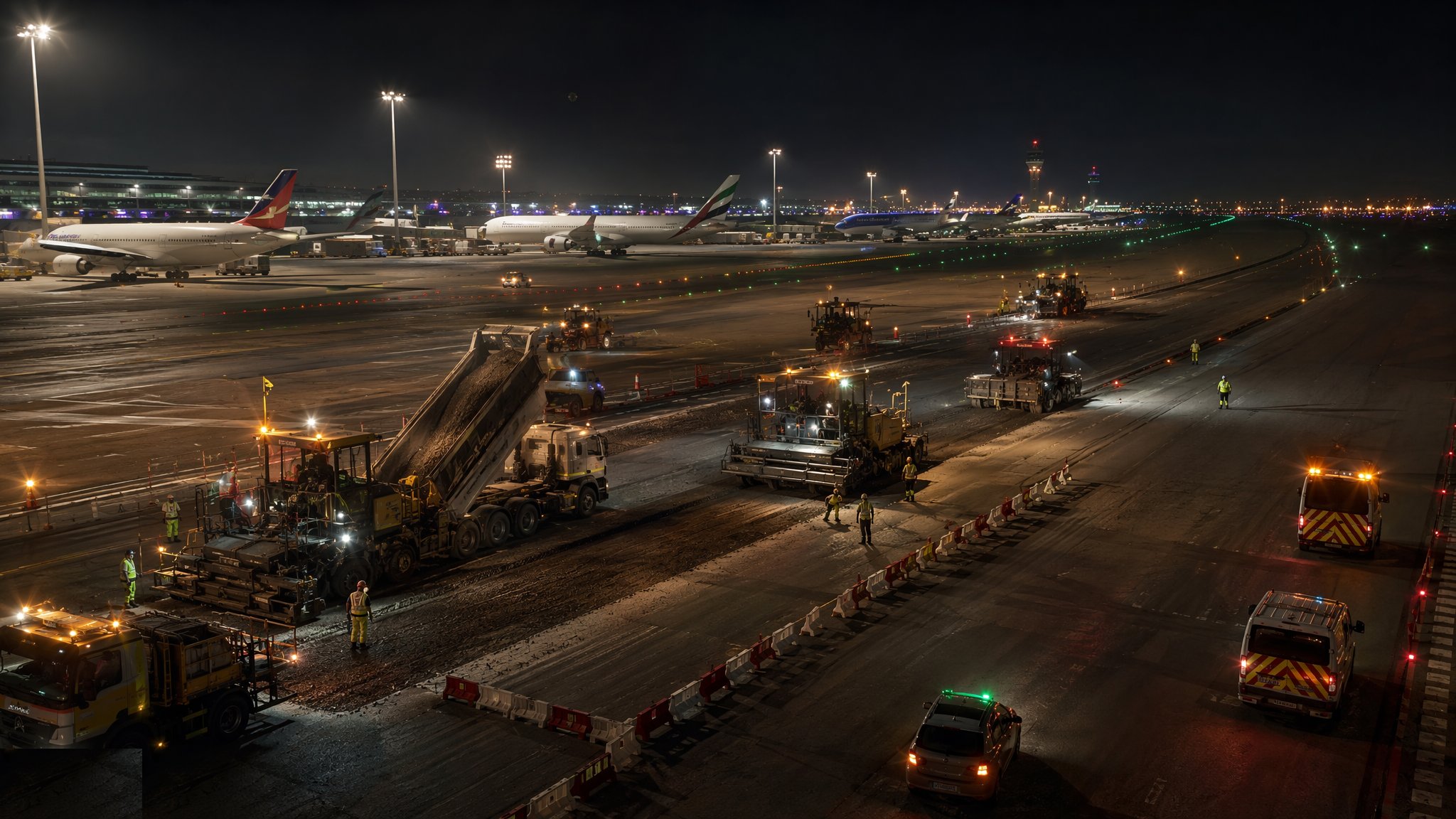
The clock that governs everything is the aircraft schedule. Much airside construction happens in night possessions: a runway or taxiway closes between the last movement and the first, the closure is promulgated by NOTAM so every pilot and planner on earth knows, and the site works a compressed shift against a handback deadline that does not move. Handback is a ritual with real weight: the pavement is inspected, the surface swept and FOD-walked, markings and lighting verified or their outages declared, and the strip is signed back to the aerodrome before the first arrival. Miss the handback and you have not delayed a programme — you have delayed an airport, with aircraft holding overhead to prove it.
FOD discipline deserves its own paragraph because it is the one rule with no exceptions. Foreign object debris — a bolt, a drinks can, a strip of geotextile, a broken tool — can be ingested by an engine or burst a tyre at take-off speed, so airside sites run FOD control as a continuous operation: loads covered, tyres inspected at gates, work faces swept, magnetic bars dragged, FOD bins at every compound and a FOD walk at every handback. Alongside it run the height and position rules: cranes and excavators beneath the obstacle limitation surfaces need airport and, in the UK, CAA notification; work near a live taxiway respects the strip and safety-area clearances measured from the centreline; and anything that changes the aerodrome's published data — a closed taxiway, a displaced threshold, a crane — goes out by NOTAM before it happens, not after.
When and why is Airside Works in Live Airports used?
This regime applies whenever and wherever construction touches the airfield — pavement rehabilitation, stand builds, lighting replacements, utility crossings, terminal interfaces — and on the world's busy airports that means essentially all airside construction, always. It matters because the risks are asymmetric: a mistake landside costs money, a mistake airside costs an aircraft. The discipline also pays the contractor: a site that runs tight passes, clean handbacks and accurate NOTAMs gets trusted with bigger possessions and better windows; a site that fumbles a handback or litters a taxiway finds its permits shortened, its escorts doubled and its programme quietly strangled. Airside, reputation is a method statement.
Types of Airside Works in Live Airports
Night runway and taxiway possessions
The strip closed by NOTAM between last and first movements, work compressed into the window, handback inspected and signed before reopening. The purest form: high rates, tight windows and zero tolerance for overruns.
Stand and apron works under closures
Individual stands or apron blocks taken out of service while neighbours keep operating, with marked closed areas, wingtip clearances and jet-blast standoffs to live stands. Construction in a car park where the cars have sixty-metre wingspans.
Works adjacent to live taxiways
Utility crossings, duct runs and pavement edges built alongside taxiways in use, behind barriers and level protection at the strip and safety-area clearances. The traffic never stops; the barriers and the lookout discipline are the whole job.
Greenfield airfield works
New airfields and new runways where the regime is being created rather than lived within: full possession and no NOTAM coordination, but the pass, FOD and survey disciplines established from day one so they are habits by opening.
Emergency and reactive airside repairs
Pavement blowouts, lighting failures and damage repairs called at short notice and worked under the aerodrome's direct control. Construction as firefighting: mobilise in hours, work the window, hand back the strip.
Airside Works in Live Airports: step by step
Step 1: Agree the method of works plan

Before mobilisation, the works are planned with the aerodrome's operations, safety and engineering teams: extent and phasing, possessions and closures needed, clearances to live surfaces, craneage and heights, FOD strategy and the NOTAM schedule. The plan is signed by the airport, briefed to every operative and lived on site — a method of works plan in a drawer is a breach waiting for its aircraft.
Step 2: Process passes, permits and inductions
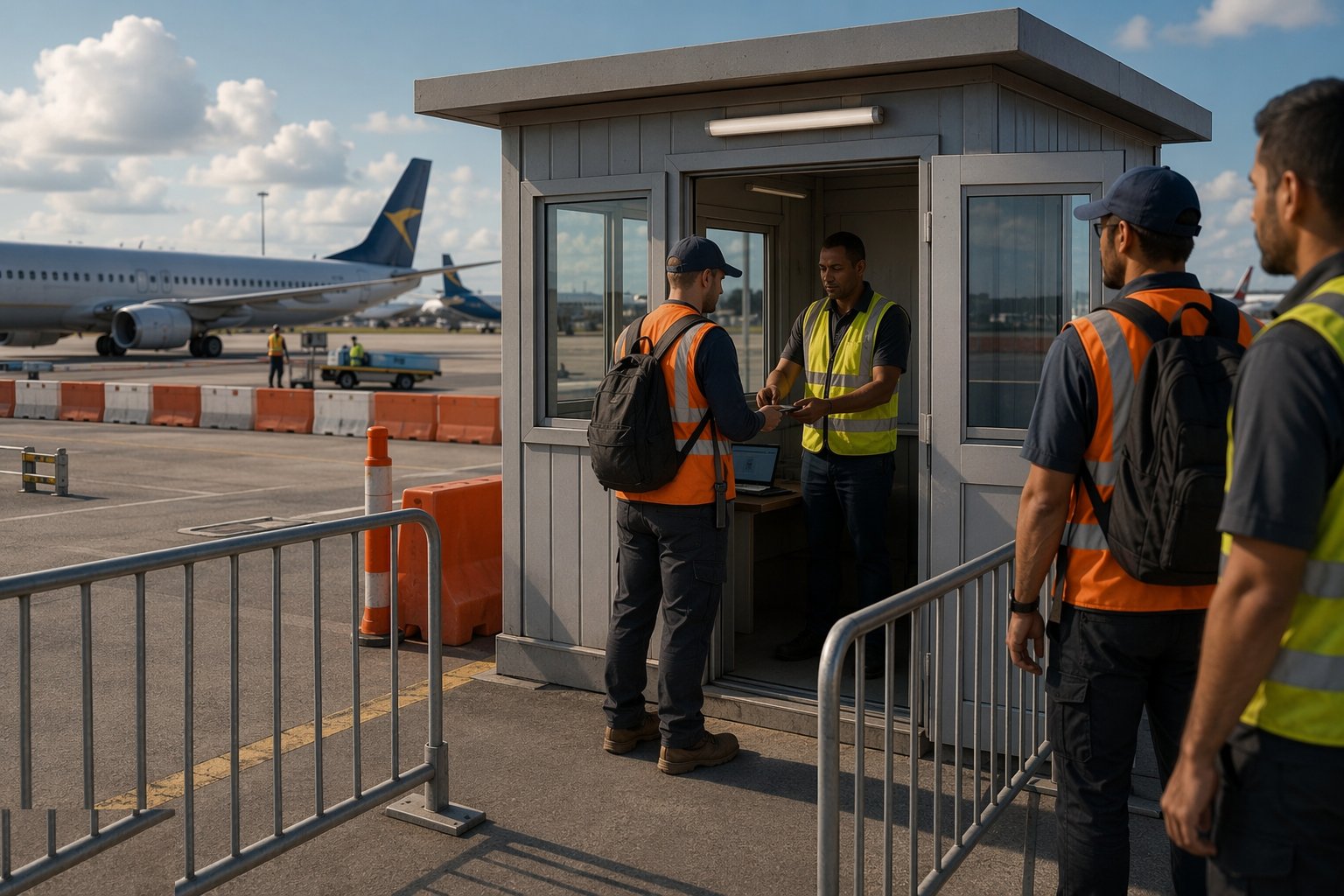
The workforce is security-vetted and trained for airside ID passes; drivers take the airport's driving test for airside permits; vehicles are permitted, marked with obstruction lights and checked. Induction covers the site specifics — routes, holding points, radio procedures, escort rules, the FOD regime and the emergency actions — because an operative who does not know what to do when an aircraft approaches is a hazard with a hi-vis on.
Step 3: Establish the airside compound and logistics
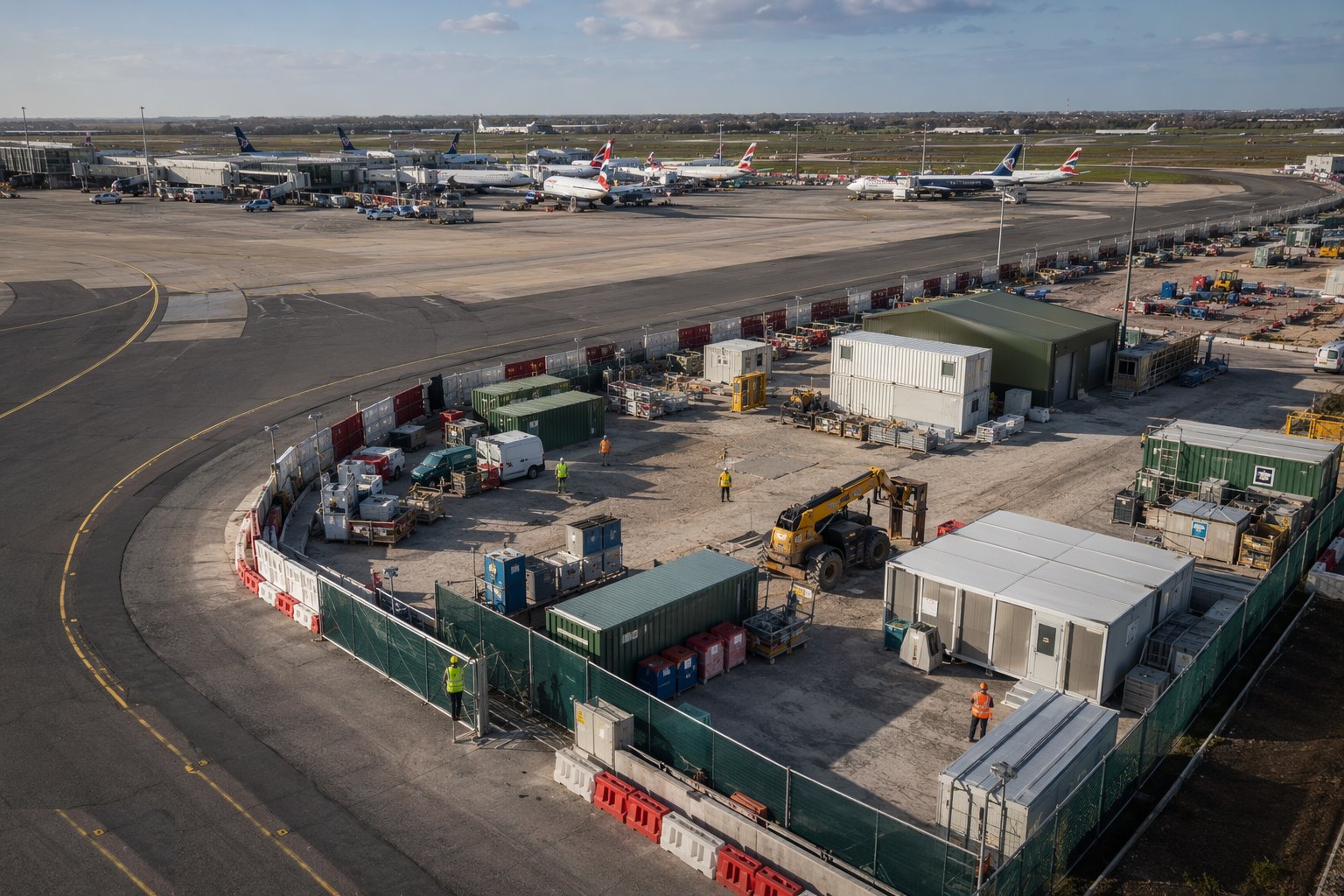
Compounds sit where the airport puts them, often remote from the work face, so logistics are planned like a resupply operation: covered deliveries on approved routes, gate checks for FOD on every vehicle, plant fuelled and serviced airside under spill control, and materials delivered just-in-time because storage airside is scarce and everything stored is a potential hazard. Waste goes out by the same covered, checked route — nothing blows away, nothing is left.
Step 4: Work the possession and hit the handback
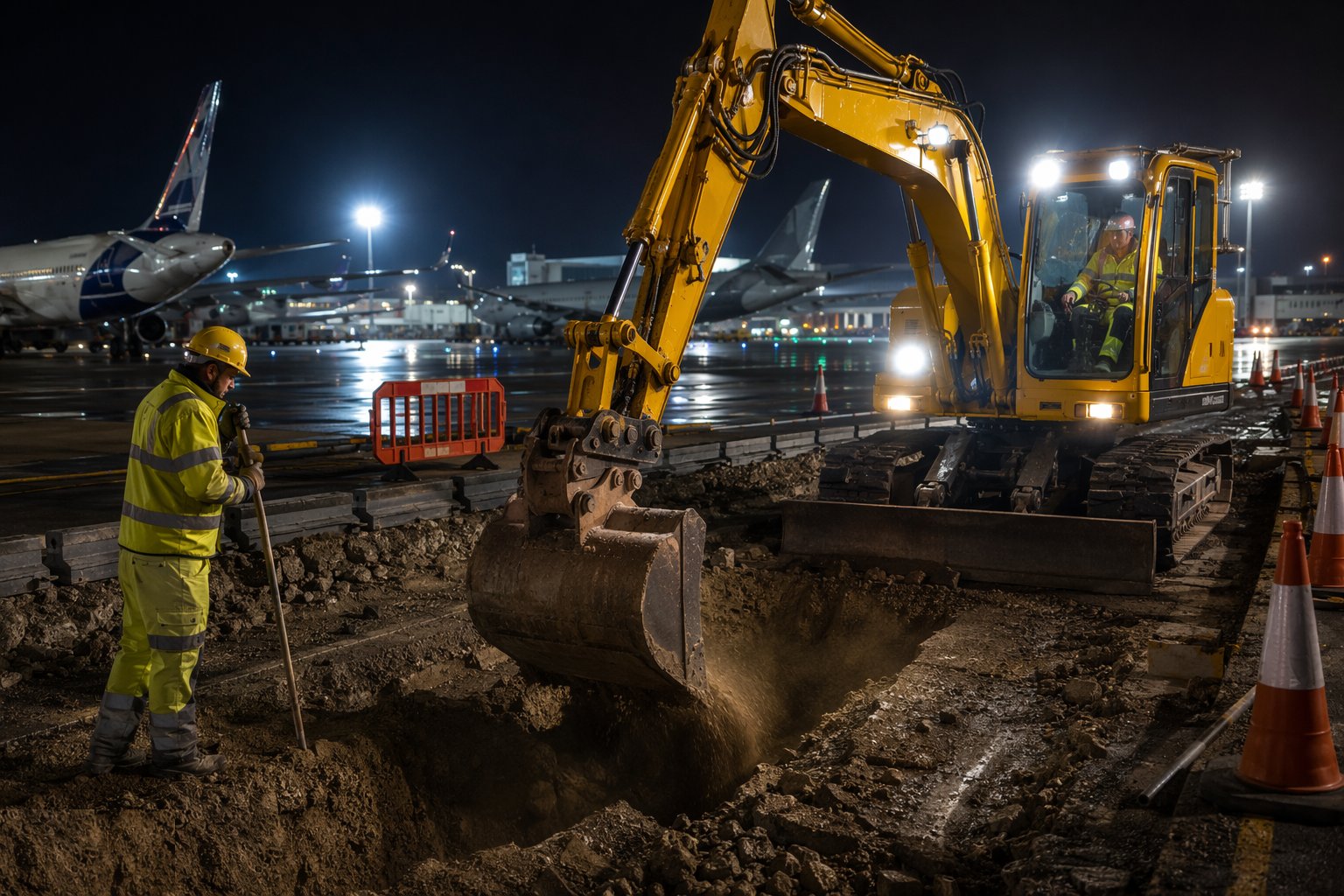
The night shift runs to a countdown: the strip closes at the NOTAM time, work starts only after the airport confirms closure, and the programme runs backwards from handback with float at the end, not the start. As the deadline approaches the sequence is fixed and rehearsed — plant off, materials cleared, surface swept, FOD walk by a named team, markings and lighting status verified, inspection with the aerodrome's duty officer, signature, reopen. Everyone on site knows the time; nobody argues with it.
Step 5: Hold the clearances beside live surfaces
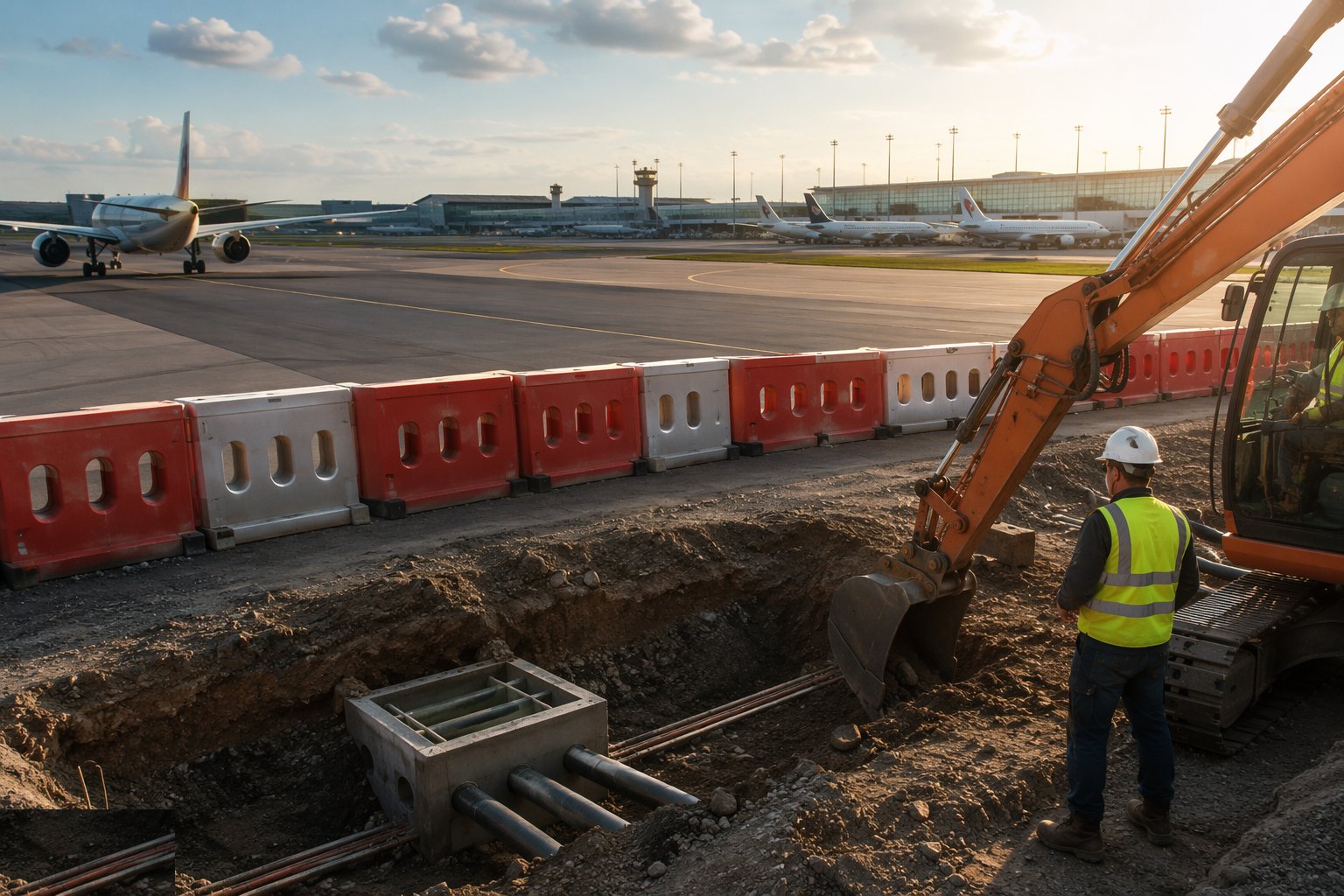
Where work runs alongside live taxiways or stands, the clearances are physical: barriers or demarcation at the safety-area limits, plant height limits marked and respected, a lookout or marshal where the method statement demands, and no person, machine or load inside the clearance while the surface is live. Excavation edges near live pavements are battered or supported to protect the pavement, and anything that could encroach — a crane jib, a spoil heap, a scaffold — is measured against the clearance, not guessed.
Step 6: Coordinate NOTAMs and published data
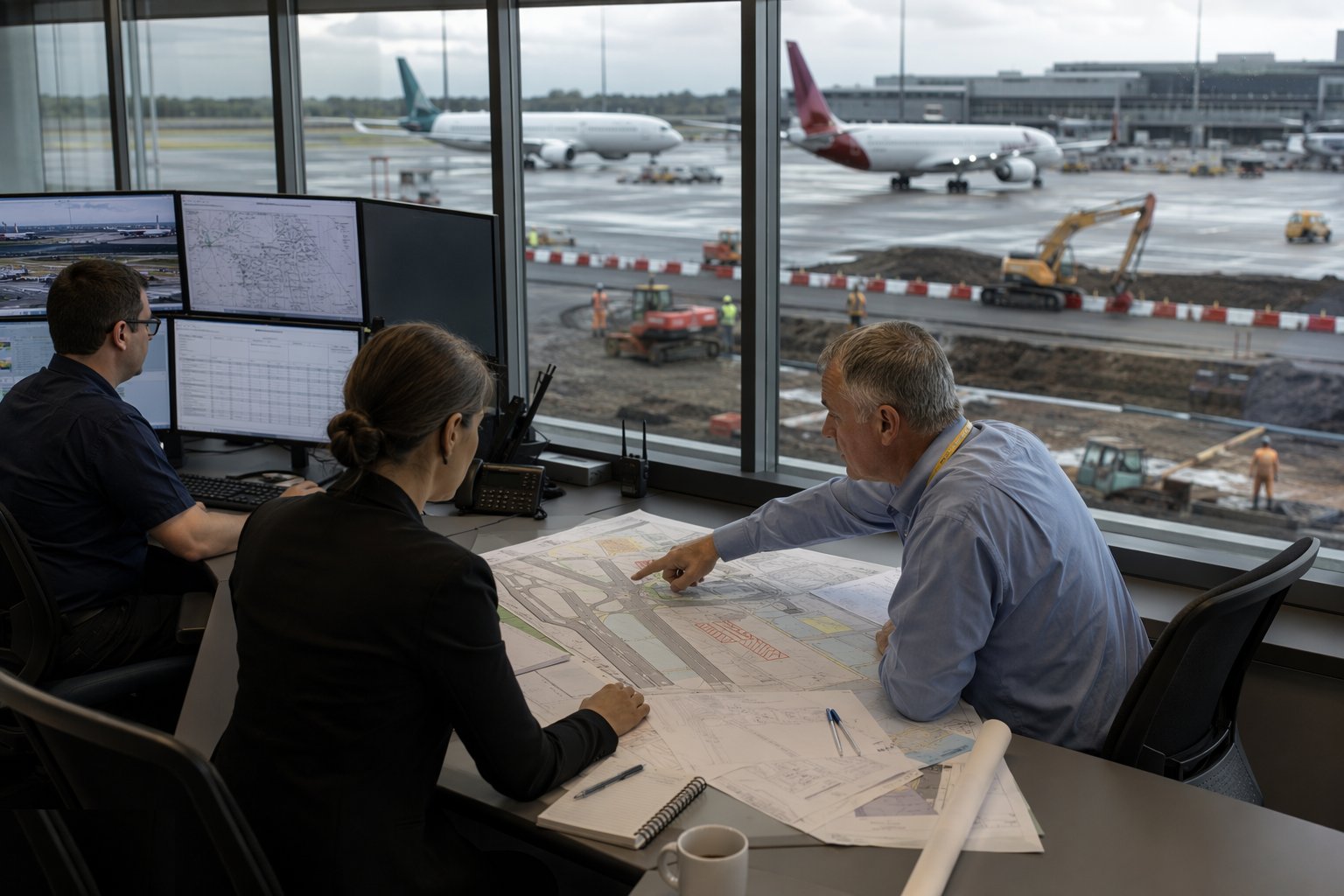
Every change that affects aircraft — closures, displaced thresholds, unserviceable lighting, cranes, obstacles, changed stand availability — is notified to the aerodrome in time for the NOTAM to publish before the change exists. The site works to the NOTAM, not alongside it: if the NOTAM says the taxiway closes at 23:00 the barriers go up after the last aircraft, and if the work is not ready the NOTAM is amended — the published aerodrome and the actual aerodrome must match, because pilots plan on the published one.
Step 7: Demobilise clean and close the record

Demobilisation is a FOD and safety operation in reverse: every item of plant, material, barrier and debris accounted for and removed, surfaces restored or their status declared, temporary markings and covers removed, and the works file — inspection records, handback signatures, NOTAM references — closed with the aerodrome. The last measure of an airside contractor is what they leave: nothing on the pavement, everything in the record.
Plant and equipment
- Permitted, lit and marked airside vehicles and plant with radios on the aerodrome frequency
- Sweepers, magnetic bars, FOD bins and covered skips at every work face
- Lighting towers and obstruction lighting for night possessions
- Barriers, demarcation and signage to the airport's standards for closed areas
- Survey equipment tied to the aerodrome datum for clearances and setting out
- Rumble strips, gates and inspection points at compound exits for the FOD regime
Quality control checks
- Method of works plan signed, briefed and audited on site
- Pass, permit and induction records current for every person and vehicle airside
- Handback inspection and FOD walk records signed with the aerodrome at every possession
- Clearance measurements to live surfaces surveyed, not paced
- NOTAM schedule tracked against actual site state — any mismatch resolved before operations
Safety considerations
- Aircraft always have right of way: lookout discipline, radio monitoring and immediate clearance on instruction
- Jet blast and ingestion zones respected around live stands — no loose material or lightweight plant within the standoffs
- Night possession fatigue: shift limits, rest and supervision through the compressed window
- Airside driving: permits, speed limits, marked routes and the airport's driving rules enforced absolutely
- Crane and plant heights against obstacle limitation surfaces, with permits before erection
- Emergency actions briefed: what to do on alarm, on aircraft emergency, on finding suspect items — the answers before the event
Common defects
- Handback overrun — the possession that ends with an aircraft holding and a very public lesson
- FOD found on the strip after reopening — traced to a gate check or a sweep that did not happen
- Clearance encroachment beside a live taxiway — a barrier line set by eye instead of by survey
- NOTAM mismatches: closed where published open, lit where published dark — the aerodrome's trust spent in a night
- Unvetted or uninducted personnel found airside — the fastest way to lose a permit regime
- Waste and materials stored where wind or blast can move them — tomorrow's FOD delivered today
Best suited for
- Pavement, lighting and utility works on operating airports
- Runway and taxiway rehabilitation under night possessions
- Stand, apron and airside infrastructure builds beside live operations
- Greenfield airfields building airside discipline from day one
How long does Airside Works in Live Airports take?
Typical duration: Windows are measured in hours: a night possession typically gives five to eight working hours on the pavement. Programmes are measured in seasons — a runway overlay or major stand rebuild on a busy airport commonly spans one to three closure seasons..