Systems Integration, Testing & Trial Running
Static tests, then dynamic tests, then trial running — the disciplined proof that the railway works as one system before a single passenger boards.
Last updated 2026-07-28 by the BuildPedia Editorial Team.
What is Systems Integration, Testing & Trial Running?
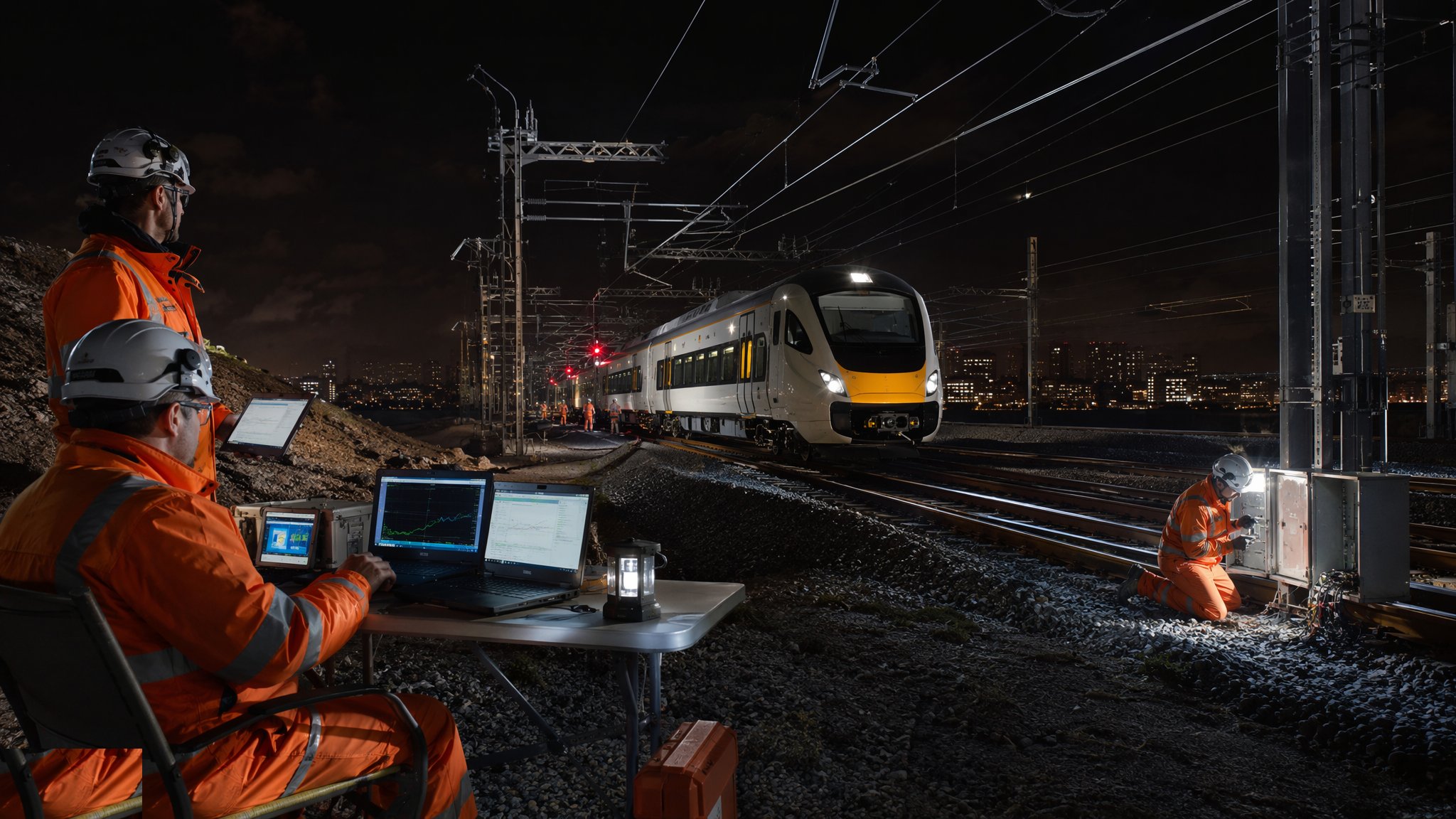
A new railway is not finished when the last weld cools and the last ceiling tile goes in — it is finished when it has been proven to work as one integrated system, in front of witnesses, with records. That proof follows a strict order. Static testing comes first: every system tested standing still — continuity and insulation on the power systems, wire counts and function tests on the signalling, airflow and pressure on the tunnel ventilation, door and screen-door cycles at the stations. Then dynamic testing: the same systems with trains moving, starting at walking pace and building to line speed plus margin, testing the interfaces that only exist in motion — pantograph against overhead line, train detection against signalling, braking distances against the design, EMC between traction power and everything else.
Above the dynamic tests sits trial running: the railway operated as if passengers were aboard, to the planned timetable, with the operator's staff in the cabs and control rooms, before any passenger is allowed on. Timetable proving runs the actual service pattern for weeks, flushing out the failures that component testing never finds — the door that faults every tenth cycle, the radio handover that drops one call in a thousand, the driver and signaller learning each other. In the UK the whole sequence is governed by the safety framework of the Railways and Other Guided Transport Systems regulations, with authorisation from the Office of Rail and Road, and the interoperability regime with its Notified, Designated and Approved Bodies checking conformity against the Technical Specifications for Interoperability. The Common Safety Method on Risk Assessment structures the argument that the railway is safe to open.
In the UAE the sequence is the same but the paper is different. The metros open under the oversight of the emirate's transport authority — the RTA's Rail Agency in Dubai — with an independent safety assessor's report and the operator's safety case, and the contractual completion runs through FIDIC: the Taking-Over Certificate marks the works complete and starts the Defects Liability Period, during which the railway is in passenger service while the contractor is still on the hook for what it built. Etihad Rail and the metros alike run extended trial operations precisely because the climate tests everything — air-conditioning capacity, sand intrusion, heat expansion — in ways no factory test can simulate.
When and why is Systems Integration, Testing & Trial Running used?
Testing and commissioning is the final process because it can only test what exists — but its requirements reach backwards through the whole project, which is why the testing programme is written before the first foundation is dug. It matters because a railway is a certified safety system, not a building with tracks: it opens on evidence, and the evidence is produced here. It also matters commercially — trial running is the last chance to find defects while the contractors, the suppliers and their warranties are all still mobilised, and every fault found in trial running costs a fraction of the same fault found in passenger service, where it arrives with media coverage and a regulator's letter attached.
Types of Systems Integration, Testing & Trial Running
Static testing and system commissioning
Everything proven standing still: electrical continuity and insulation, signalling wire counts and function tests, ventilation and smoke-control commissioning, platform screen door cycling, lift and escalator acceptance. The base layer of evidence — dynamic testing does not start until the static stack is signed.
Dynamic infrastructure testing
Trains moving at incrementally increasing speed: pantograph-OLE interaction, track geometry under load, braking and traction proving, EMC hunting between traction current and signalling. Speed builds in controlled steps with a test plan per run and a review before the next.
Signalling and train-control integration testing
The interlocking, ETCS or CBTC proven against real trains: movement authorities, enforced braking, door control and screen-door integration, degraded-mode operation. The longest and most unforgiving of the test campaigns — the software must be proven in every mode it will ever run.
Trial running and timetable proving
The railway operated to the planned service with staff but no passengers: timetable proving over weeks, reliability and availability measured against the entry-into-service criteria, emergency exercises with the fire and rescue services. The rehearsal that decides the opening date.
Systems Integration, Testing & Trial Running: step by step
Step 1: Write the test programme and the acceptance criteria
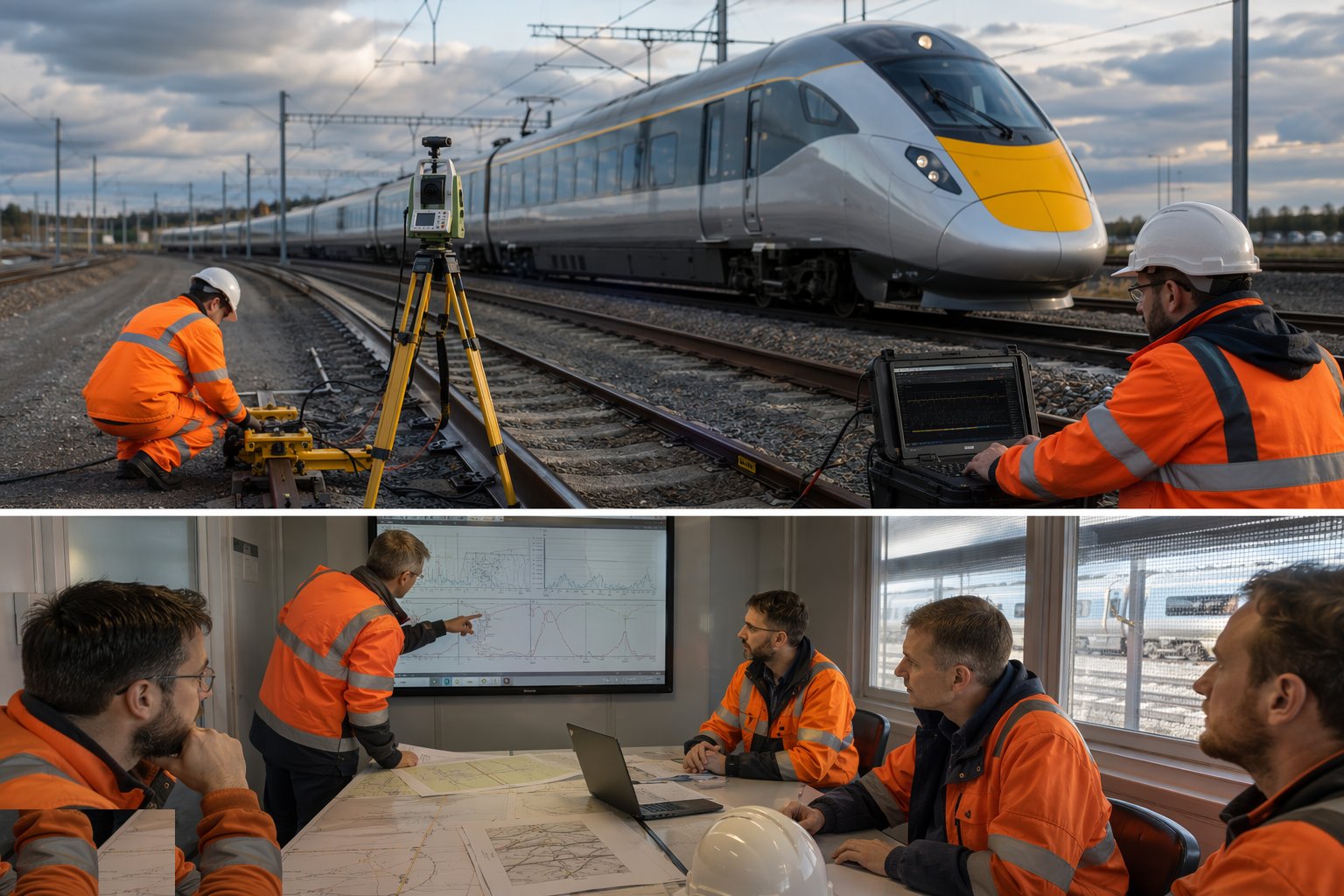
Long before testing starts, define what will be tested, by whom, against which standards, and what evidence constitutes a pass: the test plans, the integration sequence, the entry-into-service criteria and the safety argument structure. Every test gets a number, a procedure and a signatory; every requirement in the specification gets traced to a test or an analysis. The programme that arrives at testing without this written down is not testing — it is wandering around a railway hoping.
Step 2: Complete static testing system by system
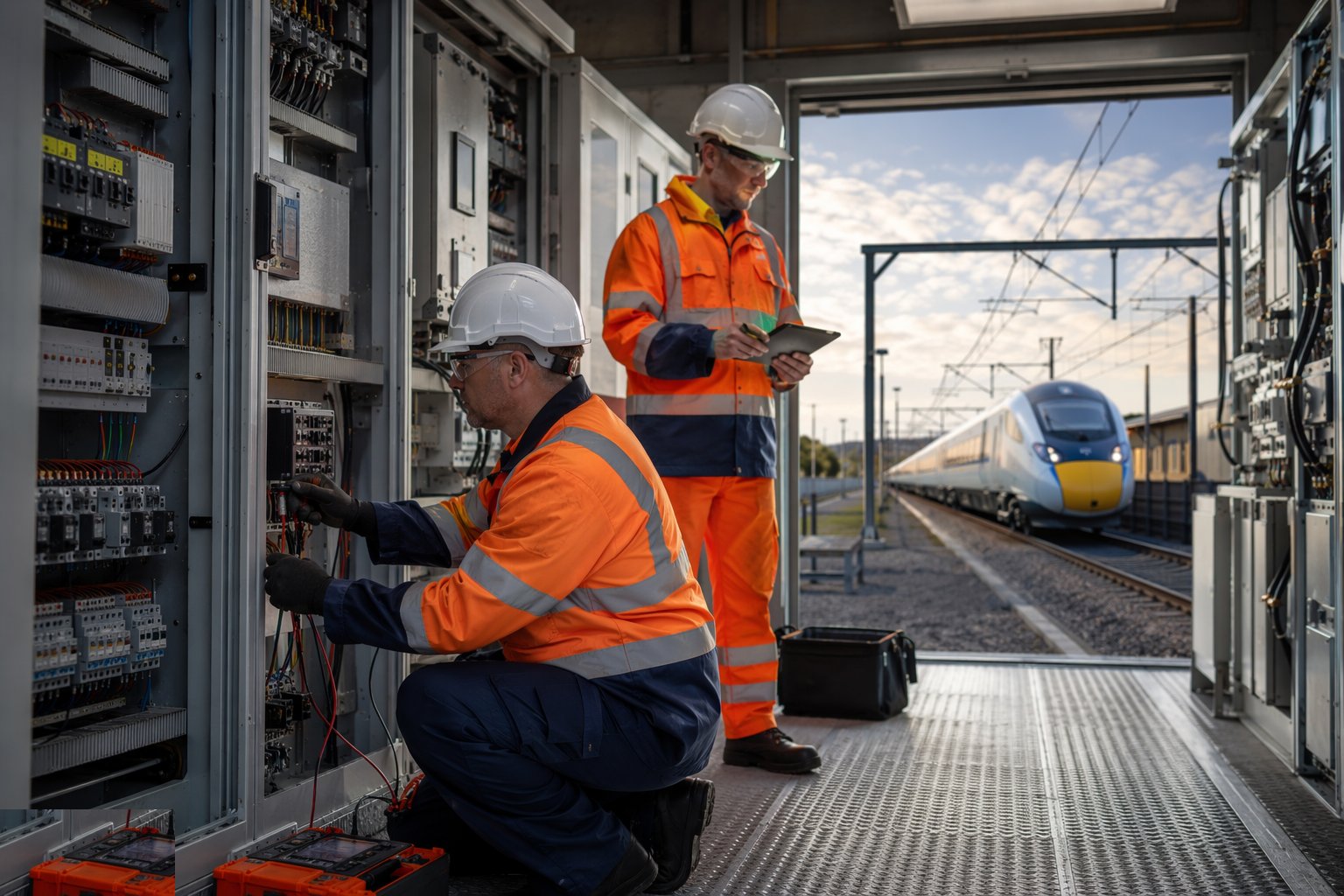
Work through the systems standing still: power systems proven for continuity, insulation and protection operation; signalling wire-counted, function-tested and principles-tested; tunnel ventilation and station smoke control commissioned against their design flows; platform screen doors cycled thousands of times with every fault logged. Static certificates are the ticket to dynamic testing — the test train does not move onto any system whose static evidence is incomplete, and that rule is held even when the programme is screaming.
Step 3: Run dynamic tests at incrementally increasing speed
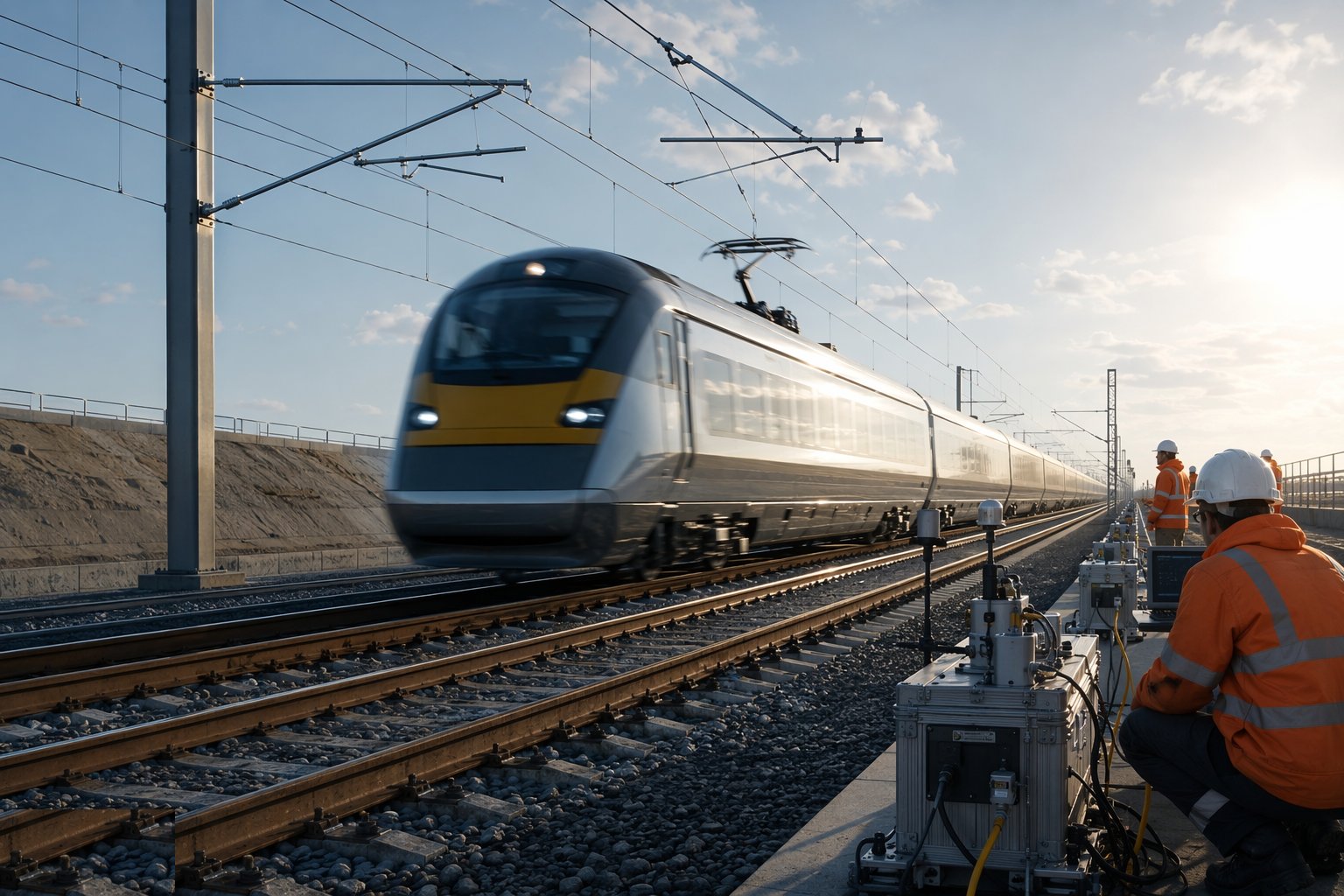
Bring the test trains out, starting at creeping speed and building in defined steps to line speed plus the design margin. First runs prove the physical interfaces: pantograph behaviour against the OLE — no dewirements, acceptable contact quality — gauging sweeps through platforms and structures, then braking tests, traction performance, and the EMC campaign hunting interference between traction current, track circuits and radio systems. Every run has a plan, every anomaly a log entry, and speed only increases when the review board signs the previous step.
Step 4: Integrate and prove the train-control system
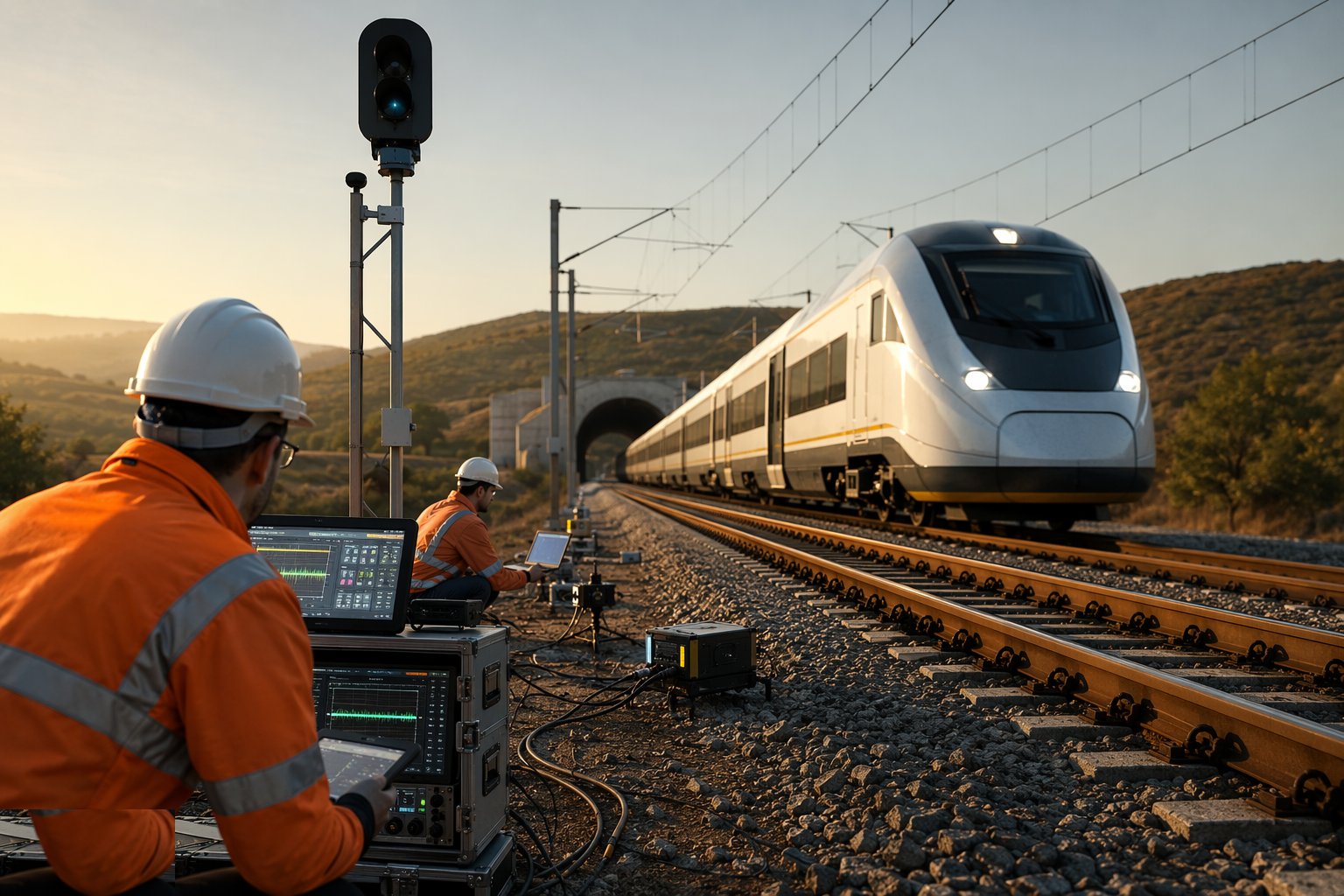
Prove the signalling against real trains in every mode: movement authorities granted and revoked correctly, enforced braking at the right curves, door release only where it should be, screen doors opening with the train and nothing else, degraded modes — failed radio, failed beacon, failed interlocking — all failing safe and recovering cleanly. This campaign runs longest on driverless metros, where the software assurance and the dynamic proving merge into one months-long exercise, and where the independent safety assessor reads everything.
Step 5: Prove the timetable in trial running
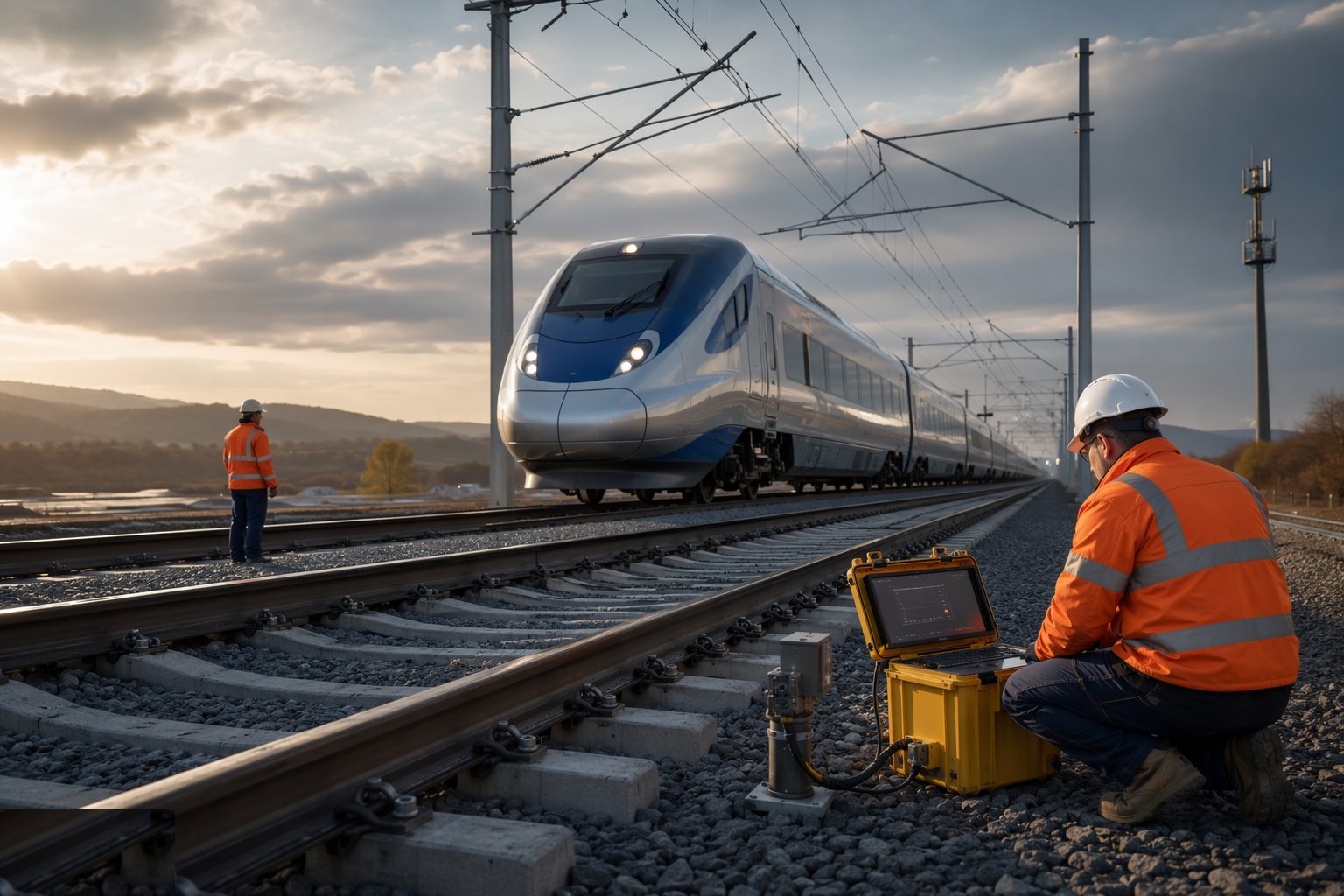
Operate the full planned service — first train to last, peaks and headways — with the operator's drivers, signallers, controllers and station staff, and no passengers. Measure reliability and availability against the entry-into-service criteria, run the emergency exercises — evacuation in a tunnel, failed train recovery, power failure — with the fire and rescue services playing for real, and log every failure with its root cause. Timetable proving is where the railway stops being a project and starts being a service; the statistics from these weeks are the evidence the opening date is set by.
Step 6: Hand over and enter service
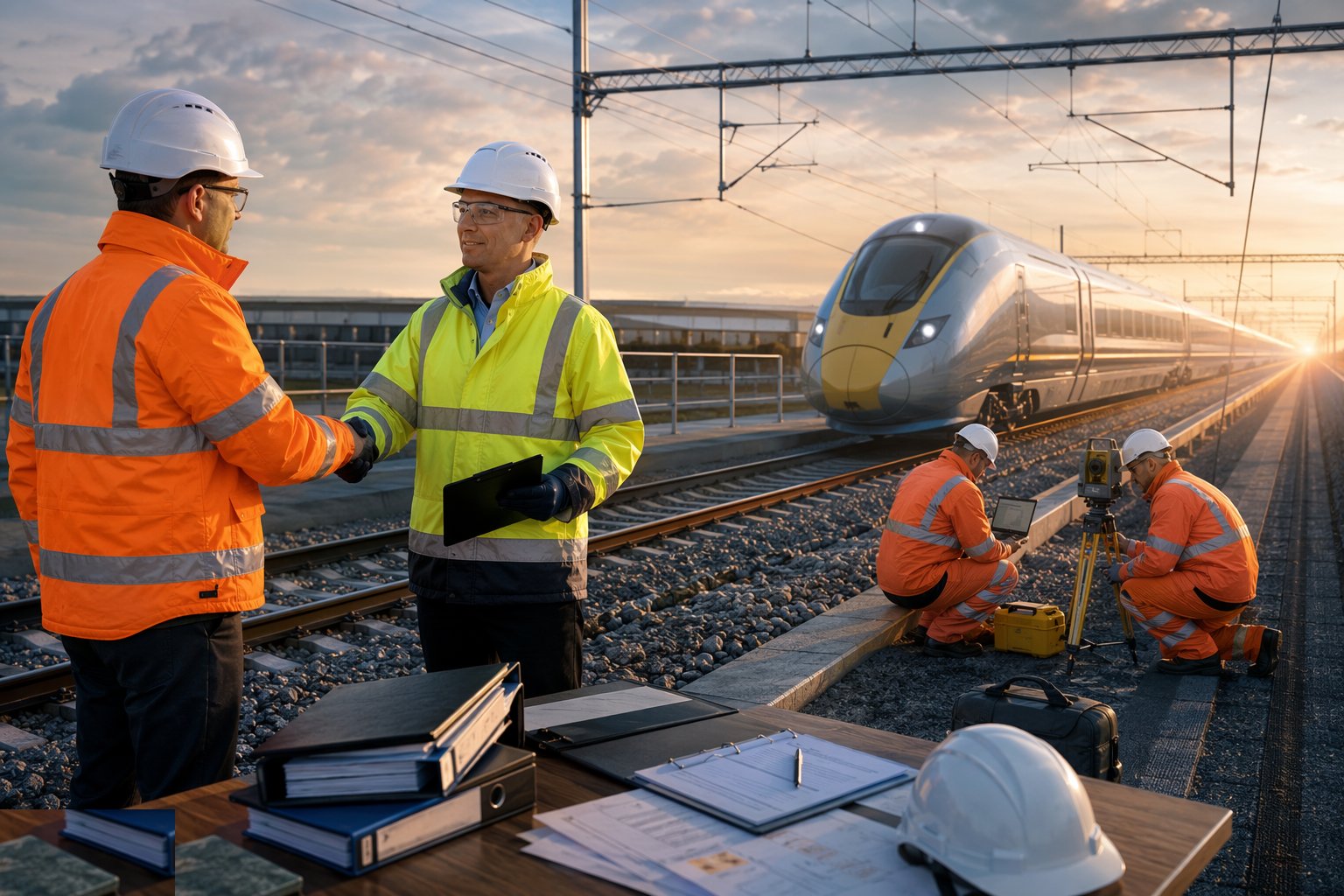
Assemble the final evidence: test certificates, as-builts, O&M manuals, the safety case and the assessor's report, the training records of the operator's staff. In the UK, authorisation under the Office of Rail and Road regime clears the railway for passenger service; in the UAE, the authority's approval and the Taking-Over Certificate under FIDIC mark completion and start the Defects Liability Period. Then open the doors — and keep the commissioning team stood by, because the first weeks of passenger service always find what trial running missed, and finding it fast is the last deliverable.
Plant and equipment
- Test trains and instrumented vehicles with pantograph and track measurement
- Electrical test equipment — insulation, continuity and protection test sets
- Signalling test rooms, simulators and data loggers
- EMC and radio coverage measurement equipment
- Tunnel ventilation and smoke-control commissioning rigs
- Reliability and performance logging systems for trial running
- Gauge clearance vehicles and laser gauging equipment
- Control centre and SCADA test environments
Quality control checks
- Every requirement traced to a test, analysis or inspection before testing begins
- Static test certificates complete per system before dynamic testing is permitted
- Speed increases gated by review board sign-off on the previous test step
- All trial-running failures logged, root-caused and closed with evidence
- Independent safety assessment reports complete for the safety case
- As-builts, O&M documentation and training records verified before handover
Safety considerations
- Test train movements under a dedicated operating rules regime — not yet a passenger railway
- Energised systems treated with full electrical safety rules from first energisation
- Emergency exercises planned with the fire and rescue services, not around them
- Fatigue management for test crews on intensive night-possession programmes
- Strict configuration control — no unauthorised changes to a system under test
- Clear demarcation of responsibilities between contractor, operator and regulator
Common defects
- Dynamic testing started on incomplete static evidence — faults found in motion that a test bench would have caught
- Interface tests skipped because each system passed alone — the railway fails exactly where the systems meet
- Trial running cut short by programme pressure — the defects arrive with the passengers instead
- Failure logs without root cause — the same fault recurring through proving and into service
- Documentation assembled after the tests from memory — certificates the safety case cannot stand on
- Degraded modes never proven — the first real failure finds the railway has no rehearsed answer
Best suited for
- Proving the railway works as one certified safety system before passengers board
- Catching interface and reliability defects while contractors and warranties are still mobilised
- The evidence trail — UK authorisation or FIDIC Taking-Over — that lets a railway legally open
- Rehearsing the operator's people until the service is muscle memory, not theory
How long does Systems Integration, Testing & Trial Running take?
Typical duration: Static and dynamic testing on a new line typically runs 6–12 months; trial running and timetable proving add 3–6 months more, with driverless metros at the long end of every range..