Disaster Recovery & Humanitarian
Emergency works and rebuilding — construction at its fastest and most improvised.
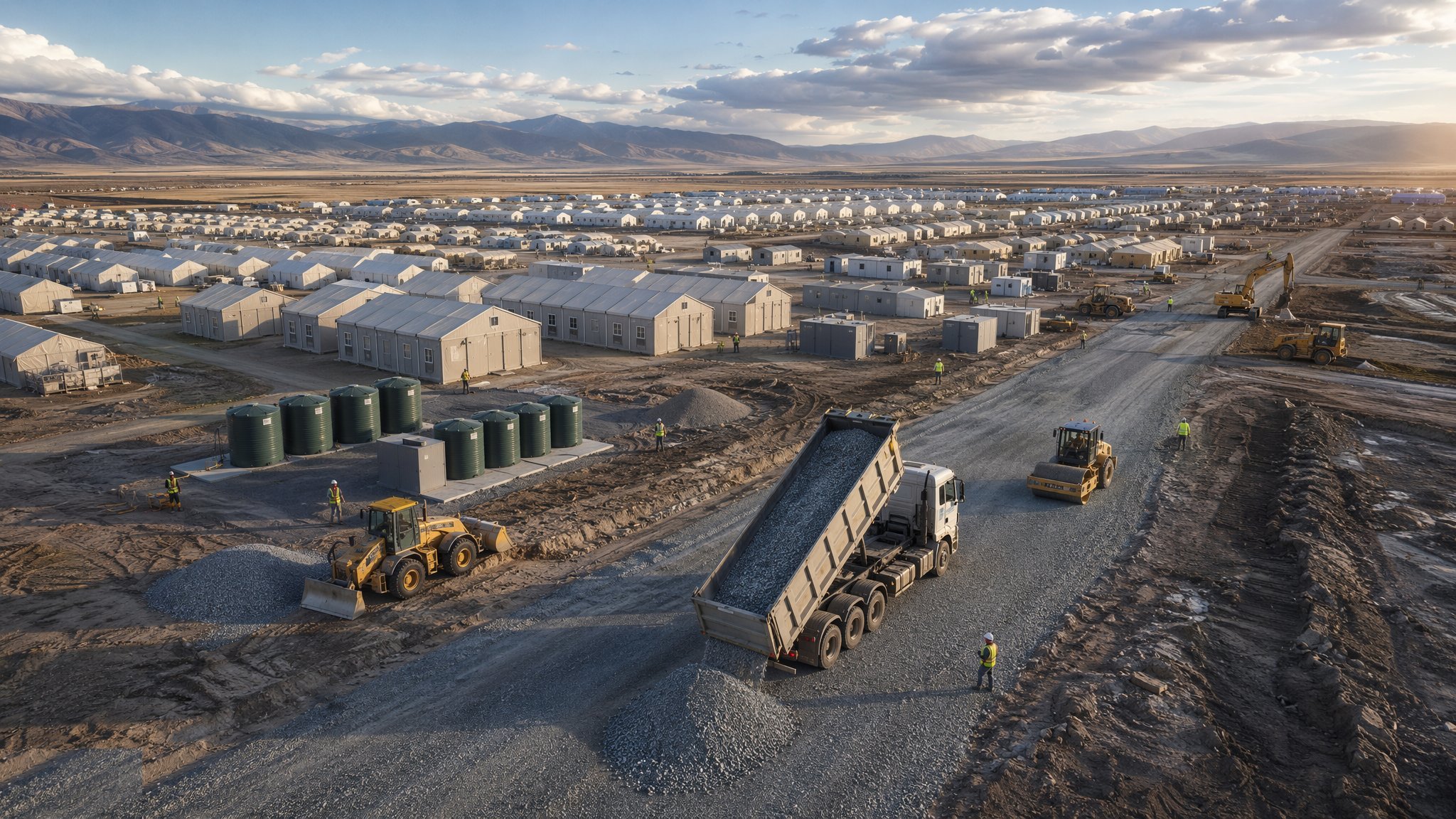
After the earthquake, the flood or the storm, construction starts again with no drawings and no time. The principles are the same processes the rest of this site describes — access, clearance, earthworks, structure — compressed, improvised and carried out where the need is greatest and the supply chains are broken. The shared method guides are linked below; they apply, just faster.
The two guides in this sector cover emergency works and stabilisation — making safe, shoring, dewatering and opening access in the first days — and temporary shelter and settlements, where speed, dignity and logistics matter more than finish, and the layout decisions made in week one shape communities for years.
What does Disaster Recovery & Humanitarian cover?
Process guides in Disaster Recovery & Humanitarian
- Emergency Works & Stabilisation — The first construction response after the storm, flood or blast — shoring what still stands, demolishing what cannot, keeping the weather out and the utilities alive — under emergency powers and blue-light coordination.
- Temporary Shelter & Settlement Construction — Building a functioning settlement from bare ground — camp layouts to Sphere and UNHCR standards, water and sanitation at speed, roads and drainage on unprepared ground — with logistics that start continents away.
Shared methods used in Disaster Recovery & Humanitarian
- Site Access & Enabling Works
- Site Clearance & Demolition
- Corridor Access & Enabling Works
- Earthworks & Excavation
- Drainage & Utility Corridors
- Steel Frame Construction
- Testing, Handover & Snagging
Part of the Environmental & Land Development group.