Hoists, Mast Climbers and Material Handling
The vertical logistics that decide whether a tower finishes on time — passenger hoists, goods hoists, mast climbers, telehandlers and the loading-bay strategy behind the finishing programme.
Last updated 2026-07-28 by the BuildPedia Editorial Team.
What is Hoists, Mast Climbers and Material Handling?
Once the frame is up, the building is fed vertically, and the feed rate sets the finishing programme. A 30-storey residential tower under fit-out moves hundreds of operatives and tonnes of board, block, duct and kitchen units every day, and every one of them passes through the hoists. The calculation is brutal arithmetic: cage capacity, cycle time, operating hours, and the number of floors served equals how many man-hours and pallet loads a day the building can absorb. Get it wrong and the trades queue at the base while the programme slips a week a month. Get it right and the hoist schedule is one of the most important documents on the site.
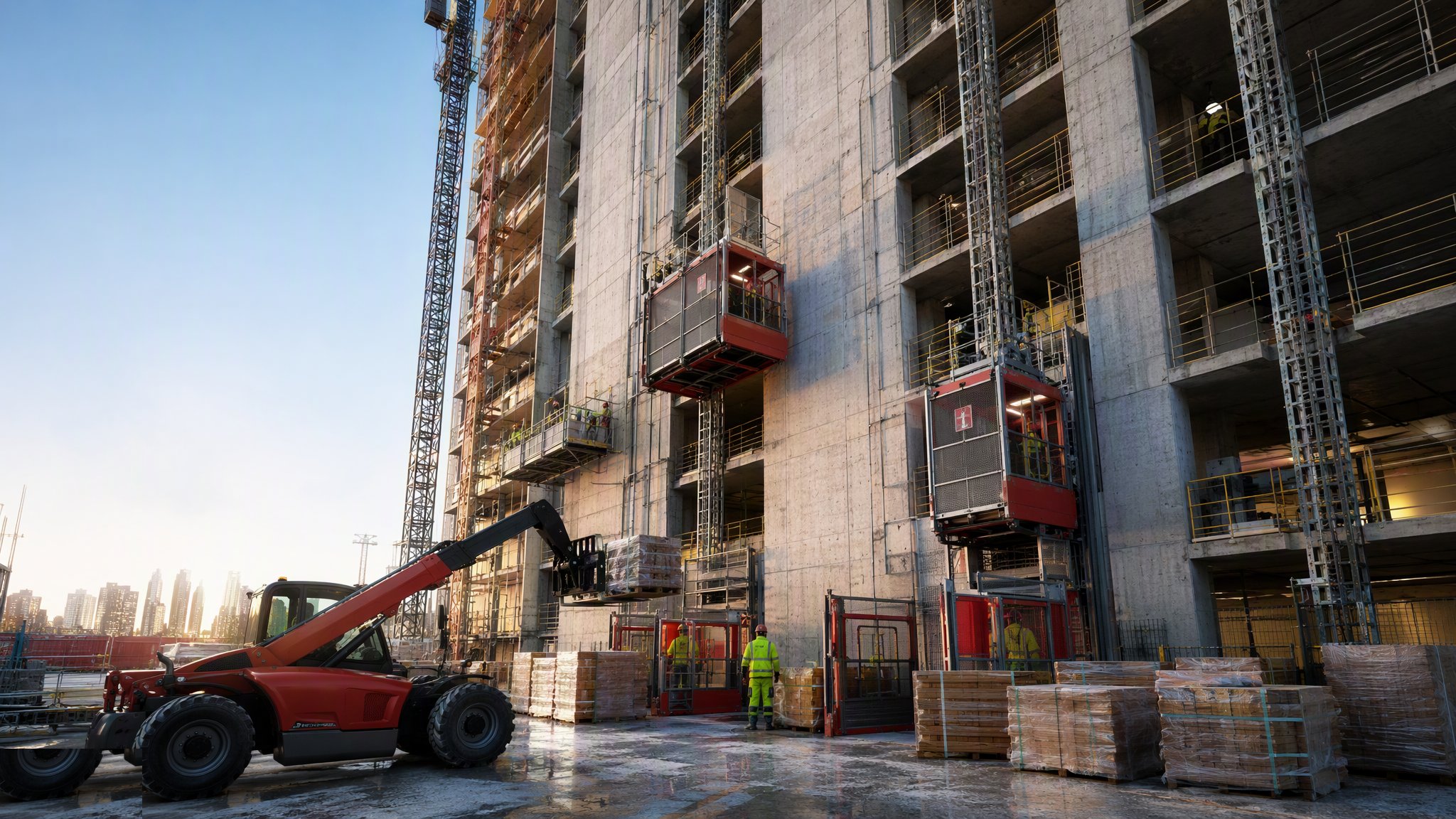
The kit splits into families. Passenger/goods hoists — rack-and-pinion cages climbing a mast tied to the structure — carry people and materials together and are the tower default, usually twin-cage. Goods-only hoists carry pallets and stillages where people travel another way. Mast climbing work platforms (MCWPs) are motorised platforms that climb a mast on the façade, giving the envelope trades a moving deck instead of scaffold — brilliant for blockwork, façade and remedial work, with their own rules on ties, travel and loading. On the ground, telehandlers and forklifts do the horizontal half of the journey: unloading deliveries, distributing to loading bays, feeding the hoist. Retractable loading bays cantilever out of each floor so the crane can land materials directly onto the storey — the bridge between the craneage plan and the hoist plan.
In the UAE the same logic runs hotter: hoist scheduling around midday summer working rules, dust protection for drive units, and the sheer scale of tower fit-outs where two twin-cage hoists per core is normal and a third appears for the furniture wave. Common-user hoisting — one system serving twenty subcontractors — only works with a booking system, enforced load discipline and someone with the authority to say no.
When and why is Hoists, Mast Climbers and Material Handling used?
Hoists go in as soon as the structure is tall enough that stairs cost more time than they save — typically from level 4–5 upwards — and come out only when the permanent lifts are commissioned for construction use or the building no longer needs the feed. MCWPs are chosen for façade and envelope programmes where a moving deck beats erecting scaffold to height, and where the mast ties can land on structure every few metres. Loading bays follow the crane: every storey the crane must feed directly gets a bay or a landing strategy. The whole system is planned backwards from the fit-out programme: how many men, how many pallets, to which floors, per day.
Types of Hoists, Mast Climbers and Material Handling
Passenger/goods hoists
Rack-and-pinion cages, single or twin, carrying operatives and materials up the mast with landing gates at each floor. The tower default; typically 2-tonne class cages with 20–32 person equivalents, tied to the structure as it climbs.
Goods-only hoists
Materials-only cages or platforms serving floors where people travel by permanent stairs or protected means — cheaper to run, still gated, interlocked and loaded within rating.
Mast climbing work platforms
Motorised work decks climbing masts on the façade, single or twin mast, platform lengths from a few metres to 30+. The envelope trade's alternative to scaffold: position at working height on demand, with strict loading and tie rules.
Telehandlers, forklifts and loading bays
The horizontal link: telehandlers unloading deliveries and distributing to the hoist base or to retractable loading bays cantilevered from each floor, so crane-landed materials reach the storey directly.
Hoists, Mast Climbers and Material Handling: step by step
Step 1: Plan the vertical logistics from the programme
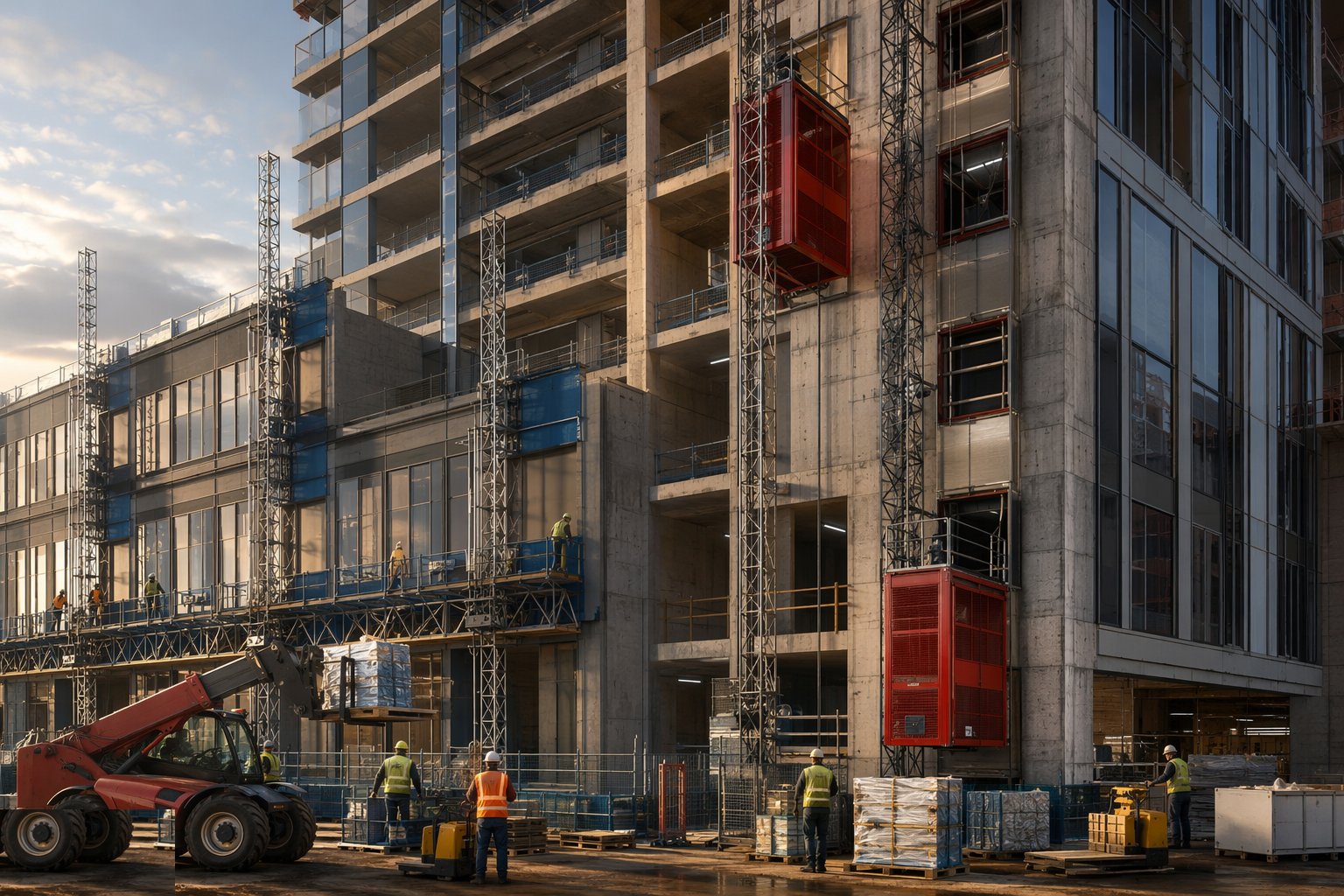
Take the fit-out programme and convert it to demand: operatives per floor per shift, pallet and stillage movements per week, peak trades. Size the hoist provision against cycle time — cage capacity, travel speed, loading dwell — and position hoists where they serve the most floors with the shortest horizontal carry. This is where the decision gets made: one twin-cage or two, when the second mast goes in, and which floors get loading bays fed by the crane instead.
Step 2: Install bases, masts and ties
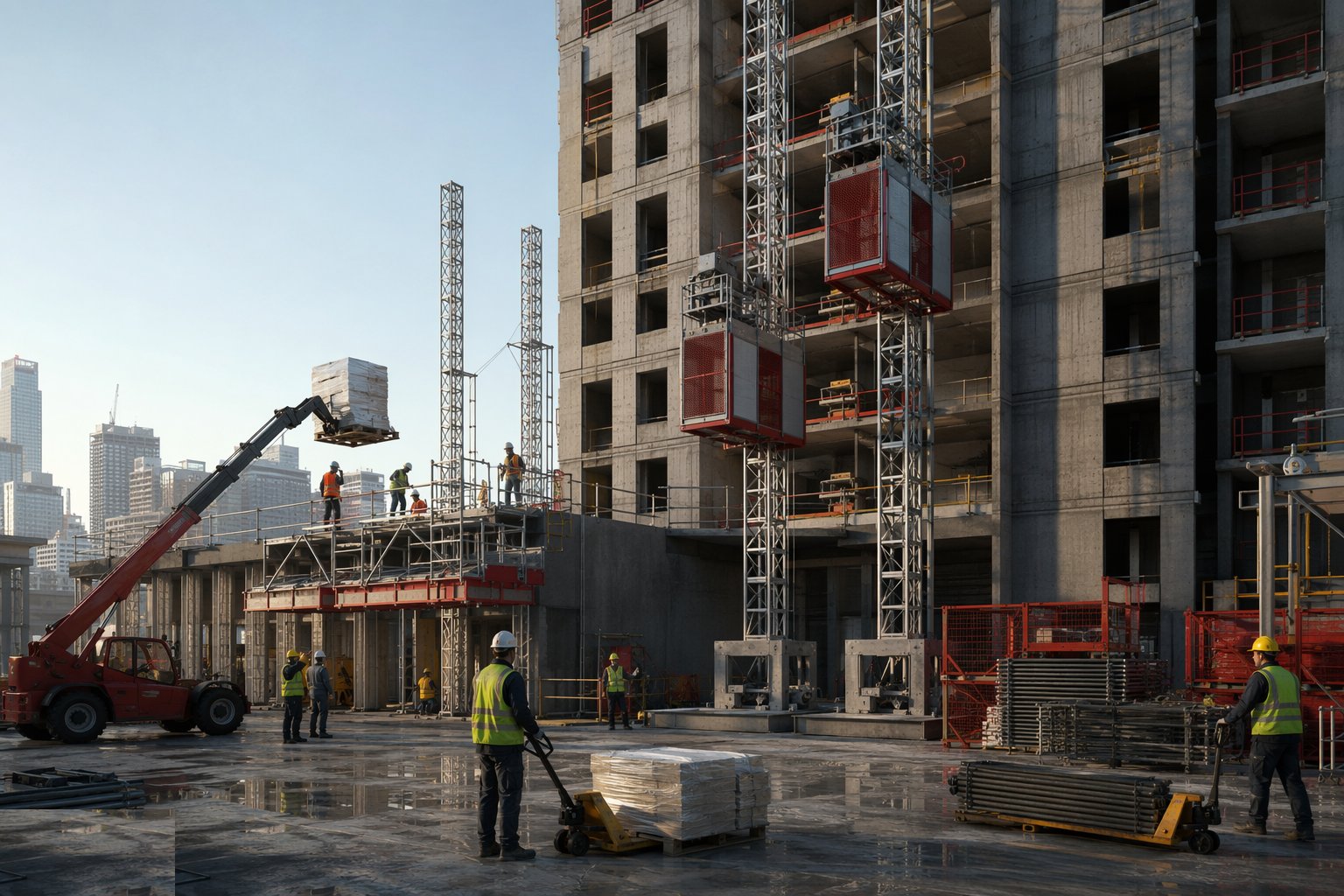
Hoist bases sit on designed foundations or verified structure — a twin-cage hoist mast is a serious point load plus overturning, and roof or podium installations need the engineer's numbers. Masts are erected plumb with ties at the specified spacing to the structure, each tie torqued and marked. MCWP masts follow the same discipline with their own tie loads; a mast climber is only as safe as its ties.
Step 3: Commission, gate and interlock
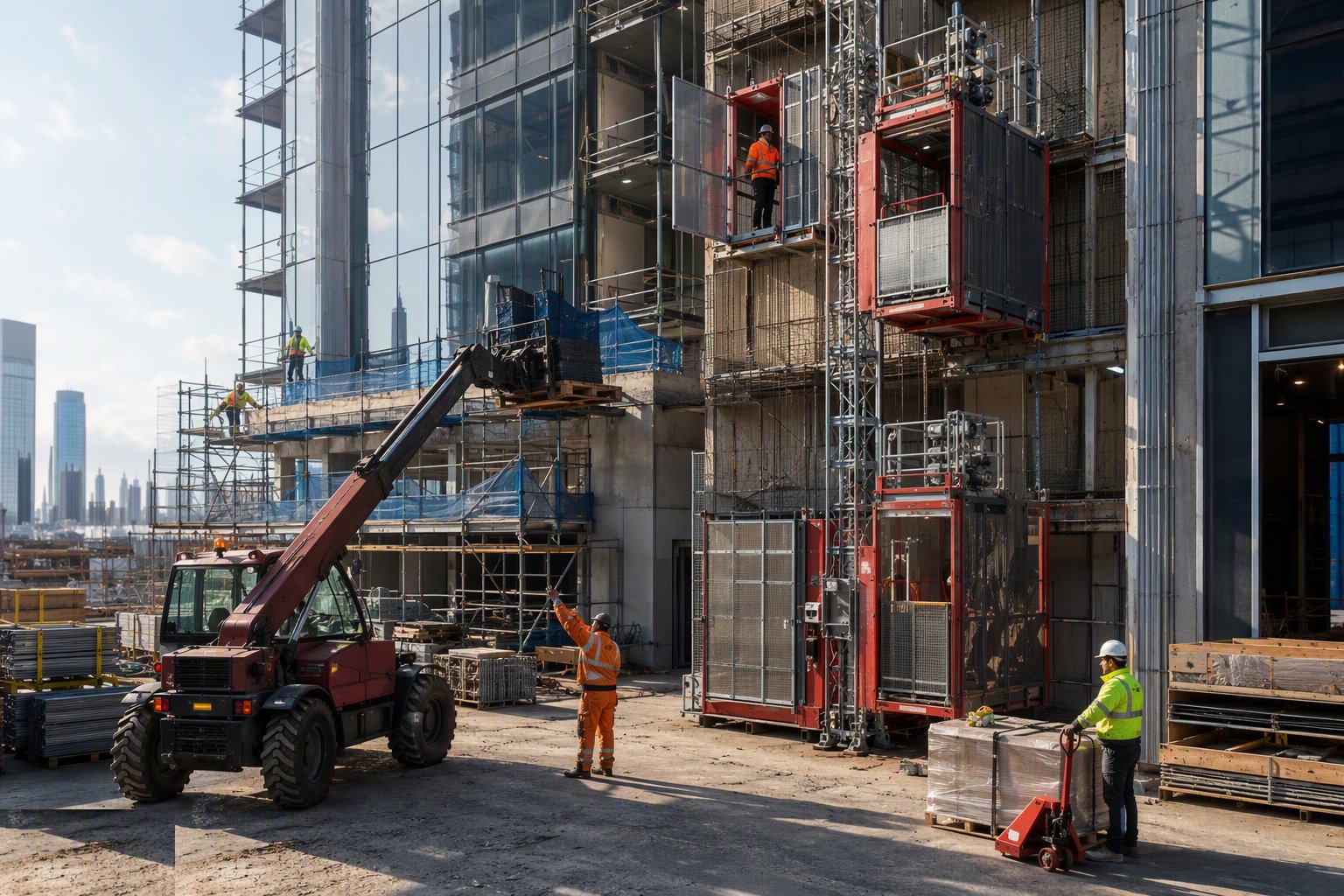
Before service: thorough examination under LOLER, safety devices tested (overspeed governor, limits, buffers, door interlocks), and landing gates fitted at every served level so nobody can open a gate into a void or call the cage into someone. Signage states the rated load in kilograms and persons — both numbers, because a cage full of board and twenty men is both loads at once.
Step 4: Run the booking and loading discipline
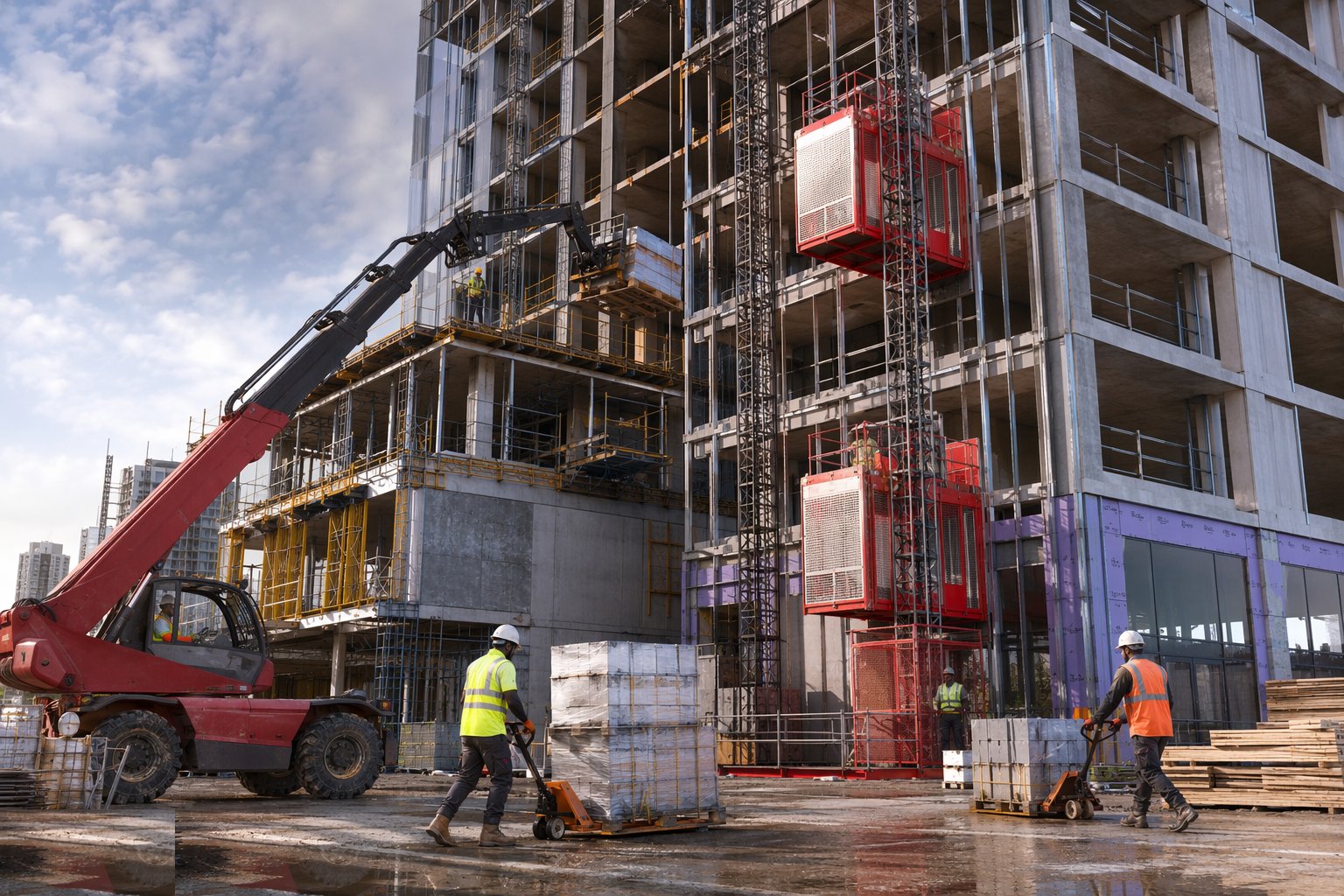
Common-user hoists run on a booking system: materials moves scheduled against operative transport windows, with morning and afternoon people-peaks protected. Loads are checked against the rating, distributed in the cage per the load plate, and long loads carried only as the manufacturer allows. A banksman or hoist coordinator at the base keeps the queue honest — the trade that books the slot gets the cage.
Step 5: Feed the floors — loading bays and distribution
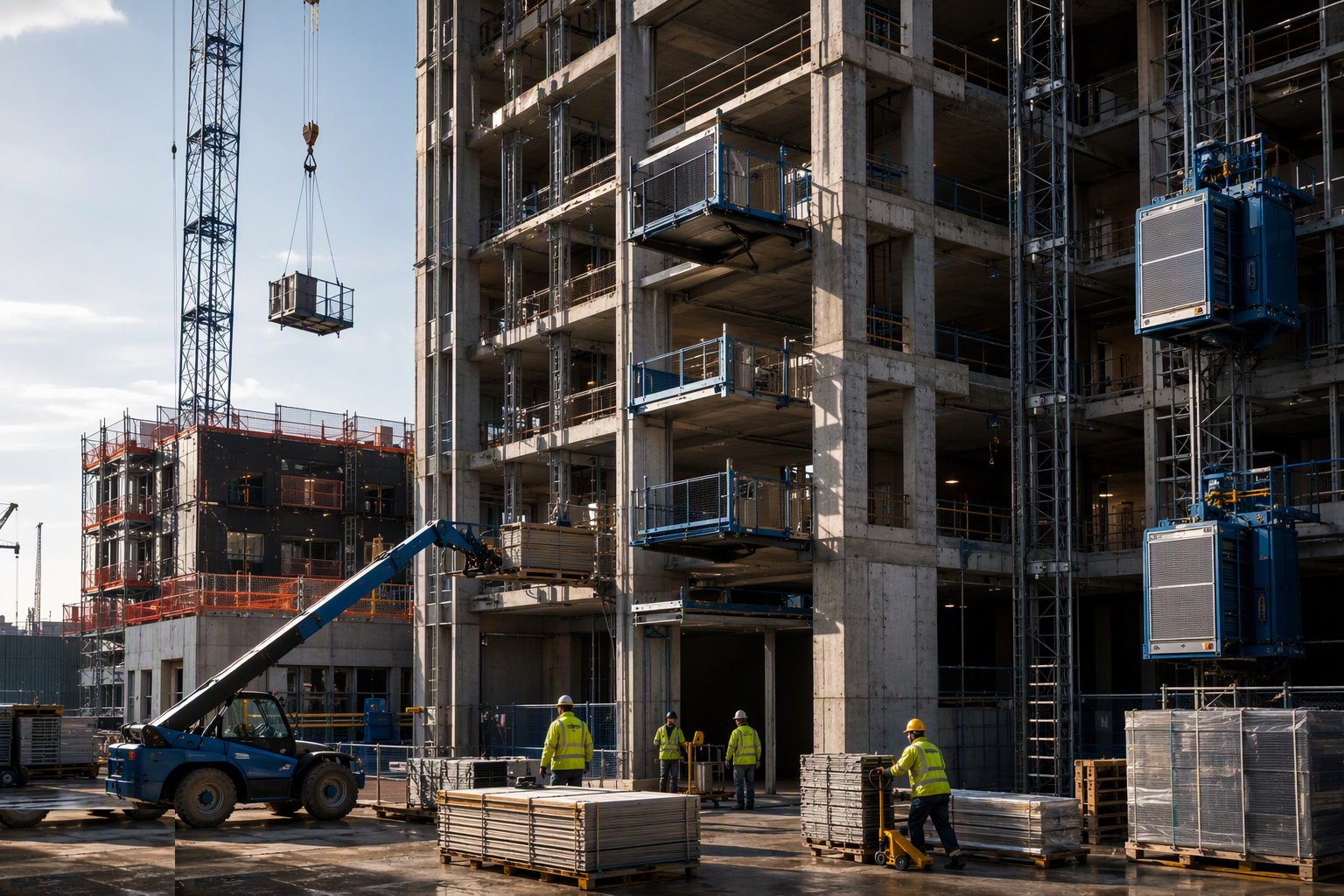
Retractable loading bays are installed per storey under their own design and inspection regime: SWL marked, gates and edge protection in place, and nobody on the bay during a crane pick until the load is landed and the crane cleared. Materials are distributed from bay or hoist landing to point of use promptly — a storey that becomes a materials store becomes a structural loading problem and a fire load.
Step 6: Operate mast climbers to the rules
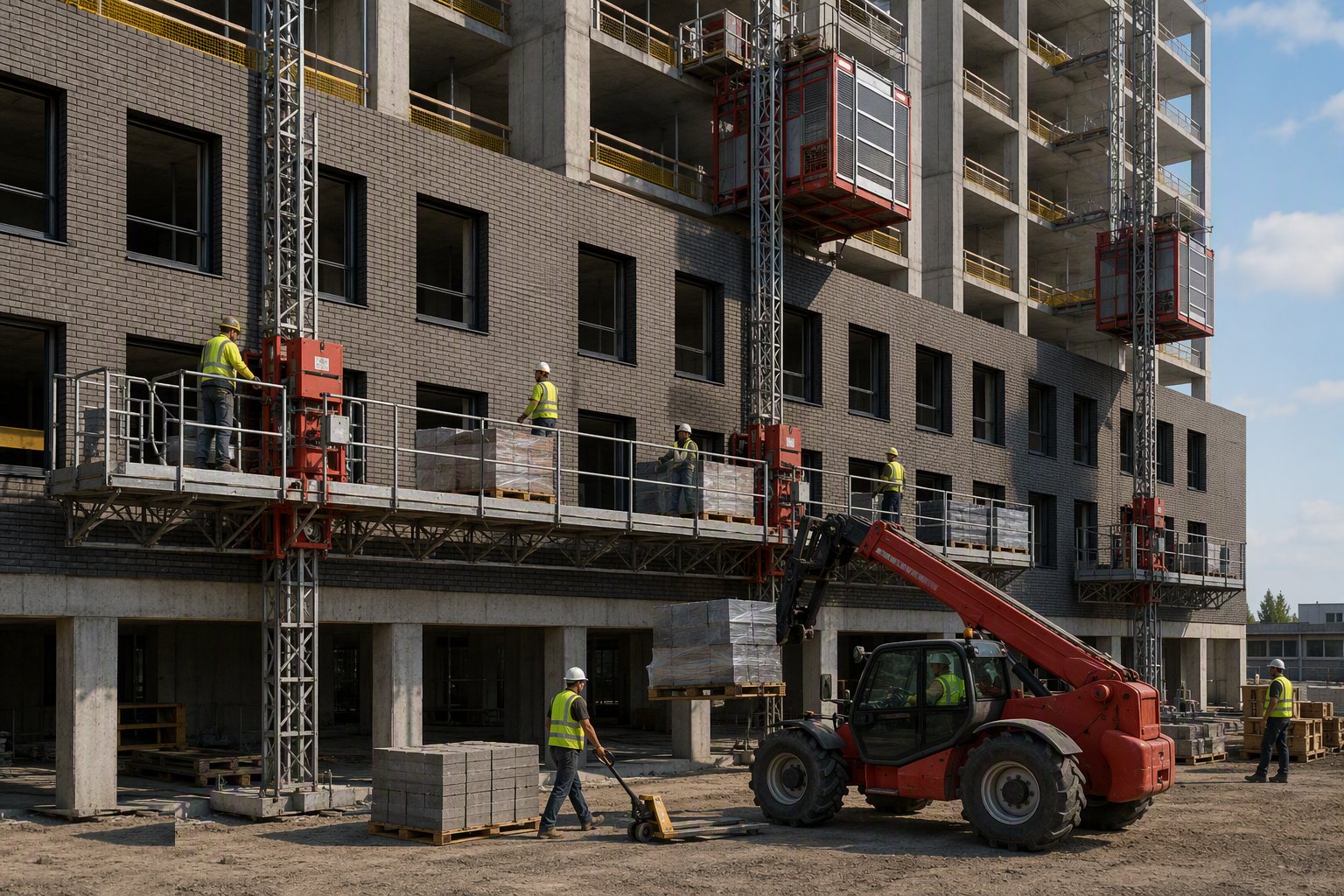
MCWPs are loaded within their distributed and point load limits — pallet positions marked on the deck, not wherever the pallet landed. Travel happens with the platform clear of obstructions, personnel trained and harnessed only where the system requires it, and the deck returned to its parked position and powered down at shift end. Wind limits apply to the platform as they do to the crane: a 20 m deck full of board is a sail.
Step 7: Maintain, inspect and adapt as the building grows
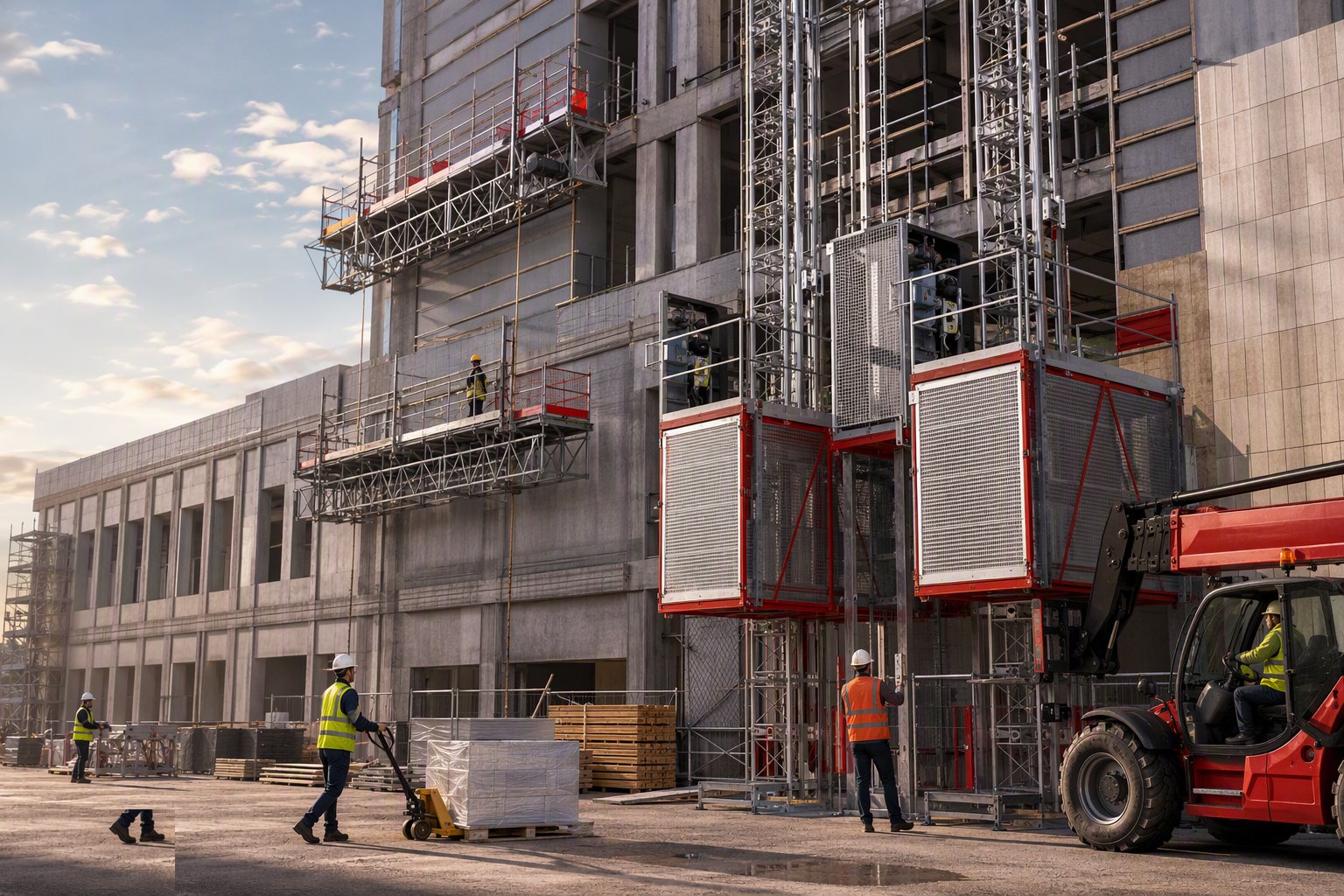
Hoists get daily pre-use checks, weekly inspections and periodic thorough examinations; mast ties are extended as the frame climbs, each extension re-inspected before service. As fit-out peaks, the logistics plan is re-run: more cages, longer hours, or a furniture hoist phase. The plan that was right at level 10 is wrong at level 25 if nobody re-does the arithmetic.
Step 8: Remove, convert and hand over to the permanent lifts
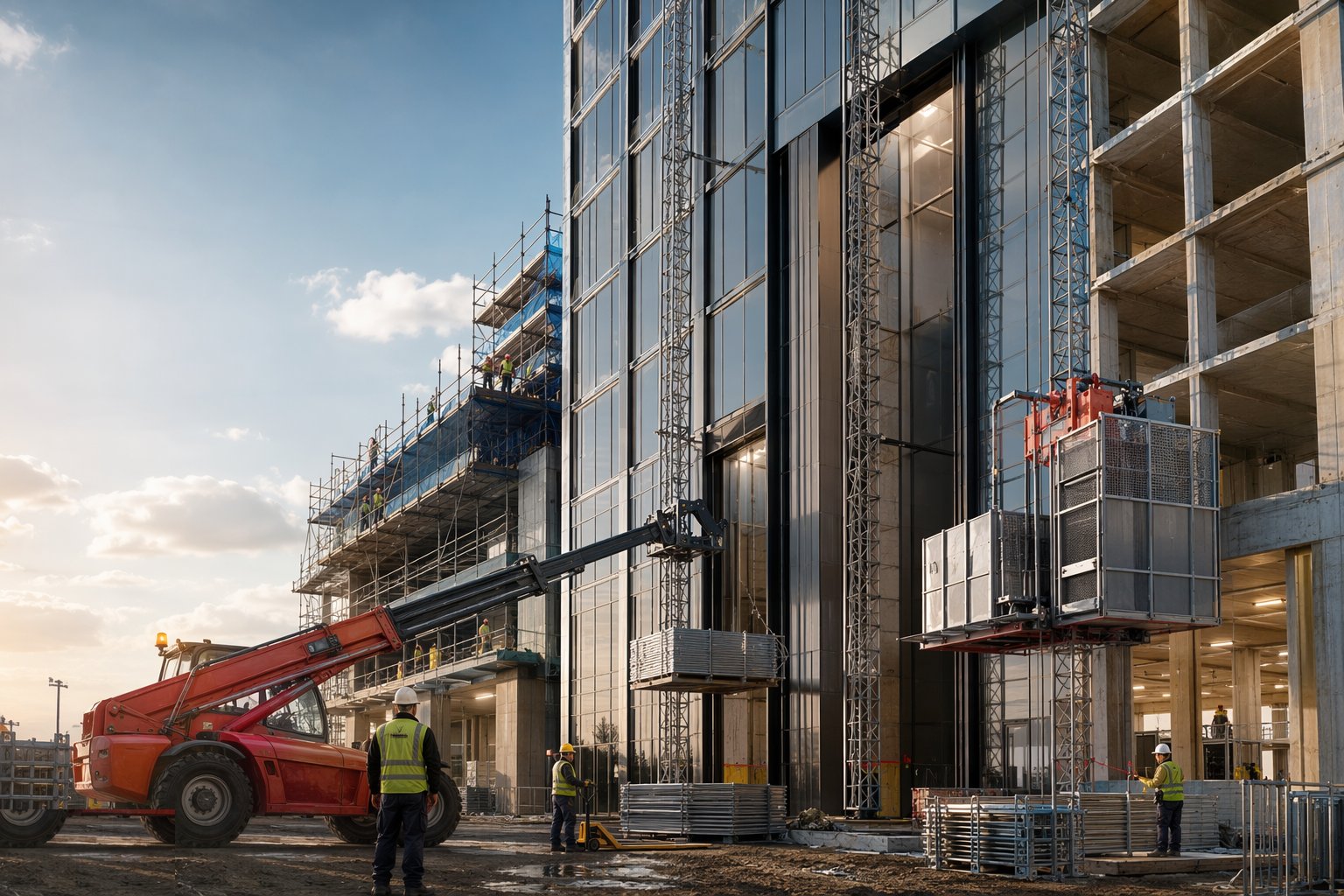
The endgame is planned early: permanent lifts commissioned for construction use under a lift-use agreement before the hoists come down, so the building is never without vertical transport. Hoist removal is a crane operation with its own lift plan; mast tie points and loading-bay pockets are made good in the façade; and the last weeks of the programme run on the building's own lifts with protection, key control and an operator regime.
Plant and equipment
- Twin-cage and single-cage rack-and-pinion passenger/goods hoists
- Goods-only hoists and material platforms
- Mast climbing work platforms, single and twin mast
- Telehandlers with fork, bucket and jib attachments; site forklifts
- Retractable loading bays and landing gates
- Hoist base foundations, mast ties and landing-level access ramps
- Pallet trucks, stillages, brick cages and board trolleys for distribution
- Booking/turnstile systems and load-weighing devices on common-user hoists
Quality control checks
- Thorough examination certificates for hoists, MCWPs and lifting accessories
- Mast tie installation torqued, marked and inspected at every extension
- Landing gates and interlocks tested at every level before service and weekly
- Rated loads displayed and observed — kilograms and persons both stated
- Loading bay SWL markings, gates and inspection records per storey
- Pre-use daily checks and weekly inspection logs maintained and audited
- Vertical logistics capacity re-checked against the programme at each phase
Safety considerations
- Landing gates interlocked — an open gate with no cage is an open shaft
- Overloading cages with mixed people and materials — the load plate governs both
- MCWP ties and travel obstructions checked before every climb
- Nobody on a loading bay during a crane pick; bays retracted and secured when idle
- Telehandler pedestrian segregation on the ground run to the hoist base
- Wind limits for MCWP decks and long loads; platforms parked down out of hours
- Emergency lowering procedures briefed — a cage stopped mid-mast is a rescue, not a wait
Common defects
- Hoist queuing at shift peaks because the booking system died in week two
- Mast ties skipped or spaced beyond the manual as the frame climbed fast
- Landing gates propped open for convenience — the single worst habit on a tower
- Loading bays used as storage, overloading the cantilever design
- MCWP decks point-loaded with pallets well beyond the platform rating
- Materials parked on storeys faster than trades install them — floor loading and fire load
- Hoists struck before permanent lifts are truly construction-ready — the site feeds by stair
Best suited for
- Residential and office towers from level 4–5 upwards through fit-out
- Envelope programmes where MCWPs beat scaffold on access time and cost
- Common-user sites where one logistics plan must serve twenty subcontractors
- Refurbishment and recladding where hoists and mast climbers avoid full scaffold
- Any project where the finishing programme is hostage to vertical feed rate
How long does Hoists, Mast Climbers and Material Handling take?
Typical duration: Hoist install and commission: 3–5 days per unit. Standing duration: 12–18 months on a tower, from frame height to permanent lift handover. MCWPs: per elevation programme, typically weeks per face. Loading bays: a day per storey to install, standing with the fit-out..
Related processes
- Horizontal Formwork and Falsework
- Propping, Façade Retention and Temporary Support
- Excavation Support and Trench Shoring
- Craneage and Lifting Operations
- Construction Plant and Equipment
- Temporary Works — Design, Control and the TWC
- Scaffolding and Access Systems
- Vertical Formwork — Wall, Column, Climbing and Jump Form
- Temporary Works & Plant sector guide
- Buildings group