Tunnels & Underground
Shafts, TBMs, sprayed concrete and fit-out — building a road where the ground already is.
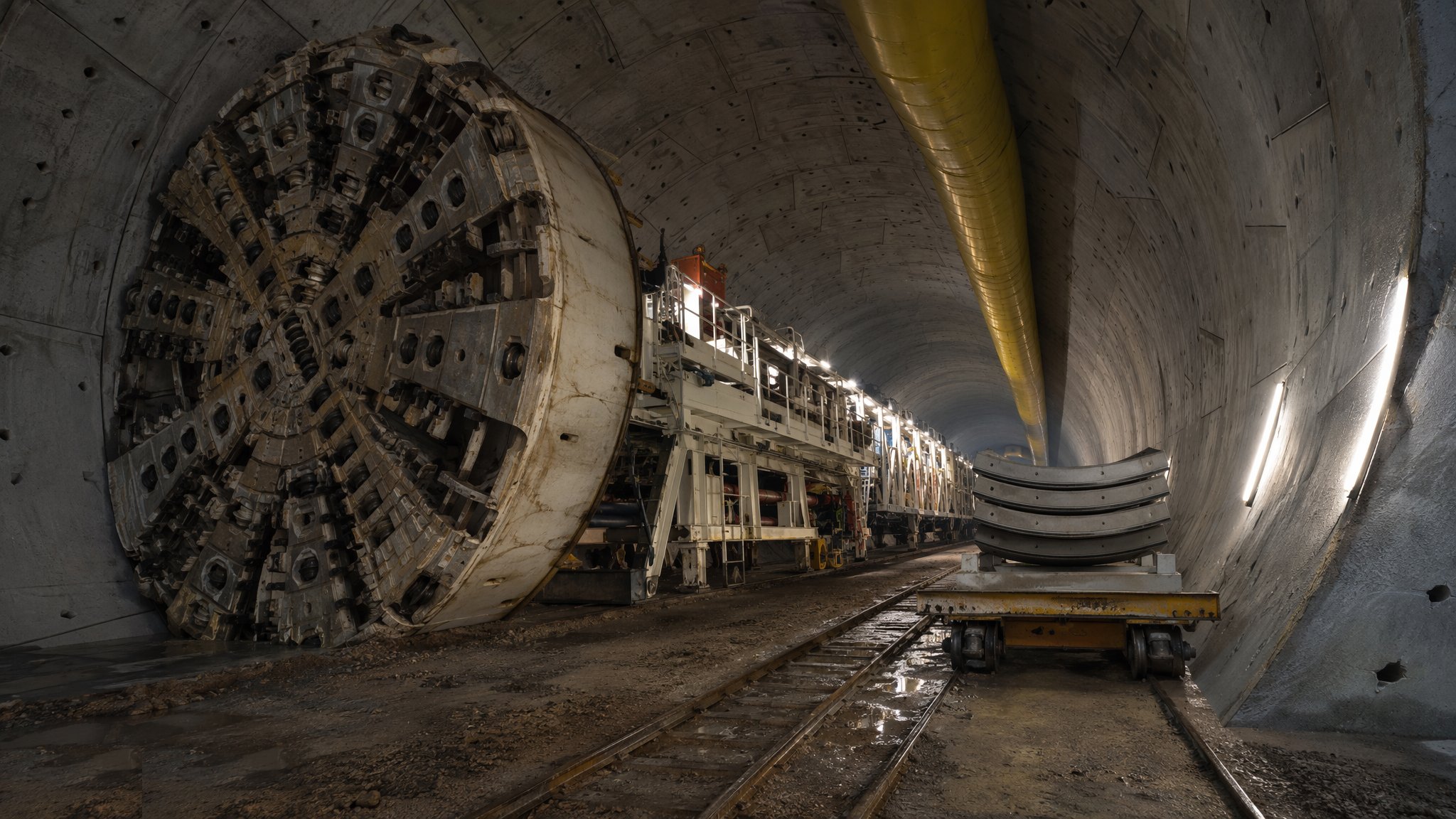
Tunnelling is construction in three dimensions of hostility: the ground is the formwork, the water wants in, and the only way out is the way you came. Shafts and portals establish the front door; then the drive itself — by tunnel boring machine or by drill-and-blast and sprayed concrete — and finally the fit-out that turns a hole in the ground into an asset.
The four guides in this sector cover the underground works. The surface corridor works are shared with the roads sector and link through to their canonical pages there.
What does Tunnels & Underground cover?
Process guides in Tunnels & Underground
- Shafts & Portals — The deep excavations that let tunnelling begin — launch and reception shafts, and the portal structures where the tunnel meets daylight.
- TBM Tunnelling & Segmental Lining — Mechanised tunnelling: the machine, the muck, and the gasketed precast rings that become the finished tunnel.
- SCL & Drill-and-Blast Tunnelling — Conventional tunnelling where machines do not fit — sprayed concrete linings in soft ground, and the drill–charge–fire–muck cycle in rock.
- Tunnel Fit-out — Drainage, Ventilation & M&E — Turning a bare bore into a working asset — drainage, ventilation, fire life safety, power, controls and the handback that proves it all works together.
Shared methods used in Tunnels & Underground
- Corridor Access & Enabling Works
- Survey Control & Ground Investigation
- Bulk Earthworks — Cuttings & Embankments
- Drainage & Utility Corridors
- Testing, Commissioning & Asset Handover
Part of the Transport Infrastructure group.