Telecommunications
Masts, fibre routes and exchanges — light structures, heavy logistics.
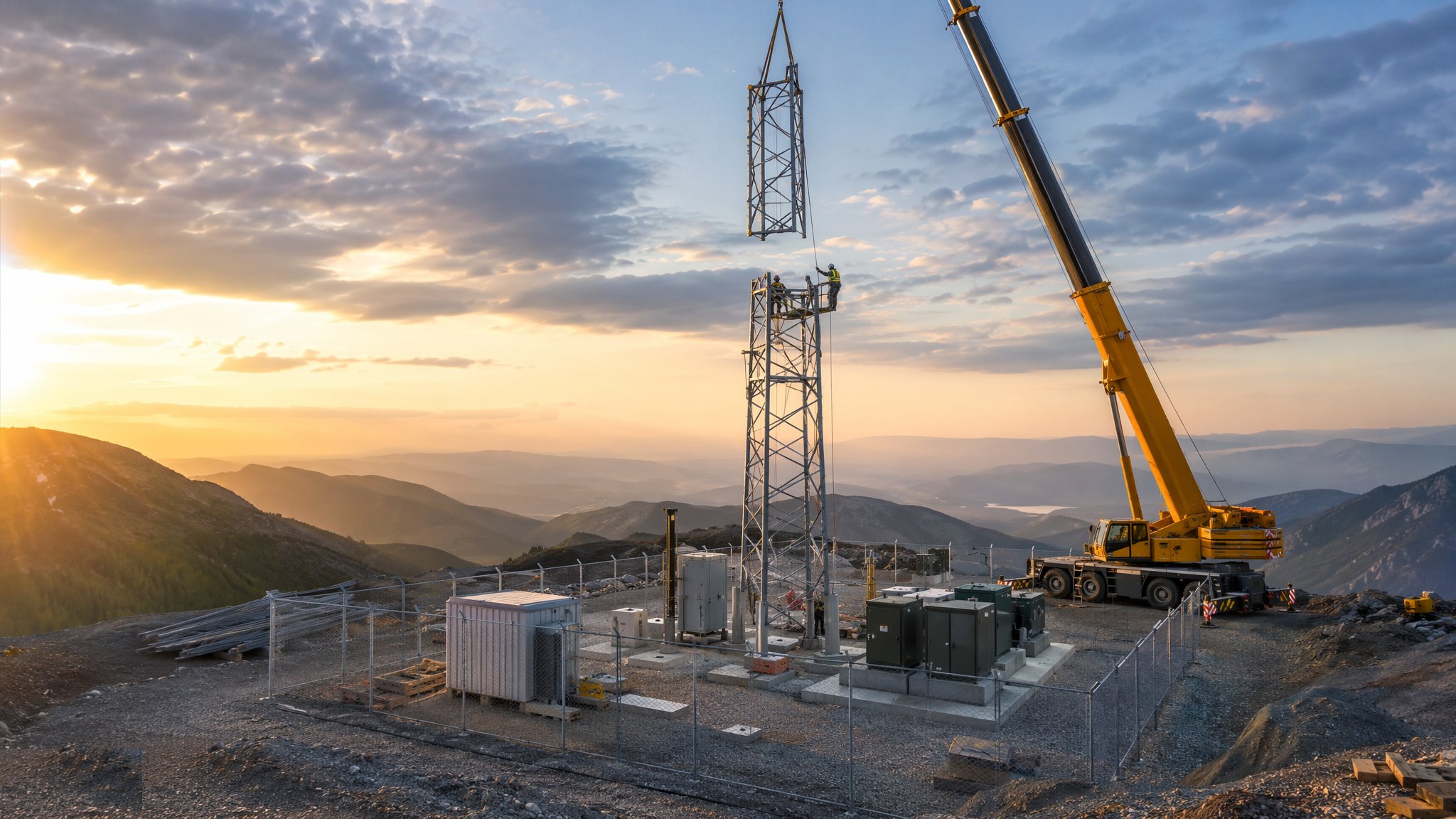
Telecoms construction is thousands of small sites rather than one big one. Individually the work is modest — a mast foundation here, a duct crossing there, an equipment room fit-out — and the civils involved are the shared methods linked below. As a programme, though, it is a logistics exercise in permits, traffic management, wayleaves and repetition, with the same detail built correctly a thousand times over.
The three guides in this sector cover telecom towers and masts — foundations and steelwork on hilltops, rooftops and verges; fibre network installation, ducted and blown through live streets; and exchanges and equipment rooms, fitted out to exacting power, cooling and security standards. The corridor and streetworks methods upstream link through to their canonical guides.
What does Telecommunications cover?
Process guides in Telecommunications
- Telecom Towers, Masts & Rooftop Sites — The steel in the air — greenfield lattice towers and monopoles, rooftop stub masts and ballasted frames — founded, erected and dressed with antennas so the network has somewhere to hang its radios.
- Fibre Network Installation — Ducts in the ground, chambers at the corners and hair-thin glass blown between them — the buried network that carries everything, built in live streets and tested to the decibel.
- Telecom Exchanges & Equipment Rooms — The building services side of the network — racks, DC power plants and battery strings, precision cooling and clean-agent fire suppression — fitted out inside buildings that have to stay live while you work on them.
Shared methods used in Telecommunications
- Corridor Access & Enabling Works
- Survey Control & Ground Investigation
- Drainage & Utility Corridors
- Shallow Foundations
- Steel Frame Construction
- MEP First Fix
- MEP Second Fix & Commissioning
- Testing, Commissioning & Asset Handover
Part of the Utilities & Energy group.