Cultural & Religious
Museums, theatres and places of worship — one-off architecture with zero room for error.
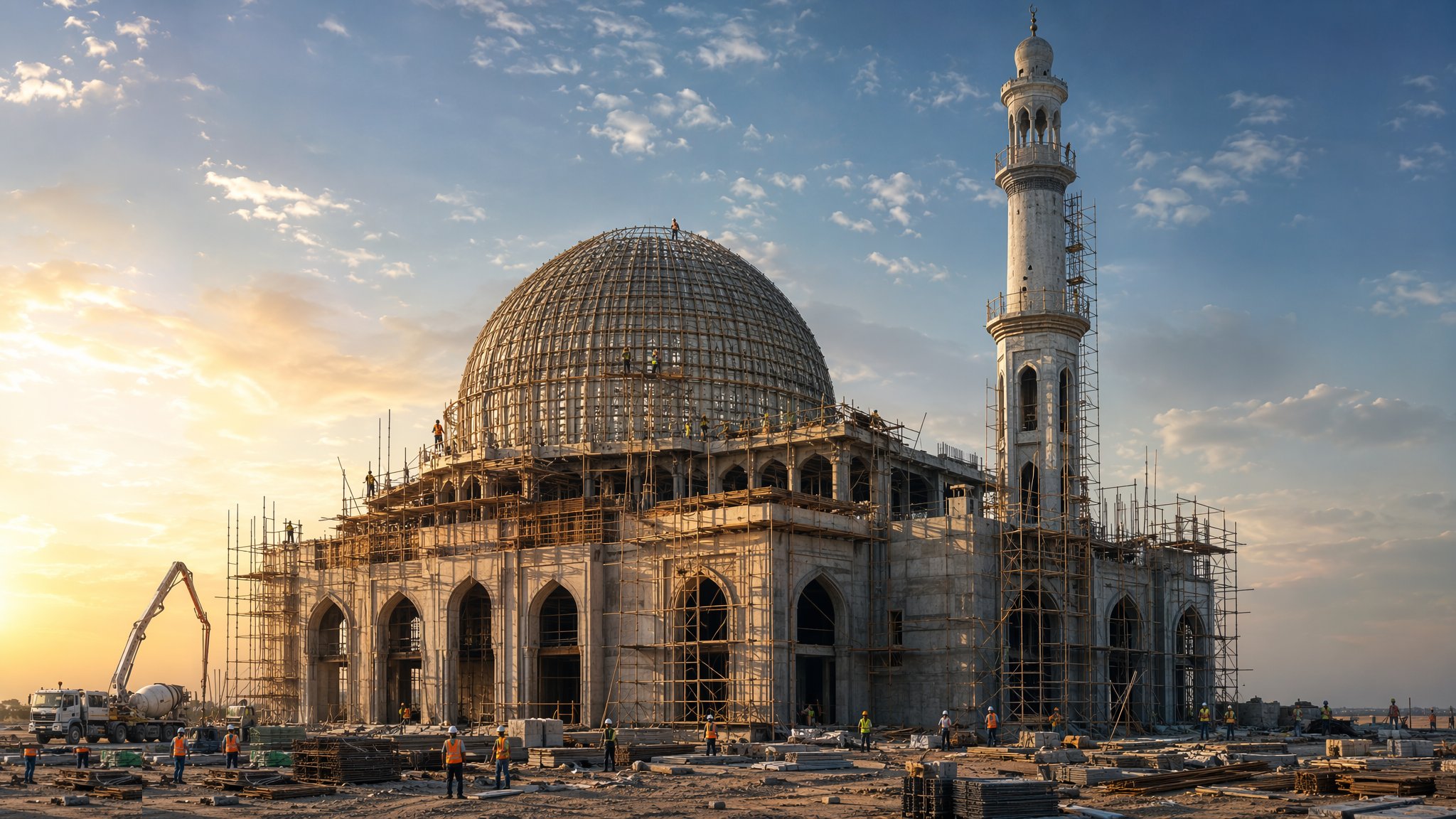
Cultural and religious buildings are the bespoke end of the industry. The structure and envelope underneath are the familiar shared methods, linked below — but nothing above them is standard: complex geometry, crafted finishes, acoustic and environmental demands, and clients for whom the building itself is the exhibit. Every junction is a design event, and the tolerance for a visible defect is nil.
The three guides in this sector take the three recurring types in turn: places of worship, where tradition dictates form and the congregation is watching; museums and galleries, where environmental control protects collections worth more than the building; and theatres and performance spaces, where acoustics, sightlines and stage engineering make the room itself an instrument.
What does Cultural & Religious cover?
Process guides in Cultural & Religious
- Places of Worship Construction — Mosques, churches, mandirs and gurdwaras — buildings where orientation, ritual and symbolism shape the structure as much as spans and services, and where the congregation is often the client, the funder and the opening-day workforce.
- Museums & Galleries Construction — Gallery construction is conservation engineering — airtight, climate-stable boxes with heavy floors and big doors, built so the collection never finds out the weather changed.
- Theatres & Performance Space Construction — Auditoria are acoustic instruments with buildings wrapped around them — box-in-box isolation, fly towers, raked seating and stage engineering, where millimetres and decibels both decide success.
Shared methods used in Cultural & Religious
- Site Access & Enabling Works
- Earthworks & Excavation
- Piling & Deep Foundations
- Concrete Frame Construction
- Steel Frame Construction
- Roofing
- Façade & Cladding
- Windows, Doors & Glazing
- MEP First Fix
- Internal Finishes
- Testing, Handover & Snagging
Part of the Buildings group.