Water Infrastructure
Reservoirs, treatment works and trunk mains — clean water, heavy concrete.
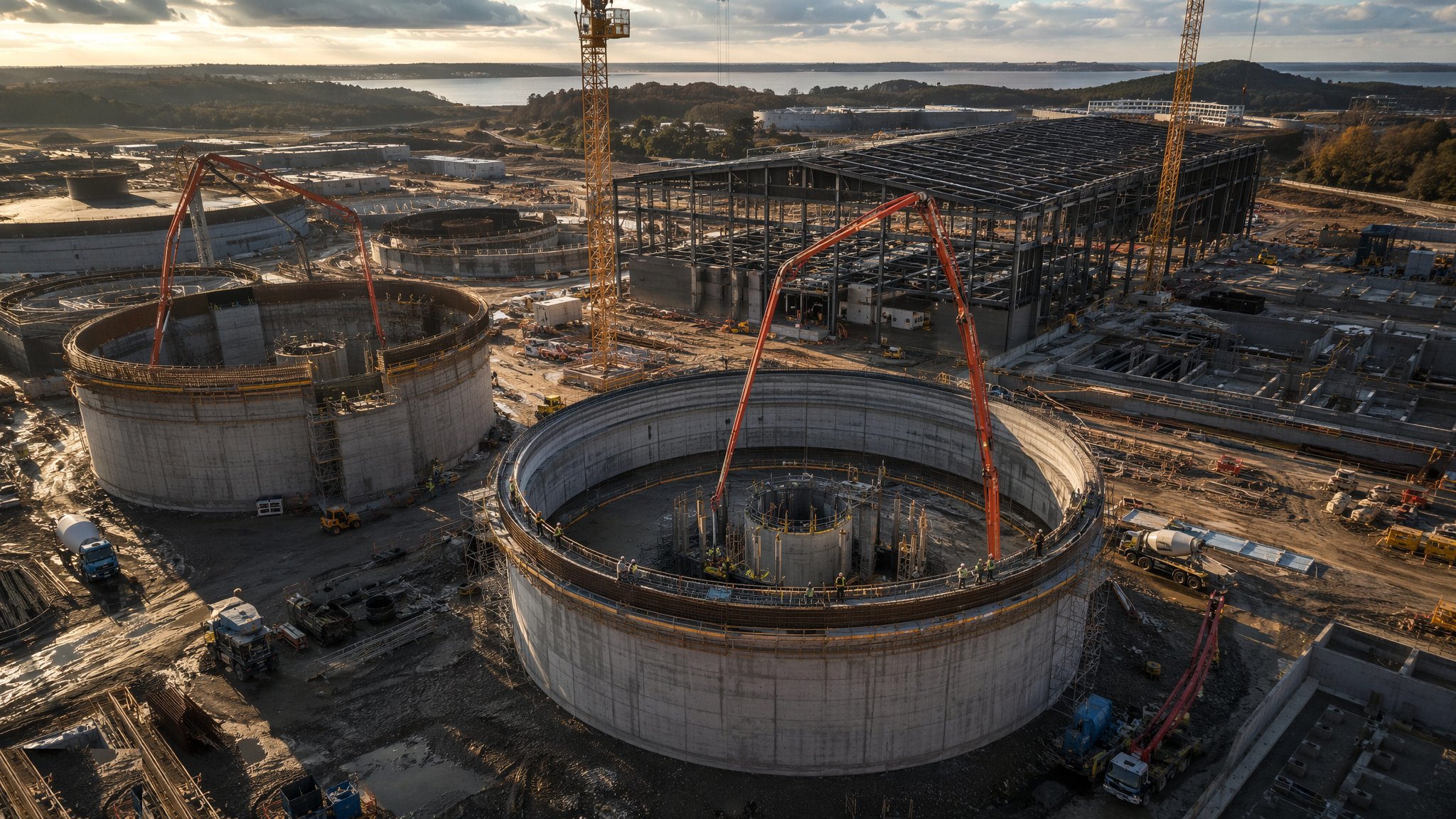
Water infrastructure is concrete and pipework held to drinking-water standards. The enabling works, ground investigation, earthworks and drainage are the shared corridor methods, linked below — the sector starts where the ordinary civils stop. Treatment works are process plants wearing a civil engineer's coat: tanks, filters and chemical plant that must be watertight, cleanable and commissionable to standards most sectors never meet.
The four guides in this sector follow the water: treatment works construction, pipelines and trunk mains laid through live cities without turning off the tap, service reservoirs and storage tanks that must not leak in either direction, and pumping stations. Testing and disinfection run through all of it — you are building something people will drink from.
What does Water Infrastructure cover?
Process guides in Water Infrastructure
- Water Treatment Works Construction — Concrete boxes that must hold water and clean it — water-retaining tanks to BS 8007 and EN 1992-3, filters and clarifiers with their underdrains and nozzles, process pipework and valves threaded between them, washwater recovery, and a tightness test that decides whether the tank exists at all.
- Water Pipelines & Trunk Mains — Long kilometres of buried pressure main — open-cut laying with bedding and surround, thrust boring and directional drilling under the obstacles, ductile iron, PE, steel and concrete pipe, thrust blocks at every bend, then pressure test, swab, chlorinate and connect to a live network that cannot go without water.
- Service Reservoirs & Water Towers — Treated water stored against the day's demand — circular prestressed and rectangular reinforced concrete tanks holding millions of litres, roofs in flat slab, membrane or dome, valve houses and instrumentation at the rim, then cleaning, sterilisation and sampling before the water company lets a drop near the network.
- Water Pumping Stations — Civil engineering built around machines — wet wells and dry wells as the concrete, pumps lifted, set and laser-aligned on their plinths, surge vessels taming the pressure waves, the full M&E fit-out with standby power, and witnessed performance tests proving the duty before the network trusts it.
Shared methods used in Water Infrastructure
- Corridor Access & Enabling Works
- Survey Control & Ground Investigation
- Bulk Earthworks — Cuttings & Embankments
- Drainage & Utility Corridors
- Dewatering & Groundwater Control
- Piling & Deep Foundations
- Concrete Frame Construction
- Shafts & Portals
- Testing, Commissioning & Asset Handover
Part of the Utilities & Energy group.