Dewatering & Groundwater Control
Keeping the dig dry — pumps, wellpoints and cut-off walls against an enemy that never sleeps.
Last updated 2026-07-28 by the BuildPedia Editorial Team.
What is Dewatering & Groundwater Control?
Water is the most persistent adversary in ground engineering. Dig below the water table in sandy ground and the excavation will fill, the sides will run, and the formation will turn to soup within hours. Dewatering is the set of techniques that lower or exclude groundwater so the works can proceed in stable, workable conditions.
The method is chosen from the ground investigation: soil permeability, the depth to water, and how far the drawdown can be allowed to spread. Pumping water out of the ground also pulls fines with it and can settle neighbouring ground — so dewatering is designed, consented and monitored, not just a pump thrown in a hole. Discharge consent, silt control and recharge all come with legal obligations. In coastal UAE the water table sits anywhere from near the surface to about 3 m down, the groundwater is often saline, and sabkha sands make boiling and base instability a live risk in any pumped open excavation.
When and why is Dewatering & Groundwater Control used?
Dewatering is planned before excavation starts whenever the formation will be cut below the standing water table, and it must be running before the dig reaches that level — pumping after the water has entered the excavation is fighting from behind. It matters because water in an excavation destroys formation bearing capacity, collapses trench sides, floats unfinished structures and makes concrete placement impossible. For a single basement dig on a house, the design usually resolves to a small wellpoint ring or carefully managed sumps with silt control — and the discharge consent and the keep-it-running-until-the-structure-is-heavy-enough rules apply just as they do on a podium box.
Types of Dewatering & Groundwater Control
Sump pumping
The simplest method: dig sumps below formation, pump out as water collects. Appropriate for shallow digs in clean coarse soils such as gravels, but in fine sands it drags fines out of the ground, causing running sand and boiling, undermining the formation and potentially triggering instability. A maintenance tool more than a design solution.
Wellpoint systems
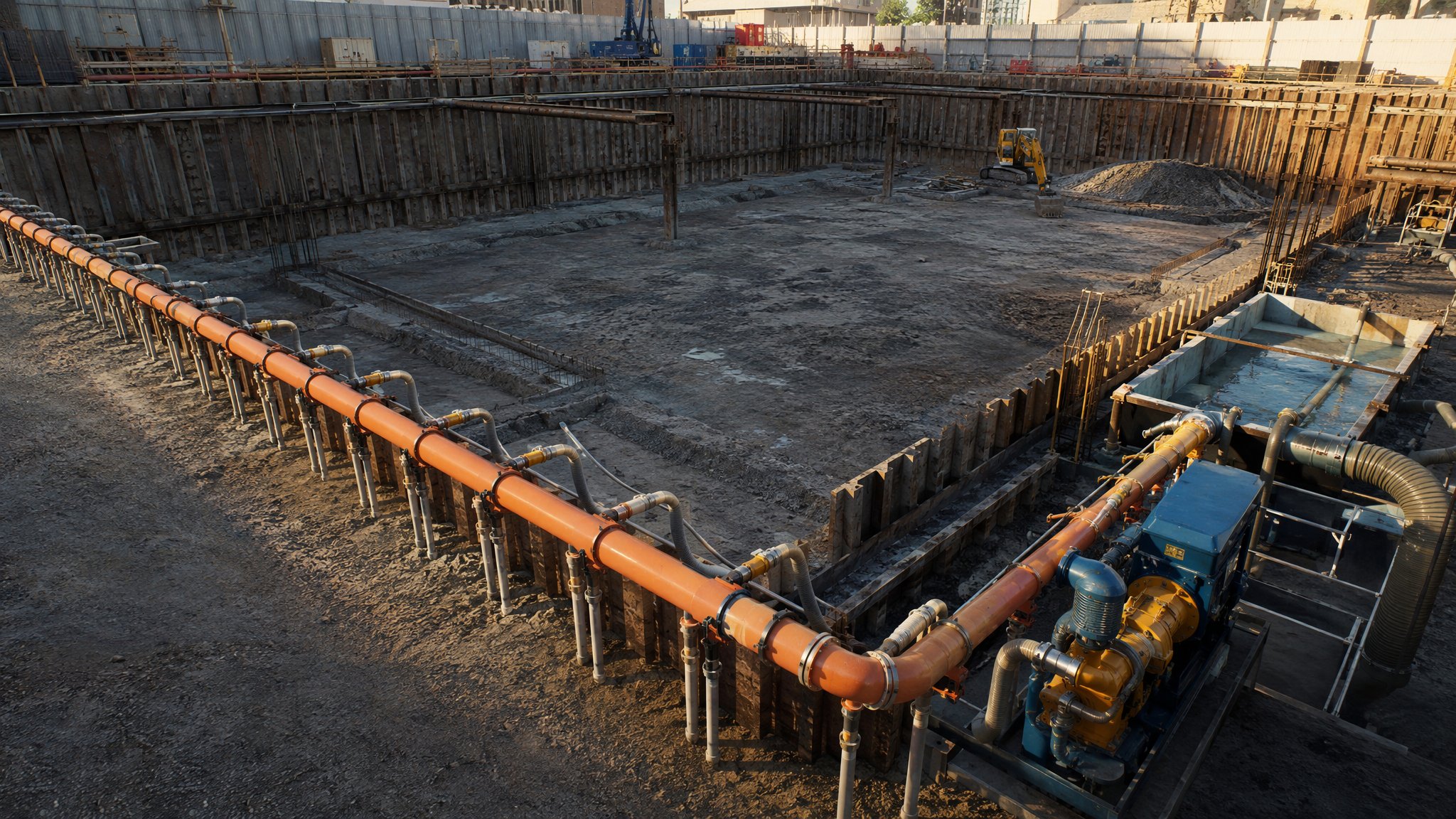
A ring of small-diameter wellpoints jetted into the ground around the excavation, connected to a header pipe and a vacuum pump. A single stage achieves a maximum drawdown of about 6 m in sands — only around 4 m in silty soils, one of the most commonly misstated figures in dewatering (CIRIA C750) — so deeper digs use multiple stages on berms or switch to deep wells. The standard choice for trenches and shallow basements in sands and gravels.
Deep wells and ejectors
Bored wells with submersible pumps for deeper drawdown or higher flows, and ejector systems where soils are less permeable or depths exceed suction limits. Expensive per point but effective for basements and deep excavations, often combined with a cut-off to reduce flows.
Cut-off and recharge
Sheet piles, secant walls or grout curtains physically exclude water, slashing pumping volumes and protecting neighbours from drawdown settlement. Where drawdown outside the site is a risk, recharge wells put clean water back into the ground beyond the cut-off.
Dewatering & Groundwater Control: step by step
Step 1: Assess groundwater from the GI
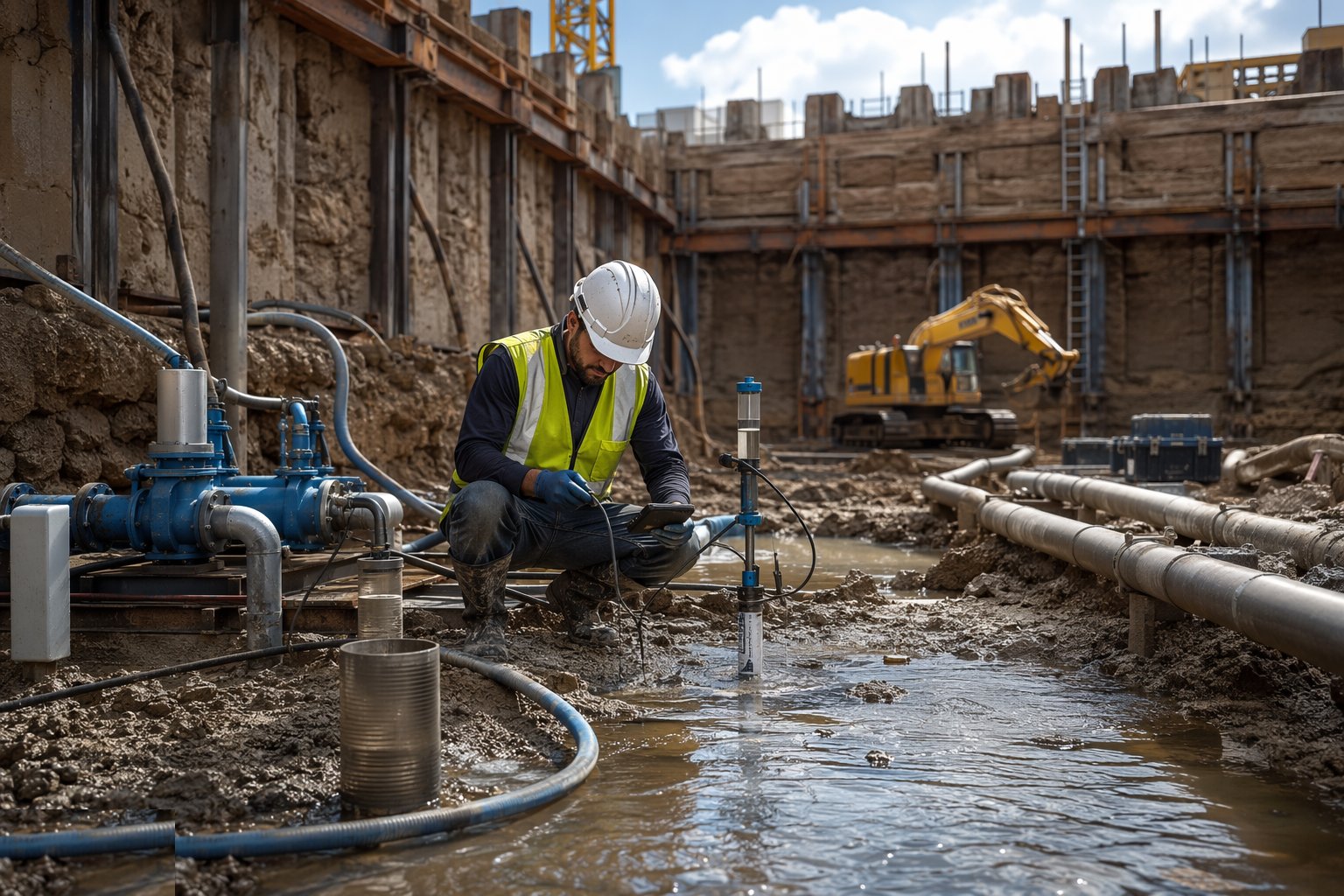
Extract standing water levels, permeability results and seasonal variation from the ground investigation. Decide the target drawdown — typically at least 0.5–1 m below formation — and calculate inflows. The choice between pumping, exclusion or both follows soil permeability and required drawdown per CIRIA C750, the industry reference for groundwater control, not habit — and this is where recharge obligations are identified.
Step 2: Obtain discharge consents
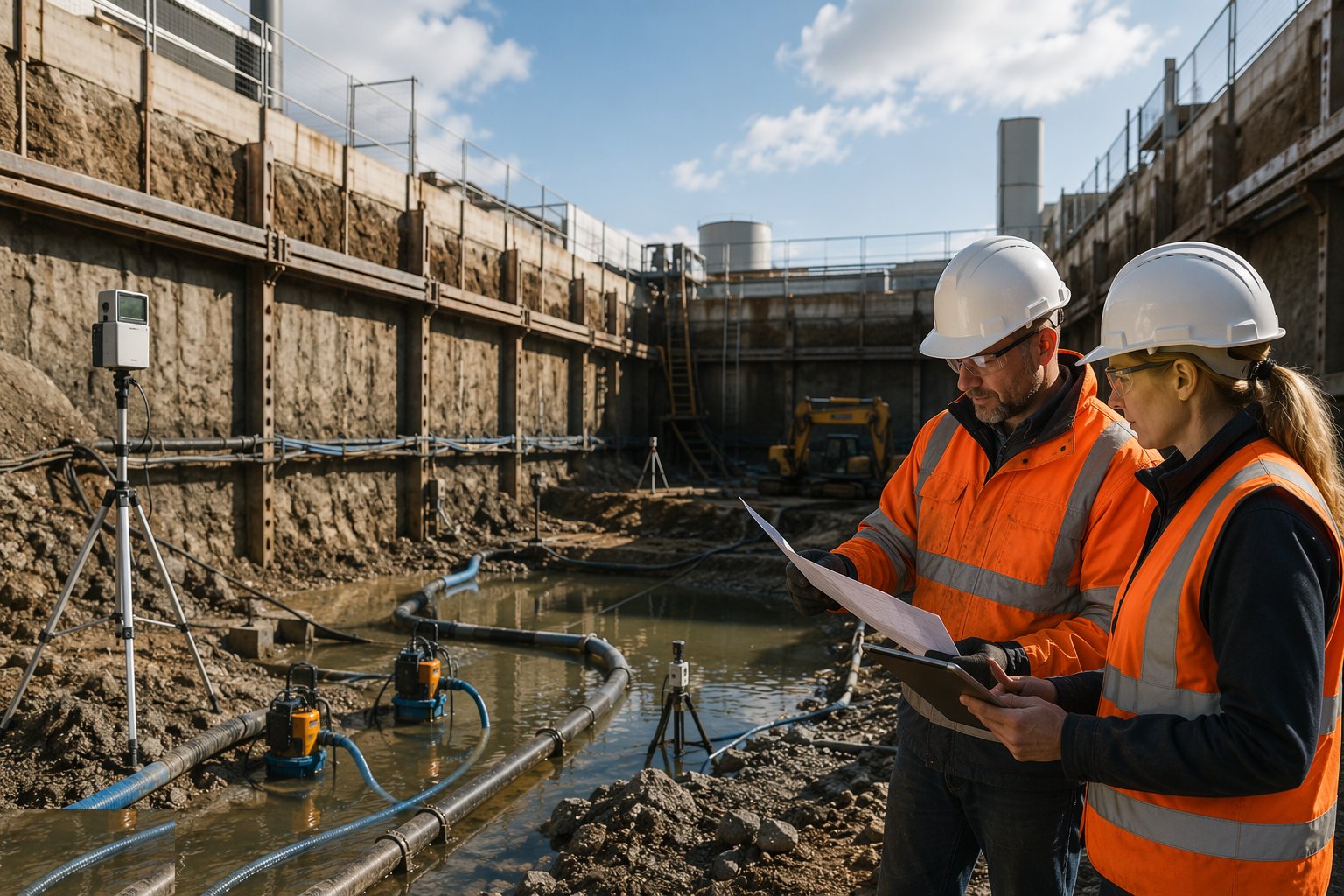
Pumped water needs somewhere legal to go: a discharge consent or permit for a watercourse, or an agreement with the sewer undertaker. Settlement tanks, silt busters or filtration are sized into the discharge train. Discharging silty water to a watercourse is an offence, consent or not. In the UAE, discharge of pumped groundwater — to the storm drainage network, sewer or sea — likewise requires authority approval (DM, or RTA for the drainage network) with water-quality and volume controls; groundwater is never discharged freely.
Step 3: Install the system before the dig reaches water
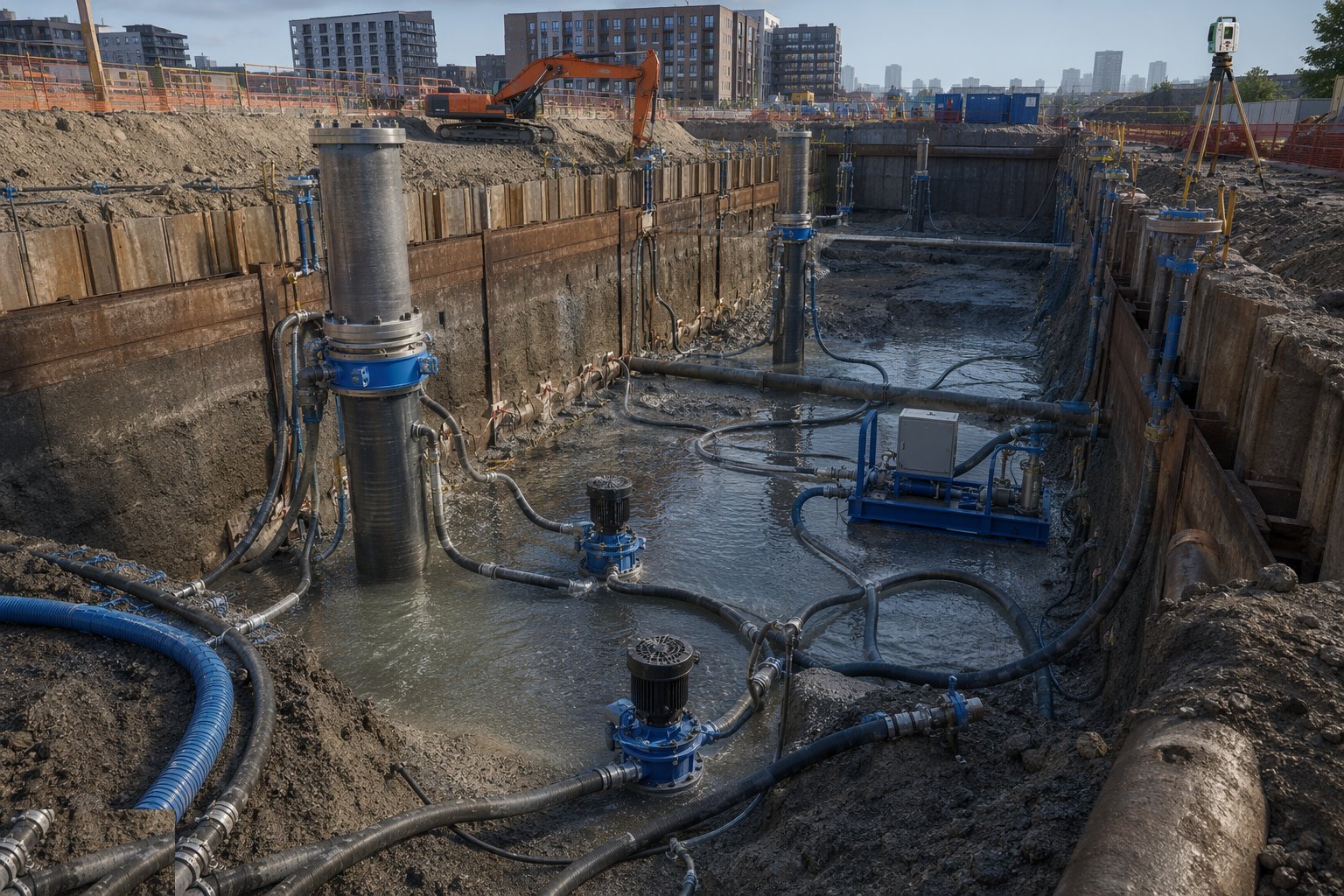
Jet in wellpoints and connect the header, or bore deep wells and set pumps, with the system commissioned and running before excavation approaches the water table. Verify drawdown in observation wells — the pump running is not proof the water level is down. Spare pumps are on site from day one.
Step 4: Excavate inside the controlled zone
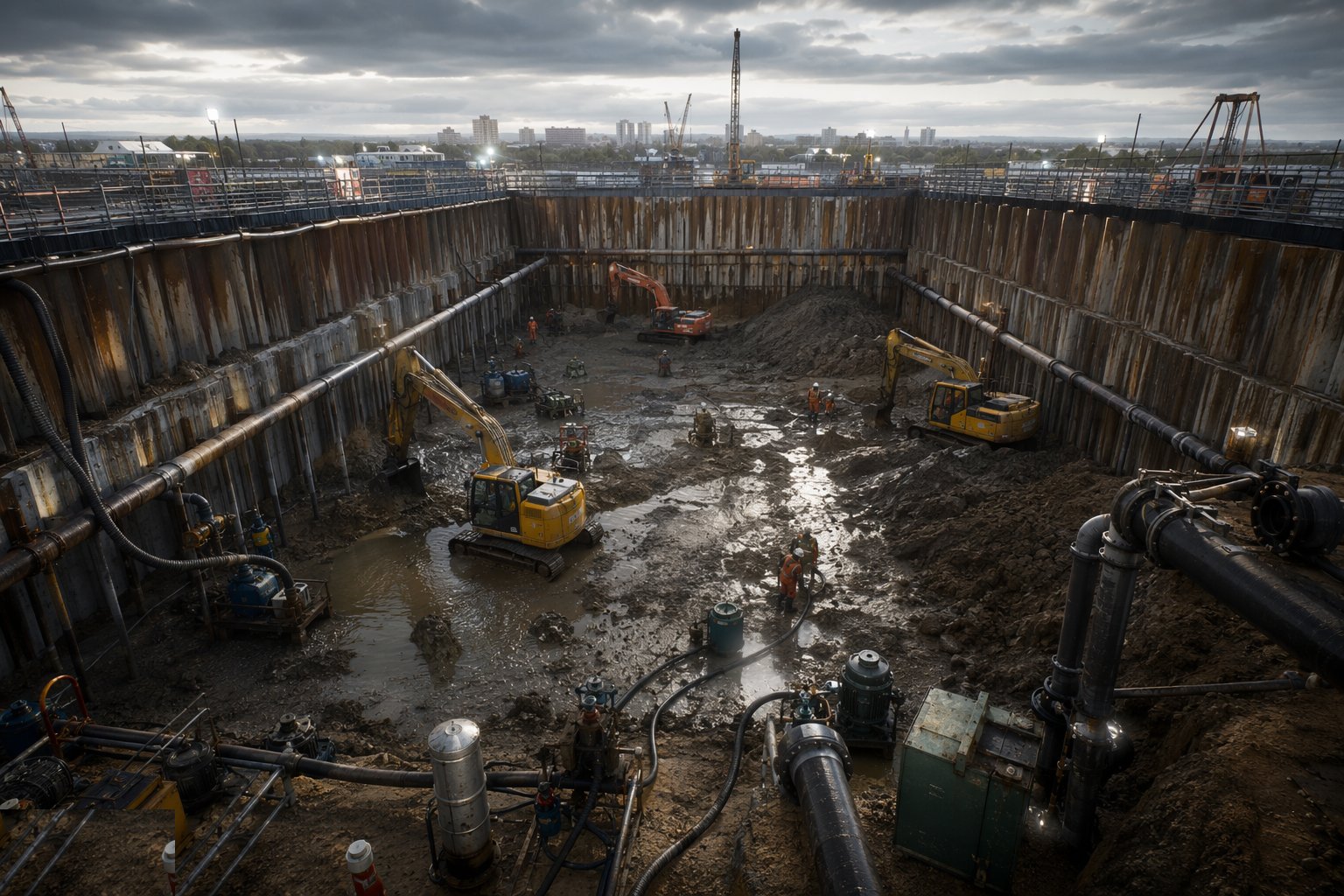
Dig within the drawdown curve, keeping formation at least half a metre above the depressed water table. Watch for boiling or piping at the formation — sand erupting upward means the drawdown is insufficient or the cut-off is leaking, and the dig stops until it is fixed. Trim the final formation quickly and blind it to lock the surface.
Step 5: Monitor levels, flows and settlement
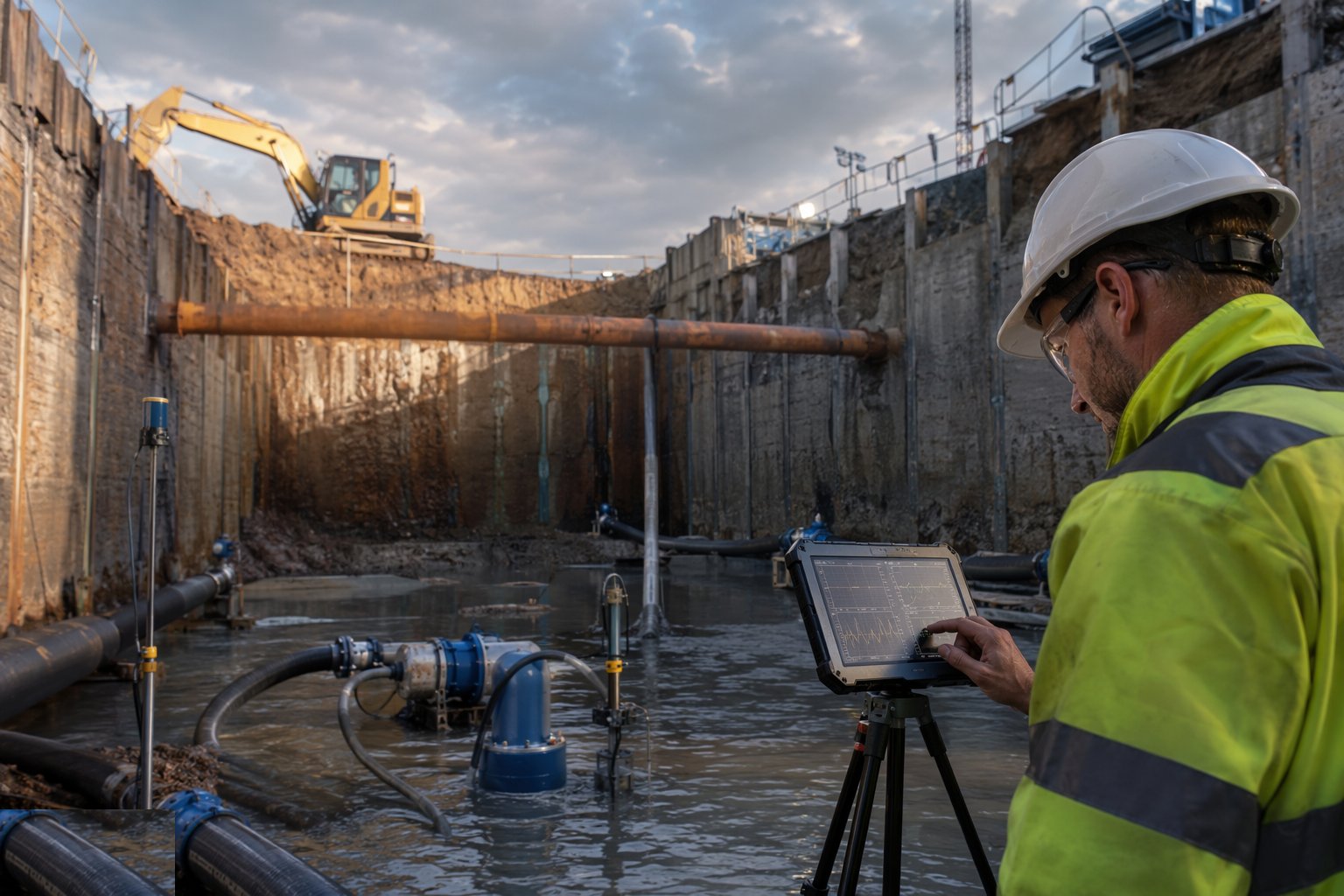
Read observation wells and piezometers daily and log flows; a rising trend means a failing pump or a seasonal rise, and you want to know before the formation knows. Settlement monitoring points on adjacent ground and structures confirm drawdown is not damaging the neighbours. Discharge water quality is sampled as the consent requires.
Step 6: Maintain through the works
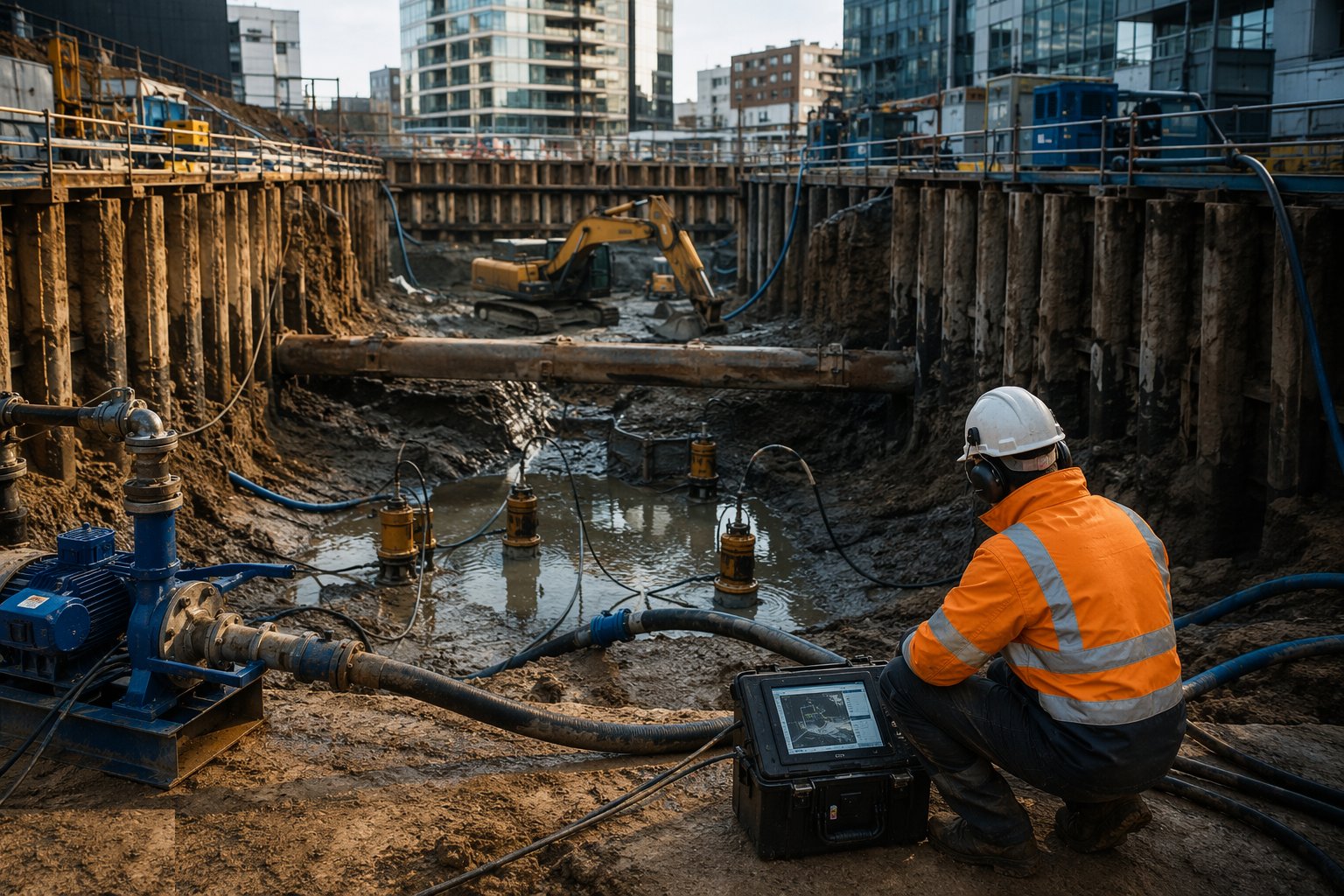
Dewatering runs continuously until the structure is heavy enough to resist flotation or the works are above water — 24/7, including weekends, with alarms on pump failure. A basement slab cast on Friday and a pump stopping on Saturday is a classic origin of cracked, floated slabs. Duty and standby pumps rotate with automatic changeover.
Step 7: Decommission in sequence
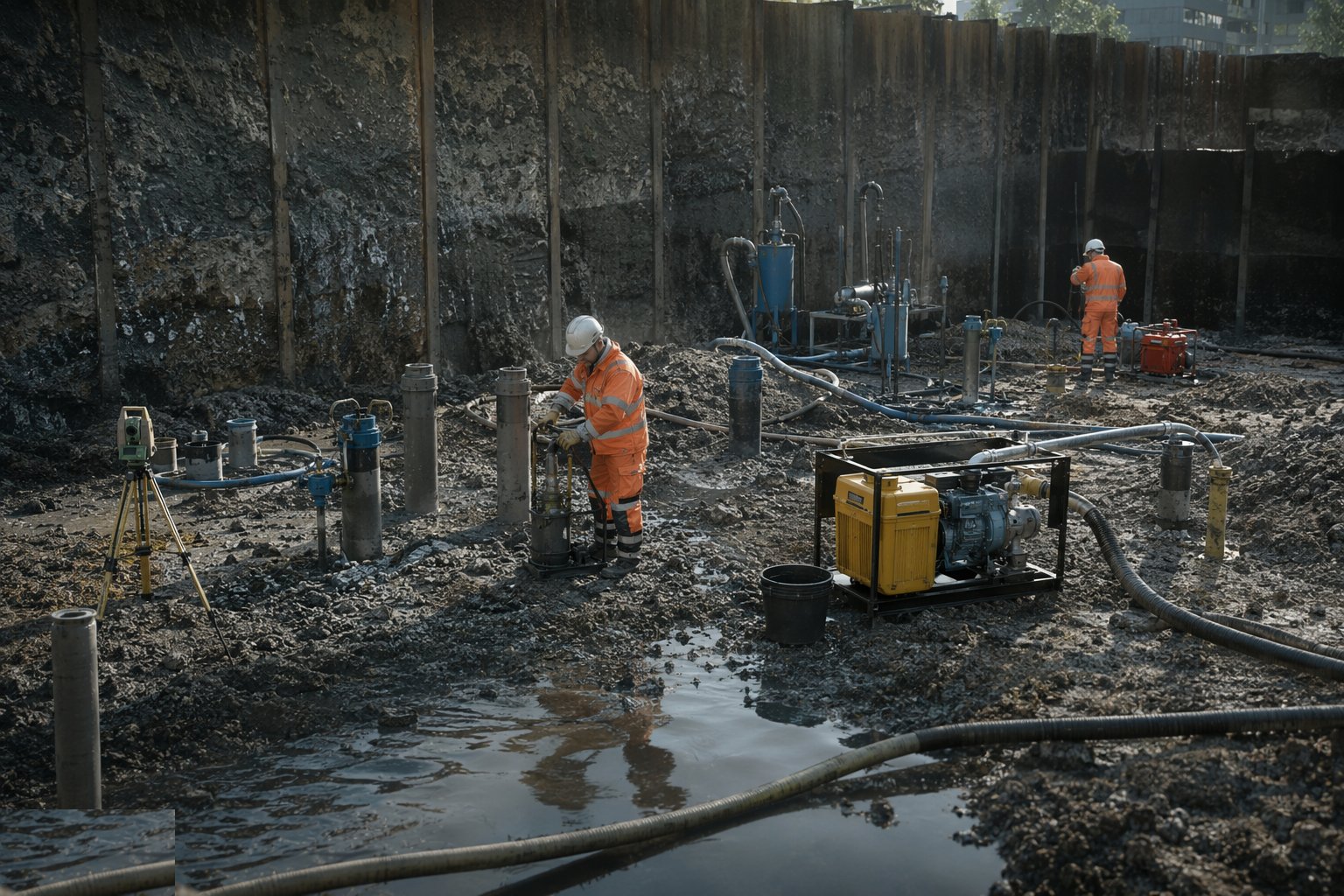
Switch off only when the permanent works can take over: the structure has self-weight against uplift, or backfill is placed and compacted. Wellpoints are pulled, wells are grouted up, and monitoring continues briefly to confirm recovery is benign. Discharge consents are formally closed out.
Plant and equipment
- Wellpoint pumps (vacuum-assisted), header pipe and wellpoints
- Submersible pumps for sumps and deep wells
- Settlement tanks, silt busters and lamella clarifiers
- Drilling or jetting rig for well installation
- Sheet piling rig where a physical cut-off is used
- Observation wells, dip tapes and data loggers
- Standby generator for continuous pumping
Quality control checks
- Drawdown verified in observation wells before excavation reaches water
- Pump running logs and flow records kept daily
- Discharge water quality sampled per consent conditions
- Settlement monitoring at agreed trigger levels with an action plan
- Formation inspected for piping, boiling or softening before blinding
- Wells grouted and abandonment records filed at decommissioning
Safety considerations
- Electricity and water: protected cables, RCDs, competent electricians only
- Excavation stability reassessed with water pressures in mind
- Alarms and 24/7 response for pump failure
- Confined-space controls for work inside deep wells or manholes
- Flotation check before any switch-off — structure weight vs uplift
Common defects
- System installed too late — formation already ruined by inflow
- Sump pumping in sand pulling fines and collapsing trench sides
- Pump failure over a weekend — flooded dig and a floated, cracked slab
- Drawdown settling the neighbour's building — monitoring was omitted
- Silty discharge to a watercourse — enforcement and fines
- Dewatering switched off before the structure could resist uplift
Best suited for
- Basement digs below the water table in sandy ground
- Keeping trench floors workable in wet winters
- Deep excavations in permeable strata where pumping beats cut-off walls on cost
- UAE coastal plots where a high saline water table meets every basement
- Temporary drawdown for pile caps, manholes and lift-pit excavations
How long does Dewatering & Groundwater Control take?
Typical duration: Runs continuously for the duration of below-water works — typically 2–12 weeks on residential basements and drainage..
Related processes
- Site Access & Enabling Works
- Site Clearance & Demolition
- Setting Out & Survey Control
- Earthworks & Excavation
- Shallow Foundations
- Piling & Deep Foundations
- Basement & Substructure
- Waterproofing and Tanking
- Concrete Frame Construction
- Steel Frame Construction
- Masonry & Timber Frame
- Floor Slabs & Screeds
- Roofing
- Façade & Cladding
- Insulation Systems
- Windows, Doors & Glazing
- MEP First Fix
- Internal Finishes
- MEP Second Fix & Commissioning
- External Works & Landscaping
- Testing, Handover & Snagging
- Dewatering & Groundwater Control in Tunnels & Underground
- Sump pumping — method
- Wellpoint systems — method
- Deep wells and ejectors — method