Deep Geothermal Drilling & Wells
Wells one to five kilometres deep drilled to oil-and-gas standards — casing strings, cement, mud logging and well control — the heavy end of the geothermal stream.
Last updated 2026-07-28 by the BuildPedia Editorial Team.
What is Deep Geothermal Drilling & Wells?
Deep geothermal is the point where this stream stops looking like building services and starts looking like the oilfield. The wells are drilled by rotary rigs to depths typically between one and five kilometres, using the same equipment, the same vocabulary and largely the same crews as hydrocarbon drilling: surface, intermediate and production casing strings cemented in place; drilling mud circulating cuttings out and holding the hole stable; mud loggers gas-testing and describing every metre; and a blowout preventer stack on the wellhead whenever the geology demands it. The UK reference project is United Downs in Cornwall — a production well drilled to a measured depth of about 5,275 m, the deepest onshore well in the country, with bottom-hole temperatures above 180 °C, paired with a shallower injection well — built on the radiogenic granite that gives Cornwall its elevated heat flow.
The producing concept is usually a doublet: a production well brings hot water up and a reinjection well puts the cooled water back — both a condition of most environmental permits and the mechanism that keeps the reservoir alive. In sedimentary basins the doublet taps a permeable aquifer directly: Southampton's geothermal well, feeding the city's district energy scheme since the 1980s, draws from the sandstone aquifer beneath it. In crystalline rock the wells target natural fractures and fault zones, and where permeability falls short the reservoir is stimulated — enhanced geothermal systems (EGS) inject water at controlled pressures to open and connect fracture networks between the wells. Stimulation brings the issue that closes down badly run projects: induced seismicity. It is managed with a microseismic monitoring network, a defensible pre-drilling baseline and a traffic-light protocol that throttles or stops injection at agreed magnitude thresholds.
In the UAE, deep geothermal is not an established industry. The heat is there — a geothermal gradient exists everywhere — but multi-kilometre wells compete against some of the cheapest gas and solar electricity in the world, and there is no project track record to point to yet. The relevance for a Gulf engineer is that the drilling itself is home territory: the rigs, service companies, well-control culture and HSE frameworks on this page are exactly the ones the regional oil and gas industry already runs, and the national operators have studied geothermal among their lower-carbon options. Well control is the defining discipline either way: a geothermal well is drilled on the assumption that pressure, gas or steam can be encountered, the BOP is function- and pressure-tested on a written schedule, and everyone on the rig floor holds current well-control certification.
When and why is Deep Geothermal Drilling & Wells used?
Deep drilling follows the resource studies — seismic interpretation, thermal gradient modelling and target depths are fixed before the rig mobilises — and precedes everything on the surface, because until the wells are flow-tested the plant cannot be finally designed. It matters because the wells are most of the capital cost and most of the risk of a deep geothermal scheme: a well that misses the fracture zone, loses circulation irrecoverably or proves cooler than modelled can strand the whole project, and the drilling, cementing and testing records are what the financiers, the plant designers and the regulator will read first. There is no domestic version of a five-kilometre well — the closest a small site gets is the shallow closed-loop borehole of the ground-source pages, which borrows a drilling rig and a grouting discipline but none of the casing strings, the BOP or the well-control culture.
Types of Deep Geothermal Drilling & Wells
Hydrothermal doublet (sedimentary aquifer)
Production and reinjection wells completed in a permeable sandstone or carbonate aquifer carrying naturally hot water — the Southampton model and the standard pattern across the Paris Basin and much of northern Europe. The most predictable deep geothermal there is, provided the aquifer's permeability and chemistry are as mapped; a downhole pump does the lifting.
Fault- and fracture-targeted doublet
Wells deviated to intersect a natural fault or fracture zone in crystalline rock at two depths, circulating along the connected fractures between them — the United Downs concept in Cornish granite. No stimulation by design where natural permeability proves adequate; higher geological risk, higher reward in temperature.
Enhanced geothermal systems (EGS)
Reservoirs engineered in rock that is hot but not permeable enough: staged injection at controlled pressures opens and connects fracture networks between wells until a commercial flow loop exists. The technique with the largest global resource behind it, and the one where induced-seismicity management — baseline monitoring and a live traffic-light protocol — is a licence condition in practice.
Deep Geothermal Drilling & Wells: step by step
Step 1: Build the drilling site and mobilise the rig
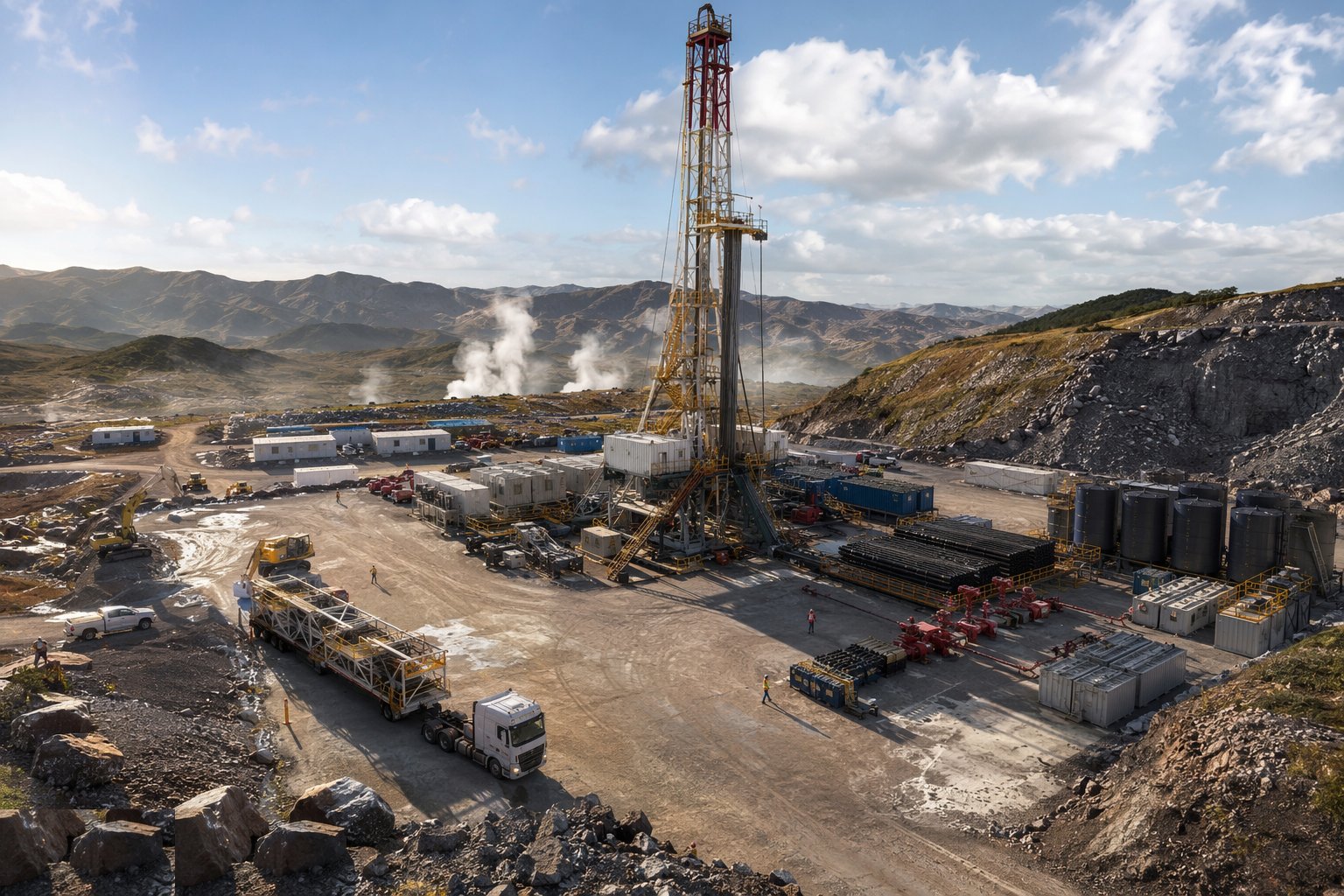
Construct the pad for the heaviest thing it will carry — the rig — with drainage, cellar and conductor set, mud plant area, water supply for mud and cement, and welfare and camp provision for continuous 24-hour working. Complete the permits and consents, and — where stimulation is planned — establish the microseismic monitoring network and record its baseline before any drilling starts, because a baseline recorded after the first event is worthless. Rig-up, function-test the hoisting, rotating and mud systems, and hold the pre-spud safety meeting.
Step 2: Spud and drill the surface sections
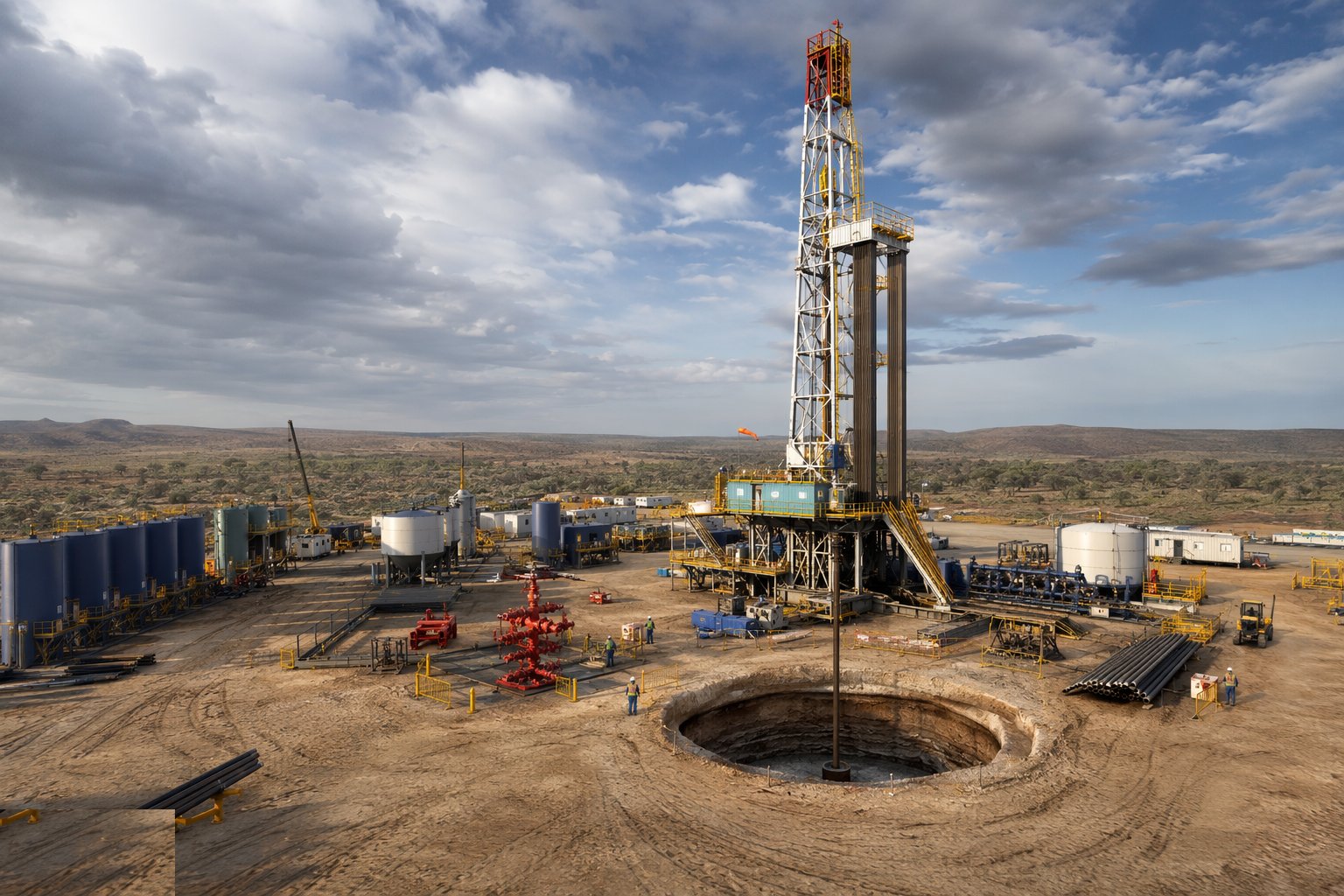
Drill the surface hole with mud programme and bits matched to the shallow formations, run the surface casing, and cement it to surface with returns witnessed — this string anchors the wellhead and the BOP and protects the shallow groundwater, so its cement job is never allowed to be the cheap one. Displace to calculated volumes, wait on cement to the tested strength, and pressure-test the casing and the cement shoe before drilling out.
Step 3: Install and test the BOP stack
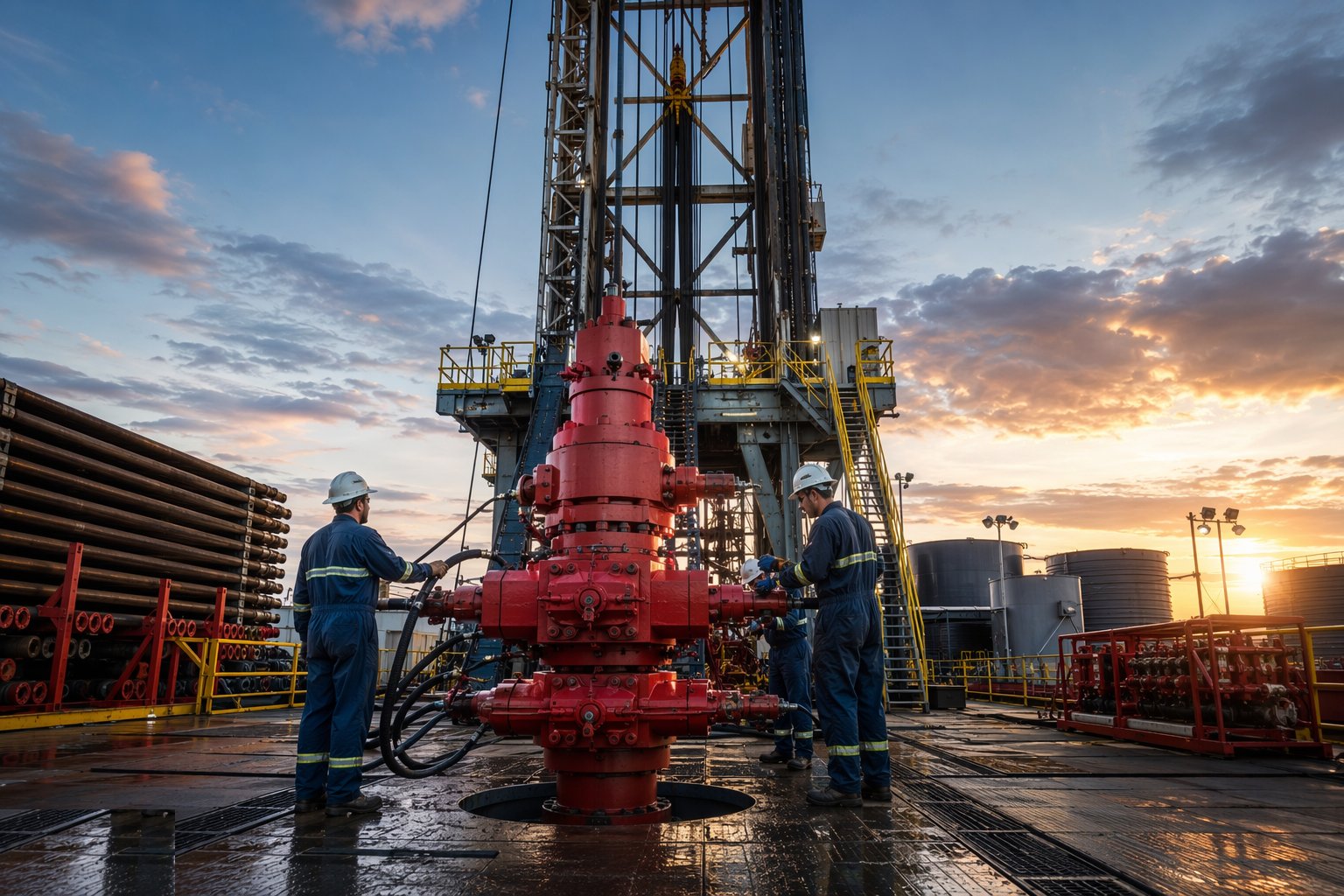
Nipple up the blowout preventer stack sized to the well plan — ram and annular preventers, choke and kill lines, accumulator unit — and function- and pressure-test it on the written schedule before drilling ahead. Run well-control drills with the crew: pit-level monitoring, shut-in procedure, kill methods. The geothermal hole may never flow anything dangerous, but the well is drilled as if it can, because the one time the assumption fails there is no second chance at three kilometres.
Step 4: Drill the intermediate and reservoir sections
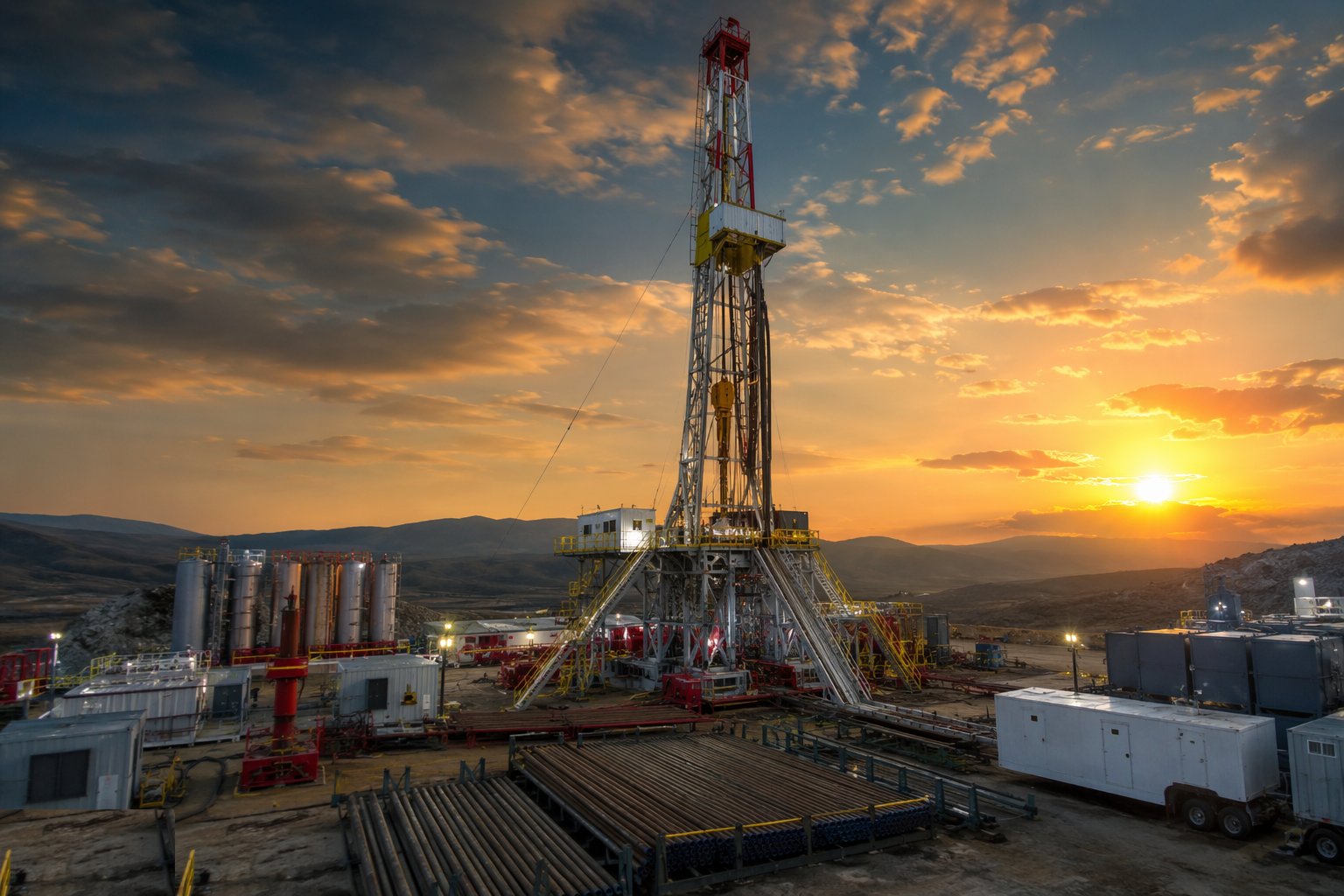
Drill ahead section by section: mud weight and properties managed for stability and lost circulation — fractures that drink mud are the routine deep-geothermal problem — with mud loggers describing cuttings and monitoring gas continuously. Take deviation surveys at defined intervals and steer the well to its target zone; core and run wireline or LWD logs at section depths as the geological programme requires. Every loss zone, every gas show and every survey goes on the daily drilling report.
Step 5: Run and cement the production casing or liner
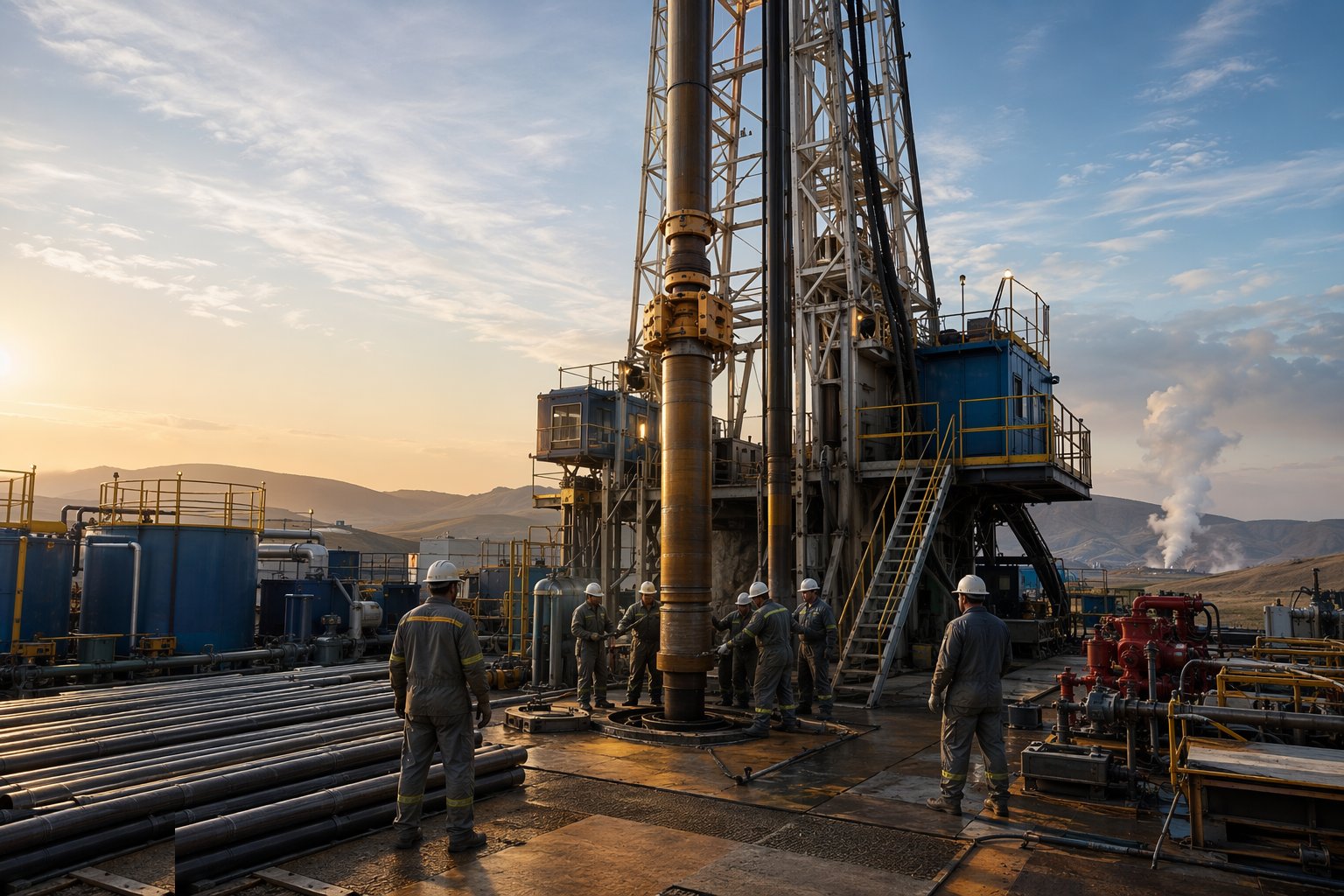
Run the production casing or liner centralised per the programme and cement it for both mechanical integrity and zonal isolation — the annulus must not connect aquifers or let hot water migrate where it was never invited. Displace to calculated volumes with returns witnessed, wait on cement, and run cement evaluation logs where the programme or the regulator calls for them. A channelled or short cement job at this depth is effectively unfixable.
Step 6: Complete the well for production
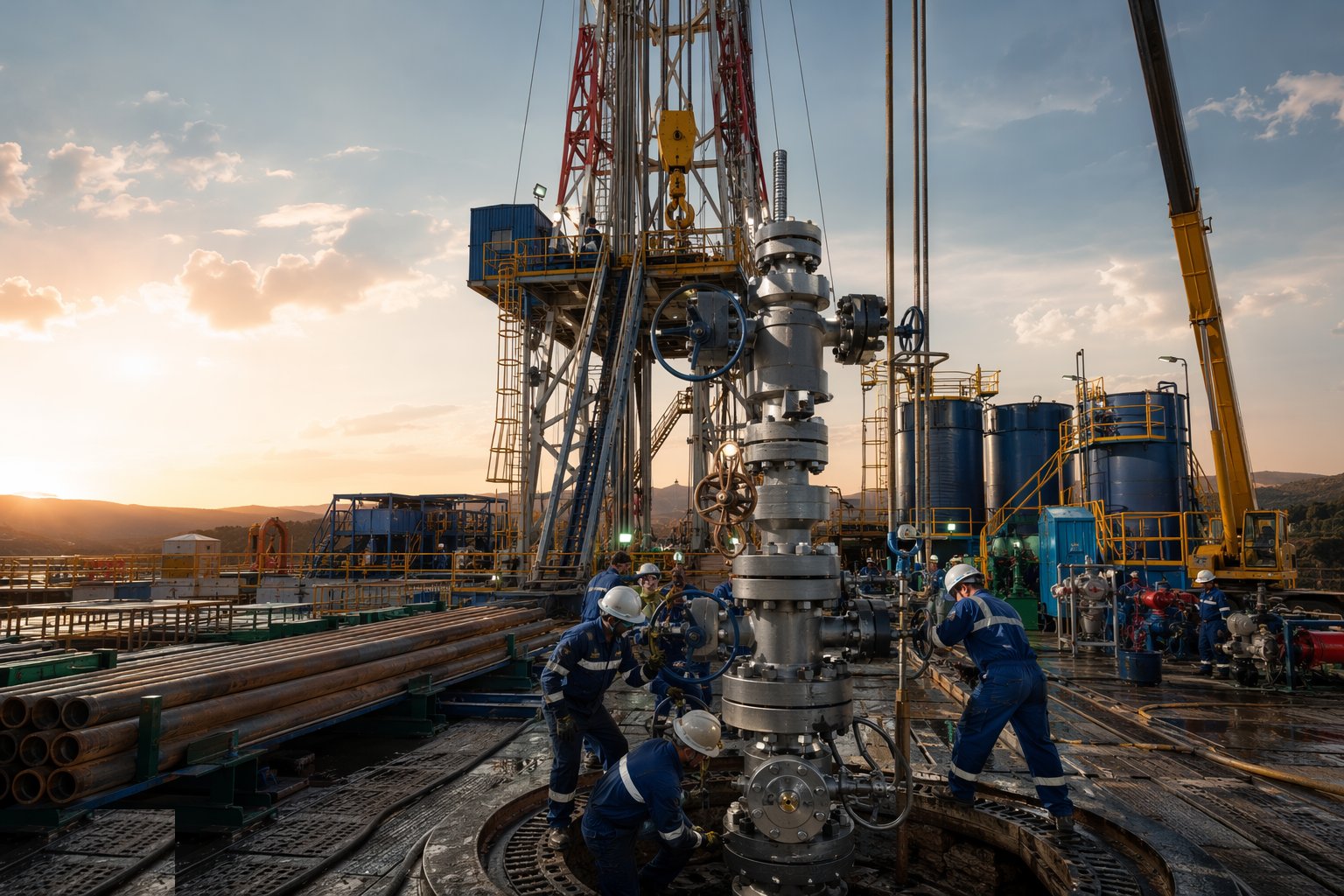
Complete across the reservoir as designed — open hole, slotted liner or screens — and install the production equipment: a line-shaft or electric submersible downhole pump where the water does not flow naturally, production tubing, and the wellhead with its valves, instrumentation and flow line. Pressure-test the completion, and commission the pump against its duty curve before the flow tests begin.
Step 7: Test the well — and stimulate where designed
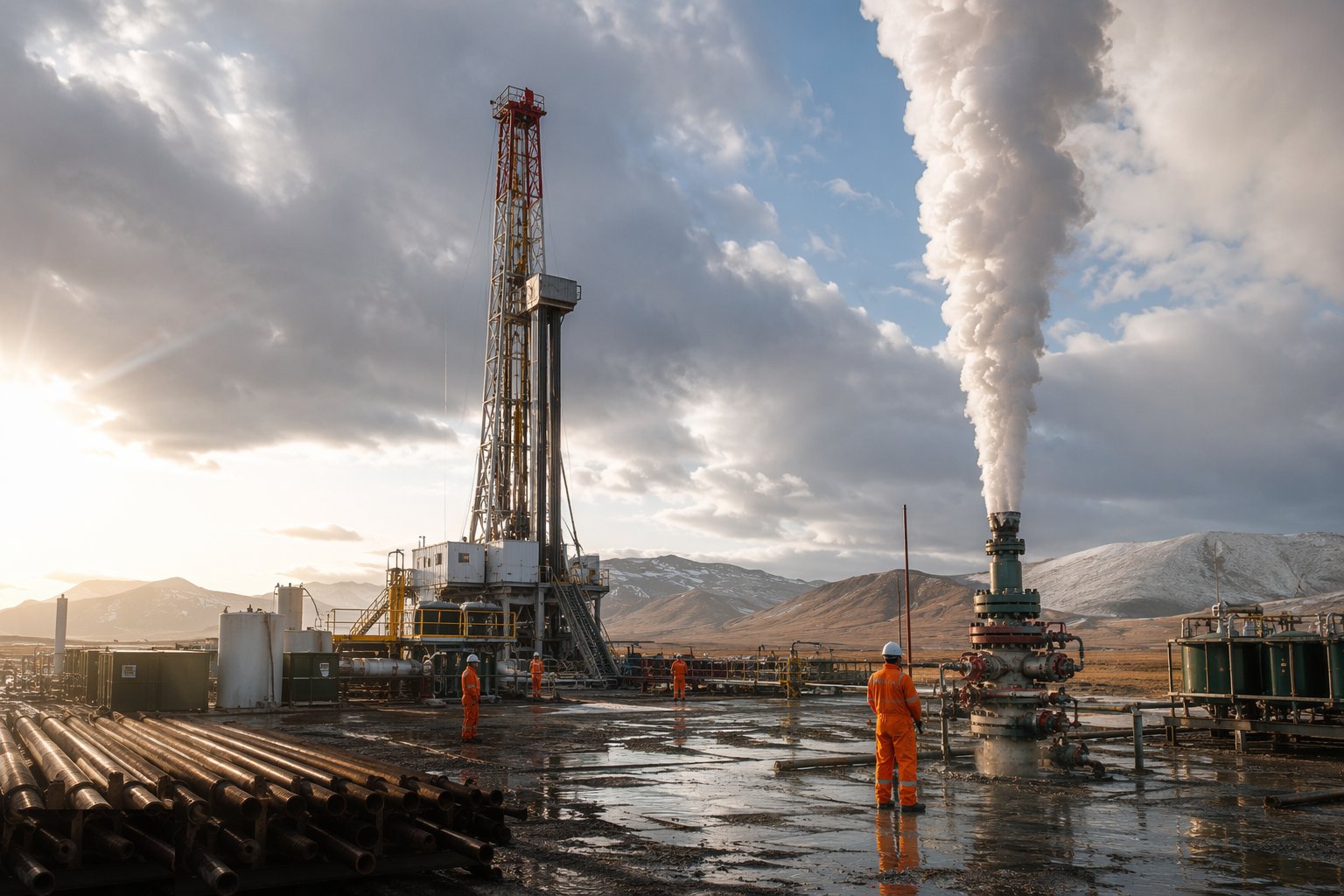
Run the production and injection tests that characterise the asset: stepped flow rates with temperature, pressure and chemistry logging, and interference testing between the doublet wells to prove connection. Where the design calls for stimulation, inject at controlled rates and pressures in monitored stages with the microseismic network live and the traffic-light protocol in force — stop conditions defined in advance and rehearsed, not negotiated mid-event. The test data is the design basis for the surface plant.
Step 8: Suspend or hand over the well
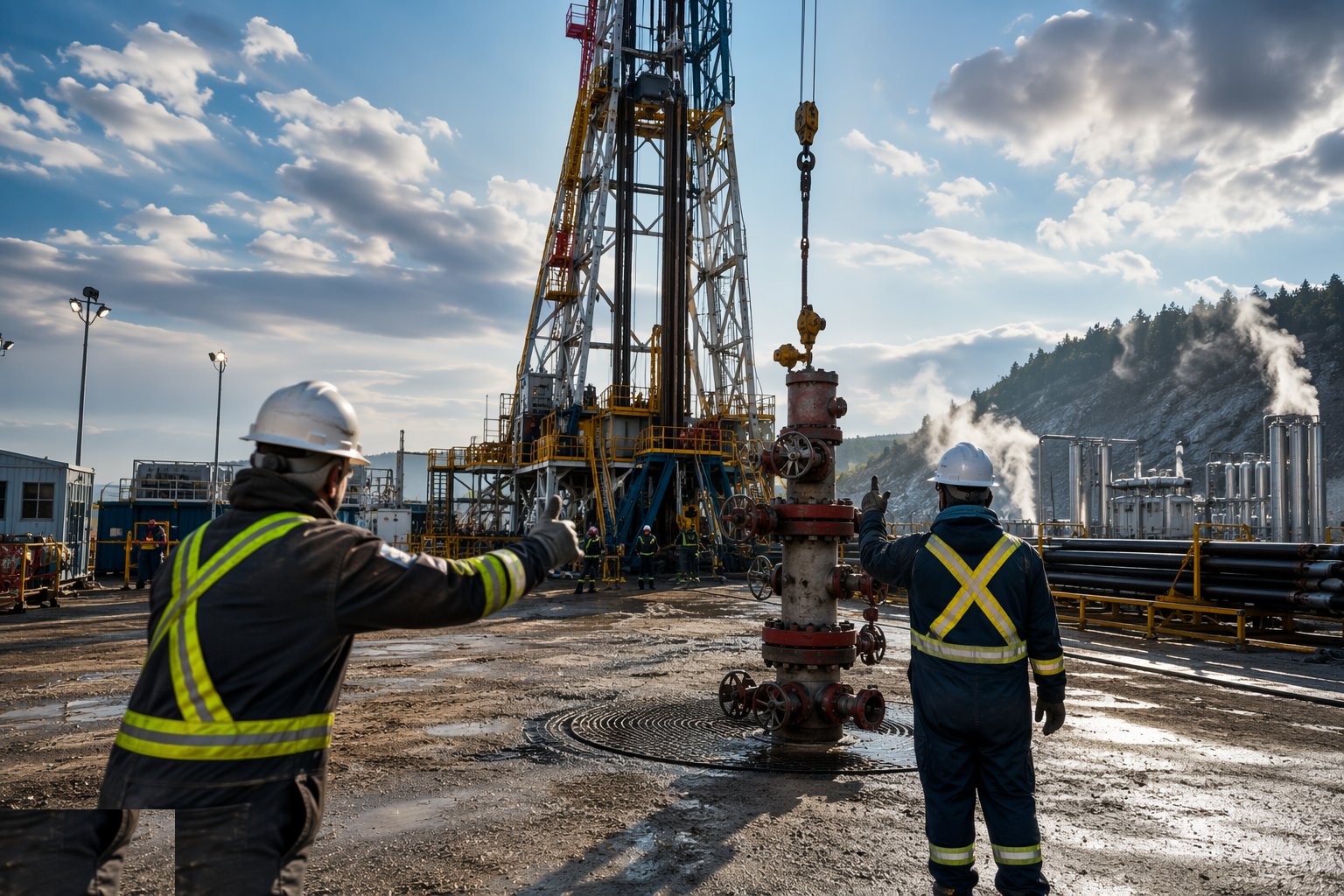
Secure the well with tested barriers whether it is handed straight to the plant or suspended between campaign phases, and demobilise the rig. Compile the full well file — drilling reports, mud logs, cementing records, deviation surveys, wireline logs, test results — as the handover package. Everything the plant designers, the operator and the regulator will ever know about the reservoir is in this file or nowhere.
Plant and equipment
- Land drilling rig with top drive, drawworks and derrick
- Mud pumps, tanks, shale shakers and solids-control equipment
- Casing and tubing strings with handling and running tools
- Cementing unit, batch mixers and cement head
- BOP stack, accumulator unit and test equipment
- Mud logging unit with gas detection and cuttings description
- Wireline and LWD logging services and deviation survey tools
- Downhole pumps — line-shaft or electric submersible — and geothermal wellhead equipment
Quality control checks
- Casing tally and thread records complete; every joint drifted and measured before running
- Cement jobs displaced to calculated volumes with returns witnessed; evaluation logs where specified
- BOP function and pressure tests on schedule, signed off before drilling ahead
- Mud properties checked on a fixed schedule and recorded on every shift
- Deviation surveys at defined intervals — the well must hit the target zone, not approximately
- Daily drilling reports reconciled with mud-log and service-company records
- Cores, logs and fluid samples taken to the geological programme with chain of custody
- Well tests run with calibrated gauges and meters; seismic baseline recorded before stimulation
Safety considerations
- Well control above everything — certified crews, a tested BOP, kick drills and shut-in procedures
- Rig-floor hazards: dropped objects, tong and slip operations, rotating equipment
- Reservoir gases including hydrogen sulphide — detection, breathing apparatus and contingency plans
- High-pressure lines in cementing and testing — union checks and line restraint
- Continuous 24-hour operations — fatigue management and disciplined shift handovers
- Noise, lighting and vehicle movements around a continuous drilling site near communities
- Chemical handling — mud additives, cement and treatment chemicals — under COSHH-equivalent controls
- Induced-seismicity response: stop-work triggers defined, agreed and rehearsed before stimulation
Common defects
- Lost circulation zones unmanaged — mud lost to fractures, hole instability and spiralling cost
- Cement shortfall or channeling — zonal isolation lost between aquifers
- Well trajectory off target — the doublet wells fail to connect through the fracture zone
- Thermal drawdown underestimated — produced temperature falls faster than the model predicted
- Scale and corrosion from hot brines attacking casing and pumps — materials selected for the wrong chemistry
- Baseline seismic monitoring installed late — no defensible background when the first event is felt
- Well file incomplete at handover — the plant is designed from assumptions instead of data
Best suited for
- Wells kilometres deep drilled to oil-and-gas standards
- Casing strings, cement jobs and well control
- Mud logging, coring and downhole testing
- The heavy end of the geothermal stream
How long does Deep Geothermal Drilling & Wells take?
Typical duration: A single deep well typically takes three to six months of continuous drilling depending on depth and trouble time; a two-well campaign with testing and any stimulation commonly runs nine to eighteen months end to end..
Related processes
- Electromechanical Installation
- Impoundment, Commissioning & Handover
- Ground-Source Heat Pumps — Homes & Villas
- Shallow Geothermal — Commercial & District Schemes
- Geothermal Plant, Connection & Commissioning
- Site Access & Enabling Works
- Survey, Ground Investigation & Resource Studies
- Piling & Mounting Structures
- PV Module Installation
- Electrical Balance of System
- Grid Connection & Energisation
- Wind Turbine Foundations
- Craneage & Tower Erection
- Wind Farm Electrical Infrastructure
- Commissioning & Energisation
- River Diversion & Cofferdams
- Dam & Powerhouse Civils
- Power Generation sector guide
- Utilities & Energy group