Commissioning & Energisation
The staged proof that each machine is safe to energise, safe to spin and produces what the warranty promised — from cold checks to first rotation to the power-curve test.
Last updated 2026-07-28 by the BuildPedia Editorial Team.
What is Commissioning & Energisation?
Commissioning a wind turbine is done in two distinct phases. Cold commissioning happens with the machine electrically dead or de-energised at generator level: every electrical test is complete, the protection trips, the safety systems — brakes, yaw, emergency stops, overspeed protection — are proven, and the communications work. Hot commissioning begins when the network operator agrees the turbine can be energised: the transformer is switched in, the converter is put through its checks, and then, in a suitable low-wind window, the rotor is allowed to turn and generate for the first time under close supervision, ramping up in controlled stages to full power.
None of this happens unilaterally. Energisation is a network-operator-controlled event with an agreed switching schedule and authorised persons on both sides; larger schemes carry compliance obligations under the Grid Code or ENA G99 that include witnessed tests of how the machines behave for the grid — fault ride-through, reactive power capability and the like. Each turbine then completes a reliability run — a defined operating period against availability criteria — before the client accepts it. Turbines commission individually and string by string, so the back end of a wind farm is a rolling production line of machines at different stages while erection continues at the front.
The final proof is commercial as much as technical: power performance verification. The measured power curve — the turbine's power output against wind speed — is verified to IEC 61400-12-1, using calibrated met-mast or nacelle-mounted instrumentation and a formal uncertainty analysis, typically over months of representative wind. That measured curve is compared to the warranted curve, and the result decides warranty claims, liquidated damages and the assumptions the financing was built on. Handover follows: taking-over under the contract, the warranty and O&M periods begin, and the site passes from a construction project to an operating power station. In the Gulf the same international framework applies — IEC standards, manufacturer warranties and utility-controlled energisation — whatever the jurisdiction.
When and why is Commissioning & Energisation used?
Commissioning follows mechanical completion and electrical installation — no machine is energised until its torque records, test certificates and protection results are complete and filed — and it is the last construction process, because it converts the asset from something being built into something earning. It matters because it is where every upstream shortcut surfaces: a mis-tensioned bolt, a default protection setting or an undocumented cable joint will announce itself now, in front of the client, the manufacturer and the network operator. It also starts every clock that matters commercially — warranties, O&M obligations and revenue — so the evidence trail it generates is the one disputes will be fought over years later. A small turbine's commissioning is the same cold-to-hot logic compressed into a day or two: dead tests and protection checks, then energisation and first rotation in a light-wind window, witnessed by the installer's competent person rather than a grid engineer — with the G98 notification already lodged and the commissioning certificate, not the calendar, deciding when the machine is handed over.
Types of Commissioning & Energisation
Single first machine (trial energisation)
The first turbine on a new site is commissioned slowly and watched closely — the proving run for the substation, the SCADA and the whole switching sequence — before the production commissioning of the rest begins at pace.
Staged string-by-string energisation
The standard production pattern: each cable string is energised and its turbines commissioned in sequence while erection continues elsewhere. Crews, permits and weather windows are scheduled as a rolling line rather than a single event.
Transmission-connected scheme compliance
Larger schemes connected at transmission level carry formal Grid Code compliance studies and witnessed tests — the machine's behaviour as a good grid citizen is tested and certified, not assumed, before full output is accepted.
Offshore scheme commissioning
Energisation starts at the offshore substation and works outward to the strings, with marine logistics, vessel schedules and sea-state windows governing access to every machine. The same cold-to-hot logic applies, at offshore cost and timescales.
Commissioning & Energisation: step by step
Step 1: Complete and certify the installation
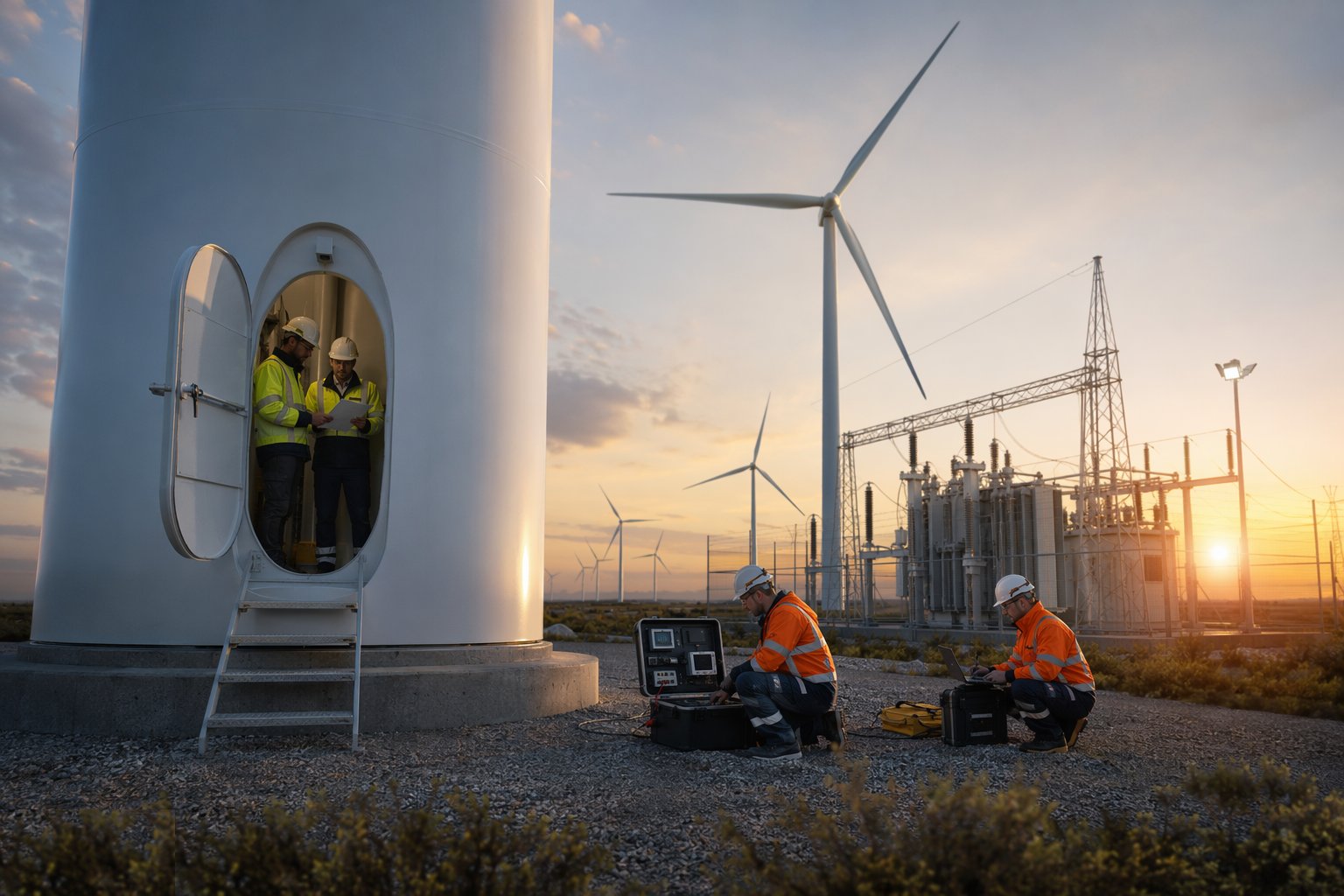
Nothing is energised on good intentions. Assemble the completion dossier for each turbine: mechanical completion certificate, bolt torque and tension records, grout and electrical test certificates, protection records, fibre and SCADA checks. Walk the machine down with the manufacturer's checklist, clear the snags, and only then does the turbine enter the commissioning permit regime — from this point, access is controlled because the systems can move under power.
Step 2: Cold commissioning
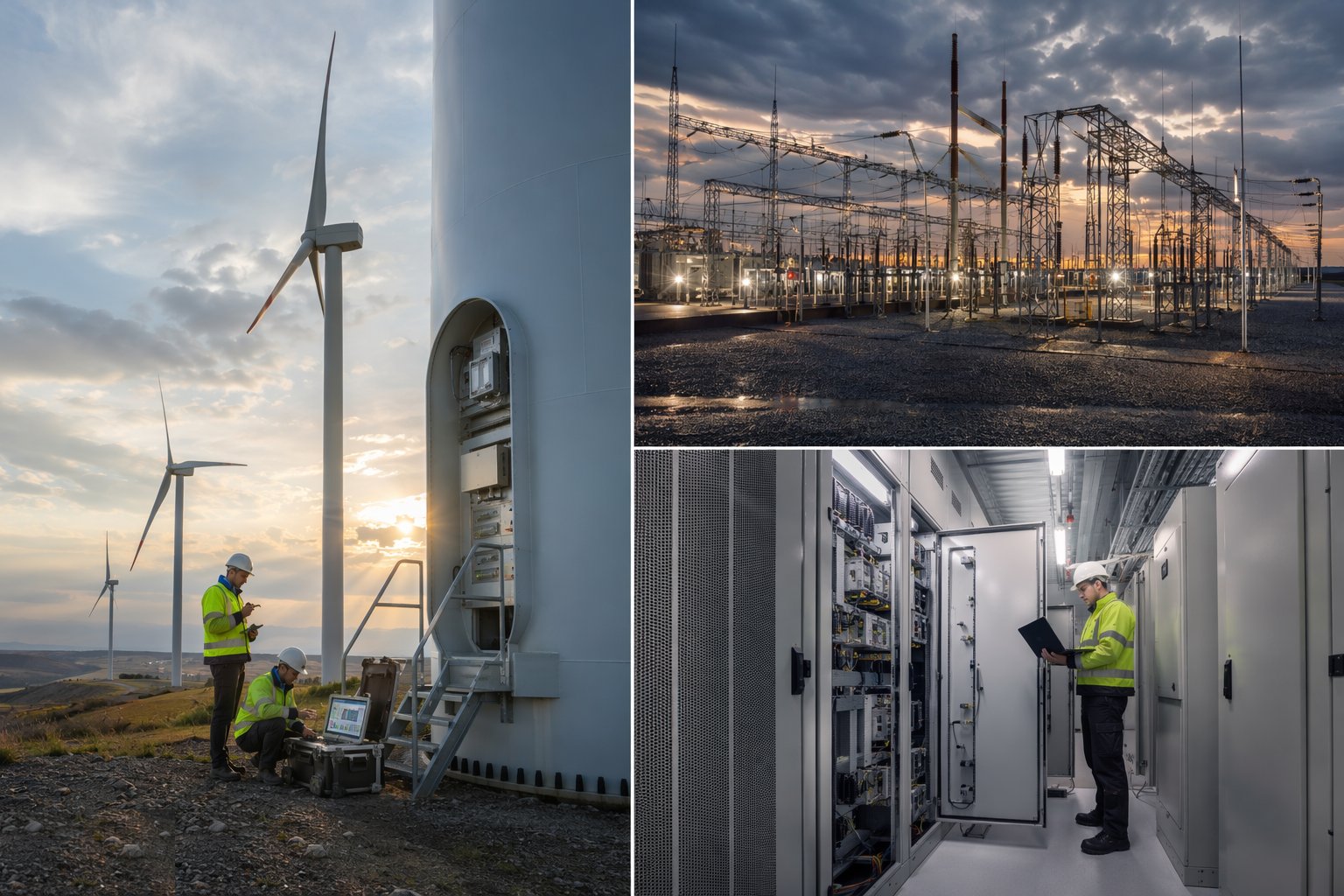
With the machine de-energised, prove everything that must work before power is allowed near it: HV tests complete and recorded, protection trips demonstrated, emergency stops and safety chain proven, brake and yaw systems functioned, pitch system exercised, and communications and SCADA points verified end to end. Every result is signed against the commissioning procedure — this is the evidence that the machine is safe to energise.
Step 3: Agree the energisation sequence with the network operator
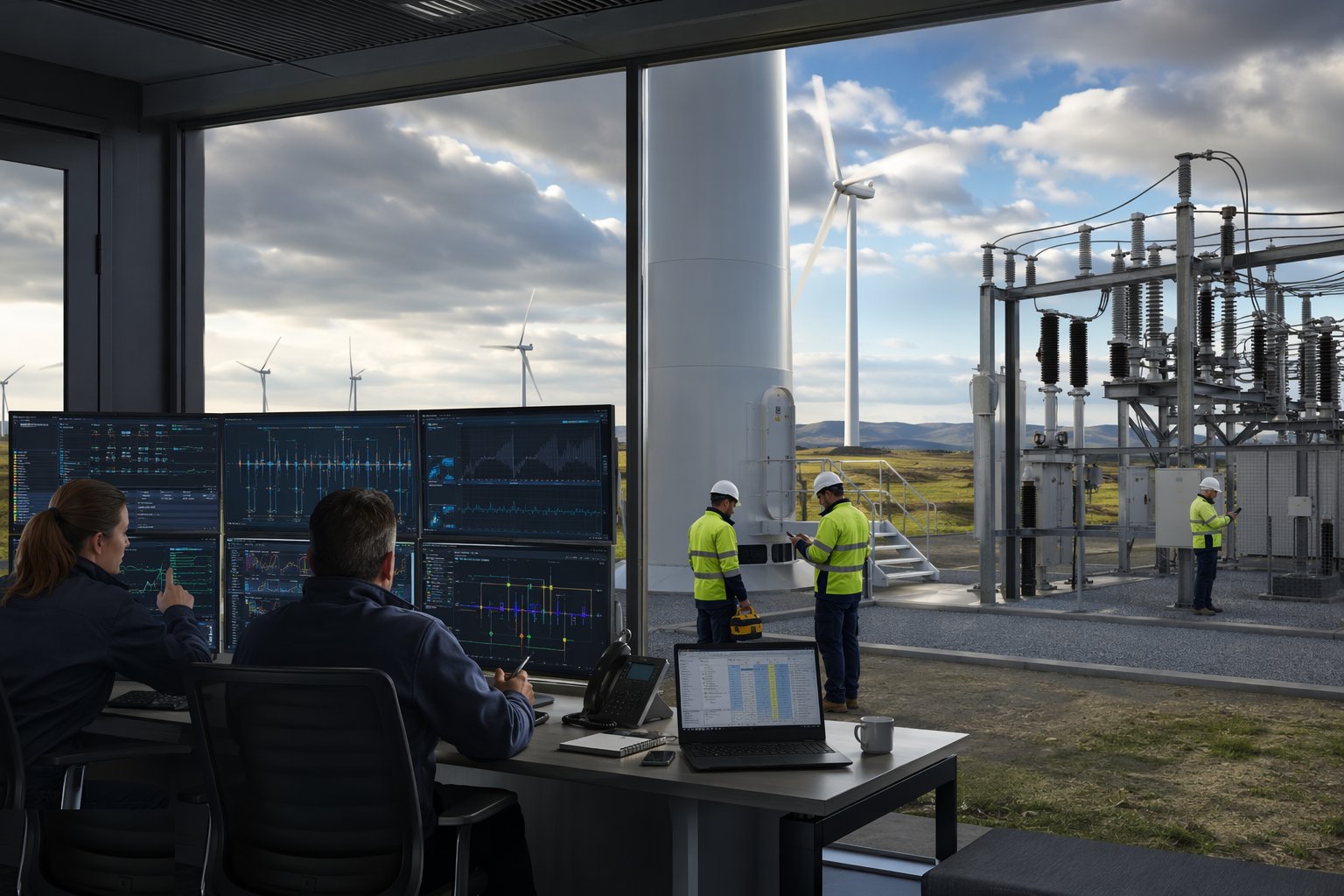
Energisation is planned with the operator: the switching schedule from substation to string to turbine, the named authorised persons and senior authorised persons on both sides, permits to work and sanction-for-test arrangements, and the dates and notice periods. The sequence is written down and briefed — an unplanned switching action on a shared network is the kind of event that ends careers and contracts.
Step 4: Energise and first rotation
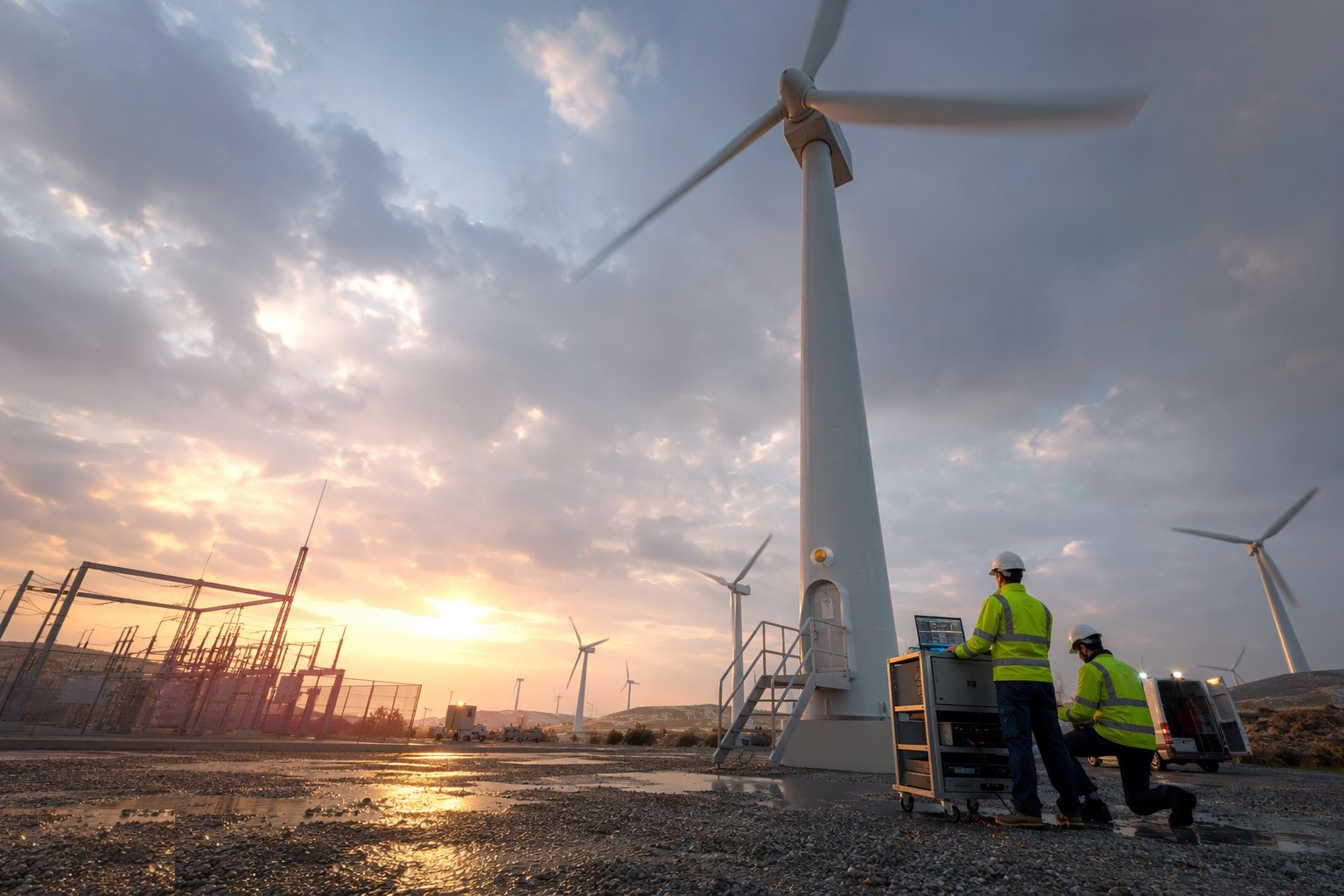
Switch in the substation, then the string, then the turbine transformer, step by step per the schedule, checking voltages and protections at each stage. Run the converter through its checks, then — in a suitable low-wind window — release the brake and allow the first controlled rotation and generation, with engineers at the machine and in the control room watching vibration, temperatures, hydraulics and electrical parameters against expected values. Any anomaly and the machine is stopped and made safe.
Step 5: Ramp-up and grid compliance tests
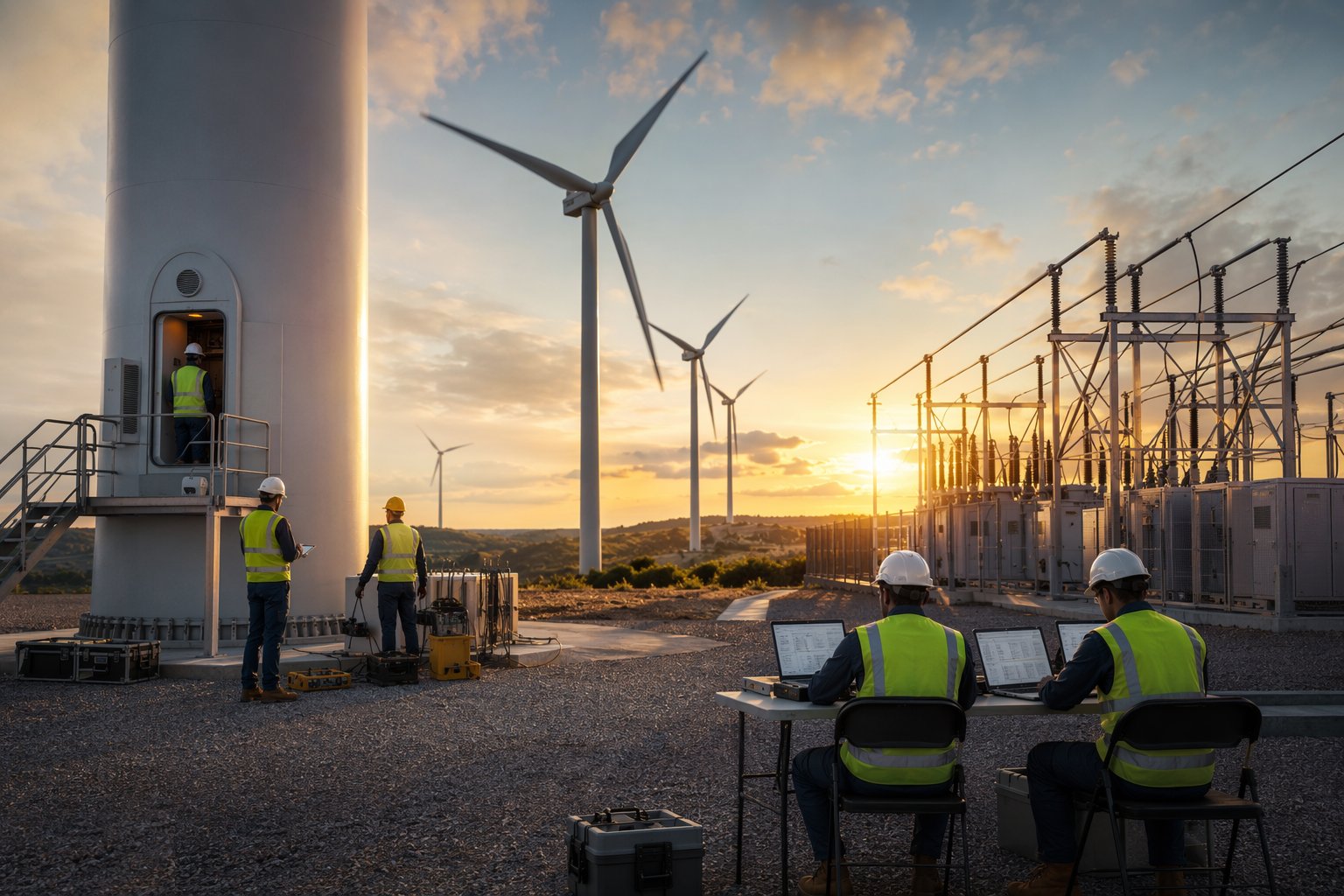
Raise output in controlled stages to full power, verifying the machine's behaviour at each level. Where the connection agreement requires it, run the witnessed compliance tests — fault ride-through, reactive power and frequency response as specified — with the results recorded for the network operator's acceptance. Complete the reliability run: the defined operating period against availability criteria that triggers client acceptance of the machine.
Step 6: Power performance verification
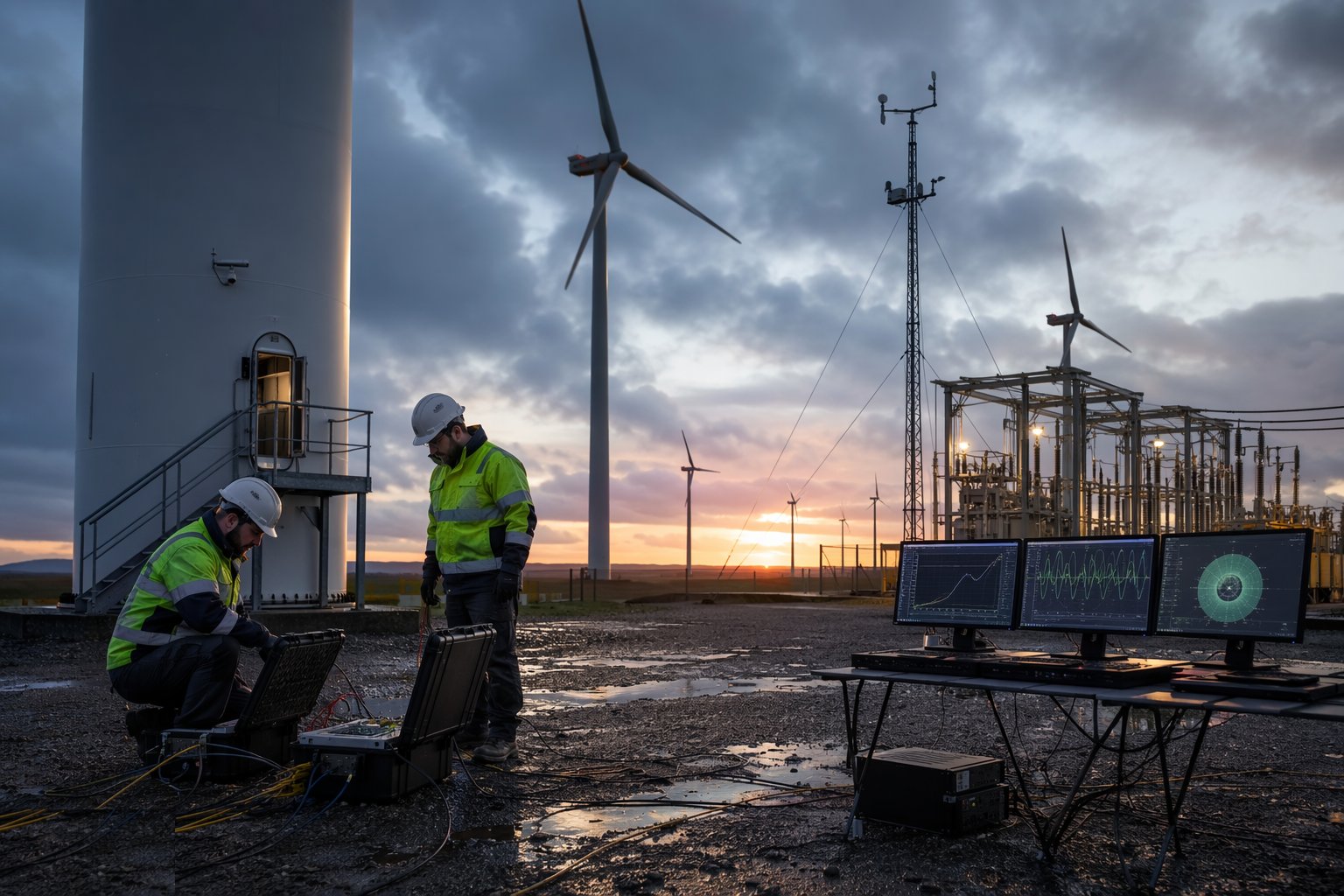
For warranty purposes, verify the power curve to IEC 61400-12-1: calibrated instrumentation on a met mast or nacelle-mounted, a defined measurement sector, filtering for valid conditions, and a formal uncertainty budget. The campaign typically runs for months to capture representative wind across the operating range. The measured curve, with its uncertainty, is compared against the warranted curve — and the comparison is a commercial document, not just an engineering one.
Step 7: Handover to operations
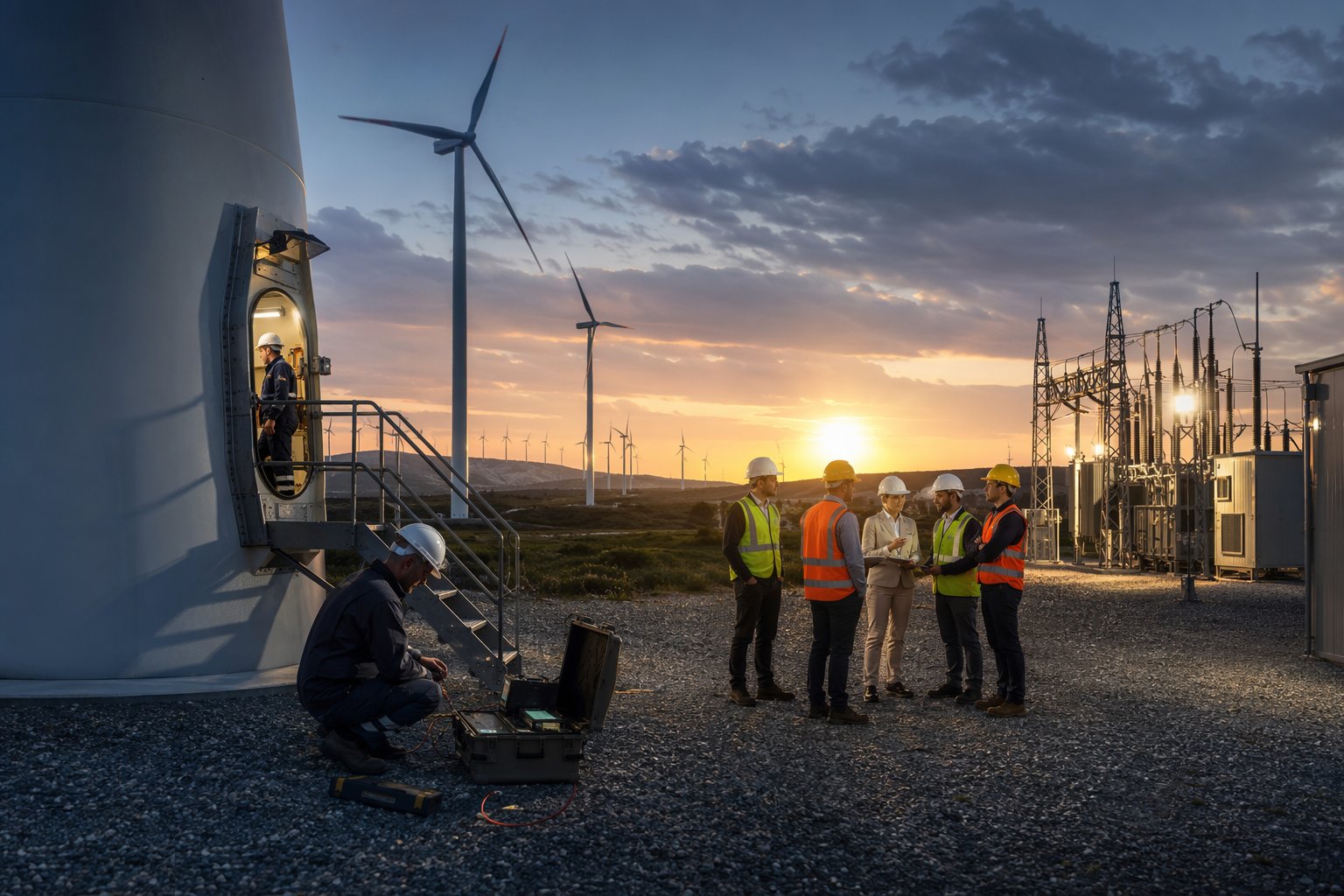
With acceptance criteria met, the turbine or farm is taken over under the contract — the taking-over certificate in FIDIC-based arrangements — and the warranty and O&M periods begin. Hand over the documentation: as-builts, test and commissioning records, O&M manuals, warranties, and the safety file for the operating site. The O&M team, often the manufacturer under a service agreement, mobilises as the construction team demobilises — the asset is now a power station with a 25-year life, and its first-year performance data will be scrutinised like no other.
Plant and equipment
- Calibrated test instruments for HV, protection and converter checks
- Met mast or nacelle-mounted calibrated anemometry for power-curve measurement
- SCADA and communications test equipment
- Switching and earthing equipment for authorised HV operations
- Data acquisition systems logging machine parameters through ramp-up
- Torque and tension tools for completion re-checks
- Access equipment — tower internals, MEWPs and, offshore, crew transfer vessels
Quality control checks
- Completion dossiers assembled and audited before any energisation
- Every commissioning step signed against the procedure — no verbal close-outs
- Protection trips and safety systems demonstrated, not assumed
- Energisation switching schedule briefed and executed as written
- Machine parameters logged through first rotation and ramp-up and reviewed against expected values
- Grid compliance test results recorded and accepted by the network operator
- Power-curve measurement to IEC 61400-12-1 with a documented uncertainty budget
- Handover documentation complete — as-builts, records, manuals, warranties — at taking over
Safety considerations
- HV switching only by authorised persons under permit-to-work and sanction-for-test regimes
- Lock-out/tag-out discipline on every system that can move or energise
- Rotating machinery — exclusion and communication protocols during first rotation
- Working at height under GWO discipline, with rescue provision maintained
- Fire risk in nacelle and tower — detection, extinguishing and escape arrangements proven
- Remote-site and lone-working controls during out-of-hours commissioning windows
- Marine transfer and sea-survival discipline for offshore commissioning teams
Common defects
- Protection settings wrong or untested — nuisance trips or, worse, no trip on fault
- Safety-chain shortcuts found at cold commissioning — stops that do not stop
- Energisation attempted before the operator's acceptance — the switching schedule torn up
- First-rotation anomalies ignored under programme pressure — vibration or temperature trends papered over
- Compliance test failures late — fault ride-through or reactive capability not as modelled
- Power-curve campaign ruined by poor instrument calibration or data gaps
- Reliability run availability missed — acceptance delayed while warranties and revenue wait
- Handover records incomplete — the warranty argument lost before it starts
Best suited for
- Staged energisation from cold checks to first rotation
- Power-curve testing against the manufacturer's warranty
- SCADA integration and grid-code compliance evidence
- The test records that release the payment milestones
How long does Commissioning & Energisation take?
Typical duration: Cold-to-hot commissioning of a single machine commonly takes days once the string is energised; a full wind farm typically commissions over 2–6 months as strings come online; power performance verification runs for months of representative wind and usually continues past commercial acceptance..
Related processes
- Grid Connection & Energisation
- Wind Turbine Foundations
- Craneage & Tower Erection
- Wind Farm Electrical Infrastructure
- River Diversion & Cofferdams
- Dam & Powerhouse Civils
- Electromechanical Installation
- Impoundment, Commissioning & Handover
- Ground-Source Heat Pumps — Homes & Villas
- Shallow Geothermal — Commercial & District Schemes
- Deep Geothermal Drilling & Wells
- Geothermal Plant, Connection & Commissioning
- Site Access & Enabling Works
- Survey, Ground Investigation & Resource Studies
- Piling & Mounting Structures
- PV Module Installation
- Electrical Balance of System
- Power Generation sector guide
- Utilities & Energy group