Impoundment, Commissioning & Handover
Filling the reservoir for the first time under surveillance, proving the machines dry then wet, satisfying the reservoir-safety regime — and handing over an asset built for a century.
Last updated 2026-07-28 by the BuildPedia Editorial Team.
What is Impoundment, Commissioning & Handover?
Impoundment — the first filling of the reservoir — is the moment the whole project has been building towards, and it is run like the hazardous operation it is. The reservoir is filled in controlled stages with defined hold levels, while the instrumentation installed during construction is read on a schedule and compared against predicted behaviour: piezometers, seepage weirs, survey targets, joint meters. Between stages the filling pauses and the dam is inspected. An emergency drawdown route stands ready throughout, and downstream flows are maintained for the river and its users. International good practice through ICOLD and the national dam-safety regimes all say the same thing: first filling is a test of the dam, and it is conducted by people expecting to learn something.
In the UK that test sits inside a statutory framework: the Reservoirs Act 1975, as amended by the Flood and Water Management Act 2010, which requires large raised reservoirs — historically those capable of holding 25,000 cubic metres above the surrounding land, with reforms lowering the threshold to 10,000 cubic metres being brought into force — to be registered and to be designed, supervised and inspected by qualified civil engineers appointed to the statutory panels. Commissioning of the machines runs alongside: dry commissioning first — gates, valves, protections and sequences proven without water in the waterways — then wet commissioning: first water to the spiral case, first rotation, speed-no-load, synchronisation to the grid, staged loading, and the deliberate severity of overspeed and load-rejection tests to prove the machine survives the worst day it will ever have.
Handover converts a construction site into an operating utility. The documentation is the asset's memory: as-builts, grouting and concrete records, embedment surveys, machine test certificates, the reservoir operating manual and the surveillance regime for the decades ahead. Contractually, the UK pattern is completion under the building contract with the reservoir-safety certificates running beside it; on FIDIC-based work — the norm for international hydro and across the Gulf — the sequence is the Taking-Over Certificate, then the Defects Notification Period (universally called the DLP in UAE practice), then the Performance Certificate. And the liability does not end there: UAE Civil Code Article 880 imposes decennial liability — ten years, structural, on contractor and supervising consultant jointly — which survives the DLP entirely. The regional proof that all of this works is Hatta, where DEWA began trial operations and power export in 2025 after staged filling of the upper reservoir.
When and why is Impoundment, Commissioning & Handover used?
Impoundment and commissioning follow the completion of the civils and electromechanical installation — the dam must be certified ready to hold water and the machines proven dry before a single gate is cracked — and they close the project. They matter beyond the obvious: first filling is the only full-scale structural test the dam will ever get, so the surveillance data gathered then is the baseline for its entire operating life; and the handover records are the only evidence that will exist when, years later, a seepage trend or a warranty claim needs to be understood. In reservoir work, the end of construction is the beginning of a legal and technical duty of care that outlasts everyone on the project team. A run-of-river micro scheme with no large reservoir skips the statutory panels but not the logic: the intake is filled and watched, the machine is proven dry then wet, and synchronisation waits on the network operator's permission — G98 or G99 paperwork standing in for the reservoir engineer's certificate.
Types of Impoundment, Commissioning & Handover
Storage scheme first filling
The full staged impoundment of a new reservoir behind a new dam — hold levels, surveillance rounds and inspections between stages, often spanning a whole wet season. The highest-consequence version of the process and the one the statutory regimes are written around.
Run-of-river commissioning
Minimal storage, so no prolonged filling — but the river keeps flowing through the works, so commissioning is scheduled around real hydrology, with fish-passage and compensation-flow consents governing when and how the machines can be tested.
Pumped storage commissioning
Two reservoirs and a reversible machine: both generating and pumping modes must be commissioned, with the upper and lower impoundments each surveilled, and the changeover sequences — generate to pump and back — proven as carefully as the machines themselves.
Staged multi-unit commissioning
Unit-by-unit commissioning in a multi-machine station: the first unit proves the waterways, governor settings and grid connection slowly, and later units follow at production pace while the station already earns revenue from the first.
Impoundment, Commissioning & Handover: step by step
Step 1: Inspect and certify readiness for impoundment
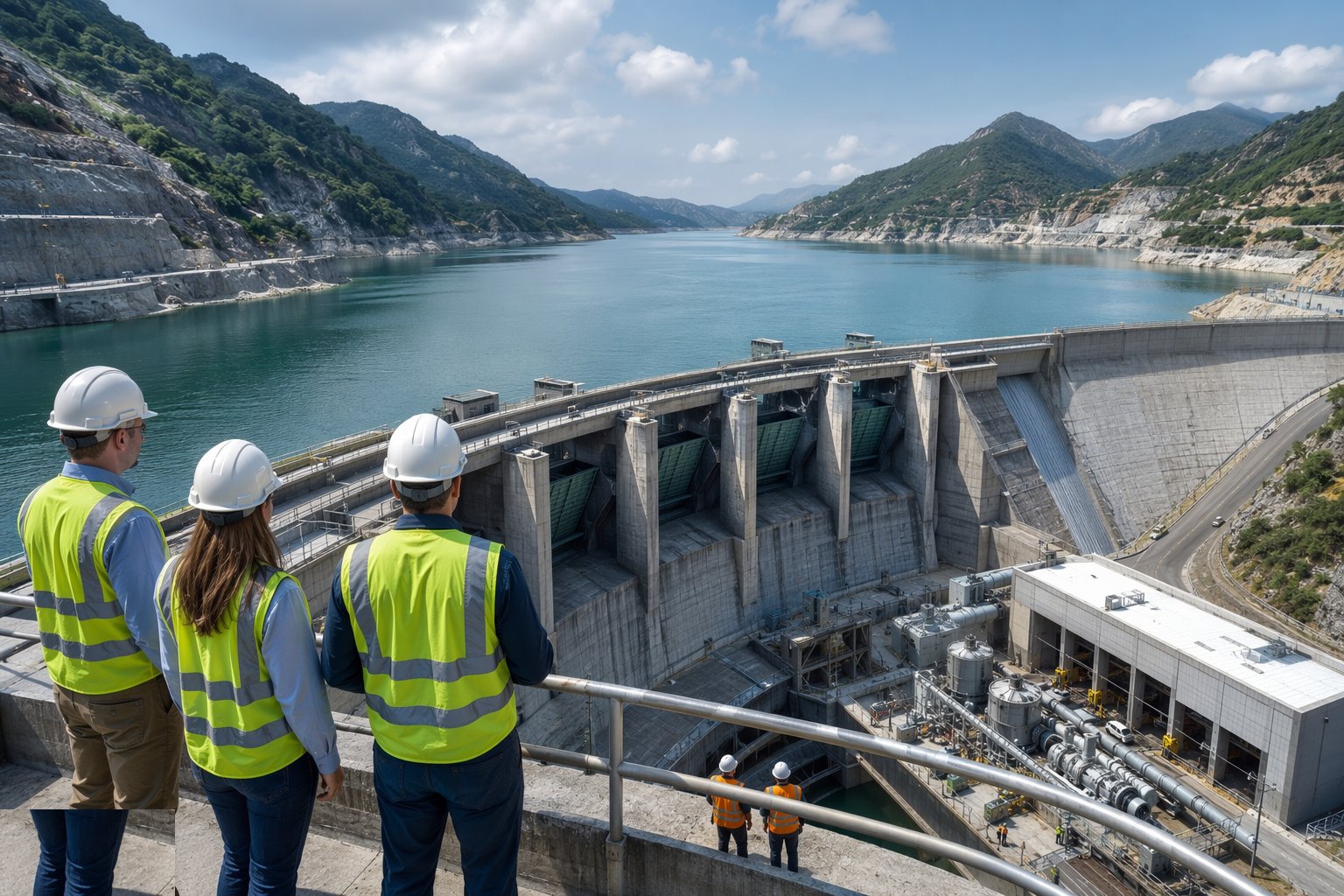
Before any filling, the dam is inspected and certified ready — in the UK by the panel engineer under the reservoir-safety regime, and internationally by the independent reviewer the client has appointed. Complete the dam safety report, test the bottom outlets and emergency drawdown route, prove the downstream warning systems, and confirm every consent condition. Filling without this certification is not a programme shortcut; it is the end of the project in every sense that matters.
Step 2: Baseline the surveillance system
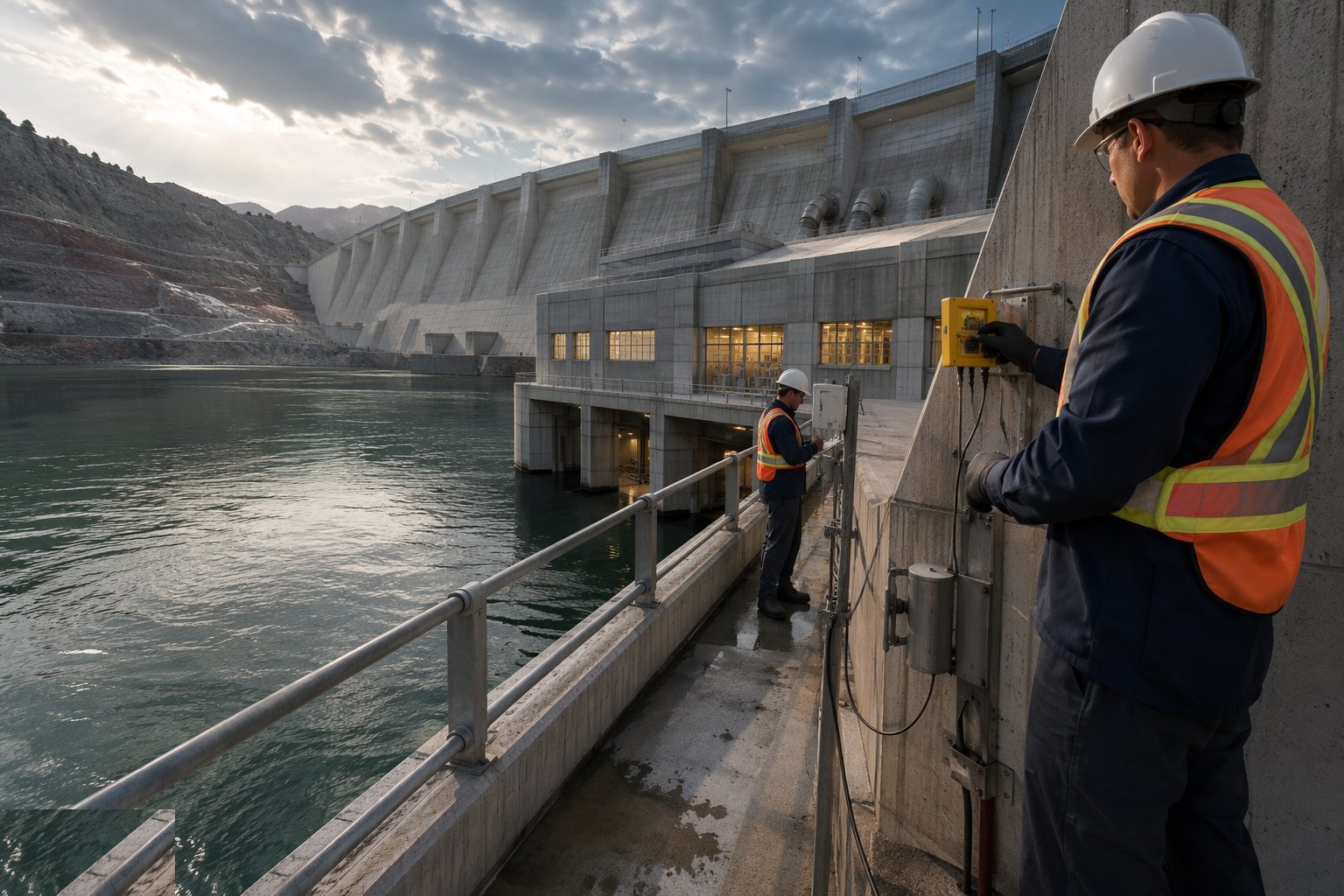
Confirm every instrument reads and records: piezometers, seepage weirs and drains, survey targets, joint and strain meters. Take and file the baseline readings — the zeros that every future measurement is compared against — and establish the reading schedule and the alarm thresholds for each stage of filling. An instrument installed but not baselined is decoration.
Step 3: Fill in stages under surveillance
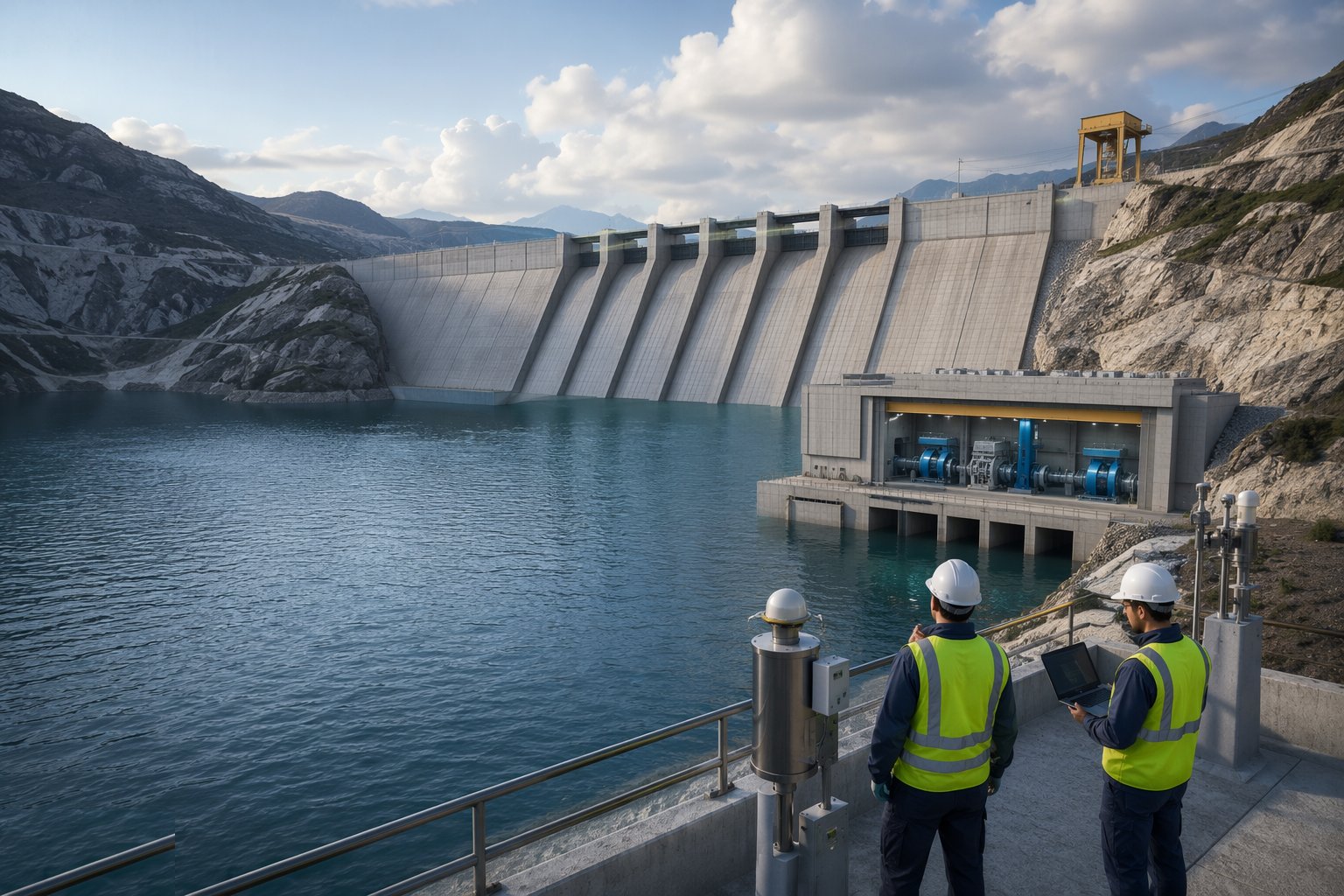
Raise the reservoir in controlled stages at a managed rate, holding at each defined level while readings are taken, trended against predictions and the dam is physically inspected. Maintain the agreed downstream compensation flow throughout. Any anomaly — seepage above prediction, unexpected movement — holds the filling at that level for investigation. The fill curve, the readings and the inspection reports together form the first-filling record, a document that will be consulted for decades.
Step 4: Complete dry commissioning
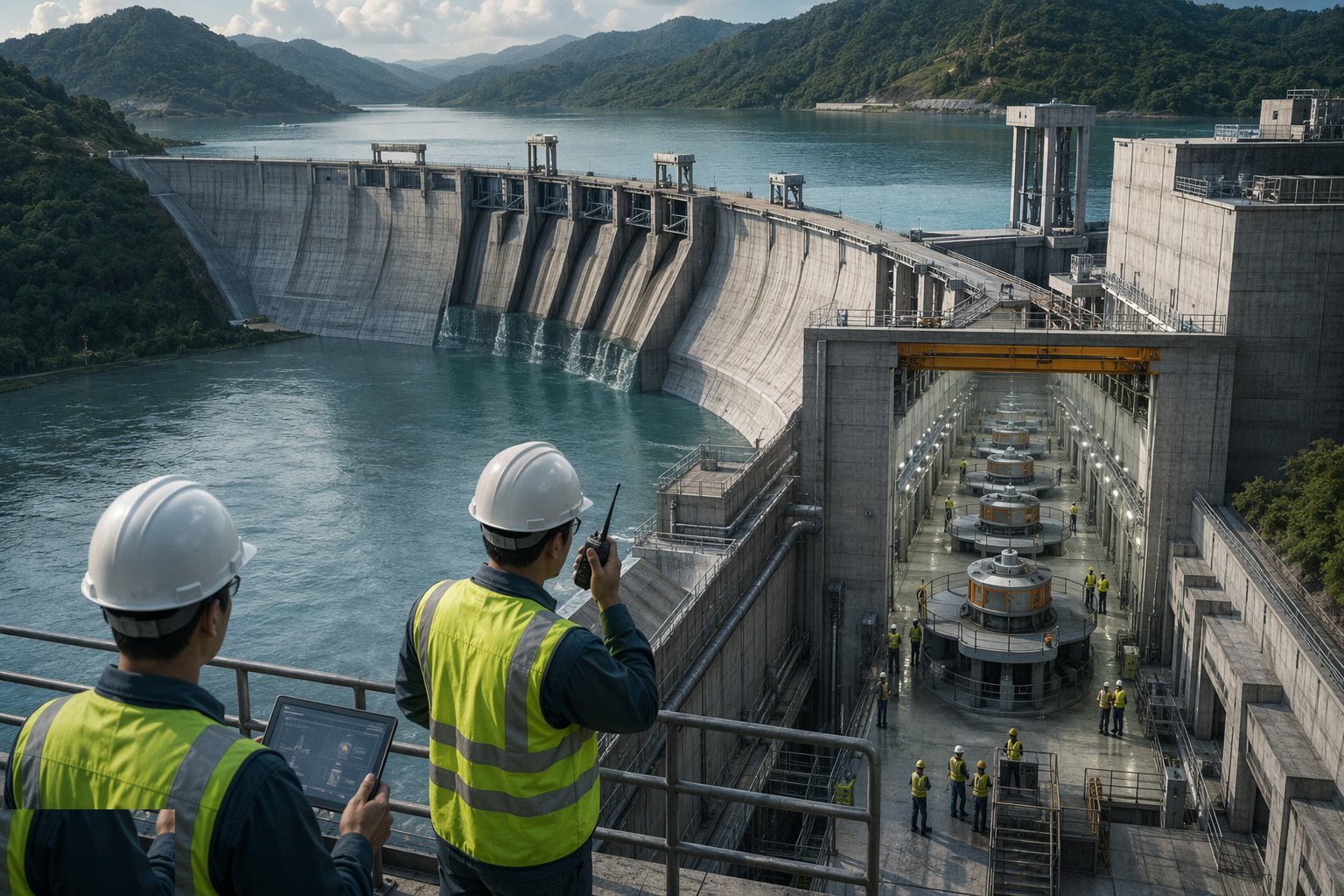
In parallel with or ahead of filling, prove everything that can be proven without water in the machines: gate and valve full-travel tests, governor logic and trips, protection functions, black-start or auxiliary supply arrangements where specified, and full sequence simulations. Every function is signed off — wet commissioning has no tolerance for discovering a wiring error with a penstock full of water behind it.
Step 5: Run wet commissioning
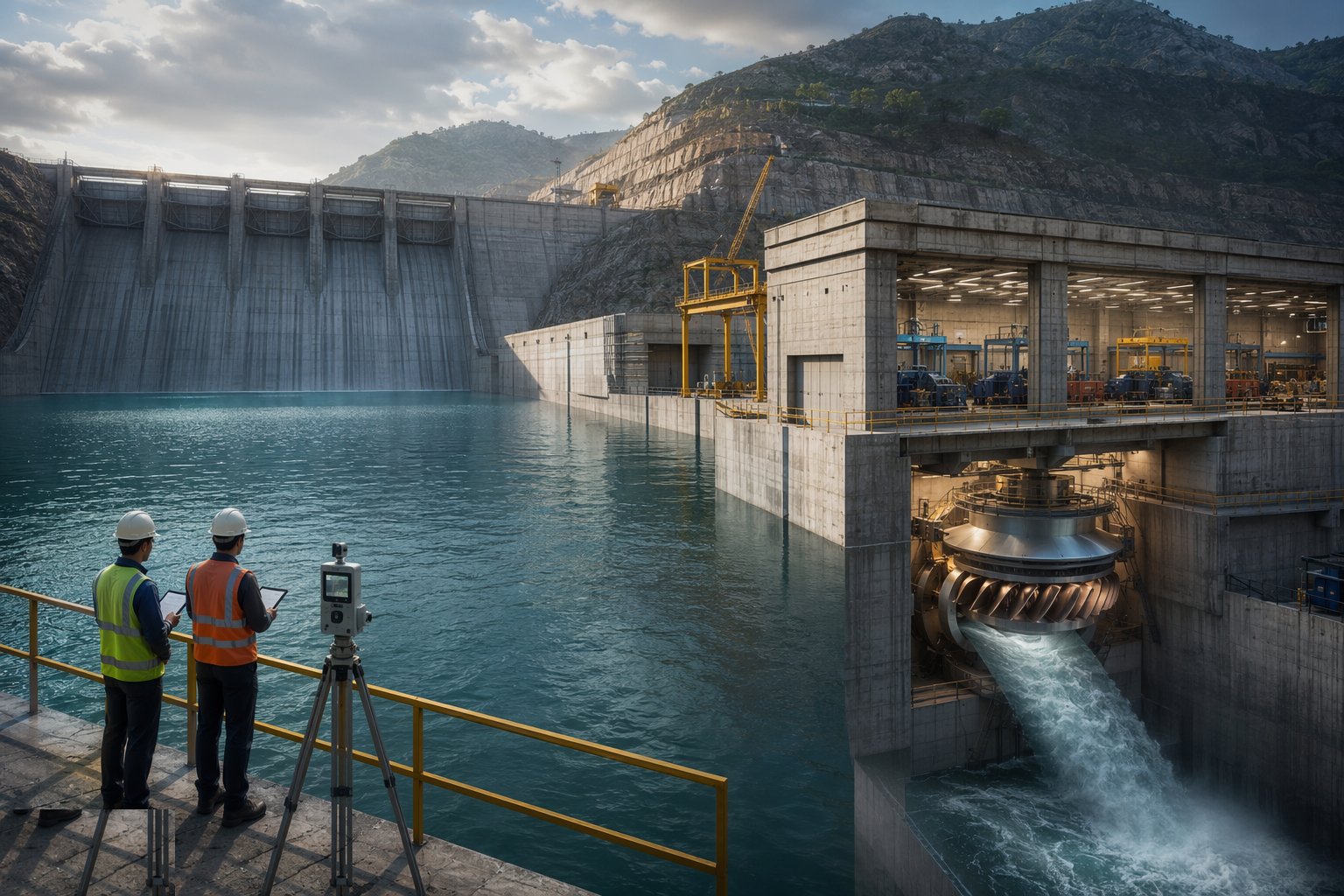
Admit water to the waterways in the controlled sequence, checking for leakage at every stage. First rotation at speed-no-load, monitored for vibration, temperatures and pressures; then synchronisation to the grid and staged loading to full output. Then the proving tests: governor stability, and the overspeed and load-rejection tests that deliberately throw the machine off full load to prove it rides the worst transient safely. Every test is recorded against its procedure — these results are the machine's birth certificate.
Step 6: Prove performance and reliability
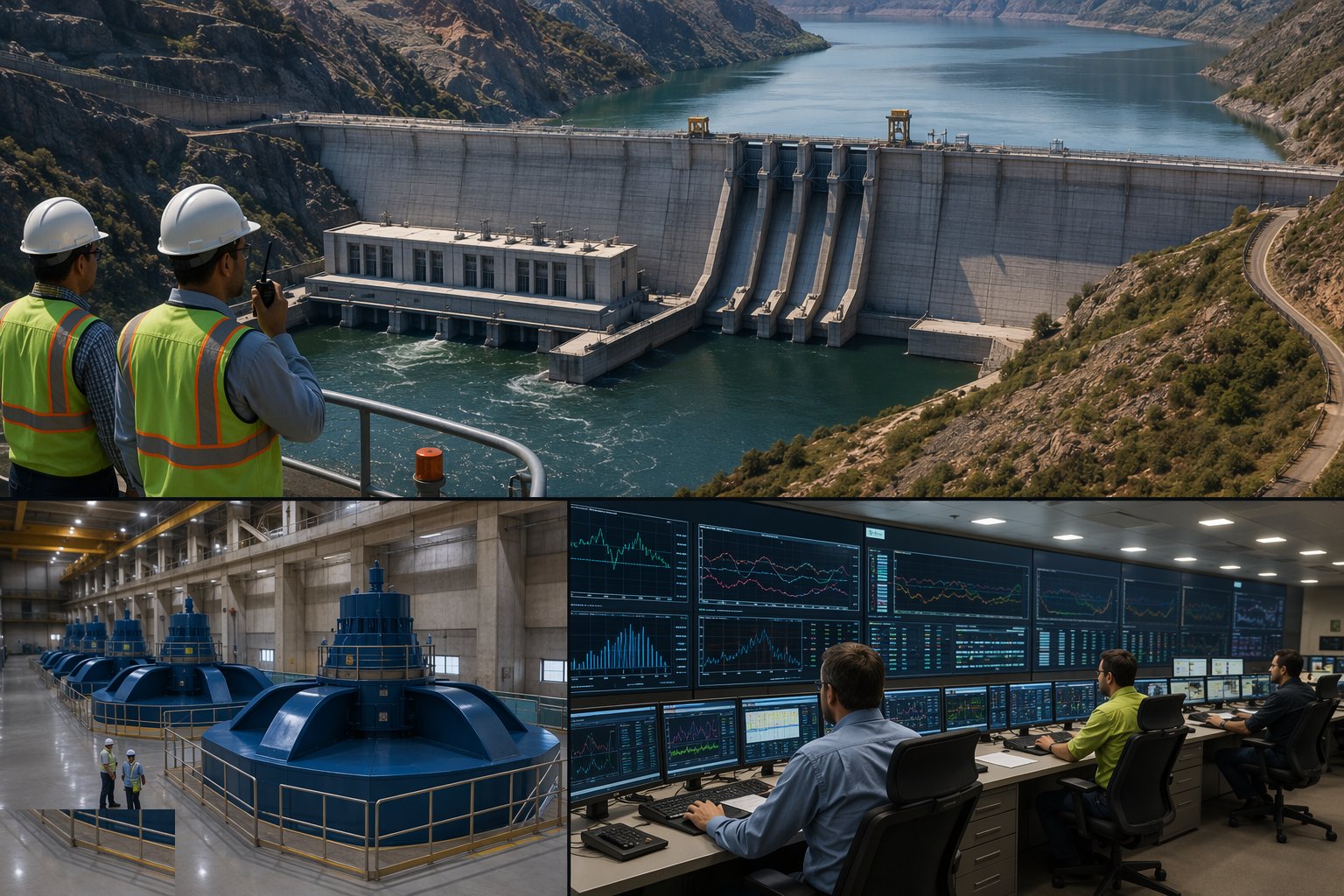
Run the contractual performance tests — output and efficiency against the guaranteed figures, index tests where full efficiency measurement is impractical — and the reliability or availability run over the defined period. Complete the grid compliance evidence for the network operator. Shortfalls are resolved against the contract now, while the construction organisation still exists to fix them.
Step 7: Hand over the asset and its memory
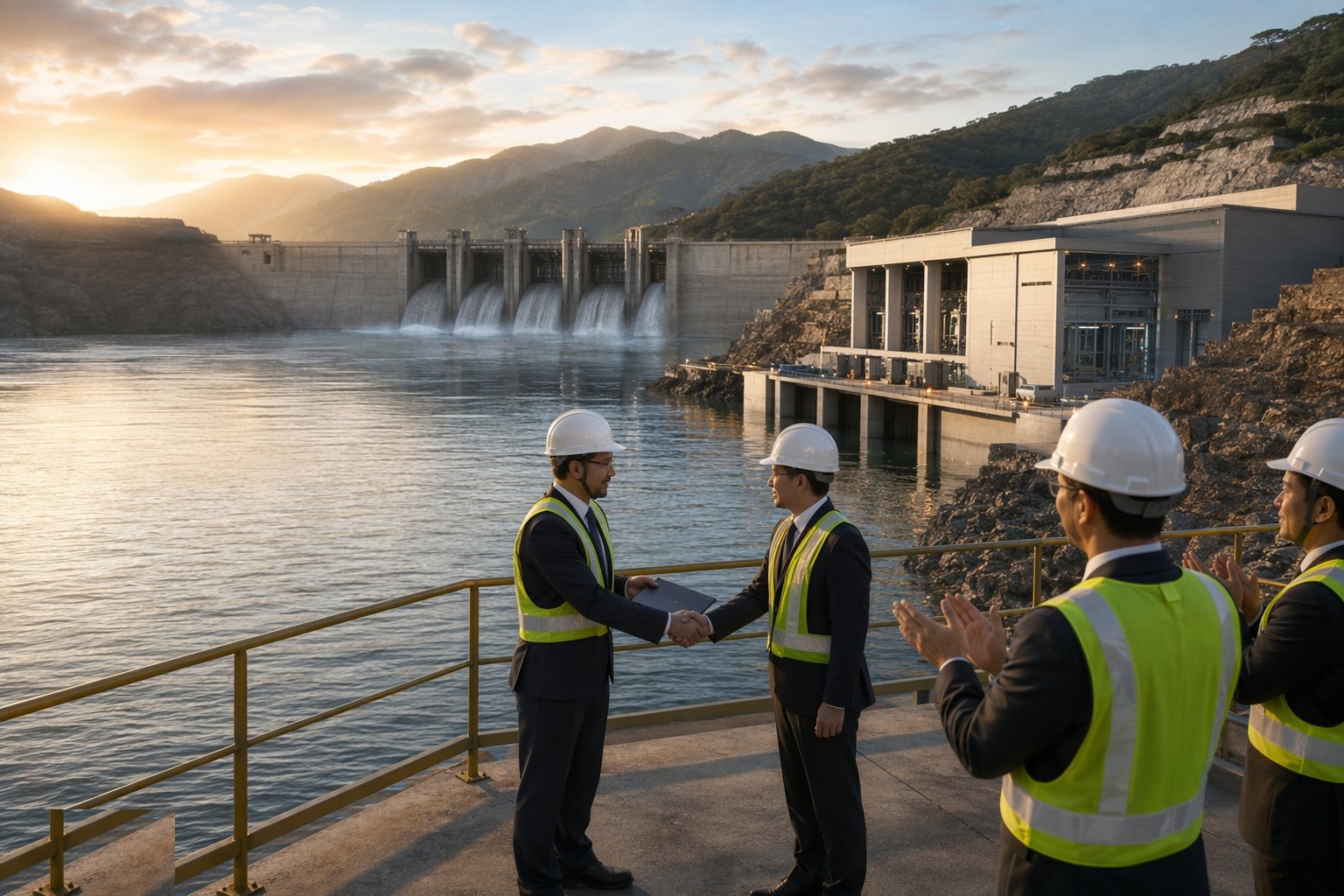
Take the asset over under the contract — the Taking-Over Certificate on FIDIC-based work — with the snag list recorded and the Defects Notification Period (the DLP in Gulf practice) running from that date, through to the Performance Certificate at its end. Hand over the complete documentation: as-builts, all construction and test records, the O&M and reservoir operating manuals, the surveillance regime, and the safety file. Register or update the reservoir under the statutory regime and appoint the supervising engineer for its operating life. And record what the team already knows: liability for a dam does not expire — in the UAE, decennial liability under Civil Code Article 880 runs ten years for structural defects regardless of the DLP, and a dam's duty of care runs for its whole life.
Plant and equipment
- Dam instrumentation — piezometers, seepage weirs, survey targets and data loggers
- Precision levelling and survey equipment for structural movement monitoring
- Vibration, temperature and pressure monitoring for machine commissioning
- Synchronising and electrical test equipment for grid connection
- Flow measurement equipment for performance and index testing
- Gate and valve operating gear and hydraulic test equipment
- Downstream warning systems — sirens, signage and telemetry
Quality control checks
- Pre-impoundment certification complete — panel engineer or independent reviewer sign-off
- Instrument baselines filed before filling, with alarm thresholds set per stage
- First-filling record maintained — fill curve, readings, inspections — as a permanent document
- Dry commissioning checklists signed off before water admission
- Every wet test recorded against its procedure, including overspeed and load rejection
- Performance test results compared to guarantees and closed out contractually
- Reservoir registration and supervising engineer appointment confirmed
- Handover documentation audited complete at taking over — no trailing records
Safety considerations
- Downstream flood risk during first filling — warning systems, trigger levels and emergency plans live
- Reservoir rim instability and drawdown hazards — exclusion and monitoring of slopes
- Working over deep water at intakes and crests — buoyancy, rescue and edge protection
- Confined spaces in galleries, waterways and draft tubes during inspections
- Simultaneous hazards at wet commissioning — rotating machinery, high voltage and high-pressure water together
- Deliberate transient tests (load rejection, overspeed) executed under strict test procedures and exclusion zones
- Public safety around a new reservoir — fencing, signage and community communication from first filling
Common defects
- Filling started before certification — the statutory and insurance position void at the worst moment
- Instrument baselines never taken — first-filling behaviour has nothing to be compared against
- Seepage above prediction explained away rather than investigated
- Gate seals and waterways leaking at first wetting — discovered under full head
- Rough-running or vibration zones found at wet commissioning and left unmapped
- Performance shortfall accepted silently under programme pressure — a warranty claim that should have been made
- Handover records incomplete — the operating team blind to what is buried in their dam
- Reservoir operating manual written as an afterthought — the surveillance regime that protects the public left vague
Best suited for
- First filling of the reservoir under close surveillance
- Dry then wet commissioning of the machines
- Reservoir-safety certification and statutory sign-off
- Handover of an asset designed for a century of service
How long does Impoundment, Commissioning & Handover take?
Typical duration: First filling commonly takes weeks to many months depending on inflow and hold stages; wet commissioning of each unit takes weeks; the full phase from impoundment readiness to taking over typically runs 6–18 months, with the defect period and statutory surveillance continuing beyond..
Related processes
- Commissioning & Energisation
- River Diversion & Cofferdams
- Dam & Powerhouse Civils
- Electromechanical Installation
- Ground-Source Heat Pumps — Homes & Villas
- Shallow Geothermal — Commercial & District Schemes
- Deep Geothermal Drilling & Wells
- Geothermal Plant, Connection & Commissioning
- Site Access & Enabling Works
- Survey, Ground Investigation & Resource Studies
- Piling & Mounting Structures
- PV Module Installation
- Electrical Balance of System
- Grid Connection & Energisation
- Wind Turbine Foundations
- Craneage & Tower Erection
- Wind Farm Electrical Infrastructure
- Power Generation sector guide
- Utilities & Energy group