River Diversion & Cofferdams
Diversion and cofferdam works — moving the river aside by a tunnel, a channel or a phased cofferdam sequence, and keeping it there through every flood the construction period will see.
Last updated 2026-07-28 by the BuildPedia Editorial Team.
What is River Diversion & Cofferdams?
The first civil engineering on a dam site is not the dam — it is persuading the river to flow somewhere else for a few years. The diversion works are sized against a design flood chosen for the construction period: a defined return-period event, larger for a long construction programme or a high-consequence site, smaller for a short one. Get that judgement wrong and the river takes the site back, with people and plant in the bottom of the excavation. The diversion is therefore designed, reviewed and consented like a permanent structure, even though most of it is temporary.
There are two ways to move the water and two ways to hold it back. The water moves through a diversion tunnel bored or blasted through an abutment — the choice in steep, hard-rock valleys — or through an open diversion channel cut around the dam footprint in wider valleys; on some rivers the diversion is phased, working in one half of the channel behind a cofferdam while the river uses the other half, then swapping. The water is held back by cofferdams: earthfill or rockfill embankments with a clay or sheet-pile cut-off, or cellular steel sheet-pile structures — interlocking piles driven as cells and filled with granular material — used where the works must stand in deeper water, such as powerhouse and tailrace excavations.
The river keeps its rights throughout. Environmental consents govern minimum flows, fish passage and silt control while the diversion operates, and in the UK that means licences and monitoring agreed with the environmental regulator — under the CAR regime in Scotland, where most new British hydro is built. In the Gulf there are no perennial rivers, so the regional reference is wadi hydrology: the Hatta pumped-storage scheme in the Hajar mountains was built around flash-flood routing rather than continuous flows — a different design problem, but the same discipline of keeping water and works apart.
When and why is River Diversion & Cofferdams used?
Diversion and cofferdams come immediately after access and enabling works, because nothing in the river channel — no dam foundation, no powerhouse excavation — can be touched until the water is elsewhere. They matter for three reasons at once: safety, because a cofferdam overtopping with an excavation full of workers is one of the worst events in civil engineering; programme, because the closure of the river is a one-chance operation tied to the low-flow season, and missing the window costs a year; and money, because the diversion design flood is a conscious commercial risk decision that the whole construction schedule then lives or dies by. There is no domestic version of moving a river — the closest a small site gets is a sandbagged or sheet-piled cofferdam to rebuild a bank wall in the dry, where the same rule holds: water and works are kept apart by design, and the environmental consents for working in or near a watercourse apply to a two-metre weir just as to a two-hundred-metre one.
Types of River Diversion & Cofferdams
Diversion tunnel
A tunnel driven through a valley abutment, gated or plugged at its upstream end, carrying the full diverted river around the works in steep rock valleys. Expensive and slow to build, but it keeps the entire channel clear and is often incorporated into the permanent works as a spillway or bottom outlet.
Open diversion channel
A channel cut around the dam footprint in wider valleys, sometimes lined and gated. Cheaper and faster than a tunnel where the topography allows, and commonly phased with cofferdams so the river is moved in stages.
Earthfill and rockfill cofferdams
Embankments tipped from the banks with an impermeable element — a clay core, a membrane or a sheet-pile cut-off through the body and foundation. Simple, robust and tolerant of overtopping-resistant design; the upstream cofferdam is often built into the toe of the future embankment dam.
Cellular steel sheet-pile cofferdams
Interlocking steel sheet piles driven as circular or diaphragm cells and filled with granular fill, standing by their own geometry in deeper water. The choice for powerhouse, tailrace and gate-structure excavations that must be dewatered in the river itself.
River Diversion & Cofferdams: step by step
Step 1: Fix the diversion design flood and the sequence
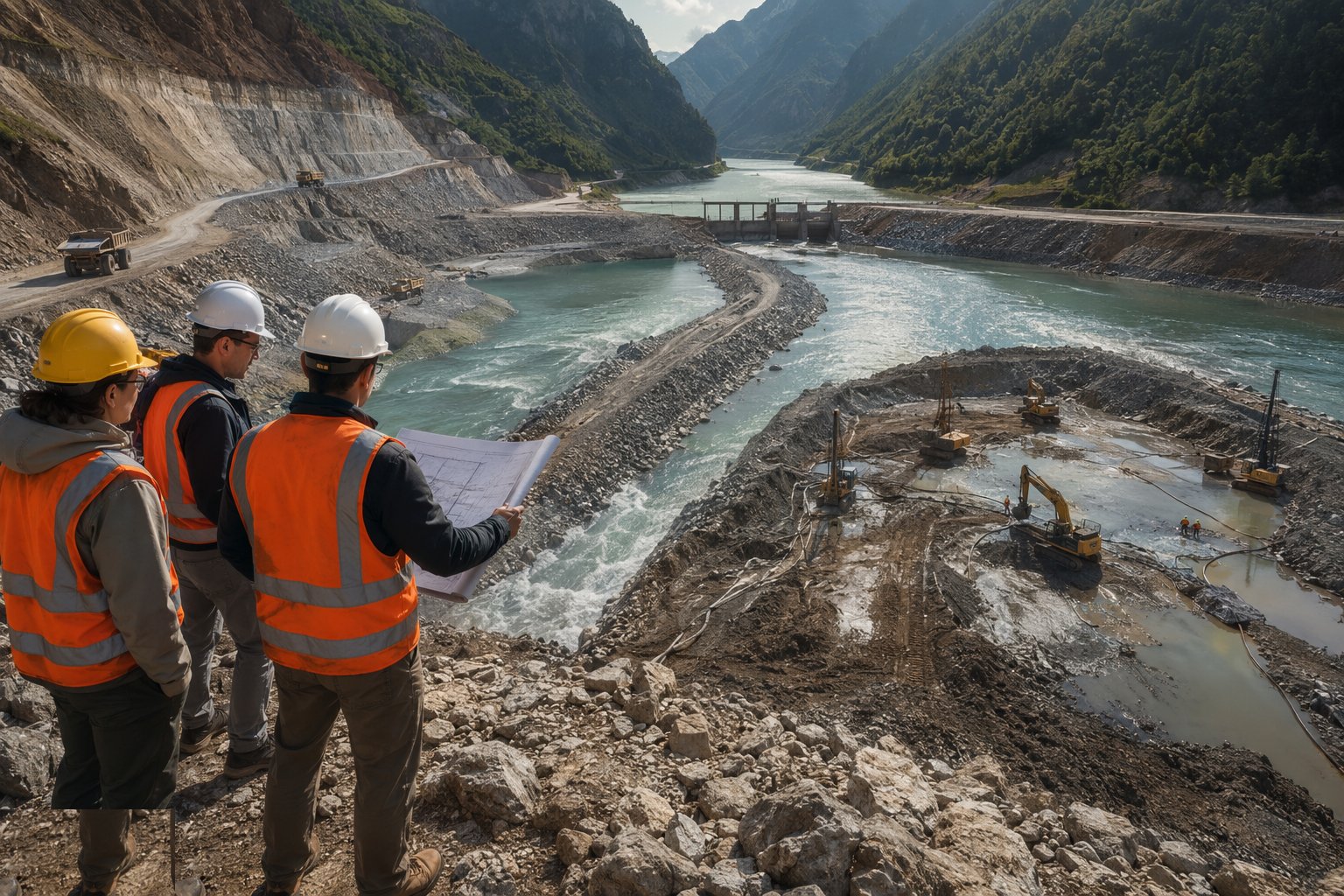
Start with the hydrology: the flow records, the flood frequency analysis and the construction programme together define the design flood the diversion must pass. Agree it with the designer, the client's reviewer and the consents regime, and record the consequence logic — this is a risk decision, so it must be a written one. Then fix the sequence: which season the closure happens in, what must be complete before it, and what the works look like at the end of each flood season.
Step 2: Build the diversion works first
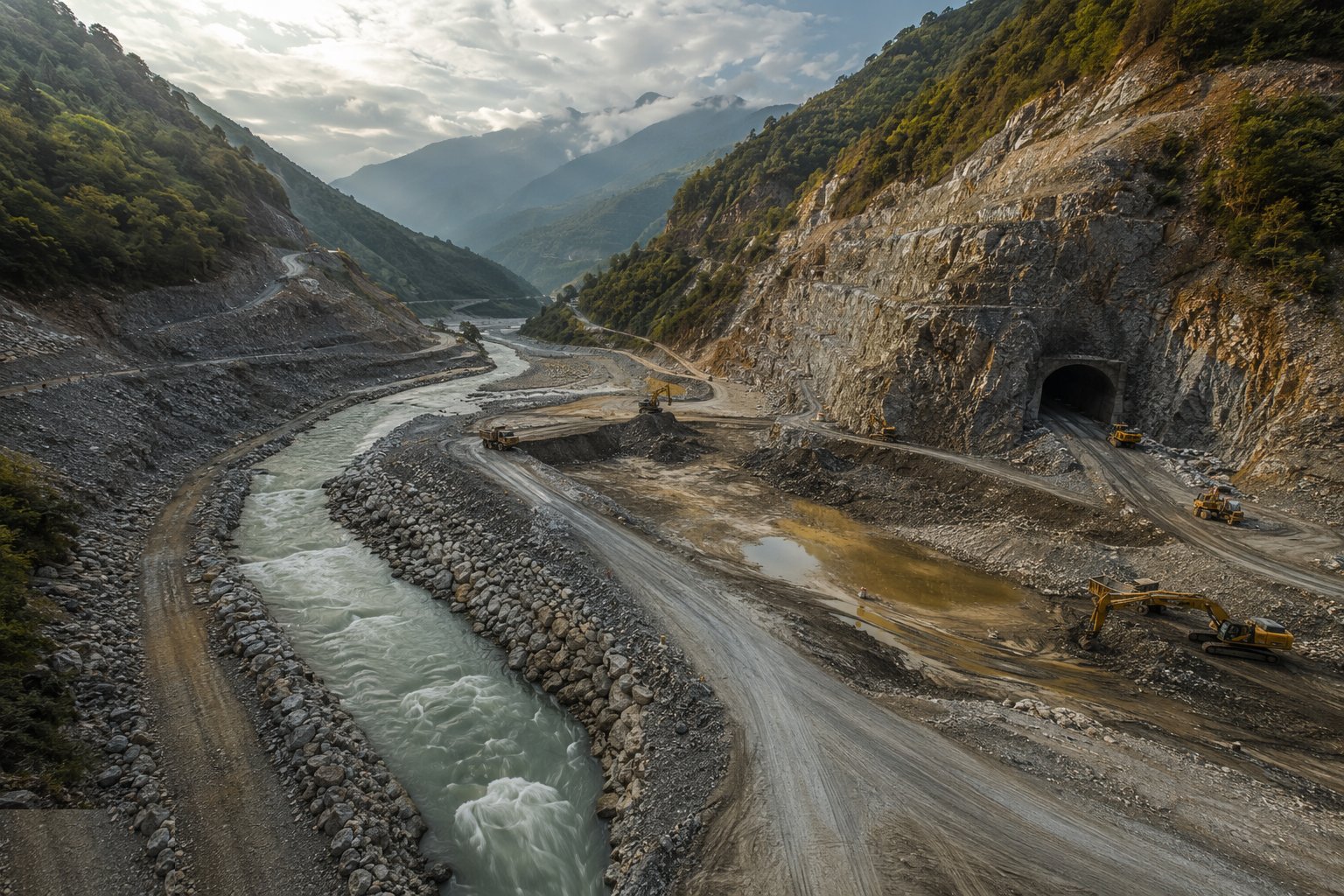
The tunnel or channel is completed, lined and commissioned before any closure — excavated and supported to tunnel or open-channel standards, with its gates, plugs or control structures installed and tested. Inspect and certify the diversion against its design flood capacity: the day the river is turned into it is not the day to discover a shortfall. For tunnels, the usual tunnelling safety and ground-support regime applies throughout construction.
Step 3: Close the river behind the upstream cofferdam
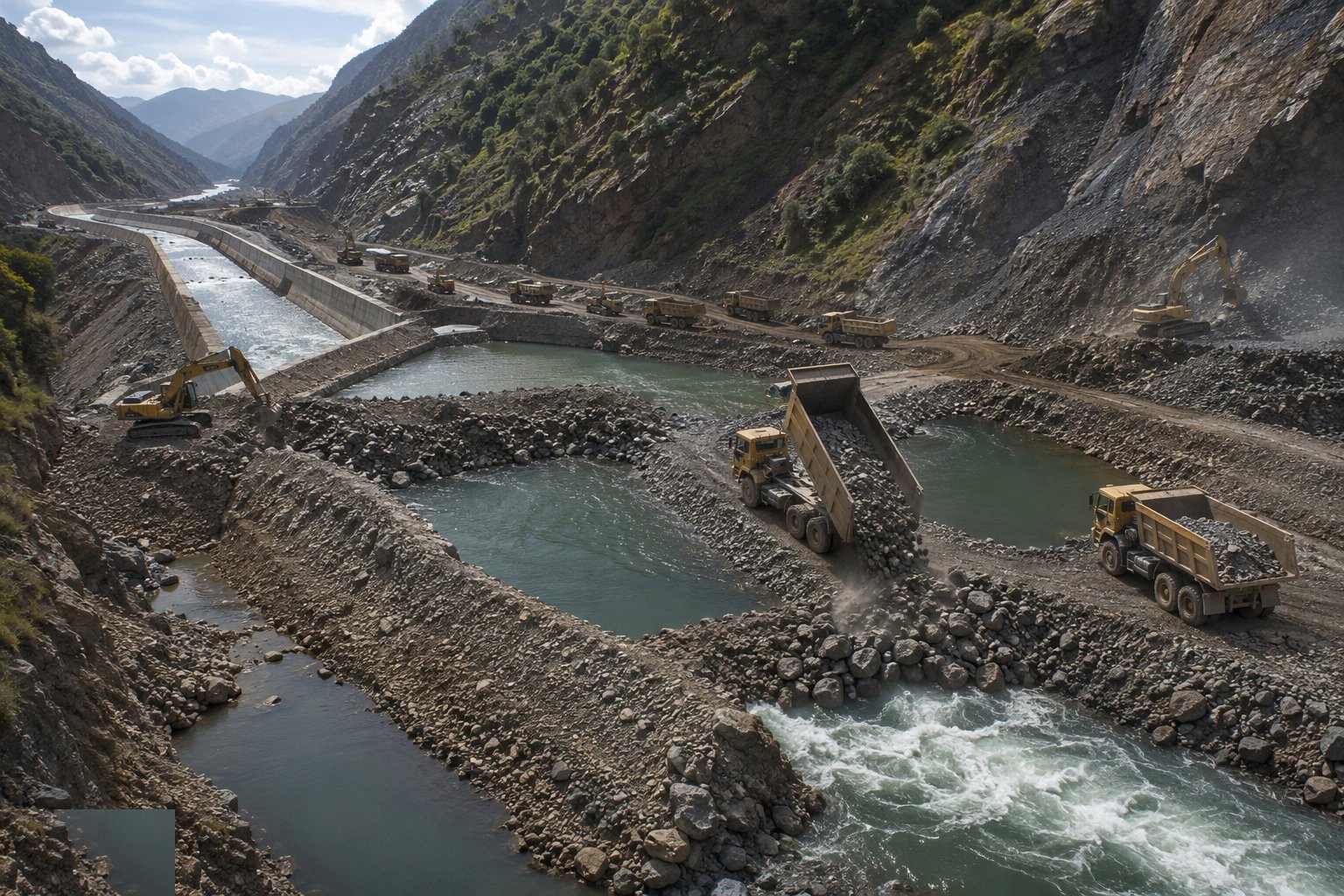
The closure is a single planned operation in the low-flow window: the cofferdam is advanced from both banks until only the closure gap remains, then the gap is closed — by end-tipping rock, dropping a gate or placing closure units — as the flow is committed to the diversion. It is rehearsed, resourced and watched against the forecast, with a defined abort criterion. Once closed, the cofferdam is raised to full height with its cut-off installed and its flood-facing slopes protected.
Step 4: Build the downstream cofferdam and dewater
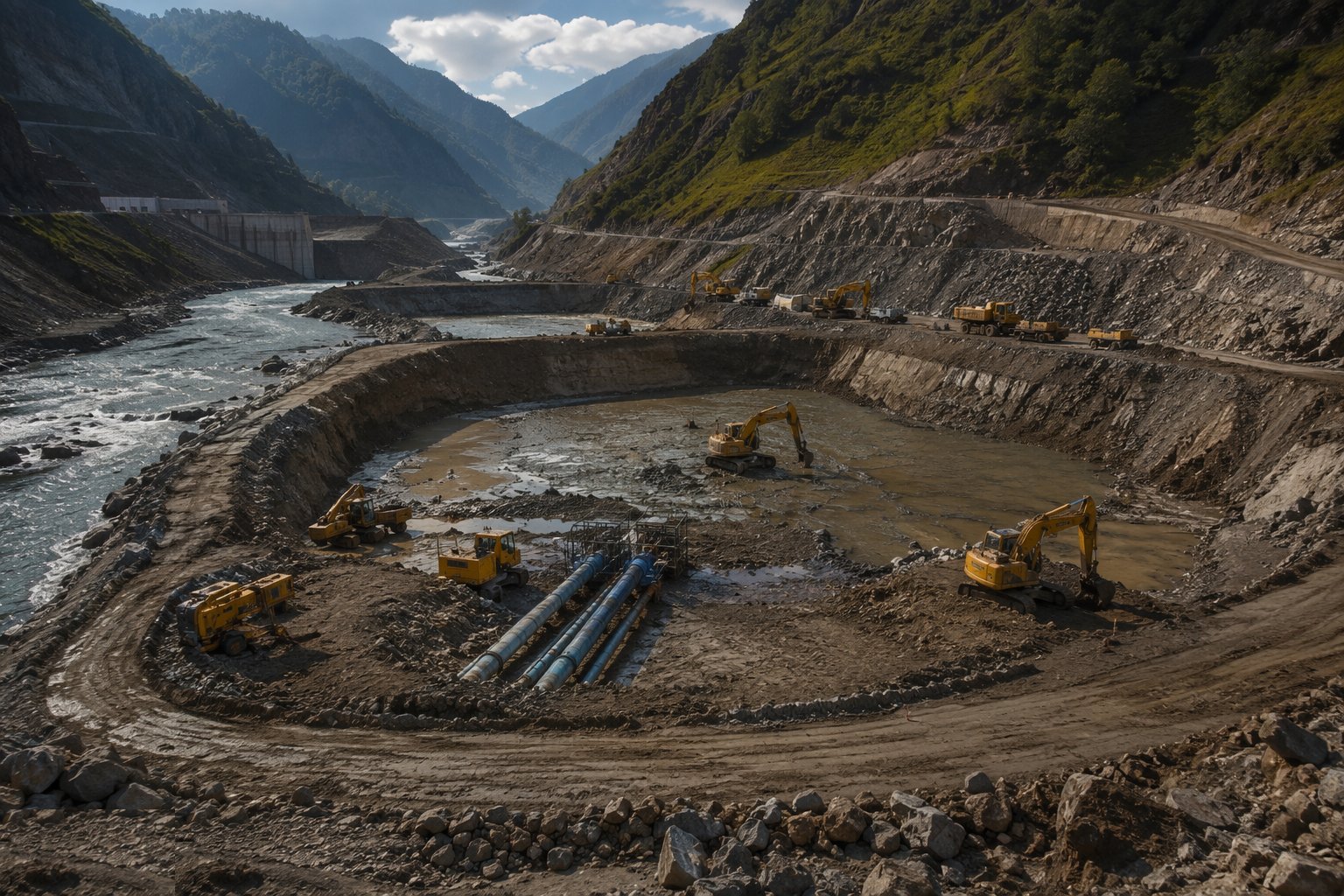
The downstream cofferdam goes in the same way, and the enclosed reach is then dewatered: initial pumping of the impounded reach, followed by seepage management — sumps, wellpoints or cut-off works — for the life of the excavation. Watch the cofferdams continuously as the water comes down: piezometers, seepage measurement and daily inspections, because a cofferdam tells you it is unhappy through seepage and movement before it fails.
Step 5: Expose, clean and map the foundations
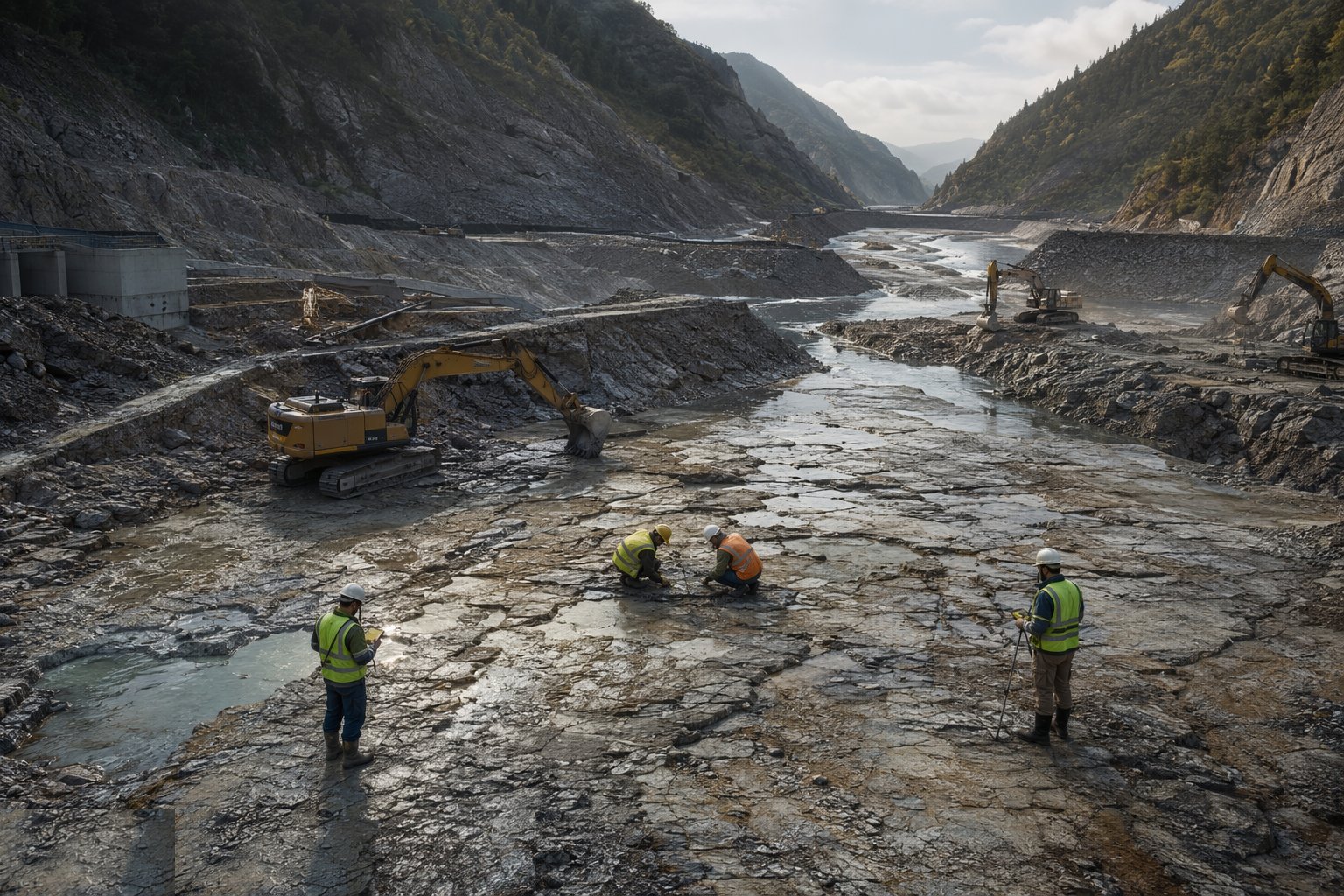
With the river bed dry, strip to the design foundation: excavation, scaling of loose rock, dental treatment of defects and a full geological mapping of the exposed foundation by the engineering geologist. The exposed rock is compared against the ground investigation and the design assumptions — differences are resolved now, with the designer on site, because this surface will be buried for a century.
Step 6: Operate the flood watch and contingency
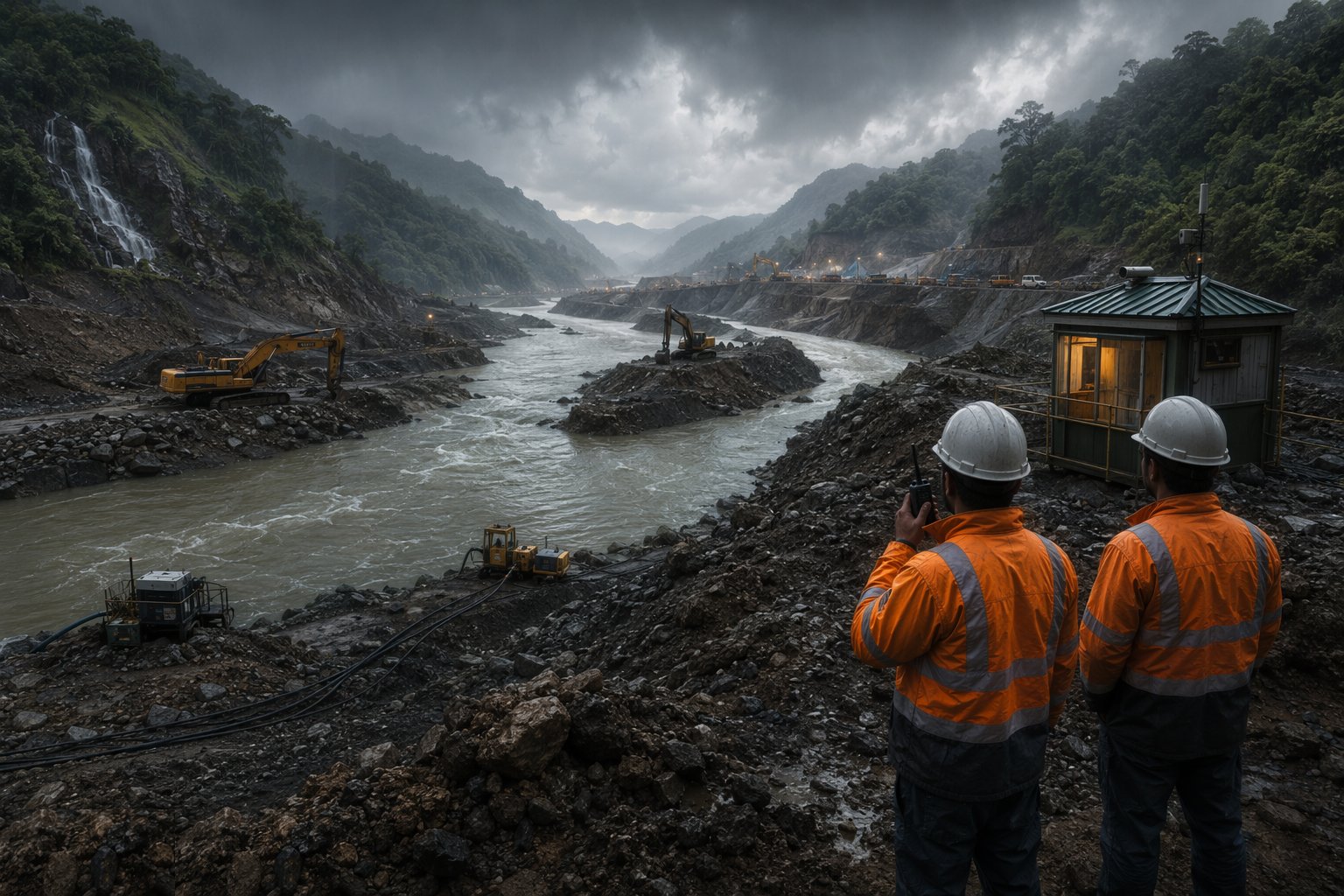
For the whole diversion period, run the flood management system: weather and river forecasting, defined trigger levels, an evacuation plan for the excavation, and plant demobilisation routes that work in the dark and the wet. The contingency — what happens when a flood bigger than the design event arrives — is written, briefed and drilled, including the controlled overtopping provisions where the cofferdam design allows them.
Step 7: Maintain the river's interests throughout
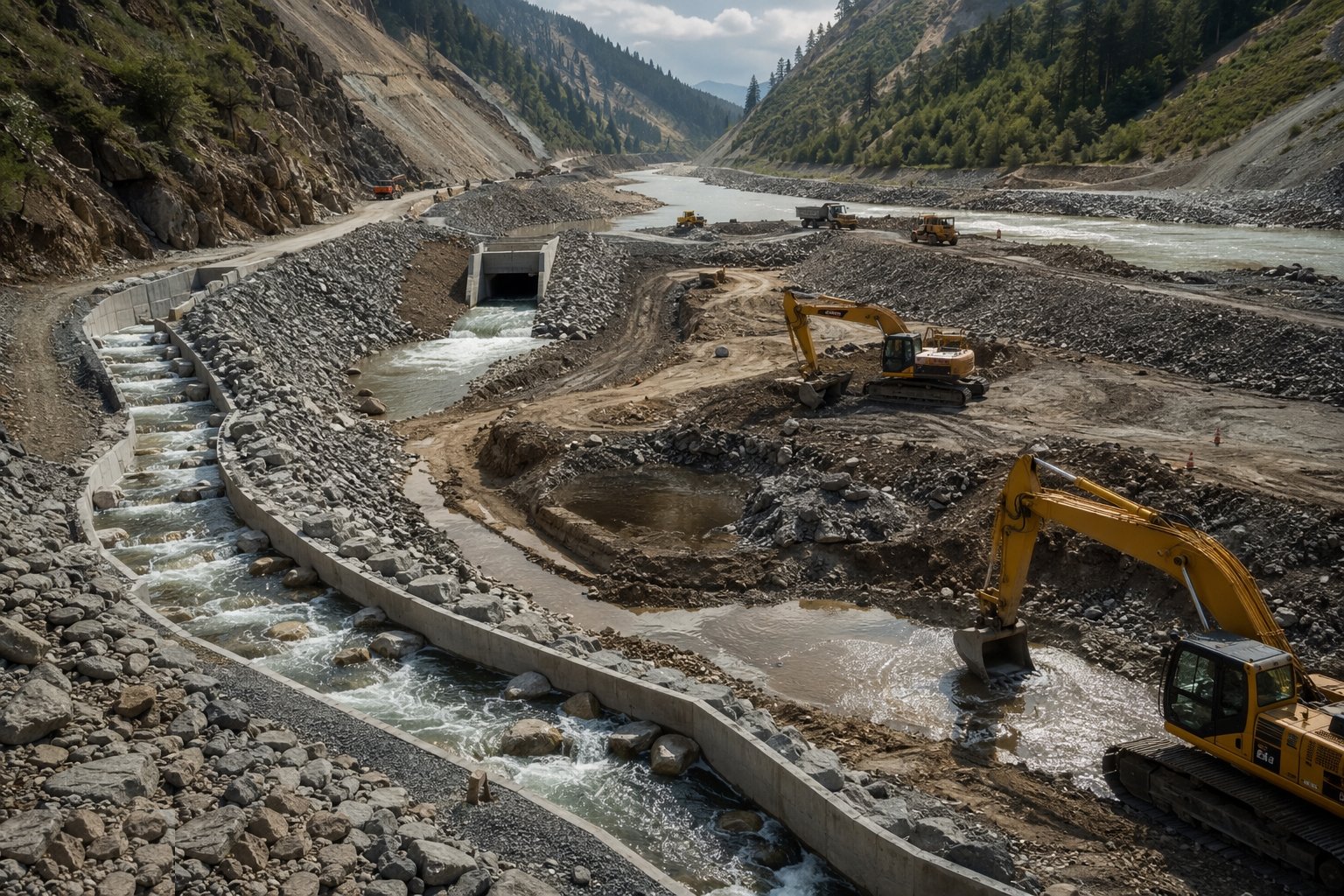
While the diversion runs, discharge the consents: maintain the agreed compensation flows downstream, operate fish rescue and passage measures during closure and dewatering, control silt from the works to the river, and monitor and report as the licences require. A consent breach here stops a dam just as effectively as a flood — and the regulator's patience is not a renewable resource.
Plant and equipment
- Tunnelling plant — drill jumbos or roadheaders, mucking and support equipment for diversion tunnels
- Excavators, dozers and articulated dump trucks for channels and cofferdams
- Vibro hammers and piling rigs for sheet-pile cells and cut-offs
- High-capacity pumps, wellpoint systems and generators for dewatering
- Rock drills, scaling equipment and dental-concrete plant for foundation preparation
- River and weather monitoring — gauges, telemetry and forecasting feeds
- Fish rescue equipment and silt-control measures
Quality control checks
- Diversion design flood agreed and documented with its consequence logic
- Diversion tunnel or channel inspected and certified before river closure
- Cofferdam construction records — fill placement, cut-off installation — kept per layer
- Seepage and piezometer readings logged and trended through the dewatered period
- Exposed foundation geologically mapped and signed off against design assumptions
- Closure operation rehearsed with resourcing, forecast criteria and abort thresholds recorded
- Consent compliance — flows, fish, silt — monitored, recorded and reported
Safety considerations
- Working on and over water — buoyancy aids, rescue boats, bank-edge protection and exclusion zones
- Inrush and flood risk in the dewatered excavation — trigger levels, alarms and drilled evacuation
- Cofferdam instability — daily inspection, seepage watch and restricted plant loading at crests
- Tunnelling hazards for diversion tunnels — ground support, ventilation, blasting control
- Heavy plant on steep banks and tipped cofferdam faces
- Confined spaces in tunnels, gates and outlet works
- Public safety downstream — warning systems and communication with the regulator and community
Common defects
- Diversion design flood set by optimism rather than hydrology — the site floods in year one
- Closure attempted outside the low-flow window — aborted or, worse, lost
- Cofferdam cut-off incomplete — seepage that pumps cannot master and foundations that will not dry
- Sheet-pile clutches split or piles refused — cellular cofferdam integrity compromised
- Foundation cleanup skimped under programme pressure — defects buried under the dam
- Seepage monitoring neglected — the cofferdam's warnings missed until movement starts
- Compensation flow or fish-passage consent breached — regulator stops the works
Best suited for
- Moving the river aside before any dam construction can start
- Phased cofferdams holding back the design flood season by season
- Diversion tunnels and channels sized for the whole construction period
- The highest-consequence temporary works on the scheme
How long does River Diversion & Cofferdams take?
Typical duration: Diversion tunnels and channels commonly take 6–18 months to build; closure and initial dewatering are timed to the low-flow season and completed in weeks; the diversion then operates for the life of the main civils, typically several years..
Related processes
- Wind Turbine Foundations
- Craneage & Tower Erection
- Wind Farm Electrical Infrastructure
- Commissioning & Energisation
- Dam & Powerhouse Civils
- Electromechanical Installation
- Impoundment, Commissioning & Handover
- Ground-Source Heat Pumps — Homes & Villas
- Shallow Geothermal — Commercial & District Schemes
- Deep Geothermal Drilling & Wells
- Geothermal Plant, Connection & Commissioning
- Site Access & Enabling Works
- Survey, Ground Investigation & Resource Studies
- Piling & Mounting Structures
- PV Module Installation
- Electrical Balance of System
- Grid Connection & Energisation
- Power Generation sector guide
- Utilities & Energy group