Grid Connection & Energisation
The connection agreement made physical: grid-witnessed tests, a phased energisation sequence and the compliance evidence that lets a finished solar farm finally export a single kilowatt-hour.
Last updated 2026-07-28 by the BuildPedia Editorial Team.
What is Grid Connection & Energisation?
A solar farm can be mechanically and electrically complete and still legally generate nothing. Energisation is gated by the connection agreement — the document negotiated with the network operator months or years earlier that fixes the export capacity, the point of connection, the protection and the compliance tests. In the UK, distribution-scale schemes connect under ENA Engineering Recommendation G99, which requires prior DNO approval, type-tested or site-verified protection and a formal witness regime before synchronising; small installations of up to 16 A per phase use the simpler G98 notification route, but nothing on a utility-scale site qualifies. Transmission-scale schemes connect through NESO and the transmission owner with their own compliance programme. The paperwork is not decoration: connecting generation without the network operator's permission is a breach that can get a site disconnected, and the protection settings are checked against the agreement to the digit before the first breaker closes.
In the UAE the regime differs by emirate and scale. Utility-scale plants are procured and connected under the emirate's utility framework — EWEC in Abu Dhabi, which buys the output of Sweihan (Noor Abu Dhabi) and the 2 GW Al Dhafra plant under long-term power purchase agreements, and DEWA in Dubai — with the grid interface at transmission level and the connection conditions written into the project agreements. Distributed rooftop and commercial systems run under the connection regimes: DEWA's Shams Dubai net-metering programme, which requires a DEWA-enrolled contractor, a solar NOC and design approval before installation, DEWA-listed equipment, and a DEWA inspection with a bidirectional meter before net metering goes live; Abu Dhabi's distribution companies run their own energy-netting scheme through ADDC and AADC. In both markets the principle is identical to the UK: no energisation without the utility's written permission.
The energisation itself is a rehearsed sequence, not a switch. The substation is energised first — back-fed from the grid — with protection proven live and phasing verified. Then the MV collector rings are energised ring by ring, the inverter stations are powered, and inverters are brought online in blocks, exporting in a controlled ramp with the export limitation and grid-code functions (frequency and voltage response, fault ride-through) demonstrated in the grid-witnessed tests. Compliance evidence — recorded during the tests and submitted to the network operator — is the final gate. Only then does performance verification begin: the performance ratio baseline, SCADA data quality, and in the Gulf the soiling and temperature behaviour that will define the plant's real output against the energy yield model.
When and why is Grid Connection & Energisation used?
Grid connection and energisation is last because everything else must be proven first: the strings, the collectors, the substation, the protection and the SCADA are all inputs to this stage, and the network operator will not witness tests on an unproven plant. It matters because it is the revenue gate — the connection agreement milestone, not the last module clamped, is the date the project's financing model cares about — and because it is the most externally controlled moment of the whole build: the DNO, the utility or the transmission operator holds the permission, their witness engineers set the pace, and a failed witness test or a protection setting that has drifted from the agreement costs weeks, not hours. Getting the compliance evidence right first time is a project discipline that starts months before energisation day.
Types of Grid Connection & Energisation
Distribution connection (G99)
The UK route for generation above 16 A per phase connecting at distribution voltages: a G99 application to the DNO with prior approval, type-test evidence for the generating units or site-verified alternatives, protection to the agreed settings, and witnessed commissioning tests before synchronising. Most UK solar farms connect this way, with the contestable works often built by an independent connection provider and adopted by the DNO.
Transmission-scale connection
Large schemes connecting at transmission voltages through NESO and the relevant transmission owner in the UK, or at transmission level with TRANSCO or DEWA's network in the UAE. The compliance programme is a project in itself — grid-code studies, staged compliance testing and operational data links — and connection-queue milestones dominate the development timeline long before construction starts.
Distributed net-metered connection
The rooftop and commercial scale: G98 notification in the UK for the smallest systems with MCS certification underpinning the domestic market, and in the UAE the utility programmes — DEWA's Shams Dubai with its enrolled contractors, equipment lists, inspection and bidirectional metering, and ADDC/AADC energy netting in Abu Dhabi. Simpler regimes, but the same rule: the utility approves and inspects before export begins.
Grid Connection & Energisation: step by step
Step 1: Confirm the connection agreement and conditions
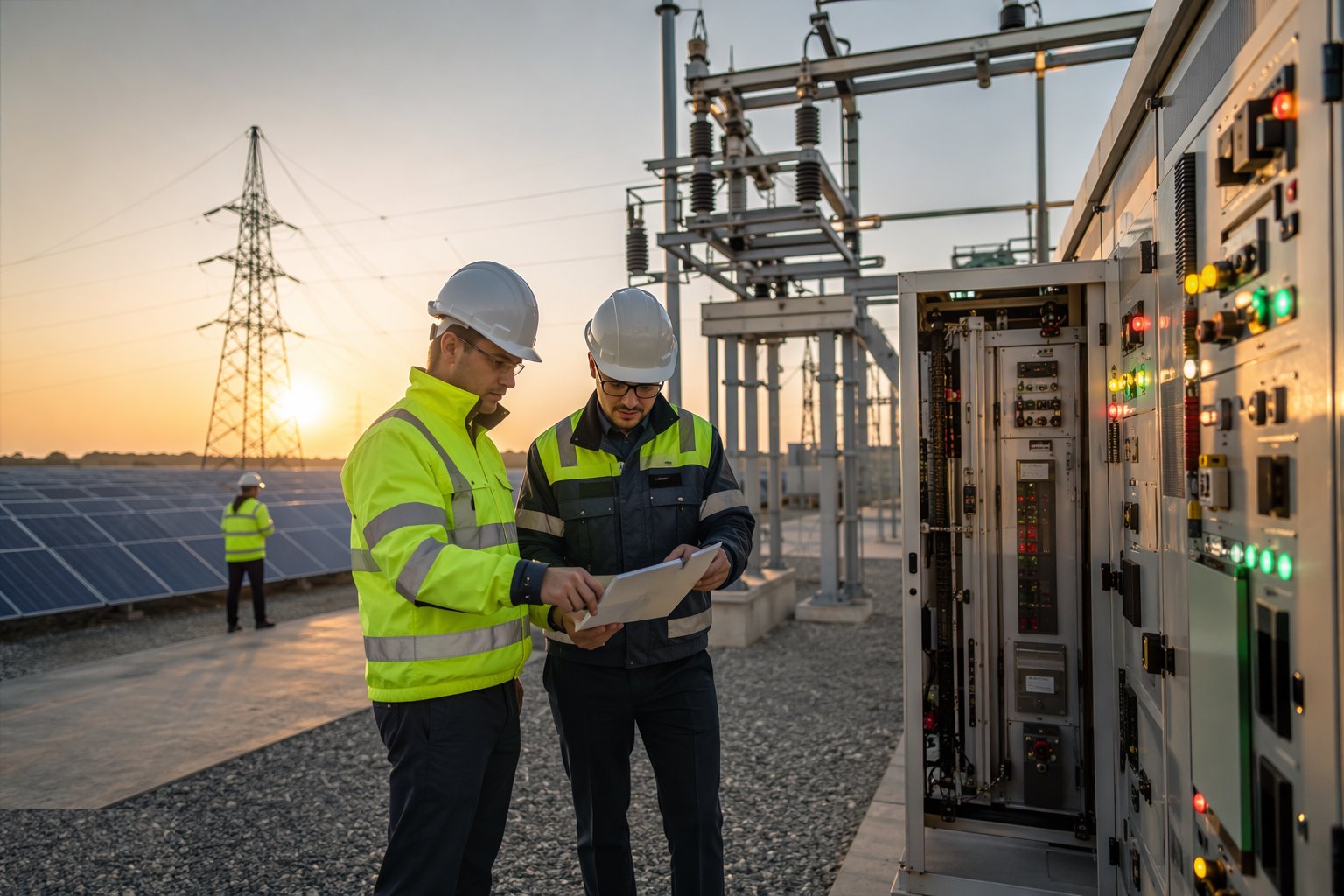
Before energisation planning, freeze the contractual baseline: the connection agreement's export capacity, point of connection, protection requirements, witness-test schedule and the conditions precedent to energisation. Verify the as-built plant matches it — inverter types and firmware on the type-test register, protection settings to the agreed values, metering as specified. Any drift between the agreement and the plant is resolved with the network operator now, in writing, not discovered at the witness test.
Step 2: Complete pre-energisation inspections and the safety case
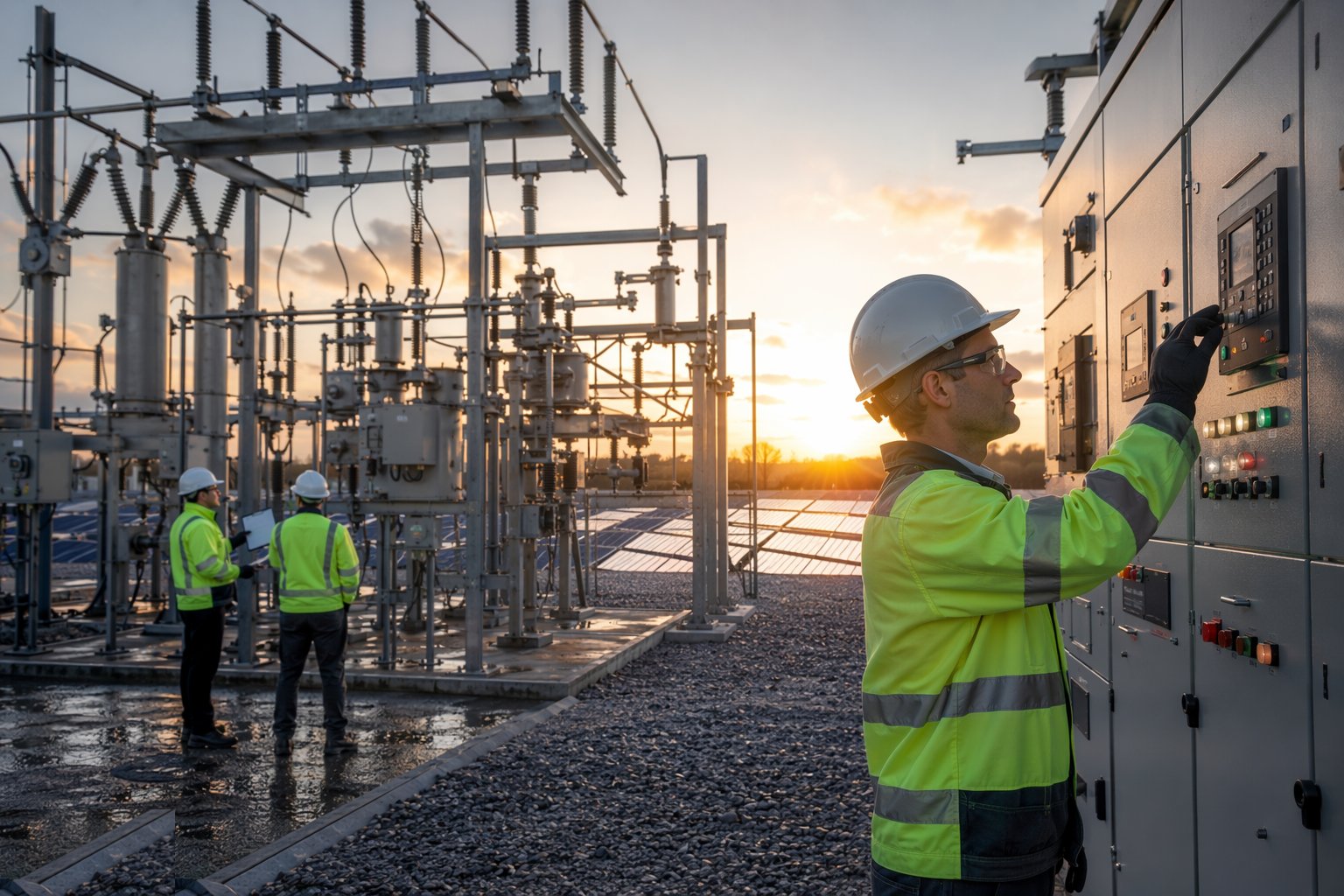
Run the internal readiness: the energisation dossier audited, Category A punch closed, electrical safety rules and authorised-person appointments in place, switching schedules drafted and rehearsed. The network operator's own pre-energisation inspections follow — metering, protection interface, operational contacts and data links — and their acceptance certificate or permission to energise is the document the programme has been pointing at since financial close.
Step 3: Energise the substation and prove the protection live
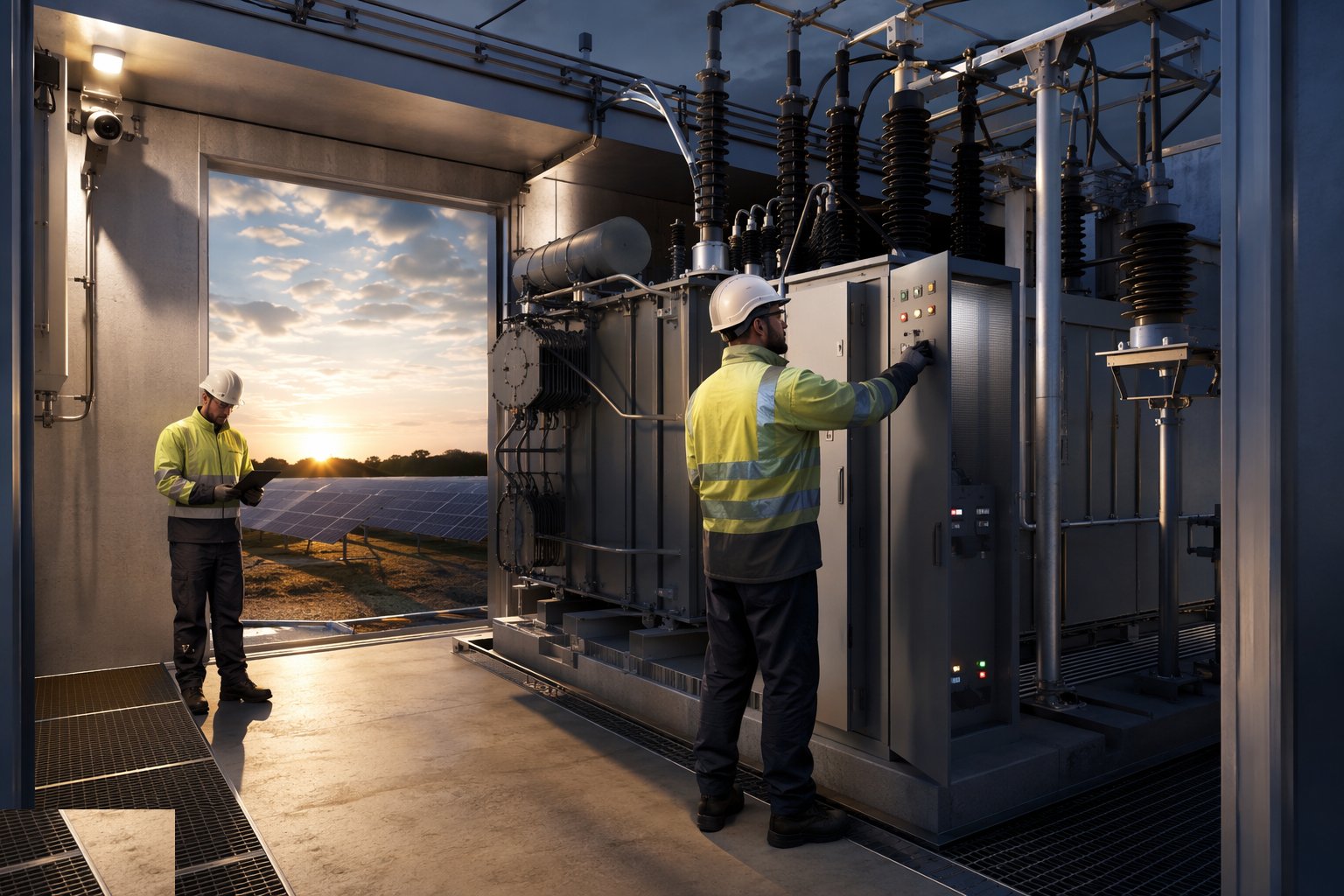
Back-feed the substation from the grid under the agreed switching schedule: transformer energisation with inrush management, phasing and synchronism checks, and the protection interface proven live with the network operator where required. This is the first time the site takes power from the grid rather than delivering to it, and it converts the site's electrical safety regime permanently — from here on, the plant is a live substation with a construction site attached.
Step 4: Energise the collector network ring by ring
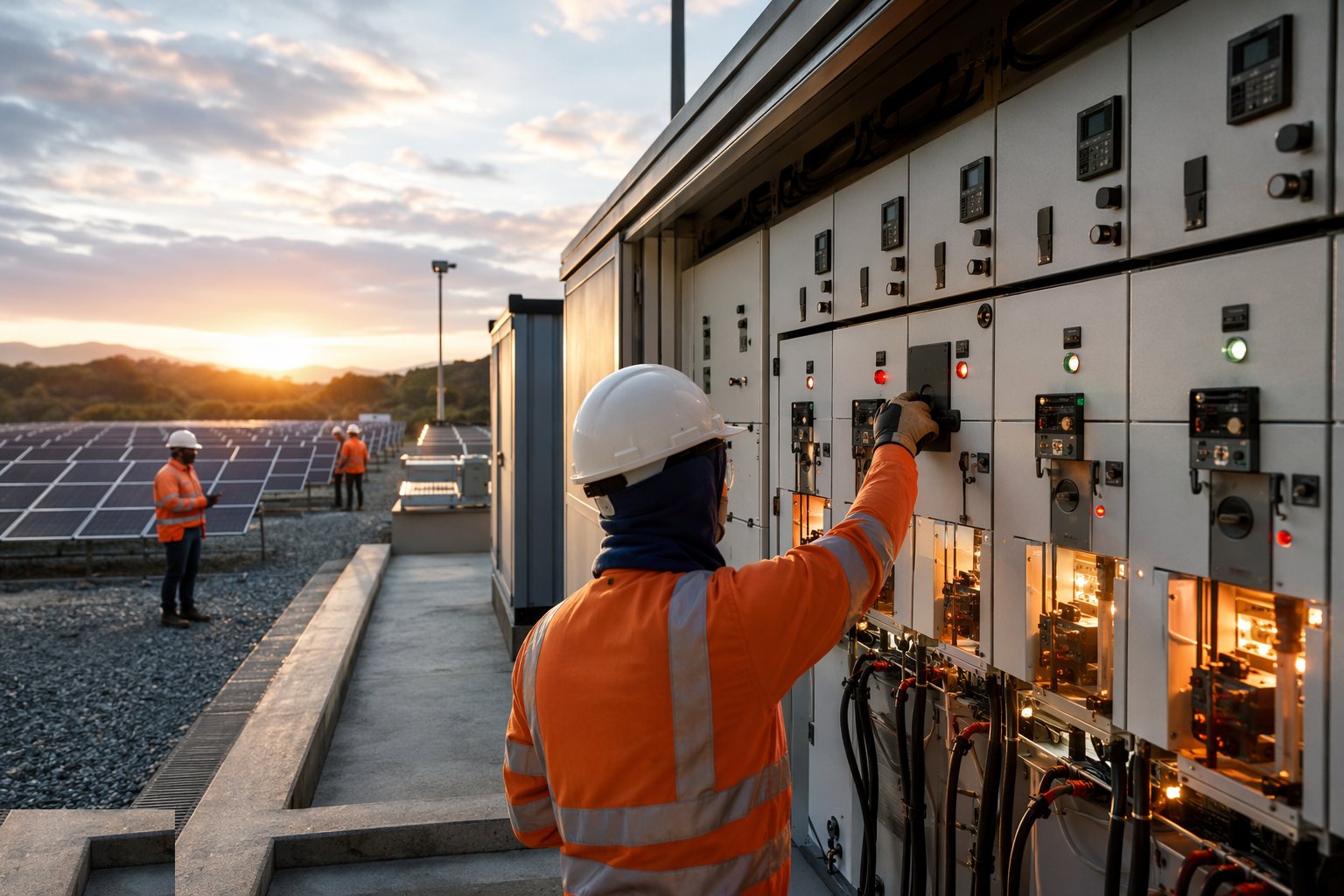
Energise the MV rings and inverter stations in the planned sequence, confirming cable and transformer integrity as each section comes live, with the switching schedule logged and the authorised persons in control. Faults found here — a failed joint, a trip on energisation — are isolated and worked through methodically; the sequence exists precisely so a fault takes out one ring, not the plant.
Step 5: Bring inverters online in a controlled ramp
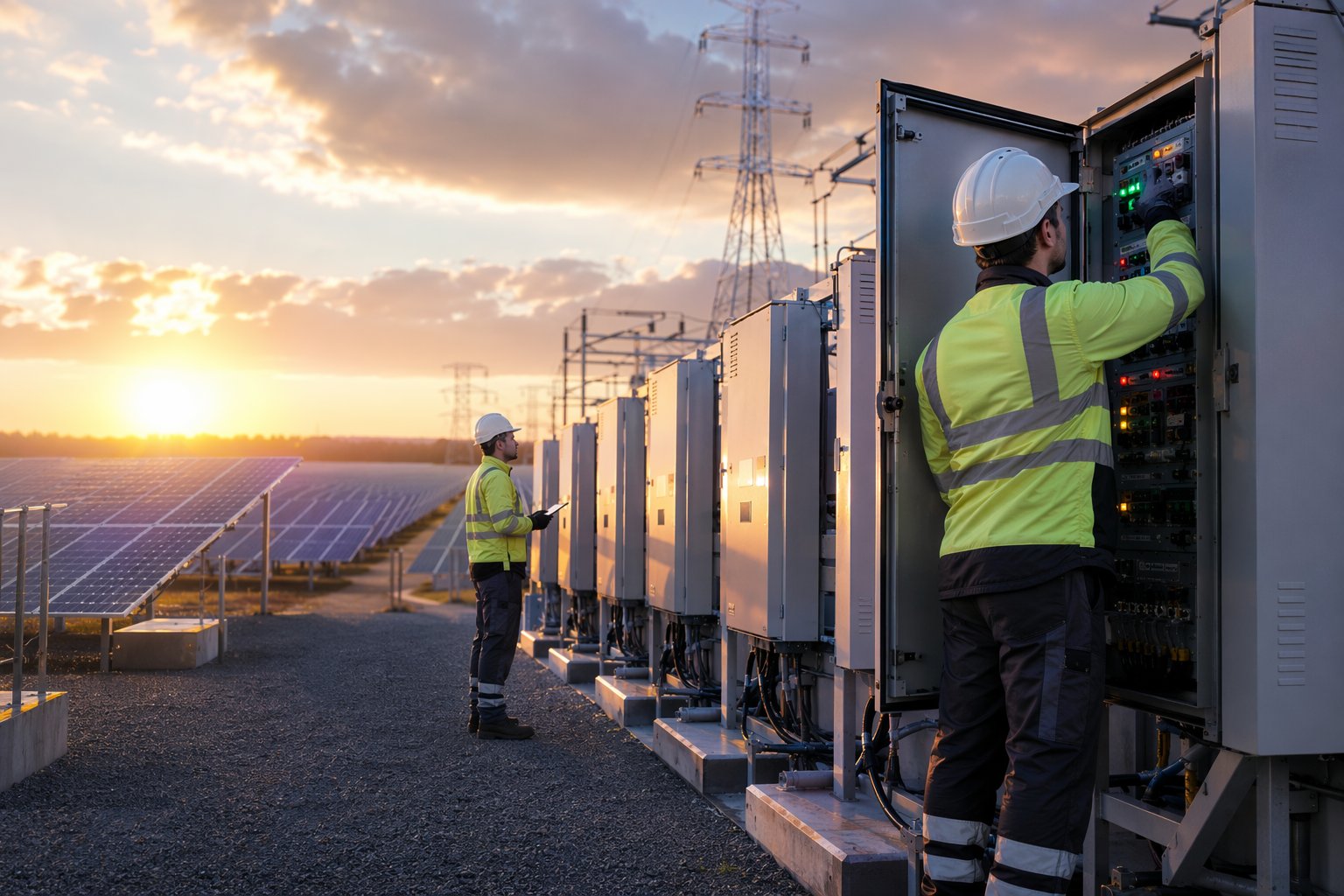
Commission inverters block by block: DC isolators closed from the string register, inverters configured to the grid-code parameters, first export at low power, then a controlled ramp with grid behaviour monitored at the point of connection. Demonstrate the required functions — export limitation, frequency and voltage response — as each block proves stable. In the Gulf, watch the thermal behaviour from day one: afternoon derating at high ambient temperature is expected physics, but it must match the model, not exceed it.
Step 6: Pass the grid-witnessed compliance tests
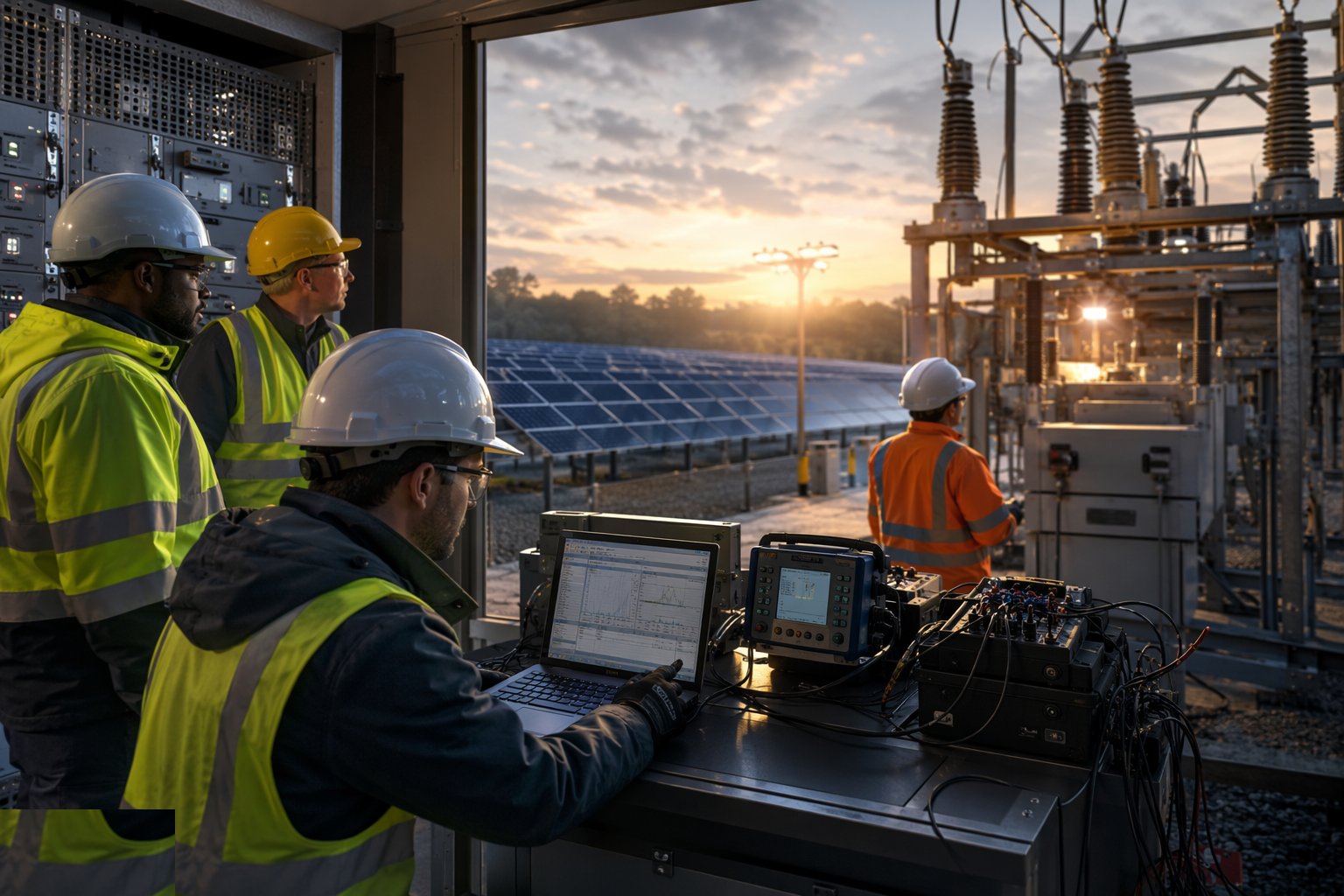
Run the witness-test schedule with the network operator: protection trip and intertrip tests, grid-code response demonstrations, metering verification and the data-link checks. Record everything — the test records become the compliance evidence submitted for final acceptance to export. A failed test means rectification and re-witness on the operator's calendar, which is why the settings freeze and rehearsals in the earlier steps exist.
Step 7: Baseline performance and hand over to operations
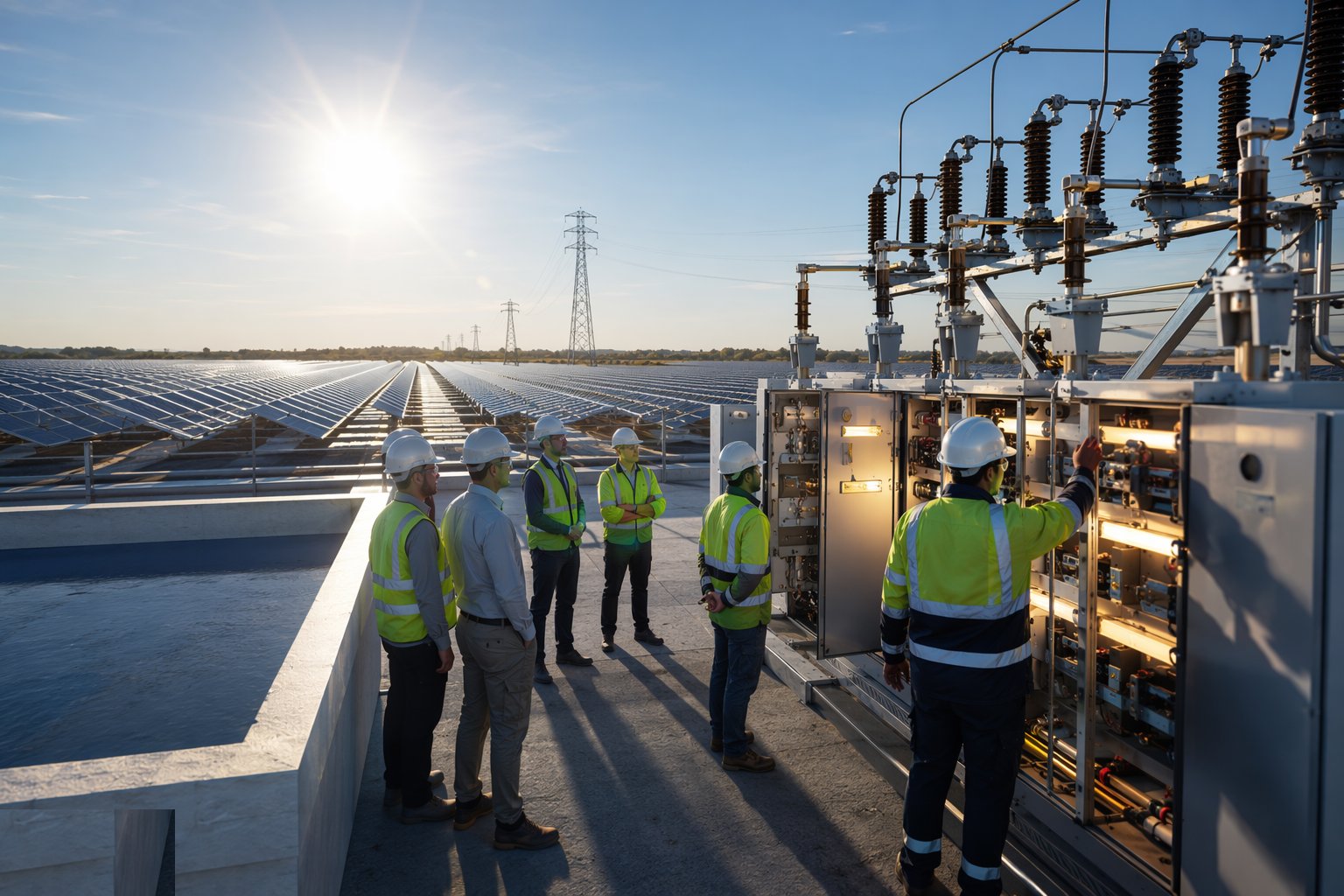
With export permission in hand, establish the operating baseline: performance ratio measurement against the met-station data, SCADA availability and data quality, tracker performance where fitted, and in the Gulf the soiling monitoring and cleaning-regime baseline — desert plants lose material yield to dust between cleans, and the washing regime (robotic dry cleaning or water-based, on the large plants) is set from the measured soiling rate. Compile the handover: compliance evidence, test records, as-builts, O&M documentation and spares — and the construction project becomes an operating power station.
Plant and equipment
- Switching and earthing equipment for authorised HV operations
- Protection secondary injection and primary test sets
- Power quality and grid-response analysers for compliance tests
- Synchronism and phasing test instruments
- SCADA and data-link test equipment
- Met station and calibrated reference cells for performance ratio
- Soiling monitoring stations and cleaning equipment (Gulf)
- Bidirectional export/import metering packages
Quality control checks
- As-built plant verified against the connection agreement — settings, types, firmware
- Network operator acceptance/permission to energise in writing before switching
- Switching schedules logged; every operation by authorised persons
- Witness-test records complete and submitted as compliance evidence
- Metering verified and registered with the utility or operator
- Performance ratio baseline documented with met-station data
- Soiling and temperature behaviour baselined against the yield model (Gulf)
- Handover dossier: compliance evidence, as-builts, O&M manuals, spares schedule
Safety considerations
- HV switching only by authorised persons under the electrical safety rules
- Site-wide status change at back-feed: the whole plant is live from energisation day
- DC side live in daylight throughout — isolator and lock-off discipline
- Exclusion and communication during first energisation of each section
- Heat management for witness-test and commissioning crews in the Gulf summer
- Emergency arrangements live at the substation before back-feed
- Fatigue management during extended commissioning windows
Common defects
- Protection settings drifted from the connection agreement — witness test fails
- Inverter firmware off the type-test register — compliance questioned at the gate
- Energisation planned before the dossier is complete — permission refused
- Collector fault found at energisation that testing should have caught
- Export limitation misconfigured — grid breach on the first sunny day
- Metering not registered — exporting without settlement arrangements
- SCADA data poor at handover — performance ratio can't be proven
- Soiling baseline never set (Gulf) — yield shortfall argued over for years
Best suited for
- Grid-witnessed testing and compliance evidence
- A phased energisation sequence agreed with the network operator
- The connection agreement made physical
- The final gate before the farm exports its first unit
How long does Grid Connection & Energisation take?
Typical duration: Typically 1–3 months from back-feed to full export and compliance acceptance, paced by the network operator's witness schedule; transmission-scale compliance programmes run longer, and the connection agreement itself is negotiated 1–3 years ahead of construction..
Related processes
- Survey, Ground Investigation & Resource Studies
- Piling & Mounting Structures
- PV Module Installation
- Electrical Balance of System
- Wind Turbine Foundations
- Craneage & Tower Erection
- Wind Farm Electrical Infrastructure
- Commissioning & Energisation
- River Diversion & Cofferdams
- Dam & Powerhouse Civils
- Electromechanical Installation
- Impoundment, Commissioning & Handover
- Site Access & Enabling Works
- Ground-Source Heat Pumps — Homes & Villas
- Shallow Geothermal — Commercial & District Schemes
- Deep Geothermal Drilling & Wells
- Geothermal Plant, Connection & Commissioning
- Power Generation sector guide
- Utilities & Energy group