Site Access & Enabling Works
Getting plant, people and materials to a remote site and making it safe, legal and workable — the logistics stage every energy project starts with.
Last updated 2026-07-28 by the BuildPedia Editorial Team.
What is Site Access & Enabling Works?
Energy sites are rarely next to the road. A solar farm is tens of hectares of pasture or desert; a wind farm sits on a moor or a hill served by one farm track; an oil and gas facility can be a hundred kilometres into the desert at the end of a graded sand road. The enabling works are everything that gets you there and lets you work once you arrive: the access tracks and junctions, the compound and laydown areas, the camps where the site is too remote to commute to, the welfare cabins, the fencing and gates, and the surveys and approvals that clear the way before the first machine starts.
In the UK the stage is framed by CDM 2015 — welfare facilities are a statutory duty from day one, and the construction phase plan has to exist before work begins — and by a run of specialist surveys that energy sites attract more than most: unexploded ordnance (UXO) assessments on former military and industrial land, ecological surveys and protected-species licensing, and archaeological surveys or watching briefs agreed as planning conditions. Access over third-party land is secured by wayleaves and easements, and the geometry of every track is fixed now for the heaviest thing it will ever carry — usually the crane, the transformer or the blade delivery.
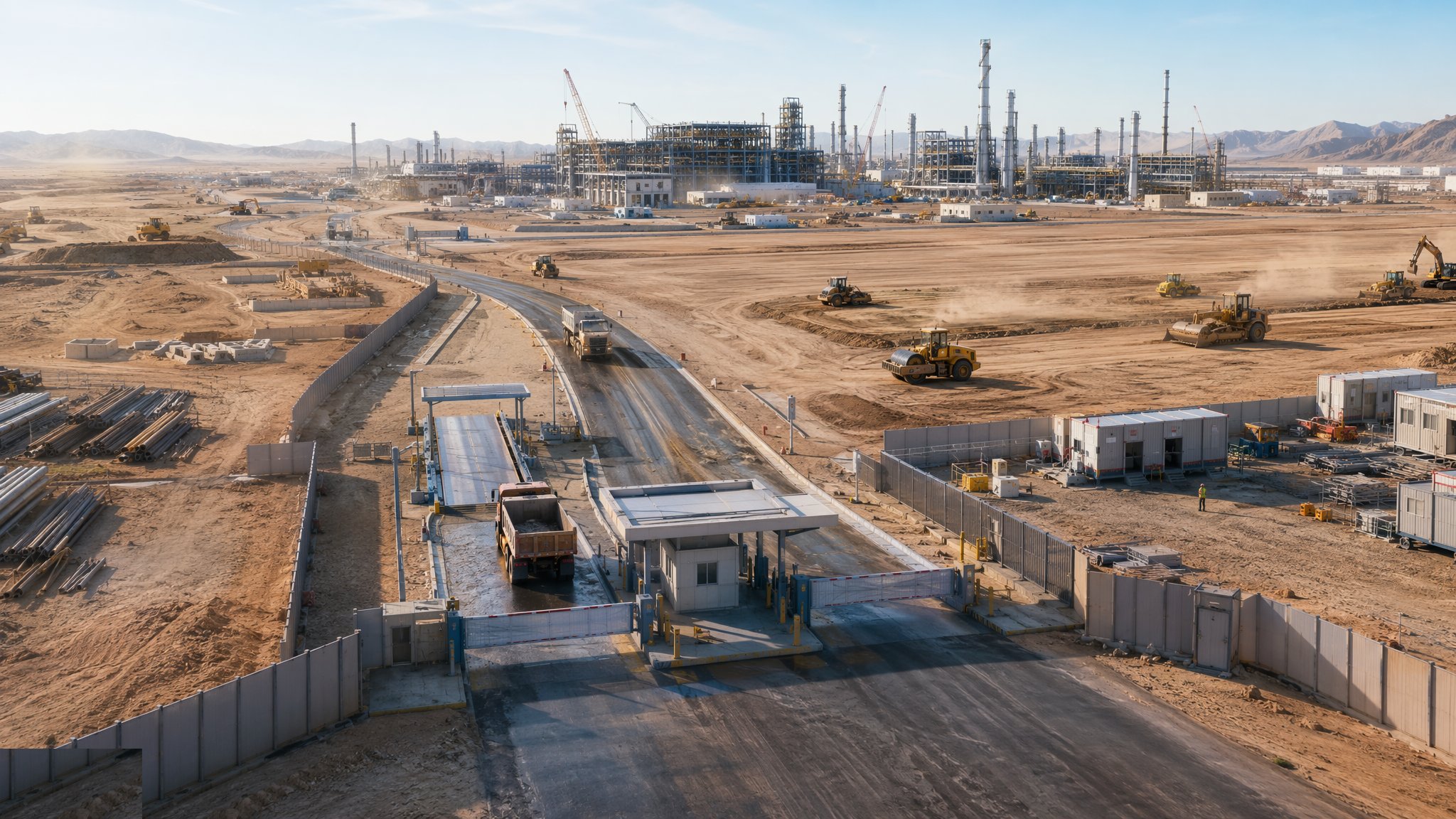
In the UAE the defining feature is the remote desert site and the operator-controlled gate. On oil and gas schemes, entry to an ADNOC or other operator site means security vetting, a gate pass for every person and vehicle, and the operator's HSE induction completed before anyone sets foot inside the fence — no pass, no work, and the approval chain is on the critical path. Heat shapes the working day: the MoHRE midday break bans outdoor work under direct sun during the peak summer hours (in recent years 12:30 to 15:00 from mid-June to mid-September — confirm the current year's dates), and camps, shade, drinking water and heat-stress management are enabling works, not extras.
When and why is Site Access & Enabling Works used?
Access and enabling works come first because nothing else can start without them: the piling rig cannot reach the turbine position, the module delivery cannot reach the array field, and the workforce cannot legally or safely work until the tracks, the compound, the welfare and the approvals exist. It matters beyond logistics because this stage sets the tone for the whole job — the quality of the fencing, the gate discipline and the track drainage is the first thing the client, the operator's HSE team and the planning inspector see, and a missed survey condition or an expired gate pass stops work just as surely as a broken machine. The small end of the sector works the same way: a rooftop solar crew or a single-turbine contractor still needs edge protection or scaffold, welfare, a controlled gate and clear deliveries — the enabling works shrink to a skip, a scaffold and a parking plan, but the CDM duties arrive with the first van, not the first crawler crane.
Types of Site Access & Enabling Works
Remote desert site (oil & gas / Gulf solar)
A site at the end of a long graded access over sand and sabkha, where the workforce typically lives in a camp and the operator controls the gate. Enabling works centre on the access road, the camp, communications and water and power provision, with security vetting, gate passes and HSE inductions governing every arrival.
Agricultural land (solar farms)
A greenfield site in pasture or arable land, often still farmed around the works. Enabling works are comparatively light — temporary stone tracks between the field gates, a small compound — but the permanent security fencing around the whole array field goes in early, and land drainage, hedgerows and rights of way must be protected or diverted.
Upland and moorland access (wind farms)
A hill or moor site where the access tracks are a major civil work in themselves: floating tracks over deep peat, on-site borrow pits, watercourse crossings, and gradients and radii designed for turbine delivery vehicles and the erection crane. Track drainage and peat management plans are usually planning conditions.
River-valley access (hydro schemes)
Access into a confined valley, often down one bank only, with the river as both constraint and hazard. Enabling works include the valley-side track, bridge or ford crossings sized for heavy plant, and the first river-management measures — the diversion works themselves follow as their own process.
Site Access & Enabling Works: step by step
Step 1: Reconnaissance and condition survey
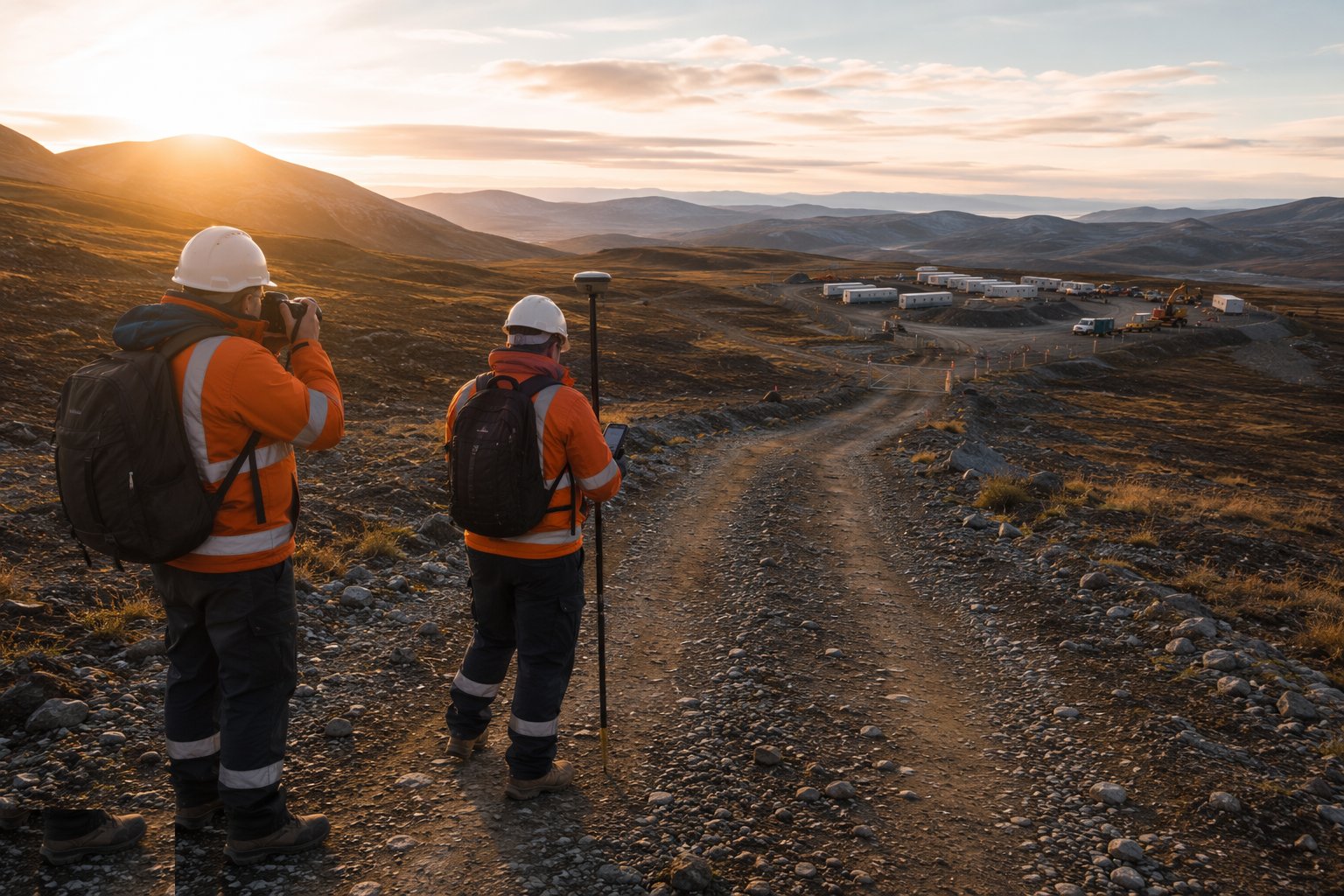
Walk or drive the whole route and site with the drawings and land-title plans: existing tracks, gates, bridges and culverts, overhead lines, watercourses and any signs of previous land use. Photograph and record the condition of everything you will use or pass — the council road at the junction, the farm bridges, the boundary walls — because this baseline is your defence against later damage claims. Plot the constraints on a single access plan that every subcontractor is briefed from.
Step 2: Commission the specialist surveys

Order the surveys the site history and the planning conditions demand: a UXO desk study, escalating to intrusive survey where the risk assessment requires it; ecological surveys — habitat mapping and protected-species work timed to the right seasons, with licensing where species are found; and archaeological survey or a watching brief agreed with the planning authority. These run on their own calendars — a bird-breeding season or a great crested newt licence can move your whole programme, so start them first.
Step 3: Secure rights, approvals and passes
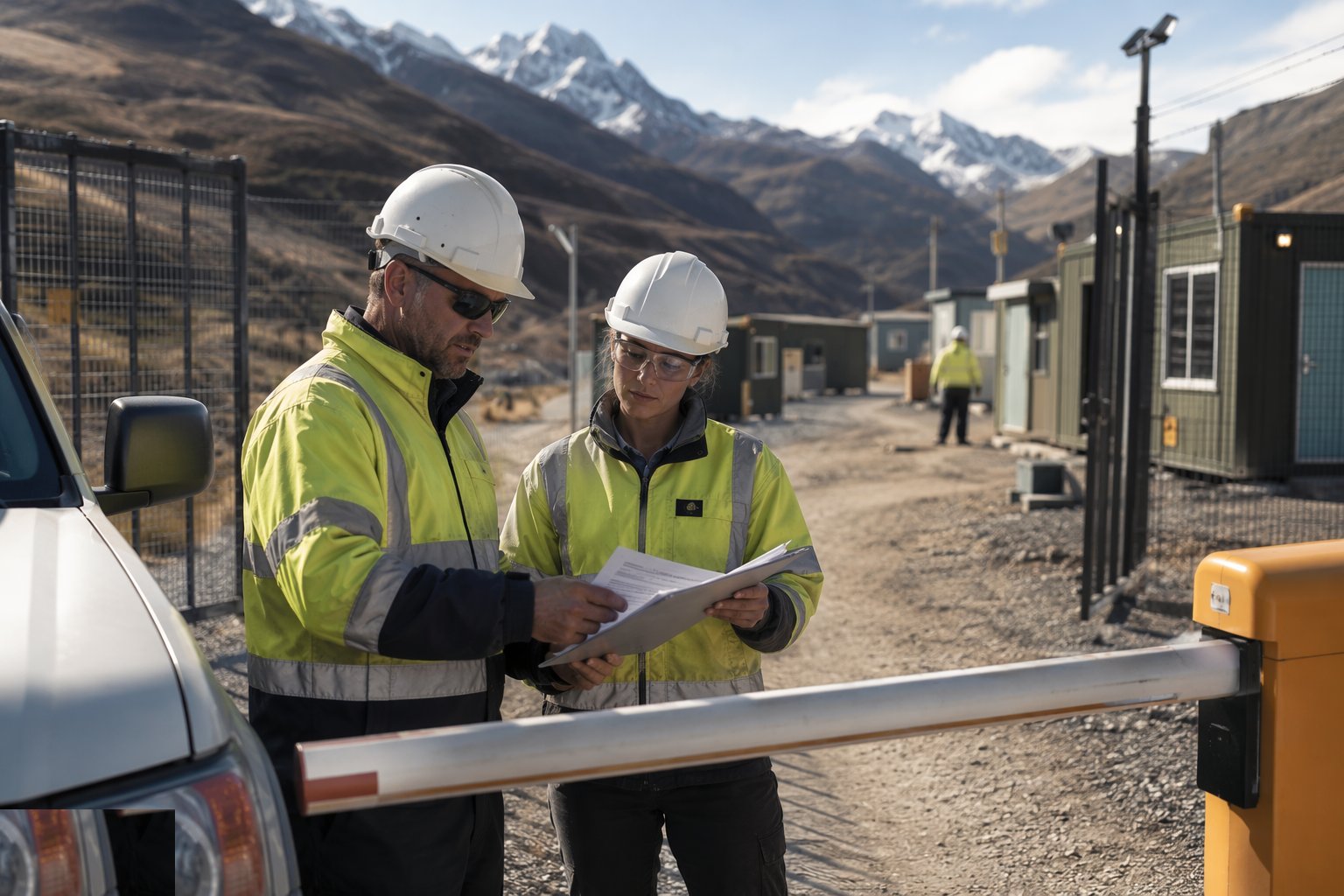
In the UK, complete the wayleaves and easements for access over third-party land, discharge the pre-commencement planning conditions, and agree junction and road-works approvals with the highway authority for the abnormal loads to come. In the UAE, run the operator's process: security vetting, gate passes for people and vehicles, HSE inductions booked and completed, and the emirate authority's permits for the access and compound. Track every approval on a register with expiry dates — an expired pass or NOC stops the job at the gate.
Step 4: Form or upgrade the access track
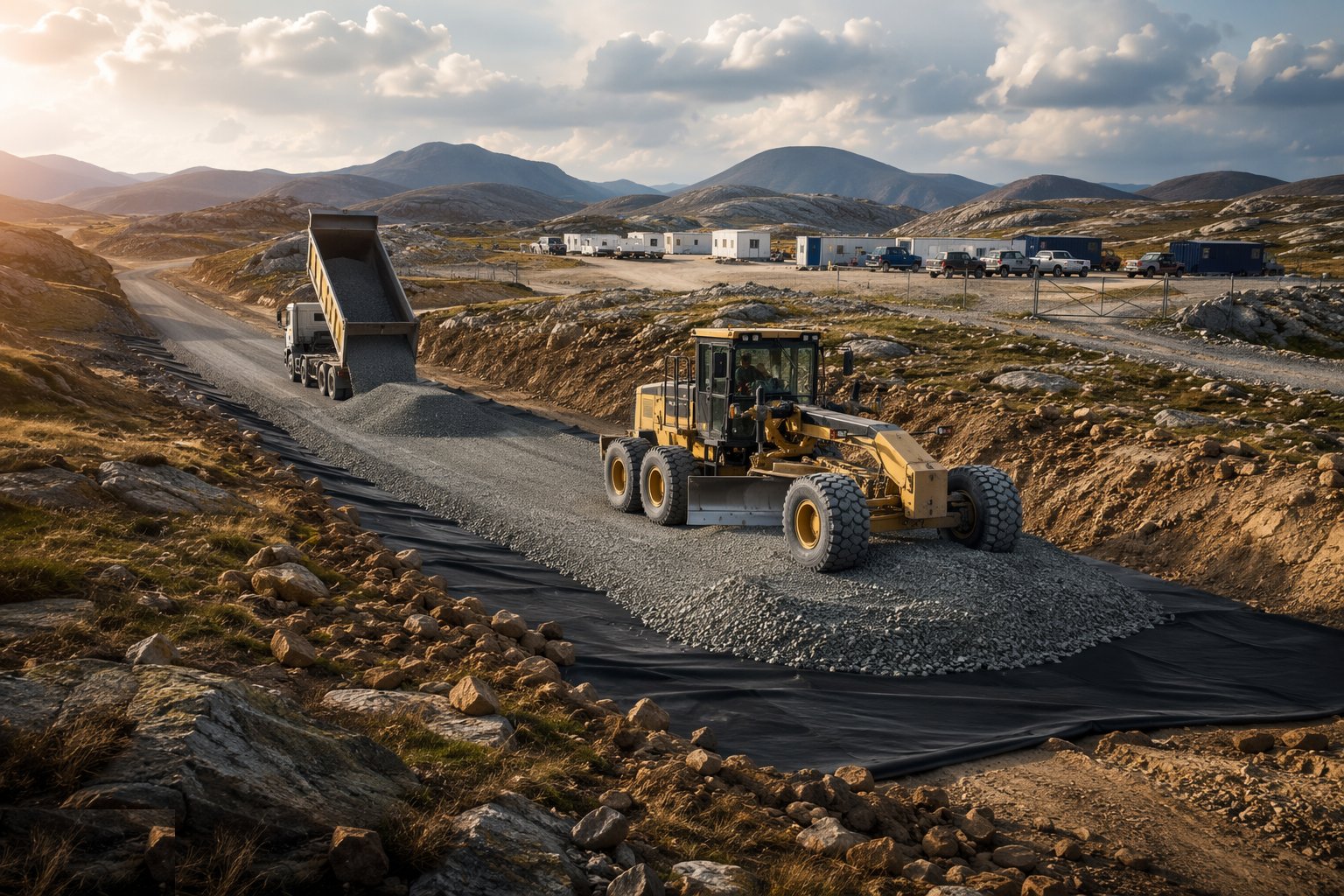
Build the track to carry the heaviest load it will ever see — the erection crane, the transformer low-loader or the blade trailer — not the everyday delivery. Strip topsoil, place geotextile separation on soft ground, form cut and fill, and put the drainage and culverts in first so water never ponds on the running surface. On peat, floating tracks go down over geogrid without excavation; on sand and sabkha, proof-roll and stabilise as the ground demands. Test the formation where heavy plant is expected.
Step 5: Establish the compound, laydown and welfare
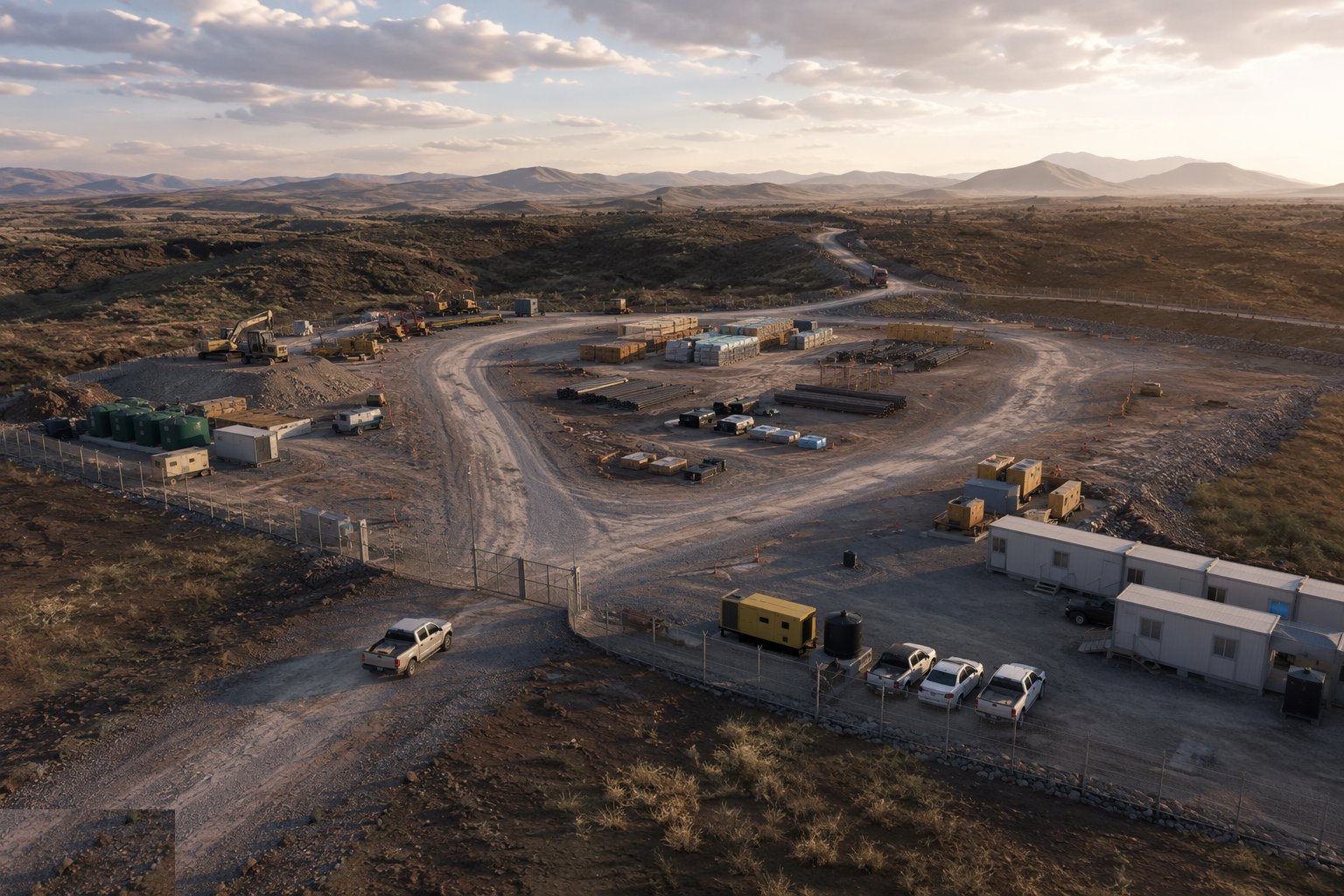
Set up the main compound — offices, stores, parking and laydown for deliveries — on land agreed for the purpose, positioned clear of the permanent works. Welfare to CDM 2015 standards is a legal duty from day one in the UK: toilets, hot and cold or warm washing water, drinking water, rest facilities. In the Emirates the same provision is expected, plus shaded rest areas, cool drinking water in quantity and the heat-stress controls the midday summer rules require. Bund the fuel storage and stage spill kits at refuelling points.
Step 6: Set up workforce camps for remote sites
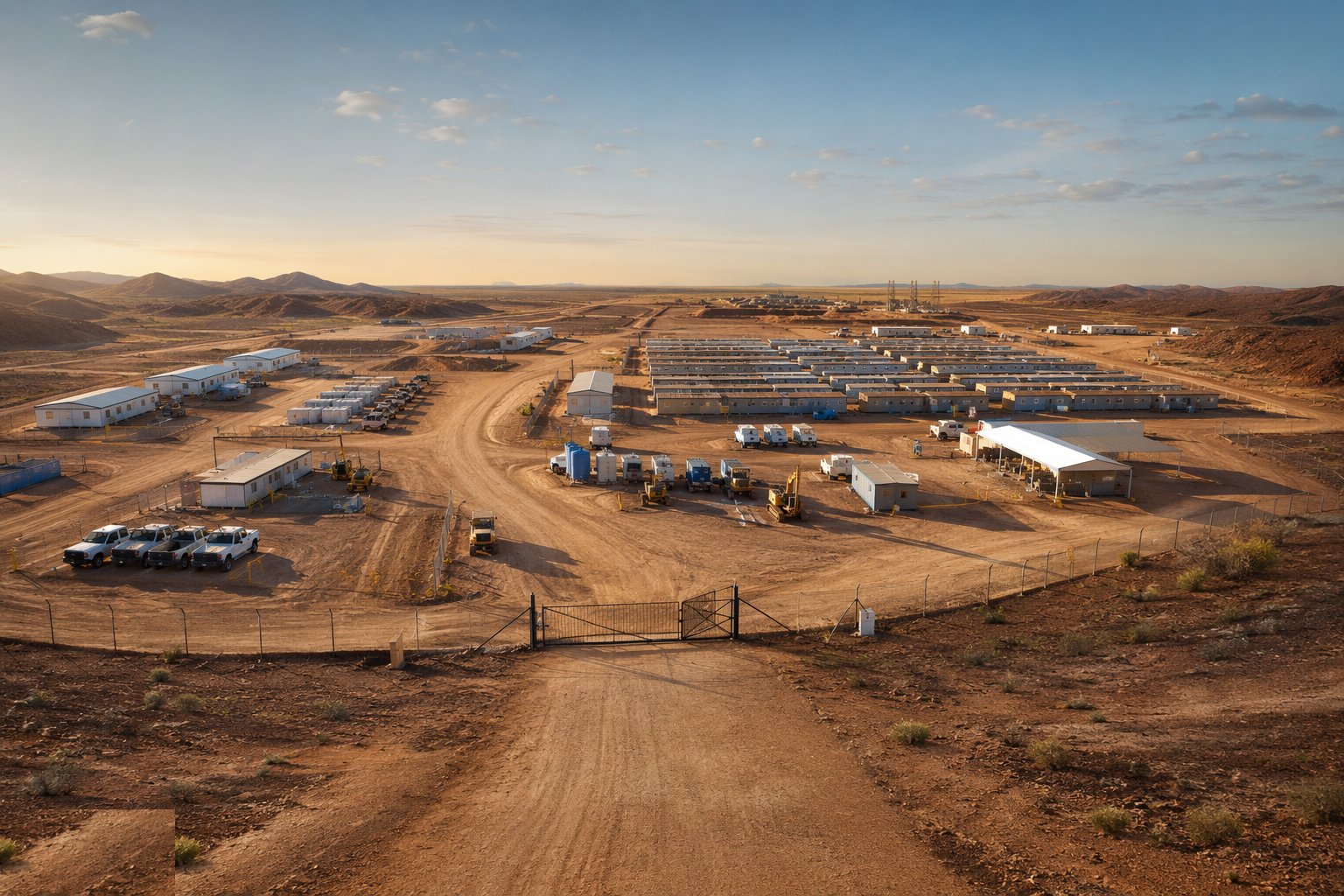
Where commuting is impossible — the desert facility, the far-north wind farm — establish the camp: accommodation units, messing and kitchen facilities, medical provision, sewage treatment and potable water, all to the operator's or authority's camp standards. Camp capacity fixes your workforce ceiling, and camp approvals and inspections sit on the critical path in the Gulf, so mobilise them early and keep the documentation current.
Step 7: Fence, secure and control the gate
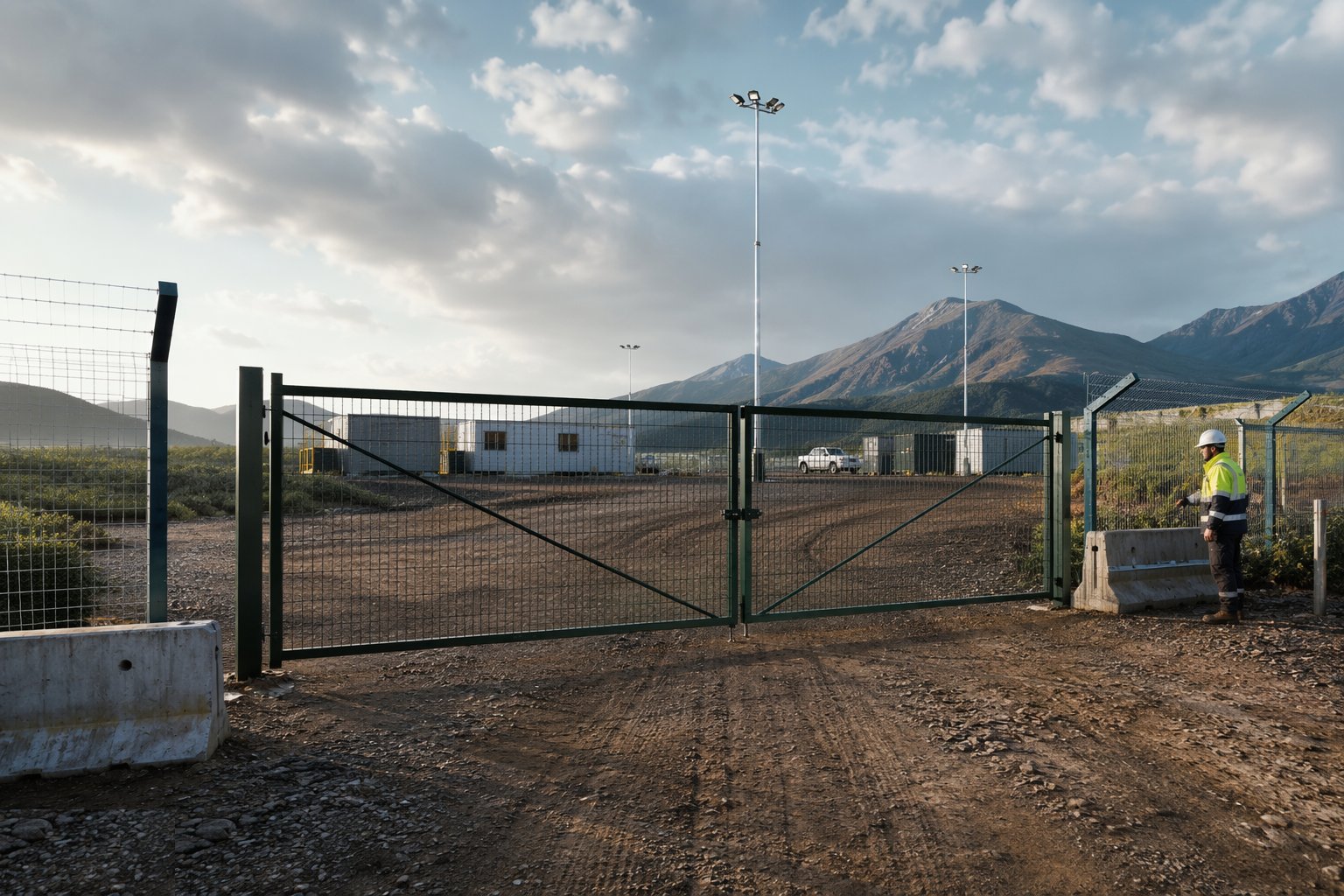
Erect the perimeter: permanent security fencing around a solar array field typically goes in at this stage, with gates and often CCTV and intrusion detection, because the site will soon hold high-value copper and modules. Set up the gate discipline — signing in, delivery booking, induction checks — and on operator sites integrate with the gate-pass system. A controlled gate is your first safety control and your first insurance control at once.
Plant and equipment
- Dozers, graders and 360° excavators for track formation
- Articulated dump trucks and tipper lorries for stone haulage
- Vibrating rollers and compaction plant
- Geotextiles, geogrids, culvert pipes and track drainage materials
- Site cabins, welfare units, generators and temporary distribution
- Water bowsers, fuel bowsers and lighting towers
- Security fencing, gates and CCTV for the perimeter
- Camp accommodation modules and package sewage treatment plant for remote sites
Quality control checks
- Approvals register live and current: wayleaves, planning conditions, gate passes and NOCs with expiry dates
- Photographic condition survey of existing roads, bridges and boundaries filed before the first delivery
- Track formation tested — plate-bearing or CBR checks where cranes and heavy loads are expected
- Survey reports (UXO, ecology, archaeology) closed out, with every condition tracked into the method statements
- Induction and pass compliance records for every person through the gate
- Culverts and track drainage inspected before covering
- Fence line set out and checked against the legal boundary, not the visible field edge
Safety considerations
- Welfare from day one — a statutory duty under CDM 2015 in the UK
- Remote-site emergency response: medical provision, muster arrangements and journey management on long desert or moorland hauls
- Reversing controls and segregation on single-track access routes; passing places and banksmen
- Working adjacent to live watercourses on valley sites — edge protection and buoyancy provision
- Heat management and MoHRE midday-break compliance for outdoor crews in the Emirates
- Security and lone-working controls on remote sites, with check-in arrangements
- Bunded fuel storage and staged spill response at every refuelling point
Common defects
- Access track undersized for the heaviest delivery — the transformer or crane load stuck at the gate
- Track over soft ground without geotextile separation — rutting and stone loss within weeks
- Compound or laydown area sited where the array field or permanent works later need to be
- Ecology licence condition breached — works stopped in the nesting season
- Fence line built off the legal boundary — reinstatement and a landowner dispute
- Personnel turned away at an operator gate without the correct pass or induction
- Culverts omitted — the first storm washes the track out
Best suited for
- Remote sites needing access tracks, compounds and welfare from nothing
- Abnormal-load routes for cranes, turbines and transformers
- Environmental and stakeholder constraints managed from day one
- The logistics stage every energy project starts with
How long does Site Access & Enabling Works take?
Typical duration: 3–8 weeks for a solar or onshore wind site with reasonable existing access; 3–6 months where long tracks, camps or junction works are needed, with operator approvals on the critical path in the Gulf..
Related processes
- Survey, Ground Investigation & Resource Studies
- Piling & Mounting Structures
- PV Module Installation
- Electrical Balance of System
- Grid Connection & Energisation
- Wind Turbine Foundations
- Craneage & Tower Erection
- Wind Farm Electrical Infrastructure
- Commissioning & Energisation
- River Diversion & Cofferdams
- Dam & Powerhouse Civils
- Electromechanical Installation
- Impoundment, Commissioning & Handover
- Ground-Source Heat Pumps — Homes & Villas
- Shallow Geothermal — Commercial & District Schemes
- Deep Geothermal Drilling & Wells
- Geothermal Plant, Connection & Commissioning
- Site Access & Enabling Works in Oil & Gas / Petrochemical
- Power Generation sector guide
- Utilities & Energy group