Driven steel tube and H piles
Steel driven to refusal — the pile you choose when the loads are big and the ground fights back.
Last updated 2026-07-28 by the BuildPedia Editorial Team.
What is Driven steel tube and H piles?
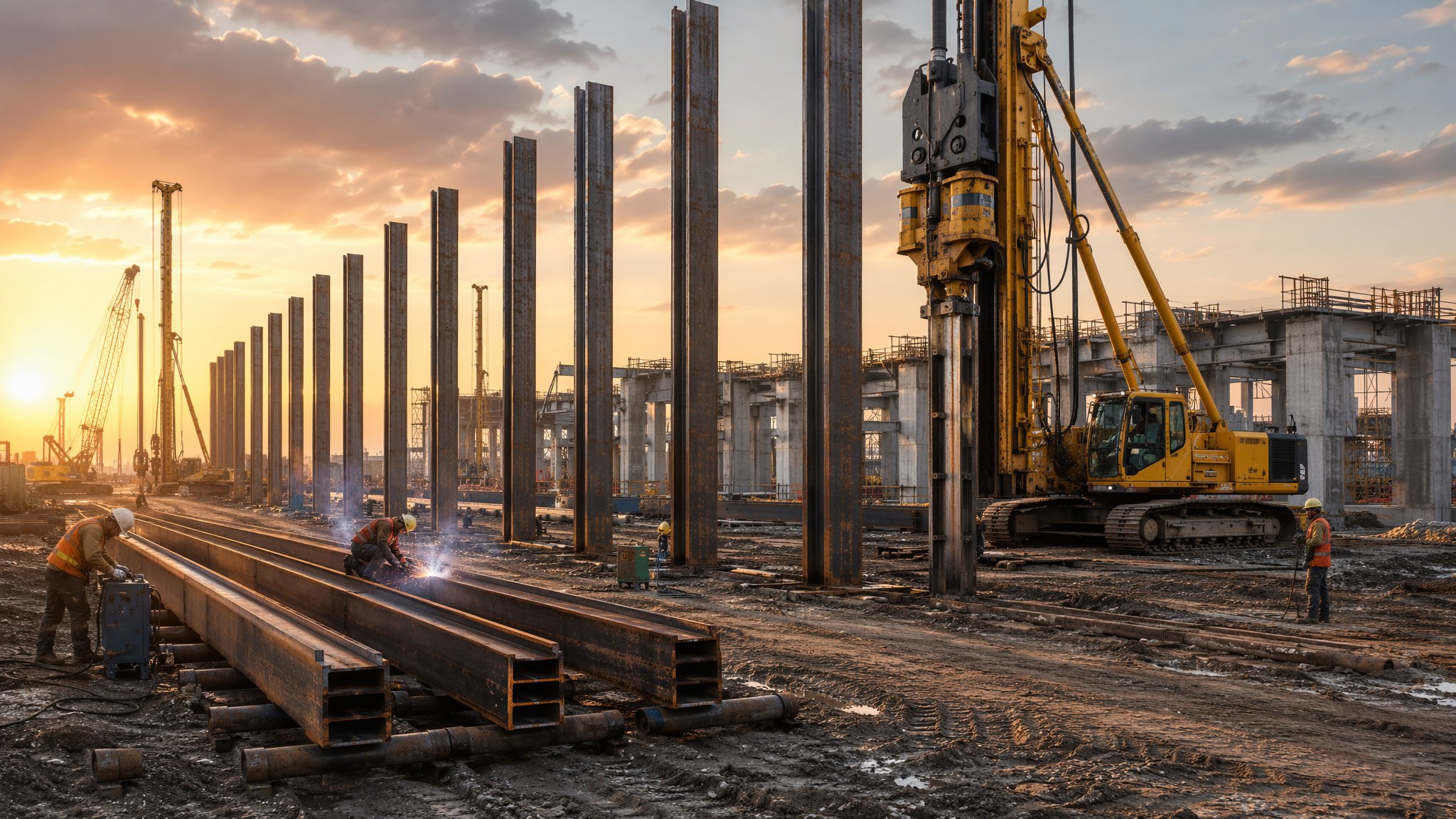
Where concrete piles fear to tread, steel goes. Driven steel tubes and H-sections are the heavy artillery: slender, immensely strong in driving, able to punch through dense gravels, old fill and obstructions that would shatter a precast concrete pile, and capable of being driven to bearing on rock at almost any depth the crane can handle. H piles displace little ground — useful where heave would damage neighbours — and tubes can be driven open- or closed-ended, then filled with concrete to make a composite section.
The economics are simple: cost per metre is high, capacity per pile is very high. Working loads of several thousand kN per pile are routine, which means fewer piles, smaller caps and faster programmes on heavy structures — towers, bridges, industrial plant, marine works. The pile arrives as a certified mill product, splices are welded in the leaders to whatever length the GI demands, and the driving record plus dynamic testing gives a defensible capacity estimate on the day.
The engineering watchpoints are corrosion and driving damage. Buried steel in undisturbed ground corrodes slowly — the codes allow a sacrificial thickness — but in made ground, fill, or above the water table the corrosion assessment must be honest and the allowance or protection designed in. At the sharp end, the toe can buckle or the section can be damaged by over-driving before anyone at the surface knows; hammer energy, the driving record and post-driving inspection are the controls, and internal inspection of open tubes catches the damage the record missed.
How does Driven steel tube and H piles work, step by step?
Step 1: Select the section and confirm the corrosion design
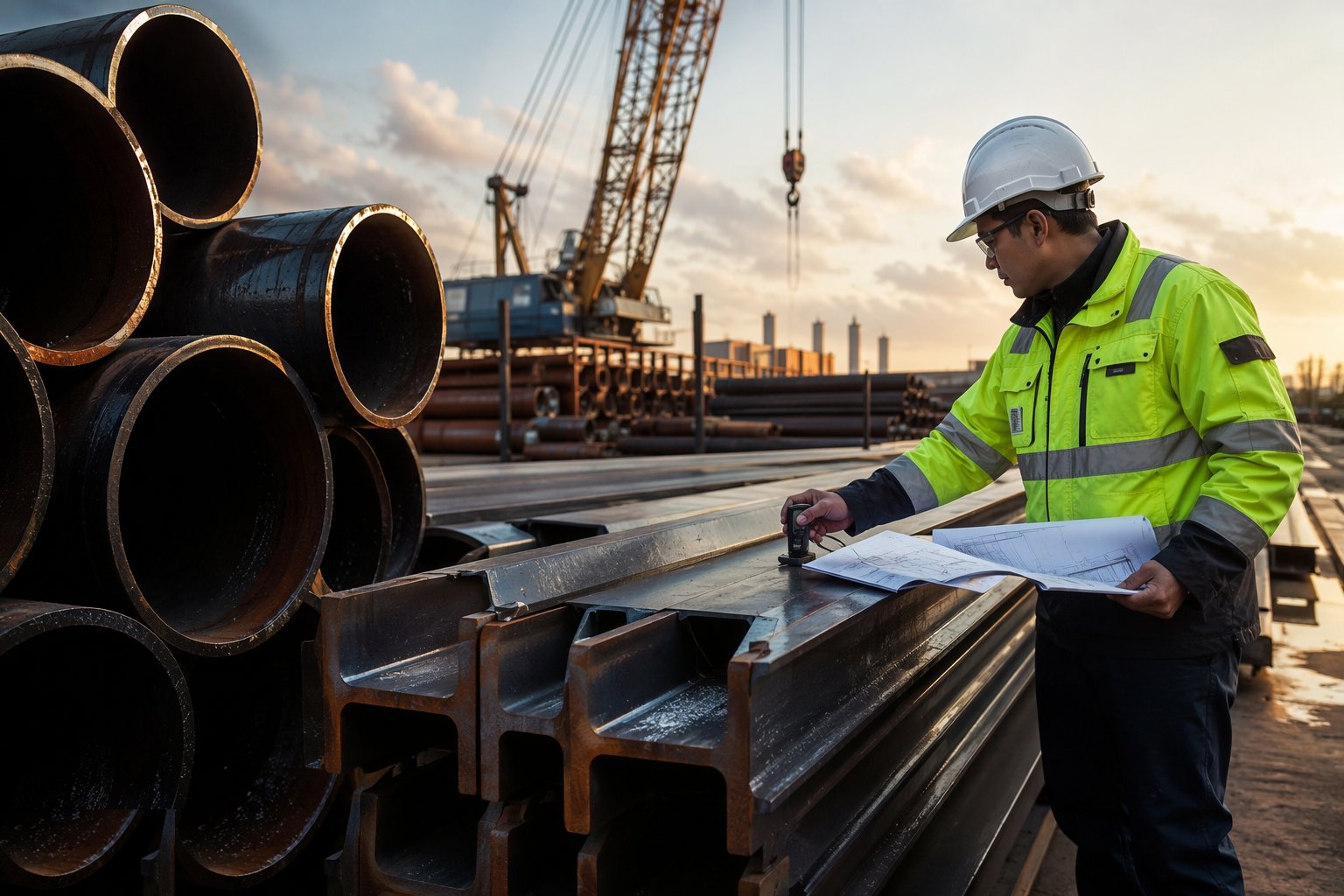
Section size and steel grade come from the load, the driving stresses and the corrosion assessment — sacrificial thickness, coatings or concrete infill as designed. Mill certificates and section inspection on receipt confirm the product; anything bent or damaged in transit is rejected before it reaches the leaders.
Step 2: Pitch and splice to length
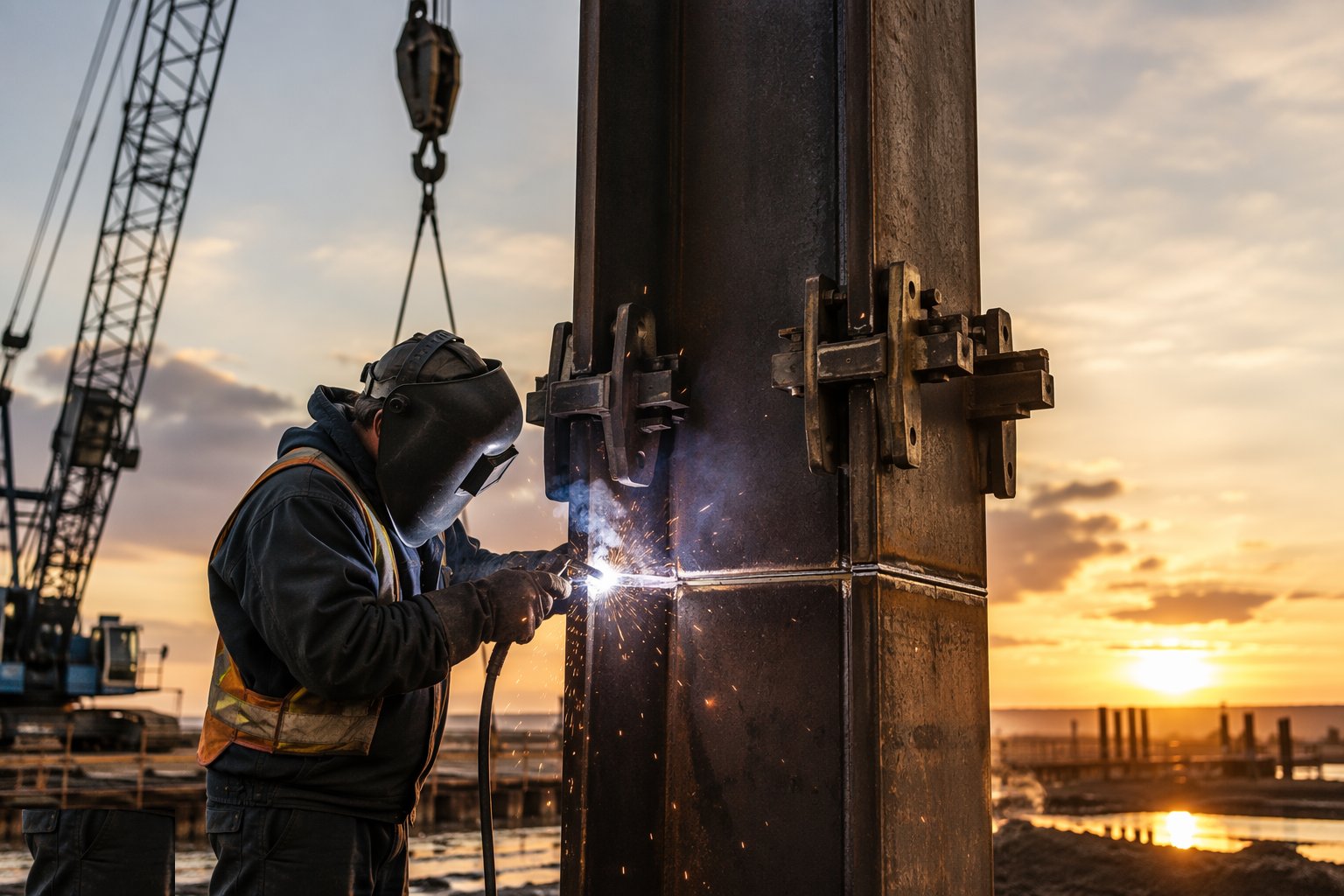
The first length is pitched into the leaders and plumbed; as driving proceeds, further lengths are spliced on with full-strength welds — qualified welders, approved procedures, NDT where specified — because a pile splice is a structural joint driven through the ground, not a site convenience. Rake and position are checked continuously.
Step 3: Drive with monitored energy
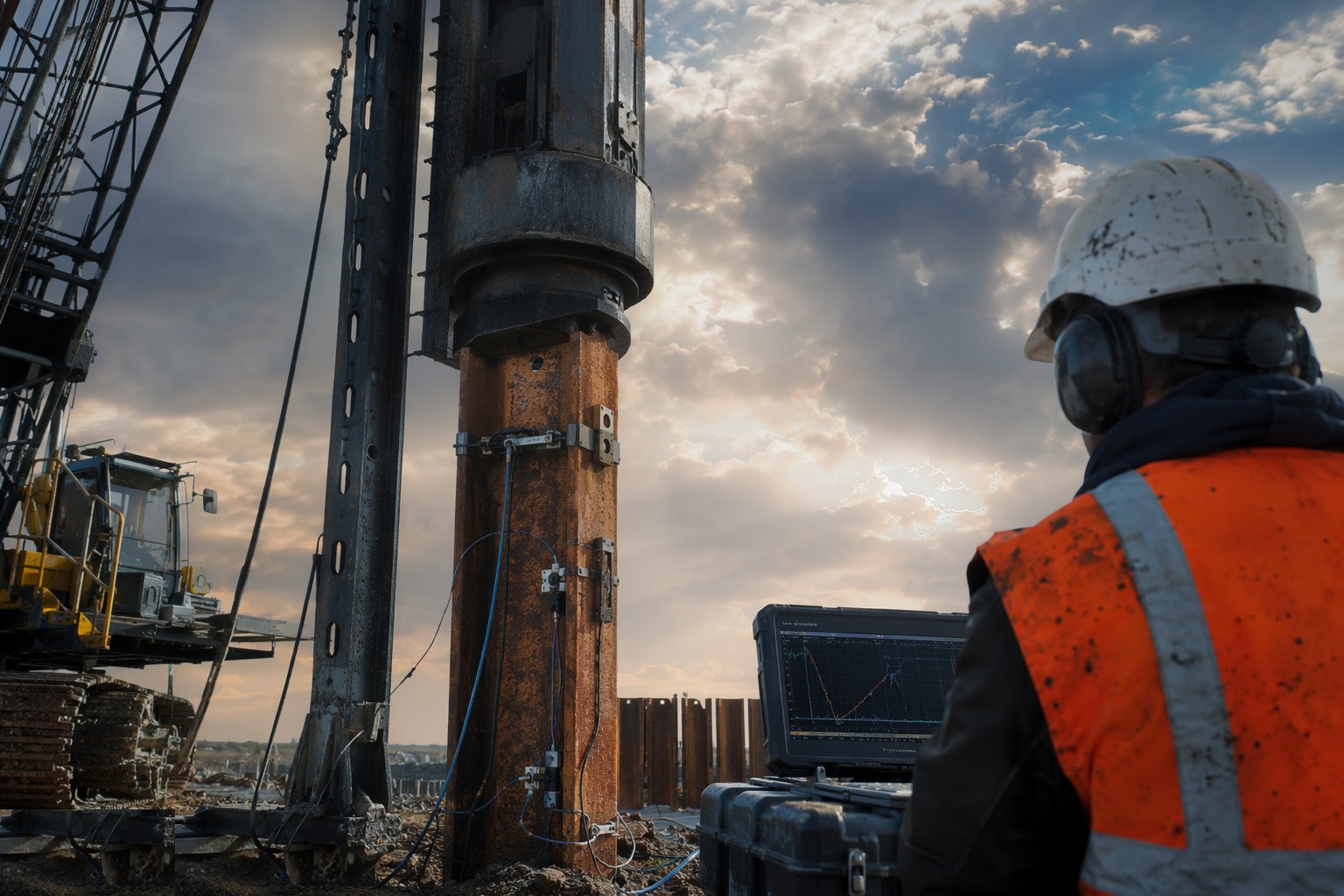
The hammer — hydraulic or diesel for the big sections — drives the pile while the record logs penetration per blow and energy. H piles are watched for deflection on obstructions; open tubes for plugging behaviour. PDA monitoring gives real-time driving stresses and capacity, catching toe damage and overstress before the pile is written off.
Step 4: Reach the founding stratum and the final set
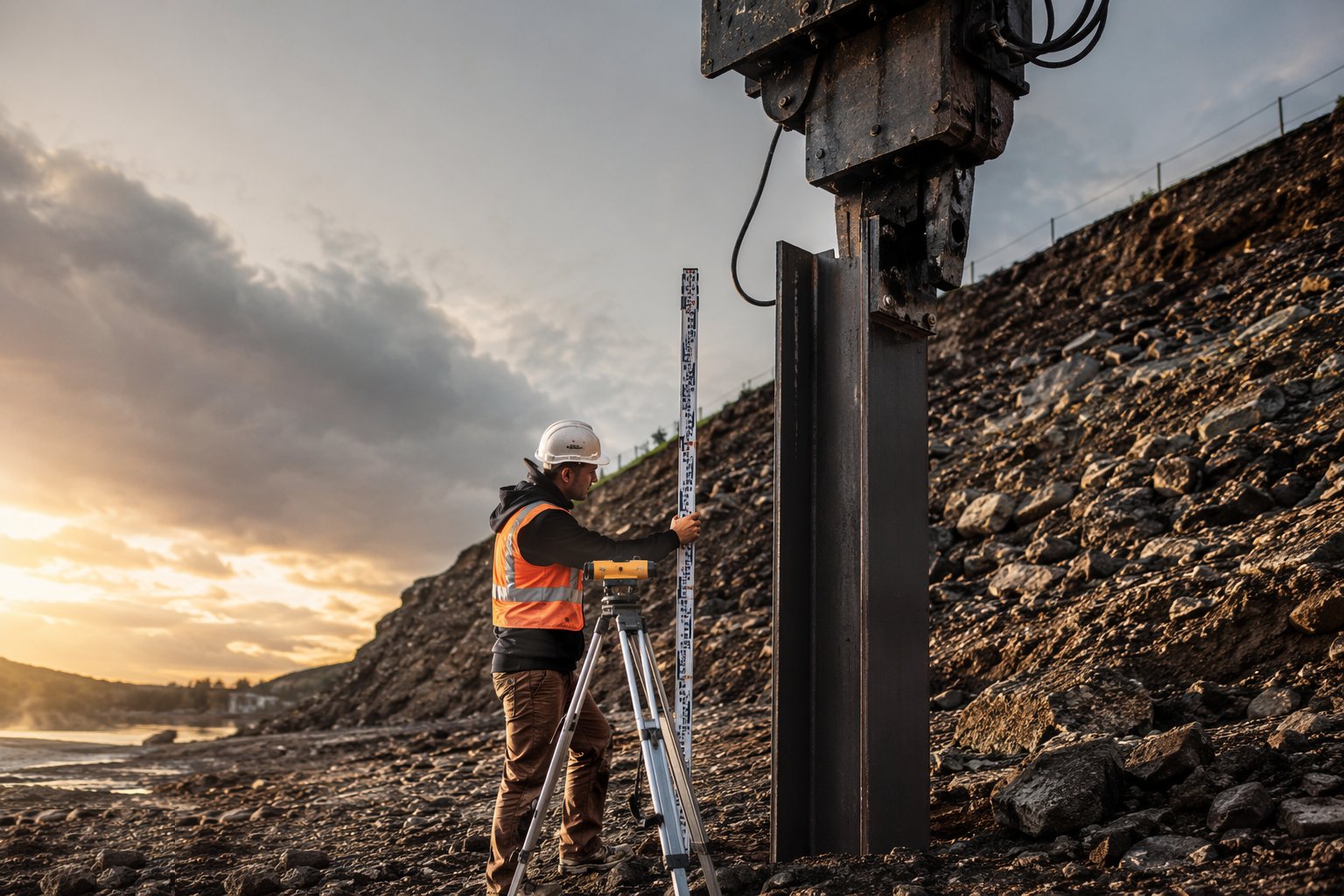
Driving continues to the designed set on the founding stratum — dense granular material or rock. Final sets are measured at controlled energy and recorded; where hard driving is expected, the driveability analysis in design has already matched hammer to pile, and the record is read against that prediction.
Step 5: Inspect, cut off and fill
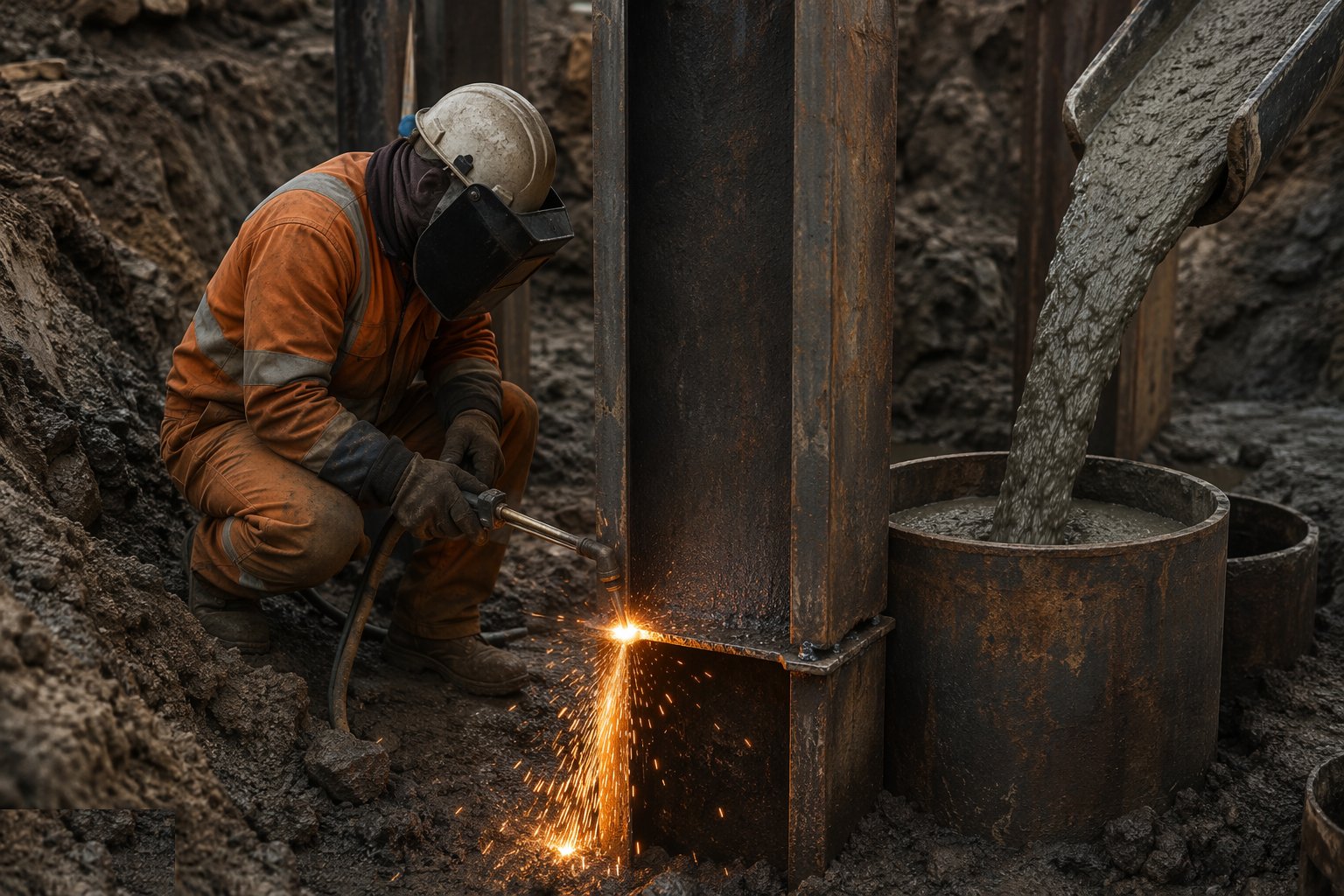
The head is cut to level with the section undamaged; open tubes are inspected internally — by light, camera or caliper — for toe damage and obstructions, cleaned out as required, and filled with concrete to the design level with any cage placed. Cut-off level and fill quality are recorded pile by pile.
Step 6: Test and hand over the records
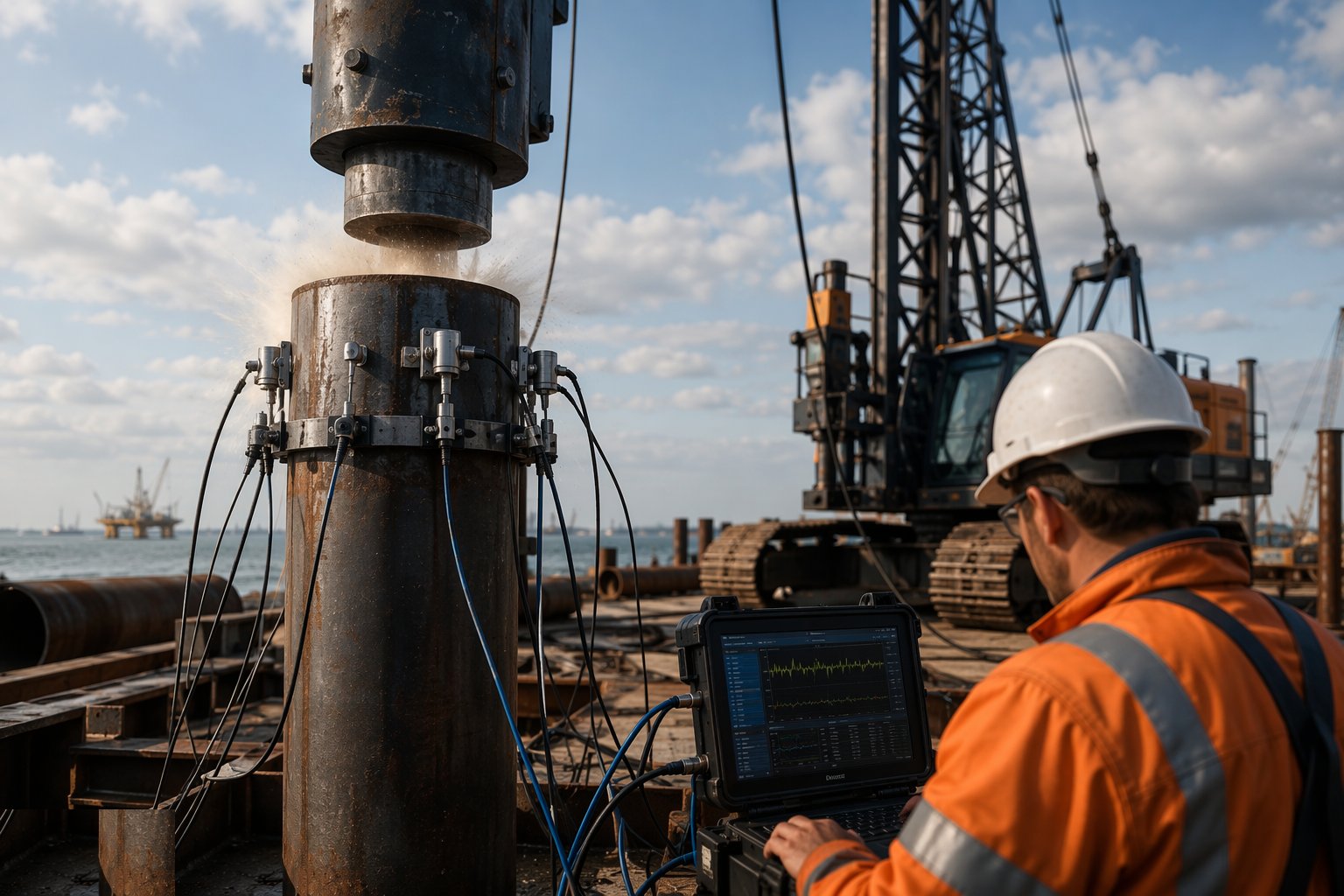
Dynamic tests verify capacity across a sample; static load tests on preliminary piles anchor the design. The QA file closes with mill certs, weld records and NDT, driving logs, test results and the as-built survey — the complete biography of a pile no one will ever see again.
What are the benefits of Driven steel tube and H piles?
- Very high capacity per pile — several thousand kN, fewer piles and smaller caps
- Drives through dense strata and obstructions that stop concrete piles
- Low displacement (H piles) — minimal heave next to existing structures
- Any practical depth — welded splices extend as the GI demands
- Immediate structural capacity — no curing, and tubes can be inspected internally after driving
What are the limitations of Driven steel tube and H piles?
- Expensive per metre — steel cost dominates; economical only at high loads
- Corrosion allowance or protection must be designed honestly, especially in fill and above the water table
- Noise and vibration as for any driven system
- Toe and head damage can occur unseen in hard driving — inspection and PDA are not optional
- Splice welds are critical structural joints made in the leaders — weather and access dependent
What is Driven steel tube and H piles best suited for?
- Heavy towers, bridges, industrial plant and marine structures
- Deep bearing strata beyond concrete pile lengths
- Sites with obstructions, dense gravel or boulder layers
- Restricted sites where low-displacement piles protect the neighbours
- Tension and lateral load demands — steel excels where concrete piles are weak
What plant does Driven steel tube and H piles need?
- Heavy piling rig or crane-suspended leaders with hydraulic or diesel hammer
- Welding plant, welder shelters and NDT equipment for splices
- PDA dynamic monitoring system and analysis
- Cutting gear for head trim; internal inspection camera or caliper for tubes
- Concrete pump and tremie for tube infill
- Static load test equipment for preliminary piles
How is Driven steel tube and H piles quality-checked?
- Mill certificates and section inspection on receipt
- Welder qualifications, weld procedures and NDT records for every splice
- Blow-by-blow driving record with energy, plus PDA on the sample
- Final set measured at controlled hammer energy against the driveability prediction
- Internal inspection of open tubes before infill; infill concrete testing
- Static load tests on preliminary piles; as-built survey of position and level
Related processes
- Piling & Deep Foundations — full process guide
- CFA — Continuous Flight Auger Piles — method
- Driven precast concrete piles — method
- Rotary bored cast-in-situ piles — method
- Mini and micro piling — method
- Sheet piling — method
- Site Access & Enabling Works
- Site Clearance & Demolition
- Setting Out & Survey Control
- Earthworks & Excavation
- Dewatering & Groundwater Control
- Shallow Foundations
- Basement & Substructure
- Waterproofing and Tanking
- Concrete Frame Construction
- Steel Frame Construction
- Masonry & Timber Frame
- Floor Slabs & Screeds
- Roofing
- Façade & Cladding
- Insulation Systems
- Windows, Doors & Glazing
- MEP First Fix
- Internal Finishes
- MEP Second Fix & Commissioning