Sea walls, defences and marine structures - heavy civils against a moving enemy.
Coastal engineering is construction where the tide tables set the working day. The corridor civils, earthworks and piling methods are shared with the transport and ports sectors, linked below - but here the sea is not a neighbour, it is the adversary: concrete poured between tides, armour stone placed to the tonne, and every detail designed for the storm that will test it.
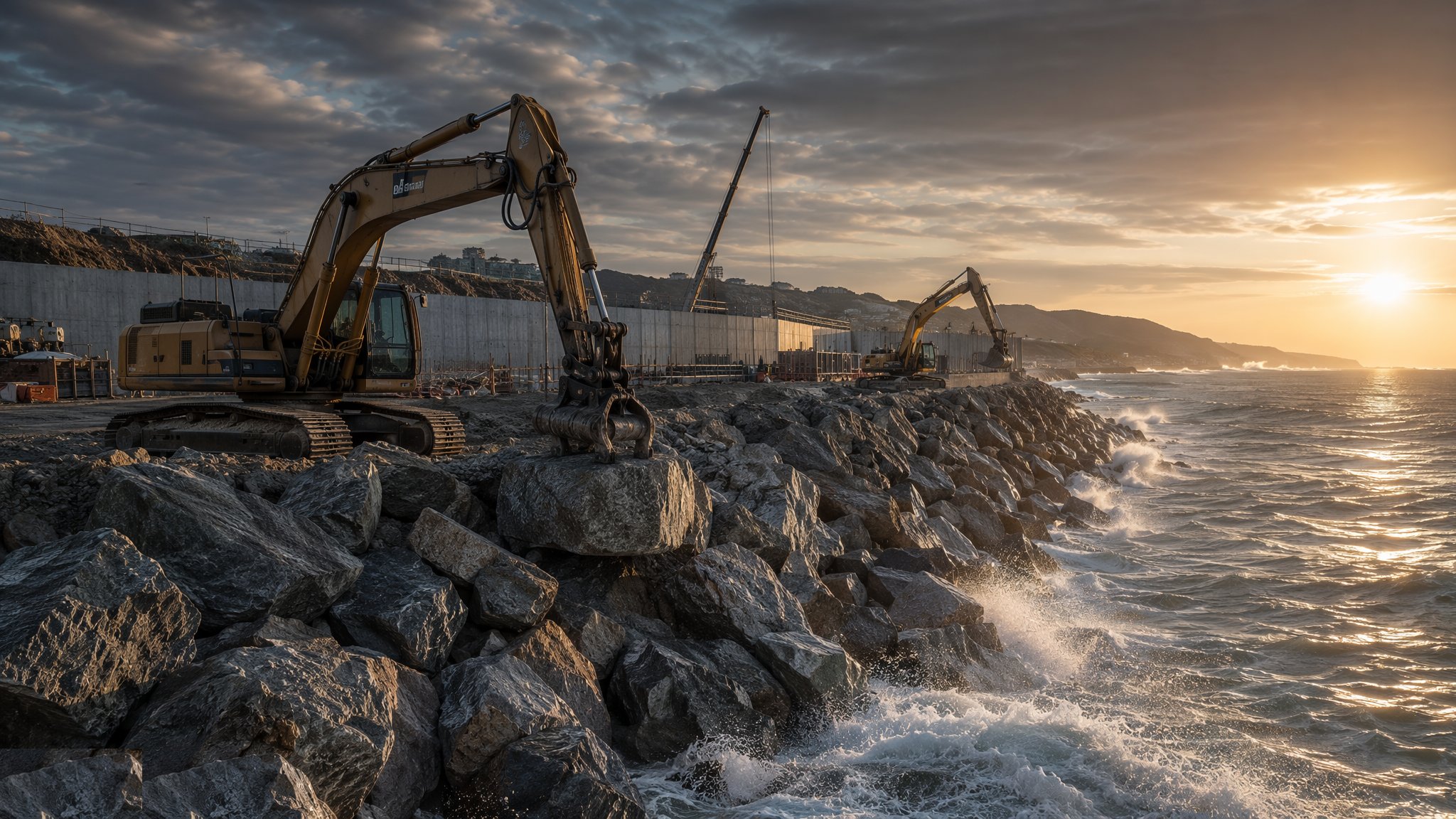
The process map - 4 guides
Each one is a full guide: overview, variants, numbered steps, plant, testing, safety and defects.
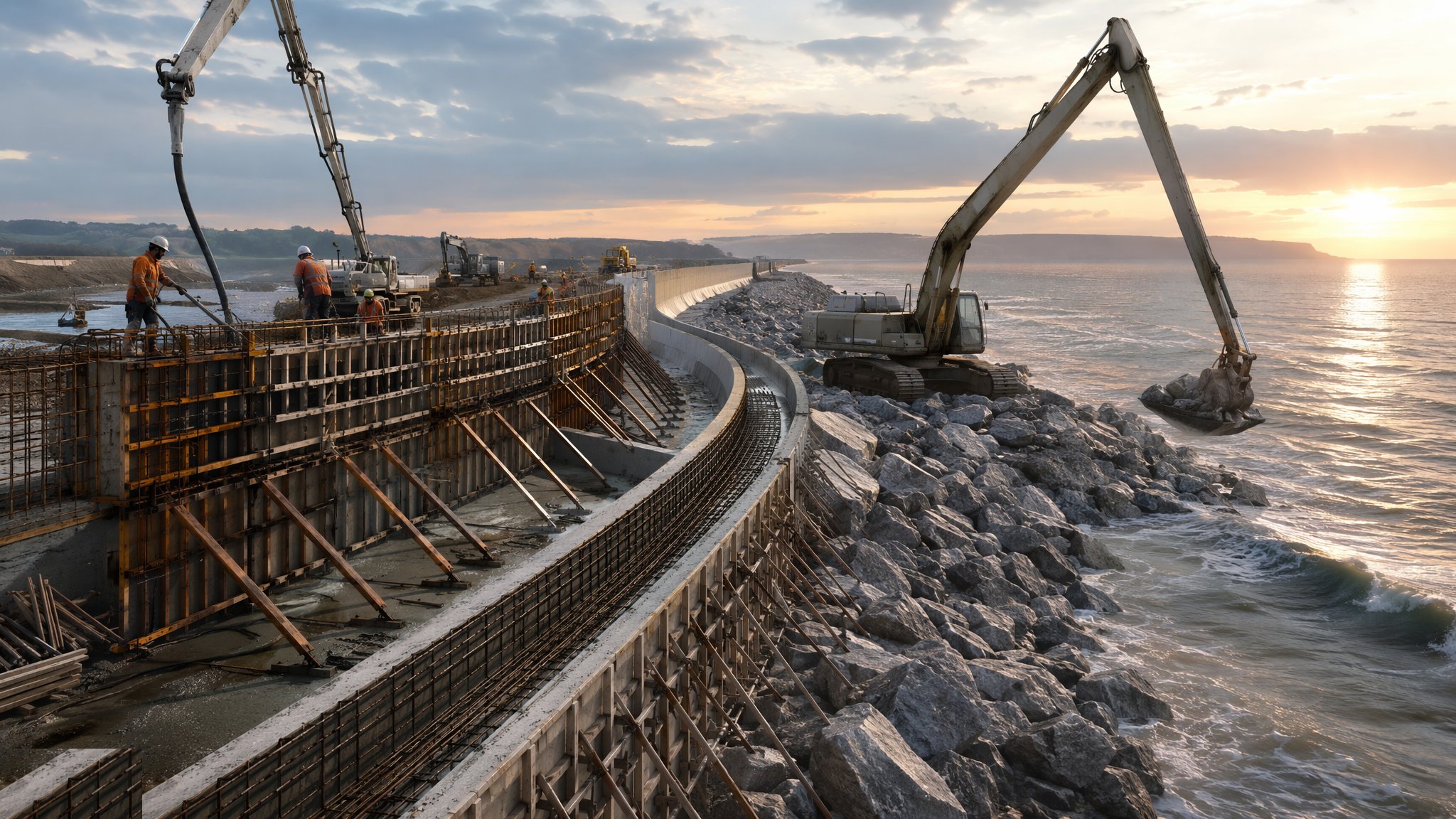
Sea Walls & Revetments
The hard edge between land and sea - curved wave-return walls, rock armour slopes and stepped revetments - built around the tide and armoured at the toe against scour.
Open process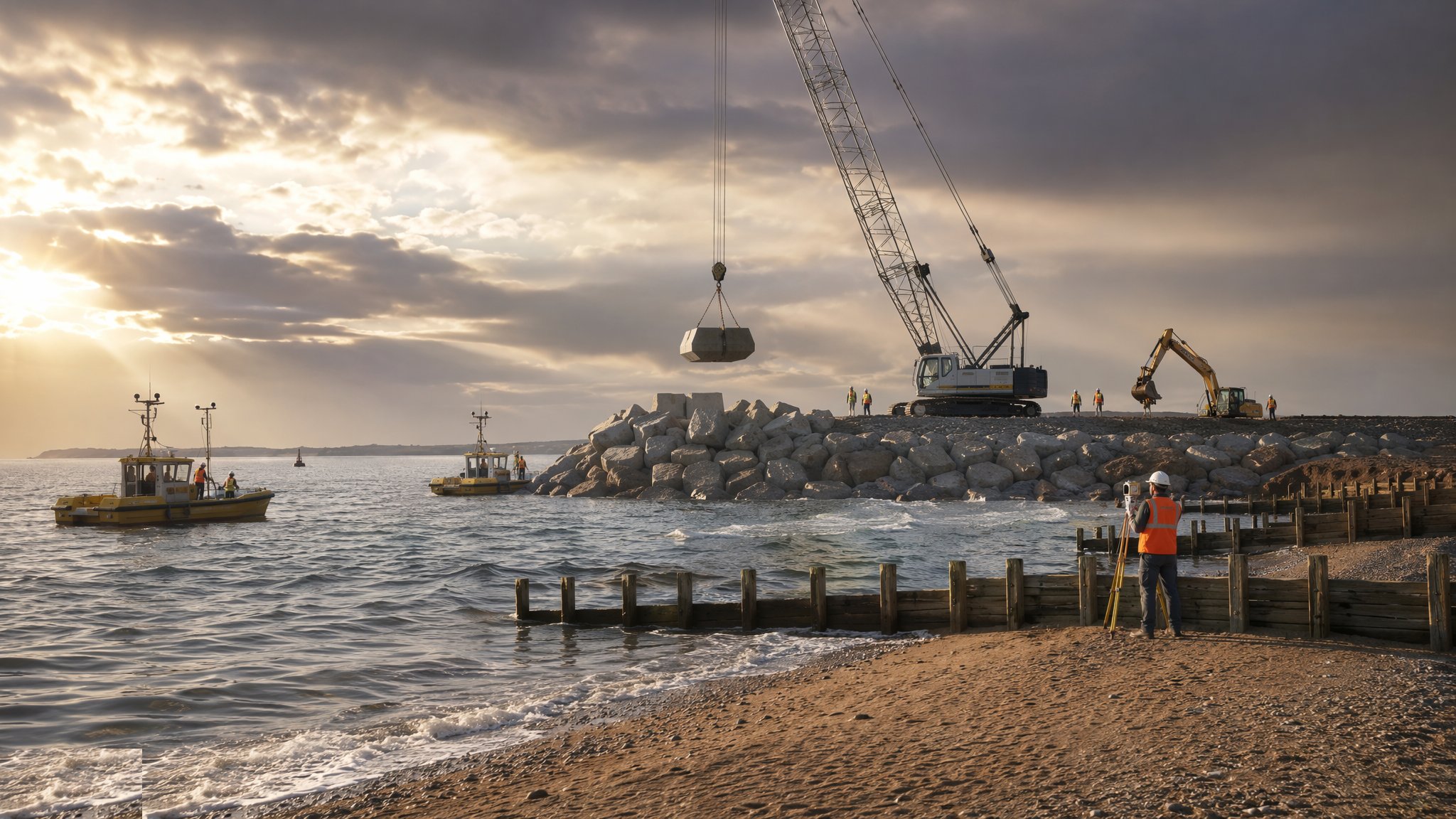
Breakwaters & Groynes
Structures built out into the sea on purpose - rubble-mound breakwaters armoured in rock or concrete units, and groynes holding the beach where it belongs - placed rock by rock under survey control.
Open process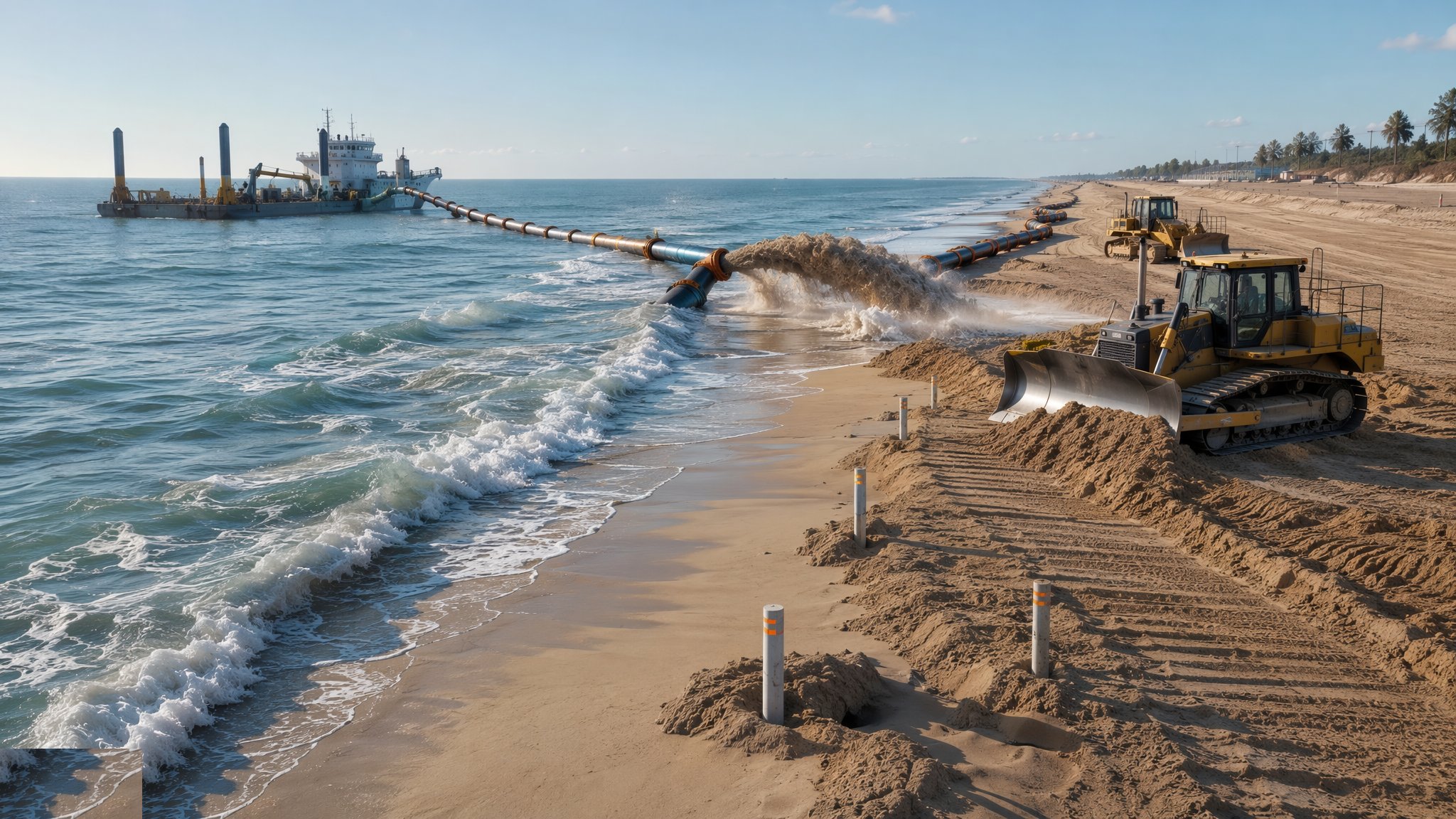
Beach Management & Nourishment
Fighting erosion with sand instead of stone - dredged fill pumped ashore, profiled to the design beach, then monitored and topped up campaign after campaign.
Open process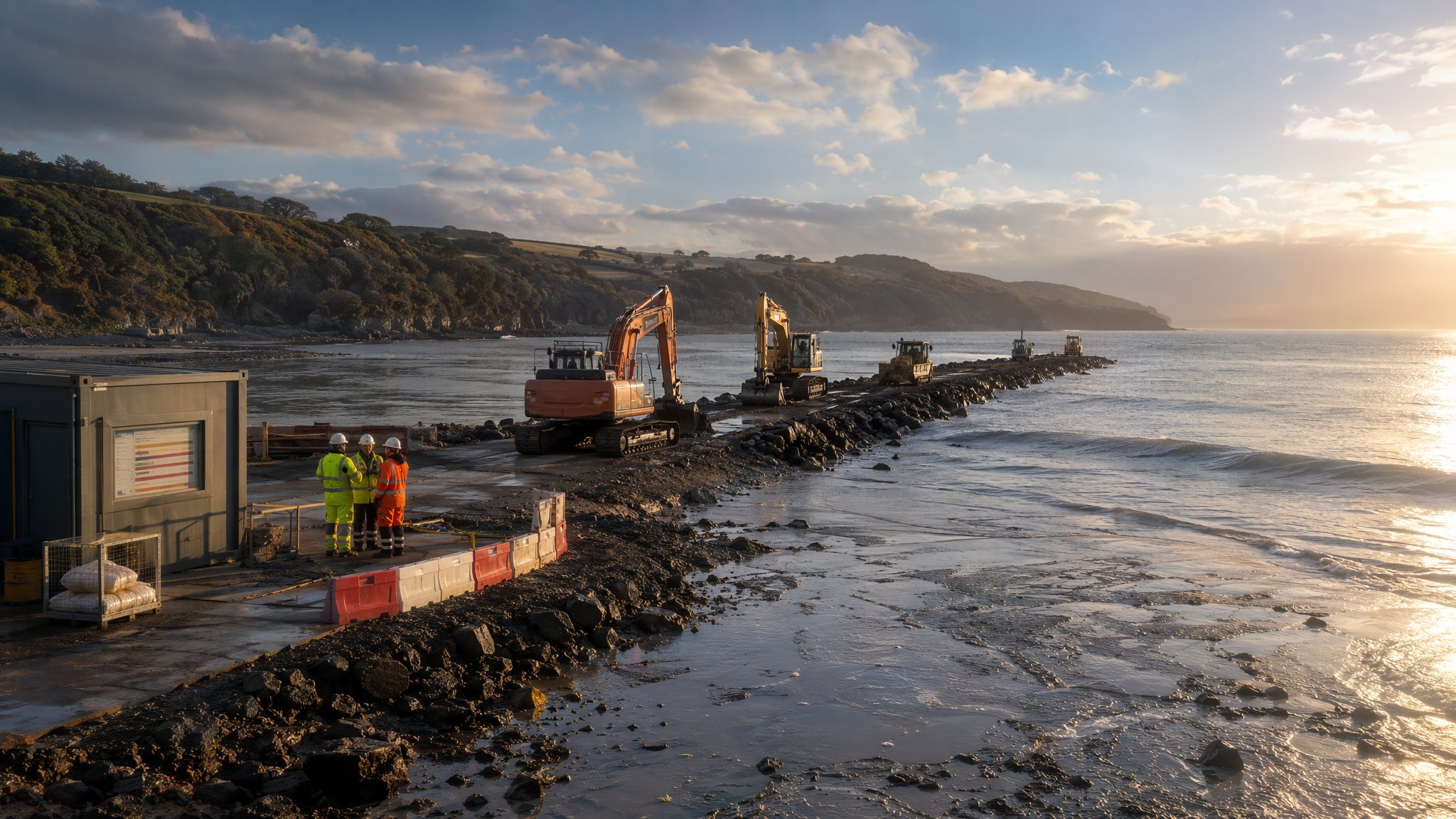
Working in the Intertidal Zone
The discipline behind every coastal job - tide tables, working windows, causeways and soft-ground plant, weather limits, and the retreat plan for when the sea comes back.
Open processShared methods used in this sector
These guides are owned by other sectors - the canonical page lives there - but the method is the same here. Cards open the guide at its home sector.
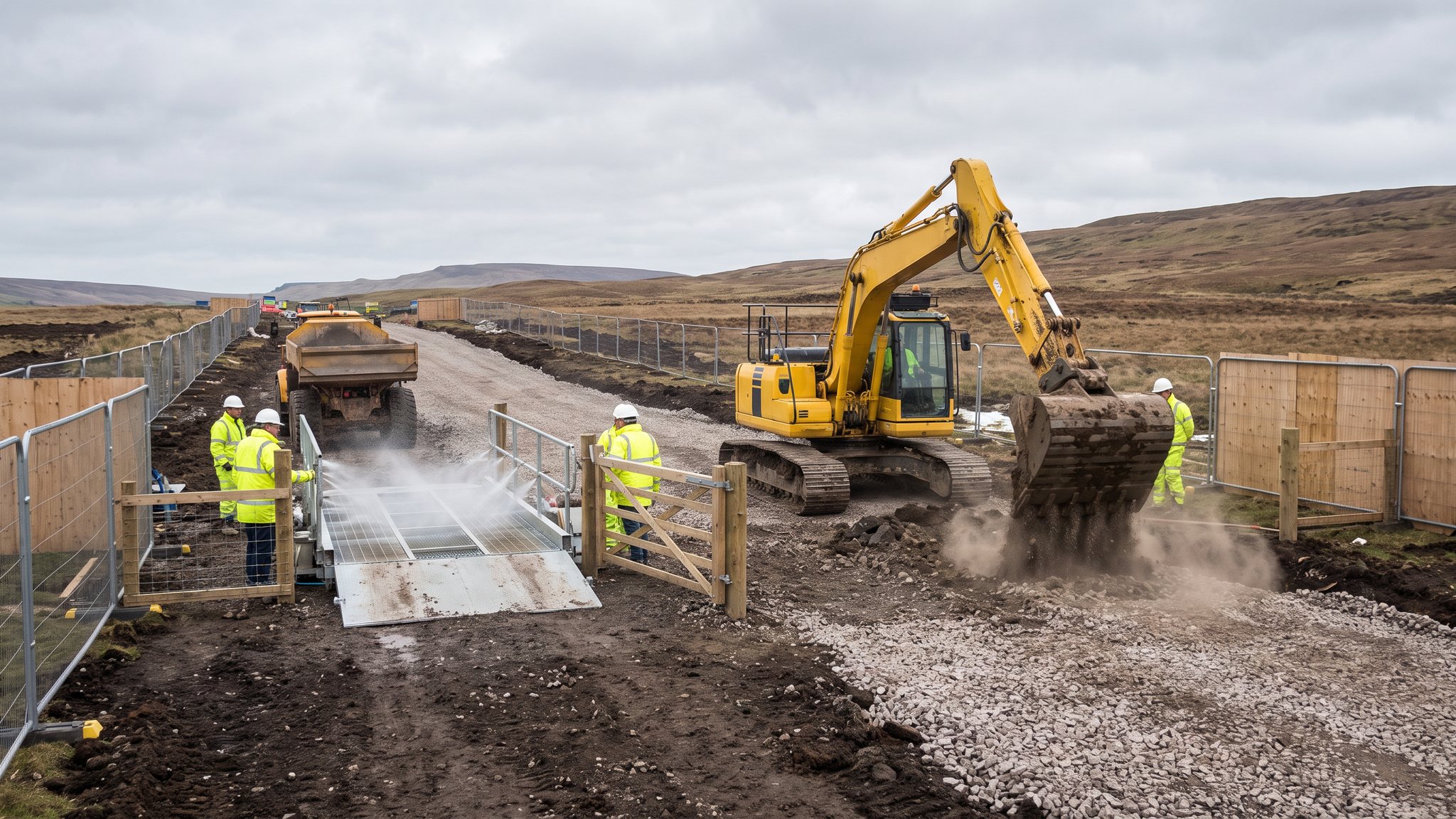
Corridor Access & Enabling Works
Turning a length of route - often a live highway - into a controlled, approved, workable construction corridor.
Open processCanonical guide: Roads & Highways
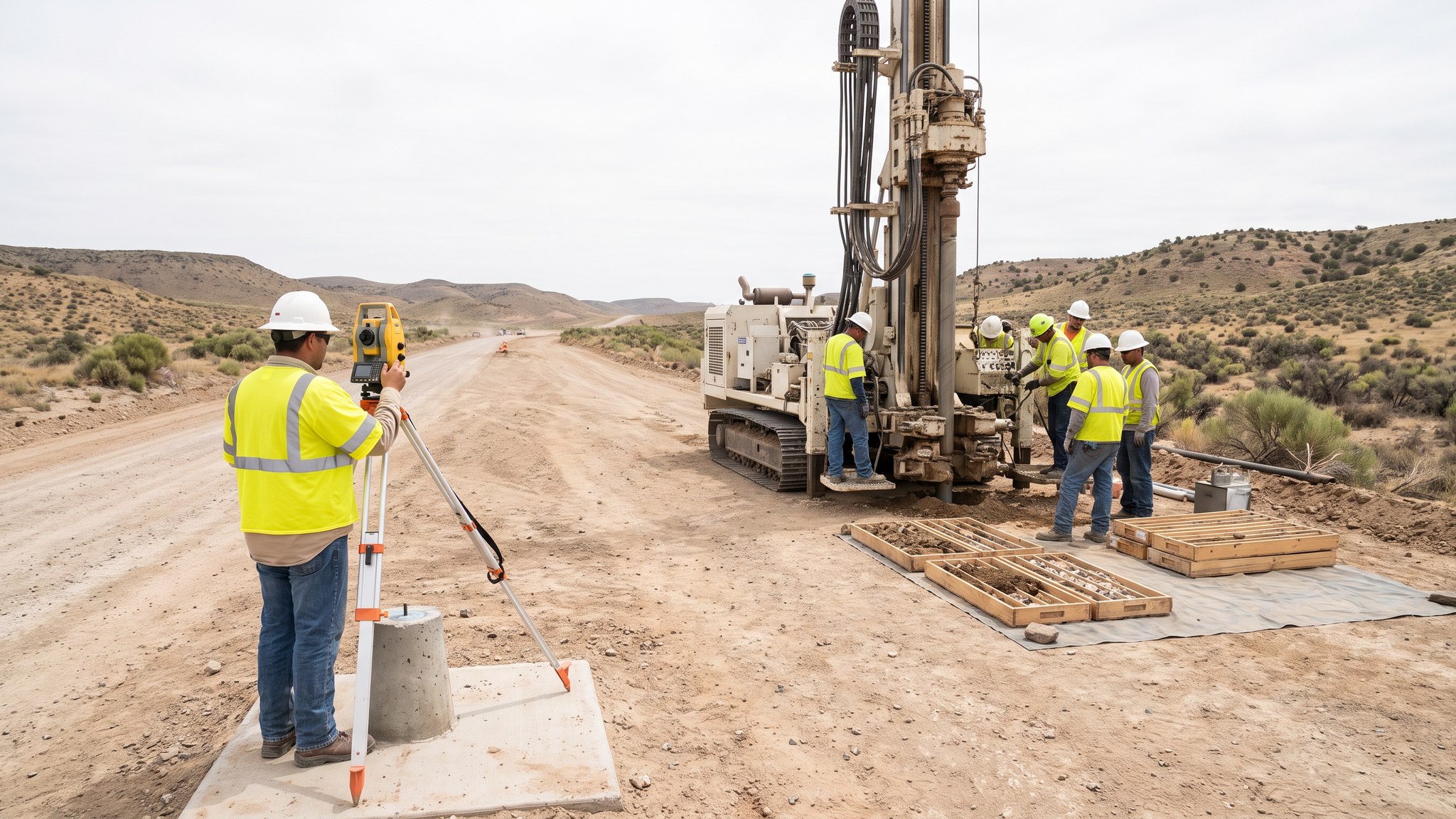
Survey Control & Ground Investigation
Corridor control networks and the ground investigation that tells you what the road, bridge or tunnel is actually standing on.
Open processCanonical guide: Roads & Highways
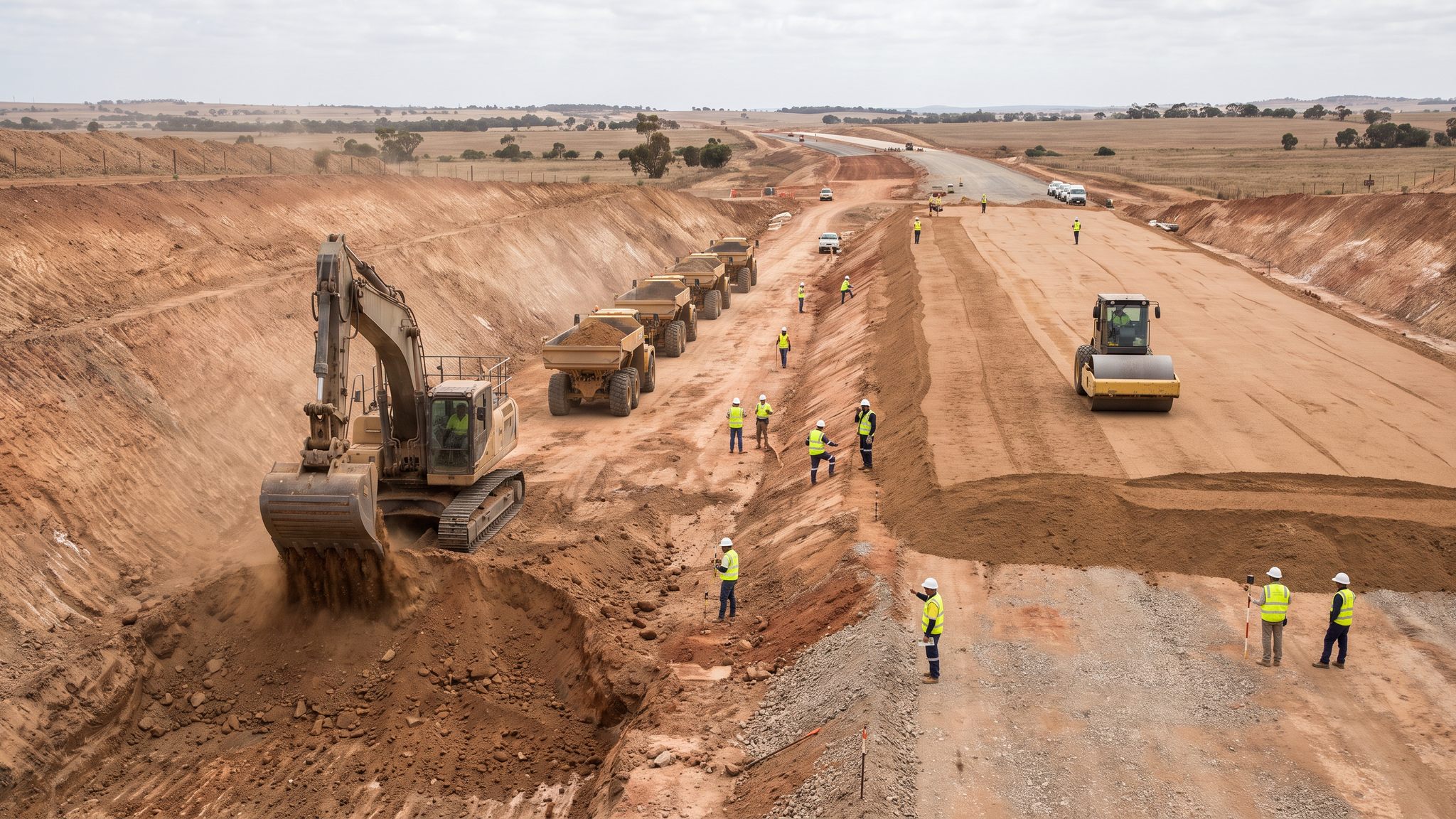
Bulk Earthworks - Cuttings & Embankments
Moving hundreds of thousands of cubic metres to build the corridor's shape - cuttings, embankments and the formation everything sits on.
Open processCanonical guide: Roads & Highways
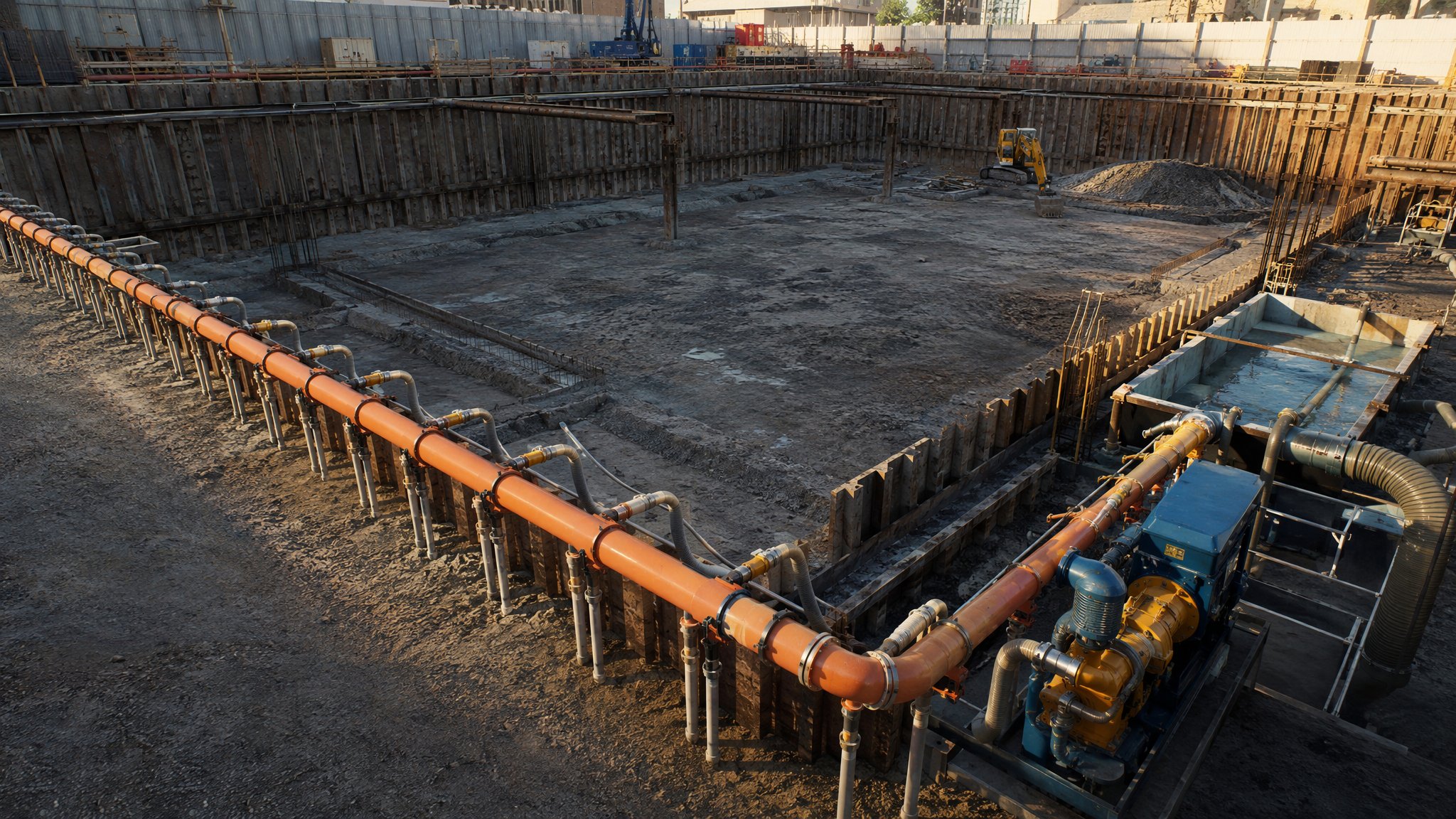
Dewatering & Groundwater Control
Keeping the dig dry - pumps, wellpoints and cut-off walls against an enemy that never sleeps.
Open processCanonical guide: Residential & Housing
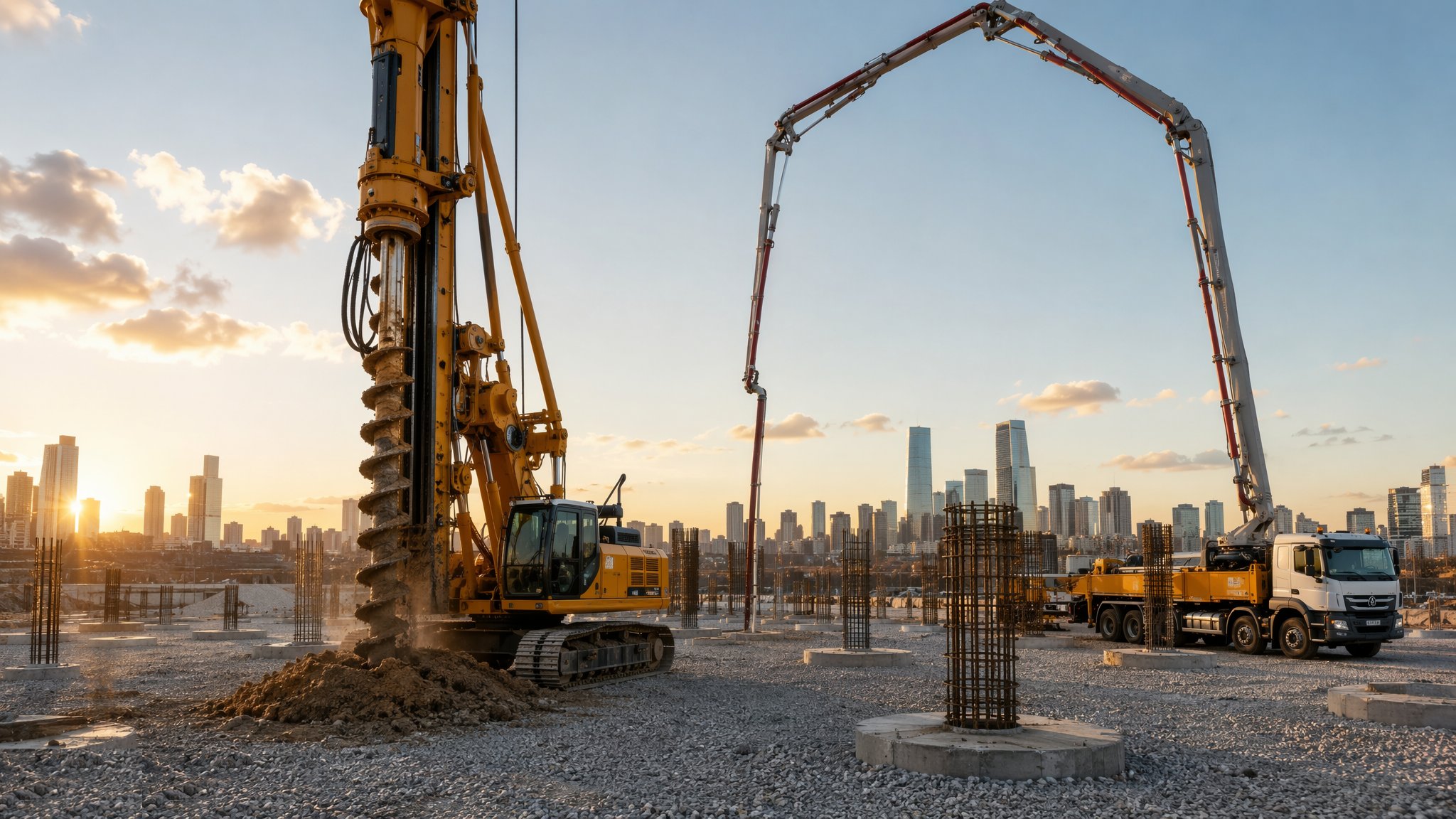
Piling & Deep Foundations
Driven, bored and CFA piles - carrying the building down to ground that can actually take it.
Open processCanonical guide: Residential & Housing

Earthworks & Excavation
Cut and fill, trenching and compaction - reshaping the ground to take the building.
Open processCanonical guide: Residential & Housing
Coastal & Marine Engineering in depth
About Coastal & Marine Engineering
The four guides in this sector cover sea walls and revetments - the hard edge between land and water; breakwaters and groynes, structures built in the sea to calm it; beach management and nourishment, defence by the cubic metre of sand; and intertidal working, the logistics of plant, access and concrete in the zone that floods twice a day.
Buying work against the sea
Coastal defence schemes are public procurement - the Environment Agency, councils and private waterfront developers in the UK; municipalities and master developers in the UAE - usually on measured civil contracts with substantial weather and tidal risk clauses. The marine plant market is thin: jack-up barges, spud-leg pontoons and heavy marine cranes are few and booked far ahead, so the availability of the right barge can set the programme as firmly as any consent.
Rock and armour supply is a procurement line of its own. Armour stone comes from a handful of quarries able to produce graded stone in the multi-tonne range, moved by sea where possible, and the logistics - quarry output, barge cycles, weather windows for placing - form a supply chain that planners model like a process plant. A scheme that secures its rock supply early sleeps better than one that saves it for later.
Monitoring closes the loop: pre-works baseline surveys of beach levels, ecology and structure condition, instrumentation during construction - vibration near sensitive structures, turbidity in the water column - and post-works inspection regimes that feed the next maintenance intervention. Coastal assets are never finished in the way a building is finished; they enter a managed cycle of inspection and repair, and the as-built and survey records the constructor hands over are the baseline against which every future storm's damage is measured.
Programme: the tide is the site manager
Intertidal work runs on tidal windows: concrete poured between tides, plant working the beach on low water and standing off on the flood, and every activity duration measured against the next high water. Weather overlays the tide - wave height limits stop marine lifts and armour placing - so the programme is probabilistic in a way land construction never is, with weather downtime allowances from historical data doing the job float does elsewhere.
The sequence is defensive. Temporary works - access ramps, working platforms, cofferdams - are designed for the storm during construction, not just the calm average, because a half-built revetment in a gale is a liability. Permanent works are built to withstand being overtopped mid-construction where that can happen, and the phasing keeps the existing defence effective until the new line is complete.
What goes wrong
Storm damage during construction is the signature loss: a winter gale strips placed but unkeyed armour, flattens a working platform, or fills an excavation with shingle overnight. The contracts that survive this allocate the risk honestly and carry realistic downtime allowances; the ones that do not generate the sector's classic disputes about what was reasonably foreseeable weather.
The chronic failures are durability ones. Chloride attack on reinforcement is relentless in the splash zone, so concrete quality - cover, low permeability, curing - decides whether a sea wall lasts its design life or spalls in a decade. Scour is the other slow enemy: a wall or groyne that changes the local currents digs its own foundations out, and toe protection is the least glamorous and most consequential detail on the drawing.
UK and UAE differences
UK coastal work is dominated by defence and adaptation: maintaining and raising defences against sea level rise, with Shoreline Management Plans setting the strategy and the Environment Agency's consenting plus marine licences from the MMO shaping every scheme. The working environment is harsh - North Sea and Channel conditions, short weather windows - and the industry's methods reflect a century of losing arguments with winter storms.
UAE coastal work is dominated by creation: reclaimed islands, marinas and waterfront defences built on dredged fill in warm, saline, generally kinder seas. The engineering drivers are different - settlement of reclamation fill, extreme salinity attacking concrete, marine growth on immersed structures, and occasional shamal storms rather than a relentless winter season - and the scale of reclamation means dredging and ground improvement are the sector's core trades, with marine ecology mitigation an increasingly real consent condition.
Beach nourishment and the soft defences
Not all coastal defence is concrete. Beach nourishment - importing sand by the hundreds of thousands of cubic metres, pumped ashore through pipelines from dredgers or hauled by road - rebuilds the natural buffer, and it is construction by survey: the design is a profile, the quality control is hydrographic and topographic survey before and after, and the specification is graded sand that the sea will sort and move regardless. The scheme is expected to erode; the maintenance dredge and re-nourishment cycle is part of the design life, not a failure.
Groynes, offshore breakwaters and managed realignment sit between hard and soft: rock or timber structures that trap or release sediment, and deliberate breaching of old defences to create intertidal habitat that absorbs wave energy. These schemes are as much sediment-transport engineering as construction, and the monitoring - beach profiles, ecological response - is a contractual deliverable for years after the plant leaves.
Marine piling and temporary works at sea
Marine piling is piling with the water added as a hostile medium: tubular steel piles driven from jack-up barges or cantilevered frames over the sea wall, corrosion allowances and coatings specified for the splash zone, and pile integrity proven through the tidal windows that allow the testing gear access. Cofferdams - sheet-piled or gravity - create dry working in the intertidal zone and are designed against the full range of tide, wave and ground water, with a pumping and watching regime for their whole life.
The safety regime is the sector's own: work over water brings rescue boats, lifejacket discipline and man-overboard drills; marine lifts are governed by the weather forecast with formal go/no-go criteria; and diving work, where needed, runs under commercial diving regulations with their own supervision and records. The paperwork - marine licences, notices to mariners, consents for works below mean high water - parallels the land-side CDM file and is just as capable of stopping the job.
Sea walls and revetments in practice
A modern sea wall is a layered system: the structural wall itself - reinforced concrete, often curved or recurved to throw waves back - sitting on foundations that must survive scour, with rock armour or stepped revetments taking the wave energy in front, and a crest detail that manages overtopping water rather than pretending it never happens. The concrete specification is marine-grade throughout: low permeability, generous cover, careful curing, because the splash zone is the most aggressive common exposure class in the codes.
Revetment construction is survey-led rock work: toe trenches dug at low water, geotextile and underlayer stone placed and profiled, then armour stone set piece by piece to interlock, each stone positioned from the excavator against the design profile and surveyed as placed. Productivity is governed by tide and swell, and the as-built survey is the acceptance document - the armour layer's geometry is its performance, so the records are the defence, in every sense.
Breakwaters and groynes
Breakwaters are the heaviest structures the sector builds: rubble mounds with core, underlayer and armour placed from barges or from the advancing structure itself, or caissons - giant concrete boxes cast in yards, floated out and sunk onto prepared beds. The geometry is the engineering: armour units, whether rock or concrete shapes like accropodes, are placed to interlock in a single or double layer whose density and pattern decide whether the next design storm is survived.
Groynes are the smaller cousins working on beaches: timber, rock or concrete structures spaced along the shore to hold sand, built from the beach at low water with the same tidal discipline as any intertidal work. Their success is measured in beach levels, so the monitoring surveys after construction are part of the works - and their failure mode is the beach two groynes down, starved of the sand the new structure caught.