Buildings
Homes, offices, hospitals, schools - everything with rooms in it.
The buildings group covers every asset whose job is to enclose space for people: housing, offices, shops, hotels, hospitals, schools, civic and cultural buildings, sports venues and the secure estate. The structural DNA barely changes across the group - enabling works, foundations, frame, envelope, services, finishes, handover - what changes is the fit-out philosophy and the regulatory burden.

15 sectors in this group
Live sectors carry the full step-by-step guides. The rest are scoped and scheduled - their pages slot straight in when the next build phase lands.
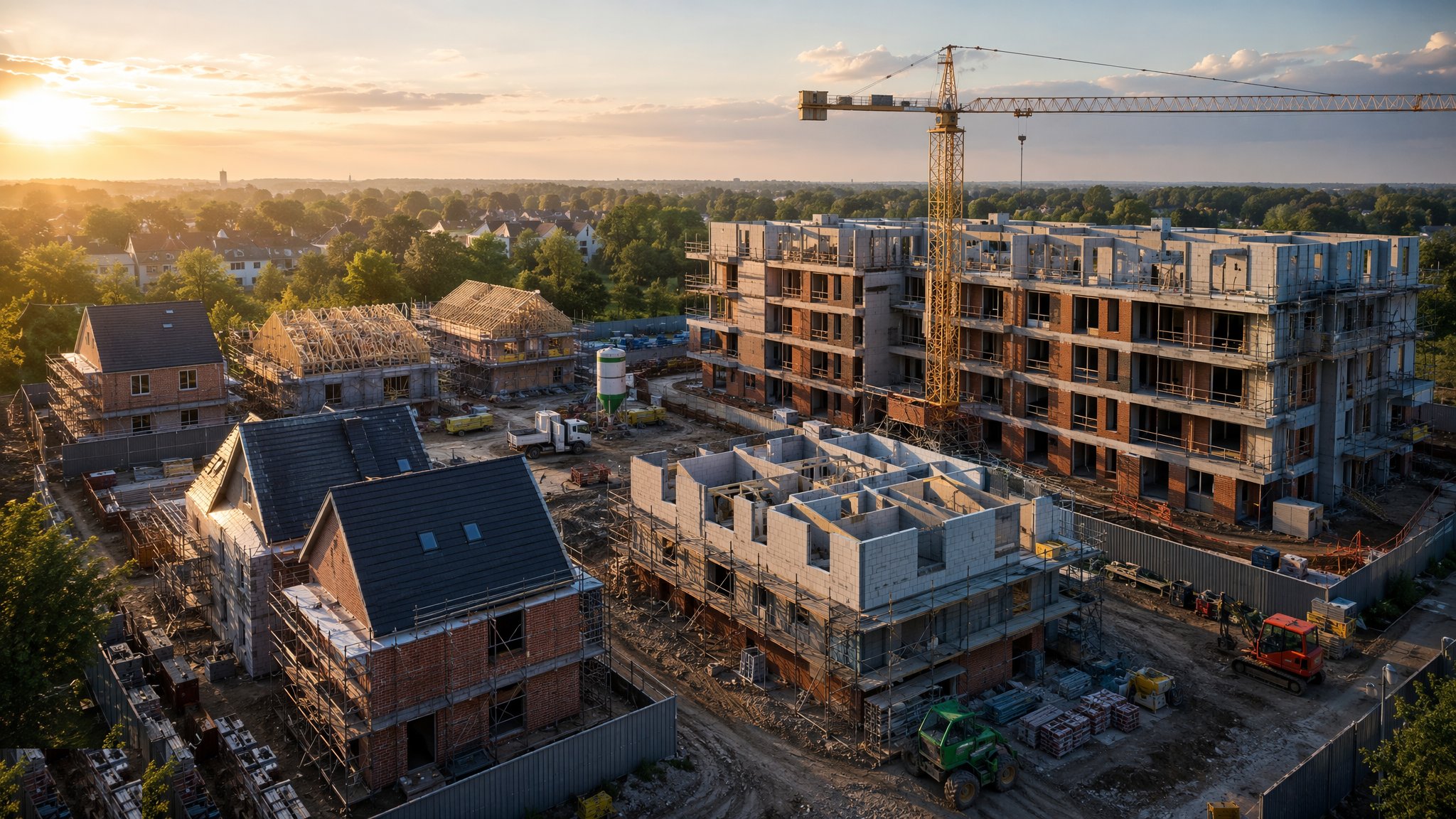
Homes, villas and residential towers - from first fence panel to final snag.
Explore the sector
Offices and commercial towers - the same bones as residential, a different fit-out philosophy.
Explore the sector
Shops, malls and retail parks - big boxes, fast fit-outs and trading neighbours.
Explore the sector
Hotels, resorts and leisure destinations - bedroom repetition above, banquet complexity below.
Explore the sector
Hospitals and healthcare facilities - familiar bones, unforgiving specialist standards.
Explore the sector
Schools, colleges and universities - repeatable classrooms, immovable term dates.
Explore the sector
Courts, civic offices and public buildings - formal procurement, formal architecture.
Explore the sector
Museums, theatres and places of worship - one-off architecture with zero room for error.
Explore the sector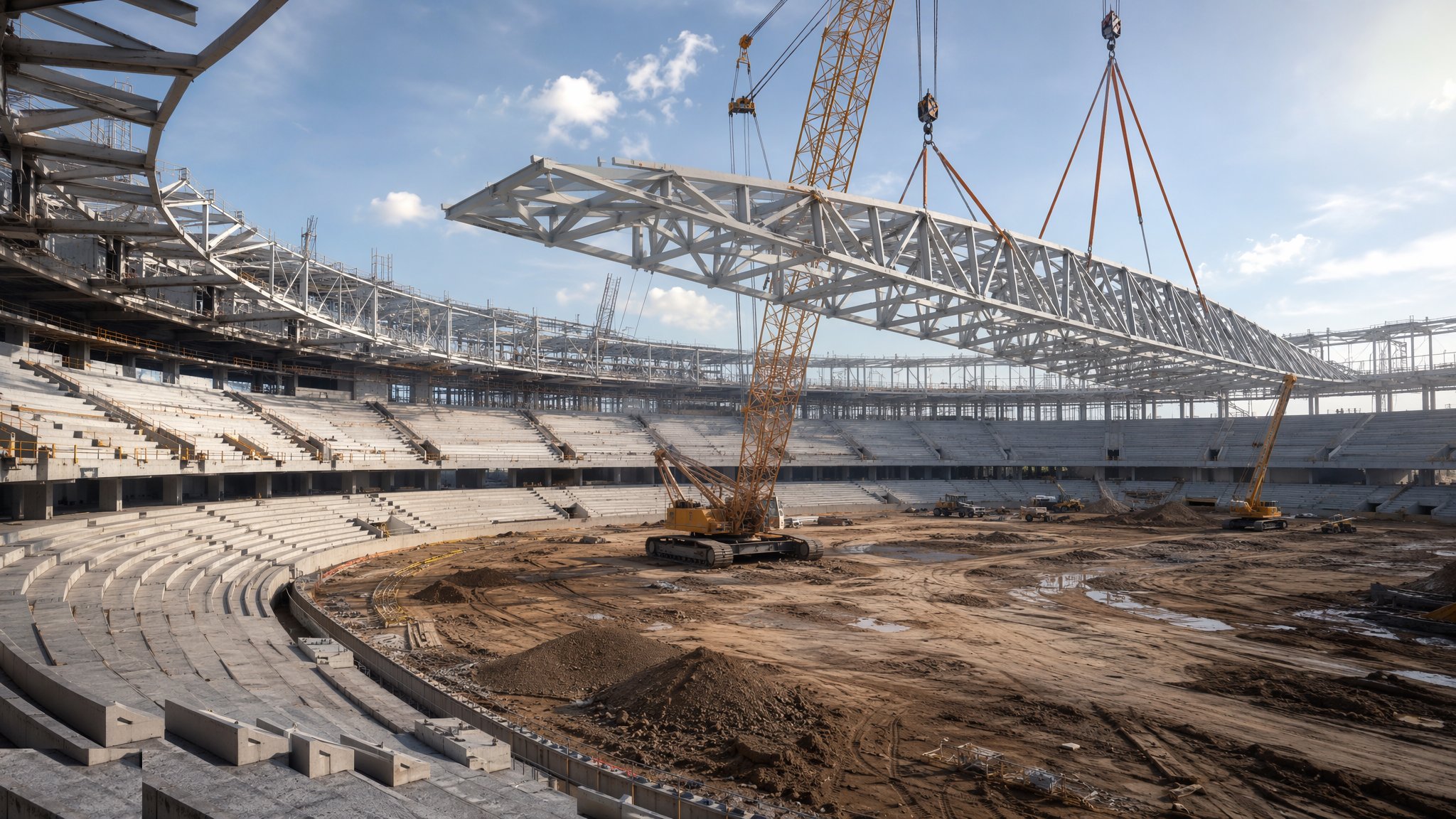
Stadia, arenas and leisure centres - long spans, big crowds, hard deadlines.
Explore the sector
Podium towers and city-block schemes - every sector at once, on one footprint.
Explore the sector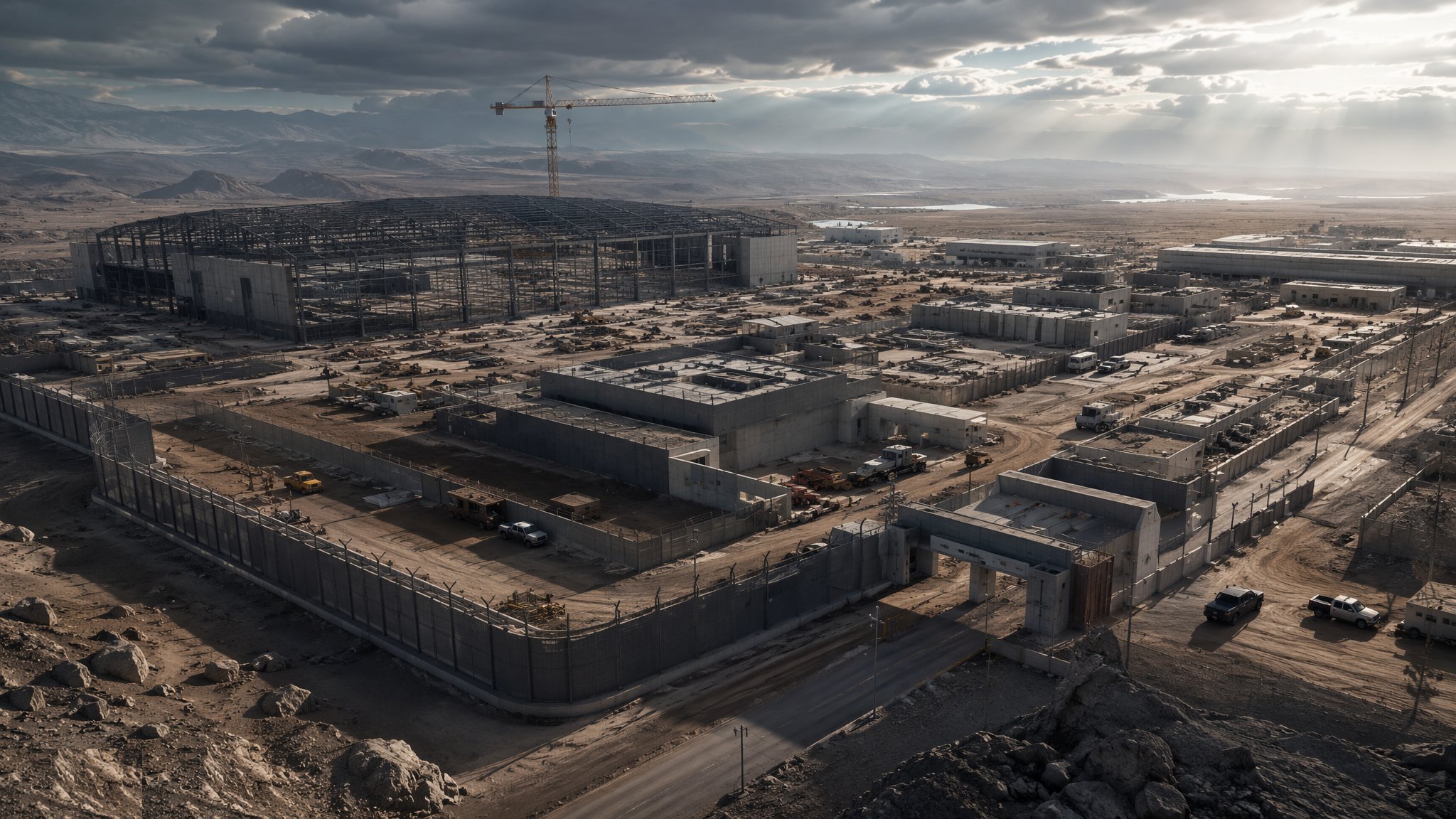
Barracks, hangars and secure compounds - conventional building, unconventional rules.
Explore the sector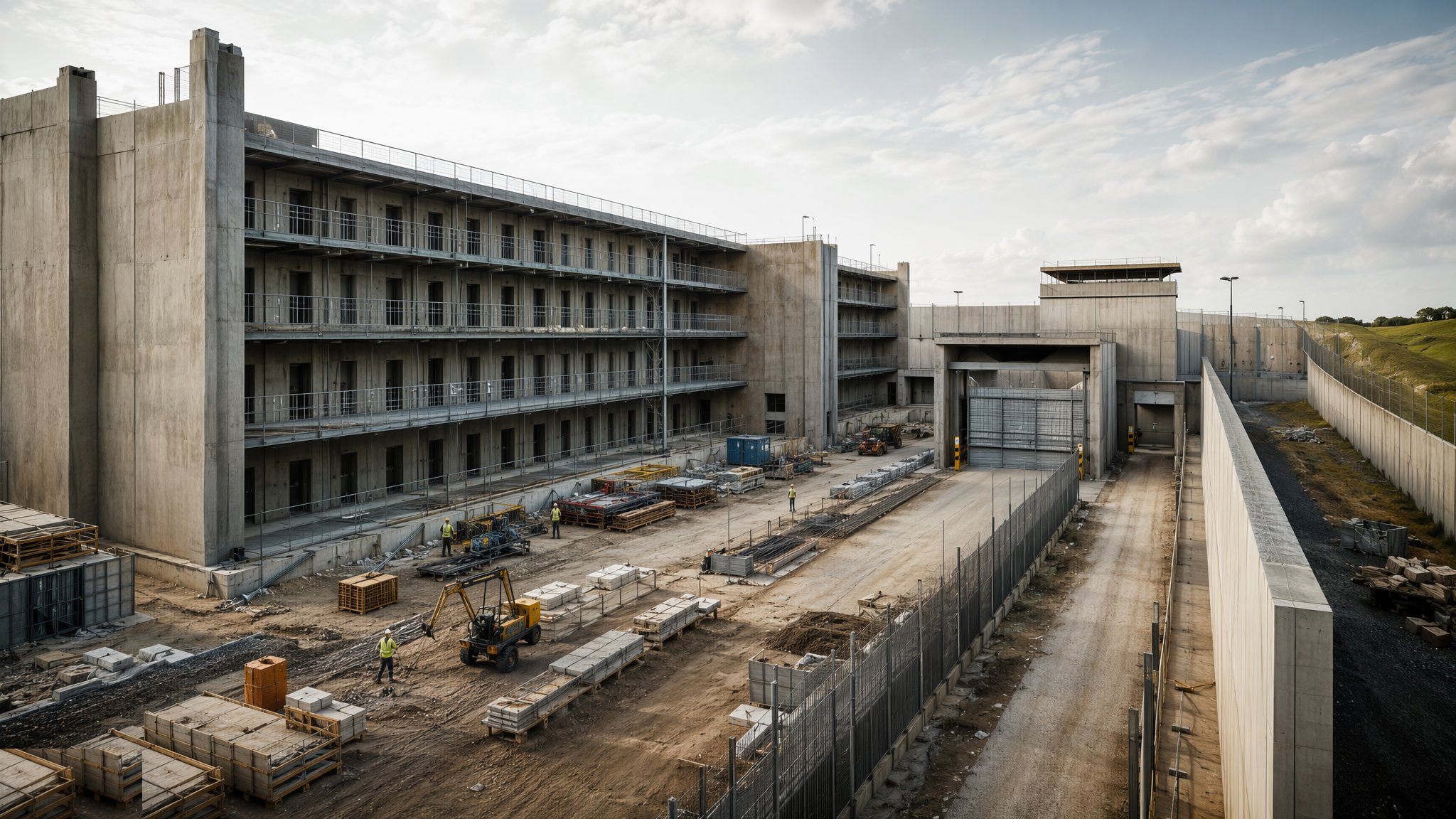
Prisons and detention centres - security built into every detail of the fabric.
Explore the sector
Brick, block, concrete walls and the MEP trades - how the work actually gets done, by build type.
Explore the sector
Built in a factory, finished on site - where the programme moves indoors.
Explore the sector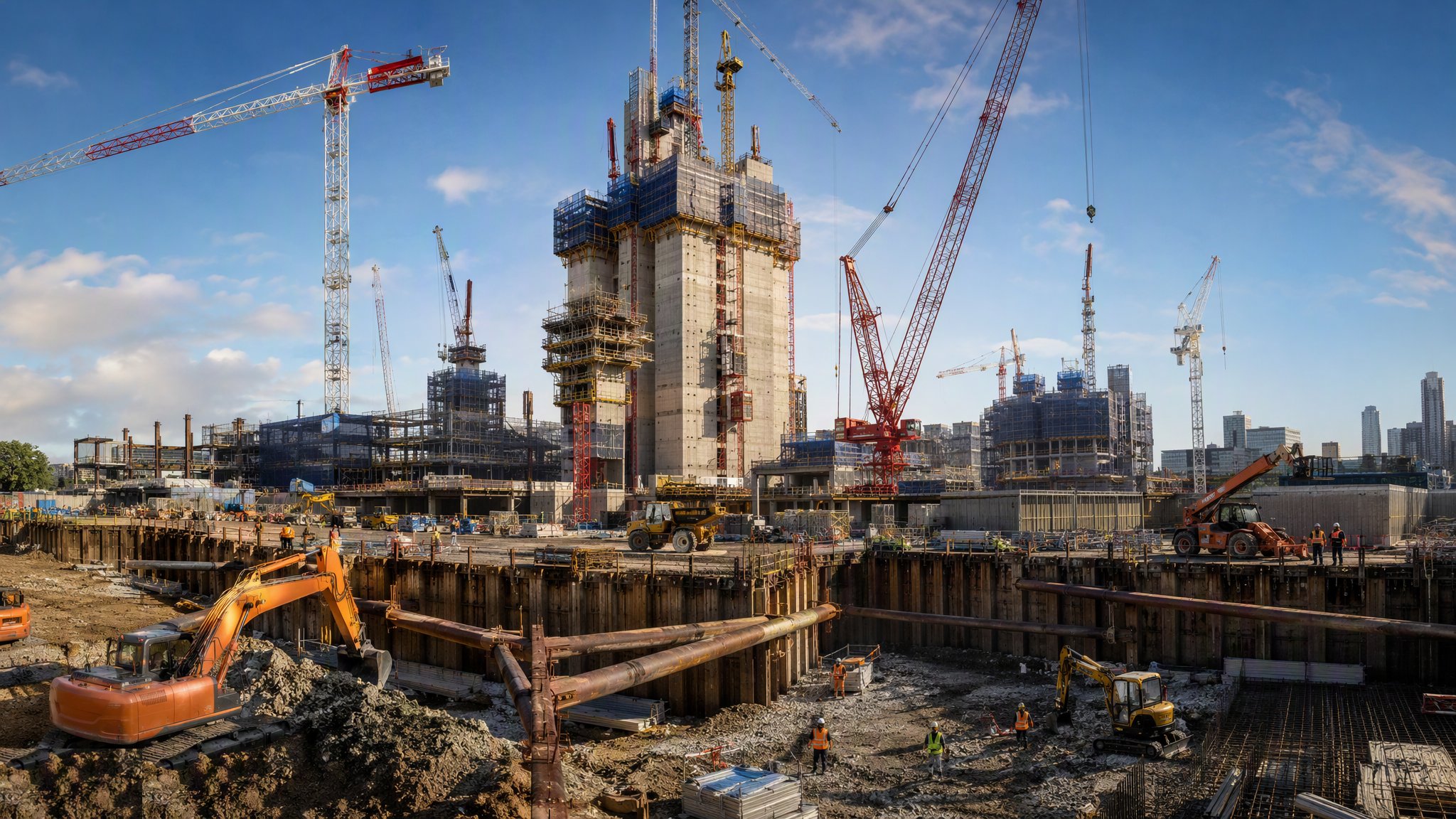
The kit that holds the job up while the real work happens - design, access, formwork and lifting.
Explore the sectorA building, start to finish
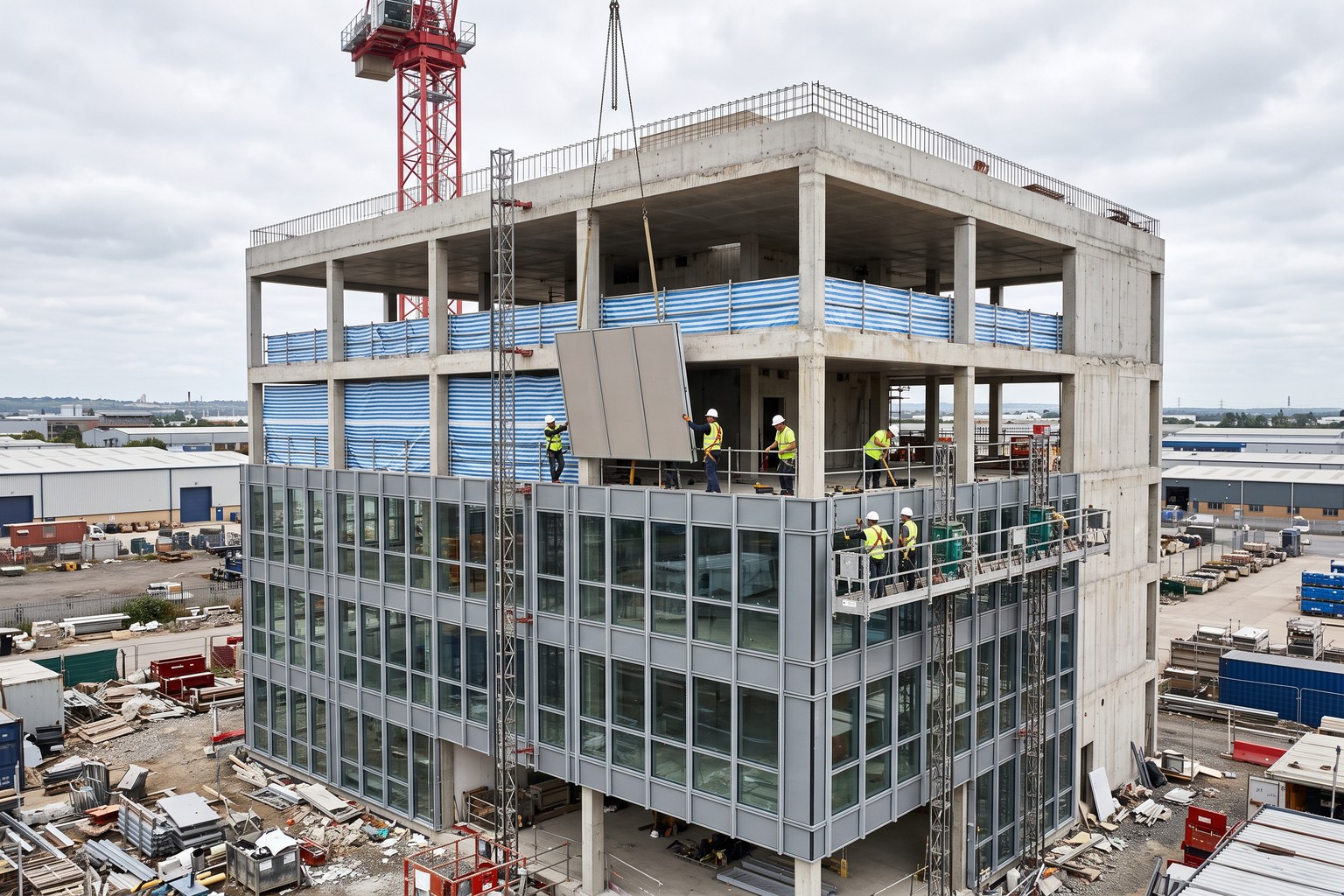
Six stages every buildings project runs through, in order - Step 1 of 6 - slide through the snapshots.


STAGE 1
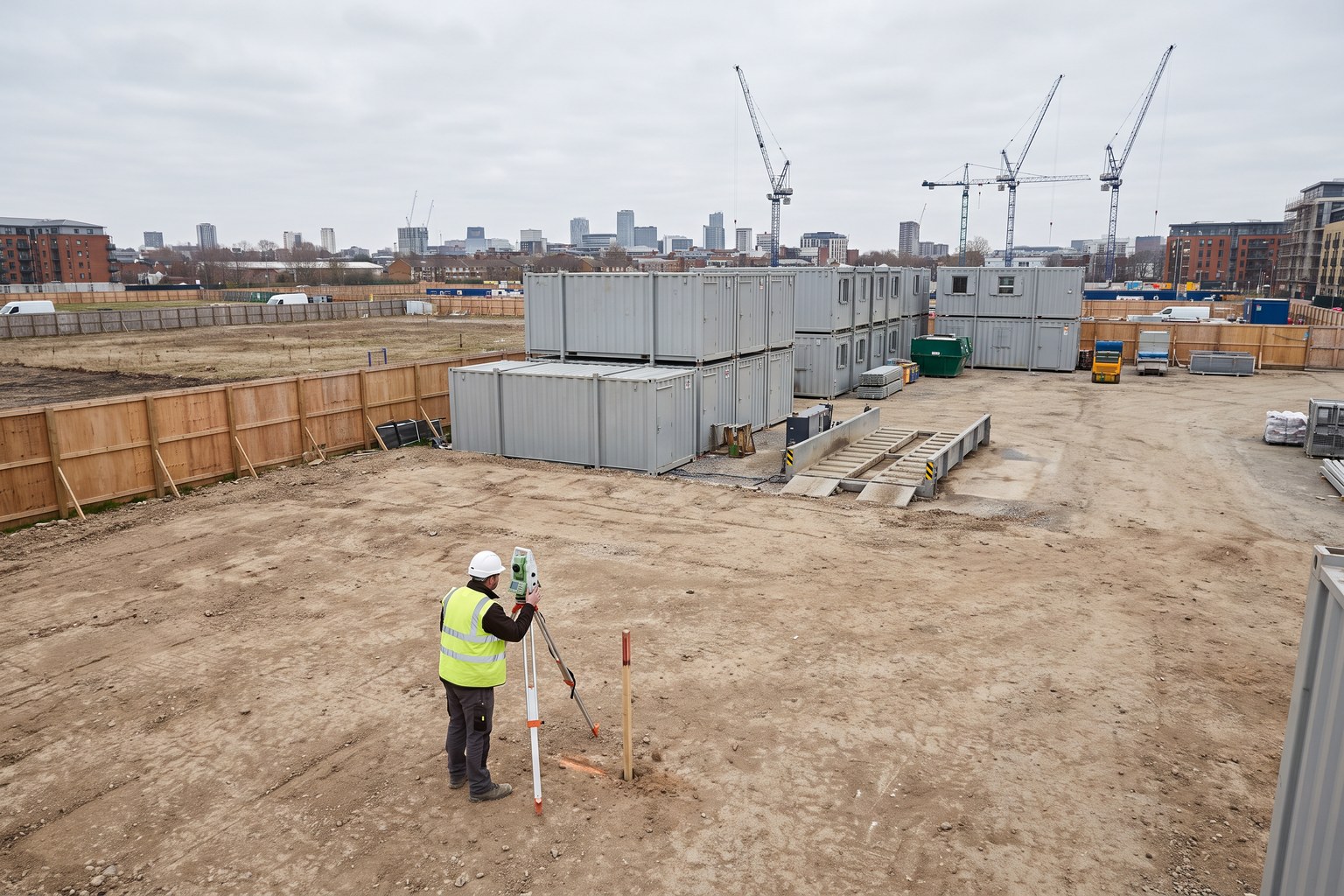
Site set-up and enabling works
Hoarding goes up, welfare and site accommodation land, and the site is surveyed and set out. Nothing is built yet - but the logistics decided here govern every week that follows.
Gets the site legal, safe and measurable before a single load arrivesBuildings in depth
What holds this group of sectors together - and where it genuinely splits
Every sector in this group shares the same structural DNA: enabling works, foundations, frame, envelope, services, finishes, handover. A hospital and a housing scheme both end up as a waterproof box full of rooms, and the trades who build them - groundworkers, frame gangs, scaffolders, dry liners, MEP fitters - are largely interchangeable. What changes from sector to sector is the fit-out philosophy and the regulatory burden. A school is governed by Department for Education output specs, a hospital by HTM and HBN guidance, a prison by Ministry of Justice standards, and a mosque or gallery by the client's own brief. The concrete does not care, but the paperwork does.
The genuine split inside the group is between repetitive and bespoke product. Housing, student accommodation, hotels and warehousing-style retail are repetition businesses - the money is made by doing the same room or bay two hundred times slightly faster each time. Healthcare, cultural buildings, sports venues and the secure estate are one-offs: complex briefs, heavy services content, and handover processes measured in months rather than days. Mixed-use schemes sit awkwardly across both, which is why they are so hard to programme - the residential floors want repetition while the podium wants bespoke attention.
The UK and UAE versions of this group differ mostly in the frame and the approvals. UK housing is still masonry cavity-wall at its base, with timber frame gaining ground and NHBC warranty standards shaping the details; UAE residential is overwhelmingly reinforced concrete frame and blockwork infill, designed for heat, dust and hot-weather concreting discipline. Approval regimes mirror that: Building Regs, Building Control and warranty providers on one side, DM, DDA, Trakhees and Civil Defence on the other. Yet the sequence on site is recognisably the same job, and a site manager who can run a frame in Leeds can learn to run one in Dubai within a single project.
Three sectors here are not buildings at all but lenses on buildings. Building Trades & Methods cuts across by craft, Off-Site & Modern Methods cuts across by production philosophy, and Temporary Works & Plant is the hidden discipline underneath every project on the list. Read those three alongside any single building sector and you will understand far more than reading two building sectors side by side.
Who buys this work and how it is procured
The client base is the widest in construction. Procurement routes follow the risk. Whoever is least able to carry design, cost or programme uncertainty will try to push it somewhere else, and the route chosen - single stage, two stage, design and build, management contracting - is simply the mechanism for doing that. Those two rules hold in every market on earth. What does not travel is who the clients actually are, where their money comes from and what sits between them and the contractor, which is why the UK and European picture and the Middle East and North African picture are set out separately below.
Margins across the group are famously thin - two to four percent on mainstream contracting - so the commercial model relies on volume, supply-chain leverage and tight change control. The trades package structure is the real map of a buildings job: groundworks, frame, envelope, MEP, finishes, each let separately and each a potential interface dispute. Understanding who holds which package risk tells you more about how a project will behave than the headline contract form.
Supply chain is the quiet constant. The same national and regional subcontractors - groundworkers, frame specialists, roofing and cladding firms, MEP contractors, dry lining and ceilings gangs - appear on housing, schools, hospitals and offices alike, often with the same estimators pricing all four. Their order books, not the headline tender list, tell you the real state of the market. When frame and MEP packages go out at prices twenty percent above budget across a whole region, every sector in this group feels it at once, because they are all bidding for the same people.
Who buys this work and how it is procured: UK and Europe
Private developers and housebuilders dominate residential and commercial; retailers and hotel operators bring their own standard specifications; the public sector - NHS trusts, the Department for Education, local authorities, the Ministry of Justice, the Ministry of Defence - buys through frameworks with heavy prequalification. Registered providers and housing associations sit between the two, buying affordable housing with a mix of grant and their own borrowing. Institutional money - pension funds, insurers, and the build-to-rent and student accommodation funds - increasingly forward-funds schemes it intends to hold for thirty years, which changes what the client cares about: whole-life cost, warranty cover and the quality of the handover information, not simply the tender figure. Across the Channel the cast is similar but the balance shifts. Municipalities, regional authorities and state-owned property companies carry far more of the public building stock in Germany, France, the Netherlands and the Nordics, and long-term public ownership rather than public-private packaging is again the default after two decades of experimenting with the alternative.
Tenure of client matters as much as tenure of building: an experienced repeat client like a volume housebuilder will drive the contractor hard on programme, while a school trust building once in a generation needs far more hand-holding through design development. Speculative housing and build-to-rent tend to be design-and-build, because the client wants cost certainty and the contractor can standardise. Hospitals and prisons still carry significant public framework and two-stage tendering, where early contractor involvement is supposed to de-risk the services-heavy design. Public buyers in Britain now rarely run one-off tenders at all: the named frameworks - the health and education frameworks, the regional construction frameworks, the local authority buying organisations - are where the work actually sits, and access is through periodic call-outs advertised on the national tender portal under the public contracts rules. Miss a framework renewal and you are outside that client's market for four or five years whatever your capability, which is why bid teams treat framework renewal dates as more important than any single project. European practice is procedurally similar because it comes from the same directives: open, restricted and competitive-dialogue routes, published thresholds, standstill periods and an audit trail that a losing bidder can and does challenge.
The money arrives in a small number of recognisable ways, and each leaves a fingerprint on the job. Developer equity plus senior debt funds most private work, which is why the funder's monitoring surveyor and the drawdown certificate can matter more to site cashflow than the payment clause in the building contract. Grant funding - affordable housing programmes, regeneration and levelling-up pots, and European structural and recovery money on the continent - arrives with spend-by dates that drive start dates far harder than site readiness does, and a start on site in March that makes no construction sense usually has a funding explanation. Public capital budgets are annual and political, so a scheme that misses a financial year can lose its allocation entirely. Institutional forward funding pays against milestones and wants a fixed price early. Read the funding structure before you read the programme; it usually explains the programme.
On contract families the observed market practice is straightforward. JCT forms and their design-and-build variants carry the overwhelming majority of UK building work; NEC is more usual where the client is a public infrastructure, utility or transport body applying one suite across its whole capital programme; and amendments to both are the norm rather than the exception on anything of size. Germany runs most public building work behind VOB/B, France uses the CCAG Travaux on public contracts, and the Netherlands and the Nordics have their own standard conditions doing the same job. What newcomers get wrong is almost always the same three things: they treat winning a place on the framework as the win, when the money is decided in the mini-competitions that follow; they price the tender documents without reading the employer's amendments to the standard form; and they believe the public client's programme when it is really a funding assumption waiting on an approval that has not happened yet.
Who buys this work and how it is procured: Middle East and North Africa
The dominant client across the region is the state, directly or at one remove. Ministries, municipalities, royal commissions and defence bodies buy their own estates, and beyond them sit the government-related entities that actually build the cities: Emaar, Nakheel and Dubai Holding in Dubai, Aldar and Modon in Abu Dhabi, Qatari Diar and Msheireb in Doha, Roshn, the National Housing Company, Diriyah, Qiddiya and NEOM in Saudi Arabia, and the development arms of the Omani and Kuwaiti governments. In Egypt the New Urban Communities Authority and the armed forces engineering authority sit behind an enormous share of the market alongside private developers such as Talaat Moustafa Group. Working out whether your client is the sovereign, a sovereign-backed developer or a genuinely private one tells you most of what you need to know about how the job will be funded and how quickly you will be paid.
The master developer is a structure with no real UK equivalent and it shapes everything downstream. One entity takes a very large land parcel, funds and builds the infrastructure - roads, utilities, district cooling, marine works, sometimes a metro connection - then sells or leases serviced plots to sub-developers who build the towers and villas on them. The buildings contractor's client is therefore often two or three steps removed from the landowner, while the master developer still controls site access, logistics routes, utility connections, design review and the approval of your handover. Nor is the region a single regime, or even a single country a single regime. Dubai Municipality, Trakhees in the ports and free zones, and the Dubai Development Authority each run their own approval routes with their own codes and their own inspectors, while Abu Dhabi consents through the Department of Municipalities and Transport against its own building code. Saudi Arabia adds the Saudi Building Code and municipality permitting, Qatar and Kuwait their own ministries, Oman its municipalities, and Egypt a consenting world of its own again.
In the UAE, the pattern is FIDIC-based: developer-led design-and-build on residential towers and hotels, with consultants holding more design responsibility than their UK equivalents, and the employer's engineer sitting between the parties in a way the JCT world would not recognise. That is a regional norm rather than a UAE peculiarity - FIDIC Red and Yellow Books, frequently in their older editions rather than the current one, underpin building work from Kuwait to Morocco. What matters is not the printed form but the particular conditions bolted to it, because employer-side amendment is routine: the engineer's independence is diluted or removed, notice provisions become strict time bars, entitlement to prolongation cost is capped or deleted, extensions of time are granted without money, and the dispute route runs to arbitration in a seat of the employer's choosing. The unamended form and the contract you actually sign are different documents, and pricing the first one is the most expensive mistake available in this market.
Cashflow culture is the next thing that catches newcomers. An advance payment of ten to twenty percent against a bank guarantee is normal and is a genuine part of the funding model; so are performance bonds, hard-held retention and certification cycles that stretch well beyond the dates written into the contract, particularly once a final account and its claims become entangled. Contractors who last in the region price the cost of carrying the employer and never let the contemporaneous records lapse. Registration comes before any of that: contractors are classified and graded by municipality or ministry, the grade caps the contract value you are permitted to hold, and free zones maintain separate approved-contractor lists of their own. Local content sits on top and is scored at tender rather than treated as an aspiration - in-country value in the UAE, the Saudi local content and government procurement regime, Omanisation and Emiratisation workforce targets, and Egyptian rules favouring locally manufactured materials.
One thing overrides the contract entirely, and a UK team reading only the particular conditions will never find it. The civil codes of the UAE, Saudi Arabia, Qatar, Kuwait, Oman and Egypt impose decennial liability: for ten years from handover the contractor and the supervising engineer are jointly liable for total or partial collapse and for any defect that threatens the stability and safety of the structure, and an agreement purporting to exclude or limit that liability is void. It is not a contractual risk to be negotiated away but a mandatory statutory one, it outlives the defects liability period by a decade, and it is why decennial insurance has become a practical condition of handover across much of the region. Price the structure, the waterproofing and the supervision with that ten-year tail in mind, because the law will remember the job long after the retention has been released.
How to read this group of sectors as a newcomer
Start with Residential & Housing. It is the clearest expression of the buildings sequence - the plot-by-plot logic of foundations, superstructure, roof, first fix, second fix, snagging - repeated at a scale where you can see the rhythm. From there, move to Commercial & Workplace to see how the same sequence scales vertically with a concrete or steel frame, cores and curtain walling. Those two sectors teach you the skeleton; everything else is a variation in fit-out density and client behaviour.
Then read the cross-cutting sectors before you read more building types. Building Trades & Methods shows you how the individual crafts see the job, which explains half the coordination problems on any site. Off-Site & Modern Methods explains why bathrooms arrive as pods and risers arrive as modules, and why that moves risk from the site to the factory and the design freeze. Temporary Works & Plant explains the scaffolding, propping, hoarding and craneage that every other sector silently assumes.
Watch for the borrowings between sectors. The pod and module logic came from hotels and student housing into mainstream residential. The cladding remediation regime born in residential towers now touches every tall building. Hot-weather concreting practice from the Gulf - chilled mixes, night pours, curing discipline - is increasingly relevant on UK summer pours. The group looks like fifteen separate sectors, but on site it is one trade conversation with fifteen different clients sitting at the table.