Corridors, earthworks and pavements - the artery from first peg to final white line.
A road scheme is a conveyor belt of earthworks that never stops moving. The shared enabling works come first - corridor access, survey control and ground investigation, bulk earthworks, and drainage and utility corridors - then the pavement train: subgrade preparation and capping, subbase and base, asphalt surfacing, and finally kerbs, footways, markings, signage and lighting before the asset is handed to the maintaining authority.
The process map - enabling works to asset handover
Ten processes in build order, in two streams. The shared enabling works come first and serve every transport scheme - bridges and tunnels link back to them - then the roads stream carries the alignment through to surfacing, street furniture and handover. Each process is a full guide: overview, variants, numbered steps, plant, testing, safety and defects.
Shared enabling works5
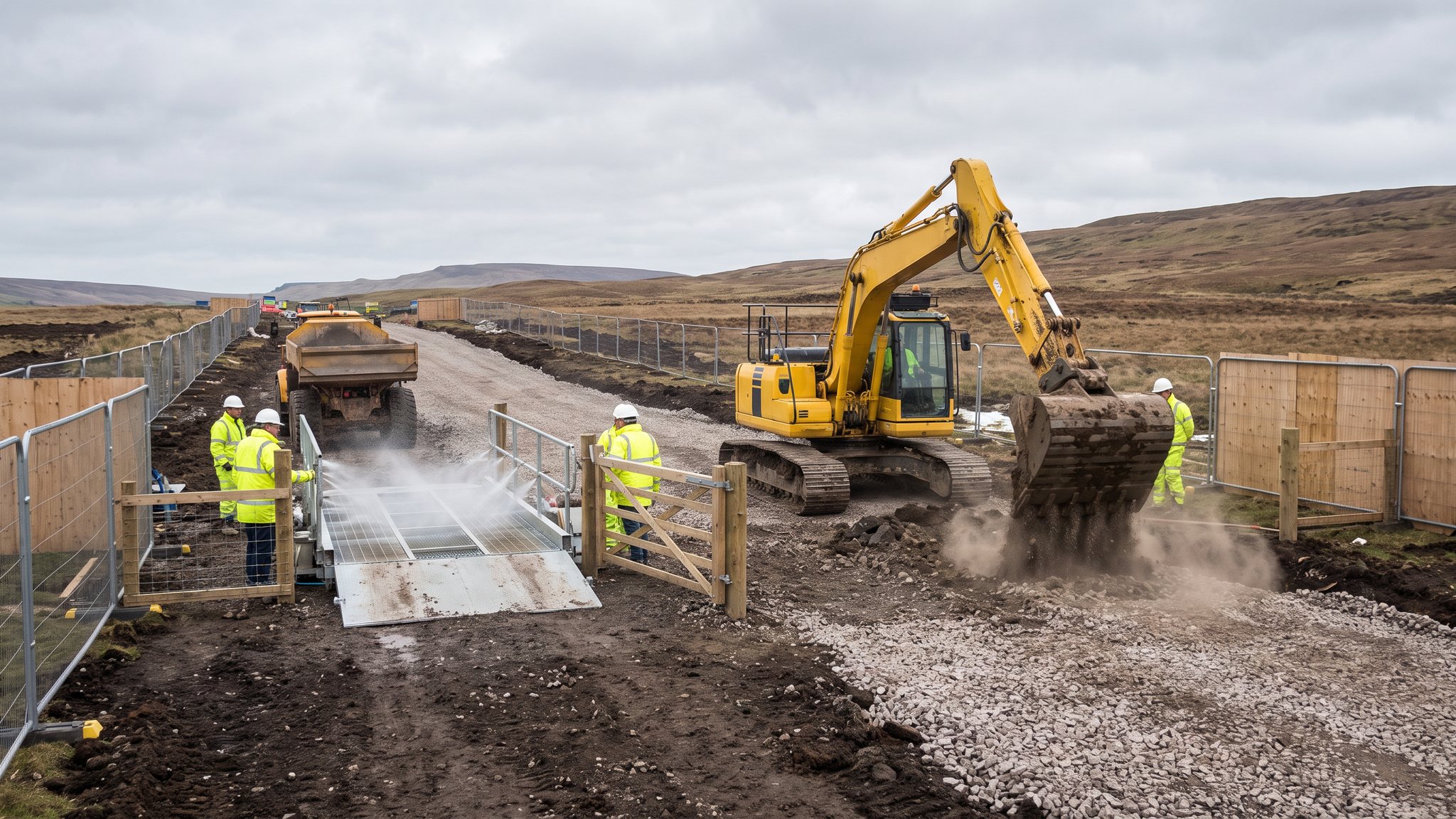
Corridor Access & Enabling Works
Turning a length of route - often a live highway - into a controlled, approved, workable construction corridor.
Open process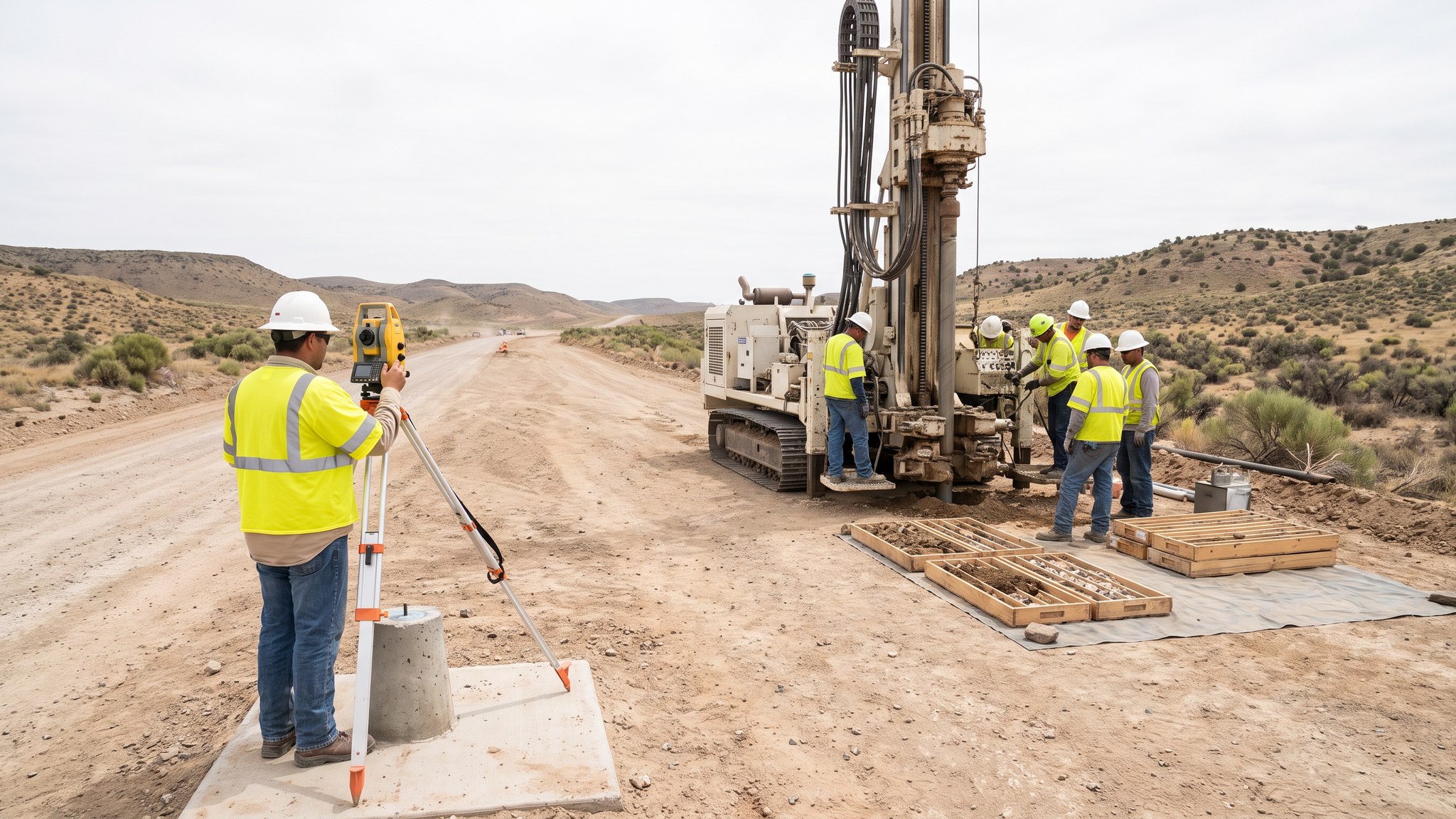
Survey Control & Ground Investigation
Corridor control networks and the ground investigation that tells you what the road, bridge or tunnel is actually standing on.
Open process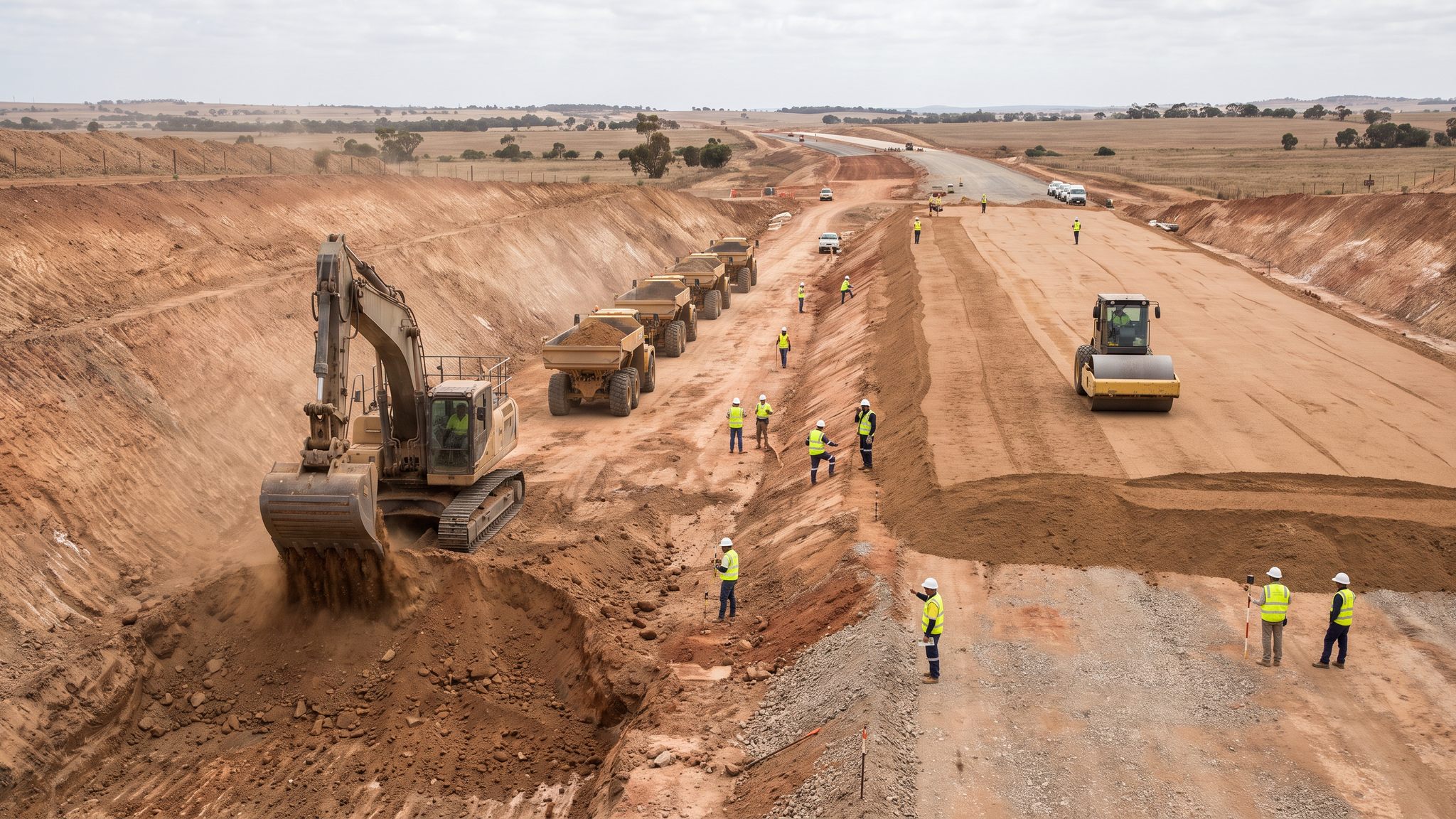
Bulk Earthworks - Cuttings & Embankments
Moving hundreds of thousands of cubic metres to build the corridor's shape - cuttings, embankments and the formation everything sits on.
Open process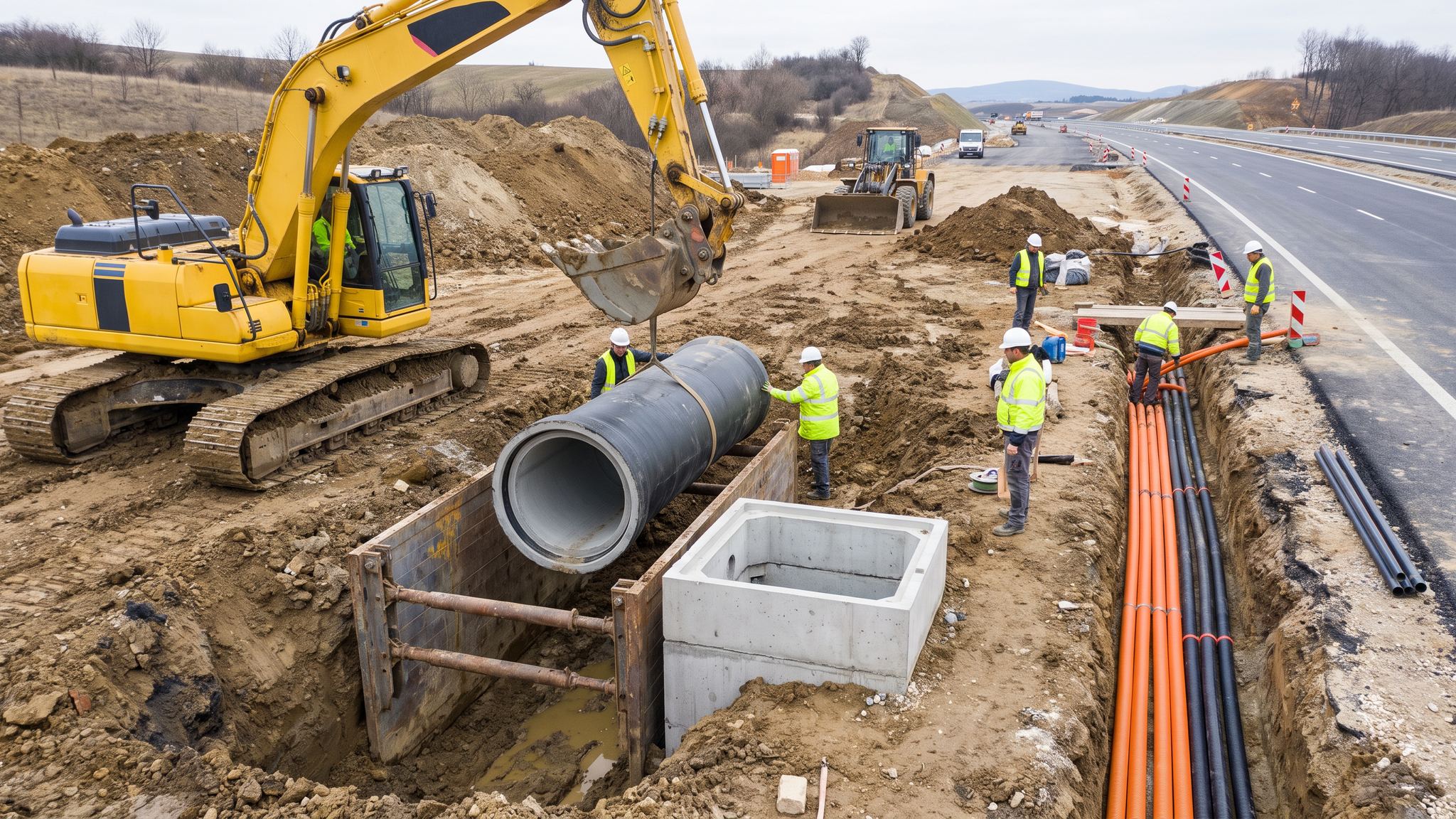
Drainage & Utility Corridors
Pipes, ducts, chambers and culverts - the buried networks installed before the pavement goes over them.
Open process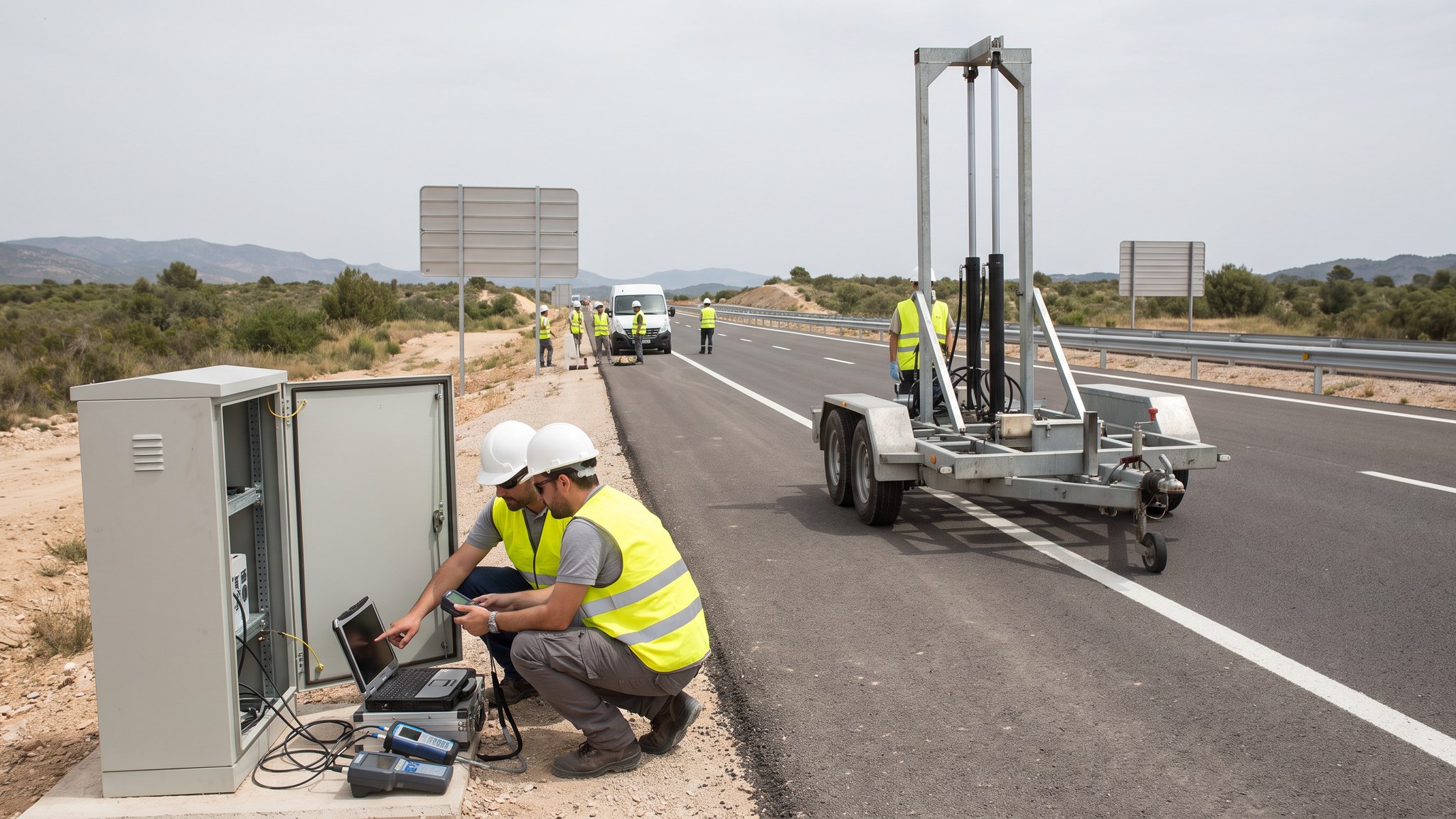
Testing, Commissioning & Asset Handover
Proving the asset works, then handing it to the authority that will maintain it for the next hundred years.
Open processRoads & pavements5
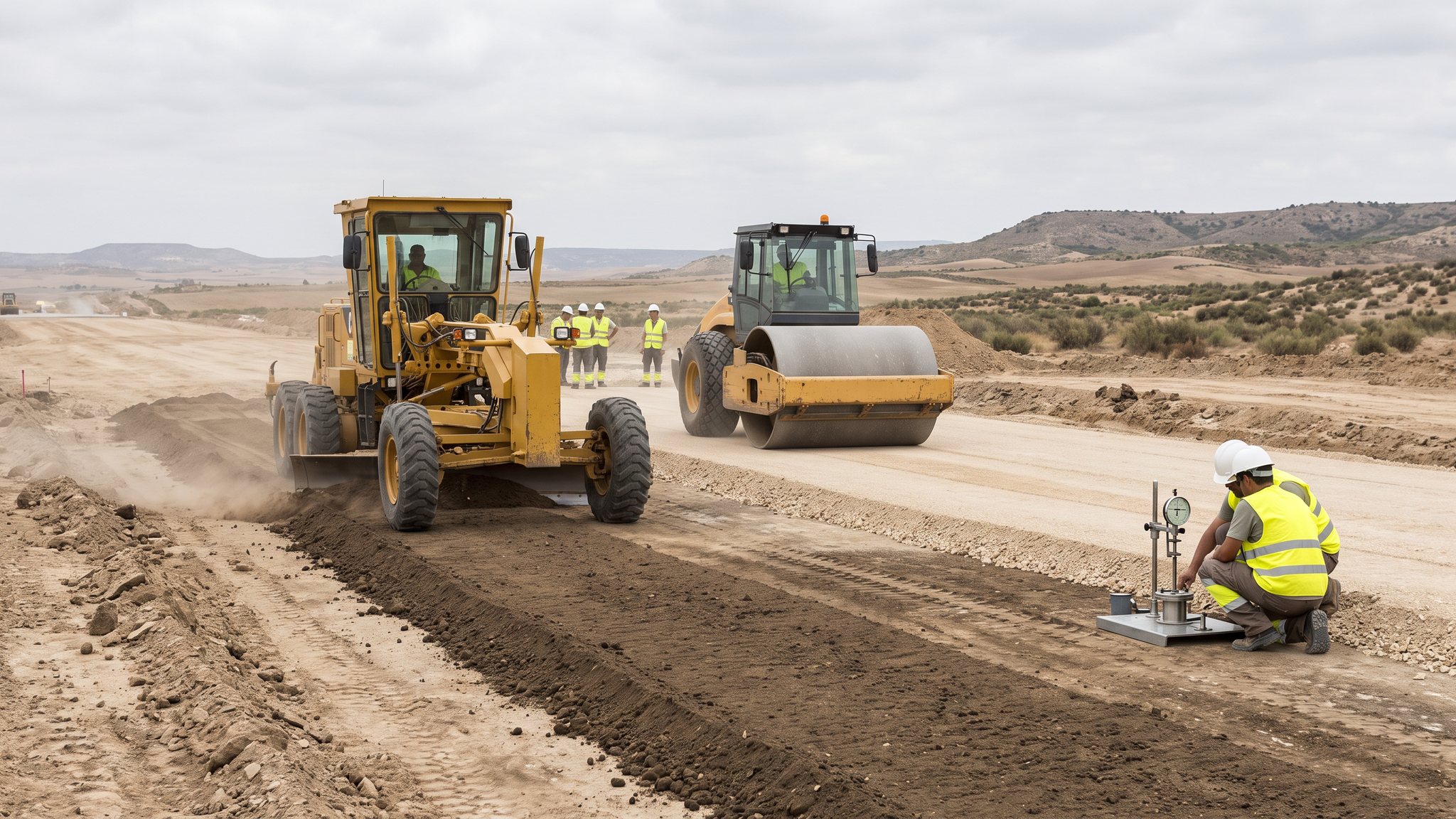
Subgrade Preparation & Capping
Proving the formation and building the capping layer - the low-cost working platform that decides whether the pavement above it lasts.
Open process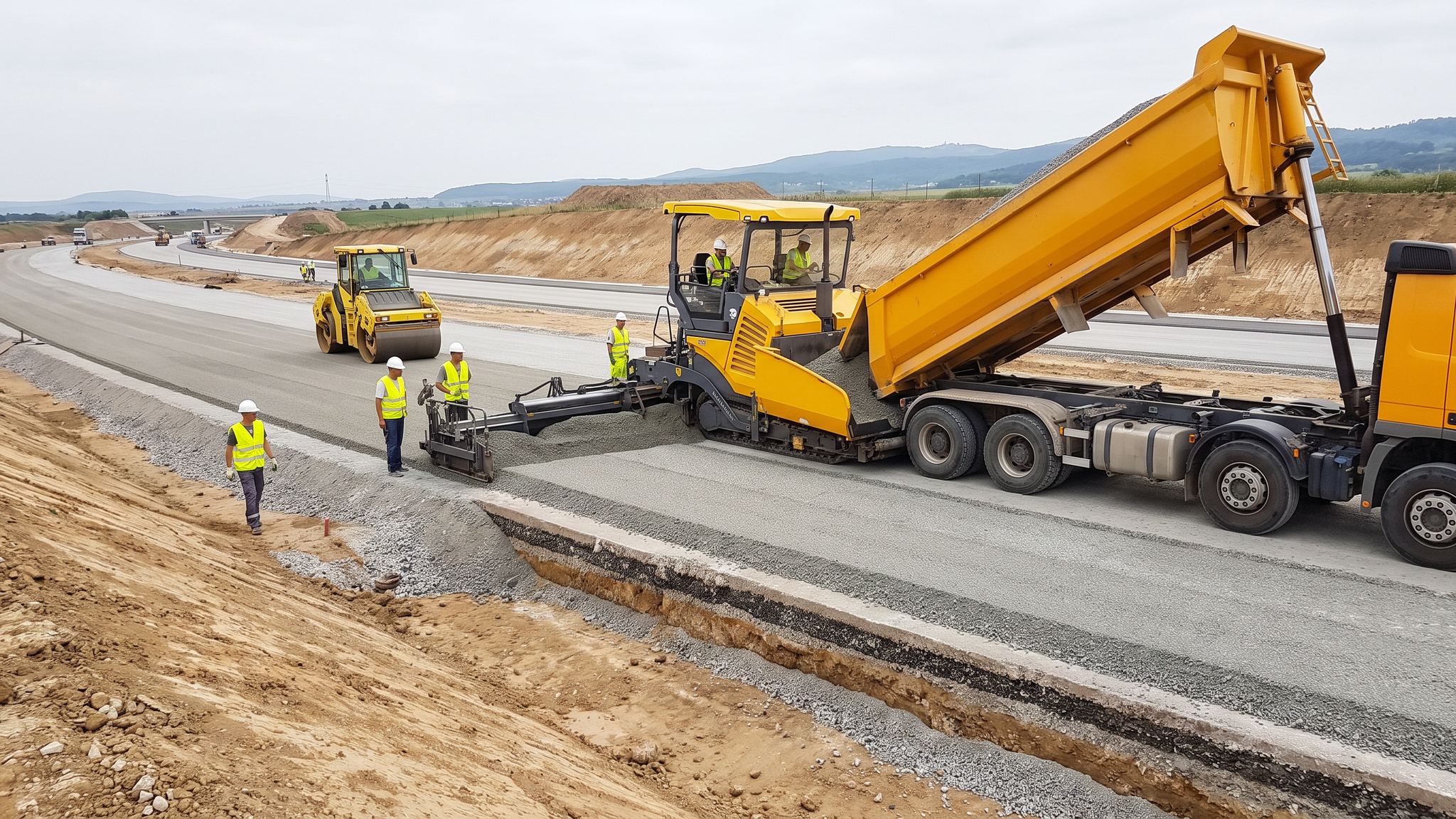
Sub-base & Base Construction
The structural platform: granular sub-base and bound base layers that spread every wheel load into the ground.
Open process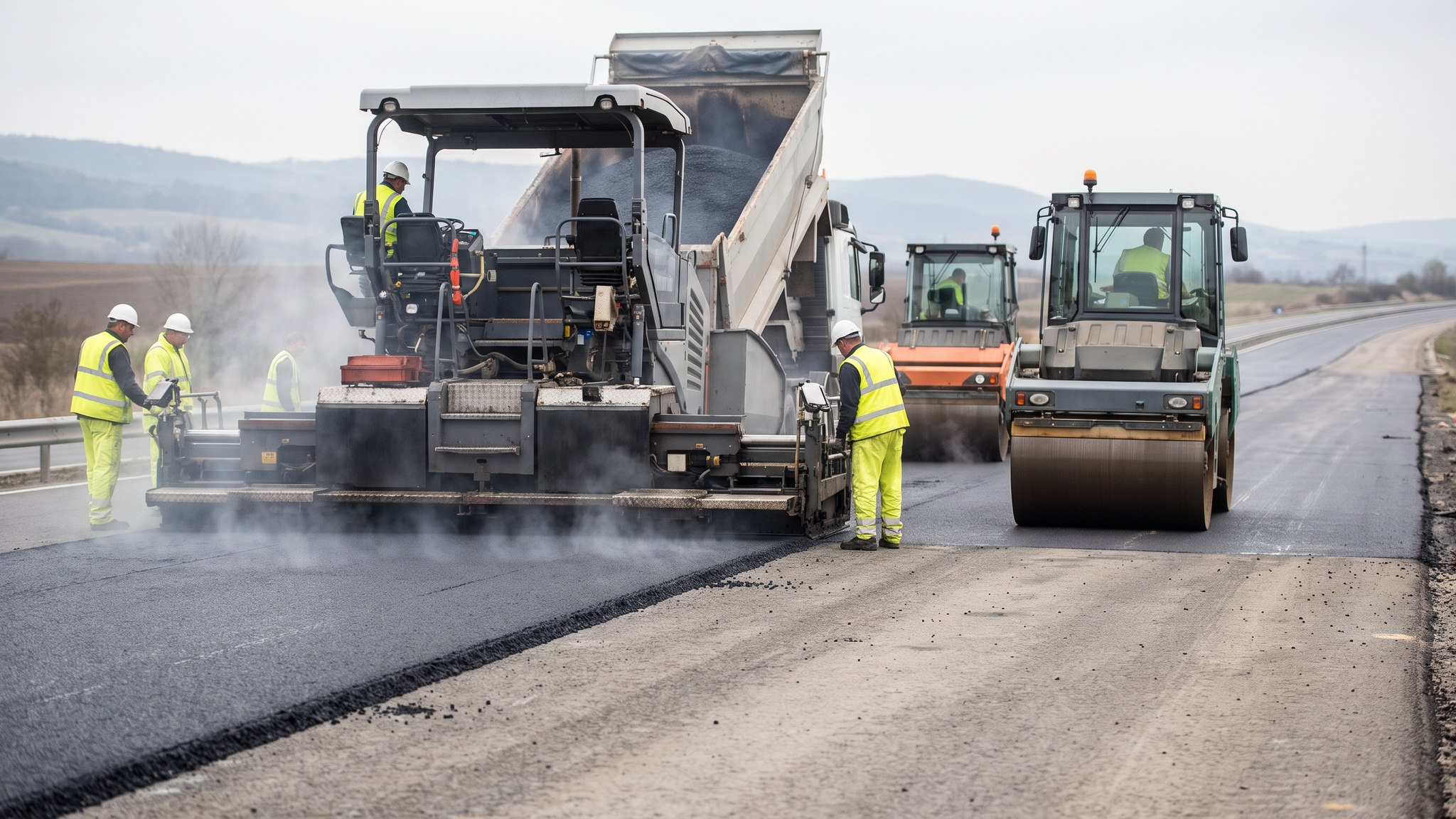
Asphalt Surfacing - Binder & Surface Course
The blacktop the public judges: binder course and surface course laid hot, compacted within the window, and tested to the millimetre.
Open process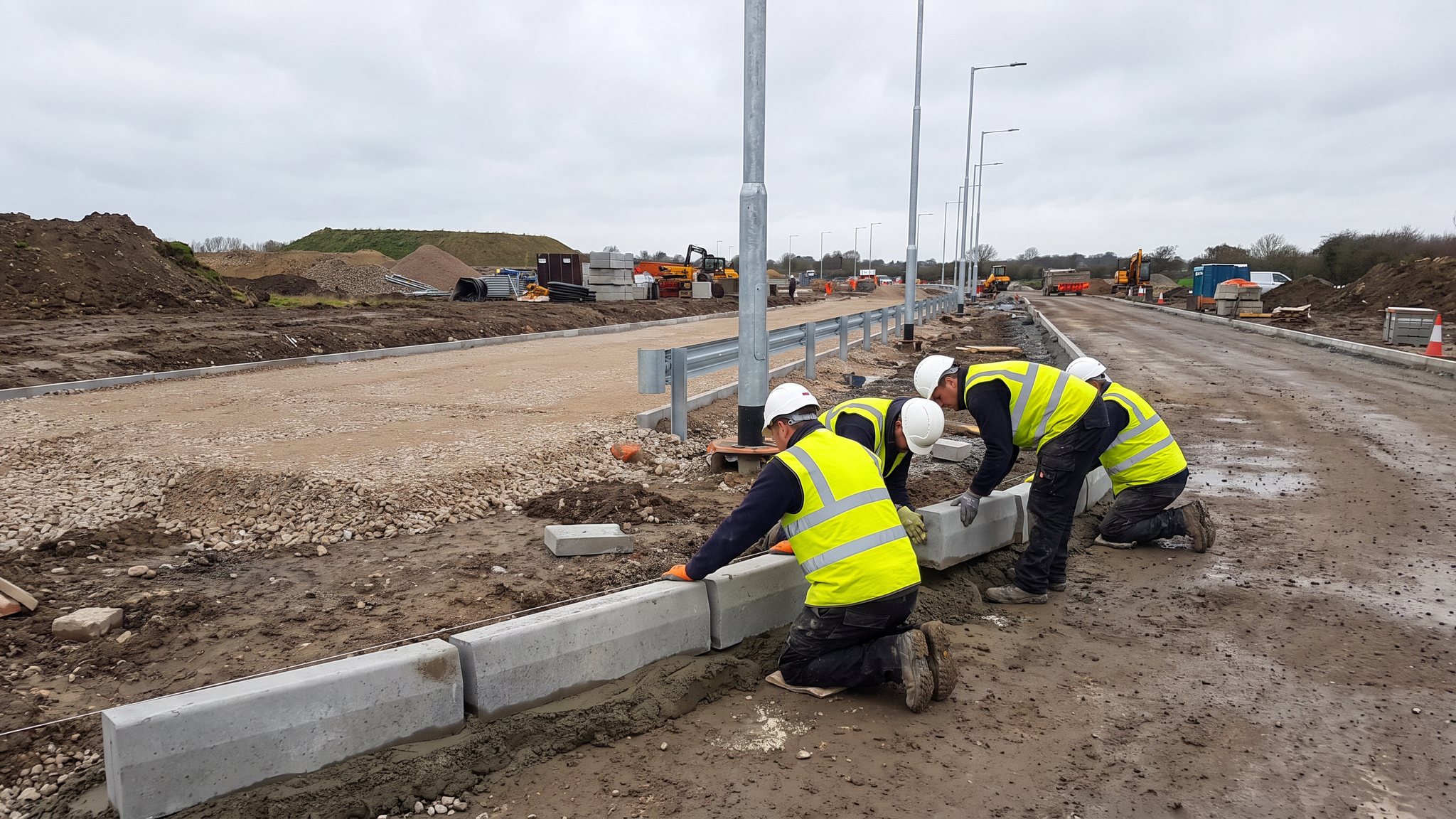
Kerbs, Footways & Road Furniture
The finishing trades that contain the carriageway, carry the pedestrian and give the road its edge - kerbs, footways and the furniture in between.
Open process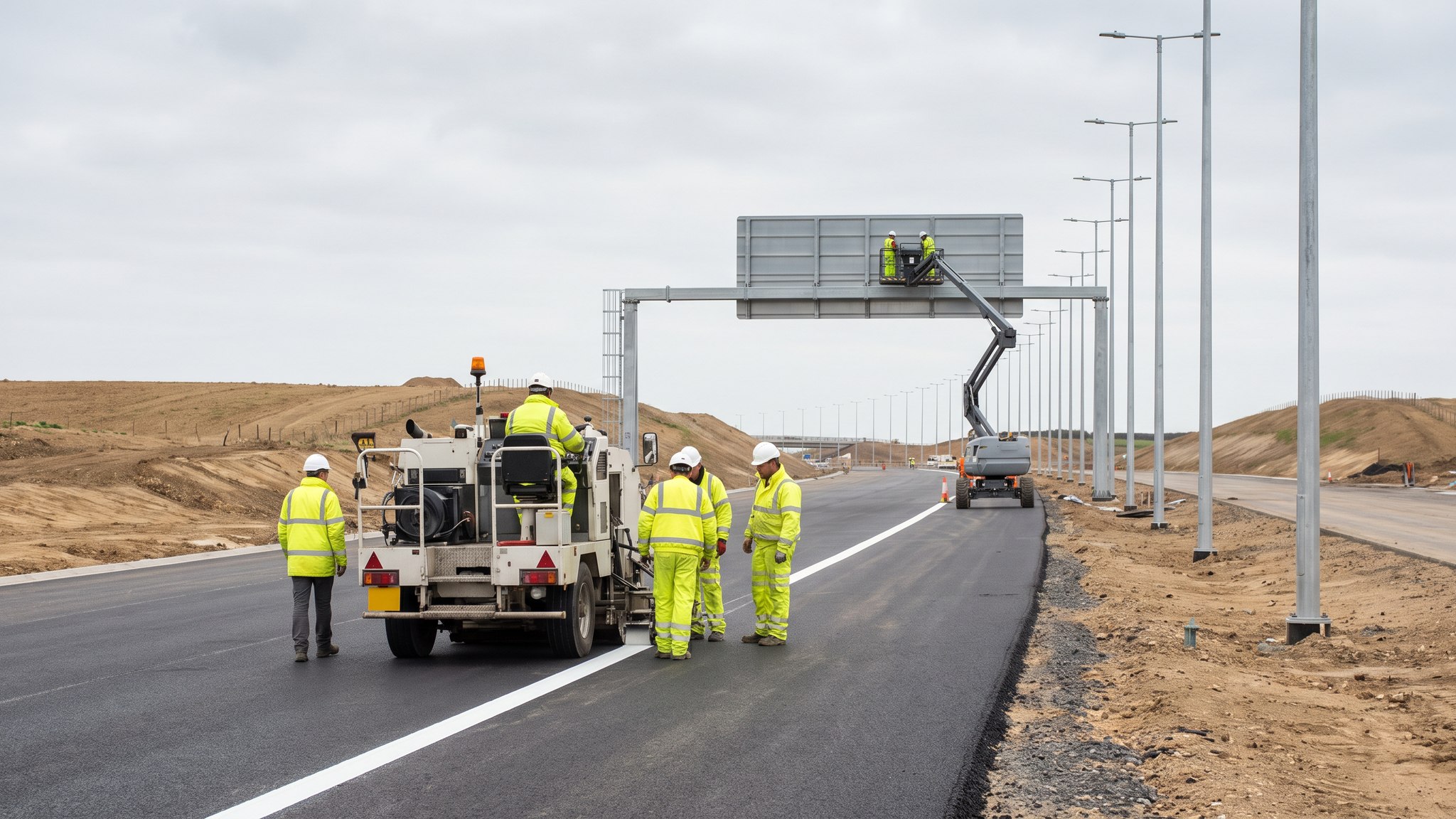
Road Markings, Signage & Lighting
The information and visibility layer - markings, signs and lighting that turn a strip of asphalt into a legal, usable road.
Open processRoads & Highways in depth
About Roads & Highways
The ten guides in this sector follow one scheme end to end in build order. The first five and the last one are shared with bridges and tunnels - the same corridor works serve every transport alignment - so their canonical pages live here and the other transport sectors link back to them.
How road schemes are bought
Most UK trunk road work is let by National Highways under the Roads Investment Strategy, and the dominant shape is design and build on NEC4 Engineering and Construction Contract terms, usually Option C target cost with a painshare and gainshare mechanism. The big schemes - a new dual carriageway, a grade-separated junction, a smart motorway conversion - are bid by a handful of tier-one civil contractors through regional frameworks and the larger Scheme Delivery Framework lots. Below that, local authority schemes go through SCAPE or council frameworks on much the same NEC forms. The contractor takes the outline design from the client's consultant and develops it to construction issue under the Design Manual for Roads and Bridges, and the technical approval process - departures from standard, category checks on structures - sits on the programme from day one.
In the UAE the buyer is usually the RTA in Dubai or the Department of Municipalities and Transport in Abu Dhabi, with Musanada delivering for Abu Dhabi government clients. Conditions of contract are typically FIDIC, amended heavily in the employer's particular conditions, and the deal is commonly engineer-led rather than the NEC partnering model. Package sizes are large - a single RTA interchange contract can run to several hundred million pounds - and the consultant's engineer retains real day-to-day authority over instructions and valuations. The practical difference on site is pace: Gulf road programmes assume 24-hour working where the corridor allows it, and the approval chain for lane closures and diversions runs through the RTA's traffic department rather than a chapter-8 streetworks regime.
Either way, the commercial risk lands in the same places: ground conditions on a 20-kilometre corridor, the utility diversions that nobody surveyed properly, and the weather allowance in an earthworks season. The contractor who prices a road on the drawings alone, without walking the alignment and interrogating the ground investigation, is writing a claim on the first day of the job.
Programme shape: what actually drives the dates
The critical path on a road scheme is rarely the blacktop. It is drainage and structures. Deep carrier drains and attenuation ponds must go in before bulk earthworks can be finished either side of them, and every structure - culverts, underbridges, gantries - gates the earthworks through its footprint. A typical programme runs enabling works and ecology first, then utility diversions (which slip more often than anything else on the job), then drainage, then the cut-and-fill balance, with structures threaded through wherever the alignment crosses a road, river or railway. Only when a continuous run of formation is proven and accepted can the pavement train start: capping, subbase, base, binder, surface course.
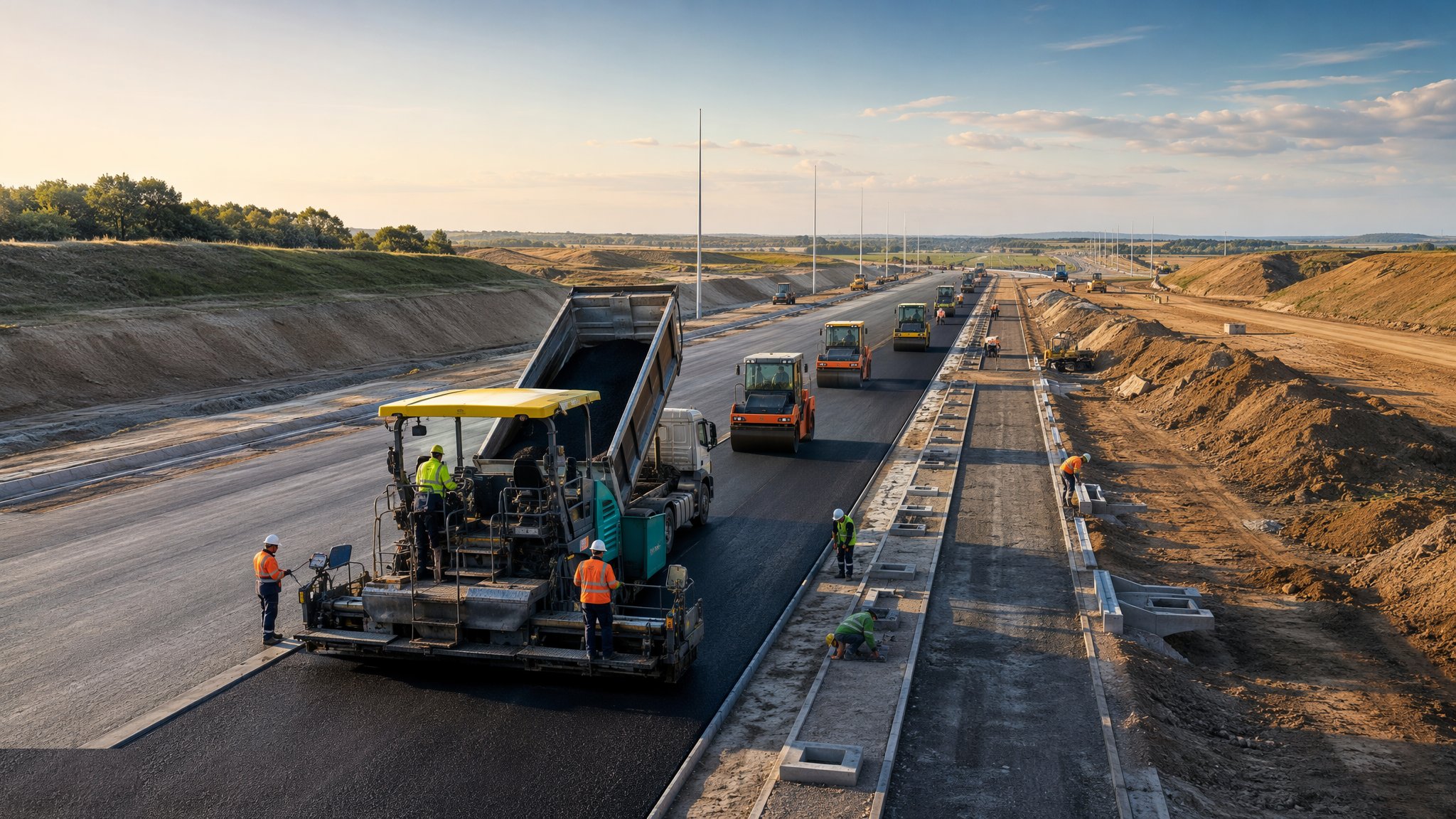
Surfacing is the most weather-bound operation on the scheme. Asphalt goes down at temperature and compacts as it cools, so wind and rain kill shifts, and night-time temperature limits bite from October onwards in the UK. A paving train - paver, three rollers, a shuttle of insulated lorries - lays roughly a kilometre of two-lane surface course on a good shift, but it is the back end of a long queue of dependencies. Traffic management phases then dictate everything: switching the travelling public onto new sections frees the old alignment for reconstruction, and each switch needs roadspace bookings, temporary works, signing and a police or authority sign-off. On a live motorway, a missed switch date can cost months because the next available closure belongs to someone else.
The failures that make the news
Road schemes fail publicly in three ways. The first is programme: the A14 Cambridge to Huntingdon scheme finished early and was praised for it, which tells you how rare that is - the norm is drift on utility diversions and structures pushing the pavement season out by a full year. The second is safety, and smart motorways are the standing example: removing the hard shoulder as a permanent running lane put the whole concept under coroner and parliamentary scrutiny after fatalities in live lanes, and the retrofit of emergency areas and stopped-vehicle detection is now a programme of work in its own right. The third is durability - concrete carriageways from the 1960s and 70s spending their retirement under contraflow while bay by bay they are broken out and replaced, and surface course fretting on high-stress roundabouts within a few winters.
Behind the headlines the quiet killer is drainage. Water in the subgrade softens the formation, pumping fines destroy the capping, and a pavement built on wet ground fails years before its design life regardless of how well the asphalt was laid. That is why the drain-laying gangs lead the earthworks, and why an experienced agent walks the formation after rain looking for soft spots before he will let the capping lorries on.
UK versus Gulf: same conveyor belt, different physics
The sequence is identical - access, survey, ground investigation, earthworks, drainage, pavement - but the materials and the working day change. Gulf asphalt is designed around heat: polymer-modified bitumen to resist rutting at surface temperatures that pass 60 degrees in summer, marshall stability and wheel-tracking requirements tuned for it, and paving shifted into night shifts through June to September both for material temperatures and for the workforce. Subgrade is usually sand, which compacts beautifully when moisture-conditioned but gives almost no cohesion, so capping and stabilisation take the place of the UK capping-over-clay detail. Rain is rare but violent when it comes, and schemes designed with minimal drainage have flooded to international embarrassment, so modern Gulf corridors now carry serious storm networks of their own.
Approvals diverge too. In the UK the maintaining authority's technical approval under DMRB and the CDM 2015 designer duties shape the design from the start. In Dubai the RTA's right of way rules, utility NOCs from DEWA and the telecoms operators, and traffic department approval of every diversion stage are the gates. Neither is faster by default; they just bite at different points in the programme.
From first peg to adoption
The process chain on a road scheme is unforgiving about order. Corridor access and fencing come first because nothing else can; survey control and ground investigation inform every level that follows; enabling works and utility diversions clear the corridor; drainage goes in deep and early because it sits under everything; bulk earthworks build the alignment on top of the drains; structures thread through where the alignment crosses obstacles; and only then does the pavement train run - subgrade preparation and capping, subbase and base, binder and surface course - followed by the finishing trades: kerbs and footways, signs and gantries, road markings, lighting, and the safety barrier that closes the fence line. Each trade hands a proven surface to the next: formation accepted by plate-bearing and density testing before capping, each pavement layer checked for level and compaction before the one above.
Handover is a formal transfer, not a ribbon. On UK local roads the mechanism is often a Section 38 or Section 278 agreement, with the maintaining authority inspecting and adopting the asset after a maintenance period; on trunk roads it is handback to National Highways with the health and safety file and as-builts under CDM 2015. In the UAE the FIDIC sequence applies: Taking-Over Certificate, a Defects Liability Period typically of twelve months, then the Performance Certificate that finally releases the retention. Ride quality is measured, not admired - surface regularity, skid resistance and texture depth are tested before the authority accepts the running surface, and a failed section is planed and relaid at the contractor's cost.