Environmental & Land Development
Earthworks, landscaping, remediation and coastal works - shaping the ground itself.
This group is about the land rather than what sits on it: cutting development platforms out of raw ground, building public realm and landscapes, engineering environmental protection, managing waste, defending coastlines and putting communities back together after disasters. The plant is heavy, the tolerances are generous, and the weather is always on the programme.
6 sectors in this group
Live sectors carry the full step-by-step guides. The rest are scoped and scheduled - their pages slot straight in when the next build phase lands.

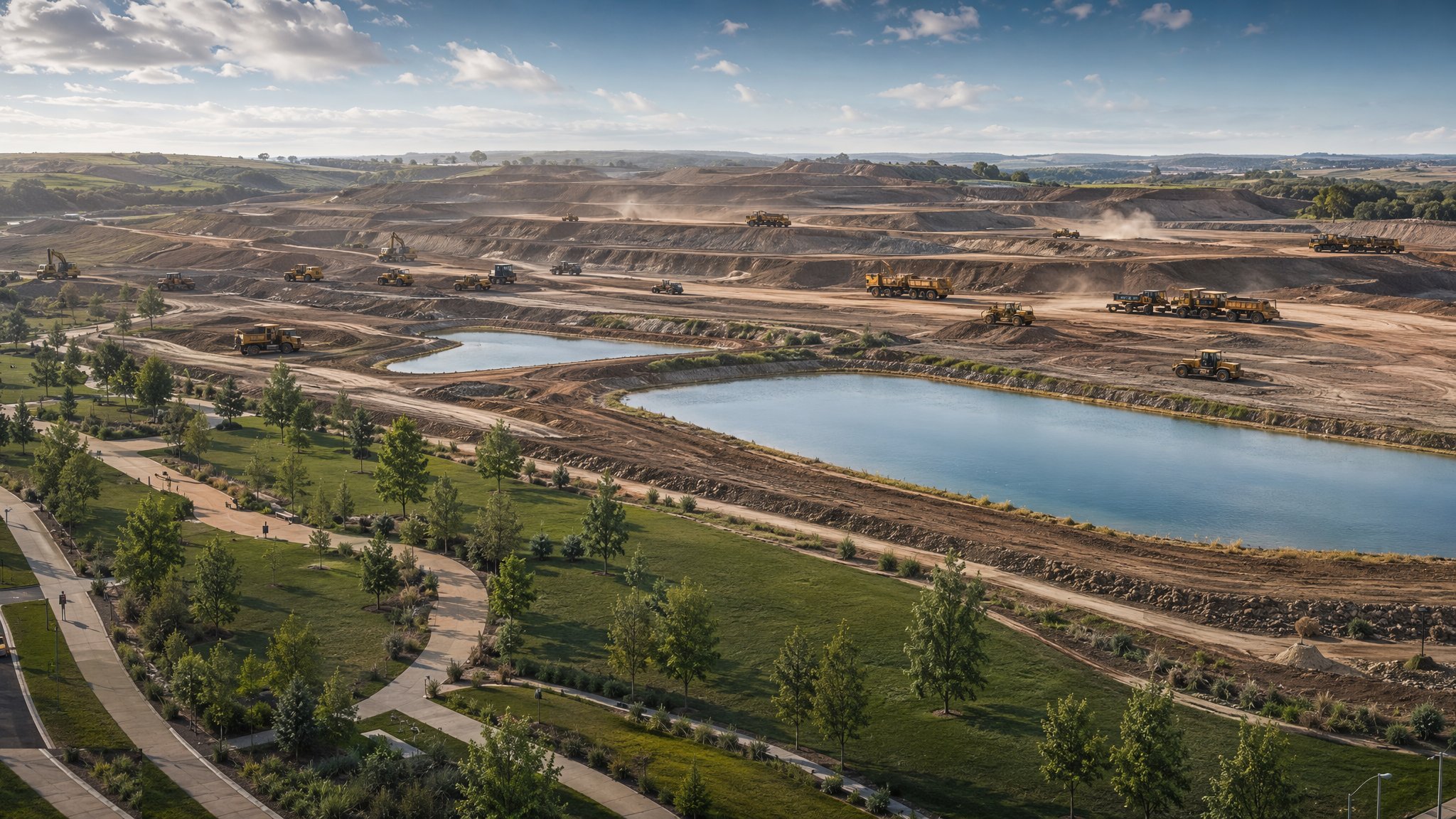
Platforms, cut and fill, remediation - making ground you can build on.
Explore the sector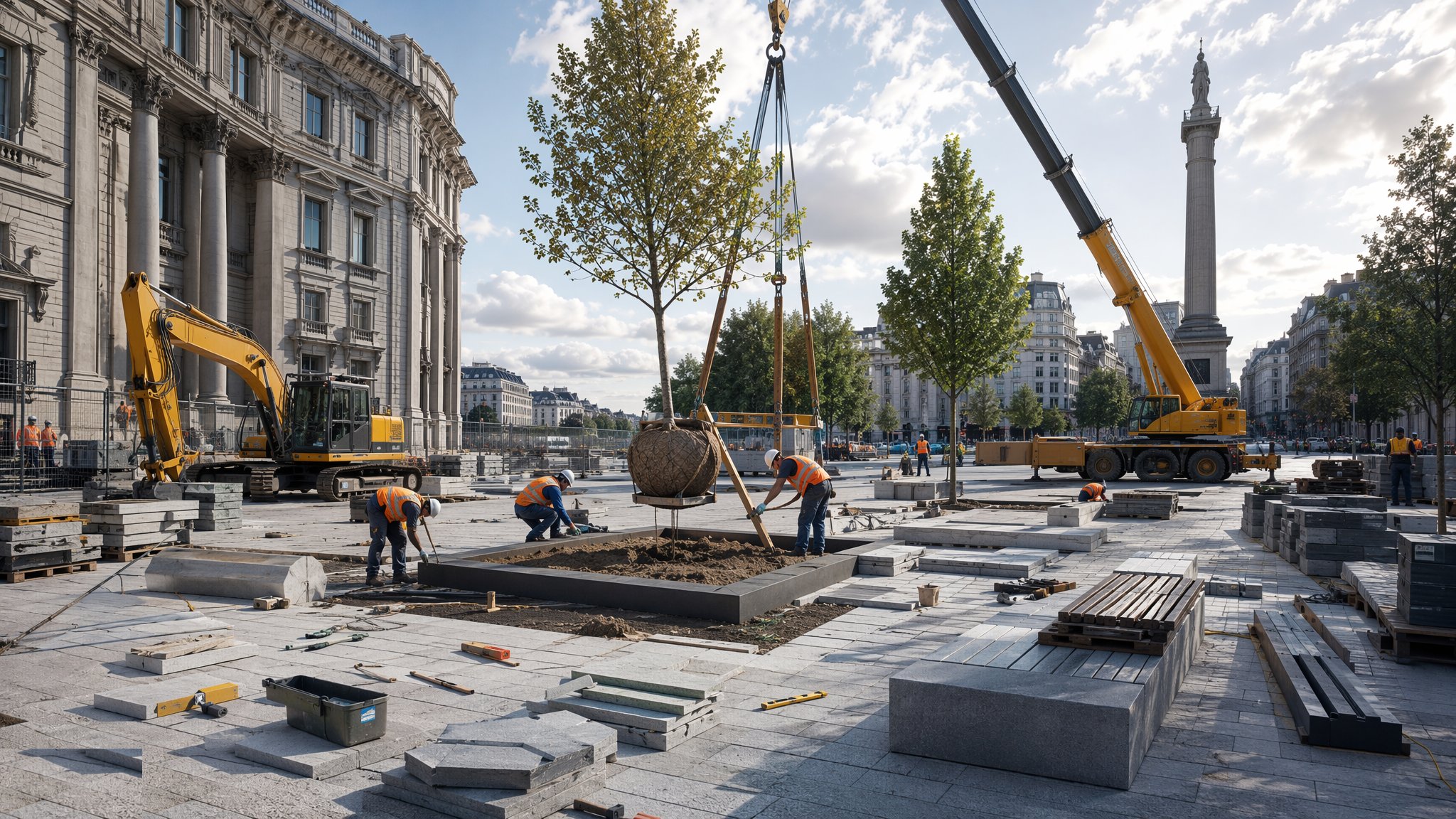
Parks, streetscapes and external works - the last trade on site, the first thing people see.
Explore the sector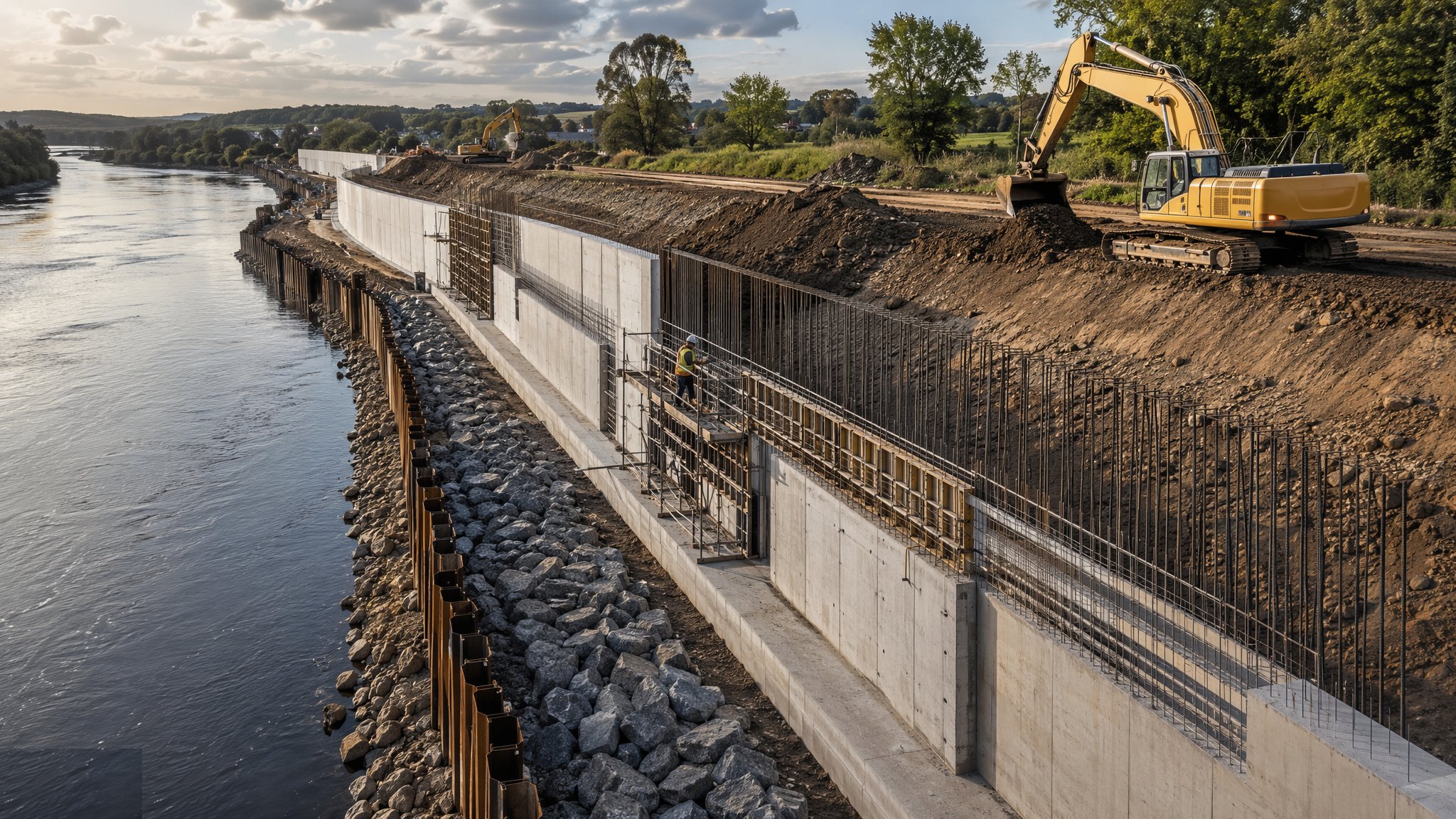
Flood defences, remediation and habitat works - engineering with the environment as the client.
Explore the sector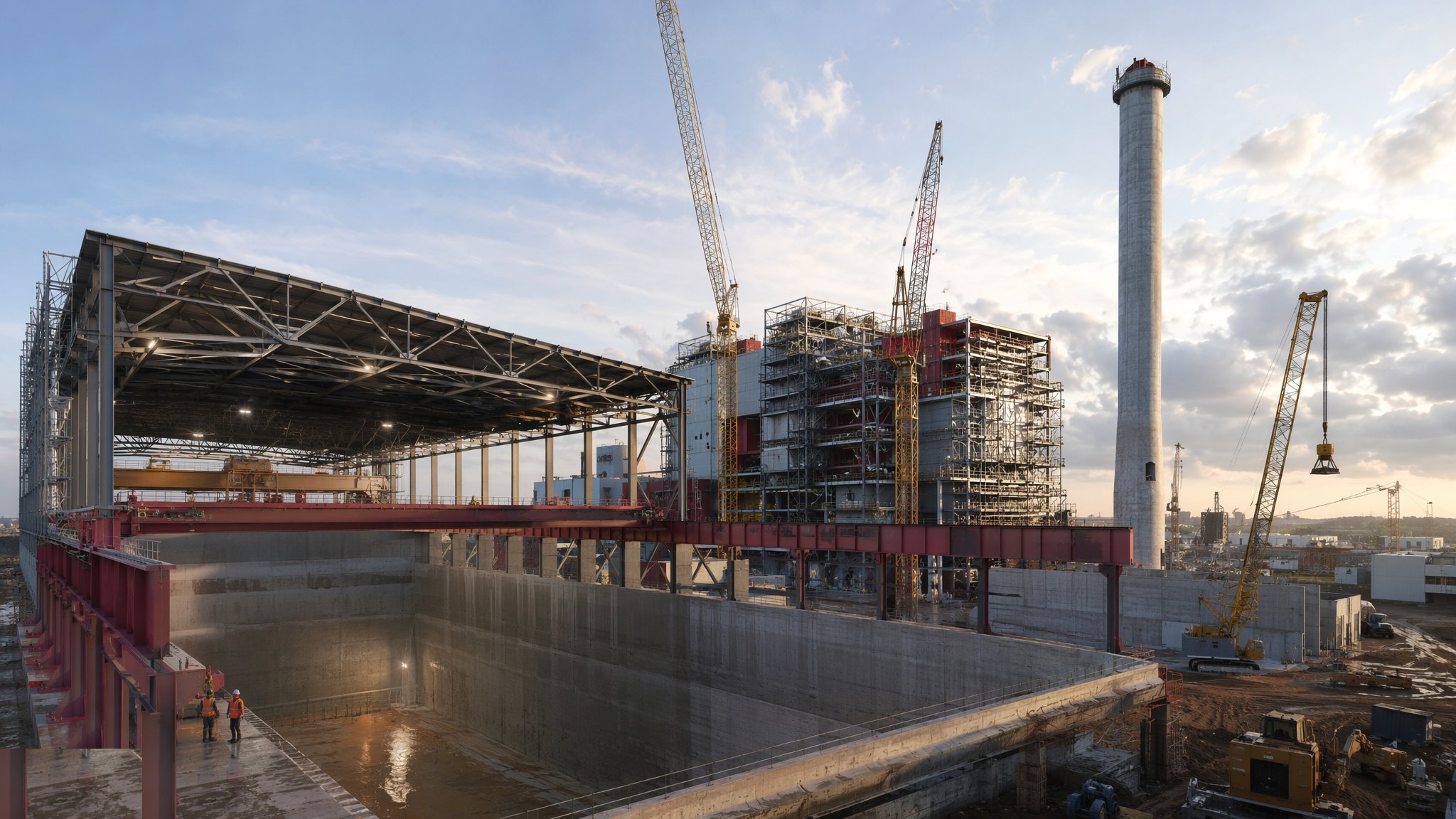
Transfer stations, recycling plants and energy-from-waste - industrial buildings with an attitude problem.
Explore the sector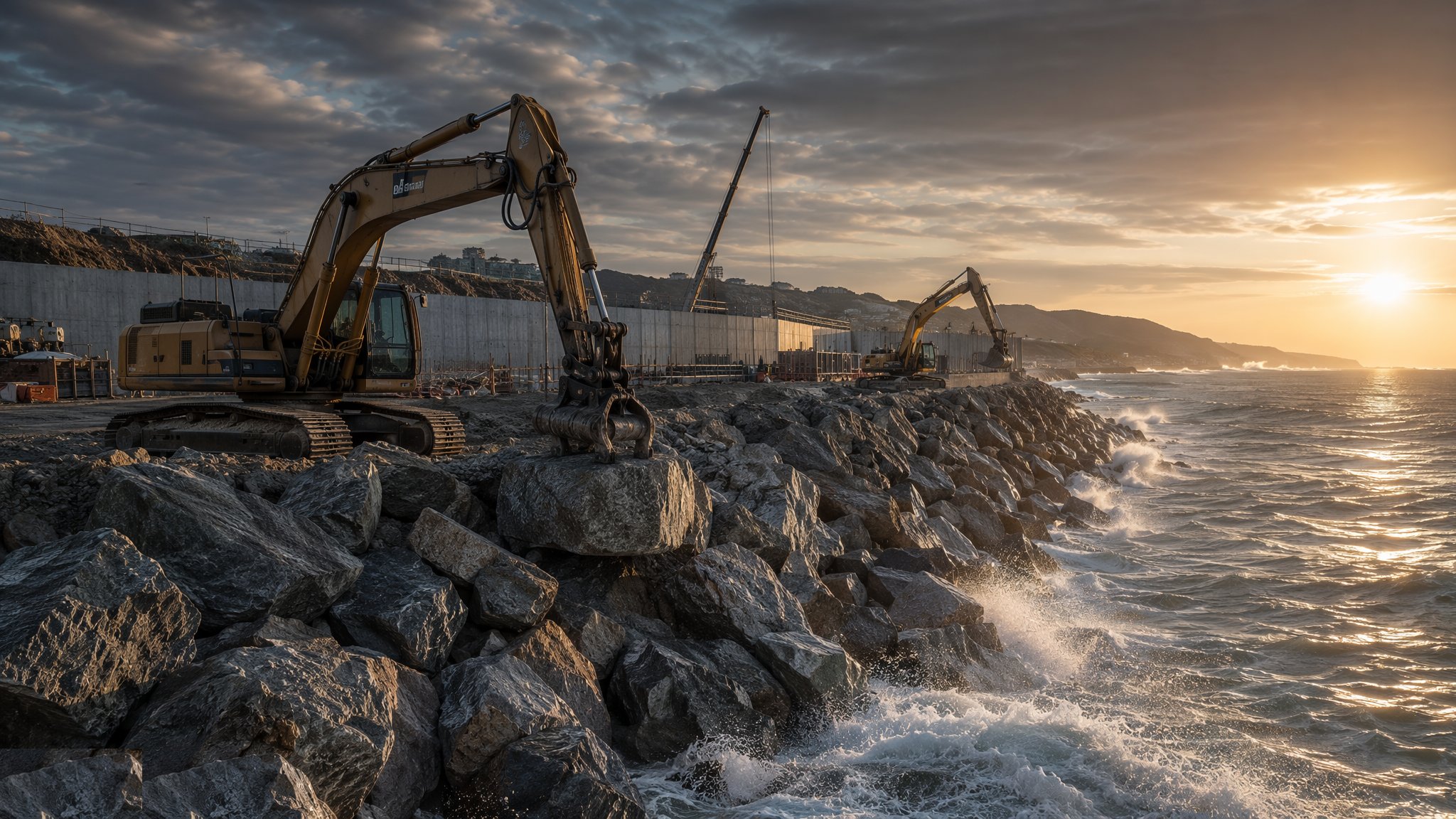
Sea walls, defences and marine structures - heavy civils against a moving enemy.
Explore the sector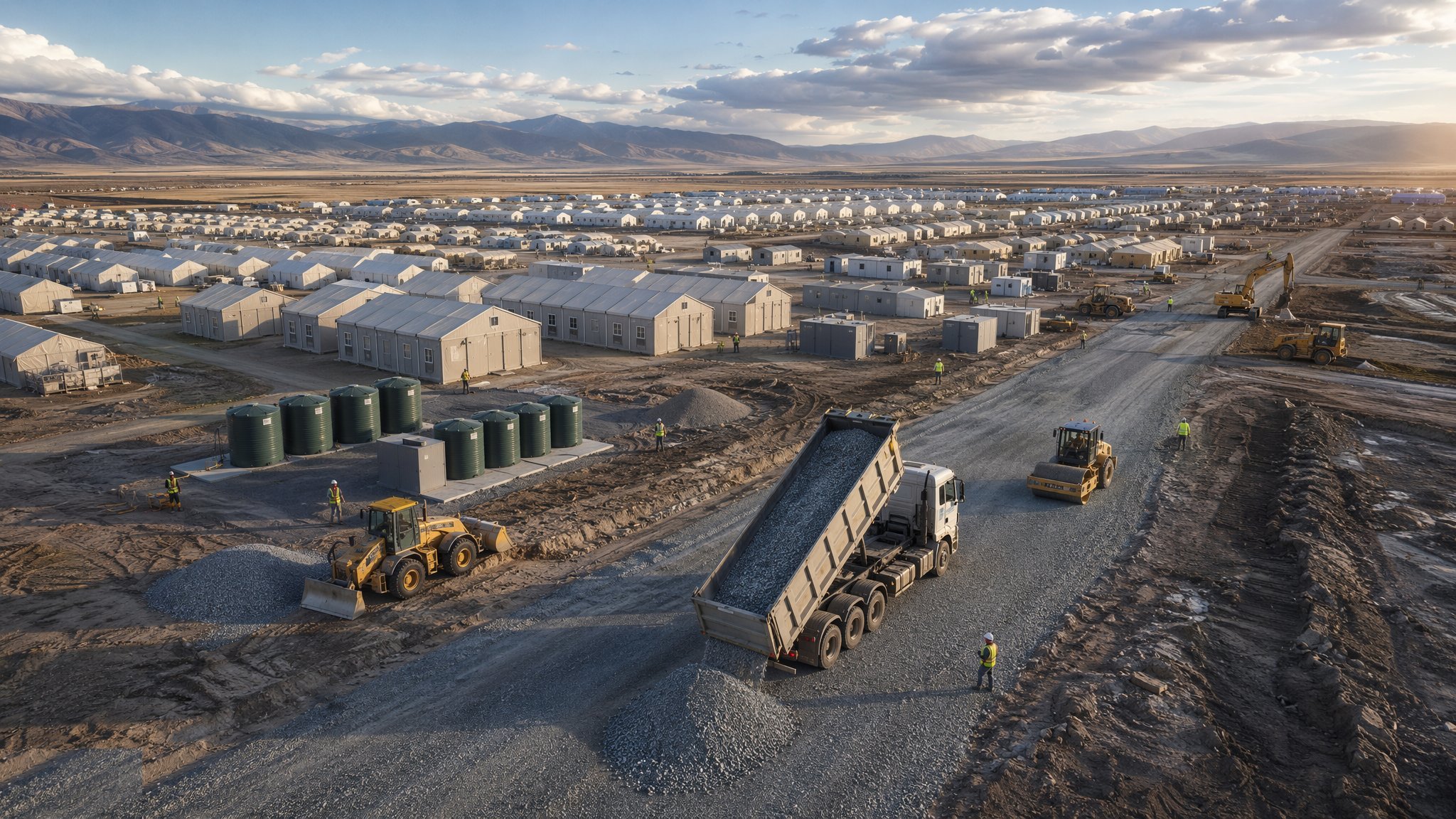
Emergency works and rebuilding - construction at its fastest and most improvised.
Explore the sectorEnvironmental & Land Development in depth
Working the ground itself
This group is about land rather than buildings: cutting development platforms out of raw ground, remediating contamination, engineering flood defences and coastlines, building the public realm, managing waste and putting communities back together after disasters. The plant is heavy - dozers, scrapers, dredgers, piling rigs - the tolerances are measured in centimetres not millimetres, and the weather is not an excuse on the programme but a design parameter. Where other groups fight the ground to build on it, this group treats the ground as the product.
The sectors divide into those that prepare land, those that protect it and those that repair it. Land Development & Earthworks prepares: stripping, cut and fill, drainage, ground improvement. Landscaping & Public Realm finishes: soils, planting, hardscape, the surface everyone actually sees. Environmental Engineering, Waste Management and Coastal & Marine Engineering protect: containment, treatment, flood and erosion defence. Disaster Recovery & Humanitarian repairs, at speed, under conditions where the normal rules of procurement and welfare are suspended.
The unifying discipline is water management. Almost every failure in this group is a water failure: earthworks ruined by poor drainage, remediation undermined by uncontrolled groundwater, coastal works defeated by wave climate, landscaping killed by waterlogged or starved soils. Read every sector here as applied hydrology and you will not be far wrong.
There is also a seasonal honesty to this group that other sectors lose. You cannot pretend a December muck-shift is a June one, and you cannot plant a landscape out of season and expect it to establish. The Gulf inverts the calendar: summer is the stand-down season for exposed earthworks and planting, and the working year peaks in winter. Teams moving between the two markets must flip their weather logic entirely, but the underlying rule is the same - the programme serves the ground and the climate, never the other way round.
Clients, funding and how the work is procured
The clients are a split of public and private. Land development is bought by developers, often as an enabling package ahead of the main construction - the contract that turns a field into serviced plots. Disaster recovery is bought by governments, insurers and international agencies, at speed, with frameworks and standing arrangements doing the work that tenders normally do. Beyond those constants, who pays for land, water, coast and waste work, and under whose consents, is one of the sharpest regional differences on this site, so the two markets are taken separately below.
Procurement reflects the ground risk. Earthworks and remediation contracts carry measured quantities and re-measurement, because nobody can price unknown ground as a lump sum honestly. Coastal and marine work adds the specialist layer - a handful of contractors own the plant and the skills, and framework relationships matter more than individual tenders. That specialist layer is genuinely global: the dredgers, the backhoes on pontoons and the rock-placement vessels are a single world fleet, mobilised from wherever the last job finished, so the same half-dozen names appear on an estuary scheme in England and a reclamation in the Gulf.
The commercial signature is the volatility of quantities. A cut-and-fill balance can be destroyed by a wet month or an unexpected stratum; a remediation scheme can double in cost when the contamination plume turns out to be bigger than the SI suggested. Contractors in this group live and die by their measurement records - surveys, weighbridge tickets, daily diaries - because the argument about quantities is the job's commercial core, not an embarrassment at the end of it.
Handover in this group also runs longer than newcomers expect. Landscapes have establishment and maintenance periods measured in growing seasons; remediation schemes have validation sampling and monitoring that can run for years; coastal works are observed through storm seasons before final acceptance. The contract may reach practical completion on a date, but the client's real test is performance over time. Pricing, resourcing and closing out that long tail - rather than treating it as an afterthought - is where the experienced firms in this group quietly make their margin. Ignore the tail at tender stage and you will donate it back at your own expense.
Clients, funding and how the work is procured: UK and Europe
Environmental and coastal work is bought by the Environment Agency, local authorities and water companies, with Natural Resources Wales, the Scottish agencies and the internal drainage boards doing the same job at their own scales. Waste facilities are bought by waste operators and councils under long-term contracts, frequently twenty-five year residual-waste arrangements where the plant is financed against the gate fee rather than paid for up front. Land development work is bought by housebuilders, strategic land promoters and Homes England, whose land and grant programmes are often the only reason a difficult brownfield platform is viable at all. In continental Europe the same work sits with state water boards, regional environment agencies and municipal waste companies, procured under the public contracts directives, with the Dutch and Danish coastal programmes in particular operating at a scale and a level of long-term planning that British practice does not match.
NEC forms with their compensation-event machinery dominate UK work for exactly this reason: the compensation event is a mechanism for repricing a job when the ground turns out to be different from the drawings, and it functions only when it is administered honestly and weekly rather than argued about at the end. Public buyers again buy through frameworks - the national environment and water management frameworks, water company capital delivery frameworks, local authority arrangements for highways, drainage and public realm - so the tender that matters is often the framework tender rather than the project one. Flood and coastal schemes are funded through a formula that scores benefit against households protected, topped up by partnership funding from local levies, developer contributions and direct beneficiaries, which is why a scheme's scope is frequently set by what can be justified on the scoring rather than by what the engineering suggests.
How the money arrives shapes what actually gets built. Grant-in-aid funds flood defence, regulated water company capital funds anything the utility will own, developer equity funds enabling works, landfill tax and gate fees fund waste, and biodiversity net gain and nutrient neutrality have created a genuinely new market in land bought to be improved rather than built on. Contaminated land is where the money is most contested: remediation is funded by the developer against a land value that assumed the problem was solvable, so discovering a plume larger than the site investigation suggested destroys the appraisal and not merely the contract sum. What newcomers get wrong: they read the site investigation as a survey when it is a set of samples; they programme earthworks through a British winter as though the ground were dry; they treat consents - environmental permits, marine licences, protected species licences, ordinary watercourse consents - as administrative rather than as gating activities with lead times measured in months and seasons; and they price a landscape without the establishment and maintenance tail that decides whether it survives.
Clients, funding and how the work is procured: Middle East and North Africa
Environmental and coastal work is bought in the UAE by municipalities and coastal developers, and that structure holds across the region: land, coastline and waste are state assets, so the buyer is a municipality, a national or federal environment body, a master developer operating under state licence, or the development arm of a sovereign fund. Dubai Municipality, Abu Dhabi's Department of Municipalities and Transport with its environment agency as consenting authority, Ashghal and the environment ministry in Qatar, the Saudi environmental regulator alongside the royal commissions and the National Water Company, Oman's environment authority, and Egypt's environmental affairs agency all occupy that role. Master developers reclaiming islands, waterfronts, marinas and canal districts are the single largest source of land and marine work in the Gulf, and they buy as commercial clients with state backing rather than as public authorities, which makes them faster to award and harder to argue with.
In the UAE, land reclamation and coastal protection run on FIDIC forms with the same dredging and marine specialists who work worldwide, and approvals from the municipality and environment authorities gate every stage. Bulk earthworks, dredging and filling are remeasured against survey, so the hydrographic and topographic survey regime rather than the drawing is the commercial document, and the contractor who has not agreed the survey method has not agreed the price. Landfill, waste-to-energy and recycling capacity is increasingly bought as EPC turnkey or as a concession with a gate-fee or offtake guarantee, the Dubai and Sharjah waste-to-energy plants being the regional template. Egypt and Morocco add multilateral funding on water, irrigation, drainage and coastal protection, which brings World Bank, EBRD and bilateral donor procurement rules, prescribed tender formats and environmental and social safeguard requirements considerably stricter than the local norm.
The money is state money released against national plans - water security, afforestation and greening programmes in Saudi Arabia, coastal and marine protection in the UAE, irrigation and delta protection in Egypt - and it arrives with the region's usual cashflow shape of advance payment against guarantee, hard retention and certification cycles that lengthen towards the end of a job. Registration and classification with the municipality gate the tender list. Environmental permitting is a real programme constraint rather than a formality: marine works consent, dredging and disposal permits, environmental impact assessment approval, and turtle nesting and coral spawning windows that impose closed seasons every bit as hard as nesting birds do in Britain. Local content and nationalisation targets are scored at award. And the civil codes impose decennial liability on the contractor and the supervising engineer for ten years from handover regardless of the contract terms, which reaches further into this group than newcomers assume: a quay wall, a breakwater, a revetment, a reclamation bund or a retaining structure whose failure threatens stability sits squarely inside it.
How to read this group of sectors as a newcomer
Start with Land Development & Earthworks, because it is the gateway to everything: setting out, topsoil strip, cut and fill, haul routes, drainage, compaction testing and handover of serviced plots. It is also the sector every other construction discipline depends on silently - the buildings, roads and utilities groups all begin with a platform somebody else made. Understanding how that platform is made, and what can go wrong with it, changes how you read every other page on this site.
Then read Environmental Engineering and Coastal & Marine Engineering back to back, because they show the group at its most technical: containment and treatment on one side, wave climate and marine plant on the other. Landscaping & Public Realm looks gentler but teaches the long-game truth of this group - that the work is not done at practical completion, because soils settle, plants establish or fail, and the maintenance and defects period is where reputations in landscape are actually made.
Notice how much this group lends to the others. Piling and ground improvement serve every foundation on the site. Dewatering and drainage techniques from land works appear in basements, tunnels and utility trenches. Reclamation and marine piling from the coastal sector built half of the UAE's coastline. And the measured-quantities, diary-keeping commercial discipline of earthworks is the same discipline that protects contractors on any job where the ground disagrees with the drawings. Read this group early and the rest of construction makes more sense.
The UK and Gulf markets side by side
In the UK this group is dominated by brownfield: remediating industrial land, defending coastline and floodplain under climate pressure, and establishing landscapes through wet winters. Consents come from the Environment Agency, the Marine Management Organisation and local authorities, and ecology seasons - nesting birds, water voles, great crested newts - put hard windows into every programme. The plant is older, the margins are tighter, and the paperwork around contaminated material movement is a discipline in itself.
In the Gulf the same group runs at a different scale and in a different season. Land reclamation and coastal protection built much of the modern UAE coastline, and the work continues on marina, island and waterfront schemes. Approvals sit with the municipality and federal environment bodies, and the summer is the stand-down season for exposed earthworks and planting rather than the peak. The shared lesson crosses both markets unchanged: in land work the programme serves the ground and the climate, and a schedule written at a desk in the wrong season is a claim waiting to be drafted.