Emergency works and rebuilding - construction at its fastest and most improvised.
After the earthquake, the flood or the storm, construction starts again with no drawings and no time. The principles are the same processes the rest of this site describes - access, clearance, earthworks, structure - compressed, improvised and carried out where the need is greatest and the supply chains are broken. The shared method guides are linked below; they apply, just faster.
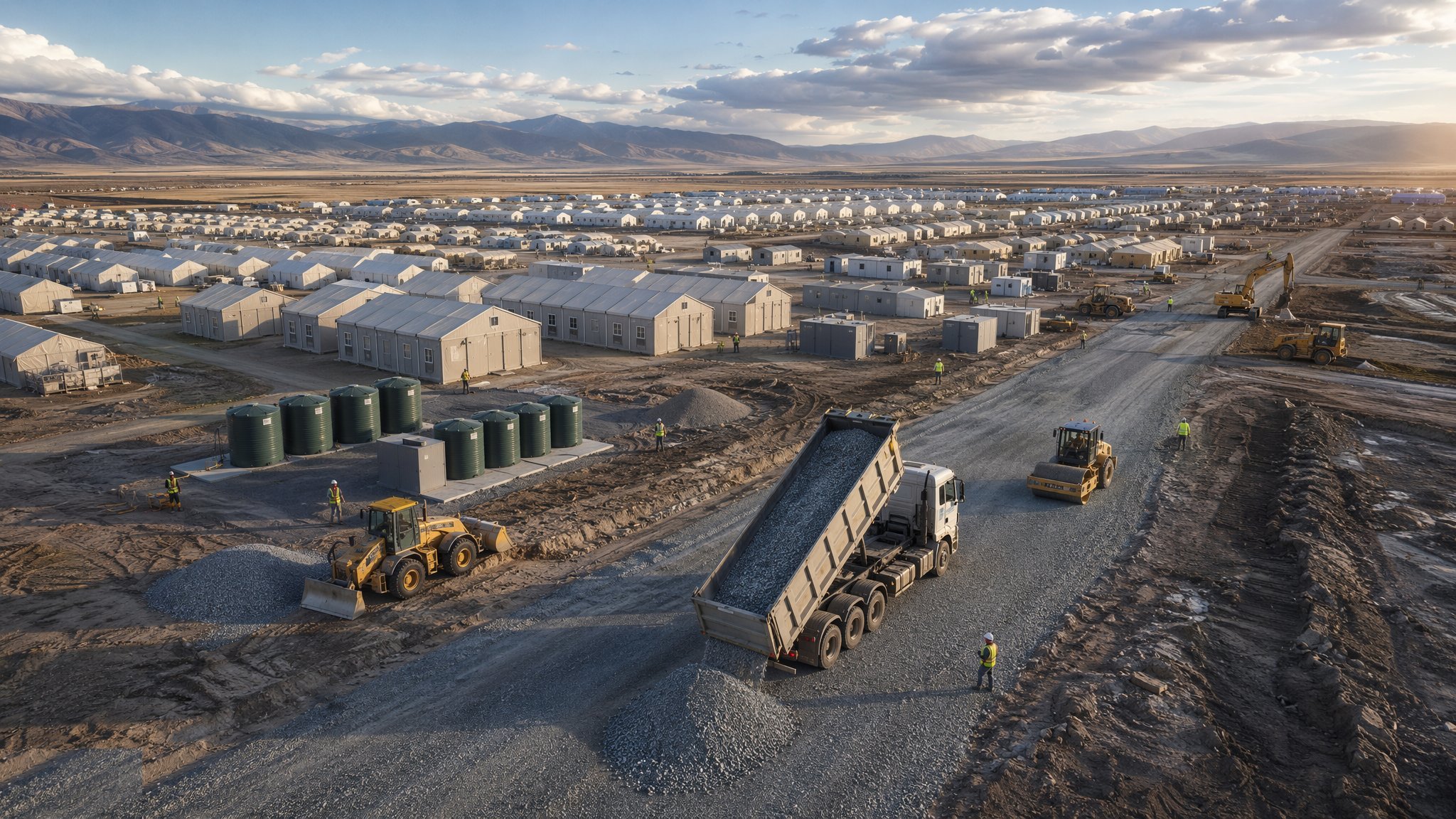
The process map - 2 guides
Each one is a full guide: overview, variants, numbered steps, plant, testing, safety and defects.
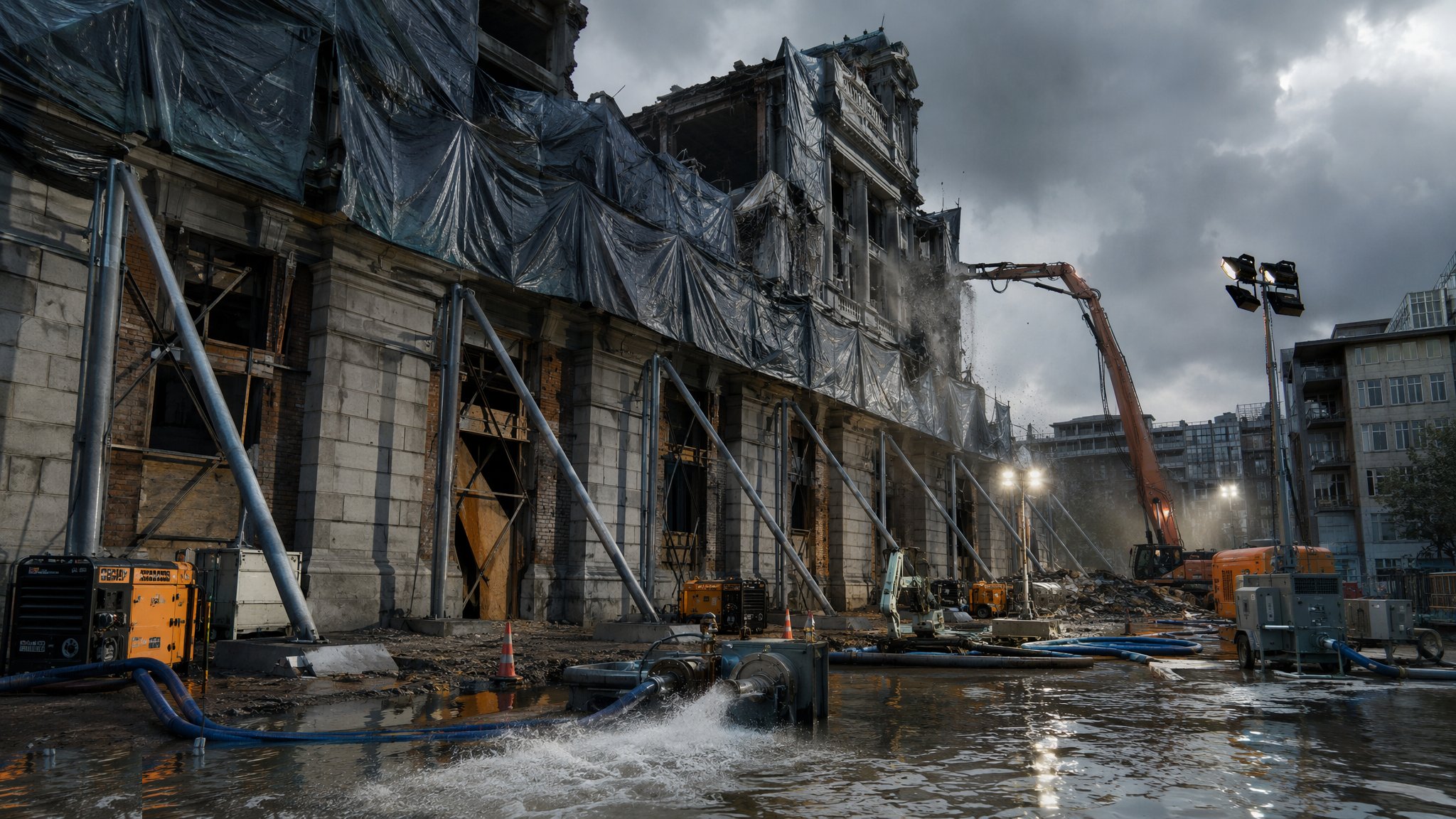
Emergency Works & Stabilisation
The first construction response after the storm, flood or blast - shoring what still stands, demolishing what cannot, keeping the weather out and the utilities alive - under emergency powers and blue-light coordination.
Open process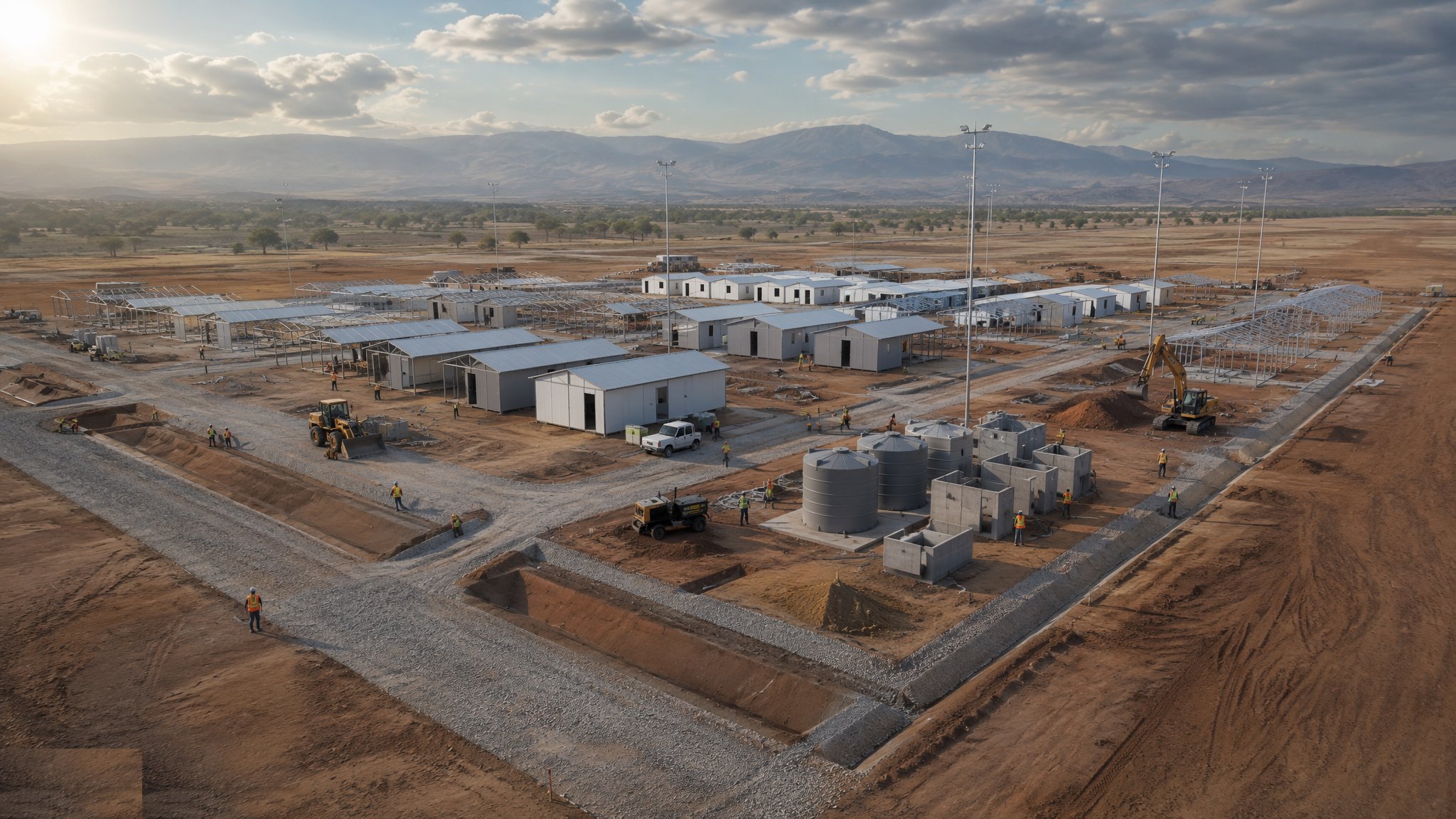
Temporary Shelter & Settlement Construction
Building a functioning settlement from bare ground - camp layouts to Sphere and UNHCR standards, water and sanitation at speed, roads and drainage on unprepared ground - with logistics that start continents away.
Open processShared methods used in this sector
These guides are owned by other sectors - the canonical page lives there - but the method is the same here. Cards open the guide at its home sector.
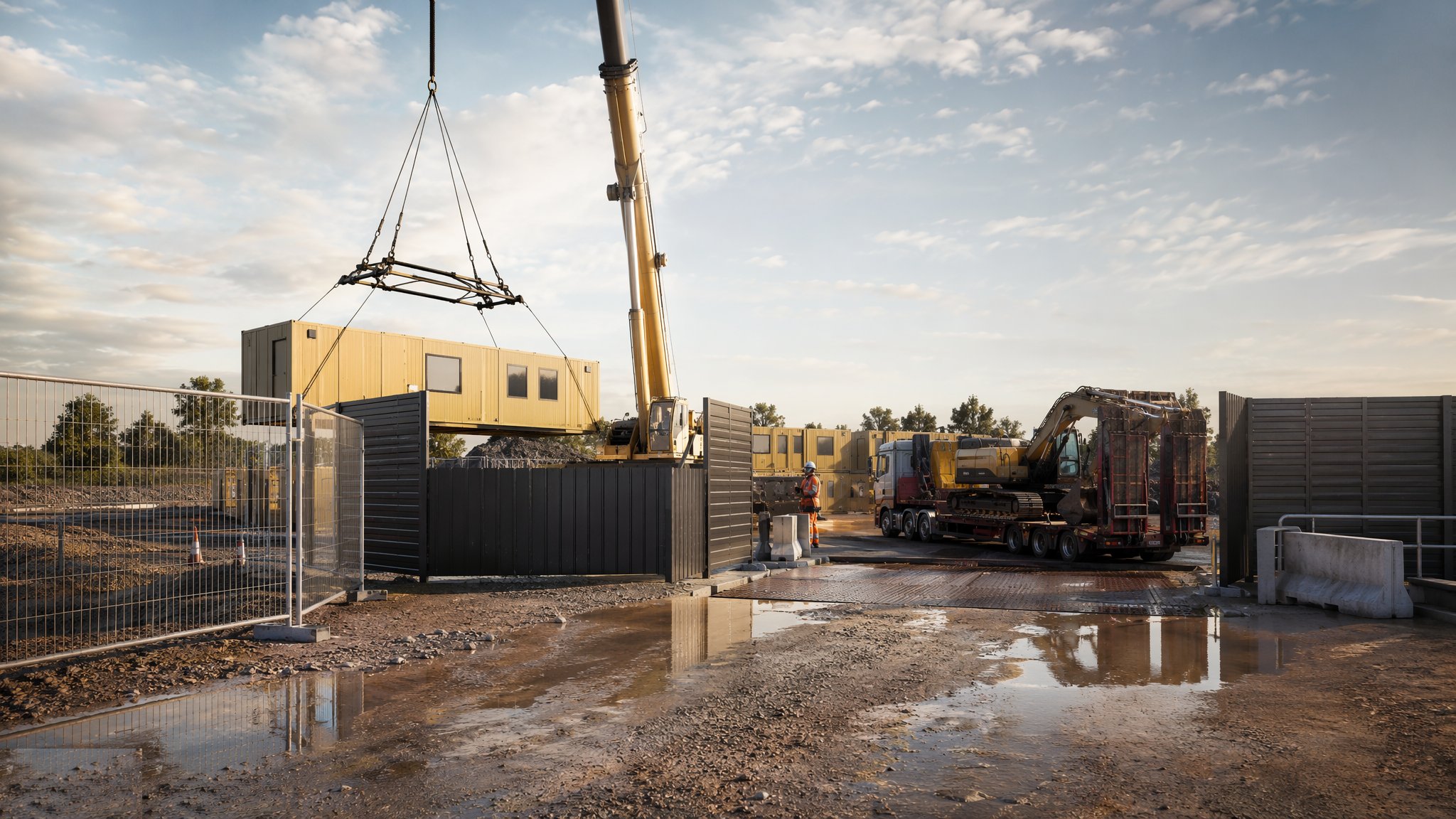
Site Access & Enabling Works
Turning a piece of land into a controlled, serviced, legal construction site.
Open processCanonical guide: Residential & Housing
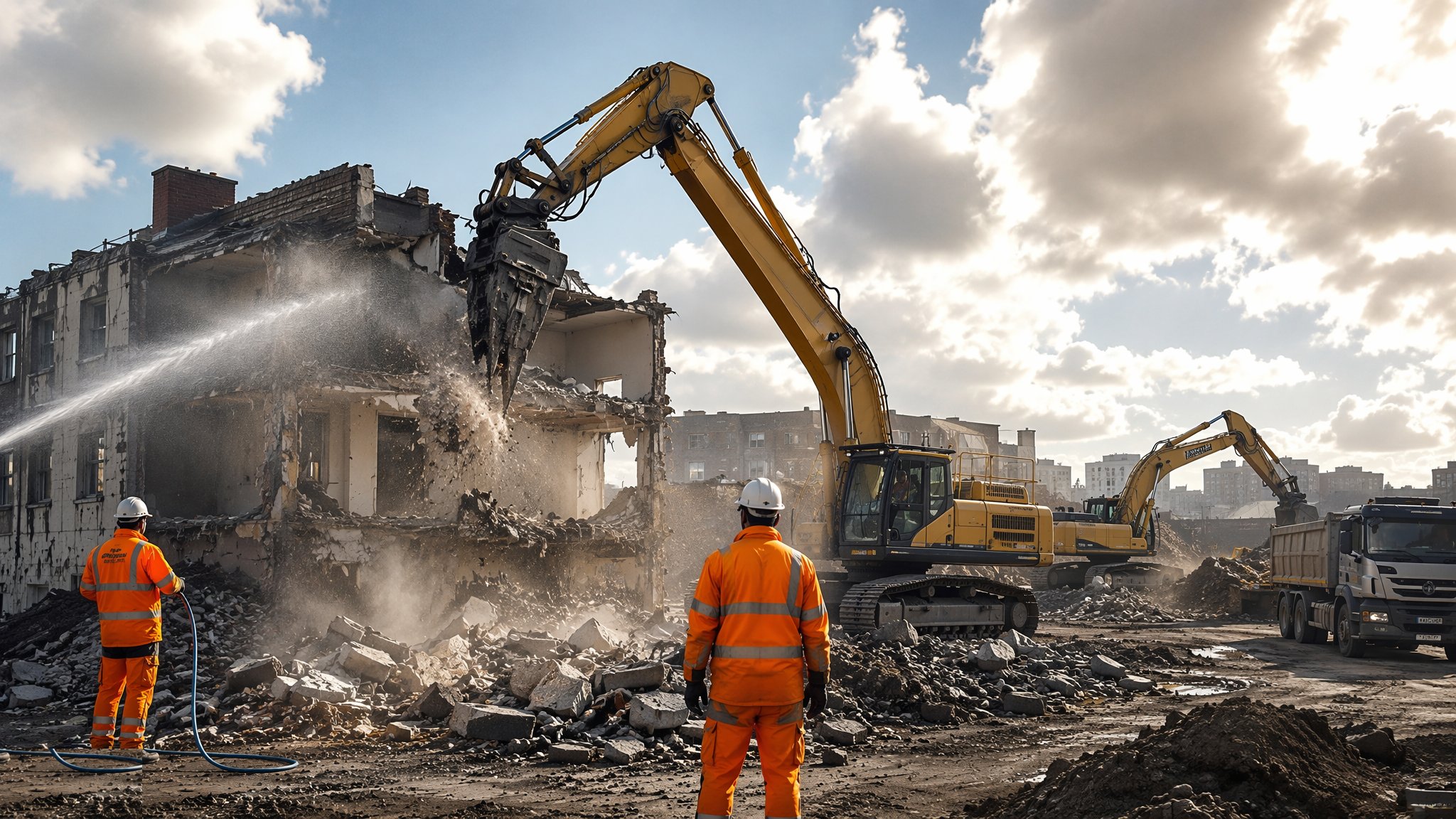
Site Clearance & Demolition
Removing vegetation, structures and contaminants - and turning arisings into resource.
Open processCanonical guide: Residential & Housing
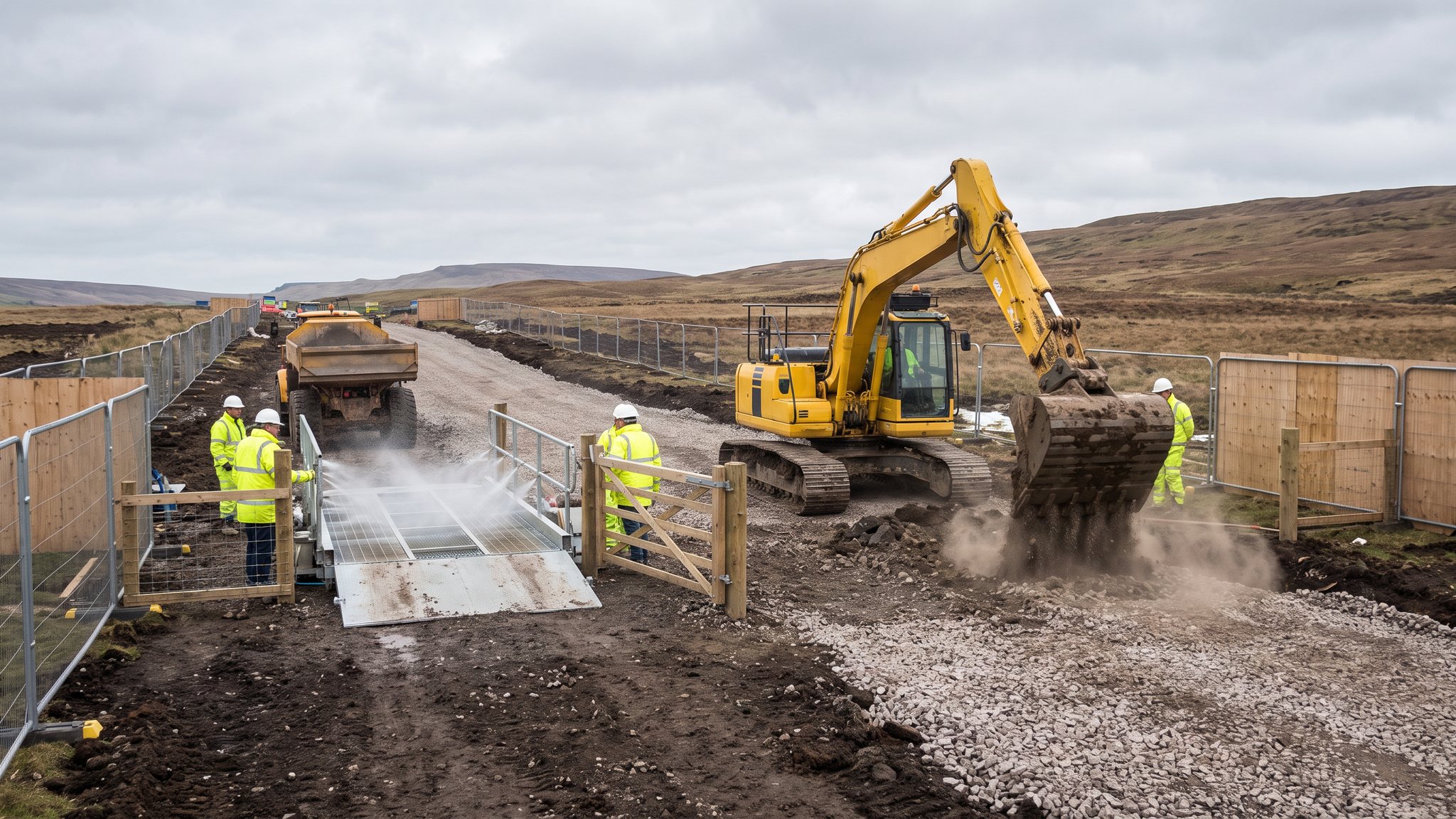
Corridor Access & Enabling Works
Turning a length of route - often a live highway - into a controlled, approved, workable construction corridor.
Open processCanonical guide: Roads & Highways

Earthworks & Excavation
Cut and fill, trenching and compaction - reshaping the ground to take the building.
Open processCanonical guide: Residential & Housing
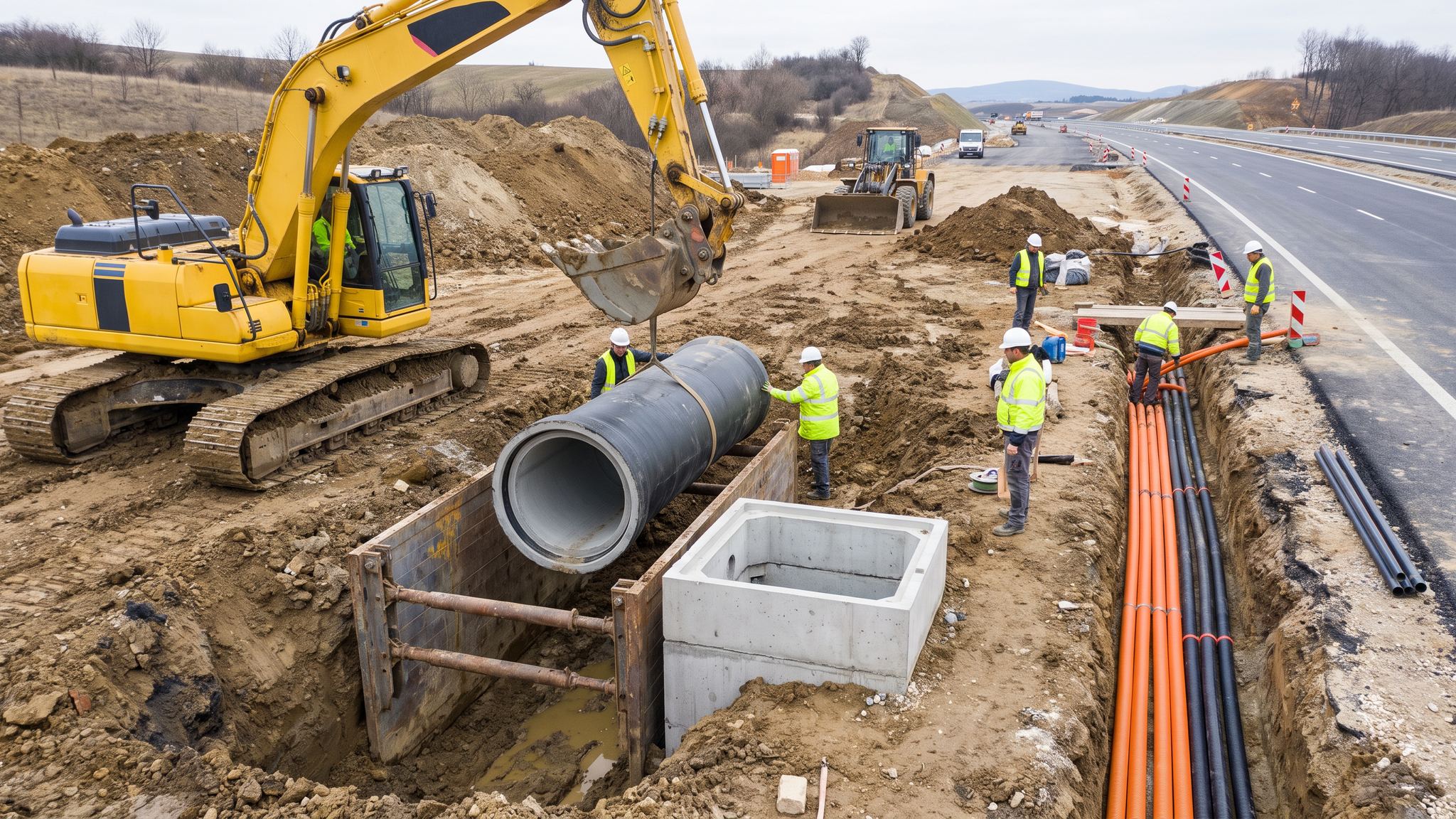
Drainage & Utility Corridors
Pipes, ducts, chambers and culverts - the buried networks installed before the pavement goes over them.
Open processCanonical guide: Roads & Highways

Disaster Recovery & Humanitarian in depth
About Disaster Recovery & Humanitarian
The two guides in this sector cover emergency works and stabilisation - making safe, shoring, dewatering and opening access in the first days - and temporary shelter and settlements, where speed, dignity and logistics matter more than finish, and the layout decisions made in week one shape communities for years.
Procurement when the rulebook is on fire
Emergency works are bought on frameworks and standing contracts, not tender lists: insurers' and government frameworks with pre-agreed rates, direct awards to contractors already mobilised nearby, and humanitarian agencies using their own pre-qualified supplier rosters. Speed is the evaluation criterion, and the paperwork follows the plant rather than leading it - which is exactly why the pre-agreed frameworks exist, so that the commercial cover is there when the order comes at midnight.
The commercial risk is carried differently. Cost-reimbursable with open-book accounting is the norm for the emergency phase, converting to lump sums once scope stabilises. Contractors who keep meticulous daywork records from hour one get paid; those who improvise the records as well as the works fund the recovery themselves.
The transition from response to recovery is the phase nobody owns and everybody pays for. Emergency powers lapse, funding shifts from relief budgets to reconstruction programmes, and the contractors who mobilised in days find themselves re-tendering for the permanent works they enabled. The clients who manage this well keep the response team engaged through the design of the rebuild - the knowledge of what failed, where and why is held by the people who cleared it, and losing that knowledge to a demobilisation is the quietest waste in the sector.
Programme: days and hours, not months
The emergency phase is measured in days: making structures safe, shoring, dewatering, clearing access, restoring power and water. Critical path thinking collapses into resource loading - how many pumps, how much plant, how many crews - and logistics is the constraint, because everyone in the region wants the same plant, fuel and temporary bridging at the same time. The skill is triage: what must be done tonight to prevent the next loss, and what can wait a week.
The recovery phase re-invents the normal programme under abnormal conditions. Permanent rebuilding runs on familiar logic - but through damaged supply chains, displaced workforces and insurance loss-adjustment processes that gate funding release. Temporary works linger: the emergency bridge becomes semi-permanent, the welfare cabins become a village, and the layout decisions made in week one shape communities for years, which is why the better agencies involve planners and engineers before the first cabin lands.
What goes wrong
The first failures are safety failures in the response itself: unstable structures worked too soon, live utilities in debris, confined spaces in flooded basements. Emergency work attracts improvisation, and improvisation without engineering judgement kills rescuers - every framework worth the name puts structural assessment and making-safe ahead of clearance, however loud the pressure to just dig.
The second wave is contractual and reputational: daywork records disputed a year later, scopes that grew without instruction, permanent decisions taken under emergency powers that cannot be justified at audit. Humanitarian work adds its own failure mode - shelter delivered fast but wrong, camps that flood in the first rains because drainage was nobody's urgent task - and the sector's hard lesson is that the emergency phase never fully excuses skipping the basics of siting and ground.
UK and UAE differences
UK disaster response runs through the Civil Contingencies Act machinery: local resilience forums, the Fire and Rescue Service's urban search and rescue capability, and government frameworks for flood response and recovery. The construction industry's role is largely making safe, temporary works and insurance-funded reinstatement - a large, organised market of loss adjusters and specialist restoration contractors that mobilises after every major flood or fire.
The UAE's domestic exposure is episodic - flash flooding, as the 2024 storms proved, overwhelms drainage designed for a dry country - and the response is state-led and fast. Internationally, UAE-based contractors and humanitarian organisations are major players in overseas relief and reconstruction, where the logistics skills of Gulf construction - camps, rapid mobilisation, working with imported supply chains - transfer directly to post-disaster rebuilding across the wider region.
Temporary shelter and settlements
Shelter work is construction stripped to logistics: tents, containerised units, flat-pack cabins and core housing erected at rates measured in units per day, on ground that was a field last week. The engineering content is real - levels, drainage, water and sanitation, power distribution, fire breaks - and the failures are the failures of any site done too fast: settlements that flood, latrines sited uphill of water points, cabins on made ground that tips them in the first storm. The good operators bring camp designers forward with the first delivery, not after the first complaint.
The programme never really ends; it transitions. Temporary settlements acquire permanence through incremental upgrade - slab by slab, connection by connection - and the construction industry's role shifts from emergency supply to ordinary contracting under extraordinary social conditions. The lesson the sector repeats is that speed and dignity are not opposites: a settlement laid out properly on day one costs barely more than a bad one and saves years of retrofit.
Building back better
The recovery phase is where resilience is either built in or lost. Rebuilding as-was is the default pressure - insurers pay for reinstatement, residents want their street back - but the moments after a disaster are the only times raising floor levels, moving critical plant above flood level, or re-routing infrastructure is fundable. Engineers and contractors who can price and programme the resilient option quickly give the client a real choice; those who only offer like-for-like close it off.
In the UK that increasingly means property-level flood resilience and community-scale schemes after each major flood event, delivered through the same frameworks as the emergency response. For Gulf contractors working regionally, it means reconstruction contracts where the client is a government or international agency, the specification embeds seismic or flood standards the original never had, and the contractor's ability to mobilise a compliant supply chain into a damaged region is the qualification that wins the work.
Making safe: the engineering of the first days
Stabilisation is the sector's technical core: structural engineers assessing damaged buildings from the street inwards, shoring and propping designed from whatever sections are available, controlled demolition of elements too dangerous to save, and dewatering and pumping where the failure is water. The work runs under emergency procedures but the engineering is conventional - load paths, temporary works design, exclusion zones - just done at a pace and with an information deficit that normal projects never tolerate.
Access and clearance follow: debris removal sequenced to preserve evidence where investigations require it, routes opened for the utilities' repair crews, and temporary bridging and road repairs that reconnect communities before permanent works are even designed. The contractors who do this well keep standing plant-hire agreements, trained rapid-response teams and a culture where the first question on site is always what could still fall, flood or burn - because in the first days, the disaster is not over.
Logistics and supply in the response
Disaster response is won or lost on logistics: fuel for plant and generators, water, temporary bridging, accommodation for responders, and the import corridors when the local supply chain is the thing that broke. Contractors with pre-agreed supply arrangements and their own logistics planners outperform bigger firms without them, because in the first weeks the scarcest resource is not plant but certainty about when anything arrives.
Cash and contracts move differently too: framework call-offs, letters of intent, government procurement waivers and humanitarian purchasing rules all compress the commercial cycle, and the discipline that survives is record-keeping. Photographs, daywork sheets and signed daily allocations are the difference between a contractor paid for a heroic month and one who funded it - the sector's least heroic lesson, learned the most often.