Process plants, pipe racks and pressure systems - construction under a permit-to-work culture.
An oil and gas facility is structural steel, pressure systems and an unforgiving permit-to-work culture. The civil works are heavy - foundations for rotating kit, blast-rated buildings, piperack steelwork by the thousand tonnes - but the job is really about installation: piping, electrical and instrumentation, then a pre-commissioning and start-up sequence that brings the plant to life one system at a time.
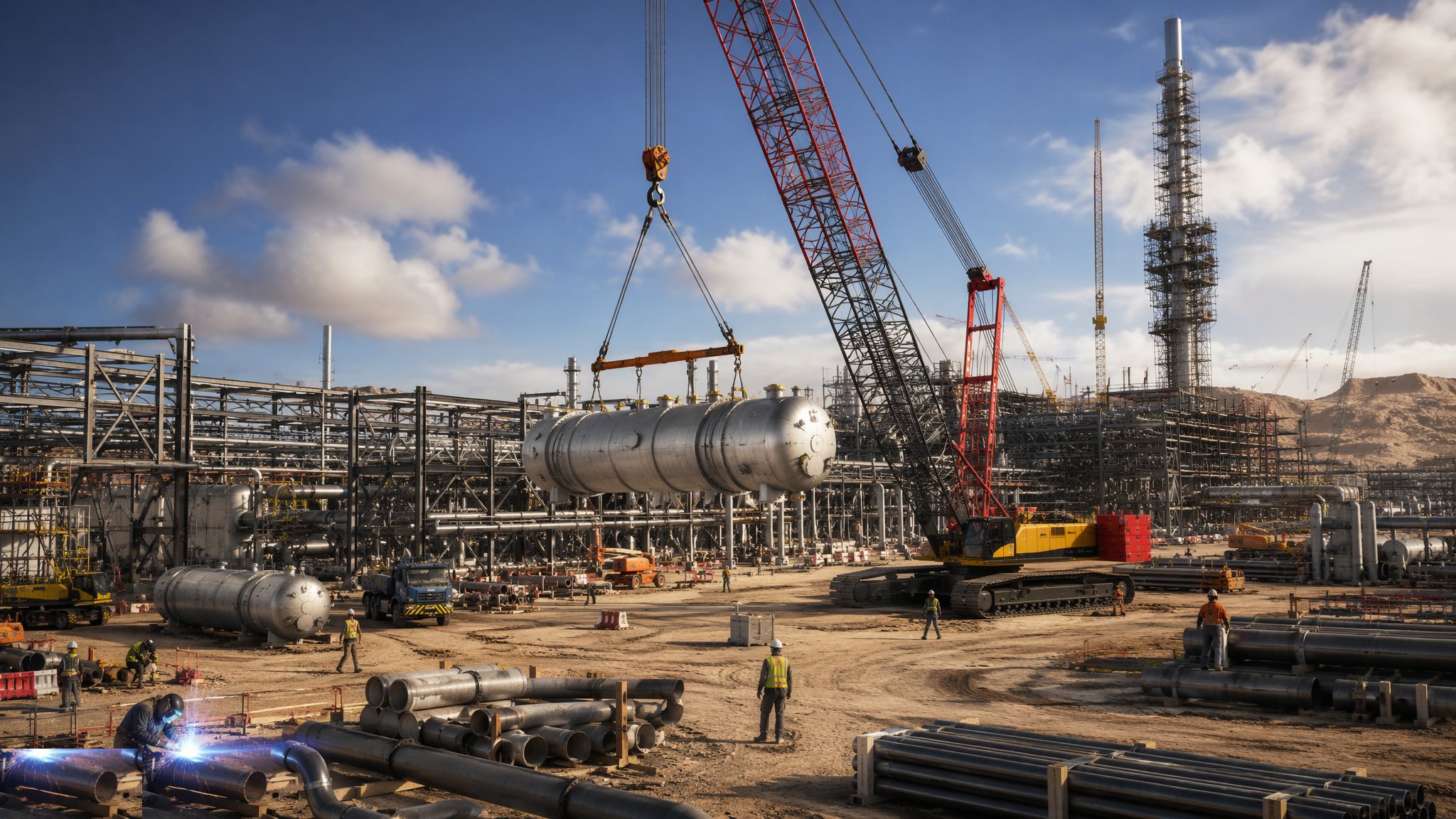
The process map - 4 guides
Each one is a full guide: overview, variants, numbered steps, plant, testing, safety and defects.
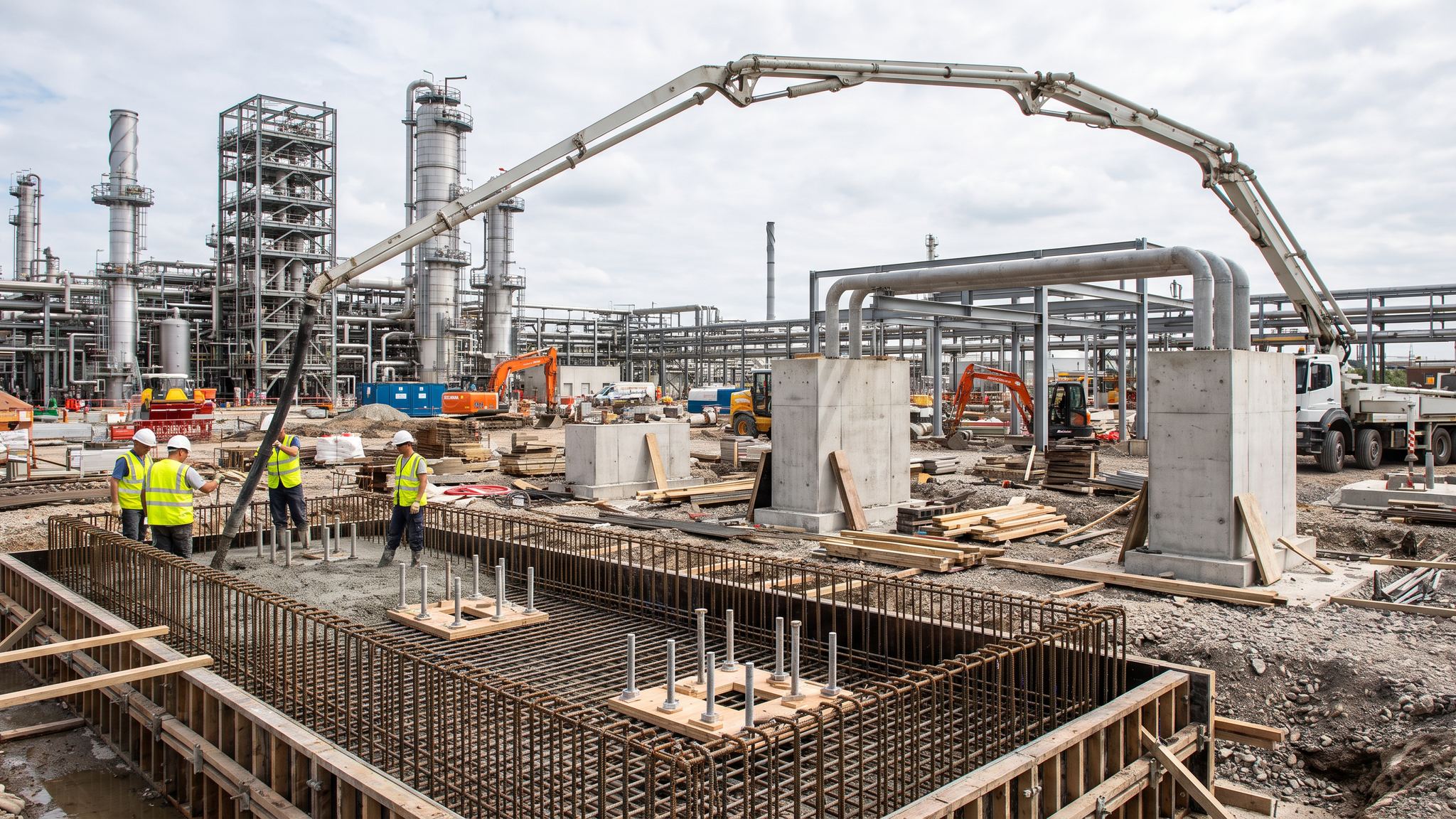
Heavy Civils & Foundations
Equipment foundations, machine blocks, tank bases and piperack civils - the concrete that a process plant stands on, and the anchor bolts everything else lines up from.
Open process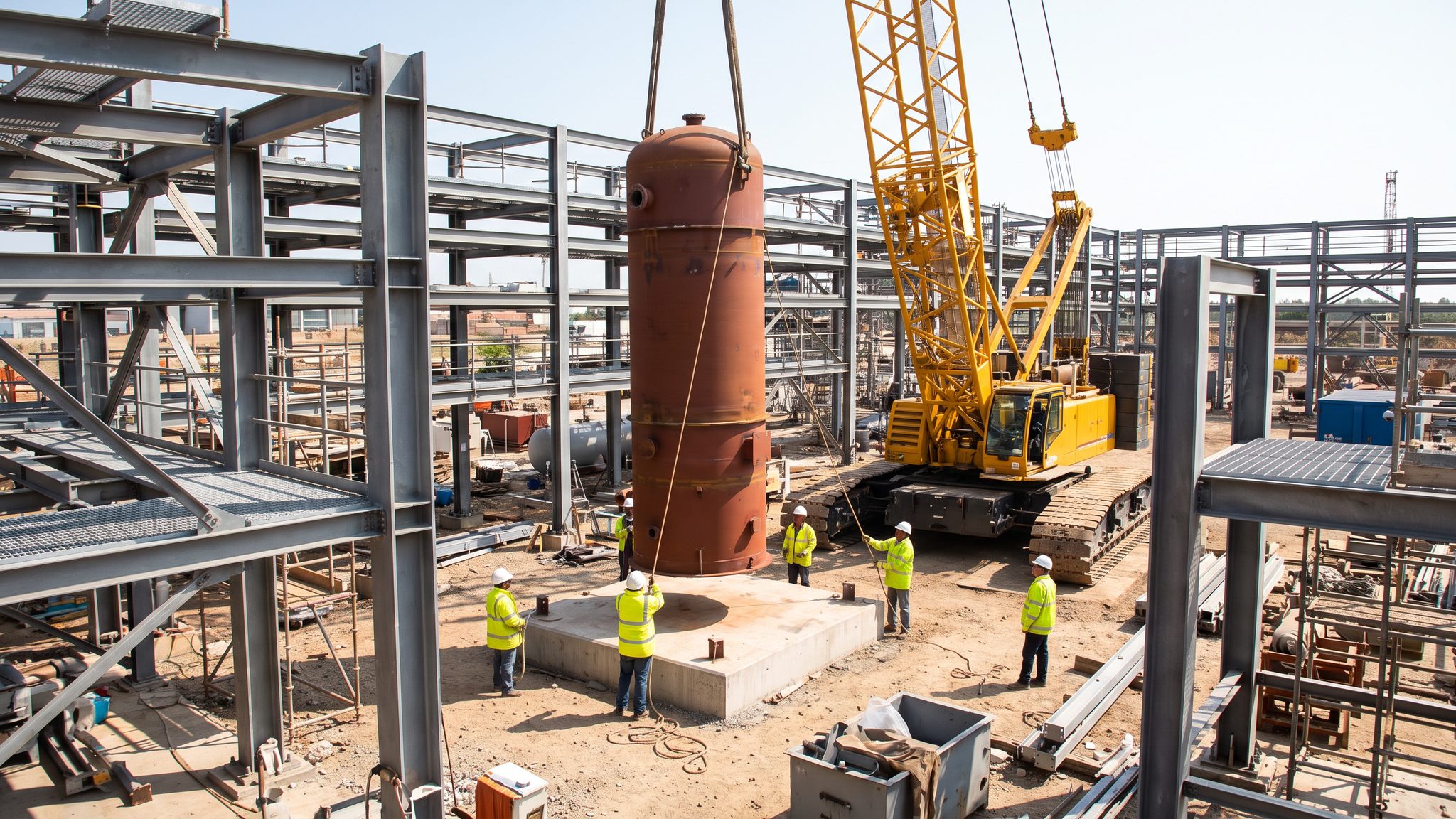
Structural Steel & Equipment Setting
Piperack steel, technological structures and the heavy lifts that land vessels, columns and compressors onto the civils - planned to BS 7121 and surveyed to the millimetre.
Open process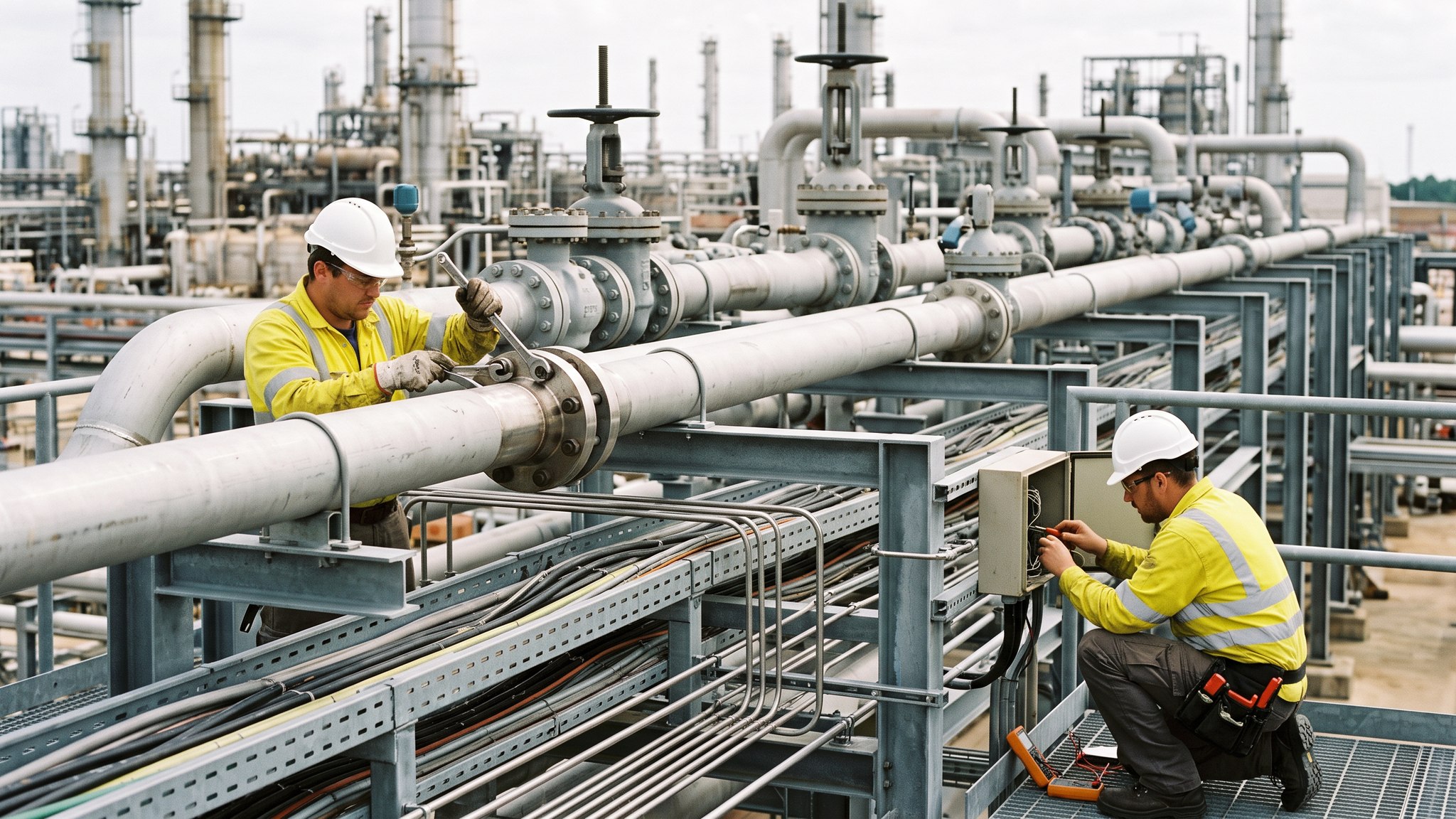
Piping & E&I Installation
Pressure piping fabricated as spools and welded to qualified procedures, plus the cable, tray and instrument installation that makes the plant controllable - the longest bulk-installation phase on the job.
Open process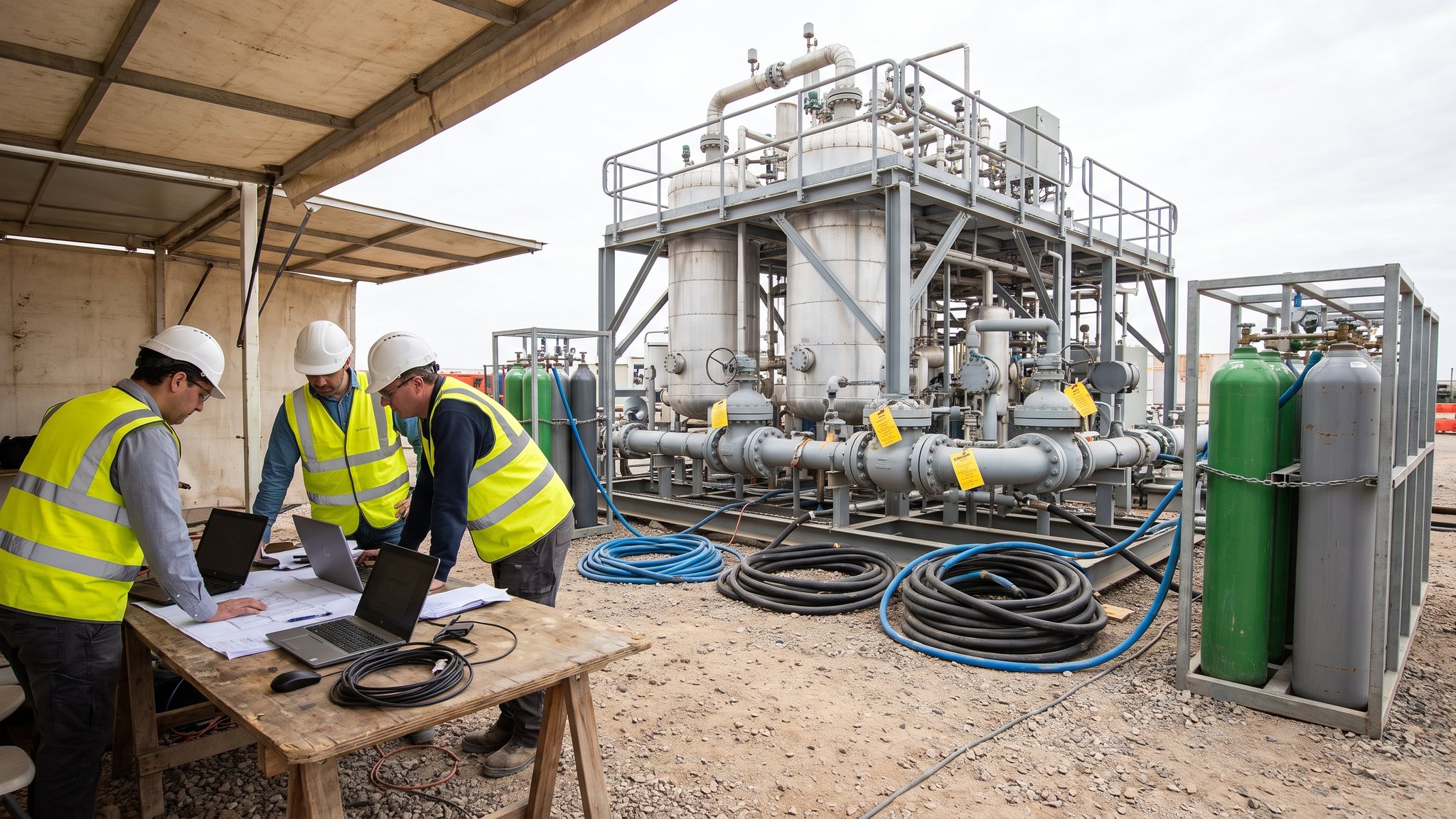
Pre-commissioning & Start-up
Proving the plant without hydrocarbons - testing, flushing, drying and inerting - then the readiness reviews and controlled first introduction of feed that turn a construction site into an operating facility.
Open processShared methods used in this sector
These guides are owned by other sectors - the canonical page lives there - but the method is the same here. Cards open the guide at its home sector.
Oil & Gas / Petrochemical in depth
About Oil & Gas / Petrochemical
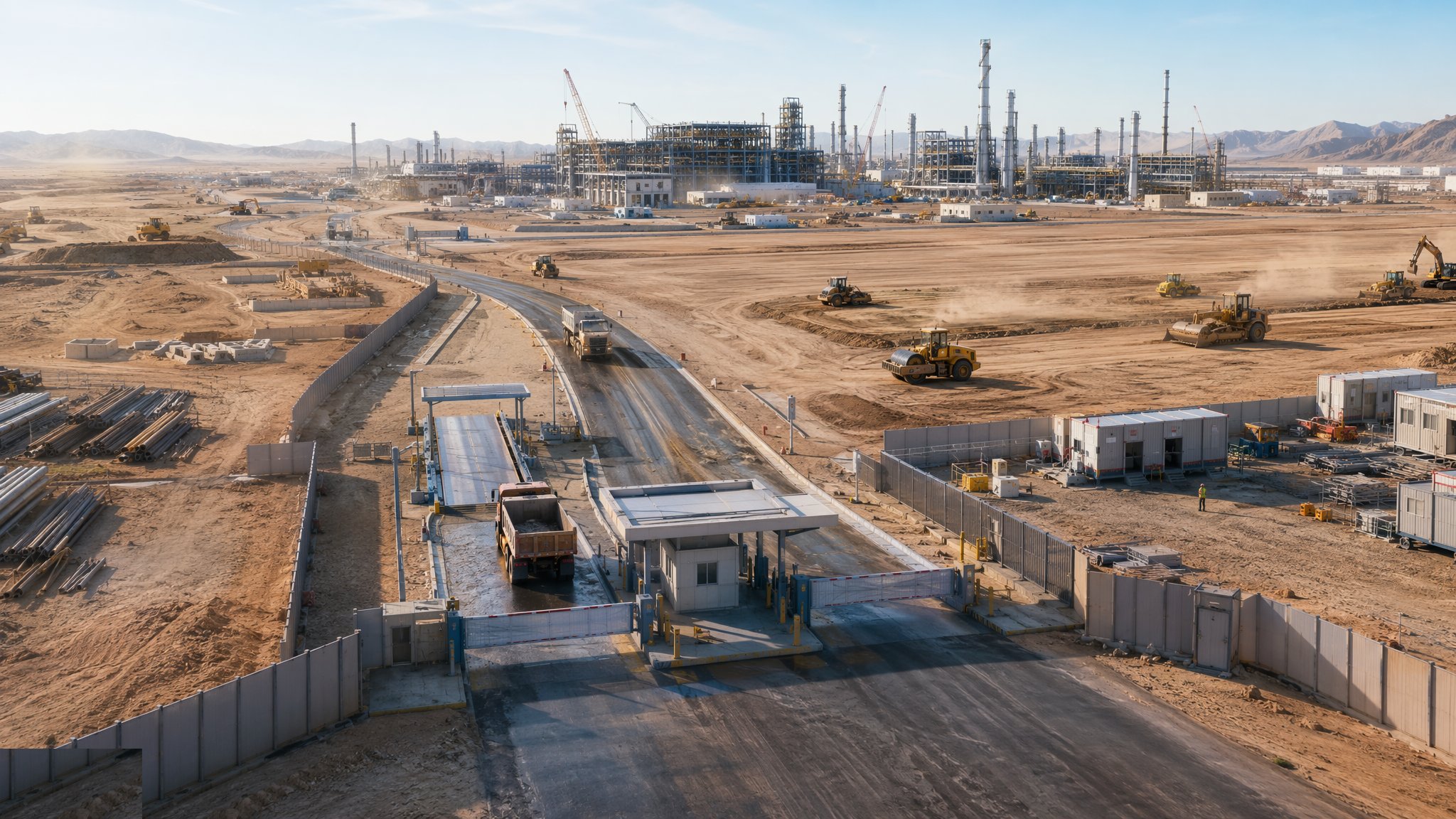
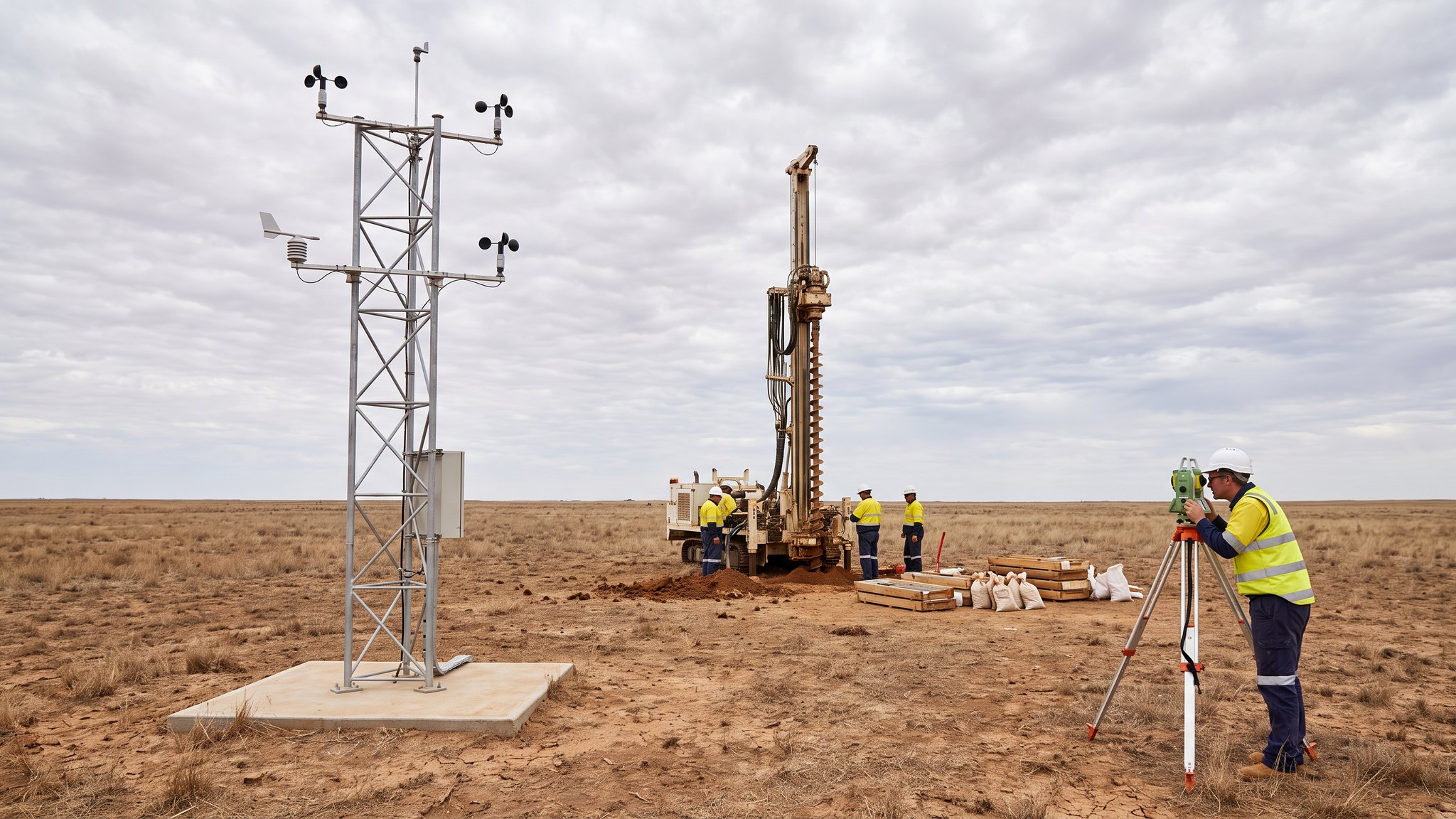
The four guides in this sector cover the facility works. The site access, survey and ground-investigation guides are shared with Power Generation and link through to their canonical pages there.
How process plants are bought and built
Oil and gas work is bought on the contractor's ability to manage process risk, not on the cheapest steel rate. The dominant model is EPC - engineering, procurement and construction under one lump-sum contract - where the contractor takes the process design from the licensor, details it, buys every vessel and valve, and builds the plant for a fixed price against a performance guarantee. Where the owner wants more control, EPCM keeps the owner holding the purchase orders and pays the contractor a management fee plus reimbursable construction costs, which shifts cost risk back to the client but keeps the contractor's fee out of the disputes that lump-sum process work attracts.
Procurement drives the programme more than construction does. Long-lead equipment - compressors, large pressure vessels, heat exchangers, analysers - runs twelve to twenty-four months from order to delivery, and the entire plot layout, foundation design and piperack steel cannot be frozen until vendor data confirms nozzle positions, weights and anchor loads. A sensible programme places those orders at financial close and lets the civils chase the equipment, not the other way round.
Digital delivery has tightened all of this. The 3D model is now the contract's reference for clash-free design, fabrication isometrics are generated from it rather than drawn, and completion is tracked in systems that link every weld, cable and test certificate to the database the commissioning team inherits. The contractors winning the big EPCs treat that data handover as a deliverable equal to the steel: an operator who cannot interrogate the plant's records on day one has bought a library with no catalogue, and increasingly says so in the contract.
Permits, shutdowns and the safety regime
The permit-to-work system is the real site management on a live plant. Nothing happens - not a spanner, not a survey tripod - without a permit countersigned by operations, and hot work near hydrocarbons needs gas testing, fire watch and often a standby hose crew. In the UK, DSEAR and the ATEX equipment directives zone every area by explosion risk, which dictates what electrical kit, tools and even vehicles may enter; the COMAH regime sits over the whole site for major accident hazards. In the UAE, ADNOC's own codes and technical standards apply onshore and offshore in Abu Dhabi, with the operator's HSE case carrying the same force as statute on site.
Brownfield tie-ins on operating plants are where schedules go to die. Work is confined to planned shutdown windows that arrive every few years and last weeks; every tie-in, hot tap and isolation is rehearsed off critical path for months beforehand, and anything not ready when the window opens waits for the next one. The contractor who wins this work is the one whose planning and discipline survive contact with operations, not the one with the fastest welders.
How the work chains together
A process unit builds in a fixed order: underground first - drainage, foundations, culverts - then heavy civils and piperack steel, then the big lifts set vessels and towers on their plinths, then the piping runs in isometric order, then electrical and instrumentation, then pre-commissioning. Each trade gates the next: you cannot pull cable before trays are up, cannot test loops before instruments are landed, and cannot introduce hydrocarbons until every system on the leak-test register is signed off.
Commissioning is done system by system, not area by area. Punch lists are cleared per system, pre-commissioning (flushing, blowing, drying, instrument loop checks) hands over to commissioning proper, and first oil or gas is introduced only when relief systems, emergency shutdowns and fire and gas detection are proven live. The programme floats sit in the piping and E&I phases, which is why experienced planners measure progress in isometrics complete and loops closed, not in concrete poured.
What goes wrong and what it costs
The failures that matter are process safety failures. A lost bolt in a flange, a gasket of the wrong grade, a relief valve blocked during maintenance - these are the small errors that become hydrocarbon releases, and the industry's incident record shows they mostly happen at start-up, shutdown and tie-in, not during steady operation. Construction quality records - weld traceability, torque records, material certificates - are therefore not bureaucracy; they are the evidence that the plant is safe to introduce fuel to.
Commercially, the classic losses are late vendor data freezing foundations twice, piping re-fabrication from isometric errors, and commissioning overruns where hundreds of systems chase a few thousand punch items. On UAE mega-projects the added risks are heat management for concrete and welding productivity, logistics through congested industrial corridors like Ruwais, and the interface dance between multiple EPC packages sharing one plot. None of these is unpredictable; all of them are expensive when the plan pretends they will not happen.
Modularisation and the fabrication yards
Modern process construction moves work off site wherever it can. Piperack modules, pre-assembled units with vessels and exchangers already set, and complete electrical substations are fabricated in yards - Teesside and Tyneside for the UK, the Gulf's heavy fabrication corridors around Jebel Ali and Ras Al Khaimah for UAE projects - then shipped and lifted into place. The site becomes an assembly operation: fewer welders in the weather, better weld quality under roof, and parallel working between yard and civils that compresses the schedule.
The trade-off is design freeze. Modules demand that piping, steel and E&I design are complete months before site installation would have needed them, and late change is brutal - a nozzle moved after a module ships is a site rework in the air, not a bench repair. Transport limits set module sizes: road convoy widths in the UK, port-to-site corridors in the Gulf, and the heavy-lift craneage that turns a module strategy into a lifting programme all belong in the earliest planning, not the logistics meeting at month eighteen.
UK and UAE delivery context
The UK market is now dominated by brownfield work and decommissioning rather than new plant: refinery and terminal upgrades, carbon capture tie-ins to existing process sites, and North Sea decommissioning where the skills run in reverse - isolation, cleaning, demolition and removal under the same permit culture. Working inside a live refinery fence means the operator's rules, not the contractor's, govern everything from working hours to spark containment, and the commercial model rewards contractors with long relationships at particular sites.
The UAE market is the opposite: continuous expansion. ADNOC's downstream programme at Ruwais is among the largest concentrations of process construction in the world, delivered as multiple parallel EPC packages with in-country value requirements that push fabrication and staffing towards UAE suppliers. The practical consequences for contractors are interface management between packages sharing utilities and corridors, workforce mobilisation at camp scale, and ADNOC's technical standards - which borrow from API, ASME and IEC but add owner-specific requirements that the bid team must price, not discover.
Turnarounds and the after-market
Beyond new build, the sector's steadiest work is the turnaround: the planned shutdown where a refinery or process unit is taken apart, inspected, repaired and upgraded in a window measured in weeks. Turnaround construction is a discipline of its own - thousands of additional workers inducted onto a live site, every flange broken and every vessel entry under permit, and a scope that grows as inspections find what the drawings did not show. The programme is built backwards from the restart date and defended hourly.
The contractors who dominate this market win it on planning maturity: frozen scopes, prefabricated spools ready before the shutdown, tooltalk and induction systems that absorb a workforce surge without losing control of quality. For UK contractors, turnarounds at the remaining refineries and terminals are bread and butter; in the Gulf, the sheer size of the Ruwais and Jubail complexes makes turnaround contracting an industry in itself, with camp-scale mobilisations for a six-week event.