Solar farms, wind farms, hydro and geothermal - power assets built to industrial standards.
Power generation is where building work meets process engineering. A solar farm is mostly civil and electrical work at scale; a wind turbine is a foundation, a crane lift and a commissioning exercise; hydro is heavy civils in a river valley with the water trying to get back in the whole time; geothermal is drilling and heat-exchange kit with a builder's finish.
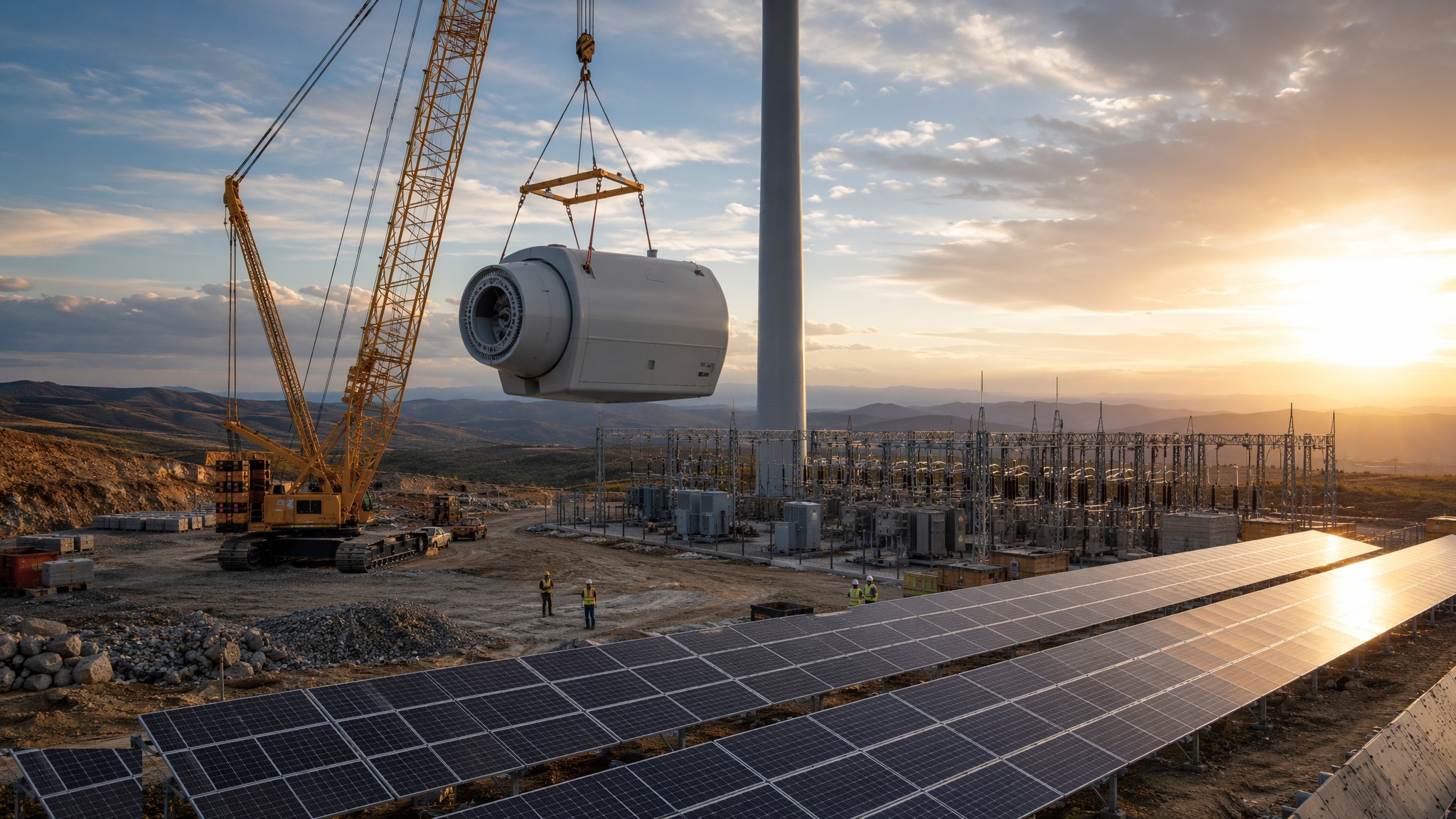
The process map - enabling works to energisation and handover
Eighteen processes in build order, organised in five streams. Shared enabling works come first and serve every scheme; the solar, wind, hydro and geothermal streams then branch from the same site. Each process is a full guide: overview, variants, numbered steps, plant, testing, safety and defects.
Shared enabling works2
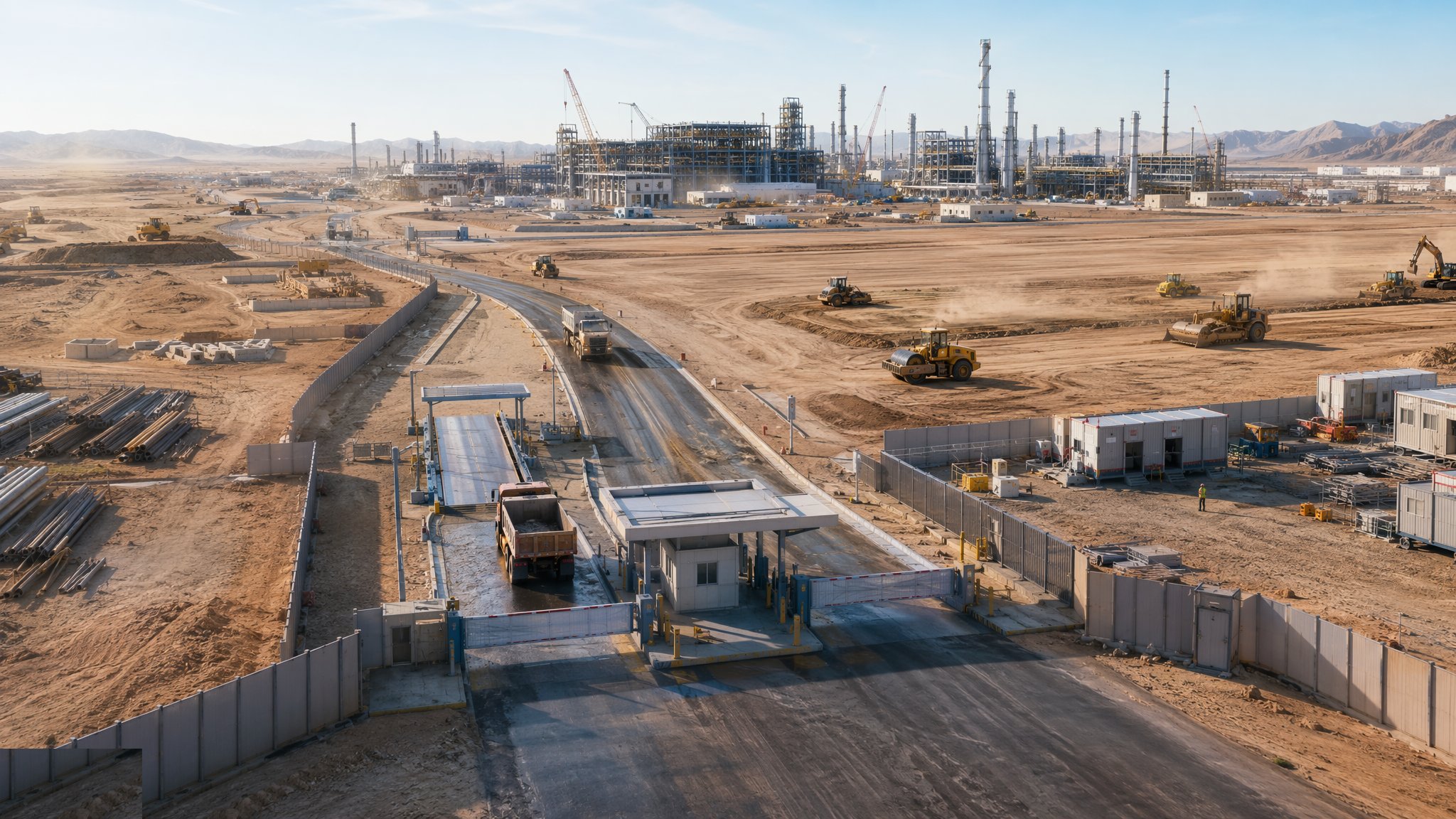
Site Access & Enabling Works
Getting plant, people and materials to a remote site and making it safe, legal and workable - the logistics stage every energy project starts with.
Open process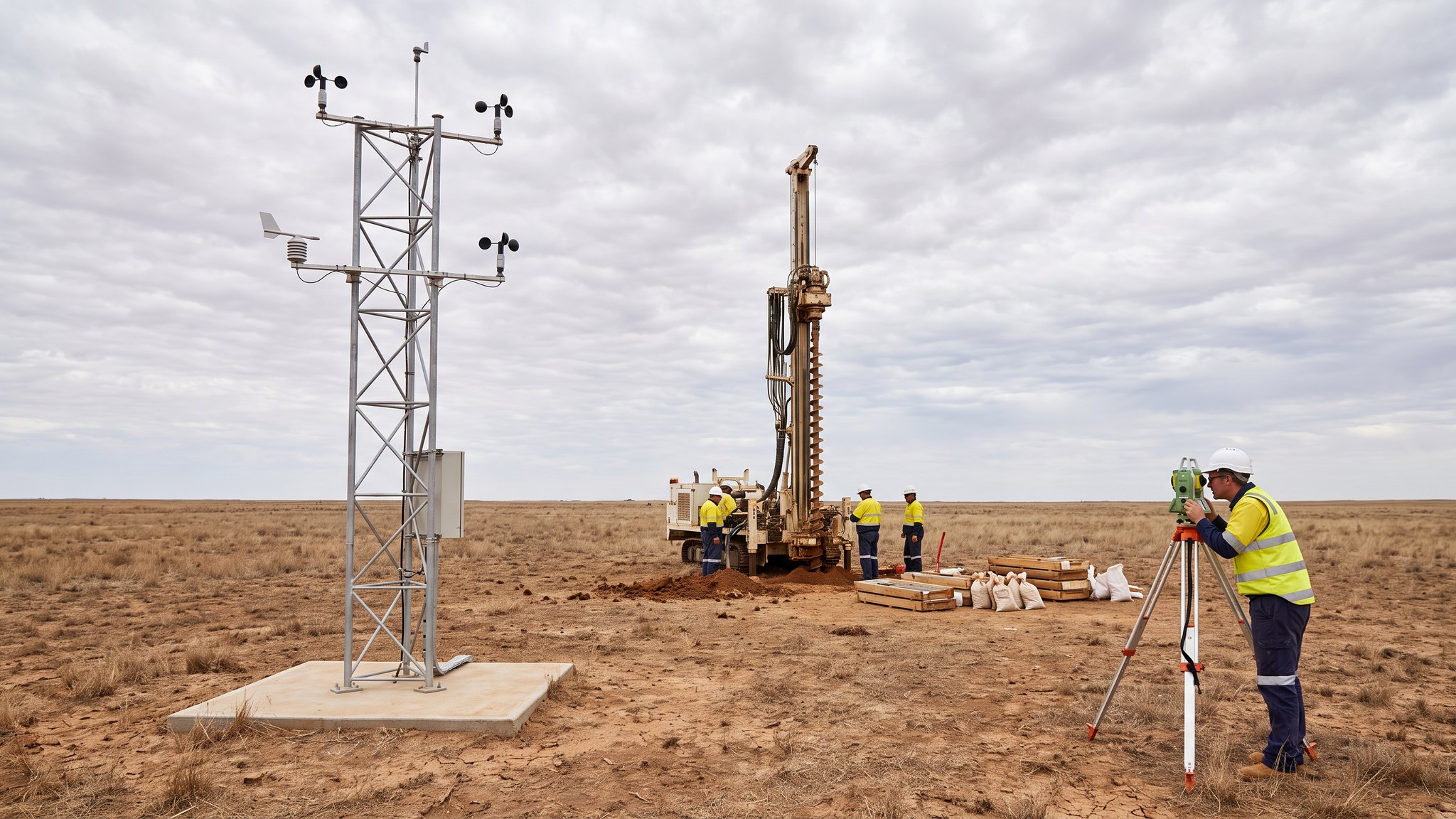
Survey, Ground Investigation & Resource Studies
Fixing where everything goes, proving what the ground will take, and measuring the wind, water and grid the asset is being built for.
Open processUtility-scale solar4
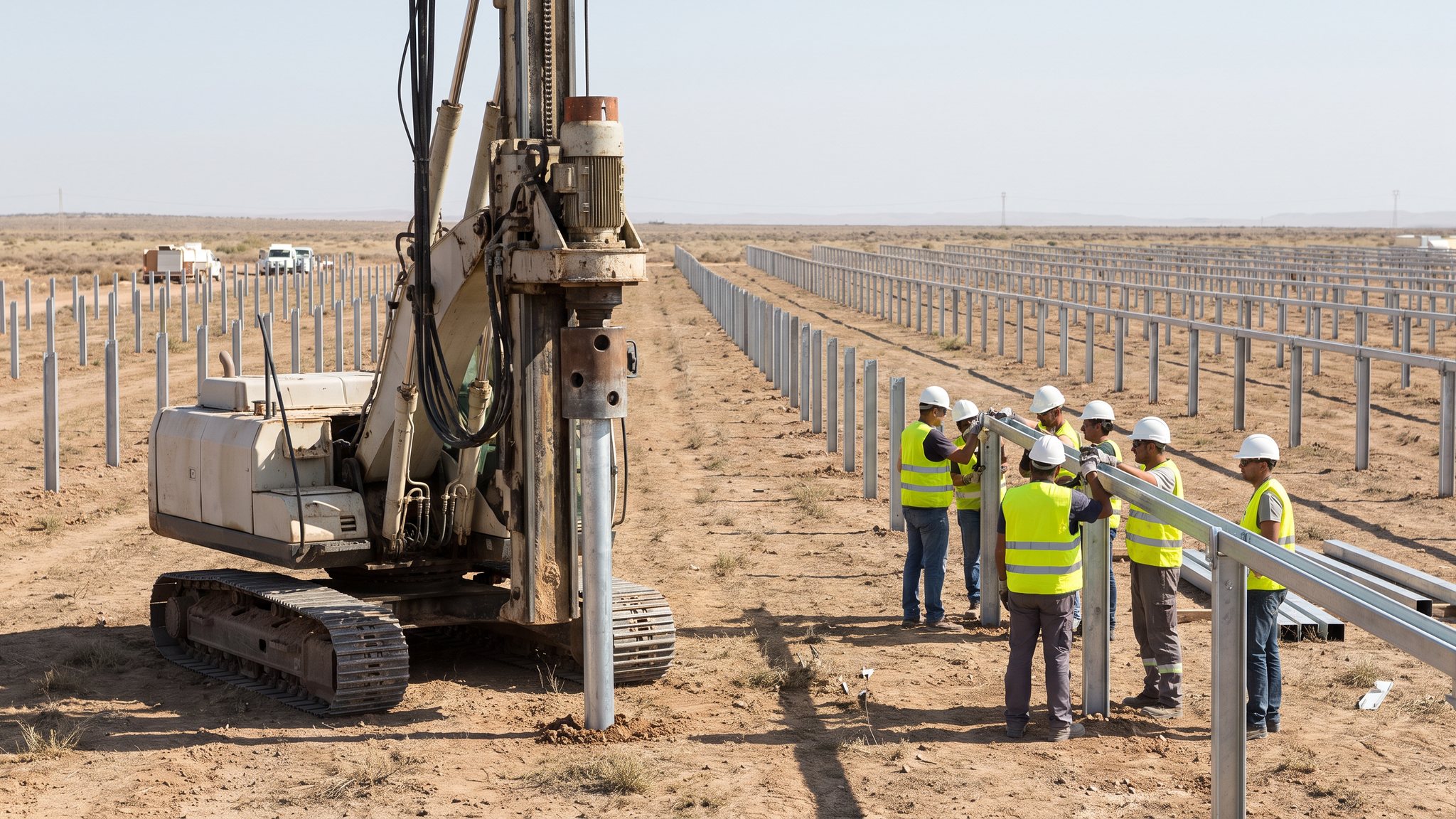
Piling & Mounting Structures
Thousands of driven steel posts and the racking they carry - the repetitive, high-rate foundation system whose pull-out tests and driving logs decide whether the array stands for thirty years.
Open process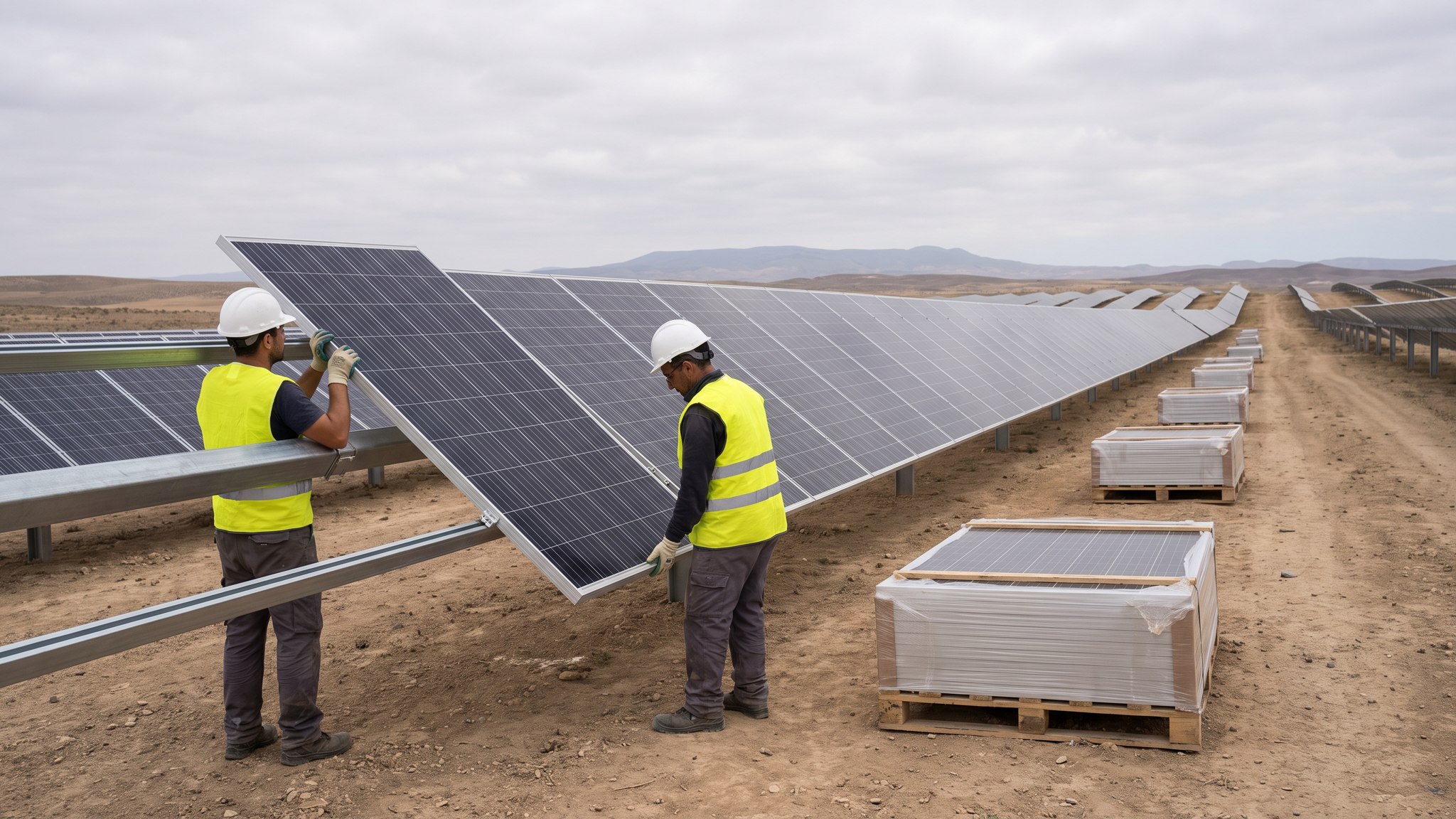
PV Module Installation
Hanging the modules, clamping them to torque and wiring the strings - high-rate repetitive work where handling damage, clamp position and connector quality decide the plant's long-term output.
Open process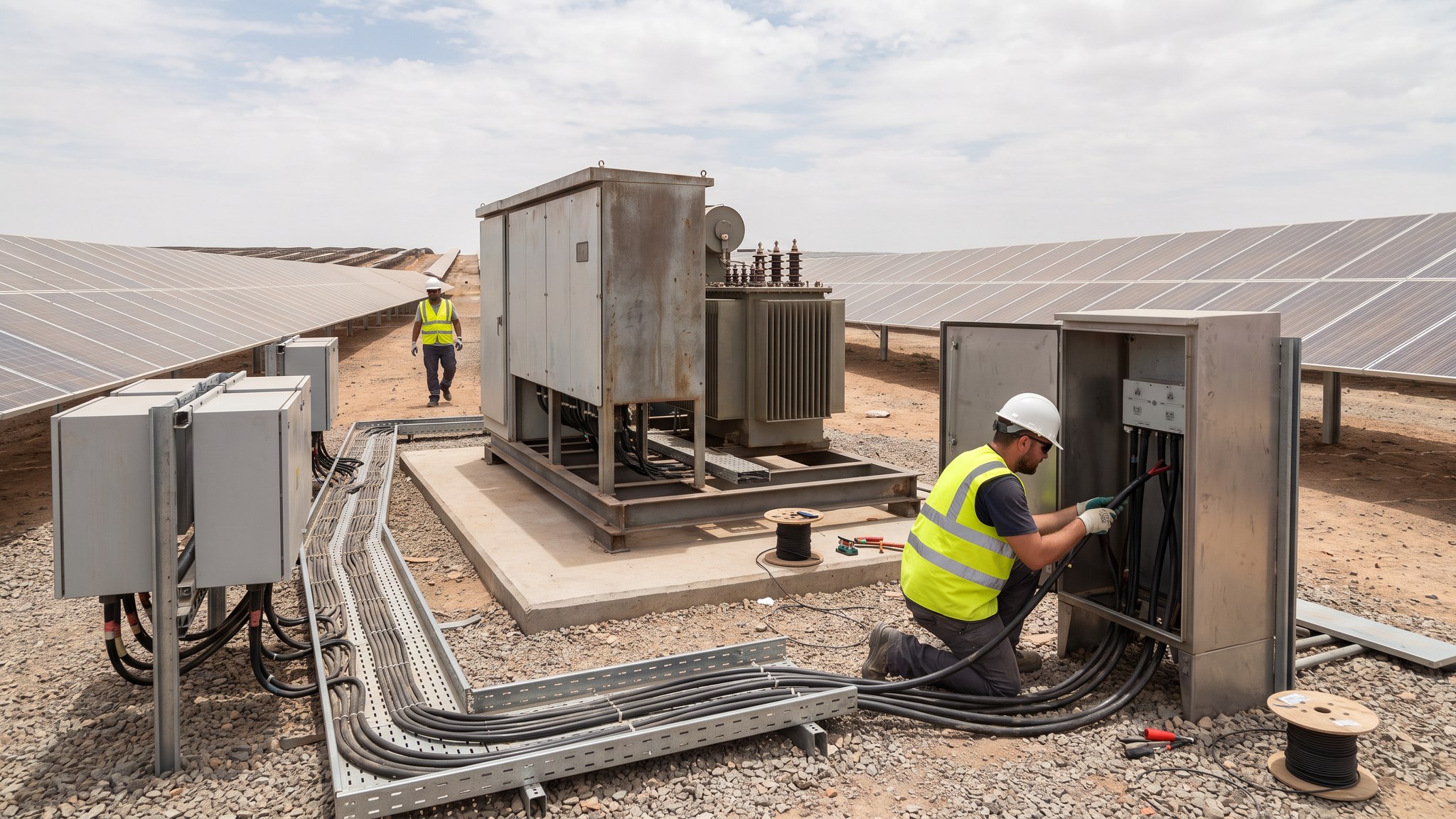
Electrical Balance of System
Strings to inverters, inverters to the substation, and the SCADA that watches it all - the trenches, cables, MV skids and switchgear that turn thousands of modules into a power station.
Open process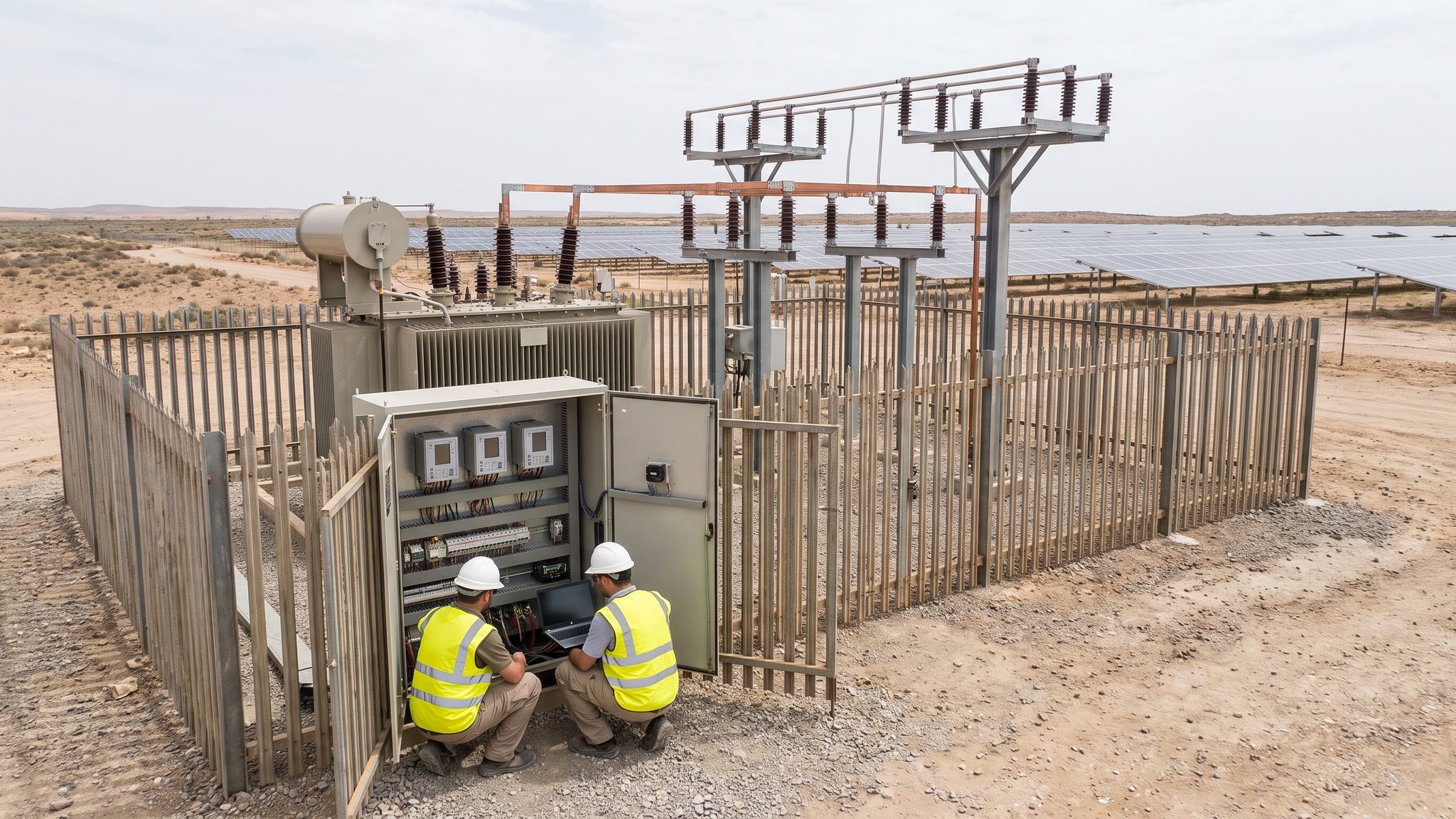
Grid Connection & Energisation
The connection agreement made physical: grid-witnessed tests, a phased energisation sequence and the compliance evidence that lets a finished solar farm finally export a single kilowatt-hour.
Open processOnshore & offshore wind4
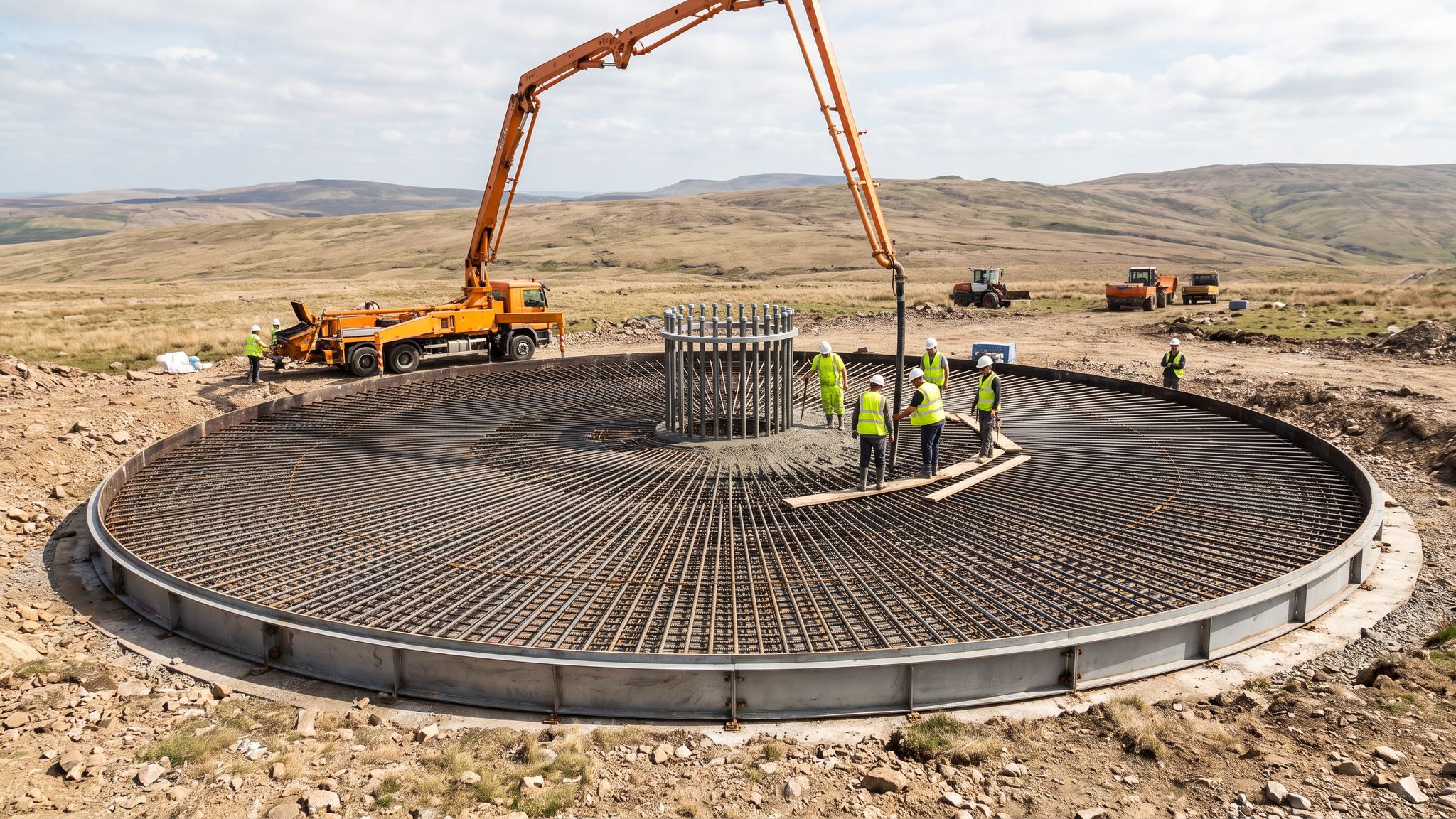
Wind Turbine Foundations
The reinforced concrete bases that hold a 100-metre-plus tower against the overturning pull of the rotor - built to millimetre-level bolt tolerances at the end of a moorland track.
Open process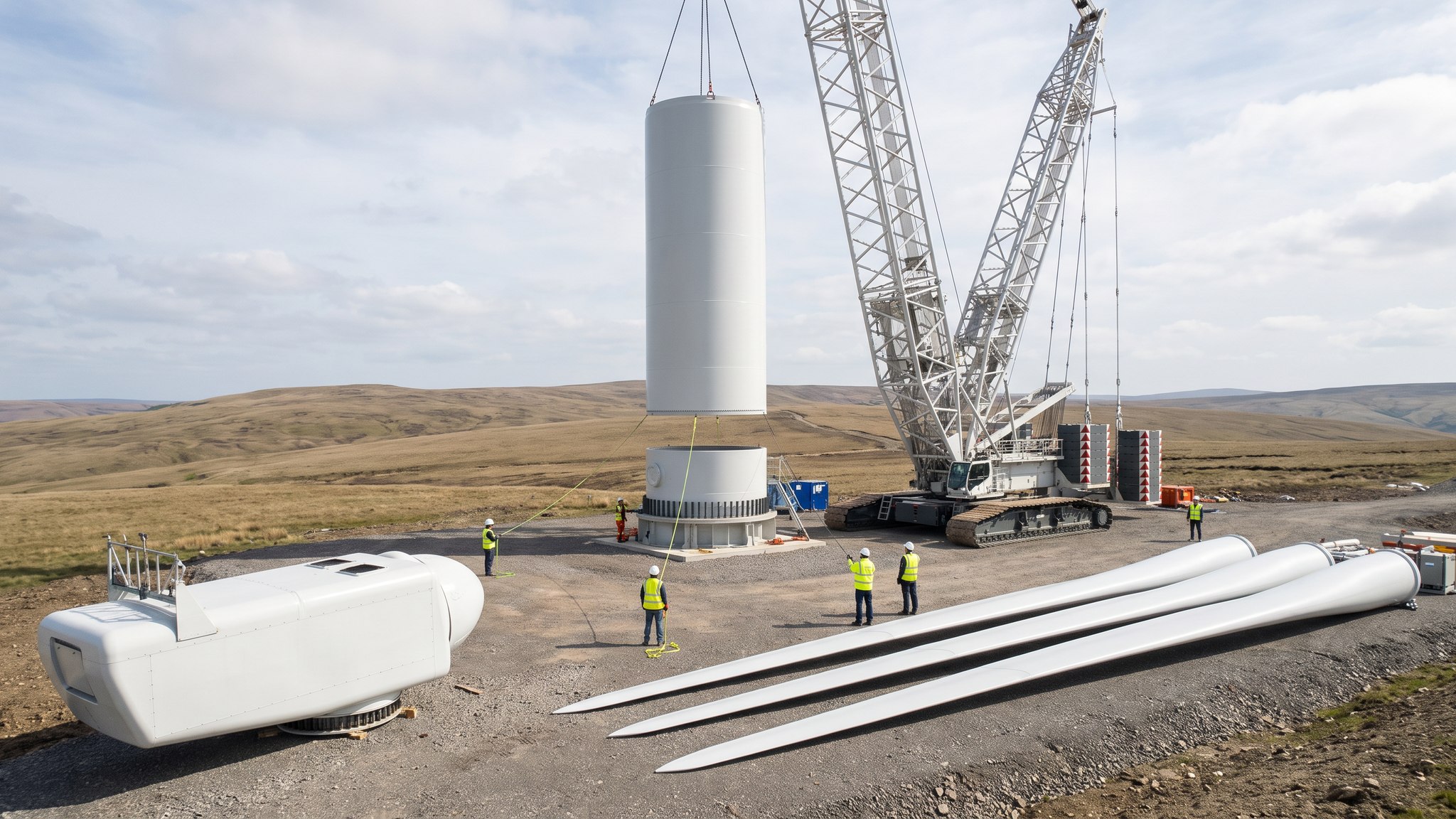
Craneage & Tower Erection
The heaviest lifts most construction professionals will ever see - a main crane the size of a small building, tower sections, a nacelle and blades as long as a football pitch, all governed by certified crane pads and wind limits.
Open process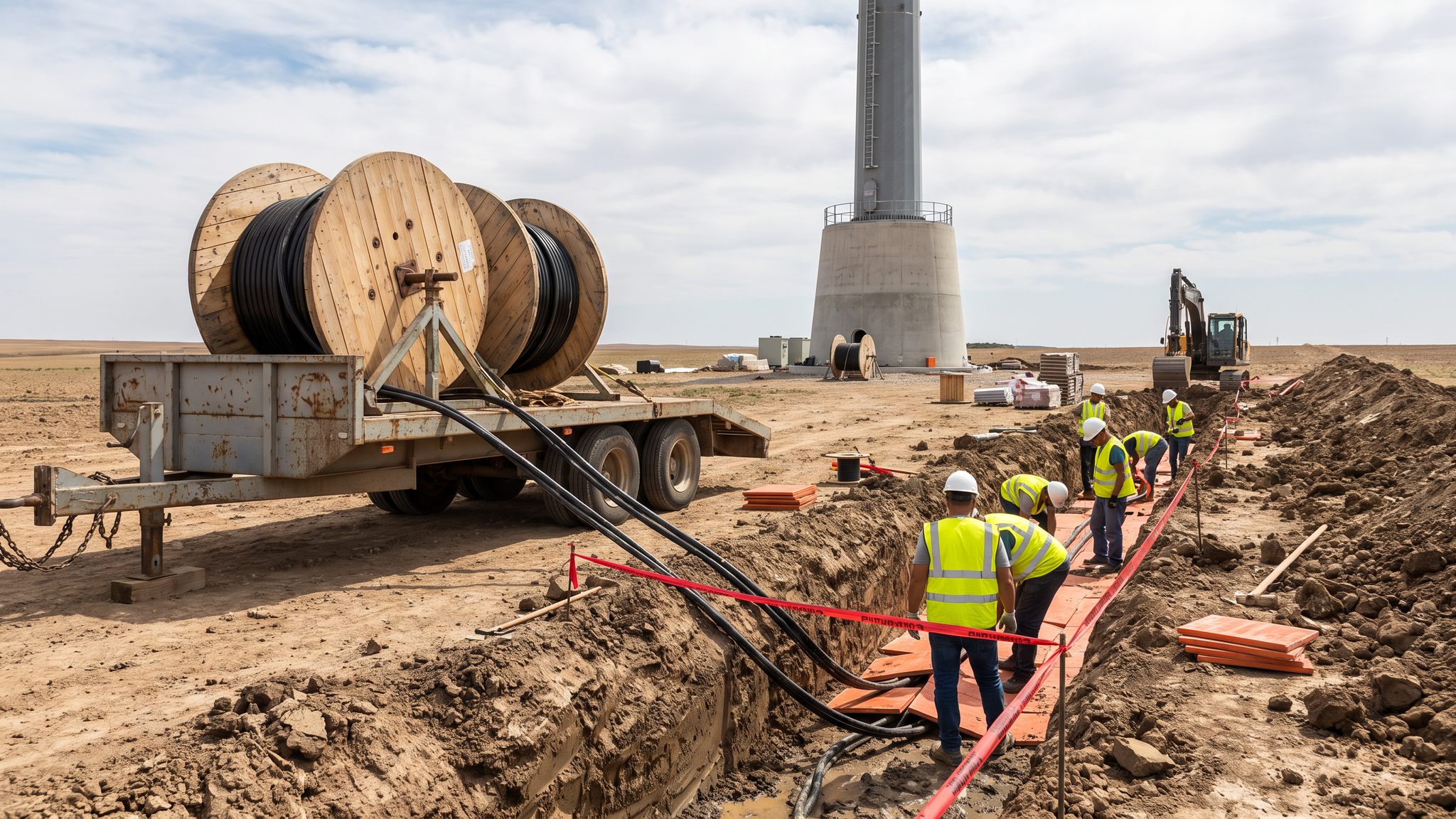
Wind Farm Electrical Infrastructure
Kilometres of buried 33 kV array cable stitched from turbine to turbine, a collector substation, and the grid compliance work that turns a field of machines into a power station.
Open process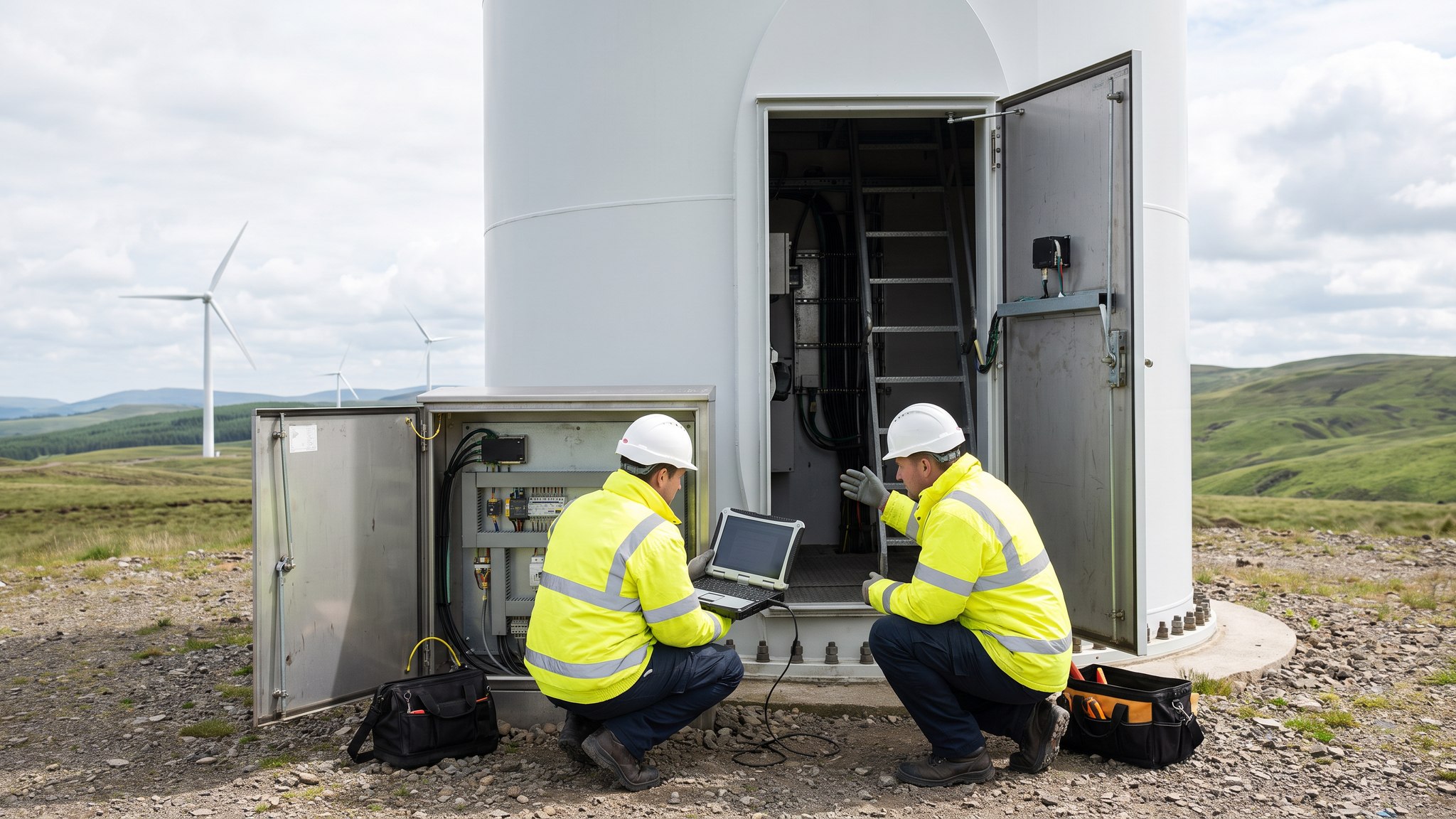
Commissioning & Energisation
The staged proof that each machine is safe to energise, safe to spin and produces what the warranty promised - from cold checks to first rotation to the power-curve test.
Open processHydroelectric schemes4
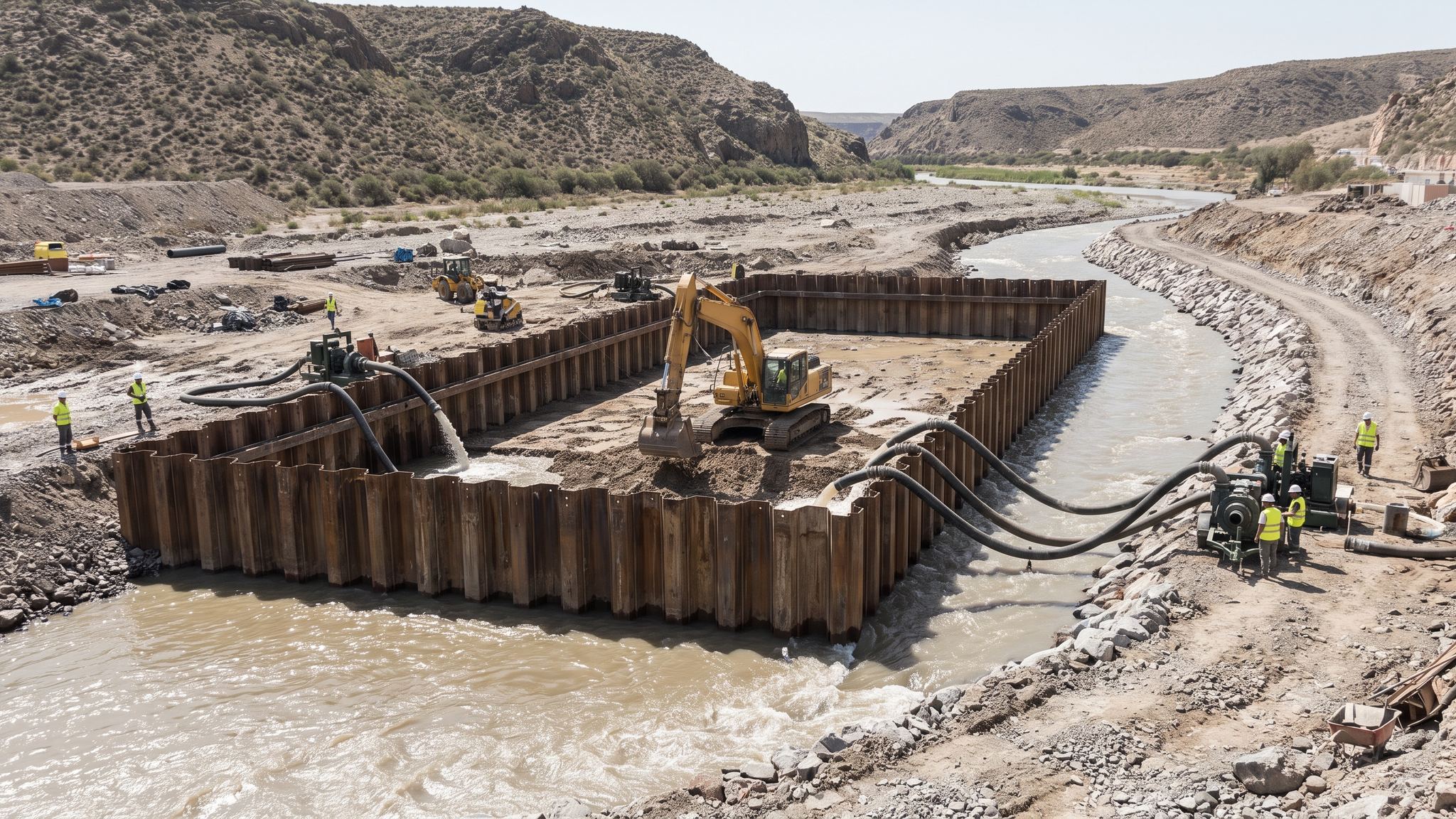
River Diversion & Cofferdams
Diversion and cofferdam works - moving the river aside by a tunnel, a channel or a phased cofferdam sequence, and keeping it there through every flood the construction period will see.
Open process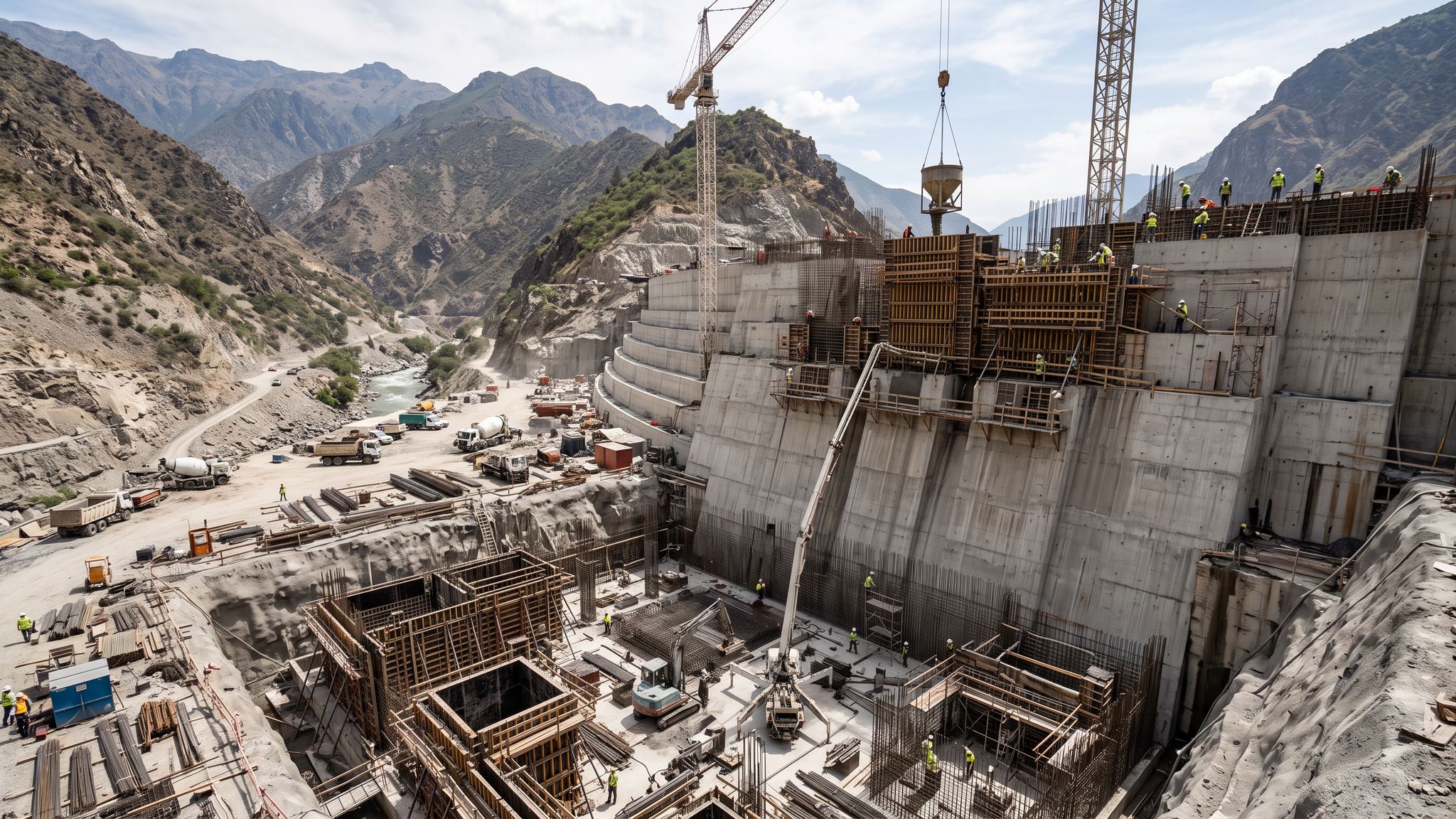
Dam & Powerhouse Civils
The concrete and compacted fill at the heart of the scheme - the dam itself, the intake, the spiral-case pits and draft tubes of the powerhouse - placed in blocks and layers over seasons.
Open process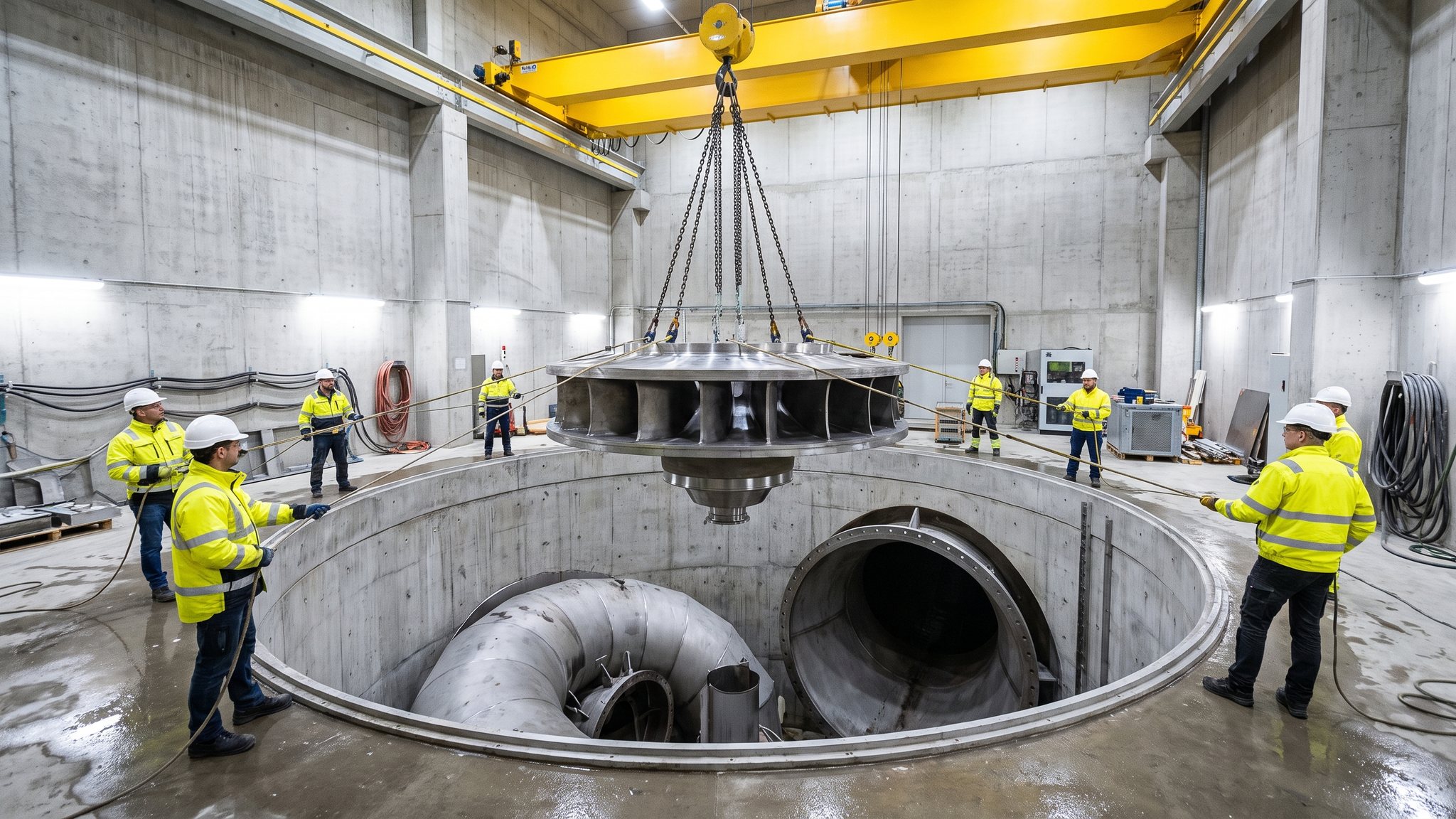
Electromechanical Installation
Turbines, generators, governors and the switchyard - the rotating heart of the scheme, assembled to machining tolerances inside the concrete shell the civils have handed over.
Open process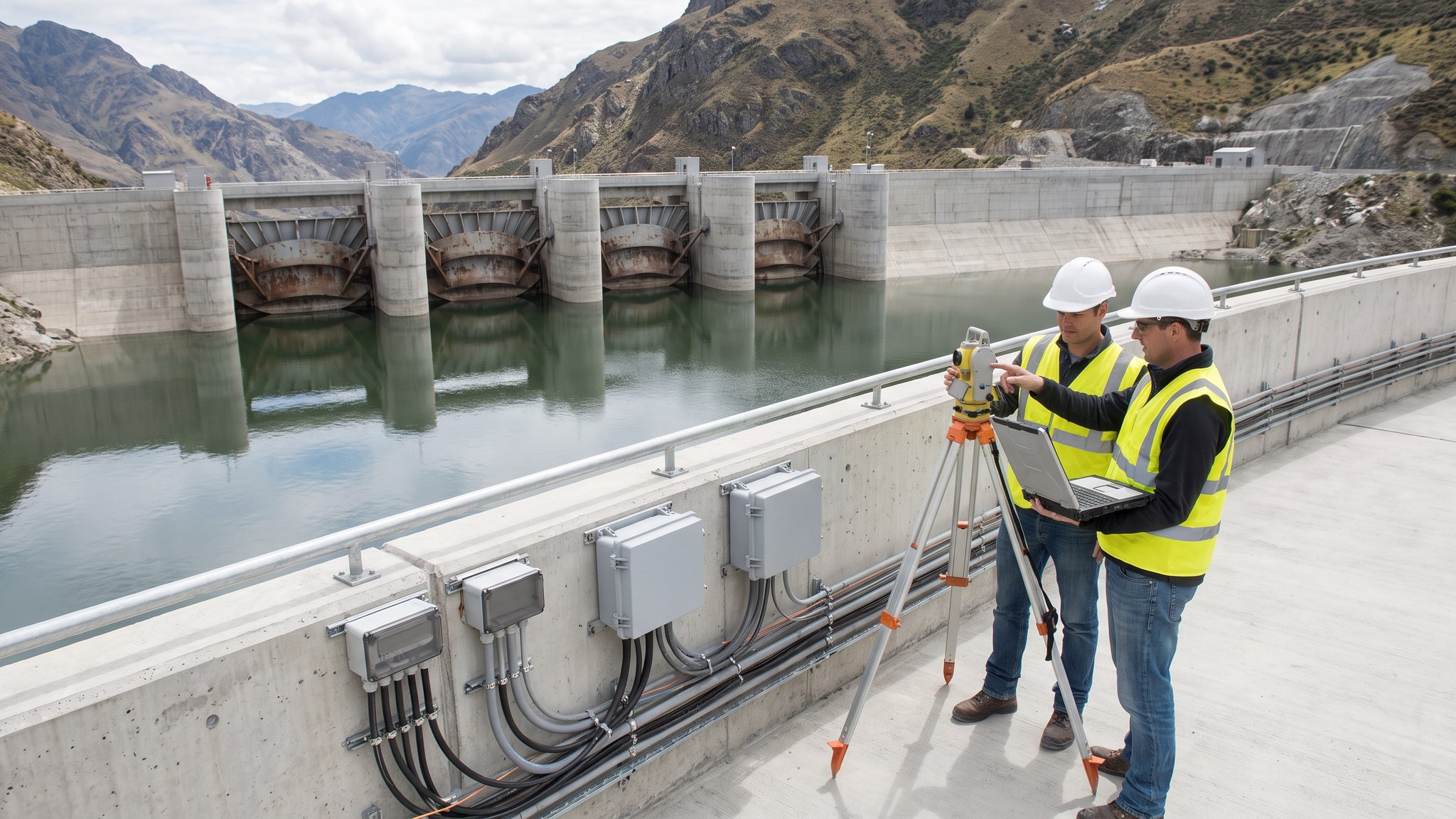
Impoundment, Commissioning & Handover
Filling the reservoir for the first time under surveillance, proving the machines dry then wet, satisfying the reservoir-safety regime - and handing over an asset built for a century.
Open processGeothermal & ground-source energy4
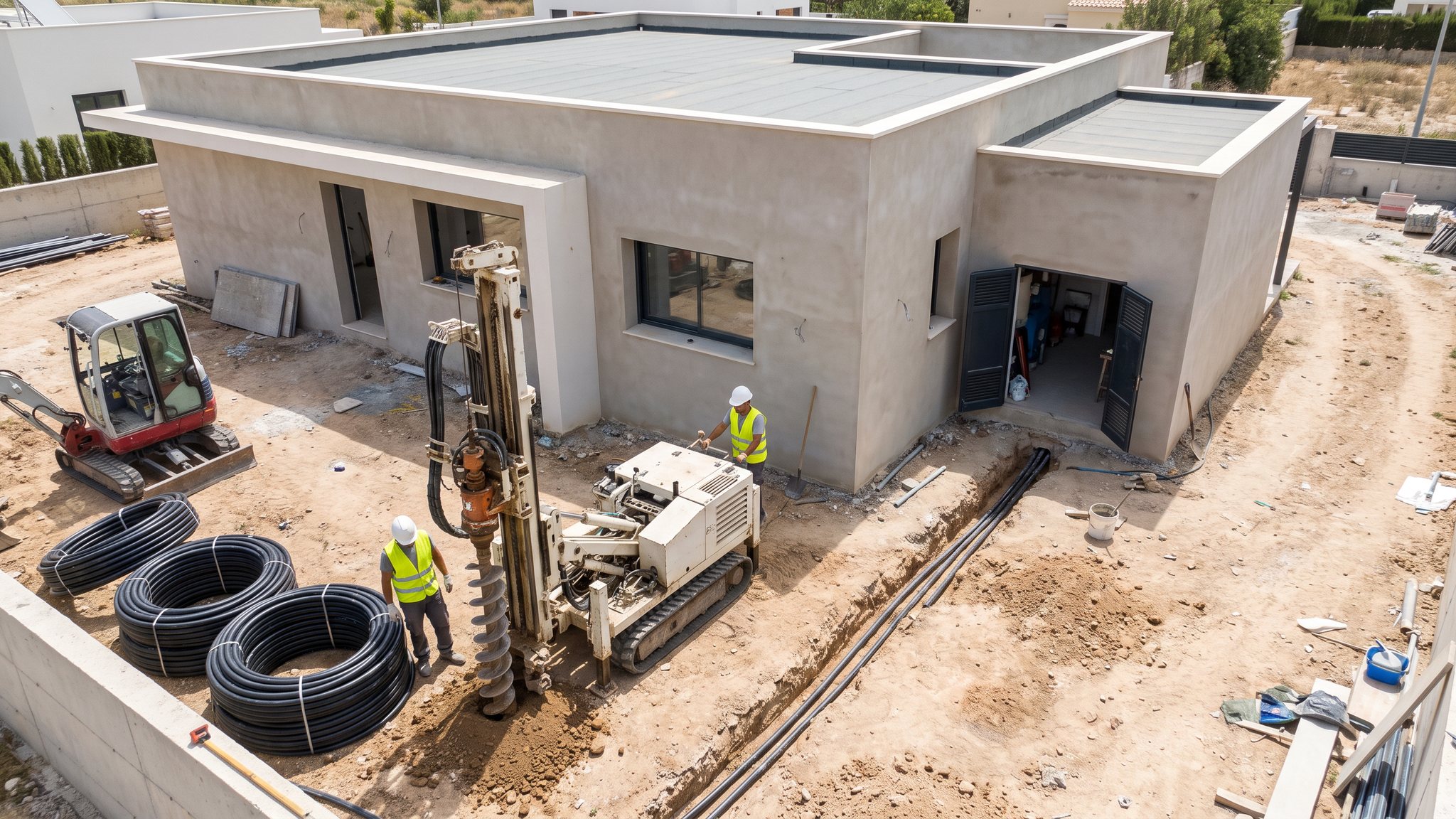
Ground-Source Heat Pumps - Homes & Villas
The small end of the geothermal stream: a buried ground loop and a heat pump serving one house or villa - the trenching, drilling, pressure testing and commissioning that decide whether it heats efficiently for decades.
Open process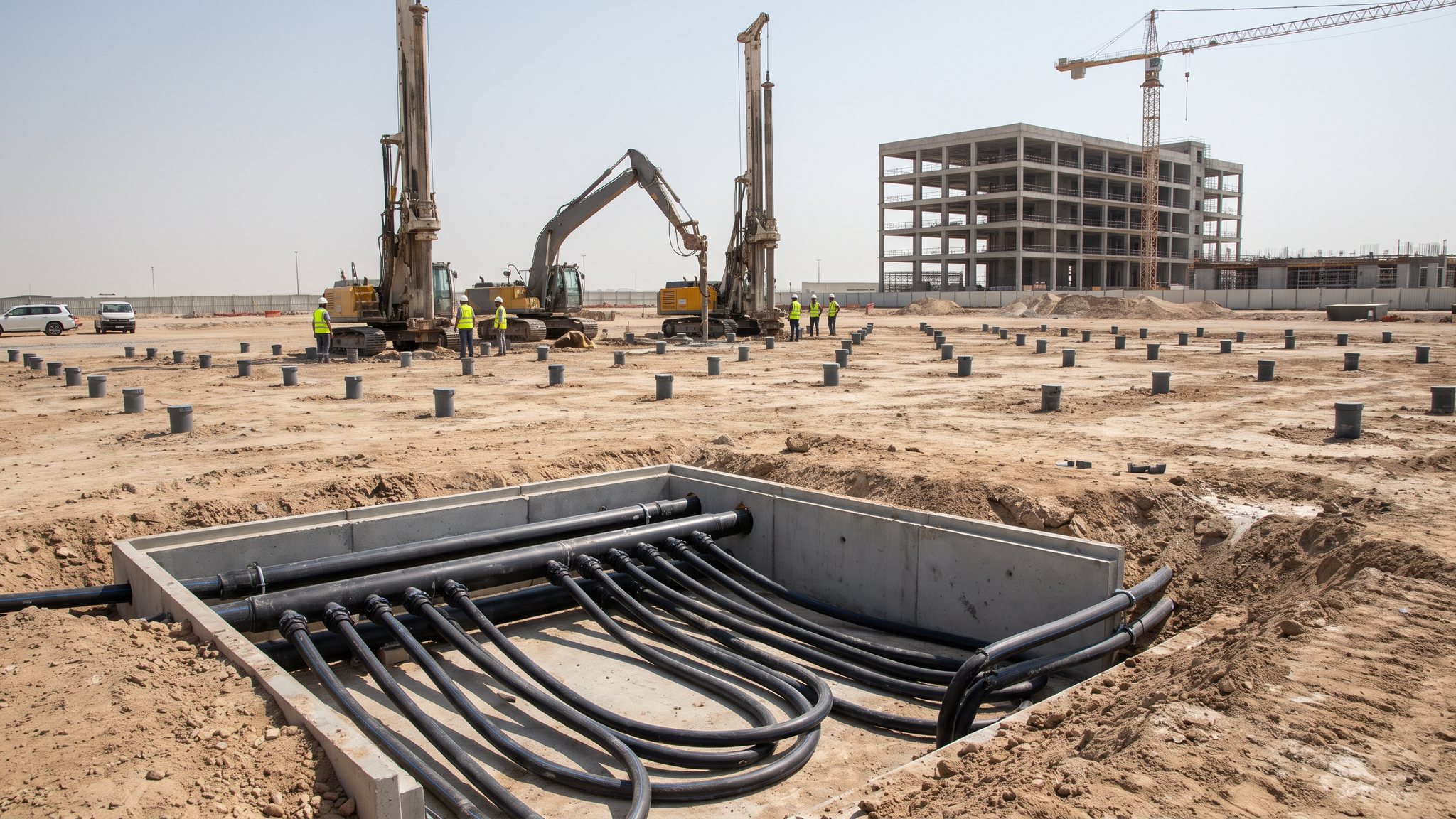
Shallow Geothermal - Commercial & District Schemes
Borehole fields under car parks, loops cast into foundation piles and shared ambient-loop networks - shallow geothermal at commercial and district scale, where thermal balance and drilling logistics rule.
Open process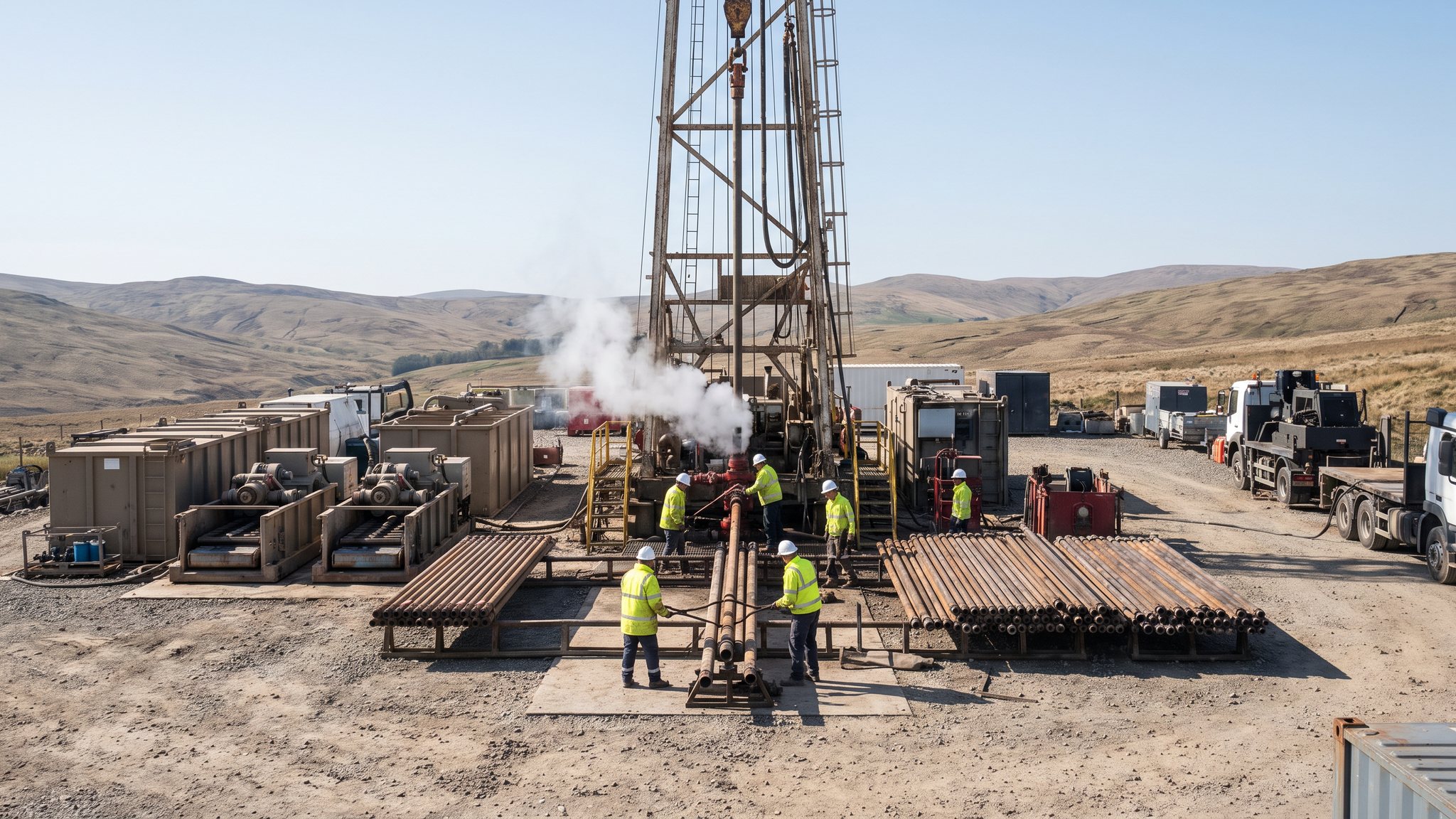
Deep Geothermal Drilling & Wells
Wells one to five kilometres deep drilled to oil-and-gas standards - casing strings, cement, mud logging and well control - the heavy end of the geothermal stream.
Open process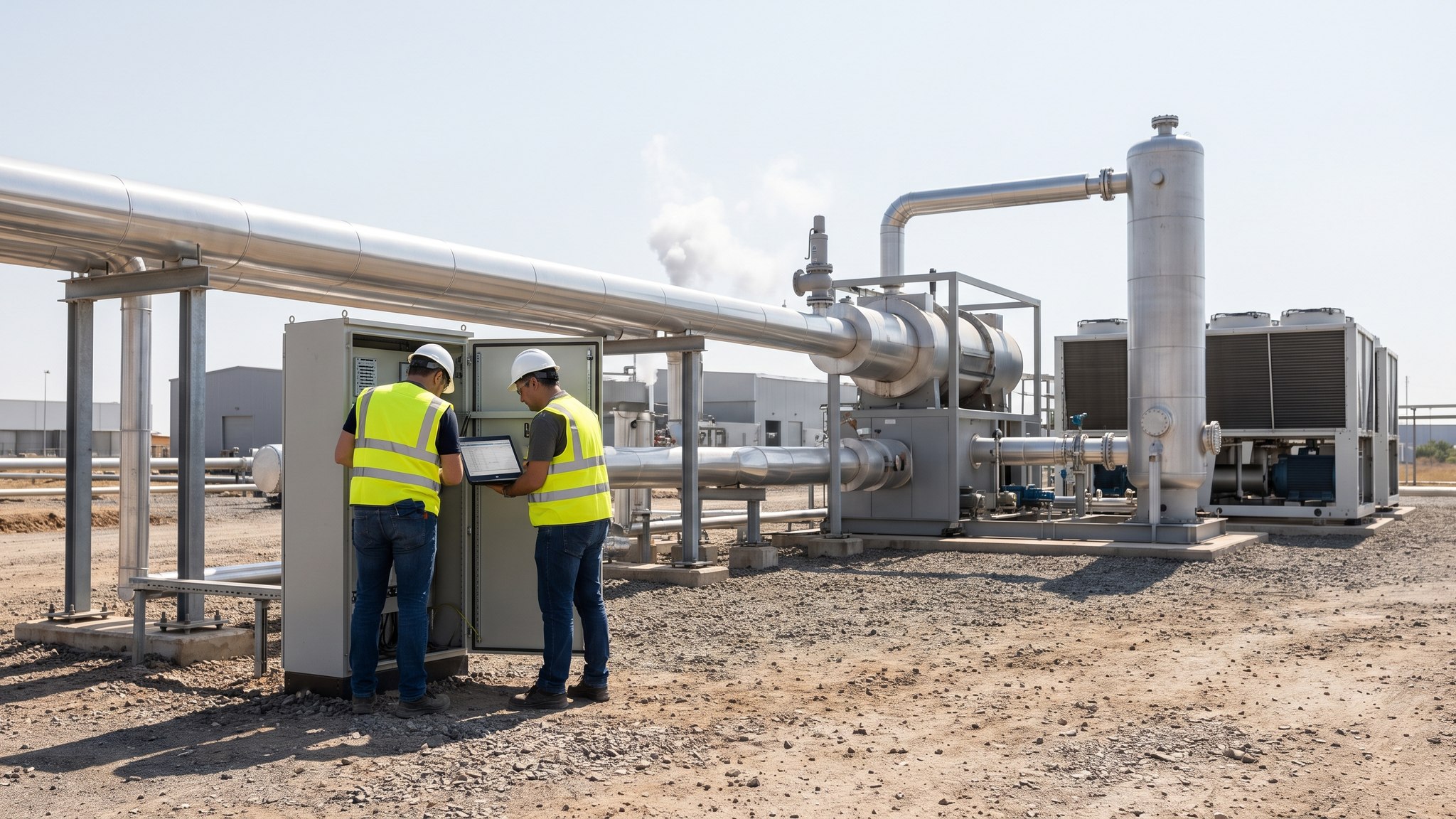
Geothermal Plant, Connection & Commissioning
The surface plant that turns hot water into heat and power - heat exchangers, ORC units and district-scale heat pumps - plus the connection, commissioning and handover disciplines that close the geothermal stream.
Open processPower Generation in depth
About Power Generation
The eighteen guides in this sector open with the shared enabling works every scheme needs - site access, survey, ground investigation and the resource and grid studies the asset is financed on - then branch into utility-scale solar, onshore and offshore wind, hydroelectric schemes and geothermal, and close with energisation and handover. Oil & gas facility guides now sit in their own sector under Industrial & Specialist Facilities.
Financed on the yield, built under the grid code
A generation asset is not sold on its finish; it is financed on a yield calculation, and that calculation pins down everything on site. The wind resource assessment or the solar irradiation study fixes the layout before the first digger arrives, the lender's engineer checks the construction programme against the revenue model, and the grid connection agreement fixes the date by which the asset must export. Miss the energisation window in the connection agreement and you are not just late - you are in breach of a contract that underpins the project finance. On UK schemes the connection offer from the DNO or National Grid carries a queue position and a works programme of its own; in the UAE, DEWA or the emirate utility specifies the interface point, the protection settings and the metering, and the developer builds to that specification.
Procurement reflects this. The balance-of-plant civils - access tracks, foundations, drainage, cable trenches - are let as ordinary construction packages, but the turbines, modules, inverters and main transformers are supply contracts with liquidated damages and shipping windows that drive the site programme rather than the other way round. A two-month delay on transformer delivery does not just shift the electrical works; it pushes energisation past the contracted date and costs real money. Site teams learn early that the critical path on a generation scheme usually runs through a factory in another country, not through the concrete gang.
The regulatory wrapper differs in kind between the two markets. UK schemes carry planning conditions that read like a second specification: construction hours, delivery routes agreed with the highway authority, ecological clerk-of-works supervision in sensitive seasons, and noise limits that decide when piling rigs and rock breakers may run. UAE schemes answer to the utility and the municipality on the technical file and to Civil Defence where fuel or battery storage is involved, but the consenting is consolidated and fast by comparison. In both markets the lender's independent engineer walks the site monthly, and drawdowns follow certified progress - the paperwork is part of the critical path.
The shape of the programme
Generation construction is repetitive civils at scale followed by a short, intense commissioning phase. A 50 MW solar farm is thousands of driven piles, hundreds of module tables and kilometres of DC string cabling laid in trenches - the same detail done correctly four thousand times. Onshore wind is the same pattern with bigger units: each turbine is a foundation pour of 400 to 600 cubic metres held to tight flatness tolerances for the tower flange, a hardstanding sized for the main erection crane, and a lift sequence that only happens when the wind drops below the crane's operating limit. Weather is not a nuisance on these programmes; it is a programmed constraint with its own downtime allowances.
Energisation is staged, not a single event. Strings or turbine groups are tested and connected in blocks so the asset starts exporting before the last foundation is poured. Each stage needs its own protection settings witnessed, its own safety documentation and its own handover pack. The back end of the programme is dominated by witnessed tests - protection trip tests, SCADA point-to-point checks, capacity and performance ratio tests - because the owner's revenue starts only when the operator accepts the asset. Practical completion and taking-over are tied to demonstrated output, not to the civils being finished.
Offshore wind deserves its own mention because it inverts the usual risk profile: the onshore substation and cable landfall are ordinary work, whilst the offshore campaign is a marine logistics exercise priced by the vessel-day. Foundations, array cables and turbines are installed from jack-ups and heavy-lift vessels in weather windows booked months ahead, and a missed window is measured in weeks of vessel standby, not days of programme float. The contractor's skill is in the interface - getting every component fabricated, marshalled at the port and loaded out in exactly the sequence the installation vessel needs it.
Access, tracks and the civils that come first
Before any generation kit arrives, the site has to be made reachable. Wind farms in upland Britain start with kilometres of stone access track built to carry abnormal loads - nacelles and blades that weigh tens of tonnes and cannot take a tight bend or a weak verge - plus crane hardstandings at every position and passing places along the route. Solar schemes are gentler but no less programmed: the site is cleared, levelled where the tracker or fixed-tilt geometry demands it, fenced and drained before the first pile goes in. Hydro schemes add the hardest enabling works of all - cofferdams, diversion tunnels or flumes, and dewatering that runs for the whole job - because the river has prior claim on the ground you are building in.
Ground investigation carries unusual weight in this sector because the loads are unusual: turbine foundations cycle millions of times over the design life, so dynamic soil properties matter alongside the ordinary bearing checks, and solar pile refusal in rock or pull-out failure in soft ground can force a redesign of whole rows. The geotechnical report is read by the foundation designer, the piling subcontractor and the lender's engineer, and each is looking for something different.
Failures that cost the most
The expensive failures on generation schemes are rarely dramatic. Cable damage during trench backfill - a stone through the insulation that passes testing and fails two years later - means digging up a live array to find a fault measured in metres of cable among kilometres. Foundation bolt-group or flange errors on wind bases cannot be shimmed away; a tower base out of tolerance holds the whole erection sequence. Inverter station earthing that fails grid compliance testing stops energisation regardless of how finished the site looks. And on solar schemes, under-specified cable derating for ground temperature shows up only as chronic underperformance, which is a warranty dispute, not a defect you can snag.
Hydrology is the other quiet killer. Access tracks and platform drainage that redirect surface water across neighbours' land, or culverts undersized for the design storm, generate claims and enforcement long after the plant has left. Schemes in the UK answer to the Environment Agency and planning conditions on runoff; in the UAE the issue inverts - flash-flood wadi flows across what looked like dry ground, and saline groundwater attacking buried steel and concrete unless coatings, cathodic protection and sulphate-resisting mixes were specified from the start.
UK and UAE differences that change the work
In the UK the dominant constraints are planning, ecology and grid queue position. Construction hours, turbine delivery routes through villages, ornithological exclusion windows and peat or habitat reinstatement conditions all sit on the programme, and the connection date in the queue can slip years before a spade touches the ground. Summer working is generous and ground conditions, whilst wet, are at least predictable.
In the UAE the grid interface is simpler - one utility, one specification - but the climate rewrites the method statements. Concrete for foundations needs temperature control through summer: chilled mix water or ice, night pours, and curing regimes that would be over-engineering in Britain. Module and cable ratings are derated for ambient temperatures that exceed 45 degrees, which changes string design and trench spacing. Dust accumulation on panels is an operating cost designed for at construction with access for cleaning, and the shallow saline water table on coastal plots dictates galvanised or coated buried steelwork as standard. The programme also bends around summer midday working restrictions, which compresses outdoor work into mornings, evenings and night shifts for four months of the year.