Site Clearance & Demolition
Removing vegetation, structures and contaminants - and turning arisings into resource.
Last updated 2026-08-25
Typical duration
1–2 weeks for vegetation strip on a greenfield site; 4–12 weeks where structures must be demolished and processed.
What is Site Clearance & Demolition?
Site clearance takes the site from "as found" to a clean platform ready for earthworks. That means stripping vegetation and topsoil, demolishing anything that stands in the way, disconnecting or diverting services, and dealing with whatever the ground has been hiding - from Japanese knotweed to a buried fuel tank nobody recorded. In the UAE, demolition is separately permitted: a demolition NOC from Dubai Municipality or Trakhees, with certified DEWA and telecoms disconnections, must be in place before any structure is touched.
Modern clearance is as much a materials-management exercise as a demolition one. Crushed concrete and masonry become engineered fill, timber and metals are segregated for recycling, and only genuinely contaminated material goes to licensed disposal. The waste plan written at this stage decides both the environmental performance and a meaningful slice of the project cost.
Compare the methods at a glance
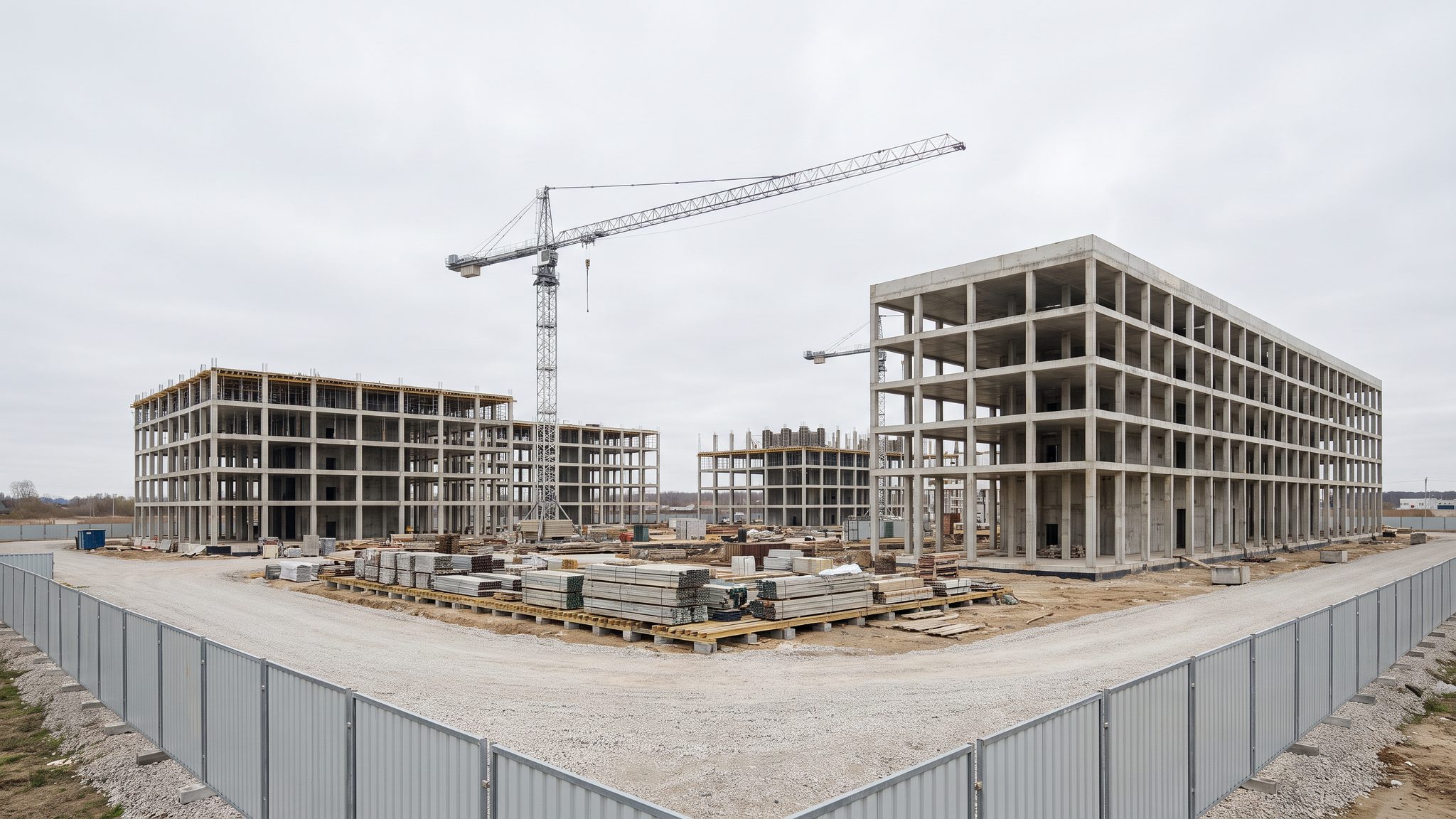
When and why is Site Clearance & Demolition used?
Clearance follows enabling works and precedes earthworks, because you cannot cut and fill ground you cannot reach, and you must know what is in and under the ground before machines start digging. Demolition in particular must be sequenced so structures are taken down in a controlled order - the reverse of how they were built - before any bulk excavation comes near the footprint. At the smallest end - a garage, a lean-to or a single house - the order is identical: surveys, certified disconnections, soft strip, then machines, with the same duty-of-care paperwork for every skip that leaves the gate.
Walkthrough storyboard
The process in pictures, step by step - Step 1 of 8 - slide through the snapshots.

STEP 1
Pre-demolition surveys
Commission the asbestos refurbishment and demolition (R&D) survey to HSG264 before anything is touched - it is an intrusive survey, a legal requirement on…
Types of Site Clearance & Demolition
Explore each method in depth - benefits, limitations, plant and quality control on its own page.
Soft strip
Manual removal of internal fittings, doors, ceilings, services and non-structural elements before the structure comes down. It maximises recycling, exposes the structural frame for the demolition engineer's inspection, and removes the materials that would otherwise contaminate the crushed arisings.
Explore this methodTop-down mechanical demolition
High-reach excavators with pulverisers, shears and breakers reduce the building from the roof downward, with the machine always standing on sound, verified structure or on the ground. The standard method for buildings up to around ten storeys.
Explore this methodExplosive demolition
Pre-weakening followed by a designed sequence of charges drops the structure into its own footprint in seconds. Rare on residential work, it requires exclusion zones measured in hundreds of metres, vibration monitoring and months of planning with the authorities.
Explore this methodVegetation and topsoil clearance only
On greenfield sites the clearance is mulchers, flails and a 360 stripping topsoil into windrows for reuse in landscaping. Protected trees get root-protection fencing, and nesting season can impose hard programme constraints.
Explore this methodAsbestos survey and licensed removal
How a project finds asbestos, why it leaves the site before anything else, and why only licensed contractors touch it.
Explore this methodBest suited for
- Brownfield regeneration where structures, slabs and redundant services must go first
- Contaminated or knotweed-affected ground needing licensed remediation before building
- Urban demolition next to occupied buildings - soft-strip, top-down and high-reach methods
- Reclamation-led projects turning arisings into recycled fill and aggregate
- Vegetation and topsoil stripping ahead of bulk earthworks on greenfield land
Site Clearance & Demolition: step by step
- 1
Step 1: Pre-demolition surveys
Commission the asbestos refurbishment and demolition (R&D) survey to HSG264 before anything is touched - it is an intrusive survey, a legal requirement on pre-2000 UK buildings, and suspect materials are removed by licensed contractors first. Structural appraisal confirms how the building stands and how it will come down. Ecological surveys identify bats, nesting birds and protected species that can stop work outright.
- 2
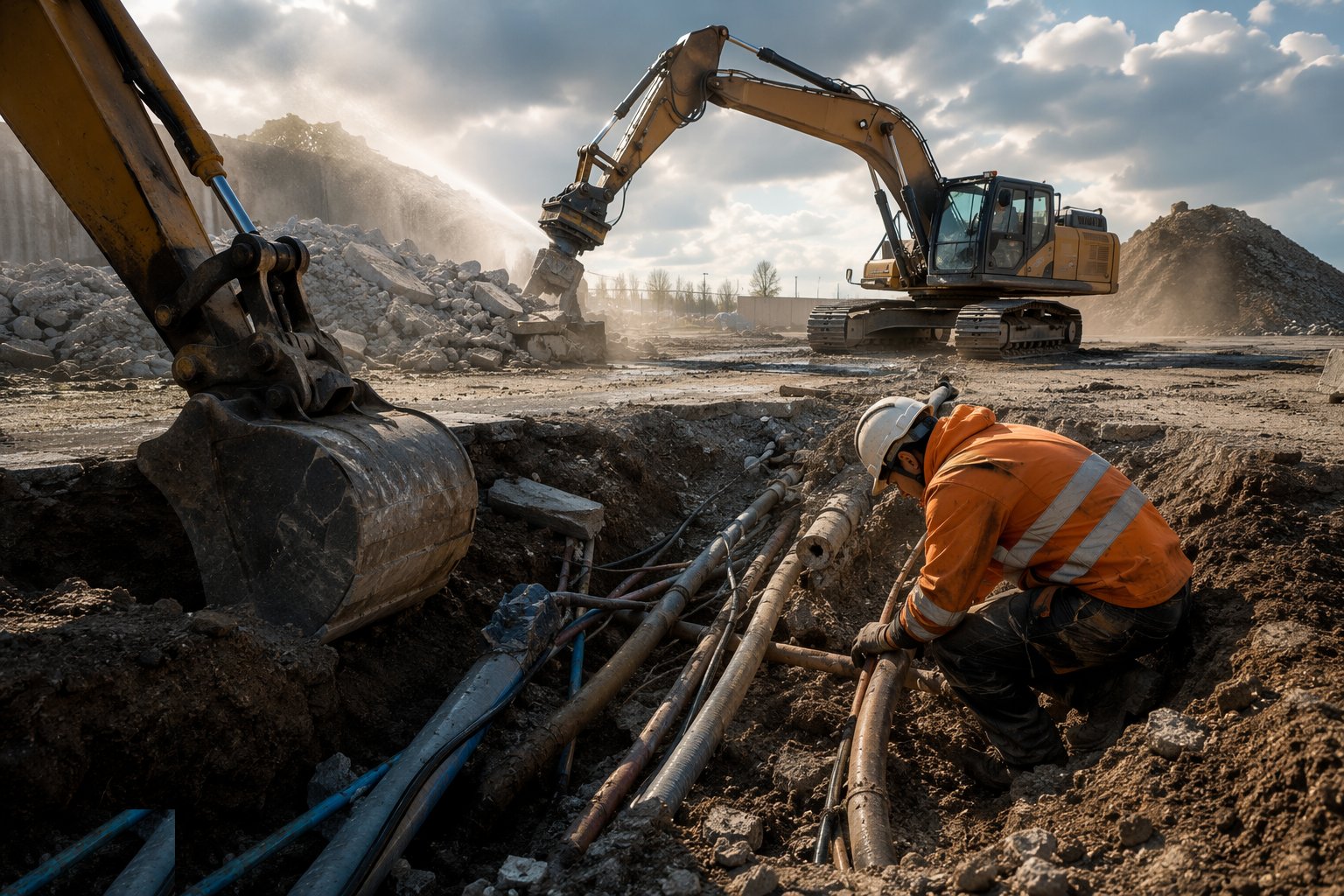
Step 2: Service disconnections and diversions
Gas, electric, water and telecoms are disconnected and certified dead by the utility companies - in writing, never assumed. Live services that must stay are located, marked and protected. A permit-to-dig regime controls any excavation near them from this point on.
- 3
Step 3: Soft strip the structures
Remove internal fittings, floor coverings, ceilings, mechanical and electrical kit, and non-structural partitions by hand. Segregate timber, metals and recyclables at source. The stripped shell lets the demolition engineer verify the actual construction against the drawings before machines commit.
- 4
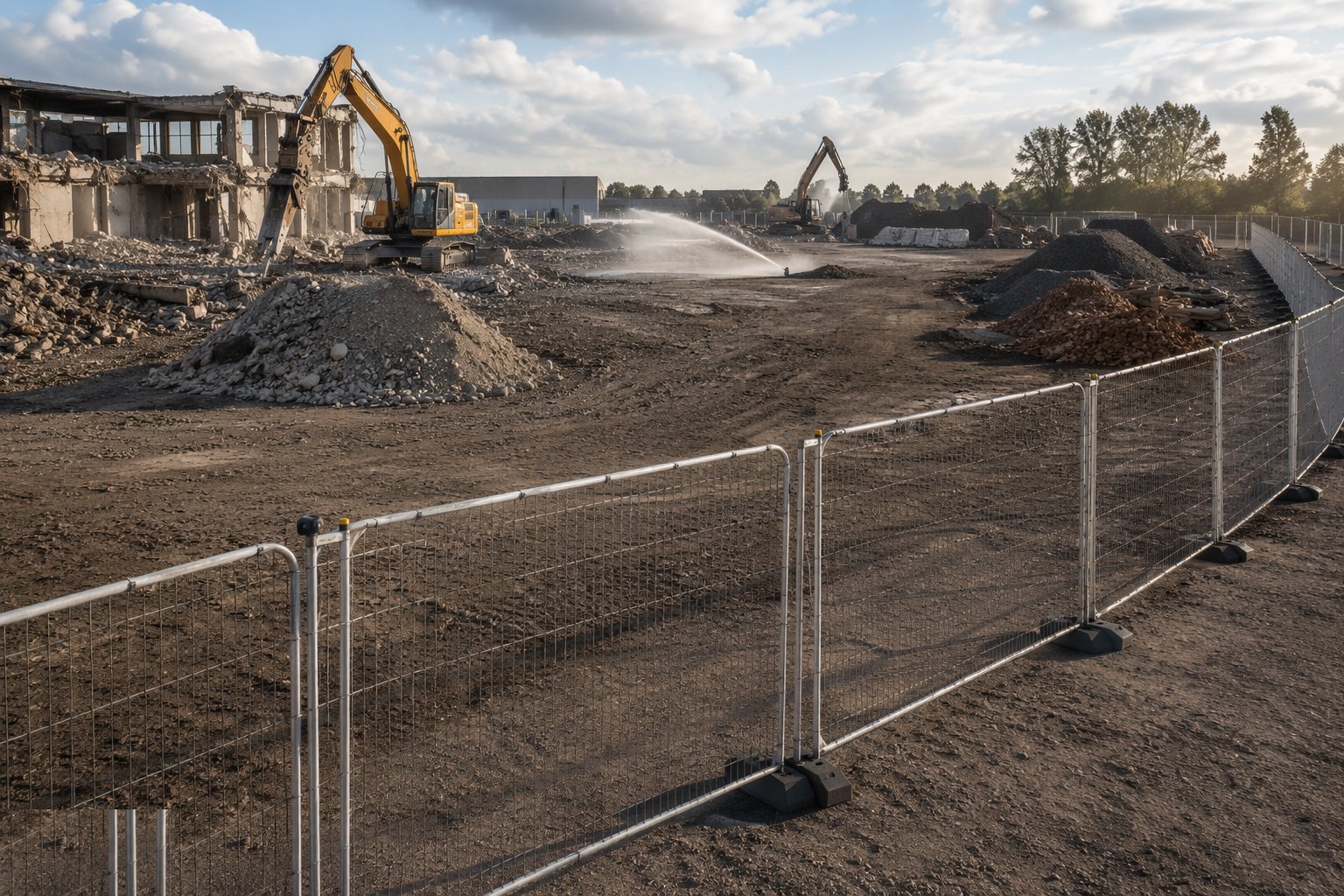
Step 4: Erect protection and exclusion zones
Scaffold fans, debris netting and protected routes shield neighbours and retained structures. The exclusion zone is calculated from the structure height and the demolition method, fenced and supervised. Dust suppression - water sprays, mist cannons - is set up and running before breaking starts. In the UAE, dust control and permitted working hours are conditions of the demolition permit itself, not goodwill.
- 5
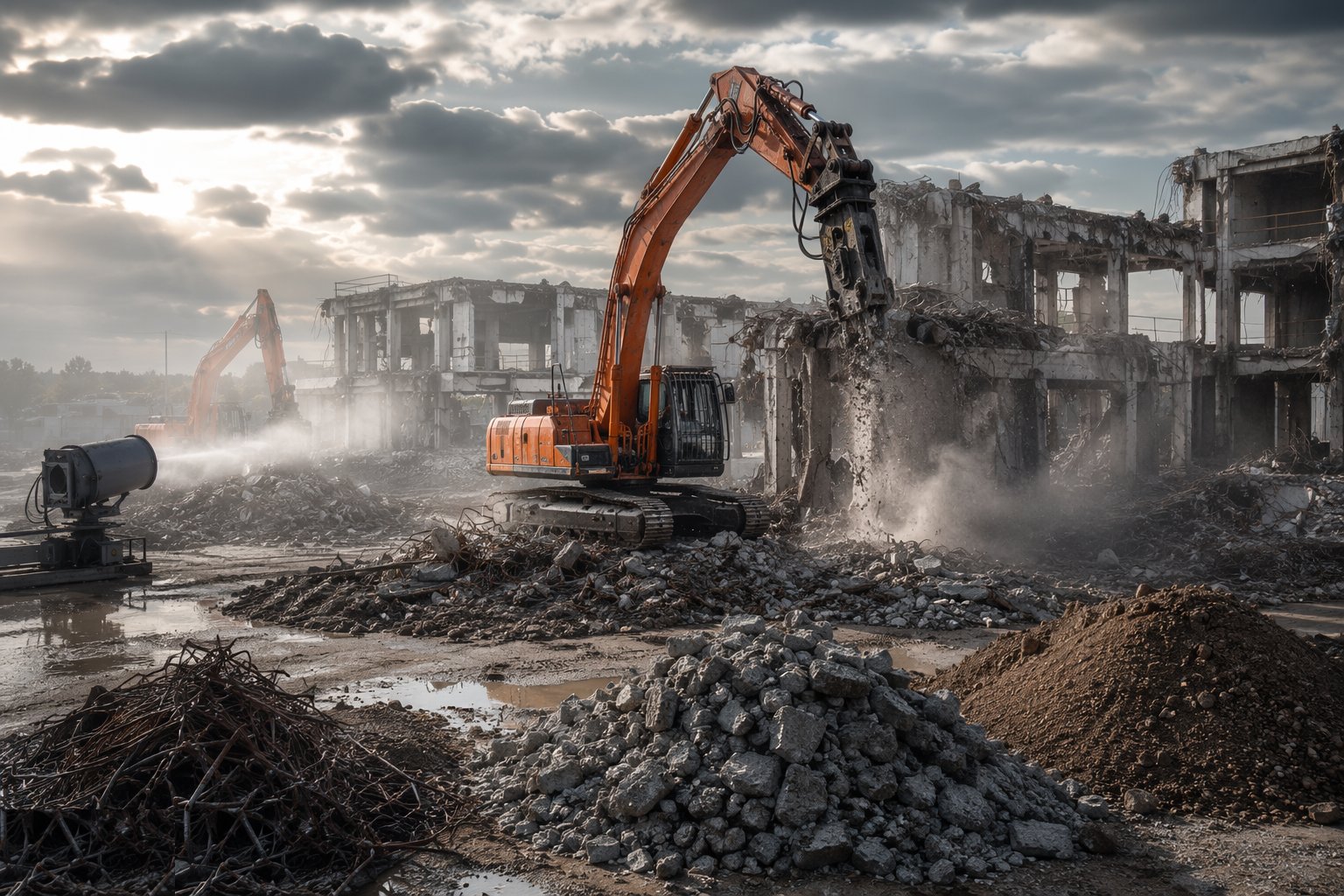
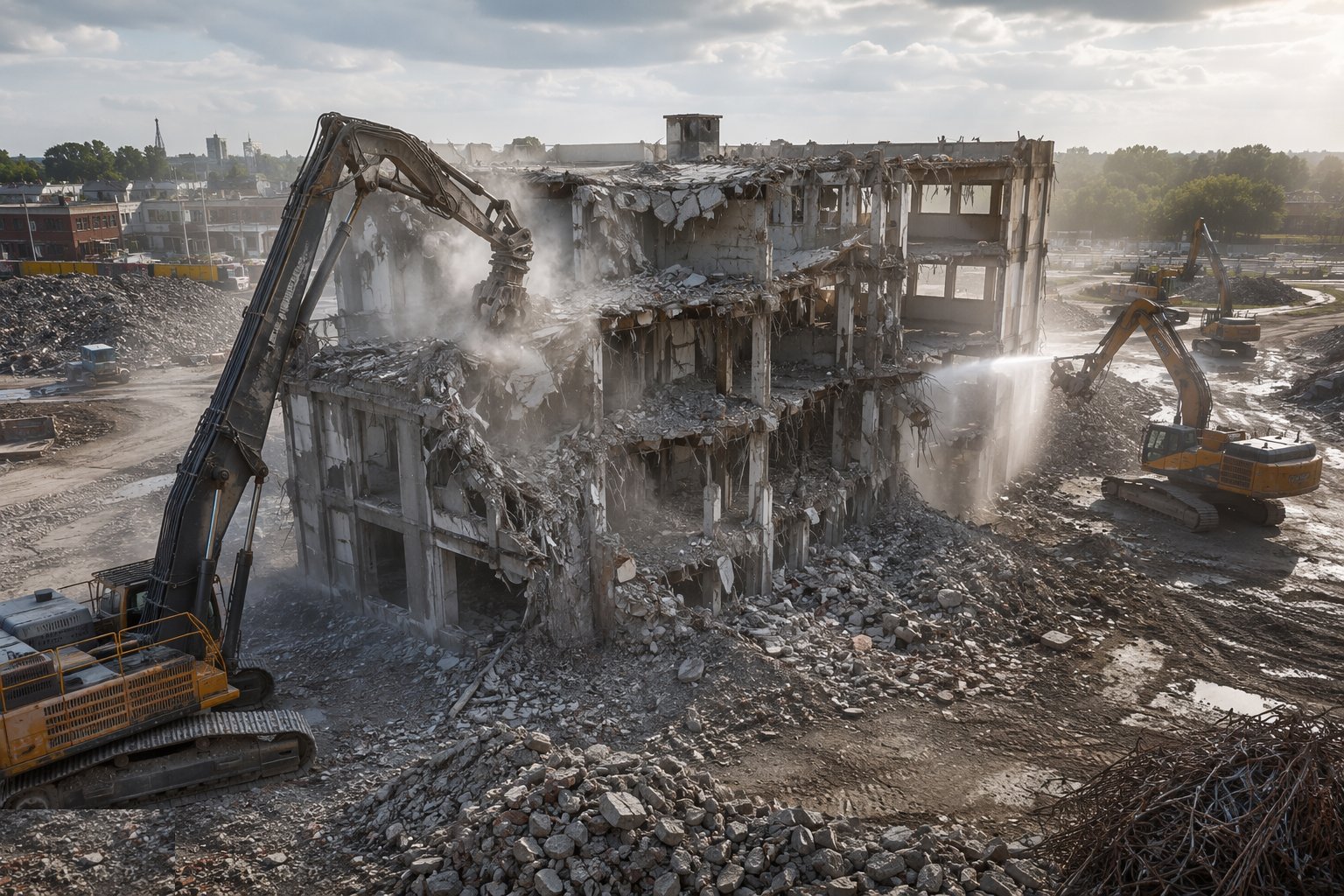
Step 5: Mechanical demolition, top down
The high-reach machine works bay by bay from the top, pulling material toward itself, never undermining its own platform. Arisings are dropped to ground and processed by a second machine with a pulveriser, separating concrete from reinforcement. Vibration and noise are monitored at the boundary where sensitive neighbours exist.
- 6
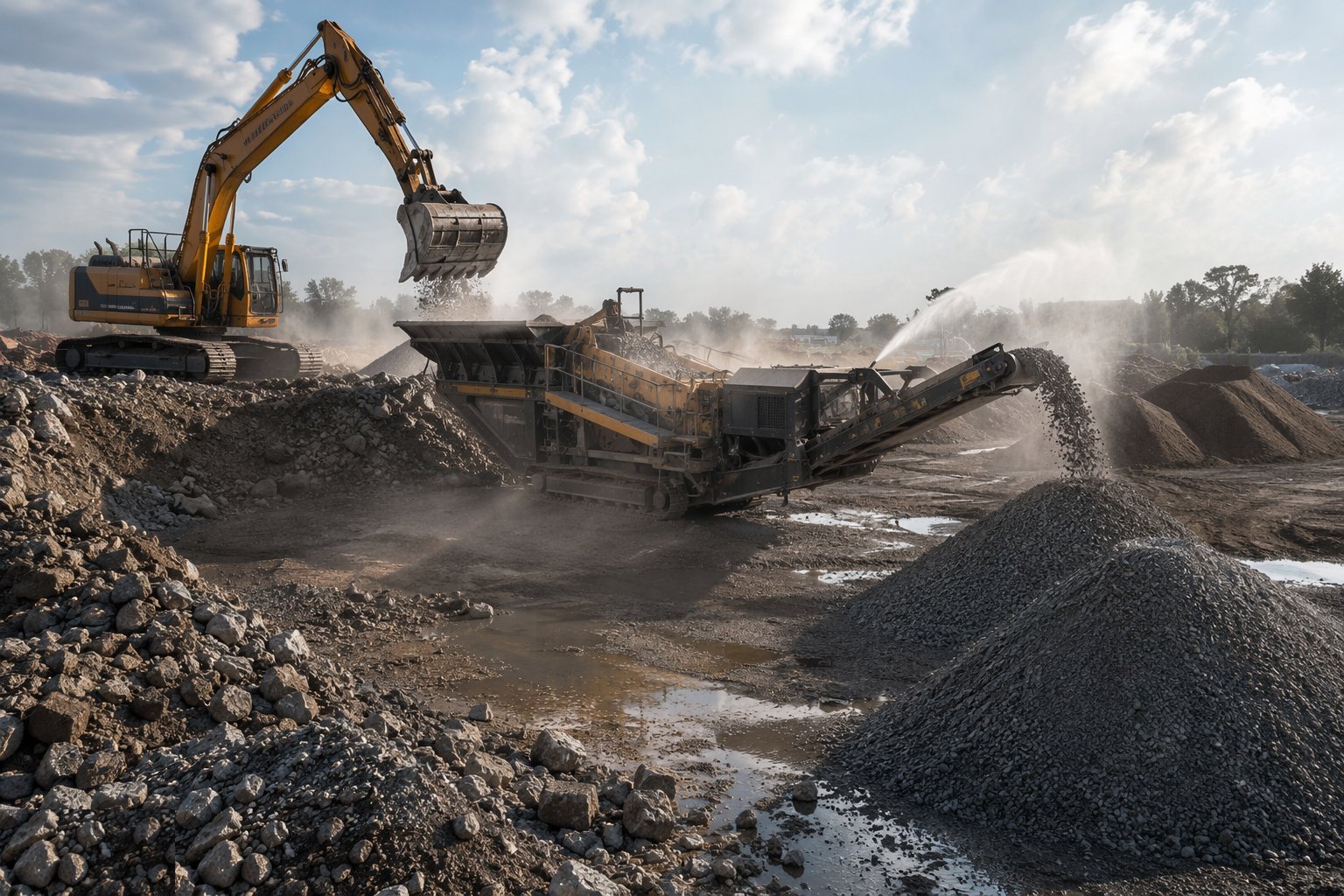
Step 6: Crush and screen the arisings
A mobile crusher and screener convert concrete and masonry into graded material - typically a 6F2 or Type 1 substitute for haul roads and fill. Oversize goes back through, metals are lifted out by magnet, and the stockpile is sampled and tested to confirm it meets the specification for its intended reuse.
- 7
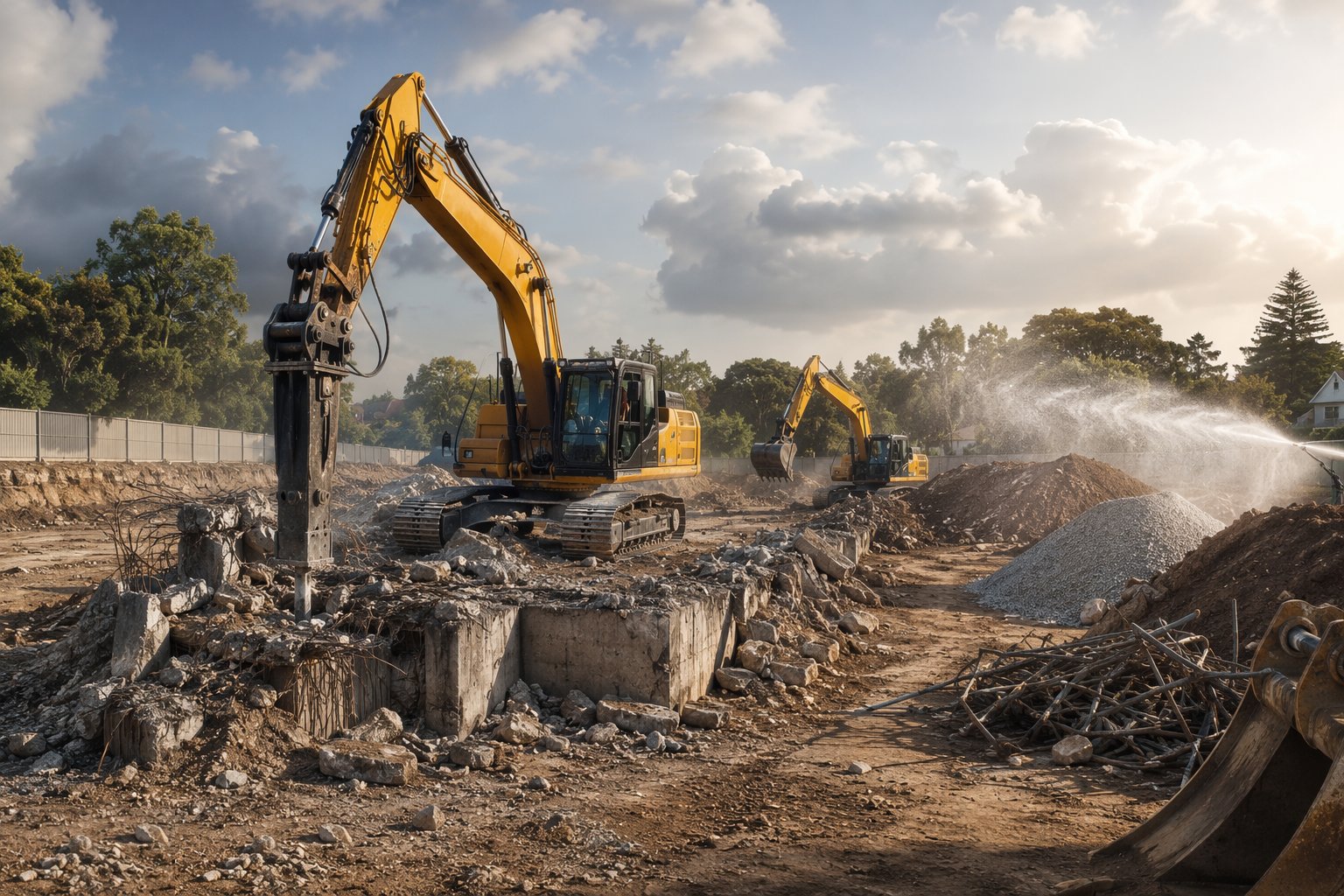
Step 7: Remove foundations, slabs and below-ground obstructions
Old foundations, basements, tanks and drainage runs are grubbed out and either crushed on site or removed to licensed disposal. Voids are backfilled in compacted layers so no soft spots remain for the new works. A watching brief for contamination runs through every dig.
- 8
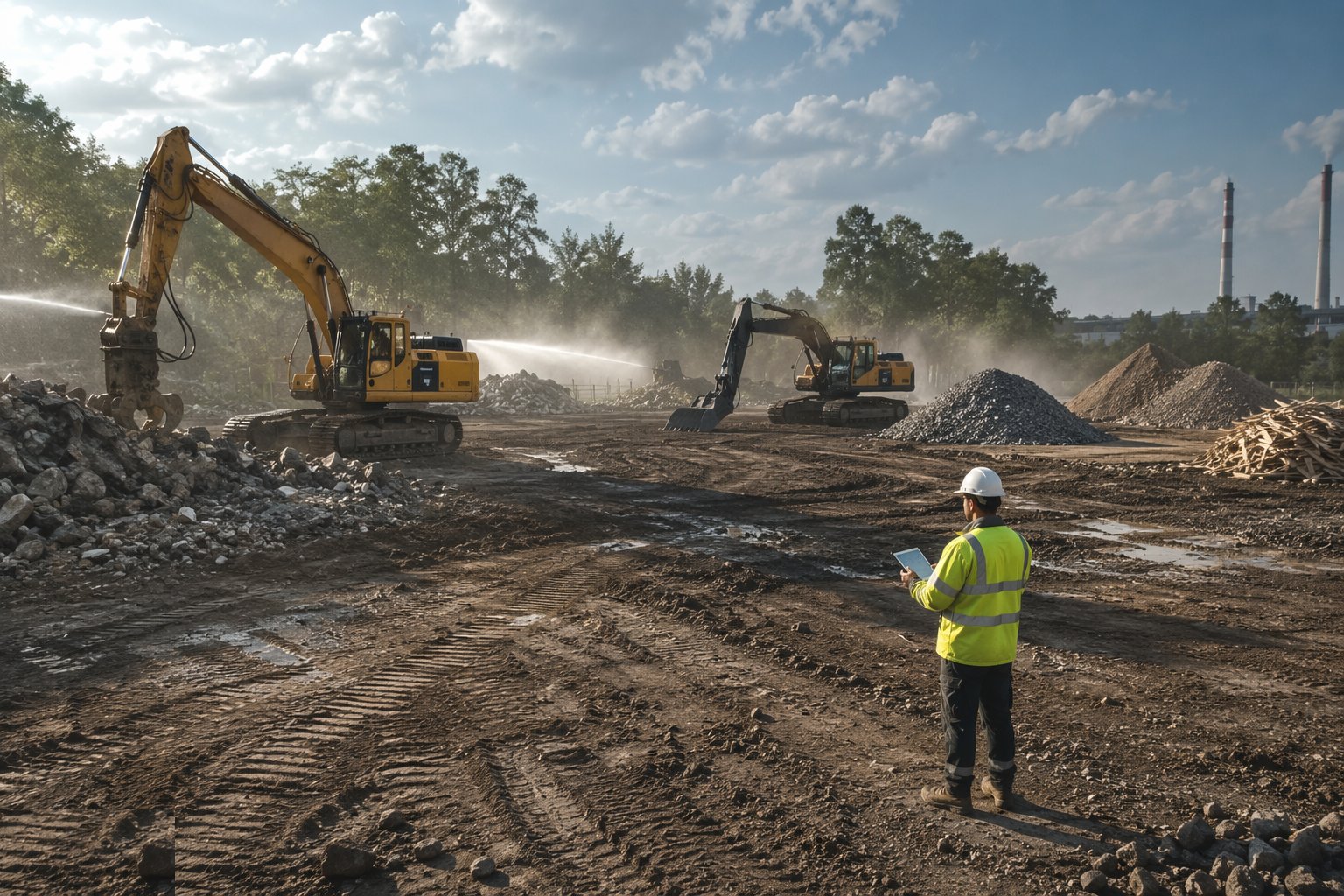
Step 8: Final clearance, segregation and sign-off
Remaining waste streams - hazardous, non-hazardous, inert - leave site under duty-of-care waste transfer notes (Environmental Protection Act 1990) with licensed carriers. The site is graded roughly level, stockpiles are sheeted, and a validation report records what was removed, what was reused and what was disposed. Only then does the earthworks gang take over.
Plant & equipment
- High-reach demolition excavator with pulveriser and shear
- 360° excavators with breakers and selector grabs
- Mobile crusher and screener
- Loading shovel and 360 with bucket for stockpile management
- Dust suppression: water bowsers, sprays, mist cannons
- Skips and tipper lorries for segregated waste streams
- Vibration, noise and dust monitoring equipment
Quality control & testing
- Asbestos removal certificate and air clearance before demolition
- Written service disconnection certificates from each utility
- Crushed material grading and contamination testing per stockpile
- Waste transfer notes and consignment notes audited against the site waste management plan
- Vibration limits monitored at retained structures and neighbours
- Validation survey confirming all known obstructions removed
Safety watchpoints
- Demolition method statement and engineered sequence to BS 6187, briefed daily
- Exclusion zones with physical barriers and gate control
- No machine working over or undermined by its own arisings
- Dust, noise and vibration suppression and monitoring
- Licensed asbestos handling only - stop work on any suspect material
- Fire watch where hot cutting is used on steel frames
Common defects to hunt
- Live service struck because disconnection was assumed, not certified
- Asbestos found mid-demolition - stop, evacuate, re-survey
- Crushed fill rejected later for contamination or wrong grading
- Unrecorded voids and old basements causing soft spots under new works
- Dust and debris complaints from missing suppression
- Neighbouring structure cracked - no pre-condition survey on file
How long does Site Clearance & Demolition take?
Typical duration: 1–2 weeks for vegetation strip on a greenfield site; 4–12 weeks where structures must be demolished and processed..
Related processes
- Site Access & Enabling Works
- Setting Out & Survey Control
- Earthworks & Excavation
- Dewatering & Groundwater Control
- Shallow Foundations
- Piling & Deep Foundations
- Basement & Substructure
- Waterproofing and Tanking
- Concrete Frame Construction
- Steel Frame Construction
- Masonry & Timber Frame
- Floor Slabs & Screeds
- Roofing
- Façade & Cladding
- Insulation Systems
- Windows, Doors & Glazing
- MEP First Fix
- Internal Finishes
- MEP Second Fix & Commissioning
- External Works & Landscaping
- Testing, Handover & Snagging
- Soft strip - method
- Top-down mechanical demolition - method
- Explosive demolition - method
- Vegetation and topsoil clearance only - method