Vegetation and topsoil clearance only
Mulchers, flails and a grading bucket - the greenest demolition there is, ruled by the nesting calendar.
Last updated 2026-08-25
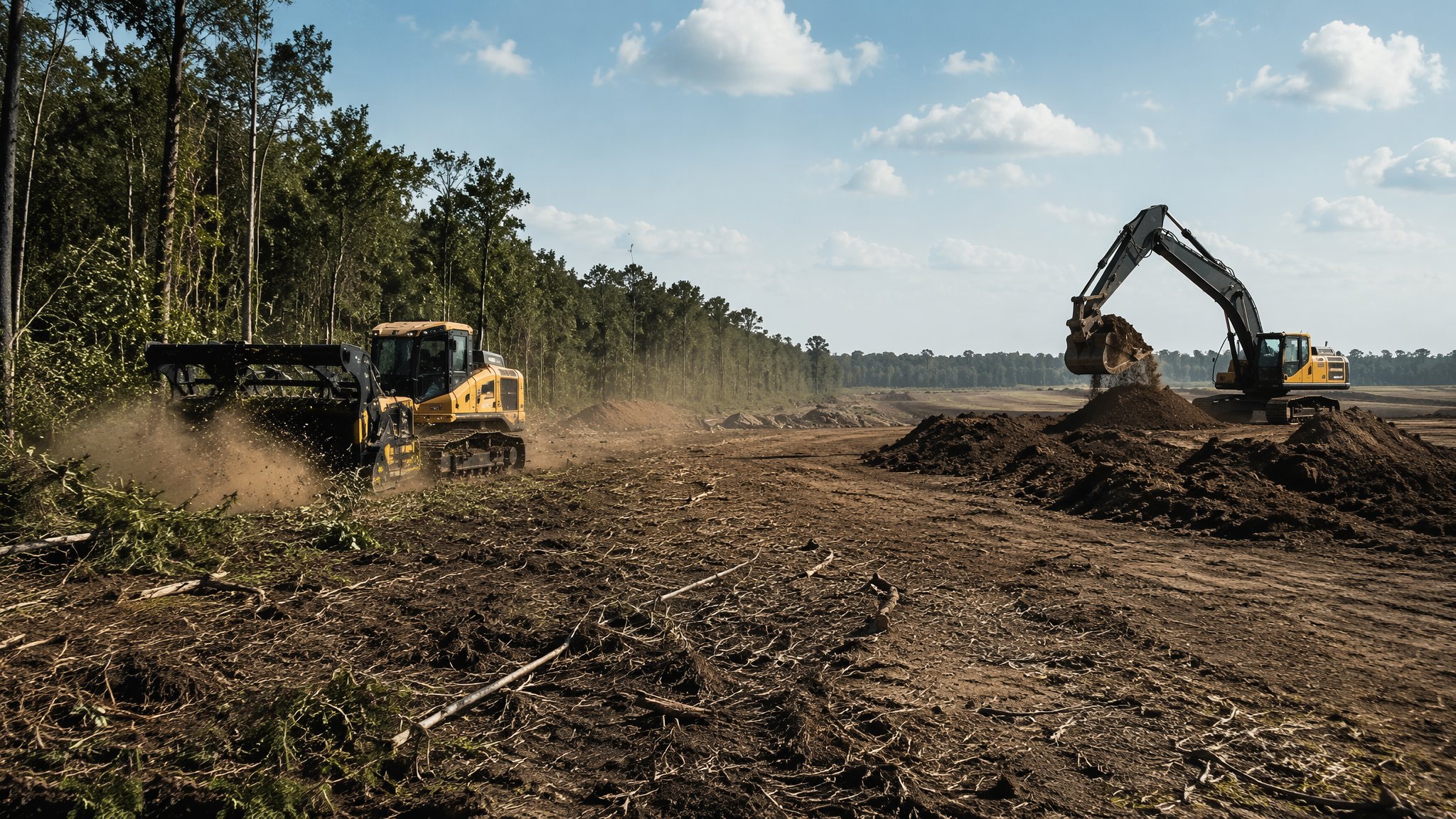
What is Vegetation and topsoil clearance only?
On a greenfield site, clearance is not demolition at all: it is the controlled removal of vegetation and the recovery of the topsoil as a resource. Mulchers and flails reduce scrub and hedgerows, a 360 with a grading bucket strips the top 150–300 mm of soil into windrows, and the site emerges as a clean platform ready for earthworks. It looks simple, and mechanically it is - but it is governed by constraints that no amount of plant can accelerate: the nesting season, protected species, tree preservation orders, and the biology of the topsoil itself.
The ecological calendar runs the programme. Nesting birds - roughly March to August - can stop scrub clearance outright; a badger sett or a great crested newt record can redesign the site layout; Japanese knotweed turns a mowing job into a licensed remediation. The ecology surveys are not box-ticking before the real work - they are the schedule of what may be cleared, when, and under whose watching brief. Sites that ignore this learn it from a stop notice.
The topsoil is the other discipline. Stripped dry, stockpiled low - no more than about two metres - and kept separate from subsoil, it goes back down at the end as growing medium for gardens and landscaping, and it is worth money. Stripped wet, heaped five metres high or contaminated with subsoil and arisings, it becomes an anaerobic, structureless waste that you pay to remove and pay again to replace with imported soil. The cheapest material on site is the one you already own and do not ruin.
Process storyboard
Step 1 of 6 - slide through the snapshots.
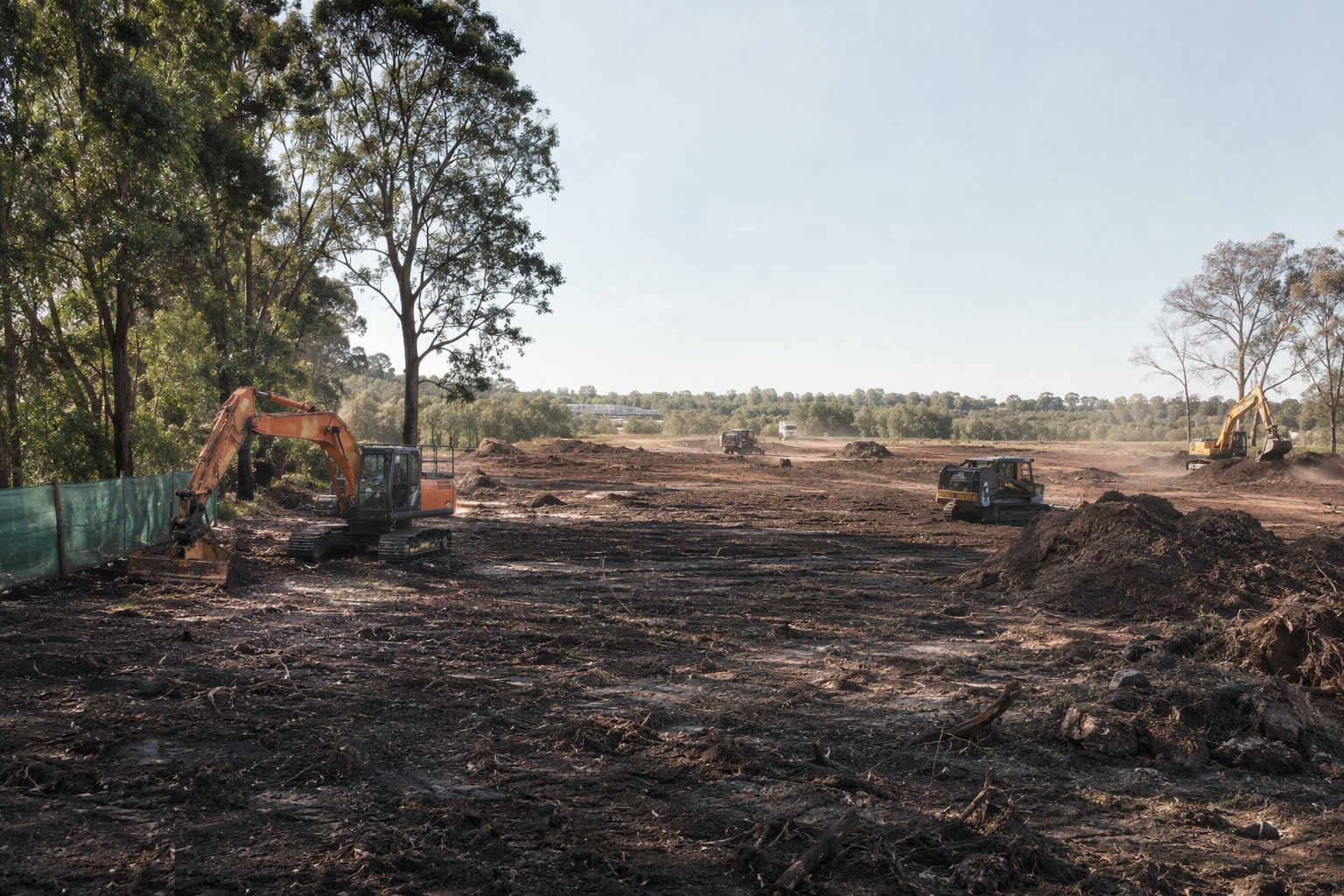
STEP 1
Clear the surveys and the constraints map
The ecology surveys - Phase 1 habitat, protected species, nesting check - and the arboricultural survey are done and mapped: every TPO tree, retained hedgerow,…
How does Vegetation and topsoil clearance only work, step by step?
- 1
Step 1: Clear the surveys and the constraints map
The ecology surveys - Phase 1 habitat, protected species, nesting check - and the arboricultural survey are done and mapped: every TPO tree, retained hedgerow, root protection area and ecological exclusion zone is on the constraints plan and fenced on the ground before a machine moves. Knotweed or invasive species stands are demarcated with their own treatment plan and a strict no-tracking rule around them.
- 2
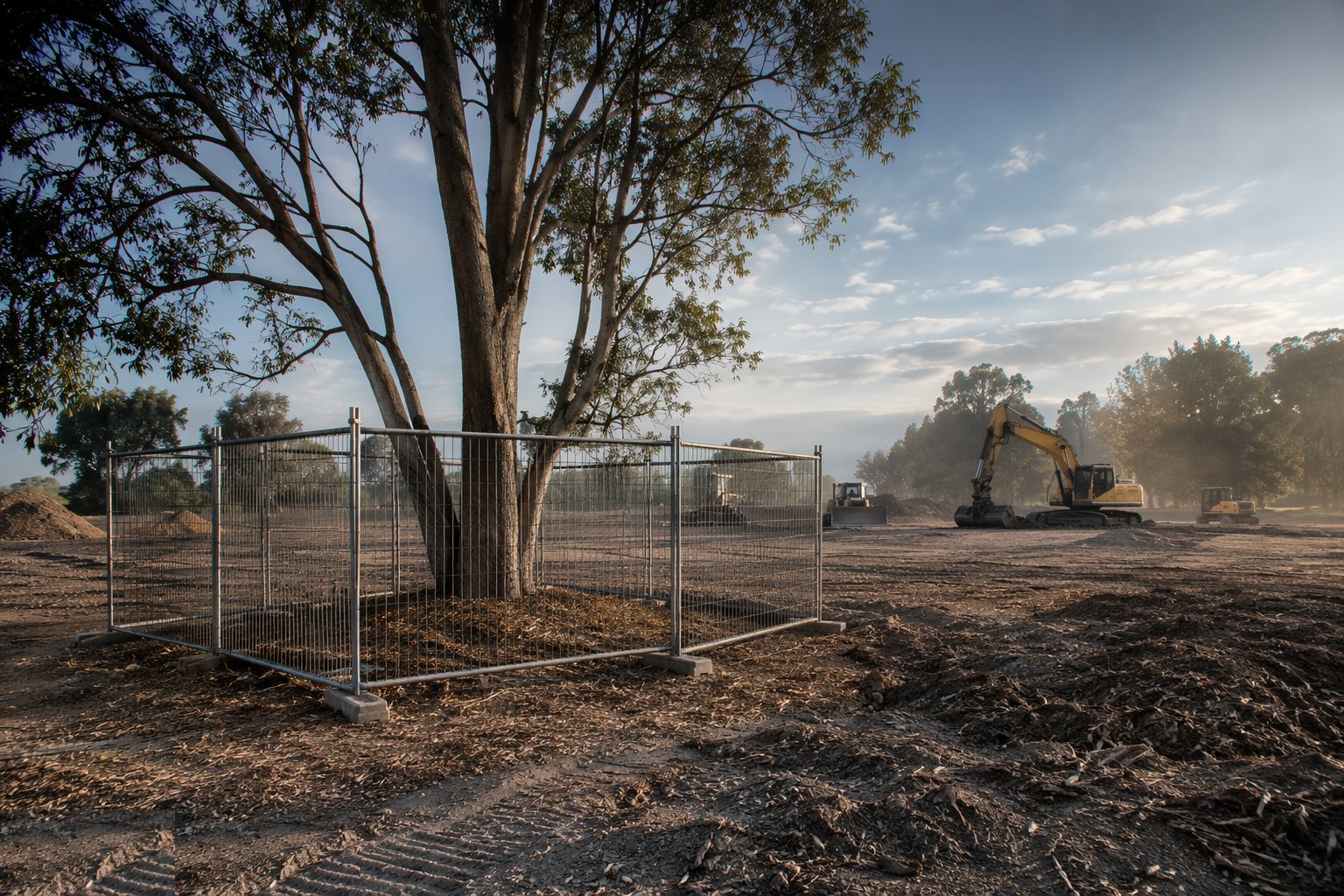
Step 2: Fence and protect what stays
Root protection fencing goes up at the dripline or the calculated RPA of every retained tree - before clearance, because the first machine pass across a root zone does the damage that kills the tree in year three. Protective ground matting or the no-dig construction specification is installed where access must cross RPAs. The fencing is inspected weekly; a panel moved "to get the dumper through" is a reportable breach on many consents.
- 3
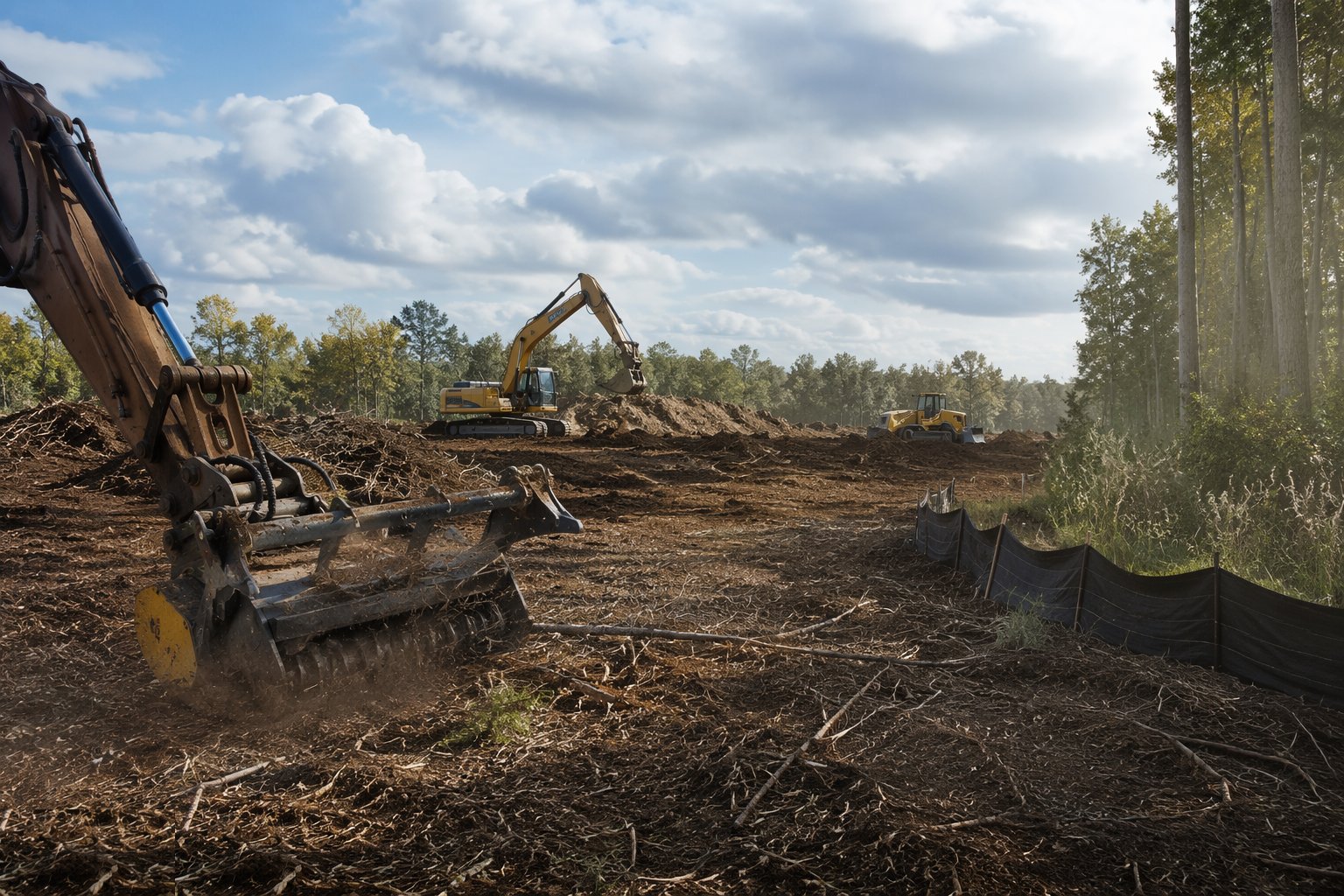
Step 3: Fell, mulch and clear vegetation
Trees consented for removal are felled and processed - timber and cordwood recovered where it has value. Scrub and hedge lines are mulched or flailed, with arisings chipped for reuse as landscape mulch or removed to green-waste composting. Works proceed outside the nesting season or under an ecologist's watching brief with a nesting check immediately before each area is cleared - a nest found stops that area, not the project.
- 4
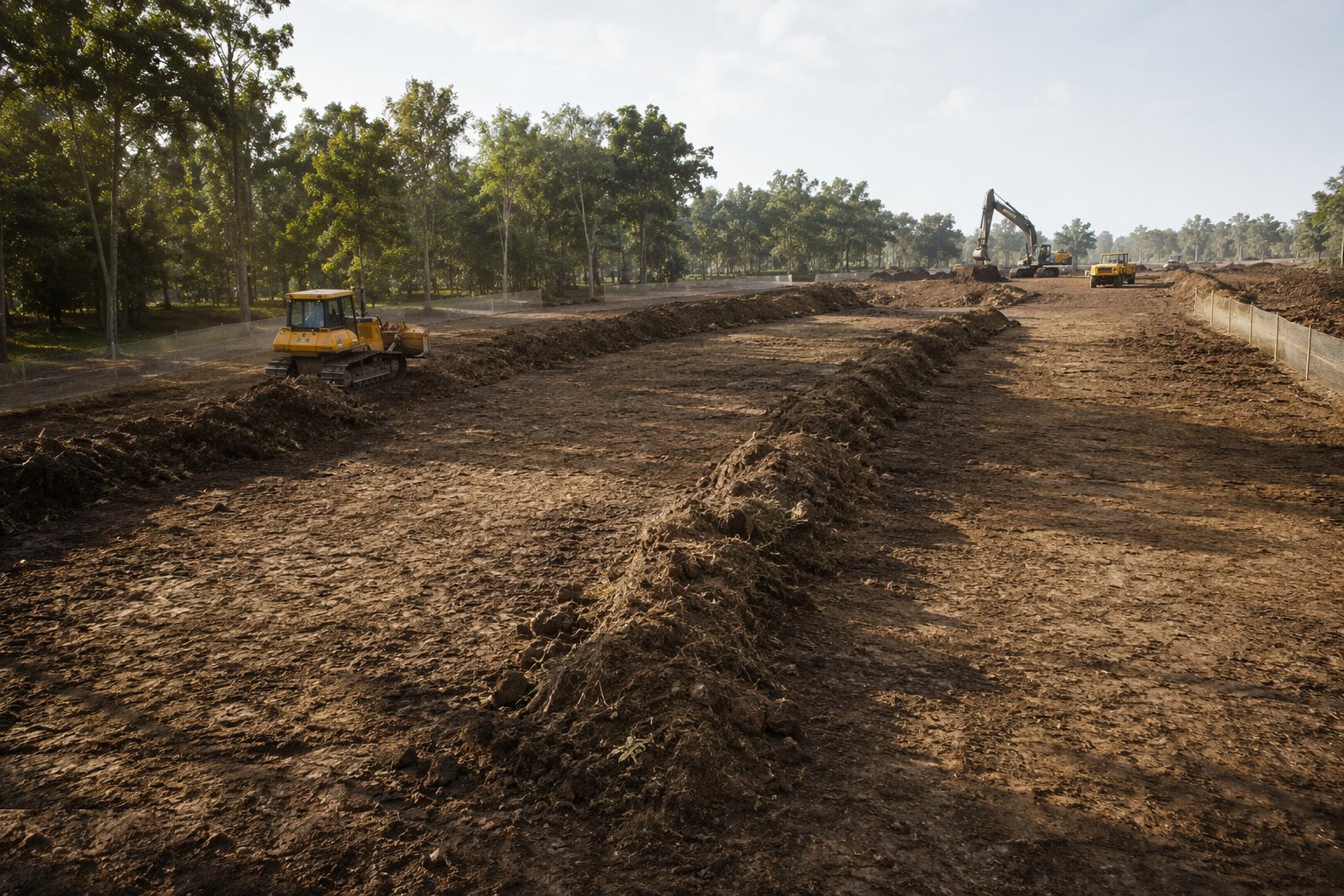
Step 4: Strip topsoil dry, into windrows
Topsoil is stripped in dry conditions wherever the programme allows - wet stripping smears and compacts both the soil and the subgrade beneath. A 360 with a grading bucket or a dozer works to a set depth, typically 150–300 mm as the survey or specification states, placing soil directly into windrows or stockpiles no more than about 2 m high, on a drained area, away from the works' traffic routes.
- 5
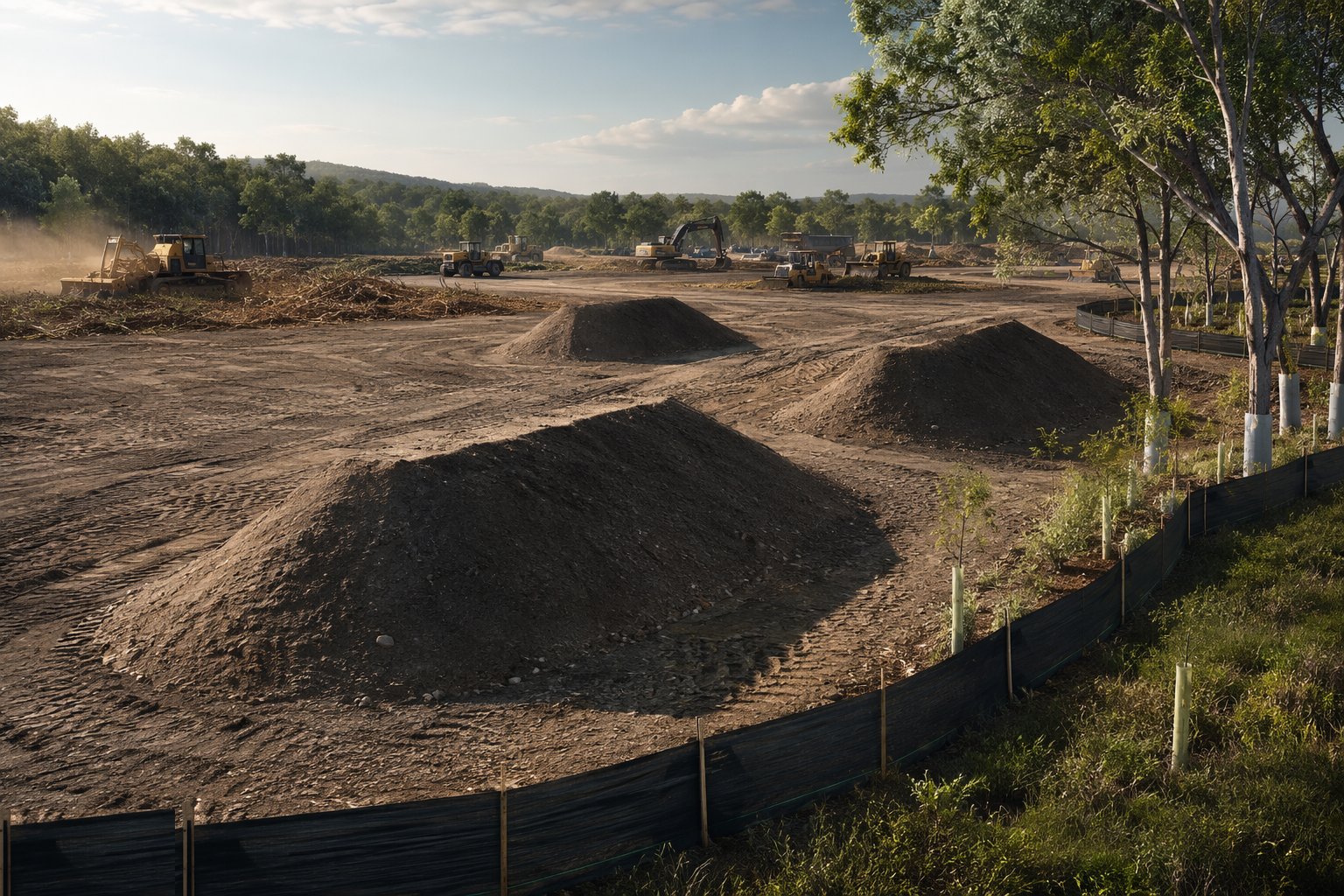
Step 5: Manage stockpiles and protect the subgrade
Stockpiles are shaped to shed water, sheeted if they sit through winter, and kept separate - topsoil, subsoil, and any contaminated or invasive-material streams never share a bund. The exposed subgrade is protected from trafficking until earthworks start; ruts and smeared areas from the clearance itself are ripped and recompacted before the earthworks gang inherits them.
- 6
Step 6: Validate and hand over
The cleared site is walked against the constraints plan: every retained tree standing and protected, exclusion zones intact, invasive-species areas untouched or treated per plan. Topsoil volumes stripped are reconciled against the landscape specification's reuse requirement - a shortfall discovered now is an import order, not a crisis. The ecologist signs off the clearance, and the earthworks stage begins.

What are the benefits of Vegetation and topsoil clearance only?
- Cheap and fast where no structures exist - days rather than weeks
- Topsoil recovered as a resource, avoiding import and disposal costs
- Mulched vegetation becomes landscape mulch or biomass, cutting waste to near zero
- Retained trees and hedges protect the site's planning value and screening
- Early ecological compliance de-risks the whole programme
What are the limitations of Vegetation and topsoil clearance only?
- Nesting season and protected species can impose hard stop periods
- Wet weather makes topsoil stripping destructive - the calendar and the sky both rule
- Invasive species convert simple clearance into licensed remediation
- TPO breaches and RPA damage carry enforcement and replanting costs
- Stockpiles consume footprint and need months of management
- Green-waste and timber arisings need outlets - chipping capacity is not infinite
What is Vegetation and topsoil clearance only best suited for?
What plant does Vegetation and topsoil clearance only need?
- Forestry mulcher or flail for scrub and hedge clearance
- 360° excavator with grading bucket for topsoil stripping
- Dozer for bulk stripping and windrow formation
- Wood chipper for processing arisings
- Root protection fencing and ground-protection matting
- Dumpers or tractors with trailers for soil movements
How is Vegetation and topsoil clearance only quality-checked?
- Ecological watching-brief records and nesting-check sign-offs per area
- Constraints plan issued and fencing verified before clearance starts
- Weekly root-protection-fence inspections recorded
- Strip depth checked against specification at a grid of points
- Stockpile heights, locations and separation audited against the soil management plan
- Topsoil volumes reconciled against the landscape reuse requirement before earthworks