Transport Infrastructure
Roads, bridges, tunnels, rail, airports and ports - the heavy civils that move everything.
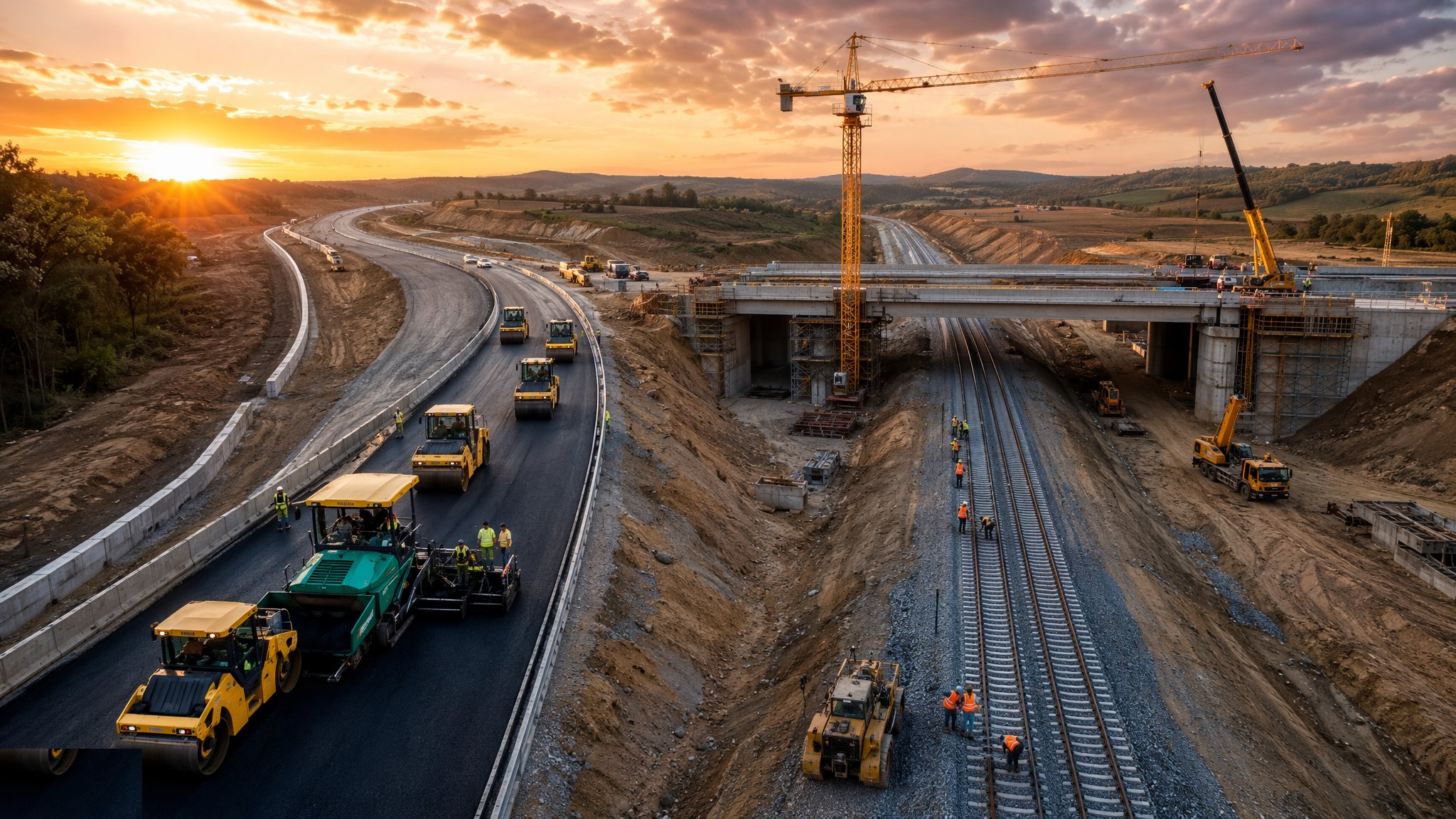
Transport infrastructure is civil engineering at its heaviest: earthworks measured in hundreds of thousands of cubic metres, structures designed for 120-year lives, and plant that makes a tower crane look modest. The same sequence runs through all of it - corridor access, survey control, ground investigation, bulk earthworks, drainage - before the alignment branches into roads, structures or tunnels.
6 sectors in this group
Live sectors carry the full step-by-step guides. The rest are scoped and scheduled - their pages slot straight in when the next build phase lands.
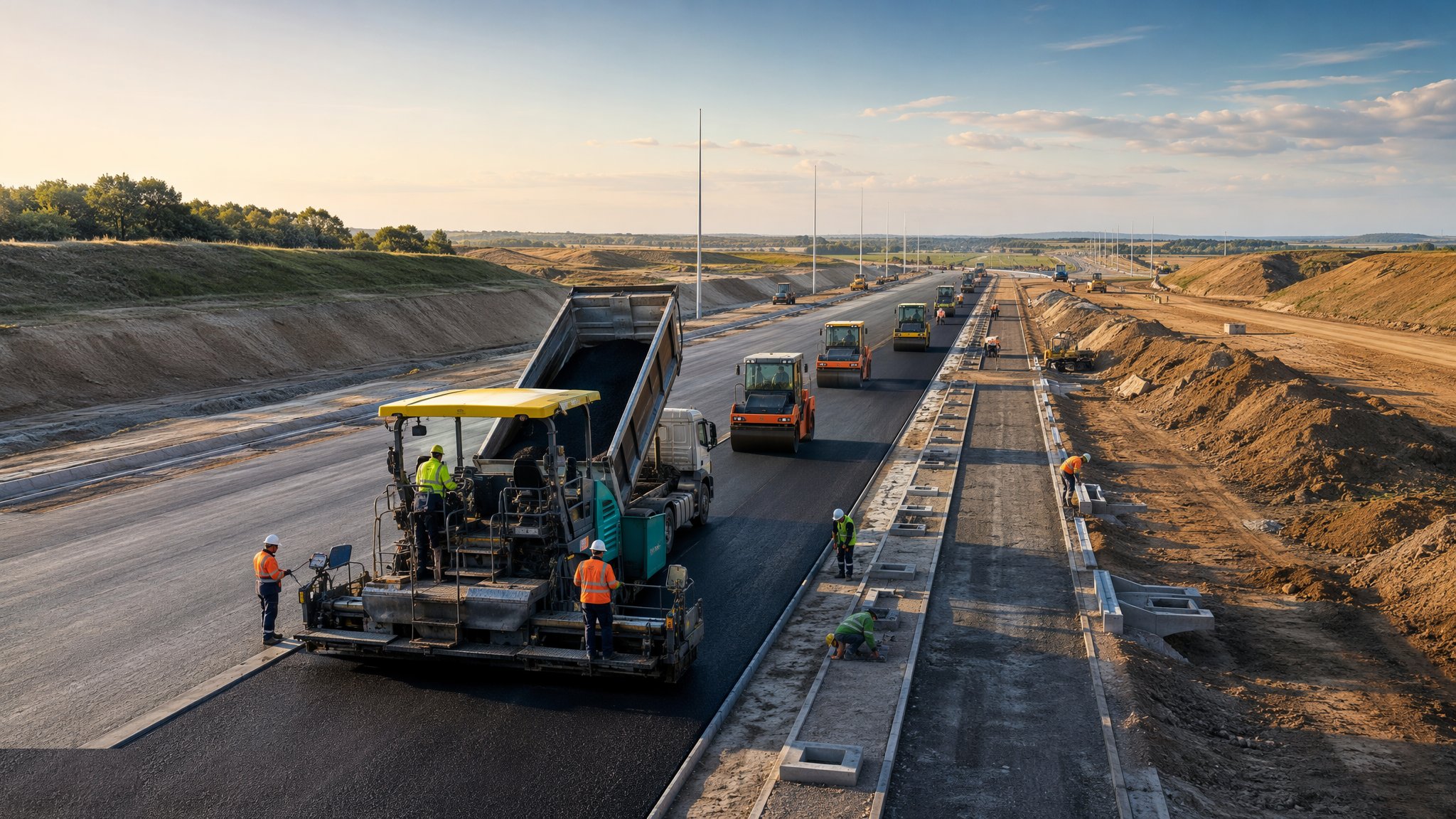
Corridors, earthworks and pavements - the artery from first peg to final white line.
Explore the sector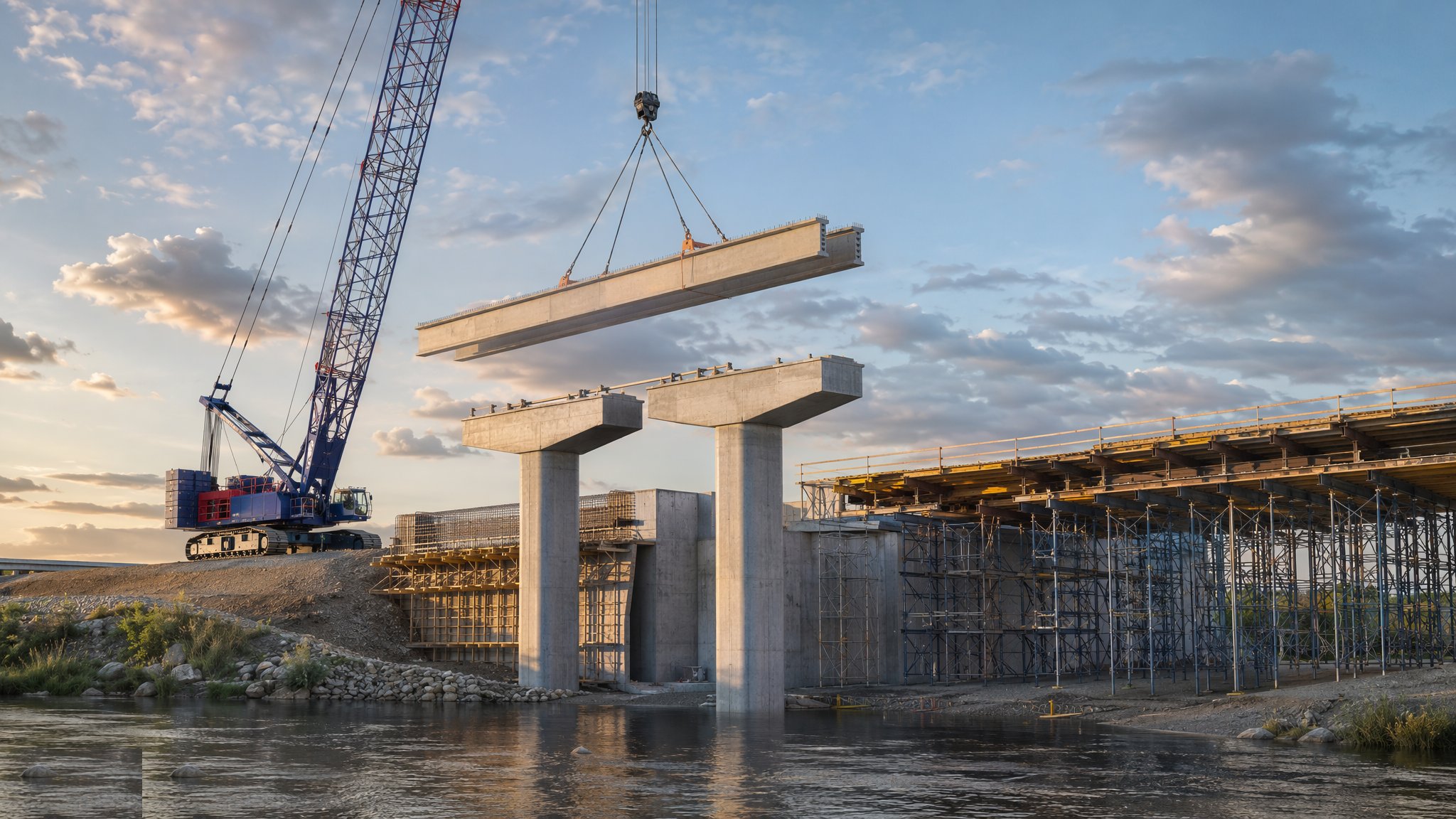
Foundations, decks, erection methods and the bearings and joints that let it all move.
Explore the sector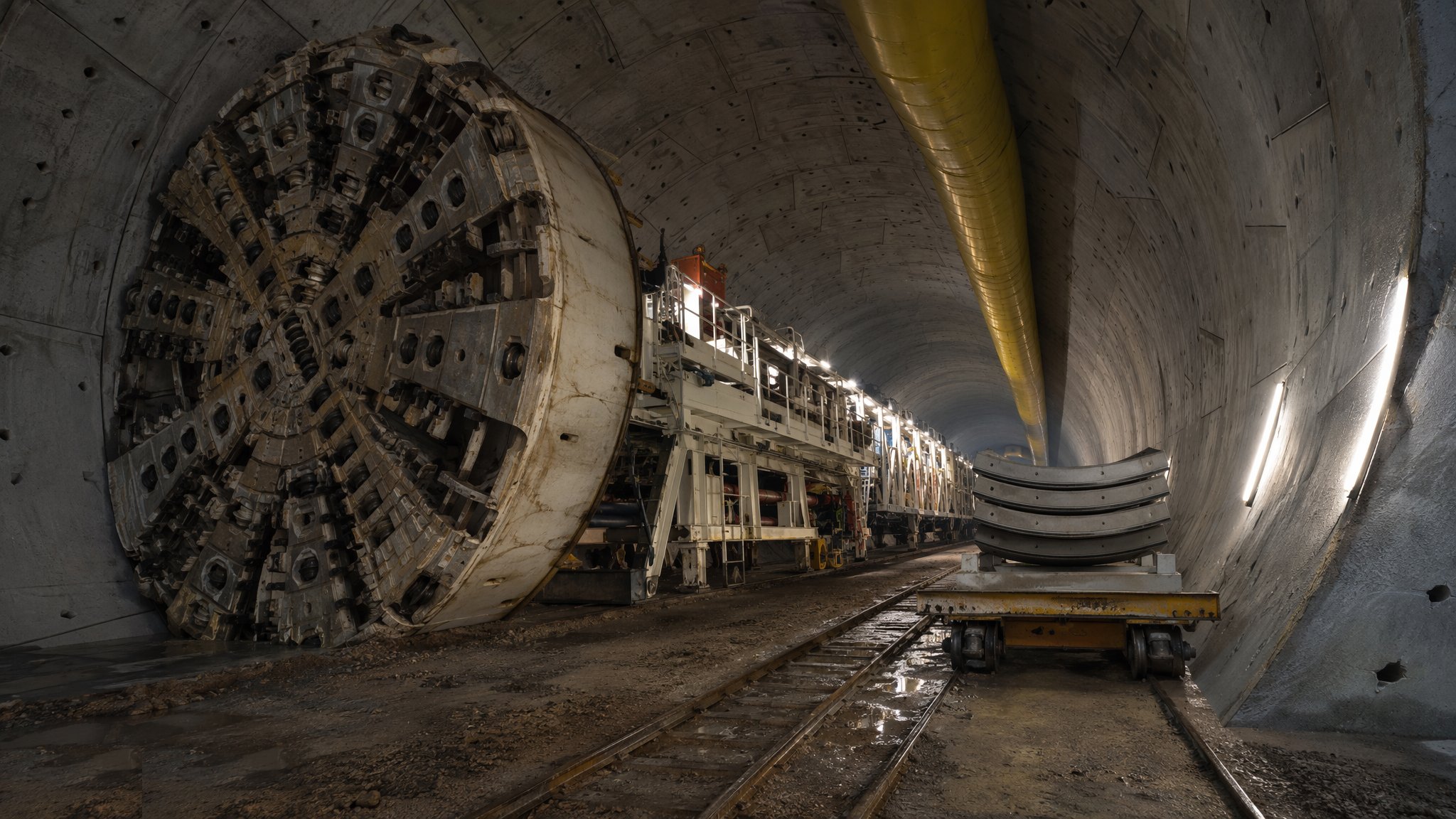
Shafts, TBMs, sprayed concrete and fit-out - building a road where the ground already is.
Explore the sector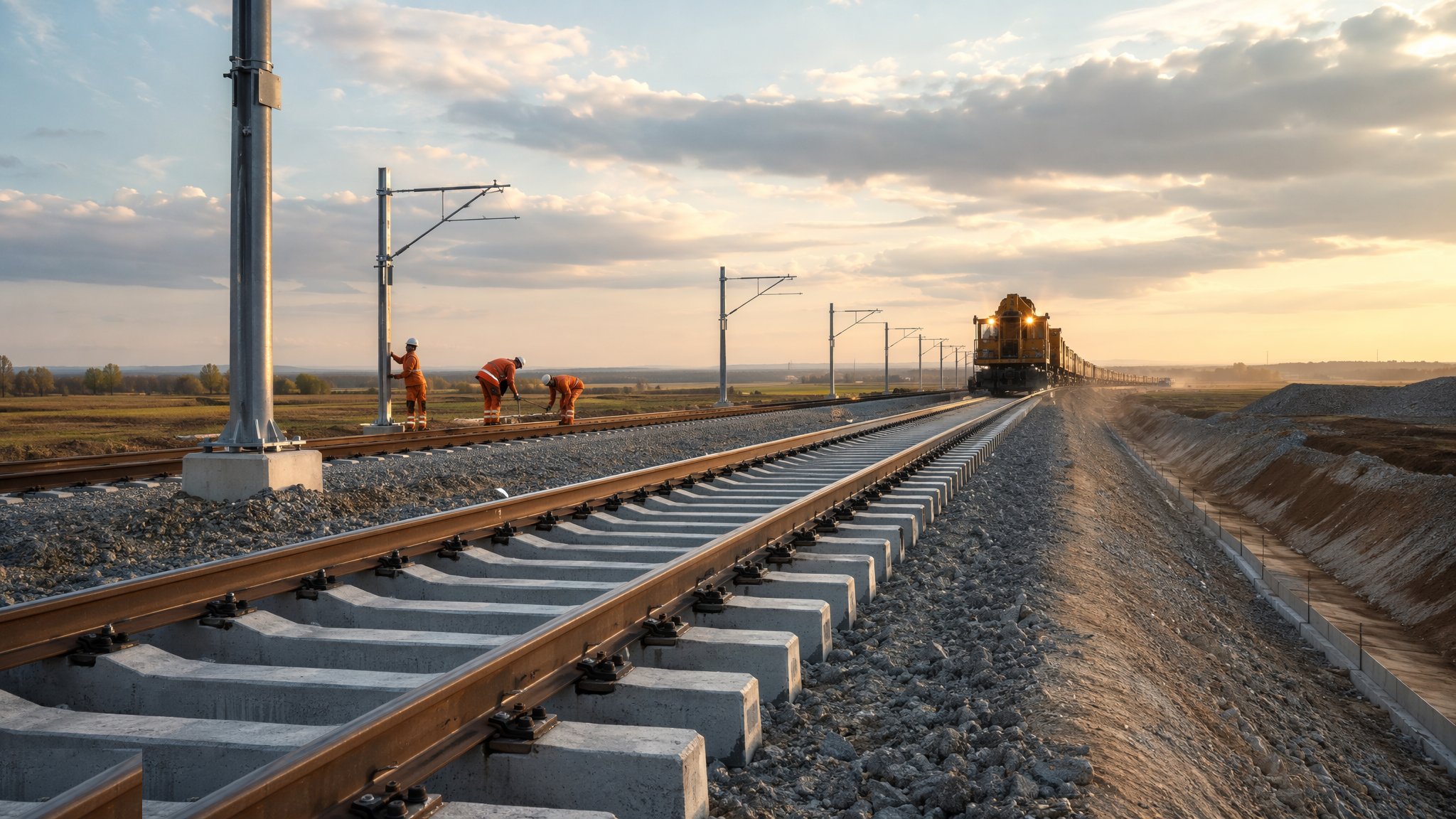
Railways and metros - formation to trial running.
Explore the sector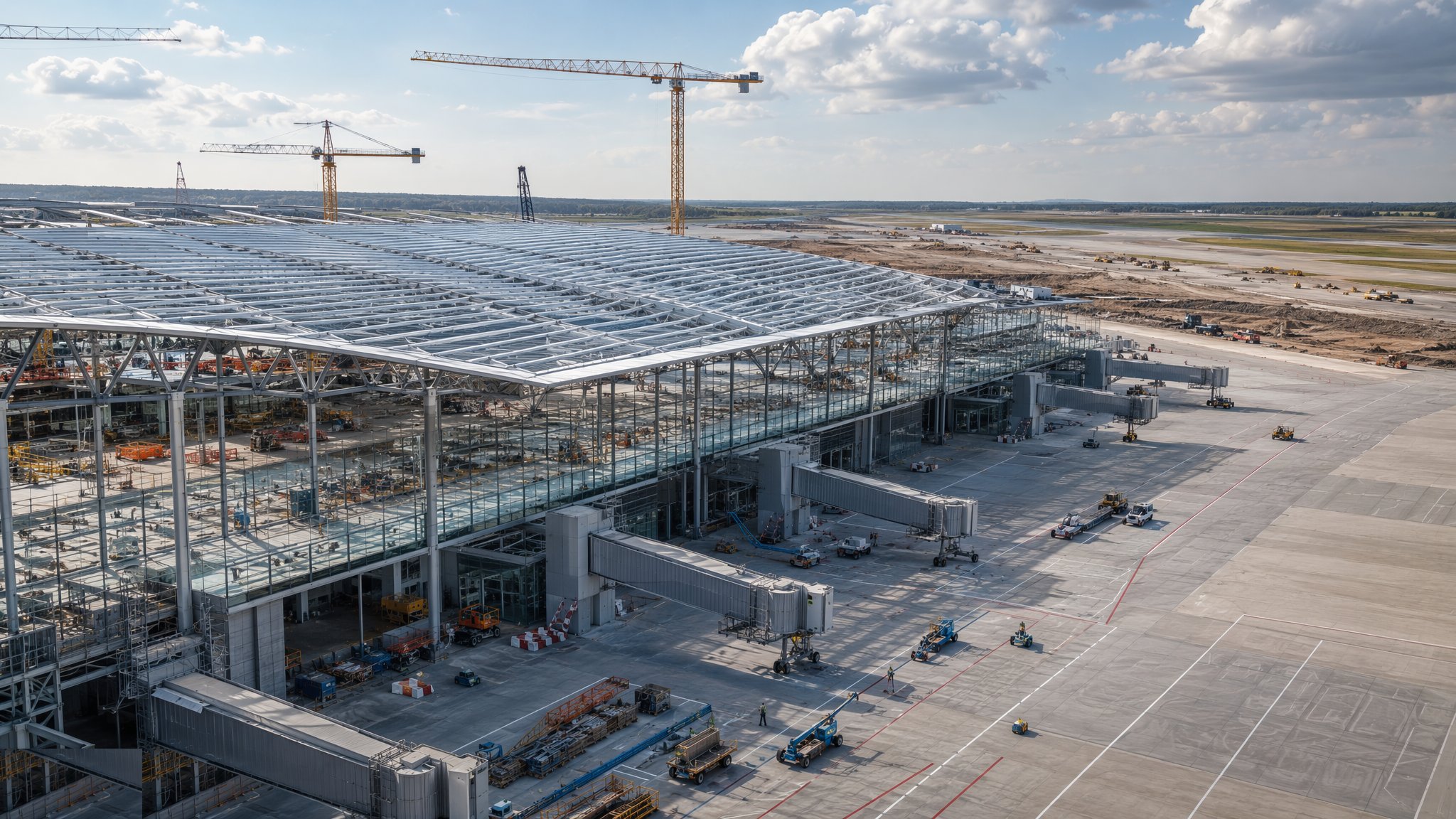
Runways, aprons and terminals - the heaviest pavements and the busiest buildings, behind one fence.
Explore the sector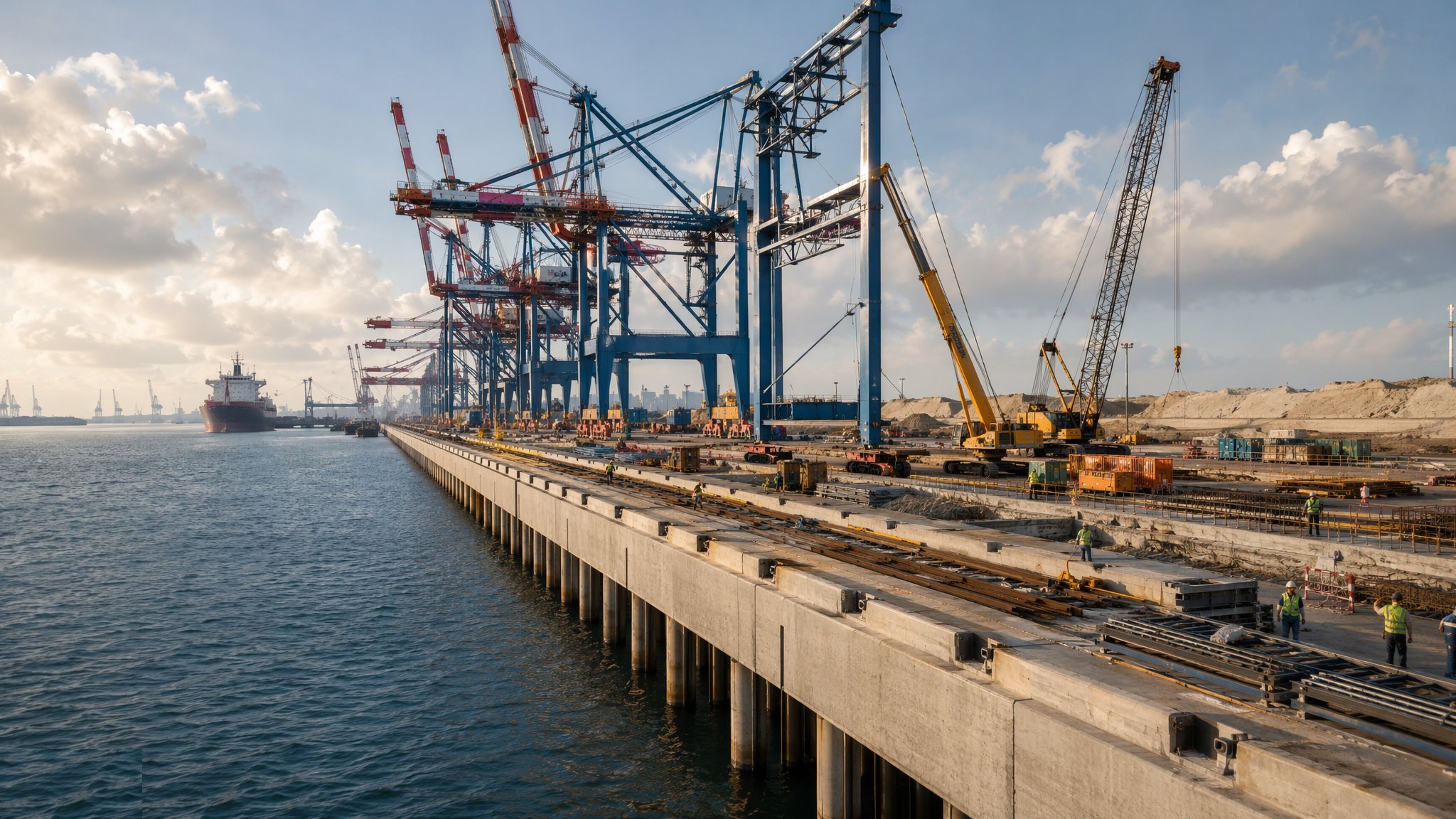
Quays, breakwaters and dredging - construction where the tide sets the working day.
Explore the sectorTransport Infrastructure in depth
What unites the heavy civils - and where they branch
Every transport scheme begins the same way: secure the corridor, establish survey control, investigate the ground, move the earth and drain it. Whether the end product is a motorway, a metro, a runway or a quay wall, the first year on site is earthworks, haul routes and dewatering, and the plant list - dozers, scrapers, excavators, compactors - barely changes. Design lives are uniformly long: 60 years for pavements, 100 or 120 for structures and tunnels. The work is specified against performance over decades, not appearance at handover, which is why materials testing and as-built records carry so much weight.
The branching happens at the alignment. Roads & Highways resolves into pavement engineering and traffic management; Bridges & Elevated Structures into heavy lifting, bearings and post-tensioning; Tunnels & Underground into segmental linings, TBMs and permanent groundwater management. Rail adds a systems layer - track, signalling, electrification - that has no equivalent on a highway. Airports combine pavement at extreme load with the security and live-operations constraints of an operating airfield, and marine works add the tide as an unforgiving programme constraint.
The genuine difference from the buildings world is ownership of the asset. These are public or concession assets, maintained for a century, and the specification regimes reflect it: the UK's Specification for Highway Works, Network Rail and London Underground standards, AASHTO-influenced airport and port specifications in the Gulf. A contractor cannot value-engineer quietly here; departures from spec are formal, documented and often refused.
Scale is the other leveller. Quantities that would be exceptional on a buildings job are routine here: a single junction improvement can shift a hundred thousand cubic metres of earth, and a metro line pours concrete by the tens of thousands of cubic metres. That scale changes the management problem - logistics, haul routes, batching plants, segment and girder delivery schedules become programme-critical activities in their own right. The foreman's question is not 'can we build it' but 'can we feed it', and the sites that fail usually fail at supply, not at craft.
Clients, funding and procurement across these sectors
The clients are few and powerful. These are professional, repeat-buying clients with their own standards, their own asset data requirements and long memories. You are not selling to a one-off buyer who will forget you; you are joining a supplier list that is scored, reviewed and remembered across decades, and a bad job on one scheme is quietly priced into the next bid you make. That much is true wherever you work. Who those clients are, where the money comes from and how the contract is framed is not, and the two markets this site serves diverge sharply enough to be worth taking in turn.
Contract forms reflect the risk profile. Nobody can price the ground fully at tender, so every serious transport contract in every market is really a machine for deciding who pays when the ground disagrees with the boreholes, and the differences between markets are differences in how honestly that machine is built and how it is administered day to day. Read any transport contract by finding the ground-risk clause, the change mechanism and the payment cycle first; the rest is detail hanging off those three.
Funding shapes behaviour too. Publicly funded schemes live and die by spending-review cycles and ministerial announcements; privately financed toll roads, airports and ports answer to lenders whose due diligence on programme and ground risk is relentless. Either way, the commercial conversation is about measured quantities on an enormous scale - earthworks rates, pavement rates, structure rates - and the BOQ discipline of taking-off and remeasurement that buildings work has largely abandoned is alive and well here.
Clients, funding and procurement across these sectors: UK and Europe
In the UK the buyers are National Highways, Network Rail, Transport for London, HS2, airport operators and port authorities, with Transport Scotland, Transport for Wales and the combined authorities buying regionally and the local highway authorities buying everything beneath the strategic network. Across Europe the equivalents are the state infrastructure agencies and national rail infrastructure managers, together with the concession companies that hold motorway, tunnel and airport assets under long leases. All of them are asset owners before they are buyers: they are purchasing sixty to a hundred and twenty years of maintainable asset, and their standards, approval processes and asset-data requirements exist to protect that horizon rather than to make the construction programme easier.
Frameworks and lots dominate - the contractor who wins a place on a regional delivery framework effectively wins a decade of work, and the one who misses it is locked out just as long. The pattern is now close to universal on the UK side: multi-year delivery frameworks and alliances split by geography and by value band, with call-off competitions or direct allocation inside them, and with the client's own panels of designers and specialists sitting alongside. That structure rewards a very particular set of skills - relationship management, transparent cost data, consistent performance scoring against the client's own measures - and steadily punishes the traditional contracting strength of winning on price. European procurement pushes the same work through open and restricted procedures and competitive dialogue under the public contracts directives, with far more scrutiny of award criteria and far more successful legal challenge than British bidders tend to expect.
The NEC suite dominates UK infrastructure, with its target-cost and alliance variants designed to share ground risk that nobody can fully price at tender. Early contractor involvement is the norm on major schemes precisely because the ground is the biggest unknown. In practice that means an open-book cost base, an early warning and compensation-event discipline that has to be administered weekly to function at all, and a project manager with real contractual power rather than a certifying role. Continental practice leans instead on FIDIC and on national standard conditions, with the engineer closer to the traditional independent certifier and with far more use of separate trade contracts let by the client's own engineering department.
The money is public, regulated or project-financed, and each behaves differently on site. Public capital arrives through spending reviews and multi-year settlements - the road investment periods, the rail control periods - so work comes in waves and vanishes in the gaps, and the supply chain's real risk is not losing a job but surviving a dry year between programmes. Regulated capital reaches airports and parts of the rail estate through periodic price controls. Project finance funds toll roads, terminals and light rail concessions, and brings lenders' technical advisers who audit programme and cost monthly and whose sign-off gates drawdown. What newcomers get wrong: they assume an announced scheme is a funded scheme; they under-resource the assurance, approvals and stakeholder effort that public clients demand and pay for; and they bid target-cost work with a lump-sum mentality and no cost-collection system capable of supporting an open book when the client asks to see it.
Clients, funding and procurement across these sectors: Middle East and North Africa
In the UAE the buyers are the RTA, Etihad Rail, municipalities and aviation authorities, and the same shape repeats across the region: transport is bought by government and by government-related entities rather than by an arm's-length agency with its own borrowing and its own regulator. Saudi Arabia buys through the Ministry of Transport and Logistic Services, the Saudi Railway Company, the civil aviation authority and the royal commissions for Riyadh, Jubail and Yanbu, with the giga-projects procuring their own transport infrastructure directly. Qatar has Ashghal and its rail company, Oman its transport ministry alongside Asyad on the ports side, Kuwait its Ministry of Public Works, and Egypt the National Authority for Tunnels and the armed forces engineering authority working with the Ministry of Transport. Abu Dhabi and Dubai are again separate worlds with separate standards, separate approval routes and separate expectations of the contractor.
In the UAE, FIDIC Yellow and Silver Books carry most transport work, with the engineer administering claims in a more adversarial frame than NEC's collaborative intent, and milestone-driven payment tied to physical progress certificates. Employer-side amendment is routine, and it is where the risk actually moves: notice periods shortened into hard time bars, ground conditions transferred to the contractor on a design-build or turnkey basis, extensions of time granted without cost, liability for the employer's own design carved back to the contractor, and the engineer's discretion narrowed to certification. Design-build and EPC turnkey are the default on new corridors, metros and airports because the client wants single-point responsibility and a completion date tied to a political milestone rather than to a critical path.
Funding is sovereign, and that is both the strength and the risk. Budgets come from hydrocarbon revenue, sovereign wealth allocations and national transformation programmes rather than from a regulator's price control, so schemes can be launched at a speed no European agency could match and paused just as abruptly when national priorities move. Egypt and Morocco add multilateral and export-credit money to the picture, which brings World Bank, EBRD or bilateral procurement rules, eligibility conditions, prescribed tender formats and a documentation standard that catches contractors used to a Gulf client's informality. Where a road, port or rail asset is concessioned, the independent-producer logic familiar from power and water appears here too: a project company, a long availability or offtake agreement, and lenders who read the construction contract line by line before financial close.
Payment and cashflow are the region's defining commercial feature and they deserve to be priced rather than hoped about. Advance payment against a bank guarantee funds mobilisation, retention is held hard, and certified sums routinely arrive later than the contract states, especially at the end of a job when the final account and the claims are entangled. Contractors survive by pricing that carry and by keeping the records that make entitlement provable; those who fail are usually the ones who financed the employer without ever deciding to. Registration and classification gate the tender list before any of it, local content and nationalisation targets are scored at award - in-country value in the UAE, the Saudi local content regime, Omanisation and Qatarisation - and the civil codes impose decennial liability on the contractor and the supervising engineer for ten years after handover for collapse or for defects threatening stability and safety, regardless of what the contract says. That liability cannot be contracted out of, and on a viaduct, a tunnel or a runway it is the largest long-tail exposure on the job.
How to read this group of sectors as a newcomer
Start with Roads & Highways, because it is the most linear expression of the heavy civils sequence: clearance, earthworks, drainage, sub-base, pavement, street furniture, markings. Every other sector in the group is that sequence plus a specialism. Bridges & Elevated Structures adds foundations, falsework, bearings and deck construction; Tunnels & Underground adds the underground support logic; Rail & Metro adds the systems overlay. Airports and ports are best read last, once the pavement and marine basics are in place.
Pay attention to how the sectors borrow from each other, because the borrowing is constant. Segmental tunnel lining technology moved into deep sewer and utility tunnels. Bridge bearings and expansion joints appear on elevated metro viaducts and airport people-movers. Piling rigs and diaphragm wall kit serve station boxes, bridge abutments and quay walls alike. The plant is shared, the subcontractors are shared, and an estimator who has priced a viaduct can price a metro guideway without starting from zero.
Understand the survey and setting-out spine early, because it is the thread that runs through everything: primary control, machine guidance on the earthworks, as-built capture for the asset record. In the UK that record feeds a century of maintenance regimes; in the UAE it feeds authorities building asset registers from scratch. If you understand how the line and level flows from the control network to the finished pavement or rail, the rest of the group reads as engineering applied to that geometry.
It is also worth reading the group with the maintenance tail in mind, because these assets are never really finished. Pavements are resurfaced on cycles, bridges are inspected and repainted for a century, tunnels carry permanent ventilation and drainage regimes, and every asset owner in the group is quietly building the digital record that the next generation of maintainers will inherit. The contractor who understands that the client is buying fifty or a hundred years of service - not a ribbon-cutting - reads the specifications, and prices the quality regime, very differently. That long view is also why relationships outlast individual schemes, and why reputations in this group are built over decades rather than projects.
The UK and Gulf markets side by side
The UK market is renewal-led: an ageing network being rebuilt piece by piece under traffic, with possessions, lane closures and night windows as the permanent condition of work. The Gulf market is growth-led: new corridors, new metros and new ports on open ground, with design-and-build programmes that would be politically impossible in Britain. The engineer moving between the two swaps one constraint set for another - live-operation discipline for speed-of-delivery discipline - but the engineering content transfers almost unchanged.
Materials and climate complete the picture. UK pavements are designed against water and frost; Gulf pavements against rutting at 60 °C surface temperatures, with polymer-modified binders standard. UK concrete durability is about chlorides from de-icing salt; Gulf durability is about chlorides and sulphates from ground and sea, which drives low water-cement ratios, supplementary cementitious materials and rigorous curing. Same materials science, different enemy - learn the enemy and the specifications stop looking arbitrary.