Shafts, TBMs, sprayed concrete and fit-out - building a road where the ground already is.
Tunnelling is construction in three dimensions of hostility: the ground is the formwork, the water wants in, and the only way out is the way you came. Shafts and portals establish the front door; then the drive itself - by tunnel boring machine or by drill-and-blast and sprayed concrete - and finally the fit-out that turns a hole in the ground into an asset.
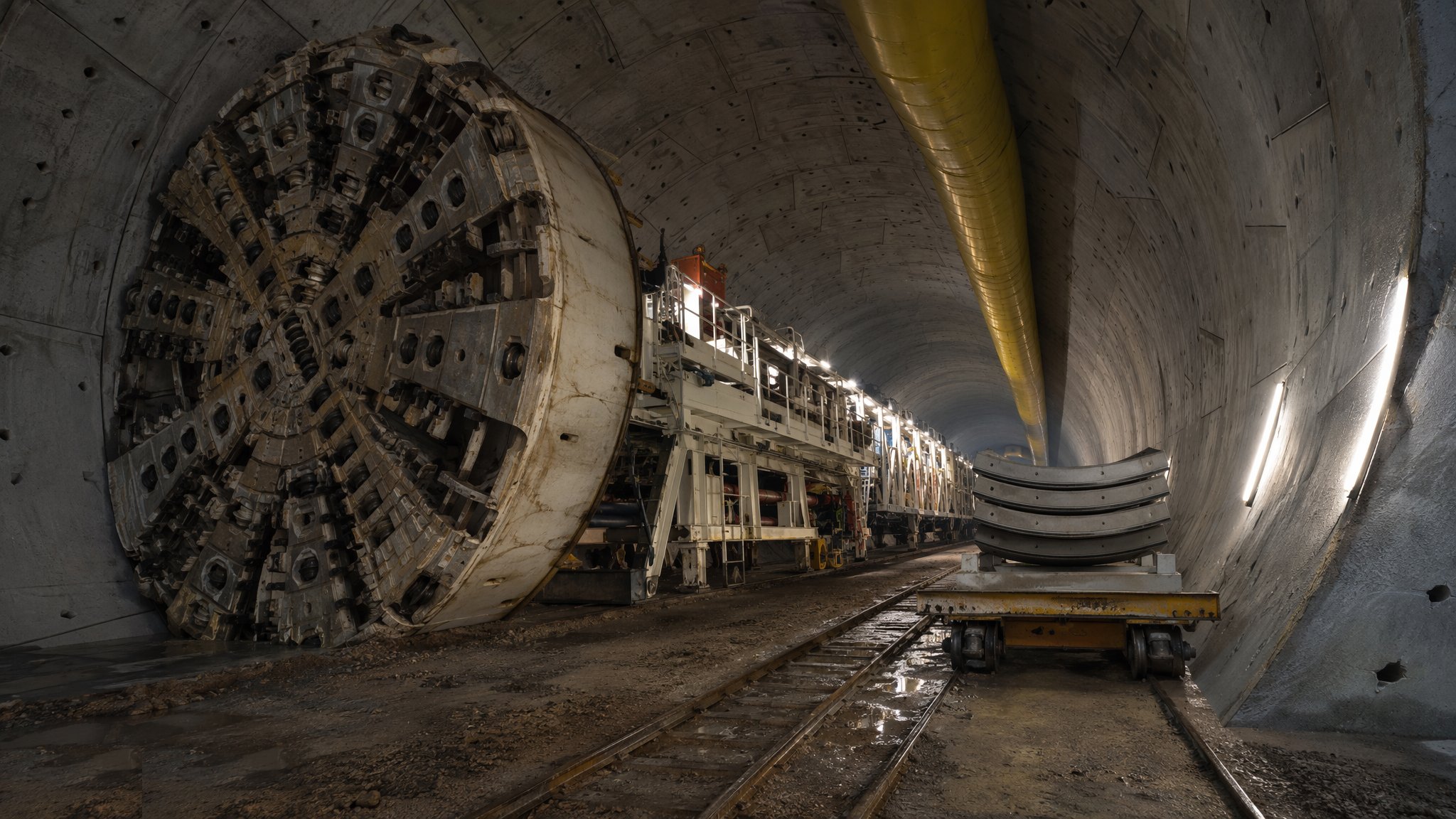
The process map - 4 guides
Each one is a full guide: overview, variants, numbered steps, plant, testing, safety and defects.
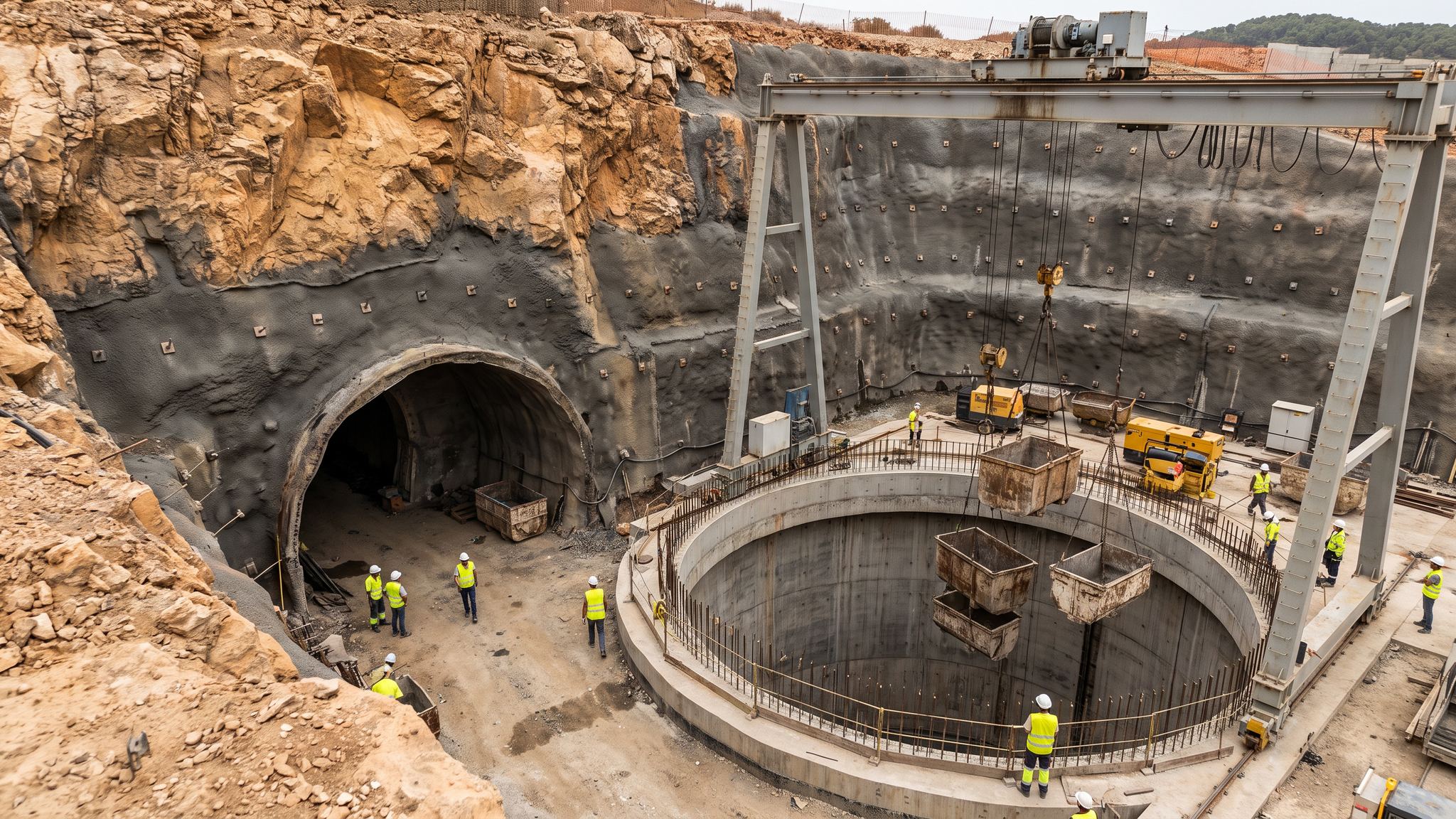
Shafts & Portals
The deep excavations that let tunnelling begin - launch and reception shafts, and the portal structures where the tunnel meets daylight.
Open process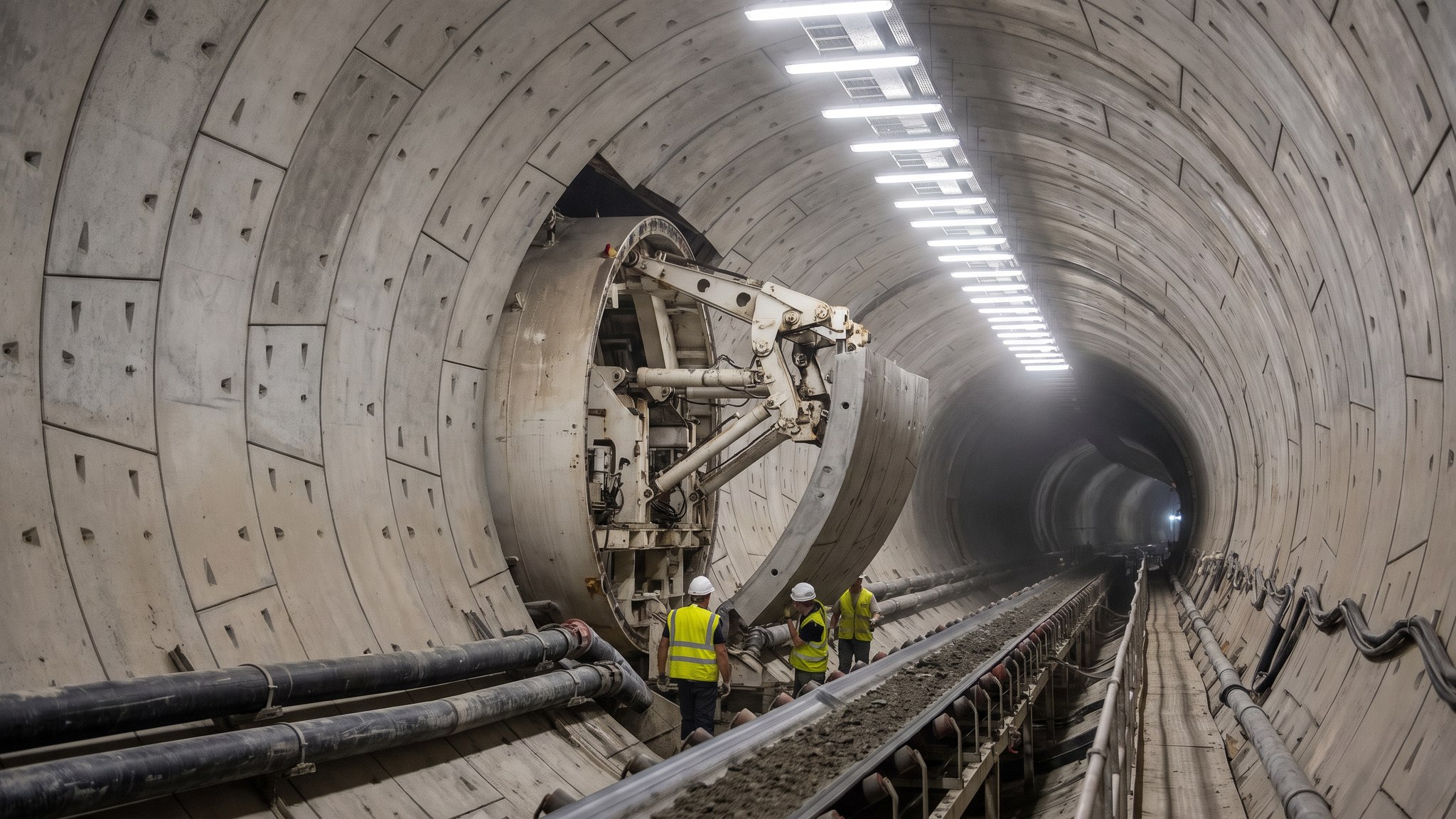
TBM Tunnelling & Segmental Lining
Mechanised tunnelling: the machine, the muck, and the gasketed precast rings that become the finished tunnel.
Open process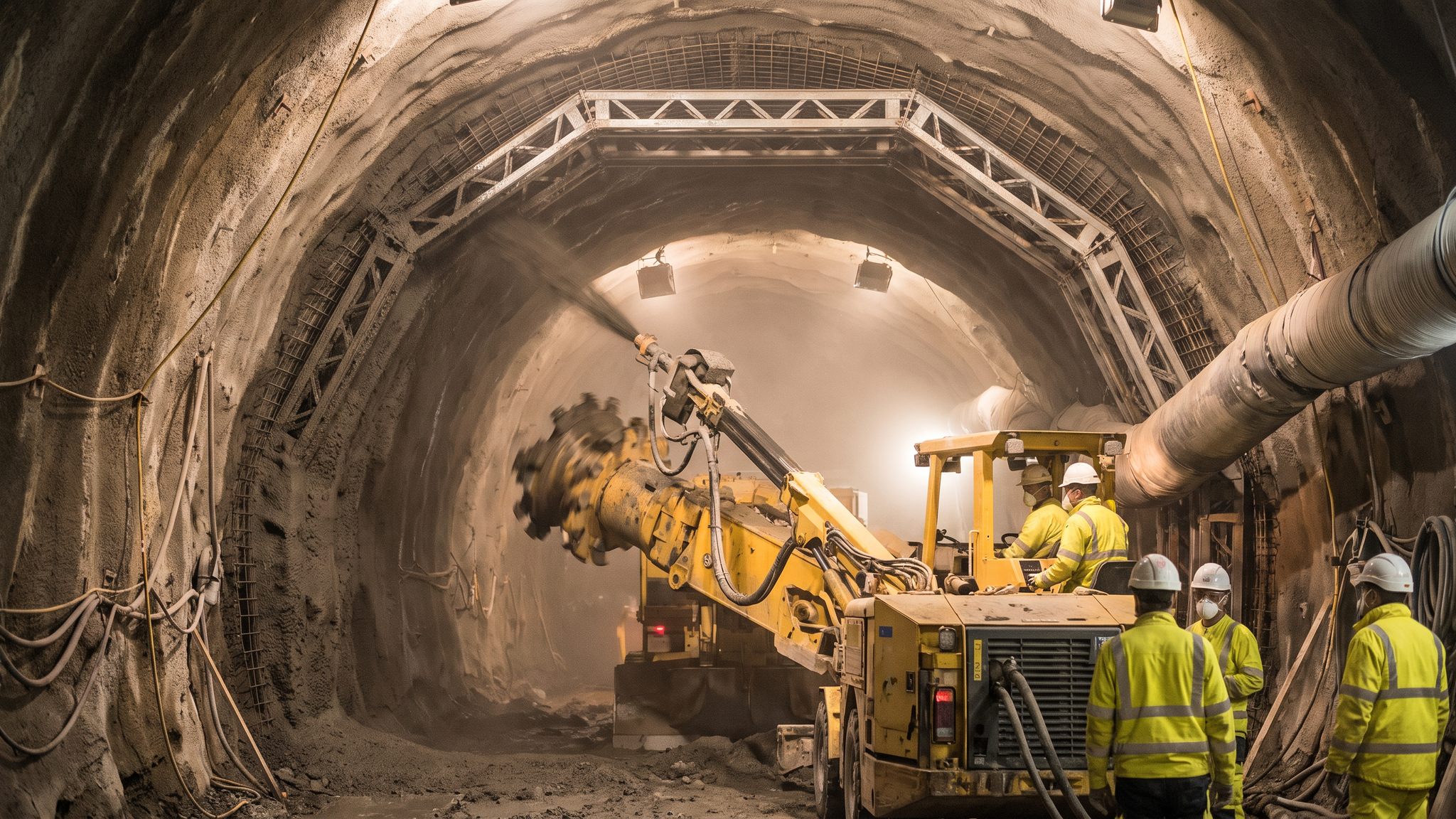
SCL & Drill-and-Blast Tunnelling
Conventional tunnelling where machines do not fit - sprayed concrete linings in soft ground, and the drill–charge–fire–muck cycle in rock.
Open process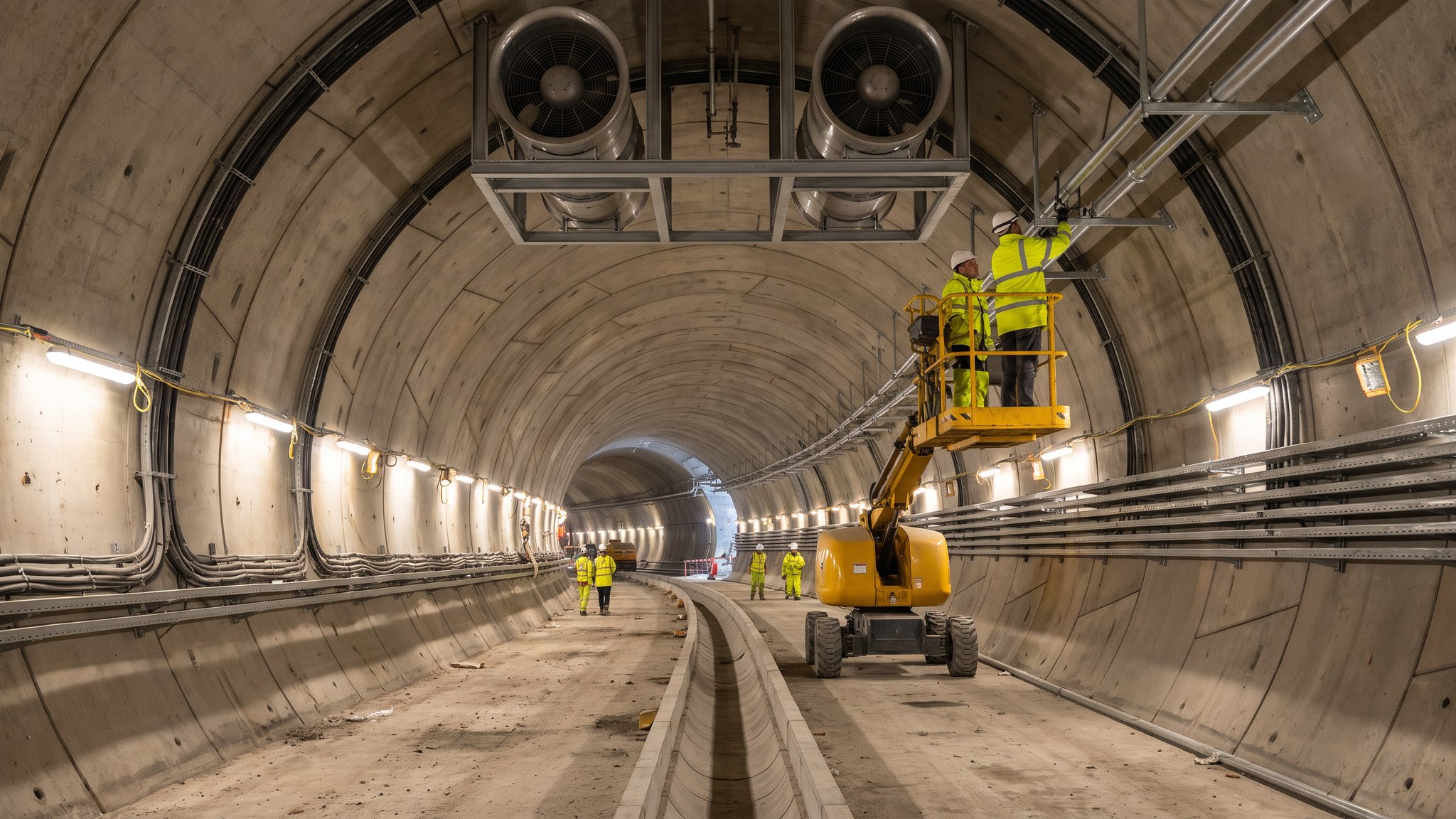
Tunnel Fit-out - Drainage, Ventilation & M&E
Turning a bare bore into a working asset - drainage, ventilation, fire life safety, power, controls and the handback that proves it all works together.
Open processShared methods used in this sector
These guides are owned by other sectors - the canonical page lives there - but the method is the same here. Cards open the guide at its home sector.
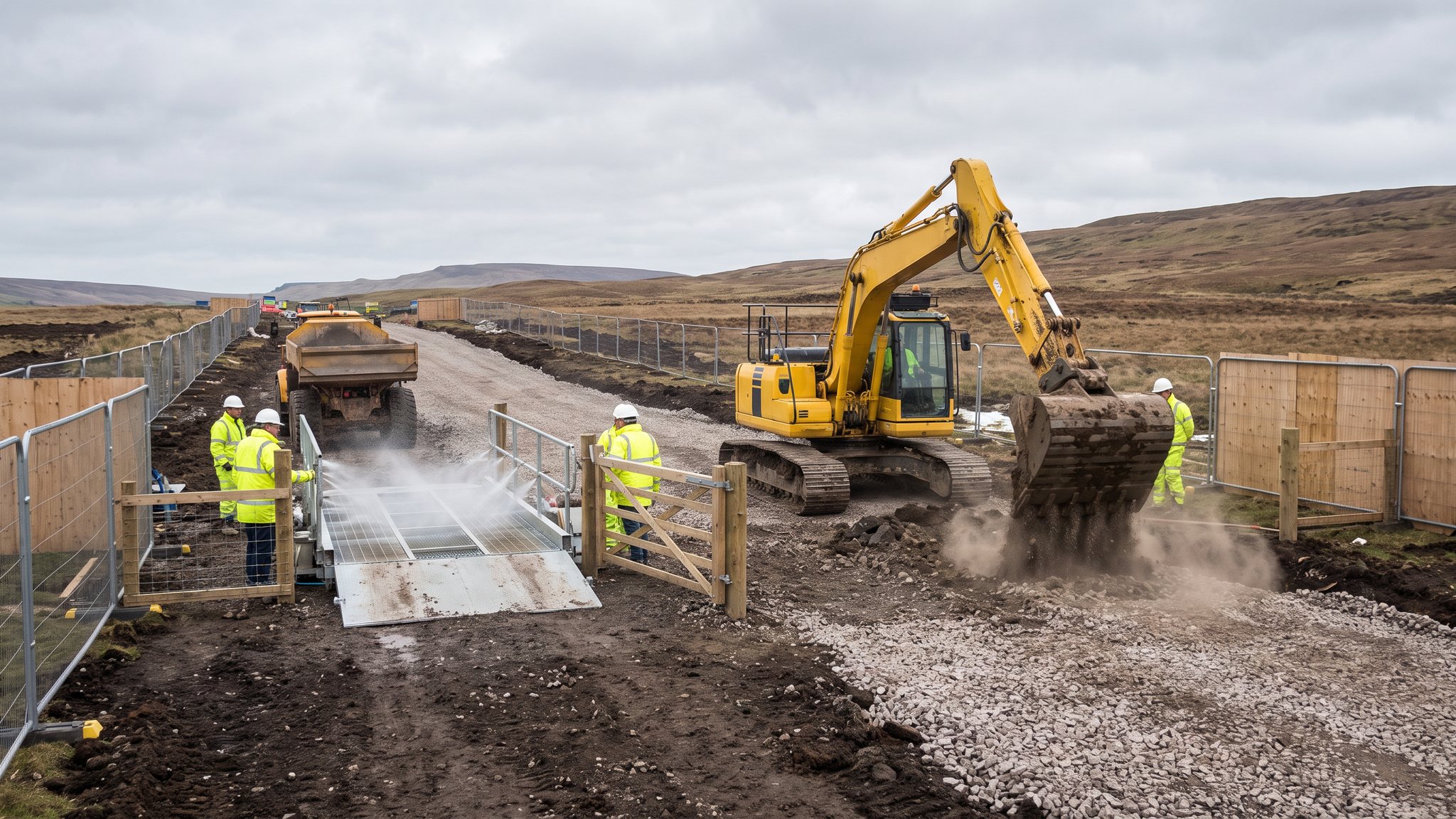
Corridor Access & Enabling Works
Turning a length of route - often a live highway - into a controlled, approved, workable construction corridor.
Open processCanonical guide: Roads & Highways
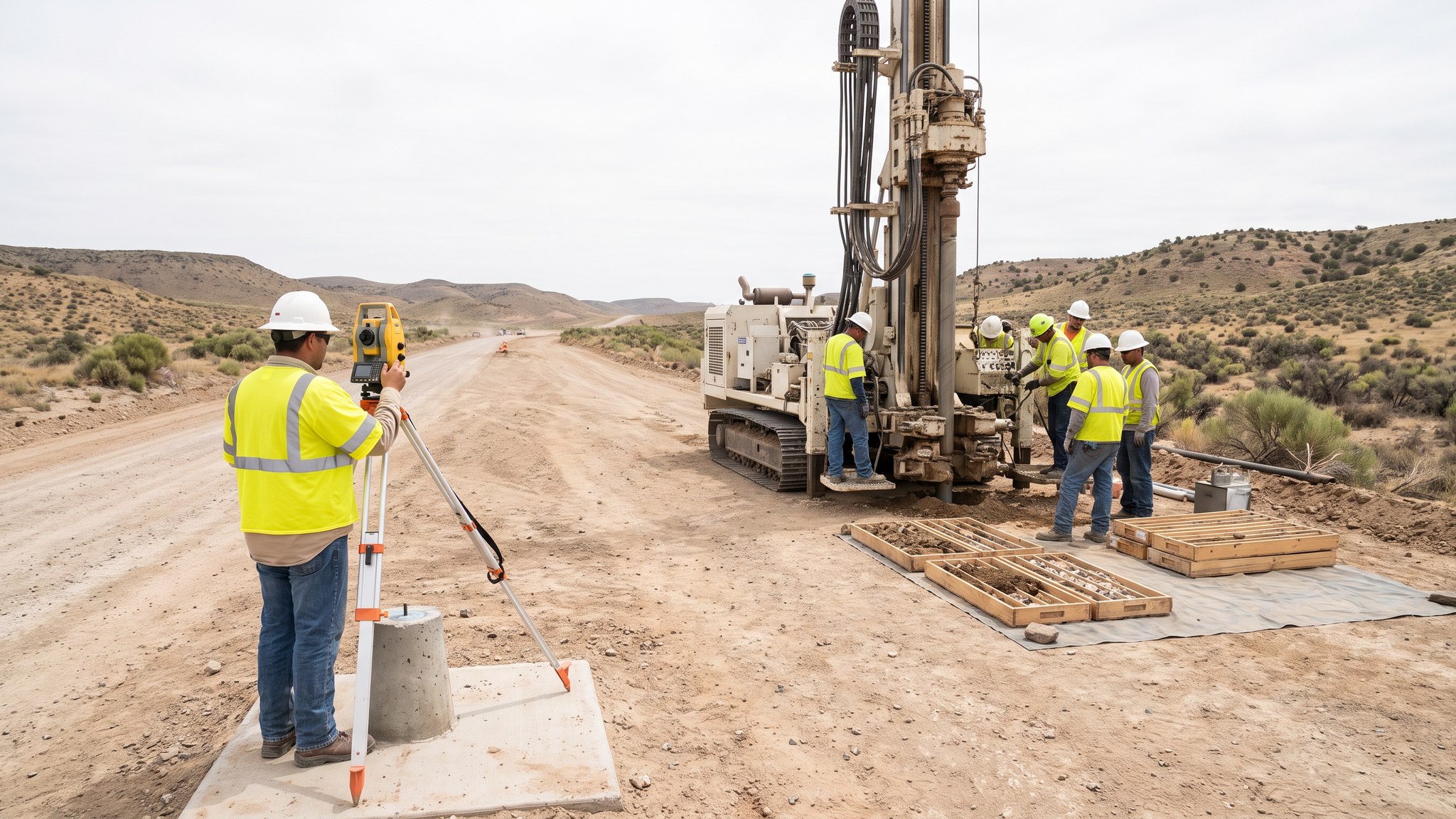
Survey Control & Ground Investigation
Corridor control networks and the ground investigation that tells you what the road, bridge or tunnel is actually standing on.
Open processCanonical guide: Roads & Highways
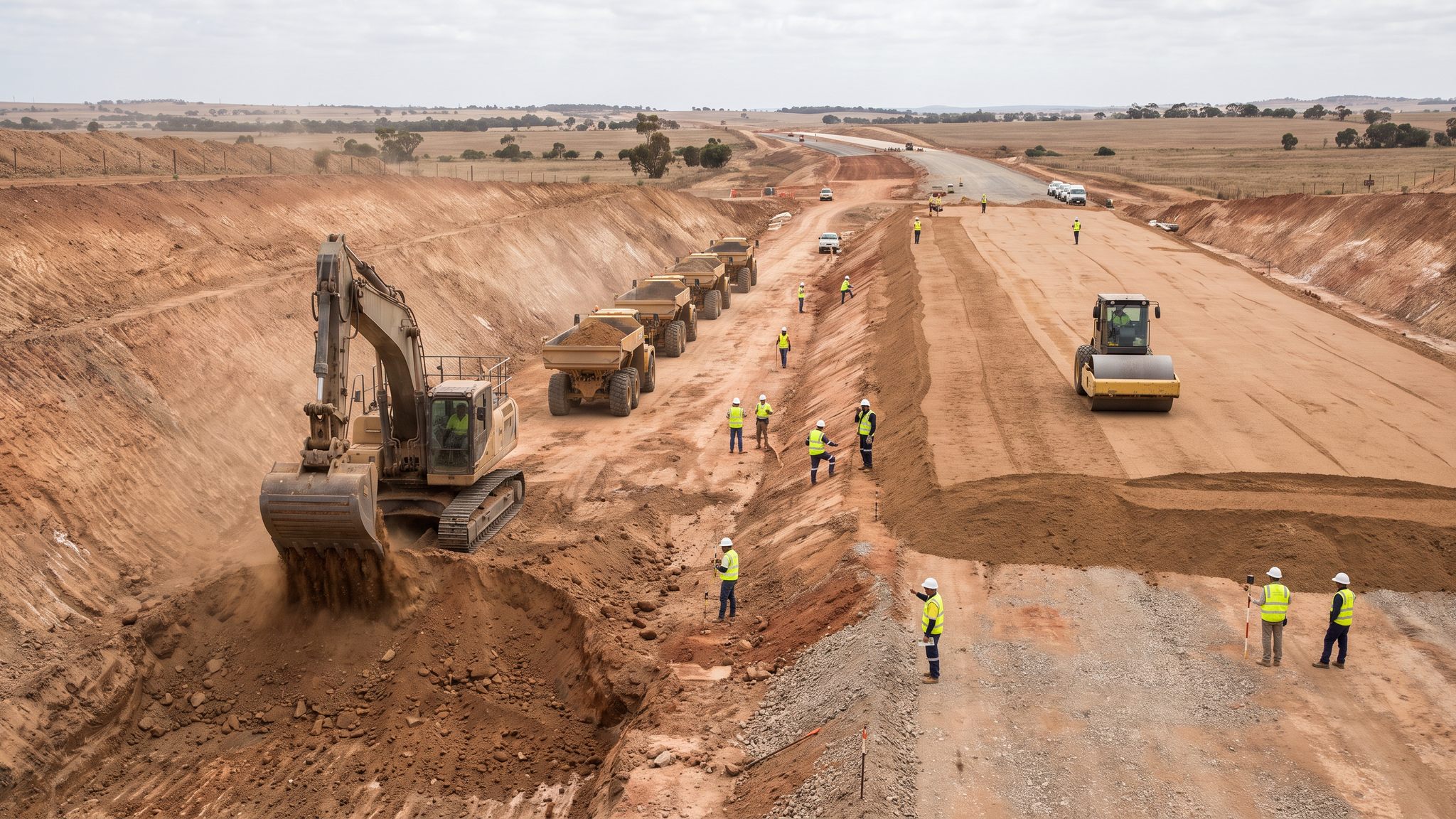
Bulk Earthworks - Cuttings & Embankments
Moving hundreds of thousands of cubic metres to build the corridor's shape - cuttings, embankments and the formation everything sits on.
Open processCanonical guide: Roads & Highways
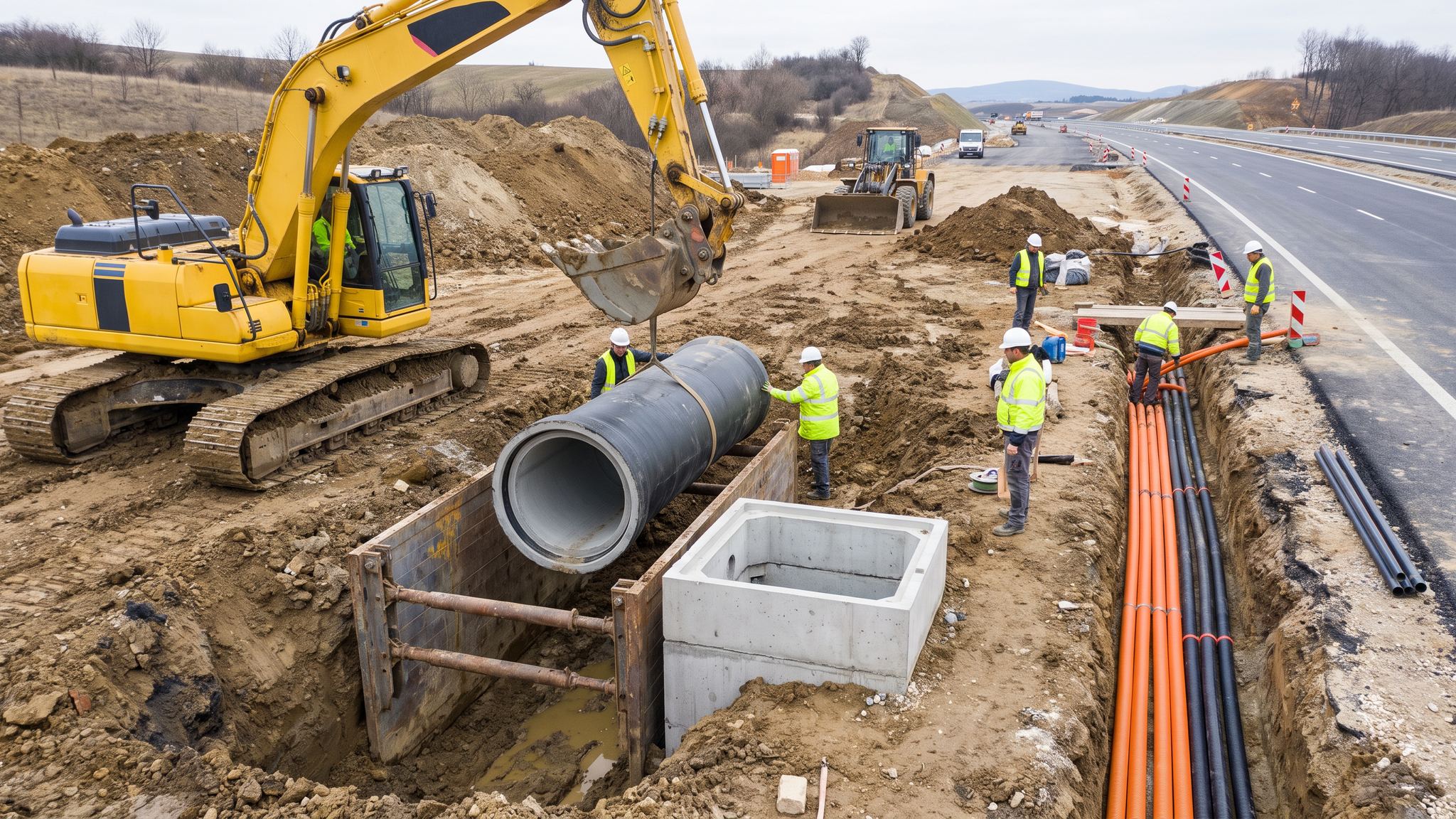
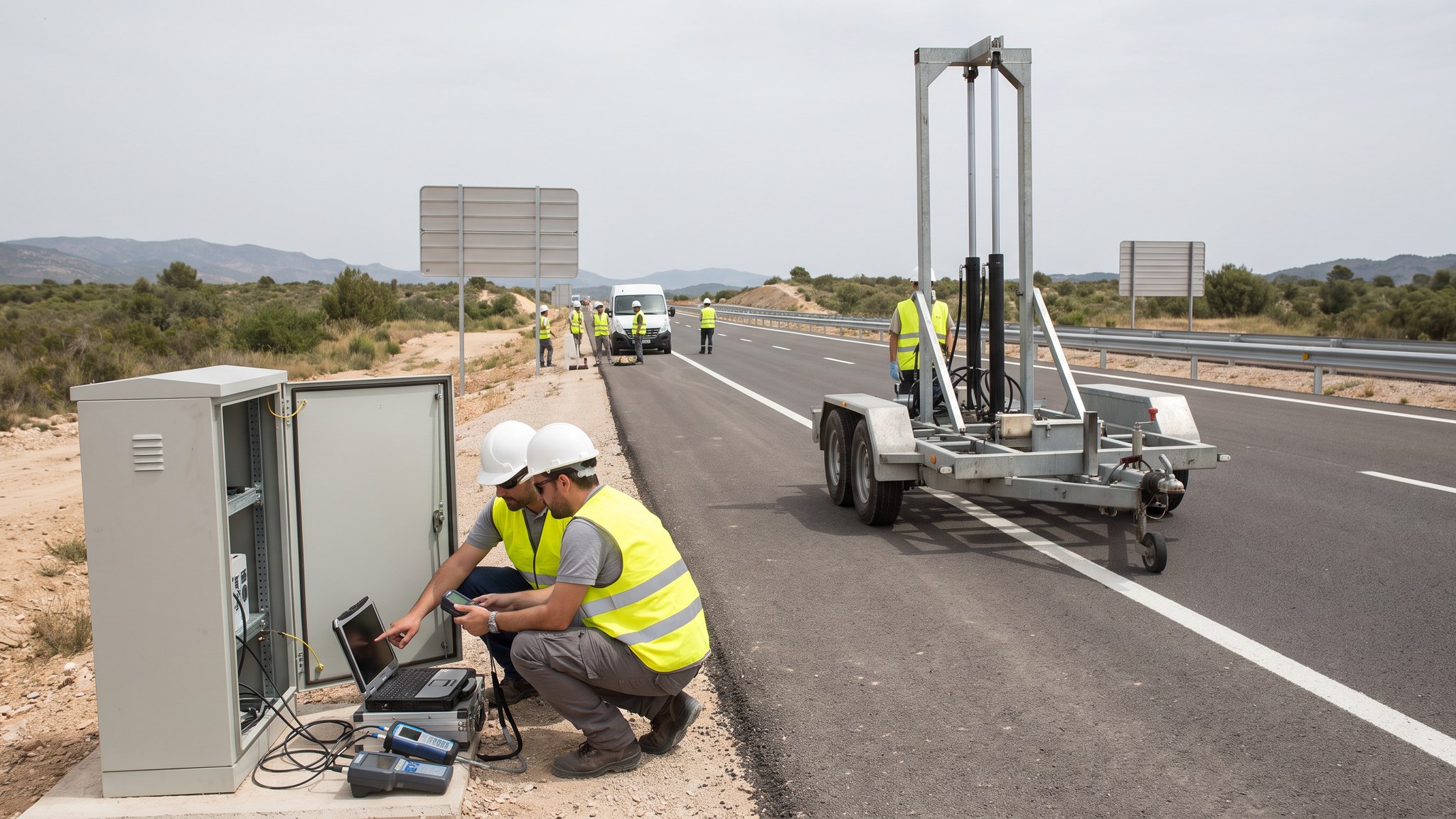
Tunnels & Underground in depth
About Tunnels & Underground
The four guides in this sector cover the underground works. The surface corridor works are shared with the roads sector and link through to their canonical pages there.
Procuring a hole in the ground
Tunnelling is the most concentrated specialist market in construction. A major drive - a road tunnel, a metro running tunnel, a deep sewer - goes to a joint venture of two or three contractors who own the skills, the key people and, effectively, the insurance market's confidence. UK practice has settled on NEC4 target cost for the big jobs: Crossrail's drives were let that way, and the painshare/gainshare mechanism exists precisely because nobody can price the ground with certainty. The tunnel boring machine itself is a capital decision of 20 to 50 million pounds with a lead time of twelve to eighteen months from order to launch, ordered against a ground model that will still surprise you. In the Gulf the same work is let on FIDIC terms - Dubai's deep stormwater tunnels and the metro running tunnels are the standing examples - usually as design and build with the employer's geotechnical baseline report doing the risk-sharing work that NEC does commercially.
The commercial centre of gravity is the geotechnical baseline: what the ground is contracted to be. Every dispute in tunnelling traces back to the gap between the baseline and the face. Ground investigation for a tunnel is not a planning chore; it is the design, the price and the programme, and it still only samples a few thousandths of the volume you will excavate.
Programme shape: the machine never sleeps
The critical path runs through the launch shaft. Everything before it - site establishment, diaphragm walls or secant piling, dewatering, the headwall and eye - exists to get the TBM in the ground, and once the machine launches the job becomes a factory that runs 24 hours a day, seven days a week. A slurry or earth-pressure-balance machine in good ground advances 10 to 20 metres a day including ring building; the precast segment plant, the slurry treatment plant, the muck-away chain by rail or lorry, and the grout plant all have to keep pace, because a stopped TBM in soft ground is a settlement event waiting to happen. Maintenance stops are programmed, and cutterhead interventions under compressed air are planned, crewed and priced like operations, not afterthoughts.
Where the method is sprayed concrete lining or drill-and-blast rather than a TBM, the cycle is shorter and the flexibility greater - a face advances in rounds of a few metres with excavation, support and waterproofing repeating - but the same rule holds: continuous progress protects the ground above. Cross passages between twin bores, built from one tunnel towards the other under ground freezing or dewatering, sit late on the critical path and gate the fit-out. Fit-out itself - secondary lining, invert, drainage, ventilation, lighting, walkways - is a production-line exercise behind the drive, and commissioning of life-safety systems is what actually decides the opening date.
Waterproofing, fire and the road above
A tunnel is a structure that spends its whole life below the water table pretending not to be. Segment gaskets, sheet membranes between primary and secondary linings, waterstops at every pour joint and drainage behind the lining all work as one system, and the specification is tested by the sea of groundwater that arrives the day the pumps stop. In highway tunnels the fire and life-safety package is the other half of fit-out: ventilation sized for a design fire, emergency egress spacing, fire-rated boards or passive protection on the lining, deluge or foam systems where the risk assessment demands them. Commissioning these systems - smoke tests, fan cascades, egress drills with the fire authority - is measured in months, and no tunnel opens until the scenario testing is signed off.
Above ground, the drive's footprint is managed as carefully as the face. Building condition surveys record every crack before work starts; instrumentation - precise levelling, tiltmeters, extensometers - streams to a control room with amber and red trigger levels; and compensation grouting arrays sit ready to jack the ground back where the predictions said movement would exceed tolerances. It is unglamorous, expensive and absolutely non-negotiable under a built-up city.
The segment factory deserves its own mention because it quietly governs the whole drive. A large TBM consumes eight to twelve rings a day, each ring five to ten precast segments of a tonne or more apiece, all cast to tolerances of a millimetre or two so the gaskets seal and the rings build true. The casting yard runs ahead of the machine - steam curing, demoulding within hours, stockpiling by ring type - and a quality failure at the mould stops the drive days later, hundreds of metres underground, where the remedy is a grouter and a prayer. Transporting segments to the face is its own production line: segment cars shuttling through the completed tunnel, timed against ring build so the erector never waits. When a tunnel programme is said to be on the machine, this is what the phrase really means - the machine, the moulds, the grout and the logistics all pacing each other, and the slowest of the four setting the rate.
When tunnelling makes the news
The defining UK lesson remains the Heathrow Express collapse of 1994: tunnels built by the sprayed concrete method failed in the night, the ground above cratered between live airport infrastructure, and nobody died only because of luck and the hour. The HSE prosecution that followed reshaped the industry - NATM rebranded as SCL with far tighter instrumentation and review, and a permanent cultural suspicion of unsupported spans in soft ground. Crossrail taught the second lesson: the tunnels and stations finished broadly well, and it was the systems integration and commissioning - software, signalling interfaces, trial running - that consumed years of programme and headlines.
The failures that never make the news are settlement claims: buildings above a drive cracking as ground losses of a fraction of a percent translate into millimetres of movement at foundation level. The defence is boring and absolute - comprehensive building condition surveys before a single ring is built, real-time instrumentation with trigger levels that actually stop the job, and compensation grouting as a standing capability rather than an emergency measure. The cost of that instrumentation is trivial next to one inhabited structure over a soft-ground drive.
UK versus Gulf: clay versus sand and sea
London Clay is famously forgiving tunnel ground: stand-up time, predictable behaviour, over a century of precedent. Gulf tunnels are driven in sand, weak sandstone and sabkha below a high water table, often a short boat ride from the sea. That changes everything about support and waterproofing: earth-pressure-balance machines with tight face-pressure control, full waterproofing membranes or gasketted segments as standard, and dewatering schemes that must run for the life of the works. Summer heat reaches underground logistics too - segment yards, grout plants and ventilation all engineered for 45-degree ambient air.
Approvals differ in kind. In the UK the tunnel owner's engineer, the HSE and - over or under rail - Network Rail's safety regime frame the work. In Dubai the RTA or the municipality owns the asset, Dubai Civil Defence drives fire and life safety in the tunnel's ventilation and egress design, and marine-adjacent tunnels add coastguard and harbour authority consents. The physics is universal; the paperwork is local.
Handover of a tunnel is measured in documentation as much as concrete: as-built surveys of every ring, grouting records, waterproofing test certificates, fire test evidence for the lining protection, and a commissioning file for the ventilation, lighting and incident detection systems that runs to thousands of pages. The health and safety file under CDM, or the FIDIC Taking-Over Certificate in the Gulf, transfers an asset whose whole value is hidden underground - which is why the records are the asset as surely as the lining is.