Industrial & Specialist Facilities
Oil & gas, factories, warehouses, mines and laboratories - built to process, not to inhabit.
Industrial work inverts the usual priorities: the process plant comes first and the building is just the weather protection around it. Oil and gas facilities are structural steel, pressure systems and an unforgiving permit-to-work culture; manufacturing and logistics assets are big spans, heavy slabs and fast programmes; laboratories and high-tech facilities add containment, vibration and cleanliness regimes most sectors never meet.
7 sectors in this group
Live sectors carry the full step-by-step guides. The rest are scoped and scheduled - their pages slot straight in when the next build phase lands.
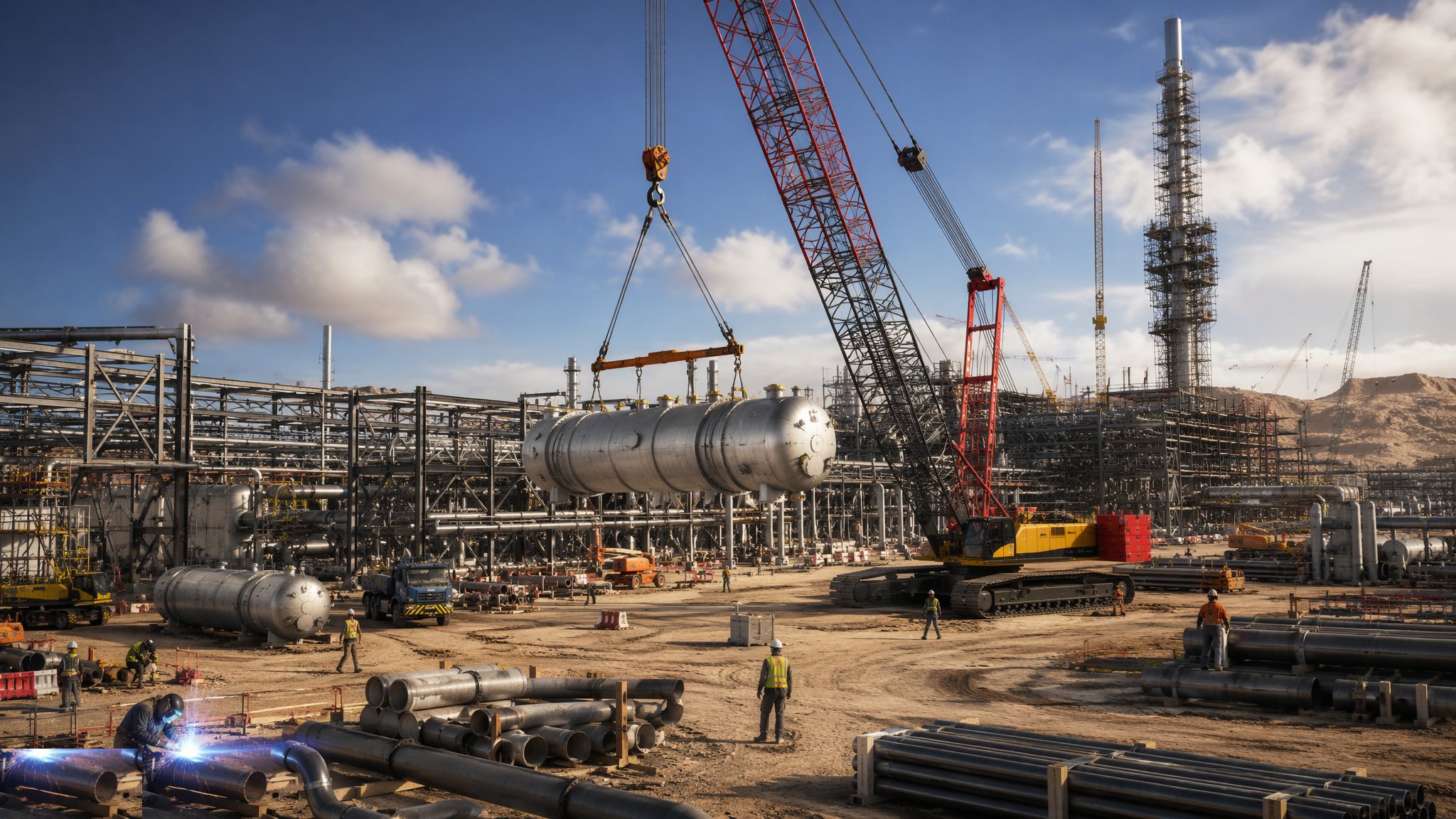
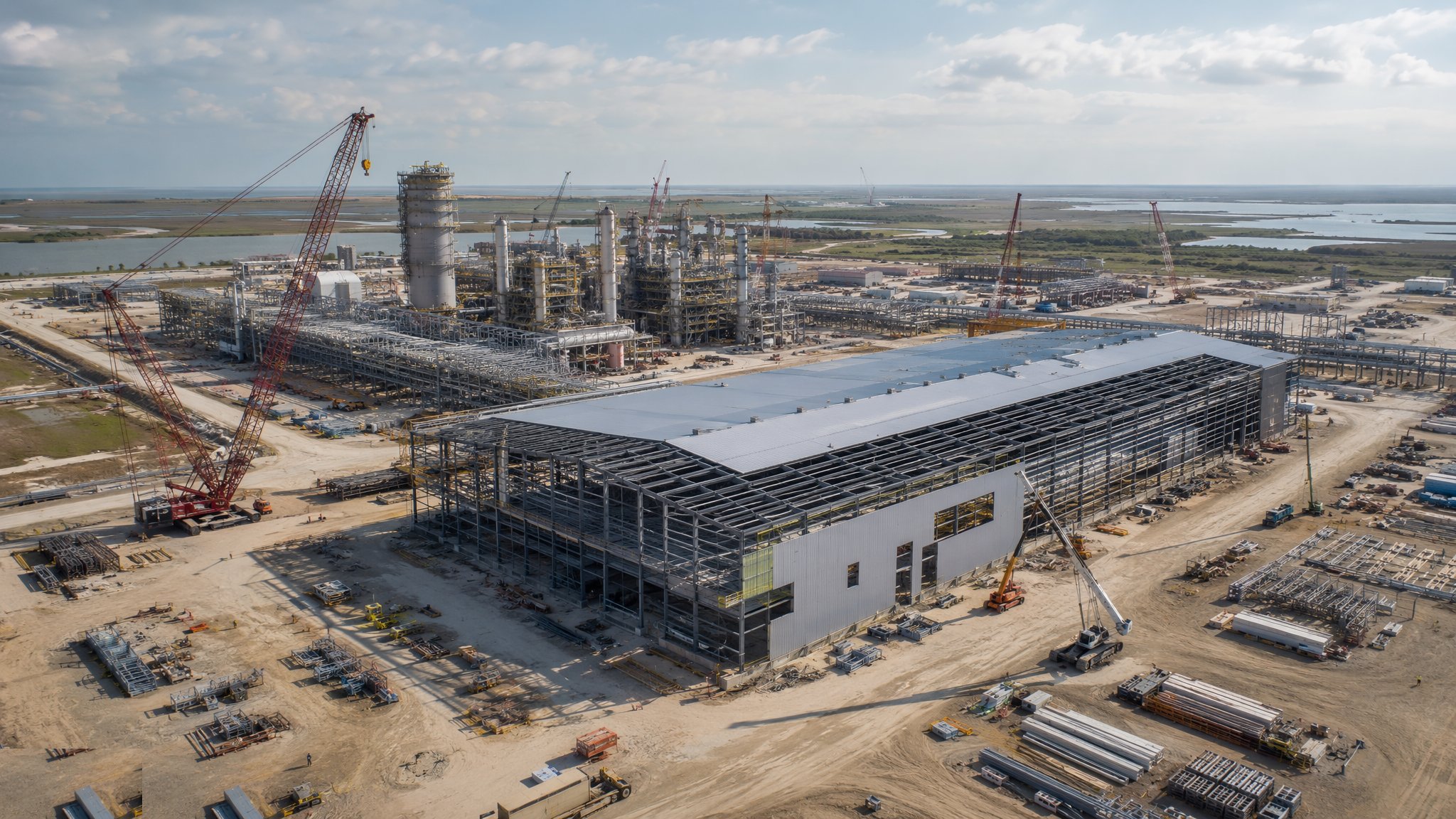
Process plants, pipe racks and pressure systems - construction under a permit-to-work culture.
Explore the sector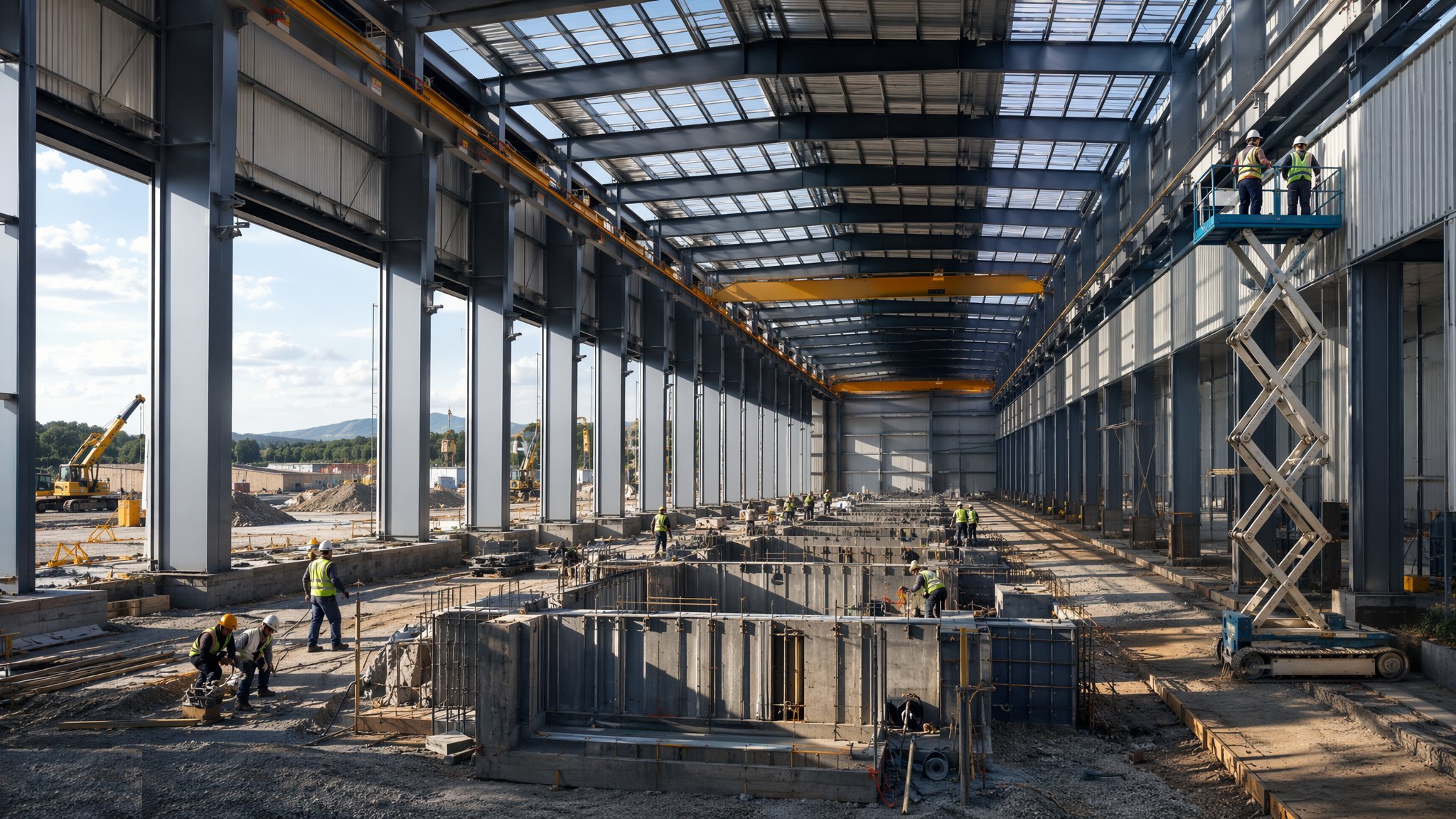
Factories and process buildings - the plant comes first, the building wraps around it.
Explore the sector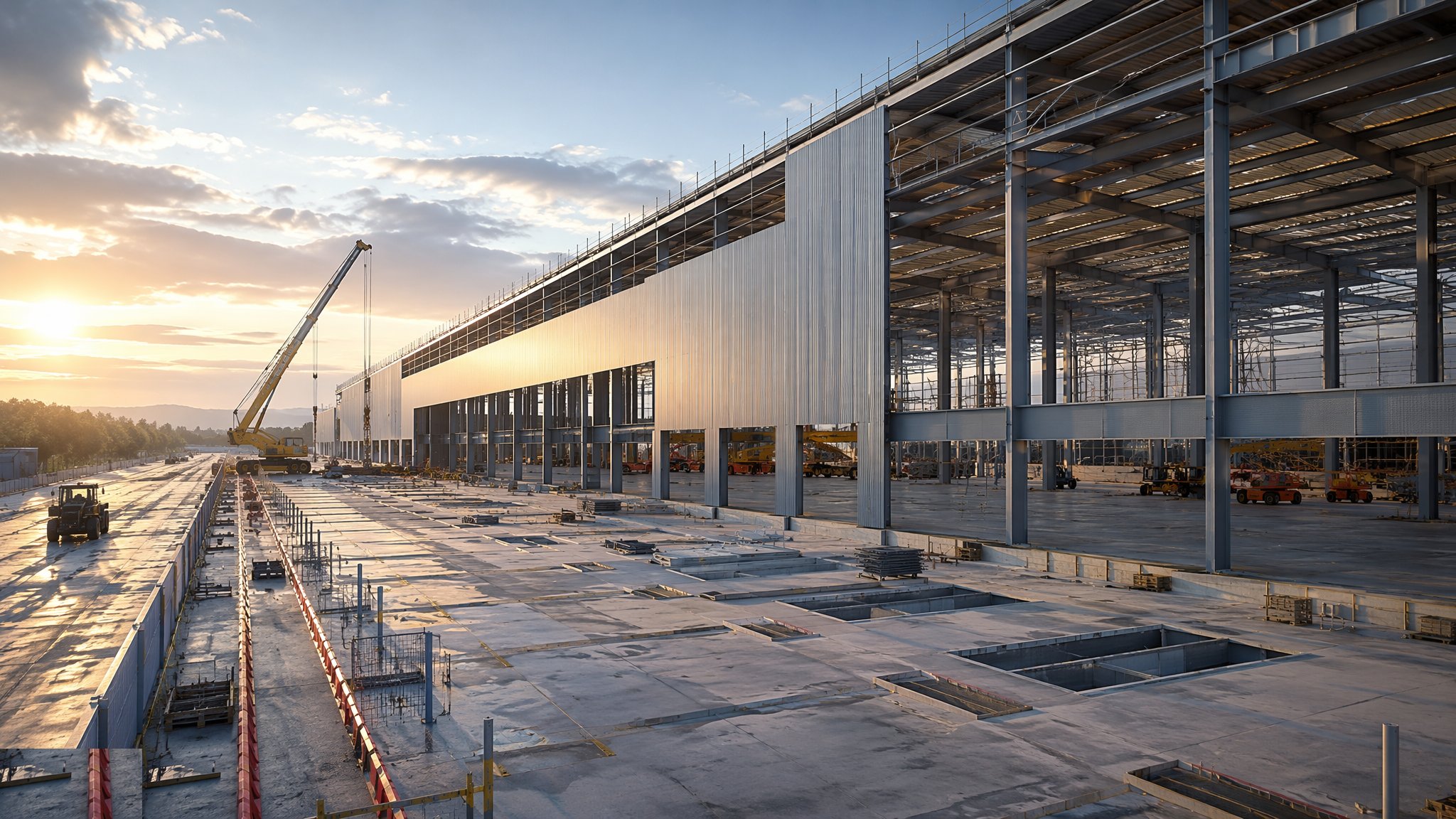
Big sheds, big slabs, fast programmes - the simple building done at speed.
Explore the sector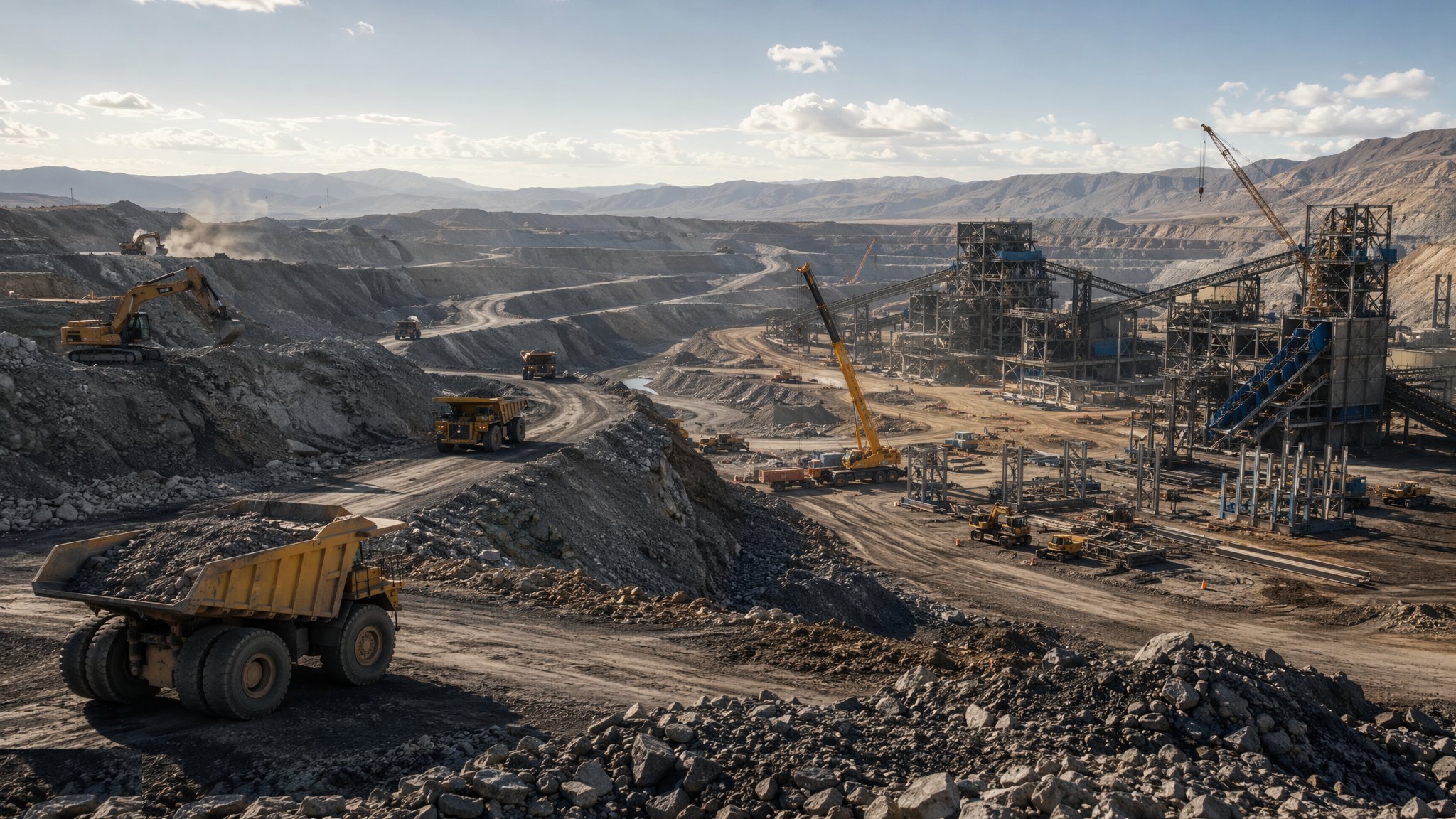
Shafts, conveyors and process plants - construction where the product is the ground.
Explore the sector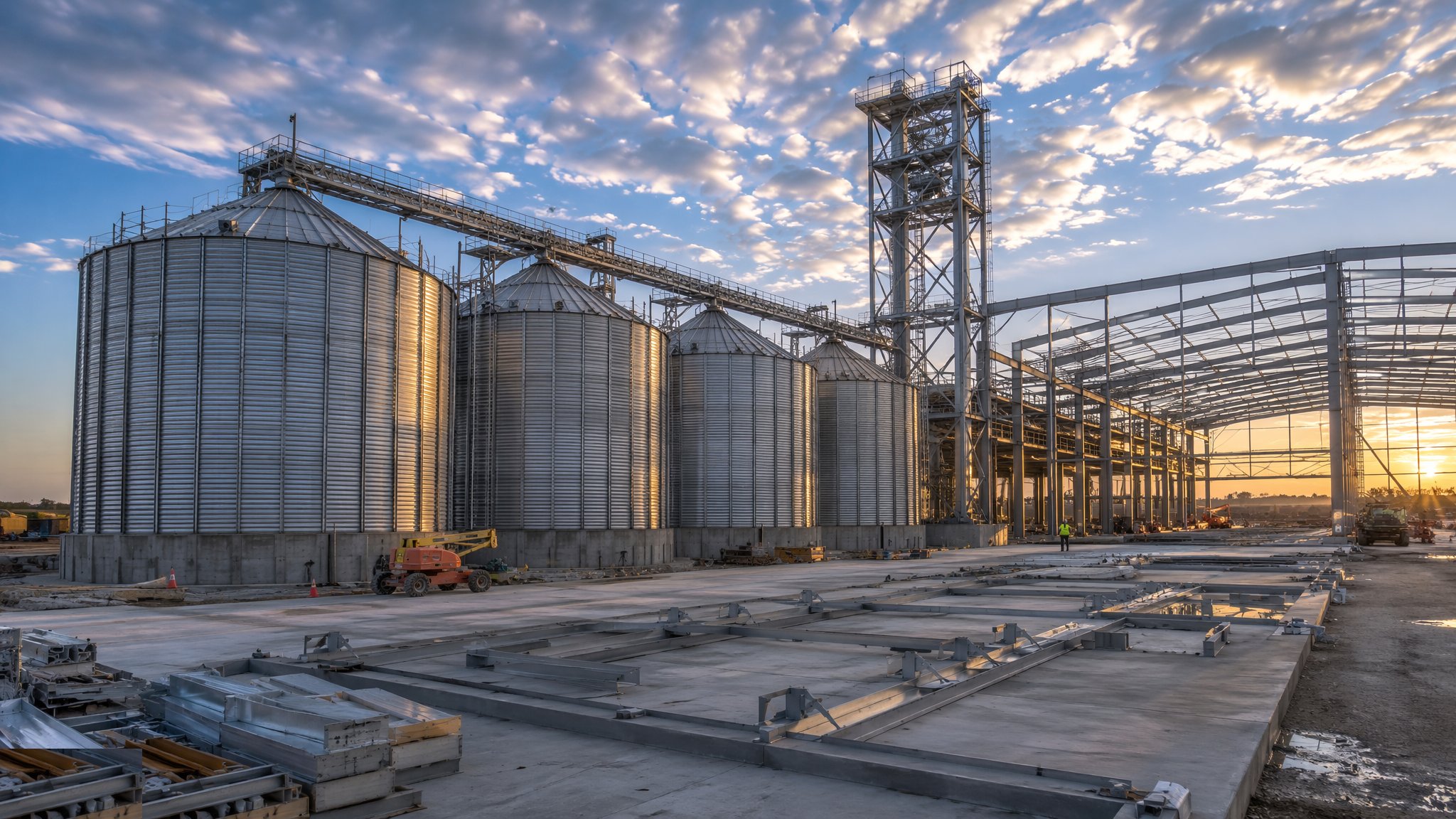
Barns, silos and food factories - hygiene and harvest dates set the programme.
Explore the sector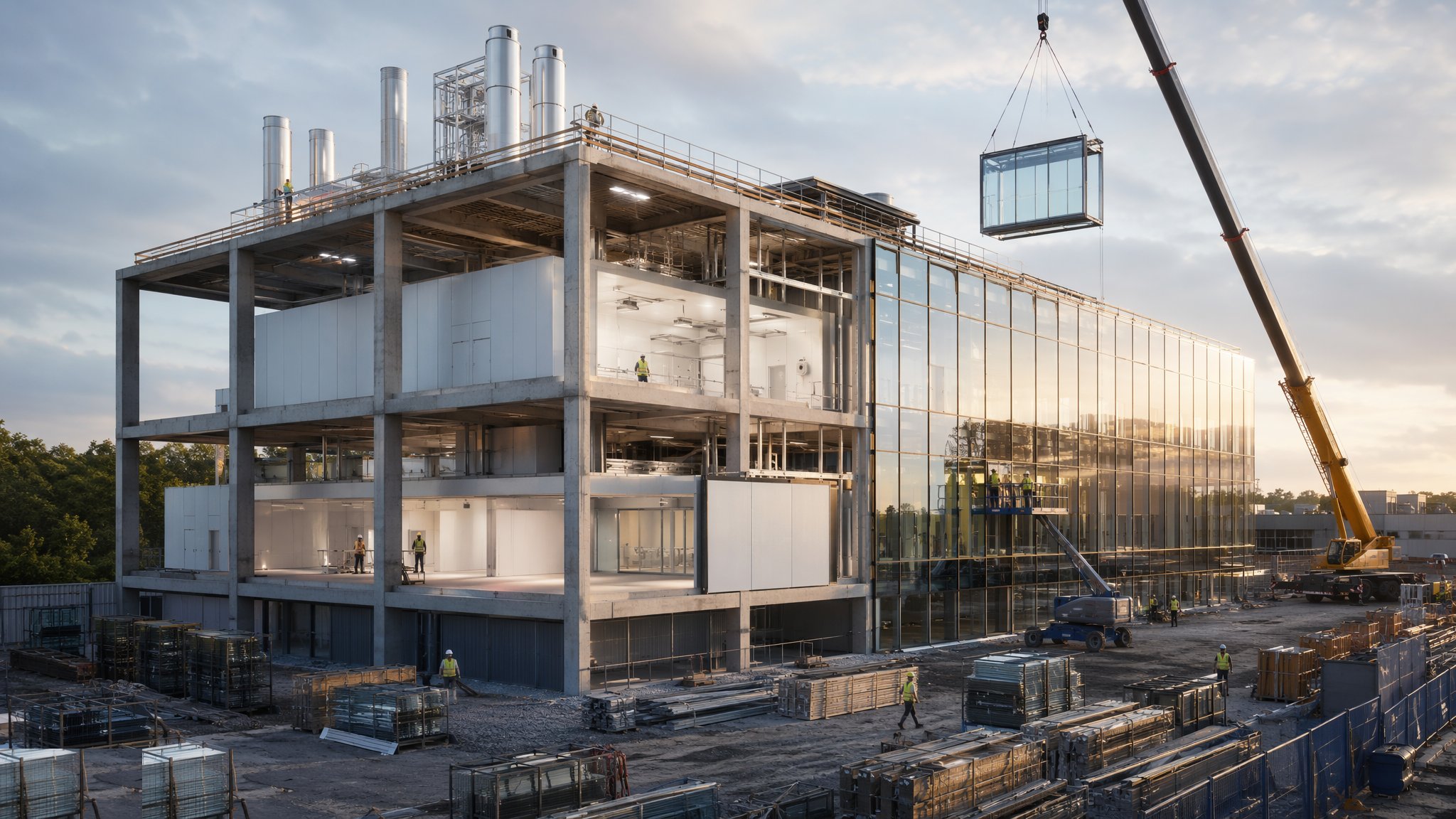
Laboratories and cleanrooms - where vibration, containment and cleanliness are the spec.
Explore the sector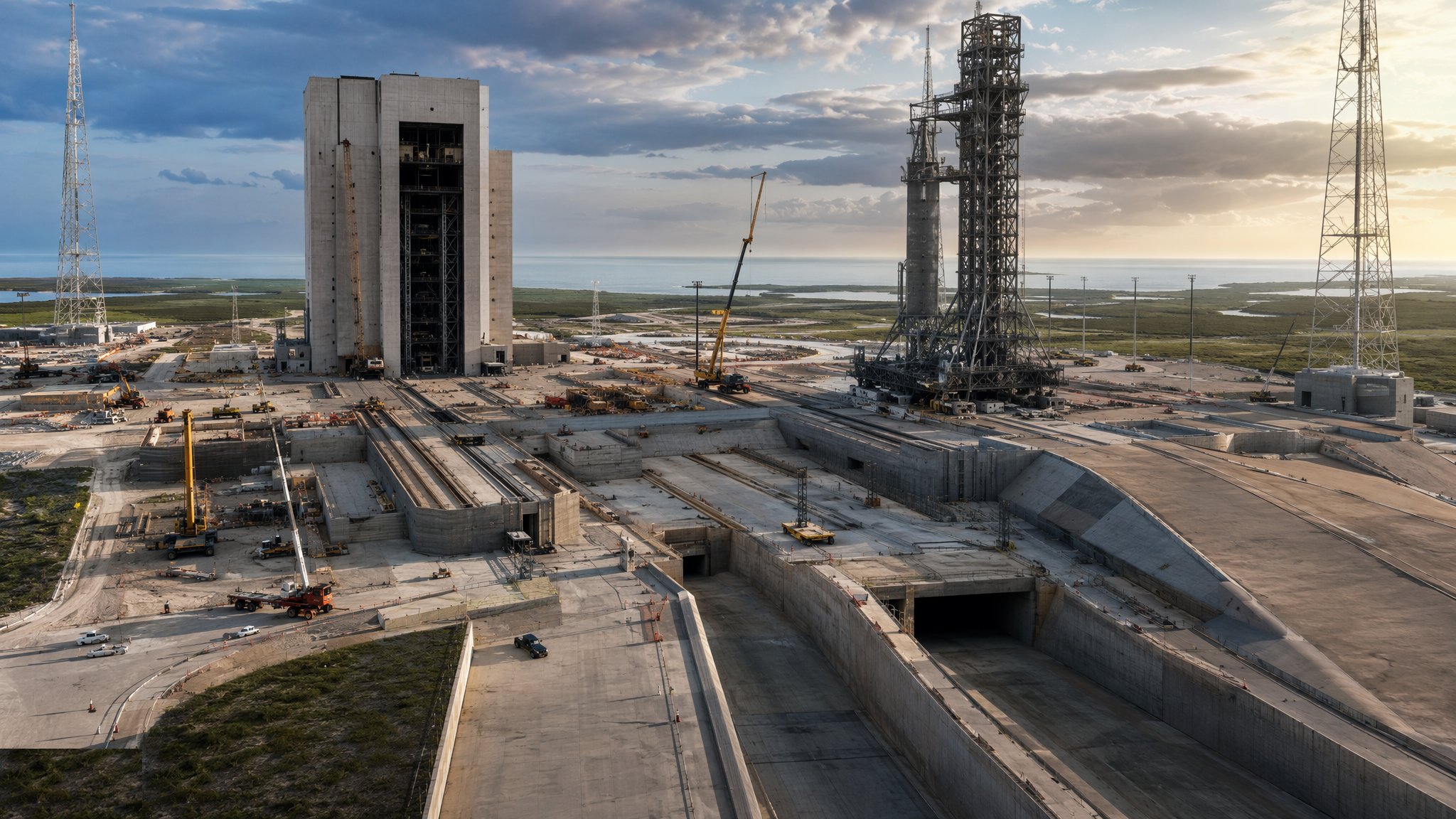
Launch sites and space facilities - the newest sector in the industry.
Explore the sectorIndustrial & Specialist Facilities in depth
Built to process, not to inhabit
Industrial work inverts the normal hierarchy of construction. On a buildings job the structure is the point; here the process plant is the point and the building is weather protection around it. A petrochemical unit is structural steel, pressure vessels, piping and instrumentation; a food factory is hygienic envelope around a production line; a warehouse is a slab, a frame and a roof at the largest economical span. The programme follows the plant: long-lead equipment is ordered first, the civils are sequenced to receive it, and the finishes are the least important thing on site.
The sectors split by what the process demands. Oil & Gas / Petrochemical and Mining carry the heaviest engineering - pressure systems, heavy lifts, hazardous-area electrical work and permit-to-work cultures that govern every spanner turned. Manufacturing and Warehousing are speed businesses: big spans, power-floated slabs, fast envelope, programme measured in weeks not years. Science, Research & High-Tech adds containment, vibration criteria and cleanroom regimes; Space & Extraterrestrial adds assembly halls and test facilities at the extreme of precision; Agricultural & Food Processing adds hygiene zoning and washdown drainage as first-order design drivers.
What unites them is that the client's engineer - the process designer, the equipment vendor, the production director - outranks the architect. Buildings work trains you to think about users; industrial work trains you to think about flows: of material, product, people and waste. Once you see that, the sectors read as variations on one engineering problem.
Geography splits the group sharply. The UK's industrial stock is mature: brownfield upgrades, logistics sheds on motorways, life-science campuses and a nuclear pipeline, all threaded through planning and heritage constraints. The Gulf's is expansive: petrochemical complexes, aluminium and steel plants, free-zone logistics and food-security facilities built on serviced industrial land at a pace the UK no longer attempts. The engineering grammar is identical - foundations, steel, plant, commission - but the scale of the canvas and the speed of the programme are not, and UK teams arriving in the Gulf usually need one project to recalibrate.
Who the clients are and how the work is bought
The clients are operating companies, not property companies: oil majors and their EPC contractors, manufacturers, logistics developers, food processors, pharmaceutical and semiconductor firms. They buy capability and track record, not lowest price, because a failed plant costs them production, not just money. Prequalification is brutal in the higher-hazard sectors - safety statistics, audited competence, demonstrated experience on comparable plant - and a contractor without the ticket simply does not get to tender.
The procurement shapes reflect the process content. Oil and gas runs through EPC (engineering, procurement and construction) contracts where one organisation carries design, procurement and build, often on FIDIC Silver Book or bespoke terms with heavy liquidated damages. That single-point structure travels the world with the industry and it is the reason process contractors look nothing like building contractors: they are engineering houses with procurement departments attached, for whom the construction site is the last third of a job that began in a design office two years earlier. Beyond that shared logic, who is buying, how they release money and what they demand before you may tender differ sharply between the two markets set out below.
Commercially, the group's signature is the weight of vendor packages and the interface risk between them. The piping contractor, the vessel fabricator, the automation vendor and the civils contractor all meet at connection points that somebody must coordinate, and the money is won or lost in those interfaces. Taking-off and BOQ discipline matters less here than interface schedules, hook-up diagrams and a procurement tracker that the whole team actually believes.
Who the clients are and how the work is bought: UK and Europe
Warehousing and logistics in the UK is developer-led design-and-build at high speed, often speculative. The clients there are the big logistics developers and property funds, financed by institutional equity and senior debt, with an occupier signed either before the shed is built or shortly afterwards; the contract is a lump sum with damages sized against the letting, and the whole model depends on planning consent and a grid connection being secured before anyone breaks ground. Beyond logistics the industrial client base is narrower and far more technical: pharmaceutical and biotech occupiers, food and drink manufacturers, automotive and battery plants, semiconductor and photonics firms, the nuclear estate with its new-build and decommissioning programmes, and a long tail of process operators upgrading plant that has to keep running throughout.
Pharmaceutical, semiconductor and advanced manufacturing facilities are typically two-stage or negotiated, because the cleanroom and process design cannot be fixed early enough for a single-stage lump sum. In practice that means a pre-construction services agreement, an open-book build-up towards a target or a lump sum, and a client-side process engineer who will change the design after the contract is signed because the production line has changed. Nuclear and defence work adds an assurance regime that dwarfs the construction itself: site licence conditions, security clearance, qualified suppliers and a documentation burden that has to be priced as a workstream rather than absorbed as an overhead. European practice takes a similar shape with different paperwork - VOB/B in Germany and national standard forms elsewhere - and with markedly more direct trade-package contracting run by the client's own engineering team than a British contractor tends to expect. JCT and NEC both appear across UK industrial work, with bespoke EPC terms wherever process performance is guaranteed.
The money is corporate capital rather than property money, and it behaves differently. A manufacturer's project competes internally against every other capital request in the group, is sanctioned in stages, and can be deferred, cut or relocated to another country at short notice when the business case moves. Grant and subsidy money supports gigafactories, semiconductor plants and decarbonisation schemes, with state-aid rules, milestones and clawback conditions attached. Speculative logistics is funded like property, on equity and debt against a valuation, so a shift in yields can stop a scheme that is technically ready to start. What newcomers get wrong here is consistent: they price the building and miss that the client is buying a production system; they treat the vendor equipment schedule as somebody else's problem; they plan by area instead of by system and arrive at the end with nothing complete; and they under-price the qualification, validation, testing and documentation regime that determines whether the plant is legally allowed to operate at all.
Who the clients are and how the work is bought: Middle East and North Africa
In the UAE, industrial work in the free zones and industrial cities follows FIDIC patterns with the authority - Trakhees, DDA or the zone operator - as an additional approval layer. The clients sitting above that layer are overwhelmingly state or state-linked: ADNOC and its operating companies in Abu Dhabi, Aramco, SABIC and Maaden in Saudi Arabia, QatarEnergy and the Qatari industrial holdings, EGA in aluminium, OQ in Oman, KNPC and KOC in Kuwait, and the Egyptian petroleum and military-industrial groups. The free-zone and industrial-city operators - KEZAD and Jafza in the UAE, Jubail and Yanbu under the royal commission in Saudi Arabia, Sohar and Duqm in Oman, Ras Laffan and Mesaieed in Qatar, the Suez Canal Economic Zone in Egypt - supply serviced industrial land and act as landlord, permitting authority and technical approver simultaneously, which is a combination of hats no UK contractor will have met before.
Process work is bought as lump-sum turnkey EPC and the culture around it is engineering-led and unsentimental. The contractor takes design, procurement, construction, commissioning and performance guarantees together; the contract is a FIDIC Silver Book or one of the heavily developed company forms that each national oil company maintains, with delay damages, performance damages and defect liability sized against lost production rather than against the contract value. Employer-side amendment is routine and severe: extended defects periods, high or uncapped liability, strict notice bars, ground and interface risk carried by the contractor, and every subcontractor, vendor and welder approved from the client's own registered lists. Prequalification is genuinely restrictive rather than a formality - the national oil companies run their own contractor and vendor registration, and an unregistered firm cannot bid at any price, however good it is.
The funding is sovereign and programme-driven. Petrochemical, mining, metals, pharmaceutical and food-security capacity is built to national industrial strategy - the Saudi industrial and mining programmes under Vision 2030, the UAE industrial strategy, Oman Vision 2040, Egypt's Suez Canal industrial corridor - so the pipeline follows policy at least as much as it follows the commodity cycle, and it is very large. Some plants are project-financed exactly like power stations, with a project company, an offtake agreement and lenders whose technical adviser reviews the EPC contract before financial close; others are funded straight off the national oil company's balance sheet, which is faster and less forgiving. Payment follows the regional pattern in either case: advance payment against guarantee, milestone certification tied to physical progress, hard-held retention, and final accounts that take considerably longer to settle than the works took to build. Contractors who do not price the cost of carrying that cashflow do not survive a second project.
Local content is an audited, scored requirement here rather than a policy aspiration. In-country value certification in the UAE and within ADNOC's supply chain, IKTVA in Saudi Arabia with its targets for localised goods, services and workforce, Omanisation and Qatarisation quotas, and Egyptian local-manufacture rules all bear directly on where you buy fabrication, cable and instrumentation and on who you are allowed to employ. Registration and classification gate the tender list before any of that begins. And the civil codes of the UAE, Saudi Arabia, Qatar, Oman, Kuwait and Egypt impose decennial liability on the contractor and the supervising engineer for ten years from handover, covering collapse and defects that threaten the stability and safety of the structure, with any clause purporting to exclude it void. On a process plant that means the foundations, the structural steel, the tank bases and the pipe racks carry a statutory ten-year tail no matter how elegantly the EPC contract allocates risk between the parties.
How to read this group of sectors as a newcomer
Start with Warehousing & Logistics. It is the gentlest entry point - a big slab, a steel frame, a fast envelope, dock levellers and racking - and it teaches the industrial mindset of slab flatness, bay repetition and programme speed without the hazard load of process plant. From there, Manufacturing & Industrial Plants adds the machine interfaces, and Oil & Gas / Petrochemical shows you the full weight of process engineering and safety culture.
Then read the two extremes to calibrate yourself. Mining & Extractive shows the group at its heaviest - remote sites, massive civils, wear-and-tear engineering - while Science, Research & High-Tech shows it at its most precise, where the envelope is a contamination control device and the tolerances belong to instrument engineering. Between those two poles, every other sector in the group finds its place.
Watch the cross-overs, because this group trades techniques constantly. Piling and heavy foundations serve every sector from silos to fabs. The permit-to-work discipline of oil and gas has colonised pharmaceuticals and food. Clean construction protocols developed for semiconductor plants now appear in battery gigafactories and data centres. Temporary works - the propping, lifting and access engineering behind every heavy installation - is the same discipline whether the load is a bridge bearing or a 300-tonne vessel. Read across the group and the apparent variety resolves into a small set of engineering ideas applied at different temperatures.
The UK and Gulf markets side by side
The UK industrial story is precision on constrained sites: life-science campuses squeezed into the Oxford–Cambridge arc, gigafactories and logistics on motorway junctions, nuclear new-build under intense regulatory gaze, and upgrades to process plant that must keep running throughout. The Gulf story is scale on open ground: Ruwais-scale petrochemical expansion, aluminium and steel complexes, free-zone logistics cities and food-security infrastructure, delivered at a pace that treats UK programme norms as a suggestion.
The workforce model differs just as sharply. UK industrial sites run on a mature, carded domestic workforce with agency top-up; Gulf sites run on large international labour forces with camp logistics, heat-stress management and midday working rules as first-order programme inputs. Welfare, accommodation and summer working hours are not HR details in the Gulf - they are schedule constraints that belong in the master programme. Teams that plan the Gulf with a UK labour model discover the difference in their first June on site.