Shafts, conveyors and process plants - construction where the product is the ground.
Mining infrastructure combines underground works, heavy civil engineering and process plant on remote sites with serious logistics. The corridor civils, earthworks and shaft methods are shared with transport and tunnelling, linked below - but here the ground is not just the founding medium, it is the product, and every structure exists to dig it, crush it, move it or store what is left of it.
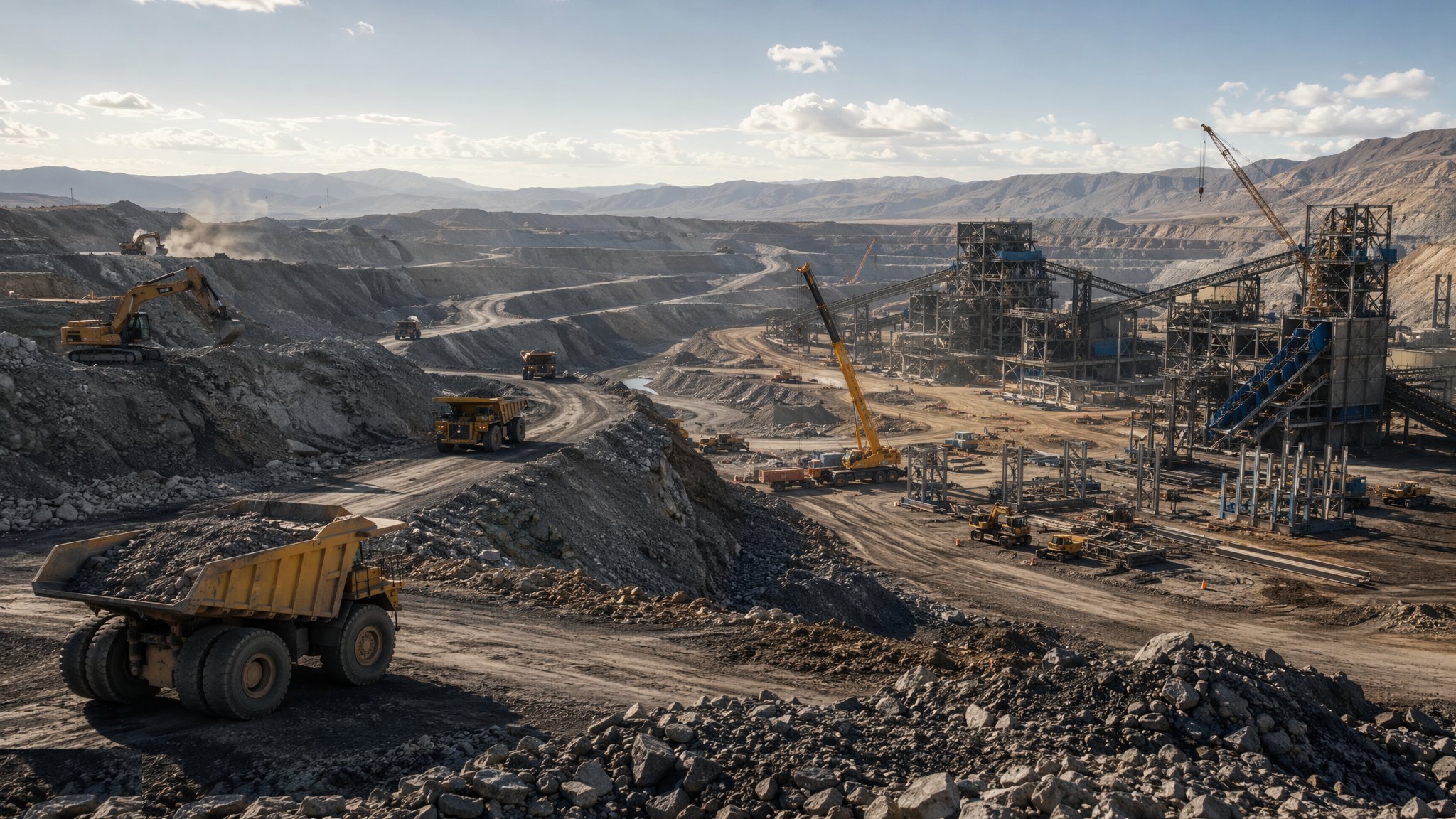
The process map - 3 guides
Each one is a full guide: overview, variants, numbered steps, plant, testing, safety and defects.
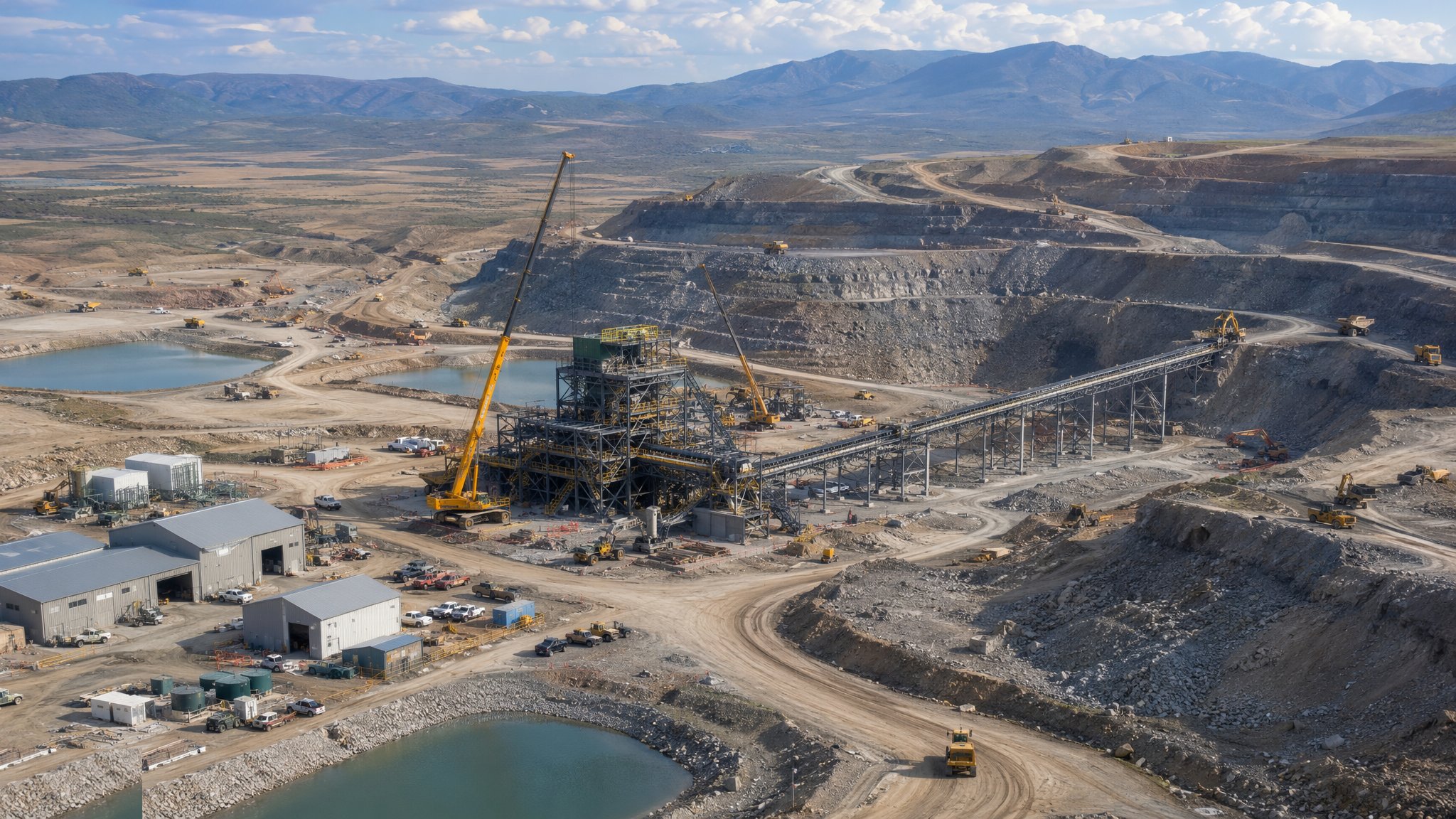
Surface Mine Infrastructure
The working surface of an open pit - haul roads engineered like assets, ROM pads and tipping points, workshops and washdowns, explosive stores behind their bunds, and water that is managed or manages you.
Open process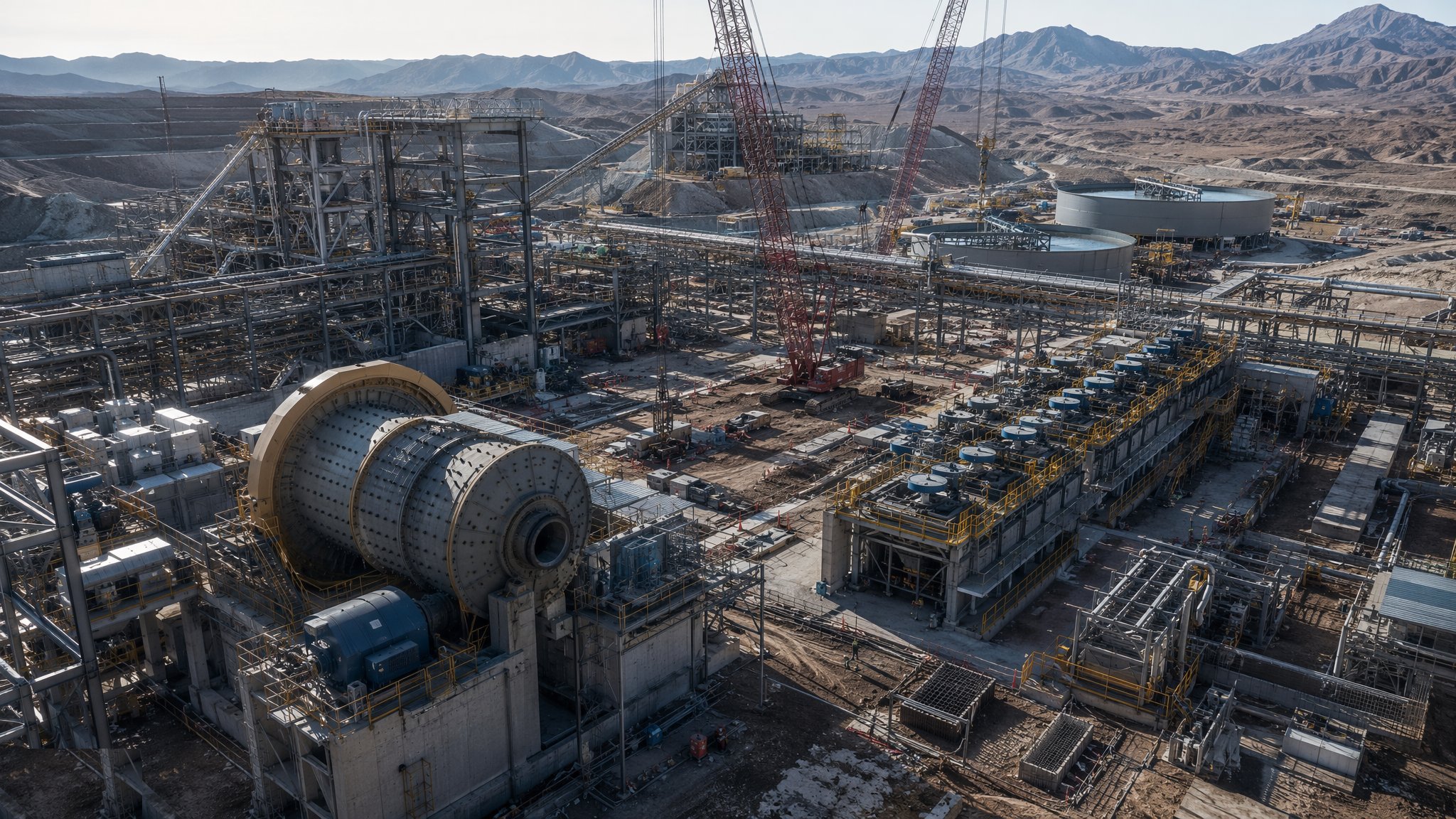
Mineral Processing Plant Construction
Crushers, mills, flotation and thickeners - a factory built of heavy concrete and vibrating steel, where the civils are machine foundations and alignment is measured to the millimetre on equipment that weighs hundreds of tonnes.
Open process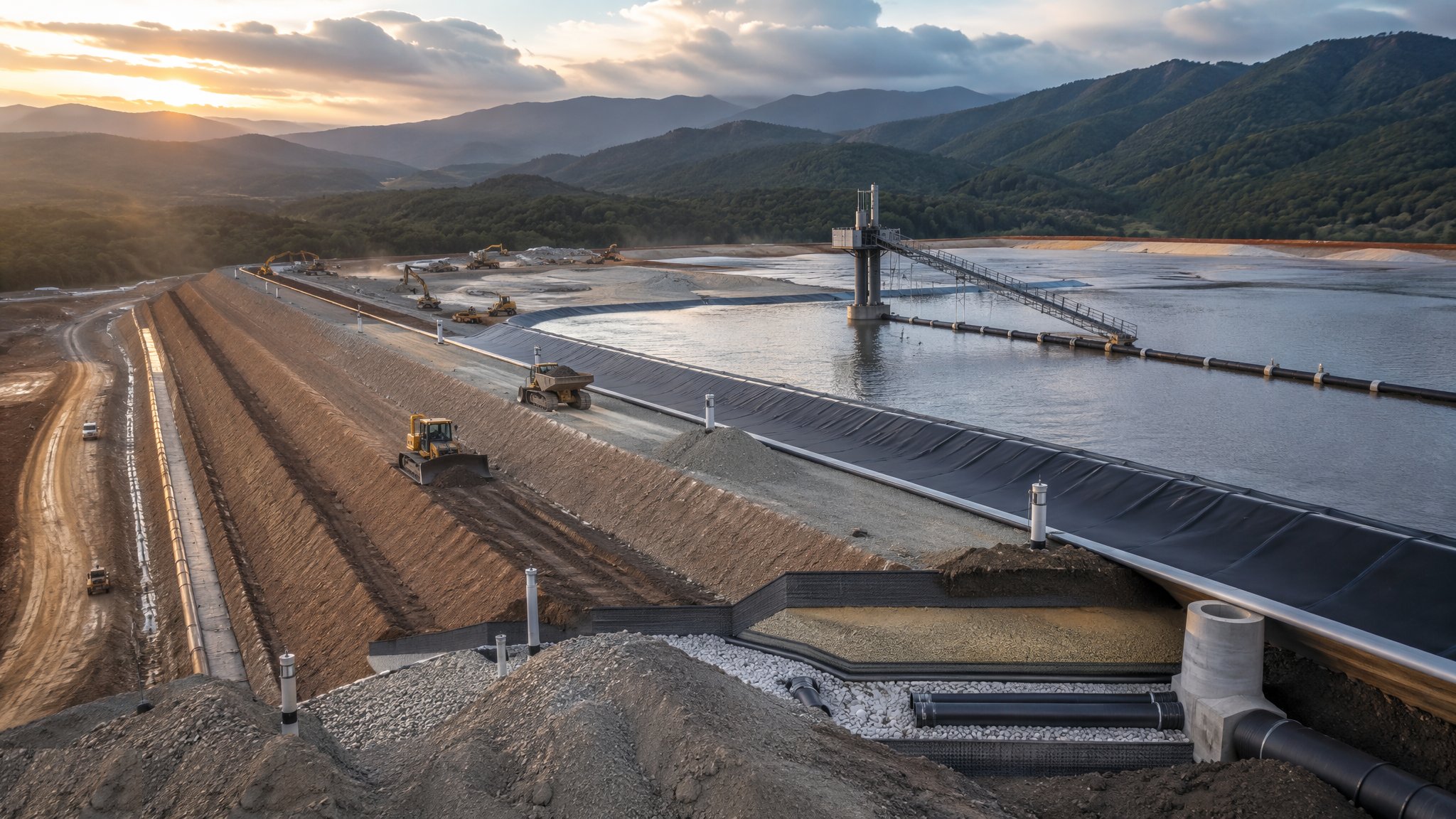
Tailings Storage & Mine Services
The structures a mine is judged by long after it closes - tailings embankments raised in stages, liners and underdrains, decants and reclaim water, pipelines and the instruments that never stop watching.
Open processShared methods used in this sector
These guides are owned by other sectors - the canonical page lives there - but the method is the same here. Cards open the guide at its home sector.
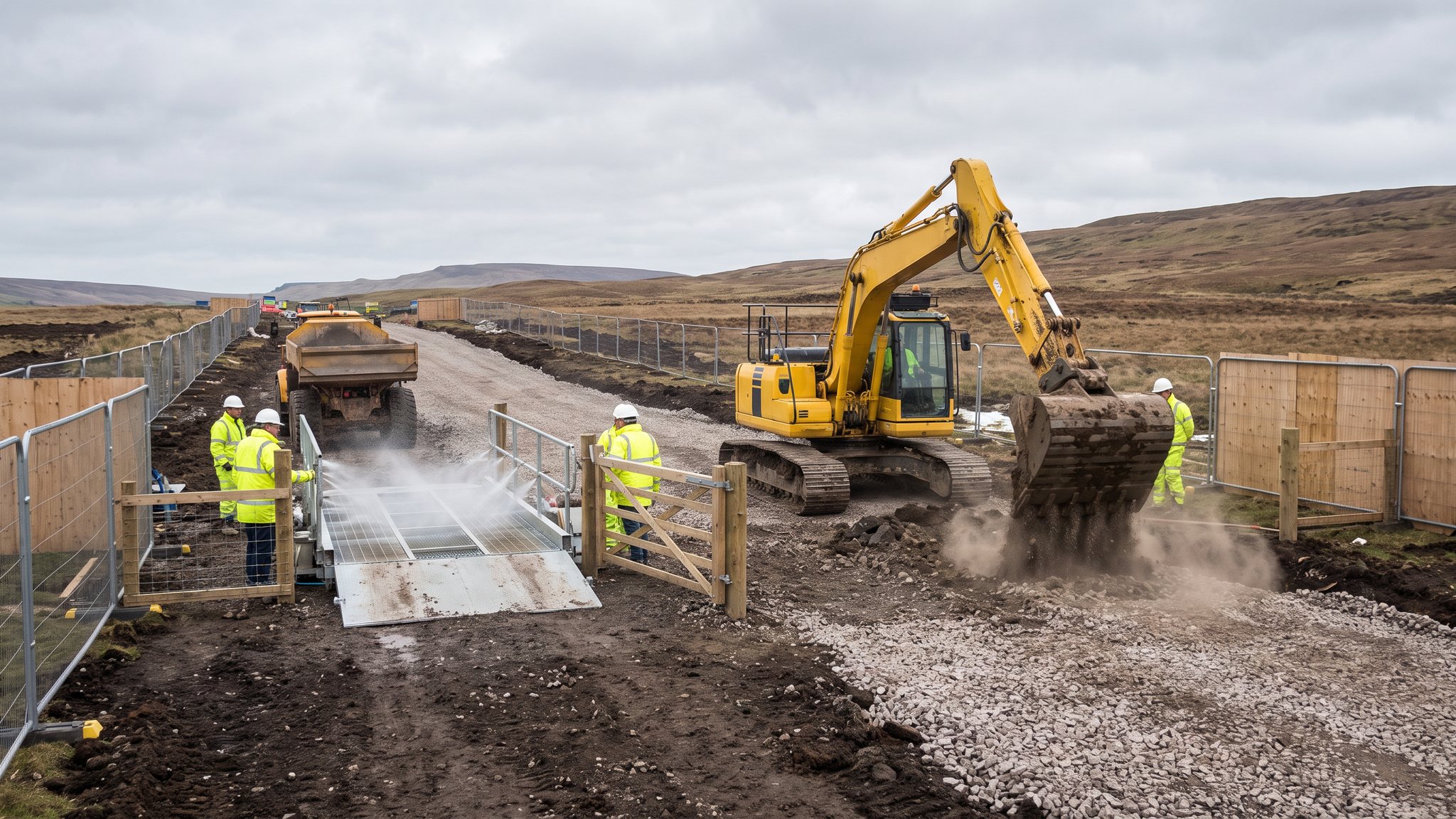
Corridor Access & Enabling Works
Turning a length of route - often a live highway - into a controlled, approved, workable construction corridor.
Open processCanonical guide: Roads & Highways
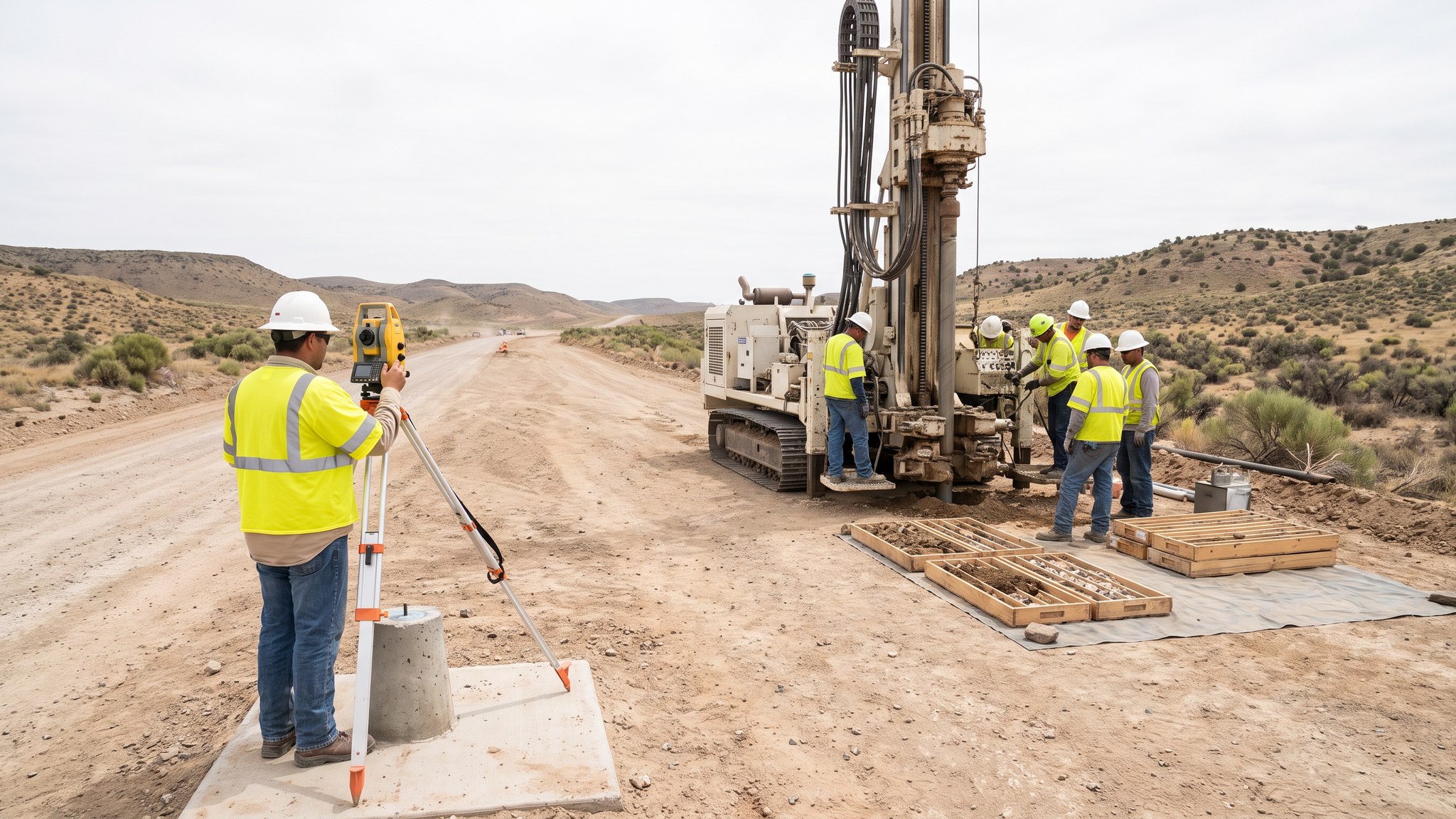
Survey Control & Ground Investigation
Corridor control networks and the ground investigation that tells you what the road, bridge or tunnel is actually standing on.
Open processCanonical guide: Roads & Highways
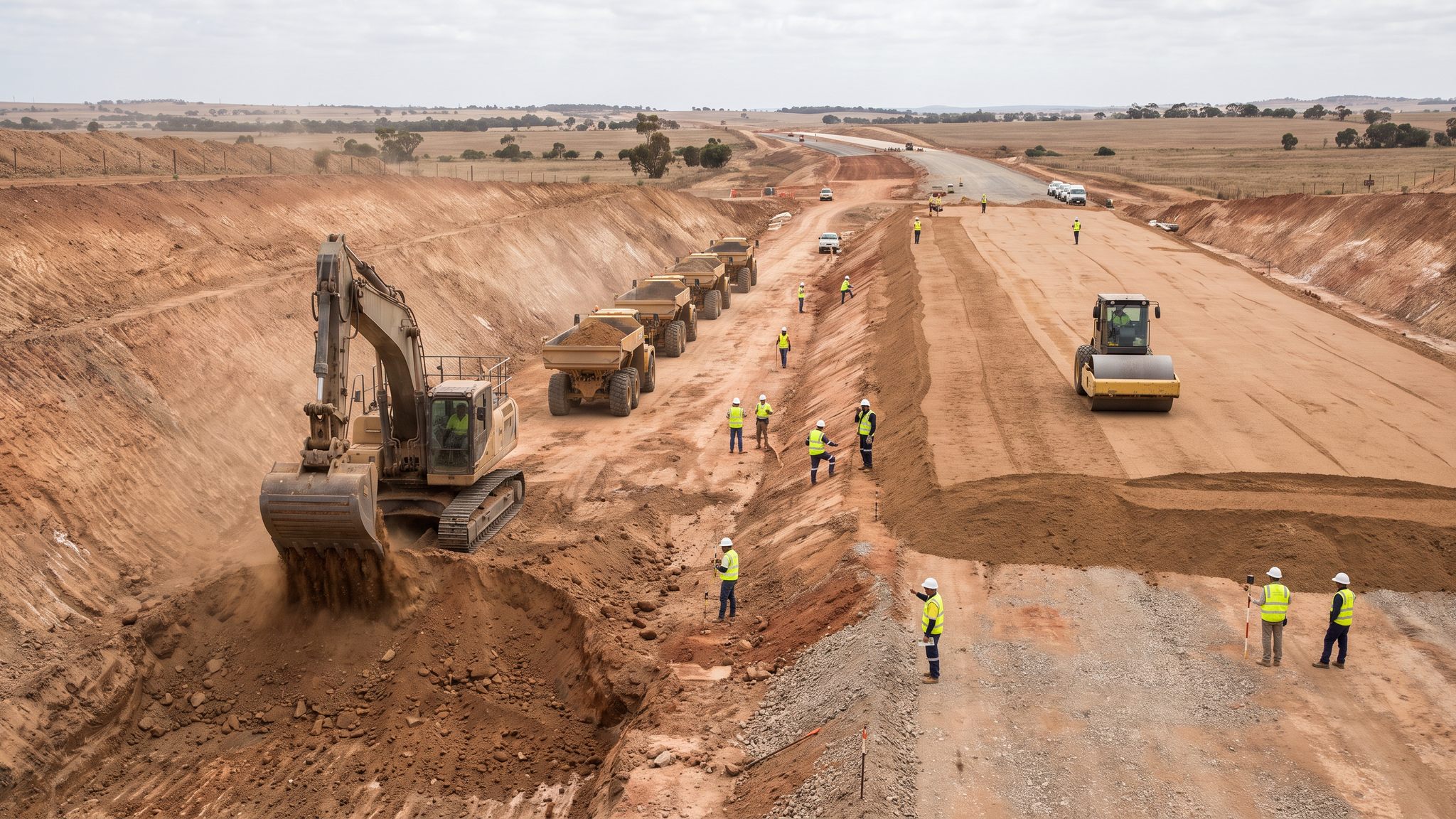
Bulk Earthworks - Cuttings & Embankments
Moving hundreds of thousands of cubic metres to build the corridor's shape - cuttings, embankments and the formation everything sits on.
Open processCanonical guide: Roads & Highways
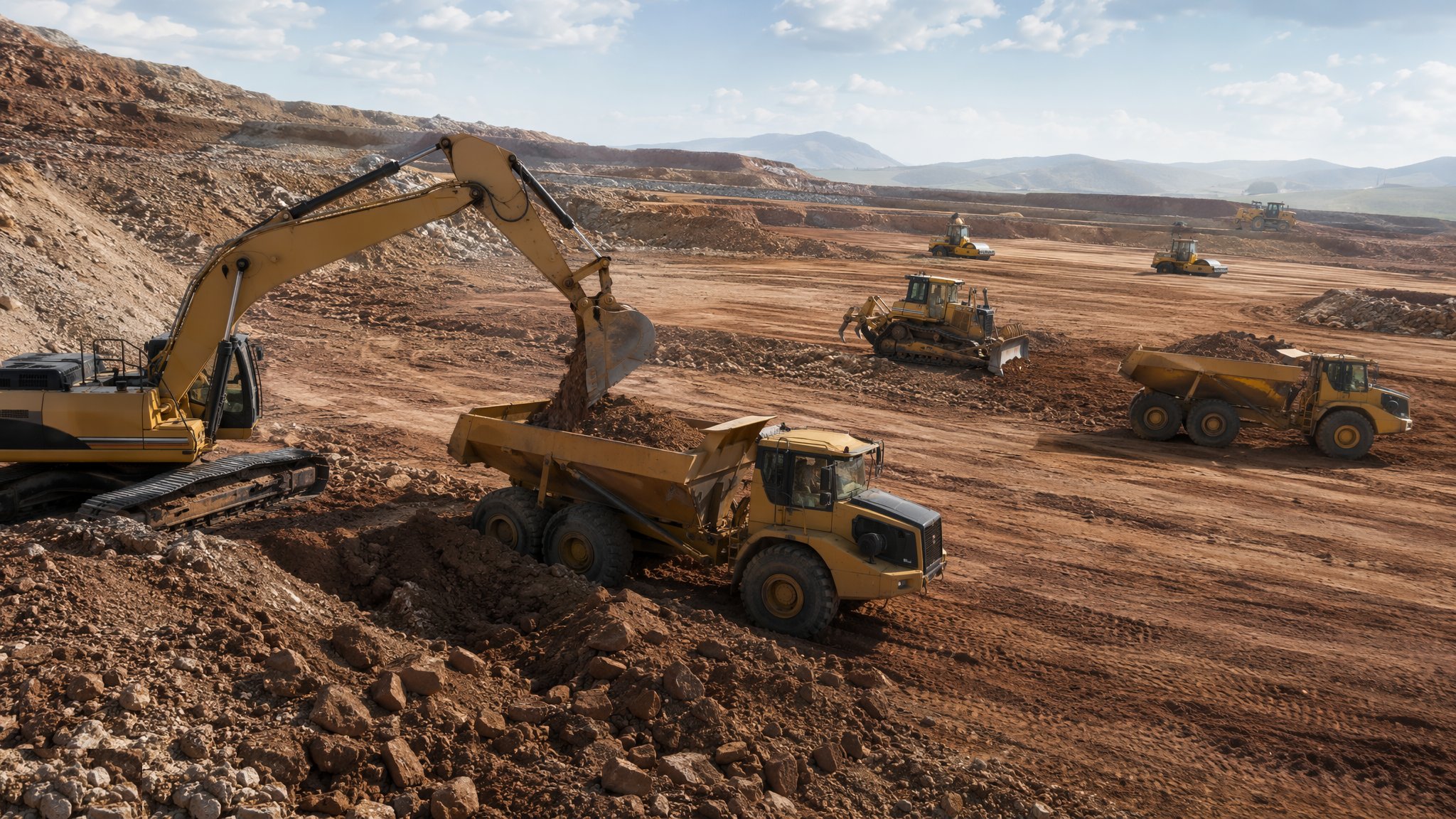
Earthworks & Excavation
Cut and fill, trenching and compaction - reshaping the ground to take the building.
Open processCanonical guide: Residential & Housing
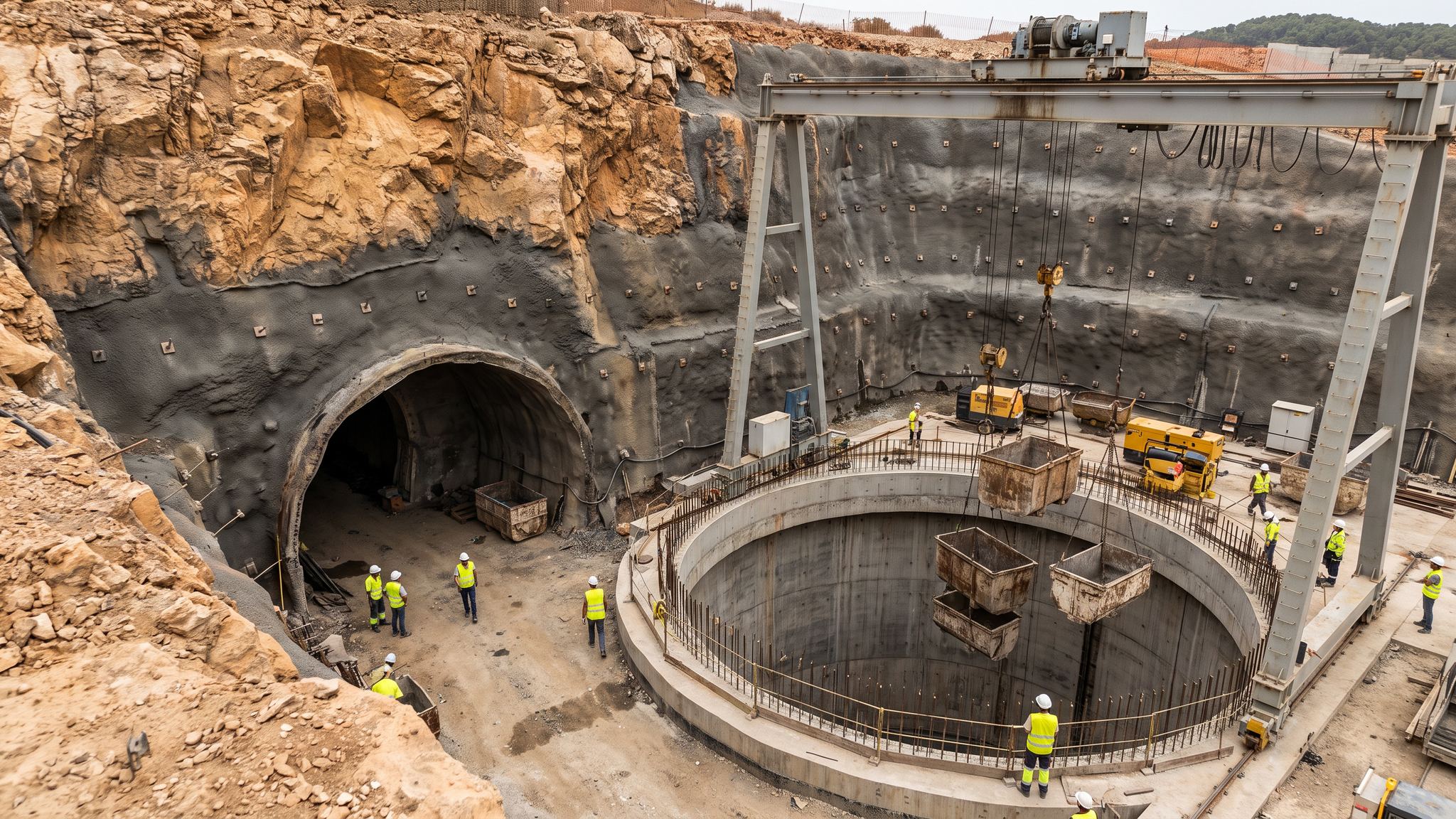
Shafts & Portals
The deep excavations that let tunnelling begin - launch and reception shafts, and the portal structures where the tunnel meets daylight.
Open processCanonical guide: Tunnels & Underground
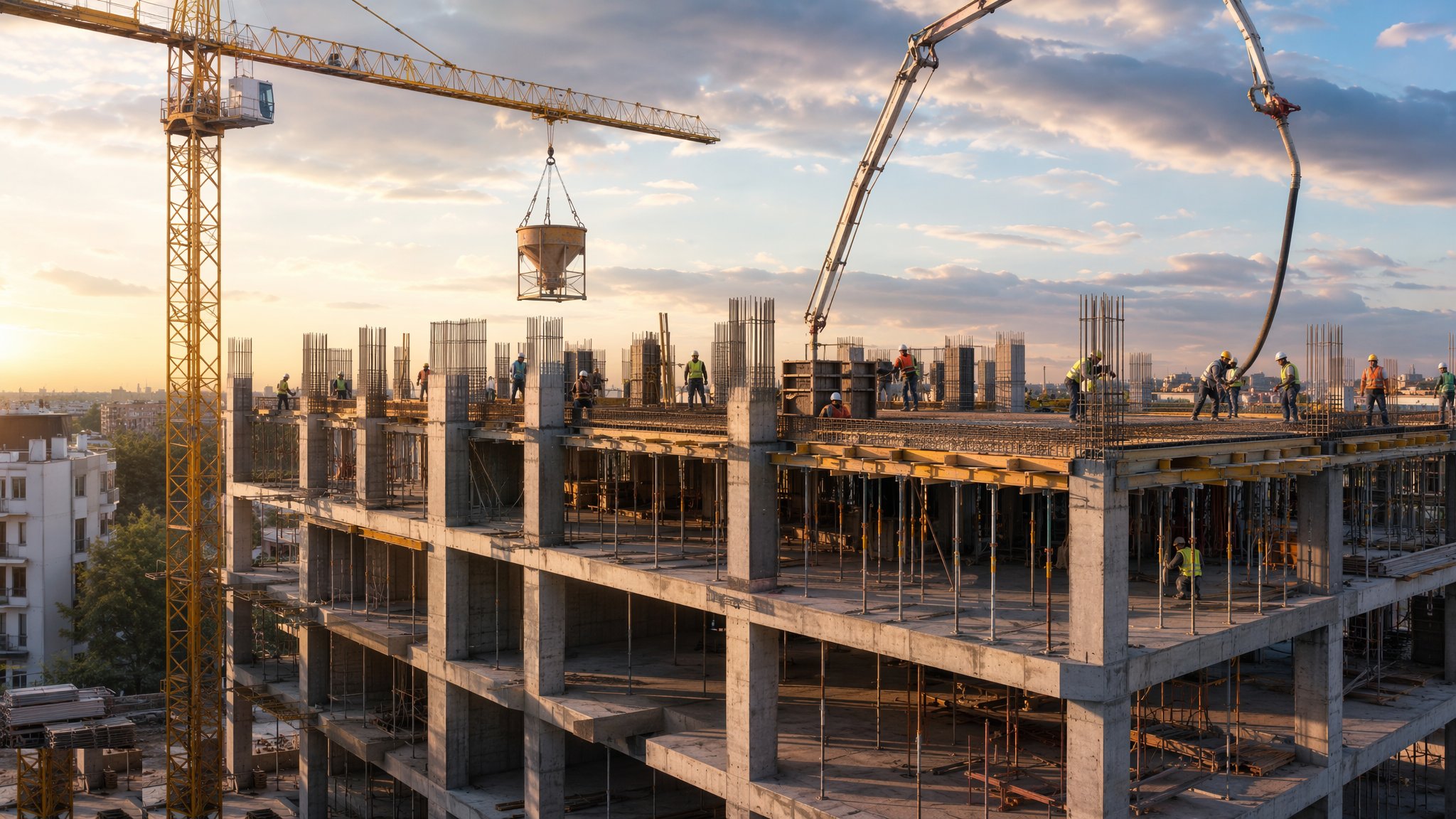
Concrete Frame Construction
Columns, walls and slabs cast in situ - the ribcage of a residential tower.
Open processCanonical guide: Residential & Housing
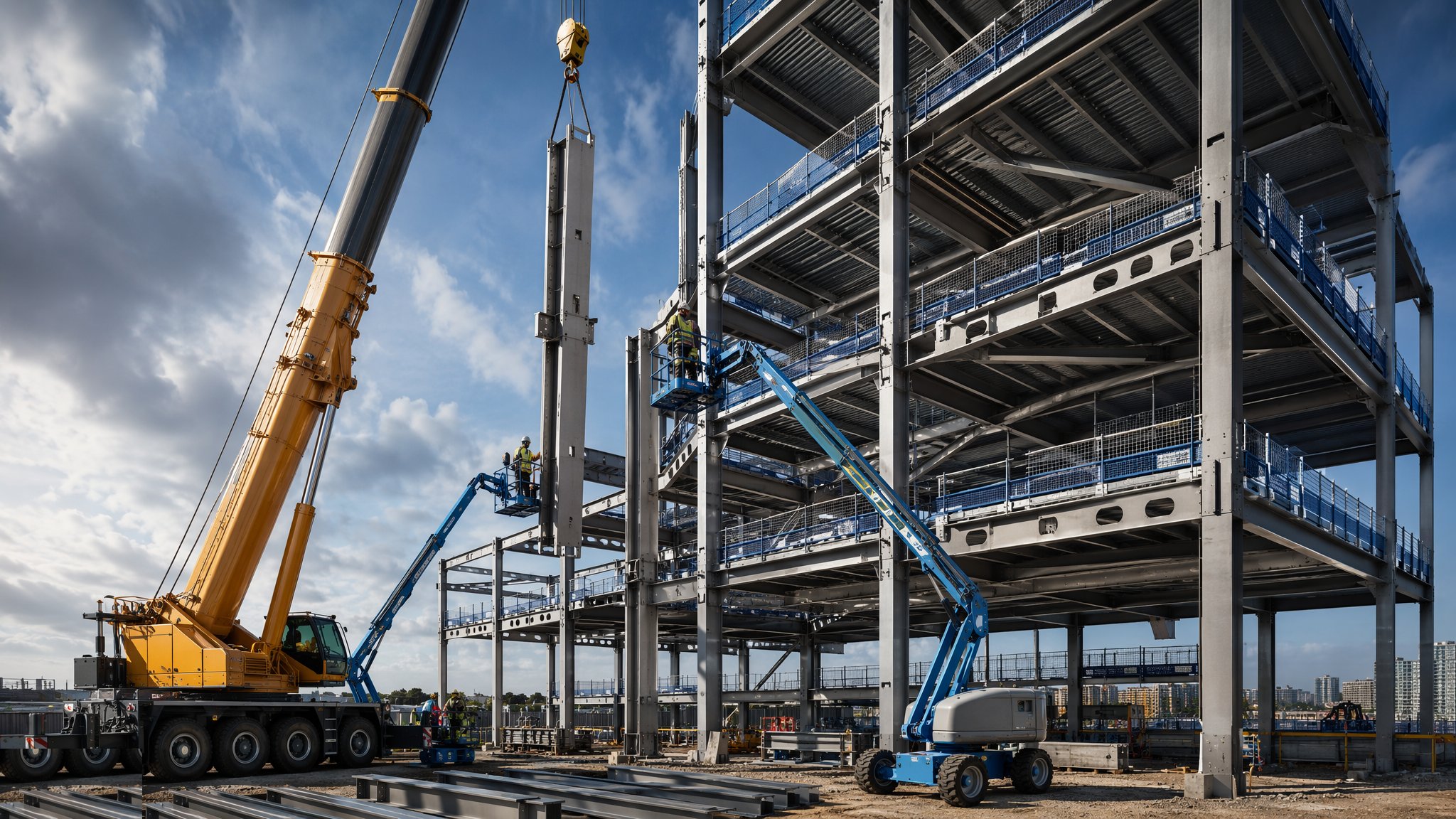
Steel Frame Construction
Fabricated off-site, erected at speed - bolted skeletons for frames that fly up.
Open processCanonical guide: Residential & Housing
Mining & Extractive in depth
About Mining & Extractive
The three guides in this sector cover surface mining infrastructure - the workshops, conveyors and haul-road estate around the pit; mineral processing plants, heavy industrial construction with wear surfaces and vibration loads everywhere; and tailings and mine services, where the earthworks hold back material you never want to see move.
Procurement on remote sites
Mine infrastructure is procured like the process industry it serves: EPC or EPCM for the processing plant, with the owner's engineering team holding the metallurgical design close, and unit-rate civil contracts for the earthworks, haul roads and tailings storage where quantities are genuinely uncertain. On remote sites the supply chain is part of the design - modularised plant, pre-assembled piperacks and containerised substations exist because site labour is scarce, expensive and housed in camps the project also has to build.
The commercial reality is that the mine's economics dominate every decision. A processing plant delivered late is ore unmined and revenue deferred, so programmes are aggressive and incentive-laden; conversely, a commodity price dip mid-project can slow or suspend construction regardless of the contractor's performance. Contractors price that stop-start risk or learn about it the hard way.
Water management binds the whole site together: pit dewatering bores, surface diversion channels keeping clean water out of the working areas, process water dams and recycling circuits, and the contact-water systems that treat everything the ore has touched before discharge. These are permanent utilities built to environmental permit standards, and their construction is phased ahead of the operations they protect - a diversion channel finished one wet season late is a flooded pit and a regulator's investigation, in either order.
What drives the programme
The programme hinges on bulk earthworks and long-lead mechanical kit - mills, crushers, thickeners and kiln shells that can run eighteen months or more from order. Haul roads and the ROM pad come first because they open the pit; the process plant chases its equipment deliveries; tailings storage construction never really stops, because the facility grows with production and its starter dam must be ready before first ore.
Weather windows and water govern the earthworks: many mining regions have wet seasons that shut bulk earthmoving for months, and dewatering a pit or a tailings footprint is a permanent operation, not a temporary works item. Commissioning is metallurgical as much as mechanical - the plant must make grade and recovery, so the first months of ore through the mill are a construction deliverable as much as an operational one.
Failures that cost
Tailings failures are the sector's catastrophic risk, and the industry's answer after high-profile disasters has been the Global Industry Standard on Tailings Management: independent review, conservative design, and construction quality assurance with an engineer of record who stays accountable long after handover. For the builder, that means liner placement, compaction testing and as-built records on tailings works are treated with the seriousness of nuclear QA, because the liability is comparable.
The everyday losses are wear and vibration. Chutes, crushers and mills destroy their surroundings; a foundation designed without proper dynamic analysis or a wear surface skimped at the hopper outlet comes back as a maintenance claim within a year. On the civils side, haul roads built to a light specification fail under 200-tonne trucks in weeks, and re-laying a haul road while the pit is producing is one of the most expensive repair jobs in the industry.
UK and UAE context
Neither the UK nor the UAE is a hard-rock mining heartland, but both have real extractive sectors: the UK's quarries, potash and gypsum mines operate under the Quarries Regulations and HSE's specialist inspection regime, with restoration and aftercare conditions attached to every planning consent. The Gulf's extractive work is quarrying for aggregate and armour stone - the construction industry's own raw material - plus large-scale dredging and reclamation.
For UK and UAE contractors, mining-sector skills show up mainly overseas, on EPCM contracts in Africa, Central Asia and Australia, where the home-market disciplines - CDM-style hazard management, documented QA, environmental permitting - are exportable advantages. UAE-based operators additionally bring logistics and camp-construction experience from remote Gulf industrial projects, which transfers directly to desert mining work.
Underground works and shafts
Where the ore is deep, the sector becomes heavy tunnelling: shafts sunk by drill-and-blast or roadheader through ground that is often wet and broken, headgears and winding houses above them, and underground chambers for crushers and pumps that are caverns by any civil standard. Shaft sinking is a round-the-clock operation on a fixed cycle - drill, charge, fire, muck, line - and the programme is arithmetic: metres per cycle, cycles per day, and the ground's willingness to cooperate. Water is the usual enemy; grouting and freezing are the answers, and both are slow.
Everything underground is designed for a wet, dirty, abrasive life. Concrete is specified for sulphate and chloride, steelwork for corrosion allowances, and every penetration in a shaft lining is a future leak to be grouted. Commissioning underground plant adds confined-space and ventilation regimes that make surface process commissioning look relaxed, and the handover documentation - ground support records, lining as-builts, hydrogeological monitoring - becomes part of the mine's statutory file.
Camps, logistics and the supporting estate
Remote mining projects build a town before they build a plant: camps for thousands of workers, airstrips, power generation, water supply and sewage treatment, all on the critical path because construction labour cannot arrive before the bed it sleeps in. This enabling estate is itself a major programme, usually procured as early works packages with modular buildings and containerised utilities, and its quality decides workforce retention - a real productivity factor when the alternative employer is the mine two hundred kilometres away.
Logistics planning runs the job day to day. Every vessel, pipe spool and bag of cement arrives over a supply chain measured in weeks, with port capacity, road permits for abnormal loads and customs regimes all on the risk register. The best-run projects treat materials management as a first-class discipline with its own systems and seniority, because a mill shell sitting at a port while the erection crew stands by is the sector's most expensive photograph.
Building the process plant itself
The concentrator or processing plant is the sector's centrepiece: a cascade of heavy structures - primary crusher pocket, coarse ore stockpile, mill building, flotation and thickener terraces - stepped down a hillside where topography allows, so gravity does work that conveyors otherwise must. Concrete is massive and heavily reinforced; the mill foundations are dynamic structures designed with the machine vendor to keep vibration within limits that protect both the equipment and the concrete beneath it.
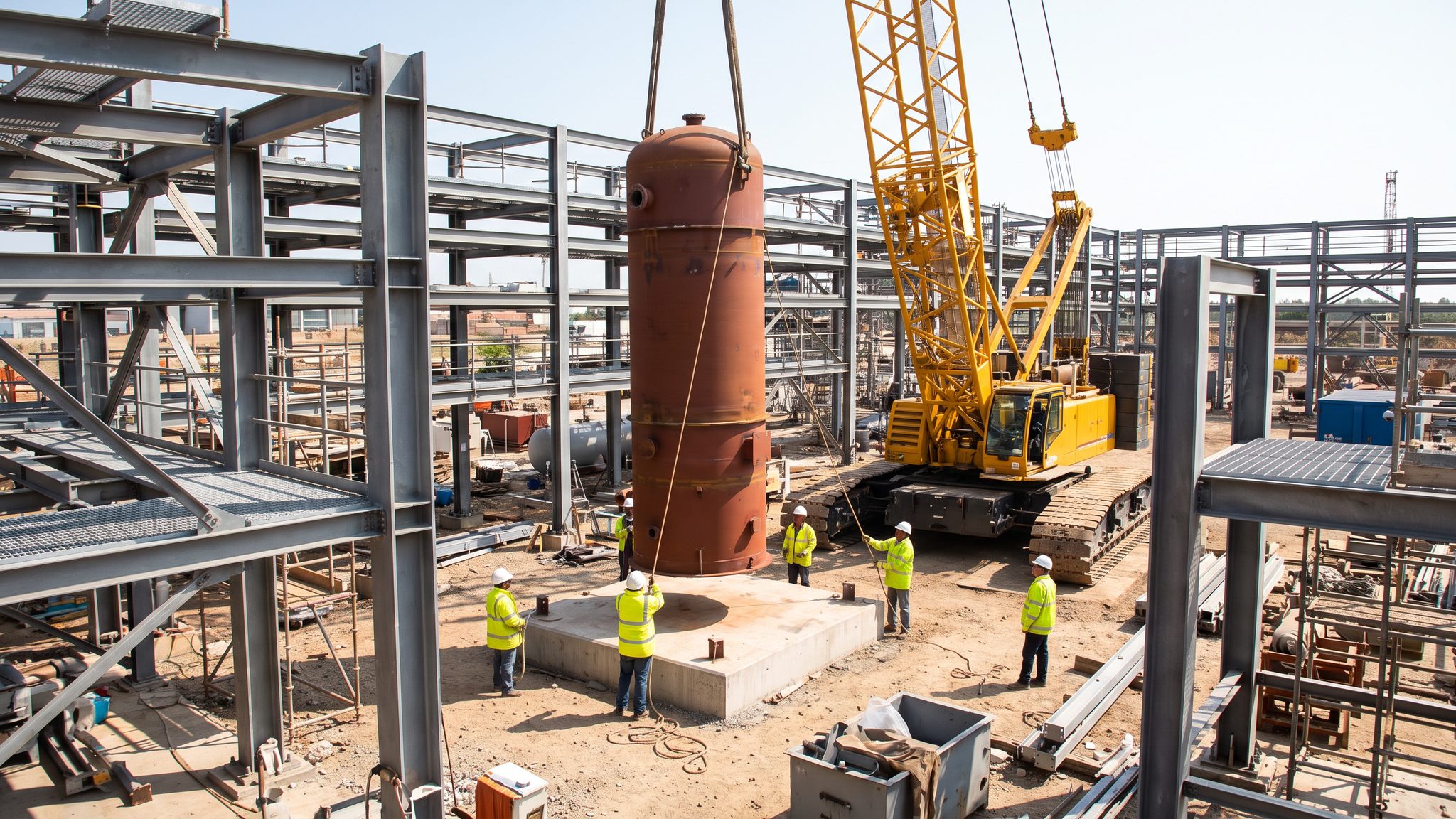
Erection is a heavy-lift programme: mill shells and heads in hundred-tonne pieces, girth gears aligned to fractions of a millimetre, crushers lowered into their pockets before the building closes over them. The sequence is welded to equipment delivery, and the installation tolerances belong to the mechanical erectors, not the civils - the interface where a surveyor's benchmark meets a millwright's optical alignment is one of the sector's defining handshakes.
Conveyors and the movement spine
If the plant is the heart, the conveyors are the arteries: overland conveyors kilometres long on their own trestle lines and transfer towers, gallery conveyors threading between buildings, and the stackers and reclaimers working the stockpiles. Conveyor construction is repetitive steel erection with a precise end - strings of idlers aligned in line and level so the belt tracks true - and the mechanical completion milestone that matters is the first material run, when the whole chain from crusher to stockpile proves itself together.
Transfer points are where the system wears: chutes taking the impact of falling ore are lined with replaceable wear plates and ceramic or rubber systems, and their design decides the maintenance bill for years. The construction contribution is access and replaceability - a liner that cannot be changed in a planned maintenance shift will be changed in an unplanned one, at production cost.