Launch sites and space facilities - the newest sector in the industry.
Space infrastructure is industrial construction at the frontier. The methods are borrowed from the heaviest ends of the existing sectors - corridor civils, massive foundations, industrial steel - linked below - but the loads are unusual: flame trenches and launch pads that are really heavy civils designed to be partially destroyed on purpose, and integration buildings that are really cleanrooms with cranes.
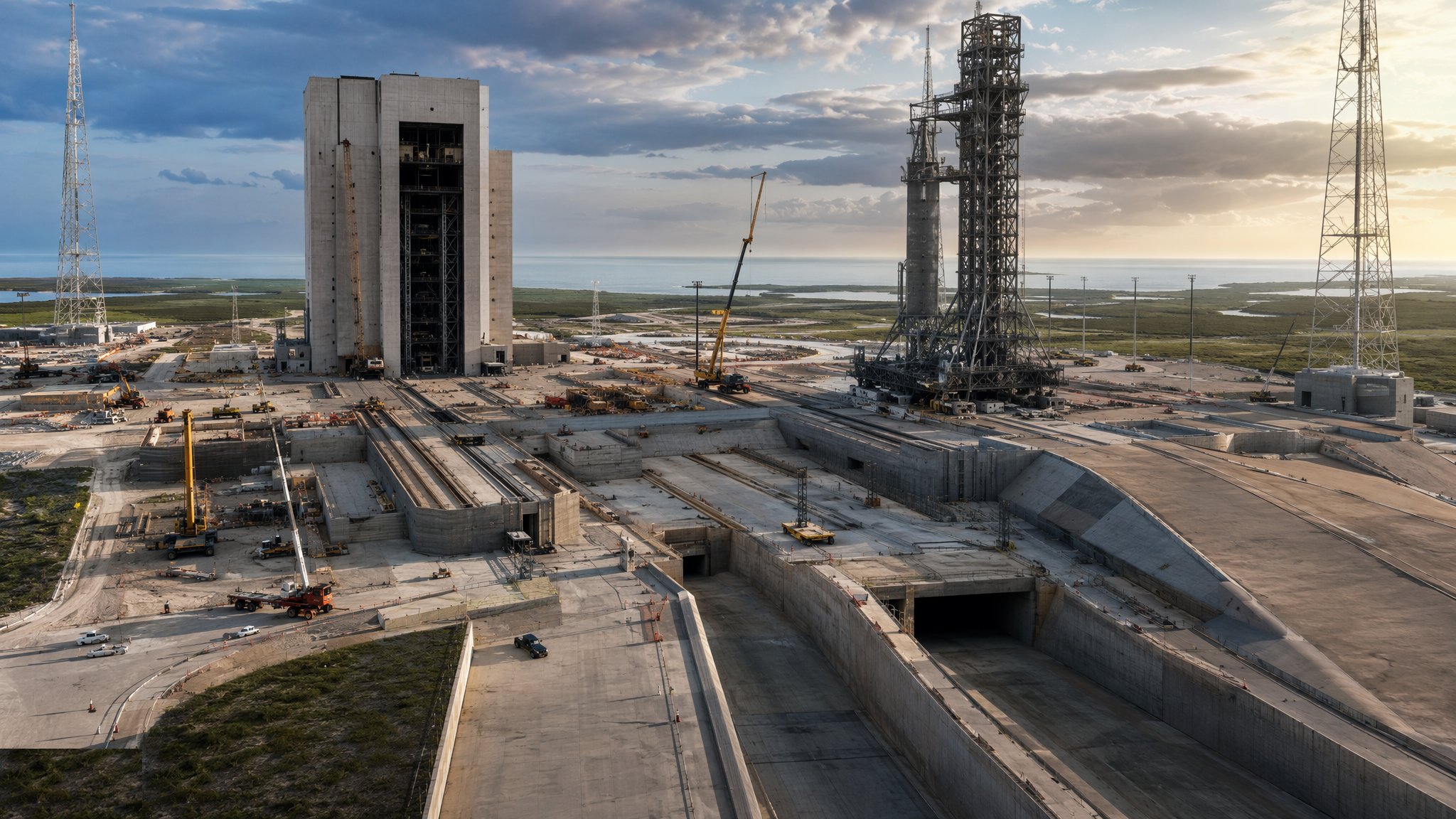
The process map - 2 guides
Each one is a full guide: overview, variants, numbered steps, plant, testing, safety and defects.
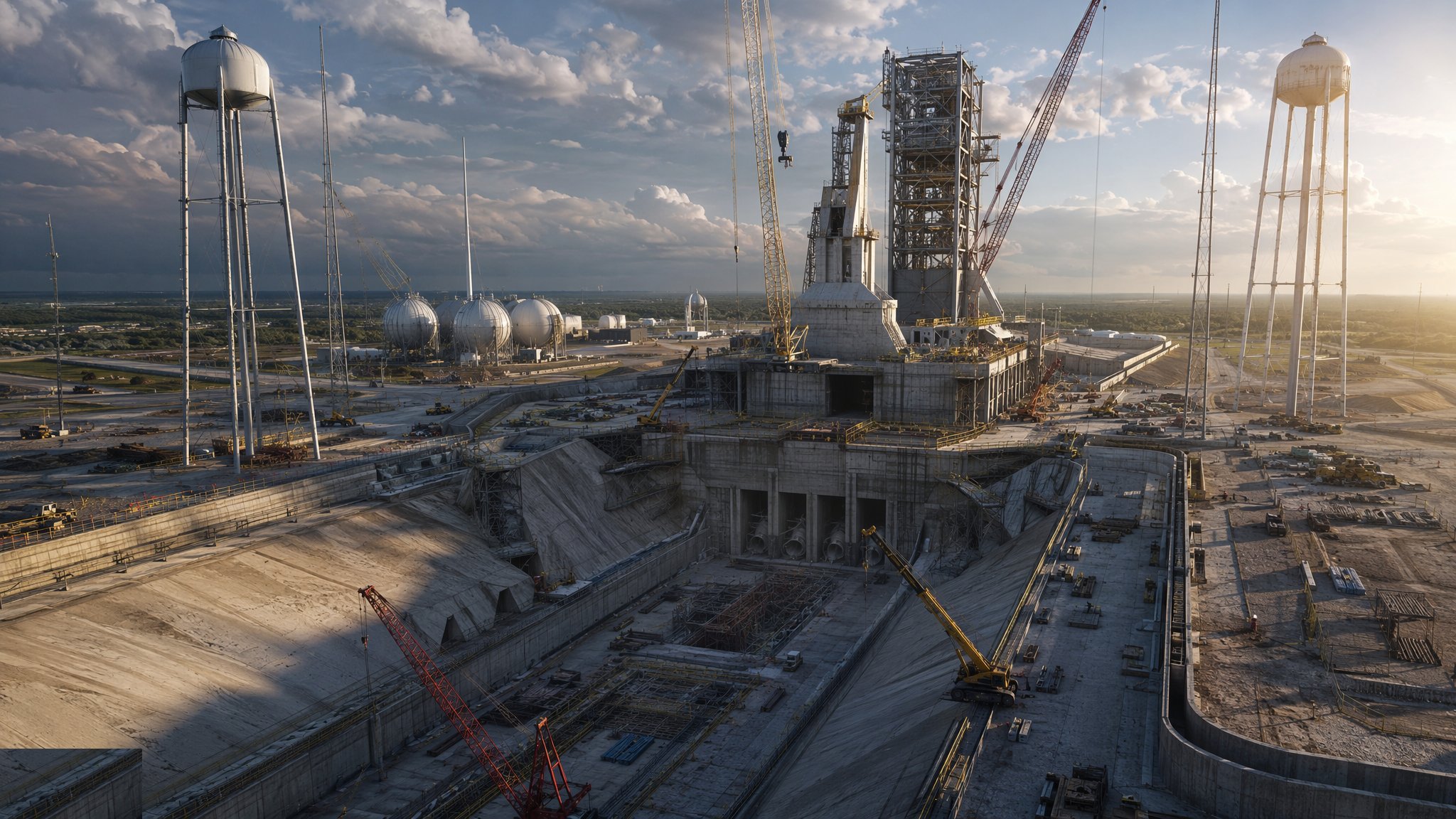
Launch Facility & Pad Construction
Concrete, steel and water engineered to survive a rocket motor at arm's length - flame trenches, deluge systems, cryogenic farms and lightning masts, built for the ten most violent seconds in construction.
Open process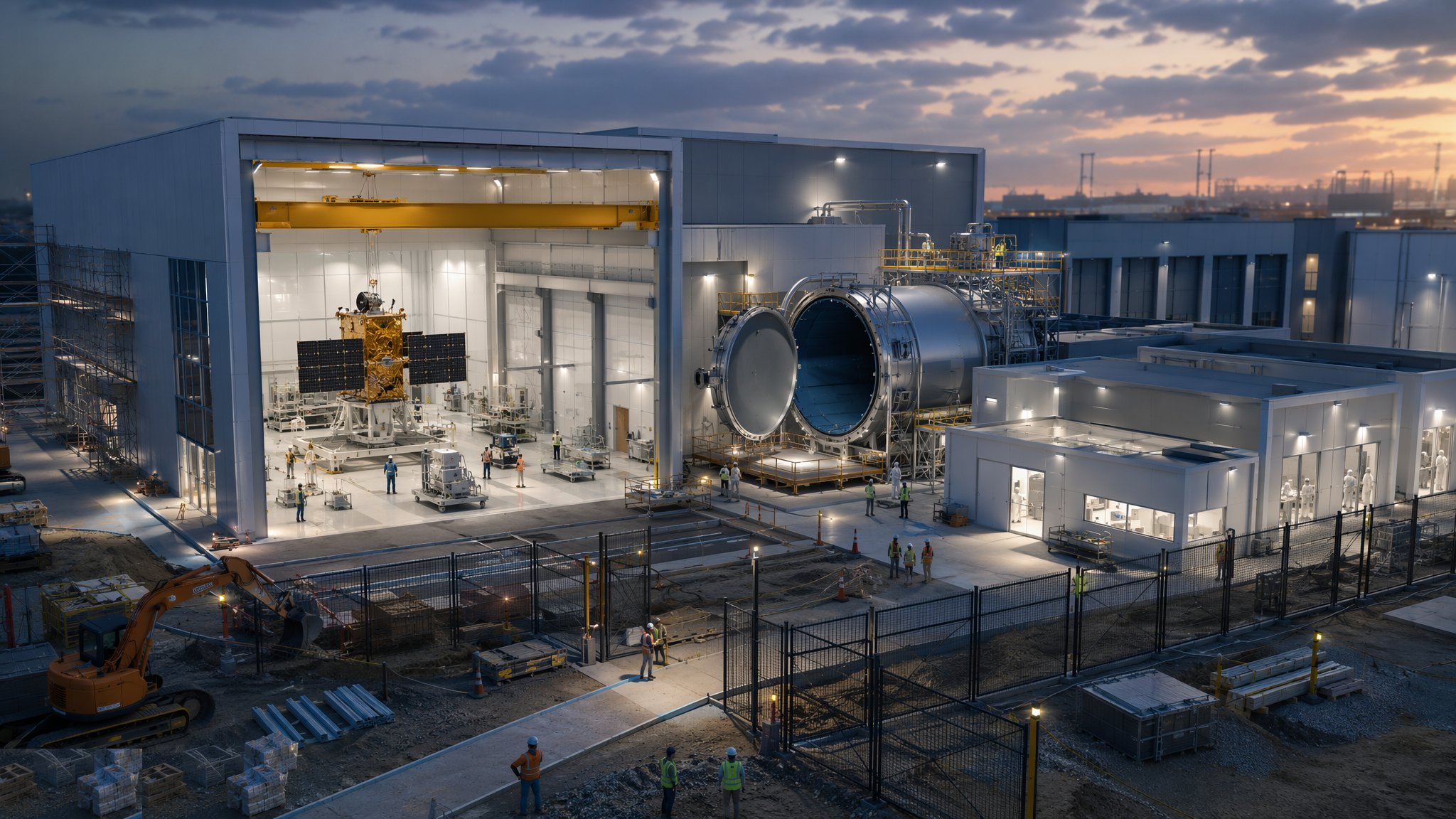
Satellite Assembly & Integration Facilities
High-bay cleanrooms with cranes, test chambers that simulate orbit, and a security regime written by export-control lawyers - buildings where the product is worth more than the building.
Open processShared methods used in this sector
These guides are owned by other sectors - the canonical page lives there - but the method is the same here. Cards open the guide at its home sector.
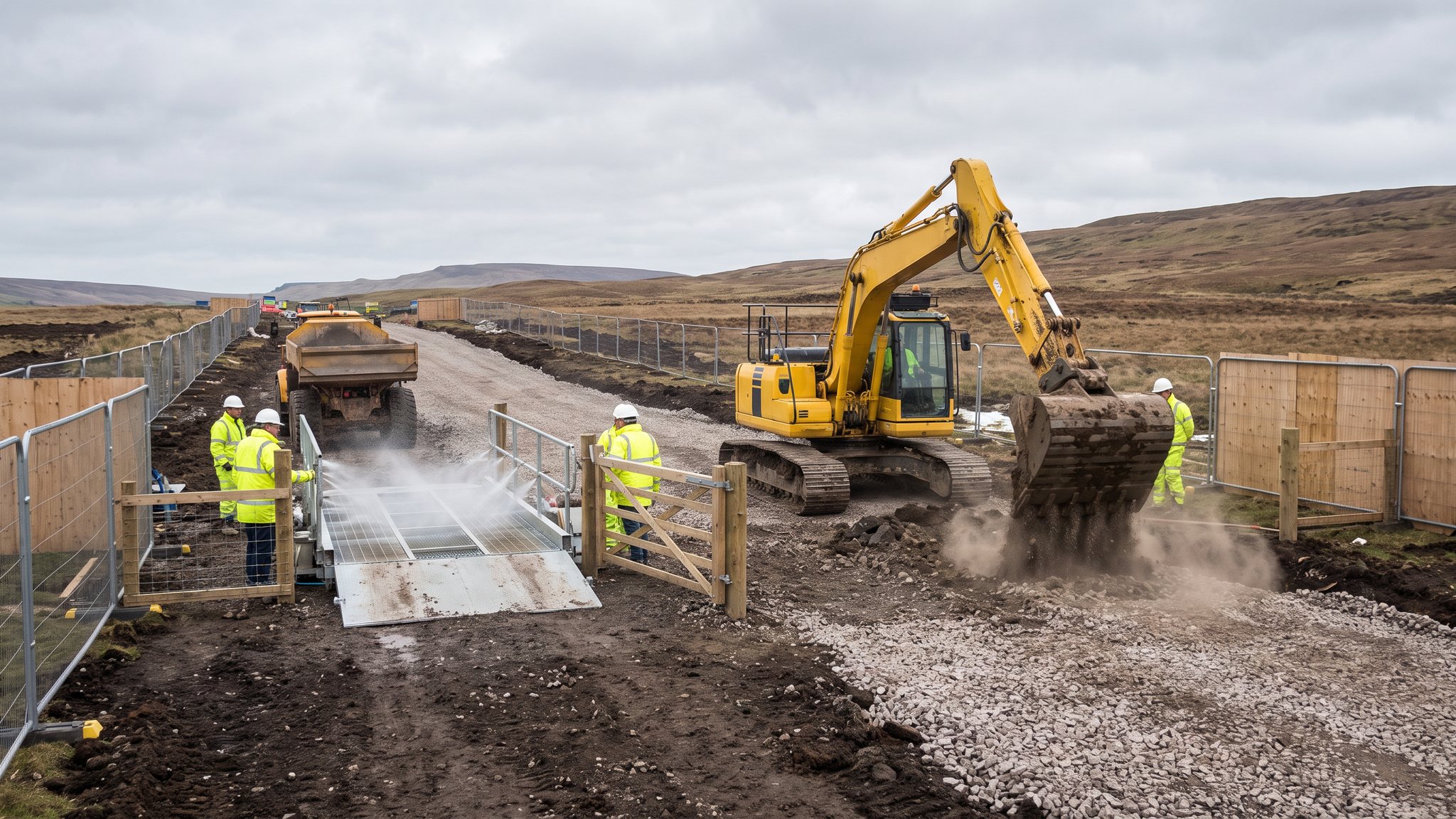
Corridor Access & Enabling Works
Turning a length of route - often a live highway - into a controlled, approved, workable construction corridor.
Open processCanonical guide: Roads & Highways
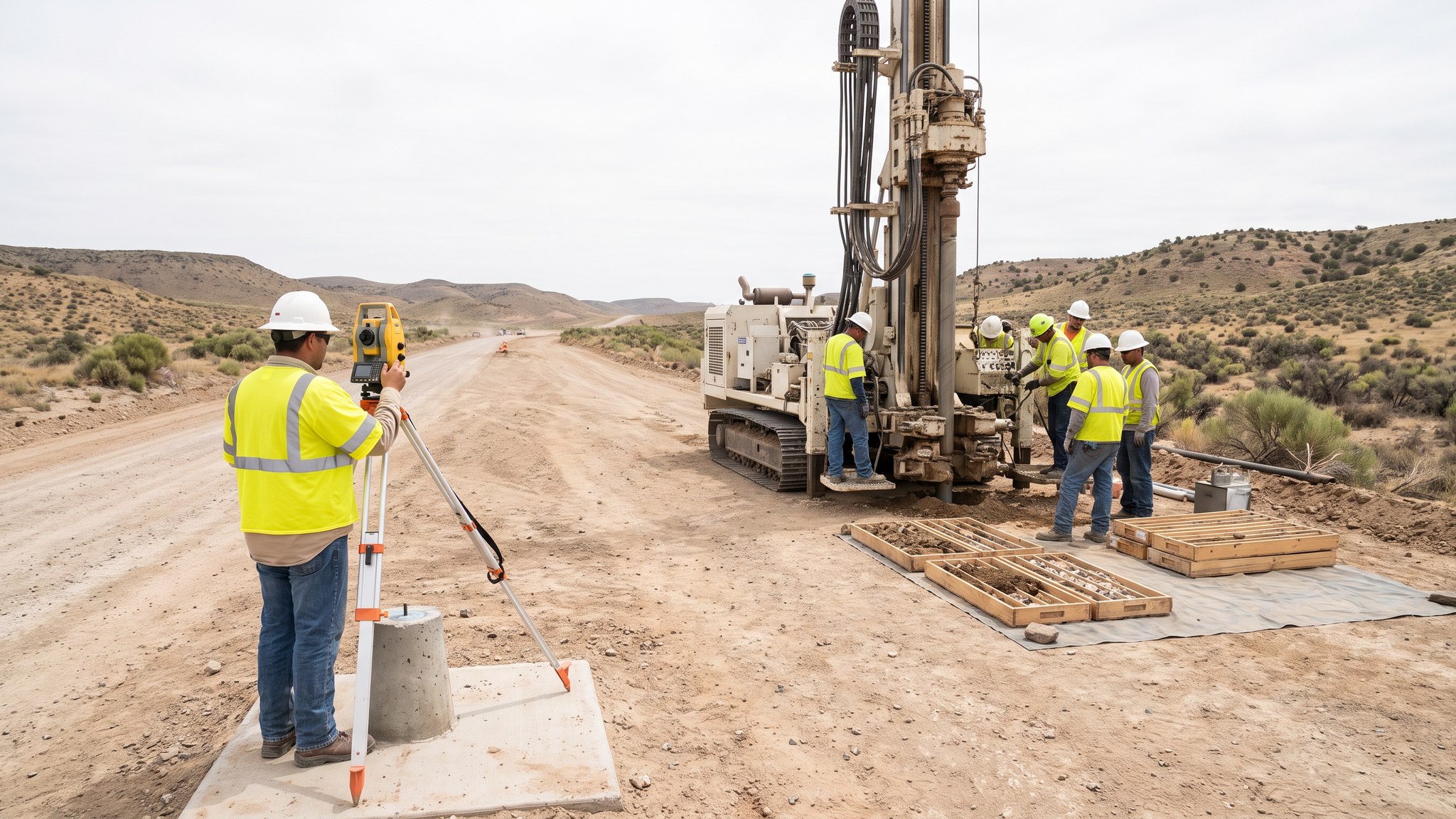
Survey Control & Ground Investigation
Corridor control networks and the ground investigation that tells you what the road, bridge or tunnel is actually standing on.
Open processCanonical guide: Roads & Highways
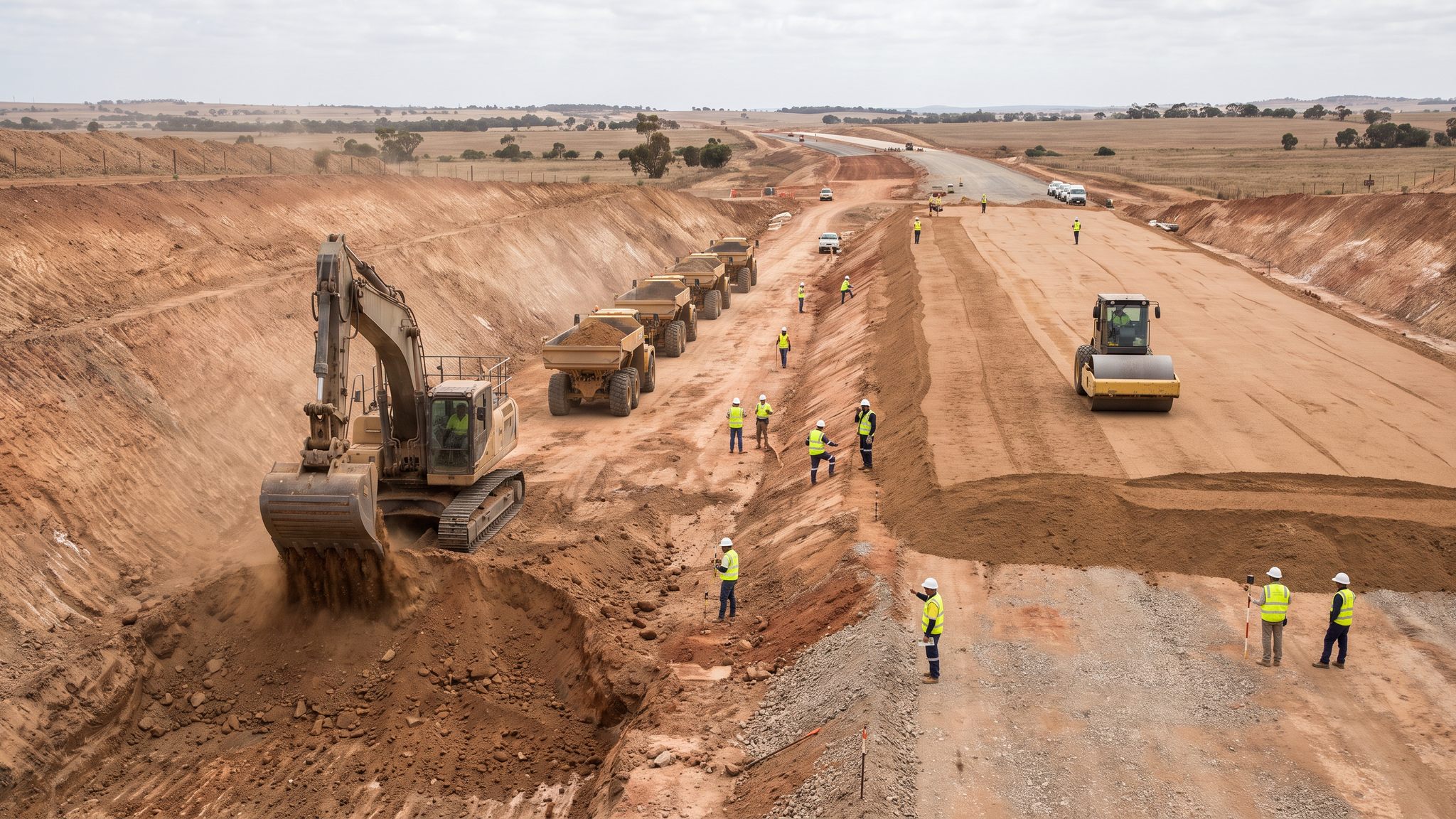
Bulk Earthworks - Cuttings & Embankments
Moving hundreds of thousands of cubic metres to build the corridor's shape - cuttings, embankments and the formation everything sits on.
Open processCanonical guide: Roads & Highways
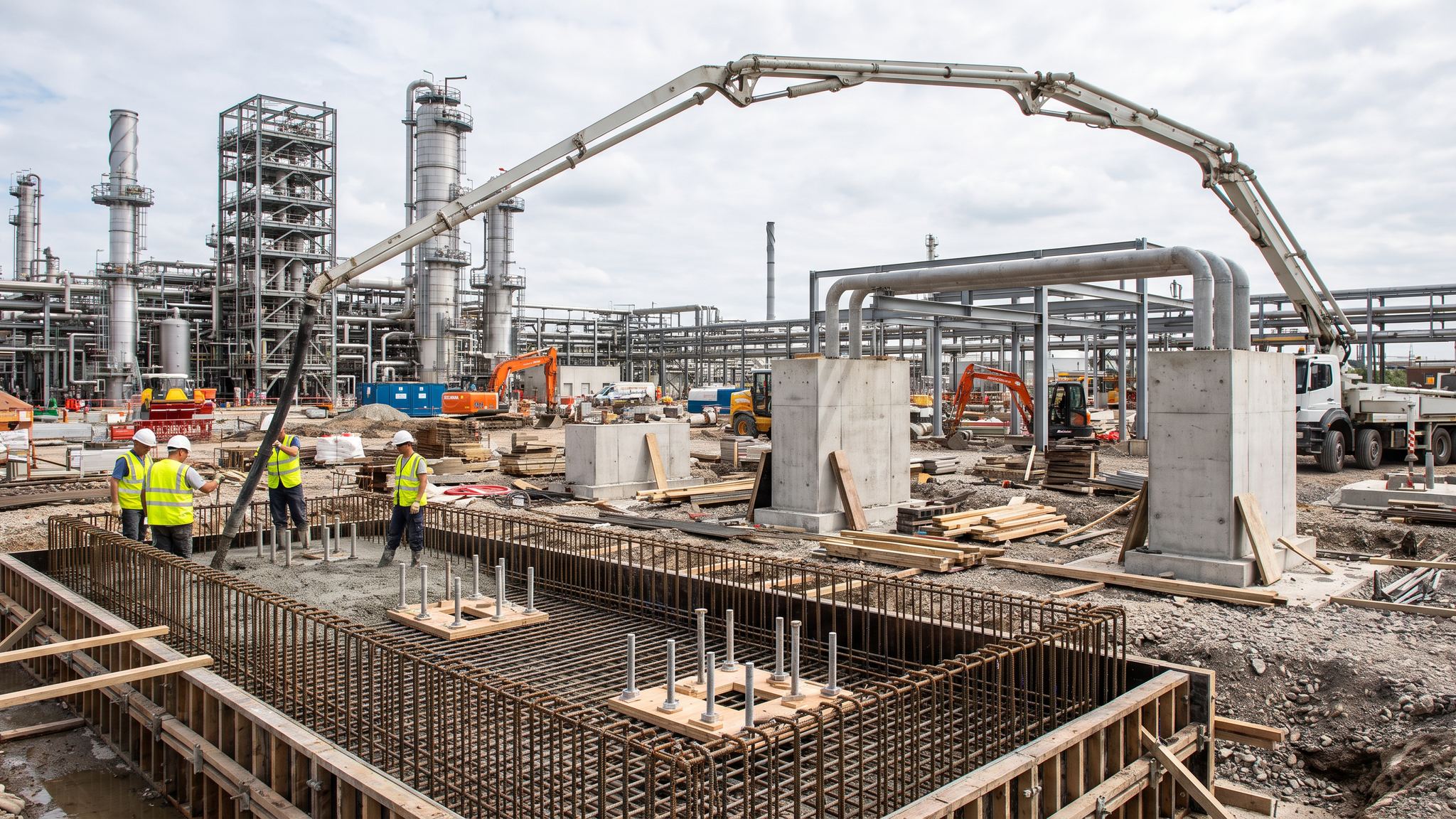
Heavy Civils & Foundations
Equipment foundations, machine blocks, tank bases and piperack civils - the concrete that a process plant stands on, and the anchor bolts everything else lines up from.
Open processCanonical guide: Oil & Gas / Petrochemical
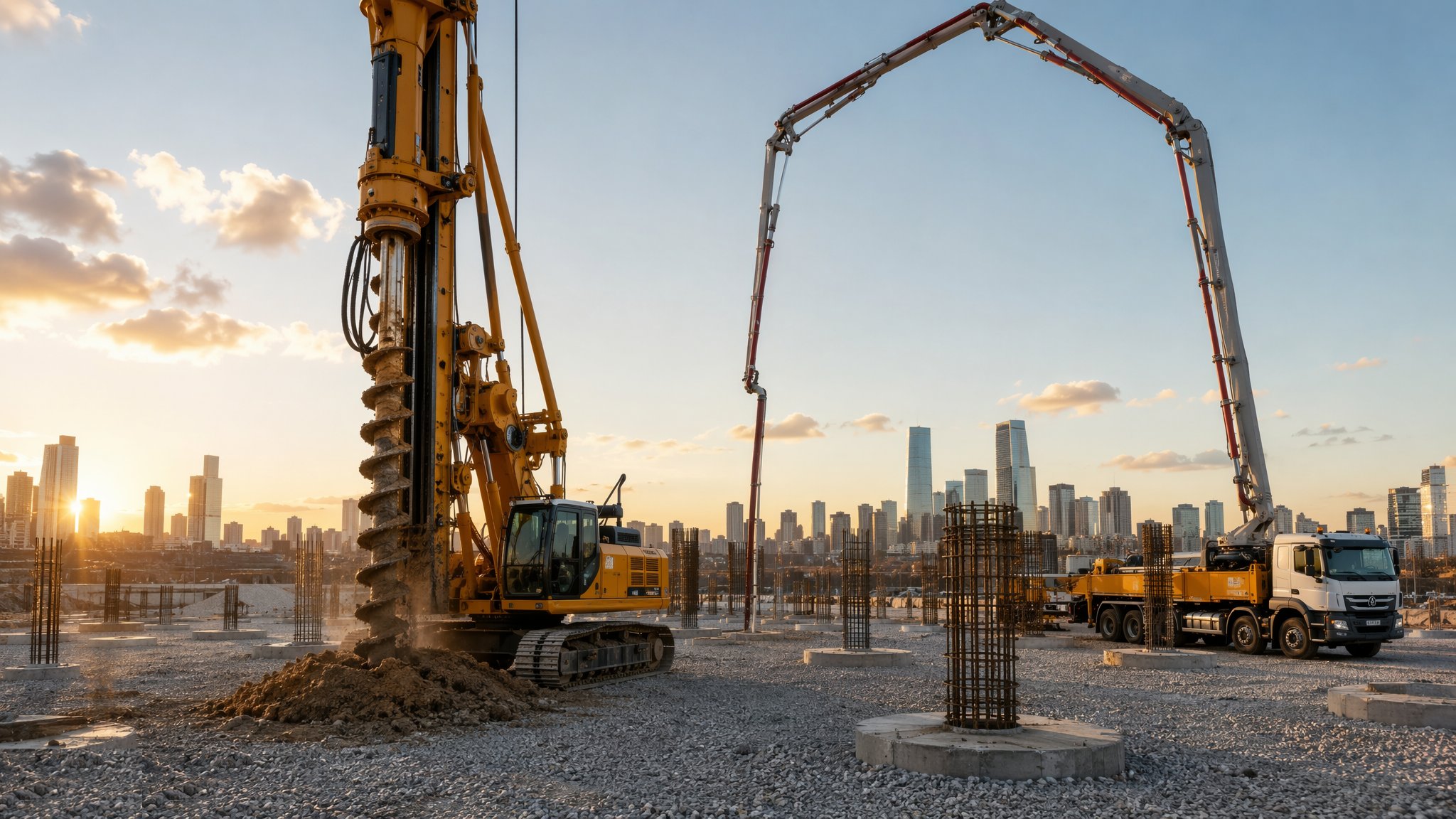
Piling & Deep Foundations
Driven, bored and CFA piles - carrying the building down to ground that can actually take it.
Open processCanonical guide: Residential & Housing
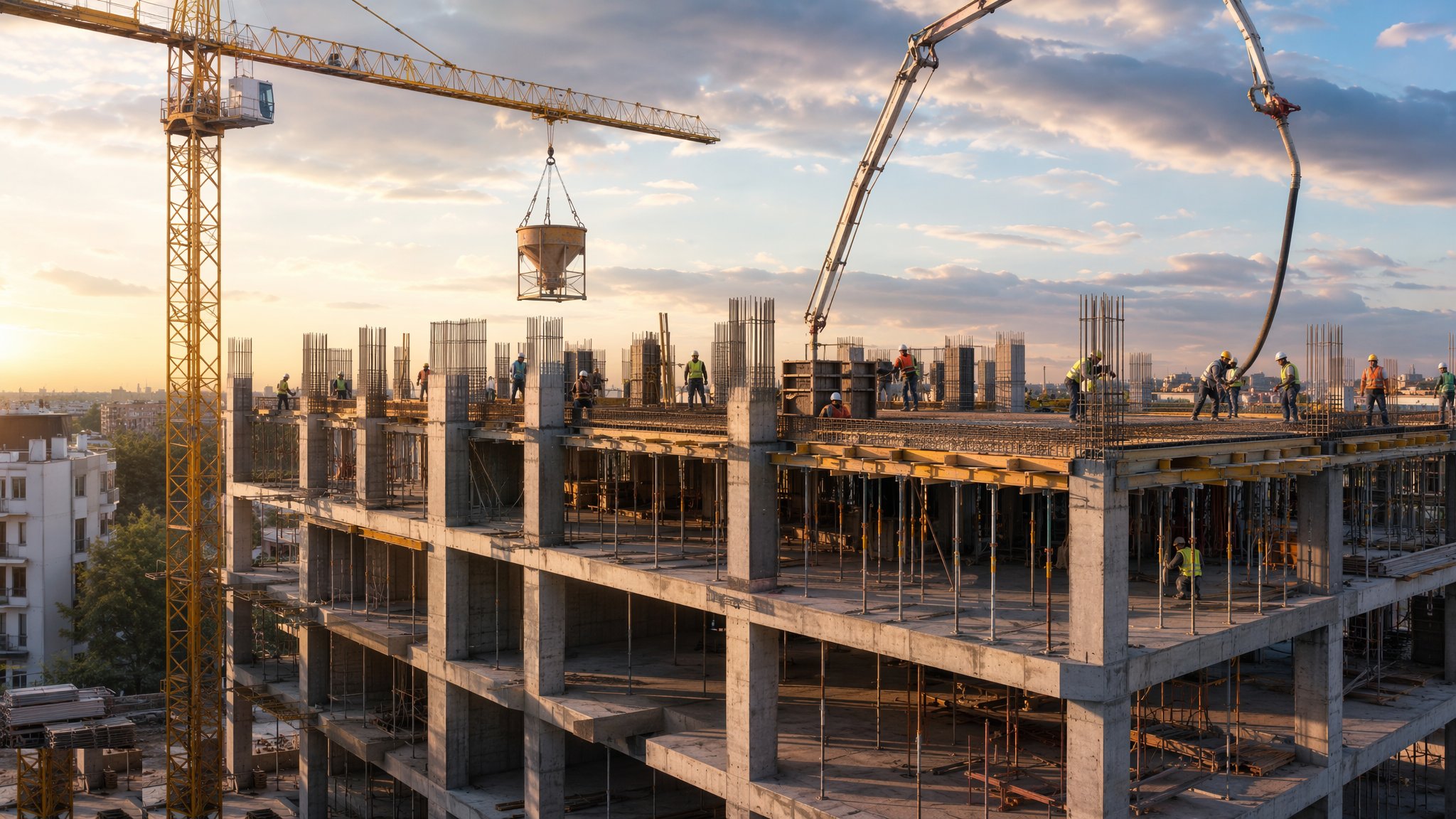
Concrete Frame Construction
Columns, walls and slabs cast in situ - the ribcage of a residential tower.
Open processCanonical guide: Residential & Housing
Space & Extraterrestrial in depth
About Space & Extraterrestrial
The two guides in this sector cover launch facility construction - pads, flame ducts and ground support equipment - and satellite assembly facilities, where spacecraft worth more than the building are integrated in controlled, clean conditions. Early days for the sector, big concrete regardless.
How space infrastructure is bought
Launch and space facilities are procured like the blend they are: heavy civils packages for pads, flame trenches and roads; industrial building packages for integration and assembly facilities; and highly bespoke ground support equipment - umbilical towers, propellant systems, cryogenic pipework - bought direct from specialist suppliers. The client is usually a national space agency or a launch operator, and contracts carry aerospace-style configuration control: every drawing change is board-approved, because a launch pad is a one-off machine built from concrete and steel.
Cost certainty is weak almost by definition, since there is no standard product and little benchmark data. Agencies mitigate with early contractor involvement and risk-based target pricing rather than lump sums on the novel elements, while the conventional parts - hangars, offices, roads - are procured competitively like any industrial building.
Security wraps around everything: export-control regimes such as ITAR and their national equivalents govern who may enter buildings, see drawings or handle components, so site inductions include nationality screening, IT systems are segregated, and photography is controlled. For construction managers used to open sites, the adjustment is real - subcontractor and labour vetting lead times belong on the programme from tender stage, and a delivery driver without clearance is a programme event, not a gatehouse chat. The facilities themselves carry the same burden into operation, with secure zones, escorted access and vetted maintenance regimes written into the operating procedures from the day the keys are handed over.
Programme drivers
The critical path runs through the ground support equipment and propellant systems, not the concrete. Cryogenic storage, high-pressure gas systems and deluge water systems have long-lead valves, vessels and control systems, and their commissioning is sequential and safety-gated: a launch pad is commissioned like a process plant, with leak tests, proof tests and countdown rehearsals before any vehicle rolls out.
Environmental and regulatory consents frame everything. Launch sites need airspace, maritime exclusion and environmental approvals - in the UK, spaceflight licensing through the Civil Aviation Authority under the Space Industry Act; in the UAE, regulation through the UAE Space Agency alongside the emirate's civil authorities. These consents are on the critical path from day one and cannot be compressed by working weekends.
What goes wrong
The sector's public failures are launch failures, but the construction failures are quieter and familiar: ground systems delivered after the vehicle, propellant farms that fail proof testing, integration halls whose cranes or clean environments miss specification. Because each facility is a prototype, first-of-kind defects are the norm, and the honest programmes carry commissioning float that looks extravagant until it is consumed.
Integration buildings fail on cleanliness and lifting. A satellite worth more than the building it is assembled in demands cleanroom-class halls with heavy overhead cranes - a genuinely unusual combination - and a crane that contaminates, or a clean regime that prevents maintenance access, is a design contradiction resolved only with money. Acoustic and vibration environments matter too: some spacecraft cannot tolerate the sound levels of the pad's own deluge and venting systems during test.
UK and UAE positions
The UK's space construction is concentrated in Scotland and Cornwall: vertical-launch spaceports in Shetland and Sutherland, horizontal launch in Cornwall, plus satellite manufacturing cleanrooms around the established aerospace clusters. The works themselves are modest in scale - pads, integration facilities, antennae - but they run through normal planning and environmental regimes, often on sensitive peatland or coastal sites where the civils are the hard part.
The UAE's programme is anchored by the Mohammed bin Rashid Space Centre and the national investment in satellite and deep-space missions, with construction centred on assembly, integration and test facilities rather than launch. For contractors, the meaningful market in both countries is the controlled-environment industrial building - the cleanroom with a crane - and the heavy foundations and test cells that aerospace ground testing demands.
The civils of a launch site
Strip away the novelty and a launch pad is heavy civil engineering: a reinforced concrete pad carrying hold-down and blast loads, a flame trench lined with refractory and ablative materials designed to be eroded and repaired after every launch, deluge water systems moving thousands of litres per second, and lightning protection masts that are often the tallest structures on site. Roadways from integration building to pad are designed for crawler or transporter loads far beyond highway vehicles.
Propellant and gas farms are process plant with aerospace documentation: cryogenic storage, high-pressure gas storage, transfer lines with vacuum-jacketed sections, and the safety distances and blast analysis that dictate the whole site layout before any building is drawn. The construction workforce is a hybrid - civils contractors for the pad, process contractors for the fluids, and the launch operator's own technicians taking over systems one by one as they are proven.
Ground stations, test cells and the quieter estate
Most space-sector construction is not launch at all. Satellite ground stations are precision civils - antenna foundations aligned and settled to arc-second stability, equipment buildings with tight RF shielding, and resilient power. Engine test facilities are the opposite extreme: massive reaction structures and exhaust ducts designed for repeated firings, acoustic suppression, and safety exclusion zones that make the site layout a blast calculation.
These facilities are procured through the same agencies and prime contractors as the launch sites, but they repeat - a constellation wants a network of stations - so the sector is slowly developing standard designs and repeatable supply chains. For contractors, the attractive feature is the client: well-funded, quality-obsessed, and willing to pay for documentation and testing that other sectors value-engineer away.
Configuration control and the paperwork of one-offs
Aerospace clients bring configuration management into construction: every drawing, weld procedure, material certificate and test record lives in a controlled system, and change is formal - proposed, assessed, approved, embodied, verified. For builders used to site instructions and verbal agreements, the adjustment is cultural as much as procedural, and the contractors who succeed dedicate staff to document control the way process-plant contractors dedicate them to weld traceability.
Testing is layered the same way. Individual systems are proven, then integrated ground tests exercise the pad as a whole - deluge flow tests, cryogenic loading rehearsals, countdown simulations - each with readiness reviews that gate the next. Construction completion and operational readiness are separate certificates, and the gap between them is filled with test events the contractor supports rather than owns.
The payoff for the sector's discipline is a client who pays for quality and a reference few rivals hold. The cost is a pace and a change-control burden that frustrates builders used to deciding things on the scaffold, and the bid teams who price space work without understanding that burden learn its value in their margin.
Integration buildings: the cleanroom with a crane
The assembly, integration and test hall is the sector's signature building: a high-bay cleanroom with heavy overhead cranes, airlocks sized for satellite containers, and floors that stay level to instrument standards under moving loads. The structure must be stiff enough that crane operations do not disturb optical alignment work metres away - a vibration and deflection brief more familiar from semiconductor fabs than from anything that flies.
Fit-out is shared between the builder and the spacecraft operator's own technicians, and the boundary is contractual and physical: the builder certifies the clean environment and the cranes, the operator installs test kit, handling trolleys and the ground support equipment. Handover includes cleanroom certification, crane statutory examinations and EMC or acoustic performance where the test regime demands it - a building commissioned like the instrument it is.