Quays, breakwaters and dredging - construction where the tide sets the working day.
Marine construction is heavy civils with the floor moving. The corridor works that get plant and materials to the water's edge are the shared transport methods, linked below - after that, everything floats, sinks or waits on the tide. Working windows come off the tide tables, plant arrives by barge, and a storm can take a week off the programme without asking.
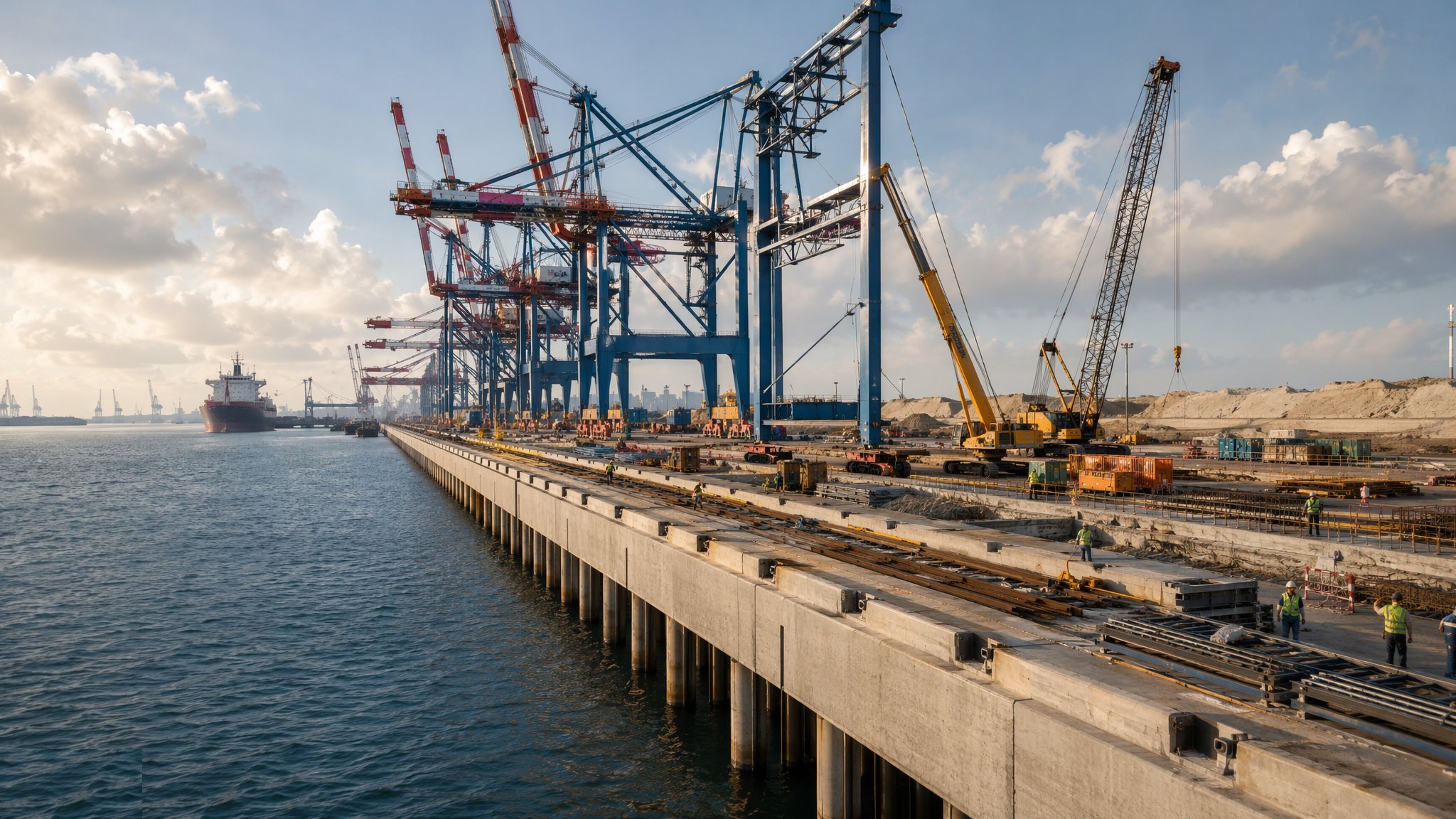
The process map - berths to terminal handover
Four guides in build order, in three streams - berths and marine structures, dredging and reclamation, and the terminals and pavements on top. The corridor civils landside are shared with the roads sector and are linked below. Each process is a full guide: overview, variants, numbered steps, plant, testing, safety and defects.
Berths & marine structures2
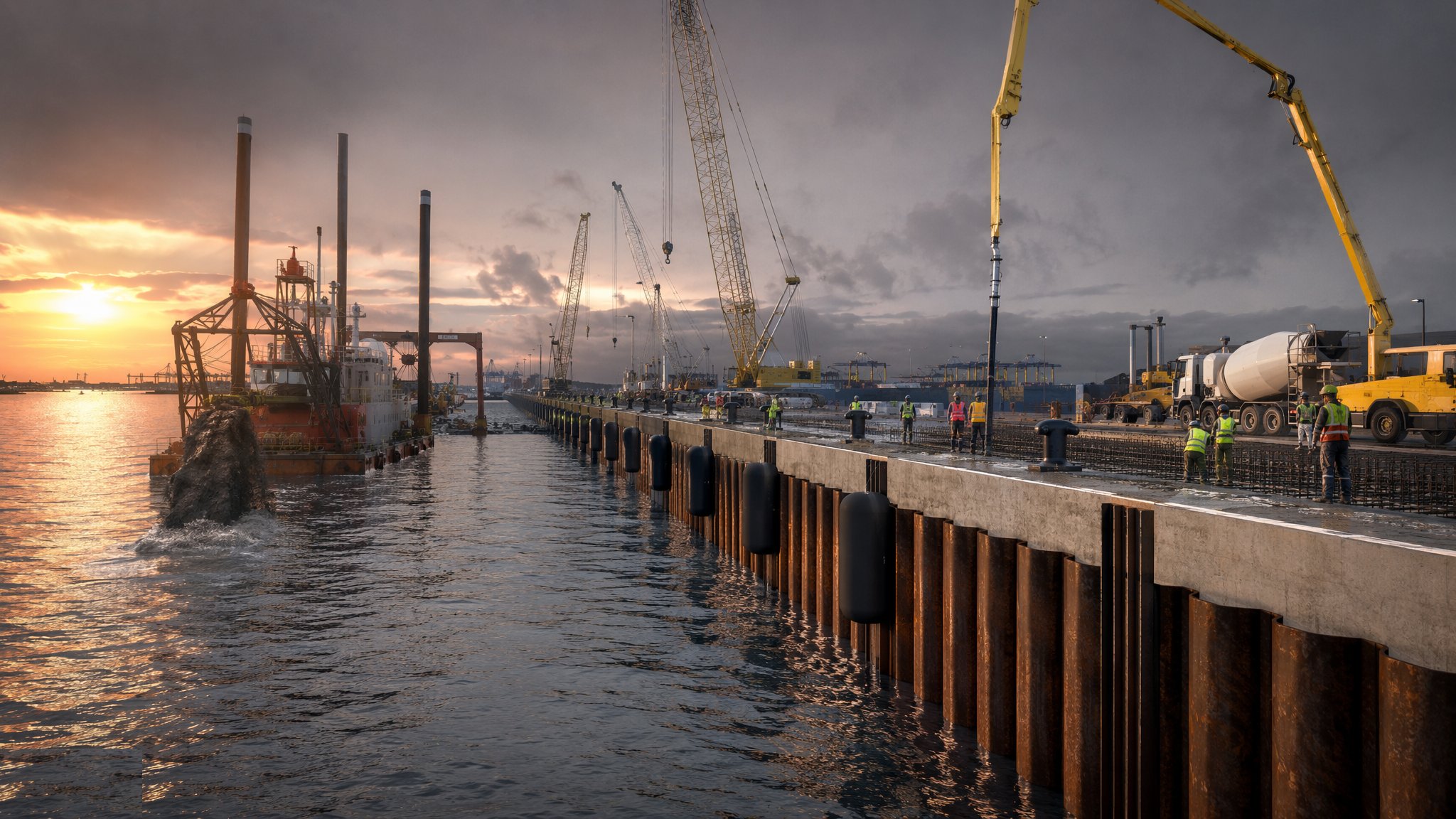
Quay Walls & Berth Construction
The wall the ship berths against - blockwork or caisson gravity walls, anchored sheet-pile and combi-walls, cast in situ capping beams carrying fenders, bollards and crane rails, with the dredged depth alongside proven by survey before the first vessel is invited in.
Open process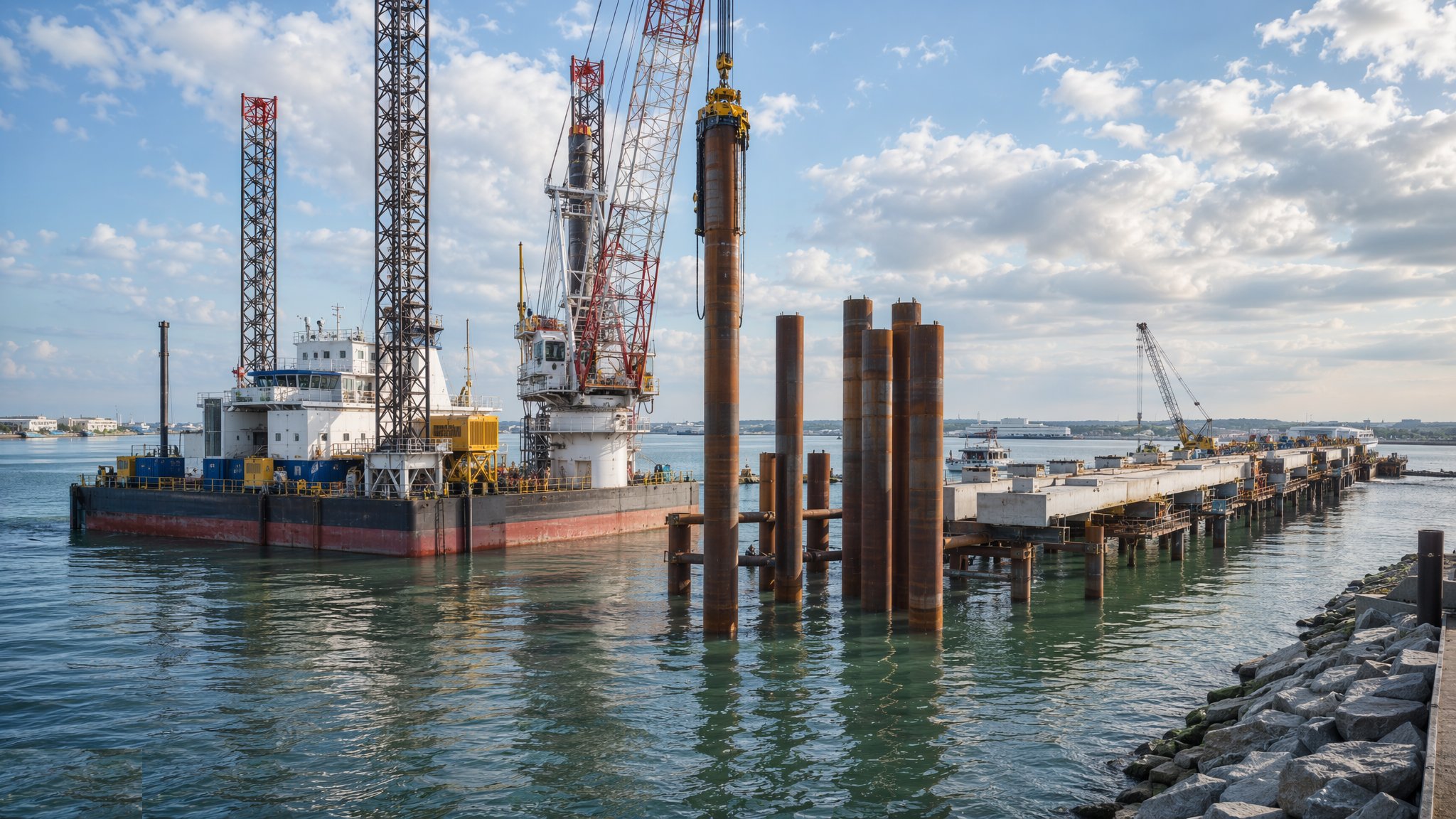
Marine Piling & Jetty Construction
Structures standing in the sea on driven steel - tubular piles pitched and driven from barges and jack-ups, berthing and mooring dolphins, linkspans and access trestles, precast deck units stitched with in situ concrete, cathodic protection fitted, and the whole job danced to the tide tables.
Open process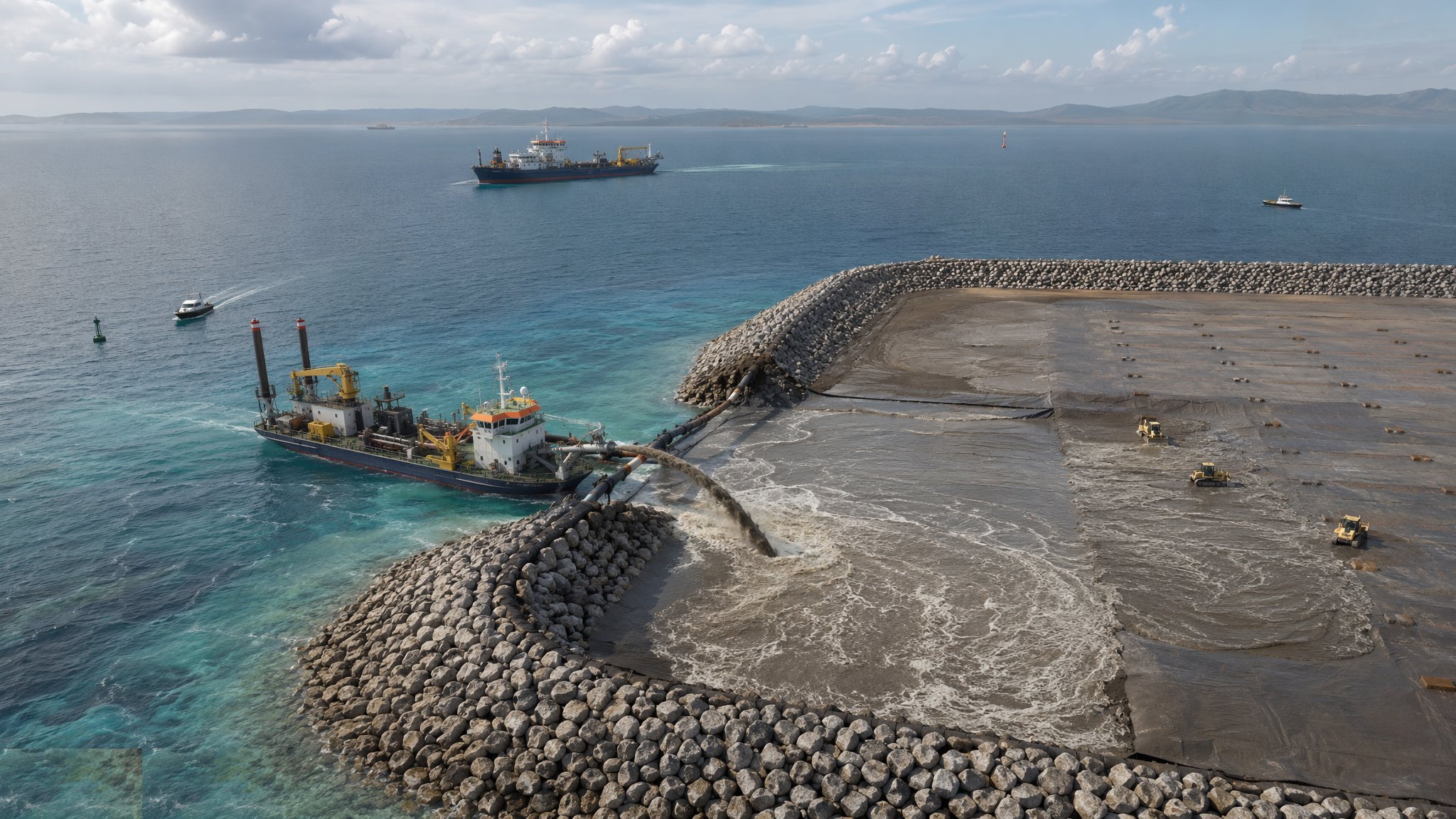
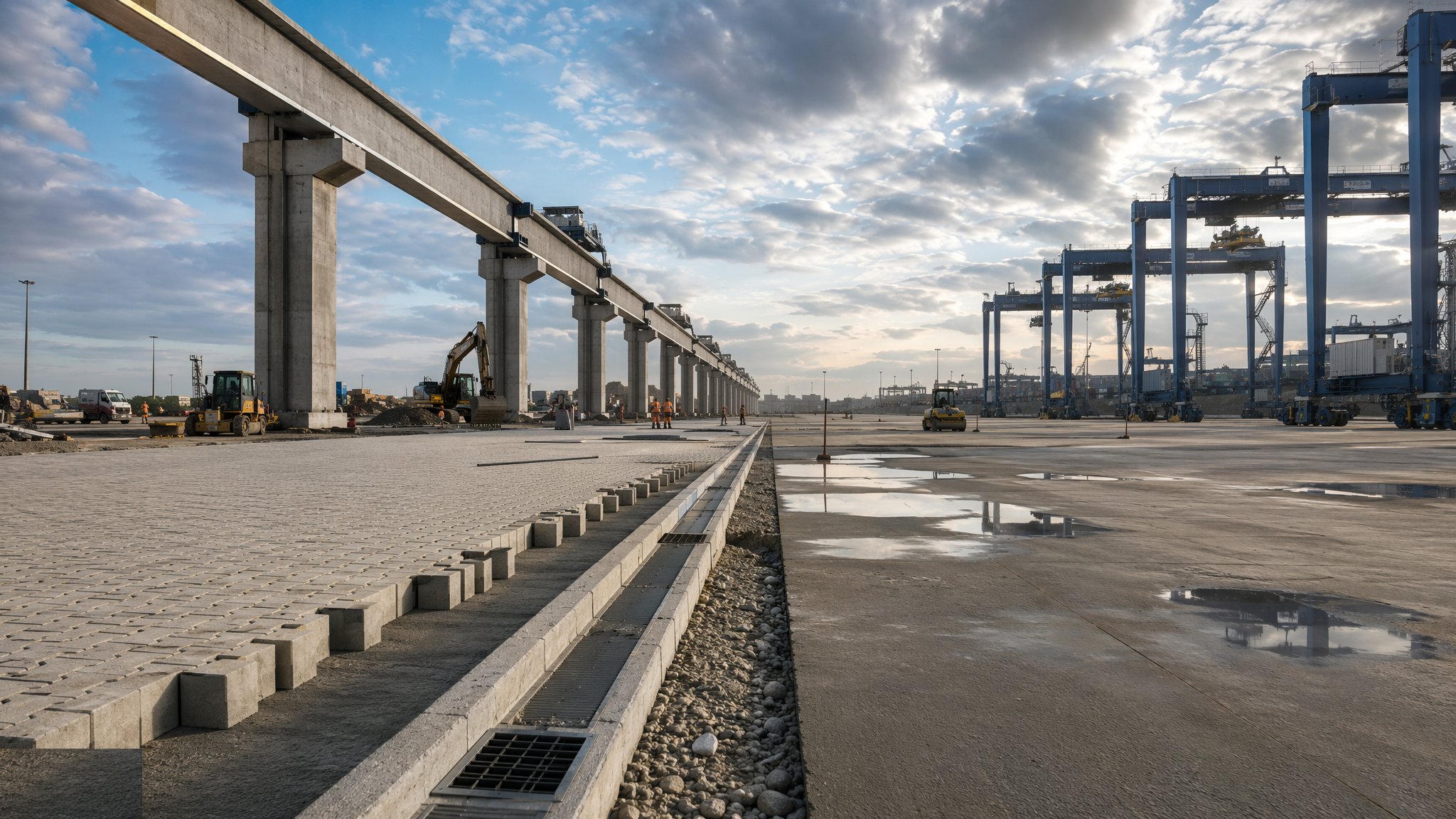
Shared methods used in this sector
These guides are owned by other sectors - the canonical page lives there - but the method is the same here. Cards open the guide at its home sector.
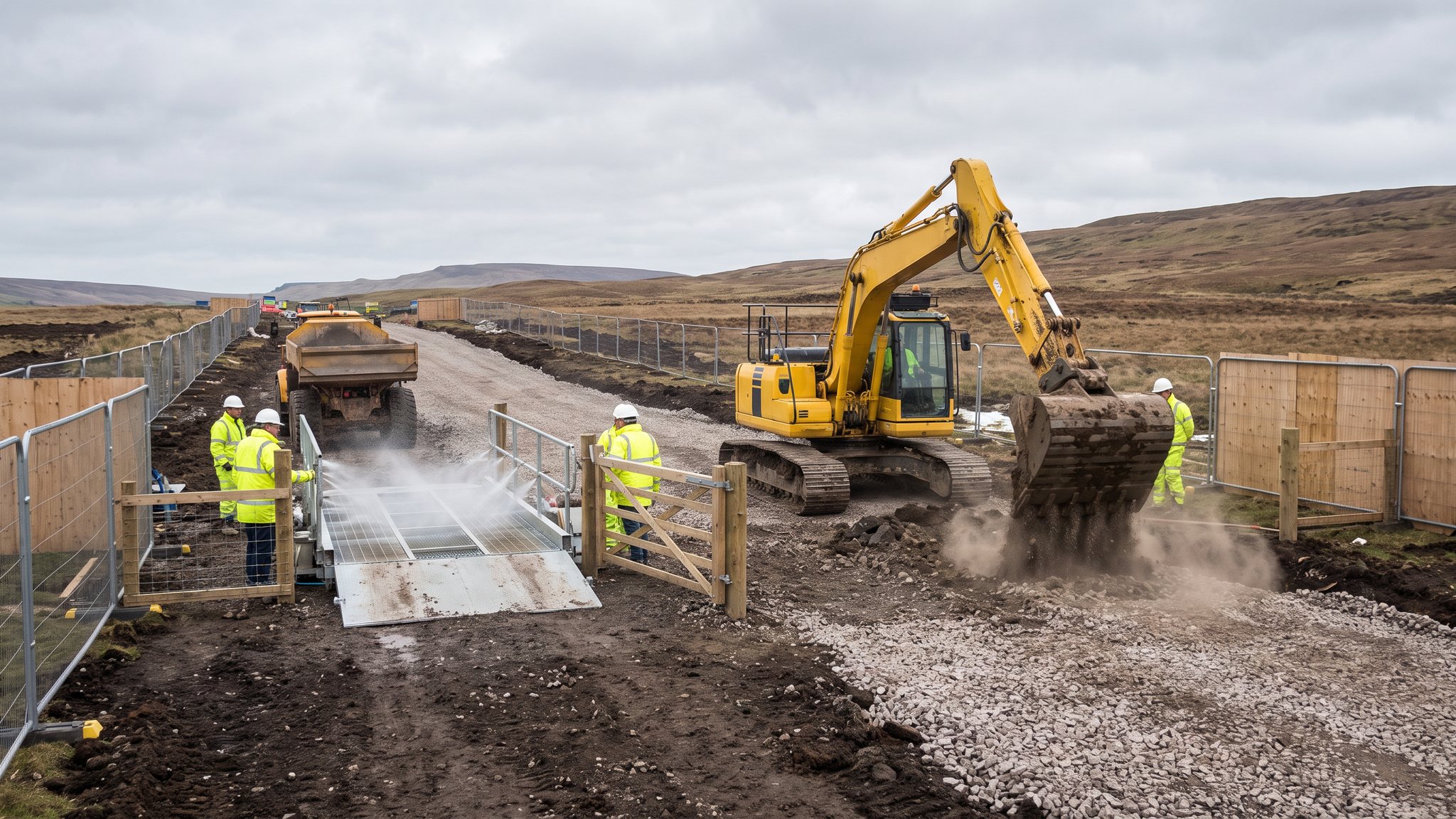
Corridor Access & Enabling Works
Turning a length of route - often a live highway - into a controlled, approved, workable construction corridor.
Open processCanonical guide: Roads & Highways
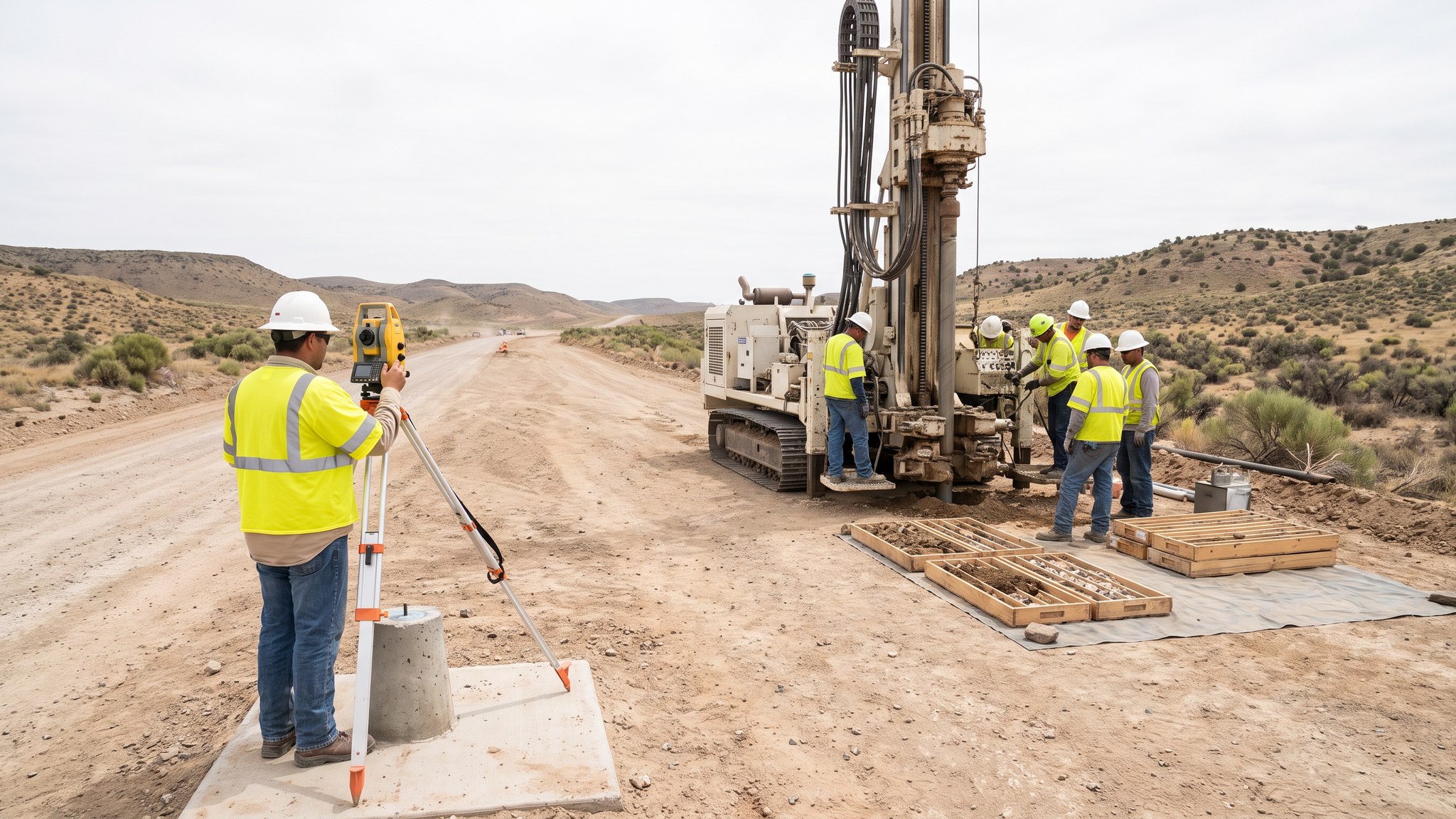
Survey Control & Ground Investigation
Corridor control networks and the ground investigation that tells you what the road, bridge or tunnel is actually standing on.
Open processCanonical guide: Roads & Highways
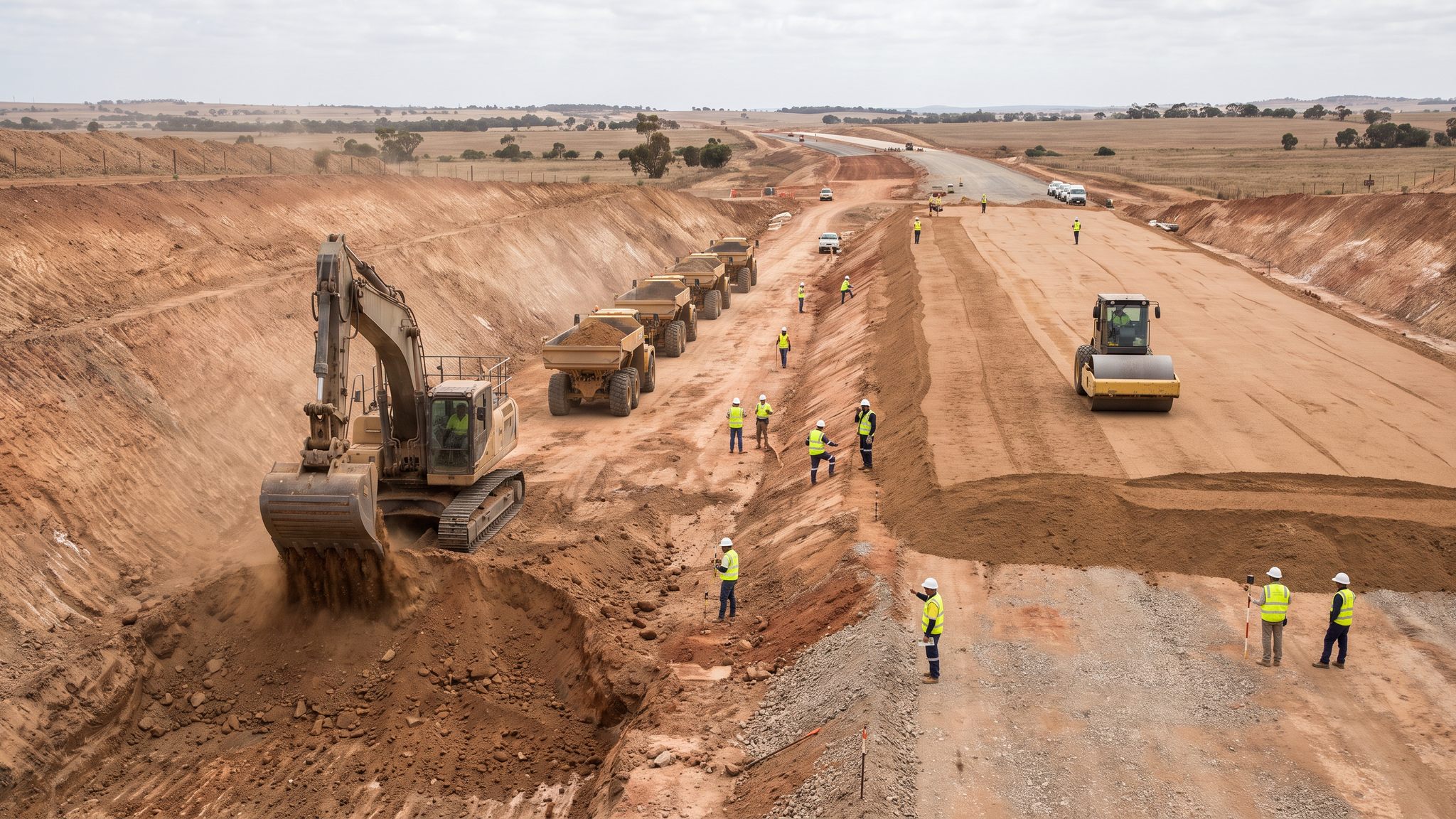
Bulk Earthworks - Cuttings & Embankments
Moving hundreds of thousands of cubic metres to build the corridor's shape - cuttings, embankments and the formation everything sits on.
Open processCanonical guide: Roads & Highways
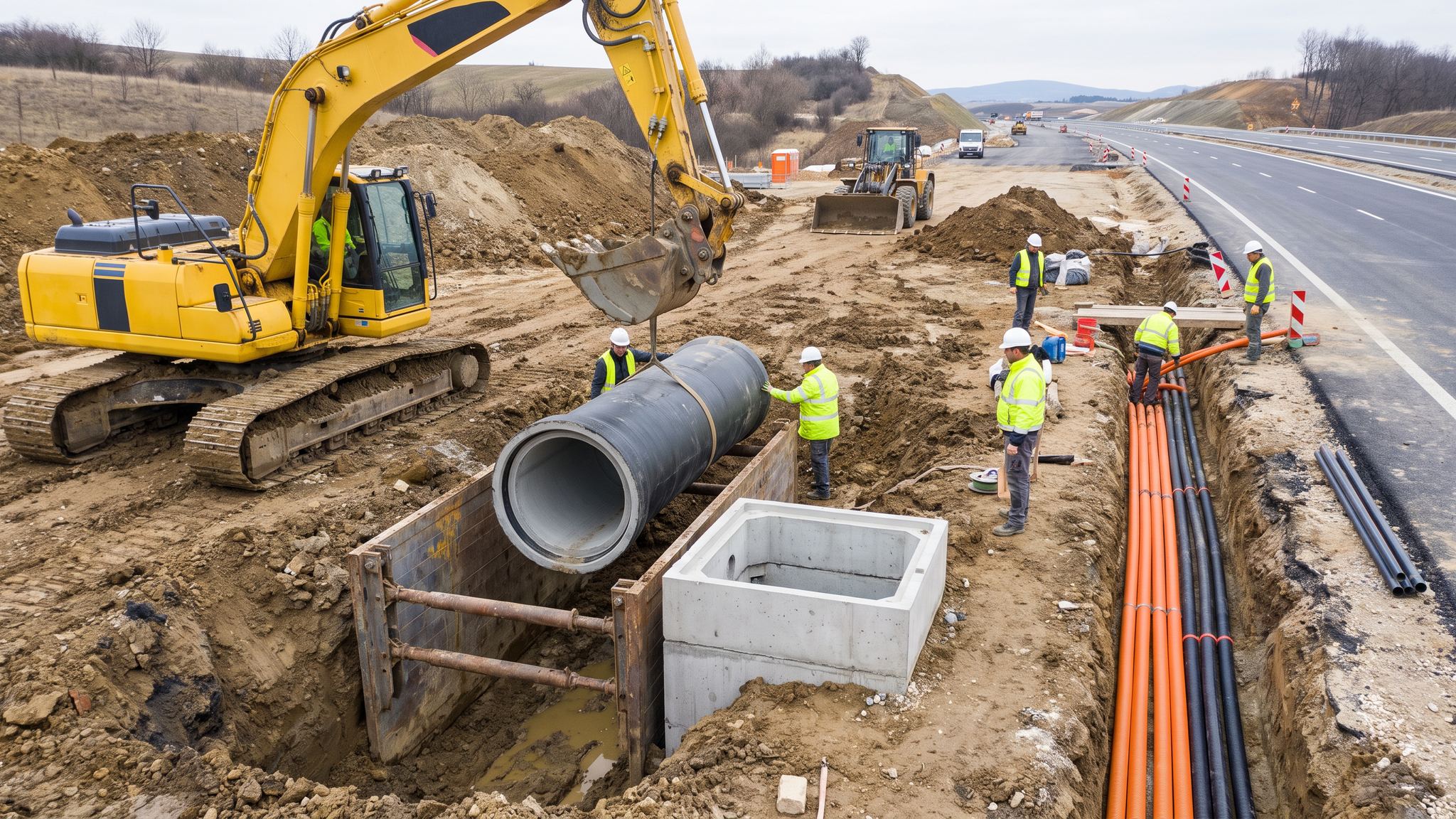
Drainage & Utility Corridors
Pipes, ducts, chambers and culverts - the buried networks installed before the pavement goes over them.
Open processCanonical guide: Roads & Highways
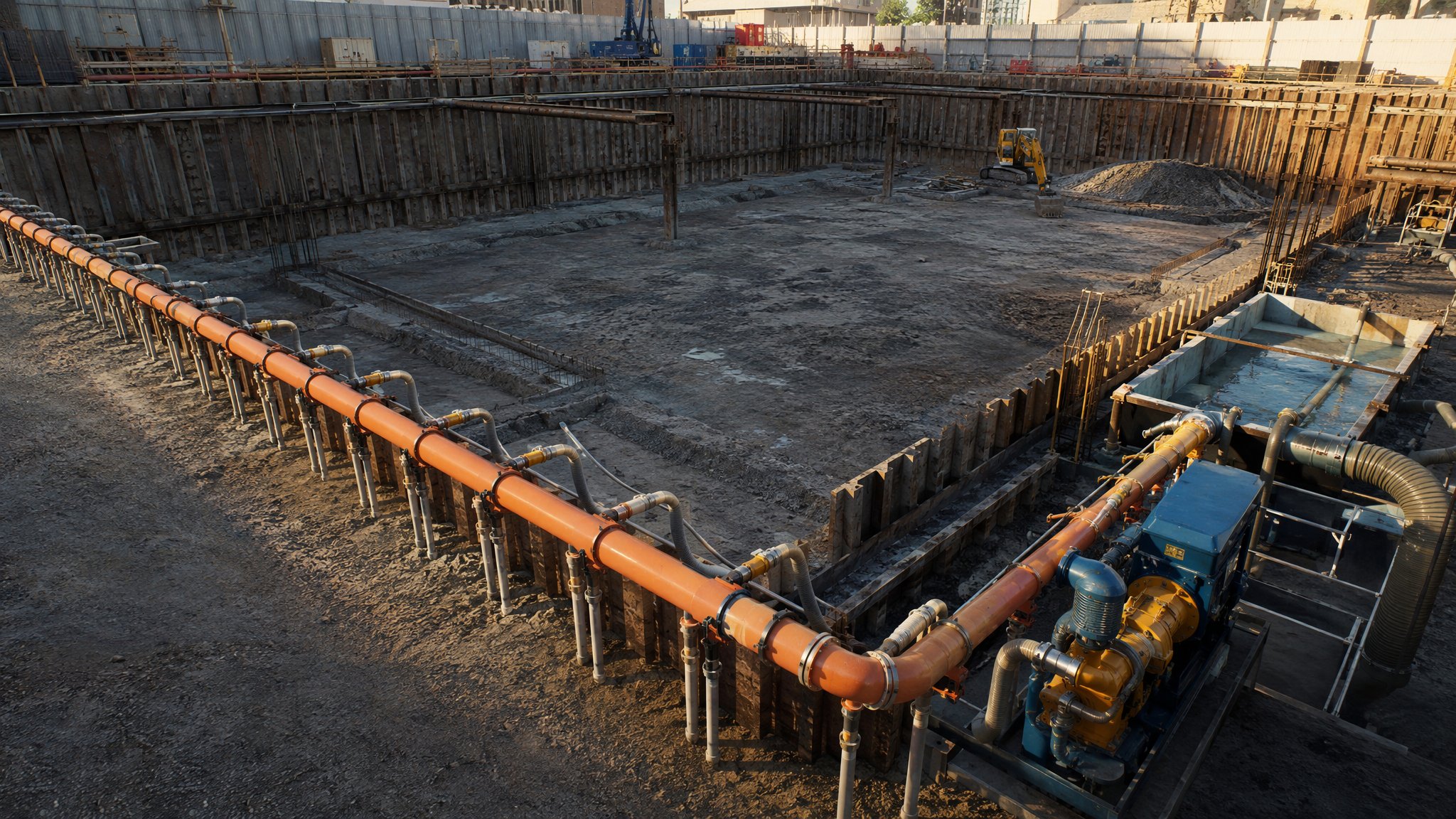
Dewatering & Groundwater Control
Keeping the dig dry - pumps, wellpoints and cut-off walls against an enemy that never sleeps.
Open processCanonical guide: Residential & Housing
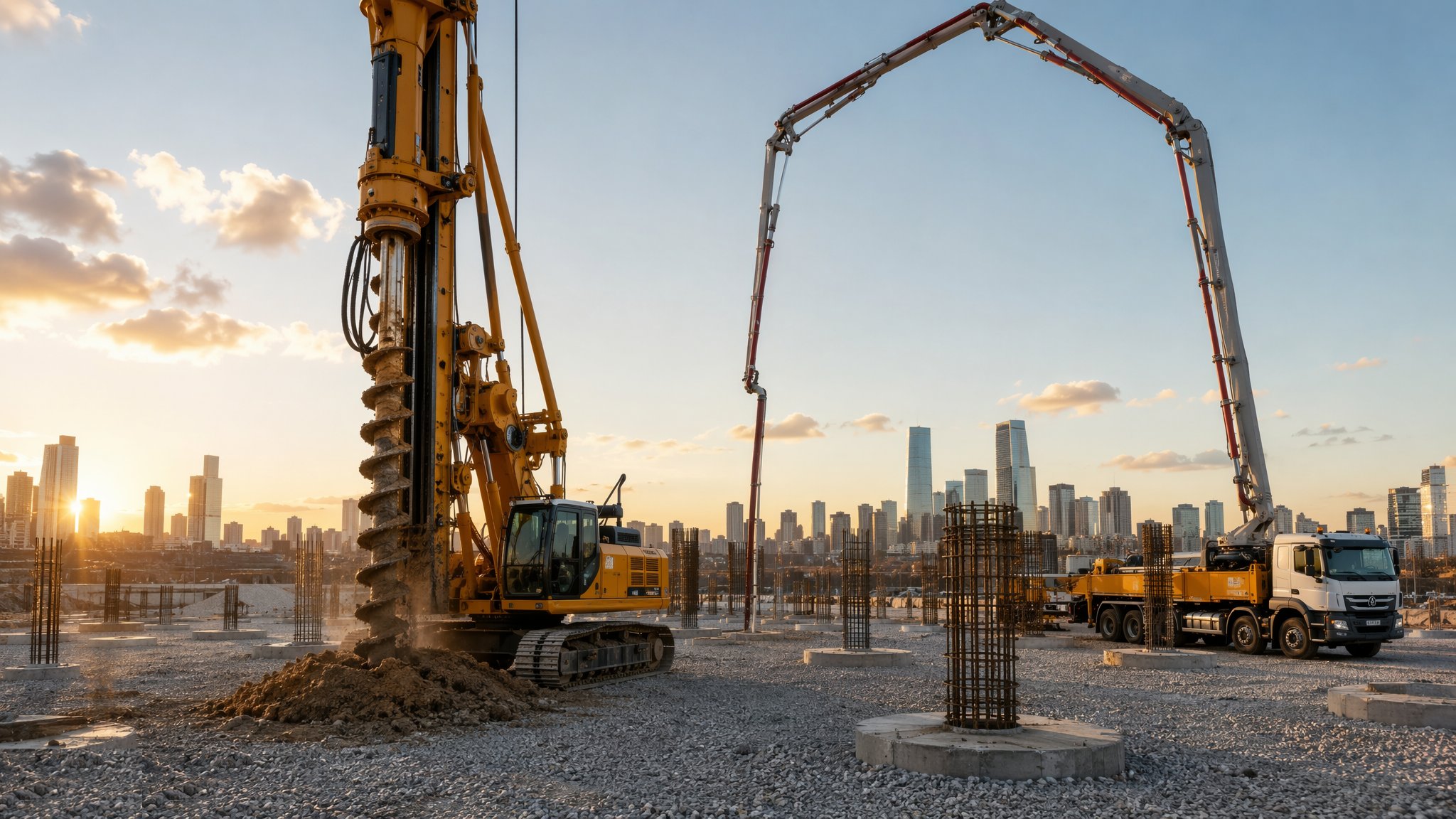
Piling & Deep Foundations
Driven, bored and CFA piles - carrying the building down to ground that can actually take it.
Open processCanonical guide: Residential & Housing

Concrete Frame Construction
Columns, walls and slabs cast in situ - the ribcage of a residential tower.
Open processCanonical guide: Residential & Housing
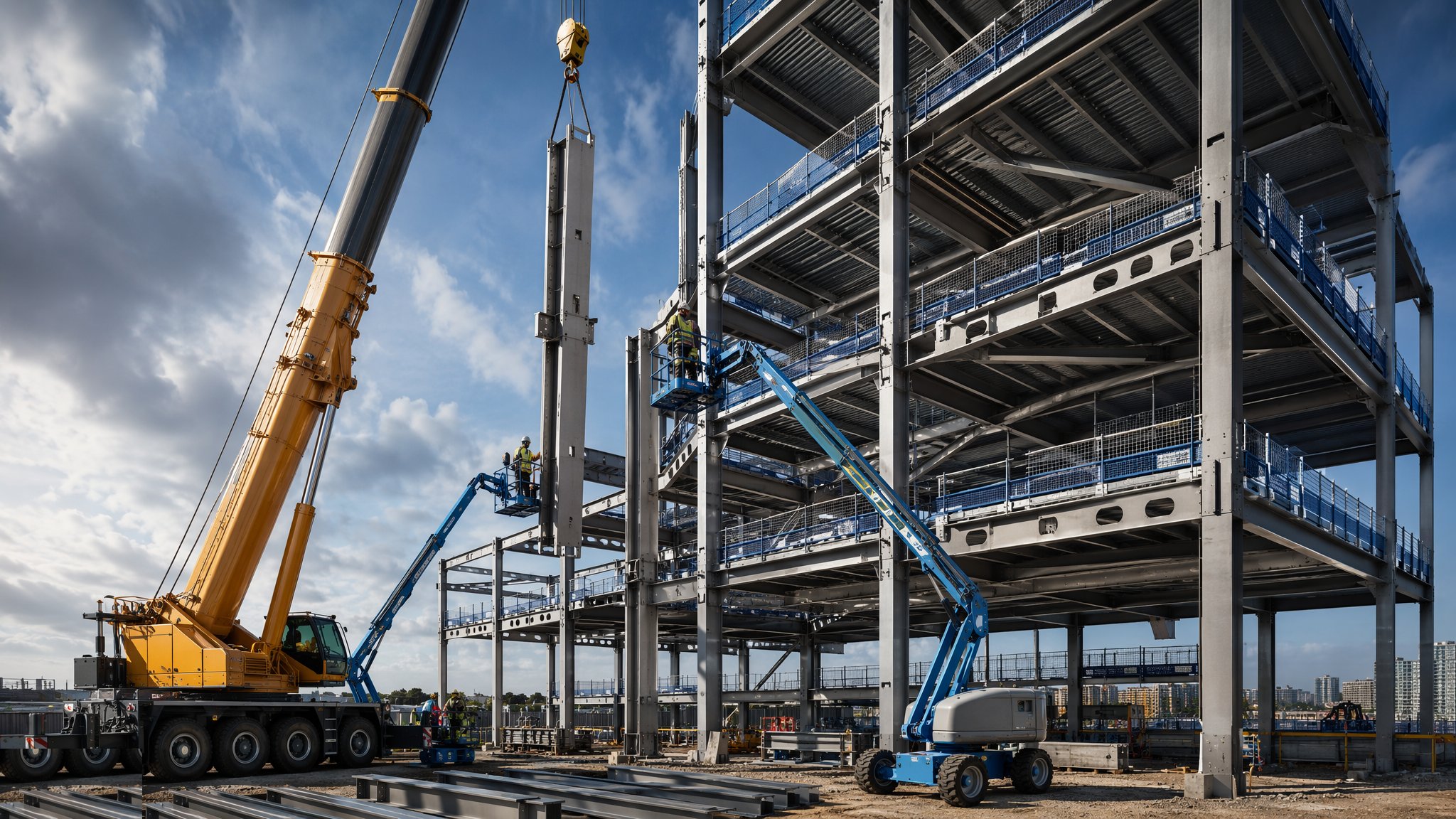
Ports, Harbours & Marine Works in depth
About Ports, Harbours & Marine Works
The four guides in this sector cover quay walls and berths - the structures ships actually lean on; dredging and land reclamation, making ground where there was sea; marine piling and structures, founding heavy works over water; and container terminal works, the pavements, crane rails and handling infrastructure that turn a quay into a port.
How marine work is bought
Marine construction is a specialist's market twice over: the client list is short (port authorities, terminal operators, governments) and the contractor list is shorter. Major quay walls, breakwaters and container terminals go to the handful of international marine contractors who own the plant - trailing suction hopper dredgers, cutter suction dredgers, piling barges, heavy-lift sheerlegs - and the work is typically let EPC or design and build on FIDIC, with dredging frequently split as its own package because the plant and the risk profile are nothing like the civils. UK port work runs smaller and browner: berth refurbishments, lock gates, sea defence tie-ins, usually NEC or FIDIC with the harbour authority's conservancy duties shaping consents. In the Gulf the scale reverses: Jebel Ali, Khalifa Port and the regional expansion programmes are greenfield mega-terminals where DP World and AD Ports act as developer, client and operator, and the contractor is building a port and its container terminal in one continuous programme.
The consenting sits on the critical path from day one: marine licences, environmental assessments of dredge plumes and disposal at sea, and navigation authority approvals for working in shipping channels. A marine contractor's first deliverable is often the consent, not the concrete.
Programme shape: tide, weather and the dredge programme
Marine programmes are scheduled against three clocks that ignore the Gantt chart: tide, weather and the dredger's availability. Dredging leads the works - the berth pocket and approach channel must be deepened before the quay can take ships, and a trailer dredger is a rented asset measured in tens of thousands of pounds a day, so its programme is optimised across projects, not within yours. Quay wall construction follows a fixed grammar: dredge the trench, place and level the foundation bed by barge and diver, install the wall - precast caissons floated in and sunk, or combi-wall steel tubular piles driven from a jack-up or piling barge - then anchor, backfill in controlled layers, and pour the in situ cope beam that ties it together along the top. The cope beam is the quay's face and its date: crane rails, bollards, fenders and services all fix to it.
Everything seaward depends on weather windows. Placing breakwater armour - rock or concrete units of 10 to 40 tonnes - stops in swell; diving and bed-levelling stop in poor visibility or current; floating in a caisson waits for slack water and a forecast calm. A winter storm does not just stop the work; it can take placed-but-unprotected material off the bed and set the programme back by the time it took to place it. Marine planners therefore work in probabilistic weather downtime - historical statistics by month - and hold the genuinely weather-critical operations for the reliable season. Landside, the terminal is heavy civils at scale: reclaimed or improved ground, container yard pavements, crane rails on continuous beams, and reefer infrastructure, all gated by the crane delivery and commissioning programme, because a terminal opens when the cranes pass their load tests.
The ship-to-shore cranes are the emblem of the whole programme and its longest lead item. Ordered years ahead from the specialist makers, they arrive by heavy-lift ship, are offloaded onto the quay by skidding or jacking over a tide window - the quay itself must be substantially complete to receive them - and then spend months in erection, wiring and commissioning: hoist and trolley load tests at 110%, tolerances on the rail gauge and level checked along the whole berth, and the first vessel worked under supervision before the terminal declares itself open. Rail-mounted gantry cranes in the yard follow the same pattern on their own beams, and the reefer towers, substations and terminal operating system all commission in parallel. A terminal's opening date is therefore set backwards from crane delivery, and the quay wall, pavements and buildings are programmed to be ready - because a crane ship waiting off the berth is demurrage at a rate that focuses every mind on the project.
Reclamation: making the land first
Gulf port projects often begin by manufacturing the site itself. Trailing suction hopper dredgers win sand from licensed borrow areas offshore and rainbow or pump it into containment bunds; the fill settles, and then ground improvement densifies it to take container stacks and crane loads - vibrocompaction probes punching a grid through the fill, or dynamic compaction dropping 15-tonne weights from crawler cranes in a pattern measured in passes and printouts. Settlement plates and piezometers monitor the new ground for months; surcharge mounds squeeze the soft underlying clays where the design demands it. Only when the monitoring says the ground has finished moving does the pavement and crane-rail programme start, because a crane rail on settling fill is a derailment in slow motion.
Environmental control is the constant companion of this work: silt curtains around the fill, water-quality monitoring at coral or seagrass receptors, and turbidity limits that can halt the dredger mid-programme. The monitoring is not decoration - consent breaches stop the job, and in the Gulf the reputational stakes of a dredge plume on a neighbouring development are measured in headlines.
Failures the sea finds for free
The sea is the most aggressive testing house in construction, and the failures are correspondingly structural. Breakwaters fail by armour displacement in design storms - a unit underweight or wrongly interlocked starts to rock, the rocking spreads, and a cross-section that took a season to place unzips in a night; the post-mortems of failed rubble mounds rewrote the stability formulae the industry now uses. Quay walls fail at the toe: scour in front of the wall undermines the foundation bed and the face rotates seawards, which is why toe protection and scour monitoring are maintenance items for the life of the asset, not construction afterthoughts. Marine concrete faces chloride attack on reinforcement as standard; the historical failures - spalling jetties and beam-and-slab decks demolished decades early - produced the modern regime of high covers, low-permeability mixes with slag or microsilica, and cathodic protection designed in on serious assets.
Construction-stage accidents cluster around plant: barge stability during lifts, piling in poor holding ground, and diving incidents. The regulatory frame in the UK is CDM plus the marine safety regime, and the practical rule is older than both: you do not argue with the forecast.
UK versus Gulf: tide range versus heat and salt
The UK works around big tides and real weather: a ten-metre range on some coasts means floating plant, tidal working windows and cope beams poured against the clock between tides, plus winter seasons where marine work simply stops. The Gulf offers the opposite bargain: negligible tide, calm seas for months - and the most aggressive chloride-and-heat exposure in the industry, so durability engineering moves to the top of the specification. Concrete for Gulf marine structures runs high slag contents, cover meters verify 65 millimetres and more, and impressed-current cathodic protection is routine on prestressed and critical elements. Reclamation is a Gulf signature: the Palm and the port expansions were built by trailing suction dredgers placing tens of millions of cubic metres of sand, then vibrocompaction and dynamic compaction densifying it to take terminal loads - ground engineering on a scale the UK has never needed.
The constant is the grammar of the quay: dredge, found, wall, cope, backfill, crane rails, commission. Whether the client is a UK harbour trust with a crane rail to refurbish or a Gulf operator building a four-million-TEU terminal, the sequence and the failure modes are the same; only the allowances for tide, temperature and scale move.