Railways and metros - formation to trial running.
A railway gets to its starting line the same way every transport corridor does: access, survey control and ground investigation, bulk earthworks, drainage, and - where the alignment demands it - tunnels and bridges. Those corridor civils are shared with the roads, bridges and tunnels sectors and are linked below; their canonical guides live there.
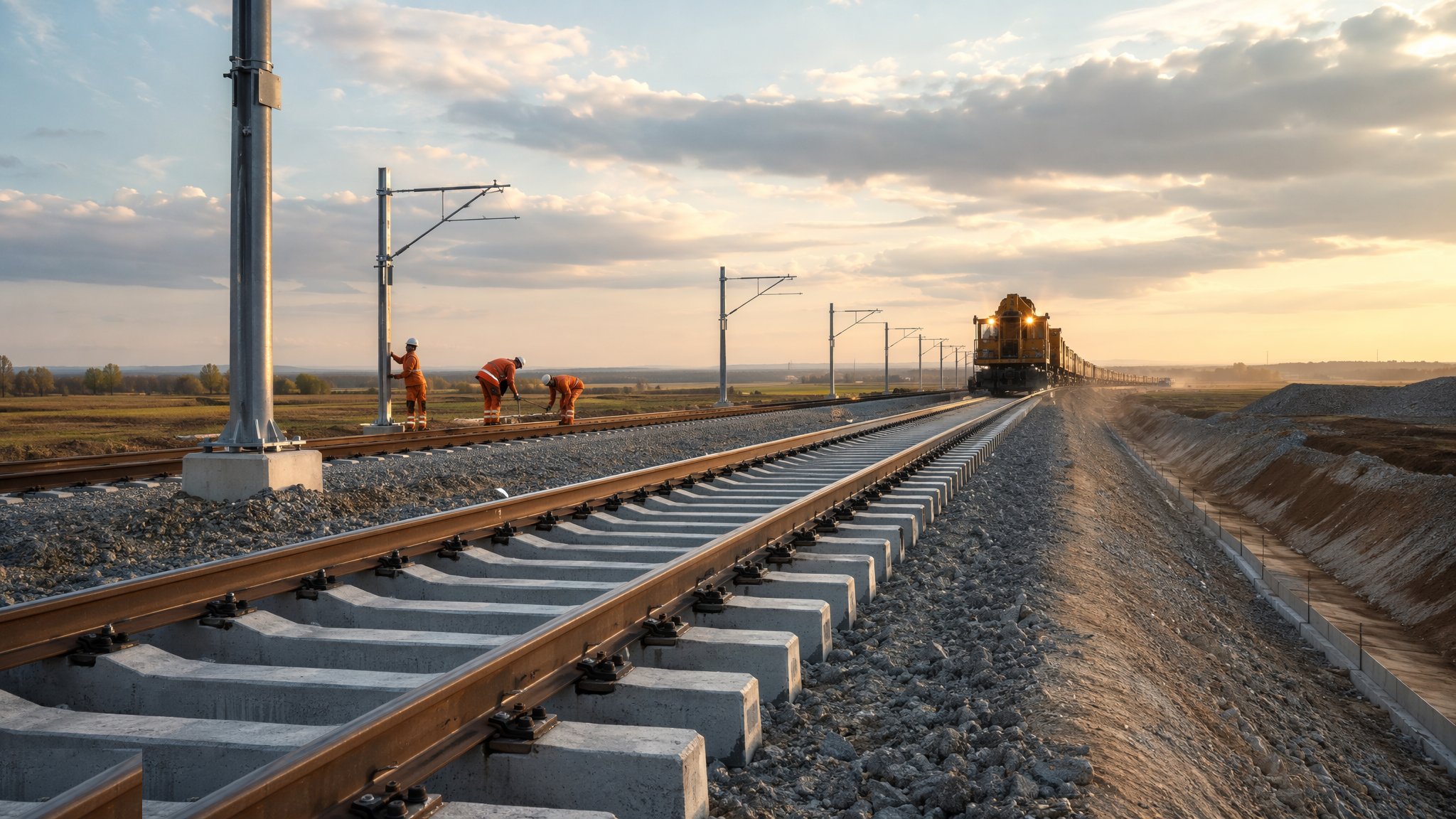
Shared corridor & structures - from Roads, Bridges & Tunnels
Every railway starts as a transport corridor: access, survey and ground investigation, bulk earthworks, drainage, and tunnels and bridges where the alignment demands them. These guides are owned by the roads, bridges and tunnels sectors - the cards open them at their canonical homes. The six rail guides below take over from the prepared corridor.
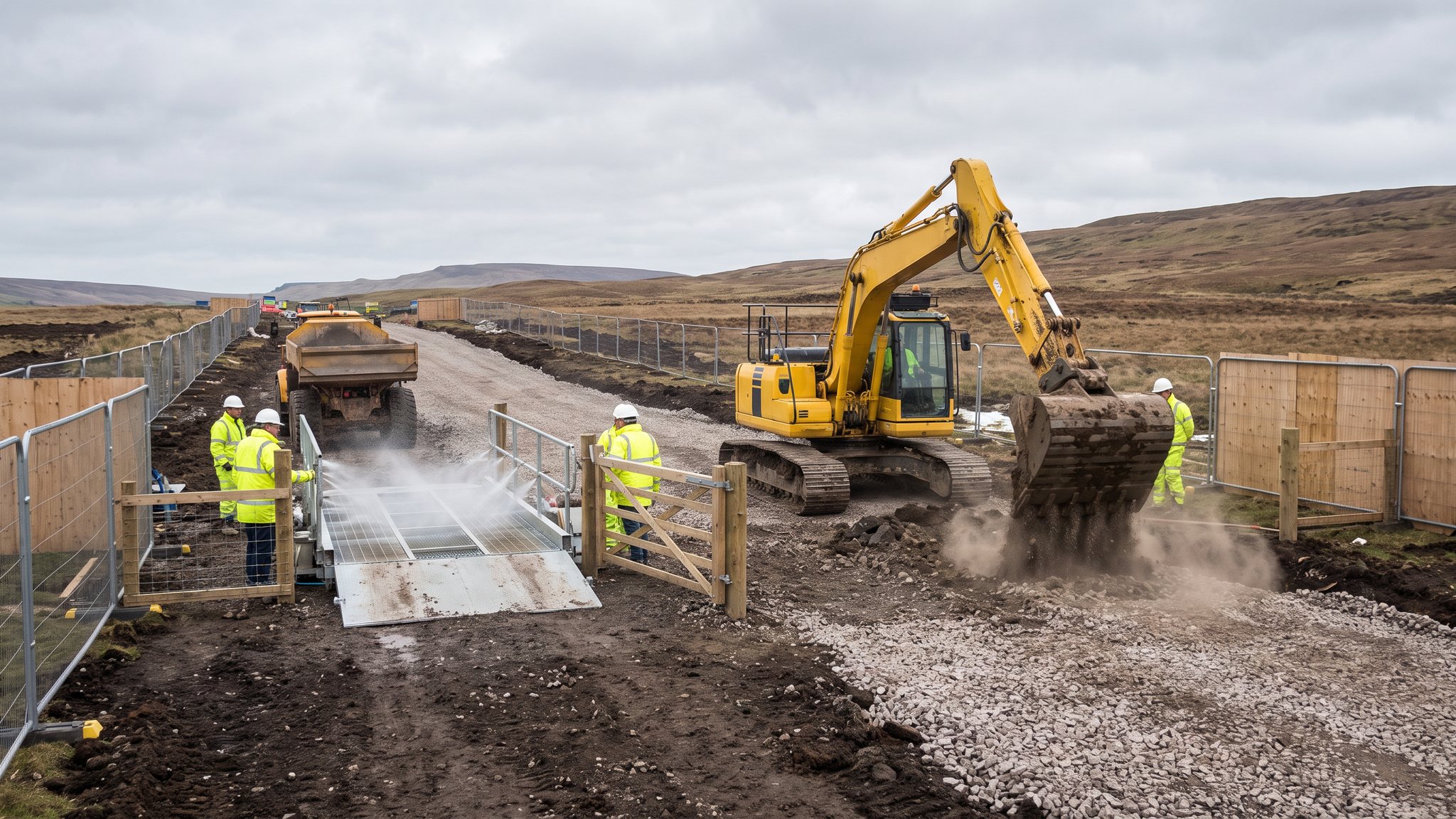
Corridor Access & Enabling Works
Turning a length of route - often a live highway - into a controlled, approved, workable construction corridor.
Open processCanonical guide: Roads & Highways
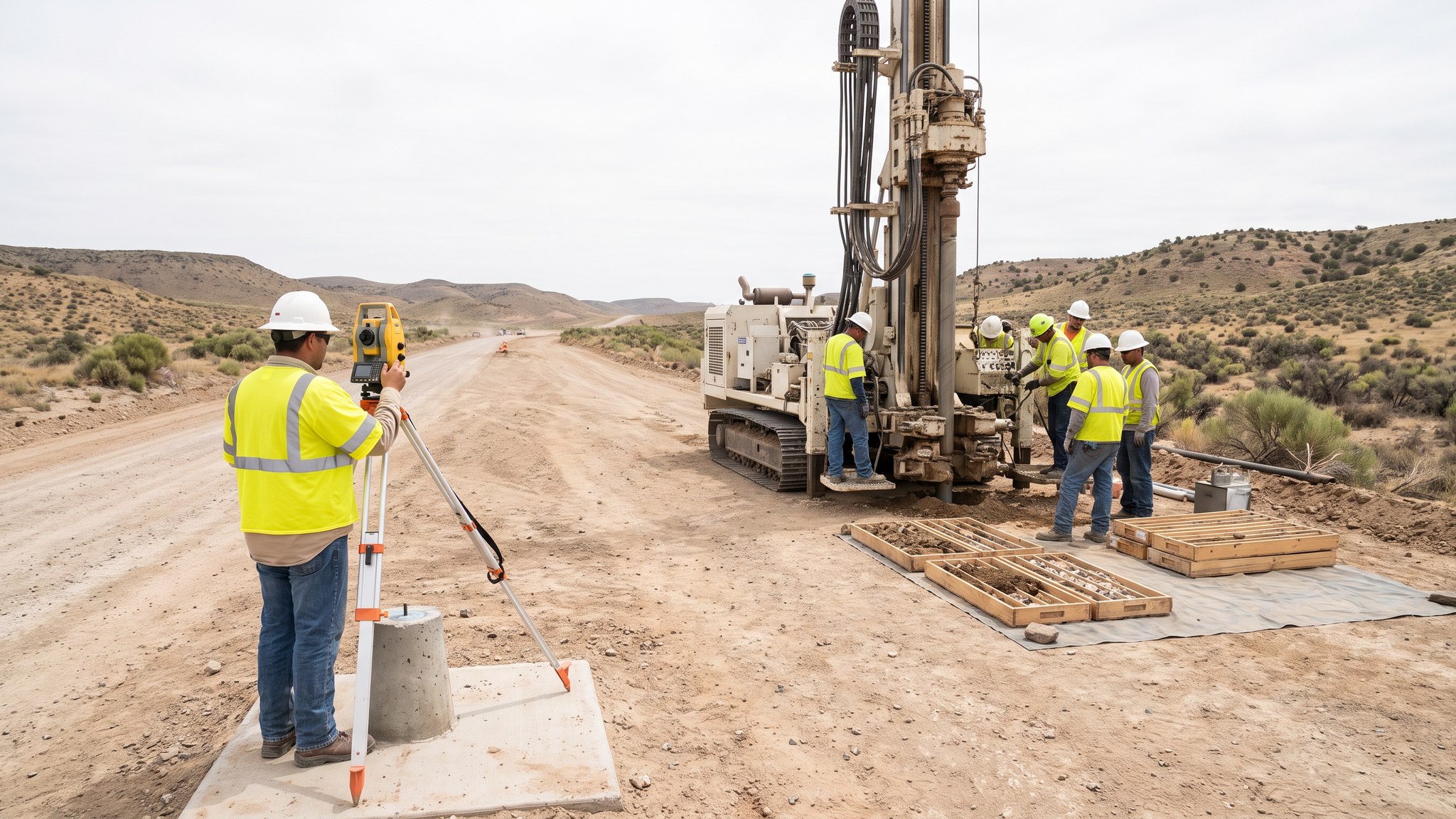
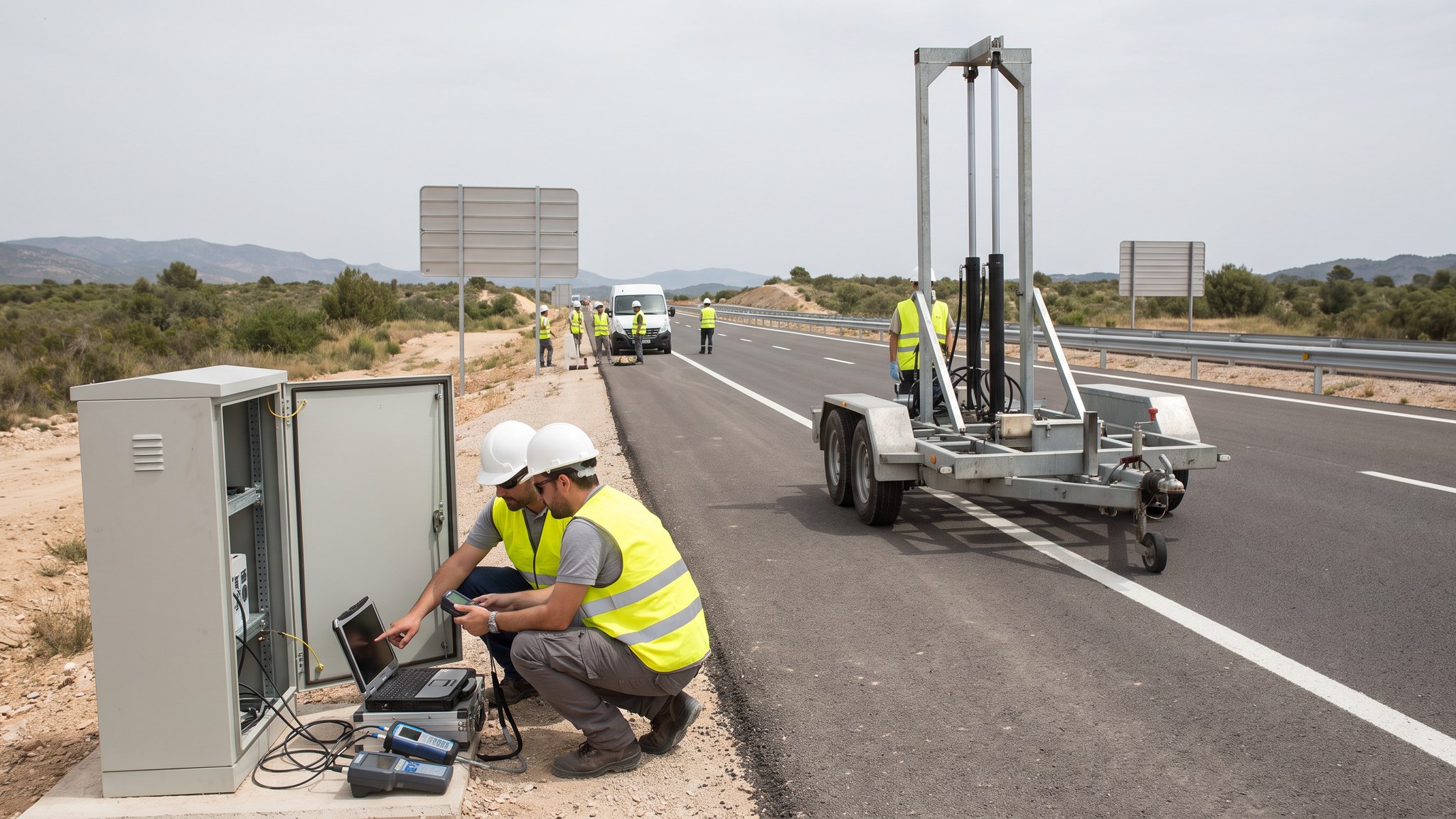
Survey Control & Ground Investigation
Corridor control networks and the ground investigation that tells you what the road, bridge or tunnel is actually standing on.
Open processCanonical guide: Roads & Highways
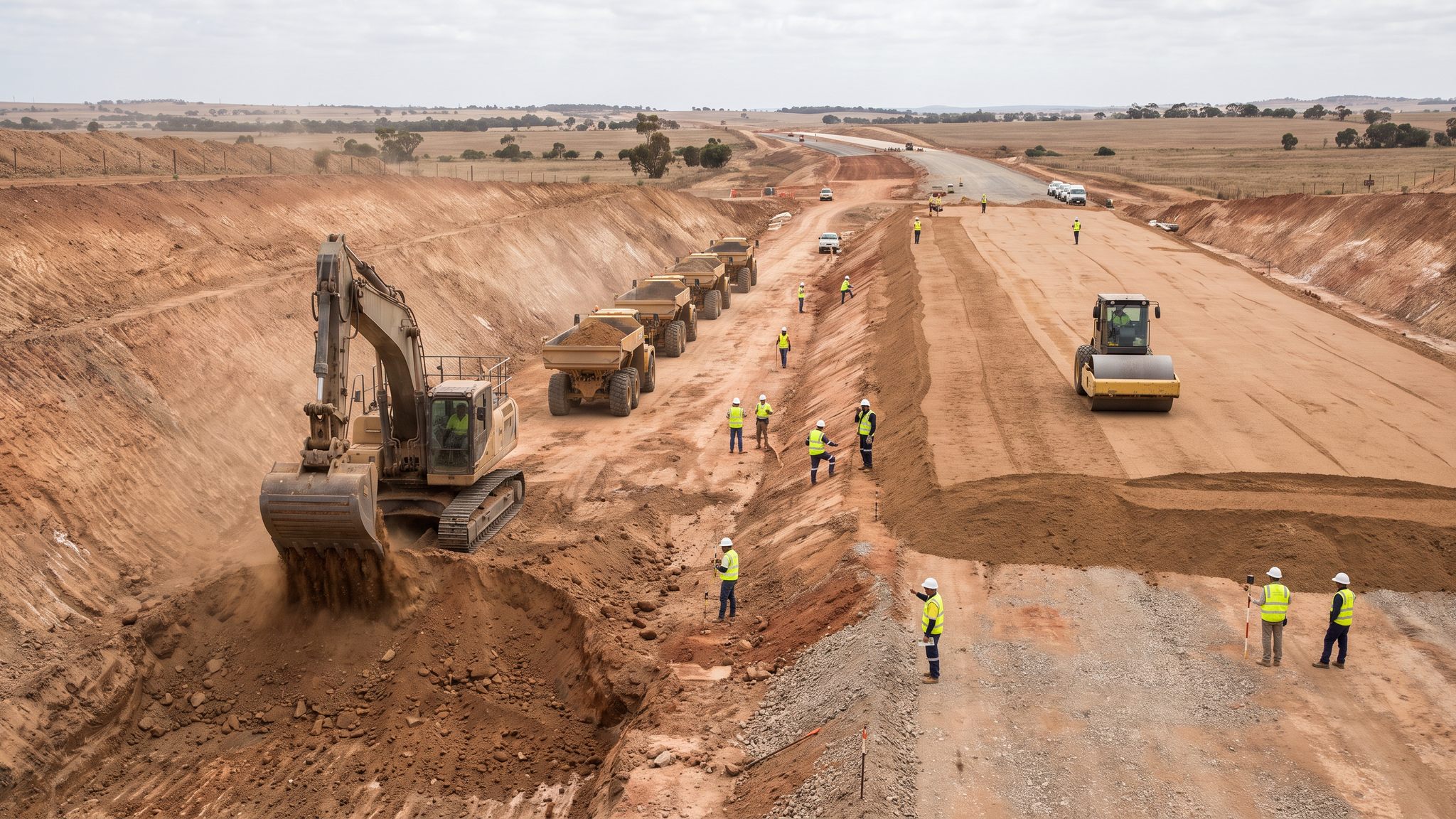
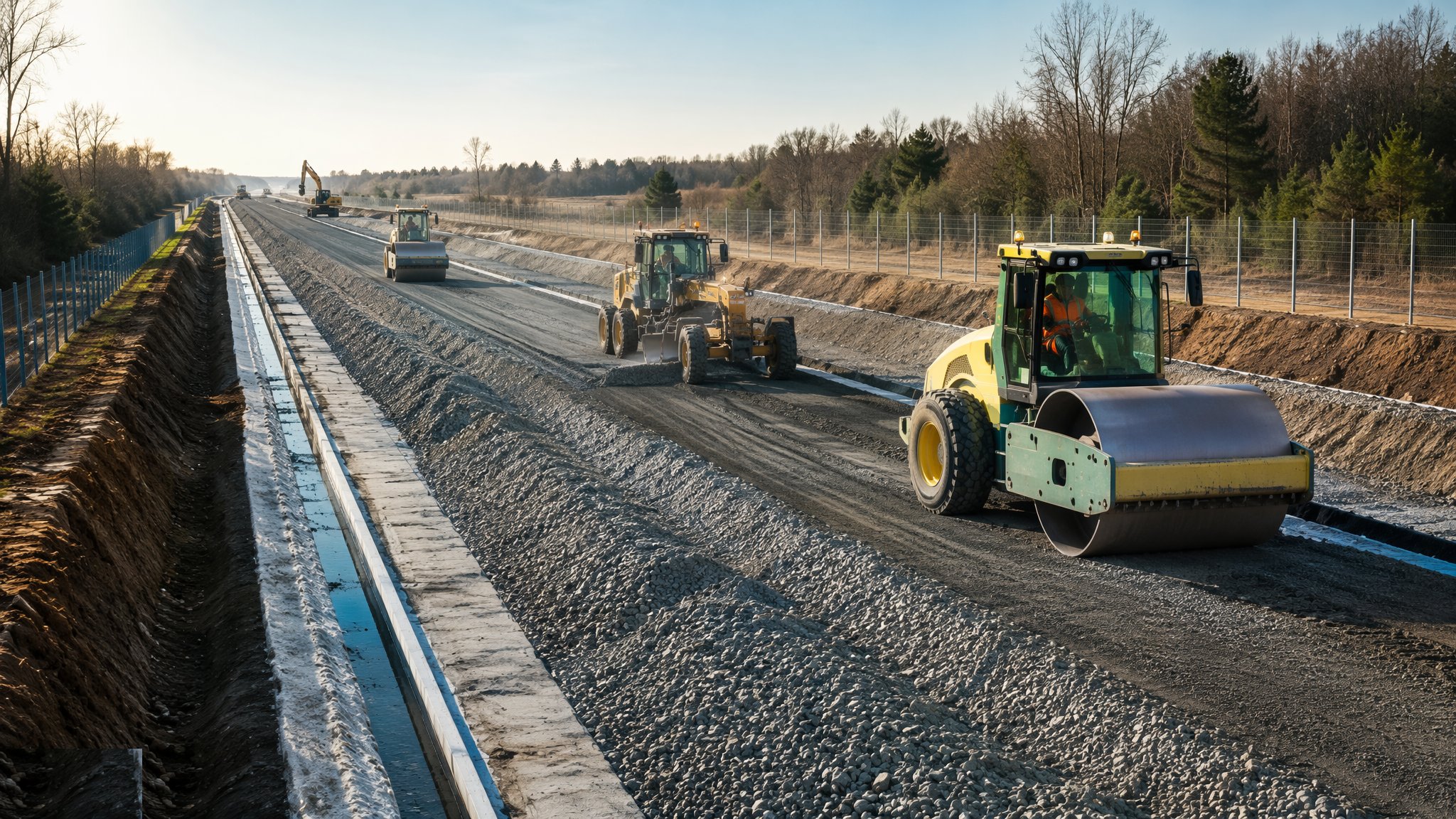
Bulk Earthworks - Cuttings & Embankments
Moving hundreds of thousands of cubic metres to build the corridor's shape - cuttings, embankments and the formation everything sits on.
Open processCanonical guide: Roads & Highways
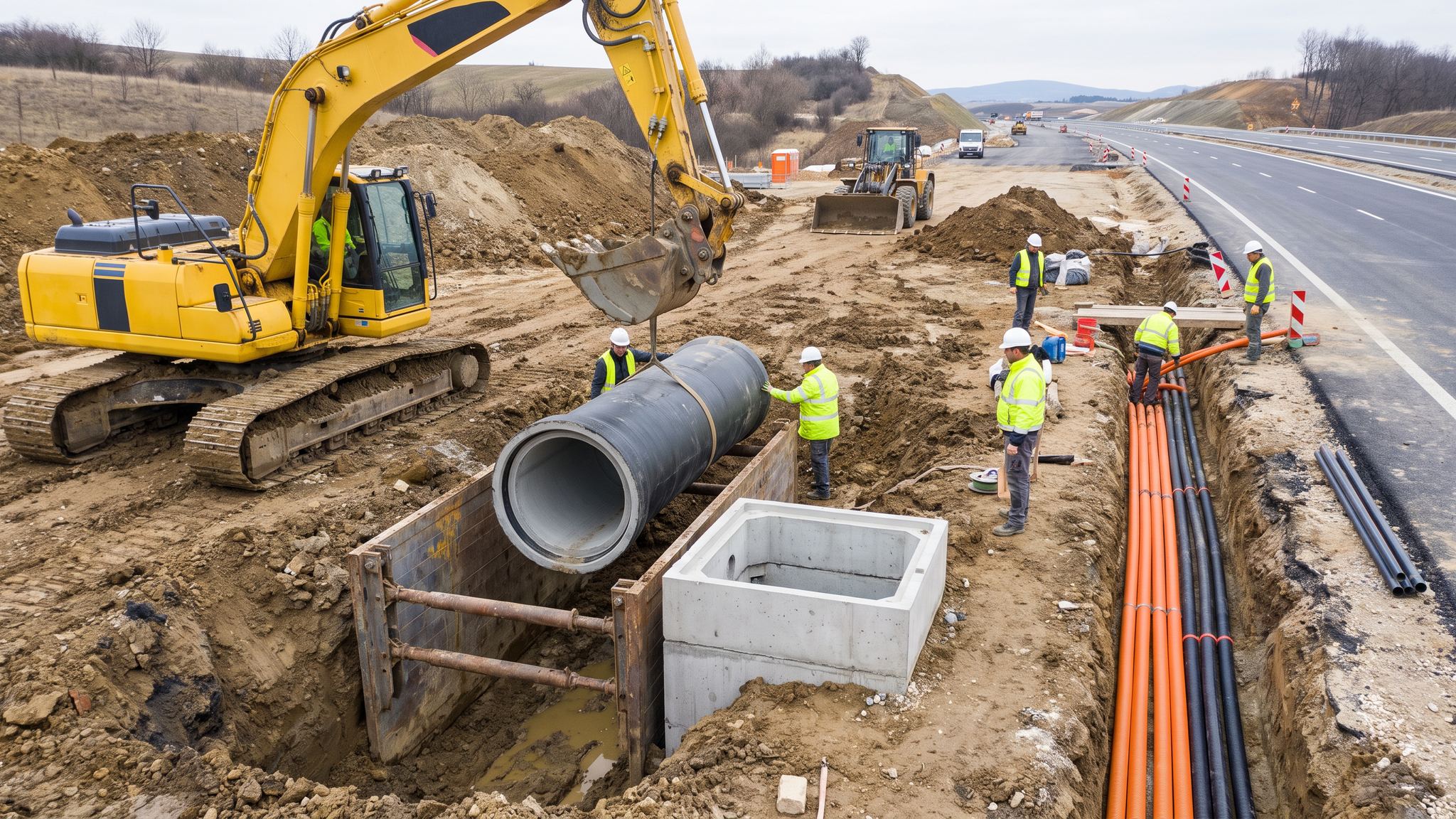
Drainage & Utility Corridors
Pipes, ducts, chambers and culverts - the buried networks installed before the pavement goes over them.
Open processCanonical guide: Roads & Highways
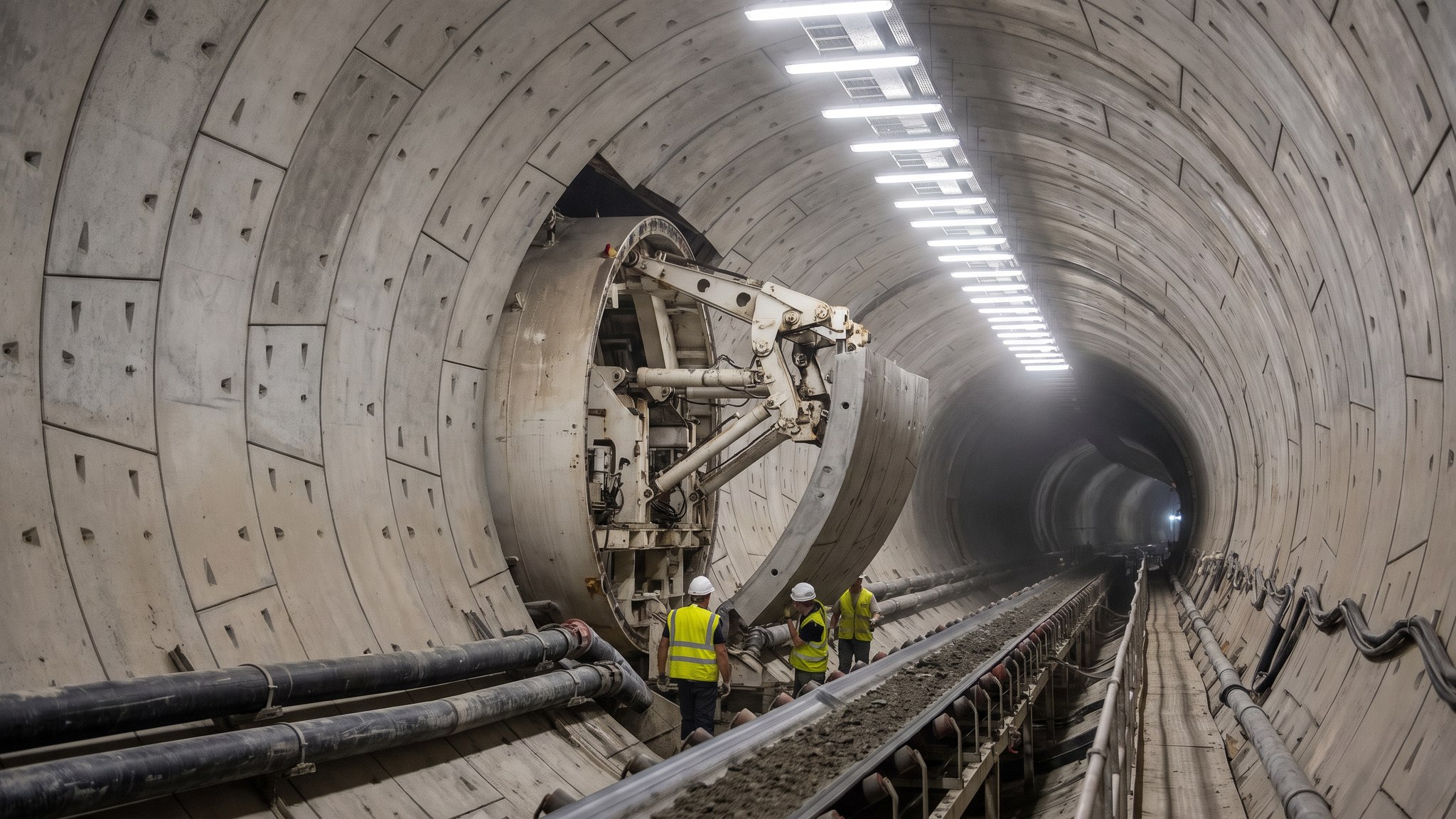
TBM Tunnelling & Segmental Lining
Mechanised tunnelling: the machine, the muck, and the gasketed precast rings that become the finished tunnel.
Open processCanonical guide: Tunnels & Underground
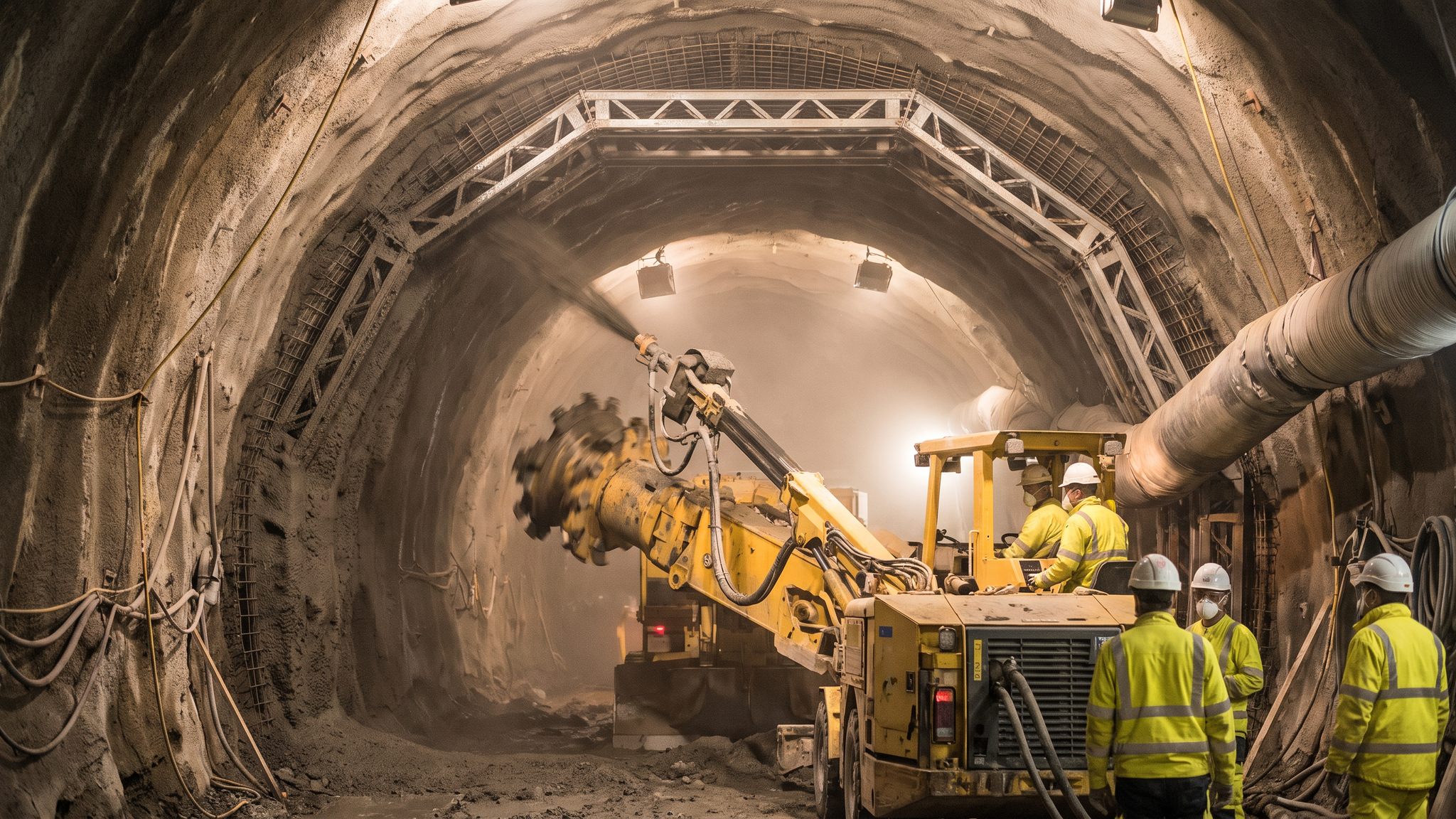
SCL & Drill-and-Blast Tunnelling
Conventional tunnelling where machines do not fit - sprayed concrete linings in soft ground, and the drill–charge–fire–muck cycle in rock.
Open processCanonical guide: Tunnels & Underground
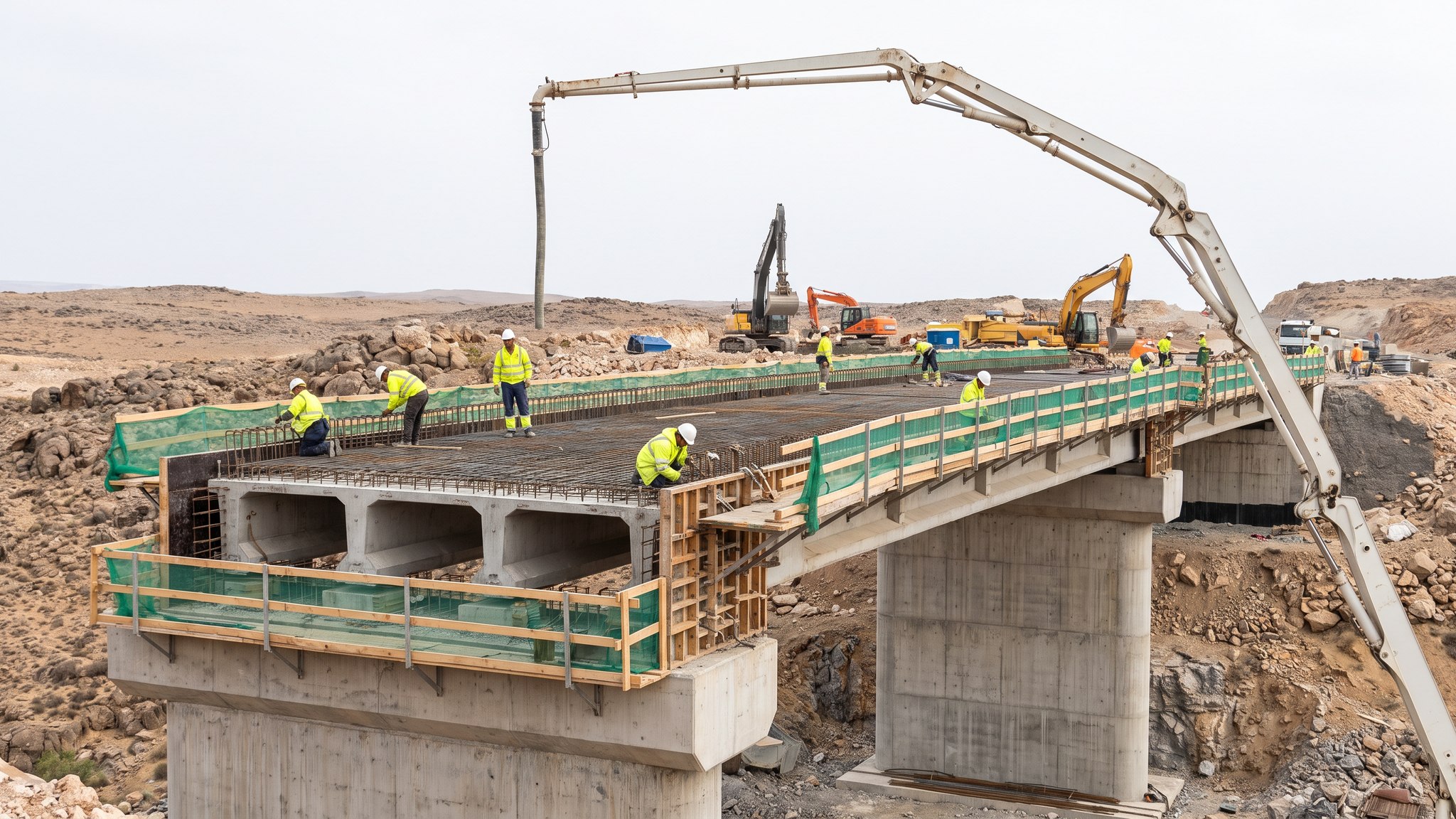
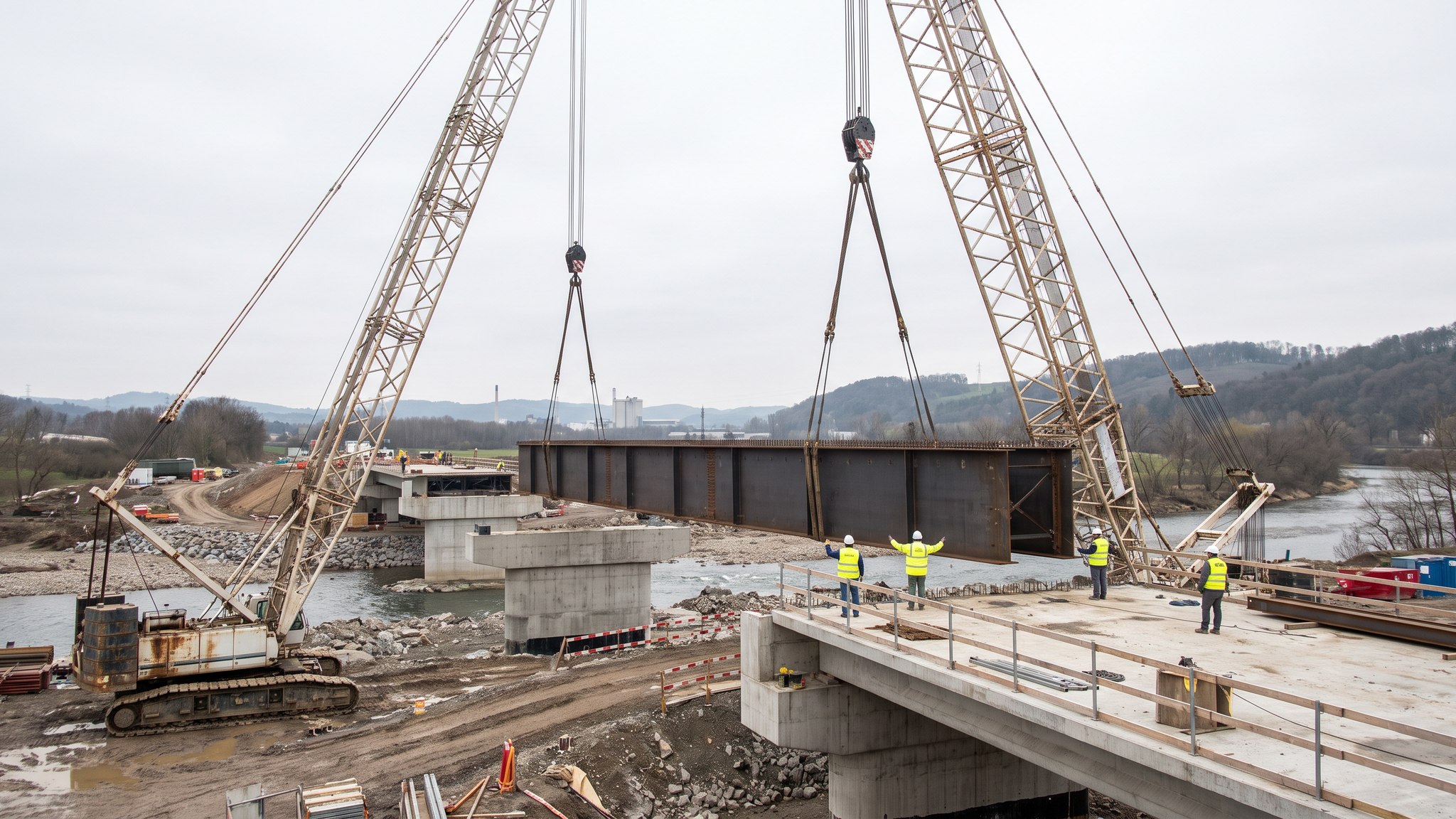
Bridge Deck Construction
Forming the span itself - in-situ decks on falsework, precast beams with an in-situ slab, and post-tensioned construction.
Open processCanonical guide: Bridges & Elevated Structures
The process map - formation to trial running
Six guides in build order, in five streams - formation and trackbed, track construction, rail systems, stations, and testing and commissioning. The corridor civils that get the alignment to this point are shared with roads, bridges and tunnels and are linked above. Each process is a full guide: overview, variants, numbered steps, plant, testing, safety and defects.
Rail systems2
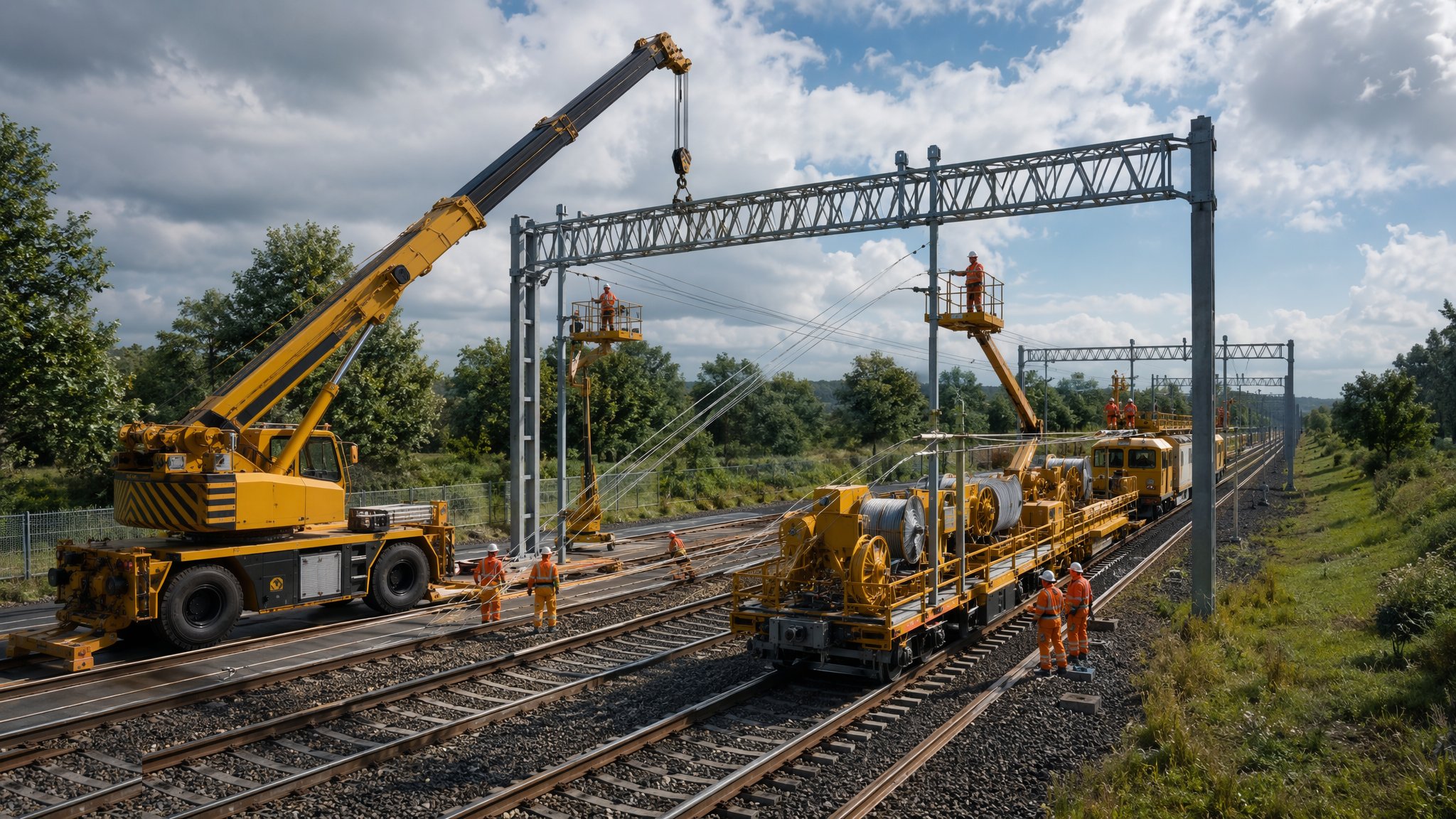
Rail Electrification - OLE & Conductor Rail
Foundations, masts and portals, contact and catenary wires run out and tensioned - or conductor rail laid and bonded - the power delivery system of an electric railway.
Open process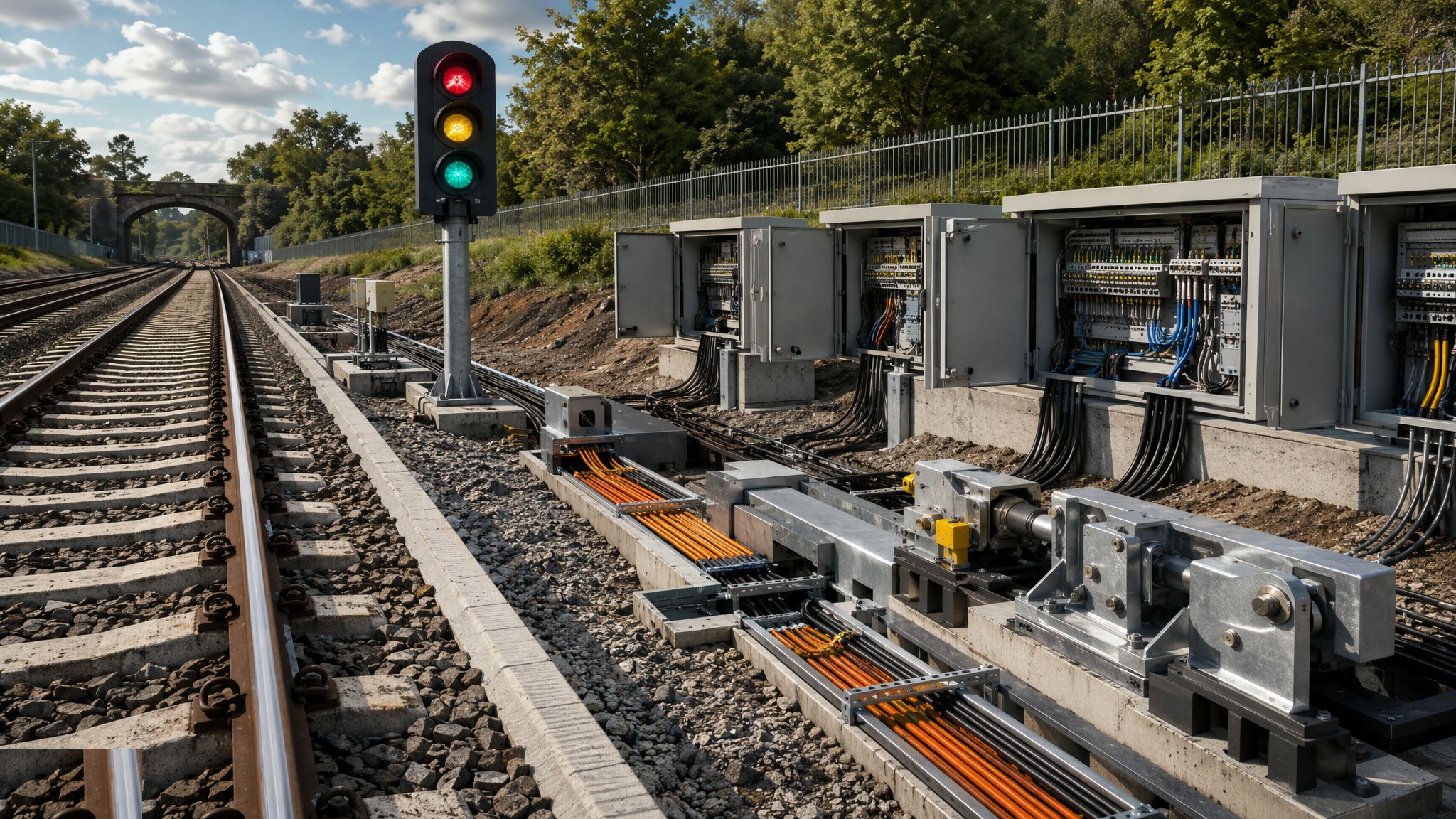
Signalling & Telecoms
Signals, point machines, train detection, interlockings and the telecoms backbone - the systems that keep trains apart and tell them where to go.
Open process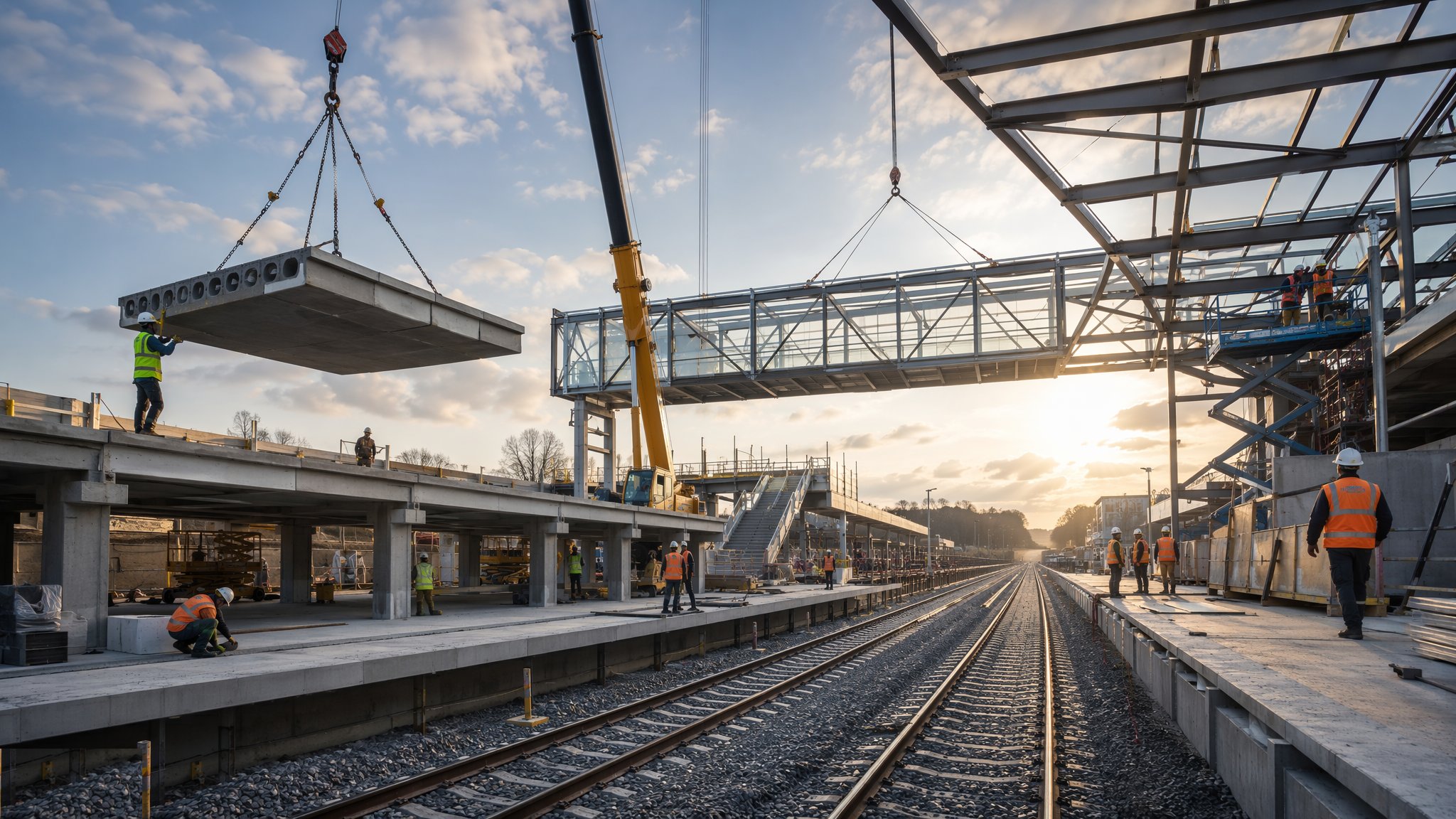
Rail & Metro in depth
About Rail & Metro
The railway itself is a different trade chain. Formation and trackbed engineered to hold alignment to millimetres under 22.5-tonne axle loads; track construction - ballast, sleepers, rail and welding, or slab track where the maintenance budget allows; then the systems that make it a railway rather than a guideway: electrification, signalling and telecoms. Stations are buildings with a railway through them, and the whole thing closes with testing, commissioning and trial running before the first passenger boards.
The six guides in this sector follow that chain in build order - formation, track, systems, stations, commissioning - from the prepared earthworks the corridor sectors hand over, to a railway ready to enter service.
How railways are bought and built
Heavy rail work in the UK runs through Network Rail's control periods: five-year funding settlements that feed frameworks and alliances held by the big rail contractors, with track, signalling and electrification often in separate packages that must nonetheless meet in one commissioning exercise. Larger renewals go design and build on NEC terms; enhancement schemes carry a development stage that gates funding release. Metro work is different in kind where the client is Transport for London, and different again in the Gulf, where the railways are largely greenfield: Dubai Metro was delivered by a Japanese-led consortium as a turnkey EPC for the RTA, and Etihad Rail was let in design-and-build stages across the emirates. Greenfield Gulf rail is a civils job first and a systems job second, with no existing railway to work around; UK rail is the opposite.
The defining commercial fact of UK rail is that you are building inside an operating asset you do not control. Access is rationed, rules of the route change, and every element of the work is priced around the access you hope to get rather than the access you would like.
Possessions: the programme within the programme
Nothing in UK rail moves without a possession - an agreed window where the line is closed to traffic and handed to the works. Standard overnight possessions are booked many months ahead; the long blockades over Christmas, Easter and bank holidays are planned twelve to eighteen months out and carry the heaviest work: track renewals, bridge replacements, resignalling cutovers. A possession plan reads like a military operation: isolation of the overhead line or third rail, protection arrangements, the plant chain (road-rail vehicles, tampers, ballast trains with fixed paths to site), and a handback sequence with the railway proven - track geometry measured, signalling tested - before the first train is due. Overrunning a possession is the cardinal sin: it cancels trains, makes the news, and is charged and investigated accordingly.
The critical path on a rail scheme therefore runs through systems, not earthworks. Formation and track can be built in windows; signalling integration and testing cannot be rushed, because every interface - interlockings, axle counters, train detection, the control centre - must be proven by test, and test trains need the line. Commissioning is where rail programmes die: the civils finish, the photographs get taken, and then months of stage work, software assurance and trial running follow before a passenger boards. Gulf metros programme the same sequence but without possessions, which is why a greenfield metro can be delivered in five years and a UK signalling renewal cannot.
The systems that make it a railway
Track is surprisingly tolerant; systems are not. Electrification means foundations and portals along the whole route, then wiring trains installing contact and catenary wire, then registration - the geometry of wire to pantograph checked by a dedicated measurement train before energisation. A 25 kV overhead line that is out of registration by millimetres will dewire a pantograph at speed. Signalling installation runs in parallel: cables in troughing routes, location cases, signals, train detection, and then the testing cascade - each interlocking function proven, each interface with the adjacent signal box rehearsed, each stage cut over in a possession with the old system kept recoverable until the new one proves itself.
Depots are the quiet enabler: a railway without a serviced, stabled fleet is a guideway with ambitions. The depot is a building wrapped around track - inspection pits, lifting jacks, wheel lathes, washer plants - and it must be commissioned before trial running can scale up. Trial running itself is choreography: empty trains building mileage, drivers and signallers learning the route, degraded-mode drills, and a staged ramp to full timetable that the regulator and the operator sign off together.
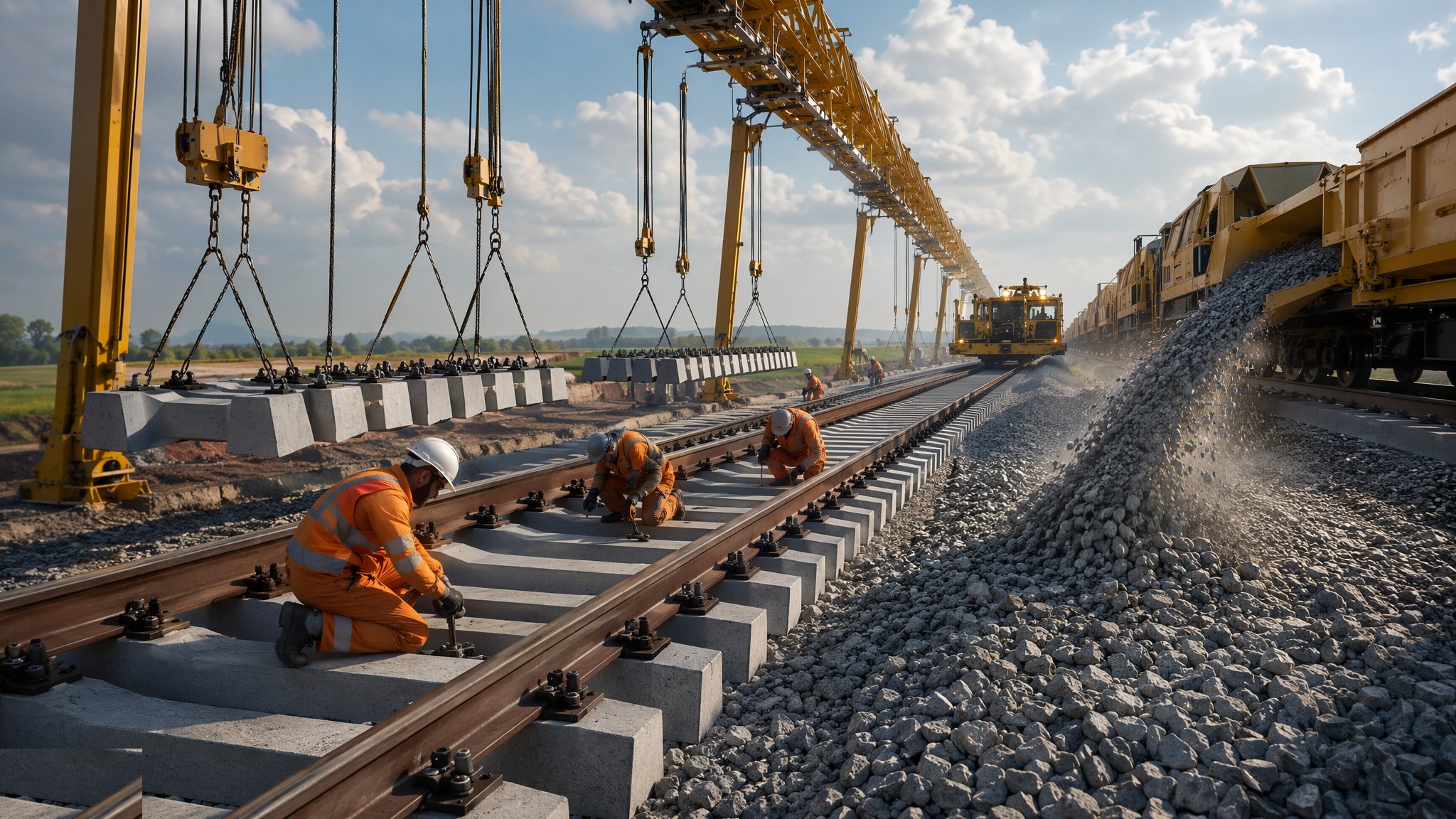
Track construction itself has its own grammar that programmes must respect. Ballasted track goes down in layers - bottom ballast, sleepers and rail, then top ballast - and the tampers and dynamic stabilisers make repeated passes to lift the line to design geometry before the welds are de-stressed at the correct rail temperature and locked down. Continuously welded rail arrives in long strings by rail delivery train and is flash-butt or aluminothermic welded into strings kilometres long; every weld is numbered, tested and traceable, because a bad weld is a broken rail waiting for a cold night. Slab track trades that maintenance burden for upfront precision: concrete poured or precast to millimetre tolerances, with the track fixed to it and almost nothing left to adjust afterwards. Stations sit across both worlds - buildings with platform edges set out to the millimetre from the track centreline - and the platform-to-train interface is checked with gauging runs before any passenger is allowed near it.
Failures that shape the rulebook
The Great Western electrification is the standing UK cautionary tale: announced on one budget and scope, delivered years late at multiples of the cost, with the National Audit Office documenting how design was let before scope was fixed and the overhead line foundations failed against ground conditions in quantity. Crossrail repeated the lesson at the systems end - world-class tunnelling, then a commissioning phase that consumed the contingency and the schedule. Track failures are rarer but lethal when they come: Hatfield in 2000, a broken rail from rolling contact fatigue, killed four people and triggered a national programme of rail replacement and speed restrictions that effectively broke the infrastructure company of the day.
The common root is interfaces: civils to track, track to signalling, signalling to the train, the project to the operator. Every assurance regime in modern UK rail - the common safety method risk process, independent safety assessment, staged entry into service - exists because an interface was once assumed instead of proven.
UK versus Gulf: brownfield versus greenfield physics
Gulf rail engineering contends with the desert: continuously welded rail stressed for rail temperatures that swing past 70 degrees at the steel in summer, so stressing calculations and de-stressing windows are a discipline of their own; sand migration onto the track and into points machines, driving covered alignments, sand fences and cleaning regimes; and slab track chosen far more readily than UK practice because the maintenance organisation is being built from zero alongside the railway. Dubai Metro runs driverless at headways UK commuter rail can only envy, on viaducts built by launching gantry over a live Sheikh Zayed Road - the possession problem solved by never having an existing railway.
UK rail's constraint is inheritance: Victorian formation, a loading gauge that strangles rolling stock and overhead line clearances, listed stations, and neighbours on both sides of the fence. The trades are the same - formation, drainage, track, power, signals - but in the UK you are rebuilding the machine while it runs, and in the Gulf you are building it in an empty room. Both are hard; they are hard on opposite days of the week.
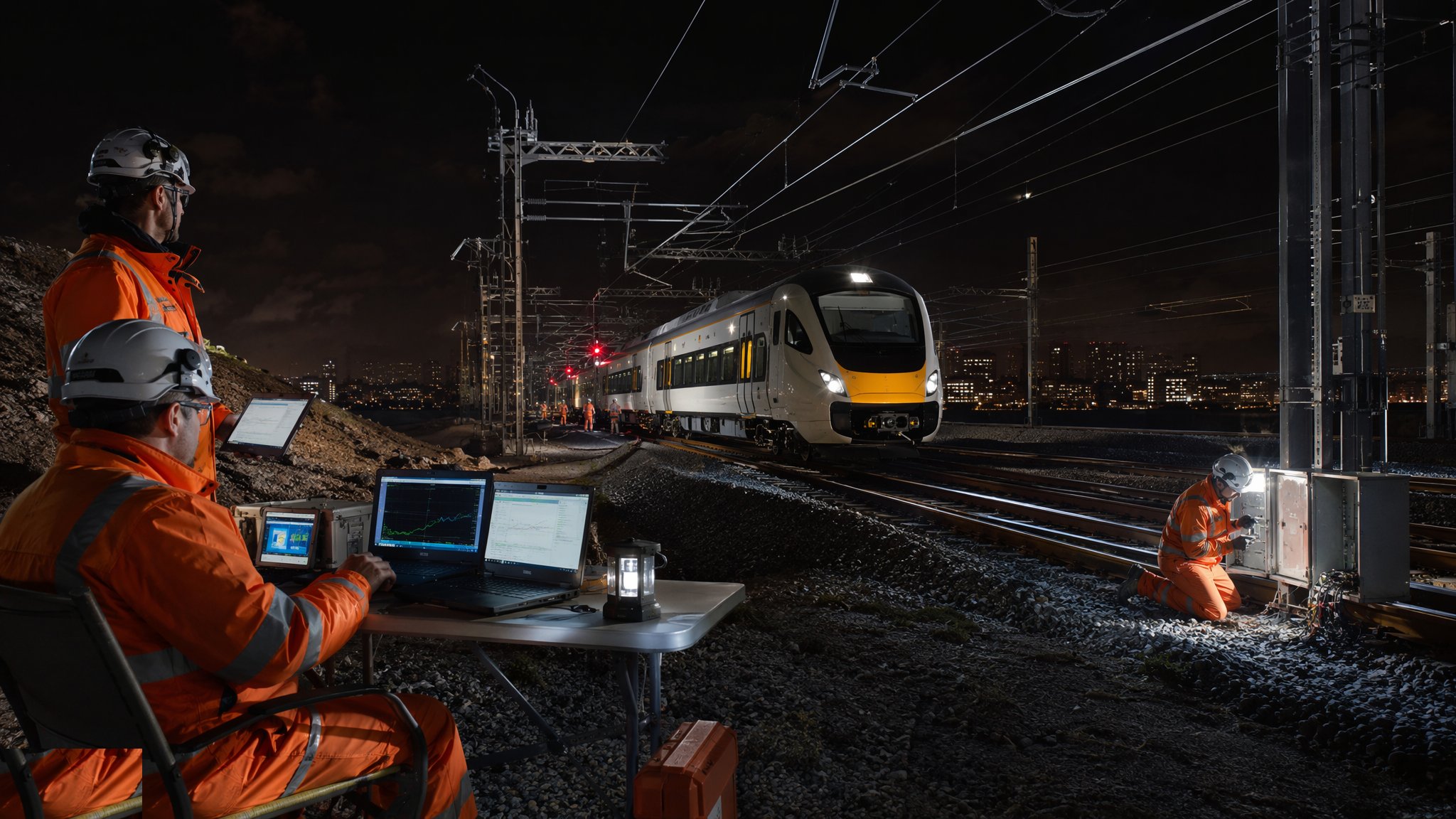
What both markets share is the endgame: entry into service is earned, not declared. Test trains run the route at line speed, gauging and ride quality are measured rather than assumed, emergency exercises rehearse evacuation with the fire services, and the operator's staff - drivers, signallers, maintainers - are trained on the real asset before the first fare-paying passenger boards. The day the railway opens is the least dramatic day of the project if the commissioning was done honestly, and the most dramatic and public day of the entire project if it was not.