Runways, aprons and terminals - the heaviest pavements and the busiest buildings, behind one fence.
An airport is a roads job, a buildings job and a security job sharing one fence. Airside, the pavements take aircraft loads that make a motorway blush - the corridor earthworks and drainage that get you there are the shared transport methods, linked below. Landside and airside alike, everything works around aircraft movements and a security regime that shapes the programme as much as the weather.
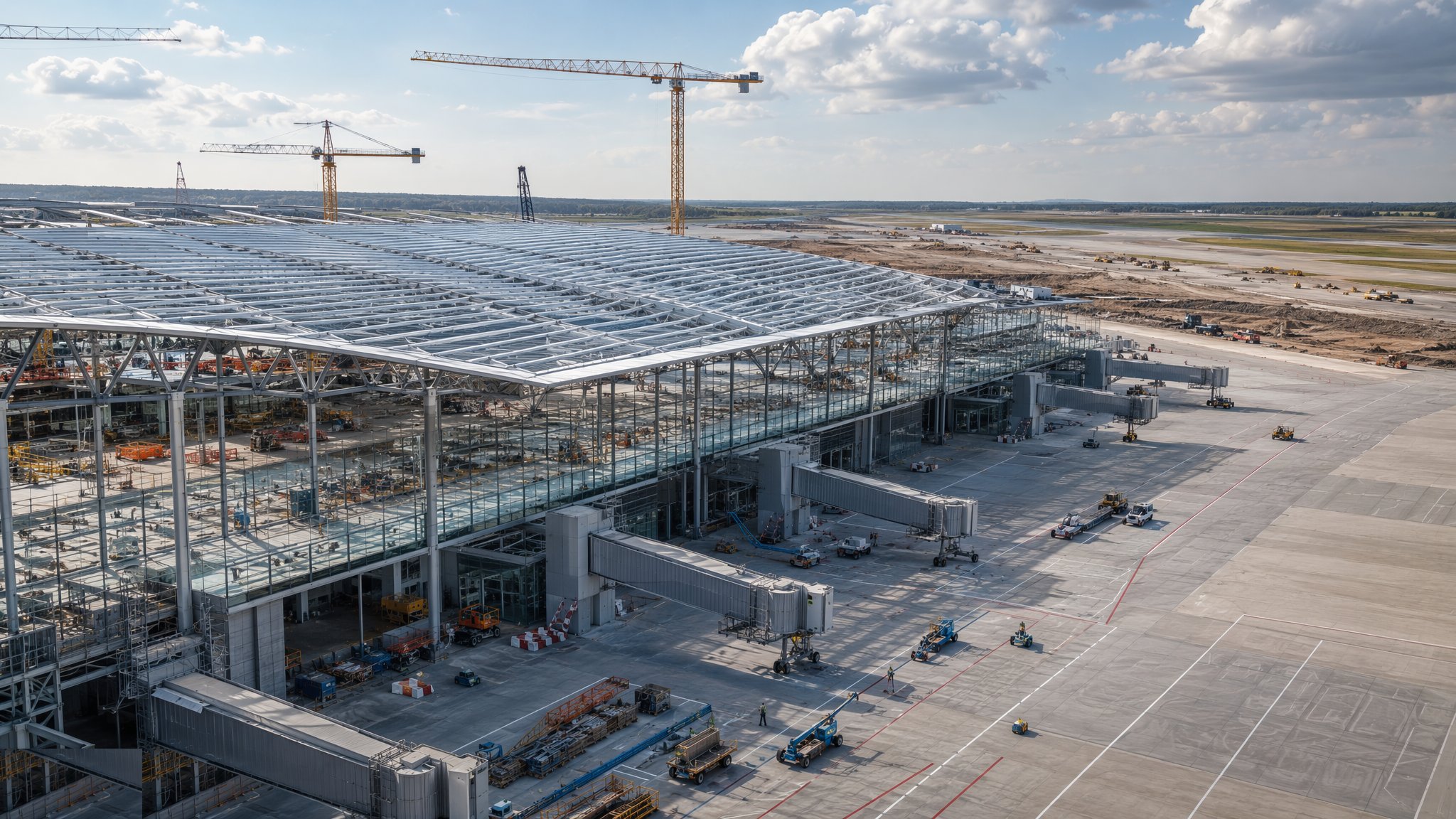
The process map - pavements to terminals
Five guides in build order, in three streams - airside works and pavements, terminals and piers, and the support facilities behind them. The corridor civils that get plant and materials to the fence are shared with roads and rail and are linked below. Each process is a full guide: overview, variants, numbered steps, plant, testing, safety and defects.
Airside works & pavements3
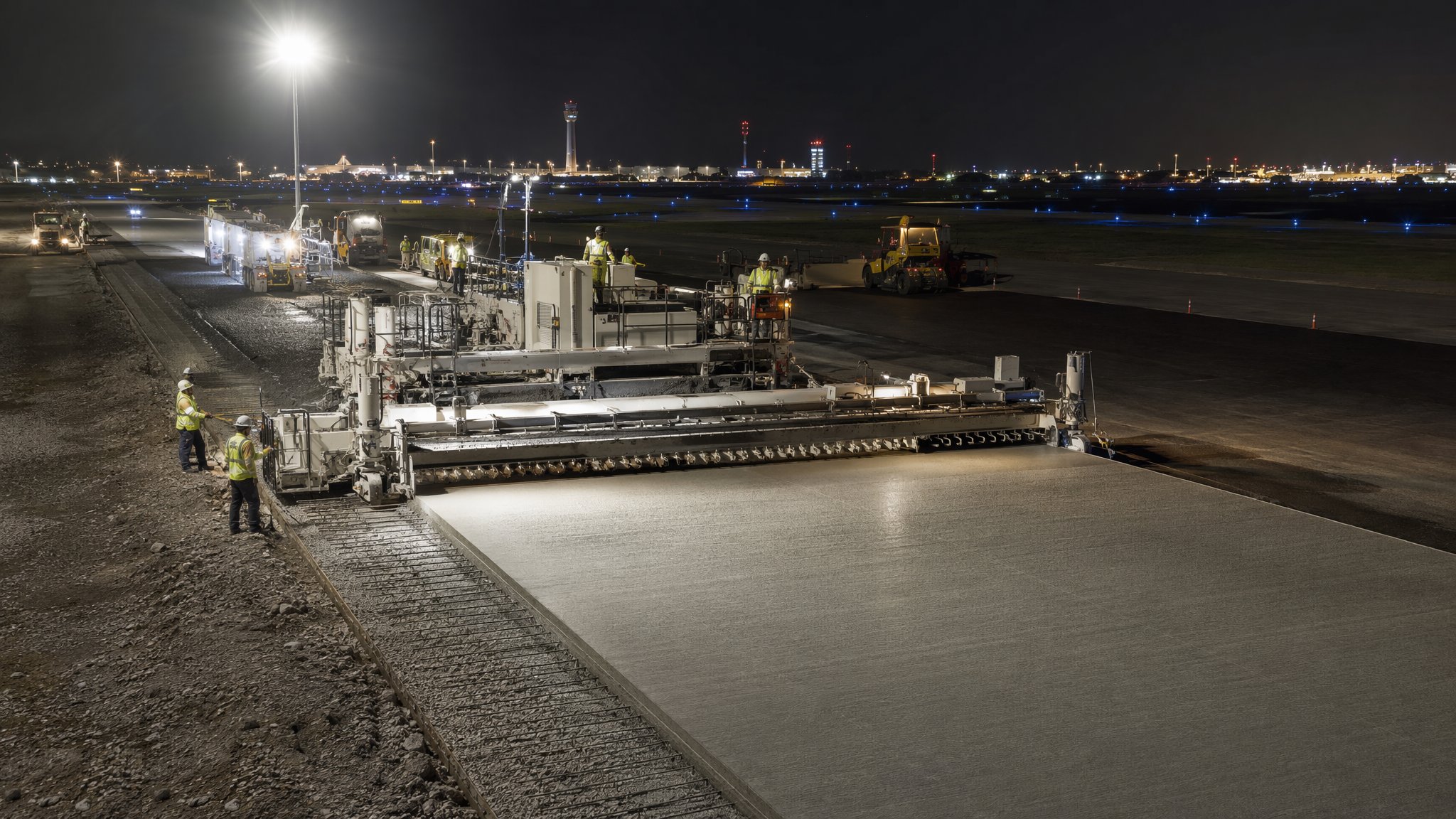
Runway & Taxiway Pavement Construction
Building the strip itself - rigid pavement-quality concrete or thick-lift asphalt over a proven subgrade, textured and grooved for wet grip, with FOD discipline throughout and acceptance that ends at a friction survey.
Open process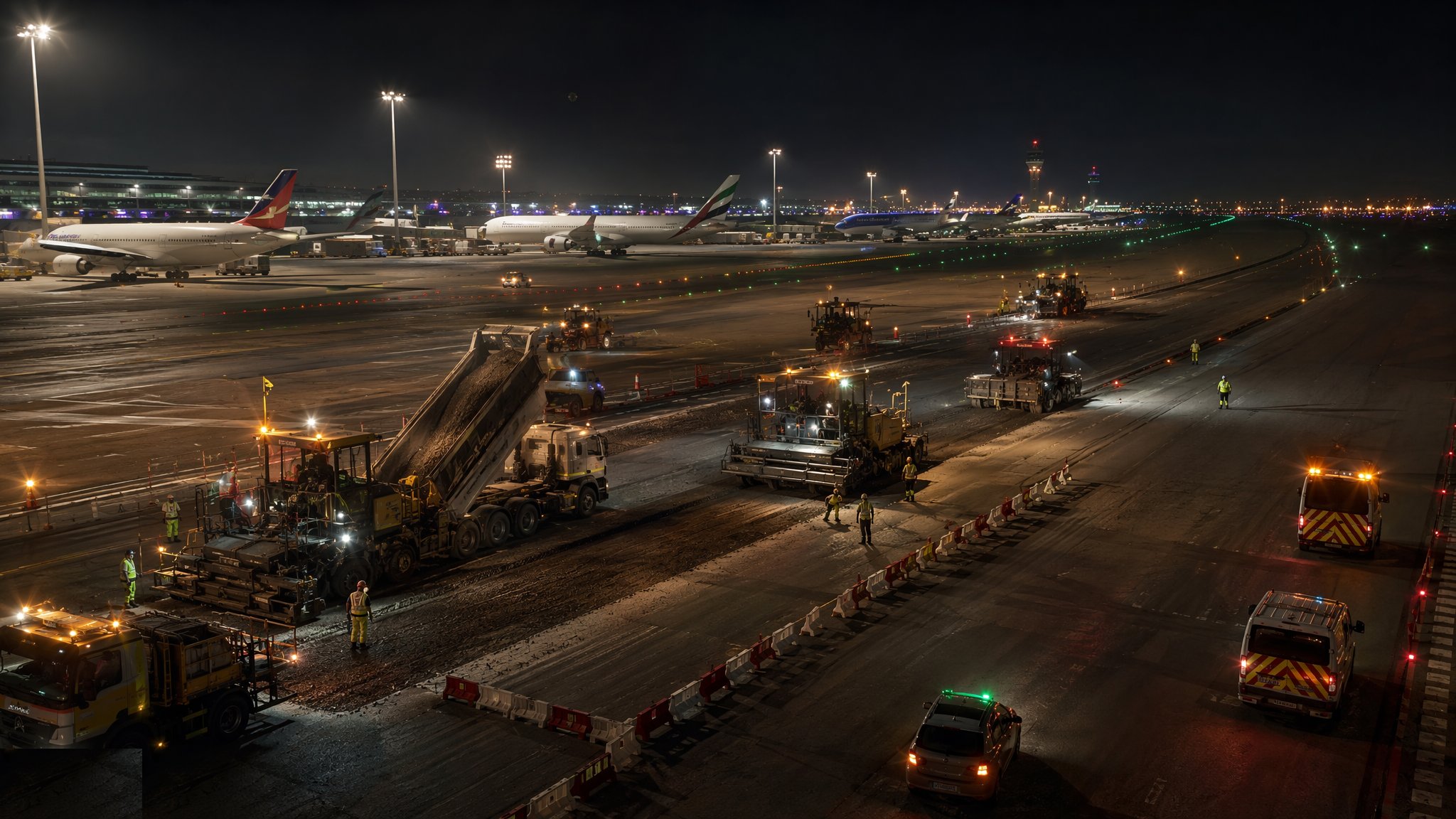
Airside Works in Live Airports
Working beside aircraft that are earning money - passes, escorts and radio discipline, night possessions with a hard handback, FOD control as a way of life, and NOTAMs telling the world's pilots where you dug today.
Open process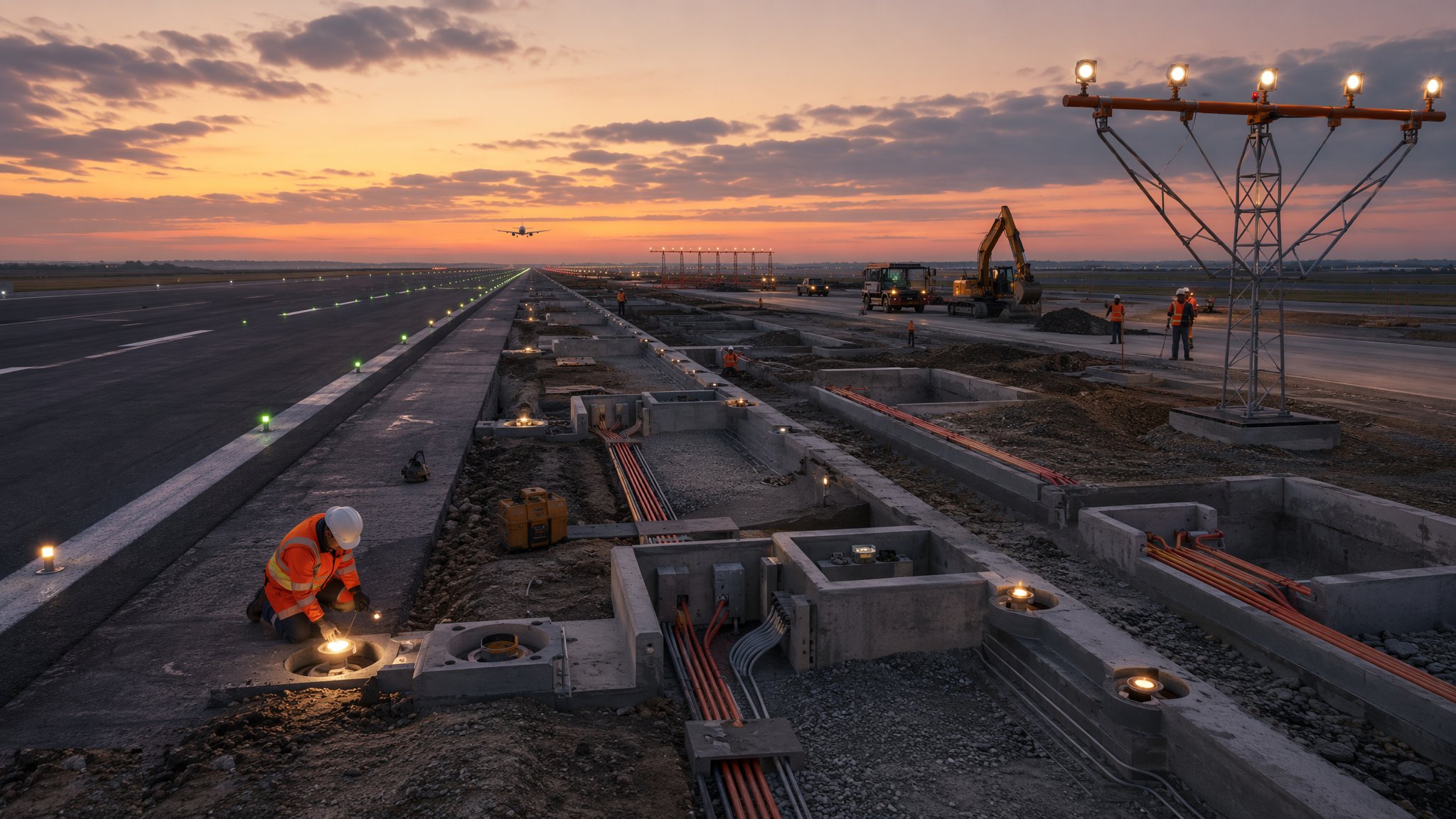
Airfield Ground Lighting & Navigational Aids
The airfield's nervous system - series circuits at constant current, inset and elevated lights, transformer pits and ducted cable, the control system in the tower, and the ILS and PAPI that only count once a calibration aircraft has flown them.
Open process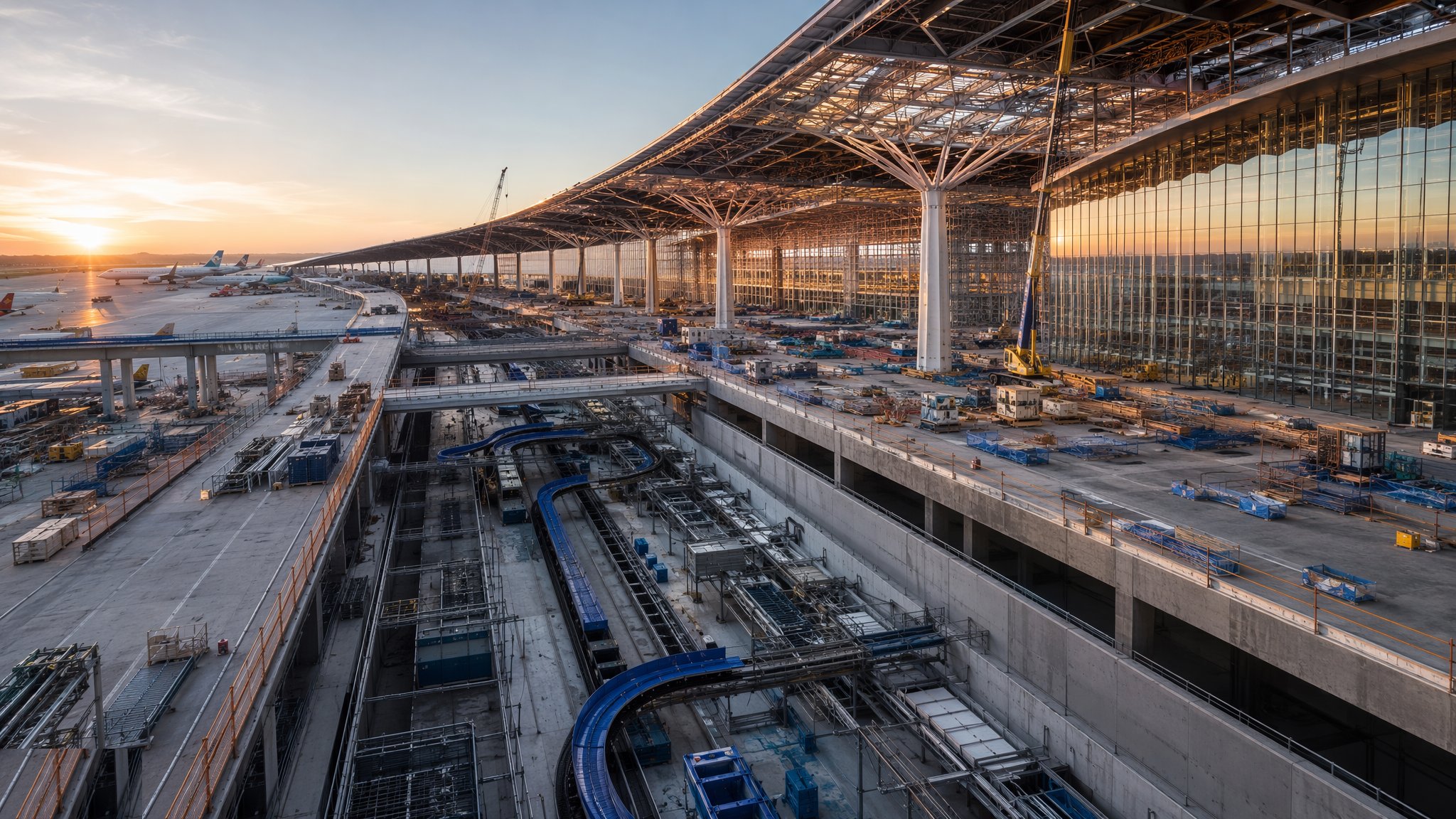
Shared methods used in this sector
These guides are owned by other sectors - the canonical page lives there - but the method is the same here. Cards open the guide at its home sector.
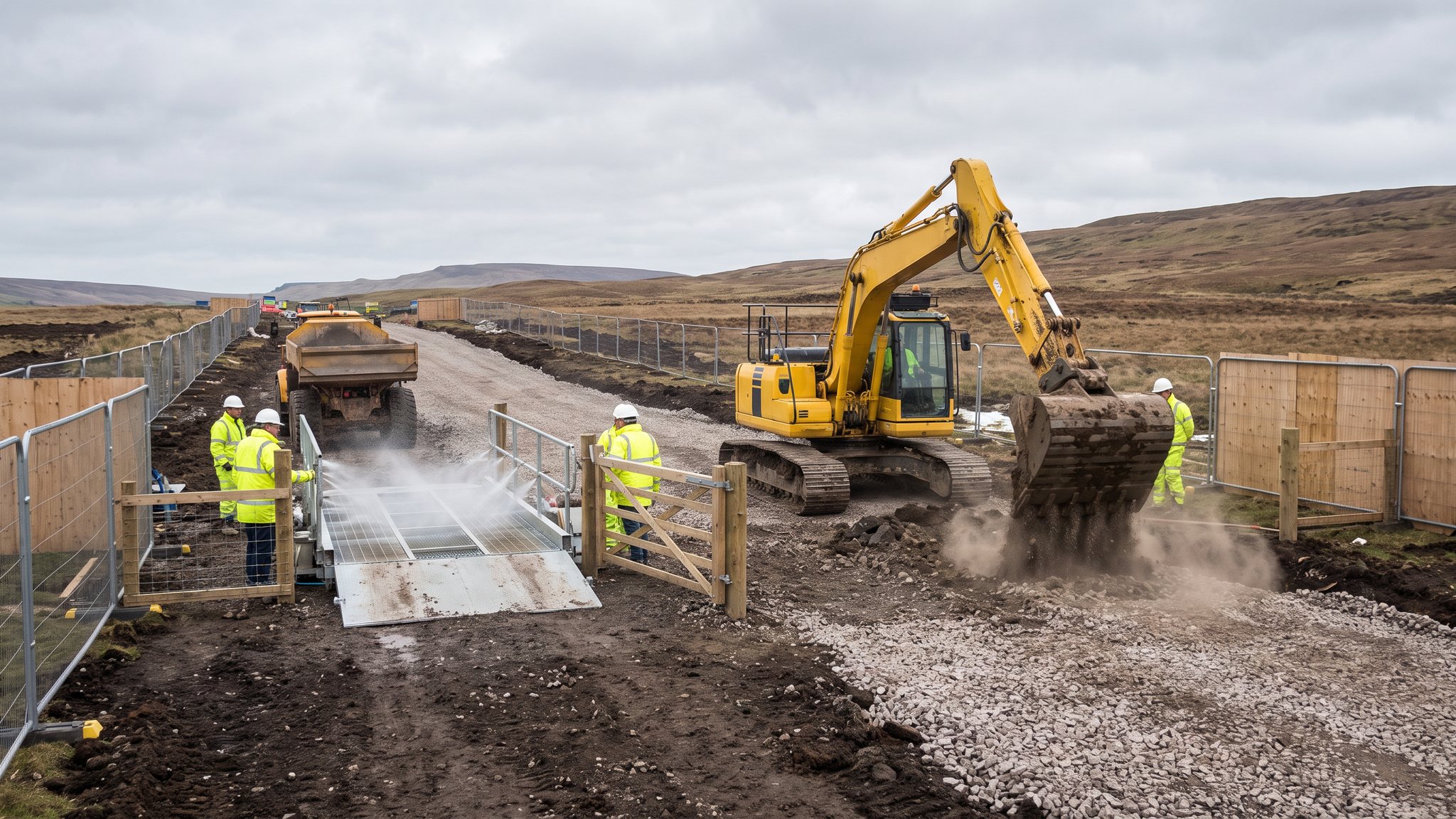
Corridor Access & Enabling Works
Turning a length of route - often a live highway - into a controlled, approved, workable construction corridor.
Open processCanonical guide: Roads & Highways
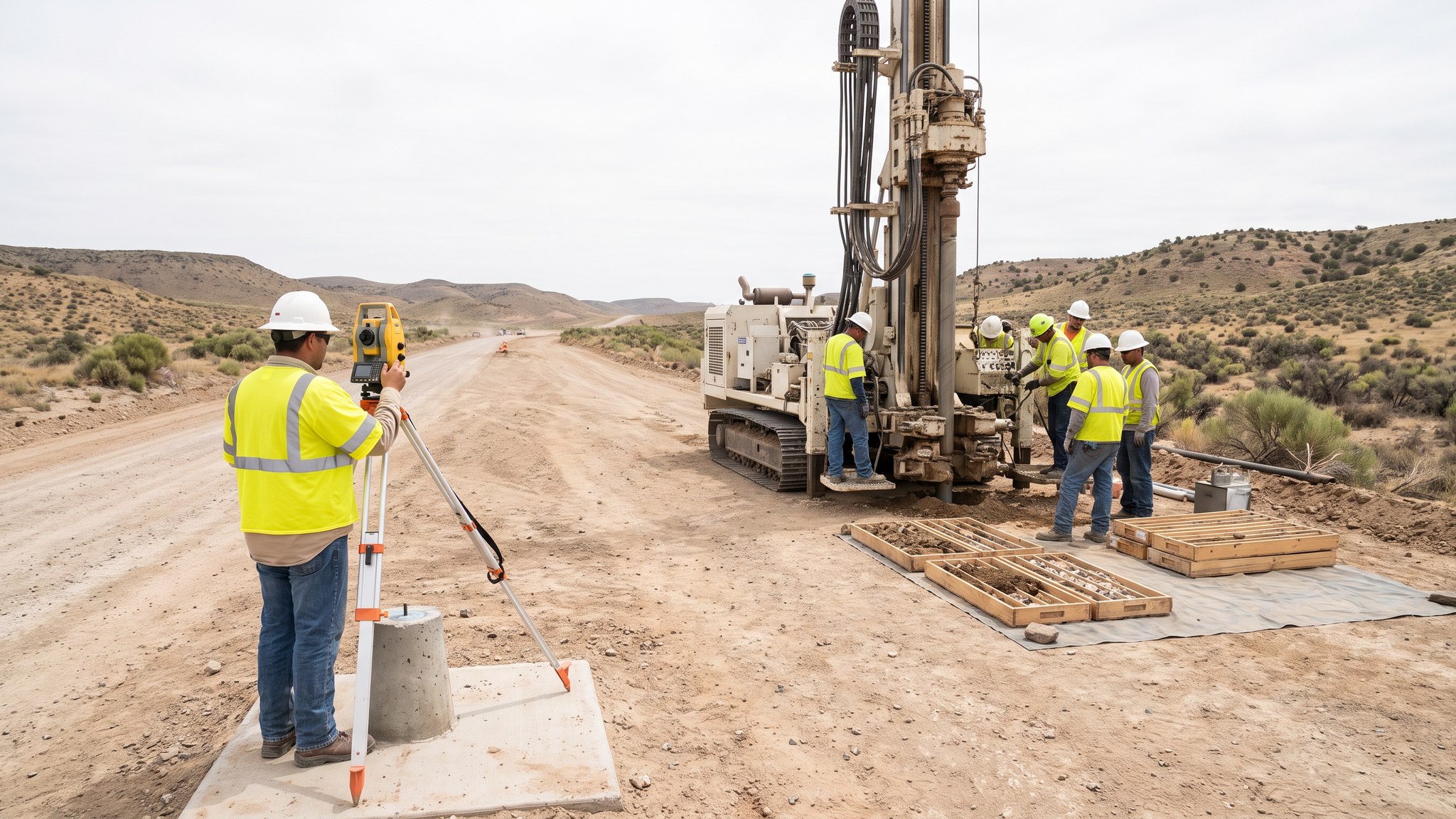
Survey Control & Ground Investigation
Corridor control networks and the ground investigation that tells you what the road, bridge or tunnel is actually standing on.
Open processCanonical guide: Roads & Highways
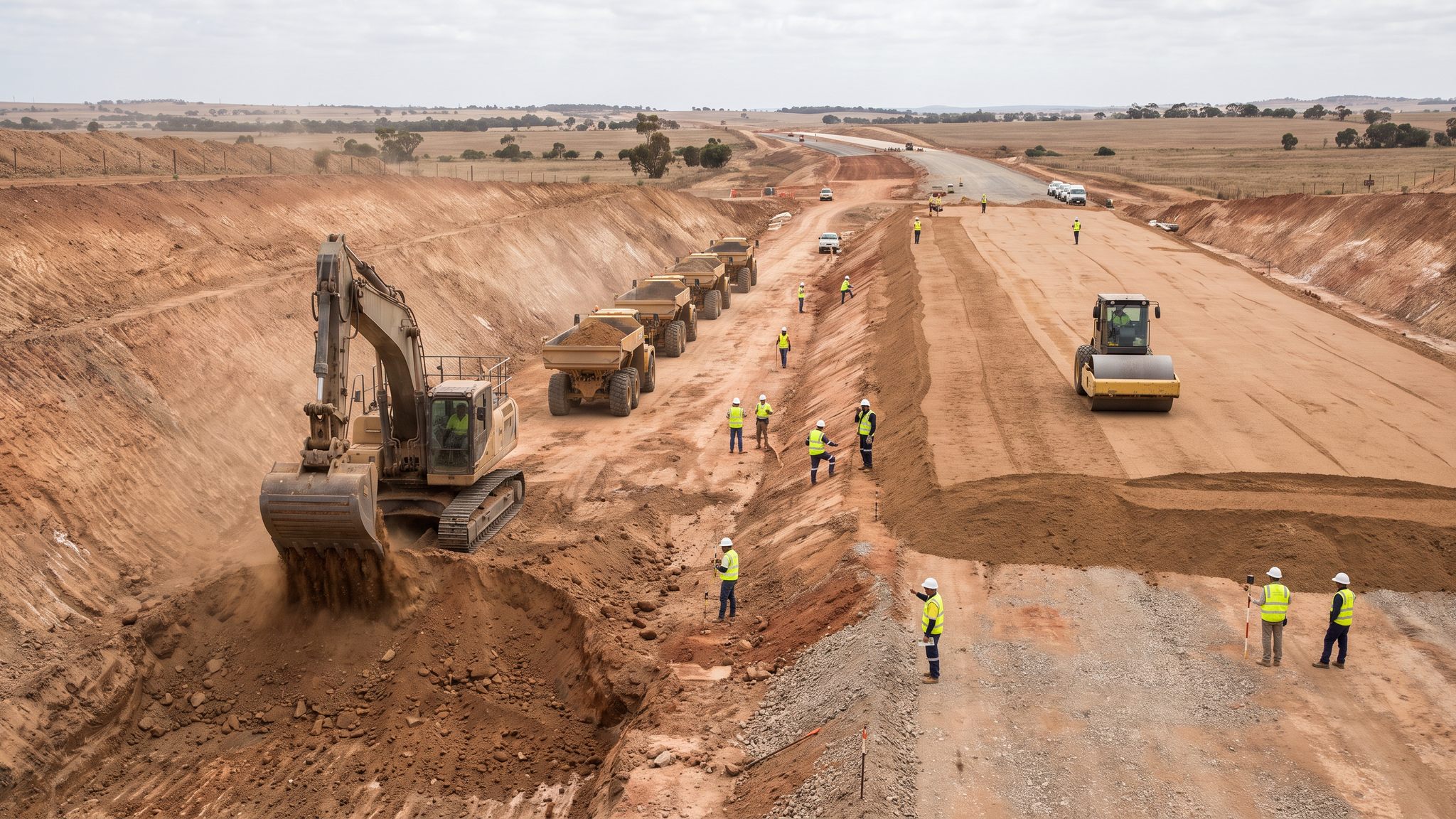
Bulk Earthworks - Cuttings & Embankments
Moving hundreds of thousands of cubic metres to build the corridor's shape - cuttings, embankments and the formation everything sits on.
Open processCanonical guide: Roads & Highways
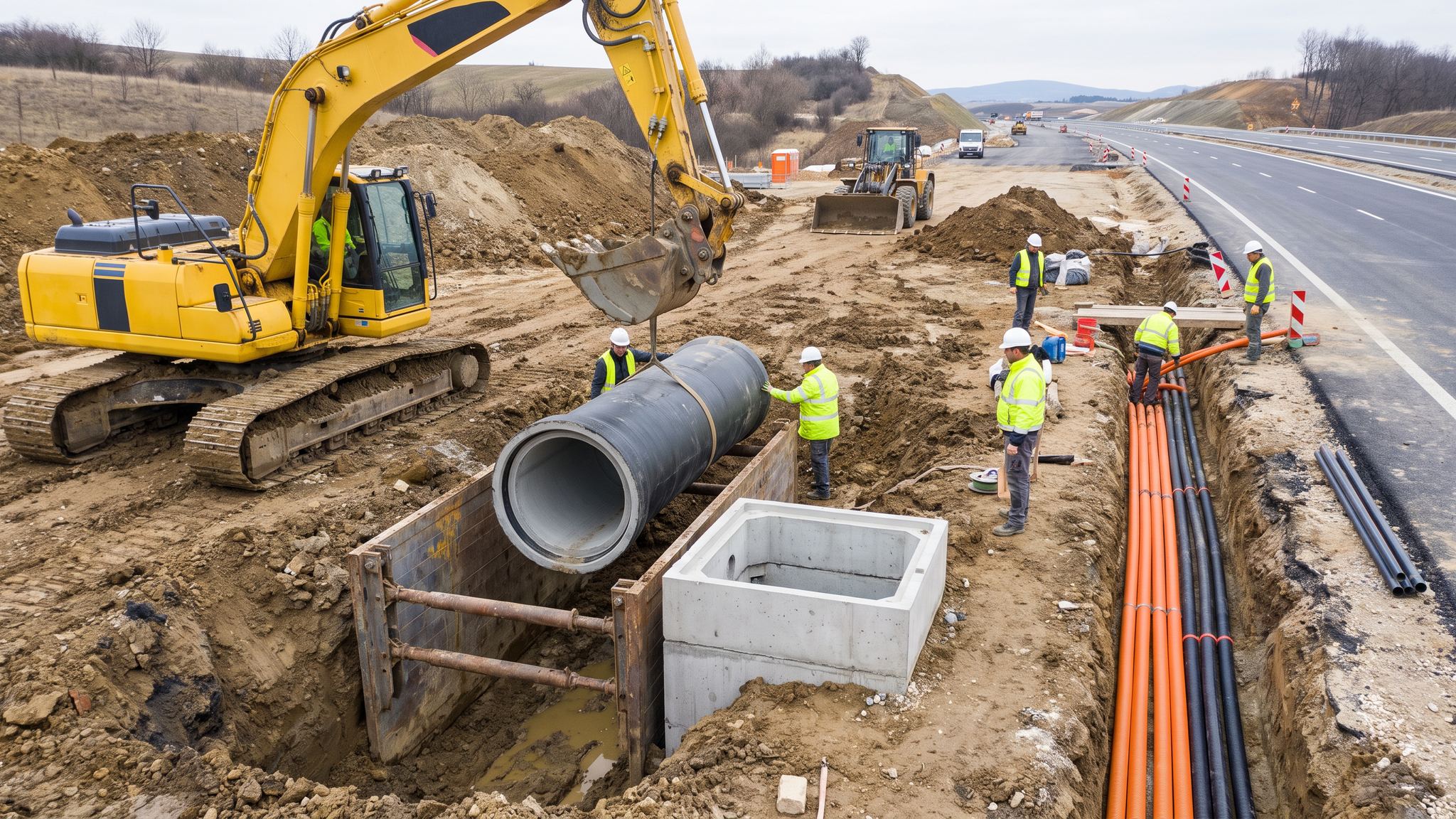
Drainage & Utility Corridors
Pipes, ducts, chambers and culverts - the buried networks installed before the pavement goes over them.
Open processCanonical guide: Roads & Highways
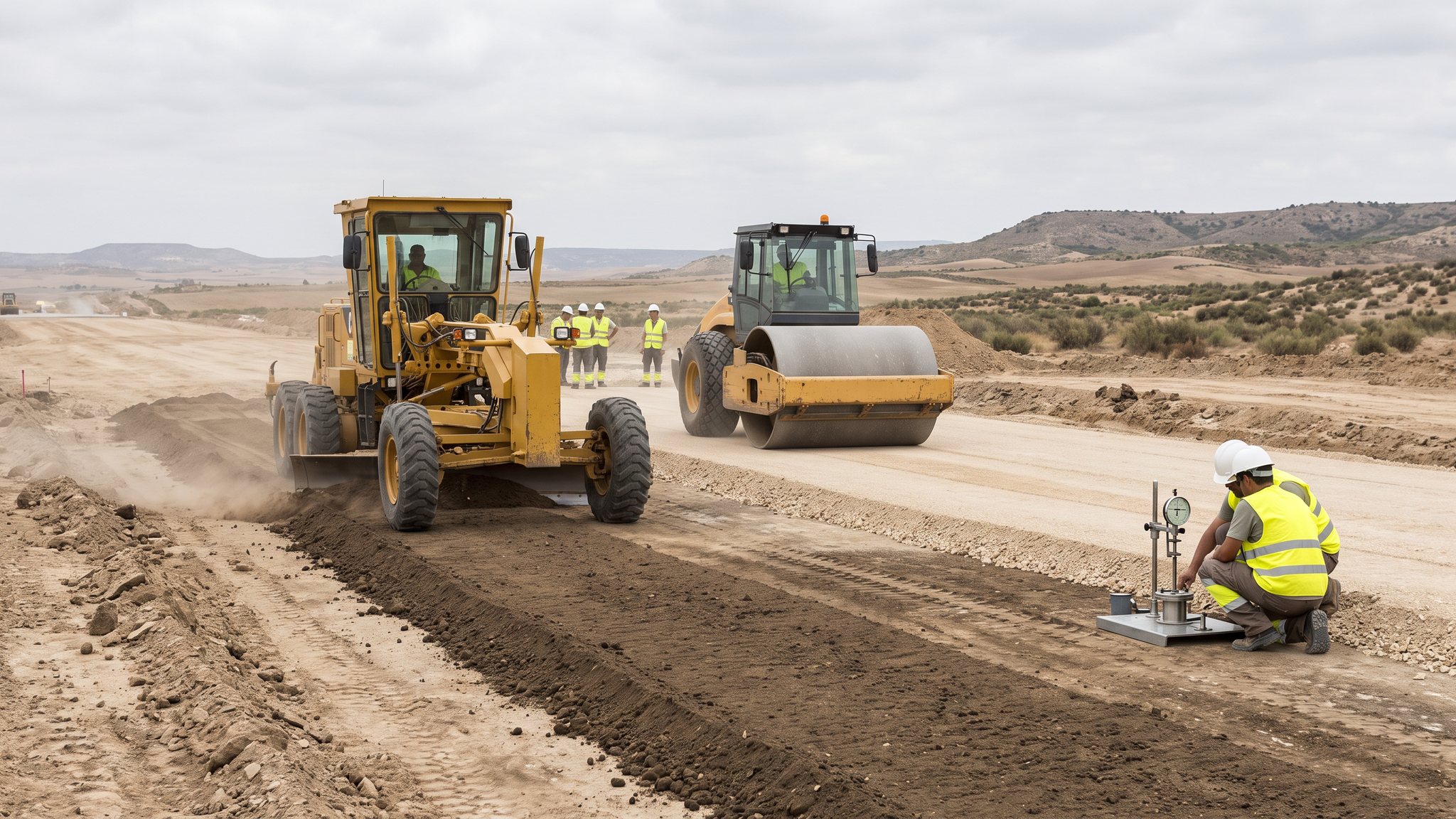
Subgrade Preparation & Capping
Proving the formation and building the capping layer - the low-cost working platform that decides whether the pavement above it lasts.
Open processCanonical guide: Roads & Highways
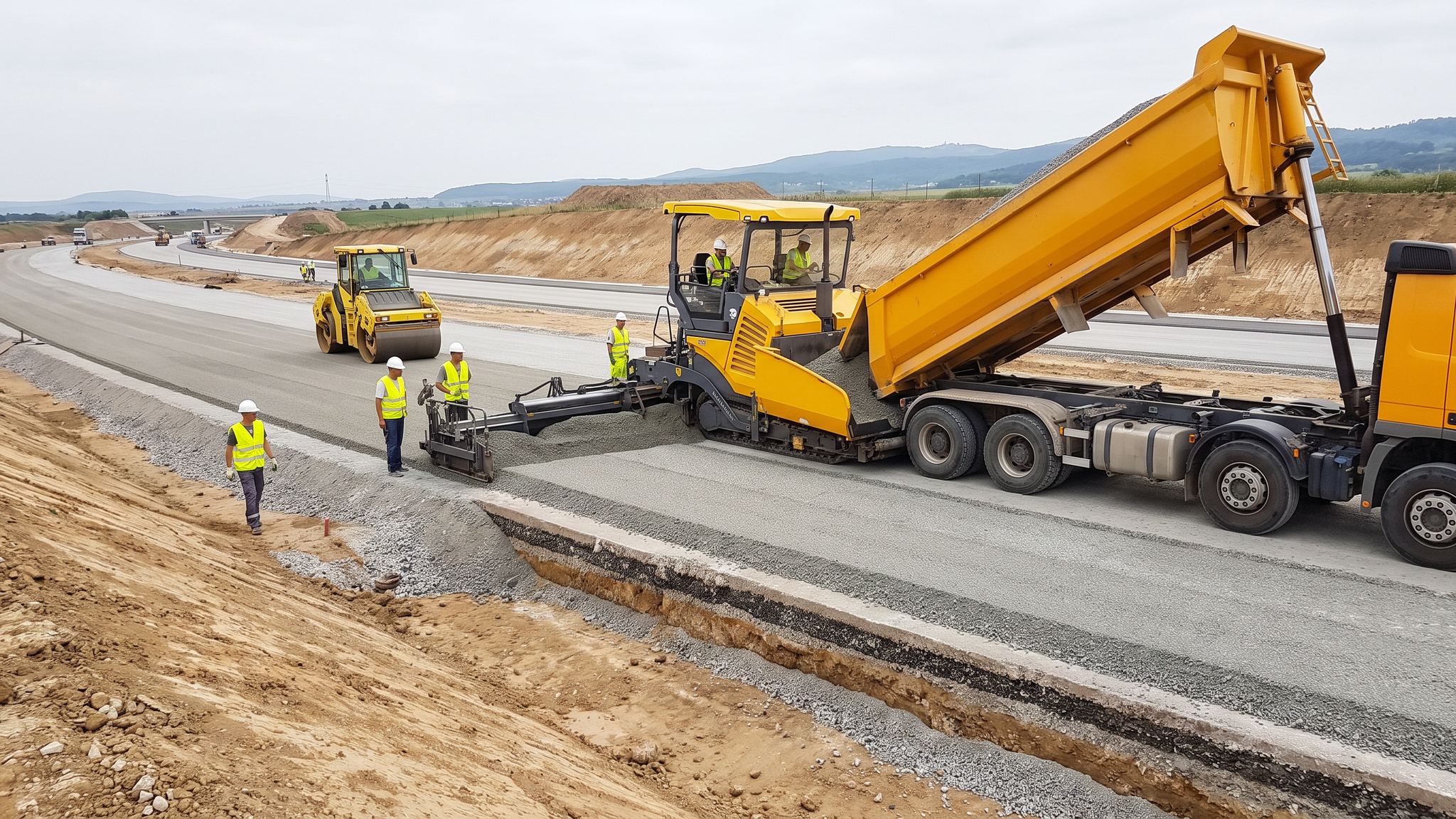
Sub-base & Base Construction
The structural platform: granular sub-base and bound base layers that spread every wheel load into the ground.
Open processCanonical guide: Roads & Highways
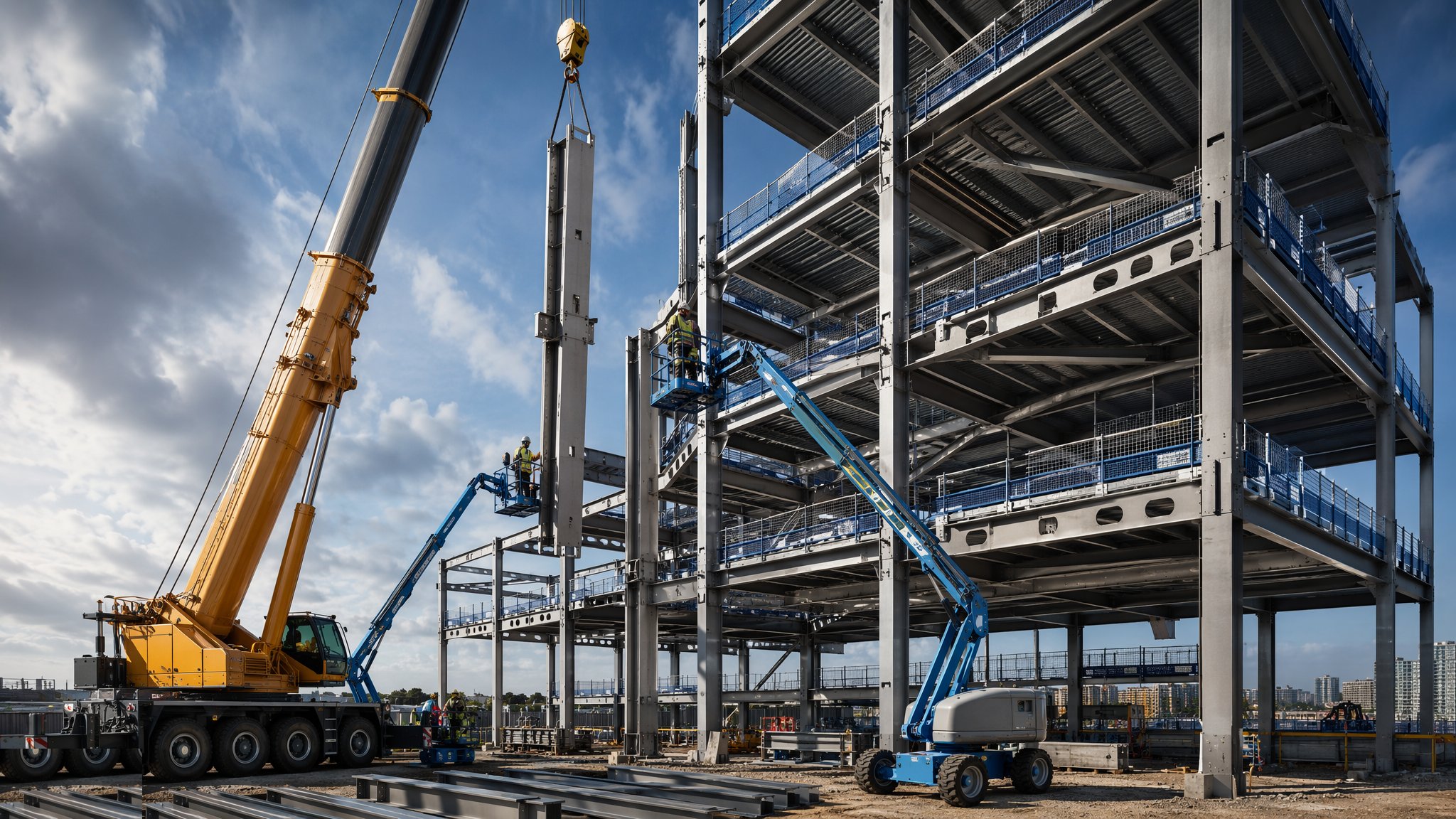
Steel Frame Construction
Fabricated off-site, erected at speed - bolted skeletons for frames that fly up.
Open processCanonical guide: Residential & Housing
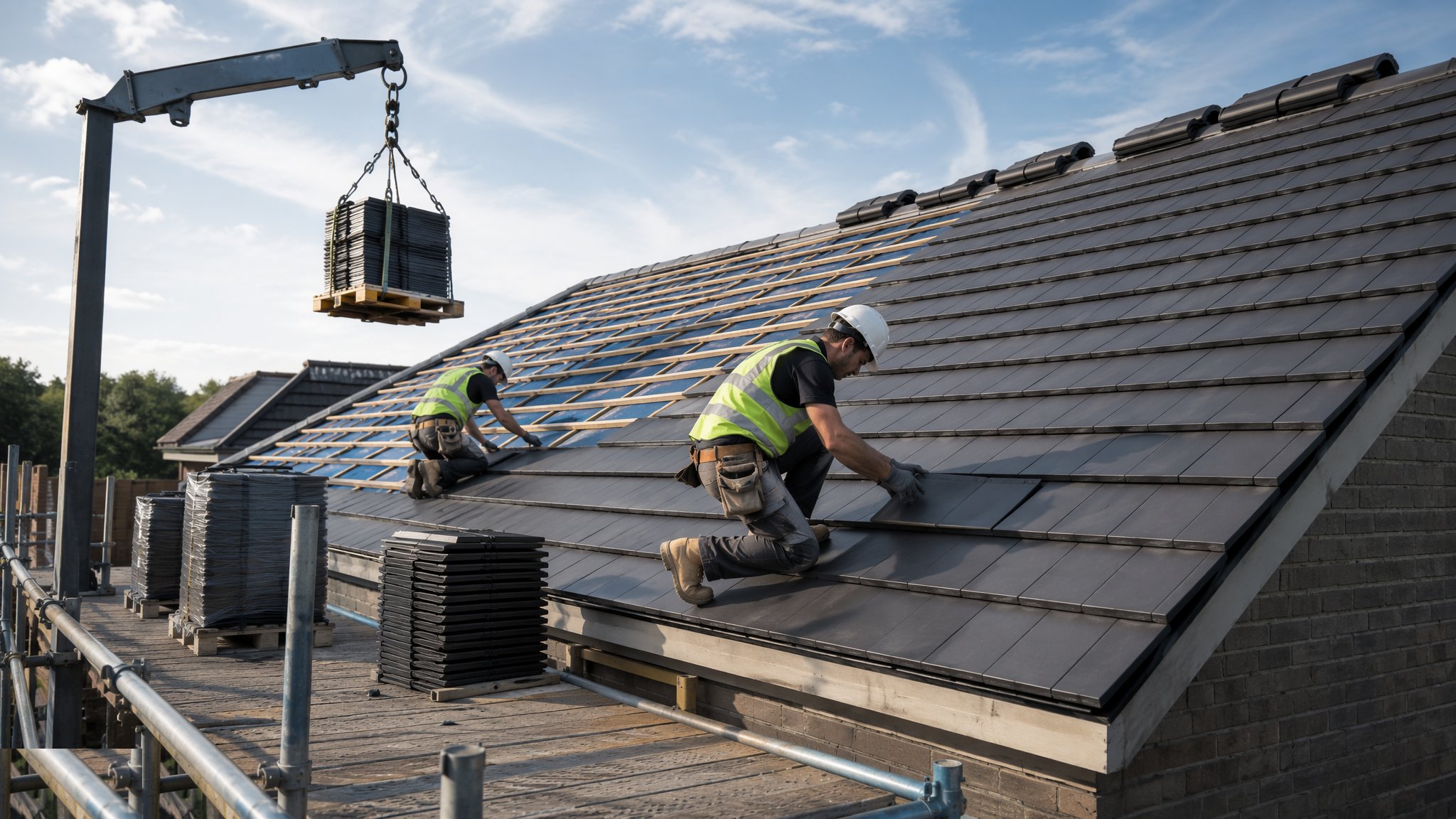
Roofing
Pitched trussed rafters and warm flat roofs - the hat that has to keep the weather out for fifty years.
Open processCanonical guide: Residential & Housing
Airports & Aviation in depth
About Airports & Aviation
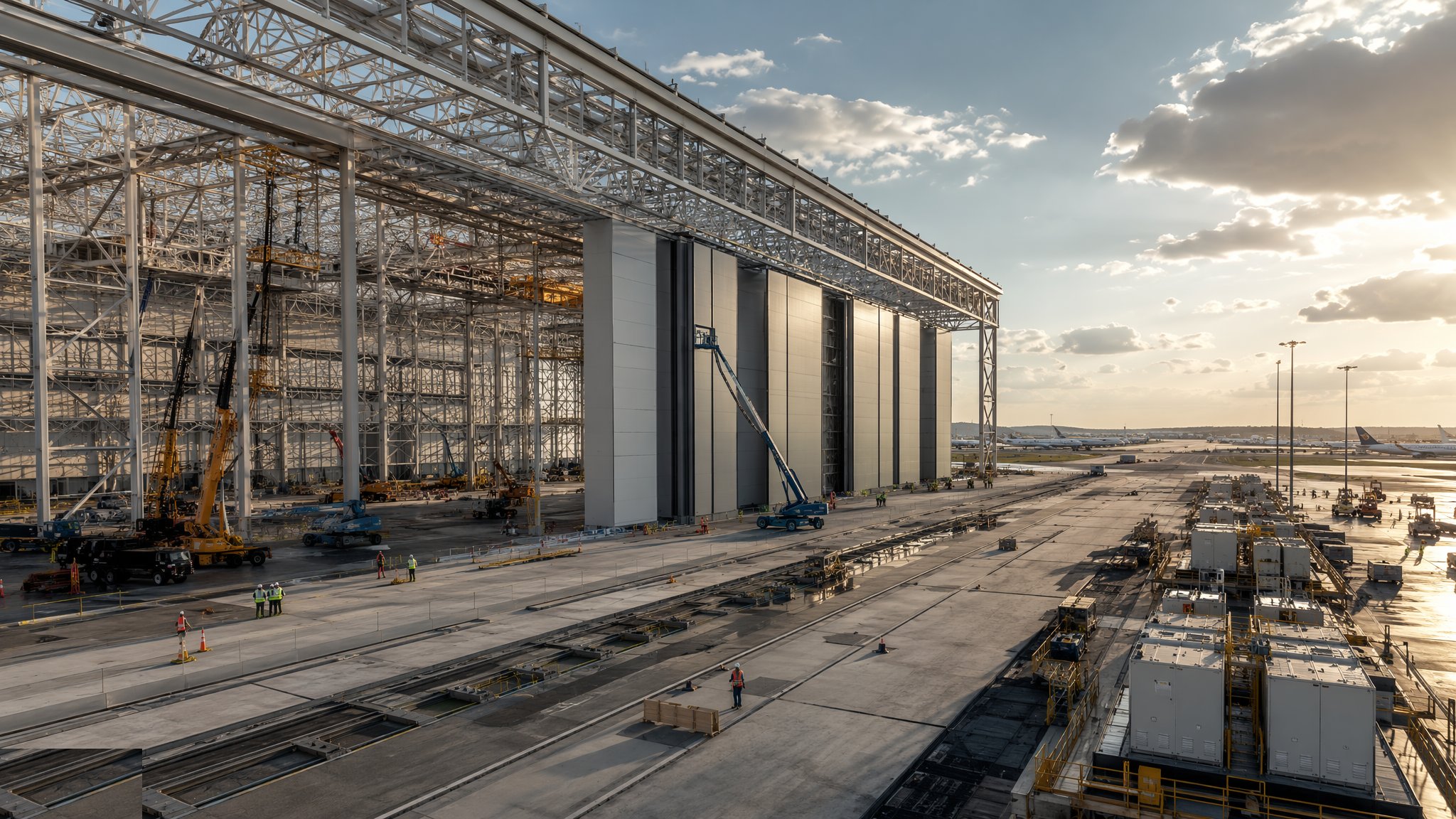
The five guides in this sector follow the build order: runway and airside pavement construction, terminal buildings - shopping centres with aeroplanes attached - working airside in a live airport, airfield ground lighting and nav aids, and the hangars and cargo facilities on the support side. The generic corridor civils upstream link through to their canonical guides in the roads and rail sectors.
Buying work behind the fence
Airport clients are long-term relationships, not one-off tenders. Heathrow, Gatwick and Manchester run multi-year frameworks where a small club of contractors holds landside, airside civils and terminal lots, and the work flows out as call-off packages on NEC terms. The model exists because airside work punishes newcomers: security clearance for every operative, airside driving permits, escorted movements in live areas, foreign object debris discipline enforced to the point that a dropped bolt stops a shift. Terminal buildings are procured more conventionally - big steel-frame and fit-out packages - but the integration with baggage systems, security lanes and border infrastructure pulls specialists in early. In the Gulf, Dubai Aviation Engineering Projects and the Abu Dhabi airports operator let enormous EPC and design-and-build packages: Al Maktoum International's expansion is among the largest construction programmes on earth, and the region builds airports the way the UK builds motorways, with the state as client, funder and eventual operator.
The commercial signature of airport work is constraint pricing. Every rate carries the weight of night working, security logistics, short work windows and the certainty that the airport's operational needs will outrank your programme at least once a month.
Programme shape: windows, not weeks
Airside programmes are built from closures. A runway resurfacing at a single-runway airport happens in a night window of six to eight hours between the last arrival and the first departure - plane out, plane in, with the runway inspected, lit and swept before handback. That drives the entire method: pavement quality concrete replaced in discrete bays, asphalt planned in sections that can be completed and cured within the window, and every piece of plant doubled up so a breakdown does not become a cancelled morning of departures. Taxiway and apron work has more flexibility but still orbits the stand plan and the airline schedules. Airfield ground lighting is permanently on the critical path: the pit-and-duct network must precede the pavement above it, the cabling and transformers follow, and the lighting cannot be commissioned until the pavement gives access back.
Landside, terminals programme like the large buildings they are - frame, envelope, MEP first and second fix, fit-out - with two differences that matter. The first is baggage: the handling system is a building-wide machine installed inside the structure, with its own tolerances, commissioning season and a habit of dictating floor levels and slab penetrations. The second is the phased migration into operation: terminals open pier by pier and lounge by lounge, each migration a rehearsed operational trial with staff, bags and volunteer passengers before the first real flight. Heathrow Terminal 5's opening day baggage collapse in 2008 - hundreds of flights cancelled while the system jammed - is the industry's permanent reminder that the last week of commissioning is the programme.
The specialist systems nobody sees
Under the apron sits an infrastructure most passengers never imagine. Fixed electrical ground power and pre-conditioned air at every stand so aircraft can shut down their auxiliary engines; fuel hydrant mains in welded steel with cathodic protection feeding dispenser pits; visual docking guidance systems calibrated stand by stand; and the airfield ground lighting itself - inset centreline and edge lights, approach lighting arrays stretching beyond the fence, all fed on series circuits from constant-current regulators in substations dotted around the airfield. Every one of these systems interfaces with the pavement, which is why the pit-and-duct schedule is agreed before the first concrete bay is poured, and why a forgotten duct crossing discovered at surfacing stage is a career-shortening event.
Navigation aids add another layer with their own custodians: instrument landing systems, radar and meteorological equipment sit in sterilised areas where construction activity is controlled by the air navigation service provider, and a crane jib in the wrong place can force a runway onto reduced operations. The works are coordinated through the airport's operations room with NOTAMs - notices to airmen - issued for every change that touches the published airfield data.
Airside logistics are a discipline in themselves. Materials and plant cross the fence through a single controlled gate with search procedures; deliveries are scheduled against aircraft movements so a concrete wagon never queues on a live taxiway crossing; and every lorry load is swept and inspected before it enters manoeuvring areas. Haul routes are agreed, marked and policed, with escort vehicles where the route crosses anything operational. Working height is controlled across the whole site - cranes carry obstacle lights and are lowered out of hours or when winds pick up - because an obstacle in the approach surface is a hazard to navigation, not a planning technicality. The contractors who thrive airside are the ones who internalise that the airport is not a site with an airport attached; it is an airport that has lent you a corner.
Failures with a very public audience
Airport construction failures happen in front of passengers and regulators simultaneously. Beyond T5, the recurring categories are pavement and systems. Runway and taxiway pavements that ravel, rut or crack early close runways, and a closed runway at a capacity-constrained airport is a national news story, not a maintenance ticket - which is why airside pavement specifications are the most conservative in the industry, with dowelled and reinforced pavement quality concrete the default where loads and budgets allow. Airfield ground lighting faults ground aircraft in low visibility, so the series circuits, transformers and control systems carry redundancy and a test regime that would embarrass most building services. Fuel hydrant systems are tested and inspected to petrochemical standards because a leak under a live apron is an evacuation.
The quieter failure is logistical: security or FOD incidents traced to the works. A tool left airside, an operative airside without clearance, a haul route crossing a live taxiway without permission - any of these stops the works and can end a contractor's framework place. The discipline is the deliverable.
UK versus Gulf: climate, scale and the 24-hour hub
Gulf airports operate as 24-hour hubs with banks of departures through the night, which removes the classic UK night window and forces work into rolling stand and taxiway closures negotiated movement by movement. The climate writes the pavement specification: asphalt mixes designed for rutting resistance at sustained heat, concrete placed at night with temperature control, and expansion behaviour on aprons the size of small towns engineered rather than assumed. Standards converge on ICAO with the UK CAA and the UAE GCAA as regulators, so the technical framework is shared - the differences are operational tempo and scale. A Gulf greenfield airport programme builds runways, terminals and people movers simultaneously on an empty site with state-backed urgency; a UK airport scheme threads the same assets through a live operation that was full in 1990.
What transfers completely is the discipline: FOD control, airside licensing, lighting-critical-path logic and rehearsed migration into service are the same disciplines in Dubai as in Stansted, because the aircraft and the consequences are the same everywhere.
Handover airside adds one more gate the buildings world never sees: the regulator and the airport's own safety team must accept the changed airfield before it reopens to aircraft. A resurfaced runway is inspected, friction-tested and swept; the lighting is flight-checked; the markings are measured against the published charts; and the NOTAM that closed the area is cancelled only when the aerodrome certificate holder is satisfied. The pavement may be structurally perfect, but until the paperwork says the runway is back, it is a very expensive car park.