Top-down mechanical demolition
A high-reach machine eats the building from the roof down, one verified bay at a time.
Last updated 2026-08-25
What is Top-down mechanical demolition?
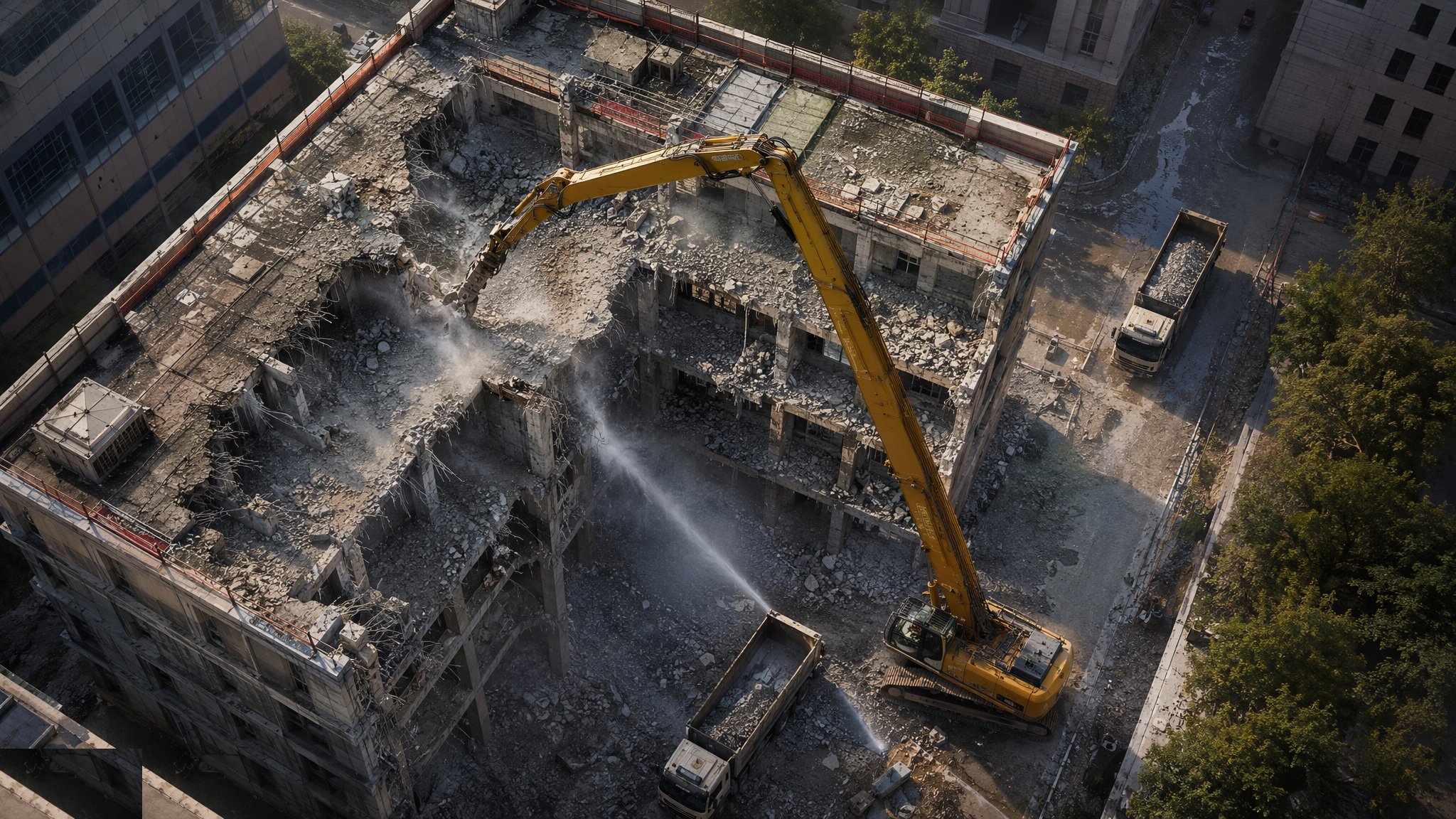
Top-down mechanical demolition is the industry's default way to unmake a building: an excavator - often a high-reach rig with a twenty-plus-metre boom - fitted with a pulveriser, shear or breaker reduces the structure in the reverse order it was built, roof first, floor by floor, bay by bay. The machine always stands on the ground or on structure verified to carry it, pulling material toward itself, never reaching over an edge or undermining its own platform. For buildings up to around ten storeys it is the safe, controllable, insurable answer to almost every demolition brief.
The method's discipline is the sequence. The demolition engineer writes it - which bay goes first, how the stability of the remainder is maintained at every stage, where the machine stands, how far debris may stack before it is processed. A structure being demolished is a structure in a state no designer ever intended: floors carry falling loads, columns lose their bracing one bay at a time, and the wind still blows. The daily briefing against the method statement is not ceremony; it is the control that keeps an unbraced gable from choosing its own moment.
Around the machine, the site runs as a system. A second machine with a pulveriser processes arisings at ground level, separating concrete from reinforcement. Water suppression runs continuously. The exclusion zone - sized from the building height and the method - is fenced, gated and supervised. Vibration and noise monitors watch the boundary. And at the end of each shift, the structure left standing is inspected, because overnight is when partially demolished buildings make their own decisions.
Process storyboard
Step 1 of 6 - slide through the snapshots.
STEP 1
Engineer the sequence and the exclusion zone
The demolition engineer produces the method statement: strip state confirmed, structural appraisal, the bay-by-bay sequence with stability checked at every…
How does Top-down mechanical demolition work, step by step?
- 1
Step 1: Engineer the sequence and the exclusion zone
The demolition engineer produces the method statement: strip state confirmed, structural appraisal, the bay-by-bay sequence with stability checked at every intermediate stage, machine positions and reach calculations. The exclusion zone - typically the building height plus a margin, adjusted for method - is fenced and signed, with a single controlled gate. Neighbours, retained structures and live services get their own protection measures and monitoring points.
- 2
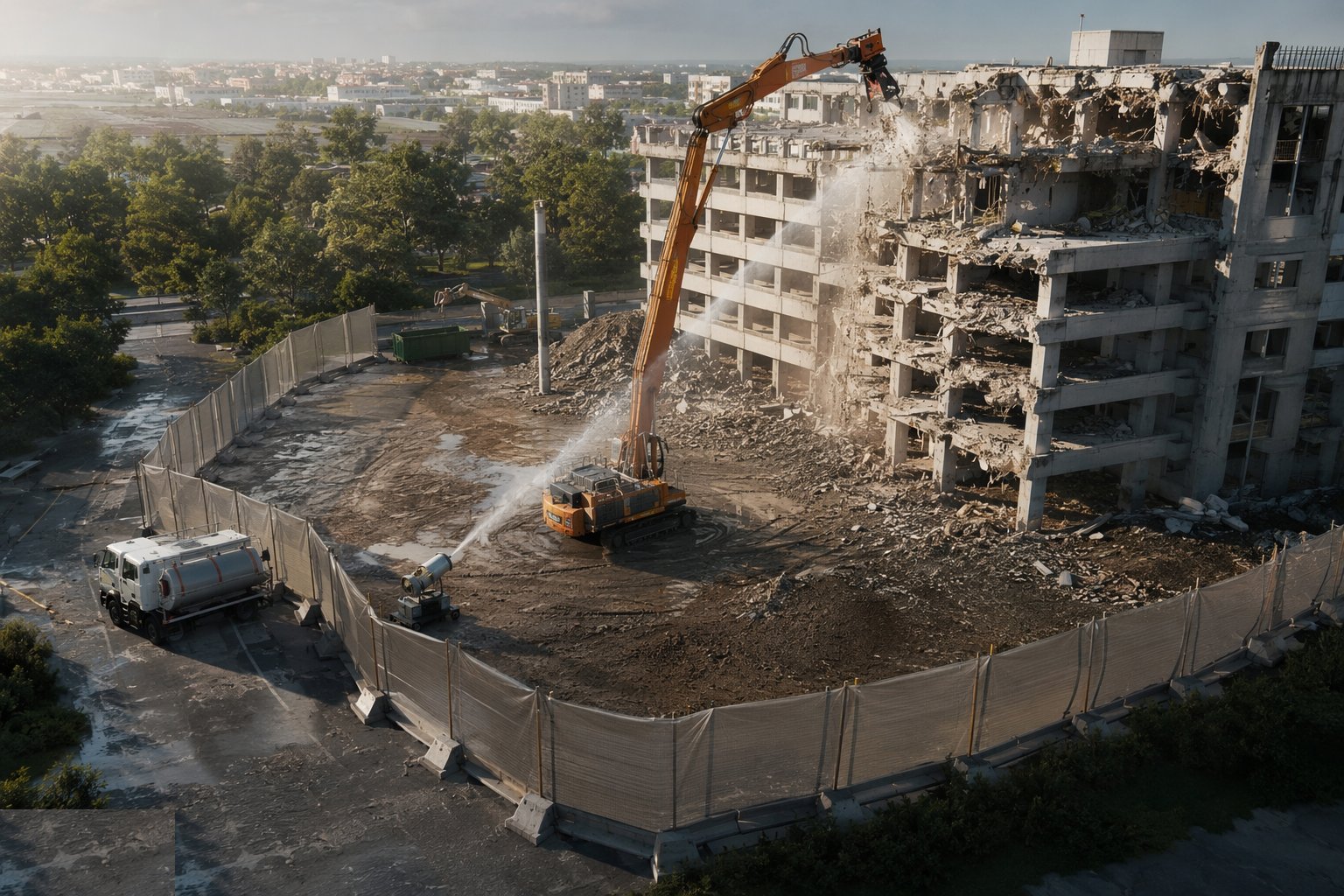
Step 2: Set up suppression, monitoring and protection
Water sprays on the machine and mist cannons at the workface run before the first bite - dust control that starts after the cloud starts is decoration. Vibration, noise and dust monitors are live at the agreed receptors with trigger levels. Scaffold fans, netting or screens protect adjacent footpaths and retained façades. The road sweeper and wheel wash are already earning their keep.
- 3
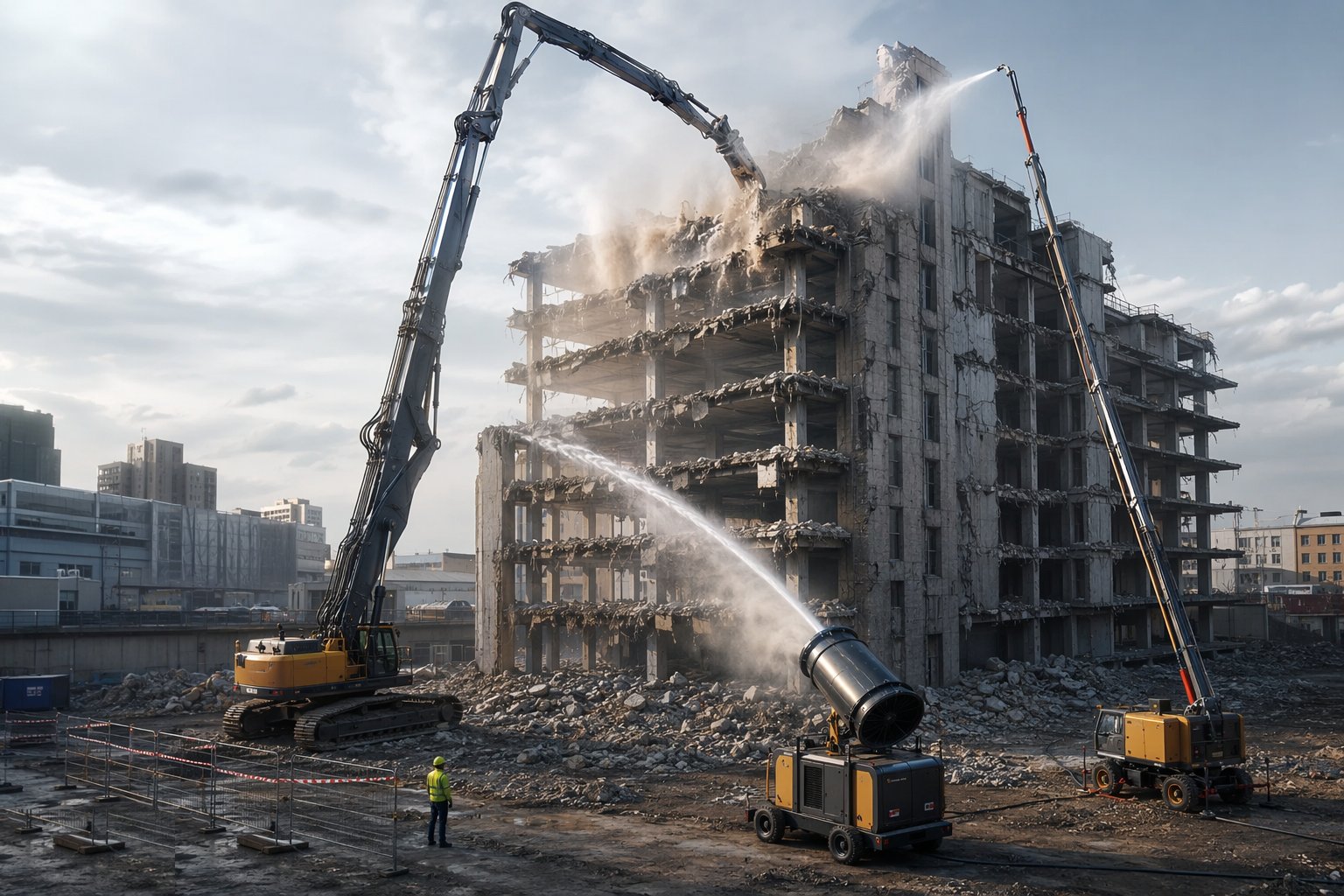
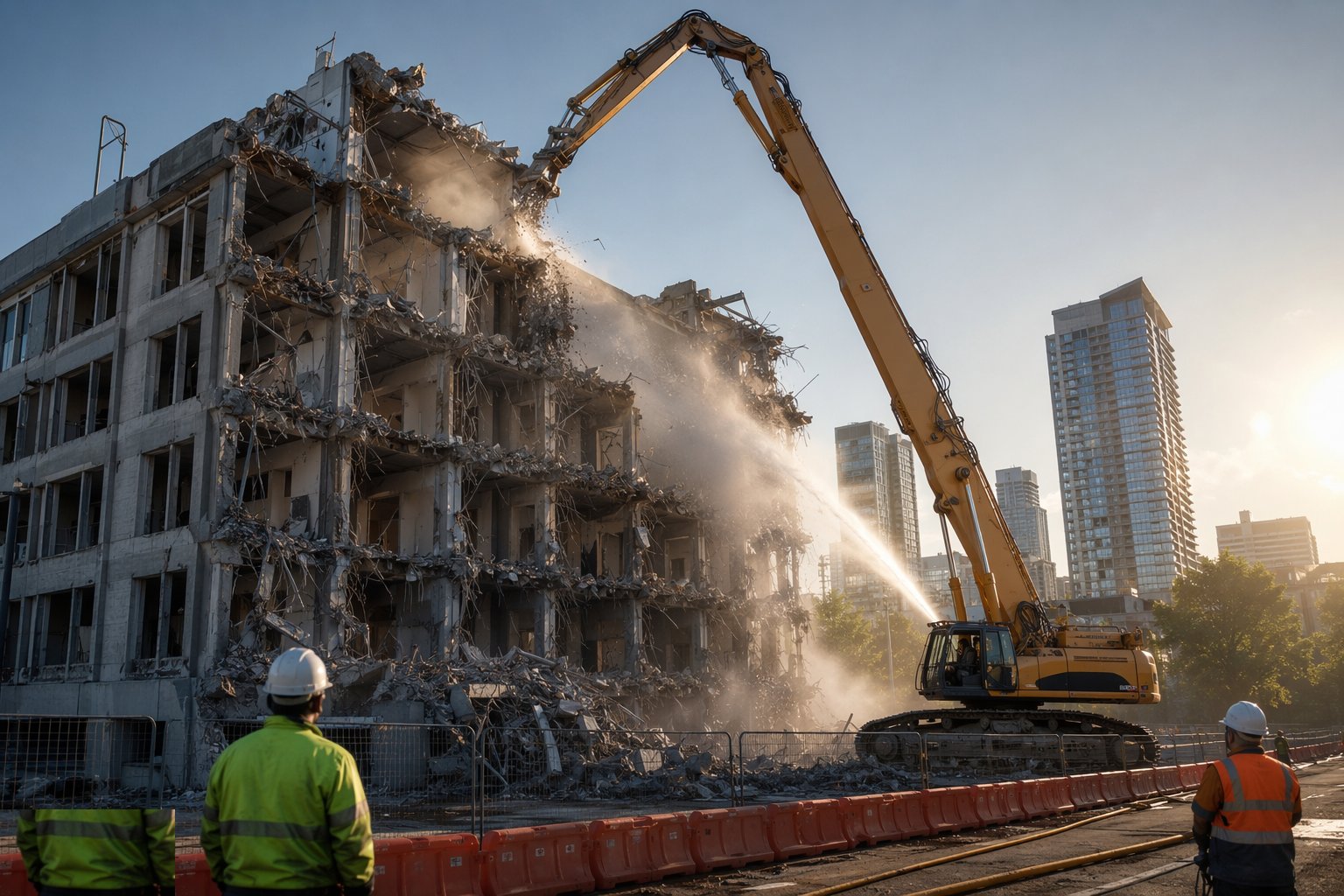
Step 3: Take the roof and the top floor first
The high-reach machine starts at the highest point, removing roof coverings and plant, then breaking the top floor structure down onto the slab below - which has been checked to carry the temporary debris load. Material is pulled toward the machine, dropped to ground in controlled bites, never pushed over an edge. Overshoe dust and flying debris are managed by bite size and water, not luck.
- 4
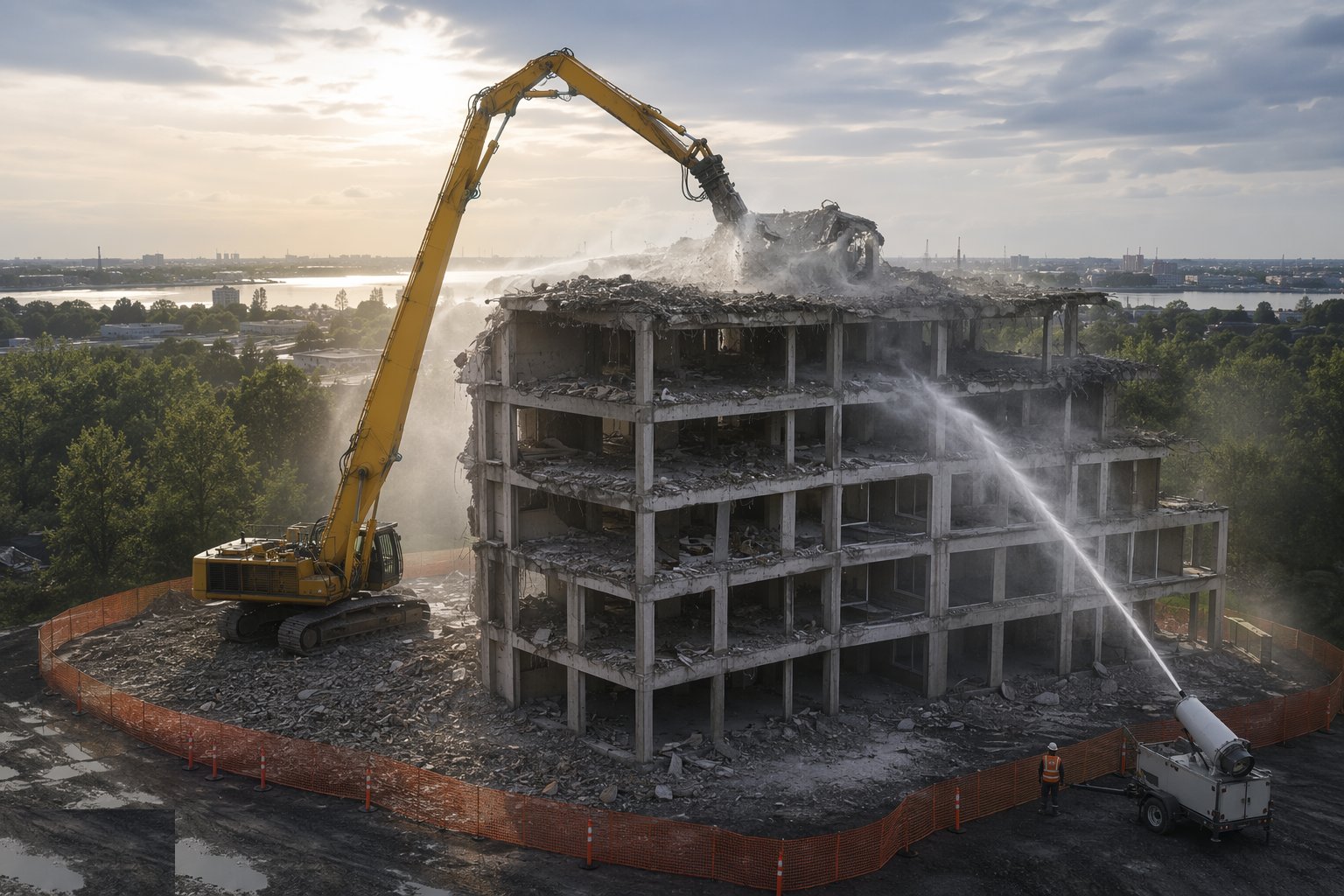
Step 4: Work bay by bay, floor by floor
Each floor is reduced in the engineered sequence: slabs broken onto the level below or dropped into the core, columns cropped after the floors they brace are dealt with, gables and free-standing walls pulled inward, never outward toward the public. Debris at ground level is processed continuously so the machine never works above a growing, unstable mound. The standing remnant is inspected at every break and at shift end.
- 5
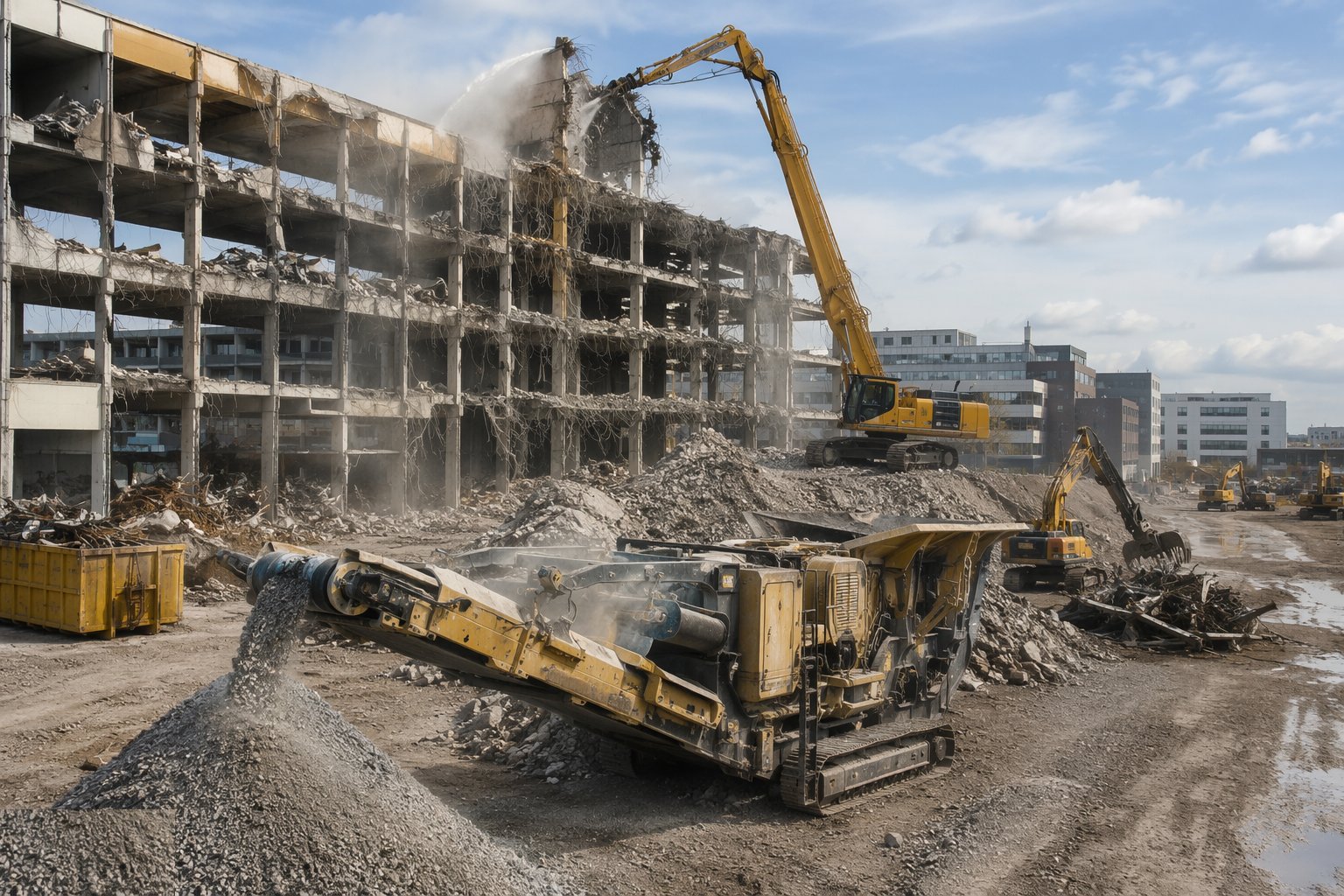
Step 5: Process and segregate the arisings
The ground machine pulverises concrete, the magnet lifts reinforcement, and streams are segregated: concrete and masonry to the crusher for 6F2, metals to secure skips, timber and residuals to their streams. Oversize goes back through the pulveriser. Stockpiles are kept below the heights the ground will bear and clear of the standing structure - a stockpile against a half-demolished wall is a lateral load nobody designed.
- 6
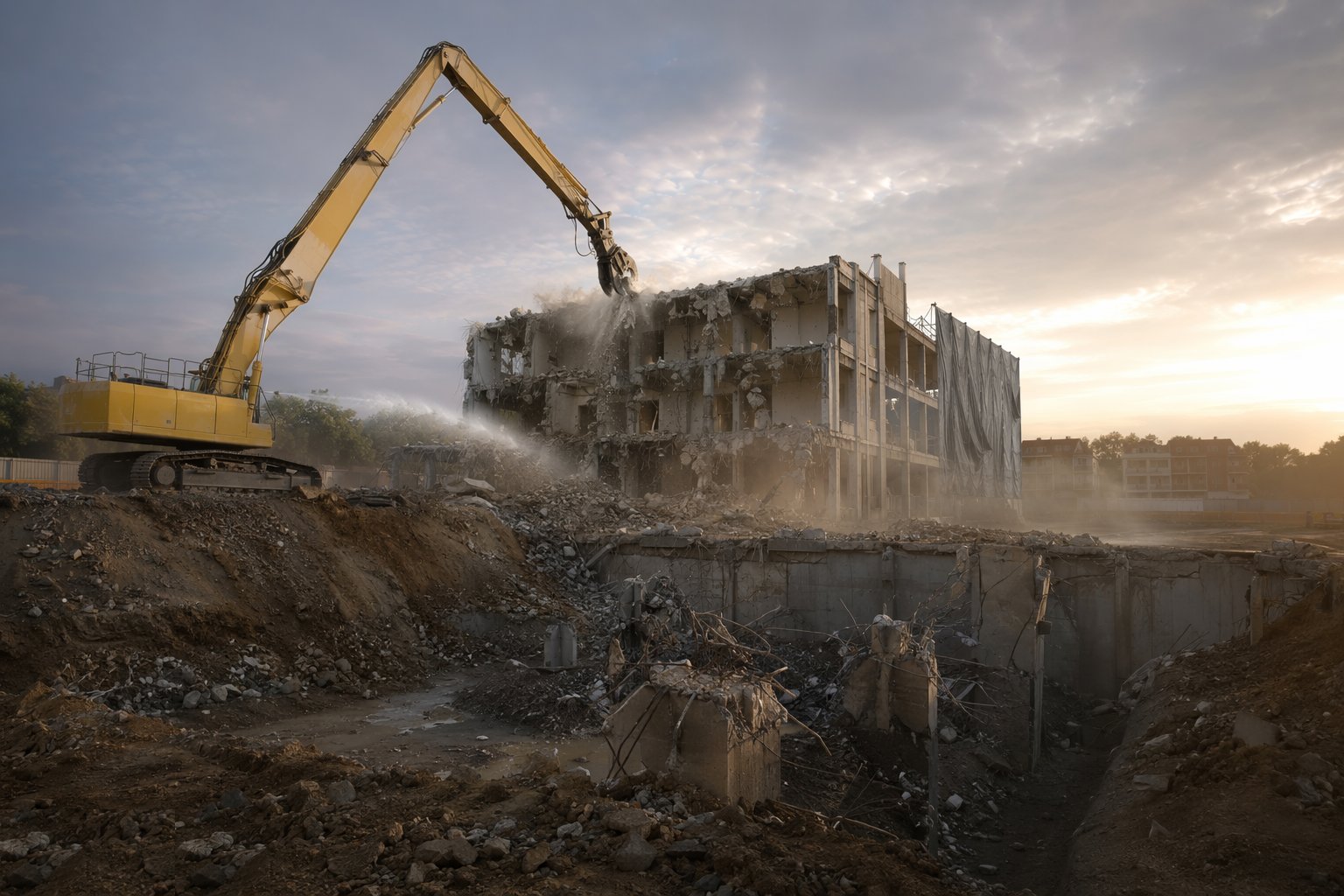
Step 6: Reduce to slab, then grub out below ground
With the superstructure down, ground-bearing slabs, foundations, basement walls, tanks and drainage runs are broken out and processed. Basement voids are backfilled in compacted layers with approved material - a buried void is a future collapse under somebody's foundation. The site is graded, the validation survey confirms obstructions removed, and the clearance completion report closes the stage.
What are the benefits of Top-down mechanical demolition?
- Controlled and progressive - the structure is stable and inspected at every stage
- The standard, insurable method for buildings up to about ten storeys
- Machine stays on verified ground or structure - no operatives working on the failing building
- Arisings processed and recycled on the same footprint
- Tight exclusion zones possible compared with explosive methods
- Pause-able - work can stop for weather, complaints or findings without leaving a committed collapse
What are the limitations of Top-down mechanical demolition?
- Slow compared with explosives - weeks per building rather than seconds
- Prolonged noise, dust and vibration at the boundary
- Reach limits: above roughly ten storeys, machines work off ramps of their own arisings or the method changes
- Heavy machines need verified ground - basements and voids under the workface must be found first
- Weather-exposed: wind stops high-reach work; wet arisings slow processing
- Dependent on the strip and surveys being right - surprises in the structure stall the sequence
What is Top-down mechanical demolition best suited for?
What plant does Top-down mechanical demolition need?
- High-reach demolition excavator (20–30 m boom) with pulveriser, shear and breaker
- Standard 360° excavators with pulveriser and selector grab for processing
- Loading shovel for stockpile and crusher feed
- Mobile crusher and screener with overband magnet
- Mist cannons, water bowsers and spray bars
- Vibration, noise and dust monitoring stations
How is Top-down mechanical demolition quality-checked?
- Demolition method statement signed by the engineer; daily briefings recorded against it
- Asbestos clearance and service isolation certificates on file before breaking
- Exclusion zone integrity checked daily and after any sequence change
- Monitoring logs reviewed against trigger levels - actions recorded, not just alarms
- Standing-structure inspection at every shift end, photographed
- Crushed material sampled and graded per stockpile before reuse