Platforms, cut and fill, remediation - making ground you can build on.
Before any sector can build anything, someone has to make a platform: strip the site, cut and fill in bulk, stabilise or remediate what is underneath, and leave serviced, drained ground ready for the plots. The basic moves - excavation, bulk earthworks, dewatering and drainage - are the shared methods, linked below from the residential and roads sectors where their canonical guides live.
The process map - 3 guides
Each one is a full guide: overview, variants, numbered steps, plant, testing, safety and defects.

Ground Remediation
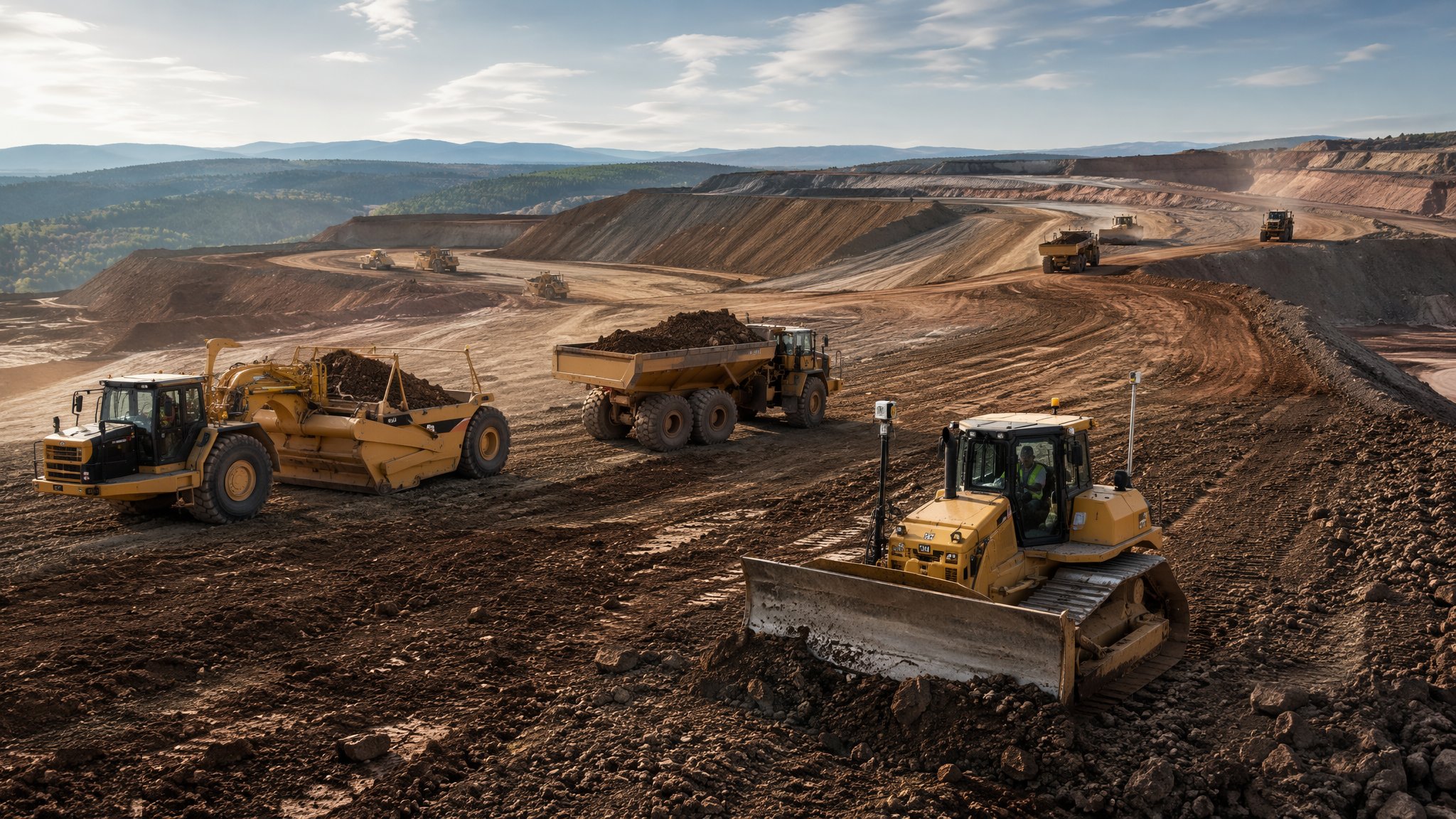
Taking contaminated brownfield ground from desk study to verified clean: investigation, strategy, dig-and-dump or in-situ treatment, and the validation file that lets houses or industry sit where the gasworks stood.
Open process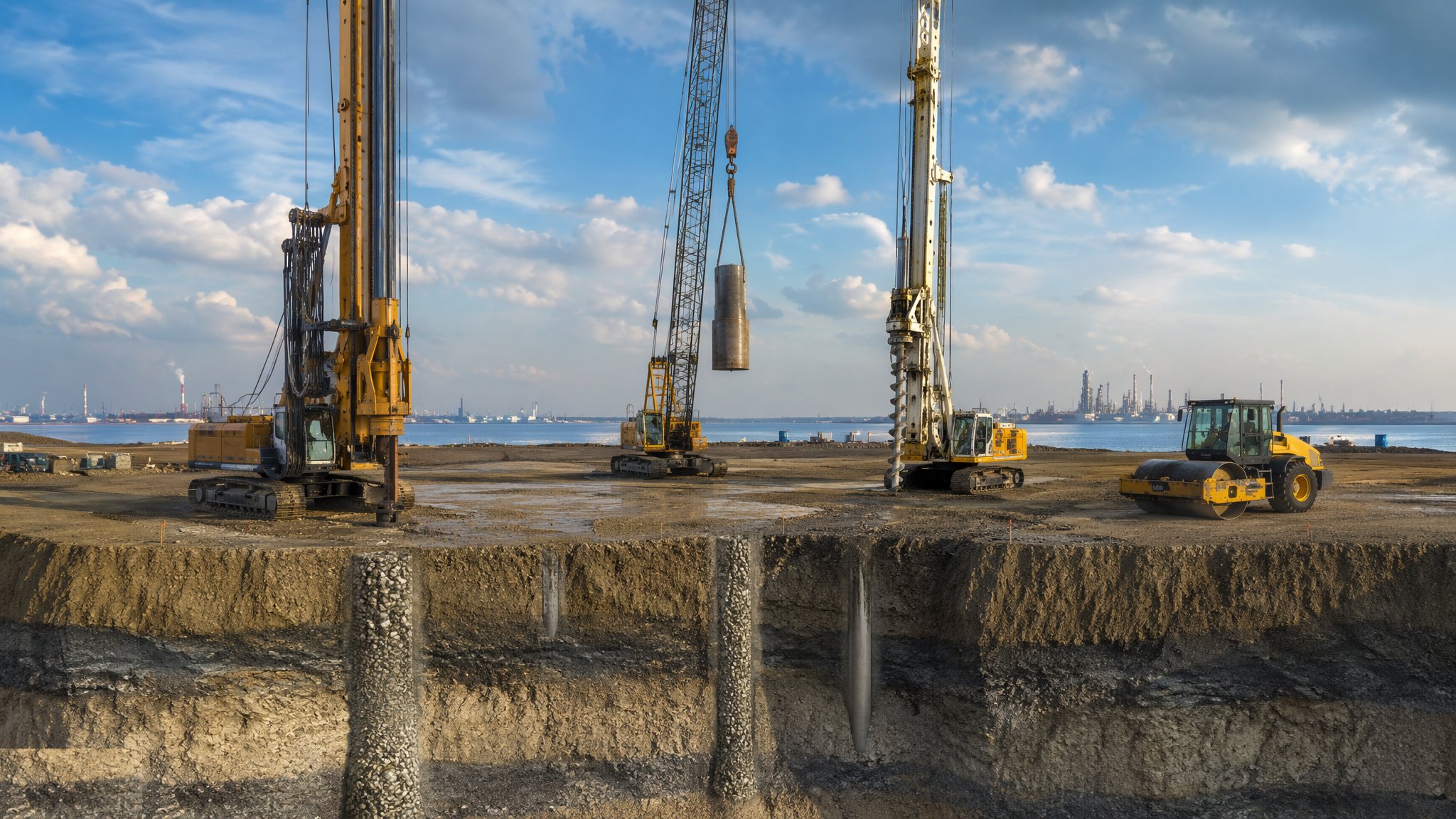
Ground Improvement Techniques
Making weak ground carry the building it could not: stone columns, dynamic compaction, rigid inclusions and soil mixing - chosen on soil and load, built on a proper working platform, and proven by testing.
Open process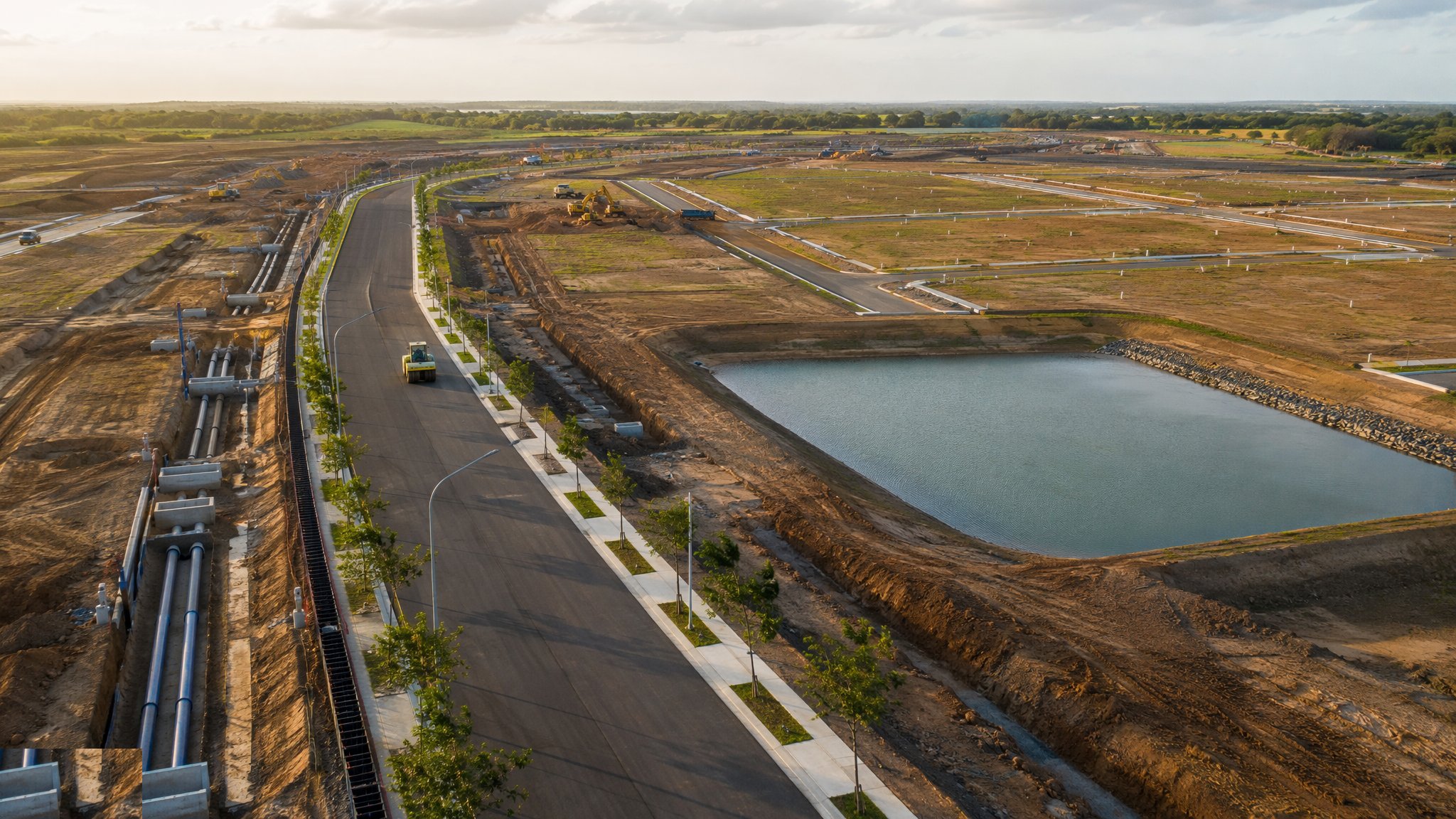
Development Infrastructure & Enabling Works
Turning a bare land parcel into serviced plots: spine roads, mains corridors, balancing ponds and the adoption agreements - S278, S38, S104 - that let the developer release land phase by phase.
Open processShared methods used in this sector
These guides are owned by other sectors - the canonical page lives there - but the method is the same here. Cards open the guide at its home sector.
Site Access & Enabling Works
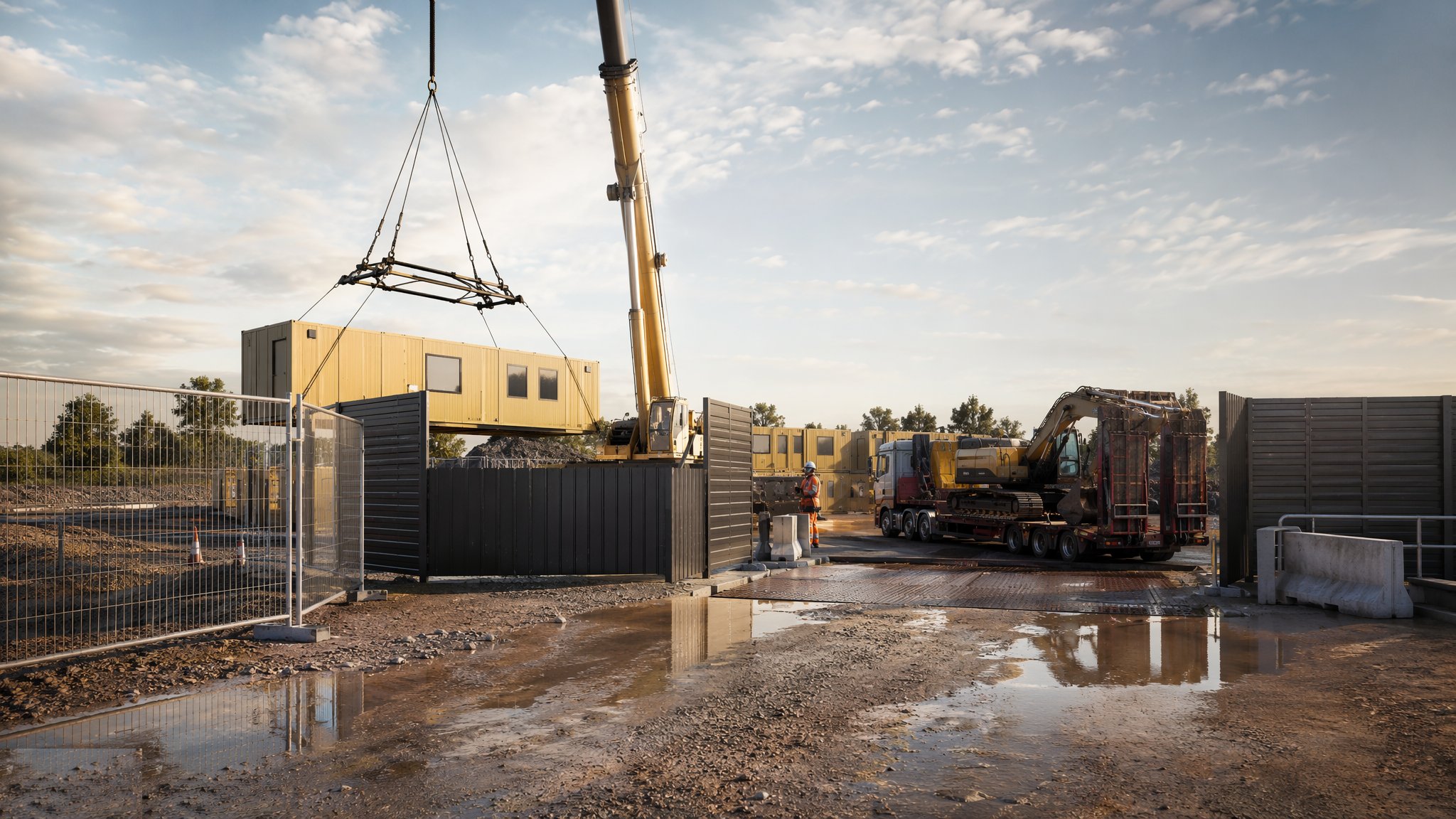
Turning a piece of land into a controlled, serviced, legal construction site.
Open processCanonical guide: Residential & Housing
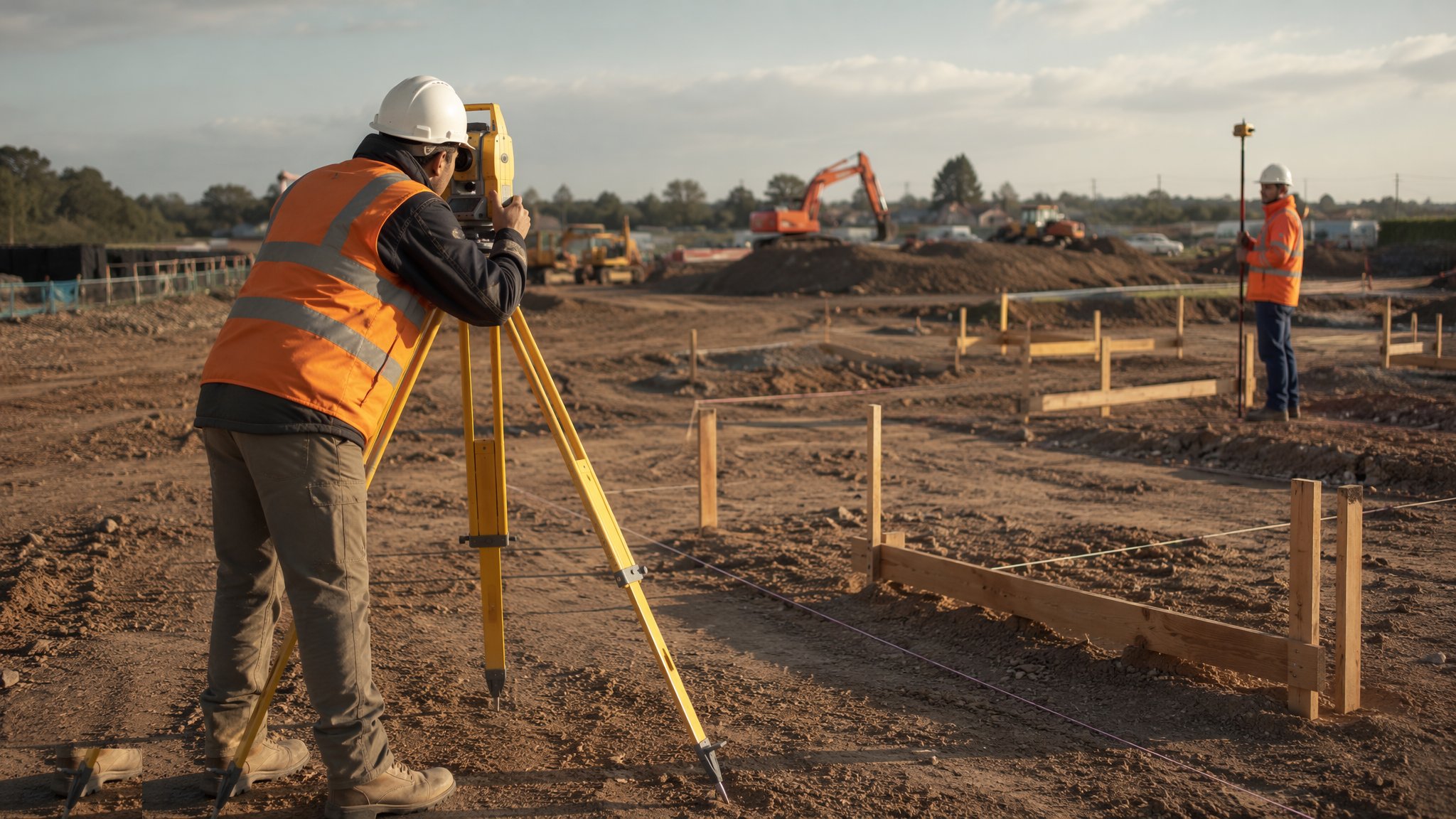
Setting Out & Survey Control
Benchmarks, grids and datums - the invisible framework every trade builds to.
Open processCanonical guide: Residential & Housing
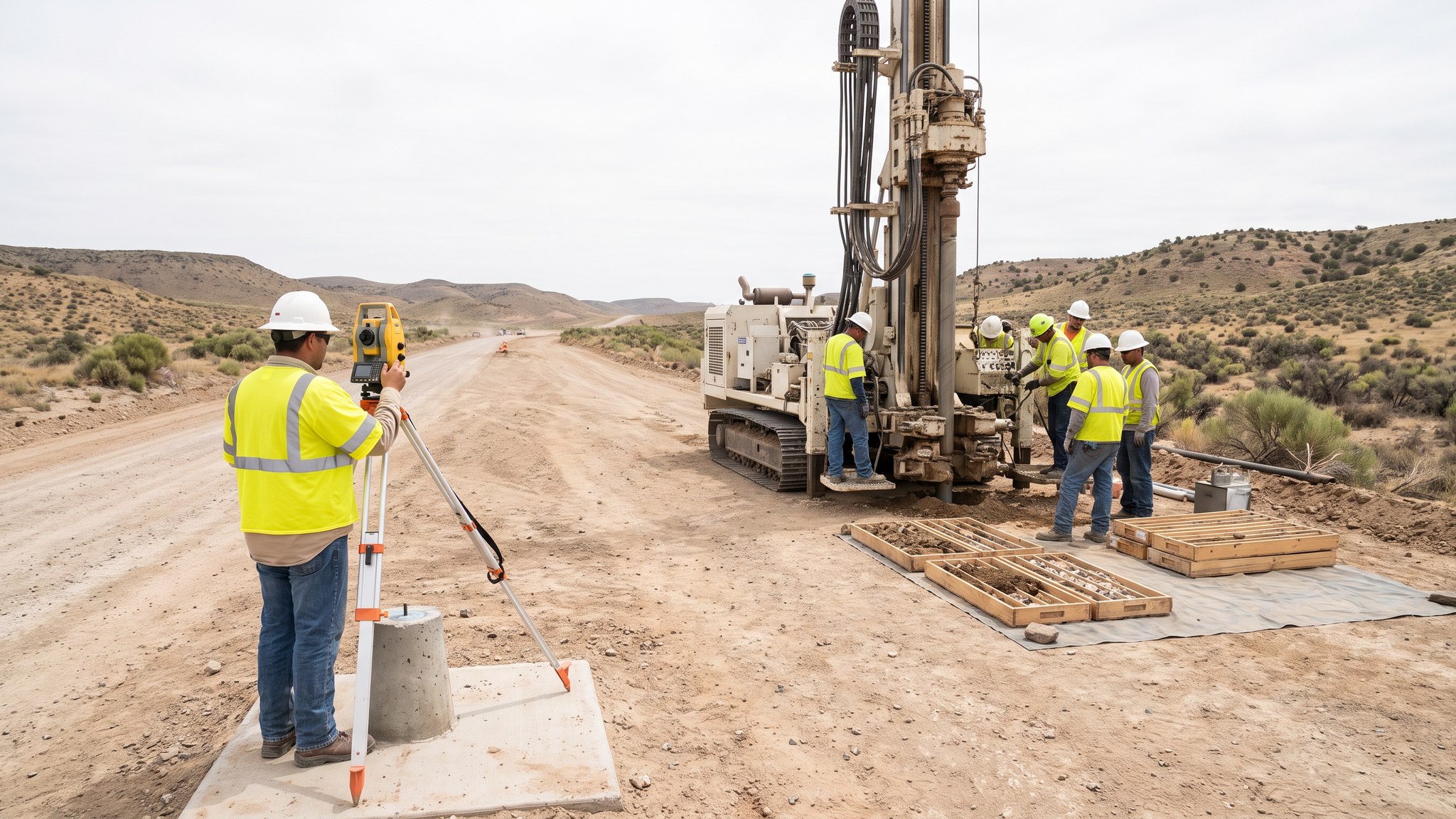
Survey Control & Ground Investigation
Corridor control networks and the ground investigation that tells you what the road, bridge or tunnel is actually standing on.
Open processCanonical guide: Roads & Highways

Earthworks & Excavation
Cut and fill, trenching and compaction - reshaping the ground to take the building.
Open processCanonical guide: Residential & Housing
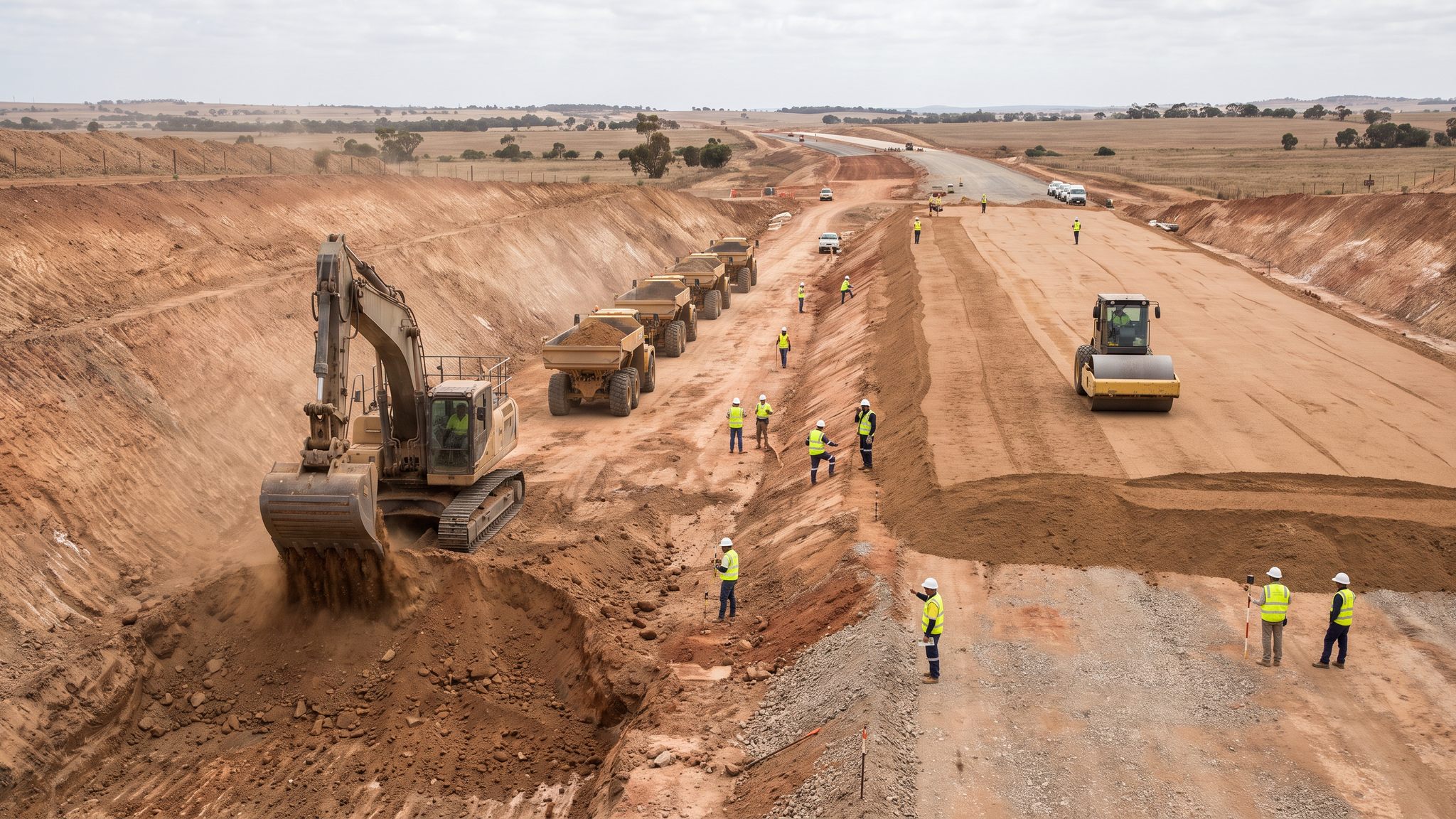
Bulk Earthworks - Cuttings & Embankments
Moving hundreds of thousands of cubic metres to build the corridor's shape - cuttings, embankments and the formation everything sits on.
Open processCanonical guide: Roads & Highways
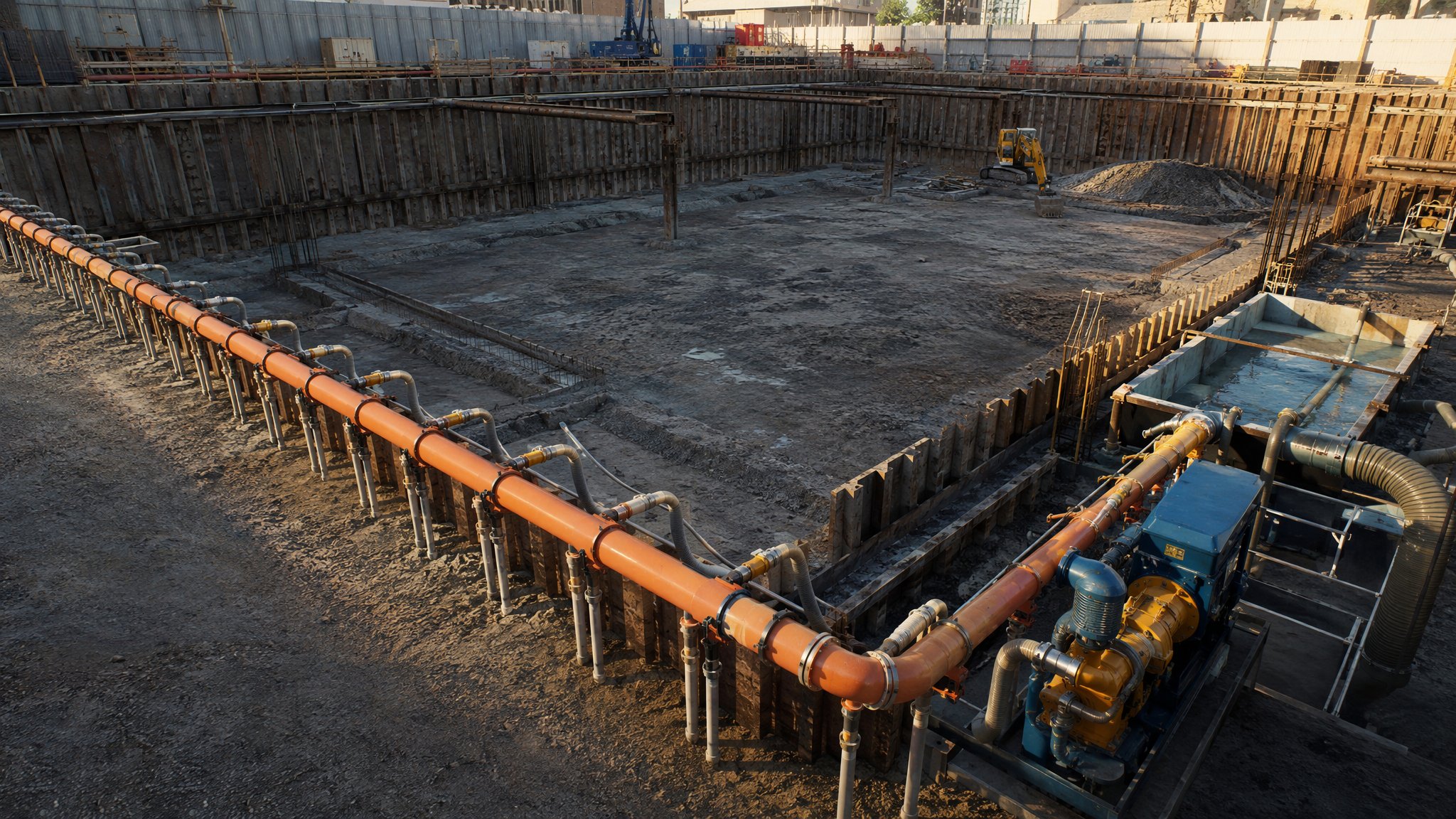
Dewatering & Groundwater Control
Keeping the dig dry - pumps, wellpoints and cut-off walls against an enemy that never sleeps.
Open processCanonical guide: Residential & Housing
Land Development & Earthworks in depth
About Land Development & Earthworks
The three guides in this sector cover the ground-engineering layer on top: ground remediation, dealing with contamination and made ground before it deals with you; ground improvement techniques - compaction, stabilisation and reinforcement for ground that will not carry the loads as found; and development infrastructure and enabling works, the roads, sewers and services that turn a platform into plots.
How land development is procured
Strategic land development is bought in layers. The promoter or master developer procures the ground-engineering layer - remediation, bulk earthworks, ground improvement - on measured-work contracts where the bill of quantities carries the risk of what the ground turns out to be, because no ground investigation ever finds everything. The infrastructure layer - spine roads, sewers, utilities, pumping stations - follows as separate packages, often under the utilities' own adoption standards so the assets can be handed over. Only then do the plot developers arrive with their building contracts.
The contractual honesty of the sector lies in its quantities. Cut and fill volumes, contaminated soil tonnages and rock excavation are estimated from boreholes and paid as measured; a contractor who prices the bill as if it were fact, or an employer who treats every surplus as contractor risk, is setting up the dispute that defines the project. The good schemes use early ground investigation, trial pits in the tender period and shared digital ground models so both sides price the same ground.
Programme: the earthworks season rules
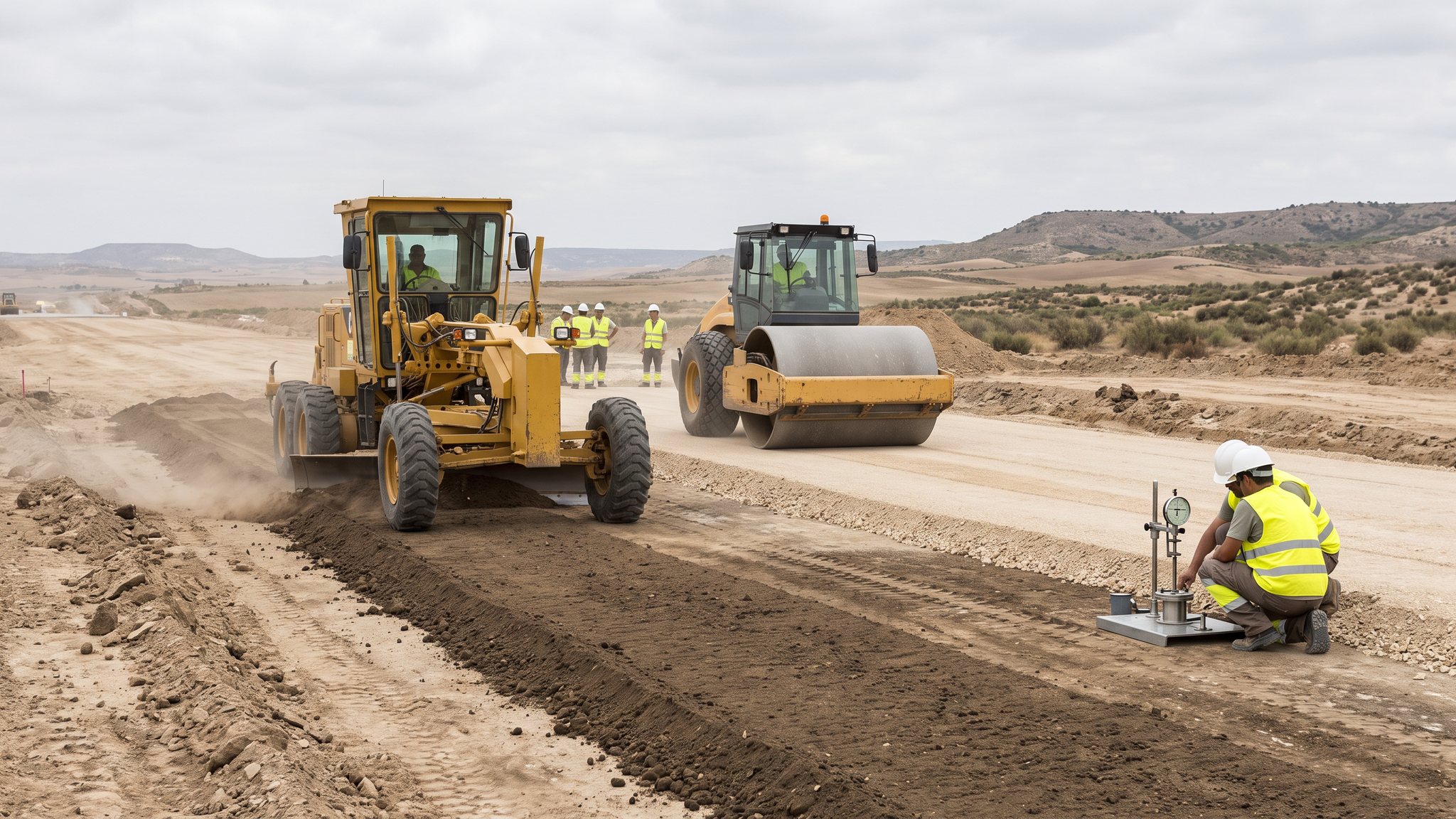
Bulk earthworks is a seasonal trade. In the UK, wet winters cut earthmoving output dramatically - fill placed above its optimum moisture content simply will not compact - so programmes push bulk cut and fill through the dry months and schedule drainage, remediation and structures for the winter. A master programme that ignores the season loses a year, not a month, when the earthworks slip past autumn.
The programme chain is unforgiving in its order: strip and remediate, bulk earthworks to formation, drainage and utilities, then subgrade and capping, then the roads and plots. Each stage gates the next through testing - compaction results, validation sampling on remediated ground, CBR values on subgrade - and a failed test halts the following trade, which is why the testing regime and the laboratory's turnaround time belong on the critical path as surely as the dozers do.
What goes wrong: the ground fights back
Contaminated ground surprises are the sector's signature loss. The old gasworks, the unrecorded tip, the made ground full of obstructions - every brownfield platform carries them, and the cost is not just disposal at a hazardous waste gate rate but the programme collapse while the remediation strategy is re-agreed with the regulator. The defence is money spent early: intrusive investigation, a remediation strategy agreed with the Environment Agency or the emirate's environment authority before earthworks start, and watching briefs during excavation.
The other classic is settlement. Fill placed too fast over soft ground, or ground improvement under-specified for the loads the masterplan later adds, comes back as cracked roads and leaning lamp columns years after the earthworks contractor left. Surcharging, staged construction and proper instrumentation are the price of certainty; skipping them is the price of the claim.
UK and UAE differences
UK land development works through the planning system: outline consent with section 106 infrastructure obligations, adoption agreements under sections 38 and 104 for roads and sewers, and the Environment Agency's oversight of remediation and waste classification. The brownfield-first policy direction means most platforms are former industrial land, so remediation and ground improvement are the norm rather than the exception.
UAE land development is typically greenfield desert or reclaimed coastal ground: the problems are loose sands needing dynamic compaction or vibro-replacement, high saline water tables on coastal plots demanding dewatering and sulphate-resistant concrete, and dredged fill platforms that need years of settlement or aggressive preloading. Authority approvals run through the municipality or the master developer - entities like Trakhees or the DDA for their jurisdictions - and utilities connections through DEWA or the emirate equivalent are the genuine long-lead items on any plot-servicing programme.
The ground improvement toolbox
When the ground as found will not carry the masterplan, the sector reaches for a well-worn toolbox. Dynamic compaction drops weights in a grid to densify loose fills and sands; vibro techniques - stone columns and vibro-compaction - reinforce or densify at depth; lime and cement stabilisation turn weak clays and wet fills into workable capping; surcharging and vertical drains accelerate consolidation of soft ground that would otherwise settle for a decade. Each technique has its verification regime - plate tests, zone tests, instrumentation - because the deliverable is a certified platform, not a treated one.
Choosing between them is an engineering-economics decision the contractor usually prices as alternatives: stone columns against piling the plots, surcharge time against ground improvement cost, dig-and-replace against stabilisation. On Gulf reclamation sites the question is often how long the dredged fill must rest or be preloaded before the platform can be certified, and the answer is a genuine programme decision measured in seasons.
Turning a platform into plots
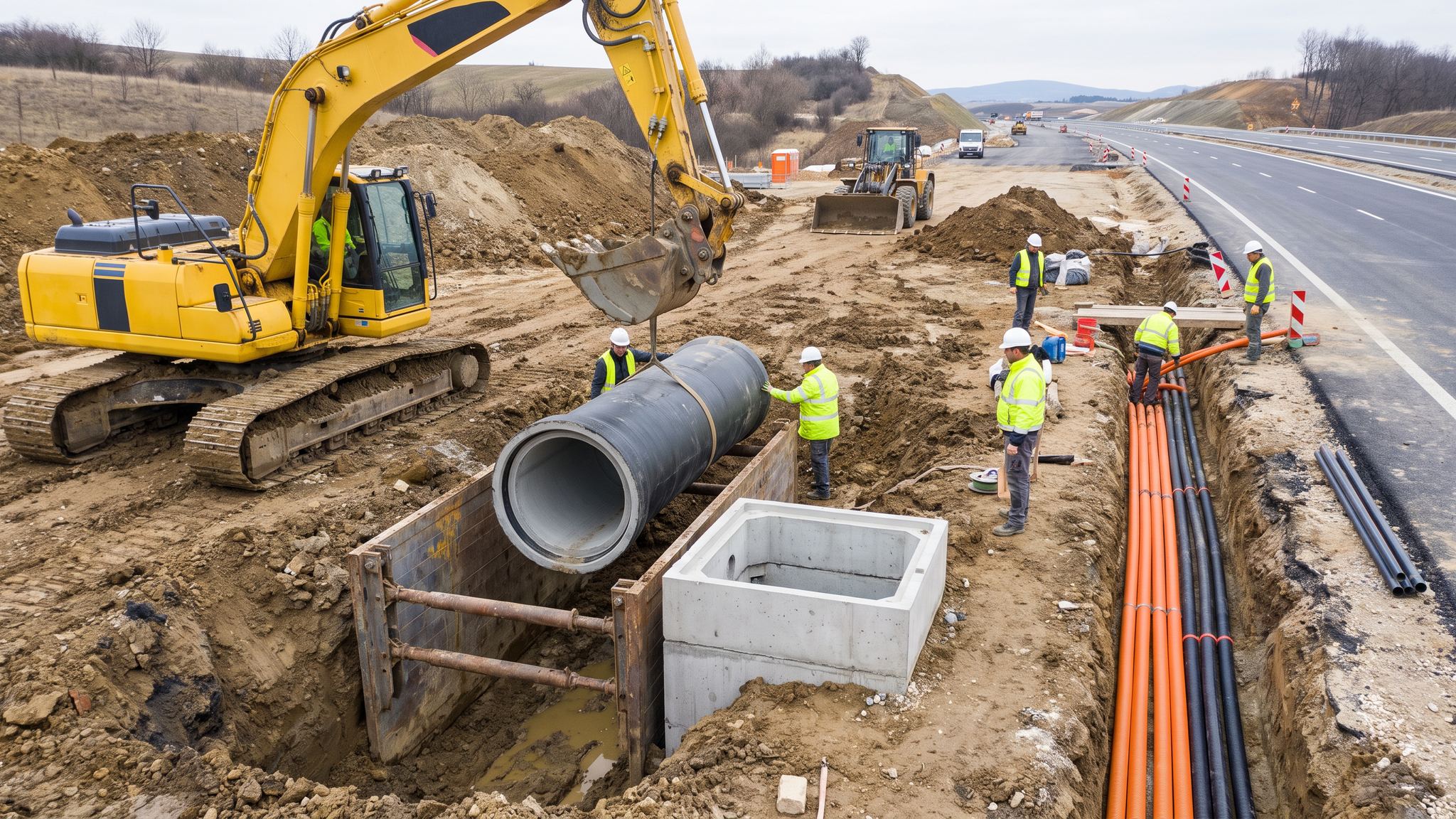
Development infrastructure is the unglamorous layer that makes land saleable: spine roads and junctions, foul and surface water networks with their pumping stations, utility corridors with the ducts and chambers the providers will occupy, and the balancing ponds and swales that make the drainage strategy work. In the UK the adoption regime shapes the design - sewers to the water company's standards under section 104, roads to the highway authority's under section 38 - and the bond and inspection process runs years beyond construction.
The sequencing trap is building infrastructure before the earthworks have settled or the plot levels are fixed: roads laid on filling ground crack, and utilities installed to one masterplan revision are abandoned by the next. Mature developers phase the infrastructure to follow platform certification, protect it from construction traffic until adoption, and keep the utility companies' connection dates on the master programme as the milestones they genuinely are.
Remediation on brownfield platforms
UK platform work is now mostly brownfield, and remediation is its own construction trade: dig-and-dump to licensed facilities where that is economic, but increasingly on-site treatment - soil washing, stabilisation of contaminated ground, bioremediation in engineered windrows - because haulage and gate fees punish the lorry-based answer. The remediation strategy is agreed with the Environment Agency and the local authority before earthworks start, and the validation report at the end is a planning condition discharge document, not internal QA.
The site discipline is materials management: a strict hierarchy of clean, treated and contaminated areas, dedicated haul routes, wheel washes and dust and odour control that keeps the neighbours onside, and a watching brief so that unexpected finds - the buried tank, the asbestos tip - are assessed without stopping the whole site. In the UAE the equivalent problems are sabkha salts, buried construction debris and hydrocarbon-impacted ground around old industrial plots, handled under the emirate environment agency's oversight with the same containment logic.
Water: the constant site problem
Platform-scale earthworks and groundwater do not mix, and dewatering on a development site is a system, not a pump: wellpoint rings or deep wells around excavations, cut-off trenches to protect neighbouring land, settlement lagoons cleaning discharge before the consent allows it to leave. In the UK the discharge consent and abstraction licensing sit with the Environment Agency; on Gulf coastal plots the saline water table sits a metre or two down and dewatering runs continuously, with the discharge often to sewer under utility agreement.
The failures are neighbourly ones: drawdown settling adjacent buildings or roads, discharge flooding someone else's site, fines for silty water in a watercourse. The monitoring regime - standpipes, settlement points, turbidity checks - is cheap insurance that also provides the defence when the claim arrives anyway.