Flood defences, remediation and habitat works - engineering with the environment as the client.
Environmental engineering is civils in service of the landscape. The plant is familiar - excavators, piling rigs, dumpers - and the earthworks, dewatering and drainage methods are the shared ones, linked below. What is different is the success criterion: measured in water levels, flood return periods and species counts as much as in cubic metres poured.
The process map - 3 guides
Each one is a full guide: overview, variants, numbered steps, plant, testing, safety and defects.
Flood Defence Construction
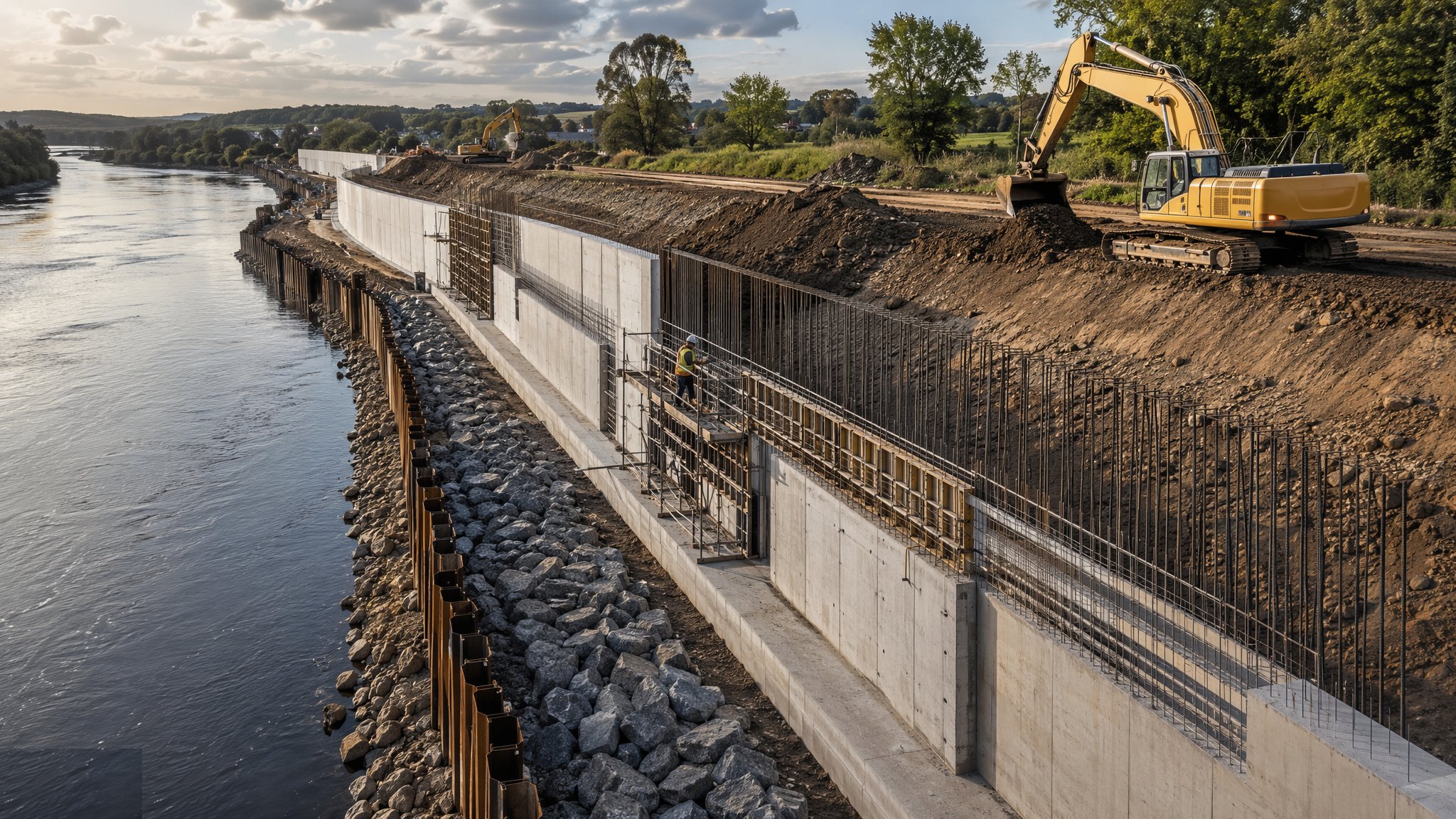
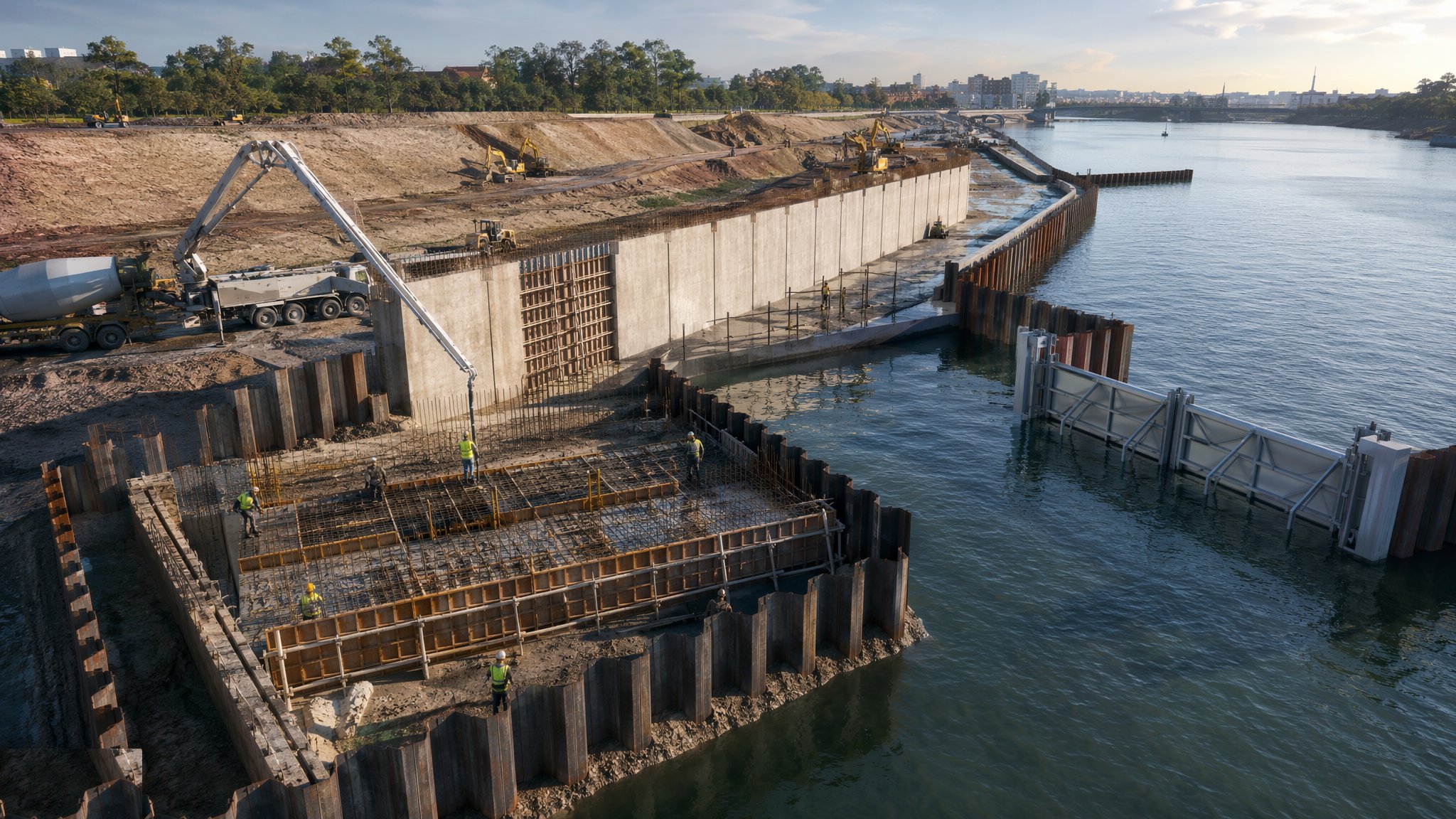
Walls, embankments, gates and pumping stations that keep the water on the right side of the line - built beside live watercourses under consent from the Environment Agency or the lead local flood authority, with a flood plan in your back pocket.
Open process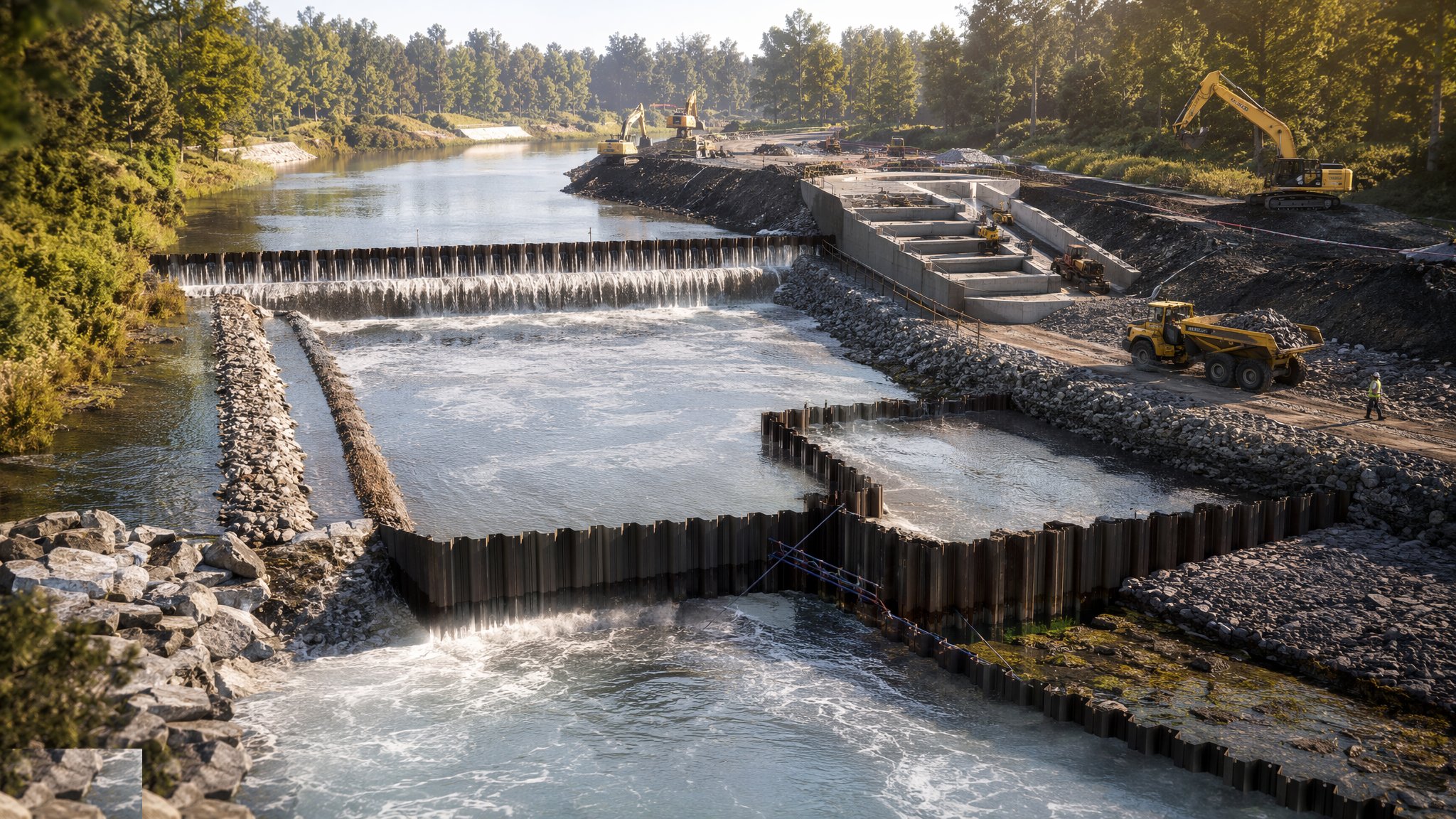
River Engineering & Watercourse Works
Reshaping and armouring watercourses - weirs and fish passes, re-sectioned channels, gabion and riprap banks - much of it built in or over live water behind temporary dams and overpumping, inside a consented season window.
Open process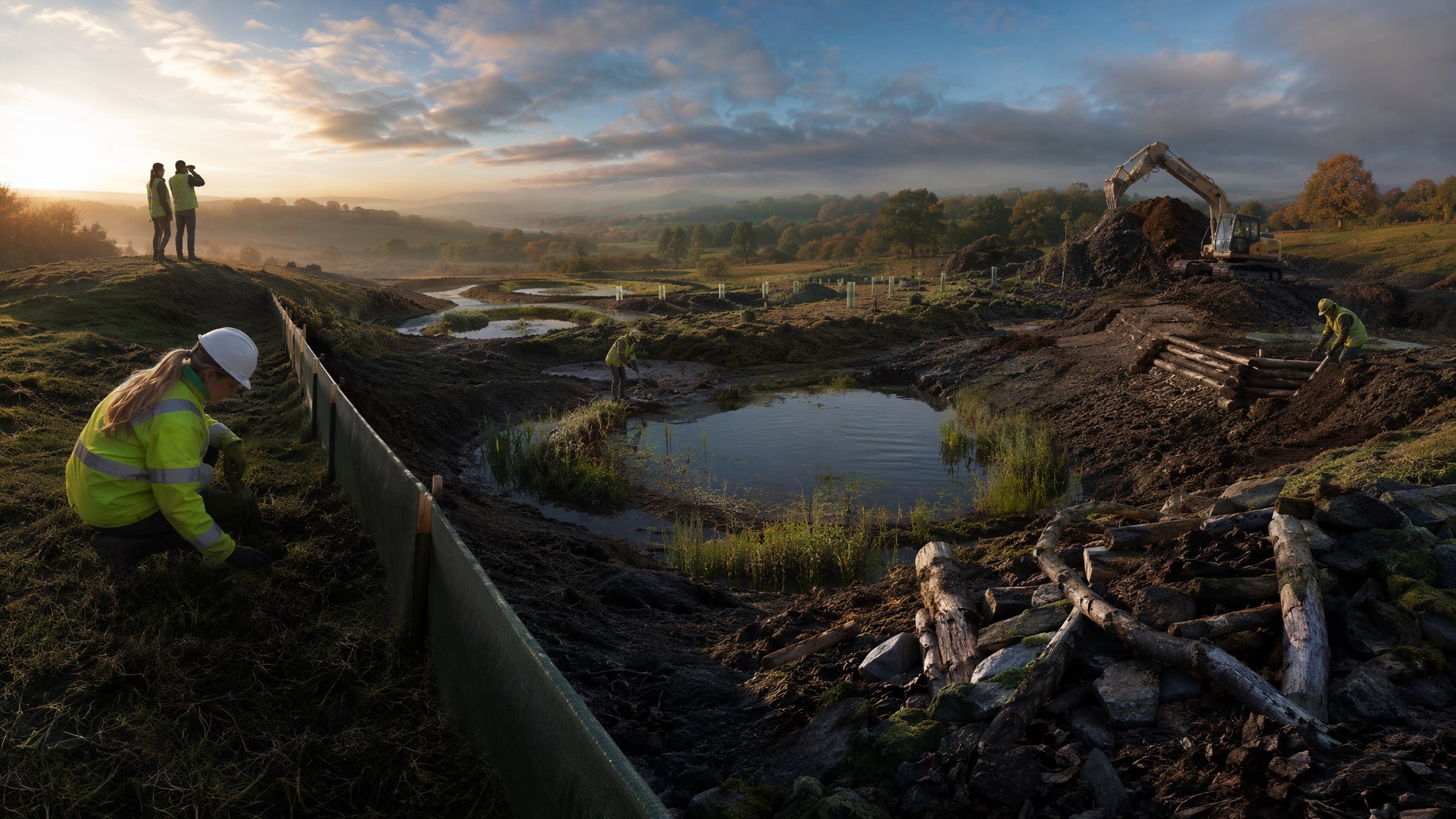
Habitat Creation & Environmental Mitigation
The licensed, season-bound work of moving protected species out of harm's way and building them somewhere better - newt fences and receptor ponds, artificial badger setts, bat lofts, translocated turf - delivered under an ecological clerk of works and thirty years of promised management.
Open processShared methods used in this sector
These guides are owned by other sectors - the canonical page lives there - but the method is the same here. Cards open the guide at its home sector.
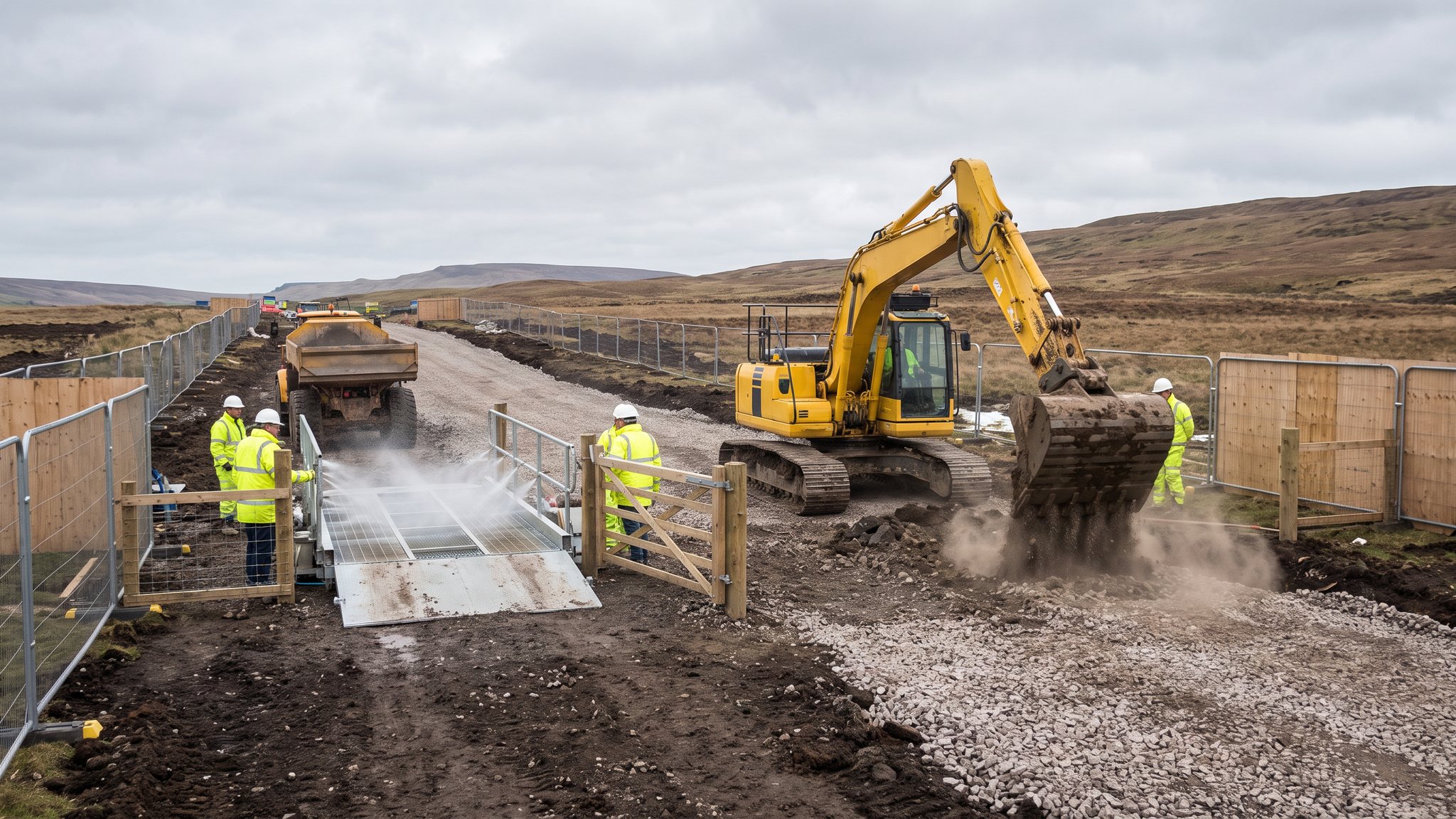
Corridor Access & Enabling Works
Turning a length of route - often a live highway - into a controlled, approved, workable construction corridor.
Open processCanonical guide: Roads & Highways
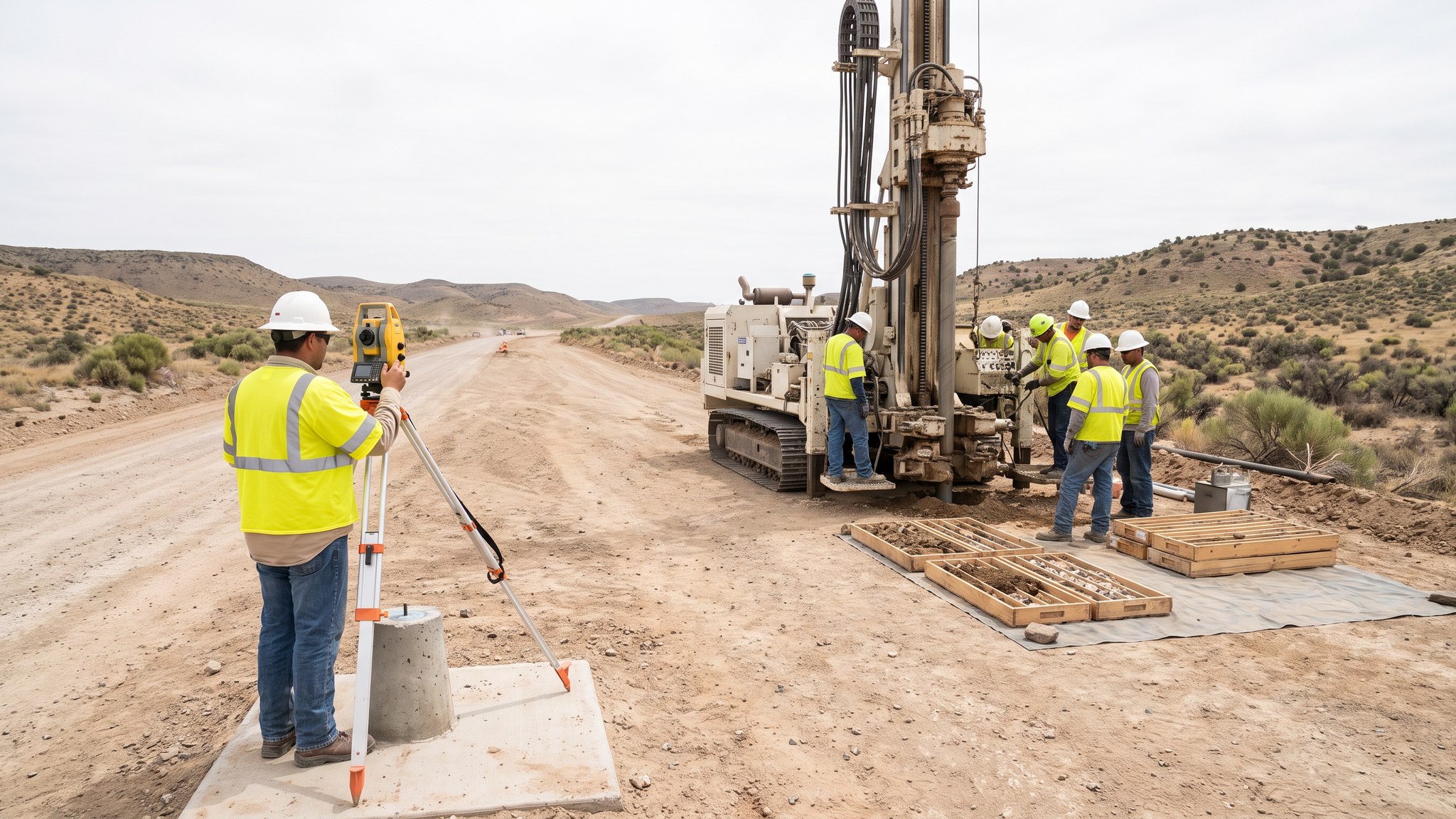
Survey Control & Ground Investigation
Corridor control networks and the ground investigation that tells you what the road, bridge or tunnel is actually standing on.
Open processCanonical guide: Roads & Highways
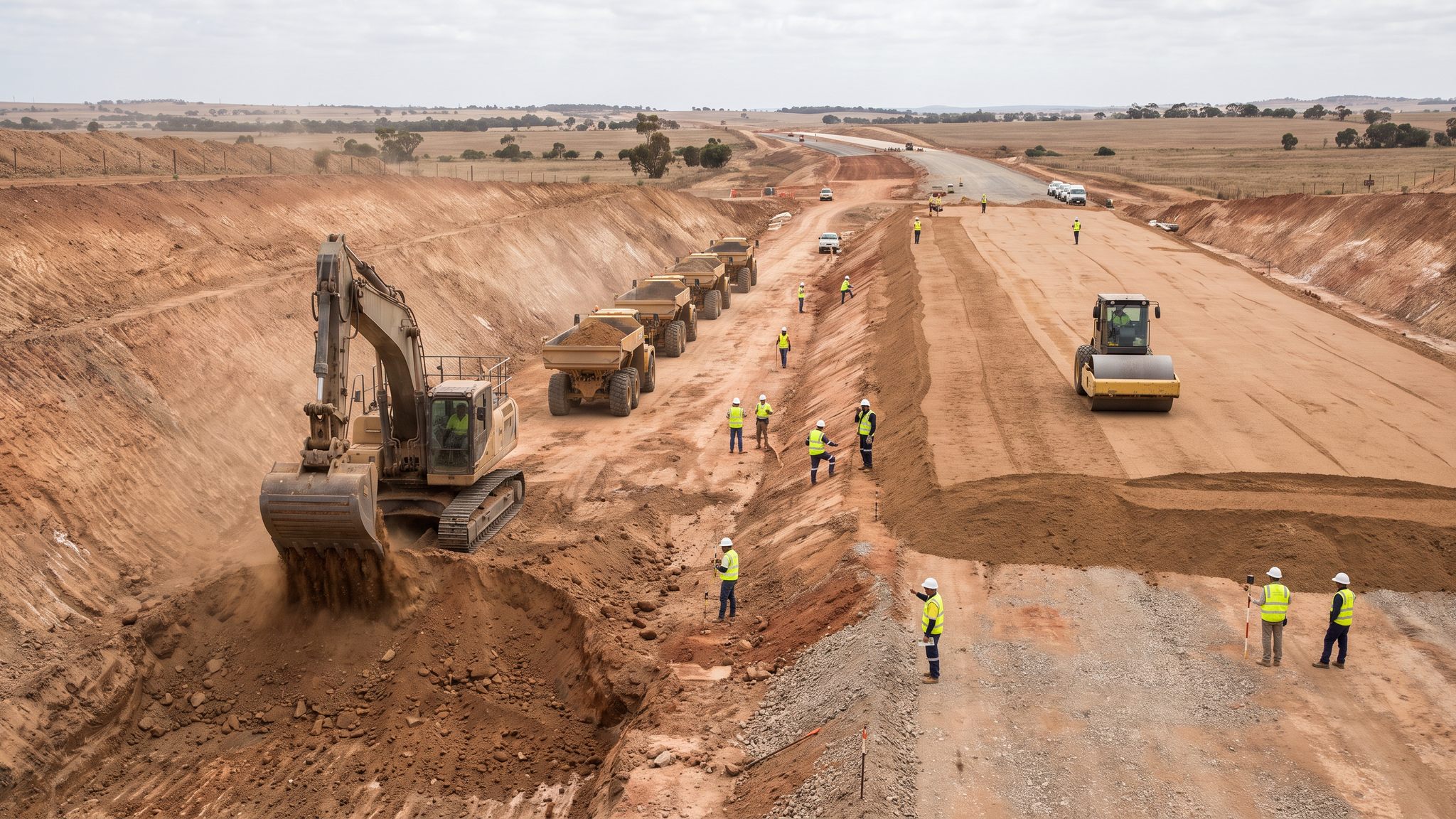
Bulk Earthworks - Cuttings & Embankments
Moving hundreds of thousands of cubic metres to build the corridor's shape - cuttings, embankments and the formation everything sits on.
Open processCanonical guide: Roads & Highways

Earthworks & Excavation
Cut and fill, trenching and compaction - reshaping the ground to take the building.
Open processCanonical guide: Residential & Housing
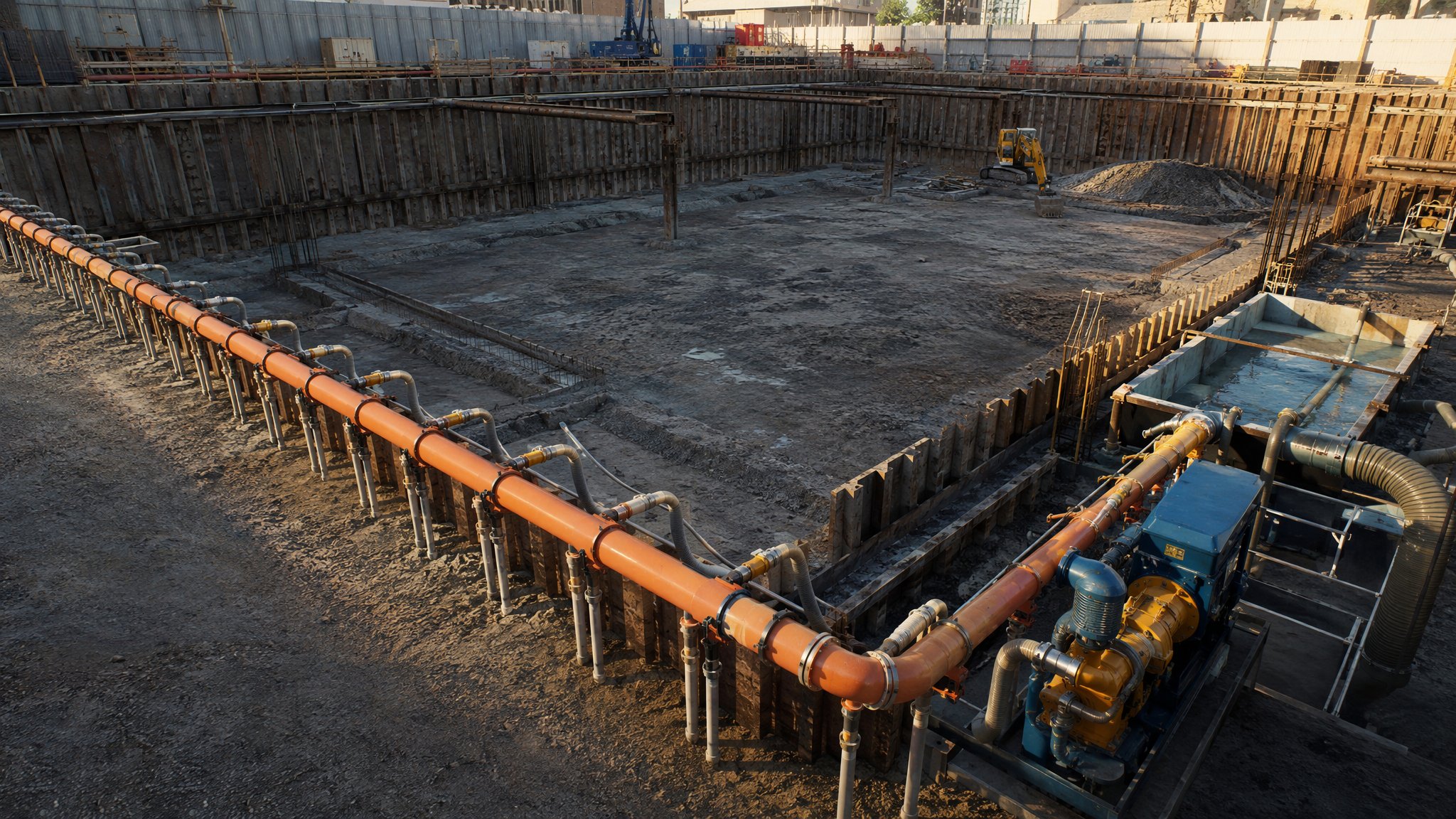
Dewatering & Groundwater Control
Keeping the dig dry - pumps, wellpoints and cut-off walls against an enemy that never sleeps.
Open processCanonical guide: Residential & Housing
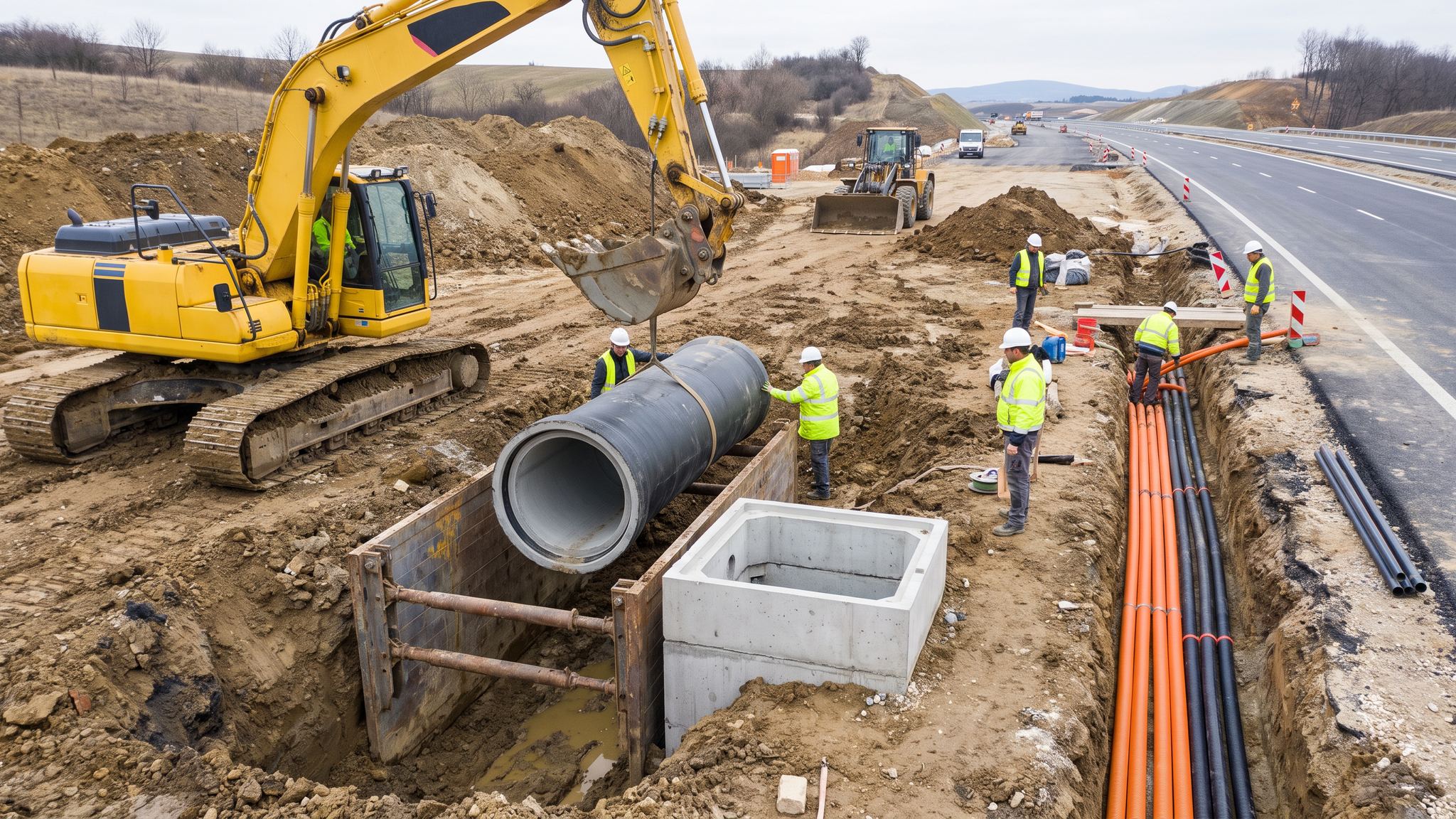
Drainage & Utility Corridors
Pipes, ducts, chambers and culverts - the buried networks installed before the pavement goes over them.
Open processCanonical guide: Roads & Highways

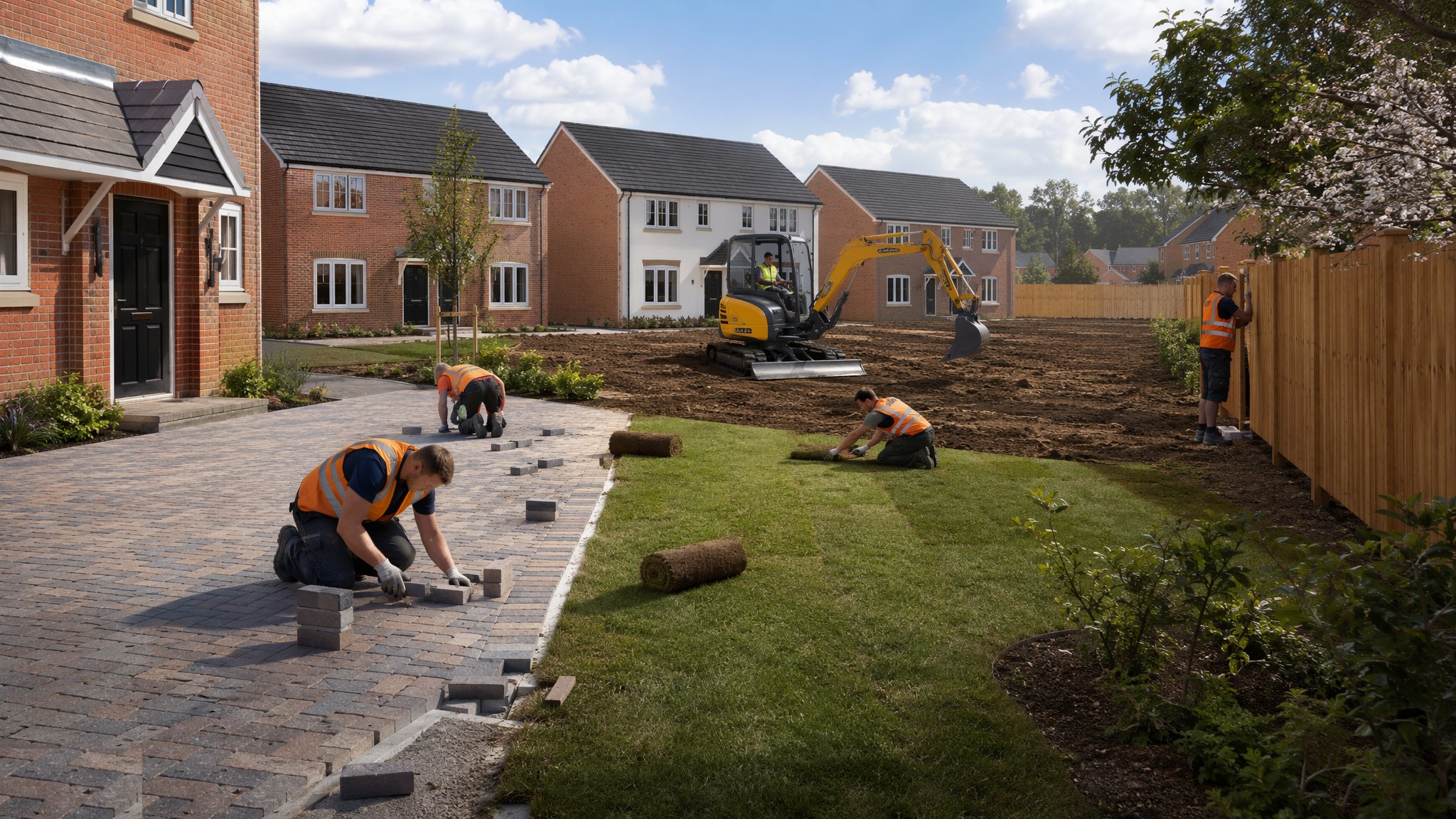
Environmental Engineering in depth
About Environmental Engineering
The three guides in this sector cover flood defences construction - walls, embankments and barriers that must work on the worst day, not the average one; river engineering works, training and restoring watercourses while they carry on flowing past the workfront; and habitat creation and mitigation, where the ecology is the deliverable and the construction is just how you get there.
Procuring works where the regulator is a stakeholder
Environmental schemes are bought by public bodies and utilities - the Environment Agency, local authorities, water companies in the UK; municipalities and environment agencies in the UAE - under frameworks that run for years and call off individual schemes. The permitting regime shapes procurement: flood risk activity permits, water discharge consents and protected-species licences have their own lead times and conditions, and the contractor is often brought in early under two-stage arrangements precisely so the construction method and the permit application agree with each other.
Pricing carries genuine uncertainty. River and coastal works are paid against measured quantities with weather and flow allowances, and the compensation event machinery does heavy lifting because no one can promise what the river will do. Clients who understand the sector buy flexibility; those who buy certainty get a price loaded for it or a contractor heading for trouble.
Access is frequently the hardest civils on the job. Schemes run along riverbanks, through wetlands and across farmland with no existing road, so temporary access tracks, bog mats and floating plant platforms are a substantial early package - and a substantial restoration liability at the end, since the consent usually requires the access removed and the ground reinstated. The build-and-remove cost of access can rival the permanent works on linear schemes, which is why the route is a design decision made with the ecologist, not a plant manager's afterthought.
Programme: windows, seasons and flows
The programme is a set of windows, not a line. In-river works are confined to low-flow seasons and fish migration windows agreed with the regulator; habitat works wait on bird nesting seasons; flood defence earthworks want dry ground. A scheme that misses its window waits months for the next one, so environmental programmes are planned backwards from the consented working periods and everything else - access, plant, materials - is organised to maximise what fits inside them.
Working in live water defines the method. Temporary dams, flumes and over-pumping keep the watercourse flowing past the workfront; dewatering discharges need consent and treatment; and a rainstorm upstream is a site emergency, not an inconvenience. The daily rhythm is river level and forecast, and the site team's hydrology awareness is a genuine safety competency, because people work in channels that can rise in minutes.
What goes wrong
The catastrophic failure is a partially built defence overtopped by the event it was designed for - a flood mid-scheme that damages the works and the properties behind them, with liability arguments that run for years. The mitigation is sequencing: never lower the existing protection until the new line can take over, and hold temporary flood plans with trigger levels, demobilisation routes and materials to close gaps.
The chronic failures are environmental performance ones: a realigned channel that silts or erodes because the geomorphology was misunderstood, a wetland that dries out, a fish pass that fish decline to use. These are design-construction feedback problems, and the sector's answer is post-project monitoring written into contracts - the builder's obligations extend to making the ecology work, not just placing the stone.
UK and UAE differences
The UK sector is mature and regulation-dense: the Environment Agency's consenting, Natural England's protected-species licensing, reservoir-safety regimes for raised structures, and public procurement rules that shape every framework. Climate adaptation funding has made flood defence a growth market, and nature-based solutions - managed realignment, natural flood management - are moving from experiment to mainstream spec.
The UAE's environmental engineering is younger but urgent: coastal protection for reclaimed waterfronts, wadi flood control after storm events exposed drainage gaps, and habitat creation as part of masterplan obligations. The regulatory framework sits with bodies such as the Environment Agency Abu Dhabi and the federal Ministry of Climate Change and Environment, and the practical design drivers are heat, salinity and episodic extreme rainfall rather than chronic river flows.
River engineering in live water
River works are built inside a moving system that must keep working: channels are realigned in halves behind temporary dams, weirs are built in sections with flow maintained through flumes, and bank protection goes in from plant working on the bank or from pontoons on the water. Every element is designed for the flows it will see during construction, which are not the average - a single spate can undo a season's work if the temporary works were sized for the dry forecast.
The materials are a mix of heavy civils and soft engineering: sheet piles and concrete for walls and weirs, then rock armour, coir rolls, brush mattresses and willow spiling for the naturalised edges the consents increasingly demand. The two halves want different crews and different quality regimes, and the detailing where hard meets soft - the toe of a wall meeting a regraded bank - is where schemes most often unravel, literally, in the first flood.
Habitat as the deliverable
On mitigation and habitat schemes the ecology is the product and construction is merely the delivery mechanism. Wetlands are graded to centimetre accuracy because water depth is habitat; soils are handled and placed to preserve or create the seed bank; and timing is set by species windows - no works in nesting season, fish rescue before dewatering, translocation of protected plants before the dozers. The ecologist on these jobs has genuine stop authority, and the contractor who treats that as obstruction rather than scope loses money.
Success is measured afterwards. Monitoring obligations - vegetation surveys, water levels, species counts - run for years and are increasingly written into the construction contract or a linked maintenance agreement. The consequence is a changed attitude to as-built records: the seeded areas, the soil provenance and the hydrological controls are documented as carefully as reinforcement, because the regulator will check the outcome, not just the paperwork.
Flood defence structures
The workhorse defence is the embankment: engineered fill placed and compacted in layers on a stripped and keyed foundation, with a clay core or geomembrane where seepage demands it, erosion protection on the water face and a grass crest wide enough for the maintenance plant that will use it for fifty years. Sheet-piled and concrete walls take over where space is tight - through towns, along quays - and bring the piling disciplines of tolerances, clutch sealants and tie-back anchors into the flood context.
Moveable structures are the prestige end: barriers and flood gates with mechanical and electrical systems that must work on the worst night of the decade after months of idleness. Their construction is water-industry MEICA work - gates installed and aligned in dry-docked or dewatered sections, hydraulic and control systems commissioned against simulated events, and operating regimes rehearsed with the people who will run them in anger.
Demountable defences and property-level resilience fill the gaps: stored barrier systems deployed ahead of forecast events, flood doors and non-return valves on individual buildings. The construction content is modest, but the logistics - storage, deployment routes, community exercises - are part of the delivered system, and a barrier that cannot be erected in the forecast lead time is a drawing, not a defence.
The consenting machine
Environmental schemes carry more consenting per pound of construction than almost any other sector: environmental permits and flood risk activity permits, protected species licences, planning consents often in designated landscapes, and marine licences where works touch the coast. Each consent has conditions that become construction constraints - working windows, method restrictions, monitoring duties - and the site team's compliance file is as much a deliverable as the concrete.
The programme consequence is front-loading: consents take months and are on the critical path before any plant moves, so early contractor involvement earns its fee by shaping methods the regulators will license. The failure mode is treating consenting as a client-side problem and pricing a method the permit then forbids - the variation that follows is slow, public and expensive.