Parks, streetscapes and external works - the last trade on site, the first thing people see.
Public realm work is construction in the finished tense: paving, street furniture, planting and water features installed around completed buildings, often while the client is already moving in. The earthworks, drainage and external-works methods underneath are the shared ones, linked below - the sector's skill is executing them to a finished standard among finished things.
The process map - 3 guides
Each one is a full guide: overview, variants, numbered steps, plant, testing, safety and defects.
Hard Landscaping & Public Realm
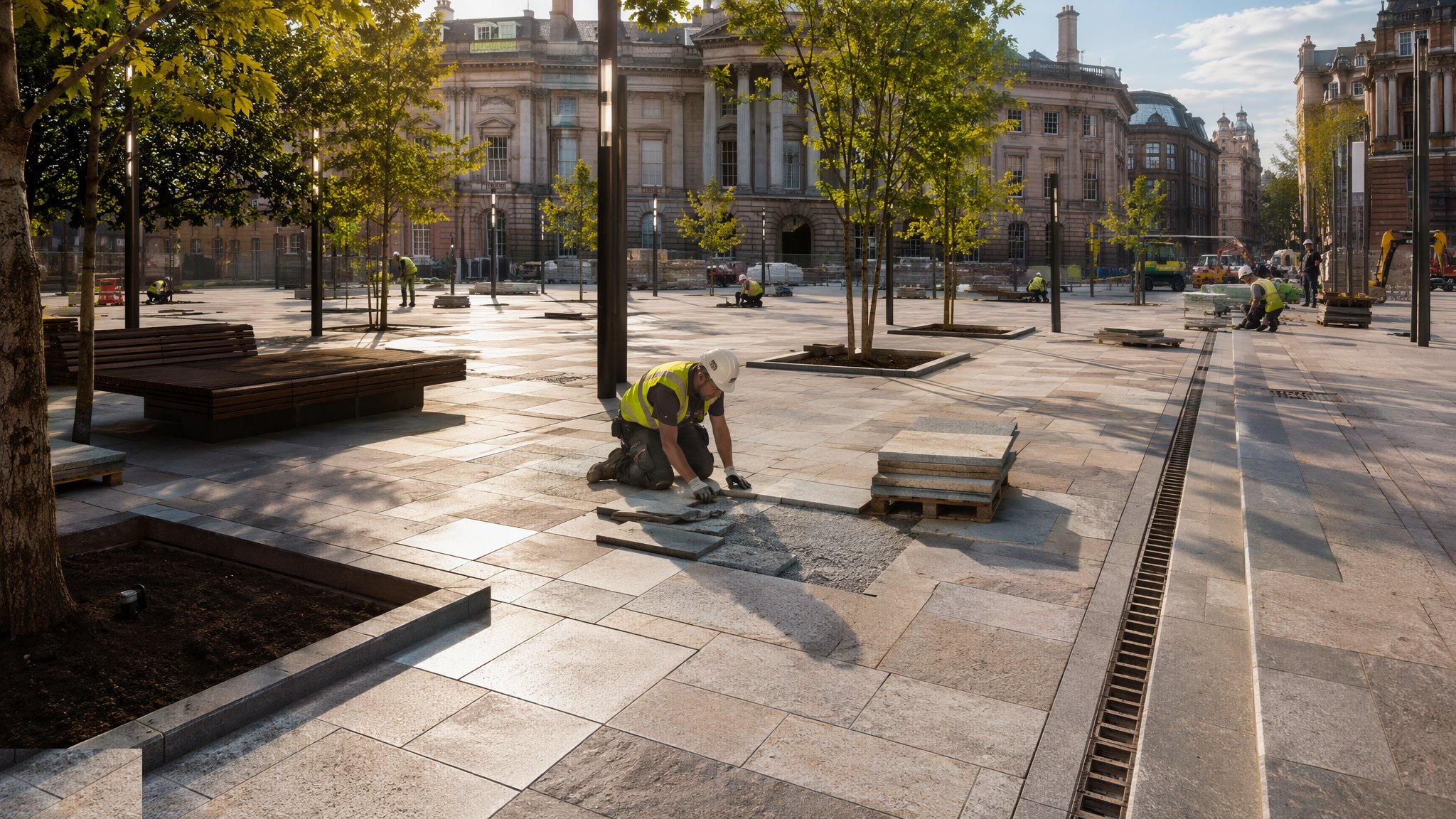
The paved, kerbed and furnished surface people actually walk on - footways, plazas and streetscapes built up in engineered layers, laid to millimetre tolerances and edged, drained and detailed to stay put for decades.
Open process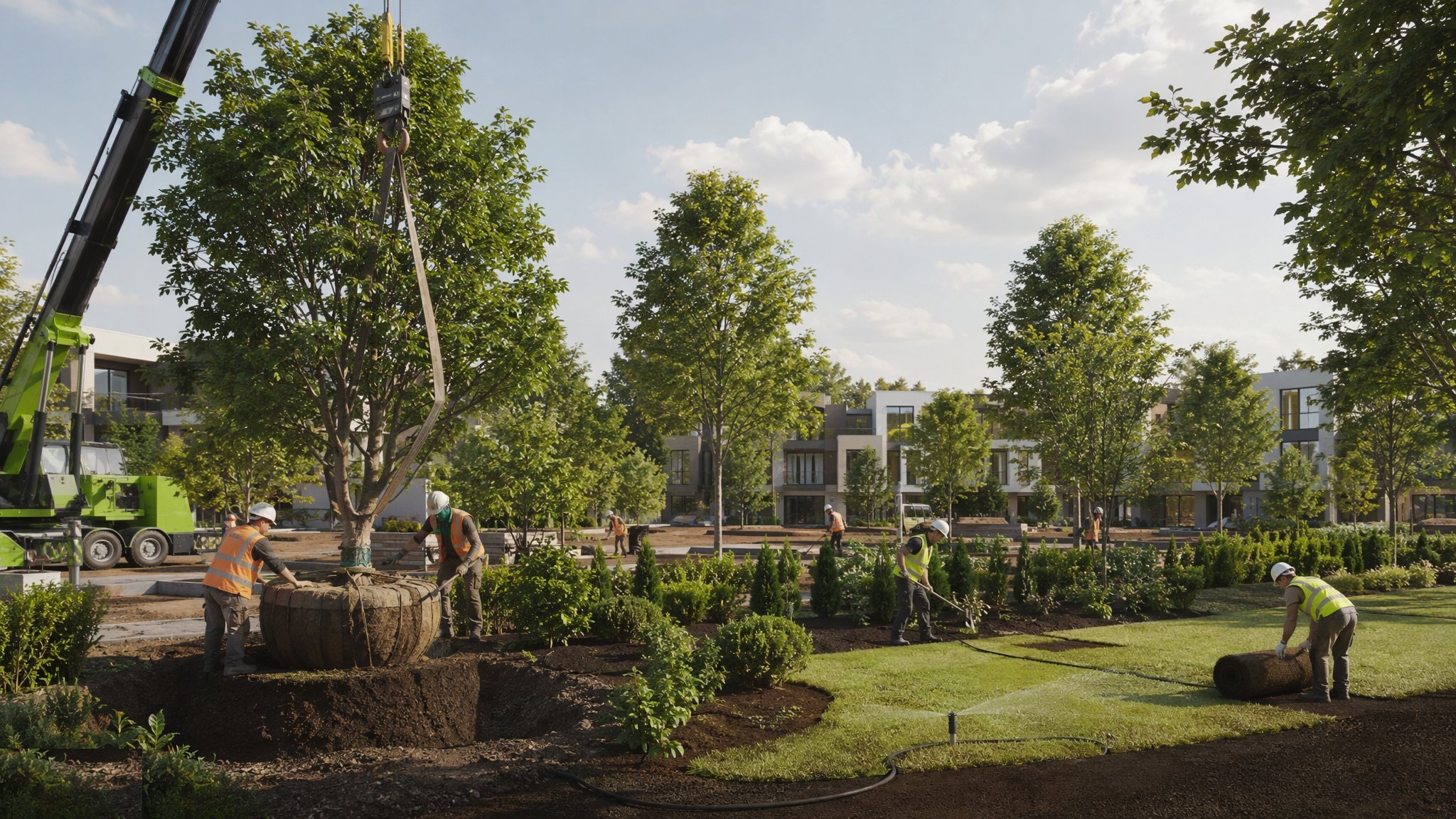
Soft Landscaping & Planting
The living half of the landscape - topsoil, trees, hedges, shrubs, turf and seed - planted to recognised nursery standards and then watered, weeded and replaced through an establishment period that decides whether it lives.
Open process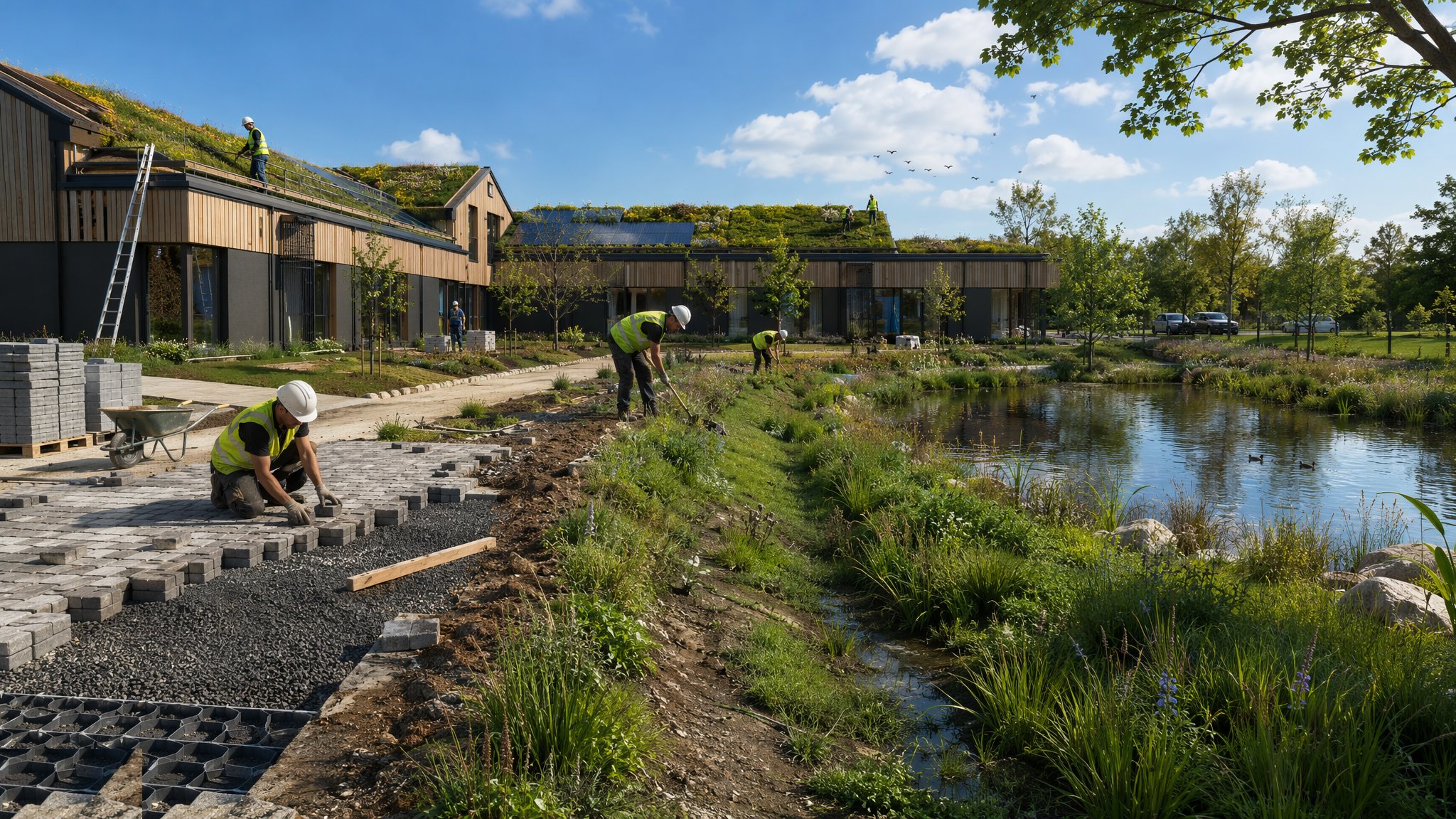
SuDS & Blue-Green Infrastructure
Drainage that behaves like the ground did before you built on it - swales, ponds, permeable paving, rain gardens and green roofs slowing, cleaning and storing runoff, then handed over with a maintenance plan someone has to honour.
Open processShared methods used in this sector
These guides are owned by other sectors - the canonical page lives there - but the method is the same here. Cards open the guide at its home sector.
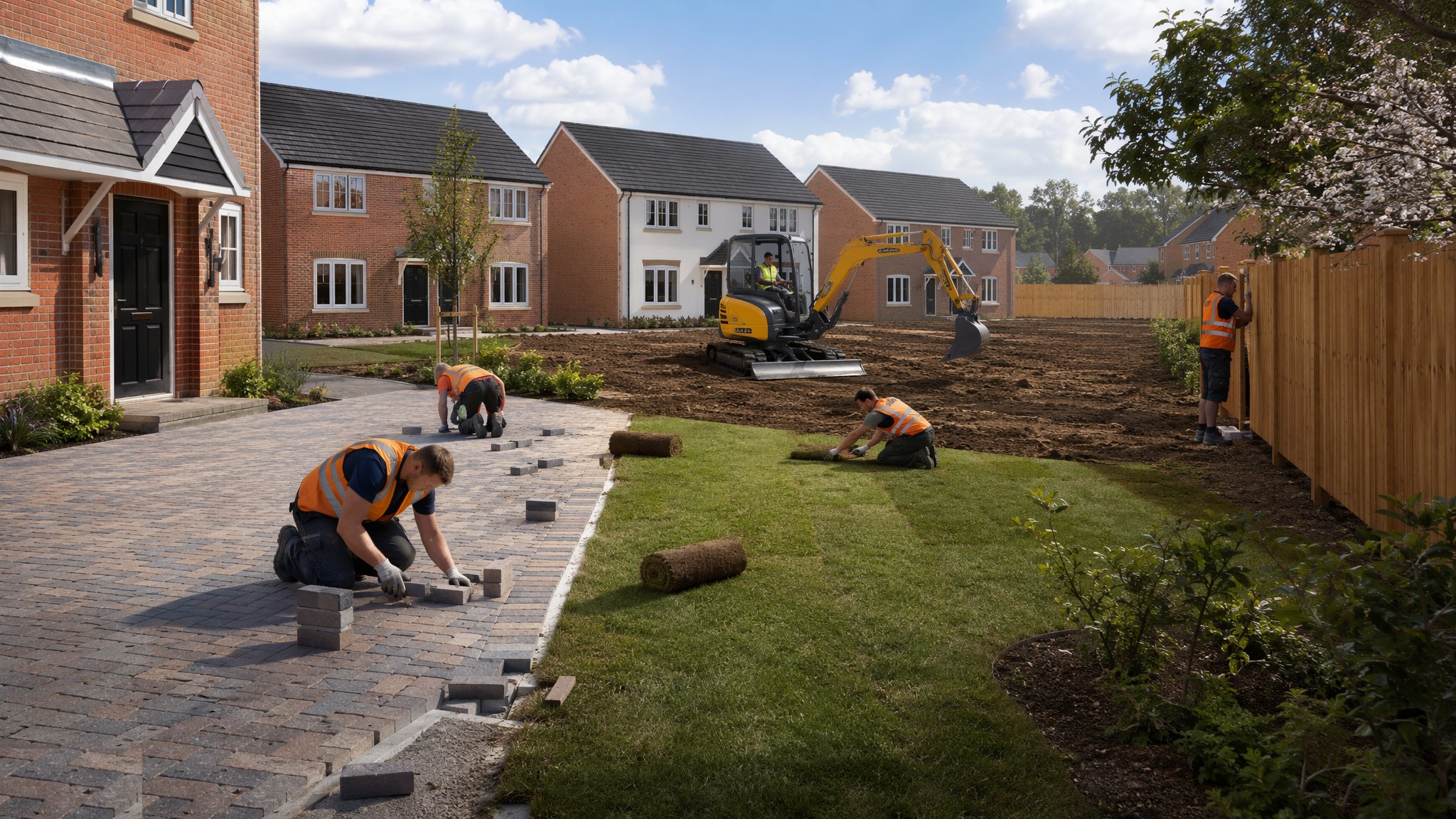
External Works & Landscaping
Drainage, roads, paving and planting - the infrastructure between the buildings that makes a place.
Open processCanonical guide: Residential & Housing

Earthworks & Excavation
Cut and fill, trenching and compaction - reshaping the ground to take the building.
Open processCanonical guide: Residential & Housing
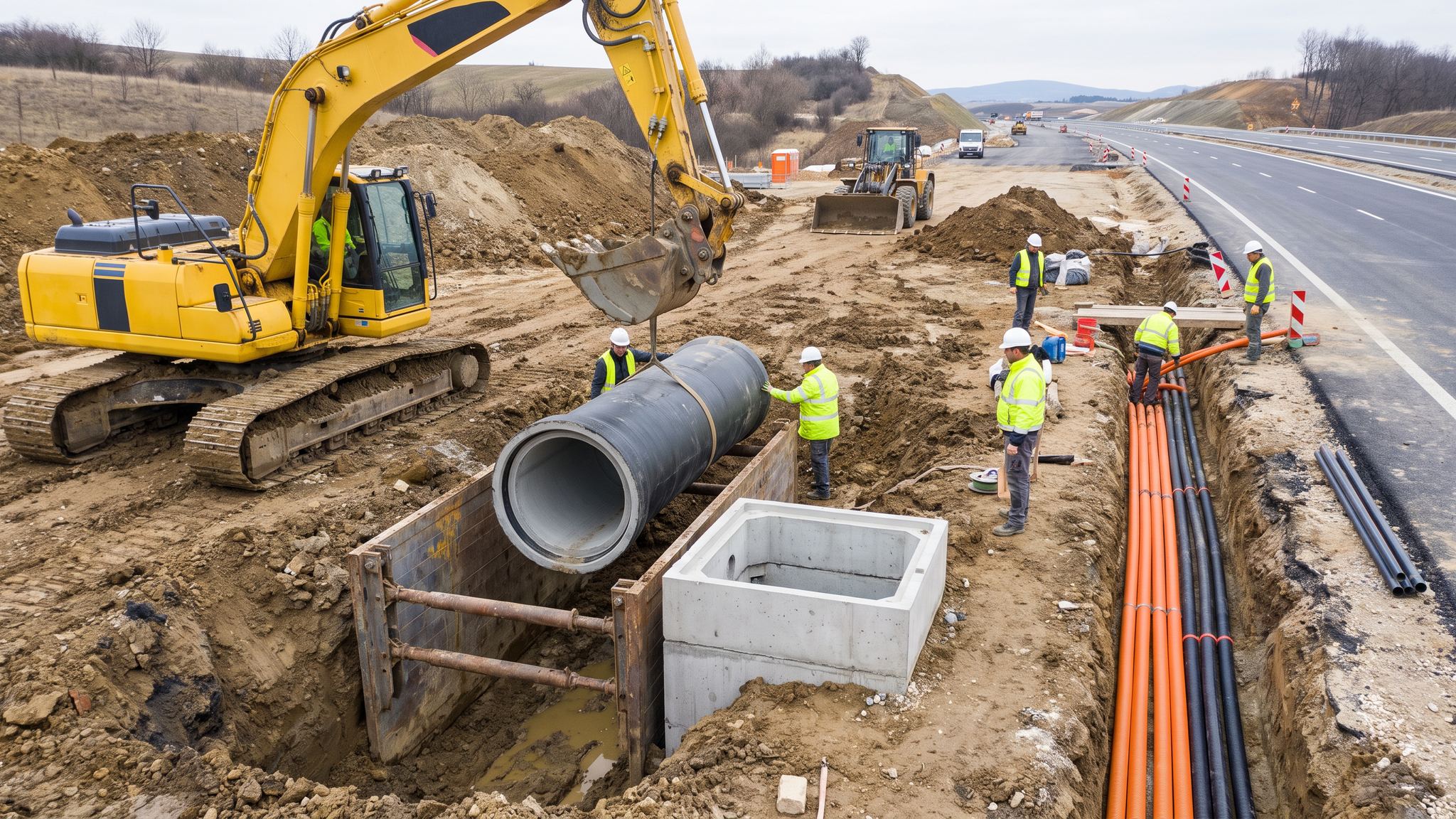
Drainage & Utility Corridors
Pipes, ducts, chambers and culverts - the buried networks installed before the pavement goes over them.
Open processCanonical guide: Roads & Highways
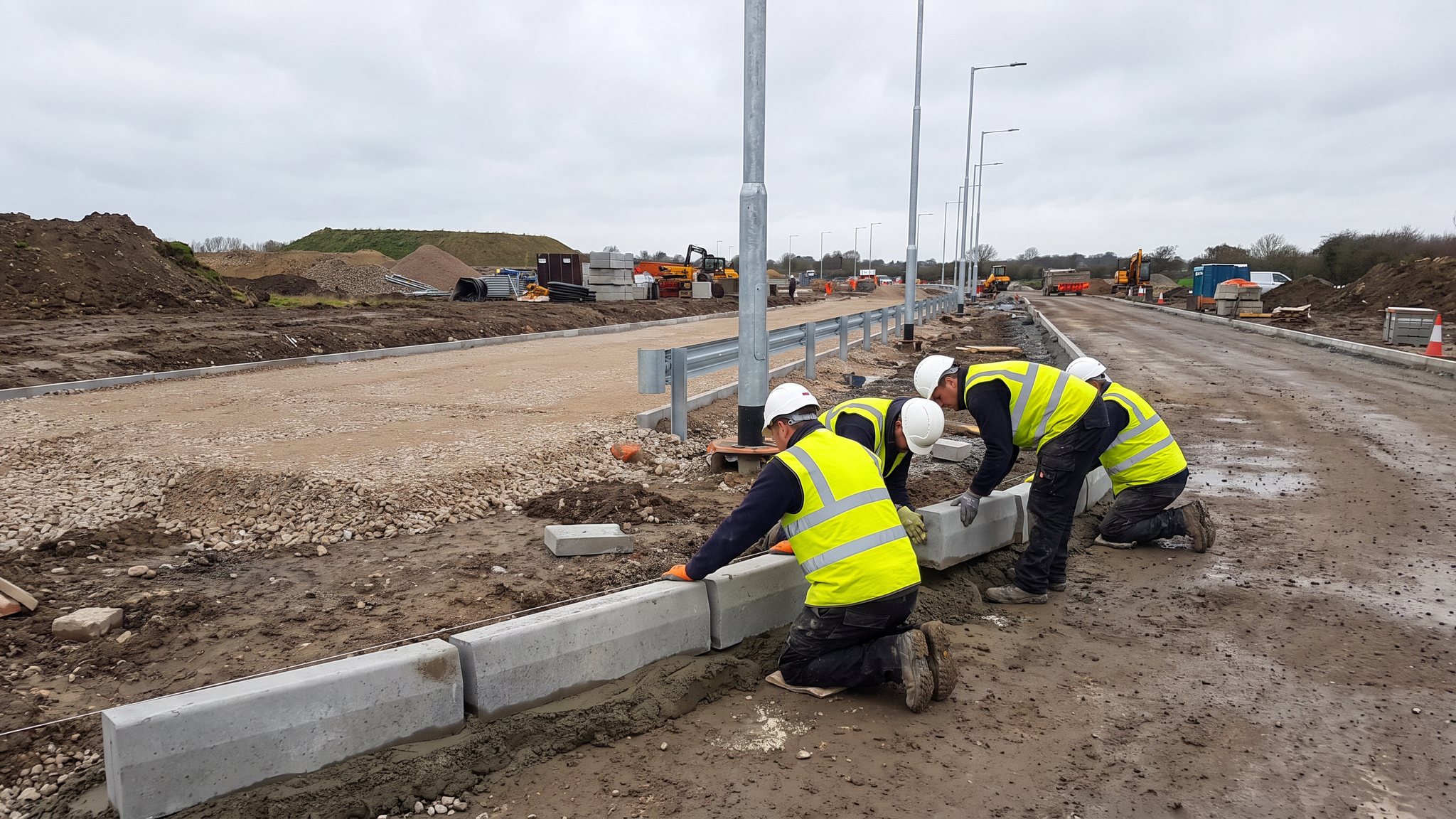

Landscaping & Public Realm in depth
About Landscaping & Public Realm
The three guides in this sector cover hard landscaping and public realm - paving, kerbs, street furniture and the levels game played in millimetres; soft landscaping and planting, where the product is alive and the aftercare is part of the contract; and SuDS and blue-green infrastructure, drainage that is designed to be seen, holding water on the surface instead of hiding it in a pipe.
Procurement at the end of the job
Public realm is usually procured as a package at the tail of a larger contract - the external works section of a design-and-build, or a standalone package let once the buildings are nearly done. That timing shapes everything: the landscaping contractor inherits levels, services routes and compaction quality from trades who left months ago, and the contract that pretends otherwise is buying a dispute. The better schemes hold back a proper setting-out survey and a drainage proving exercise as the first activities of the landscaping package.
On major schemes the public realm is a headline package in its own right - the city square, the waterfront promenade - procured with landscape architects in control of quality and specialist sub-trades for paving, water features and specimen trees. The specification is visual as much as technical, so samples, mock-up panels and approved reference areas carry contractual weight: the argument about what the granite was meant to look like is settled at the sample panel, not at handover.
Maintenance is part of the product, and increasingly part of the price. Contracts carry one to five years of landscape maintenance - watering, weeding, pruning, replacement of failures - so the handover is a transfer of care rather than a goodbye, and the contractor's maintenance team inherits whatever the installation team buried. Smart firms put their maintenance manager in the pre-start meeting; the rest learn, at replacement cost, that a tree planted badly is a tree planted twice.
Programme and sequencing
The levels game rules the programme: paving can only follow finished drainage, kerbs and utility covers at their final positions, and the whole package chases the building handovers because every completed plot wants its surroundings finished at the same time. Sequencing is protection-led - finished stone and new planting do not survive being a haul route - so the last areas paved are the ones every delivery vehicle wanted to cross.
Soft landscape adds a biological calendar to the construction one. Tree and shrub planting wants the dormant season in the UK, and in the UAE it wants the cooler months and an irrigation system commissioned before the first plant arrives. Establishment periods of twelve months or more sit beyond practical completion, with replacement obligations for failures - which means the landscaping contractor's programme ends years after the scaffolding came down.
What goes wrong
The everyday failures are drainage and levels. Ponding on paving, trip lips at kerb upstands, inspection covers rocking in their frames - small defects that the public walks on daily and the client snags relentlessly. The causes are almost always upstream: subgrade compacted poorly by an earlier trade, or services trenches reinstated carelessly and settling under the finished surface a winter later.
Plant failures are the slow-motion version: trees dying in year two from rootballs planted in compacted subsoil with no drainage, or irrigation systems that were never properly commissioned. In the UAE the failure mode is heat and salinity - the wrong species, brackish irrigation water or establishment planting attempted in summer kills schemes wholesale, and the replacement cost lands on whoever signed the maintenance obligations.
UK and UAE differences
UK public realm works through the local highway authority: section 278 works on adopted roads, adoption standards for new streets, and conservation-area consents that dictate materials down to the paving module. SuDS are increasingly a planning requirement, so the landscape is also the drainage strategy and is inspected as such. Workmanship standards are policed by resident engineers with long memories.
UAE public realm is delivered at master-community scale - the entire streetscape of a district in one package - with the master developer as client and quality arbiter. The climate dictates the palette: shaded pedestrian routes, heat-tolerant planting on treated irrigation water, and materials selected for thermal behaviour because a dark granite seat at noon in August is a liability, not an amenity. Handover maintenance regimes are long and contractual, because everything alive is on life support and everyone knows it.
SuDS and blue-green infrastructure
Sustainable drainage has moved the landscape contractor into the drainage design. Swales, rain gardens, permeable paving, attenuation basins and wetlands hold and clean water on the surface, and they are civil engineering wearing planting: liners and outlet structures, engineered soils, overflow routes for the exceedance event. In the UK they are increasingly a planning requirement and an adoption battleground, with water companies and local authorities arguing over who maintains them for the next fifty years.
The construction risks are specific: engineered soils contaminated by site traffic or cement washout lose their infiltration rate; permeable paving laid on a poorly compacted sub-base ruts within a year; and basins brought into use as site drainage during construction arrive at handover silted and weedy. The good schemes sequence SuDS late, protect them hard during the dirty trades, and commission them - flow control checks, planting establishment, water quality - like the infrastructure they are.
Working among finished things
The sector's defining site condition is working in the finished tense: paving beside a building already occupied, planting while residents watch from their windows, deliveries across someone else's finished surfaces. Protection is a first-class activity - boards, membranes, wheel-washing - and damage to adjacent finished work is the standard source of contra-charges. The soft-skills side is real too: the public realm contractor is often the only builder the public ever talks to.
Handover is granular and slow. Snagging is done area by area against sample panels and reference bays; planting handover includes establishment obligations and replacement warranties; and adoption or maintenance transfer to the council or management company adds a second client with its own inspection regime. The last ten percent of a public realm package consumes a disproportionate share of the management time, which is why experienced firms price the tail honestly.
Trees, water and furniture: the specialist trades
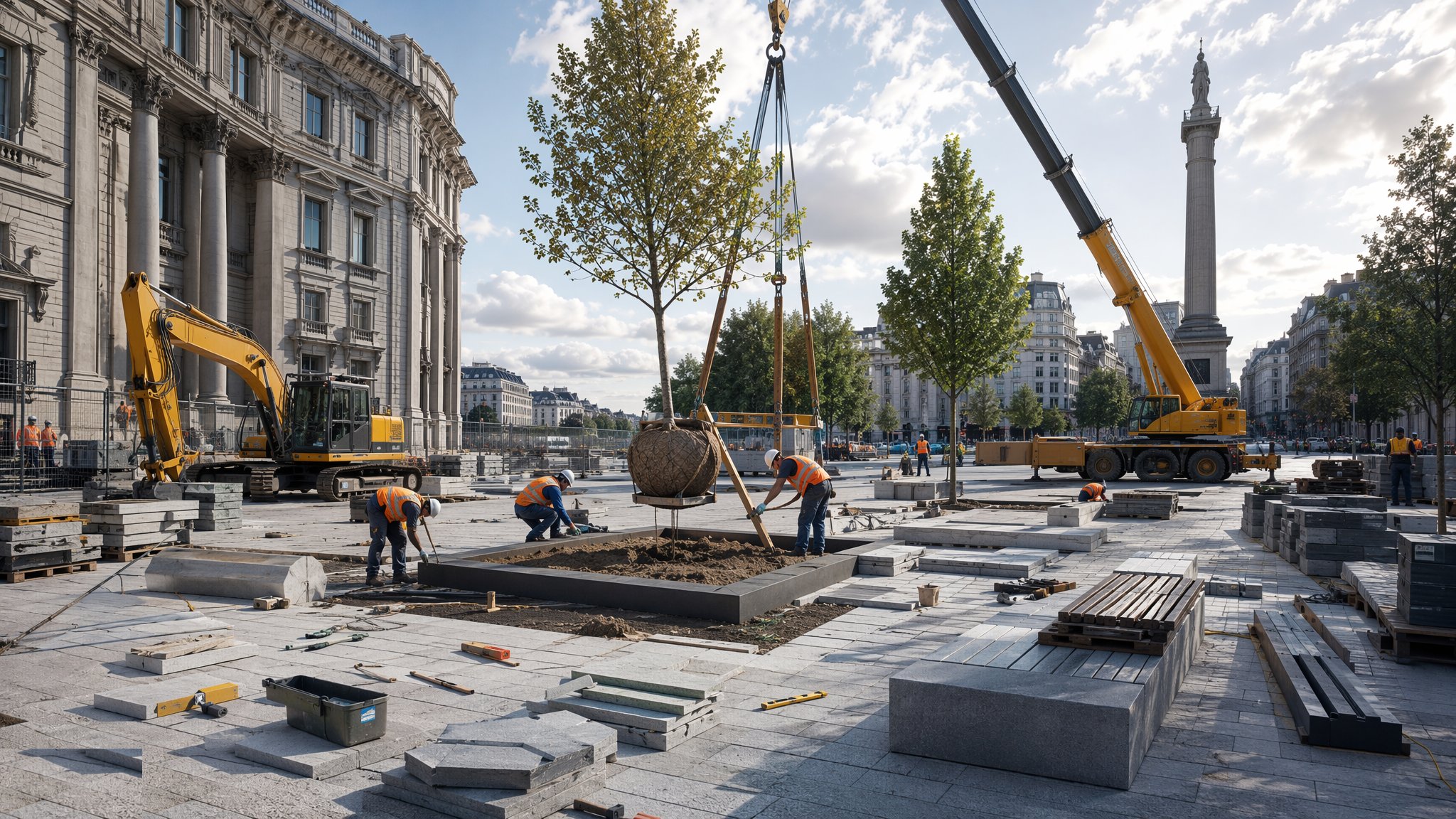
Specimen tree planting is heavy lifting with horticultural stakes: semi-mature trees arriving on articulated lorries, rootballs craned into prepared pits with underground guying and irrigation, and an establishment regime that decides whether a five-figure tree lives. Water features are concealed civil engineering - waterproofed structures, balancing tanks, filtration plant rooms - whose failures present as empty fountains and algae, and whose plant spaces are chronically under-sized unless the landscape architect and the services engineer talk early.
Street furniture, lighting and the last five percent of detailing carry the public's judgement of the whole scheme. Benches, bollards, cycle stands and litter bins arrive as procurement packages with their own lead times; lighting columns need ducted networks coordinated with every other service in the footway; and the fixing details - anti-skate studs, heritage brackets, the correct grout colour - are the difference between a scheme that photographs well at handover and one that still does in five years.
Hard landscaping and the levels game
Paving is where the sector's reputation is made: natural stone and precast units laid on bound construction to falls that drain without ponding, jointed and pointed to survive jet-washing and freeze-thaw, cut around every cover and column base in a street full of obstacles. The levels are set from a datum chain that starts at the building thresholds and ends at the highway kerb, and the setter-out who loses control of it mid-scheme produces the birdbaths and trip hazards the client snags at the end.
The specification fight is usually about longevity: flexible bedded paving that moves, mortar joints that crack, grouts that stain. The sector's answer has been rigid bound systems and better installation training, but the real protection is the reference panel agreed before work starts and enforced without sentiment - the square metre that defines what acceptable looks like.